Feeds:
Posts
Comments

Archive for the ‘God’ Category

Imagine an impression, conviction, direction or affirmation imprinted so strongly upon your spirit that you knew for certain it came from God. It’s an appealing idea, but we may wonder:

How can we know when a thought is divinely bestowed?

The above promise from Jeremiah 33:3 indicates we can distinguish God’s voice. (Further evidence includes Isaiah 30:21, John 8:47, Revelation 3:20, and more.)

In addition, many respected Jesus-followers offer affirmation, based on their own experience.

Below you’ll find excerpts from some of these teachers, preachers, and authors, to answer our questions about hearing God speak within our hearts—questions like:

TO WHOM DOES GOD SPEAK?

To those who belong to God.

To those who make time for stillness.

To those willing to sit in silence.

To those who prepare themselves to hear.

WHY DOES GOD SPEAK INTO THE HEARTS OF HIS CHILDREN?

HOW CAN WE KNOW THAT GOD IS ACTUALLY SPEAKING TO US?

He speaks in love (Jeremiah 31:3), not condemnation (Romans 8:1).

Whatever God says will concur with his Word.

Confirmation from elsewhere may also present itself.

WHAT CAN WE DO TO IMPROVE OUR LISTENING ABILITY?

Spend time in God’s Word.

Pray.

Be still.

Take time to wait.

Stay alert.

Even at the kitchen sink.

“Just as this beautiful cluster of grapes once grew on a vine,

you are growing beautiful fruit as you abide in Me”–JESUS (John 15:5).

If we ask God to reveal himself, he’ll do it—as he chooses—through little whispers, confirmations, divine delays and heavenly echoes that corroborate with what he’s already saying through His Word and Spirit (Priscilla Shirer, Discerning God’s Voice, 193).

Let’s ask him now.

*     *     *     *     *     *     *     *     *     *

Jesus, please quiet all the loud voices that flood my heart and mind. Give me ears to hear the gentle sound of your voice. Speak Lord, your servant is listening. Amen (Chrystal Evans Hurst, Kingdom Woman Devotional, 41).

Psalm 37:7; 1 Samuel 3:9

Photo credits: http://www.heartlight.org; http://www.dailyverses.net; http://www.pexels.com (2); http://www.canva.com (2); http://www.pexels.com.

Read Full Post »

For ten years of my twenty-six year teaching career, I commuted almost fifty miles each day. Those of you who endure the same or worse understand that it is: 1) boring, 2) a waste of time, and 3) FRUSTRATING!

The roadways are filled with thoughtless, rude drivers who can raise your blood pressure to dangerous levels if you’re not careful.

One day, after yet another encounter with a dreadful driver, I started to sing, “To God Be the Glory”—an old hymn that is still a favorite of many.

But somehow my mind took a wild turn and I veered into new lyrics that fit my situation–and my mood:

“To God be the glory in spite of the jerks who travel the turnpike and drive me berserk!”

It made me chuckle. The tension in my shoulders began to relax.

M-m-m, I thought. I may be on to something.

For the next several weeks I spent my commuting time working thoughts into rhymes and rhymes into the rhythm of the old hymn.

Here are the results:

The South Florida Commuter Song

Verse 1

To God be the glory in spite of the jerks
Who travel the Turnpike and drive me berserk!
I’ll focus on Jesus and all of His works,
Improving my attitude and calming my nerves.

Praise the Lord for the trees, and the birds on the wing!
Praise the Lord for the clouds, and this song I can sing!
I’ll thank Him for His promises and victories won,
And for taking frustration and making it fun!

Verse 2

I’ll pray for the poor bloke who speeds out of sight.
He’s clueless I’ll see him at an upcoming light.
I’ll pray for his safety, since he’s unconcerned,
And hope in the process some patience I learn!

Praise the Lord for the sun as it spangles the sky.
Praise the Lord for the ponds, and the mist on the rise.
I’ll thank Him for creation, its beauty sublime.
Renouncing frustration, His peace I shall find.

Verse 3

And when drivers speed by then squeeze in ahead,
Replace my frustration with your grace instead.
Remind me they don’t know you, they’re striving alone.
I pray they may seek You, and make You their own.

Praise you, Lord! I am Yours, and You’re always with me.
Help me lean, and be serene, even when folks are mean.
I pray for Your Spirit to take full control
As over the highways and byways I roll.

Verse 4

There’s one more group of drivers that I must address.
They pull out in front of me, then drive like Aunt Bess!
They poke along slowly, yet still make the light,
But then the light turns red—I’M stuck! What a fright . . .

. . . How upset I can get when others drive thoughtlessly!
But I have heard from Your Word how You want me to be:
As loving and forgiving as You are to me.
So when others drive like Aunt Bess, I’ll say, “God bless!”

© Nancy Ruegg 2008

Are you smiling? I hope so! And perhaps you’ll be inspired to turn a frustration in your life into an attitude-changing song. If you do (or already have), please share it with us in the Comment section below!

(Revised and reblogged from 1/7/2013 while we prepare for houseguests.)

Photo credits: http://www.commons.wikimedia.org (Ildar Sagdejev); http://www.flickr.com; http://www.pxhere.com; http://www.flickr.com (Pam Link).

Read Full Post »

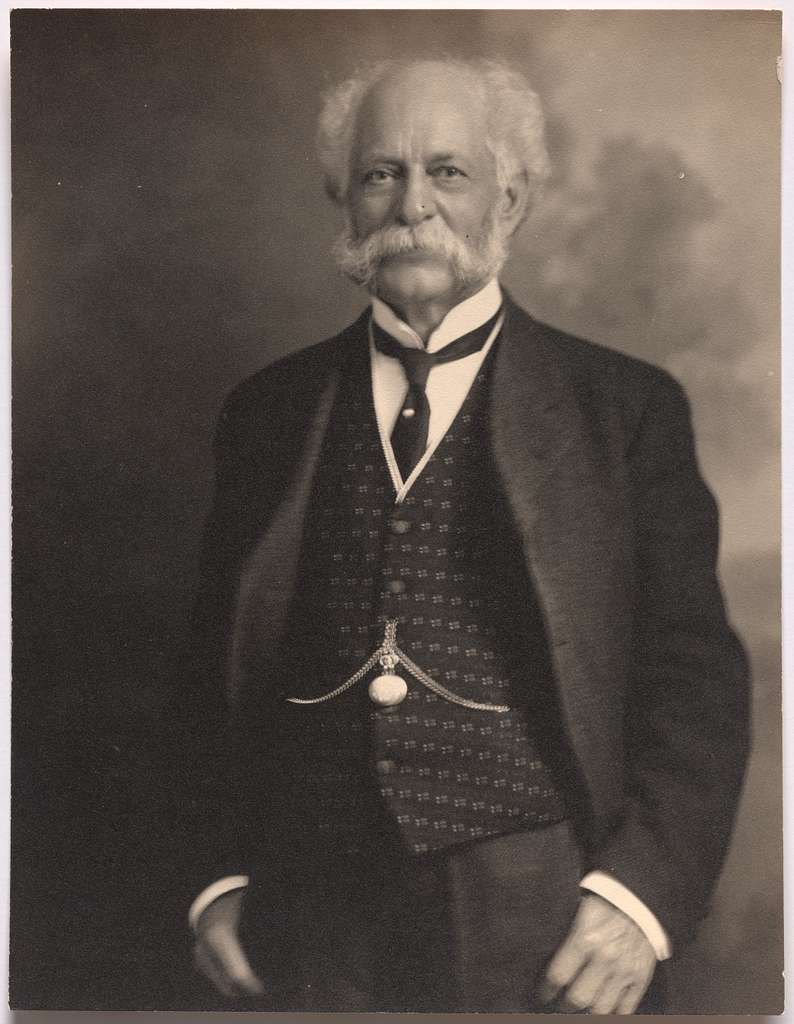
Twelve-year-old Henry bolted into the kitchen crying, “Look Ma!” and proudly held out his empty basket. An hour before it had been full of fresh produce, grown himself on the family farm in Sharpsburg, PA (near Pittsburgh).

Now his pocket was full—of change. Just as he’d hoped, townswomen had purchased every vegetable.

“Well done, Henry!” exclaimed his mother, ruffling his hair. “Your hard work paid off!”

It wasn’t long after that first sales excursion in 1856 that Henry required a wheelbarrow for his deliveries. By age fifteen, Henry was caring for three-plus acres of produce and required a wagon for transport. Not only did he sell to those nearby, but also to grocers in town.

The teenager became known for his quality produce, positive attitude, and honest business dealings, making his mother proud as he lived up to the Christian principles taught at home and church.

One day he approached his mother with a new possibility. “Could I use your recipe for horseradish and try to sell it along with my vegetables?”

She agreed the area’s German immigrants just might buy the popular sauce, saving them time and nuisance during the busy canning season.

Horseradish had to be grated, which often resulted in nicked knuckles. It also caused the eyes to sting and water—just like onions. As a result, many women of Sharpsburg were glad to forego the chore and buy Henry’s horseradish.

His entrepreneurial instincts led him to additional ways for growing his business. Henry chose white vinegar instead of brown and clear glass bottles instead of the traditional green, even though both were more expensive. The former resulted in a more appetizing product, the latter allowed his customers to see his top quality horseradish–with no fillers like some companies used.

Over the next few years Henry added pickles, sauerkraut, and vinegar to his product-line. He also expanded deliveries to Pittsburgh’s grocers, restaurants, and hotels.

Meanwhile Henry experimented with different seeds, taking careful notes to track results. He arranged for the design of attractive jars and labels to entice even more customers.

At age 24, Henry took on two partners and moved the company to Pittsburgh. They added fruit preserves, mustard, and catsup to the product-line, while expanding their market east and west via the new railroads.

Another important event that year: Henry married Sarah Young. They would have five children; one would die in infancy.

19th Century Pittsburgh

By 1872 the partners employed 150 people during harvesttime, producing 500 barrels of sauerkraut, 15,000 of pickles, and 50,000 of vinegar.

But when the economic Panic of 1873 occurred, Henry and his partners were forced to claim bankruptcy. Deep disappointment sunk him into depression.

Henry soon recovered, however, and determined to rebuild his company by doing what he’d always done—work hard and trust God [1].

With financing from two of his seven siblings and his mother, Henry set about reestablishing himself. Five years later he’d not only achieved success again, he’d repaid all his debts—even though that wasn’t required.

Henry continued adding new products, including apple butter, baked beans, and tomato soup. Always he sought new ways to market his wares, like free pickle pins with the company name, distributed at the Columbian Exposition in Chicago, 1893.

Columbian Exposition 1893

But out of reverence for God, he never allowed his newspaper advertisements to run on Sunday [2].

Henry applied Christian integrity to his treatment of employees, providing many more benefits than other factories including: free dental and health care onsite, lunchtime concerts and lectures, English lessons and assistance to obtain citizenship, and advancement of women to managerial positions.

Henry also “worked hard to encourage his employees to live the ‘righteous life’” [3].

During these years of company-development, Henry taught Sunday School and became a promoter of Sunday Schools not only in Pittsburgh but around the world.

He faithfully tithed his income his entire life beginning with 10%, but increasing over the years until Henry was giving away almost 100% of his income [4].

By 1896, Henry’s company produced over one hundred products. He put a new slogan on each bottle and jar: “57 Varieties,” thinking the number fifty-seven (based on Sarah’s and his favorite numbers) [5], was more memorable than one hundred.

Once again, Henry John Heinz had created a winning marketing strategy as “Heinz 57” became a familiar phrase all over the country.

Throughout his career, Henry kept experimenting to improve his products and production, provide eye-catching packaging, upgrade working conditions for his employees, and expand distribution and marketing.

Before his death in 1919, Heinz products were being produced and sold in Europe as well as all over America.

In his will, Heinz wrote:

“I desire to set forth at the very beginning of this will, as the most important item in it, a confession of my faith in Jesus Christ as my Savior.

John Henry Heinz


[1] (https://www.365christianmen.com/podcast/1146-henry-j-heinz-us-entrepreneur/

[2] https://positivelypittsburgh.com/heinz-legacy/#:~:text=Religious%20Roots&text=Heinz%20devoted%20time%20and%20energy,devoted%20that%20day%20to%20God

[3] https://profectusmag.com/american-original-hj-heinz/

[4] https://stories4homilies.blogspot.com/2016/12/tithing-colgate-kraft-and-heinz.html

[5] https://www.ai-bees.io/post/henry-john-heinz-founder-of-the-condiment-empire

[6] https://bibletruthpublishers.com/the-heinz-will/christian-treasury-volume-5/la155191

Other sources:

https://explorepahistory.com/hmarker.php?markerId=1-A-37

https://welcomechurch.co.uk/the-story-of-heinz-57-varieties

Photo credits: http://www.pickpik.com; http://www.picryl.com; http://www.flickr.com; http://www.rawpixel.com; jenikirbyhistory.getarchive.net; timelessmoon.getarchive.net; http://www.pickryl.com.

Read Full Post »

For me, the best way to begin a day is to head outdoors with a journal, pen, and mug of coffee, to watch God make a morning—especially this time of year with its temperate breezes, lush foliage, and dazzling flowers—all enjoyed to the accompaniment of birdsong.

And while soaking in the glory of late springtime, I reaffirm: nature illuminates many glorious truths about our Heavenly Father.

The following impressions come from my journals, as I’ve tried to listen to God while observing various features in my little corner of creation:

LIGHT

Let the golden light of morning remind you of My presence surrounding you, the Light of My Word to counsel, the Light of My joy to give delight, and the Light of My hope to dispel discouragement (1).

SKY

See the cloudless sky soaring into infinity?  My love for you is as high as the heavens.  And just as the sky is always over you wherever you go, I am always, tenderly watching over you (2).

FOLIAGE

Look closely at the bushes and trees. Note how their thickly-leafed branches create a cathedral of calm amidst urban-frenzy. Within the cool environs, numerous birds and animals find peace and protection.

You can find absolute rest and refuge in Me. Not that trials do not come. But they “cannot penetrate the sanctuary of your soul” when you dwell in My shelter (3).

TREES

As the sun rises, your eyes are drawn to the back-lit leaves of the trees, transformed into glowing, emerald-like jewels. But the trees themselves live unaware of their luminous splendor.

I’ve created My children to also glow with the Light of My Son . Often they’re unaware of the Sonlight radiating through them, but know this: there are those who see and find themselves drawn to My Light as a result (4).

(Please forgive the mixed metaphor—this quote was too good to pass up!)

BIRDS

Let the variety of birds remind you that I value uniqueness. Celebrate who I’ve made you to be: the colors of your personality, the pattern of your life, the song of gifts and talents I’ve given you to share with the world, the habits of goodness I’ve formed in you to impact others.

Join the birds in singing My praise, and keep your heart filled with joy (5).

FLOWERS

Sunbeams now illuminate each flower, so they glow with vibrancy of color. Let the various hues, shapes, and scents remind you of My creativity and care producing beauty in your life—beauty of character.

Like the flowers that keep their faces toward the sun, you also keep yours toward the Son throughout the day (6).

SQUIRRELS

Here come the squirrels, jumping from limb to limb with confidence. You too can live in confidence, because I’ve equipped you to accomplish what I desire for you.

Even when the squirrels walk upside down on a branch, they do not fall. Similarly, I make firm your steps and keep you from falling.

When it’s time to rest, a squirrel can nap on the end of a branch and never concern himself that he might fall or the branch might break—an example of perfect trust. I am your unfailing security; you can trust Me implicitly (7).

Do you see? Right here in your backyard you can: find examples of My wonders, experience Me in the sanctuary of My creation, and behold My power and glory (8).

Let the tranquility and delight of these moments carry you through this day with peace and joy!

Notes

1.Psalm 119:105, 130; 16:11; 62:5-8

2. Psalm 103:11; 121:8; 1 John 4:18

3. Psalm 4:8; 5:11b; 91:1-4, quoted clause from Hannah Whitehall Smith

4. Psalm 34:5

5. Isaiah 43:7; Ephesians 2:10; Titus 2:11-14; Psalm 148:8-13

6. Isaiah 26:3; Hebrews 12:2a; Romans 8:5-6

7. Ephesians 4:12; Hebrews 13:20-21; Psalm 37:24; Jude 1:24

8. Psalm 31:21a; 104:24, 33-34; 63:2

Art & photo credits: http://www.pxhere.com; Nancy Ruegg (2); http://www.wikimedia.com (Toby Webster); http://www.pexels.com (Patricia Luquet); http://www.canva.com.

Read Full Post »

A Date Night, 1976

One of the delights of a long-term relationship are the shared memories. My husband Steve and I find ourselves saying quite often, “Oh that reminds of . . .” and we’re each transported to a time and place of our mutual past:

  • Any songs from the Carpenters’ album, Close to You, take us back to a vacation house shared one week with two other couples—before kids. All we had for music was a tape of that one album!
  • Certain dishes remind us of favorite restaurants from our forty years in Florida: Bananas Foster–the Don Cesar Hotel on St. Pete Beach; blackened fish–Fast Eddie’s on Anna Maria Island; the shrimp pot–Captain Charlie’s on Juno Beach; and garlic knots–Mama Mia’s in Lake Worth.
  • Trigger-words immediately conjure up experiences: camper—four adults and four children in a pop-up—nice and cozy; muffins—Mrs. Bisso’s burnt offerings, humorously memorable [1]; and reggae music—a mini-vacation of snorkeling in the Keys with our three children.

No doubt you’ve experienced the same phenomenon. Sights, sounds, aromas—even a single word can elicit a memory.

And have you also noticed . . .

–C. S. Lewis, Out of the Silent Planet

God would have us know the same is true in the spiritual realm. The pleasure of our relationship with him grows more fully as we remember all the great things he’s done:

We also find that recalling God’s goodness in the past restores our faith for what he can do in the present and the future.

For example:

Has God miraculously supplied a need?

I’m remembering a time when Steve gave money to a struggling family, even though we were hardly making ends meet ourselves. Not long after, a speaking engagement (for which Steve didn’t expect to be paid) and a surprise monetary gift from a family member provided double what Steve had given.

Has God blessed beyond what you’d asked for, or perhaps with something you didn’t ask for at all?

One spring we were surprised by the gift of a new car, provided for us by a member of the church Steve was pastoring at the time.

Has God answered your prayers in marvelous ways?

In my God Is Faithful journal I came upon this entry:

“We’ve seen so many miracles at church recently—Barbara’s and Shirley’s healings, John’s clean bill of health from his doctor, special care of Joyce’s niece, and more! Thank you, Father, for blessing our fellowship in so many ways.”

Has God worked out impossible circumstances with astonishing ease?

During those years of ministry, children-raising, and teaching (for me), the Christmas season always meant extra-tight time-constraints. One morning I prayed God would somehow get me through the long, hectic day ahead.

And sure enough: 1) a teacher-colleague and I polished off essays that needed grading—I didn’t have to take any of them home, and 2) after school, a list of errands was expedited by little traffic (six days before Christmas no less!), a quick hunt for the items on my list, and short lines in the stores [2]!

When we’re feeling anxious or overwhelmed, taking time to remember God’s faithfulness, lovingkindness, and help in the past, does indeed help us trust him in the present.

Finally, remembering results in rejuvenating praise:

“Many, LORD my God, are the wonders you have done, the things you planned for us. None can compare with you; were I to speak and tell of your deeds, they would be too many to declare. . .

. . . You make me glad by your deeds, LORD; I sing for joy at what your hands have done.”

Psalm 40:5; 92:4 NIV


[1] https://nancyaruegg.com/2014/07/07/imperfectly-right/

[2] I’m so thankful for my “blessings” notebook-journal, kept since November 1983, so hundreds of examples such as these have not been lost over time.

Charles Spurgeon quote from Morning by Morning, 27.

Art & photo credits: Nancy Ruegg; http://www.stockvault.net; http://www.canva.com (2); http://www.commons.wikimedia.com.

Read Full Post »

What if you opened your mailbox one day to see a thick, cream-colored envelope among the ads and bills. Your name and address have been hand-calligraphed in gold ink, and an intricate seal is embossed upon the flap.

Inside you find an elegant invitation, announcing a grand celebration at the palace of a highly-respected and beloved king.

“Come!” proclaims his request. “Come and enjoy an unlimited feast with me; come drink the finest wine. There is no cost to you.”

Would you attend? Surely you’d quickly return your R.S.V.P. with “YES” clearly marked!

Such a scenario is fiction, of course, except for one fact: God Almighty, the King of the universe, is a monarch to be highly-respected and beloved–above all others.

And he has issued an invitation to everyone–not just to a single banquet–but to a continual feast in his divine, spiritual kingdom. He bids us to come and enjoy a new, God-enhanced life.

Come, everyone who is thirsty, come to the waters;

and you without money, come, buy, and eat!

Come, buy wine and milk without money and without cost!

–Isaiah 55:1 HCSB

This invitation, proclaimed by the prophet Isaiah on behalf of our King, does include some puzzling statements. For example, why would he invite us “to the waters?” And what will we find there?

Just as water brings life and abundance in the realm of plants and trees, Christ’s living water provides soul-satisfying life and joyful abundance for us—the abundance of innumerable blessings [1].

And what about the wine that God says we can “buy without money?” Does it represent more than a celebratory drink? Oh yes! Wine is a metaphor here for spiritual joy, “a joy unspeakable and full of glory”[2] as we taste the goodness of God’s love.

And what about milk?

God would have us understand: his invitation to kingdom-living includes those entities that sustain our spirits, including encouragement, strength, instruction, and help. We find all that and more in the nourishment of His Word, the Bible [3].

Puritan author and preacher, Thomas Brooks (1608-1680) wrote:

The Word of the Lord is a light to guide you, a counselor to counsel you, a comforter to comfort you, a staff to support you, a sword to defend you, and a physician to cure you. The Word is a mine to enrich you, a robe to clothe you, and a crown to crown you.–Thomas Brooks

Countless Jesus-followers who read the Bible, study it, and meditate on its truths can affirm that Brooks is right; they’ve experienced time and again the life-changing power of God’s Word. That includes many of you reading this post.

In addition to his perpetual-banquet invitation, God includes these instructions:

Listen carefully to Me, and eat what is good.

Let your soul delight in abundance.

Incline your ear [to listen] and come to Me;

hear, so that your soul may live.

–Isaiah 55:2b-3a AMP

To listen carefully includes the action of follow-through. And what would God have us do? “Eat what is good”—that is, experience the fullness of his goodness as we follow his ways, and take delight in the abundance of his blessings.  

Then our souls can really live in the security and satisfaction he desires for us, in every moment of the present–and into eternity. And in the final analysis, isn’t that what we desire also?

All we need do is come.

*     *     *     *     *     *     *     *     *     *

I praise you, my King, for your open invitation to come and feast upon all the good things you offer. You prepare a table before me of forgiveness, salvation, peace, joy, strength, comfort, contentment, purpose, and more.

No amount of money on earth could purchase such priceless, heavenly gifts that you so freely give to those who simply COME. I will praise your name for ever and ever!

(Luke 13:29; Psalm 107:9; Psalm 23:5; Ephesians 3:20; Psalm 145:1b)

Have you accepted God’s invitation? If not, will you do so today [4]?

If you have, what goodness and delights have you tasted at his table? Please share in the Comments section below!


[1] David Gusik, https://enduringword.com/bible-commentary/isaiah-55/. See a starter-list of twenty-six examples: God’s Goodness from A to Z.

[2] Selwyn Hughes, Seasons of the Lord, 42.

[3] 1 Peter 2:2.

[4] See https://billygraham.org/answer/how-do-you-become-a-real-christian/ for a simple explanation and a prayer to guide you. Do it today—you’ll be so glad you did!

Photo credits: http://www.rawpixel.com; http://www.picryl.com; http://www.heartlight.org; http://www.canva.com.

Read Full Post »

Have you seen those grace-filled fingerprints? Perhaps at home in the joy of good-natured laughter around the family table, or one child helping another with his homework—unprompted, or unified celebration of all—for the success of one.

Perhaps you’ve seen God’s fingerprints outdoors in a landscape of incredible beauty and grandeur, or an up-close encounter with one of God’s creatures, or the expanse of a sunrise, sunset, or brilliant rainbow.

And especially at church, we see God’s fingerprints when an impassioned congregation sings their praise to him, a saint of God offers a heart-touching prayer, someone shares a personal story of divine, miraculous provision, or a scripture-reading fits perfectly our current circumstances.

No doubt, God’s grace is on display everywhere and always. It never wanes; it’s new every morning. And, as illustrated above, when we intentionally look, we see his fingerprints in the GRACE of place.

But God’s grace is not only evident around us. God has provided a place of GRACE within us as well.

  • Our God of grace hears—even before we speak (Isaiah 55:24).
  • Our God of grace leads—along the best and straightest path to himself (Psalm 16:11a) [1].
  • Our God of grace drives (propels)—gently but persistently—so we’re resilient, not fragile; strong, not weak; useful, not ineffectual (Ephesians 3:20).
  • Our God of grace lovingly and relentlessly draws us unto himself (Jeremiah 31:3).
  • Our God of grace changes us, progressively transforming us into his likeness with ever-increasing glory (2 Corinthians 3:18).
  • Our God of grace works in us so he can work through us—all to his and our mutual delight (Philippians 2:13).

He is a passionately dedicated, perfectly-intentioned, and supremely benevolent Heavenly Father!

Yet there is more. 

Our God enriches, enlightens, enables, and enraptures by:

  • blessing us—not with everything that pleases us—but with everything good for us [2]
  • bestowing the privilege of his presence—“so wonderful, quieting, soothing, calming, and warming” [3]
  • guiding us with supernatural wisdom as we avail ourselves with childlike trust
  • shaping our lives into what is useful and beautiful [4]
  • providing a haven within of comfort (Psalm 34:18) and strength (Psalm 59:16), refreshment (Acts 3:19) and joy (Psalm 4:7)

All good things are a result of God’s grace (Psalm 84:11)—in the GRACE of place all around us and in the place of GRACE within.

Where are you seeing God’s grace-filled fingerprints this day? Tell us about it in the comment section below!


[1] Dietrich Bonhoeffer

[2] King David mentions at least ten gifts in Psalm 103 alone.

[3] J. Danson Smith, quoted in Streams in the Desert, Jim Reimann, ed., 340.

[4] Eugene Peterson, Run with the Horses, 79.

Art & photo credits: http://www.openclipart.org & canva.com; http://www.pickpik.com; http://www.canva.com (2); http://www.creazilla.com (painting by Pieter Claesz).

Read Full Post »

‘Tis Poetry Month once again, a time to celebrate this art form that can stretch, inspire, and amaze us in ways unique from prose. Award-winning poet Pattiann Rogers identified at least one element of that uniqueness: the music of poetic language.

But is the composing of such music reserved only for experts? That question brings to mind another quote:

Such encouragement for us amateur-poets to give it a try and be stretched, inspired, and amazed when we create our own music of poetic language—unsophisticated as it may be.

This year I’ve experimented with three forms: Shadorma, diamante, and quadrille.

The Shadorma is of Spanish origin. It contains six lines, each with a specific syllable count that follows this pattern: 3/5/3/3/7/5.

Early morning on our deck offered inspiration for this Shadorma:

Dawn Rising

Sunbeams climb

Dusky shadows fade

Breezes kiss

Robins trill

Nasturtiums spangle with dew

Morning masterpiece

The diamante (diamond) form derives its name from its shape. It was created by American poet Iris McClellan Tiedt in 1969.

The pattern for diamante is more complex than Shadorma. The first half of the poem relates to the one word of the first line; the second half to the one word of the last line. These two lines often present opposites. The middle line provides a bridge between the two. 

Each of the seven lines requires a certain number of words of a certain part of speech:

  • Line 1: 1 word (subject/noun)
  • Line 2: 2 adjectives that describe line 1
  • Line 3: 3 -ing words that relate to line 1
  • Line 4: 4 nouns (first 2 relate to line 1, last 2 relate to line 7–if you’re writing about opposite topics)
  • Line 5: 3 -ing words that relate to line 7
  • Line 6: 2 adjectives that describe line 7
  • Line 7: 1 word (subject/noun)

This diamante began to take shape as I considered the transformation Christ can make in a person’s life. A list of R-words began to grow—repentance, redeemed, restored, so I pursued the pattern.

A Transformed Life

Ruin

Repugnant, reprehensible

Rebelling, ravaging, retaliating

Rashness, recalcitrance, remorse, repentance

Returning, Releasing, Receiving

Redeemed, restored

Renewal

The Quadrille form first appeared at www.dversepoets.com in 2016. The only requirement is to include 44 words (excluding the title). They believe that “limitation can happily breed extreme creativity.” Each Monday they provide a word-prompt, and participants must use that word in their poems.*

I chose my own word from John 15:1, 5—vine. And while I played with possibilities, my poem began to fit a pattern. Every line contains seven words except the last, which contains nine.

First, the scripture, as a point of reference:

And now, the poem.

Bonded to the Vine

Praise to the Gardener of our souls!

Once we’re grafted to his Vine, he

Prunes away withered branches of worthless folly,

Waters us with his life-giving, spirit-strengthening Word,

And produces pleasing fruit with boundless sufficiency.

Such beauty results when we’re bonded to the Vine!

Remember the quote of Christopher Fry at the beginning of this post–“Poetry is the language in which man explores his own amazement?”

I wonder if he knew that the pleasure in exploring our amazement—whether as poets or not—is greatly enhanced when we include the Genius behind all things amazing.


* https://dversepoets.com/2017/09/11/quadrille-40/

Photo credits: http://www.canva.com; http://www.pxhere.com; http://www.pickpik.com; http://www.pexels.com (3); http://www.commons.wikimedia.org.

Read Full Post »

After the cold starkness of winter, spring gleefully reawakens our senses with her: 

  • Effusion of colorful flowers
  • Scents of hyacinth, lilacs, and freshly-mowed grass
  • Symphony of bird song
  • Flavors of tender asparagus, luscious strawberries, and tart rhubarb
  • Textures of furry pussy willows, fuzzy moss, and silken magnolia petals

Praise God for our abilities to see, smell, hear, taste, and touch, allowing us to enjoy Spring in so many ways!

Even better, those abilities allow us to meet God in at least five ways.

Our five senses help us understand God more clearly.

Consider how the far-flung stars and planets speak of his power; the clever camouflage of lizard, fawn, and frog display his wisdom; the endless variety of colors, shapes, and textures prove his creativity; the instinctive parenting skills of adult animals demonstrate his goodness.

Our five senses help us experience God’s glory more profoundly.

  • We can see his power at work in the transformation of lives [1].
  • We can hear his wisdom in godly men and women, such as Thomas á Kempis or Corrie ten Boom (just two among millions!):
  • We can feel God’s loving touch through a hug that conveys compassion, a worship song that quickens the heart, or a landscape vista that gives us glory-goosebumps.
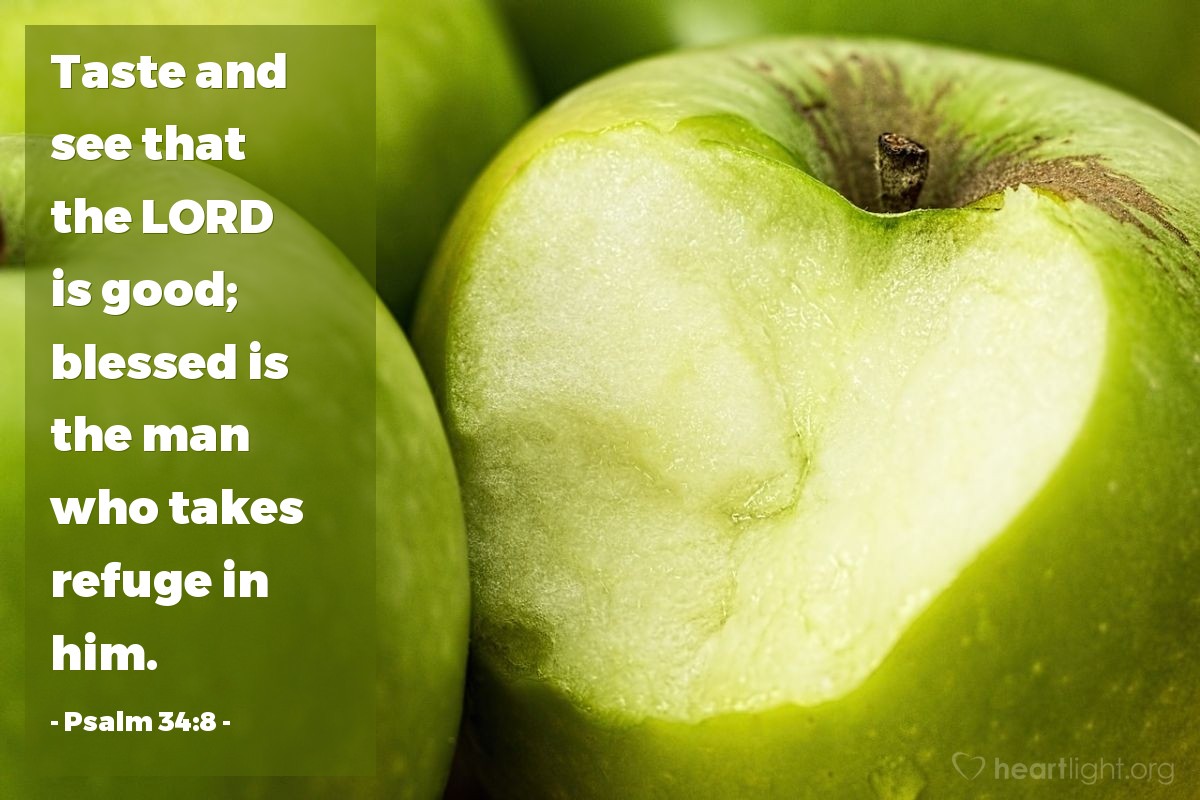
  • We can taste his goodness in all the variety of blessings we enjoy (Psalm 34:8).
  • We can smell the fragrance of his sweet presence (Psalm 45:6-8)—if we pay attention.

Our five senses help us connect with God more intimately in solitude.

Many people call it Quiet Time—moments they spend with God in scripture reading/study, prayer, perhaps journaling, and/or listening to peaceful worship music.

It’s in the quiet we begin to see important realities of the spiritual realm, hear God’s voice within our spirits providing wisdom and encouragement, feel his presence more palpably as we touch our knees to the floor in prayer, and again, smell the fragrance of his sweet presence as he meets us in our place of solitude.

   Our five senses help us worship God more intently in community.

Jerry Kerns [2]

Kerns would have us fully engaged–first to bless God’s heart and then to elevate the experience for us also.

How?

  • See the majesty and splendor of God on his throne–in your imagination. This is who you are worshiping [3]!
  • Hear the music and join in with grateful, enthusiastic praise [4].
  • Feel the presence of God as you pray. Try placing your hands on your lap, palms up—open and empty, symbolic of humility and receptivity [5].
  • Taste the bread and wine/juice with prayerful gratitude. Jesus is our Bread of Life who satisfies our spiritual hunger, who shed his blood for us so we might one day enjoy heaven with him. May we never become desensitized to the magnitude of his sacrifice.
  • Smell the fragrance of God’s saints as they leave the perfume of kindness, uplift, and joy in their wake.

Our five senses help us live out our faith more joyfully.

When our heart’s desire is to serve God by serving others, we’ll aspire to live so people:

  • See the Light of Jesus in our choices, behavior, and attitudes (Matthew 5:14-15)
  • Hear us speak truth, wisdom, and encouragement (Proverbs 10:20-21)
  • Feel the love of God in our interactions with them (John 13:35)
  • Taste the flavorful salt of God’s divine grace within us (Matthew 5:13)
  • Smell the fragrance of Christ in our lives (2 Corinthians 2:15-16)

 And as we engage all five senses in these five ways, what will happen?

We’ll bring more glory to God and enjoy more fully the satisfying, abundant life his Son provides.

That sounds mighty good to me. You too?


[1] Stunning examples include Jake DeShazer (https://nancyaruegg.com/2016/08/18/a-miracle-of-forgiveness/), Johnny Hart (https://nancyaruegg.com/2018/08/09/johnny-and-jesus/), and Isobel Kuhn (https://nancyaruegg.com/2024/04/11/goodness-and-mercy-followed/).

[2] https://www.experiencingworship.com/articles/general/2001-7-great-quotes-on-worship.html

[3] See: https://nancyaruegg.com/2023/07/06/in-awe-of-gods-magnificence/

[4] See: https://nancyaruegg.com/2015/09/07/when-worship-loses-the-wonder/

[5] See: https://nancyaruegg.com/2015/03/23/the-ultimate-delight/

Art & photo credits: http://www.pixabay.com; http://www.pexels.com; http://www.goodfon.com; http://www.stockvault.net; http://www.canva.com; http://www.pickpik.com (2); http://www.heartlight.org.

Read Full Post »

She was very popular at the University of British Columbia: effervescent, attractive, and intelligent. Yet Isobel (Belle) Miller found herself standing at the medicine cabinet in her parents’ home, ready to swallow poison.

Life had become meaningless, her spirit restless. To make matters worse, her fiancé was seeing another girl. Belle didn’t turn to God, having brushed aside her Christian upbringing when a professor insisted Christianity was for the superstitious.

She heard her father’s snuffling snore from the next room.  If he found her dead, Belle knew it would break his heart. She returned to her room.

Suddenly, a line from Dante came to mind: “In His will is our peace.”

Belle prayed, “God, if you prove to me that you are, and if you will give me peace, I will give you my whole life[1].  She began a passionate search for God, truth, and purpose.

Following graduation in 1922, Belle taught school. During this time she heard J. O. Fraser speak about his ministry in China and the need for more missionaries. Belle wondered, Is this what you want me to do, God?

Fraser was staying with Belle’s family. She asked questions about missionary life and the China Inland Mission he represented. Belle learned they required two years of Bible school and Fraser recommended Moody Bible Institute. With funds from a friend, she enrolled.

While at Moody, Belle met John Kuhn who also felt called to serve in China. Friendship developed into romance, but Belle wasn’t sure God wanted her to marry him. John sailed for China in 1926.

After graduation, Belle attended the China Inland Mission training school in Toronto. She and John corresponded frequently. In one of his letters he proposed and Belle said yes. They prayed to be assigned in the Yunnan province, hoping to work under Fraser. God answered their prayer affirmatively.

After Belle completed a year of language study, she and John finally married in 1929. Belle moved to Cheng Chiang where he lived.

Yunnan Province in southwest corner

The first time she hosted a few women in their home, a baby soiled the Kuhn’s new rug. Worse yet, Belle found more “guests” after the humans left: bed bugs, fleas, and lice.

“Lord, make these souls more important to me than anything else,” she prayed. And soon genuine love superseded concerns about vermin or stains.

Over the next twenty years, the Kuhns served in five locations. For the most part, John preached in the villages and Belle taught women’s Bible classes. Their first child Kathryn arrived in 1931.

A terrible flood occurred in 1933, during Belle’s second pregnancy. John was away preaching, so she dragged belongings upstairs, some very heavy. Belle miscarried the baby.

There was little time to grieve as a new directive arrived from Fraser the next day: You’re needed in the Salween Valley to work with the Lisu people.

In 1936 Communist soldiers threatened the valley and missionaries were instructed to evacuate. For eight days they trekked northward, but so did the enemy.

“It seemed as if the Communists were after us,” she wrote, “but in real fact, our pursuers were those faithful watch dogs of Jehovah . . . ‘Goodness and Mercy followed us all our days ‘”[2].

In 1937, as the war with Japan escalated, they were told Kathryn needed to attend a far-distant CIM school out of harm’s way, causing a heartbreaking separation.

Belle fought her distress with a new form of ministry to train church leaders: Rainy Season Bible School, taking advantage of the free time inclement weather provided. Many men attended.

In 1938 their dear friend Fraser died. John’s ministry broadened to include travel throughout Lisu territory. At home, Belle continued to teach, but she also found time to write, completing four books during those twenty years of ministry.

Several times the Kuhns had to escape the Communists and then the Japanese. Each time the Kuhns returned when the danger had passed.

Yangtze River, Yunnan Province

Daniel Kuhn was born in 1942. When he was six, Belle and her son had to evacuate again. This time they traveled to America where Kathryn was attending college. John followed a short time later. They were never allowed to return to China.

Did the Kuhns wonder if the Lisu Christians would lose heart and give up their faith?

Author Wright Doyle wrote: “Of the 18,000 Lisu who lived in Fugong, Yunnan in 1950, 3,400 professed faith in Christ. As of 2007, it is estimated that 80-90% of the 70,000 population make the same profession. In Yunnan, it is estimated that there are between 100,00-200,000 Lisu Christians”[3].

A church in Fugong today

For three years the Kuhns worked in Thailand, but then Belle was diagnosed with cancer. She died in 1957 at age fifty-five. Yet even while battling disease, Belle completed five more books.

To this day, the legacy of Isobel Miller Kuhn lives on, among her beloved Lisu people and through her writing.


[1] https://bdcconline.net/en/stories/kuhn-isobel-miller

[2] https://fromthevault.wheaton.edu/2021/03/01/letters-from-lisuland-the-ministry-of-isobel-kuhn/

[3] https://g1.fieldpartner.org/isobelkuhn/

Other sources:  

https://www.evangelical-times.org/isobel-kuhn

https://www.thetravelingteam.org/articles/isobel-kuhn

Photo credits: http://www.dailyverses.net; http://www.picryl.com; http://www.flickr.com; http://www.dailyverses.net; http://www.flickr.com; http://www.enwikipedia.org.

Read Full Post »

« Newer Posts - Older Posts »

When the House is Quiet

Impressions Becoming Expressions

Mitch Teemley

The Power of Story

Still Traveling

Impressions Becoming Expressions

Living Our Days

Gaining a heart of wisdom

He Said What?!

I'm Patty, and my husband and I are living with our adult son who has autism and epilepsy. I love sharing lessons learned from life around me, especially life with Aaron.

Meditations of my Heart

Impressions Becoming Expressions

Linda Stoll

Impressions Becoming Expressions

Signora Sheila

Notes on Life, Faith & Italy

Heidi Viars

Finding the Image of God