Feeds:
Posts
Comments

Archive for the ‘Perseverance’ Category


“Stand with me and sing!” invites the enthusiastic worship leader on the church platform, while guitars begin an upbeat tune and drums rap out a foot-tapping rhythm.

Around me people sway a bit to the music, some raise their hands, others worship with eyes closed.

And though I, too, sway and raise my hands, I have to admit my heart’s not in it. For some reason, lyrics that have brought me to joyful tears on other occasions are not penetrating today.

My spirit seems paralyzed—no feeling whatsoever. Efforts to engage—focusing on the words and imagining my Heavenly Father on his throne, listening with parental pleasure—don’t seem to help.

What’s wrong with me? I wonder.

Perhaps you’ve experienced the same numbness in corporate worship, maybe during personal quiet time or at prayer. And like me, you’ve felt certain that something must be wrong.


Granted, we worship God to honor him. Our end goal is not to rustle up feel-good endorphins for us.

But, according to the Westminster Shorter Catechism, we were created to glorify God and enjoy him forever. How is that even possible when we come down with a case of the spiritual blahs?

Actually, days and even seasons of spiritual dryness are a normal part of our faith-walk, experienced by almost every Christian at one time or another. And there is comfort in that, knowing we’re not alone.

Theologian Sam Storms offers us further encouragement:


“God is glorified by your longing for the joy to be found in him,

even if you are not yet experiencing it” (1).


But are there strategies we can implement to jump-start our hearts into exuberant responsiveness?

As a matter of fact, yes.


We can: 

1. Be honest with God.

King David certainly was. “I spread out my hands to you;” he cried. “My soul thirsts for you like a parched land” (143:6).

Yet in spite of his emotional tailspin, David writes, “I have put my trust in you. Show me the way I should go, for to you I lift up my soul (v. 8).


David provides a worthy example to follow: acknowledge the truth; affirm our trust, and seek God’s guidance.


2. Rehearse what we know about God’s character, his promises. 

Our minds are renewable resources (Romans 12:2). We can turn our thoughts away from the numbness we’re experiencing at the moment, and focus on what is lovely and true, excellent and praiseworthy about our God.

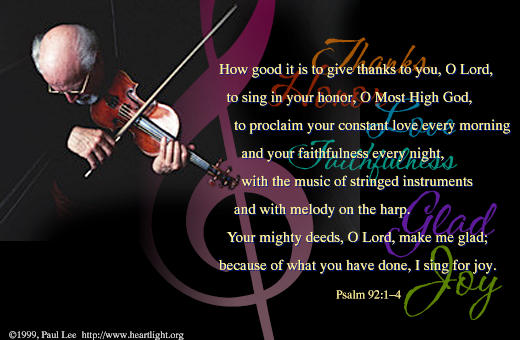
Sometimes such thought processes are all that’s necessary to bring us out of the doldrums (Psalm 92:4).


3. Persevere in spite of our emotions.

Keep showing up in God’s presence whether we feel like it or not.

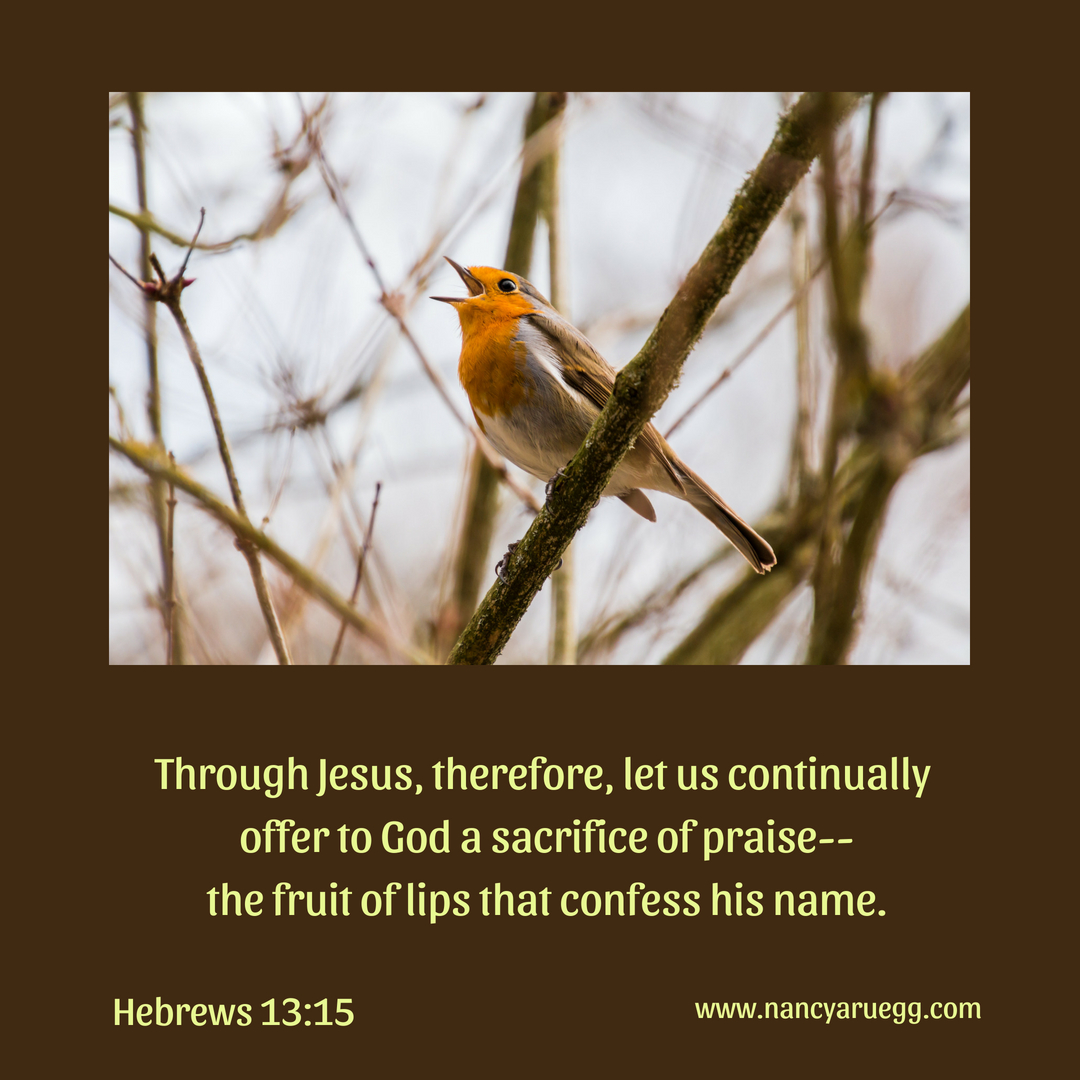
Our emotions must not be allowed to control actions. In fact, God especially appreciates a sacrifice of praise (Hebrews 13:15), which surely includes offering him our worship when the fervency just isn’t there.


4. Anticipate.

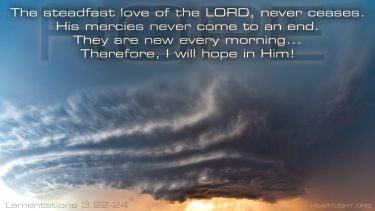
Worship with an outlook on the future (Psalm 42:1-2). We can look forward to the day when our hearts will overflow again with ecstatic praise—even to the point of joyful tears.


5. Pray. 

Perhaps something like this: 

“Father in heaven, flood the dry places of my soul with your presence; lift the gray clouds that conceal you. Within my spirit I want to feel the warmth of your radiant Light, be wrapped in your unfailing love, and fly with you on the wings of the dawn!

In trusting expectancy I wait for you, O Lord. I know you will answer.”


(Isaiah 44:3; Psalm 4:6, 32:10, 139:9, 38:15)


What helps you beat the spiritual blahs?  Please share your thoughts in the comment section below!


Note:

(1) https://www.crosswalk.com/church/worship/how-can-i-worship-when-i-feel-nothing.html


Photo credits:  http://www.wikimedia.com; http://www.pixabay.com; http://www.pxhere.com; http://www.dailyverses.net; http://www.heartlight.org; http://www.canva.com (2).


Read Full Post »

We’re all familiar with the extraordinary accomplishments of:


  • Beethoven—composing masterful concertos, symphonies and more while deaf
  • Michelangelo—creating over-sized artworks with awe-inspiring realism
  • Shakespeare—writing dozens of plays and hundreds of sonnets with words that flowed “like a miraculous Celestial Light-ship, woven all of sheet-lightning and sunbeams” (Thomas Carlisle)

Geniuses indeed. But even more important than brilliance was their willingness to exert great effort.


Beethoven rewrote nearly every bar of his compositions at least a dozen times.

Michelangelo produced more than 2,000 preparatory sketches for “Last Judgment” alone, a painting considered by many as one of the best artworks of all time. It took eight years to complete.

Even Shakespeare must have revised again and again before his words approached the sublime eloquence he is known for.


The more we know of such masters, the more we realize: their works required enduring patience, tenacious persistence, and sharp focus.

It just so happens that God values those three attributes also. And since he’s working in us to foster all positive traits, we each have the potential to create masterpieces.

Of course, works of genius include much more than symphonies, paintings, and plays.  Are you part of a ministry, community project, or volunteer organization? Are you a parent, grandparent, mentor, or friend? These are just a few ways you and I contribute to the most valuable masterpieces of all—the people around us.


But there is effort involved. God chooses not to do it alone; he invites us to join with him in the work.  So what might be our part in developing those important qualities of patience, persistence, and focus, necessary for developing our genius?

The following steps may provide a good start.


Step #1: Practice waiting.


It is a fact: most worthwhile endeavors take time. Usually lots of it.

In addition, patience requires stamina to endure delay.

Consider Dr. Albert Sabin, who researched polio and developed the oral vaccine.  His mission required thirty-one years of painstaking effort.


Step #2: Expect to be stretched by struggle.

Oswald Chambers, in My Utmost for His Highest, likens the believer in the hands of God to the bow in the hands of an archer. God stretches us beyond what we think we can bear. And when his purpose is in sight, then he lets fly.

Consider Dr. Jason Fader, son of medical missionaries who now serves as a medical missionary himself in Berundi, Africa–after grueling medical training, intense language school, and challenging fund-raising.  But in 2017 he was chosen as the first recipient of the Gerson L’Chaim Prize for Outstanding Christian Medical Missionary Service ( Jason’s story).


Step #3: Persist—with the application of faith, prayer, and hope.

We must be willing to tolerate discomfort, perhaps for an extended period of time.

However, the genius-in-the-making under God’s tutelage does not plod along as he perseveres; he plots. He sets his coordinates for the course ahead by faith, prayer, and hopetrusting in God’s promises, asking for God’s guidance, and embracing the possibilities of tomorrow as well as the challenges of today—because in all of it there is good.

Consider George Muller of Bristol, England, whose five orphanages housed over 2,000 children at any one time.  Muller not only wanted to care for these children but demonstrate that God would meet “all their needs as a result of prayer and faith, without any one being asked or approached” (www.mullers.org).  His story includes miracle after miracle.


Step #4: Remain focused on the task at hand.

A genius does not allow distraction or discouragement to sidetrack him. He takes delight in the present moment while: composing one bar of sublime, symphonic fusion, getting the light just right in one small area of the canvas, or choosing specific, rhythmic words for one line of imagery.

But even more important for the believer, she is inspired and directed by God himself. His plan may include an exceptional piece of music, art, or writing. Or, perhaps even more importantly, it may include exceptional input into the lives of others–through kindness, encouragement, and integrity.


It is God who is the Supreme Genius, masterfully weaving a tapestry of circumstances and relationships among his people. The full beauty of this masterpiece will not be revealed until we all arrive in heaven.

Then we’ll see the results of the God-given genius in each of us, our patience, perseverance, and focus, woven into God’s perfect design.

And what a celebration will ensue.


(Art & photo credits:  http://www.wikimedia.com; http://www.wikipedia.com (2); http://www.ramstein.af.mil; http://www.flickr.com; http://www.vi.wikipedia.com; http://www.georgemuller.org; http://www.flickr.com.)


Read Full Post »

(A personal psalm)


When thoughts are allowed free rein…


…I worry about the future, forgetting who’s in charge–You!–The all-powerful, all-wise God of the universe, Master Controller of all things (1 Chronicles 29:11-12). The truth is, if I’m worrying, I’m not trusting.


…I become overwhelmed by the tasks ahead, overlooking your reliability in all situations (Philippians 4:13). Key word: in. You provide strength in the midst of the journey, not before it has begun.


…I question the reason for difficult circumstances, failing to remember all the benefits you bring out of trials, including maturity, strong faith, and deficiency in nothing (James 1:2-4).


…I feel inadequate to handle new responsibilities, forgetting you will not leave me to muddle through on my own. I can confidently depend on your help and put my hope in your promises (Psalm 46:1; Numbers 23:19).


…I allow disbelief to fester in my mind, neglecting to “dismantle doubts with declarations” (1)—declarations of stabilizing truth from your Word (Psalm 119:93, 160).


…I become discouraged in prayer, not considering that You grant what we would have asked for, if we knew everything you know (2) (Isaiah 55:9).


…I feel like a failure, losing sight of how you can turn weakness into strength and redeem any situation (1 Corinthians 1:26-31). How miraculous that even “worthless dross [you] transform into pure gold”(3).


…I make poor choices, ignoring the wisdom of your ways and what it cost you to pay for my sin (Psalm 119:137-138; Galatians 2:20).


…I experience despair, giving no thought to your over-all objective:  to accomplish what is good and right–always. That good purpose may not be fulfilled today or to my preference, but it is certain nonetheless (Psalm 42:5 and 145:17; Jeremiah 29:11).


…I am discontented,  forgetting to clarify my perspective with praise–for who you are and what you’ve already done (Psalm 31:19; Psalm 145).


…I become jealous of others, neglecting to celebrate your uniquely designed plans and specially chosen blessings for me (Ephesians 2:10).


…I feel weak, overlooking “the inner dynamic of grateful joy that empowers the greatest efforts” (4) (Colossians 3:15-17; Nehemiah 8:10).


For every troublesome emotion, every problem, every insufficiency that plays in my mind:  you, O God, are El Shaddai–the All-Sufficient One.


You are the answer for everything I face.


I will praise you, O Lord, with all my heart;

I will tell of all your wonders. 

I will be glad and rejoice in you;

I will sing praise to your name, O Most High. 

–Psalm 9:1-2  NIV


Notes:

(1)  Jody Collins, author of Living the Season Well and blogger at https://jodyleecollins.com/blog/

(2)  Timothy Keller with Kathy Keller, The Songs of Jesus, Viking Press, 2015, p. 52.

(3)  Charles Spurgeon, Morning by Morning, December 8.

(4)  Timothy Keller with Kathy Keller, The Songs of Jesus, Viking Press, 2015, p. 31.


Art & photo credits:  http://www.flickr.com, by Giogio Montersino; http://www.pixabay.com; http://www.heartlight.org (2); http://www.canva.com; http://www.dailyverses.net; http://www.canva.com (2).


Read Full Post »


Samuel always wanted to be an artist. He even studied in England with the famous American artist-become-Londoner, Benjamin West. And though painting was his first love, Samuel soon won a prestigious award for a sculpture: “The Dying Hercules (1813).”

God’s plan seemed clear for the devout Christian. Samuel was created to be an artist.

Upon returning to the United States, Samuel turned his attention to portrait painting, traveling from town to town to offer his talent. And although his income was often meager, Samuel was very happy in the work.


(One of Samuel’s paintings, “Gallery of the Louvre,” 1831-1833)


A proud moment came in 1825 when he was invited to paint none other than James Monroe, the fifth president of the United States. And while in Washington, Samuel was also commissioned to paint the French General, Marquis de Lafayette.


(Samuel’s portrait of Lafayette, 1825)


Surely God was smiling his favor upon the artist’s success.

And then disaster struck.

Samuel received word that his wife, Lucretia, had died after the birth of their third child, back home in Connecticut. He rushed to New Haven, but by the time he arrived, Lucretia was already buried.

His anguish was accompanied by frustration. If only there were a faster way to communicate across great distances, he thought.

And he remembered another time of similar frustration.

In 1811 when Samuel had first arrived in London, a second war between Britain and the United States was imminent. English ships were attacking American ships, suspected of carrying goods to Britain’s enemy, France. England did seek reconciliation with America, but before the letter arrived in Washington, America declared war on Britain.

Slow communication caused hardship and pain at the end of that war also. After the peace treaty was signed, another major battle was fought because the generals didn’t know the war was over.


In 1832, Samuel was en route from Europe to America, after further study of painting, and happened to hear a passenger describe Benjamin Franklin’s experiment of passing electric current through miles of wire. The current had sparked instantaneously at the opposite end.

And Samuel thought, Perhaps there is a way to make rapid communication possible.  He began to devise plans immediately.

Now one might think such a worthy endeavor, undertaken by a devout believer in Jesus, would receive God’s blessing, and the road from experimentation to completion would be level, smooth, and short.

Not so.

For years he worked through disappointments and setbacks. Finally, in 1842, Samuel applied for a patent. The next hurdle: to find financial support in order to put his invention to work.

Two more years passed as Samuel tried to find backers, first in the U.S. and then in Europe. No one was interested.

A man of lesser faith would surely have given up; but not Samuel. During this time, he wrote:

“I am perfectly satisfied that, mysterious as it may seem to me, it has all been ordered in view of my Heavenly Father’s guiding hand” (1).

And…

“The only gleam of hope, and I cannot underrate it, is from confidence in God…I will wait patiently for the direction of Providence” (2).


(The House of Representatives, by Samuel, 1822-1823)


Finally, the U.S. Congress allotted $30,000 for him to lay cable across the harbor between Baltimore and Washington, D.C.

Samuel invited the daughter of a friend to choose the first transmitted words. She selected a passage from scripture, knowing that behind Samuel’s passion and perseverance was the God who had inspired and sustained him.

On May 24, 1844 in Washington, DC, Samuel tapped out the first telegraph message in a binary code he invented. It soon bore his name—Morse code.


Instantly in Baltimore, the message was received: “What hath God wrought,” (Numbers 23:23).


By the mid-1850s, more than 20,000 miles of cable had been laid across America.


(Samuel Morse, 1857.  Photograph by Matthew Brady)


And by the mid-1860s, a cable was laid across the floor of the Atlantic Ocean, providing instantaneous communication between America and Europe.

Samuel Morse became one of the most famous men in the world and acquired great wealth (much of which he donated to charity).

But Samuel made it clear:

“It is [God’s] work,” he wrote; “and He alone carried me thus far through all my trials and enabled me to triumph over the obstacles, physical and moral, which opposed me. ‘Not unto us, not unto us, but to Thy name, O Lord, be all the praise’”(3).


*     *     *     *     *     *     *     *     *     *

Oh, yes—“To Thy name, O Lord, be all the praise”—in spite of the trials and obstacles that threaten. Thank you for the legacy of saints like Samuel Morse who teach us that even difficulties and disappointments have purpose: to teach us how to hope, persevere, and trust.


Notes:

  1. https://answersingenesis.org/creation-scientists/profiles/samuel-morse-the-artist-who-invented-the-morse-code/
  2. (https://www.christianity.com/church/church-history/timeline/1701-1800/the-amazing-morses-sam-and-jed-11630271.html
  3. https://crev.info/scientists/samuel-f-b-morse/


Sources:

  1. https://answersingenesis.org/creation-scientists/profiles/samuel-morse-the-artist-who-invented-the-morse-code/
  2. (https://www.christianity.com/church/church-history/timeline/1701-1800/the-amazing-morses-sam-and-jed-11630271.html
  3. https://crev.info/scientists/samuel-f-b-morse/
  4. https://www.history.com/this-day-in-history/first-transatlantic-telegraph-cable-completed


Art & photo credits:  http://www.wikipedia.org; http://www.wikimedia.com; http://www.wikipedia.org; http://www.wikimedia.com (2); http://www.wikipedia.org; http://www.flickr.com; http://www.wikimedia.com; http://www.dailyverses.net.


P.S.    We received the wonderful news this afternoon:  Steve is now on the wait list (at least six months) for a liver transplant!  Thank you all for your continued prayers of healing for him.


Read Full Post »


Numerous times in the Bible we’re reminded that the Lord is our strength. We’re promised that out of his infinite power he will supply the wherewithal to withstand any strain, force, or stress.


The question becomes, how do we avail ourselves of God’s glorious might?

The answer may lie in just three strategies: affirm, trust, and thank.


1) AFFIRM such scriptural realities as God’s sovereignty over all things, his power at work on our behalf, and his constant, loving presence to sustain us (1).


We can direct our thoughts toward the promises he’s made to help, guide, and protect (2). In fact, scripture contains dozens of promises that offer hope and encouragement for any situation, because:  “He who promised is faithful” (Hebrews 10:23 NIV).


Asserting biblical truth hour by hour, even moment by moment, results in spiritual strength, much as repetitive moves with weights build physical strength.

Also beneficial to affirm: what we’ve seen God do in the past. Has a surprise check arrived in the mail—almost to the penny of what was needed? Have you escaped a car collision by that much? Has the answer to a prayer far exceeded the request? God has granted such miracles in our family, too.


And that brings us to the second strategy, trust.


2) TRUST that the God of perfection will be true to his Word and keep his promises.

But when fretful thoughts do threaten, we can bring them before God with total honesty, just as King David did in the psalms (3). Next, we can return to the Affirm Strategy (above)—which David also embraced. Third, we simply do the next thing, refusing to worry about tomorrow.


And a trusting heart is a thankful heart.


3) THANK God at every opportunity. Even in the midst of trials, we can find joy:

  • In Him and all his glorious attributes
  • In his Word, where we find comfort and encouragement
  • In creation, with all his meticulous handiwork and grand displays
  • In the people around us, with their expressions of loving concern and help
  • Through the five senses, providing unlimited delight

And the joy of the Lord will be our strength (Nehemiah 8:10).


These three strategies–affirming, trusting, and thanking—will enable us to move through each day with grace and a light spirit, just as a deer gracefully and lightly clears obstacles and scales rocky peaks, because:


*     *     *     *     *     *     *     *     *     *

Oh, Lord, keep me mindful that no one is exempt from trouble in this sin-wracked world, but you rule supreme and will engineer good even from the worst of circumstances. Help me to be ever-conscious of the ways I can avail myself of your strength. And may I learn not just to withstand stressful times, but actually flourish in the midst of them.


Notes:

(1) 1 Chronicles 29:11-12; Isaiah 64:4; Deuteronomy 31:6

(2) Isaiah 41:10; Psalm 32:8 & 12:5b

(3) Psalm 10, 13, 31, and 102 offer examples of psalms that begin with lament and end with praise.


P.S. A personal update: Steve received his first chemo treatment this week to keep the cancer from growing and spreading to other organs as we wait for a liver transplant. The anti-cancer drug was applied directly to the tumors. We were warned he might experience pain, nausea, fever, and/or other side effects. But except for some discomfort and fatigue he has been fine. We continue to praise God for his faithfulness!


(Art & photo credits:  http://www.canva.com (2); http://www.christianqotes.info; http://www.dailyverses.net; http://www.brainyquote.com; http://www.quotefancy.com; http://www.canva.com; http://www.dailyverses.net; http://www.brainquotes.org.)


Read Full Post »


From the time Darlene McIntosh was ten years old, she knew God wanted her serve him on the mission field.

By age twenty-two, Darlene was newly married to pioneer missionary Russell Deibler, and settled in the jungle of New Guinea where he had built a two-room home for her out of woven bamboo mats.


Russell and Darlene proceeded to build relationships with members of a nearby primitive tribe, the Kapauku, who had never heard of Jesus. She fell in love with the people, the work, and her surroundings.

On her twenty-third birthday in May of 1940, the couple heard that the Nazis had invaded Holland. It didn’t take long for the war to find them, even in their remote location. The Deiblers and other missionaries could have escaped to safety but chose to stay at their mission compound.

In January of 1942 the Japanese came and took the men captive. Russell’s last words to Darlene were: “Remember one thing, dear: God said that He would never leave us nor forsake us.” That was the last time she saw Russell; he would die in the prison camp.


For a short while, the women and one older man continued to live at the mission.

One night Darlene heard scuffling noises in the house. She got up from her bed and encountered a bandit armed with a knife.

Darlene surprised herself by rushing at him. Even more surprising, the bandit turned and fled; Darlene chased him out of the house. Suddenly a gang of bandits ran out of the jungle to join the first. She expected them to attack her. Instead the first bandit yelled to the others, and they all turned and ran.

From then on, the missionaries kept clubs at the feet of their beds, but they never had to use them.

Darlene always suspected the compound gardener had been the bandit, because he was familiar with the house. After the war, Darlene asked him why he had never tried to steal from the missionaries again.

“It was because of all those people you had there–” he replied.  “Those people in white who stood about the house!”


In May of 1943, Darlene and the other remaining missionaries were taken to a prison camp in Kampili. Commander Yamaji, a man with a mercurial temper, required strenuous work quotas of the six hundred women living there, including killing flies.

The flies bothered the pigs, raised at the camp to feed Japanese soldiers. Each prisoner was required to bring Commander Yamaji 100 dead flies every day (That’s 60,000 flies!)—even while completing numerous other tasks.

Darlene prayed for Commander Yamaji and was able to tell him about Jesus. “He died for you,” she told him. “Maybe that’s why God brought me here, to tell you he loves you.” The commander suddenly left his office with tears on his cheeks.


In May of 1944, the Japanese secret police came to escort Darlene to another prison. She was put in solitary confinement, falsely accused of espionage.

Darlene endured nightly mosquito swarms, near-starvation, malaria and other serious illnesses, inhumane conditions, brutal interrogations, and torture.

But only her Heavenly Father saw her tears, never the captors. She sustained herself by singing hymns, quoting scripture, and reciting Russell’s last words: God will never leave you nor forsake you.


One day Darlene pulled herself up to look out the small window of her cell. She saw a woman make her way to the fence, reach through the underbrush, and come away with a bunch of bananas, which she quickly concealed in the folds of her skirt.

Oh, to eat just one banana, Darlene thought. Lord, how I would love a banana! Darlene could not get the coveted fruit out of her mind. She talked to God about her craving, knowing that such a fantastical desire could not be fulfilled.

The next morning, Darlene had a surprise visitor, Commander Yamaji. Tears filled her eyes. “It’s like seeing an old friend,” she exclaimed.

“You are very ill, aren’t you,” he remarked.

“Yes, Mr. Yamaji, I am.”

When the commander left, Darlene watched him speak to the guards for a long time. Later she heard the familiar stomp of boots outside her cell. The door was unlocked and one of the guards threw a stalk of bananas onto the floor.

“From Mr. Yamaji,” he said.

With tears of praise to God, Darlene counted ninety-two bananas. God had provided—far above what she imagined. She savored them, one per day for three months.


Darlene would surely have been beheaded as a spy, but she was inexplicably returned to Kampili, the POW camp under Commander Yamaji’s leadership.

Soon nightly bombings began. The women hid as best they could in ditches. Every morning they would have to bury those who had not survived.

One night during the siege, Darlene felt compelled by God to leave her shelter in the dirt, go back to the barracks, and retrieve a Bible. By the time she returned to her ditch the bombing had subsided.

But during Darlene’s brief absence, her refuge had been hit directly and destroyed.


Finally, in the fall of 1945 the horrific ordeal ended. Darlene returned to her family in America to be nursed back to health. She weighed 80 pounds.

Four years later, Darlene was back in New Guinea. God had brought Gerald Rose into her life, another missionary who also carried a passion for indigenous people. They were married and together raised two sons. For forty years they served God, not only in New Guinea but also in the Outback of Australia.

In 1976, a friend told Darlene she had heard Mr. Yamaji sharing his story on Japanese radio. The angry and cruel prison camp commander had become a changed man because of Jesus.


No doubt God had used Darlene as an important influence in his life—and in the lives of countless others as well.


*     *     *     *     *     *     *     *     *


Almighty God, we exult in your sustaining power that carries us through even the most excruciating circumstances. You supply impossible strength, courage, and perseverance to endure. And just as Russell told Darlene, you never leave us nor forsake us. Hallelujah!

(Psalm 28:7; Philippians 4:13; Deuteronomy 31:6; James 1:2-4, Deuteronomy 31:8)


Sources:

1) http://reneeannsmith.com/a/tag/darlene-deibler-rose/

2) http://pursuedandconquered.blogspot.com/2012/08/bananas-in-prison.html

3) http://www.danielakin.com/wp-content/uploads/2016/08/Psalm-27-The-Lord-Is-My-Light-and-My-Salvation…Darlene-Diebler-Rose-Convocation-Fall-2016-kh.pdf

4) http://www.scripturaltruths.org/Articles/Real%20Life%20Experiences/REAL%20LIFE%20STORIES%20-%20Darlene%20Deibler%20Rose%20-%20Prisoner%20of%20War%20-%20May%202017%20-%20PDF.pdf


Art & photo credits:  http://www.darlenerose.org; http://www.wikimedia.com; http://www.dailyverses.net; http://www.heartlight.org;www.canva.com (2); http://www.heartlight.org (2); http://www.canva.com.

Read Full Post »

Hope.

Such a small word for such a big, important concept.

Multi-syllable synonyms seem to carry more clout:  expectation, assurance, confidence, and conviction offer a few.  (Thank you, Dr. Roget.)

Stir them together and we can create a definition for faith-filled hope:  the constant, confident, assured expectation that God will see us through every circumstance until we’re standing before him in heaven.  Those are words with heft that we can hang onto through dark and stormy nights.


You see, hope is much more than wishful thinking.

But sometimes it hides behind the overwhelming issues we face:  health concerns, financial problems, troubled relationships, difficult circumstances, foreboding futures.


How can we live with confident assurance that all will be well when uncertainty seems to rule the day, the week, the year?

As always, scripture offers us insight:

  • Understand that hope doesn’t come from a hidden reservoir within ourselves.  According to 1 Peter 1:3, our hope comes from God, provided for us out of his loving mercy.  It’s a living hope, breathing energy and strength into our souls.
  • Remember:  we can move forward with positive expectation because He is our all-powerful, grace-filled God—loving, kind, and wise, too.  He’s not just watching from afar; he’s an involved God, tending over us like an attentive Shepherd (Isaiah 40:11a).


  • Rest assured that our faithful God will see us through to a satisfying conclusion—either through events that unfold over time, or perhaps through an instantaneous miracle.  It may be the satisfying conclusion will not come until we cross the threshold into eternity (1 Peter 5:10).  But then, in the glorious ecstasy of that moment, our earthly trials will no longer matter (Philippians 1:21-23).
  • God’s plan is designed for our good (Jeremiah 29:11).
  • Hope involves waiting (Micah 7:7)—expectantly and patiently.

Sometime during second grade I noticed that being a teacher looked like fun.  And soon my favorite pastime became playing school with whomever I could cajole into being students.  When necessary, dolls were pressed into service.

That desire to become a teacher stayed with me all through high school and college.  Finally, after fourteen years, I was the one sitting at my own teacher’s desk, awaiting the arrival of my first students.  My hope, my confident expectation that I would one day be a teacher, had at long last become reality.  The import of the moment was not lost on me.  I had to fight back the tears.


Such euphoric joy does not happen often without waiting.  We appreciate more what we have to wait for.  And frequently, hard work is also involved.

God allows us to be part of the process, teaching us important lessons about patience and perseverance along the way.

Here’s what I need to remember:

Long-term waiting and steady hard work toward a dream makes the fulfillment all the sweeter when it finally comes.

For now, we can enjoy hopeful anticipation of a new reality that is coming, perhaps in this new year 2018—good health, financial security, improved relationships, or fulfilled dreams.  We can take comfort from the knowledge that our God, who is unlimited by the constraints of time, already resides there.  And…


Through the dark and stormy night

Faith beholds a feeble light

Up the blackness streaking;

Knowing God’s own time is best,

In patient hope I rest

For the full day-breaking!

– John Greenleaf Whittier


Let’s step out into each new day breaking with trust and obedience, because God is preparing us for that new reality.

And may these words ring in our ears:


“The Lord is good to those whose hope is in him,

to the one who seeks him.”

–Lamentations 3:25


*     *     *     *     *     *     *     *     *     *


What hope have you been clinging to?  Are there scriptures which contribute to your confidence and expectation?  What experiences of the past give you assurance for your hopes of the future?  Please share your insights below in the comments section!


(Revised and reblogged from January 31, 2013.  I do apologize for posting a reblog again.  Steve and I have been sick, catching a nasty bug on New Year’s Eve.  First I succumbed, and then he did.  A new post will be forthcoming next week!)


Art & photo credits:  http://www.flickr.com; http://www.pixabay.com; http://www.heartlight.org; http://www.pxhere.com; http://www.wikipedia.com; http://www.pixabay.com.

Read Full Post »

The place:  Spindletop, Texas.

A group of five investors formed the Gladys City Oil Company.  Sulphur springs in the area gave them great hope that black gold lay beneath the surface, especially since gas seepages in the area would ignite if lit.

Soon the area was dotted with holes–holes that produced nothing.  Two investors pulled out.

A geologist was brought in.  More investors were convinced to take the risk.

Nine long, unproductive years went by, and  still no oil. That’s 3,285 days of discouragement, disappointment, and exhausting labor.  Yet those men would not give up.

Finally, on January 10, 1901, their long-held dreams were realized.  At the depth of 1,139 feet, the company struck oil.  And it wasn’t just a gurgling flow.  The discovery at Spindletop gave new meaning to the term, “gusher.”  The oil shot over one hundred feet into the air, spewing enough to fill 100,000 barrels a day.  It took nine days to get the well under control.  No oil field in the world, up to that time, had been so productive.

Lucas_gusher

I wonder what those men said to each other each morning, over those 3,000-plus days of working, learning, waiting, and wondering?  Surely their conversations included some positive uplift, or they would have quit.  Perhaps they made such comments as:

  • “If we don’t find oil, at least we can say we gave the effort everything we’ve got.  If we quit before all possibilities are tried?   That‘s failure.”
  • “All the signs indicate there is oil.  We cant quit!
  • “Today might be the day!”

Just as oil is sometimes discovered by accident, so God’s blessings fall into our laps as glorious surprises. Other times,  God chooses to postpone a blessing while we dig our way through learning, working, waiting, and wondering–like the oil men of Spindletop, Texas.

How do we press on when circumstances look bleak, when common sense tells us to quit?

1.  Pray!  The key to knowing when to persevere and when to change direction is to spend time with God. Ask him to make clear what the next step is.  Most likely he will not reveal the whole plan at once.  He rarely works that way, because it eliminates the faith factor.  Our moment-by-moment trust in him is too crucial to the abundant living he desires for us.

2.  Believe!  Dozens of promises in scripture probably apply to your situation and mine. We can recite those promises–not as demands (“God, you said this, so I’m expecting you to do it.”) but as faith-builders. (“God, you said this, and I know with you all things are possible.”)

3.  Fight!  Fight against discouragement with plenty of encouragement.  God is very creative in the ways he brings hope to our spirits.  We must keep watching and listening!

A friend or even a stranger can speak uplifting words that resonate in our hearts.  Sometimes it’s as if God is speaking directly. One sign for me, that someone is speaking for God?  Goosebumps!  I can almost feel his light touch on my arm and his voice saying, “Pay attention to this, Nancy.”

Our God is a well of unending supply.  Whatever we need in this life, including wisdom, direction, and perseverance toward a goal, he will provide.  In fact, he will do whatever it takes for his praying, believing, fighting children to discover the oil of gladness, instead of mourning (over failure), a garment of praise instead of a spirit of despair.

That’s one way our loving, supportive Heavenly Father displays his splendor (Isaiah 61:3).

Steven Curtis Chapman Quote: “Out of these ashes beauty will rise.”

[https://quotefancy.com/quote/1129946/Steven-Curtis-Chapman-Out-of-these-ashes-beauty-will-rise]

(Revised and reblogged from February 13, 2014.)

Photo credits:  www.en.wikipedia.org; http://www.heartlight.org; http://www.quotefancy.com.

Read Full Post »

(A personal psalm)

“For the Lord God is a sun and shield;

The Lord gives grace and glory;

He does not withhold the good

From those who live with integrity. 

–Psalm 84:11-12 HCSB

I praise you, O God, that you are the Sun of my life (Psalm 84:11a), sustaining me in body, mind, and spirit, lighting my way with infallible dependability.

Just as the magnetic force of the sun keeps the planets in orbit around it, you keep me within the orbit of your love and care.

Like the sun you are my ever-present, never-changing source of power, enabling me to grow into your radiant likeness, day by day.

Even when menacing clouds of despair or discouragement roll in, your splendorous Light breaks through with encouragement, hope, and strength.

I praise you, O Lord, for being a shield around me (v. 11a)—a living shield that is always present, always on guard, and always ready to act.

Through the fiercest storms of life, you are a refuge, a stronghold in times of trouble (Psalm 9:9).

You have protected me from what I thought I wanted, life choices that would have led me down treacherous paths.

And with the truth of your Word, you’ve deflected the poisoned arrows of hurtful thoughts and harmful lies.

Evidence abounds every day of your loving benevolence, as you not only meet my needs but graciously supply surprise blessings far beyond necessity.

Throughout my life I’ve seen evidence of your gracious provision: financial obligations met when funds ran low, impossibly long to-do lists shortened by cancellations and changes of plans, difficult circumstances resolved.

Even though I may walk through dark valleys of illness, trial, or tragedy, I know you will pour grace into my soul, enabling me to endure.

I praise you, O God, that you do not withhold even one good thing from those who live with integrity (v. 11c).

It’s so easy to become focused on material things, even though we know that a full closet, a garage of gadgets, and a large bank account offer fleeting satisfaction at best.

Instead, your priority, Father, is providing the good things of eternal value.  You never withhold your quieting peace or soul-drenching joy, the delight of your calming presence, your perpetual strength to persevere, or the exhilarating hope of eternal life.

These good things and more are always available to those who trust in you.

Heavenly Father, when trouble invades my life remind me that:

  • My vision of what’s good is severely limited (Romans 11:33-36).
  • Your ways are higher than mine (Isaiah 55:8-9).
  • You accomplish monumental purpose through the meanest of circumstance (Romans 8:28).
  • The perseverance to navigate a hard road will one day be lavishly rewarded (James 1:12).


I praise you, Almighty God, for each good thing you bring my way, each blessing mentioned here and countless more unmentioned.

Now may complete trust and enthusiastic obedience be my gifts to you.

(Art & photo credits:  www.heartlight.org; http://www.flickr.com; http://www.dailyverses.net (2).

Read Full Post »

4294b8e0861224468e7e42b56456b714

My first teaching job was in a small community southwest of Lexington, Kentucky. Although the school included first through sixth grades, there were only five teachers. Second grade was divided, some students included in first, the rest with third. I was assigned the first/second split.

The first morning of school went by quickly as we read stories, played a few learning games, and completed a class chart of favorite summer activities. Soon it was time to march to the cafeteria for lunch.

The children lined up to receive their plates of food, and then were instructed to pick up napkins, utensils, cartons of milk, and straws – all without benefit of trays. Little hands struggled to hold so many items–much less carry them all without accident.

lunch

So began my habit of standing at the end of the counter, wrapping utensils and a straw in a napkin, then perching a milk carton on an empty corner of the plate as the students passed by.

One second grader, Ricky, was much too manly to use a straw. Each day he would proclaim, “I don’t need no straw.”

Each day I would patiently correct him: “I don’t need a straw.” Ricky would repeat it again after me.  It almost became a joke between us, as the exchange occurred day after day, month after month.

One noontime in March, while focused on wrapping the next set of flatware, I heard Ricky’s voice proudly proclaim, “I DON’T NEED A STRAW!”

My eyes popped, Ricky’s twinkled, and his broad smile indicated his pleasure in remembering–all by himself–how to correctly form his request.

A quick hug, a few pats on the back, and an “I-am-so-PROUD-of-you!” let him know how I felt.

It never occurred to me to say, “Well, it’s about time, Bud! You DO realize we’ve repeated this little ceremony over one hundred times, don’t you?”

No. This was a moment to celebrate! Our perseverance had paid off. And perhaps this one little grammatical victory would prompt Ricky to conquer the next. I was thrilled.

Do you suppose that’s how God feels when our “practice makes perfect?”

When:

1313

  • Our quiet time with him finally becomes a near-daily habit?
  • We remember to express gratitude and praise to him throughout the day?
  • We’re able to think before we speak more consistently?
  • We forgo some purchase for pleasure in order to supply someone else with necessities?
  • We put aside our agenda to do a favor for someone else?

Yes, I believe God is thrilled with our steps of progress, just as I was with Ricky’s effort. If God withheld his pleasure until we reached perfection, we’d never experience even one good thing (Psalm 84:11). He’d always be in discipline-mode.

But Isaiah tells us: “The Lord longs to be gracious to you; he rises to show you compassion” (30:18).

David reminds us that out of his grace and compassion he guides our steps and takes delight when we follow his way (Psalm 37:23 AMP).

Another psalmist proclaimed that the Lord delights in those who fear him, who put their hope in his unfailing love (147:11).   No mention of delight reserved only for those who are perfect.

Ah, but what about Jesus’ statement in Matthew 5:48:   “Be perfect as your Heavenly Father is perfect?”

Yes, that is the standard, but God does not disapprove of us because we haven’t achieved that goal.   He knows perfection this side of heaven is impossible. What he does approve of is effort—to press on like Paul to “receive the heavenly prize for which God through Christ Jesus, is calling us” (Philippians 3:12-14).

When we stumble, we keep going. When we fall, we get up and try again.

But listen closely.  You’ll hear God celebrating our progress (Zephaniah 3:17).

Zephaniah-317-

*    *     *     *     *   *     *     *     *     *

We praise you, Heavenly Father, for being a gracious, compassionate God,

who is slow to become angry and always abounding in loving-kindness.

Even as we strive to be more like you,

we can rest in the knowledge that you will not condemn us

when we stumble and fall.

Thank you for your readiness to forgive and your everlasting love.  

Thank you for continually drawing us closer to you and your perfection. 

(Psalm 103:1-2, Romans 8:1; 1 John 1:9; Jeremiah 31:3).

Photo credits:  www.pinterest.com; http://www.grist.org; http://www.neabscobaptist.org; http://www.untilsheflies.com.)

Reblogged from June 15, 2015.

Read Full Post »

« Newer Posts - Older Posts »