Feeds:
Posts
Comments

Archive for the ‘Perseverance’ Category


talk_too_much


Oh, boy. Here she comes again. ‘Seems like she seeks me out every week. Lord, help me.

As Mrs. T. approached me after church, I braced myself for a lengthy, one-sided conversation. Mrs. T. loved to talk, usually about herself, her pains and struggles. As annoyance and frustration would build within me, all I could think about was how to get away without offending.

Now I realize there is a remedy for such situations.

I could have had V-8!

No, not the fortified tomato juice—the VICTORY x 8!


field of spring grass and sunset


I can win over annoyance and frustration—when faced with situations I cannot change—even those circumstances much bigger than aggravating people.

The “times eight” refers to eight ways the battle can be fought. By implementing the following actions, victory can be mine:

  1. Confession and repentance provide the best place to begin. Lord, my attitude toward Mrs. T is negative and unloving; bitterness and self-pity have taken root. Help me to abandon those roots so they shrivel up and die.
  1. Forgiveness.  You, oh God, have forgiven me of so much; how dare I withhold forgiveness from Mrs. T? Help me to remember that forgiveness is not a feeling; it’s a commitment to lay aside the offense—as many times as necessary.
  1. Prayer for the person(s). Father, my first inclination is to pray you reveal to Mrs. T. how annoying her self-centered chatter can be! But your wisdom dictates I pray blessing upon her (Luke 6:28). Ease the distresses and frustrations in her.  Show me how I can help, beyond providing a listening ear.


d520ea38daca324cb2f460f1ce679ee6


  1. Thought Control. Those resentful, self-pitying thoughts in my mind want front-and-center attention, Lord. Turn my focus instead to gratitude. Thank you for the privilege of being your ears and perhaps your voice for Mrs. T.  
  1. Attitude Adjustment. Oh God, help me keep a proper perspective. On a “Scale of Measurement for Difficulties in Life”, Mrs. T rates only a 1 or 2. Forgive me for allowing such a small annoyance to steal my joy.
  1. Affirmation of God’s sovereignty and attributes. It is well within your power to redeem this situation, Lord. Help me to embrace the fact you may have a different plan– that redemptive change take place within me rather than in the situation. May I avail myself of your strength, determination, and wisdom for that change.
  1. Expectation. As Mrs. T. approaches, Father, remind me that you are working for my good and hers. My good undoubtedly includes growing the fruit of the Spirit. But it’s also possible you have planned an additional positive outcome that will surprise and delight—at the proper time.


b970a1bf7167a0962eeebd02bb23cda4

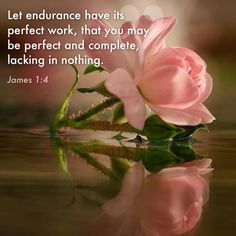
  1. Perseverance.  Thank you for that glorious promise in James 1:4–that perseverance in faith principles produces maturity and sound character. Thank you for the joy and peace that results—so much more satisfying that allowing frustration to fester!


9a2544d9327a7da1f434c3cfa2c08232


Since those days of listening to Mrs. T, have I always applied V-8 to difficult situations? No. Annoyance, bitterness, and a host of other negative emotions can still crop up as challenges arise. This post was much more for me than anyone else.

When the next problem occurs and I feel weak to handle it, I’m serving up some V-8!


(Art & photo credits:  www.quotes.gram.com; http://www.faithmessenger.com; http://www.pinterest.com; http://www.indulgy.com; http://www.pinterest.com.)


Read Full Post »

What might have been uppermost in Jesus’ mind the morning after his triumphal entry into Jerusalem? Surely his thoughts were already swirling around the inevitable suffering just days away.   Perhaps the emotional anguish that peaked in the Garden of Gethsemane (Luke 22:39-44) was already starting to build.

How did he maintain the presence of mind to continue teaching his disciples and the crowds, telling parables, and answering the religious leaders’ trick questions?


Scene 07/53 Exterior Galilee Riverside; Jesus (DIOGO MORCALDO) is going to die and tells Peter (DARWIN SHAW) and the other disciples this not the end.


Then, as the Last Supper, Judas’ betrayal, and the horrors of the crucifixion took place, how did he endure, much less maintain his calm and resolute demeanor?

The writer to the Hebrews reveals at least part of the answer: Jesus kept his focus on “the joy set before him” (12:2).

What might that joy have included?

  • Returning to heaven. No doubt he could vividly see in his mind the splendor and bliss of his home that he’d given up some thirty-three years before.
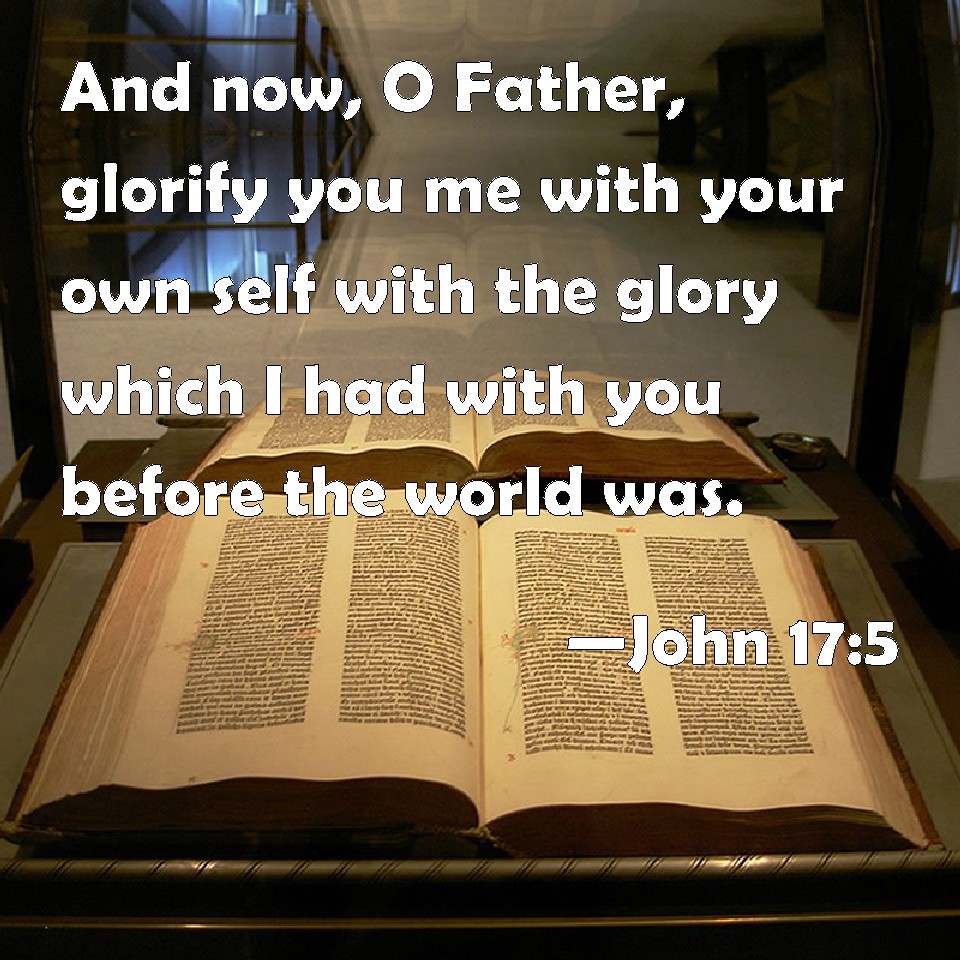
  • Returning to his Father. Jesus looked forward to being glorified with God, reveling in the glory he had enjoyed with the Father before the world began (John 17:5).


26765


  • Commanding angels, authorities and powers subjected to him (1 Peter 3:22). This privilege was not a self-aggrandizing end in itself. It was a means of aiding and rescuing his people–us (Acts 5:31).
  • Becoming our mediator and saving us from the natural consequence of our sin: eternal death (Hebrews 7:25).
  • Offering glory to God for the work he had faithfully and perfectly completed on earth (John 17:4).

These joys were set before Jesus. They provided sublime assurance of what was to come.

These joys helped to sustain him through horrific agony—agony that was swallowed up in anticipated and certain victory (1 Corinthians 15:54).


ac7e84ccd3f21b2fff7bc9c1293097e7


We, too, can fix our attention on the joy set before us. And just what do we have to look forward to?

  • Discovering heaven as our splendorous, blissful home.
  • Residing in the realm of our perfect Heavenly Father, the King of the universe.
  • Ruling with Jesus, at the right hand of God, as joint heirs of the kingdom (Romans 8:17, Revelation 20:6).
  • Offering glory and honor to the Lord (Revelation 4:11). I imagine a grand choir made up of all of us–millions of voices, singing heart-stirring melodies with intricate harmonies.  I see our arms raised toward the throne, reaching out in holy reverence toward our awesome King.

Years ago, a talented singer named Helen Lemmel (1863-1961) enjoyed the fulfilling life of a concert soloist, sharing her faith through song in many churches throughout the Midwest. For a number of years Helen ministered with evangelist, Billy Sunday, singing and song-writing for his crusades. (She composed over 500 poems and hymns in her lifetime.)

Suddenly in midlife Helen began to go blind, her husband left her, and other heartaches enveloped her as well. Through it all, however, the singer/composer maintained her faith and joy—all ninety-seven years of her life.

One of her best-known songs, perhaps, is “Turn Your Eyes Upon Jesus” (1918), written in the midst of her trials. You might recognize the chorus:


slide_31


(“Turn your eyes upon Jesus,

Look full in His wonderful face,

And the things of earth will grow strangely dim

In the light of His glory and grace.”)


Peace, determination, and strength result from focus—focus that’s riveted on Jesus and the joy set before us.


(Photo credits:  www.truthforfree.com; http://www.biblepic.com; http://www.pinterest.com; http://www.slideplayer.com.)

Read Full Post »

Ever try sleeping on a rock pillow? I, for one, can’t imagine actually falling asleep on such a hard surface.

The only person I know who had to try was Jacob of the Bible. (The story of that night is found in Genesis 28:10-22. It was also the subject of a previous post, which you can access here: Surely God Is in This Place.)


jacob


The scene above of Jacob resting on his rock pillow provides a worthwhile image for a Spurgeon quote I encountered recently:


“Use the Lord’s words as your pillows.

Lie down and [rest] in Him.”


Indeed, resting on the rock-solid assurances of God’s Word is wise advice, fostering peace within our spirits.

Just reciting scripture can provide effective comfort.

A good place to start? In the book of Beginnings. This example comes from Jacob himself:


fd3ddff270b84696468cc48b3a806d08


“Let us go up to Bethel where I will build an altar to God,

who answered me in the day of my distress

and who has been with me wherever I have gone.”

–Genesis 35:3 (NIV)


Notice this excerpt is seven chapters and many years past the “rock pillow” event. Jacob is no longer a young man; he’s seventy-seven as he embarks for Bethel. And during those intervening years, Jacob has experienced many days of distress as he:

  • ran away from home (Genesis 27-28),
  • worked for his Uncle Laban who took advantage of him (chapter 29 and 31:7), and then
  • set out on his own through enemy territory to return to Bethel, the home of his father, Isaac (chapters 35).

But in the verse quoted above, Jacob recognizes that through all those challenges, God demonstrated his favor, because with the Lord’s presence comes his guidance, provision, and protection.

I, too, have experienced distressing days. Who hasn’t?

But God has been with me through them all—circumstances such as these:

  • When my husband’s boss caused turmoil for us week after week,
  • When we received the unwelcome news (five times) that we were being moved to another church*, and
  • When pressure from certain administrators and parents caused ongoing stress at school (during my twenty-six years in the elementary classroom).

Yet now, looking back, I see that in each situation God was teaching me patience, perseverance, and reliance upon him. In fact, some distressing experiences were undoubtedly designed specifically to accomplish those benefits.

From the advantage of hindsight, I can see the pathway God prepared, to get us/me through those stressful days, and how he richly blessed on the other side.

As Charles Udall observed:


2b474d3c1facc1c1b3f28bfe6339057d

(“In life you will always be faced with a series of

God-ordained opportunities

brilliantly disguised as problems and challenges.”)


I wish I could say that through all of life’s challenges I’ve rested completely on pillows of promise and statements of faith. That wouldn’t be true. But I know that scripture-promises, prayer, and faith-statements have made a positive difference. And the strength of my faith did grow through each experience.

Notice Mr. Udall says we’ll always face challenges. I can give in to the distress of that fact or choose to rest on the pillow of promise that God is preparing me for what lies ahead as well as preparing the way through it.

*     *     *     *     *     *     *     *     *     * 

I praise you, Father, for being an all-knowing God.  No event catches you by surprise; you know every challenge I may yet face. Like Jacob, I think back upon stressful days of the past and affirm your comforting presence, attentive provision, and wise guidance through it all. May I be mindful to rest on your rock-solid pillows of promise from this day forward.

Art & photo credits:  www.keyway.ca; http://www.pinterest.com (2).


*For those who may not know, my husband was a pastor for forty years.

Read Full Post »

eaab14ad79f81660b93f3032488a12eddc3a7b6e

Granville Sharp

(b. November 10, 1735)

Never had thirty-year old Granville Sharp seen such injuries: large swellings about the neck and head, gaping wounds, and a face hideously swollen, streaked with trails of dried blood.

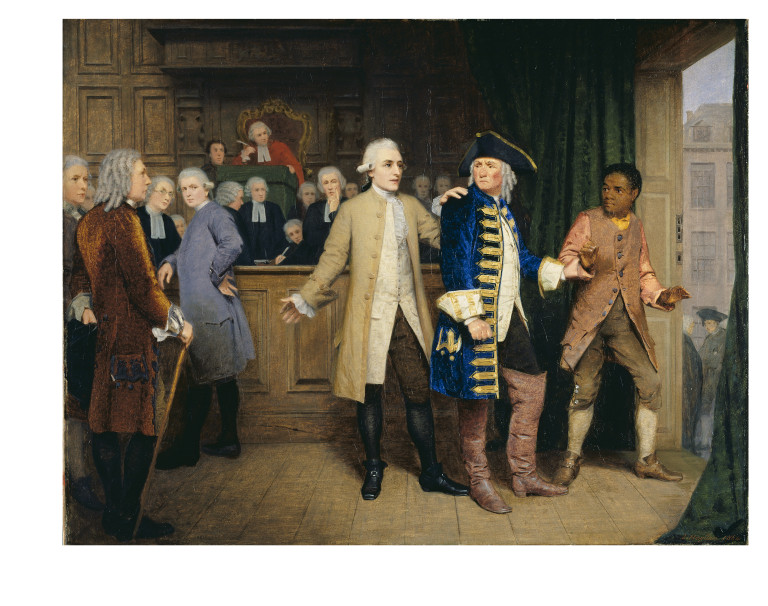
The victim: Jonathan Strong, a young slave who’d been pistol-whipped by his master and left to die on the streets of London, 1765. Somehow Jonathan made his way to the house of Granville’s brother, William, a doctor. And there he sat, waiting in line outside William’s office, when Granville stopped by the house.

quote-the-boy-seemed-ready-to-die-he-almost-lost-the-use-of-his-legs-and-feet-and-to-compleat-his-granville-sharp-266227

The encounter would change Granville’s life forever.

His heart went out to the slave; they became acquainted. Jonathan’s story horrified Granville. To make matters worse, when Jonathan recovered, the master demanded he be returned. Granville determined to help Jonathan, even though he’d “never opened a law-book except the Bible in [his] life” (1).

Those defending the slave owner were evidently intimidated by the case Granville put forth. After a two-year legal battle, they never brought Jonathan’s case to trial.

7149324-Granville_Sharp_1769_Liverpool

Sharp helped other slaves win their cases against tyrant owners, becoming more and more involved in the abolition of slavery. One case in particular, that of James Somerset, helped to set an important precedent in England.

Somerset had escaped his master, been recaptured, and was about to be shipped to a Jamaican plantation when Granville and others became involved.  They helped the slave win his freedom, arguing that “no master ever was allowed here (in England) to take a slave by force to be sold abroad because he deserted his service…therefore the man must be discharged” (2).

2006BB2012

Granville remained active in the abolition movement his entire life. He wrote frequent letters to many leaders in America and Britain, influencing their thinking about slavery and earning their respect. Among them: Dr. Benjamin Rush (signer of the Declaration), John Jay (first Chief Justice of the U.S. Supreme Court), Benjamin Franklin, and John Adams in America; John Wesley, William Wilberforce, the Archbishop of Canterbury in England; and General Lafayette of France.

But that was only one of his passionate pursuits. Another concern was the illegal treatment of the colonists in America. He published books and pamphlets to help their cause, catching the attention of Ben Franklin during one of his visits to England.

Granville gave Mr. Franklin 250 copies of his pamphlet about people’s natural rights as supported by the British constitution. Franklin sent them to America where several presses reprinted the booklet.

Sharp’s pamphlet influenced Thomas Jefferson as he drafted the Declaration of Independence, evidenced by at least several similarities in both documents.

In 1775, when war broke out in the colonies Granville was employed in the ordnance office (handling all matters concerning weaponry). He wanted nothing to do with the war, so he wrote to his employer: “I cannot return to my ordnance duty whilst a bloody war is carried on, unjustly as I conceive, against my fellow-subjects” (3).

Granville’s brothers agreed to support him, enabling him to pursue his studies, causes, and writing. In fact, beginning with his first book in 1765, Sharp published a new work, sometimes more than one, almost annually for the rest of his life (5).

sharp-title-page-Cropped-543x465

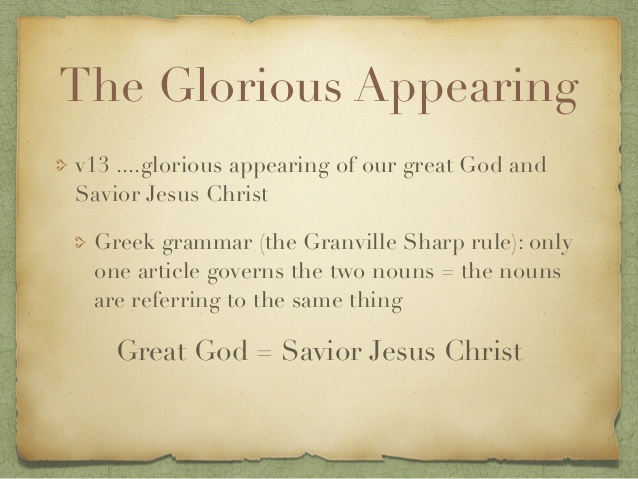
One of those books (with a thirty-six word title!) is now known as “Sharp’s rule” (1777). With his self-taught knowledge of ancient Greek, Granville demonstrated how eight passages of the New Testament had been mistranslated by some Bible scholars, leaving the reader to surmise that God the Father and God the Son were separate Beings. Sharp presented a thorough explanation that God the Father, Son, and Holy Spirit are One, according to the original Greek texts (4).

our-hope-the-appearing-of-jesus-christ-16-638

Yet Granville accomplished still more. In the mid-1780s, Sharp teamed with a Mr. Smeathman to establish a colony for freed English slaves on the west coast of Africa. (Many of them were homeless, subsisting on the streets of London with no hope of improving their lives.) But Smeathman died shortly after he and Granville established their partnership. Sharp continued the work nevertheless.

In April of 1787, the dream for that African colony became a reality with the founding of Sierra Leone. The colonists named the first settlement, Granvilletown.

220px-Province_of_Freedom

Sharp accomplished even more, as he served on a number of boards and societies, in support of mission efforts and philanthropic concerns.

Yet he did not see the fulfillment of his greatest dream—the abolition of slavery. The battle he began with the case of Jonathan Strong in 1765 finally ended in 1833, when slavery was completely abolished in the British Empire.

Sharp died in 1813.

Granville_Sharp's_tomb_inscription

His chief biographer, Prince Hoare, said that as he began to study Sharp he intended to “draw a veil over peculiarities of Mr. Sharp’s character,” out of respect for the dead. But when he finished his careful and comprehensive research, he realized Sharp’s “character to be of that high and dignified nature, to leave no necessity for such a precaution…I see nothing to veil.” (6).

Like many other forgotten heroes, Granville Sharp is among that great cloud of witnesses who fixed their eyes on Jesus and ran the race marked out for them (Hebrews 12:1-2a).

May his example and that of others–their faith, integrity, perseverance, and passion–push us along in the race marked for us.

______________________________

  1. history.ac.uk
  2. national.archives.gov.uk
  3. Dr. Daniel Wallace, www.bible.org
  4. christianity.com
  5. brycchancarey.com
  6. Dr. Daniel Wallace, http://www.bible.org

(Art & photo credits:  www.bbc.co.uk; izquotes.com; http://www.virtualtourist.com; http://www.collections.vam.ac.uk; http://www.wikipedia.org; http://www.liverpoolmuseums.org.uk; http://www.slideshare.net; http://www.en.wikipedia.org; )

Read Full Post »

190-Distracted-While-Praying-1

Are you ever distracted while trying to pray? I am!  One minute I’m deep into intercession for a friend, the next I suddenly think to purchase Christmas cards today (triggered by thoughts of friends, you see).

Why is it my thoughts can drift so easily? How is it possible to lose focus while in the presence of Almighty God? Such a frustration. Guilt-producing, too.

Perhaps strategies such as these will be helpful:

  • Light a candle.

Let it symbolize the presence of Jesus, our Light of the world, with us as we pray.

candle

  • Picture a quiet place with Jesus.

For years my quiet time took place in the early morning hours before anyone else got up. For Bible study, I spread my books and papers across the kitchen table. For prayer time, I spread my arms across the table, visualizing Jesus sitting on the other side from me and holding my hands.

Our current home does not lend itself to this arrangement. My quiet time space is in our guest room/office at my computer armoire. There’s no table to spread my arms across. I need a new visualization.

Perhaps this photo?

2a542f1fea56b0061e673dd49d17150b

I can imagine Jesus and me sitting lakeside, enjoying the stunning view as I present my requests to him (Philippians 4:6).   We can still “hold hands,” as I rest my arm on the arm of the office (imaginary Adirondack) chair.

  • Keep the to-do list handy.

When a task or errand comes to mind, like purchasing Christmas cards, write it down. Then those pesky thoughts beginning with, “Oh! Don’t forget to…” can be put aside.

  • Pray about the distracting thought, if it’s related to a present concern.

For example:

“Lord, I’m sorry the meeting this afternoon keeps popping into my mind. Help me to rest in the knowledge you’ll be with me, providing the words to say as I rely on you. Thank you for your promise in James 1:5 that assures me of your wisdom, simply for the asking. I’m asking! And I trust you for the results that will most benefit everyone involved.” 

  • Pray out loud.

Even whispering the words may be enough to foster focus. 

  • Pray the scriptures.

The psalms work well for this exercise. Skim-read until a key word catches your eye. (If you’ve underlined meaningful passages, focus on those.) Chances are it will not take long to identify an applicable verse.

For example, a friend is very unhappy in her current job. How can I pray for her? Skimming quickly through the underlined verses of psalms, I come to:

6cdd17c921abfa9ef1d6d59dd8a29c44

(“From the Lord comes deliverance.

May your blessing be on your people.”

— Psalm 3:8)

And I pray:

Oh, Father, deliver Emily** from her situation at work by removing her from that office, changing circumstances within the office, or giving Emily a fresh perspective that releases her from the stress. Surround Emily, I pray, with blessing: delightful coworkers who will bring her joy and affirmation, encouragement from her boss, and maybe even a raise!

 As my mind focuses on ways the verse might apply to Emily, I find distractions are held at bay.

Yet, in spite of our best efforts, lapses into distractions will occur. I take great encouragement from the wisdom of St. Francis de Sales. Perhaps you will, too: If all you do is return to God’s presence after distraction, then this is very good prayer.  Your persistence shows how much you want to be with God.

*     *     *     *     *     *     *     *     *     *

How do you counter distractions during prayer? Please share your strategies in the Comments section below!

**Name changed.

Art and photo credits:  www.printmytract.com; http://www.refiningtruth.com; http://www.pinterest.com (3).

Read Full Post »

(Steve and I are enjoying time with family this week.  I’ll return soon with  new posts.  Meanwhile, I’ll reblog previous ones.  Hopefully you’ll find them meaningful again, or perhaps for the first time.  The following post was first published June 13, 2013.)

From stage left, she crosses the platform in confident strides.  One hand waves in sweeping arcs to the large audience. The crowd claps and cheers.

In the other hand, with confident ease, she holds the microphone.  And the smile—big and broad, bright white teeth visible even from the balcony.

Able to sing like a nightingale and articulate truth with conviction. Impacting thousands.

Now there is someone God is using in a powerful way, whispers an accusing voice.  Look at her significant contribution in the Kingdom of God. No doubt she’s highly valuable to him.  So what are you doing that’s important?  Your spot in the scheme of things is nothing compared to that shining star on the stage.  You might as well face the truth:  You are unimportant.  The ship of Significance has passed you by.

Sound the least bit familiar? You’re not alone. Demons use those same lies on a lot of us. Evil spirits aren’t very creative, are they?

But here’s the truth of the matter:

Each of us is the workmanship of God (Ephesians 2:10). The Greek word, workmanship, sometimes has the connotation of “work of art.” You are a work of art—carefully designed and meticulously executed.

The verse goes on to explain we’ve been created to do good works. It does not say the same work. Diversity of personality, talent, and interest are necessary among the children of God in order that all his plans are accomplished.

He made each of us unique, to fulfill a personalized plan. Every now and then we see such a plan unfold so clearly, we know God engineered the circumstances. Sometimes it’s a unique set of talents or gifts that work together sublimely to meet a need.

Take, for example, the naturally talented writer, who happened to grow up in a bilingual home, and studied Christian Education in college. She was especially prepared by God to write Spanish curriculum for a Christian publishing company.

Other times the plan is much less obvious, and we must trust that the task before us–caring for our families, teaching that Sunday School class, working at the homeless shelter–is indeed accomplishing divine purpose.

What we can know for certain:  each of us is valuable to God (Matthew  10:29-31).

Believe that he has prepared in advance good works for you to do (Ephesians 2:10).  Take joy and satisfaction from completing those good works.

It may not be walking across a stage with a microphone. It might mean walking across the kitchen with a rolling pin—to bake cookies for the neighbors.

That’s just a small, insignificant thing, you say?

Think about this: What if God takes particular pleasure in small things?

Personally, I’m fascinated by small things. Miniatures, doll houses, petit-point, babies!

Scripture gives us indication that God does indeed love small things as well:

Sparrows (Matthew 10:29-31).

Two little mites given by a widow (Mark 12:41-44).

Five small barley loaves and two small fish (John 6:1-13).

Bethlehem (Micah 5:2).

Let’s never again allow those little demons of abasement to put us down. God has promised: “I will bless those who fear the Lord—small and great alike” (Psalm 115:13, emphasis added).

You see, in God’s sight, we’re of equal worth.

Read Full Post »

(Steve and I are enjoying time with family this week.  I’ll return soon with  new posts.  Meanwhile, I’ll reblog previous ones.  Hopefully you’ll find them meaningful again, or perhaps for the first time.  The following post was first published September 13, 2013.)

Women's Bible Study

“I know we have to persevere and not give up on what we sense God wants us to do,” Melissa shared at Bible study.  “And from the lives of Joseph, Moses, Daniel, and others in the Bible, I know God rarely smooths out  the path perfectly.  But what I want to know is how to proceed.  I’d like steps to follow!”

Heads nodded around the table, mine included.  Wouldn’t it be nice if God laid out for us to see ahead of time step one, step two, and so on toward his perfect plan?

That idea has been circulating in my brain for nearly a week now.  Here are some observations.

1. God values our growth in faith more than our comfort in a revealed plan.   

If it was best for us to know his plan in advance, then that’s what God would provide.  Instead, he allows our faith to be tested, in order to build our character.  That is important to him:

“The Lord detests men of perverse heart but he delights in those whose ways are blameless” (Proverbs 11:20).

2.  God values the process of spiritual growth, not just the final outcome of a purpose fulfilled.

Times of challenge give us opportunity to develop maturity more readily than times of ease.  What might that development include?

  • Self-discipline–when we tackle difficult tasks.  Granted, the Holy Spirit empowers us (Galatians 5:22-23), but we must give ourselves over to him.  How?  Through frequent prayer, offered throughout the day, consistently asking for his guidance and help.
  • Self-denial–by doing without.  However, the attentive person will soon discover much to celebrate that may have been missed otherwise:  the stunning display of God’s creation, the joy of love and laughter with family and friends, the peace and strength from frequent communion with God.  Suddenly, gratitude flourishes in the heart, and what has been given up doesn’t seem so important anymore.
  • The full meaning of love–when given opportunity to respond in kind ways to difficult people.

None of these valuable traits of discipline, selflessness, and love would fully develop without lessons of experience.

3.  God values the development of our prayer lives–not for his benefit, but for ours.

Jean Nicolas Grou, a Jesuit priest of the 1700s, described healthy prayer as humble, reverent, loving, confident, and persevering.  As we practice those traits in our prayer lives, surely they will overflow into our character, in our actions and reactions.

Patient pursuit, then, is best applied to God’s ways, and then to God’s plan.

(photo credit:  http://www.st-tims-church.org )

Read Full Post »

taste_041_hannah_adams_harding

Hannah Adams

(born October 2, 1755)


“Hannah!” Silence. “Han-nah?” Still silence. “HAN-NAH A-DAMS!” her father bellowed.

Hannah finally came scurrying into the keeping room, her long skirts swishing. “I’m sorry, Father.   I was reading one of your books out on the porch and didn’t hear you.” The proof was in her hand, her thumb tucked between the pages.

He should have known. Hannah always seemed to have her nose in a book when chores were done, and easily tuned out the world while reading.  He himself was an avid reader with a large personal collection of books. How could he fault her for a strong desire to learn?

“Yes…well…I’ve something…rather disappointing to share with the family,” he faltered, “and there’s no time like the present, as they say.”

With that introduction, Mr. Adams sat his family down to share dismal, embarrassing news: his business of selling books and English goods had failed; his inherited fortune was gone.

Hannah was only seventeen, but willingly did her part to help support the family. She taught school, tutored, as well as crafted and sold bobbin lace. However, what spare moments Hannah found she continued to devour her father’s books. And with her outstanding memory, she retained much of what she read. Hannah also began to write.

Mr. Adams generated income by taking in Harvard divinity students as boarders and tutoring them. One student gave Hannah a book about the world’s religions. As she read about the Christian denominations, Hannah (a Congregationalist) became more and more disturbed.

This author isn’t offering subjective facts; he’s inserting his own negative opinions about each one–except his own denomination, she thought. I could construct a better volume than this—an unbiased one. And the proceeds could further help the family.

Hannah began her new reference work in 1778. Her intent was “to avoid giving the least preference of one denomination above another and to present the arguments and sentiments of each sect in believers’ own words, according to the group’s general collective sense” (1).

The result: The Alphabetical Compend of the Various Sects Which Have Appeared from the Beginning of the Christian Era to the Present Day. It was published in 1784 and sold well. But Hannah did not benefit; the agent absconded with most of the proceeds from the first edition.

Six years of diligent, painstaking work appeared wasted.

A Bostonian minister, James Freeman, helped Hannah gather a number of subscribers for the second edition (1791). It was even more profitable than the first, and finally Hannah enjoyed a small income from her efforts. As the years passed, she produced two more editions (1801, 1817). Hannah Adams was now the first woman of America to become a professional writer.

In 1799, her Summary History of New-England was published, followed by The Truth and Excellence of the Christian Religion Exhibited in 1804.

In between, Hannah lobbied Congress for the first copyright law (as a result of her first publishing experience, perhaps?). She sent a petition dated July 27, 1789. The law went into effect the following spring.

Several prominent intellectuals in Boston greatly respected Hannah’s work, and became her patrons. They even established an annuity for her. In 1810, she left her home in Medfield, Massachusetts and moved to Boston, where she soon joined company with literary friends “in whose conversation I enjoyed the feast of reason and the flow of soul,” she wrote. (A gifted wordsmith, indeed.)

One of those friends, Joseph Buckminster, allowed her access to his private library. There she researched two works: A History of the Jews (1812), and Letters on the Gospels (1824). In all, Hannah wrote nine books, and became one of the most famous women in America at the time.

People remarked that Hannah was a frail, timid, and modest woman. The latter trait was referenced in an article based on her memoirs, published in The Ladies Magazine after her death (1831):

“She must have had much more to tell of the history of her mind, its struggles, and trials, and triumphs, and the effect of all these in forming her character. But her humble opinion of herself induced her to attach less importance to trifling details than her readers would have done” (2).

Hannah also demonstrated:

  • loyalty–especially to her family,
  • inner strength in the time of trial and disappointment,
  • perseverance and patience, as she conducted careful research to produce each volume of history.

You may wonder if Hannah was related to John Adams, our second president, or his son, John Quincy Adams, the fourth president. She was their distant cousin. In fact, Hannah once visited John Adams’ home, staying for two weeks. She spent most of her time–(Care to guess?)– in the library.

It’s no wonder that, in her girlhood dreams of heaven she said, “[My] first idea..was of a place where we should find our thirst for knowledge fully gratified.”  Indeed, one of the joys of heaven will surely be just that.

Hannah Adams is a woman I look forward to meeting in heaven. And I know just where I’ll find her.*

Notes:

  1.  www.womenhistoryblog.com
  2. http://www.questia.com

Other sources:  www.christianity.com; www.bostonathenaeum.org; www.womenshistory.about.com; www.librarycompeny.org; www.brittanica.com.

Portrait:  www.bostonathenaeum.org

*in the celestial library!


Read Full Post »

3571053_orig

(Remember Susan Boyle?)


Makeovers. What a remarkable change-of-appearance can be achieved with a becoming hairstyle (and maybe color-enhancement!), deftly applied make-up, and well-fitted clothing.  Add the benefit of plastic surgery and a person hardly resembles her former self.

But the transformation of someone’s face and body doesn’t begin to compare to the transformation of someone’s spirit.


tumblr_m8s31eBVQU1qbwmglo1_1280


Anyone who belongs to Christ has become a new person.

The old life is gone; a new life has begun!

–2 Corinthians 5:17 (NLT) 


Notice: We’re not just improved and beautified. Jesus remakes each of us into a brand new person.

And what might that newness include? Here’s a partial list:


  • New purpose


357191882884919061_1401068073

(“Whatever you do, do it all for the glory of God.”

–1 Corinthians 10:31b)


Those who follow this directive discover an interesting phenomenon: honoring God brings satisfaction and fulfillment to us. (By the way, God is not on some ego trip, demanding us to give him all the glory. He desires his splendor and benevolence to be evident everywhere, so others might be drawn to him.)


  • New attitude resulting in new character


 e2


(“Put on your new nature and be renewed

As you learn to know your Creator and become like him.”

–Colossians 3:10)


The more we know of God and appreciate all his benefits, the more we want to please him by following his example. That new attitude impacts every aspect of our lives.


  • New perspective


Psalm-23-6

(“Surely goodness and love will follow me all the days of my life.”

–Psalm 23:6)


Just knowing God has our best interest at heart is enough to renew energy and hope.


  • New power to face what comes


d7d8bc8fd004fe850361444ecf5acb49

(“[He] is able to do immeasurably more than all we ask or imagine,

according to his power that is at work within us.”

–Ephesians 3:20)


Think of it: the same power that controls the universe is at work within us. Tell me again why we revert to worrying?!


  • New emotions, such as peace and joy


coffee-cupverses7-28-638

(“The kingdom of God is not a matter of eating and drinking,

but of righteousness, peace, and joy in the Holy Spirit.”

–Romans 14:17)


We do not need to live at the mercy of our circumstances. With God as our constant companion, we can experience peace and joy in spite of what happens. The Bible is full of examples of people who lived that way: Joseph, Daniel, Peter, and Paul readily come to mind.


  • New confidence

Proverbs 3.26 

(“The Lord will be your confidence.”

–Proverbs 3:26a)


God is not only with us, he is our Protector, Provider, and Guide.  As we become increasingly aware of his faithfulness, our trust grows. Trust = confidence.


  • New opportunities and blessings


ef03f9e29f19624eaa836b41accd6d80

(“The faithful love of the LORD never ends!

His mercies never cease. Great is his faithfulness;

his mercies begin afresh each morning.”

–Lamentations 3:22-23 (NLT)


Experience tells us that when we say “yes” to Jesus, God does not bestow the full measure of all of these wonderful new things instantaneously. God told Isaiah: “Behold I am doing a new thing” (Isaiah 43:19).  That hints at process. We’re made new, but growing into that newness.


843ae42db665b78c33102645c1850579


Think of buying a coat in the fall that’s a little too big for your child. She owns the coat, but it doesn’t quite fit yet.  Within a matter of weeks however, the sleeves hit the wrist not the fingertips, and the shoulder seams sit properly–no sagging down the arms.

Might it be that when we invite Jesus in our lives, our spirits are made new, but we don’t quite fit into them yet? Then, as we cooperate with Holy Spirit and his fruit grows within us (Galatians 5:22-23), we steadily become more Christ-like, day by day.

*     *     *     *     *     *     *     *     *     *

Oh, Father, I don’t want to cling to aspects of the old me—things like worry, perfectionism, selfishness, and pride. I want to embrace everything new that YOU bring to my life, to become my true self—the one you designed me to be.**


**Based on idea from Jesus Calling by Sarah Young, Thomas Nelson, p. 381.

Photo credits:  www.joblogging.weebly.com; http://www.ilovemybible.tumblr.com; http://www.pinterest.com; http://www.dayofgrace.me; http://www.faithgateway.com; http://www.pinterest.com; http://www.slideshare.net; http://www.plus.google.com; pinterest.com (2).

Share your thoughts in the comment section below.  I’d love to hear from you!

Read Full Post »

Evidence confirms: God loves to take ordinary people living ordinary lives and accomplish impossible feats. Examples include:

www-St-Takla-org--Bible-Slides-genesis-240

  • An imprisoned slave, elevated to prime minister in a matter of minutes
  • A village shepherd boy who became the greatest king of his nation
  • A widow who took a stranger into her home, and witnessed miraculous events
  • A common girl, chosen as queen in a foreign land and became the savior of her people

No doubt you recognize these persons. We would never consider them ordinary because of how God used them:

  • Joseph
  • David
  • The widow of Zarephath
  • Esther

But if we visited Joseph in prison before Pharaoh sent for him, if we passed by David watching his father’s sheep, if we ran into the widow of Zarephath at the village well, or if we met Esther in her cousin Mordecai’s home, would we have recognized greatness? Would we have known that these people were extraordinary? I doubt it.

We easily forget that what we see from our human perspective is never the whole picture. Only God has an omniscient view of circumstances and events—including past, present, and future.

Only God has the capability of weaving complex events to accomplish his purposes. And his work is always extraordinary. The wonders of creation offer undeniable proof.

nature-mountin-flowers

And since you are part of God’s wondrous creation, you are extraordinary. Yes, YOU!

That means:

Our seemingly ordinary lives, lived out through ordinary days, can have extraordinary significance, because God Almighty is orchestrating them.

That doesn’t mean we just sit on the sidelines and watch God work. Choices must be made:

  • Joseph chose to honor God in Potiphar’s house (Genesis 39:4), and in prison (v.22), long before his miraculous promotion from slave to prime minister.
  • David chose to spare King Saul twice, even though the king pursued David with the intent to kill David chose to wait for God’s timing for his coronation (1 Samuel 24, 26).
  • The widow of Zarephath (a town not in Israel) surely knew nothing of Elijah or his God when she met him at the town gate. There was no reason to take him in; she had nothing to offer him. As it was, the woman and her son were starving. The land was parched dry by famine. But she chose to believe his assurance that God would supply their needs. And miracles resulted (1 Kings 17:7-24).
  • Esther chose to intercede for her people, even though it may have led to her own death. She saved the Jewish captives in Persia from annihilation (Esther, ch. 4, 5).

Esther-and-the-King

We never know when a decision or choice may directly or indirectly cause significant, extraordinary results.

Therefore, our decisions must be based on scripture-based convictions and values. It is God-influenced choices, day by day, even moment by moment, that will lead us to extraordinary living, accomplishing divine purpose.

But be prepared. We may not know the significance of some of our choices until we reach heaven.

Think of Ruth, who chose to follow her mother-in-law, Naomi, from her home in Moab, back to Naomi’s home in Judah. She also decided to follow Naomi’s instructions and glean barley in Boaz’ field. At the end of the beautiful drama it is revealed that Ruth became the great-grandmother of King David and a descendant of Jesus himself, and a book of the Bible is devoted to her story. What an honor for a woman not even from the house of Israel!

ruth

But Ruth never knew.

Extraordinary people live extraordinary lives when they’re led by God–choice by choice, decision by decision. And they leave the results in his capable hands.

(Art & photo credits:  www.St-talkla.org; http://www.1decision1day.com; http://www.ammiministry.org; http://www.joyfulphpist.wordpress.com.)

Read Full Post »

« Newer Posts - Older Posts »

When the House is Quiet

Impressions Becoming Expressions

Mitch Teemley

The Power of Story

Still Traveling

Impressions Becoming Expressions

Living Our Days

Gaining a heart of wisdom

He Said What?!

I'm Patty, and my husband and I are living with our adult son who has autism and epilepsy. I love sharing lessons learned from life around me, especially life with Aaron.

Meditations of my Heart

Impressions Becoming Expressions

Linda Stoll

Impressions Becoming Expressions

Signora Sheila

Notes on Life, Faith & Italy

Heidi Viars

Finding the Image of God