Feeds:
Posts
Comments

Archive for the ‘Prayer’ Category

every-day-we-should-hear-at-least-one-little-song-read-one-good-poem-see-one-e-403x403-nk4ndt


(“Every day we should hear at least one little song,

read one good poem, see one exquisite picture,

and, if possible, speak a few sensible words.”

–Johann Wolfgang von Goethe, 1749-1838)

Author and lawyer, von Goethe, was much too easily satisfied.

Yes, a day without music would be dreary.

Poetry does feed the soul and intellect in ways that prose does not.

An exquisite picture does lift the spirit.

It’s also true that sharing a few words of wisdom can be satisfying.

Yet, is that enough for one day?  What about:

  • Offering the music of “thank you” or “you go first” or “I love your smile?”
  • Reading and pondering several verses of scripture?  That will feed the soul and intellect even more than poetry.
  • Creating an exquisite picture of kindness by finding ways to be helpful and engaging?  Such artful living often impacts people more than we realize.
  • Speaking a few sensible words of encouragement, and feeling uplifted ourselves?

But beyond von Goethe’s suggestions of music, poetry, art, and wisdom are many more possibilities for a day full of delight.  We can:

 

scooter-girl


  • Savor a pleasurable moment or memory–better yet, when the two happen back-to-back.  Just today a neighbor girl whooshed by on her scooter, and I was reminded of happy, long ago days doing some whooshing of my own on bicycles or skates.  I smiled.
  • Make a discovery or learn something new.  Read.   Listen.  Think.  Recently in C. S. Lewis’s The Weight of Glory (Eerdman’s Publishing, 1949), I came across this statement:  “Obedience is the road to freedom, humility the road to pleasure, unity the road to personality” (p. 36).  Well deserving of some careful pondering, I think.
  • Celebrate at least one small miracle of nature:  a magnificent cloud formation, bright green growth on the tips of evergreen boughs, a cardinal’s song echoing through the woods.
  • Engage the creative side:  draw (even if it’s doodling), paint (even if it’s adding color to someone else’s art), or write (even if it’s in a journal that no one else will see).
  • Offer a smile–wherever we are.  “Every time you smile at someone, it is an action of love, a gift to that person, a beautiful thing.  Peace begins with a smile” (Mother Teresa).  Better yet, add words–a cheerful greeting, a compliment, a bit of gratitude.

 

1d01b85e5982b13020291f2742000bdc


  • End the day by counting blessings.  Drift off to sleep in an attitude of prayer–a prayer such as this:

*     *     *     *    *     *     *     *    *     *

Thank you, Father, for your gifts that offer daily delight–gifts like the warm pleasure of childhood memories bubbling to the surface unexpectedly, discoveries that challenge the mind and inspire the soul, and miracles of nature that amaze.

Thank you, oh God, for creating us in your image, including the ability to imagine, design, and produce.  Thank you for the deep satisfaction of the creative process.

And thank you for the astounding privilege to be a positive influence in this world, an ambassador for your Son.
 

50702841368e60c6ee2fb6cc62167f23

(Art & photo credits:  www.doublequotes.net; http://www.beactive.com; http://www.pinterest.com (2).

Read Full Post »

(reblogged from 10-24-13)

“Mail’s here early today!” called Lorna, as she entered the kitchen.

Oh, that was good news. Living far from home in Quito, Ecuador made letters a very precious commodity.

“Terrific!” I responded, and dashed upstairs to get my keys.

Lorna and her husband, Elbert, served as missionaries with HCJB. I was a short-termer, living with them for the four months of my assignment as a preschool and kindergarten teacher.


250px-Hcjbquito


The compound was only a brief walk from the house. Once there, it was just a matter of unlocking the gate, heading down the main walkway a short distance, up a few steps, and into the post office alcove where all our mailboxes were located.

I jogged the whole way there and back, excited to read my mail. But no sooner did I return home than my head started to pound, nausea engulfed me, and all I wanted to do was lie down. Never mind those coveted letters!

My problem was not a sudden onset of the flu, but mild hypoxia–oxygen deprivation. Quito is located 10,000 feet above sea level in the Andes Mountains.

My experience (as well as those of countless others) proves: we humans require oxygen—lots of it.

Even folks who live near sea level can suffer from lack of oxygen, because they’ve become accustomed to shallow breathing. Their bodies never receive enough oxygenated air, causing them to feel short of breath and anxious.

On the other hand, research has proven that deep breathing helps us manage stress and anxiety, lower blood pressure and heart rate, and even spark brain growth. By not taking slow, deep breaths now and again, we deprive ourselves of these benefits.

M-m-m. Reminds me of Ecclesiastes 2:10-11, where King Solomon lamented the results of shallow living: chasing after wealth, accomplishments, and pleasure. In the end, nothing gave him lasting satisfaction and fulfillment.

Shallow living brings on symptoms in the spirit, similar to oxygen deprivation in the mind and body: heartache, fatigue with life, nausea from repetitive, meaningless activity, and shortness of temper.

In contrast to Solomon’s lament in Ecclesiastes is Paul’s praise to God for the power and strength of deep living:

“Oh, the utter extravagance of his work in us who trust him—endless energy, boundless strength” (Ephesians 1:19, MSG)!

Deep living happens when we breathe in God’s strength with a prayer, his wisdom and encouragement with a scripture, his joy with a song.

Deep living happens when we practice his presence as automatically as we breathe.

And how do we do that, “practice his presence?”

By pausing frequently throughout each day, to turn our attention to God.

I might say such things as:

  • Thank You, Lord, for this new day. Work through me to accomplish your purpose.
  • I love you, Heavenly Father. Thank you for filling my heart with peace and joy every time I turn my attention to you.
  • Thank you for your power at work in me as I complete this task.
  • The wonders of your creation–graceful tree branches dancing in the breeze, lyrical songs of the mockingbirds, delicious aromas of pine and orange blossoms–They make my heart sing with praise!
  • Oh, Lord, I shouldn’t have spoken to Mary like that. Forgive me, I pray. Help me to think before I speak. And yes, I will apologize to her.

Refreshing. Energizing. Purifying. Like a deep breath of oxygen.

Shallow breathing causes a lesser quality of life. So does shallow living.

Deep breathing fosters strength of mind and body. Deep living does that and more.

Deep living radically transforms the spirit.

Let’s breathe/live deep!

* * * * * * * * * *

What deep living habits help you practice the presence of God?

(photo credit: http://www.wikipedia.com)

Read Full Post »

Dear Father,

Christmas 2015 is almost here. Soon, all preparation will have to cease.

However (as You well know), my to-do list is still not complete; I’m going to have to prioritize and leave some things undone. That’s probably just as well, so my OCD tendencies don’t win over reasonableness!

But even as I try to settle myself, to pray and worship You on this holy day of Christmas Eve, distracting thoughts continue to ping around in my brain:

  • Did I dust the windowsills in the guest room? ‘Can’t remember.
  • Hey! We now have an evergreen tree in the yard. I could clip off some low branches and put them in the deck planters. That might look pretty.
  • Don’t forget to make sure the oil lamp is clean and ready for lighting.

I keep writing these thoughts down so they’re on paper and not in my head, because what I really want to do in these quiet moments is focus on You. I want to wonder again at the magnificent mystery of God becoming man. And I want to thank and praise You for sending Your Son to save me from the consequences of my sins.

Hush my mind, Lord; still my spirit as I pray…


bright-light


You are the God of the heavenly lights who lovingly sheds Your radiance over us.

With the angels, we praise You: “Glory to God in the Highest!”

All honor, splendor, and glory are Yours!

No one on earth or in heaven is as perfect and splendorous as You.

Who else can wrap himself in light as if it were a robe (Psalm 104:2)?

No one.  No one is Your equal.

What a comfort to know that Someone smarter and wiser than mere man is Sovereign over all.

What peace of mind You provide when I turn over to You the concerns of my life.


banner4


Light of the World, Lord Jesus,

All praise to You for leaving Your glorious, heavenly home to dwell with us.

You are our Emmanuel—God with us.

More astounding yet, Your dwelling is not a general presence in the world, but personal.

You actually reside within each of us—when we invite You to do so. Another magnificent mystery.

And You have promised never to leave us or forsake us (Hebrews 13:5).

In addition, Your Light provides guidance for our choices of action, strength to meet all life’s situations, confident hope for our future in heaven with You, and more.


eso1031a


Help me, I pray, to rise up and shine like a brilliant star, because Your. Light. Has. Come (Isaiah 60:1; Philippians 2:14-15)! What a glorious privilege–to reflect Your Light, pointing the way to abundant life in You.

How I praise you, Lord Jesus, that Your glory, splendor, and power have risen upon me–an incomparable blessing I now enjoy in part, but one day in resplendent totality!


(Photo credits:  www.talkofjesus.com; http://www.themelight.radiantwebtools.com; http://www.eso.org.)


Read Full Post »

190-Distracted-While-Praying-1

Are you ever distracted while trying to pray? I am!  One minute I’m deep into intercession for a friend, the next I suddenly think to purchase Christmas cards today (triggered by thoughts of friends, you see).

Why is it my thoughts can drift so easily? How is it possible to lose focus while in the presence of Almighty God? Such a frustration. Guilt-producing, too.

Perhaps strategies such as these will be helpful:

  • Light a candle.

Let it symbolize the presence of Jesus, our Light of the world, with us as we pray.

candle

  • Picture a quiet place with Jesus.

For years my quiet time took place in the early morning hours before anyone else got up. For Bible study, I spread my books and papers across the kitchen table. For prayer time, I spread my arms across the table, visualizing Jesus sitting on the other side from me and holding my hands.

Our current home does not lend itself to this arrangement. My quiet time space is in our guest room/office at my computer armoire. There’s no table to spread my arms across. I need a new visualization.

Perhaps this photo?

2a542f1fea56b0061e673dd49d17150b

I can imagine Jesus and me sitting lakeside, enjoying the stunning view as I present my requests to him (Philippians 4:6).   We can still “hold hands,” as I rest my arm on the arm of the office (imaginary Adirondack) chair.

  • Keep the to-do list handy.

When a task or errand comes to mind, like purchasing Christmas cards, write it down. Then those pesky thoughts beginning with, “Oh! Don’t forget to…” can be put aside.

  • Pray about the distracting thought, if it’s related to a present concern.

For example:

“Lord, I’m sorry the meeting this afternoon keeps popping into my mind. Help me to rest in the knowledge you’ll be with me, providing the words to say as I rely on you. Thank you for your promise in James 1:5 that assures me of your wisdom, simply for the asking. I’m asking! And I trust you for the results that will most benefit everyone involved.” 

  • Pray out loud.

Even whispering the words may be enough to foster focus. 

  • Pray the scriptures.

The psalms work well for this exercise. Skim-read until a key word catches your eye. (If you’ve underlined meaningful passages, focus on those.) Chances are it will not take long to identify an applicable verse.

For example, a friend is very unhappy in her current job. How can I pray for her? Skimming quickly through the underlined verses of psalms, I come to:

6cdd17c921abfa9ef1d6d59dd8a29c44

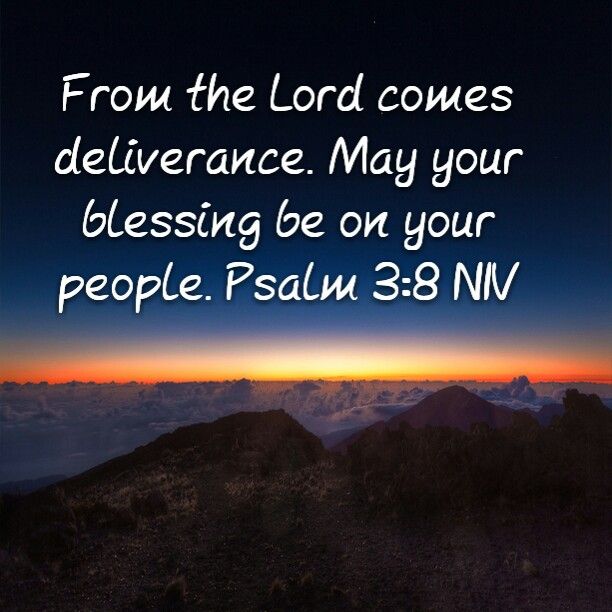
(“From the Lord comes deliverance.

May your blessing be on your people.”

— Psalm 3:8)

And I pray:

Oh, Father, deliver Emily** from her situation at work by removing her from that office, changing circumstances within the office, or giving Emily a fresh perspective that releases her from the stress. Surround Emily, I pray, with blessing: delightful coworkers who will bring her joy and affirmation, encouragement from her boss, and maybe even a raise!

 As my mind focuses on ways the verse might apply to Emily, I find distractions are held at bay.

Yet, in spite of our best efforts, lapses into distractions will occur. I take great encouragement from the wisdom of St. Francis de Sales. Perhaps you will, too: If all you do is return to God’s presence after distraction, then this is very good prayer.  Your persistence shows how much you want to be with God.

*     *     *     *     *     *     *     *     *     *

How do you counter distractions during prayer? Please share your strategies in the Comments section below!

**Name changed.

Art and photo credits:  www.printmytract.com; http://www.refiningtruth.com; http://www.pinterest.com (3).

Read Full Post »

(Steve and I are enjoying time with family this week.  I’ll return soon with  new posts.  Meanwhile, I’ll reblog previous ones.  Hopefully you’ll find them meaningful again, or perhaps for the first time.  The following post was first published September 13, 2013.)

Women's Bible Study

“I know we have to persevere and not give up on what we sense God wants us to do,” Melissa shared at Bible study.  “And from the lives of Joseph, Moses, Daniel, and others in the Bible, I know God rarely smooths out  the path perfectly.  But what I want to know is how to proceed.  I’d like steps to follow!”

Heads nodded around the table, mine included.  Wouldn’t it be nice if God laid out for us to see ahead of time step one, step two, and so on toward his perfect plan?

That idea has been circulating in my brain for nearly a week now.  Here are some observations.

1. God values our growth in faith more than our comfort in a revealed plan.   

If it was best for us to know his plan in advance, then that’s what God would provide.  Instead, he allows our faith to be tested, in order to build our character.  That is important to him:

“The Lord detests men of perverse heart but he delights in those whose ways are blameless” (Proverbs 11:20).

2.  God values the process of spiritual growth, not just the final outcome of a purpose fulfilled.

Times of challenge give us opportunity to develop maturity more readily than times of ease.  What might that development include?

  • Self-discipline–when we tackle difficult tasks.  Granted, the Holy Spirit empowers us (Galatians 5:22-23), but we must give ourselves over to him.  How?  Through frequent prayer, offered throughout the day, consistently asking for his guidance and help.
  • Self-denial–by doing without.  However, the attentive person will soon discover much to celebrate that may have been missed otherwise:  the stunning display of God’s creation, the joy of love and laughter with family and friends, the peace and strength from frequent communion with God.  Suddenly, gratitude flourishes in the heart, and what has been given up doesn’t seem so important anymore.
  • The full meaning of love–when given opportunity to respond in kind ways to difficult people.

None of these valuable traits of discipline, selflessness, and love would fully develop without lessons of experience.

3.  God values the development of our prayer lives–not for his benefit, but for ours.

Jean Nicolas Grou, a Jesuit priest of the 1700s, described healthy prayer as humble, reverent, loving, confident, and persevering.  As we practice those traits in our prayer lives, surely they will overflow into our character, in our actions and reactions.

Patient pursuit, then, is best applied to God’s ways, and then to God’s plan.

(photo credit:  http://www.st-tims-church.org )

Read Full Post »

(Following is a personalized version of Psalm 103:1-5. Scripture quotes are in bold type, personal worship-thoughts* are in regular type. Perhaps you’ll pray along?)


aPsalm103_1-3


1 Praise the Lord, O my soul; all my inmost being, praise his holy name.

2 Praise the Lord, O my soul, and forget not all his benefits–

Oh, Lord, my heart overflows with love and gratitude for all you are to me and all you do for me. If I recorded these benefits, the volumes produced would surely fill a library.

But just as parents and grandparents are pleased when children say, “thank you,” I want to “praise your holy Name,” to extol you for the sum of all your attributes. In my life you have expressed your:

  • Power, by supplying my needs–sometimes in miraculous ways
  • Love and Goodness, with blessings beyond measure
  • Wisdom, as you’ve guided me day by day in the ways that are best for me
  • Patience, when I’ve been slow to learn and reluctant to obey
  • Mercy, by forgiving me of my sins, especially when I knew better
  • Faithfulness, with your constant presence and attention

May I always be mindful of your benefits, and vocal about them to others.


daily-bible-verse-1024x512


3 who forgives all your sins and heals all your diseases, 

May I never take for granted the horrific price you paid at Calvary with the life of your Son. May I never tire of praising you for making me a new creation, one who can be in relationship with you, the all-powerful God of the universe.

I praise you for being the Healer of all diseases, whether of body, soul, or spirit. You heal broken hearts, broken lives, broken relationships, broken minds—either instantaneously, over time, or when we’re transported to heaven.


a5651813e095c28655b6c63d958164c3


4 who redeems your life from the pit and crowns you with love and compassion 

I praise you that not only have you saved me from the pit of hell, but from the depths of depression, discouragement, and disappointment. You are “a redeeming God who is able to bring freshness to places that seem rotten and decayed” (Carole Ladd)—places like hurt, unfair circumstances, and unfulfilled dreams.

I praise you for encircling me with your love and compassion, symbolized by a gleaming crown, and reminding me: those who know Jesus are royalty (1 Peter 2:9)! I bow in humble wonder at the incredible privilege you bestow, to be a daughter of the King of kings.


Psalms103.5


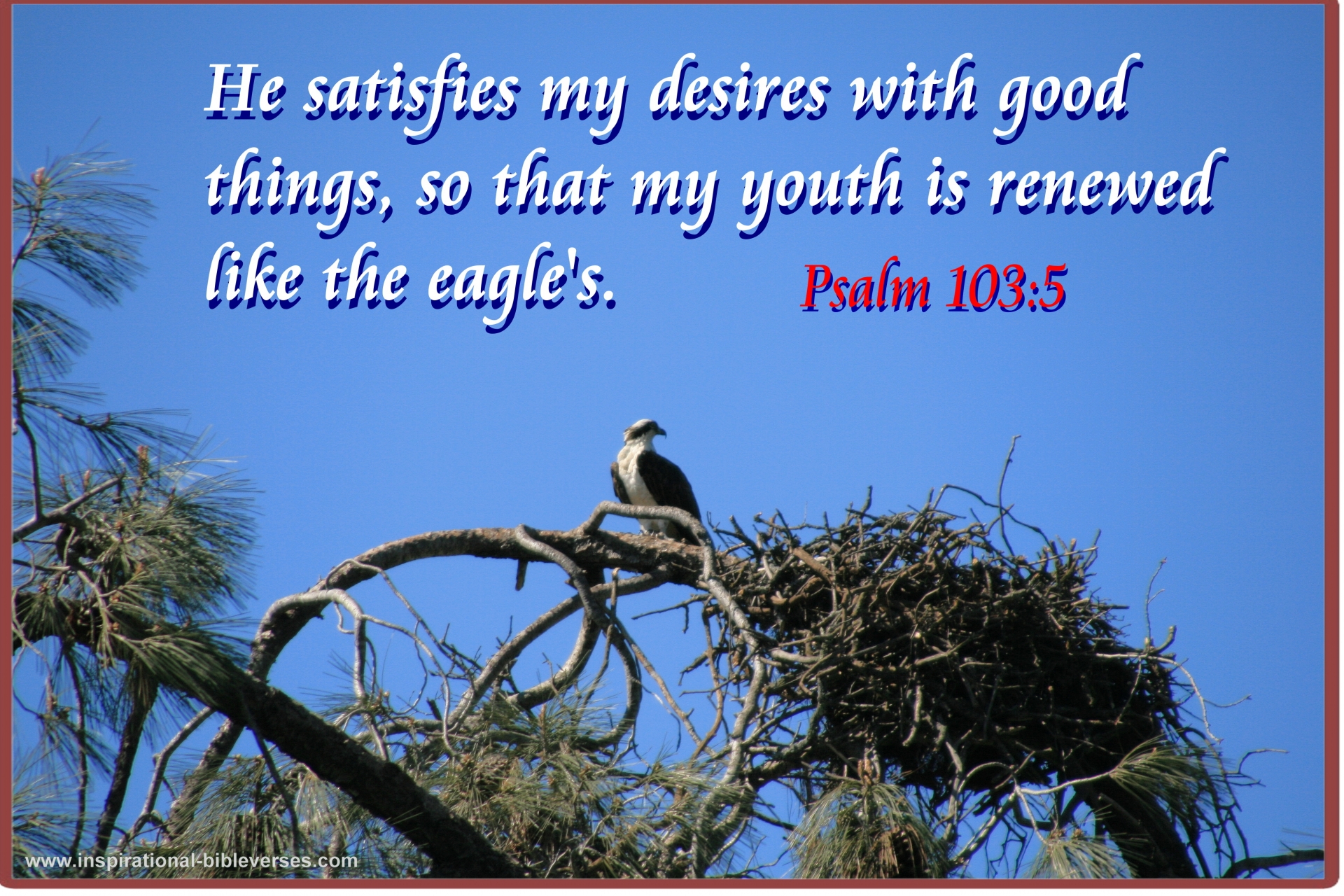
5 who satisfies your desires with good things so that your youth is renewed like the eagle’s.

 I praise You, O God, for knowing exactly which good things to grant me—those things that will produce a good outcome. (I know that catering to my every pleasure would ultimately be to my detriment.)

I praise you that even into old age you will strengthen my spirit so I can remain vibrant, optimistic, and full of hope. On the wings of your wisdom I’ll be able to soar (Proverbs 24:5).

Finally, may your praise always be on my lips; may my soul always boast in you, because you are a good and gracious God—always and forever (Psalm 34:1, 145:7-8)!


*Prior to composing this worship-prayer, I researched some of the terminology in these verses, to expand my understanding of the passage. Sources included: Be Exultant by Warren Wiersbe; www.bible.org; Jesus Calling by Sarah Young; Thrive, Don’t Simply Survive by Carole Ladd; and The Daily Study Bible Series, Psalms, by George A. F. Knight.


(Photo credits:  www.suggestkeyword.com; http://www.studentdevos.com; http://www.pinterest.com; http://www.suggestkeyword.com.)

Read Full Post »

 d30200c131346a4ffed9f197bbee764d

(“You thrill me, Lord, with all you have done for me!  I sing for joy because of what you have done” — Psalm 92:4 NLT.)

God lavishes his gracious kindness upon us in countless ways, doesn’t he?

In appreciation for all he’s done, I have a suggestion. Let’s each write him a personal psalm for Valentine’s Day.  A love gift, on a love-focused holiday, for our loving God.  (You have more than a week to prepare your gift!)

Is that an overly sentimental idea?

Perhaps the timing is, but the matter of creating personal psalms has nothing to do with sentimental poetry.

I can hear some of you already. “Me—compose a psalm? I struggle to put a personal message on a birthday card!”

If that sounds like you, “Be strong and courageous. Do not be terrified; do not be discouraged, for the Lord your God will be with you” (Joshua 1:9)!

God waits with eager anticipation for you to enjoy an intimate Father/child relationship with him (2 Corinthians 6:18).

f2c43794cde3dc013fef692a6c7eabf1

 And what parent is not overjoyed when a son or daughter shares his/her innermost thoughts and feelings?

Remember, a psalm is simply a heartfelt prayer or song.  Key word: heartfelt.  Our psalms do not have to rhyme. We don’t have to use fancy literary devices like metaphors, imagery, or parallelism unless we want to.

These psalms are for our Heavenly Father.  He takes great pleasure in the sincere, unpretentious efforts of his children, just as all parents do.  We can even ask for his help to string the words together that will express our hearts.

Sometimes the hardest part is getting started—that first thought. An easy solution is to use a biblical psalm as a model.

?????????????????????????

To begin, you might choose a favorite verse. Read it slowly, several times. Rewrite it in your own words.  These questions might help to push your thinking further:

  • Is there a phrase or word that stands out?   Explain to God why it is important to you.
  • Do you feel a connection with this particular verse?  Add a personal experience when God’s activity in your life made this verse especially meaningful for you.

Following is one way to create a personal psalm, based on Psalm 3:3a: “You are a shield around me, O Lord.”

f74d4bae680c7ed0bb80f31d68a4bd72

1.  Choose a key word.  “Shield” is an obvious choice.

2.  Use the question-words who, what, where, when, why, and how to jump-start your thought processes.  Not all of them will spark an idea, but several will.  For example:  How is God a shield for me? What is he shielding me from? Why is it important for me to remember that he is my shield?

3.  Prayerfully and thoughtfully answer your questions. Meditate for a moment, then begin to write. One word can become the basis for the first sentence. A word or idea from that sentence can be expanded upon and become another sentence.

Before you know it, a psalm is born!


I praise you, oh God, for being like a shield

when disturbing thoughts are hurled my way.

You deflect those poisoned-arrows

with your shield of scriptural truth

and tender compassion.

Help me remember

you are all-powerful and all-wise.

There is no circumstance or emotional battle

that you cannot handle.

Your strong shield protects me

from the assault of Satan and his cohorts—

those negative, discouraging thoughts

that try to attack the peace and joy you’ve given me.

You are my almighty Warrior-God,

unsurpassed in power.

Satan cowers in your presence!

Help me avail myself of your protection

at every onslaught.


Once your psalm is complete, it’s time for presentation.  Read your psalm out loud to God. You will sense his presence as he comes to listen! How do I know?

OLYMPUS DIGITAL CAMERA

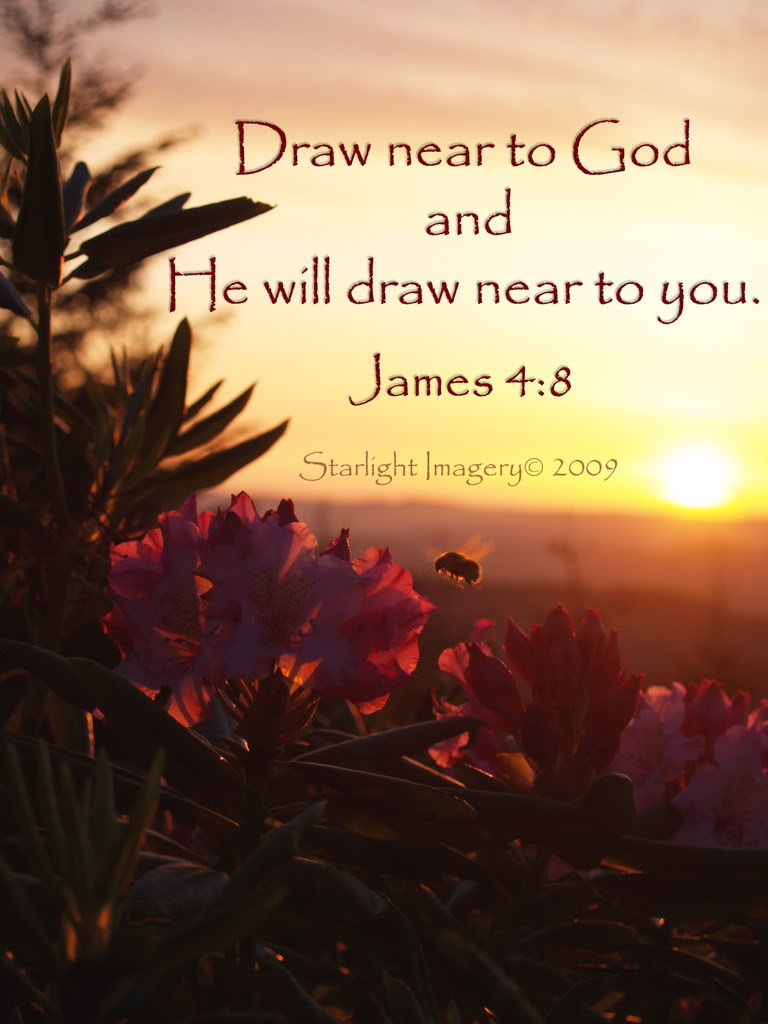
(“Come near to God and he will come near to you” — James 4:8.)

Keep your journal or notebook handy. Further thoughts may occur to you as you read, or afterward as you reflect. One more question to consider: In what ways has your relationship to God been impacted through this composing process?  You may wish to write about that, too.

I must confess, I’ve written a number of personal psalms. But recent reading on the subject has inspired me to pursue new avenues of this form of worship.

In future psalms I want to increase my reflection time, be more specific, add more detail, and actually read my psalms out loud.  I’m looking forward to expressing the depths of my heart more openly and discovering new depths of my Heavenly Father.

If you already write personal psalms, or should decide to write one, I’d love to hear about your experience!


(Art and photo credits:  www.pinterest.com; http://www.healthcentral.com; http://www.dwellingintheword.wordpress.com.)

Read Full Post »

article-step-by-step_ds-photo_getty_article_178_67_200377237-001_XS

Back in the 1970s somebody came up with the idea of worry stones—small, smooth pebbles that people could rub between their fingers to release their worries. (What a great money-maker, huh?  Collect some free pebbles, clean ’em up and sell for 100% profit.  Genius.)

According to enthusiasts, the constant rubbing activates the nerves at the base of the thumb, releasing endorphins. As a result, a sense of calmness purportedly settles in the user’s mind.

Even if that’s true, what happens when the person stops rubbing? Since the worry has not been resolved; isn’t it likely to return? I can’t see myself rubbing a stone until I fall asleep at night, can you?

Here’s a better idea.  Instead of going to a small pebble for worry-relief, go to the Rock.

What Rock, you ask?

“There is no one holy like the Lord; there is no one besides you; there is no Rock like our God” (1 Samuel 2:2).

Next question:  Why go to the Rock?

1.  God our Rock is more stable and reliable than Gibraltar.

igibrat001p4

The Rock of Gibraltar has become a symbol for stability, having stood sentry on the southern coast of Spain for centuries. Some say it dates back to the Jurassic Period.

But our God is older still, isn’t he.

“Trust in the Lord forever, for the Lord is the Rock eternal” (Isaiah 26:4).

And he is the same yesterday, today, and forever (Hebrews 13:8).  Now that’s reliable.

2.  God our Rock is more sheltering than a deep cave.

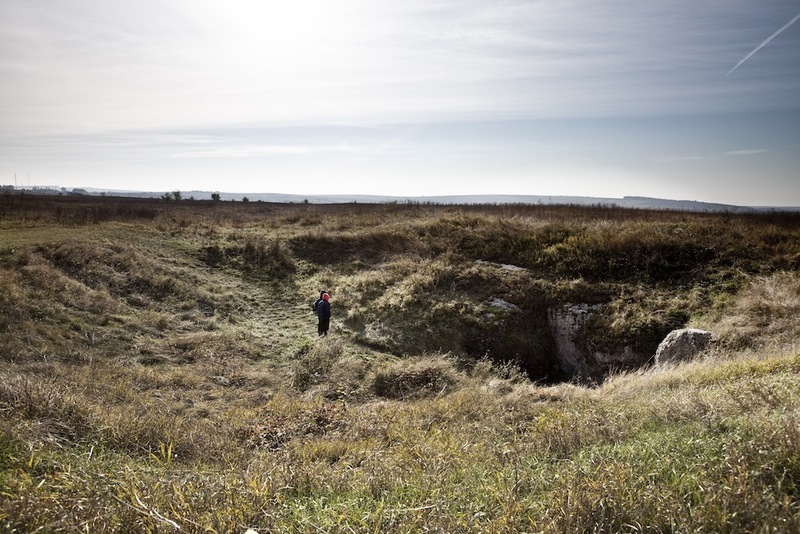
Verteba_Cave

(Verteba Cave, Ukraine)

During World War II, a small group of Ukrainian Jews found a way to escape the Nazis. They lived underground in caves for a year and a half.

At night they foraged for food. They even built showers and latrines deep inside.

But imagine living every day in pitch blackness and in fear of being discovered.

One day it happened. Nazi soldiers stumbled upon their hiding place. A courageous woman spoke for the group, as German guns pointed straight at her.

“What are you afraid of here?” she said. “Is the Furhrer going to lose the war because we live here?” Miraculously the soldiers left without doing anyone harm.

The band of Jewish villagers found relative safety in those caves,  and in April, 1944, the cave dwellers were liberated, able to return to the light.

But God our Rock offers guaranteed eternal safety for our souls. His Son, Jesus “became the source of eternal salvation for all who obey Him” (Hebrews 5:9)

3.  God our Rock is more protective than Masada.

slide-static

Perhaps you’re familiar with the mountaintop fortress, towering 1500 ft. above the Dead Sea.   The refuge was built by Herod the Great, from 37 to 31 B.C., to showcase his power.

Infamous for his brutality, Herod had good cause to be paranoid. He spared no expense to make sure this desert fortress could withstand attack and provide long-term refuge. His plan included protective casement walls, an ingenious water-collection system and cisterns for storage, storehouses, barracks, palaces, an armory and more.

Impregnable? Almost.

When Herod died, Jewish rebels were able to overtake the Roman guard remaining at the fortress. A thousand Jewish zealots lived atop Masada for three years.

Yet nothing or no one on earth can compare to God our Rock.

“Lead me to the Rock that is higher than I,” cried David. “For you have been my refuge, a strong tower against the foe” (Psalm 61:2-3).

And how do we avail ourselves of God’s refuge?  Through gratitude, praise, and prayer.  We can:

  • Thank him for his promises, for the times he has protected and provided in the past.  We must feed our confidence in God rather than our fear.
  • Praise him for his glorious attributes that he is bringing to bear upon our situations–attributes such as power, wisdom, trustworthiness, and love.
  • Affirm our faith. If we occupy our minds with expressions of trust, there won’t be room for thoughts of worry.

“My soul finds rest in God alone;

my salvation comes from him.  

He alone is my rock and my salvation;

he is my fortress, I will never be shaken…

Find rest, O my soul, in God alone;

my hope comes from him”

(Psalm 62:1-2, 5).

(Photo credits:  www.ehow.com; http://www.kids.brittanica.com; http://www.noplaceonearthfilm.com; http://www.masada.org.il.)

Read Full Post »

‘Ever watch one of those television shows that provides a person with a complete makeover? By the end of the hour she (or sometimes he) has acquired a personalized, updated wardrobe, learned how to apply make-up, and received a new hair-do.  The physical transformation is always stunning.

However, there is a transformation even more amazing.  Paul explains it this way:

“If anyone is in Christ, he is a new creation; the old has gone, the new has come” (2 Corinthians 5:17).


new-creation


Those of us in Christ haven’t just been adjusted, primped, polished, or camouflaged.  We have become new people with clean slates, strong purpose, deep joy, and vibrant enthusiasm for life.

And that’s not all.  Each day we’re becoming better than the day before–a bit more perfected–if we remain in Christ.  Sarah Young (Jesus Calling) says we’re becoming more fully our true selves–the ones God designed us to be.  I like that.

Each day in Christ is an opportunity to grow more completely into his glorious image.  These changes have nothing to do with outward appearance.  They take place on the inside, impacting our personalities, emotions, minds, and spirits.

That expression, in Christ (also “in the Lord” and “in him”), occurs 164 times in Paul’s letters.  Such repetition would indicate the importance of the concept.

So how would we define the meaning of being “in Christ?”  Here are a few possibilities.

1.  In Christ means we live within his presence.  Now that’s a rather abstract concept. Perhaps an analogy would increase our understanding.

Picture yourself surrounded by trees in a forest.  The woods fill your senses—the sight of tall, stately trees, the sound of chirping birds, the aroma of pine and earth, the textures of rough bark and velvety moss, the taste of cold, clear water from a stream.


SunShiningThroughDustInWood

Similarly, the presence of Christ completely surrounds us as believers.  Christ fills the senses of our hearts, if we avail ourselves. We see more fully the glory of his creation, hear his truth, breathe in his love like a fine fragrance, feel his strength upholding us, and taste his goodness in the feast of blessings he provides.

Such sensations change who we are.  In Christ, we can become stable, contented, joy-filled people.

2.  In Christ means we are united with him, like a branch fused to the vine (John 15:1-8). He is the Source of everything we need, but we must stay in contact with him. How do we do that with Someone who’s invisible? Possibilities include prayer, praise, gratitude, and worship–throughout the day.

And when we’re united with him, his peace and strength are infused into us.

3.  In Christ means we’re in close relationship with him. Never should there “be day when we give ourselves a chance to forget him” (William Barclay).

And when we live in the presence of Christ, and in union with Christ, the inner transformation he has instituted will most definitely become visible. Jesus’ character will begin to flow through our attitudes and actions, just as sap flows through the vine into the branches. Attitudes like kindness, understanding, and forgiveness will give strong evidence that we’re living in Christ.


Woman praising with arms raised in the air


And what will the people around us see?  Folks who…

  • exude joy and optimism.
  • are gracious to others.
  • exhibit self-control.
  • make wise choices.
  • aim to express love–always.

Such delightful, purposeful living awaits those who center themselves  in Christ.

*     *     *     *     *     *     *     *     *     *

Thank you, Lord Jesus, for the supreme privilege of living in your presence.  You are the King of the universe, yet you want to be united with us in close relationship.  And as we avail ourselves, you infuse us with your attributes, your strength, your peace.  All praise to you, gracious Savior, the Author and Perfecter of our faith, as we abide in you.

(Photo credits:  www.brotherransome.com, http://www.wikipedia.org., and alishagratehouse.com.)


Read Full Post »

time

Does it ever seem to you that God shows up late sometimes? Surely you’ve had it happen to you.  In spite of persistent prayer and patient waiting (OK, almost patient), God did not intervene in a timely manner.

For example:

  • Applications for grad school were turned down—three years in a row. Finally, the fourth year, acceptance was granted. Why?
  • The job you needed ASAP didn’t materialize for two years. Why?
  • The bracelet that had been your grandmother’s suddenly disappeared. Heartsick, you searched and searched and prayed to find it. No bracelet. Suddenly, months later, there it was–caught in a sweater you hadn’t worn in ages. Why?

Why the delay???

I know this sounds impertinent, but in all of these cases and many more, it would appear God was not paying attention.

Or…

…Could it be God operates in a different time frame, one not governed by days, months, or years?

After all, God is eternally the same, always was and always will be. Time is rather inconsequential to him. He lives in a dimension where past, present, and future are not separated.

Time for God is measured more in seasons. Paul included the concept in his persuasive address at Athens:

“From one man [God] made every nation of men, that they should inhabit the whole earth; and he determined the times set for them and the exact places where they should live” (Acts 17:26).

The Greek word Paul used in that verse is kairos. It means, “the suitable or appropriate time for something to occur or for something to be accomplished.”

In his speech, Paul was referring to the appropriate times certain people-groups would rise to power, such as the Egyptians, Assyrians, Greeks, and Romans.

The Greeks had a second word for time: chronos. This is the kind of time we measure with clocks and calendars. This is our comfort zone–the kind of time we know and understand best. Perhaps that’s why we anticipate God should operate within chronos.

But kairos is God’s time, as in “I choose the appointed time, it is I who judge uprightly” (Psalm 75:2).

Taking the definition of kairos into consideration, this verse would read:

“I choose the suitable and appropriate time to accomplish my purposes.”

And what would be the foundation of God’s choice of kairos?

His righteousness.

“Righteousness and justice are the foundation of your throne” (Psalm 89:15).

Everything God does is right, including when he does it.

His wisdom.

“Oh, the depth of the riches of the wisdom and knowledge of God! How unsearchable his judgments, and his paths beyond tracing out” (Romans 11:33)!

It’s been said: “If I had the power of God, there are many things that I would change; but if I had the wisdom of God, I would not change a thing.”

That would include the timing of events, too.

His love.

“God showed how much he loved us by sending his one and only Son into the world so that we might have eternal life through him” (1 John 4:9, NLT).

Would a God who loves like that fail to pay attention, and mess up the timing of his involvement?

Kairos implies “at just the right time.”

At just the right time, the door opened for grad school.

At just the right time, that job was provided.

At just the right time, the keepsake bracelet was found.

By not asking why we had to wait, perhaps we demonstrate a modicum of maturity.

(Art credit:  www.inscribewritersonline.blogspot.com.)

Read Full Post »

« Newer Posts - Older Posts »

When the House is Quiet

Impressions Becoming Expressions

Mitch Teemley

The Power of Story

Still Traveling

Impressions Becoming Expressions

Living Our Days

Gaining a heart of wisdom

He Said What?!

I'm Patty, and my husband and I are living with our adult son who has autism and epilepsy. I love sharing lessons learned from life around me, especially life with Aaron.

Meditations of my Heart

Impressions Becoming Expressions

Linda Stoll

Impressions Becoming Expressions

Signora Sheila

Where faith meets la dolce vita

Heidi Viars

Finding the Image of God