Feeds:
Posts
Comments

Archive for the ‘Renewing the Mind’ Category

Erin has prayed for years that her estranged son would come home.

Tricia can’t seem to shake a gray cloud of despondency, ever since her fiancé broke off their engagement.

Jack worked many extra hours to qualify for a prized promotion, but the boss’s unpleasant nephew was awarded the position instead.

Stacie has faced the loss of one job and a stressful transition to another.

Kate goes through the motions at church and even continues with her quiet time. But God seems to have distanced himself. She hasn’t sensed his presence for weeks.

Such circumstances can cause a downward spiral in our spirits, as debilitating emotions like frustration, anger, worry, and depression threaten to move in and take over. If we feed these emotions with negative thoughts, our faith in God begins to falter, and the devil’s lies begin to sound like truth:

  • So much time has passed; God is never going to answer your prayer.
  • Since bad things keep happening, it’s obvious God has abandoned you.
  • God doesn’t care about your life. Otherwise, why would he allow you to fail?
  • They say God offers love, peace, and joy, but none of it’s coming your way.
  • It looks like God’s forsaken you and to make matters worse, you don’t even know why.

Is it possible to fight against such feelings and fortify our faith? Oh, yes!

Our fight begins with truth—straight from God’s Word. We have to choose facts over feelings—just like a pilot does, as he flies through miles of thick clouds. In order to stay on course, he can’t trust what he feels is proper speed, direction, and altitude; he has to rely on the facts presented by his instruments.

So what scriptural truths might help us maintain our spiritual equilibrium? There are dozens, perhaps hundreds of passages that address our various needs with pinpoint perfection.

Other scriptures provide broad-sweeping truths that cover almost any situation. One example:

If we read the Bible with the intent of finding applicable truth for our circumstances, we won’t be disappointed.

“Such things were written in the Scriptures long ago to teach us.  And the Scriptures give us hope and encouragement as we wait patiently for God’s promises to be fulfilled.”

Romans 15:4 NLT

Now the question becomes: Will we take God at his word and act upon it?

Hebrews 11 gives us a lineup of faith-stars who did just that–based their actions on faith, not feelings.

By faith Noah built an ark (v. 7).   He didn’t allow feelings of inadequacy to stop him.

By faith Abraham left home with no notion of where he was going (v. 8). He didn’t allow fear of the unknown to deter him from following God’s direction.

By faith, the parents of Baby Moses hid him from Pharaoh. They didn’t allow fear of punishment to stop them. “They were not afraid of the king’s edict” (v. 23).

By faith the people of Israel marched around Jericho, even though it must have seemed a strange tactic (v. 30).

Bottom line: Faith is the exercise of our minds, based on the stable truth of God’s Word, in spite of what we might feel. Emotions are just the unreliable, fluctuating condition of our minds. [1]

On the other hand, God doesn’t ask us to ignore our feelings. Job, David, and the prophets honestly expressed frustration, fear, disappointment, and discouragement. But! They didn’t allow their emotions to cripple them. [2]

Also worth noting:  None of these faithful people were perfect, yet God honored their faith.  He doesn’t need perfect people to accomplish his purpose, just willing and faithful ones.

*     *     *     *     *     *     *     *     *     *

Forgive me, Lord, for allowing feelings to impact my faith. Help me to fit every thought. emotion, and impulse into the structure of a Christ-shaped life.  

Thank you for listening and offering encouragement as I confess my feelings.  You even supply strength, peace, and hope.  

And finally, I praise you that you preserve the faithful. I am secure in you.  In fact, you, my all-powerful God, are security itself.

2 Corinthians 10:5, MSG; Psalm 10:17; Psalm 29:11; Psalm 31:23; Proverbs 18:10

Notes:

[1]  J. Clarke, http://www.writtentreasures.org

[2] See Psalm 13 for a worthy example.

Art & photo credits: http://www.pexels.com (Liza Summer); http://www.pexels.com (Karolina Grabowska); http://www.pxfuel.com; http://www.publicdomainpictures.net (George Hodan); http://www.publicdomainpictures.net (2); http://www.wikimedia.org; http://www.dailyverses.net.

(Revised and reblogged from February 9, 2015 while we enjoy a visit from our younger son.)

Read Full Post »

Once again we find ourselves grieving for families, friends, and community of victims gunned down in another school shooting. Why does this madness continue? What makes a person choose to kill children?

And then there’s the war that drags on in Ukraine, causing death, devastation, and hardship. Why do we humans resort to such horror?

Across our nation, crime, homelessness, and drug addiction plague many of our cities. How has such deterioration been allowed to escalate and why haven’t proven solutions been implemented that help correct these plights?

Also producing distress and fear are the continual reports of terrorism, riots, fraud, lawlessness, disasters, and other disturbing events.

In addition, some of you are dealing with your own overwhelming problems caused by other people and not your fault.

When God chooses not to immediately intervene, what’s a person to do? An unidentified psalmist gave us the answer.But before we consider his plan-of-action, note how current his observations sound as he described evildoers. They:

  • Seem to be triumphing
  • Boast a great deal
  • Crush God’s people
  • Band together against the righteous
  • Bring misery to others with their decrees
  • Condemn the innocent to death [1]

Then just before slipping into depression, this poet wrote:

He would want us to know: God provides joy-filled comfort—not just reassuring consolation. The psalmist surely had in mind solace, help, support, cheer, and restoration of a sense of well-being—all facets of comfort.

Our part is to avail ourselves. How? By walking through the G. A. T. E:

1. G = Glory in biblical truth.

Find refuge in God and His infallible Word.

Read until His peace mounts a guard

around your mind and heart and soul.

Kay Arthur [2]

Among the many comforting truths found in scripture, here are a few of my favorites:

  • 1 Chronicles 29:11-13—God is great and all-powerful, the ruler of all things.
  • Psalm 23:4—Our caring Shepherd never leaves us to fend for ourselves.
  • Psalm 46:1—He provides refuge, strength, and help.
  • Isaiah 25:1—We can count on His faithfulness because he’s been completely faithful in the past.
  • Romans 11:33-36—He is continually directing, sustaining, and upholding all things in his perfect wisdom–even in the face of tragedy.

2. A = Affirm God’s promises.

As you glory in biblical truth, keep alert for the promises. Ask yourself, “Has God already done this in my life?” Take comfort in the evidence of promises already fulfilled. For example, when has he:

  • Brought good out of difficult circumstances?
  • Guided you in the way you should go?
  • Delivered you out of trouble—physically, emotionally, and/or spiritually?
  • Granted peace in the midst of turmoil?
  • Provided beyond your expectations? [3]

And as you affirm the evidence of the past, be expectant for the future. What God promises, he will do [4].

3. T = Take joy in who God is.

He is a way-making, promise-keeping,

battle-winning, water-walking, storm-stilling,

Faithful Friend and Savior.

Kaitlyn Bouchillion [5]

Isn’t that delightful description? Let’s use it as a model for creating more uplifting characterization. I’ll get us started with:

He is a sin-forgiving, death-defying, hand-holding, strength-infusing, gift-giving Gracious Father.   

 Do you feel your heart filling with the comfort of gratitude, praise, and joy? Me too.

4. E = Enter into his presence with prayer.

Prayer crowns God with the honor and glory due His name,

and God crowns prayer with assurance and comfort.

The most praying souls are the most assured souls.

Thomas Brooks

Take comfort in knowing that:

  • God is not only here, he is near.
  • As we call out to him, he’s already answering.
  • God’s presence quiets the soul, calms the mind, and warms the heart [6].

Decades ago, researchers recorded the heartbeats of mothers and played the tapes in a hospital nursery. They discovered that the infants cried less, slept better, and even gained weight at a better rate.

Those recordings evidently brought comfort, allowing the babies to rest and even thrive.

As we walk through the G.A.T.E. God has provided, and Glory in biblical truth, Affirm his promises, Take joy in who he is, and Enter his presence with prayer, we will hear the comforting heartbeat of God’s love, even through the darkest night.  


[1] Psalm 94:2, 4, 5, 20-21.

[2] His Imprint, My Expression, 289.

[3] Genesis 50:20; Psalm 32:8; 34:18; Isaiah 26:3; Ephesians 3:20.

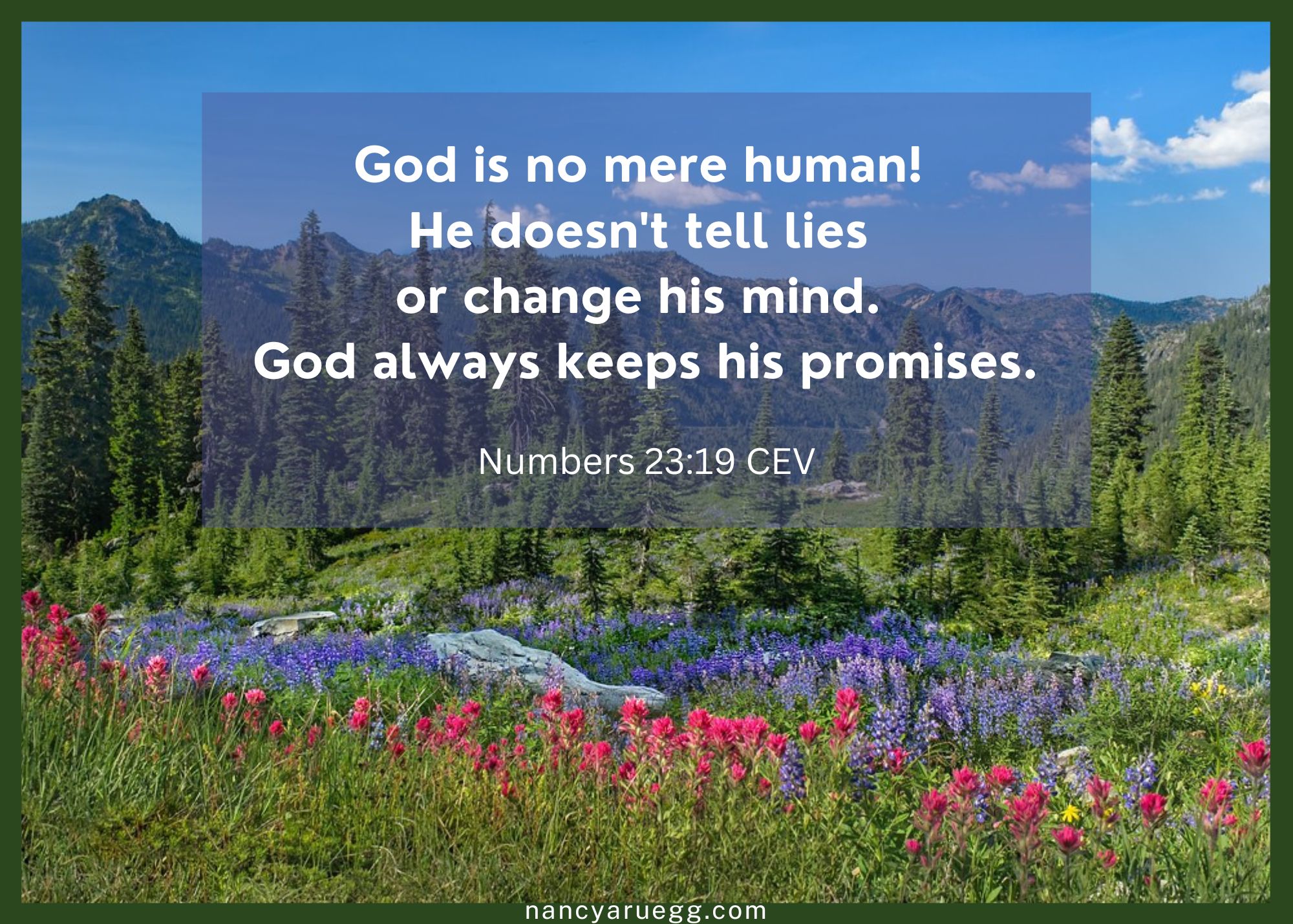
[4] Numbers 23:19.

[5] Take Heart, edited by Grace P. Cho and Anna E. Rendell, 210.

[6] Psalm 145:18; Isaiah 65:24; Psalm 91:1-2.

Photo credits: http://www.flickr.com; http://www.commons.wikipedia.org; http://www.heartlight.org; http://www.dailyverses.net; http://www.flickr.com; http://www.heartlight.org; http://www.commons.wikimedia.org (Bonnie Gruenberg).

Read Full Post »

Near the end of 2021 I began journaling through some of the old hymns. Such an exercise allows me to slow down my thinking and discover more meaning in the lyrics than when I quickly sing or read through them.

Today I invite you to contemplate with me the hymn, “To God Be the Glory,” rich with encouragement for our spirits. The inclusion of all three verses would make a lengthy post, so I chose just the last:

“Great things He hath taught us.”

I praise you, Lord God, for the wisdom of your Word. We can:

  • Depend on you for strength and help
  • Trust you for guidance and care
  • Pray about everything and receive your peace
  • Ask you for wisdom and know you will give it [1]

I praise you also for the godly examples you’ve provided throughout my life, people who lived out their faith before me and mentored me—Mom and Dad, my grandparents, Sunday School teachers and youth sponsors, professors, older and wiser friends, contemporaries who loved you and lived for you.

How gracious you’ve been, Father, to always provide numerous, grace-filled saints to encourage and bolster me.

And then there are the lessons you’ve taught me through experience—lessons in:

  • exercising patience while raising our children
  • keeping my mouth shut in various situations (!)
  • developing a calm and gentle spirit
  • fostering an attitude of gratitude

You inspired me in 1983 to begin my “God Is Faithful” journal, teaching me about your attributes at work. Now I have a personal record of your loving kindness, goodness, power and more, blessing us in amazing and delightful ways.

And that brings me to the next phrase of this hymn:

“Great things He hath done.”

In my life you’ve:

  • provided for my needs
  • protected me from harm
  • given guidance for decisions
  • developed the fruit of the Spirit within me (a work still in progress!)
  • bestowed numerous gifts over the years beyond expectation

“Great our rejoicing through Jesus the Son.”

Oh, yes! I praise you Lord Jesus for the benefits you’ve made possible:

  • saving me from the clutches of Satan
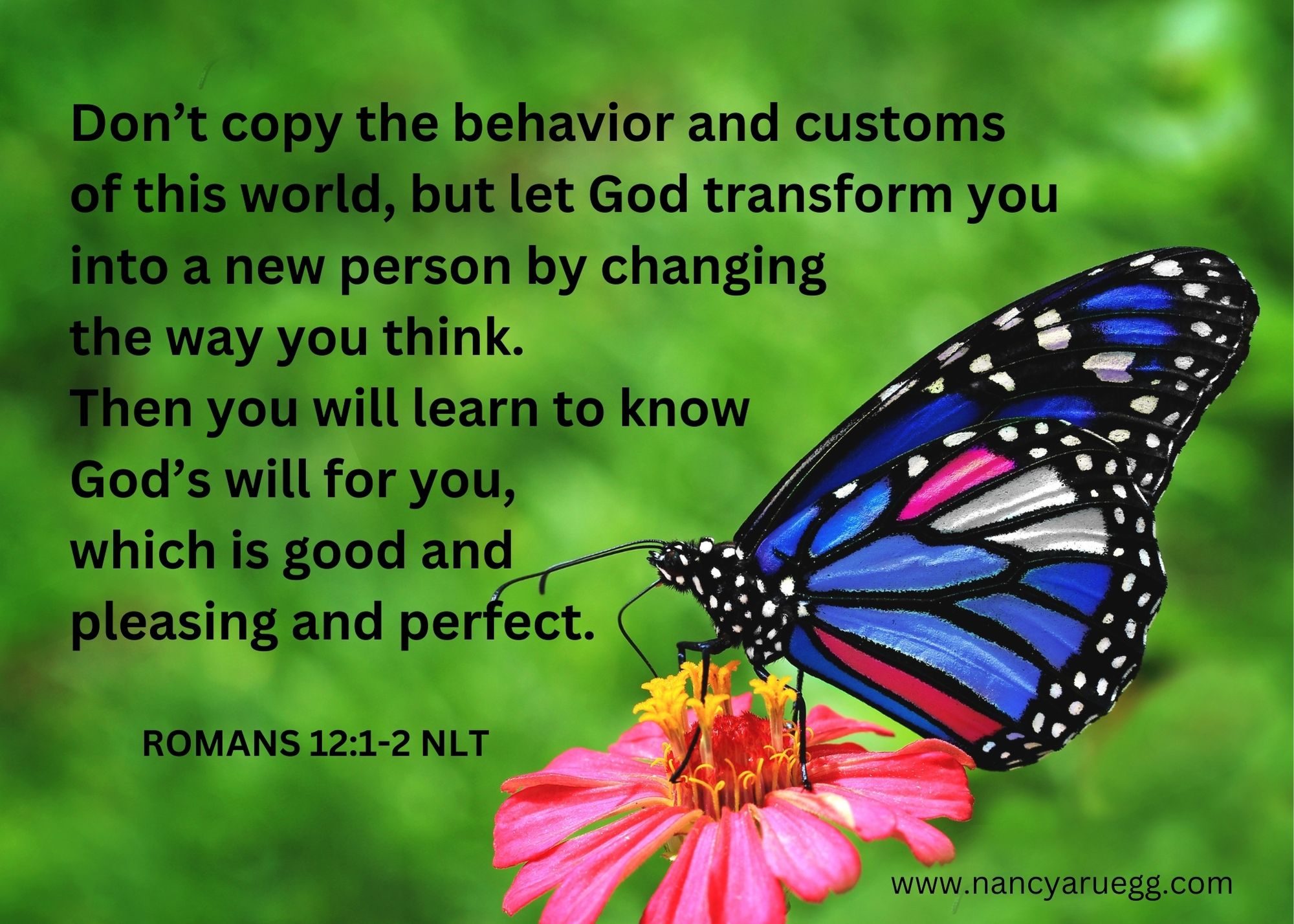
  • creating me in you (spiritually transforming me, renewing me, making me ready to be used for good works)
  • interceding for me before God
  • inviting me to abide in you, to keep in close and pleasurable communion with you
  • providing peace with God so I can experience his grace
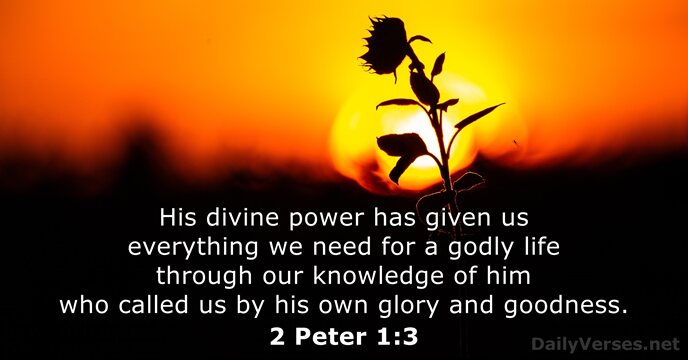
  • giving me all things pertaining to life and godliness (that is, everything necessary for a dynamic spiritual life) [2]

In addition, you reside in me, bestowing peace, joy, and hope [3].

My spirt soars as I contemplate these glorious benefits!

“But purer and higher and greater will be

Our wonder, our transport, when Jesus we see.

Yet there is still more to come even more glorious. One day you’ll make each of us pure and perfect, enabling us to live in your pure and perfect heaven.

I can only imagine the wonder and delight when we arrive there and experience all its wonders in the fullness of your presence! Thank you Heavenly Father for providing the way; thank you Lord Jesus for being that way, and thank you Holy Spirit for leading me to the way.


[1] Isaiah 41:10; 58:11; Philippians 4:6-7; James 1:5

[2] 2 Timothy 4:18; Ephesians 2:10 AMP; Romans 8:34; John 15:5; Romans 5:2; 2 Peter 1:3 AMP

[3] Colossians 1:27; John 14:27; Colossians 3:15; John 15:11; 1 Peter 1:3-5

Art & photo credits: http://www.wallpaper.com; http://www.pexels.com; Nancy Ruegg; http://www.canva.com; http://www.dailyverses.net (2).

Read Full Post »

“Living well [the Christian life] is both a discipline and an art,” wrote Sarah Young [1] .

The discipline-part was easy enough to affirm. From experience I know: spiritual practices do enhance the joy of relationship with my Heavenly Father—behaviors like Bible study, prayer, worship, giving, and more.

But what might the art of Christian living look like? For me that was more difficult to qualify.

I turned my thoughts to artists themselves. What actions impel them toward creating art that produces beauty and meaning, and pleases the eye?

(One of our son’s recent paintings)

That question spawned another. What might I learn about producing beauty and meaning in my life that pleases God and my soul?

The following truths presented themselves:

Artists are observant, paying attention to detail. They’re constantly learning; delighting in discovery.

Imagine studying a blade of grass. Take note of the rich green color and subtle striping, its graceful curve downward and sharp, pale-yellow point. Add crystal dew drops and the sight is indeed beautiful and pleasing.

“The moment one gives close attention to anything, even a blade of grass, it becomes a mysterious, awesome, indescribably magnificent world in itself”.

Henry Miller

But how often do we barrel through our days with no attentiveness, no reflection, no listening to God’s voice? In the middle of the bustling, niggling, babbling pother we miss God’s presence and other glorious gifts [2].

Lesson #1: The art of living well includes attentiveness to God’s beauty—in creation, in people, in words and deeds, in everything.

Artists spend time with inspiring people, including other artists.

And who is more inspiring than God?! He invites us to concentrate on staying close to him, the divine Artist [3].

Just think: God wants to spend quality time with us. He looks forward to our time together and misses us when we don’t show up. Quiet time isn’t meant to be a ritual; it’s meant to be a relationship [4].

Lesson #2: The art of living well includes the great privilege and pleasure of keeping company with God.

Artists are deep thinkers and curious about truth.

While the subject matter of the masterpiece, The Girl with a Pearl Earring is obvious enough for a child to understand, it will not yield its astonishing riches except to those who study the painting and reflect on Vermeer’s attention to light, shade, balance, color, and even the brush strokes. (Only two strokes created the pearl.)

The same is true for those of us who seek truth from God’s Word. Its basic message is clear enough for a child to understand [5]. But it will not yield its astonishing riches unless we study and reflect on its teachings (Proverbs 4:20-22).

Lesson #3: Open the treasury of the Bible and delight in its magnificent contents. 

Artists are persistent and patient.

It took Georges Seurat two years to paint A Sunday on Le Grande Jatte—with tiny dots.

Leonardo da Vinci spent about four years to get the Mona Lisa just right.

Michelangelo lay on his back the better part of five years to create the 343 figures on the ceiling of the Sistine Chapel.

Consider: “Even God does not make a glorious sunset in a moment. For several days He gathers the mist with which to build His beautiful palaces in the western sky”[6].

Lesson #4: Take joy in process and progress; stay the course and proceed steadily in the way God reveals (Psalm 119:1 MSG).

Artist, Robert Henri (1865-1929) observed:

“The object isn’t to make art, it’s to be in that wonderful state which makes art inevitable.”

Robert Henri

Such an applicable statement to the art of living well as a Christian! Our object isn’t to perform for God as much as it is to know him, love him, and desire to honor him–which makes a beautiful, God-honoring life inevitable.    


[1] Sarah Young, Jesus Calling, 193.

[2] Leslie William, Night Wrestling, quoted in Refresh My Heart, compiled by Terri Gibbs, 124.

[3] Ibid.

[4] Joanna Weaver, Having a Mary Heart in a Martha World, 73.

[5] Jesus took the punishment we deserved for our wrongful behavior. When we confess our sins, believe in Jesus as our Savior, and accept him into our lives as Lord, he bestows many blessings now, and eternal life in heaven with him to come. Millions of children have responded with simple faith to these wonderful truths. I was one of them.

[6] L. B. Cowman, Streams in the Desert, p. 206.

Art & photo credits: J. Eric Ruegg; http://www.wikimedia.commons.org; http://www.publicdomainpictures.net; http://www.hippopx.com; http://www.wikimedia.commons.org (2); http://www.canva.com.
Read Full Post »

Imagine a lapidarist looking through her loupe and discovering the purist, whitest diamond she’s ever seen, cut with such precision that the stone sparkles with startling intensity. Can you imagine her, turning the stone this way and that, to marvel at the treasure?

In similar fashion, I invite you to marvel at and enjoy another treasure, a treasure of the heart–God’s love. 

With the loupe of meditation, consider that God’s love is . . .

. . . unfathomable

“When we meditate on this amazing love, our souls may well faint for joy.”[1]

. . . unstoppable

“Every door that opens into a treasure of love shows another door into another treasury beyond. We need not fear that we shall ever come to the end of God’s goodness, or any experience for which he will have no blessing ready.”[2]

. . . unearned

“God loves us because of who he is, not because of who we are.”—Unknown

. . . unconditional

“When I begin the day drenched in [God’s secure love]—that centering awareness of my worth and connection to God—the day is different. I don’t have to scramble or hustle. Fear dissipates . . . because unconditional love changes everything.”[3]

. . . unwavering

“God’s steadfast love is chesed [in Hebrew], which means ‘kind, generous, loyal, and unfailing.’ Chesed means kindness on steroids.”[4]

. . . unfailing

“God’s goodness is near us. It is not a goodness far away, but God follows us with His goodness in whatever situation we are. He attaches Himself to us, He has made Himself close, that He might be near us in goodness.

“He is a father, and everywhere to maintain us. He is a husband, and everywhere to help. He is a friend, and everywhere to comfort and counsel. His love is a near love. He has taken upon Himself the closest kinds of relationships, so that we may never lack God and the evidences of His love.”[5]

. . . unlimited

“With both feet planted firmly on love, you’ll be able to take in with all Christians the extravagant dimensions of Christ’s love. Reach out and experience the breadth! Test its length! Plumb the depths! Rise to the heights! Live full lives, full in the fullness of God.”[6]

*     *     *     *     *     *     *     *     *     *

I praise you, Heavenly Father, for these facets of your lavish love that only begin to describe your devotion to us. I praise You that, out of your tender-hearted love, your foremost objective is always our best interest. And I praise you for guiding us on the path toward the abundant life you so desire to give us.

May the beauty and magnitude of your love sparkle with such intensity in our spirits that nothing will be able to discourage us.  

1 John 3:1; Romans 8:28; Psalm 23:3; John 10:10


[1] Charles Spurgeon, Morning by Morning, 158.

[2] J. R. Miller, quoted in Seasons of the Lord by Herbert Lockyer, 199.

[3] Shauna Niequist, Present over Perfect, 205.

[4] Chrystal Evans Hurst, Kingdom Woman Devotional, 109.

[5] Richard Sibbes (1577-1635), Puritan theologian

[6] Ephesians 3:17-18 MSG

Art and photo credits: http://www.pexels.com (Plato Terentev); http://www.canva.com (2); http://www.rawpixel.com (2).

Read Full Post »

(An imaginary conversation between God and me)

ME:

O God, each time I come across a scripture that affirms Your delight in me, my heart responds with amazement. I fall far short of the excellence I’d like to present to You—even after all these years as Your child. How is it possible You could still delight in me?  

GOD:

Think about this: How do others know that you take delight in your children and grandchildren? You spend time with them, correct? You listen to them, praise their efforts, and encourage them. You give them gifts. You forgive them.

I do all these things for you and more, proving my delight through my actions. When you see Me clearly—my faithfulness, goodness, and love in action for you—you’ll see yourself more clearly–one who is cherished and brings me pleasure.

Keep reminding yourself, you don’t have to be perfect to be wonderful. [1]

Just this morning you took great delight at the get-together of moms at church. In fact, you smiled from ear to ear and laughed for joy over children you didn’t even know:

  • the baby who waved with gusto at everyone who passed by
  • the little boy who wanted you to play catch with him
  • the three-year-old conversationalist who explained how hourglass egg-timers work

Granted, not one of these little ones is perfect, but each is perfectly wonderful—and so is every other child of Mine, including you.

 I also take great pleasure in watching My children grow, just as you’ve delighted in the development of your children and grandchildren—even your students when you taught school.

ME:

It’s true—each milestone is celebrated with joy, especially those that required effort. It stands to reason that each marker of our spiritual growth makes You smile with joy—markers that include: establishing a quiet time (because You desire relationship with us), learning to be patient and self-controlled as well as manifesting the other fruit of the Spirit, practicing Your presence throughout the day, and turning to You in faith for the strength, guidance, and help we need.[2]

GOD:

Absolutely! I also delight to see:

  • The development and use of the talents I’ve given you, just as you celebrate the growing abilities of the children around you.
  • The joy you experience in the company of family or friends, just as you enjoy watching children play happily together. Their pleasure becomes your pleasure; the same is true for Me.
  • The expression of gratitude for My blessings and favors, just as gratitude from your children warms your hearts and makes you smile.
  • The perseverance to develop spiritual maturity, just as you’ve taken joy in the skills mastered by your children, grandchildren, and students through the years.

Many think of Me as far removed, gloomy and mightily displeased with everything. And while it’s true that I hate sin, because of My Son, Jesus Christ, all believing souls are objects of My delight.[3]

Take that to heart, precious child.

ME:

I pray, Heavenly Father, that my choices going forward might bring You increasing delight. And may I rest contentedly, even joyfully, in the pleasure You already take in me.


[1] ______, Values for Life, Walnut Grove Press, 2004, 131).

[2] Revelation 3:20; Galatians 5:22-23; Psalm 16:11; Hebrews 11:6

[3] A. W. Tozer, The Knowledge of the Holy, Harper & Brothers, 1961, 107-108.

Photo credits: http://www.canva.com; http://www.flickr.com; http://www.heartlight.org; http://www.stocksnap.io.

Read Full Post »

For the last two posts I’ve shared journal-contemplations from the first two stanzas of “Hark! The Herald Angels Sing.” As with most hymns and praise songs, it’s easy to sing through the lyrics and miss their full significance.

But when we put pen to paper and delve into word meanings, explore implications of the lyrics, and ponder the impressions God brings to our spirits, wonderful blessings emerge: increased understanding of God and his Word, renewal of the mind, and augmented intimacy with God.

Contemplations become worship.

With those thoughts in mind, let’s savor the third stanza:

Hail, the heav’n-born Prince of Peace!

I praise You, Lord Jesus, the only One who can mediate reconciliation between the sin-prone people we are and the righteous God of heaven. Without You, we’d have no hope of eternal life.

I praise You also for the peace of mind you provide as we affirm Your attributes. By Your omnipotent strength you will uphold, and by Your omniscient wisdom You will guide, until our days on earth are complete. We are safe in Your hands (1).

Hail, the Sun of Righteousness! Light and Life to all He brings

I praise You, Lord Jesus, that Your radiant presence brings comfort, joy, and prosperity of soul.

Your Light of truth obliterates the lies of our enemy and brings us closer to You.

From Your Light shine beams of blessing such as these:

  • The variety of wholesome pleasures in this world, benefiting us in mind, body, and spirit
  • The love of family and friends, increasing our joy
  • The ability to read and learn, providing knowledge and wisdom
  • The delight of hands, allowing us to pursue a myriad of satisfying activities (2)

Risen with healing in His wings

I praise You, Lord God, for raising Jesus from the dead. Because He’s alive, we who believe in Him can be confident of eternal life also.  

One day Your Son will come on swift wings, ready to bestow perfect healing upon all who’ve come to Him. Our healing from the sickness of sin that causes so much woe will finally be complete. There will be no more pain and suffering, no more harm and brokenness, no more sorrow or death!

But even now, Lord Jesus, just as beams from the sun bring health to every living thing, You bring health to our spirits—a deep-down contentment only You can provide (3).

Mild he lays his glory by, born that man no more may die

I praise You, Lord Jesus, for laying aside Your glory as the Son of God. You left Your celestial throne, the unceasing adoration of angels, and all the splendors of paradise to be born a helpless baby.

During your earthly life, few praised You as You deserved; many found fault with Your glorious perfections.

Nevertheless, You see worth in every human being; you desire that everyone accept God’s gift of eternal life, that “man no more may die.”

I praise You for saving us from the death-sentence of our sin (4).


Born to raise the sons of earth, born to give them second birth.

I praise You, Lord Jesus, for the transformed life You offer, raising each believer out of his plight of eternal death and into the pleasure of eternal life with You–pleasures that begin the moment we say yes to You.

Those gifts include:

  • Security, because our final destiny is secure, and in the meantime You’re always with us, working toward our best good
  • Provision of guidance, strength, help and more
  • Rest for our souls, as Your Spirit of counsel and power takes up residence in our spirits
  • Gladness, as we celebrate Your work around us and in us

One day, Lord God, You will raise all Your children into the magnificence of Your heaven! With joyful expectation we anticipate the wonders You’ve planned for us.

Thank You for making possible this second birth into Your family. All the amazing blessings highlighted in this carol come to us when we choose adoption into Your family (5).

I praise You, Lord Jesus, for providing reconciliation with God, ultimate victory over death, over-arching peace and joy, healing for the wounds of our spirits, and more.

Glory to You, my magnificent, sovereign King!

Notes:

  1. Acts 4:12; 2 Timothy 4:18
  2. Psalm 23:4; John 15:11; Philippians 4:11-13; Hebrews 4:12
  3. John 6:40; Revelation 21:4; Psalm 23:1-3
  4. Philippians 2:6-7; Revelation 5:11-12; 2 Peter 3:8; Romans 6:23
  5. John 11:26; Matthew 28:20; Romans 8:28; Isaiah 11:2; 1 Corinthians 6:19; Psalm 92:4; John 14:3; 2 Corinthians 4:14; John 14:3

Photo credits: Nancy Ruegg; http://www.openclipart.com; http://www.dailyverses.net; http://www.flickr.com; http://www.heartlight.org; http://www.open.life.church/resources; http://www.dailyverses.net; http://www.heartlight.org.

Read Full Post »

Whitney sought a foothold and pulled herself up, then changed her hand grips and found another foothold above the previous one. Slowly she inched her way up the 40-foot climbing wall. Though only her first attempt, the four-year-old showed no fear.

Dad recorded the feat, and the video is available on YouTube.

We marvel that such a young child could climb with such confidence. But Whitney knew she was tethered to a rope held secure by the belayer, who also gave wise advice as she climbed. And Dad offered encouragement the whole way up and down.

When she touched ground again, Whitney’s broad smile indicated her delight in conquering the wall.

And the preschooler’s experience proves:

Security, wisdom, and encouragement

contribute to confidence. 

What held true during that preschooler’s rock-climb holds true for us in life. We need a strong Belayer to keep us secure, wise instruction to help us succeed, and inspiring encouragement to help us persevere.

Security

First, our Belayer is God himself. He holds us fast and will never let us go.[1]

And just as Whitney’s security did not depend on her gripping the rope, our security of help, strength, and heaven-to-come doesn’t originate with our grip on God, but his forever grip on us.[2] What we cannot do for ourselves, he has accomplished.[3]

Just as Whitney put her trust in the belayer, we must actively trust God to be our lifeline.

Wisdom

A short distance up the wall, Whitney glanced toward the floor. The belayer wisely advised, “Don’t look down, Whitney! Keep looking up!”

She didn’t look down until the belayer gave her instructions for the descent.

God also offers wise advice through his Word. He wants us to know:

  • True wisdom comes from him.
  • It begins with reverence and humility before God, to be in awe of his holiness, his power over all things–including life and death.
  • He gladly provides this gift to all who ask.
  • Whoever heeds his wisdom will dwell secure.[4]

Encouragement

Last, we have a Father who encourages us, just as Whitney’s dad encouraged her. Again, what we need is found in scripture—passages such as these that inspire hope:

  • “I keep my eyes always on the LORD. With him at my right hand, I shall not be shaken” (Psalm 16:8).
  • “The Lord Almighty is with us; the God of Jacob is our fortress” (Psalm 46:11).
  • “I remain confident of this: I will see the goodness of the Lord in the land of the living. Wait for the Lord; be strong and take heart” (Psalm 27:13-14).

Of course there are hundreds more, assuring us that:

When I allow fearful thoughts to whirl in my mind, I’m really asking, Is God going to see me through this?

How much better to affirm that God will hold me fast until he’s ready to take me home to heaven. He will provide the wisdom and guidance I need for what lies ahead, just as he has in the past. And His Word will continue to offer encouragement, to inspire and strengthen.

Truth leads to confidence.

What contributes to your confidence when facing challenging situations? Please share in the comment section below!


[1] Psalm 37:23-24

[2] https://www.seeyouinheaven.life/secure-forever-in-christ/

[3] Romans 8:3-4

[4] Proverbs 2:7; 1:7, James 1:5; Proverbs 1:33

Photo credits: http://www.youtube.com; http://www.heartlight.org; http://www.flickr.com (Noah Berger); http://www.heartlight.org; http://www.canva.com; http://www.commons.wikimedia.org.

Read Full Post »

If you brought together six people with diverse traits and backgrounds, their answers to the title question would likely include six different types of spaces.

Some of us prefer cozy decor, surrounded with precious keepsakes.

Others prefer sleek, white spaces with lots of light.

Some like a rustic, log cabin aesthetic; others prefer the industrial look.

And more than a few gravitate toward the quirky.

But no matter our style preferences, research has confirmed that certain environmental factors impact our mood:

  • A warm, cozy home creates a sense of well-being for most people
  • Clutter can cause a person to feel overwhelmed and anxious; tidy, organized spaces tend to calm
  • Beauty in the form of pleasing colors, sounds, and smells as well as meaningful objects can elevate a person’s mood
  • A dark room can make a person feel lethargic; light energizes and exhilarates
  • Bringing nature indoors with plants and flowers contributes to serenity

But we can’t always control our physical environments. Home isn’t warm and cozy in the midst of ongoing conflict. Children (and maybe a few spouses or roommates out there!) make messes they’re loathe to clean up. And days on end of gray weather can sap energy and joy. What then?

We can shift our focus from what’s around us to what’s within–the spiritual surroundings of our souls. But how do we impact that invisible space, in order to experience equilibrium and calm?

Let’s begin by imagining the soul like a room, and consider the bullet points above.

First, it is God who creates a warm and cozy environment in the depths of our being—a sense of peace and contentment that no one or nothing else can accomplish. To access His peace we only need to ask. And as the atmosphere of our spirits change, we discover: “The very act of breathing in his presence is balm.”[1]

Second, clutter in the soul includes such unsightly messes as sin, negativity, and worry. God knows we can’t remove the muck on our own. But out of his love and mercy, he gladly helps get rid of the filth as we turn to him for forgiveness, help, and strength.[2]

We can enhance our soul-spaces with beauty—thoughts that center on all things lovely, excellent and praiseworthy. Imagine hanging on the walls of your spirit pictures of God’s faithfulness—remembrances of his provisions, guidance, and blessings. View with delightful awe his magnificent deeds.[3]   

A few well-placed lights of scripture[4] will certainly energize and elevate our mood—passages such as these:

  • “Blessed are those who have learned to acclaim you, who walk in the light of your presence, O Lord. They rejoice in your name all day long, they celebrate your righteousness for you are their glory and strength”.
  • “You will keep in perfect peace those whose minds are steadfast, because they trust in you.”
  • “The Lord is good, a refuge in times of trouble. He cares for those who trust in him.”[5]

Last, at least for this post, we can bring the delight of nature into our spirits, much as we enjoy bringing plants and flowers into our homes.

Have you noticed that when we take the time to marvel at the intricacies of a leaf or petal, our pleasure is expanded further?

Similarly, we can take time to marvel in God’s attributes and abilities gloriously displayed in creation:

  • his inventiveness and engineering—from insects designed to walk on water to whales that communicate underwater.
  • His attention to detail as he created a planet that sustains life.
  • His mind-boggling power to fill the universe with stars, planets, moons, galaxies, nebula, comets, and more—all governed by the scientific laws he established.

And as a result of such contemplations, our pleasure in him is expanded.

When all these elements are combined within our spirits—warmth and coziness with God, cleanliness, beauty and light from God, as well as delight in God, we discover true sanctuary, a place where we can enjoy intimate relationship with him and rest for our souls–a place of refuge and calm.[6]

Isn’t that a place where youd like to live?


[1] Philippians 4:6-7 and Jan Karon, A Common Life, 116.

[2] Psalm 51:7, Psalm 94:18-19, Philippians 4:13

[3] Philippians 4:8; Psalm 105:5a; Habakkuk 3:2b

[4] Psalm 119:105

[5] Psalm 89:15-17a; Isaiah 26:3; Nahum 1:7

[6] Matthew 11:28-29; Psalm 55:6; Isaiah 25:4; Psalm 16:11

Photo credits: http://www.rawpixels.com; http://www.pexels.com; http://www.flickr.com (Nicolas Huk); http://www.commonswikimedia.org; http://www.pexels.com; http://www.rawpixel.com; http://www.canva.com; http://www.piqsels.com; http://www.publickdomainpictures.net; http://www.commons wikimedia.org.

Read Full Post »

Perhaps you’ve also heard these definitions:

  • A pessimist is a person who is seasick during the entire voyage of life.
  • An optimist is a person who goes in a restaurant with no money, and fully expects to pay for his meal with the pearl he finds among the oysters that he plans to order.
  • A realist is a person who does precise guesswork based on unreliable data provided by those of questionable knowledge.

M-m-m. According to those tongue-in-cheek definitions, who would aspire to any of these three attitudes?

Truth be told, pessimists often do identify worst-case scenarios and sometimes think God doesn’t care or he’d intervene. Optimists can believe God will always make good things happen, if we just have enough faith. Realists might not focus on the negative, yet still be cautious about expecting God’s involvement in their circumstances.

But what if he desires that we expect great things–things like strength to endure, help to solve problems, provision for needs, and guidance for decisions? Nineteenth century pastor/author Andrew Murray suggested:

It occurred to me that we Jesus-followers might aim past pessimism, realism, or optimism, toward up-timism. No, you won’t find that word in Webster’s. But according to the Nancy Ruegg Dictionary of Words We Need the up-timist looks up toward God, trusting that out of his love, goodness, and wisdom, he will do what is right.

Up-timists also take to heart the promises of scripture, they remember God’s faithfulness in the past, and affirm who he is in all his glorious attributes.

This doesn’t mean up-timists are perpetually giddy with cheer. But even as tears of pain or grief course down their cheeks, they rest in their Heavenly Father with joy. They’ve learned how to be “sorrowful but always rejoicing” (2 Corinthians 6:10).

Consider these words from the great preacher Charles Spurgeon: “We ought to be glad and rejoice forever in that which God creates. Ours is a heritage of joy and peace. My dear brothers and sisters, if anybody in the world ought to be happy, we are the people. . . How boundless our privileges! How brilliant our hopes!”[1]

These words were penned when Spurgeon was deathly ill. Though he rallied for a time, the great theologian graduated to heaven six months later.

In the letter to his people excerpted above, he included a main characteristic of the up-timist: hope.

Hope is the confident expectation that God will use our painful circumstances for good . . . it’s what allows us to choose to rejoice amid hardships and to say to God, “I will rejoice in You.”[2]

By contrast, pessimists are often characterized by fatalism, realists by over-confidence in their own perceptions, and optimists by wishful thinking.

But up-timists affirm such confident expectations as these:

  • The Lord preserves those who are true to him . . . Be strong and take heart, all you who hope in the Lord (Psalm 31:23-24).
  • Yes, my soul, find rest in God; my hope comes from him. Truly he is my rock and my salvation; he is my fortress, I will not be shaken (Psalm 62:5-6).
  • You are my refuge and my shield; I have put my hope in your word (Psalm 119:114).

Hope isn’t an automatic response in times of hardship, even for up-timists. We have to exercise our determination. One way is to speak truth to ourselves–with conviction. The scriptures listed above offer a good place to start.

Other truths include:

  • I know God has a purpose in this circumstance (Proverbs 19:21).
  • I know God will bring me through (Isaiah 40:29-31).
  • I know God is a good and loving Father, and he’s working toward the eternal perfection of his kingdom, for the benefit of all who love him (1 Corinthians 2:9).

Note how God is at the center of the up-timist’s hope. She expects God to work in her life and in the world, anticipates the fulfillment of his promises, and looks forward to seeing his will unfold.

Note also that “hope doesn’t change what we see, like the lens of optimism or pessimism, hope changes us to withstand the journey this side of heaven with enduring joy, peace, and contentment.”[3]

So–would you describe yourself as an up-timist? How does that point of view impact your life? Please share in the comment section below!


[1] https://www.epm.org/blog/2019/Oct/23/godly-optimism.

[2] Jennifer Rothschild, Lessons I Learned in the Dark, 95.

[3] Kim Striver, https://www.coreradiate.com/blog/optimist

Photo credits: http://www.canva.com; http://www.freebibleimages.org; http://www.canva.com; http://www.heartlight.org; http://www.dailyverses.net; http://www.flickr.com; http://www.canva.com.

Read Full Post »

« Newer Posts - Older Posts »

Still Traveling

Impressions Becoming Expressions

Living Our Days

Gaining a heart of wisdom

He Said What?!

I'm Patty, and my husband and I are living with our adult son who has autism and epilepsy. I love sharing lessons learned from life around me, especially life with Aaron.

Meditations of my Heart

Impressions Becoming Expressions

Linda Stoll

Impressions Becoming Expressions

Debby Thompson

Impressions Becoming Expressions

Signora Sheila

Notes on Life, Faith & Italy

Colleen Scheid

Writing, Acting, Living in God's Love

Mitch Teemley

The Power of Story

Heidi Viars

Finding the Image of God