Feeds:
Posts
Comments

Archive for the ‘Uncategorized’ Category

We’ve all had days when discouragement, inadequacy, hurt, or fear want to plague our spirits. And we find our own weak efforts do little to ease the distress.

BUT!

Praise God he provides the antidote for every malady of the soul.

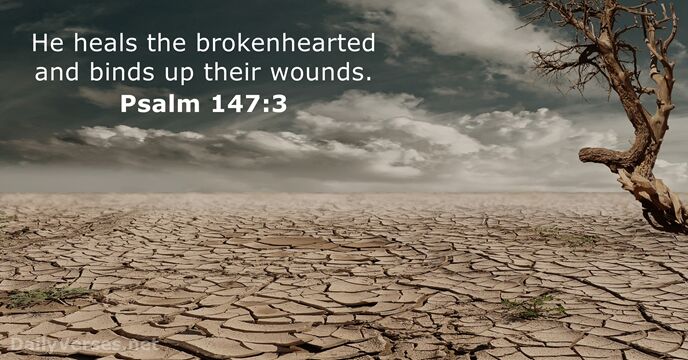
What follows is a list of ways he accomplishes that healing and binding [1]. I pray these declarations may be just the antidote to strengthen your inner being:

When we worry; he reassures.

When we stress, he soothes.

“Would you drown your cares? Then go, plunge yourself in the Godhead’s deepest sea; be lost in His immensity; and you shall come forth as from a couch of rest, refreshed and invigorated.

“I know nothing which can so comfort the soul; so calm the swelling billows of sorrow and grief; so speak peace to the winds of trial, as a devout musing upon the subject of the Godhead.”

—Charles Spurgeon

When we stagger; he steadies.

When we struggle; he strengthens.

“With the goodness of God to desire our highest welfare, the wisdom of God to plan it, and the power of God to achieve it, what do we lack?” — A. W. Tozer [2]   

When we falter; he lifts up.

When we fail; he forgives.

“With [God], each day—each moment—is a clean slate” — Aliza Latta [3].  

When we forget; he reminds.

When we doubt; he affirms.

Dismantle doubts with declarations of truth from God’s Word, truths that remind us: his character is flawless, his actions are righteous, his power is unlimited, his love is unfailing, his faithfulness unending [4].

When we regret; he forgets.

When we hunger; he fills.

When we’re bent; he repairs.

“God is mercifully shaping our lives into what is useful and beautiful” — Eugene Peterson [5].

When we desire wrongly; he directs rightly.

When we’re uncertain; he guides.

“Happy are those who place their hands in that of the Great Guide. He will bring them all the way and when he has brought them home to glory and has opened their eyes to see the way by which he has led them, what a song of gratitude will they sing unto God! Lord, lead your poor blind child this day, for I know not my way” — Charles Spurgeon [6].

When we’re discouraged; he inspires

He would have us know: “Nothing under My control can ever be out of control. Everything you need I know about in every detail. Remember, I am able to supply, to guide, to start, to stop, to sustain, to change, to correct in My time and for My purposes” [7] .

Again and again he provides the antidote for every need of our souls.

Our part is simply to receive.


[1]  “Binding” in Psalm 147:3 intimates holding together while an injury heals. God often allows time in combination with his antidotes to accomplish healing, fostering inner strength and perseverance in the process (James 1:2-4).

[2] Knowledge of the Holy, 70.

[3] www.incourage.com, 1-19-19

[4] Exodus 32:4; Psalm 145:17; Job 36:22-23; Psalm 117:1-2; 100:5

[5] Run with the Horses, 79.

[6] Faith’s Checkbook, March 23.

[7] Based on statements made by Chuck Swindoll in Intimacy with the Almighty, 73.

Photo credits: http://www.negativespace.com; http://www.dailyverses.net; http://www.heartlight.org; http://www.dailyverses.net; http://www.pexels.com; http://www.canva.com.

Read Full Post »

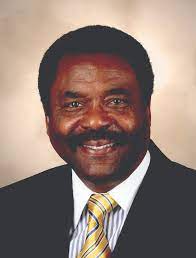
David Steward leaned against the family cow as he milked her, his hands automatically squeezing left, right, left, right. This was his final chore of the day; he’d already cleaned out the barn and fed the pigs and cow.

The twelve-year-old tried not to think about morning chores awaiting him in just twelve hours: emptying the chamber pots, milking the cow again, then collecting the ashes from the potbelly stove and spreading them on the driveway to create traction.

His only consolation was, his seven siblings had their chores too.

David trudged back to the house. He could smell collard greens frying in bacon grease, the pork and beans simmering in the Dutch oven, and cornbread browning in the skillet.

It wasn’t a fancy supper-spread, but all ten of them got enough to eat, thanks to Daddy’s hard work and the whole family pitching in on the farm.

Daddy should have made enough money to support them. He’d been trained as a master mechanic while living in Chicago in the 1930s and ‘40s. But now it was 1963 and the family resided in Mama’s hometown of Clinton, Missouri—a segregated town—and the Stewards were Black. Many businesses didn’t hire people of color.

So Daddy took whatever work he could find as a personal mechanic, nightwatchman, and part-time policeman. He managed a janitorial service, transported coal or trash, even tended bar at parties.

Daddy and Mama could have been bitter; but David and his siblings saw them demonstrate Christian love and kindness, grace and forgiveness, strength and resolve.

Times were changing however; segregation was finally outlawed in 1964. David was among the first Blacks allowed to swim in the community pool.

The next year David started high school and made the basketball team. Four years later he was playing for Central Missouri State University, and after proving himself, earned a sport scholarship. In 1973 he graduated with a degree in business administration.

Over the next eight years, David worked for several companies, including the Missouri Pacific Railroad and Federal Express. In each position David learned skills related to manufacturing, marketing, accounting, sales, and more.

While senior account executive at Federal Express he earned the Salesman of the Year Award and received a trophy—a silver ice bucket engraved with his initials. David looked inside and was struck by its emptiness. Is this all I want out of life? he thought.

The answer was no. He’d long dreamed of owning his own company and managing it with biblical principles.  He and his wife Thelma had faith that now was the time—even with their family of four to support.

In 1984, David launched Transportation Business Specialists, putting to use the lessons he’d learned at Missouri Pacific Railroad. His new company audited bills and overcharges for the rail industry.

Another company was launched in 1987, Transport Administrative Service, and finally, in 1990, World Wide Technology, Inc., to help companies use technology for solving business-related problems.

Success did not come quickly. And though David always made sure his employees received their paychecks, sometimes his family went without.

But he didn’t give up. David wrote: “What we were doing for our employees and customers was meaningful. I had faith that our company was capable of providing exceptional value” [1].

A unique opportunity presented itself in 1995. U.S. troops in Bosnia needed specialized computer software, so David’s company developed a program customized to their needs. They provided the hardware also.

That success led to the development of more applications for additional functions, useful to other government entities. A company that began with a $2000 investment and a handful of employees is now a Fortune 500 company (#71), bringing in twenty billion dollars in annual revenue and employing 10,000 people [2].

In the early 2000s, the Stewards’ pastor asked them to lead a Bible study about doing business God’s way. That led to a book, Doing Business by the Good Book: Timeless Principles for Making an Eternal Impact (2004).

The overall theme: strong leadership is love, expressed by serving others—employees and their families, customers and associates, as well as your own family.

David considers his company his ministry as he applies biblical principles in the workplace.

Eighty-six percent of his employees say World Wide Technology is a great place to work [3].

David also sees himself as an ambassador for Christ in the business world. He keeps one scripture-based goal in mind.

Every day David asks the question:

“Am I living my life worthy of the sacrifice that was made on my behalf”[4]?

That’s a profitable question for each of us. May we all—no matter our place in life—answer with a joy-filled YES!

David L. Steward (1951 – )


[1] Doing Business by the Good Book, 2004, quoted by https://www.referenceforbusiness.com/biography/ S-Z/Steward-David-L-1951.html

[2] https://www.wwt.com/corporate/why-wwt/overview

[3] https://www.greatplacetowork.com/certified-company/1100933

[4] https://www.youtube.com/watch?v=OCtItBwZEEU (Steward, 3:36-3:46)

Other sources:

1. https://www2.cbn.com/article/not-selected/david-steward-building-business  

2. https://horatioalger.org/members/detail/david-l-steward/

3. https://www.referenceforbusiness.com/biography/S-Z/Steward-David-L-1951.html#google_vignette

4. https://coinnounce.com/the-success-story-of-david-steward-second-richest-black-man-in-the-us/

Photo credits: http://www.rawpixel.com; http://www.picryl.com; http://www.pexels.com; http://www.daiyverses.net; http://www.en.wikipedia.org; http://www.amazon.com; http://www.heartlight.org; http://www.flickr.com.

Read Full Post »

Sometime during my teens, workers constructed a new house down the street and around the corner—a white Colonial with pillars—something like this:

I dreamed of living there in its spacious rooms, decorated in classic style, similar to the homes in House Beautiful magazine:

Of course, my dreams included a pool . . .

. . . and my favorite car parked out front, just for me to drive—a baby blue Mustang convertible:

Then I’d be deliriously happy.

And according to Psalm 84:11, those good things should have been mine, right?

After all, I was a pretty good kid—never got in serious trouble.

But now, all these decades later, I know: 1) Any sin at all is enough to separate me from all-righteous God (Isaiah 59:2). And 2) . . .

Chuck Swindoll

Now I realize there’s nothing more I could wish for in this world than what God desires to give me*–gifts that are the result of his ever-perfect goodness, never-ending grace, and breath-taking glory, gifts that are good for me.

Just for fun I challenged myself to list such gifts from A to Z, to celebrate the breadth of his generosity to his children.

I pray you’ll be celebrating too as you peruse the following.

Out of his abundant love, God has graced us with:

Access into his presence any time (Ephesians 2:18)

Bible truth that teaches, guides, and inspires (Psalm 119:24)

Comfort in pain and sorrow (Matthew 5:4)

Delights and blessings (Psalm 103:5)

Enablement to endure life’s downturns (Philippians 4:13), remembering that:

His Forgetfulness of our confessed sins (Hebrews 8:12)

His Grace to redeem us from death (Ephesians 1:7-8)

(The pleasure of) Humor, because the cheerful heart has a continual feast (Proverbs 15:15b)

Immortality with God in heaven (2 Timothy 1:10)

Amos Traver

(His) Jealousy that compels him to preserve his relationship with his people (Exodus 20:5)

Kingdom-living and all its benefits (Luke 12:32)

Loving-kindness, lavished upon us (1 John 3:1; Psalm 36:7-9)

Miracles too numerous to count (Job 5:9)

Nature that brims with beauty and wonder (Psalm 104)

Overflow of his benevolence in our lives (Psalm 119:65 NLT)

Promises that never fail (Psalm 145:13b)

Quietness of spirit that offers peace and contentment (Psalm 23:1-2)

Relationships characterized by unity, support, and love (Ephesians 2:17-22)

(The gift of) Song, enlivening our hearts with strength, joy, and encouragement (Psalm 98:4-6)

Berthold Auerbach

Truth found in Jesus, setting us free from the impossible burden of earning our way to heaven (John 14:6; 8:32)

Uplift to those who are discouraged, guilt-ridden, and/or grieving (Psalm 145:3-13)

Victory over death, given to us through Jesus Christ (1 Corinthians 15:57)

Wonders that showcase his power, wisdom, goodness, and more (Psalm 145:3-13)

(The) X-cellence of his character, compelling him to always do the right thing at the right time (Psalm 96:1-6)

(The) Yoke of Jesus, symbolic of his help as we follow his lead (Matthew 11:28-30)

Zion, the eternal city of perfection prepared for his redeemed (Isaiah 35:10)

And now I can affirm more strongly than ever:

Elizabeth Barrett Browning

Including the best dreams of foolish teenage girls.

*     *     *     *     *     *     *     *     *     *     *     *

Thank you, Heavenly Father, for showcasing in our lives your marvelous attributes and showering us with so many wondrous gifts! May the eyes of my heart turn away from the baubles of this world and revel instead in the beauty of your character and kingdom—a kingdom where you preside in all your perfections and provide for us all good things. Hallelujah!

*based on a statement by Joni Eareckson Tada, A Quiet Place in a Crazy World, 127

Photo credits: http://www.flickr.com (2); http://www.pexels.com (Dylan Leagh); http://www.pickpik.com; http://www.flickr.com (Kerry Ann Dame); http://www.rawpixel.com; http://www.pexels.com; http://www.publicdomainpictures.net (Sheila Brown); http://www.pxhere.com.

Read Full Post »

Prayers of the Heart

For the last few weeks, we’ve seen hearts nearly everywhere we look–on TV, social media, billboards, and in stores. Merchandizers made sure: none of us lived unaware that yesterday was Valentine’s Day.

But there’s another, more obscure place, where you’ll see numerous hearts all year ‘roundmore than 500 of them. It’s the word “heartin scripture.

And God wants to be sure none of us live unaware: his heart brims with love for us, not because of who we are, but because of who he is [1].

Such statements assuring us of God’s love appear nearly 300 times in the Bible.

And many of us find our hearts responding in love for him, the One who provides abundant life now and eternal life with him in heaven yet to come [2].

But how do we demonstrate love to an invisible Being? A good place to begin is spending time with him, in his Word and in prayer.

Scripture includes a number of prayer-prompts related to our hearts—that is, our innermost being that includes the intellect, will, and emotions.

For example:

STRENGTHEN my heart, O God, to face whatever this day may bring. Keep me mindful that “your power reaches its peak at the lowest point of adversity” [3].

ATTUNE my heart to yours so that my desires match yours. Remind me: as I spend time delighting myself in you, the love-bond between us grows stronger, as well as my delight in your ways [4].

TRANFORM my heart by changing the way I think. May your truth clear away my confusion, doubts, and fears, to be replaced with your assurance, clarity, and peace [5].

INCLINE my heart toward the righteous and trustworthy instruction of your Word, so my decisions and choices flow out of your heart’s desire for me [6].

SEARCH my heart, O God, and reveal those sins that lurk in the corners—improper thoughts, negative attitudes, faulty motives—so that I might confess, repent and be right with you [7].

FILL my heart with your joy and peace. Then there’ll be no room for worry, discontentment, or frustration. Instead, I can overflow with hope because you, my sovereign Lord, are in control of all things [8].

IMPACT my heart, O God. Take away my stubborn heart and give me a new heart that desires above all to be faithful to you. Then I’ll find your favor surrounding me like a shield [9].

ENLIGHTEN my heart with understanding of who you are, with all your glorious attributes. May such understanding form a firm foundation of contentment, so no matter my circumstances I can rest in your goodness [10].

DIRECT my heart to heed your guidance each day [11]. Help me to see the people around me with your eyes of compassion, to listen with your ears of discernment, speak your words of wisdom, and work with your hands of mercy.

In the powerful name of Jesus, I pray all these things.  AMEN.

And what will be the result of such a prayer?

I ncline,

S earch, and

F ill our hearts

I mpact,

E nlighten, and

D irect our hearts.

Praise God, he satisfies the longing soul and fills the hungry soul with good [12]!


[1] 1 John 4:10, 19

[2] John 10:10; 3:16

[3] Psalm 73:26; 2 Corinthians 12:10; Charles Stanley, Advancing through Adversity, 76.

[4] Psalm 37:4-5; 119:24

[5] Romans 12:2 CEV

[6] Psalm 119:35-36, 138 ESV

[7] Psalm 139:23-24; Psalm 51:10

[8] Romans 15:13; Psalm 115:3

[9] Ezekiel 36:26 CEV; Psalm 5:12 HCSB

[10] Ephesians 1:18; Psalm 23

[11] Proverbs 23:19

[12] Psalm 107:9 NHEB

Photo credits: www.pickpik.com; http://www.heartlight.org; http://www.dailyverses.net; http://www.canva.com; http://www.heartlight.org; http://www.pickpik.com; http://www.pixnio.com.

Read Full Post »

No doubt you’ve seen a movie or two with at least one desert scene, in which the protagonists must withstand brutal heat and scarcity of water. (Did Lawrence of Arabia, Flight of the Phoenix, or The Way Back come to mind?)

Some of us have even visited a desert—perhaps the Great Basin or the Mojave here in America, the Sahara in Africa, or the Negev in Israel:

Note the limestone and chalk landforms of the Negev—barren rocky cliffs and ravines, desolate summits and valleys, and of course, sand.

As is true of all deserts, the Negev is arid and stark—most of the year. But then come the months of February and March—the rainy season—and oh, what a transformation takes place.

The bleakness turns to an exuberance of vibrant flowers, including:

Arabian Primrose

Desert Tulip

Desert Hollyhock

Negev Iris

Water bestows the miracle of life, facilitating photosynthesis and transporting nutrients from the soil.

And as water brings life to the desert, so God’s grace brings the miracle of life to our hearts.

His lavish grace falls like rain [1]; and oh, what a transformation takes place!

Consider the following aspects of renewal:

1. God’s grace cleanses the dusty grime of sin from our souls (Psalm 51:2).

God knows what we are made of, remembering that we are dust. But out of his grace-filled forgiveness he washes away all wrongdoing, and lovingly works to make us more than we are [2].

2. God’s grace like rain provides the miracle of eternal life (Revelation 21:6).

Jesus makes it possible for us to move from living death to deathless life [3].

3. God’s grace nourishes and invigorates our spirits (John 7:38).

He uses many means to soak his truth into the depths of our hearts, providing refreshment, renewal, and encouragement. One primary example: the Bible.

When we disregard God’s Word, we expose ourselves to aridness of spirit.

4. God’s grace brings fruitful productivity to our lives (Isaiah 58:11).

A number of plants in the Negev provide food, including the seeds of the canarian aizoon, the stems and leaves of the carrechtera, the roots of the desert broomrape, and the flowers of the coarse rocket.

Similarly, the Spirit of God nurtures fruit within us–pleasing attributes like love, kindness, goodness, and more (Galatians 5:22-23). As we grow in our relationship with him, so do these attractive fruit.

5. God’s grace-like-rain showers us with blessing (Isaiah 41:17-18).

Flowers of joy, peace, hope, and more can flourish in the most desolate of places, when we allow God to infuse us with his all-sufficient presence.

6. God’s grace gives us refreshment and pleasure (Jeremiah 31:25; Isaiah 44:3).

He will do us good, real good, lasting good,

only good, every good.

With this promise in our hearts,

we need not fear.

–Charles Spurgeon [4]

7. God’s grace creates radiant beauty in a life that was once a wasteland (Psalm 34:5).

That radiant beauty is characterized by smiles of joy, an attitude of contentment, a voice of wisdom and encouragement, an outlook of faith, and a heart of love.

Praise God, his love flows freely to the unlovely [5], developing such beauty!

His grace-like-rain washes over us, bestowing all these aspects of the abundant life to those who are thirsty.

Will you come?


[1] Charles Spurgeon, Morning by Morning, 259.

[2] Psalm 103:14; Ruth Graham, Blessings for a Mother’s Day, 101.

[3] Jack Odell, from Quote/Unquote, compiled by Lloyd Cory,  284.

[4] Charles Spurgeon, Faith’s Checkbook, May 28.

[5] A. W. Tozer

Art & photo credits: www.commons.wikipedia.org; http://www.imaggeo.egu.eu; http://www.identify.plantnet.org; http://www.commons.wikipedia.org (3); http://www.stocksnap.io; http://www.commonswikipedia.org; http://www.pxhere.com; http://www.rawpixel.com.

Read Full Post »

When our daughter Heather was a child, she would sometimes entertain herself and her little brother Jeremy with stories she’d create.

These weren’t ordinary stories, however. Each part of the story was to be followed by a response, such as HOORAY or OH DEAR. Jeremy would supply those. Heather told her story so the responses alternated.

For example:

One day Mrs. Brown said to her children, “Let’s go on a picnic!” (HOORAY!)

But while they were getting ready it started to rain. (OH DEAR!)

Mrs. Brown said, “Don’t worry, we’ll have a picnic in the family room!” (HOORAY!)

Billy Brown counted out apples for everyone. “Uh-oh!” he said. “We don’t have enough apples!” (OH DEAR!)

You get the idea.

Some of us have read Bible promises with the same HOORAY/OH DEAR responses. (Although we’d probably exchange HOORAY for HALLELUJAH!)

Take Deuteronomy 7:9, for example. We read, “Know therefore that the Lord your God is God; he is the faithful God, keeping his covenant of love to a thousand generations . . .” And our response might be HALLELUJAH!

Then we read the second part: “. . . of those who love him and keep his commandments” (emphasis added). (OH DEAR.)

Here are two more examples:

“You will eat the good things of the land . . .” (HALLELUJAH!) “. . . if you are willing and obedient”–Isaiah 1:19. (OH DEAR.)

Or this assurance from Jesus: “You are my friends . . . ,” (HALLELUJAH!) “. . . if you do what I command”–John 15:14. (OH DEAR).

I can’t speak for you but often I’m glad to claim God’s promises, then struggle to comply with the prerequisite: God’s directives—even though I know that sinful, self-centered behaviors can get me into trouble and won’t produce long-term contentment.     

I so easily forget:

What blessing might Jesus have had in mind when he made that promise? Actually, the Bible lists a number of blessings tied to obedience. Here’s a starter-list of ten:

1. God’s watchful care. “The eyes of the Lord are on those who fear him” (Psalm 33:18).

2. Prosperity of soul. “Whoever gives heed to instruction prospers, and blessed is the one who trusts in the Lord” (Proverbs 16:20).

3. Joy of heart. “The precepts of the Lord are right, giving joy to the heart” (Psalm 19:8).

4. Freedom from shame. “Oh, that my ways were steadfast in obeying your decrees! Then I would not be put to shame when I consider all your commands” (Psalm 119:5-6).

5. Freedom from fear. “Surely the righteous will never be shaken . . . They will have no fear of bad news; their hearts are steadfast, trusting in the Lord” (Psalm 112:6a, 8a).

6. Peace of mind. “Great peace have those who love your law, and nothing can make them stumble” (Psalm 119:165).

7. Blessing upon our grandchildren. “The Lord’s love is with those who fear him, and his righteousness with their children’s children—with those who keep his covenant and remember to obey his precepts” (Psalm 103:17-18).

8. Wisdom. “The statutes of the Lord are trustworthy, making wise the simple” (Psalm 19:7b).

 9. Joy of knowing Jesus intimately. “The one who has My commands and keeps them is the one who loves Me. . . I also will love him and will reveal Myself to him” (John 14:21 HCSB).

10. Everything we need and then some. “Those who obey him have all they need . . . Those who obey the Lord lack nothing good” (Psalm 34:9 GNT).

We know it’s true: disobedience can lead to disaster. (OH DEAR!)

But even the short list of blessings listed above proves:

Obedience leads to abundance.

(HALLELUJAH–and thank you, Lord!)

*     *     *     *     *     *     *     *     *     *

O God, I praise you for your promises that assure me: when I follow your ways, all will be well. Give me understanding so I may keep your law and obey it with all my heart–moment by moment. May I wholeheartedly follow your decrees, so I won’t be put to shame!

Jeremiah 7:23; Psalm 119:34, 80

Photo credits: Steve Ruegg; http://www.pxhere.com; http://www.freerangestock.com (Chad Madden); http://www.canva.com (2).

Read Full Post »

Ken looked up from his Bible into the faces of his children, gathered for their family devotions [1]. He’d been reading to them from a puzzling passage, and the circle of glassy eyes betrayed their lack of understanding.

Ken knew the problem; he’d dealt with it himself growing up in the 1920s. The King James Version of 1611, used by most Protestant churches at the time, was difficult for modern generations to comprehend—much less Ken’s children growing up in the 1940s and ‘50s.

He stopped reading and explained the meaning of the confusing verse.

“But Daddy,” said one of his daughters, “if that’s what it means, why doesn’t it say so” [2]?

Why not, indeed, thought Ken. That’s when he decided to rewrite certain Bible stories for his ten children.

Ken’s background provided a strong foundation for such a project. He’d grown up in the home of a pastor father and godly mother, and earned an advanced theology degree.

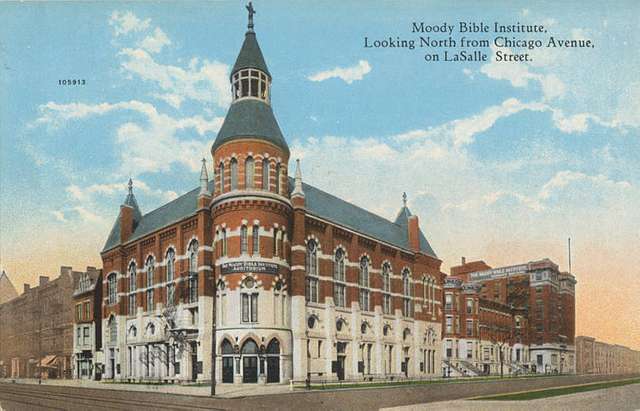
That training served him well, first as editor for HIS magazine, then at Good News Publishers, and finally as director of Moody Press in Chicago.

Ken’s children loved his stories, and when he shared them with colleagues at Moody, they urged him to publish. (He’d already published two children’s books.) The first collection of scripture-stories, The Bible in Pictures for Little Eyes (1956), was followed by several more.

Then came a new God-inspired epiphany. What if he rewrote scripture thought-for-thought instead of word-for-word, but still based on the original Hebrew or Greek? Could he make scripture—even the non-story parts—more understandable for his children?

Ken flipped open his Bible, and his eyes landed on 2 Timothy 2:4.

“No man that warreth entangleth himself with the affairs of this life; that he may please him who hath chosen him to be a soldier” (KJV).

After careful thought, Ken wrote: “As Christ’s soldier do not let yourself become tied up in worldly affairs, for then you cannot satisfy the one who has enlisted you in his army [3].”

That night he shared his rewrite with the family. They approved.

Thus began a multi-year commitment of evenings, weekends, and vacations, revising scripture for his family. Ken even worked during the 45-minute commute by train from his home (in Wheaton, Illinois) to Chicago.

Each evening he’d share the results of his efforts with the family.

A few years later another possibility occurred to Ken. Other families might also appreciate a scripture revision in modern-day English. By this time (1962), he’d completed the twenty-one epistles (letters) of the New Testament. He called the book Living Letters.

However, publisher after publisher rejected the manuscript. They doubted people would be interested in a modern version of the epistles so far removed from the familiar King James.

Ken and his wife Margaret decided to finance from their savings a printing of 2000 copies. He then rented half a booth at a Christian book convention and sold 800 copies.

The family helped process the orders at the dining room table. Boxes of books were stored under their beds.

Several months passed before the first orders arrived at their home. Ken dipped into their savings again and printed 5,000 copies. A few months later, 10,000 more.

In 1963 the Billy Graham Association contacted Ken. They wanted to offer Living Letters to anyone who requested a copy. They distributed six hundred thousand copies world-wide.

Considerable proceeds began to accumulate, but Ken and Margaret weren’t interested in upgrading their modest lifestyle. They set up a foundation in order to fund Christian mission projects worldwide [4].

Another prompting from God led Ken to leave Moody Press so he could write full-time and revise more books of the Bible into modern day language.

From 1964 to 1970 Ken added such volumes as The Living Prophecies (1964) and The Living Gospels (1966).  Each one included a different portion of the Bible.

By 1965, the dining room no longer sufficed for conducting the business of their company, Tyndale House Publishing [5]. Ken moved the operation to offices nearby. Another move became necessary in 1967 when even more space was required.

By 1972 Ken had completed the revision of the entire scriptures. The Living Bible was released, selling eight million copies by the end of that year.

In 1973, The Living Bible became the best-selling book in America, and Tyndale House Publishing soon became the well-known and highly-respected company it is today.

By the late 1980s Ken had been semi-retired for several years and his son Mark served as CEO. Tyndale House brought together ninety Bible scholars to work on The New Living Translation, which would be “faithful to the ancient texts and eminently readable” [6]. That volume was released in 1996 and has sold more than 50 million copies.

To this day Tyndale House carries on the passion and Living legacy of Kenneth N. Taylor (1917-2005), ministering to “the spiritual needs of people, primarily through literature consistent with biblical principles” [7].


[1] A time of Bible reading and prayer

[2] https://todayschristianliving.org/ken-taylor-making-scripture-clear/

[3] Ibid.

[4] Ibid.

[5] William Tyndale translated the Bible into English, and was burned at the stake in 1536 for doing so.

[6] https://www.tyndale.com/about-the-nlt

[7] https://www.tyndale.com/kenneth-n-taylor

Other sources:

https://www.zianet.com/maxey/ver4.htm

https://www.referenceforbusiness.com/history2/6/Tyndale-House-Publishers-Inc.html

Read Full Post »

Most visitors to an art museum spend fifteen to thirty seconds looking at a painting, but art enthusiasts insist that’s not near long enough to fully enjoy each work.

Take for example da Vinci’s world-famous Mona Lisa. You’ve seen photographs; some of you may have viewed the original at the Louvre. Besides the model’s haunting expression, what makes this painting stand out from others?

First, note da Vinci’s use of shadow to give contour to the face and clothing. As a result, daVinci achieved more realism than other painters of his time.

Second, enlarge the image above and study da Vinci’s masterful attention to detail—the intricate gathers of the bodice, the graceful tendrils of her hair, the next-to-nothing veil.

Third, focus on the background. Mona Lisa appears to be sitting in front of a window with a lovely view of mountains, trees, and a lake. Da Vinci used a technique called foreshortening to condense the wide scene onto his narrow canvas.

Fourth, note the hazy atmosphere, created as da Vinci blurred the edges of his almost undetectable brushstrokes.

Of course, additional features also contribute to Mona Lisa’s magnificence. Yet even this short list makes clear: there’s more to the Mona Lisa than most of us realize.

And to know more makes us appreciate more and enjoy more. But such results require close observation through slow looking.

The same principle applies to God. To know God more will allow us to enjoy and appreciate him more.

But how do we observe closely Someone who’s invisible?

We begin with evidence of the Unseen. One example, his presence and character traits revealed in the events of our lives:

  • Caring protection from harm on numerous occasions
  • Generous provision of countless necessities, gifts, and blessings
  • Perfect wisdom, as certain desires of our hearts haven’t come true, recognized in hindsight
  • Unfailing faithfulness to see us through disappointment, difficulty, and uncertainty
  • Gracious goodness in every joyful moment, every delightful surprise. They all come from him.

Every day provides much evidence of his benevolent presence in the lives of each of his children. The more we look, the more we’ll find. And as each discovery is turned into praise our spirits fill with joy.

Another way to practice slow looking is to spend time in God’s presence, learning more about him through his Word.

It makes sense: “Delight in God cannot occur in an intellectual vacuum” [1].

“But I don’t know where to start!” someone might say.

The internet offers a variety of reading plans, and once a plan is in place, we apply the practice of slow looking as we read.

Writing the answers to such questions as these hones our observation skills:

  • What does this passage say about God and his character?
  • What truths does he teach?
  • What does God promise here that offers hope and encouragement?
  • Is there a prayer that applies to my life? (Write it out, perhaps in your own words, and personalize it.)
  • Has God included an example to follow or not follow [2]?

Slow looking through the act of writing also helps deepen our understanding and appreciation, expanding our capacity to enjoy God.

Another benefit? Taking joy in God and all his excellencies increases our strength to endure.

What moment of slow looking has led you to a recent discovery about God? Please share in the comment section below!


[1] Sam Storms, http://www.gracequotes.org

[2] Denise J. Hughes, Deeper Waters, 76.

Photo credits: http://www.pxhere.com; http://www.wikipedia.org; http://www.rawpixel.com; http://www.pexels.com; http://www.heartlight.org; unknown.

Read Full Post »

More than likely you’ve never seen the item pictured above. At first glance, you might think it’s a noisemaker used in primitive worship ceremonies. Others might say it looks like a musical instrument or the paddle for some game.

In actuality, it’s a model of an ancient Aztec weapon, a macuahuitl (MAC-wah-wick).

Strange-looking, isn’t it?  How could a wooden paddle be deadly enough for warfare? The key lies in those black protrusions on the sides. They were made from obsidian and filed razor sharp, capable of creating gaping slash wounds.

Here’s another strange-looking weapon. They remind me of the jacks some of us played with as children. These are called caltrops, with each spike measuring 2 1/2-to-3 inches.

Caltrops were designed so that, when thrown on the ground, one point would always land facing up.

Spread hundreds of these around your camp at night, and protect your soldiers while they rest. Or hide them in the area before the opposing army approaches, and cause crippling injury to many men and beasts as they charge.

But why all this talk about ancient weapons?

In the spiritual battles of life, we too have at least two strange-but-effective weapons at our disposal.

At first glance, they might appear useless against our adversary Satan. But these weapons have the power to defeat his minions of discouragement, disappointment, envy, frustration, and more.

The first weapon is gratitude. Yes, just uncomplicated gratitude.

For example, consider each of the negative emotions named above and how gratitude might incapacitate them:

  • When discouraged by lack of recognition at work, I can be thankful God sees.
  • When dissatisfied with my paycheck, I can be thankful that God will provide.
  • When disappointed by my child’s behavior, I can be thankful for the life-lessons taught through consequences that will benefit him in the future.
  • When envious over the lovely new house of an acquaintance, I can be thankful for our low mortgage, friendly neighbors, and the memories that have turned our house into a home.
  • When frustrated by a day of one-step-forward-and-two-steps-back, I can thank God for the strength and patience to see me through [1].

And as we wield our weapon of gratitude we’ll discover: “The truly thankful person is a truly peaceful person” [2].

But how do we manufacture deep-down satisfaction when life is full of difficulty and stress?

Luci Swindoll suggests: “Consider who you are and be satisfied with that. Consider what you have and be satisfied with that. Consider what God is doing and be satisfied with that” [3].

One way to employ contentment is to meditate on one of the praise psalms, like Psalm 103 or 145. While reading each verse, consider what it says about who you are, what you have, and what God is doing. Brandish your discoveries in the face of the enemy of your soul.

Even one simple statement can generate a whole journal of responses. For example:

In this moment, consider:

  • What goodness do you see, hear, taste, smell, or feel (externally and internally)? Praise God for these gifts [4]
  • What recent events have brought you joy? Praise God for engineering those events.
  • Who has blessed you lately? Praise God for these people.
  • What are you looking forward to? What hopes do you have for the future? Praise God that, because of his unfailing love and faithfulness, we always have hope (Lamentations 3:21-23).
  • What evidence of God’s thrilling presence have you noted? Praise him for revealing himself in so many different ways [5].

Perhaps a thick fog of trouble makes it difficult to see much goodness. British writer and scholar Alexander Smellie (1857-1923) would have us affirm:

“The Lord knows what is best for me, and my surroundings are determined by Him. Wherever He places me, He does so to strengthen my faith and power, and to draw me into closer communion with Himself. And even if confined to a dungeon, my soul will prosper.”

Those are fighting words of contentment we can take into battle, my friends!


[1] Job 28:24; Philippians 4:19; Hebrews 12:11; Habakkuk 3:17-19; Philippians 4:13

[2] Lysa Terkheurst, Embraced, 256.

[3] Joy Breaks, 79.

[4] A previous post Mindfulness PLUS may prompt your thoughts.

[5] Another post Heart-to-Heart offers examples.

Photo credits: http://www.worldhistoryencyclopedia.org; http://www.picryl.com; http://www.heartlight.org; http://www.canva.org; http://www.pxhere.com.

Read Full Post »

As the new year makes its entrance, a fresh breeze of possibilities and dreams fills the mind:

  • Perhaps this year . . .
  • Wouldn’t it be wonderful if . . .
  • All things are possible with God, so . . .

But no sooner do I start finishing those statements with starry-eyed optimism, than some scratchy, irritating thoughts demand my attention.  Thoughts such as:

  • You’re too old, terribly unworthy, and under-qualified.
  • You’ve already waited so long. Your desires obviously aren’t God’s desires for you.
  • You’ve hopelessly veered from God’s plan; otherwise your life circumstances would surely be different.

And my heart cries out:

I need your Word, God, your Sword of the Spirit, to slay these lies. And though I am grateful for familiar sword-thrusts like Romans 8:28, Jeremiah 29:11, and Philippians 4:13 to wield against the untruths listed above, a few new moves would surely increase my resolve. “Strengthen me according to your word” (Psalm 119:28b).

And God seems to say:

“All right, Nancy, let’s look at each statement from my viewpoint.

“You are too old? Not so. Moses was eighty when he became the leader of the Hebrew nation, bringing them out of Egypt and into Canaan. Daniel served as prime minister in Babylon well past the age of eighty. John was quite elderly when he received the Revelation. Age has nothing to do with usefulness.

“You are unworthy? Also not so. You are one of My chosen people, a royal priestess, who belongs to Me, the King of the universe (1 Peter 2:9a). Like all My children, you are precious and honored in My sight because I love you (Isaiah 43:4).

“You are under-qualified? All the better for My purposes! My G.R.A.C.E. (God’s Riches at Christ’s Expense) includes wisdom, power, strength, discernment, all spiritual gifts, all fruit of the Spirit, and more. My grace is more than sufficient for you; it’s all you need. In fact,“My strength comes into its own in your weakness” (2 Corinthians 12:9 MSG).

“You’ve waited too long? Think again. Abraham waited 25 years for Isaac. Joseph waited seventeen years for his dream to come true. Caleb waited 45 years for his special parcel of the Promised Land.

“You’ve veered from My plan for you? Please refer to Ephesians 1:11. Your singular purpose is to display My glory, that is, my attributes of love, joy, goodness, and more. Wherever you are . . . “whatever you do, work at it with all your heart, as working for the Lord, not for men” (Colossians 3:23). And remember: small acts can achieve important results also.

“One closing thought to keep in mind: There is method and reason to every decree I have judiciously ordained since the beginning of time, to accomplish My will according to My sovereignty. I AM the Almighty, all-wise God, your Heavenly Father.”

*     *     *     *     *     *     *     *     *     *

O God, help me to look toward 2024, not through the eyes of discouraging doubt but through the eyes of ever-increasing faith. And when I cannot understand, help me just to stand. In Jesus’ powerful name, Amen. *

* Based on a prayer from Selwyn Hughes in Every Day Light, 105.

Image credits: http://www.pxhere.com; http://www.pickpik.com.

(Revised and reblogged from 1-3-2013 while we enjoy the last couple of days with out-of-town family.)

Read Full Post »

« Newer Posts - Older Posts »

When the House is Quiet

Impressions Becoming Expressions

Mitch Teemley

The Power of Story

Still Traveling

Impressions Becoming Expressions

Living Our Days

Gaining a heart of wisdom

He Said What?!

I'm Patty, and my husband and I are living with our adult son who has autism and epilepsy. I love sharing lessons learned from life around me, especially life with Aaron.

Meditations of my Heart

Impressions Becoming Expressions

Linda Stoll

Impressions Becoming Expressions

Signora Sheila

Where Faith Meets La Dolce Vita

Heidi Viars

Finding the Image of God