Feeds:
Posts
Comments

A LIVING Legacy

Ken looked up from his Bible into the faces of his children, gathered for their family devotions [1]. He’d been reading to them from a puzzling passage, and the circle of glassy eyes betrayed their lack of understanding.

Ken knew the problem; he’d dealt with it himself growing up in the 1920s. The King James Version of 1611, used by most Protestant churches at the time, was difficult for modern generations to comprehend—much less Ken’s children growing up in the 1940s and ‘50s.

He stopped reading and explained the meaning of the confusing verse.

“But Daddy,” said one of his daughters, “if that’s what it means, why doesn’t it say so” [2]?

Why not, indeed, thought Ken. That’s when he decided to rewrite certain Bible stories for his ten children.

Ken’s background provided a strong foundation for such a project. He’d grown up in the home of a pastor father and godly mother, and earned an advanced theology degree.

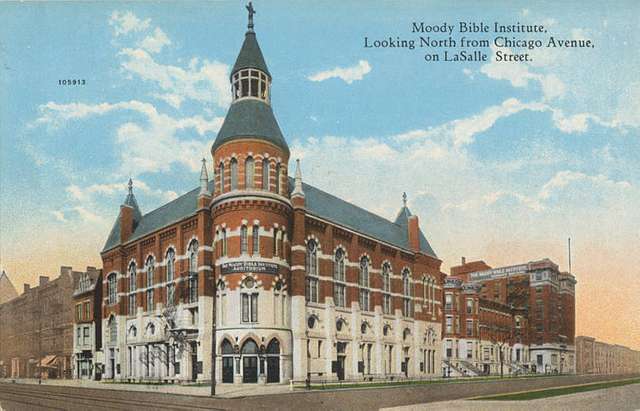
That training served him well, first as editor for HIS magazine, then at Good News Publishers, and finally as director of Moody Press in Chicago.

Ken’s children loved his stories, and when he shared them with colleagues at Moody, they urged him to publish. (He’d already published two children’s books.) The first collection of scripture-stories, The Bible in Pictures for Little Eyes (1956), was followed by several more.

Then came a new God-inspired epiphany. What if he rewrote scripture thought-for-thought instead of word-for-word, but still based on the original Hebrew or Greek? Could he make scripture—even the non-story parts—more understandable for his children?

Ken flipped open his Bible, and his eyes landed on 2 Timothy 2:4.

“No man that warreth entangleth himself with the affairs of this life; that he may please him who hath chosen him to be a soldier” (KJV).

After careful thought, Ken wrote: “As Christ’s soldier do not let yourself become tied up in worldly affairs, for then you cannot satisfy the one who has enlisted you in his army [3].”

That night he shared his rewrite with the family. They approved.

Thus began a multi-year commitment of evenings, weekends, and vacations, revising scripture for his family. Ken even worked during the 45-minute commute by train from his home (in Wheaton, Illinois) to Chicago.

Each evening he’d share the results of his efforts with the family.

A few years later another possibility occurred to Ken. Other families might also appreciate a scripture revision in modern-day English. By this time (1962), he’d completed the twenty-one epistles (letters) of the New Testament. He called the book Living Letters.

However, publisher after publisher rejected the manuscript. They doubted people would be interested in a modern version of the epistles so far removed from the familiar King James.

Ken and his wife Margaret decided to finance from their savings a printing of 2000 copies. He then rented half a booth at a Christian book convention and sold 800 copies.

The family helped process the orders at the dining room table. Boxes of books were stored under their beds.

Several months passed before the first orders arrived at their home. Ken dipped into their savings again and printed 5,000 copies. A few months later, 10,000 more.

In 1963 the Billy Graham Association contacted Ken. They wanted to offer Living Letters to anyone who requested a copy. They distributed six hundred thousand copies world-wide.

Considerable proceeds began to accumulate, but Ken and Margaret weren’t interested in upgrading their modest lifestyle. They set up a foundation in order to fund Christian mission projects worldwide [4].

Another prompting from God led Ken to leave Moody Press so he could write full-time and revise more books of the Bible into modern day language.

From 1964 to 1970 Ken added such volumes as The Living Prophecies (1964) and The Living Gospels (1966).  Each one included a different portion of the Bible.

By 1965, the dining room no longer sufficed for conducting the business of their company, Tyndale House Publishing [5]. Ken moved the operation to offices nearby. Another move became necessary in 1967 when even more space was required.

By 1972 Ken had completed the revision of the entire scriptures. The Living Bible was released, selling eight million copies by the end of that year.

In 1973, The Living Bible became the best-selling book in America, and Tyndale House Publishing soon became the well-known and highly-respected company it is today.

By the late 1980s Ken had been semi-retired for several years and his son Mark served as CEO. Tyndale House brought together ninety Bible scholars to work on The New Living Translation, which would be “faithful to the ancient texts and eminently readable” [6]. That volume was released in 1996 and has sold more than 50 million copies.

To this day Tyndale House carries on the passion and Living legacy of Kenneth N. Taylor (1917-2005), ministering to “the spiritual needs of people, primarily through literature consistent with biblical principles” [7].


[1] A time of Bible reading and prayer

[2] https://todayschristianliving.org/ken-taylor-making-scripture-clear/

[3] Ibid.

[4] Ibid.

[5] William Tyndale translated the Bible into English, and was burned at the stake in 1536 for doing so.

[6] https://www.tyndale.com/about-the-nlt

[7] https://www.tyndale.com/kenneth-n-taylor

Other sources:

https://www.zianet.com/maxey/ver4.htm

https://www.referenceforbusiness.com/history2/6/Tyndale-House-Publishers-Inc.html

S-l-o-w Looking

Most visitors to an art museum spend fifteen to thirty seconds looking at a painting, but art enthusiasts insist that’s not near long enough to fully enjoy each work.

Take for example da Vinci’s world-famous Mona Lisa. You’ve seen photographs; some of you may have viewed the original at the Louvre. Besides the model’s haunting expression, what makes this painting stand out from others?

First, note da Vinci’s use of shadow to give contour to the face and clothing. As a result, daVinci achieved more realism than other painters of his time.

Second, enlarge the image above and study da Vinci’s masterful attention to detail—the intricate gathers of the bodice, the graceful tendrils of her hair, the next-to-nothing veil.

Third, focus on the background. Mona Lisa appears to be sitting in front of a window with a lovely view of mountains, trees, and a lake. Da Vinci used a technique called foreshortening to condense the wide scene onto his narrow canvas.

Fourth, note the hazy atmosphere, created as da Vinci blurred the edges of his almost undetectable brushstrokes.

Of course, additional features also contribute to Mona Lisa’s magnificence. Yet even this short list makes clear: there’s more to the Mona Lisa than most of us realize.

And to know more makes us appreciate more and enjoy more. But such results require close observation through slow looking.

The same principle applies to God. To know God more will allow us to enjoy and appreciate him more.

But how do we observe closely Someone who’s invisible?

We begin with evidence of the Unseen. One example, his presence and character traits revealed in the events of our lives:

  • Caring protection from harm on numerous occasions
  • Generous provision of countless necessities, gifts, and blessings
  • Perfect wisdom, as certain desires of our hearts haven’t come true, recognized in hindsight
  • Unfailing faithfulness to see us through disappointment, difficulty, and uncertainty
  • Gracious goodness in every joyful moment, every delightful surprise. They all come from him.

Every day provides much evidence of his benevolent presence in the lives of each of his children. The more we look, the more we’ll find. And as each discovery is turned into praise our spirits fill with joy.

Another way to practice slow looking is to spend time in God’s presence, learning more about him through his Word.

It makes sense: “Delight in God cannot occur in an intellectual vacuum” [1].

“But I don’t know where to start!” someone might say.

The internet offers a variety of reading plans, and once a plan is in place, we apply the practice of slow looking as we read.

Writing the answers to such questions as these hones our observation skills:

  • What does this passage say about God and his character?
  • What truths does he teach?
  • What does God promise here that offers hope and encouragement?
  • Is there a prayer that applies to my life? (Write it out, perhaps in your own words, and personalize it.)
  • Has God included an example to follow or not follow [2]?

Slow looking through the act of writing also helps deepen our understanding and appreciation, expanding our capacity to enjoy God.

Another benefit? Taking joy in God and all his excellencies increases our strength to endure.

What moment of slow looking has led you to a recent discovery about God? Please share in the comment section below!


[1] Sam Storms, http://www.gracequotes.org

[2] Denise J. Hughes, Deeper Waters, 76.

Photo credits: http://www.pxhere.com; http://www.wikipedia.org; http://www.rawpixel.com; http://www.pexels.com; http://www.heartlight.org; unknown.

Choose Your Weapons!

More than likely you’ve never seen the item pictured above. At first glance, you might think it’s a noisemaker used in primitive worship ceremonies. Others might say it looks like a musical instrument or the paddle for some game.

In actuality, it’s a model of an ancient Aztec weapon, a macuahuitl (MAC-wah-wick).

Strange-looking, isn’t it?  How could a wooden paddle be deadly enough for warfare? The key lies in those black protrusions on the sides. They were made from obsidian and filed razor sharp, capable of creating gaping slash wounds.

Here’s another strange-looking weapon. They remind me of the jacks some of us played with as children. These are called caltrops, with each spike measuring 2 1/2-to-3 inches.

Caltrops were designed so that, when thrown on the ground, one point would always land facing up.

Spread hundreds of these around your camp at night, and protect your soldiers while they rest. Or hide them in the area before the opposing army approaches, and cause crippling injury to many men and beasts as they charge.

But why all this talk about ancient weapons?

In the spiritual battles of life, we too have at least two strange-but-effective weapons at our disposal.

At first glance, they might appear useless against our adversary Satan. But these weapons have the power to defeat his minions of discouragement, disappointment, envy, frustration, and more.

The first weapon is gratitude. Yes, just uncomplicated gratitude.

For example, consider each of the negative emotions named above and how gratitude might incapacitate them:

  • When discouraged by lack of recognition at work, I can be thankful God sees.
  • When dissatisfied with my paycheck, I can be thankful that God will provide.
  • When disappointed by my child’s behavior, I can be thankful for the life-lessons taught through consequences that will benefit him in the future.
  • When envious over the lovely new house of an acquaintance, I can be thankful for our low mortgage, friendly neighbors, and the memories that have turned our house into a home.
  • When frustrated by a day of one-step-forward-and-two-steps-back, I can thank God for the strength and patience to see me through [1].

And as we wield our weapon of gratitude we’ll discover: “The truly thankful person is a truly peaceful person” [2].

But how do we manufacture deep-down satisfaction when life is full of difficulty and stress?

Luci Swindoll suggests: “Consider who you are and be satisfied with that. Consider what you have and be satisfied with that. Consider what God is doing and be satisfied with that” [3].

One way to employ contentment is to meditate on one of the praise psalms, like Psalm 103 or 145. While reading each verse, consider what it says about who you are, what you have, and what God is doing. Brandish your discoveries in the face of the enemy of your soul.

Even one simple statement can generate a whole journal of responses. For example:

In this moment, consider:

  • What goodness do you see, hear, taste, smell, or feel (externally and internally)? Praise God for these gifts [4]
  • What recent events have brought you joy? Praise God for engineering those events.
  • Who has blessed you lately? Praise God for these people.
  • What are you looking forward to? What hopes do you have for the future? Praise God that, because of his unfailing love and faithfulness, we always have hope (Lamentations 3:21-23).
  • What evidence of God’s thrilling presence have you noted? Praise him for revealing himself in so many different ways [5].

Perhaps a thick fog of trouble makes it difficult to see much goodness. British writer and scholar Alexander Smellie (1857-1923) would have us affirm:

“The Lord knows what is best for me, and my surroundings are determined by Him. Wherever He places me, He does so to strengthen my faith and power, and to draw me into closer communion with Himself. And even if confined to a dungeon, my soul will prosper.”

Those are fighting words of contentment we can take into battle, my friends!


[1] Job 28:24; Philippians 4:19; Hebrews 12:11; Habakkuk 3:17-19; Philippians 4:13

[2] Lysa Terkheurst, Embraced, 256.

[3] Joy Breaks, 79.

[4] A previous post Mindfulness PLUS may prompt your thoughts.

[5] Another post Heart-to-Heart offers examples.

Photo credits: http://www.worldhistoryencyclopedia.org; http://www.picryl.com; http://www.heartlight.org; http://www.canva.org; http://www.pxhere.com.
Think Again

As the new year makes its entrance, a fresh breeze of possibilities and dreams fills the mind:

  • Perhaps this year . . .
  • Wouldn’t it be wonderful if . . .
  • All things are possible with God, so . . .

But no sooner do I start finishing those statements with starry-eyed optimism, than some scratchy, irritating thoughts demand my attention.  Thoughts such as:

  • You’re too old, terribly unworthy, and under-qualified.
  • You’ve already waited so long. Your desires obviously aren’t God’s desires for you.
  • You’ve hopelessly veered from God’s plan; otherwise your life circumstances would surely be different.

And my heart cries out:

I need your Word, God, your Sword of the Spirit, to slay these lies. And though I am grateful for familiar sword-thrusts like Romans 8:28, Jeremiah 29:11, and Philippians 4:13 to wield against the untruths listed above, a few new moves would surely increase my resolve. “Strengthen me according to your word” (Psalm 119:28b).

And God seems to say:

“All right, Nancy, let’s look at each statement from my viewpoint.

“You are too old? Not so. Moses was eighty when he became the leader of the Hebrew nation, bringing them out of Egypt and into Canaan. Daniel served as prime minister in Babylon well past the age of eighty. John was quite elderly when he received the Revelation. Age has nothing to do with usefulness.

“You are unworthy? Also not so. You are one of My chosen people, a royal priestess, who belongs to Me, the King of the universe (1 Peter 2:9a). Like all My children, you are precious and honored in My sight because I love you (Isaiah 43:4).

“You are under-qualified? All the better for My purposes! My G.R.A.C.E. (God’s Riches at Christ’s Expense) includes wisdom, power, strength, discernment, all spiritual gifts, all fruit of the Spirit, and more. My grace is more than sufficient for you; it’s all you need. In fact,“My strength comes into its own in your weakness” (2 Corinthians 12:9 MSG).

“You’ve waited too long? Think again. Abraham waited 25 years for Isaac. Joseph waited seventeen years for his dream to come true. Caleb waited 45 years for his special parcel of the Promised Land.

“You’ve veered from My plan for you? Please refer to Ephesians 1:11. Your singular purpose is to display My glory, that is, my attributes of love, joy, goodness, and more. Wherever you are . . . “whatever you do, work at it with all your heart, as working for the Lord, not for men” (Colossians 3:23). And remember: small acts can achieve important results also.

“One closing thought to keep in mind: There is method and reason to every decree I have judiciously ordained since the beginning of time, to accomplish My will according to My sovereignty. I AM the Almighty, all-wise God, your Heavenly Father.”

*     *     *     *     *     *     *     *     *     *

O God, help me to look toward 2024, not through the eyes of discouraging doubt but through the eyes of ever-increasing faith. And when I cannot understand, help me just to stand. In Jesus’ powerful name, Amen. *

* Based on a prayer from Selwyn Hughes in Every Day Light, 105.

Image credits: http://www.pxhere.com; http://www.pickpik.com.
(Revised and reblogged from 1-3-2013 while we enjoy the last couple of days with out-of-town family.)

Summer 2021

A happy family is

but an earlier heaven.

–George Bernard Shaw

We’ve been enjoying an earlier heaven this week as our three children, their spouses, and three grandchildren have gathered. (Steve’s sister and brother-in-law joined us for a day also.)

Because such occasions happen only now and then, I totally agree with Kathleen McGowan, who wrote:

The only thing sweeter than union

is reunion.

–Kathleen McGowan

Indeed, we treasure these times of togetherness, just as Wanda Hope Carter advocates:

Family and friends are hidden treasures.

Seek them and enjoy their riches.

–Wanda Hope Carter

A Spanish-American philosopher came close to describing why we find treasure in familial relationships:

The family is one of

nature’s masterpieces.

–George Santayana

I’d amend his statement to: “The family is one of God’s masterpieces.” After all, family is God’s idea, established at the beginning of time (Genesis 1:28).

Author Dillon Burroughs adds this viewpoint:

When we think of our family,

our spouse, parents, or children,

let us see them as a gift from God.

–Dillon Burroughs

Indeed! I am supremely grateful to my Heavenly Father for giving us the gift of a family that loves, supports, and takes joy in one another.

They make my soul blossom.

Let us be grateful to people who make us happy;

They are the charming gardeners who make our souls blossom.
–Marcel Proust

Three weeks ago we embarked upon a reflection of one of the most important songs in the history of the Christian faith: “O Come, O Come, Emmanuel.”

The lyrics beautifully weave together the Old and New Testaments, telling the story of our Messiah, “the chosen One”—who would come to deliver his people from the consequences of their sins and establish his kingdom forever [1].
Each verse helps us place our eyes on Jesus’ return by remembering his first coming and then expressing hope and yearning for his second coming [2].

As noted before, the unknown lyricist (from the eighth or ninth century) carefully based each stanza on scripture. You’ll find references for further reflection listed at the end of this post.

One fact not mentioned thus far: the poet constructed the Latin lyrics in the form of a seven-sentence acrostic. When the first letter of the second word of each sentence (the names of Jesus) are put together, they spell SARCORE.

Read that word backwards, and the letters form two words of sublime hope: Ero cras, which means, “I will be present tomorrow.”

Whatever the future may hold, our Emmanuel will see us through. What a faith-stirring surprise the lyricist created for us [3]!

Now let’s turn our attention to the last two verses [4].

VERSE SIX

I praise you, Lord Jesus, that just as the morning star shines brightly against the darkness of night, you are the glorious Light of the world, shining brightly against the darkness of evil [5].

Just as the morning star glows steadily without a flicker, you shine in our lives with unwavering faithfulness and love [6].

Just as the morning star is a promise of coming day, your light provides hope and assurance that you will come again, to usher in The Day of the Lord, when a new heaven and a new earth will be established and righteousness will dwell [7].

Finally, just as the morning star can guide those at sea, your light guides our way through life. “In your light we see light”—the light of wisdom and discernment [8].

Such truths do bring us comfort, dispelling shadowy thoughts and flooding our spirits with the light of your perfection.

I praise you, Lord Jesus, for turning the darkness of sin, anxiety, discouragement, and more, into the light of your forgiveness, peace, hope, and joy [9]!

VERSE SEVEN  

I praise you, Lord Jesus, our King! How comforting to know that Someone all-wise and supremely gracious is the Ruler of all nations, all things [10].

Yet you are also a respecter of persons. You’ve bestowed upon us the gift of choice, the ability to determine our own way. And what have we accomplished? Our world is tainted by selfishness, pride, and contention [11].

How we need you, Lord Jesus! You are our only hope for our selfishness to be transformed into selflessness, pride into humility, and contention into unity.

So we boldly pray that every person on earth would come to faith in you [12].

Is that an unattainable dream? No, because you also are unwilling that anyone should perish. And all things are possible with you, our sovereign God and Savior [13].

After all, you:

  • Created all things everywhere
  • Maintain order in the entire universe
  • Control the course of human history
  • Depose kings and raise up others
  • Exist in all places at the same time [14]

I praise you, Lord Jesus, that nothing can prevent you from accomplishing your purpose [15].

And I praise you, Lord Jesus, that you’ve given us the wherewithal to experience harmony with one another, as we demonstrate love and compassion with humility [16].

May we be examples to the world, whetting their appetite for what we experience: the joy of living in the presence of the King of Peace [17]!


[1] Ace Collins, Stories Behind the Best-Loved Songs of Christmas,127; Isaiah 59:20; John 1:40-49; Romans 6:23; Revelation 11:15.

[2] https://www.danielim.com/2017/12/19/the-hidden-theology-and-history-of-o-come-o-come-emmanuel/

[3] https://www.ligonier.org/learn/articles/o-come-o-come-emmanuel

[4] From www.hymnary.org. (Lyrics vary depending on source.)

[5] Revelation 22:16

[6] Psalm 100:5; John 8:12

[7] 2 Peter 3:12-13

[8] Psalm 36:9b; Ecclesiastes 2:13-14

[9] Psalm 18:28

[10] Revelation 19:16

[11] Proverbs 5:23

[12] 1 Timothy 2:1-4

[13] 2 Peter 3:9; Mark 10:27b

[14] Colossians 1:16-17; Daniel 2:21; Jeremiah 23:23-24 GNT

[15] Psalm 115:3

[16] 1 Peter 3:8

[17] Psalm 16:11

Photo credits: http://www.flickr.com; http://www.heartlight.org; http://www.stockvault.net; http://www.rawpixel.com; http://www.stockvault.net; http://www.canva.com; http://www.pickpik.com.

Branch and Key

Two weeks ago we embarked upon a reflection of one of the most important songs in the history of the Christian faith: “O Come, O Come, Emmanuel.”

The lyrics beautifully weave together the Old and New Testaments, telling the story of our Messiah, “the chosen One”—who would come to deliver his people from the consequences of their sins and establish his kingdom forever [1].

As noted before, the unknown lyricist carefully based each stanza on scripture. You’ll find references for further reflection listed at the end of this post.

Today we turn our attention to verses four and five [2]:

VERSE 4

I praise you, Lord Jesus, for fulfilling all the Messianic prophecies in the Old Testament—at least 300 of them (!), proclaimed long before your birth. The one referenced here offers such glorious hope, as I’m reminded that:

Jesse was the father of King David, and the prophet Jeremiah foretold you’d be a descendant of this king, a man loyal to the Lord. But as the centuries passed, the nation of Judah turned their backs on God. Again and again he urged them to return to him [3].

Isaiah (another prophet) painted a word picture of the events that would occur. He compared the kingdom of Judah and the throne of David’s descendants to a tree that would be cut down. All that would remain would be a stump–a remnant of the people [4].

Eleven years later, events unfolded just as Isaiah and four others prophets had foretold. Jehoiachin, the last legitimate king of Judah, was removed from his throne by the Babylonian king, Nebuchadnezzar.

Thousands of Judeans were taken captive so they’d see the error of their ways, seek forgiveness, and follow God once again [5].

But I praise you, Lord Jesus, that Isaiah’s word picture didn’t end there. He proclaimed that out of that hopeless, rotting stump would come a strong sapling.

Six centuries later, you came to earth, the only Righteous One of God, fulfilling that prophecy [6].

Not only were you from the lineage of David on your earthly father Joseph’s side, but also on your mother Mary’s side. This fulfilled the prophecies proclaiming you are the descendant of David that the Jewish people longed for: their Messiah [7].

I praise you, Lord Jesus, for coming to save your people–Jews and Gentiles alike. Because of your great mercy, you rescued me from the specter of hell, taking the punishment I deserved.

And now, the grave has no power over anyone who acknowledges you as their Rescuer [8]!

VERSE 5  

I praise you, Lord Jesus, for possessing the Key of David. That’s significant because a key indicates authority over a domain.  

King David was given authority to rule over all Israel; you rule over all mankind. In fact, God has seated you at his right hand in the heavenly realms, far above all rule and authority, all power and dominion [9].

Out of your magnificence and perfection, you’ve prepared heaven for your people—a place of utter tranquility, blissful and continual joy, eternal and lavish love—beyond what we can imagine.

I praise you, Lord Jesus! You’ve opened wide the gates of heaven; you hold open the door of opportunity for all to enter [10].

As you’ve promised, one day you’ll return and take your children home along “the heavenward road.” Then you will shut the door upon death once and for all [11].

REFRAIN

In all of this and more I REJOICE! You are my Rescuer, saving me from the greatest enemy of all: death.

I praise You, Lord Jesus, for graciously providing the way heavenward. I REJOICE in you, my Savior, my Lord, my King!


[1] Ace Collins, Stories Behind the Best-Loved Songs of Christmas,127; Isaiah 59:20; John 1:40-49; Romans 6:23; Revelation 11:15.

[2] From www.hymnary.org. (Lyrics vary depending on the source.)

[3] Jeremiah 23:5; 1 Samuel 13:14; Isaiah 3:8-9; 55:7

[4] Isaiah 11:1, 10

[5] 2 Kings 24:8-17; 25:21; Isaiah 55:7; Joel 2:12-13

[6] Acts 22:14; 3:18

[7] Matthew 1; Luke 3; Jeremiah 23:5-6

[8] Psalm 86:13 GW; 56:13; Ephesians 1:17; Romans 8:11

[9] Revelation 3:17; Matthew 28:18; Ephesians 1:20—22

[10] Isaiah 22:22; Revelation 3:7

[11] John 14:1-3; Hebrews 2:14; Revelation 21:4

Art and photo credits: http://www.pixexid.com; http://www.stockvault.net; http://www.pexels.com; http://www.pixahive.com; http://www.stockvault.net; http://www.pixexid.com; http://www.stockvault.net.

Last week we embarked upon a reflection of one of the most important songs in the history of the Christian faith: “O Come, O Come, Emmanuel.”

The lyrics beautifully weave together the Old and New Testaments, telling the story of our Messiah, “the chosen One”—the One who would come to deliver his people from the consequences of their sins and establish his kingdom forever [1].

Each verse of “O Come, O Come, Emmanuel” directs our spiritual eyes toward Christ’s return by remembering his first coming, and then expressing hope, anticipation, and yearning for his second coming [2].

Our needs here in the present are also addressed as we look to him–our Emmanuel (God with us), our Wisdom from on high, our great Lord of might, and more.

As noted last week, the unknown lyricist carefully based each stanza on scripture. You’ll find a number of references listed at the end of this post for further reflection.

This week we meditate on verses two and three [3]:

VERSE 2

I praise you, Lord Jesus, that you are the wisdom of God from on high, and have become for us wisdom. In you are hidden all the treasures of discernment and knowledge—more profitable than silver, yielding better returns than gold, and more precious than rubies [4].

Through you, God Almighty made the universe, and he appointed you heir of all things. Your wisdom is on display in the order of everything: the orbits of planets, the balance of ecosystems, the cycle of seasons, and more [5].

I praise you, Lord Jesus! You are the radiance of God’s glory and the exact representation of his being. You wisely, actively, and expertly sustain all things by your powerful word [6]!

The Milky Way Galaxy is just one of approximately 200 billion galaxies in the universe–a conservative estimate.

It measures about 100, 000 lights years in diameter. Our whole planetary system occupies one tiny spot of the galaxy.

During your earthly life you exemplified the epitome of wisdom in what you taught and how you lived.

As if that wasn’t enough, you provide wisdom to those who trust you as their Lord and Savior and simply ask.

You know exactly when to give, how to give, what to give, and what to withhold [7].

We can trust you to show us the best path to follow, so that we may enjoy the abundant life you offer [8].

VERSE 3

I praise you, Lord Jesus, that you are our Lord of might, sovereign over all. You are leading everything to the conclusion you ordained before time began, by the same power, wisdom, and love with which you made it. Nothing can be amiss [9].

You will not fail to do your pre-ordained, unerring part, which is ultimately the only part that matters [10].

I praise you that just as the people of Israel saw the radiance of your glory on Mount Sinai as Moses received the law, we too can see evidence of your majesty and splendor. In fact, it’s all around us in:

  • The wonders of your creation
  • The truths in scripture
  • The love and compassion evident in your generous blessings
  • The beauty of your attributes on display—your knowledge, wisdom, power, goodness, and more
  • The scriptural prophecies fulfilled; the promises kept
  • The miracle of your grace that meets us where you find us but doesn’t leave us where you found us [11]

REFRAIN:

In all of this and more we REJOICE!

You have come to be with us, our Emmanuel. You support us with your perfect wisdom, omnipotent might, and more.

Hallelujah!


[1] Ace Collins, Stories Behind the Best-Loved Songs of Christmas, 127; Isaiah 59:20; John 1:40-49; Romans 6:23; Revelation 11:15

[2]  https://www.danielim.com/2017/12/19/the-hidden-theology-and-history-of-o-come-o-come-emmanuel/  

[3] From www.hymnary.org. The lyrics of this hymn vary depending on the source.

[4] 1 Corinthians 1:24, 30; Colossians 2:3; Proverbs 3:13-15

[5] Hebrews 1:2; Jeremiah 51:15

[6] Hebrews 1:3; Colossians 1:16-17

[7] Charles Spurgeon, Morning by Morning, 84.

[8] Proverbs 3:5-6

[9] Daniel 7:13-14. Last two sentences based on Julian of Norwich quote

[10] Based on Elisabeth Elliot quote

[11] Based on Anne LaMott quote

Art & photo credits: http://www.pixexid.com; http://www.stockvault.net (Mirko Fabian); http://www.pxhere.com; http://www.stockvault.net (Mirko Fabian); http://www.pxhere.com; http://www.pickpik.com.

Come, Emmanuel!

Earlier this week I greeted a store clerk with “Merry Christmas” and in return received a beaming smile.

“You’re the first person to say that to me this year!” she enthused. “Merry Christmas to you too!”

Technically, this woman and I were rushing the season by several weeks. According to the centuries-old church calendar, the Christmas celebration only extends from December 25 to January 6.

In these three to four weeks (depending on the year) leading up to Christmas, we ought to be offering one another a different greeting: “Happy Advent.”

And what exactly is Advent? The word comes to us from Latin, adventus, which means coming. It’s a season not just of waiting for Christmas, but also a time to anticipate the second coming of Christ.

For that reason, many churches will sing the ancient Advent hymn, “O Come, O Come, Emmanuel,” perhaps this Sunday. Dating from the eighth century, it’s probably the oldest song of the season that we still sing today.

It’s also considered one of the most important songs in the history of the Christian faith [1]. The lyrics beautifully weave together the Old and New Testaments, telling the story of our Messiah, “the chosen one,” who would come to deliver his people from the consequences of their sins and establish his kingdom forever [2].

Each verse of “O Come, O Come, Emmanuel” directs our spiritual eyes toward Christ’s return by remembering his first coming, then hoping, anticipating, and yearning for his second coming [3], expressed in the soulful tune of the verses.

In contrast, the assertive “Rejoice! Rejoice!” of the refrain conveys the joy of assurance: Our Emmanuel has come, he is with us now in spirit, and he will come again “in the same resurrected, glorified body in which He ascended to heaven” [4].

The unknown lyricist carefully based each stanza on scripture. You’ll find a number of references listed at the end of this post for further reflection.

Please join me over the next few weeks as we delve into the meaning of this grand hymn.

Today we’ll consider verse one and the refrain that put us in the first century with those who ached for the Messiah to come. And yet the lyrics also speak to us today as we long for him to return.

I praise you, Lord Jesus, for being my Emmanuel (“God with us”) [5].

You are with me when:

  • Frustrations build
  • Fear begins to rise
  • Circumstances overwhelm
  • Disappointments deflate my spirit
  • My heart aches

You are with me to:

  • Help in every situation
  • Supply guidance, strength, comfort, provision, and more
  • Fill my heart with your fullness of joy as I focus on who you are and what you’ve done
  • Grant me peace of mind as I trust in you
  • Give me hope based on your fail-proof promises

I praise you, Lord Jesus, for these facets (and many more) of the abundant life you offer, when I avail myself of your enduring influence.

Even so, like the captive Jews in Babylon centuries ago, many mourn in exile here [6]. This world is a painful place as self-centeredness, greed, injustice, rage, war, lust and more create havoc. We long for your kingdom of righteousness, justice, peace, love, joy, and prosperity.

Yet I still praise you, Lord Jesus! When the time was right, you came to pay the ransom for our souls and release us all—Jew and Gentile alike–from the bondage of sin and Satan [7].

Then you invite us to dwell in your spiritual kingdom with you. And those of us who accept your invitation will one day dwell in your wondrous heaven.

Even now as we grieve the suffering caused by sin and imperfection, we rejoice that when the time is right, you will return to earth, Lord Jesus, to end all suffering and receive us into your flawless and glorious kingdom.

Thank you, dear Christ, for making it possible.   


[1] Ace Collins, Stories Behind the Best-Loved Songs of Christmas, 127.

[2] Isaiah 59:20; John 1:40-49; Romans 6:23; Revelation 11:15

[3] https://www.danielim.com/2017/12/19/the-hidden-theology-and-history-of-o-come-o-come-emmanuel/  

[4]  https://carm.org/about-jesus/will-the-second-coming-of-jesus-be-a-literal-bodily-return/

[5] Isaiah 7:14; Matthew 1:23

[6] Psalm 137:1-4; Psalm 119:136-138

[7] Luke 4:18; Romans 2:11-21

Photo credits: http://www.picryl.com; http://www.pixexid.com; http://www.canva.com; http://www.stockvault.net (Mirko Fabian); http://www.dailyverses.net; http://www.publicdomainpictures.net (George Hodan).

A Marvelous Way to Live

http://www.quotefancy.com

Happy Thanksgiving, my dear readers!

In honor of this joyful holiday centered on gratitude I’ve collected some favorite quotes on the subject. Perhaps you’ll find one or two to your liking also.

Why is gratitude an important?

If gratitude is due from children to their earthly parent, how much more is the gratitude of the great family of men due to our Father in heaven?—Hosea Baliou

A spirit of thankfulness is one of the most distinctive marks of a Christian whose heart is attuned to the Lord—Billy Graham.

The best way to take off the tendency to complain is to put on thankfulness. Each day we must actively choose to see what God has provided—Melissa B. Krueger, The Envy of Eve, 134.

What happens as a result of gratitude?

It’s not the happy person who is thankful but the thankful person who is happy—Anonymous.

We would worry less if we praised more. Thanksgiving is the enemy of discontent and dissatisfaction—Harry Ironside.

The truly thankful person is a truly peaceful person—Lysa TerKeurst, Embraced, 256.

How do we cultivate gratitude?

The key to thankfulness is not to view God through the lens of our circumstances, but to view our circumstances through the lens of God’s love and sovereign purpose—Anne Graham Lotz.

Thank people who bless you in even the smallest ways. It will complete your enjoyment of the blessing, and it will increase your capacity to thank God—Alexander Whyte.

Habits of a grateful person: Notice, Pause, Choose. Notice something for which to be thankful no matter your circumstance. Pause to acknowledge this something as a reminder of God’s presence. Choose to focus on God’s presence until His powerful peace is unleashed—Lysa TerKeurst, Embraced, 256-257.

What might a life of gratitude look like?

You say grace before meals. All right. But I say grace before the concert and the opera, and grace before the play and pantomime, and grace before I open a book, and grace before sketching, painting, swimming, fencing, boxing, walking, playing, dancing and grace before I dip the pen in the ink—G. K. Chesterton.

That sounds like a marvelous way to live, doesn’t it?

Photo credits: http://www.quotefancy.com; http://www.picryl.com.

Still Traveling

Impressions Becoming Expressions

Living Our Days

Gaining a heart of wisdom

He Said What?!

I'm Patty, and my husband and I are living with our adult son who has autism and epilepsy. I love sharing lessons learned from life around me, especially life with Aaron.

Meditations of my Heart

Impressions Becoming Expressions

Linda Stoll

Impressions Becoming Expressions

Debby Thompson

Impressions Becoming Expressions

Signora Sheila

Notes on Life, Faith & Italy

Colleen Scheid

Writing, Acting, Living in God's Love

Mitch Teemley

The Power of Story

Heidi Viars

Finding the Image of God