Feeds:
Posts
Comments

(Steve and I are enjoying time with family this week.  I’ll return soon with  new posts.  Meanwhile, I’ll reblog previous ones.  Hopefully you’ll find them meaningful again, or perhaps for the first time.  The following post was first published September 13, 2013.)

Women's Bible Study

“I know we have to persevere and not give up on what we sense God wants us to do,” Melissa shared at Bible study.  “And from the lives of Joseph, Moses, Daniel, and others in the Bible, I know God rarely smooths out  the path perfectly.  But what I want to know is how to proceed.  I’d like steps to follow!”

Heads nodded around the table, mine included.  Wouldn’t it be nice if God laid out for us to see ahead of time step one, step two, and so on toward his perfect plan?

That idea has been circulating in my brain for nearly a week now.  Here are some observations.

1. God values our growth in faith more than our comfort in a revealed plan.   

If it was best for us to know his plan in advance, then that’s what God would provide.  Instead, he allows our faith to be tested, in order to build our character.  That is important to him:

“The Lord detests men of perverse heart but he delights in those whose ways are blameless” (Proverbs 11:20).

2.  God values the process of spiritual growth, not just the final outcome of a purpose fulfilled.

Times of challenge give us opportunity to develop maturity more readily than times of ease.  What might that development include?

  • Self-discipline–when we tackle difficult tasks.  Granted, the Holy Spirit empowers us (Galatians 5:22-23), but we must give ourselves over to him.  How?  Through frequent prayer, offered throughout the day, consistently asking for his guidance and help.
  • Self-denial–by doing without.  However, the attentive person will soon discover much to celebrate that may have been missed otherwise:  the stunning display of God’s creation, the joy of love and laughter with family and friends, the peace and strength from frequent communion with God.  Suddenly, gratitude flourishes in the heart, and what has been given up doesn’t seem so important anymore.
  • The full meaning of love–when given opportunity to respond in kind ways to difficult people.

None of these valuable traits of discipline, selflessness, and love would fully develop without lessons of experience.

3.  God values the development of our prayer lives–not for his benefit, but for ours.

Jean Nicolas Grou, a Jesuit priest of the 1700s, described healthy prayer as humble, reverent, loving, confident, and persevering.  As we practice those traits in our prayer lives, surely they will overflow into our character, in our actions and reactions.

Patient pursuit, then, is best applied to God’s ways, and then to God’s plan.

(photo credit:  http://www.st-tims-church.org )
The Name Jesus

When you say the name, Jesus, do images from his life flash to mind?  Images such as:


hqdefault

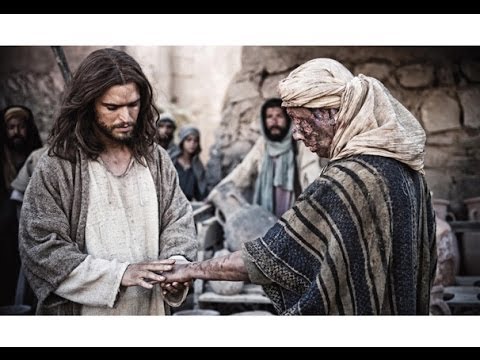
  • His healing hand gently touching a hideous leper, the lesions disappearing, fingers and toes miraculously being restored?  Do you see the love and joy on Jesus’ face as he watches the healed one, his eyes darting between arms and legs, elbows and knees, rejoicing that every inch of his skin glows with health (Matthew 11:5)?
  • Jesus standing in the bow of a lurching boat with arms raised, sleeves flapping in the whipping wind of a squall?  Do you hear his authoritative voice above the mayhem shouting, “Be still!”  Do you feel the boat stop pitching and rolling as the fearsome waves settle into calm ripples (Luke 8:22-25)?
  • Do you see Jesus leaning in, listening intently to the Samaritan woman at the well, eyes focused only on her, indicating genuine interest and tender compassion?  Do you sense his pleasure as she becomes a passionate believer (John 4:4-30)?
  • Do you breathe in the aroma of fresh bread and dried fish that permeated the hillside where 5,000 men (plus women and children) ate lunch one day, supplied by one boy’s meager fare–likely two small barley loaves and five sardines (Luke 9:10-17)?
  • Do you see Jesus reclining with his disciples at the Last Supper?  Do you hear the reverent tone of the ceremonial words?  Do you see the astonished expressions on the disciples’ faces, as Jesus changed the well-known ritual to speak of his body, his blood, and a betrayer among them?

Do you recognize the rich symbolism of his sacrifice-to-come in the elements of the meal?  1)  The unleavened matzah bread with its grill marks, reminding us of the stripes he bore on his back (Matthew 27:26).  2) The breaking of that bread, representing Jesus’ body broken for us (Matthew 26:26-28).   3) The lamb, symbolizing Jesus as the Lamb of God, sacrificed for our sakes that we might have eternal life (Romans 3:23-24).  4)  The third cup of wine during the Passover meal, called the cup of redemption, representing Jesus’ blood.**

Without our Jesus of gentleness, power, compassion, and sacrifice, we’d be reduced to lives of futility and fear.  Without our Jesus, we’d have no hope and promise of heaven’s ecstasy.

Every moment of his earthly life proved his perfection, his singular purpose, his love.

He is the sum total of all delights.

His name is:

music with which the bells of heaven sing;

a song in a word;

an ocean for comprehension,

although a drop of brevity;

a matchless oratorio in two syllables,

a gathering up of the hallelujahs of eternity

in five letters”

— Charles Spurgeon

    *     *     *     *     *     *     *     *     *

Precious Jesus, we praise you that the same attributes you demonstrated in Galilee and Judea so long ago are still at work among us today.  You are our faithful Rock, a Friend who never fails, a Shepherd who always attends.  May your name continually be on our lips!

**Jesus referred to his blood as the seal of a new covenant, a new promise.  By his death, the debt was paid–the one we owed because of our sin (Luke 22:20; Romans 3:23-25a).

(Photo credit:  http://www.youtube.com.)

A New Wardrobe

The story of Cinderella always was my favorite fairy tale. The rags-to-riches, wrong-to-right, happily-ever-after story never grew old.

1437fdd92c98d193d310d64889316185


And that ball gown! How the illustrators of the various editions must have enjoyed creating the glory and splendor of that dress!

Rarely, if ever, are we common damsels provided opportunity to wear such grand finery. And I doubt many guys out there in the blogosphere have donned gold-braided jackets spangled with brightly colored medals. Such ostentation is almost exclusively reserved for royalty.

Ah! But whether we’re CEOs of the home front (stay-at-home parents) or CEOs of corporations, plumbers or painters, teachers or taxi drivers, we are priests of the Lord King of the universe.   And that designation makes us a royal priesthood:


81cbdeaa64193e714bde42f962d32d8a


(“You are a chosen people, a royal priesthood,

a holy nation, a people belonging to God,

that you may declare the praises of him

who called you out of darkness

into his wonderful light.”

–1 Peter 2:9)

Because we are his royal priesthood, God has provided a glorious new wardrobe for each of us, including:

  • Rich garments of salvation, replacing the sin-stained rags of our self-centeredness (1).
  • A robe of righteousness, radiant with the perfections of Jesus (2).
  • A belt of truth, studded with gems from God’s Word that inspire, instruct, encourage, and comfort (3).
  • Garments of praise, because he continually manifests his glorious attributes and showers us with blessings (4).
  • Ornaments of strength and joy (5).
  • A crown of beauty, as we allow the Holy Spirit to renew our minds and turn our thoughts to the positive (6).
  • Beautiful shoes of peace, equipping us to tread gently and share the peace of Jesus with others (7).

Note: None of this is earned, like the medals on Prince Charming’s uniform. Every radiant item has been magnanimously bestowed by our King.

Why would that be, we wonder. Is his purpose simply to display his generosity?

Surely that’s part of the answer. But the last half of 1 Peter 2:9 (above) reveals more: Now that we’re dressed in his garments of radiant splendor, we are commissioned to proclaim his excellency everywhere we go.


Two-women-talking-in-a-cafe-300x199


Sometimes we proclaim with words (Mark 16:15), as simple as “God is so good,” while sharing a story with a coworker.

Sometimes we proclaim with loving action (John 13:34-35), serving as a channel of blessing between God and others. That extra-generous tip to a waitress, for example, may pay eternal dividends  especially if she saw us praying before we ate, and we engaged her in friendly, upbeat conversation (about her).

Sometimes we proclaim with our attitudes—simply reflecting the radiance of Jesus’ peace and joy on our faces (2 Corinthians 3:18)—especially in difficult circumstances. Someone may very well ask, “I don’t know how you do it,” giving you opportunity to proclaim God’s excellencies and the blessings of living in his wonderful light—just as that verse in First Peter suggests.


sun-beams-through-forest-300x199


If our new wardrobe is on full display, people will notice.


“Let us put on the vestments of holiness

and minister before the Lord all day long.”

–Charles Spurgeon

Photo credits:  www.pinterest.com (2), http://www.icould.com; http://www.kingdomcalling.com.)

___________________________________________________________________

  1. Zechariah 3:4; Isaiah 61:10
  2. Isaiah 61:10
  3. Ephesians 6:14; 2 Timothy 3:16
  4. Isaiah 61:3
  5. Isaiah 49:18
  6. Isaiah 61:3; Romans 8:5; Philippians 4:8
  7. Isaiah 52:7; Ephesians 6:15; John 14:27


Hannah Adams

taste_041_hannah_adams_harding

Hannah Adams

(born October 2, 1755)


“Hannah!” Silence. “Han-nah?” Still silence. “HAN-NAH A-DAMS!” her father bellowed.

Hannah finally came scurrying into the keeping room, her long skirts swishing. “I’m sorry, Father.   I was reading one of your books out on the porch and didn’t hear you.” The proof was in her hand, her thumb tucked between the pages.

He should have known. Hannah always seemed to have her nose in a book when chores were done, and easily tuned out the world while reading.  He himself was an avid reader with a large personal collection of books. How could he fault her for a strong desire to learn?

“Yes…well…I’ve something…rather disappointing to share with the family,” he faltered, “and there’s no time like the present, as they say.”

With that introduction, Mr. Adams sat his family down to share dismal, embarrassing news: his business of selling books and English goods had failed; his inherited fortune was gone.

Hannah was only seventeen, but willingly did her part to help support the family. She taught school, tutored, as well as crafted and sold bobbin lace. However, what spare moments Hannah found she continued to devour her father’s books. And with her outstanding memory, she retained much of what she read. Hannah also began to write.

Mr. Adams generated income by taking in Harvard divinity students as boarders and tutoring them. One student gave Hannah a book about the world’s religions. As she read about the Christian denominations, Hannah (a Congregationalist) became more and more disturbed.

This author isn’t offering subjective facts; he’s inserting his own negative opinions about each one–except his own denomination, she thought. I could construct a better volume than this—an unbiased one. And the proceeds could further help the family.

Hannah began her new reference work in 1778. Her intent was “to avoid giving the least preference of one denomination above another and to present the arguments and sentiments of each sect in believers’ own words, according to the group’s general collective sense” (1).

The result: The Alphabetical Compend of the Various Sects Which Have Appeared from the Beginning of the Christian Era to the Present Day. It was published in 1784 and sold well. But Hannah did not benefit; the agent absconded with most of the proceeds from the first edition.

Six years of diligent, painstaking work appeared wasted.

A Bostonian minister, James Freeman, helped Hannah gather a number of subscribers for the second edition (1791). It was even more profitable than the first, and finally Hannah enjoyed a small income from her efforts. As the years passed, she produced two more editions (1801, 1817). Hannah Adams was now the first woman of America to become a professional writer.

In 1799, her Summary History of New-England was published, followed by The Truth and Excellence of the Christian Religion Exhibited in 1804.

In between, Hannah lobbied Congress for the first copyright law (as a result of her first publishing experience, perhaps?). She sent a petition dated July 27, 1789. The law went into effect the following spring.

Several prominent intellectuals in Boston greatly respected Hannah’s work, and became her patrons. They even established an annuity for her. In 1810, she left her home in Medfield, Massachusetts and moved to Boston, where she soon joined company with literary friends “in whose conversation I enjoyed the feast of reason and the flow of soul,” she wrote. (A gifted wordsmith, indeed.)

One of those friends, Joseph Buckminster, allowed her access to his private library. There she researched two works: A History of the Jews (1812), and Letters on the Gospels (1824). In all, Hannah wrote nine books, and became one of the most famous women in America at the time.

People remarked that Hannah was a frail, timid, and modest woman. The latter trait was referenced in an article based on her memoirs, published in The Ladies Magazine after her death (1831):

“She must have had much more to tell of the history of her mind, its struggles, and trials, and triumphs, and the effect of all these in forming her character. But her humble opinion of herself induced her to attach less importance to trifling details than her readers would have done” (2).

Hannah also demonstrated:

  • loyalty–especially to her family,
  • inner strength in the time of trial and disappointment,
  • perseverance and patience, as she conducted careful research to produce each volume of history.

You may wonder if Hannah was related to John Adams, our second president, or his son, John Quincy Adams, the fourth president. She was their distant cousin. In fact, Hannah once visited John Adams’ home, staying for two weeks. She spent most of her time–(Care to guess?)– in the library.

It’s no wonder that, in her girlhood dreams of heaven she said, “[My] first idea..was of a place where we should find our thirst for knowledge fully gratified.”  Indeed, one of the joys of heaven will surely be just that.

Hannah Adams is a woman I look forward to meeting in heaven. And I know just where I’ll find her.*

Notes:

  1.  www.womenhistoryblog.com
  2. http://www.questia.com

Other sources:  www.christianity.com; www.bostonathenaeum.org; www.womenshistory.about.com; www.librarycompeny.org; www.brittanica.com.

Portrait:  www.bostonathenaeum.org

*in the celestial library!


tumblr_n6al7hhRSw1rzadffo1_500


For long stretches of time, life can roll along quite satisfactorily. The kids are healthy and doing well in school. Bills are paid on time. The house and cars are holding together with no major repairs required.


Stone_mold


And then suddenly, we hit a stone wall. The promotion goes to someone else.   The company requires a move across the country. An addiction is disclosed. A life-threatening prognosis is delivered.

Pow.   We’re broadsided by disappointment, fear, and pain.

For a few moments we’re frozen in disbelief.

We grieve.

And that’s to be expected.   These are normal reactions.

What we want to avoid is parking at the stone wall, allowing it to consume our thoughts and prohibit forward movement.

That’s much easier said than done, right? That wall of trouble looms over us–thick, tall, and menacing. It’s not like we want to meditate on it; the ugly thing demands attention.

But, oh, praise God, he can tear down walls! (Remember Jericho?)


80a8523580822ed8e5556777b2c3a552


We can also defy the enemy who built the wall. Satan, the father of all strife (1 John 5:19), is the one with whom we must battle.

How? There are a number of worthy tactics, but let’s focus on three:

Let the Lord Jesus Christ be as near to you as the clothes you wear and be strengthened (Romans 13:14 CEV).  We can praise him for such affirmations as the following to lift our spirits and nourish hope.

He is our:


6b7162242c49e27d145b54f99f524f14


Sing or recite scripture and be revived (Psalm 119:25b).

Start writing down every verse that applies to your situation, and read through them frequently.  Fellow blogger, Bev Rihtarchik (over at Walking Well with God) chooses one meaningful verse, and copies it on a slip of paper to carry in her pocket. When worry comes to call, out comes the verse—truth, in black and white.  Now there’s a surefire way to boost our faith!

Count your blessings and be encouraged.

Yes, it’s an old cliché, but naming God’s benefits is soothing balm to the soul.

Several years ago, I struggled through a particularly challenging year, giving me the opportunity to practice the disciplines of forgiveness, perseverance, renewing the mind, and more.

I continued to keep my blessings journal, more eager than ever to notice the evidence of God at work around me.


photolibrary_rf_photo_of_woman_writng_in_journal


On December 31, I tallied the entries. Imagine my astonishment to count twenty more than any other year to that point, and I’d been keeping that journal over twenty-five years.

God had indeed been at work.  but if I not been recording the evidence, I surely would have missed the generous extent of his blessing.

*     *     *     *     *     *     *     *     *     *

Oh, how I praise you, Heavenly Father, that you are in control. I can move on from that stone wall–strengthened by you, led by you, and encouraged by you. Help me to see the unseen steps ahead as an adventure with you, and fill my heart with your hope. You are my Rock whose works are perfect; all your ways are just. You are a faithful God who does no wrong (Deuteronomy 32:4). I cannot praise you enough!


(Photo credits:  www.vesselforchrist.tumblr.com; http://www.survivingtoxicmold.com; http://www.pinterest.com (2), http://www.web.md.com.)


How do you fight the battle against discouragement, fear, and hurt?  Please share with us in the comment section below!

Perfection vs. Excellence

12-27-11iStock_000018316152

Years ago I read a story that still comes to mind now and then.

As I recall, an older church member–a woman of very high standards which she vocalized frequently–came to visit a young mother of the church unannounced.

The impromptu hostess—we’ll call her Beth—invited Mrs. Perfect into her home, grateful that she’d straightened up a bit after her two older children left for school. The two younger ones were playing quietly with new Legos (How fortunate was that?), allowing the two women to chat.

kitchen-after-counter-1

As they sat at the kitchen table, Beth considered the room from her guest’s perspective: table cleared, dishes done, counters not too cluttered or spotted. Whew.

Then she saw it: an orange peel on the floor—not a fresh strip from breakfast; more likely from last week. How did I miss that? Beth thought. One thing for sure: Mrs. Perfect wouldn’t miss it. It was in plain view from where she sat too.

Suddenly Beth experienced an epiphany. What difference did it make to her if this poor, old woman noticed the orange peel? Mrs. Perfect, however, would leave with a spring in her step because she would never allow such filth to remain undetected on her floor.

And Beth smiled to herself as the other woman prattled on about the upcoming bazaar.   I hope that orange peel makes her day. And Beth truly meant it.

God brings that story to my mind because I have to fight against perfectionism too.

Obsessive man laying on grass, perfection

And the reasons? So others will be pleased with me, appreciate me, and admire my efforts. Notice: me, me, my.

Clearly perfectionism is a close relative of self-centeredness.  Oh, Lord, forgive me.

I pray God steers me away from such counter-productive expectations of myself. Instead I want to strive for excellence.

Yes, there is a difference between perfection and excellence.

Perfectionists have the tendency to:

  • Set unreasonably high standards
  • Experience satisfaction only when those high standards are met
  • Become depressed over failures and disappointments
  • Be controlled by fear of failure and therefore procrastinate
  • Worry about disapproval when mistakes are made

On the other hand, those striving for excellence are likely to:

  • Set standards that are high but reachable
  • Enjoy the process as well as the outcome
  • Recover quickly from failures and disappointments
  • Keep fear under control with positive truth
  • View mistakes as opportunities for growth

c398dcb781f29c5f0c3e1946d50a4422

For the Christian, excellence should be our loving response to God with the desire to please him.

And what might those responses look like, as we strive for excellence?

  • Ask God to reveal his expectations. Then invite him to work toward meeting his standard:  maturity (James 1:4).
  • Take pleasure in signs of spiritual growth, as we manifest the fruit of the Spirit more and more each day (Philippians 1:9-11).
  • Turn to him for encouragement and strength when failures and disappointments come (Psalm 18:25-33).
  • Keep fear under control with appropriate scriptures and uplifting devotionals (Psalm 118:5-8).
  • View mistakes as opportunities to grow in maturity and in our relationship with God (Proverbs 24:16).

6f8af2878da632fd3fcbfe0e23c9a750

By the way, when the Bible tells us to be perfect (as in Matthew 5:48), the words mature and complete are helpful synonyms to interpose. Perfection is not within our abilities to achieve (Romans 3:23). We know it and God knows it.

Here’s what we can do:

“Strive toward holiness, yet relax in grace.”

–Philip Yancey


Isn’t that a wonderfully balanced goal?

Let’s remember: “Christ has set us free to live a free life. So take your stand! Never again let anyone [including ourselves] put a harness of slavery [to perfectionism] on you.” – Galatians 5:1 (MSG)*

*Words in brackets added.

Photo credits:  www.deeprootsathome.com; http://www.femhack.com; http://www.worshipmatters.com; http://www.pinterest.com (2).

What are your thoughts about perfectionism and Christian excellence?  Share your comments below!

Extreme Makeover

3571053_orig

(Remember Susan Boyle?)


Makeovers. What a remarkable change-of-appearance can be achieved with a becoming hairstyle (and maybe color-enhancement!), deftly applied make-up, and well-fitted clothing.  Add the benefit of plastic surgery and a person hardly resembles her former self.

But the transformation of someone’s face and body doesn’t begin to compare to the transformation of someone’s spirit.


tumblr_m8s31eBVQU1qbwmglo1_1280


Anyone who belongs to Christ has become a new person.

The old life is gone; a new life has begun!

–2 Corinthians 5:17 (NLT) 


Notice: We’re not just improved and beautified. Jesus remakes each of us into a brand new person.

And what might that newness include? Here’s a partial list:


  • New purpose


357191882884919061_1401068073

(“Whatever you do, do it all for the glory of God.”

–1 Corinthians 10:31b)


Those who follow this directive discover an interesting phenomenon: honoring God brings satisfaction and fulfillment to us. (By the way, God is not on some ego trip, demanding us to give him all the glory. He desires his splendor and benevolence to be evident everywhere, so others might be drawn to him.)


  • New attitude resulting in new character


 e2


(“Put on your new nature and be renewed

As you learn to know your Creator and become like him.”

–Colossians 3:10)


The more we know of God and appreciate all his benefits, the more we want to please him by following his example. That new attitude impacts every aspect of our lives.


  • New perspective


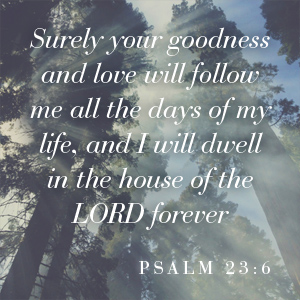
Psalm-23-6

(“Surely goodness and love will follow me all the days of my life.”

–Psalm 23:6)


Just knowing God has our best interest at heart is enough to renew energy and hope.


  • New power to face what comes


d7d8bc8fd004fe850361444ecf5acb49

(“[He] is able to do immeasurably more than all we ask or imagine,

according to his power that is at work within us.”

–Ephesians 3:20)


Think of it: the same power that controls the universe is at work within us. Tell me again why we revert to worrying?!


  • New emotions, such as peace and joy


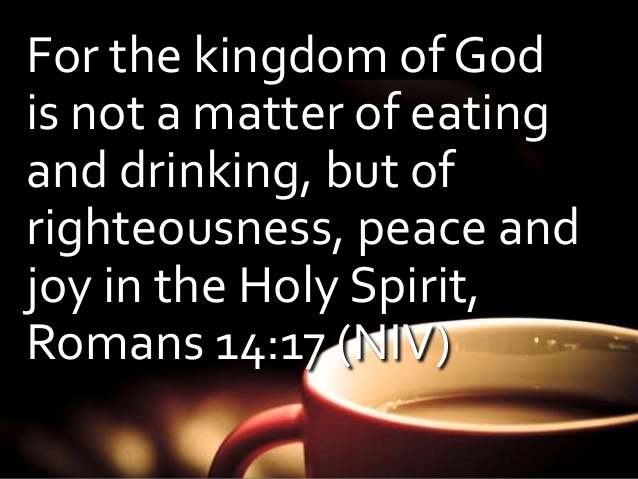
coffee-cupverses7-28-638

(“The kingdom of God is not a matter of eating and drinking,

but of righteousness, peace, and joy in the Holy Spirit.”

–Romans 14:17)


We do not need to live at the mercy of our circumstances. With God as our constant companion, we can experience peace and joy in spite of what happens. The Bible is full of examples of people who lived that way: Joseph, Daniel, Peter, and Paul readily come to mind.


  • New confidence

Proverbs 3.26 

(“The Lord will be your confidence.”

–Proverbs 3:26a)


God is not only with us, he is our Protector, Provider, and Guide.  As we become increasingly aware of his faithfulness, our trust grows. Trust = confidence.


  • New opportunities and blessings


ef03f9e29f19624eaa836b41accd6d80

(“The faithful love of the LORD never ends!

His mercies never cease. Great is his faithfulness;

his mercies begin afresh each morning.”

–Lamentations 3:22-23 (NLT)


Experience tells us that when we say “yes” to Jesus, God does not bestow the full measure of all of these wonderful new things instantaneously. God told Isaiah: “Behold I am doing a new thing” (Isaiah 43:19).  That hints at process. We’re made new, but growing into that newness.


843ae42db665b78c33102645c1850579


Think of buying a coat in the fall that’s a little too big for your child. She owns the coat, but it doesn’t quite fit yet.  Within a matter of weeks however, the sleeves hit the wrist not the fingertips, and the shoulder seams sit properly–no sagging down the arms.

Might it be that when we invite Jesus in our lives, our spirits are made new, but we don’t quite fit into them yet? Then, as we cooperate with Holy Spirit and his fruit grows within us (Galatians 5:22-23), we steadily become more Christ-like, day by day.

*     *     *     *     *     *     *     *     *     *

Oh, Father, I don’t want to cling to aspects of the old me—things like worry, perfectionism, selfishness, and pride. I want to embrace everything new that YOU bring to my life, to become my true self—the one you designed me to be.**


**Based on idea from Jesus Calling by Sarah Young, Thomas Nelson, p. 381.

Photo credits:  www.joblogging.weebly.com; http://www.ilovemybible.tumblr.com; http://www.pinterest.com; http://www.dayofgrace.me; http://www.faithgateway.com; http://www.pinterest.com; http://www.slideshare.net; http://www.plus.google.com; pinterest.com (2).

Share your thoughts in the comment section below.  I’d love to hear from you!

Heart to Heart

Navigating+the+World+of+Online+Dating-+A+Guide+for+Christian+Singles


Online dating services have proved: you don’t have to see a person to fall in love. Through heart-to-heart sharing over the internet, couples become acquainted with the likes and dislikes of each other, their opinions on a number of issues, and what brings them satisfaction in life. The format provides the opportunity to “see” who another person is before finding out what he/she looks like.  (I understand one site requires five contacts back and forth before names are exchanged–much less photos.)

It’s possible that couples in online relationships grow to know one another better than couples who meet face-to-face, because they communicate more and at a deeper level. (Assuming they’re being honest, of course.)

Similarly, we can grow to know and love God through heart-to-heart sharing, even though we can’t see him.

For our part, we “give God [our] whispering thoughts” (Max Lucado).   Such moments happen when:


IMG_0249-1

(The view from our deck, a couple of Sundays ago)


  • Our attention is drawn to sunbeams on mist-draped foliage, and we turn the observation into praise for God’s creative power.
  • Someone grabs us in an exuberant hug, and we thank God for family and friends who provide encouragement and support.
  • An unpleasant task is finished, and we praise him for the fortitude to see it through.
  • Humor comes into our lives and we laugh in response, but also in appreciation to the God of all joy.
  • We light evening candles that remind us the Light of the world is with us in our homes.


hqdefault


There is no sweeter manner of living in the world

than continuous communion with God.

–Brother Lawrence (1611-1691)


But one-sided communication doesn’t build a relationship. Listening for God’s words and watching for his works are essential. How do we do that? God rarely speaks audibly or shows himself physically. No one has seen his face (Exodus 33:20).

However, God does reveal his heart to us in a number of ways through:

  • The Bible. No surprise there. Its pages offer a lifetime of new discoveries about who our God is and how he works in our lives. Especially through the gospels, God speaks to us directly through his Son. We hear God’s wisdom in Jesus’ words; we see God’s love in his actions (Hebrews 1:2-3).


  • Other reading. Although Christian writers undoubtedly provide personal impressions from God, he sometimes speaks through secular works. Such moments often catch me off guard.


41vE++wPhKL


Recently I read Natalie Goldberg’s Writing Down the Bones (1986). Among the many worthy morsels I wrote down, she said, “We walk through so many myths of each other and ourselves; we are so thankful when someone sees us for who we are and accepts us.”

O God, I thought. That’s describes YOU! You see more of my real self than anyone, yet you still accept me, even love me. How astounding that you, a perfect God, would envelop me in absolute love–in spite of all my flaws.


  • People.  What a heart-lift others provide with their encouraging words, warm smiles, or comforting hugs–especially when we realize such good and perfect gifts come from God himself (James 1:17).


  • Creation.  John Calvin once described the world of nature as God’s glorious theater. As we take note of his infinite genius on display, we learn of his ingenuity, attention-to-detail, and ability to bring together disparate parts into harmonious habitats.   Our hearts fill with wonder.


pixiflore_heron_cendre


  • Music.  Sometimes I can almost feel God’s warm touch on my shoulder as he speaks comfort, strength, and joy through the power of song. (See “The Power of Song” for more on this subject.)


Notice: when God communicates with us, there’s a heart-reaction.  We experience a quickening in our spirits as we recognize his truth, sense his loving attention, receive the guidance and empowerment we need, or know without a doubt he’s with us, and has everything under control.

So!


Seeking+God+Daily


“Keep your eyes open for God,

watch for his works;

be alert for signs of his presence.”

–Psalm 105:4 (MSG)


What a glorious way to live!


(Photo credits:  www.believe.com; Nancy Ruegg; http://www.youtube.org; http://www.amazon.com; http://www.pixiflore.com; http://www.believe.com.)


Our Good and Gracious God

(Following is a personalized version of Psalm 103:1-5. Scripture quotes are in bold type, personal worship-thoughts* are in regular type. Perhaps you’ll pray along?)


aPsalm103_1-3


1 Praise the Lord, O my soul; all my inmost being, praise his holy name.

2 Praise the Lord, O my soul, and forget not all his benefits–

Oh, Lord, my heart overflows with love and gratitude for all you are to me and all you do for me. If I recorded these benefits, the volumes produced would surely fill a library.

But just as parents and grandparents are pleased when children say, “thank you,” I want to “praise your holy Name,” to extol you for the sum of all your attributes. In my life you have expressed your:

  • Power, by supplying my needs–sometimes in miraculous ways
  • Love and Goodness, with blessings beyond measure
  • Wisdom, as you’ve guided me day by day in the ways that are best for me
  • Patience, when I’ve been slow to learn and reluctant to obey
  • Mercy, by forgiving me of my sins, especially when I knew better
  • Faithfulness, with your constant presence and attention

May I always be mindful of your benefits, and vocal about them to others.


daily-bible-verse-1024x512


3 who forgives all your sins and heals all your diseases, 

May I never take for granted the horrific price you paid at Calvary with the life of your Son. May I never tire of praising you for making me a new creation, one who can be in relationship with you, the all-powerful God of the universe.

I praise you for being the Healer of all diseases, whether of body, soul, or spirit. You heal broken hearts, broken lives, broken relationships, broken minds—either instantaneously, over time, or when we’re transported to heaven.


a5651813e095c28655b6c63d958164c3


4 who redeems your life from the pit and crowns you with love and compassion 

I praise you that not only have you saved me from the pit of hell, but from the depths of depression, discouragement, and disappointment. You are “a redeeming God who is able to bring freshness to places that seem rotten and decayed” (Carole Ladd)—places like hurt, unfair circumstances, and unfulfilled dreams.

I praise you for encircling me with your love and compassion, symbolized by a gleaming crown, and reminding me: those who know Jesus are royalty (1 Peter 2:9)! I bow in humble wonder at the incredible privilege you bestow, to be a daughter of the King of kings.


Psalms103.5


5 who satisfies your desires with good things so that your youth is renewed like the eagle’s.

 I praise You, O God, for knowing exactly which good things to grant me—those things that will produce a good outcome. (I know that catering to my every pleasure would ultimately be to my detriment.)

I praise you that even into old age you will strengthen my spirit so I can remain vibrant, optimistic, and full of hope. On the wings of your wisdom I’ll be able to soar (Proverbs 24:5).

Finally, may your praise always be on my lips; may my soul always boast in you, because you are a good and gracious God—always and forever (Psalm 34:1, 145:7-8)!


*Prior to composing this worship-prayer, I researched some of the terminology in these verses, to expand my understanding of the passage. Sources included: Be Exultant by Warren Wiersbe; www.bible.org; Jesus Calling by Sarah Young; Thrive, Don’t Simply Survive by Carole Ladd; and The Daily Study Bible Series, Psalms, by George A. F. Knight.


(Photo credits:  www.suggestkeyword.com; http://www.studentdevos.com; http://www.pinterest.com; http://www.suggestkeyword.com.)

Enhanced Encouragement

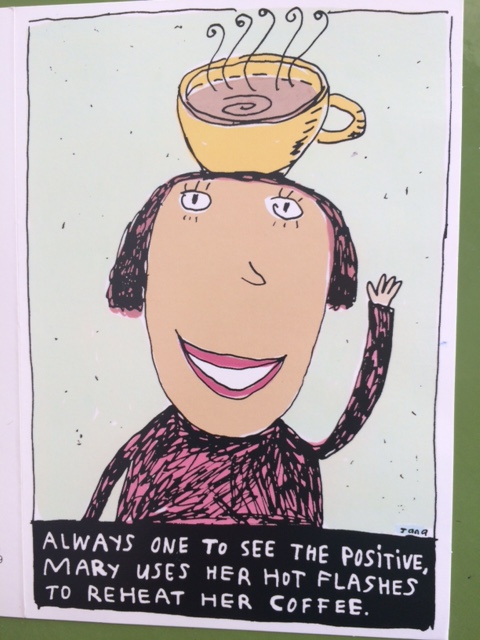
My sister-in-law sent me this Hallmark card for my birthday:

IMG_0262

Mary is my kind of person. I’ll bet she’s your kind, too. We tend to appreciate positive people, especially since negative input seems to bombard us continually. We’re not thin enough, smart enough, tech-savvy enough, confident enough, spiritual enough, disciplined enough, efficient enough, successful enough, patient enough, persevering enough, ad nauseam.

Positive people neutralize the impact of all that negativity. It’s not just their pleasant company that brings uplift to our spirits; they often exhibit the gift of encouragement.

That gift includes the ability to:

  • relate to others in positive ways
  • be optimistic, and cheerful
  • listen attentively and make others feel understood
  • be patient and generous with their time
  • make others feel special
  • genuinely celebrate the successes of others

But there’s one more behavior to add to that list, and it’s undoubtedly the most important. Beyond uplifting and motivating, we can infuse others with our faith.

Anyone can offer encouragement; only people of faith can offer faith.

You see, encouragement may not necessarily be based on fact. For example:

  • A mom says to her son, “You’re a fantastic soccer player. Of course you’ll make the team.” Only he doesn’t. Mom’s optimism wasn’t based in reality.
  • “After what you’ve told me, I just know you’ll get the job,” says one friend to another. But it doesn’t happen. The friend listened and understood, but her intuition proved false.
  • “Oh, that solo was wonderful, Katie!” when it clearly wasn’t.

However, statements of faith based on scriptural fact provide absolute truth and a much stronger foundation for hope than empty praise.

romans15_4

(“Everything that was written in the past was written to teach us, so that through endurance and the encouragement of the Scriptures we might have hope.” — Romans 15:4).

Everyone needs hope, especially those in crisis.

Centuries ago, the people of Jerusalem needed hope as they faced the possibility of annihilation by the Assyrian army. King Hezekiah gathered the people in the open square of the city gate and addressed them:


“Be strong and courageous.

Do not be afraid or discouraged

because of the king of Assyria

and the vast army with him,

for there is a greater power with us than with him.

With him is only the arm of the flesh,

but with us is the Lord our God

to help us and to fight our battles.”

–2 Chronicles 32:7-8


Hezekiah was not simply offering optimistic encouragement. Those bold statements were based on earlier scriptures, some of which you may recognize:

  1. “Do not be afraid or terrified because of them, for the Lord your God goes with you; he will never leave you nor forsake you” (Deuteronomy 31:6).

be strong and courageous

  1. “Some trust in chariots and some in horses, but we trust in the name of the Lord our God” (Psalm 20:7).
  1. “You come against me with sword and spear and javelin, but I come against you in the name of the Lord Almighty, the God of the armies of Israel” (spoken by David to Goliath, 1 Samuel 17:45).
  1. “Do you have an arm like God’s” (Job 40:9a)?
  1. “Do not be afraid of them; the Lord your God himself will fight for you” (Deuteronomy 3:22).

cm-deuteronomy-3-22-social-138x80

You and I can follow King Hezekiah’s example and share the positive, factual truth of God’s Word. We can be the encouraging voices that help others thrive, especially to those whose faith is beginning to falter.

The scripture-seeds we plant may spur a person to persevere or take a step in a new direction. And who knows where that perseverance or step might lead?

(Art & photo credits:  Nancy Ruegg, http://www.allaboutgod.net; http://www.quotationslibrary.com; http://www.crosscards.com.)

*     *     *     *     *     *    *     *     *     *

What scripture truth has been an encouragement to you?  Share with us in the Comments section below.  Perhaps your contribution will be just what someone else needs to hear/see!

When the House is Quiet

Impressions Becoming Expressions

Mitch Teemley

The Power of Story

Still Traveling

Impressions Becoming Expressions

Living Our Days

Gaining a heart of wisdom

He Said What?!

I'm Patty, and my husband and I are living with our adult son who has autism and epilepsy. I love sharing lessons learned from life around me, especially life with Aaron.

Meditations of my Heart

Impressions Becoming Expressions

Linda Stoll

Impressions Becoming Expressions

Signora Sheila

Notes on Life, Faith & Italy

Heidi Viars

Finding the Image of God