Feeds:
Posts
Comments

“It is good to wait quietly,” Jeremiah said (Lamentations 3:26a).

At the risk of sounding impudent, “What’s good about it?”

Waiting can make us feel anxious and stressed.  If we’re waiting for a prayer to be answered or a scriptural promise to be fulfilled, we can become doubtful, discouraged, and despondent.  Not good.

Yet the act of waiting seems important to God.  Numerous times in the Bible we see people of faith who had to endure Wait Time:

  • Abraham and Sarah waited 25 years for the birth of Isaac.
  • Jacob waited 14 years to take Rachel as his bride.
  • Joseph waited 13 years, first as a slave, then as a prisoner, before being rescued and elevated by God to second-in-command over Egypt.
  • The Israelites waited through 400 years of slavery in Egypt before God’s miraculous intervention.
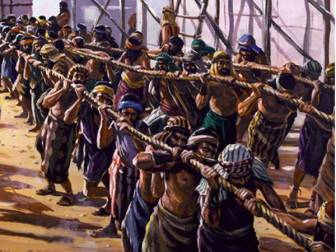
  • Caleb waited 45 years to inherit his portion of the Promised Land.
  • David waited at least 15 years to become king of Israel, after his anointing by Samuel.
  • Simeon, Anna, and many other Jews waited for their Messiah.

God’s delays must serve a purpose.  And a diligent search through scripture gives us answers to:  What good can come from waiting?

  • Times of waiting strengthen our trust in God and our resolve (Psalm 27:14).  If every day was problem-free and blissful, surely our faith would remain shallow.
  • We grow in our relationship with God while resting in his sovereignty and reliability (Psalm 62:5-8).  The Almighty of the universe becomes our closest confidant.  Intimacy with him deepens as we turn to him for comfort, encouragement, strength, and more.

  • Spiritual maturity develops (James 1:2-4).  Waiting is a challenge all by itself, but can also be accompanied by worry, pain, and sacrifice.  The test of waiting, however, develops our patience and perseverance and gives us opportunity to grow in character.  None of these benefits would blossom within us if God provided for every whim, and rescued from every trial.
  • We learn to take joy in the blessings we already have.  Paul wrote, “Be joyful always” (1 Thessalonians 5:16) to a church experiencing persecution.  They were undoubtedly praying and waiting for relief.  But Paul knew that focusing on what Christ had already done for the believers, and the benefits they already enjoyed, would help offset their anxiety and frustration.  The same is true for us.
  • Others see our patience and trust while we wait (Psalm 40:1-4).  Then, when God answers our cries, others take note of his provision, and their faith is encouraged.

It seems we’re always waiting for something; it’s only the intensity of emotion attached to the waiting that tends to vary.  When that intensity begins to grow, perhaps it would help to say, “I’m waiting with great anticipation!

There can be sweet delight in anticipation.  For example, as the Christmas holidays approach, I anticipate the glorious homecoming of family members.  I relish the imaginings of long conversations at the candle-lit dinner table, the hugs and laughter, and the gathering around the Christmas tree for family worship and gift-giving.

I need to apply that joy of anticipation to waiting on God.  I can relish the fact that his plan – including the Wait Time — always includes positive aspects.  I can reaffirm that God is always on time – never late, never early.  I can generate excitement in my spirit by musing on God’s promises and looking forward to the creative, miraculous ways he will fulfill those promises.  With an attitude of anticipation, waiting shouldn’t be nearly so uncomfortable.

(You have my permission to remind me of that, should impatience or frustration start to manifest themselves!)

*     *     *     *     *     *     *     *     *     *

Heavenly Father, I don’t think I’ve ever thanked you for the Wait Times in my life.  Thank you for holding me back, so trust, intimacy, gratitude, patience, and spiritual maturity have a chance to grow.  Help me to embrace the Wait Times as opportunities to discover more of who you are, more of the priceless treasures hidden in your Word, and more of who I can be when I am rooted and built up in you (Colossians 2:7)—especially through times of waiting.

(Art & photo credits:  www.bible-stories-library.com , http://www.moseseditor.blogspot.com . http://www.photosbyravi.com , http://www.pinterest.com.

“Take up one idea.  Make that one idea your life — think of it, dream of it, live on that idea.  Let the brain, muscles, nerves, every part of your body, be full of that idea, and just leave every other idea alone.  This is the way to success” — Swami Vivekananda (1863-1902).

Ever have a boss who seemed guided by this philosophy? He may not be familiar with the person who wrote these words (Swami was a Hindu monk.), but the same principles influence his decisions.


This kind of boss expects employees to work long hours to achieve his personal goals.  Ideas from others are not well accepted, because he is, after all, the expert.  He’s read all the books on management theory, marketing strategies, and profit maximization.  Suggestions are superfluous.

But, there is a new form of executive leadership garnering attention.  September’s issue of Sky Magazine ran an article, “The Enlightened Leader,” that highlights this innovative leadership model.   Workshops, webinars, even courses are available for training.

Included in the curriculum are these four topics:  1) Character , 2) Purpose, 3) Integrity, and 4) Values.

How ironic that business experts are returning to such ancient principles–Biblical principles.  For example:

1) A person of character is trustworthy, respectful, responsible, fair, and caring.  Someone with character pursues righteousness and love; then he finds life, prosperity, and honor (Proverbs 21:21).

2) A person of worthwhile purpose is not focused on the bottom line of the financial spreadsheet.  He/she takes to heart Paul’s advice:  “Don’t push your way to the front; don’t sweet-talk your way to the top.  Put yourself aside, and help others get ahead.  Don’t be obsessed with getting your own advantage.  Forget yourselves long enough to lend a helping hand” (Philippians 2:3-4, The Message).

3) A person of integrity walks securely (Proverbs 10:9).  He’s not wishy-washy, making decisions based on what’s expedient for the moment.  “The integrity of the upright guides them” (Proverbs 11:3) to be wise and caring.

4) A person with moral values lives by an ethical code of behavior, summed up by Jesus in the Golden Rule.  “In everything, do to others what you would have them do to you” (Matthew 7:12).

It’s tempting to respond with a smug comment like, “It’s about time the experts came around to God’s way of handling business!”  Except…

…I still have character traits that need refinement.

…I do not live up to God’s purpose for me each day.

…Integrity still needs further development in my life.

…My choices do not always reflect my values.

It doesn’t matter if I am a leader of a large organization or a leader in my home.    I am called to have a positive effect within my circle of influence (Matthew 6:13-16).  And that circle is surprisingly wide when I include extended family, friends, neighbors, business associates, church acquaintances, etc.  In fact…

“…Sociologists say that even introverted people will influence an average of 10,000 people in their lifetime” (The Maxwell Leadership Bible by Dr. John C. Maxwell, p. x).

So what’s the first step toward success?

Perhaps commitment—commitment to God as a willing student in his course of leadership.  Commitment to prayer throughout the day, as choices present themselves.  And commitment to persevere toward wisdom, because:

“Blessed is the man who listens to me [wisdom], watching daily at my doors…For whoever find me finds life and receives favor from the Lord” (Proverbs 8:34-35).

*     *     *     *     *     *     *     *     *     *

Thank You, Father, for the absolute truth of your word.  New ideas come and go, but your wisdom that leads us to success never fails.  Forgive me for the times I have ignored your word.  I want to be a woman of godly character, fulfilling your purpose with integrity, and reflecting your values.  That’s the kind of success that will provide lasting satisfaction and fulfillment in my soul.  Thank you for continuing to work on me.  Amen. 

(photo & art credits:  www.signsforyourlife.com, http://www.averyemployment.com, macondesigns.wordpress.com, http://www.signsforyourlife.com, calcuttaherald.wordpress.com.)

Wresting with God

(No, the title is not a typo!  Please read on!)

One time only the verb wrestle is used in scripture.  You probably remember the story of Jacob wrestling with a man through the dark hours of one night. Chances are, Jacob would have been sleepless anyway.  The next day he was to reunite with his estranged brother, Esau (Genesis 32:22-32).  Echoing in Jacob’s mind was his brother’s vow to kill him (27:41).

At the end of the wrestling match, when the man left Jacob, he realized his opponent had been God (32:30)!  (Some say God took the form of an angel.  Some say this was an appearance of Jesus, a pre-incarnate visitation, before he was born as a baby in Bethlehem.)  

Jacob’s heart must have been pounding madly at that moment, but not just from the exertion.  Imagine his shock to realize he had engaged with the all-powerful King of the universe in hand-to-hand combat!

The chronicler to record this event (and all the other events in Genesis) is generally accepted to be Moses.  As he wrote this particular story, Moses must have smiled to himself at the word play that flowed from his pen (Did they use pens of some sort in those days?)

First of all,  Jacob’s name in ancient Hebrew is ya’ aqob.  The word, wrestled, is ye’ abeq.  Even the location of the event is included in the word play.  Verse 22 indicates Jacob was camped along the stream called Jabbok, or yabbok in Hebrew.  Perhaps it was named later, as a memoriam to Jacob’s once-in-history experience.  By Moses’ time, the name would have been well-established.

But that’s just an interesting aside.   Showcasing his sense of humor was not God’s main objective for including this story in scripture.  What might he want us to learn from Jacob’s experience?

Perhaps it is a lesson in humility, as it certainly was for Jacob.  At the end of that wrestling match, God wrenched Jacob’s hip.  He limped for the rest of his life–a constant reminder that God was his Shepherd-caretaker, responsible for Jacob’s successes.  God was also his Angel-deliverer.  Jacob could not guarantee his own escape from Esau’s harm. or any other danger (Genesis 48:15-16).

God proved himself as Jacob’s Mighty One (49:24) the next day.  Shortly after the man left Jacob, Jacob looked up and saw Esau coming toward him–with four hundred men.  Quickly Jacob took precautions to protect his family.  But it was unnecessary.  Esau ran to meet Jacob and embraced him.  The two brothers, who had been alienated from one another for years, now wept in each others’ arms (33:1-4).

At the end of his life, Jacob reaffirmed that it was God Almighty who had provided all the blessings he’d enjoyed (Genesis 49:25).  The patriarch was as powerless to bless himself as he was to overpower God in a wrestling match.  And he prayed that the Strong God would give his blessings–tumbling out of the skies, bursting up from the Earth–to rest on the head of Joseph (vs. 25-26, The Message).

Jacob did not pray that Joseph, too, might  wrestle with God, but that God’s blessing would rest upon him.

Yes, wrestling with God has its place.  At times we may spar with God using words, much as David openly and honestly expressed his disappointments, depression, and even anger to God.  (See Psalms 22, 55, and 77 for examples.)  God is big enough to handle it.

But then comes the morning when we can affirm that his compassions, his blessings, never fail.  Great is the faithfulness of our God (Lamentations 3:22-23)!

So an additional bit of word play brings the two concepts together, thanks to my preacher-son, Jeremy:  wrestling + resting = wresting.

Wrestling allows load-shifting; resting results in peace.  Together they make us strong, steadfast, and firm in our faith.

(art credit:  http://www.bishopmarcelopires.org )


The Daddy/Daughter Dance

Our granddaughter, Elena, is now seven months old, and already her personality is evident.

For example, when she awakens in the morning, Elena plays contentedly in her crib for ten minutes or so.  She chews on her pacifier from every angle, rolls around,  practices her pike position, and plays with a snuggle toy or the zipper on her sleep sack.  Elena may also struggle to crawl or even pull herself up into a standing position, in spite of the confines of the sleep sack.  Eventually she lets the household know that crib-playtime is over and she’d like to be rescued.

The rescuer receives rich reward–a big 1000-watt smile, a few squeals of pleasure, and panting excitement at what the new day might hold.

And though she enjoys songs and stories, Johnny Jump-Up and toys, her favorite activity has to be dancing with her daddy.  Eric, our son, has created a playlist specifically for this activity, many tunes from Disney musicals.

Daddy Daughter Dance

I recently had the pleasure of watching Eric and Elena  perform this ritual.  Eric tucks her firmly in one arm, while holding her hand out with the other.  True ballroom style.  And though they may begin with a gentle waltz, Eric soon takes off with gentle jogging and polka steps.  He adds his voice to Angela Lansbury’s and David Tomslinson’s.

But the other morning, my pleasure in watching them dance turned to uproarious laughter, as Eric mimicked a few of the chimney sweeps’ moves from Mary Poppins.  Knees rising high with each step, and dips in between, he marched across the dining room.  Then with broad, high kicks he pranced in the other direction.  Elena bobbed in his arms, beaming and squealing.

And I thought, O, Lord, this is such supreme pleasure–to watch a daddy and his daughter do a silly dance, reveling in the music, the movement, and each other.  Do you, Father, take joy in watching us, your children, delighting in all the pleasures you’ve given?  Surely so. Otherwise, why would you have provided spectacular colors, intricate patterns, and incredible variety in creation?  Why would serendipity  blessings suddenly drop into our laps? Yes, we need to keep pleasure in its proper place, and not let the pursuit of it consume us.  But I glory in those delights you have ordained.  And I worship you for your gracious love, motivating you to make us laugh and smile.  Thank you, God.    

“Please call back at your convenience and we can discuss the matter further,” the woman said.

I quickly wrote down her name and phone number, while listening to her message on the answering machine.

This is terrific, I thought, and hoped our conversation of “the matter” would prove productive.

Immediately I dialed her back, whispering a prayer that God would guide our conversation.  Then I  took a deep cleansing breath, in order to fortify my confidence.  Butterflies took flight in my stomach anyway.

Since it had only been a few minutes since R. had left her message, I fully expected to speak to her–not her answering machine, asking for name, phone number and a brief message.

That caught me off guard.  Leave a message?  What should I say?  But my brain was getting ahead of itself.  First I had to remember our phone number.

What I should have done is give R. my cell number.  That didn’t even occur to me.  Don’t ask me why.  Blame it on those pesky butterflies. Instead, the old house phone number (of two years ago) started to rattle off my tongue.  Oops.

Then a serious brain cramp seized up my memory.  Our current land-line number would NOT come to mind.  And while explaining (Does she really care?!) and apologizing for that, I frantically searched the office area for the turquoise folder on which our phone number was written in bold Sharpie.  Too bad it didn’t have a strobe light so I could find it.

After a few embarrassing moments, the folder turned up right where it should be–but hidden under some books.

I blithered my way through some sort of message, and hung up.

Oh, no!  WAIT!  I could have hit the # key and started over!  I could have presented myself as the competent and articulate person I wanted to be!  Too late.

I tried to be forgiving of myself, and recognize that complete competency would have led to pride anyway.  Had I spoken to R. with grand words strung together in fluid sentences, I know that a spirit of pride would have been right there on my shoulder, whispering:  Oh, that went incredibly well.  No doubt R. is very impressed with you.”

Pride.  That’s one sneaky sin that keeps slithering out from unexpected places.

How can I fight against it?  Paul gives a clue in 1 Corinthians 4:7.

“Who makes you different from anyone else?  What do you have that you did not receive?  And if you did receive it, why do you boast as though you did not?”

So here’s my plan.  I’m going to fight pride with praise.  Anytime a prideful thought comes lurking, I want to turn my mind to God Almighty who gave me all I have, including gifts, talents, and moments of success.  Without him I am nothing.

*     *     *     *     *     *     *     *     *     *

Heavenly Father, thank you for taking interest in me, for working so hard to mold me into your image.  Thank you for the opportunities–like a tongue-tied phone message–that contribute to my maturity.  The outcome you’ve promised is astonishing:  that I may be complete, not lacking anything (James 1:2-4).  That would include humility, wouldn’t it–a trait you value highly (Matthew 5:5).  So the next time pride tries to park on my shoulder, help me remember to send him packing–with praise!

Remember those black and white portraits in our history textbooks–those figures posed stiffly with expressionless faces?   They looked more like statues than real people.  In fact, they appeared downright bored, didn’t they?

Take A.B. Simpson here.

Albert Benjamin Simpson

Albert Benjamin Simpson (Photo credit: Wikipedia)

He looks the part of a serious preacher, which he was.  Reverend Simpson was also a theologian and prolific author.  He wrote 101 books, numerous hymns, periodicals, articles, and even complete curriculums.

Oh.  And he founded a denomination.  A rather impressive list of accomplishments.  No wasting time for Albert.

But A.B. did much more than sit in a book-lined office with stacks of research everywhere.  While pastoring a prestigious church in New York City, God laid a special call upon his heart–to establish a church specifically for the immigrants pouring into the city.  A.B. felt burdened for the poor, homeless, sick and displaced.

Yet his dream did not stop there.  Albert wondered how he could reach people overseas who did not yet know Jesus.  And one thing began to lead to another.  He gathered like-minded people together that led to Sunday afternoon meetings, which became revivals along the East Coast.  And The Christian and Missionary Alliance denomination was born.

From the soul of such an impassioned, focused, persevering man came these warm-hearted words:

Let us but feel that

He has His heart set upon us,

that He is watching us from those heavens

with tender interest,

that He is following us day by day

as a mother follows her babe

in his first attempt to walk alone,

that He has set His love upon us,

and in spite of ourselves

is working out for us

His higher will and blessing,

as far as we will let Him –

and then nothing can discourage us.

–A. B. Simpson (1843-1919)

Knowing that A.B. gave his life in selfless service, I find his words all the more meaningful.  Surely he felt God’s heart set upon him and following close during his many endeavors, that his Heavenly Father was working things out–in spite of himself.  Not just minimal sustenance, but for God’s higher will and blessing.

I like that.  Those words “higher will and blessing” hold hope and excitement for what’s to come for each of us, as God’s plan unfolds indefinitely until we meet him face to face.

I’m with A.B;  I want nothing to hold me back.  No doubt you feel the same.

*     *     *     *     *     *     *     *     *     *

Thank you, Heavenly Father, for introducing me to A.B. Simpson today.  I love this quote that highlights your compassionate love, your desire to use us, and even bless us.  May I be mindful of your watchfulness, and then nothing can discourage me.  


Patient Pursuit

Women's Bible Study

“I know we have to persevere and not give up on what we sense God wants us to do,”  S. shared at Bible study.  “And from the lives of Joseph, Moses, Daniel, and others in the Bible, I know God rarely smooths the path perfectly and makes every door open without me even turning the knob.  But what I want to know is how to proceed.  I’d like steps to follow!”

Heads nodded around the table, mine included.  Wouldn’t it be nice if God laid out step one, step two, and so on toward his perfect plan?

That idea has been circulating in my brain for nearly a week now.  Here are some observations.

1. God values our growth in faith more than our comfort in a predetermined plan.   

If it was best for us to know his plan in advance, then that’s what God would provide.  Instead, he allows our faith to be tested, in order to build our character.  That is important to him:

“The Lord detests men of perverse heart but he delights in those whose ways are blameless” (Proverbs 11:20).

2.  God values the process of spiritual growth, not just the final outcome of a purpose fulfilled.

Times of challenge give us opportunity to develop maturity  more readily than times of ease.  What might that development include?

  • Self-discipline–when we tackle difficult tasks.  Granted, the Holy Spirit empowers us (Galatians 5:22-23), but we must give ourselves over to him.  How?  Through frequent prayer, offered throughout the day, consistently asking for his guidance and help.
  • Self-denial–by doing without.  However, the attentive person will soon discover much to celebrate that may have been missed otherwise:  the stunning display of God’s creation, the joy of love and laughter with family and friends, the peace and strength from frequent communion with God.  Suddenly, gratitude flourishes in the heart, and what has been given up doesn’t seem so important anymore.
  • The full meaning of love–when given opportunity to respond in kind ways to difficult people.

None of these valuable traits of discipline, selflessness, and love would fully develop without lessons of experience.

3.  God values the development of our prayer lives–not for his benefit, but for ours.

Jean Nicolas Grou, a Jesuit priest of the 1700s, described healthy prayer as humble, reverent, loving, confident, and persevering.  As we practice those traits in our prayer lives, surely they will overflow into our character, in our actions and reactions.

Patient pursuit, then, is best applied to God’s ways, and then to God’s plan.

(photo credit:  http://www.st-tims-church.org )


How to Nip the Gossip


“You are not going to believe what Natalie did,” Gabby-Gossip starts.  And with much detail she begins to describe the foolish, spiteful actions of a mutual acquaintance.

And even though she’s only spoken two sentences, I know Gabby’s tirade is going to be gossip.  Not only don’t I need this information, but participation with her will be downright harmful.  The problem is, how do I tactfully stop Gabby-Gossip?

These strategies may be just what I need; perhaps you’ll find them helpful, too:

1.  Say nothing at all.  Refuse to participate. 

Just like Thumper said in the Disney movie, Bambi, “If you can’t say somethin’ nice, don’t say nothin’ at all.”

Even scripture backs up the value of silence:  “A gossip betrays a confidence, but a trustworthy man keeps a secret” (Proverbs 11:13).

2.  Ask, “Why are you telling me this?”

Be aware of the tone of your voice as you ask.  Speak with innocence, as if you assume Gabby is sharing for a legitimate reason.  Chances are, such a question will catch her off guard.  She often has no agenda beyond passing on a juicy bit of unflattering news.

Sometimes Gabby-Gossip prefaces her sharing with the directive, “I’m telling you this so you’ll be able to pray for Natalie.”

Perhaps I can stop the flow of details by suggesting, “I’m so glad God knows all the ins and outs of this situation.  He also knows Natalie’s heart, and I don’t.  I will most definitely be praying.”  Then change the subject.

3.  Insert positive talk.

Perhaps we can share something Natalie did recently that was commendable, or highlight one of her character traits we admire.

We could begin by saying, “You know what I appreciate about Natalie?”  Follow up with an example.  Perhaps Gabby will realize her talk has gone off-track and will follow our lead.

Solomon noted, “The lips of the righteous nourish many” (Proverbs 10:21).  What a fulfilling purpose to keep in mind for our conversations:  to feed nourishing words of wisdom and encouragement into the lives of others.

When we choose to speak positively, it demonstrates respect for others, respect for the One who created them, and respect for ourselves.  Kind words also bring positive energy and uplift to a conversation.  By contrast, negative talk drains our energy and we feel depressed, discouraged, or even angered as we part company.

4.  Seek to help Gabby-Gossip.

If the negative talk centers on a problem between Gabby and Natalie, discuss some possibilities to solve the conflict.  Turn the conversation from fault-finding to solution-brainstorming.

5.  Pray, even as you speak.

Without the wisdom and power of the Holy Spirit, we will fail to solve the problem or win over Gabby-Gossip to positivity.  Send up a silent sky-text as the conversation begins.  Ask God to direct your thoughts and give you the words to say that will minister to Gabby.

6.  Resist the urge to gossip to someone else. 

With David we need to pray, “Set a guard over my mouth, O Lord; keep watch over the door of my lips” (Psalm 141:3).

Few of us run the risk of saying too little; it is the opposite that causes trouble!  Three little words can guide us, as we think before we speak:  Is our next comment true, kind, and necessary?

*     *     *     *     *     *     *     *     *     *

Heavenly Father, I do not want to participate in gossip.  Instead I want to be a positive influence, even a force of change.  With David, I ask you to set a guard over my mouth.  Be my attentive Watchman, God.  Even now, in preparation for the next encounter with Gabby-Gossip, I pray for your wisdom and courage to react rightly.  Because the bottom line is:  I want the words of my mouth and the meditation of my heart to be pleasing in your sight, O Lord, my Rock and my Redeemer (Psalm 19:14).

(photo credit:  www.gazettedebonton.)

Crowns of Glory

Can you remember back to your childhood Sunday School days?  Did you ever make crowns of yellow construction paper, symbolizing the crowns we’d someday wear in heaven?

In my class, we were encouraged to add colorful cut-out jewels, to represent all the good deeds we would do for Jesus.  The idea was he would reward us for our obedience.  And didn’t we all want beautiful, sparkling crowns to wear when we got to heaven?

My teachers may be commended for encouraging us to make wise choices.  But I’m not sure where the scripture supports jewel awards for righteous behavior. Was it inferred from Isaiah 61:10b?  “As a bridegroom adorns his head like a priest and as a bride adorns herself with her jewels.”

You probably remember:  the bridegroom is an image used several times in scripture to represent Jesus (Matthew 9:15), and the bride represents God’s people (Revelation 19:6-8).  But that still doesn’t explain decisively what the jewels are.

On the other hand, there are passages that mention crowns.  Crowns that…

English: The Imperial Crown of India

…will last forever, won by running the race of the Christian life with perseverance (1 Corinthians 9:24-27).

…represent those believers who are in heaven as the result of our efforts.  They will be our crown—our glory and joy (1 Thessalonians 2:19).

…God has promised—a crown of life to those who love him (James 1:12).  Revelation 2:10 also speaks of this crown.

…we’ll receive when Jesus appears—crowns of glory (1 Peter 5:4)!

But nothing about jewels in those passages.  And to be honest, the crown references are more than likely imagery and metaphors—not actual crowns.

As I’ve gotten older, even the teaching that “crowns await us in heaven” has bothered me.  Striving for obedience and bringing others toward commitment to Jesus for crowns seems so selfishly motivated, so mercenary.  Jesus has already given me eternal life, his loving care, his Word, and countless other blessings.

How dare I say, “Oh, and one more thing.  Please honor me for my good deeds with some lovely gold crowns, alright?”

I don’t want to be like the child who sits under the Christmas tree, surrounded by mountains of crumpled gift wrap and new toys, who says, “Is that all?”

Then I came across Revelation 4:9-11 and discovered…

IF we receive crowns, we won’t be wearing them.

And we won’t be needing lovely showcases in which to display our crowns either.

Instead, perhaps we will be privileged to follow the example of the twenty-four elders:

“Whenever the living creatures give glory, honor, and thanks to him who sits on the throne and who lives for ever and ever, the twenty-four elders fall down before him…and worship him…They lay their crowns before the throne and say:

“You are worthy, our Lord and God, to receive glory and honor and power, for you created all things, and by your will they were created and have their being.”

This totally changes my motivation for earning crowns.  They aren’t trophies at all.  They may become objects of praise, with which to honor our Savior!

That moment will be the epitome of worship–total immersion in the awesome presence of holy God.  Our hearts will be bursting with ecstatic joy, way beyond any former worship experience, as we reverence Jesus supremely.

And cast down our golden crowns for his glory.

Can you picture it?

*     *     *     *     *     *     *     *     *     *

(photo credits: http://www.collaborationenglish.com ; http://www.flickr.com ; http://www.baby.marry.vn )


Our God is magnificent; beyond words to describe, right?  There are no boundaries to his greatness, splendor, and righteousness.

Among his glorious attributes are power and wisdom, grace and mercy, goodness and love.

These lofty thoughts and more about the King of the universe are poetically presented in Psalm 145.

Yet there is at least one attribute of God not directly mentioned in this psalm or anywhere else in scripture.  We have to look at the evidence and infer that, yes, our Heavenly Father has…

…a sense of humor!

Consider…


Exhibit A:  Creation


Slipping, sliding otters.  Leaping, somersaulting dolphins. Swinging, scratching monkeys.  They make us laugh–might they not bring great pleasure to God, especially since he made them?

And have you ever seen young gooney birds learning to fly?  Their tumbly landings in particular are hilarious!


Exhibit B:  Scripture

Get this:  God spoke through a donkey once to get the attention of a sorcerer named Balaam (Numbers 22, 23).  In case you’re not familiar with the story, I repeat:  The donkey did the talking, speaking the words God gave her (22:19).  Imagine the look on Balaam’s face!  If we had been there, I’m sure we would have been stifling our guffaws.  Might God have been chuckling a bit, too?

In the book of Job, God used the example of an ostrich to help Job understand the Lord’s sovereignty.  As you read this description, visualize the scene as if portrayed in a cartoon.  Give the ostrich a doltish expression to enhance further the humor-factor!


“The ostrich flaps her wings futilely—all those beautiful feathers, but useless!  She lays her eggs on the hard ground, leaves them there in the dirt, exposed to the weather, not caring that they might get stepped on and cracked or trampled by some wild animal.  She’s negligent with her young, as if they weren’t even hers.  She cares nothing about anything.  She wasn’t created very smart, that’s for sure, wasn’t given her share of good sense.  But when she runs, oh, how she runs, laughing, leaving horse and rider in the dust (Job 39:13-18, The Message).

Proverbs also includes a number of lessons taught with humor.

“Like a gold ring in a pig’s snout is a beautiful face on an empty head” (Proverbs 11:22).

“Knowledge flows like spring water from the wise; fools are leaky faucets, dripping nonsense” (15:2).


“The words of a fool start fights; do him a favor and gag him” (18:6).

“Valuables are safe in a wise person’s home; fools put it all out for yard sales (21:20).

“Like billowing clouds that bring no rain is the person who talks big but never produces (25:14).

(Again, I chose to quote from The Message because Eugene Peterson gives us fresh insight with contemporary spin on scripture.  And he definitely captures the humor, which has always been in the Bible.  It’s just become hidden under the dust of the centuries and the differences between cultures.)


Exhibit C:  Jesus

A number of Jesus’ stories and teachings included humor.  One example is Matthew 23:24.  “You blind guides!  You strain out a gnat but swallow a camel,” he said to the religious leaders.  They were so careful about following unimportant rules, yet ignored important issues like humility and kindness.


Where’s the humor, you ask?  It’s hiding in the translation, from Aramaic to English.  The Aramaic word of gnat is galma; the word for camel is gamla.  Jesus used a play on words!

There are more examples we could enjoy, but that’s enough for one sitting.

And now you may be asking why it matters if God has a sense of humor or not.

The more we know about God, the more we discover to appreciate. The more we appreciate our God, the more we’ll want to be in his company and worship him.

And we are made glad with the joy of his [delightful, cheerful] presence (Psalm 21:6).


(art & photo credits:  www.jimkane.wordpress.com; http://www.wikimedia.org; http://www.pixabay.com; http://www.wikimedia.org (2).)


When the House is Quiet

Impressions Becoming Expressions

Mitch Teemley

The Power of Story

Still Traveling

Impressions Becoming Expressions

Living Our Days

Gaining a heart of wisdom

He Said What?!

I'm Patty, and my husband and I are living with our adult son who has autism and epilepsy. I love sharing lessons learned from life around me, especially life with Aaron.

Meditations of my Heart

Impressions Becoming Expressions

Linda Stoll

Impressions Becoming Expressions

Signora Sheila

Where faith meets la dolce vita

Heidi Viars

Finding the Image of God