Feeds:
Posts
Comments

Posts Tagged ‘Appreciation’

I don’t know what’s better:

That first sip of coffee in the morning, or the first moment on the pillow at night!

The anticipation of an exciting event, or the lingering memories after.

Ice cream in the summertime, or thick, hot soup in winter.

Gazing at a wide vista of mountains and trees, or studying a tiny flower up close.

Snuggled up by the fire, or walking through crisp, autumn leaves.

Dark chocolate or white popcorn!

A new book with a tantalizing title, or an old, prized volume, underlined and dog-eared.

The raucous noise of a festive party, or the delicious quiet afterward.

The uplift of a clear, cloudless day, or the coziness of a cloud canopy.

Looking forward to wonders yet to be discovered, or looking back on wonders already known.

Oh, yes, Lord.  “You have made everything beautiful in its time” (Ecclesiastes 3:11).

*     *     *     *     *     *     *     *     *     *

Thank you, Father, for continually blessing your people—not just corporately but individually.  You even bestow custom-blessings, specifically designed for the pleasure of one!  And thank You that, as I draw near to you with a grateful heart, your presence fills me with awe and joy.

*     *     *     *     *     *     *     *     *     *

What blessings are you hard-pressed to choose between this Thanksgiving?  Share your thoughts in the Comments below!

(photo credits:  www.3dwaltz.com/babies-pictures-6.html, http://www.popsdigital.com,  www.levenger.com, http://www.footage.shutterstock.com.)   

Read Full Post »

“Mail’s here early today!” called Lorna, as she entered the kitchen.

Oh, that was good news.  Living far from home in Quito, Ecuador made letters a very precious commodity.

“Terrific!” I responded, and dashed upstairs to get my keys.

Lorna and her husband, Elbert, served as missionaries with HCJB.  I was a short-termer, living with them for the four months of my assignment as a preschool and kindergarten teacher.

English: Radio HCJB Deutsch: Radio HCJB

The compound was only a brief walk from the house.  Once there, it was just a matter of unlocking the gate, heading down the main walkway a short distance, up a few steps, and into the post office alcove where all of our mailboxes were located.

I jogged the whole way there and back, excited to read my mail.  But no sooner did I return home than my head started to pound, nausea engulfed me, and all I wanted to do was lie down.  Never mind those coveted letters!

My problem was not a sudden onset of the flu, but mild hypoxia–oxygen deprivation. Quito is located 10,000 feet above sea level in the Andes Mountains.

My experience proves, as well as those of countless others:  we humans require oxygen—lots of it.

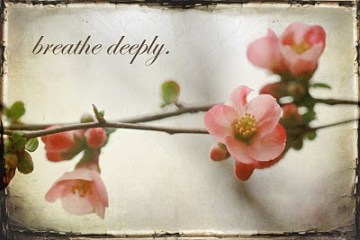
Even folks who live near sea level can suffer from lack of oxygen, because they’ve become accustomed to shallow breathing.  Their bodies never receive enough oxygenated air, causing them to feel short of breath and anxious.

On the other hand, research has proven that deep breathing helps us manage stress and anxiety, lower blood pressure and heart rate, and even spark brain growth.  By not taking slow, deep breaths now and again, we deprive ourselves of these benefits.

M-m-m.  Reminds me of Ecclesiastes 2:10-11, where King Solomon lamented the results of shallow living:  chasing after wealth, accomplishments, and pleasure.  In the end, nothing gave him lasting satisfaction and fulfillment.

Shallow living brings on symptoms in the spirit, similar to oxygen deprivation in the mind and body: heartache, fatigue with life, nausea from repetitive, meaningless activity, and shortness of temper.

In contrast to Solomon’s lament in Ecclesiastes is Paul’s praise to God for the power and strength of deep living:

“Oh, the utter extravagance of his work in us who trust him—endless energy, boundless strength” (Ephesians 1:19, The Message)!

Deep living happens when we breathe in God’s strength with a prayer, his wisdom and encouragement with a scripture, his joy with a song.

Deep living happens when we practice his presence as automatically as we breathe.

And how do we do that, “practice his presence?”

It’s just a matter of  pausing frequently throughout each day, to turn our attention to God.

I might say such things as:

  • Thank You, Lord, for this new day.  Work through me to accomplish your purpose.
  • I  love you, Heavenly Father.  Thank you for filling my heart with peace and joy every time I turn my attention to you.
  • Thank you for your power at work in me as I complete this task.
  • The wonders of your creation–graceful tree branches dancing in the breeze, lyrical songs of the mockingbirds, delicious aromas of pine and orange blossoms–They make my heart sing with praise!
  • Oh, Lord, I shouldn’t have spoken to Mary like that.  Forgive me, I pray.  Help me to think before I speak.  And yes, I will apologize to her.

Refreshing.  Energizing. Purifying.  Like a deep breath of oxygen.

Shallow breathing causes a lesser quality of life.  So does shallow living.

Deep breathing fosters strength of mind and body.  Deep living does that and more.

Deep living radically transforms the spirit.

Let’s breathe/live deep!

*     *     *     *     *     *     *     *     *     *

What deep living habits help you practice the presence of God?

(photo credits:  www.wikipedia.com , http://www.picstopin.com , http://www.vineyardcs.org )

Read Full Post »

Our granddaughter, Elena, is now seven months old, and already her personality is evident.

For example, when she awakens in the morning, Elena plays contentedly in her crib for ten minutes or so.  She chews on her pacifier from every angle, rolls around,  practices her pike position, and plays with a snuggle toy or the zipper on her sleep sack.  Elena may also struggle to crawl or even pull herself up into a standing position, in spite of the confines of the sleep sack.  Eventually she lets the household know that crib-playtime is over and she’d like to be rescued.

The rescuer receives rich reward–a big 1000-watt smile, a few squeals of pleasure, and panting excitement at what the new day might hold.

And though she enjoys songs and stories, Johnny Jump-Up and toys, her favorite activity has to be dancing with her daddy.  Eric, our son, has created a playlist specifically for this activity, many tunes from Disney musicals.

Daddy Daughter Dance

I recently had the pleasure of watching Eric and Elena  perform this ritual.  Eric tucks her firmly in one arm, while holding her hand out with the other.  True ballroom style.  And though they may begin with a gentle waltz, Eric soon takes off with gentle jogging and polka steps.  He adds his voice to Angela Lansbury’s and David Tomslinson’s.

But the other morning, my pleasure in watching them dance turned to uproarious laughter, as Eric mimicked a few of the chimney sweeps’ moves from Mary Poppins.  Knees rising high with each step, and dips in between, he marched across the dining room.  Then with broad, high kicks he pranced in the other direction.  Elena bobbed in his arms, beaming and squealing.

And I thought, O, Lord, this is such supreme pleasure–to watch a daddy and his daughter do a silly dance, reveling in the music, the movement, and each other.  Do you, Father, take joy in watching us, your children, delighting in all the pleasures you’ve given?  Surely so. Otherwise, why would you have provided spectacular colors, intricate patterns, and incredible variety in creation?  Why would serendipity  blessings suddenly drop into our laps? Yes, we need to keep pleasure in its proper place, and not let the pursuit of it consume us.  But I glory in those delights you have ordained.  And I worship you for your gracious love, motivating you to make us laugh and smile.  Thank you, God.    

Read Full Post »

“Please call back at your convenience and we can discuss the matter further,” the woman said.

I quickly wrote down her name and phone number, while listening to her message on the answering machine.

This is terrific, I thought, and hoped our conversation of “the matter” would prove productive.

Immediately I dialed her back, whispering a prayer that God would guide our conversation.  Then I  took a deep cleansing breath, in order to fortify my confidence.  Butterflies took flight in my stomach anyway.

Since it had only been a few minutes since R. had left her message, I fully expected to speak to her–not her answering machine, asking for name, phone number and a brief message.

That caught me off guard.  Leave a message?  What should I say?  But my brain was getting ahead of itself.  First I had to remember our phone number.

What I should have done is give R. my cell number.  That didn’t even occur to me.  Don’t ask me why.  Blame it on those pesky butterflies. Instead, the old house phone number (of two years ago) started to rattle off my tongue.  Oops.

Then a serious brain cramp seized up my memory.  Our current land-line number would NOT come to mind.  And while explaining (Does she really care?!) and apologizing for that, I frantically searched the office area for the turquoise folder on which our phone number was written in bold Sharpie.  Too bad it didn’t have a strobe light so I could find it.

After a few embarrassing moments, the folder turned up right where it should be–but hidden under some books.

I blithered my way through some sort of message, and hung up.

Oh, no!  WAIT!  I could have hit the # key and started over!  I could have presented myself as the competent and articulate person I wanted to be!  Too late.

I tried to be forgiving of myself, and recognize that complete competency would have led to pride anyway.  Had I spoken to R. with grand words strung together in fluid sentences, I know that a spirit of pride would have been right there on my shoulder, whispering:  Oh, that went incredibly well.  No doubt R. is very impressed with you.”

Pride.  That’s one sneaky sin that keeps slithering out from unexpected places.

How can I fight against it?  Paul gives a clue in 1 Corinthians 4:7.

“Who makes you different from anyone else?  What do you have that you did not receive?  And if you did receive it, why do you boast as though you did not?”

So here’s my plan.  I’m going to fight pride with praise.  Anytime a prideful thought comes lurking, I want to turn my mind to God Almighty who gave me all I have, including gifts, talents, and moments of success.  Without him I am nothing.

*     *     *     *     *     *     *     *     *     *

Heavenly Father, thank you for taking interest in me, for working so hard to mold me into your image.  Thank you for the opportunities–like a tongue-tied phone message–that contribute to my maturity.  The outcome you’ve promised is astonishing:  that I may be complete, not lacking anything (James 1:2-4).  That would include humility, wouldn’t it–a trait you value highly (Matthew 5:5).  So the next time pride tries to park on my shoulder, help me remember to send him packing–with praise!

Read Full Post »

I don’t listen to my car radio anymore.  The fuzzy sound coming from the twelve-year old speakers is annoying.

But the silence has turned into a gift, a time for prayer and worship.

As I leave our neighborhood and pass the ponds and large live oak trees draped with Spanish moss, I praise God for the beauty of creation, within steps of our home:

  • The glassy surface of the ponds, reflecting blue sky and mounds of clouds
  • The stately trees, with branches spread wide, as if to praise God with me
  • The family of sandhill cranes, stretching their graceful necks to the ground in search of  breakfast
  • The rich green grass, arrayed in dew-diamonds

And with the psalmist I want to add my enthusiastic voice.

“Praise the Lord, O my soul.  O Lord my God, you are very great;  You are clothed with splendor and majesty…How many are your works, O Lord!  In wisdom you made them all, the earth is full of your creatures.  I will sing praise…as I rejoice in the Lord (Psalm 104:1, 24, 33-34).

Oh, yes!

On the way to my hair appointment the other day, that’s exactly what I was doing:  praising God for the beauty around me.

And then, boom.  My mind veered off to a troubling event that happened years ago.  Before I even realized what was happening, my thoughts were swirling around in a cesspool of negativity.

When I caught myself, I said out loud in a firm but frustrated voice:  “LET. IT. GO!”

And just as suddenly as that cesspool opened up, I found myself singing an old chorus from my childhood, but with new words.  Do you remember:

“Hallelu, Hallelu, Hallelu, Hallelujah!  Praise ye the Lord?”

My altered rendition went like this:

Let it go, let it go, let it go, let it go now!

Praise ye the Lord!  (Repeat.)

Praise ye the Lord!  Let it go, now!  (Repeat three times.)

PRAISE YE THE LORD!

Did you figure out the tune?  Do you remember this song?

Well, no sooner did I start singing that silly song, than I was smiling to myself.  My spirit was downright laughing!

And the cesspool drained away.

I don’t know how ugly matters can flood into my mind, even as I’m praising God.  I don’t know how to keep the mess out once and for all.

What I am learning is this:

As soon as I recognize that the floodgates of negativity have opened, my best offensive move to close them up again is praise and gratitude.

And why does it work?

“Satan so hates genuine praise that his fiery darts of discouragement are not effective against us when we respond in praise” – Bill Thrasher  (A Journey to Victorious Praying, Moody, 2003, p. 206).

Evidently, Satan hasn’t given up on me yet; he’s still firing darts of discouragement to render me ineffective.  You know–reduce me to one of those people who revels in self-pity and the pity of others.

I do not want him to score a single point, much less win the victory!

My aim is to adopt David’s attitude:

“My heart is steadfast, O God,  my heart is steadfast: I will sing and give praise” (Psalm 57:7).

Note that David wrote this psalm when he had to flee for his life from murderous King Saul (1 Samuel 22-24).

M-m-m.  Surely David had to avoid a few cesspools of negativity under such circumstances.  Those words, “My heart is steadfast,” may have been spoken through gritted teeth.

But even when praise is more of a forced discipline than a natural delight, God is undoubtedly pleased.  Perhaps even more so.  Like a parent especially appreciative when the teenager loads the dishwasher.   Even when he doesn’t want to.

*     *     *     *     *     *     *     *     *    *

So, here I am, Lord –my toes a bit soiled from getting too close to that cesspool again.  But thanks to you, thanks to the power you’ve given me through praise, it’s only my toes!  Thank you for pulling me away from the brink.  Thank you for turning me around and refocusing me on your glorious wonders.  May “my mouth be filled with your praise, declaring your splendor all day long” (Psalm 71:8)!  Amen. 

(Photo credits:  www.rajschoolofmotoring.co.uk ; http://www.laradunning.wordpress.com ; http://www.istockphoto.com ; http://www.ourhealingmoments.com )

Read Full Post »

Mr. Chump thinks he’s pretty smart.

He doesn’t need experts; he already knows what’s best.

He doesn’t need repairmen; he fixes things himself.  Of course, many items turn out to be very poorly made, so parts don’t go back together the way they’re supposed to.  Frequently he’s forced to replace such items.  It never dawns on him how often that scenario occurs.

Mr. Chump also thinks he knows better than God.

“So many things in this world just don’t make sense,” he loudly complains to his neighbor.  “For example, why did God create mosquitoes?  And what’s up with the rain?  Sometimes we get too much, and sometimes not enough.  What would be wrong with a little balance?  And why does winter have to be so cold?

“And look at this tall, strong oak tree here, with all of its tiny acorns,” Mr. Chump continues.  “And then over there, on that puny, limp vine lying on the ground, huge, heavy pumpkins grow.  It makes no sense.

“People talk about an all-wise God in control of the universe, but there are just too many inane situations in nature for me to believe in Intelligent Design, much less God.”

And then an acorn falls on his head.  And his neighbor quietly remarks:

“What if that had been a pumpkin?”

Poor Mr. Chump.  Little does he realize that:

“God is exalted in his power.   Who is a teacher like him?  Who has prescribed his ways for him,  Or said to him, ‘You have done wrong?’  (Job 36:22-23).

Or…

“What a wonderful God we have!  How great are his wisdom and knowledge and riches!  How impossible it is for us to understand his decisions and his methods!  For who among us can know the mind of the Lord?  Who knows enough to be his counselor and guide?…For everything comes from God alone.  Everything lives by his power, and everything is for his glory.  To him be glory evermore (Romans 11:33-36 TLB).

I begin to shake my head in pity for Mr. Chump, who doesn’t understand that God most certainly knows what he is doing.

Then I realize:  there are times when I am no different from Mr. Chump.  Oh, I may not complain that acorns should grow on vines and pumpkins on trees.  But I allow negative thoughts to swirl around in my mind that sound an awful lot like complaining.  Thoughts like…

…This situation is unbearable, Lord.  When will you intervene?

…I don’t know why I keep hoping for such-and-such to happen.  It would appear I’ve been working and waiting for nothing.  Am I wasting my time, God?

…I’m frightened, Lord.  What is going on?  Where are you?

So what can I do to avoid behaving like Mr. Chump?

Paul’s idea in the Romans passage above is a great place to start.  Paul confesses he’s at a loss, that the depths of God are beyond his reach.  So he humbly sits down at the brink, and adores the depth.*

Worship.  That’s the answer.

Move over Mr. Chump.  Make room for adoration, gratitude, and trust.

Amend that.  Move out, Mr. Chump.  Your foolishness is not welcome here.


*paraphrased from Matthew Henry’s Commentary


(photo credits:  www.alexandriavaappliancerepair.com ; http://www.onlineathens.com ; http://www.flickr.com ; http://www.godmeandacupofcoffee.blogspot.com )


Read Full Post »


On January 17, 2005, this title emblazoned the cover of Time Magazine:  “The Science of Happiness.”

On December 5, 2008, the Associated Press released this article:  “Smile!  Study Says Happiness is Contagious.”

And the entire January/February 2012 issue of the Harvard Business Review was dedicated to:   “The Value of Happiness.”

For over a decade now, a large group of scientists and researchers have turned their attention to the study happiness.

Some of their findings are valuable to know:

  1. Happy people live longer.  In one study, the happiest group lived nine years longer than the unhappiest group.  When you consider that cigarette smoking can shorten one’s life three to six years, depending on how much a person smokes, it becomes clear the effect of happiness is huge.
  1. Once the basic necessities of food, clothing, and shelter are taken care of, extra riches do not make people happier.  Scientists think it’s because we adapt to pleasure, and it quickly wears off.
  1. Relationships are key.  The wider and deeper the relationships, the happier we’re going to be.



As the researchers have studied happy people, they have discovered common characteristics.  Happy people tend to:

A.  Notice more of the positive details of their lives. These people have learned how  to savor the small, joyful moments as well as the memorable, euphoric ones.

B.  Appreciate more.  Grateful people even sleep better!

C.  Think optimistically.  Those who have a sense of purpose, who look forward  with hopeful expectation to the future, are more satisfied with their lives.

D.  Give generously of their time and resources.  Researchers discovered that it was the giver who actually reaped more benefits than the receiver.

E.  Empathize with others.  They have learned to put themselves in the place of  others, in order to understand their situations.  They genuinely care about others and demonstrate compassion.  Researchers found that compassion     contributes to health and more productive living.  The side effect?  Happiness.

As I’ve perused these findings, I couldn’t help but smile.  Everything secular research is “discovering” about happiness is already laid out in scripture!

Take the three findings mentioned above.

1.  Happy people enjoy a longer life.  God says, “With long life will I satisfy him and show him my salvation” (Psalm 91:16).  Also, “Do not forget my teaching, but keep my commands in your heart, for they will prolong your life many years and bring you prosperity” (Proverbs 3:1-2).  In other words, long life and prosperity come to those who know God and obey his Word.  In fact, as his children (those who have received Jesus into their lives), we have eternal life to look forward to!

2.  Riches do not guarantee happiness.  Solomon figured that out eons ago.  “I denied myself nothing,” he said.  “Yet when I surveyed all that my hands had done, and what I had toiled to achieve, everything was meaningless” (Ecclesiastes 2:10-11).

3.  Relationships are key.  The most important and valuable relationship we can have is with Jesus.  When we accept him into our lives, he calls us friends (John 15:15).  Jesus wants to give us life to the full (10:10) so that our joy may be complete (15:11).  Relationships with other Christians can also be highly gratifying.  The bonds of faith and friendship forge a deep familial connection (Proverbs 18:24b).

Scripture also verifies the five characteristics of happy people:

A.  Attention — to the positive details of life.  The psalmists were masters at drawing our attention to the beauty and grandeur of creation, God’s amazing ability to engineer circumstances, and His glorious attributes at work in our lives.  We would be wise to do the same.

B.  Gratitude.  Paul instructed us, “Rejoice in the Lord always…In everything, by prayer…with thanksgiving, present your requests to God.  And the peace of God…will guard your hearts and minds in Christ Jesus (Philippians 4:4-7).  Is not peace of mind closely related to happiness?  Surely we cannot have one without the other.

C.  Optimism.  The Christian’s optimism is not based on wishful thinking.  We have a strong foundation for our hope:  God himself.  David affirmed that truth when he wrote, “Find rest, O my soul, in God alone; my hope comes from him” (Psalm 62:5).  And what is the result of that hope?  “Blessed is he whose help is the God of Jacob, whose hope is in the Lord his God…the Lord, who remains faithful forever” (Psalm 146:5-6).

D.  Generosity.  The researchers almost echo word for word what Jesus taught:  “It is more blessed to give than to receive” (Acts 20:35).

E.  Empathy.  Compassion is an extension of generosity.  As we give attention, understanding, and care to others, we experience a sense of satisfaction and fulfillment in our spirits.  It is not only more blessed to give money or material goods, it is more blessed to give of ourselves.

One neuroscientist involved in the study of happiness said…

happiness could best be described as a state of contentment.

And A.W. Pink, author of Comfort for Christians wrote…

“Contentment is the product of a heart resting in God.”


That, my friends, is the key to happiness:  resting in God.


(Photo credits:  newpathwaytohealing.com ; lifeingeneral.blogspot.com ; rncentral.com ; zazzle.com ; my.opera.com)


Read Full Post »

Why is it we’re never satisfied?

As kids, we could hardly wait to grow up—to stay up late, drive a car, and never have to go to school.

As adults, we sometimes wish we were kids again—to play all day, take a nap, and never have to go to work.

As kids, time seemed to move slowly—especially when looking forward to a special event.  Remember how L-O-O-O-N-G it took for Christmas to come?

As adults, time seems to move extremely fast—especially as Christmas approaches and the cards haven’t been sent, the gifts haven’t all been purchased yet, and the tree still sits in a bucket of water on the back porch.

We might go shopping and come home with a new bedspread and pillows.  For a while we’re delighted over the difference those items make to the decor.

In no time, though, our focus shifts from those lovely things to other needs we identify around the house.

Reminds me of what oil tycoon, John D. Rockefeller (1837-1939) said.  He was asked, “How much is enough?” And he answered, “A little bit more.”

Español: John D. ...

John D. Rockefeller, ca 1875

This from a man with an estimated fortune of $1.4 billion.  In fact, Rockefeller was one of the wealthiest persons of all history.  Not even Bill Gates or Sam Walton come close.

But before we dismiss Mr. Rockefeller as selfish and greedy, it’s important to know he was generous with his fortune.  His financial records indicate that $550 million were donated to schools, health organizations, scientific research, and the arts.

But his comment (perhaps spoken with a twinkle of humor in his eye) speaks to the attitude of many.  We believe that with just a little more, we’d be content.

That’s a lie.

So what is the truth of the matter?  What’s the real reason we’re never satisfied?

The answer might be that contentment is the result of our focus.  Our attitude is impacted by what occupies our thoughts.  Therefore, we would be wise to:

 1.  Stay focused on who we are right now, and where we are right now.  Every age and stage has its advantages and disadvantages.

2.  Stay focused on what God is providing, what we have currently. 

3.  Stay focused on God’s attributes and blessings.  “The fear of the Lord leads to life:  then one rests content, untouched by trouble” (Proverbs 19:23).

To fear the Lord means to have reverence and awe for him.  Such an attitude leads to many benefits in life, including:

  • peace of mind, because our powerful and loving God is in control
  • joy of heart, because of the pleasure in his bountiful blessings,
  • contentment of spirit, because we’ve already received so much.

That’s how I want to live—totally satisfied, in complete serenity, as a worshipful tribute to my gracious God.

*     *     *     *     *     *     *     *     *     *

Thank you, Heavenly Father, for the gifts of serenity and satisfaction, when I focus on you.  May my days be filled with your praise!

Photo credits: http://www.flickr.com; http://www.rawpixel.com; http://www.commons.wikipedia.org; http://www.wallpaperflare.com (2).

Read Full Post »

“Come on, Mommy!  Let’s catch fireflies!”

Each evening, while visiting her uncle’s home in the Midwest, our granddaughter, Sophie, wanted to capture those glowing insects.  Where she lives in the Pacific Northwest, the little creatures do not abound.

I, too, was visiting Sophie’s uncle (my son) and delighted in those fireflies as much as she did.  That’s because Steve and I have lived in Florida for over thirty years, and although a habitat map for fireflies includes our state, I’ve never seen one here.

During our visit, we’d all sit on the front porch in the evening.  Sophie and I, in particular, would watch for the magical moment when the soft, silent glimmering would begin.

The fireflies drifted up from the grass and lilies of the valley in front of the house.  Just a few at first.  But soon there were too many to count.

I became curious about whether they blink at even intervals or not.  Since they move slowly, it was quite easy to choose one, follow its course, and count the seconds between blinks.  I can confidently report that this particular variety (There are over 2000 world-wide!) chooses to blink at random, although within a range of 4-6 seconds.

As soon as the first firefly was spotted, Sophie was off the porch and into the yard with her jar.  She took great joy in the catching, but kindly released them when it was time for bed.

We’d say good-bye as each one took flight from the edge of the jar.  I gave them names.

“Good-bye, Floyd!”

“Sleep well, Beulah!”

“See you again tomorrow night, Fred!”

*     *     *     *     *     *     *     *     *     *

These images came to mind as I read, “Love in the Dark,” by Danielle Ayers Jones–a meaningful post for the (in)courage blog, July 9.  She wrote about experiencing God’s love, even in the midst of dark, hard, confusing, even seemingly hopeless circumstances.  Joseph was her example.

As I read, I thought of those fireflies in the dark we had witnessed just the week before.  The soft glimmer, blinking here and there, reminded me: the steadfast love and favor of God glimmers here and there in all circumstances—including the hard, confusing times. Sometimes it’s an encouraging word from a friend, a Bible verse that speaks directly to our situation, or an unexpected God-incident that ministers to our hearts.

That word unexpected highlights how our God works.  He likes to surprise us sometimes.  His glowing love gifts often come randomly, not at precise intervals.

We have to keep alert or we might miss the blessings.

But the more alert we become, the more we’ll see—until we can no longer keep count.

 What fireflies have glowed in the night for you?  In other words, how has God’s love penetrated the darkness in your life? Please share your experience in the comment section below.

(Art & photo credits:  www.headofleslie.com; addins.wwa.com; http://www.charlottesfancy.com)

Read Full Post »

“Worship the Lord your God and his blessing will be on your food and water” (Exodus 23:25a).

Food and water.  Common, everyday things.  But this verse promises God’s blessing on them.  In other words, even the mundane things of life can put smiles on our faces.

Mundane things like:

  • The graceful dance of tree limbs in a soft breeze
  • The tapping of rain on the roof, while cozied up in bed
  • The spontaneous hug of a child

Such delightful gifts are embarrassingly easy to overlook.  Most of us are much too busy and moving too fast.

So how do we take hold of these subtle blessings and treasure them?  The first five words of the verse give the answer.  It happens when we worship the Lord our God.

I’m not talking about the hour or two we may spend in church sometime on Saturday or Sunday.

Worship means expressing to God his worth—his worth-ship.  And it’s something we can enjoy all day, every day.

Yes, I said “enjoy,” because worship should be celebratory.

One means of celebrating our God is to express appreciation. “Always give thanks to God the Father for everything,” Paul recommended (1 Thessalonians 5:18).

As we begin to notice and appreciate all the delights God has bestowed, we experience a contentment and steadiness of spirit that defies explanation.  And to be contented and steady is a very blessed way to live!

Another means of celebrating our God is to express praise.  Gratitude expresses appreciation for what he’s done in the past, what he’s doing in the present, and what he will do in the future. Praise expresses admiration for who he is and honors him for his glorious attributes.

Attributes like:

  • Creativity, inspiring him to design tree branches that dance and sway in the breeze
  • Loving kindness, expressed with pleasurable gifts like raindrops rapping on the rooftop
  • Comfort, offered through the spontaneous hug of a child

As we begin to praise God for his attributes, we experience a change of perspective.  Our attention moves from personal circumstances to God Almighty.  He is:

  • Glorious in the splendor of his majesty
  • Capable of awesome works
  • Abundant in his goodness and compassionate on all he has made
  • Faithful to all his promises and righteous in all his ways

Interested in more descriptors?  See Psalm 145!

Bottom line:  When worship is an integral part of our lives, joy abounds, because God’s blessing rests upon us in all things!

“Worship the Lord your God and his blessing will be on your food and water” (Exodus 23:25a).

Such a simple exercise to implement;  yet such astounding results.

*     *     *     *     *     *     *     *     *     *

(Art & photo credits: http://www.lawlessgallery.com  ; http://www.godwordistruth.wordpress.com ; http://www.lessonsinashell.blogspot.com )

Read Full Post »

« Newer Posts - Older Posts »

Still Traveling

Impressions Becoming Expressions

Living Our Days

Gaining a heart of wisdom

He Said What?!

I'm Patty, and my husband and I are living with our adult son who has autism and epilepsy. I love sharing lessons learned from life around me, especially life with Aaron.

Meditations of my Heart

Impressions Becoming Expressions

Linda Stoll

Impressions Becoming Expressions

Debby Thompson

Impressions Becoming Expressions

Signora Sheila

Notes on Life, Faith & Italy

Colleen Scheid

Writing, Acting, Living in God's Love

Mitch Teemley

The Power of Story

Heidi Viars

Finding the Image of God