Feeds:
Posts
Comments

Posts Tagged ‘Bible Meditation’

 No doubt all of us have heard those five words of the title.

We’re well aware that optimum food choices support optimum health while poor choices contribute to health conditions like heart disease, diabetes, and cancer, as well as quality-of-life ailments such as infection, fatigue, and brain fog [1].

But not everyone seems to know the same principle applies in the spiritual realm.

What we feed our souls impacts our spiritual health.

For example, research affirms a steady diet of isolation, dwelling on the negative, scrolling through social media, and binge-watching movies and TV all contribute to depression [2].

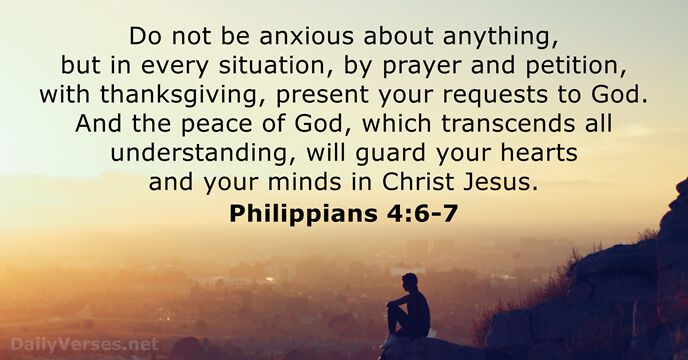
However, there is an alternative that results in less anxiety and more peace, less dissatisfaction and more contentment, less fear and more strength. That alternative is meditation on scripture.

What It Means to Meditate

Some might ask, So I’m supposed to read the Bible to make me feel better?

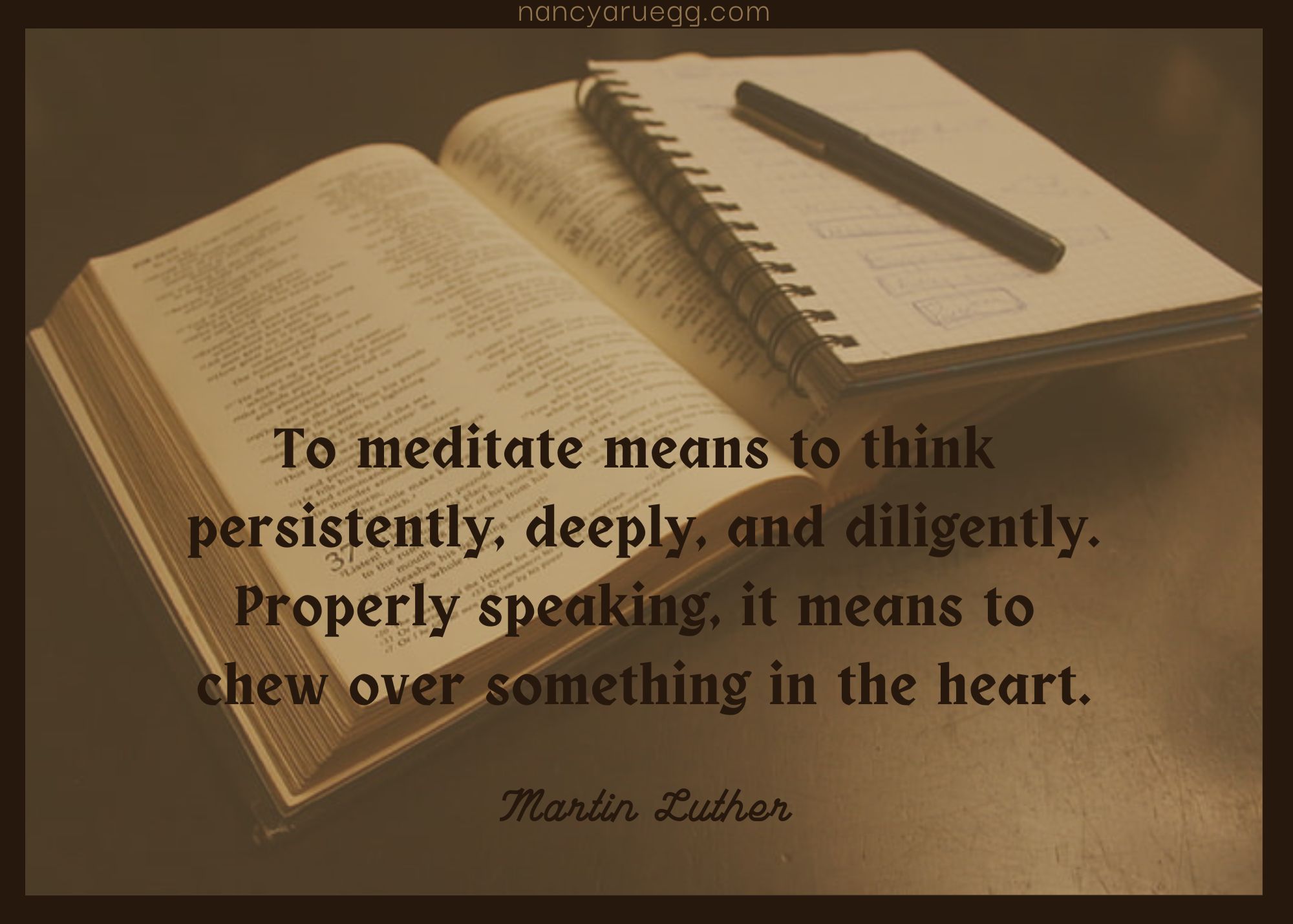
Actually, reading alone isn’t enough, any more than licking a carrot will provide the day’s requirement of vitamin A. No, to nourish the soul we need to regularly meditate on God’s Word.

“Biblical meditation is pondering the words of scripture with a receptive heart, and trusting the Holy Spirit to work in us through those words” [3] (emphasis added).

It’s slow-reading that contributes to savoring scripture much as slow-eating contributes to savoring food.
Why Meditate

My ponderings most often occur on paper. Sometimes I journal through the meaning of a passage; other times I might compose a prayer in response to what I’ve read.

Writing slows and augments my thinking. As I record impressions and prayers, new discoveries have a chance to surface, truths impact my spirit more profoundly, and encouragement nourishes my soul.

In addition, meditation on scripture offers transformation of:

  • Thought processes and choices, as God’s truth cultivates wisdom.
  • Attitudes as mentioned above—anxiety into peace, discontentment into satisfaction, fear into strength, and more.
  • Character, as I contemplate God’s attributes, and they begin to rub off on me [4].
  • Action, as a deeper relationship with God results in compassionate, loving action toward others [5].

How to Meditate

Not sure how to start? Perhaps these suggestions will be helpful. (You’ll also find a sample below.)

  • Write out the scripture or an especially-meaningful part of it. Look up definitions or synonyms of key words.
  • If you’re reading a narrative-passage, use your imagination to put yourself in the position of one of the characters. What might they be thinking and feeling?
  • Prayerfully consider what truth God wants you to understand from the verse(s).
  • Identify the characteristics of God on display or directly mentioned.  Praise him for who he is and what he has done (Psalm 150:2).
  • Write a sentence or two of prayer, presenting yourself before God to accomplish or become whatever he’s revealed during your time of meditation [6]. As you begin to write, you’ll discover more thoughts to express.

An Example of Meditative Writing

Below you’ll find an example of meditative prayer based on Psalm 31:14-15a:

I trust in you, Lord; you are my God. You’ve proven yourself faithful thousands of times in my life, demonstrating your love and compassion, wisdom and guidance, goodness and generosity [7].

Thank you for being such a gracious God! No matter what happens in the future, I know I can trust you to supply my needs. It’s a wondrous thing to rest in you, especially during these uncertain times.

You are my steadfast foundation, my shelter from the storms of life, and my strong tower of safety [8]. Thank you for these comforting images, giving vivid assurance of your power to care for your people in all circumstances. I’m so grateful my future is in your capable hands.

Just as we’d never wolf down a magnificent meal in a fine restaurant, we’d be wise not to wolf down the rich substance of scripture.

And in the savoring, we experience more intimately and powerfully the reality of God.


[1] https://my.clevelandclinic.org/department/wellness/integrative/shared-medical-appointments/eating-well-for-optimal-health-sma ; https://www.webmed.com/diet/what-is-a-balanced-diet

[2] https://www.webmd.com/depression/features/depression-traps-and-pitfalls

[3] https://ourdailybread.org/resources/what-is-biblical-meditation/

[4] Linda Dillow, Satisfy the Thirsty Soul, 15.

[5] https://www.gcu.edu/blog/theology-ministry/theology-thursday-christian-perspective-meditation

[6] See Tim Keller’s list of additional questions:

[7] These previous posts offer examples: After the Fact, Liquid Love, and Sweetness and Power.

[8] Isaiah 33:6 CEV; 25:4; Proverbs 18:10

Photo credits: http://www.pickpik.com; http://www.pexels.com; http://www.canva.com; http://www.pickpik.com; http://www.flickr.com (David Andrako); http://www.canva.com; http://www.pickpik.com; http://www.commons.wikipedia.org.

Read Full Post »

Fitness experts will tell you, strong core muscles of the mid-section greatly enhance your physical well-being, contributing to stability that prevents falls, minimization of strain that causes pain, as well as effective breathing that optimizes oxygen flow.

When core strength is absent, a person is likely to:

  • have difficulty getting up from a chair without leverage
  • struggle to bend down and tie his shoes
  • find himself slouching
  • lose his balance
  • experience back pain

But it’s never too late to reverse such ills. Those same fitness experts recommend exercises: crunches, planks, and bridges—to name a few—although just a brisk walk engages core muscles and contributes to strength.

Of course, even more important than our physical fitness is spiritual strength, which raises a new question:

How strong is your core–of the soul?

Just as we can identify symptoms of physical weakness, we can identify soul-weakness when challenge mires us in such thoughts as: Why me? This is so unfair. If God cared, this wouldn’t be happening.

However, it’s never too late to reverse such ills. Our spiritual Fitness Expert, God himself, has provided exercises to strengthen our souls, including:

Bible Meditation

More than just reading a passage, meditation includes taking to heart God’s Word and responding personally.

For example, how might you respond to Psalm 147:5, “Great is our Lord and mighty in power; his understanding has no limit?”

Perhaps your response would be similar to my own.

I praise you, O God, for your omnipotent power. Nothing is impossible for you (Luke 18:27)! Just that knowledge alone can settle my anxious heart and foster sweet hope.

I praise you also for your unlimited understanding. You are a God of infinite wisdom and you generously offer to bestow wisdom to me–if I just ask (James 1:5).

Thank you for coming alongside, ever-ready to expend your power and wisdom for my good. You are a gracious God beyond what anyone could hope for!

Such an exercise develops the muscle of faith, contributes to stability of soul, and helps prevent falls into worry and fear.

Positive Prayer

Even the tone of my prayers can impact soul-strength. If I focus on the problem, the emotional pain is likely to remain:

Lord, I don’t know what we’re going to do. I keep trying various scenarios in my mind but there seems no way out of these circumstances. You’ve got to help us, although I don’t see how. What a mess!  

On the other hand, if I focus on God’s attributes at work and his promises that apply, the strain of the situation diminishes:

“I praise and thank you, Father, that I have no reason to fear. You’ve given our family the promise that you’ll fight for us; all we have to do is stand firm and see your salvation (Exodus 14:13-14). YOU are our strength, providing the wherewithal to rectify this situation. YOU are our very present help in this time of trouble (Psalm 46:1).

As positivity is expressed in our prayers, the spiritual muscle of hope develops.

Gratitude & Joy

It stands to reason: if we focus on the problems surrounding us, discouragement will weaken our spirits.

But if we focus on all the good things flowing to us from God’s loving heart, we’ll find plenty to be joyful about. It’s just a matter of engaging our praise and gratitude muscles.

Most sets of the physical exercises I do each morning include twenty repetitions. I wonder if we could name twenty of God’s attributes, providing twenty reasons to be joyful in him?

Skim through the psalms with me, and let’s see what we find:

1. Watchfulness (1:6)

2. Righteousness (5:8)

3. Protection (5:11)

4. Encouragement (10:17)

5. Unfailing love (13:5)

6. Security (16:5)

7. Perfect ways (18:30)

8. Victorious power (20:6)

9. Goodness (25:8)

10. Uprightness (25:8)

11. Faithful ways (25:10)

12. Strength (28:8)

13. Splendorous holiness (29:2)

14. Justice (36:6)

15. Ever-present help (46:1)

16. Guidance (48:14)

17. Great compassion (51:1)

18. Power (62:11)

19. Forgiveness (65:3)

20. Sovereignty (71:16)

We did it—and long before reaching the end of Psalms!

Do you find the strain on your spirit relaxing, just in reviewing his surpassing greatness?  Is renewed strength, stability, hope, and joy flowing into your soul?

Keep up those soul-core exercises!

Photo credits: http://www.pxhere.com; http://www.pixabay.com; http://www.heartlight.org; http://www.dailyverses.net; http://www.piqsels.com; http://www.heartlight.org; pxhere.com.

Read Full Post »

When the House is Quiet

Impressions Becoming Expressions

Mitch Teemley

The Power of Story

Still Traveling

Impressions Becoming Expressions

Living Our Days

Gaining a heart of wisdom

He Said What?!

I'm Patty, and my husband and I are living with our adult son who has autism and epilepsy. I love sharing lessons learned from life around me, especially life with Aaron.

Meditations of my Heart

Impressions Becoming Expressions

Linda Stoll

Impressions Becoming Expressions

Signora Sheila

Notes on Life, Faith & Italy

Heidi Viars

Finding the Image of God