Feeds:
Posts
Comments

Posts Tagged ‘God’s Grace’

As his father prayed, little Isaac peeked through his fingers to see what was causing a rustling sound. His eyes spied a mouse crawling up a bell-rope, and Isaac giggled.

After family prayers, Father wanted to know what had possessed his son to be so disrespectful.

“I saw a mouse running up the bell-rope, and it came to my mind:

There was a mouse for want of stairs,

‘Ran up a rope to say his prayers.”

Father was not amused and reached for the rod. Isaac fell to his knees and begged:

“Father, Father, pity take,

And I will no more verses make [1]!”

Neither the little poet Isaac Watts (1674-1748) nor his father could have known where the boy’s penchant for rhymes would take him.

As a late teen, Isaac complained often to his father about the tiresome, chanted hymns of the church. How was a person supposed to sing them with joy as the Bible-psalms often urged, when the music droned in a minor key?

From a 1600’s hymnal

Mr. Watts finally suggested he turn complaining into composing and create better melodies and lyrics. Isaac did, and over the next fifty-plus years more than six hundred of his hymns were published.

Some people found fault with Isaac’s contemporary worship songs. But at least several prominent leaders supported him, including Samuel Johnson, Cotton Mather, and John Wesley [2].

Isaac Watts

Probably the best known of Watts’ hymns is “Joy to the World,” although Watts never set it to music. Decades later Lowell Mason felt inspired to do so and upon publication in 1848, the song soon became a beloved Christmas carol.

Some insist this hymn has no place in the carol-category, because Watts included no elements of the Christmas story in the lyrics.

But as Alyssa Poblete points out: This song celebrates what Christ came to do. And along with looking back at the grace accomplished in the past, we also look forward to the grace accomplished for our future, to the ultimate joy to be revealed [3].

That enlightenment helps explain that puzzling first line, “Joy to the world, the Lord is come” (emphasis added). I’ve often wondered why Watts didn’t choose “has come.”

Ms. Poblete gives us indication. God’s grace (explained in part by the acronym, God’s Riches at Christ’s Expense) is active in all of time—past, present, and future.

Our Messiah’s birth was long-promised for centuries. His coming ushered in a new kingdom of Light. Those who believe in Jesus gain release from the kingdom of darkness, and one day that evil kingdom will be utterly destroyed [4].

In addition:

Christ’s coming is an ever-present and ongoing engagement in the world.

–Darrow L. Miller [5]

The Lord didn’t just come. He is here! And we can sing with dazzling Christmas joy because:

  • One day the whole earth will receive her King. Therefore, let heaven and nature sing (v. 1) [6]
  • The Savior reigns forever and ever (v. 2) [7]
  • Sins and sorrows will be no more, when Christ returns (v. 3) [8]
  • He comes to make his blessings flow (v. 3) [9]
  • He rules the world with truth and grace (v. 4) [10]
  • The glories of his righteousness and the wonders of his love are on display everywhere (v. 4) [11]

These musicians capture well the dazzling joy of knowing our Savior reigns!

For the reasons listed above and more, Watts invites: “Let every heart prepare him room” (v. 1), and “Let men [all humanity] their songs employ” (v. 1)!

May we be just such people who sing with intention, from a place of authenticity [12].

In fact, take a moment right now if you can, and worship, celebrate, and sing with dazzling Christmas joy!

[1] Betty Dunn, https://www.powerofchange.org/blog/2011/12/16/isaac-watts-joy-to-the-world.html

[2] Erin Tabor, https://www.zmiinternational.org/daily-dose-of-encouragement/joy-to-the-world-the-lord-is-come  

[3] https://www.thegospelcoalition.org/article/joy-to-the-world-a classic-christmas-hymn-reconsidered/

[4] Isaiah 7:14 and 9:6; Colossians 1:14; Revelation 20:7-20.

[5] https://disciplenations.org/wp-content/uploads/202004/Music-that-Writes-Culture-Reflections-on-Joy-to-the-World.pdf

[6] Romans 8:19-23; Revelation 22:20; Psalm 96:1-4

[7] Revelation 11:15

[8] Revelation 21:4

[9] Psalm 5:12; 34:10b; 2 Peter 1:3

[10] John 1:14; Colossians 1:16-17

[11] Psalm 33:4; 145:17 31:21

[12]  https://passioncitychurch.com/article/joy-to-the-world/

Art & photo credits: http://www.justanotherclaypotblogspot.com 9/10/2008; http://www.boudewijnhuijgens.getarchive.net; http://www.jenikirbyhistory.getarchive.net; http://www.canva.com (2); youtube.com; http://www.pxhere.com and canva.com.

Processing…
Success! You're on the list.

Read Full Post »

Have you seen those grace-filled fingerprints? Perhaps at home in the joy of good-natured laughter around the family table, or one child helping another with his homework—unprompted, or unified celebration of all—for the success of one.

Perhaps you’ve seen God’s fingerprints outdoors in a landscape of incredible beauty and grandeur, or an up-close encounter with one of God’s creatures, or the expanse of a sunrise, sunset, or brilliant rainbow.

And especially at church, we see God’s fingerprints when an impassioned congregation sings their praise to him, a saint of God offers a heart-touching prayer, someone shares a personal story of divine, miraculous provision, or a scripture-reading fits perfectly our current circumstances.

No doubt, God’s grace is on display everywhere and always. It never wanes; it’s new every morning. And, as illustrated above, when we intentionally look, we see his fingerprints in the GRACE of place.

But God’s grace is not only evident around us. God has provided a place of GRACE within us as well.

  • Our God of grace hears—even before we speak (Isaiah 55:24).
  • Our God of grace leads—along the best and straightest path to himself (Psalm 16:11a) [1].
  • Our God of grace drives (propels)—gently but persistently—so we’re resilient, not fragile; strong, not weak; useful, not ineffectual (Ephesians 3:20).
  • Our God of grace lovingly and relentlessly draws us unto himself (Jeremiah 31:3).
  • Our God of grace changes us, progressively transforming us into his likeness with ever-increasing glory (2 Corinthians 3:18).
  • Our God of grace works in us so he can work through us—all to his and our mutual delight (Philippians 2:13).

He is a passionately dedicated, perfectly-intentioned, and supremely benevolent Heavenly Father!

Yet there is more. 

Our God enriches, enlightens, enables, and enraptures by:

  • blessing us—not with everything that pleases us—but with everything good for us [2]
  • bestowing the privilege of his presence—“so wonderful, quieting, soothing, calming, and warming” [3]
  • guiding us with supernatural wisdom as we avail ourselves with childlike trust
  • shaping our lives into what is useful and beautiful [4]
  • providing a haven within of comfort (Psalm 34:18) and strength (Psalm 59:16), refreshment (Acts 3:19) and joy (Psalm 4:7)

All good things are a result of God’s grace (Psalm 84:11)—in the GRACE of place all around us and in the place of GRACE within.

Where are you seeing God’s grace-filled fingerprints this day? Tell us about it in the comment section below!


[1] Dietrich Bonhoeffer

[2] King David mentions at least ten gifts in Psalm 103 alone.

[3] J. Danson Smith, quoted in Streams in the Desert, Jim Reimann, ed., 340.

[4] Eugene Peterson, Run with the Horses, 79.

Art & photo credits: http://www.openclipart.org & canva.com; http://www.pickpik.com; http://www.canva.com (2); http://www.creazilla.com (painting by Pieter Claesz).

Read Full Post »

No doubt you’ve seen a movie or two with at least one desert scene, in which the protagonists must withstand brutal heat and scarcity of water. (Did Lawrence of Arabia, Flight of the Phoenix, or The Way Back come to mind?)

Some of us have even visited a desert—perhaps the Great Basin or the Mojave here in America, the Sahara in Africa, or the Negev in Israel:

Note the limestone and chalk landforms of the Negev—barren rocky cliffs and ravines, desolate summits and valleys, and of course, sand.

As is true of all deserts, the Negev is arid and stark—most of the year. But then come the months of February and March—the rainy season—and oh, what a transformation takes place.

The bleakness turns to an exuberance of vibrant flowers, including:

Arabian Primrose

Desert Tulip

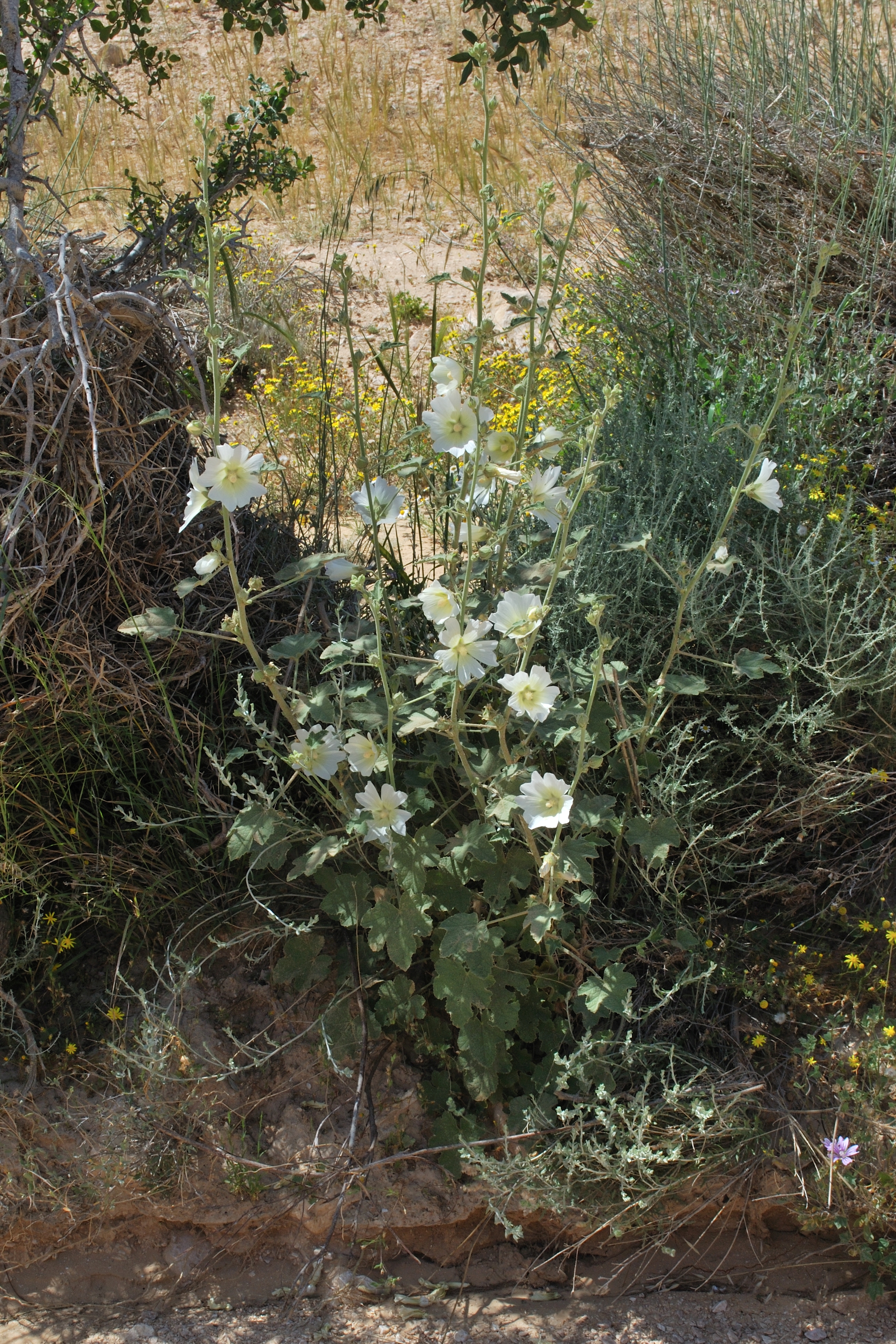
Desert Hollyhock

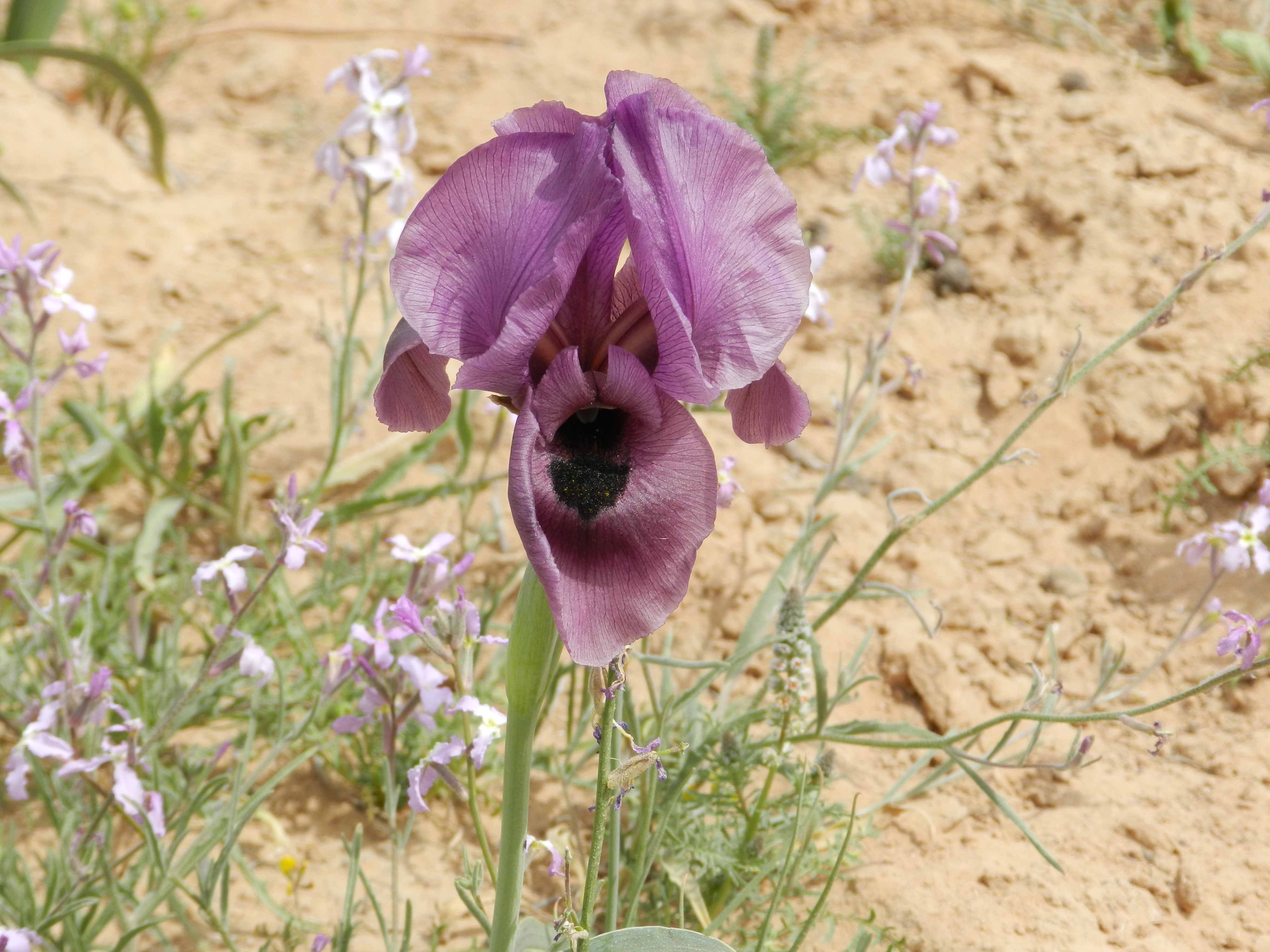
Negev Iris

Water bestows the miracle of life, facilitating photosynthesis and transporting nutrients from the soil.

And as water brings life to the desert, so God’s grace brings the miracle of life to our hearts.

His lavish grace falls like rain [1]; and oh, what a transformation takes place!

Consider the following aspects of renewal:

1. God’s grace cleanses the dusty grime of sin from our souls (Psalm 51:2).

God knows what we are made of, remembering that we are dust. But out of his grace-filled forgiveness he washes away all wrongdoing, and lovingly works to make us more than we are [2].

2. God’s grace like rain provides the miracle of eternal life (Revelation 21:6).

Jesus makes it possible for us to move from living death to deathless life [3].

3. God’s grace nourishes and invigorates our spirits (John 7:38).

He uses many means to soak his truth into the depths of our hearts, providing refreshment, renewal, and encouragement. One primary example: the Bible.

When we disregard God’s Word, we expose ourselves to aridness of spirit.

4. God’s grace brings fruitful productivity to our lives (Isaiah 58:11).

A number of plants in the Negev provide food, including the seeds of the canarian aizoon, the stems and leaves of the carrechtera, the roots of the desert broomrape, and the flowers of the coarse rocket.

Similarly, the Spirit of God nurtures fruit within us–pleasing attributes like love, kindness, goodness, and more (Galatians 5:22-23). As we grow in our relationship with him, so do these attractive fruit.

5. God’s grace-like-rain showers us with blessing (Isaiah 41:17-18).

Flowers of joy, peace, hope, and more can flourish in the most desolate of places, when we allow God to infuse us with his all-sufficient presence.

6. God’s grace gives us refreshment and pleasure (Jeremiah 31:25; Isaiah 44:3).

He will do us good, real good, lasting good,

only good, every good.

With this promise in our hearts,

we need not fear.

–Charles Spurgeon [4]

7. God’s grace creates radiant beauty in a life that was once a wasteland (Psalm 34:5).

That radiant beauty is characterized by smiles of joy, an attitude of contentment, a voice of wisdom and encouragement, an outlook of faith, and a heart of love.

Praise God, his love flows freely to the unlovely [5], developing such beauty!

His grace-like-rain washes over us, bestowing all these aspects of the abundant life to those who are thirsty.

Will you come?


[1] Charles Spurgeon, Morning by Morning, 259.

[2] Psalm 103:14; Ruth Graham, Blessings for a Mother’s Day, 101.

[3] Jack Odell, from Quote/Unquote, compiled by Lloyd Cory,  284.

[4] Charles Spurgeon, Faith’s Checkbook, May 28.

[5] A. W. Tozer

Art & photo credits: www.commons.wikipedia.org; http://www.imaggeo.egu.eu; http://www.identify.plantnet.org; http://www.commons.wikipedia.org (3); http://www.stocksnap.io; http://www.commonswikipedia.org; http://www.pxhere.com; http://www.rawpixel.com.

Read Full Post »

On careful scrutiny, we find

that God’s grace-filled fingerprints

are all over our lives.

—Patsy Clairmont [1]

“Amen!” we say, when life is good.

“I’m not so sure,” we may falter, when life is hard.

But our loving Heavenly Father would have us know several truths, before we presume he’s withholding his grace (his favor, generosity, and loving kindness).

First, we need to remember: not one of us deserves his grace.

All of us have compiled a “long and sorry record as sinners”[2] that should result in punishment. 

 And yet he offers grace upon grace [3].

Second, God proved his over-arching favor with one incomprehensible act.

He sent his Son Jesus to die in our place, to pay the debt for our sins, and provide a way to heaven for us.

Our Savior kneels down and gazes upon the darkest acts of our lives. But rather than recoil in horror, he reaches out in kindness and grace and says, “I can clean that if you want.” And from the basin of his grace he scoops a palm full of mercy and washes away our sin.” [4]

Max Lucado

That alone provides a supreme, grace-filled fingerprint upon our lives. But there is more.

Out of his grace, God supplies an abundance.

Of course, a Kempis wasn’t referring to a problem-free life with every desire fulfilled. That’s not what God has promised.

Those of us who’ve known God for a while can attest to the supreme value of such blessings as God’s strengthening presence, inexplicable peace, effervescent joy, unfailing provision, and more.

Our challenge is to see the evidence of God’s grace. The more we look, the more we’ll find.

Fourth, God’s grace works within us to provide great benefit.

He’s graciously shaping us into what is useful and beautiful to him, what is satisfying and fulfilling to us. Not that the process is always agreeable and pleasant.

We’d do well to keep in mind:

Fifth, even when the severest trouble comes, God’s grace will see us through.

The grace of God, which is sufficient, will enable us to make of our troubles the pearls they can become. It is no mere figure of speech. It is something more than a simile to say that one enters heaven through pearly gates. [6]

Peter Marshall

Consider these men who entered heaven through the pearly gates of calamity:

  • Stephen was the first martyr of the Christian faith. There’s no record that he cried out in terror as men threw rocks at him. Instead, scripture tells us he was praying, “Lord Jesus, receive my spirit.”[7]
  • Polycarp became a disciple of the Apostle John. As he faced martyrdom, Polycarp declared: “Eighty and six years have I served Christ, nor has He ever done me any harm. How, then, could I blaspheme my King who saved me? . . . I bless Thee for deigning me worthy of this day and this hour that I may be among Thy martyrs and drink the cup of my Lord Jesus Christ.” Polycarp was burned alive.
  • Matthew Ayairga wasn’t a Christian when he plus twenty believers were captured by ISIS in 2015. These twenty men of strong faith greatly influenced Matthew’s life. When the executioners asked him if he believed in Jesus Christ, Matthew said, “Their God is my God.” The young man was beheaded that day along with the others, but found life with Christ for all eternity [8].

Each of these martyrs discovered:

*     *     *     *     *     *     *     *     *     *

O Sovereign God! We praise you for the grace of your sustaining power. May we recognize more readily your fingerprints of grace, and in the process become more gracious ourselves–more loving, grateful, and obedient to you.

May that growing awareness prepare us to praise you, serve you, and prosper in our spirits—even unto death.


[1] The Best Devotions of Patsy Clairmont

[2] Romans 3:23 MSG

[3] John 1:16

[4] Grace for the Moment, 352.

[5] Keeping the Heart

[6] The Best of Peter Marshall, 89.

[7] Acts 7:59-60

[8] Matthew 10:39

Art & photo credits: http://www.pickpik.com; http://www.canva.com; http://www.pikist.com; http://www.canva.com; http://www.pexels.com.

Read Full Post »


In the midst of my harried day

When I seem farthest from myself

A moment comes to me and beckons,

“Let us fly away.”


Shutting out the din

Of the never-ending to-do

I close my eyes and begin

To wander in thoughts sublime;

And gather flowers in my mind.


–Tara Afriat*


Such delightful imagery Tara creates with that last line. But I wonder, what sublime thoughts might be worthy of a bouquet in my mind?  So far, five varieties have occurred to me:


1. Humor offers blooms of joy.


Just recently my husband was hospitalized and underwent a number of tests. When an orderly came to accompany Steve to a procedure he announced, “One CT scan, coming up. Would you like fries with that?”

I’m thinking a new journal specifically for humor might be fun to keep (and savor later).


2. Quotes provide blooms of wisdom, encouragement, and beauty.

Isn’t it amazing how a few well-chosen words can suddenly enlighten our understanding or give us eyes to see what was invisible just moments before?

A recent addition in my quote journal offers wisdom, encouragement, and the potential for beauty:


“Make one person happy every day and in forty years

you’ll have made 14,600 human beings happy

for a little time at least.”

–Unknown


Such encouragement gives wise perspective to the impact of small kindnesses, doesn’t it?   And what fun to cause 14,600 beautiful smiles!


3. Observations become blooms of refreshment.


Another journal on my shelf is titled “A Celebration of Small Things.” Each day I record at least one observation worth noting, because:


“A grateful heart is one

that finds the countless blessings of God

in the seemingly mundane of

every day life.”

–Anonymous


Pages of entries over the last two years remind me of just how blessed I am. For example:

January 10, 2017: “The birds are singing a “Hallelujah Chorus” of their own this morning, in celebration of the sudden balmy temperatures—into the upper 50s!”


Review of such moments does refresh my attitude.


4. Kindness creates blooms of grace.

In 1983 I began a journal to document God’s grace. So far, the record of more than 1300 entries offers sublime flower-gathering in my mind. Again, one example:

1996/97 proved to be a particularly challenging year at the school where I taught. Frustration plagued many of us faculty members. In late September I confessed to my early morning prayer group my difficulty in letting go of annoyance, and Betty prayed for me.

Minutes later as I drove to school, my attention was drawn to bright sunbeams radiating from behind great billowing clouds. It seemed the windows of heaven had been opened, and the glory of God on his throne radiated from just beyond that cloud bank. I could almost hear him saying, “You’re going to be fine—I’m right here to help you!”


Betty’s kind prayer and that God-given sky-reminder provided perfect affirmation. And now, that entry and many like it remind me: My Heavenly Father has been ever-faithful in the past; I can trust him for the future.


5. Scripture provides blooms of truth.

Within the pages of the Bible we find a variety of flowers for the mind, including those mentioned here: wisdom, encouragement, beauty, refreshment, and grace. But the most important is truth. Absolute truth.

We live in a time when relative truth is embraced by many, but:


(“Truth is incontrovertible. Malice may attack it,

ignorance may deride it, but in the end, there it is.”

–Winston Churchill)


The wise person seeks after truth—truth that revives the soul, gives joy to the heart, and provides insight for a well-lived life. That’s exactly what the Bible provides (Psalm 19:7-8).**

One psalmist who reveled in scripture wrote: “Oh, how I love your law! I meditate on it all day long” (Psalm 119:97).

And no wonder. The Bible is a continual source of flowers for the mind—of the very best, wisest, and most beautiful kind.


Where do you gather flowers of the mind? Share with us in the Comment section below!

__________________________________


*Quoted from Soul Retreats for Busy People, compiled by Lila Emspon


**If you’re not sure whether scripture is reliable truth or not, I recommend Mere Christianity by C. S. Lewis, The Reason for God by Timothy Keller, or The Reason Why Faith Makes Sense by Mark Mittleberg. It is the honest person who invites God to reveal himself.


Photo credits:  http://www.pexels.com; http://www.wikimedia.com; http://www.pixabay.com (2); http://www.nps.gov;  http://www.pocketshare.speedofcreativity.org; http://www.azquotes.com.


Read Full Post »

Late summer abounds with color. Produce bins overflow with jewel-toned peppers, butter yellow corn, curly green lettuce, and deep purple eggplant.


Flowerpots and planters proffer cascades of royal plum petunias, lemon drop begonias, hot coral geraniums, and more.


Even our clothing this time of year can dazzle the eyes with such hues as sunflower yellow, Caribbean blue, and Calypso orange.


We are surrounded by color in the physical realm.

In the spiritual realm, we are also surrounded—by the shades of God’s grace. Every moment, his love for us inclines him to bestow a plethora of benefits, even though we’re completely undeserving.

Those shades of grace include the following:


Red for Jesus’ Blood


In the alchemy of God’s grace, our sin-blackened hearts become as white as snow (1).

And from the day we each invite Jesus to perform that transformation, we become the sons and daughters of the Ruler of the universe, with all the privileges of his kingdom, including his comfort, security, and peace.


Orange for God’s Countless Blessings

Every day begins with the sun’s fiery appearance and ends with its glowing departure. All day long everything on earth benefits from its light.


Similarly, all day long we benefit from God’s countless blessings—especially if we’re attentive and grateful.


“Let the thankful heart sweep through the day and,

as the magnet finds the iron,

so it will find, in every hour,

some heavenly blessings.”

–Henry Ward Beecher


On Monday I worked in our foliage/flower beds and tried to be a magnet, finding heavenly blessings while on my hands and knees in the dirt.

I collected the following gifts:

  • cooler temps and less humidity
  • only a few weeds to dig up
  • a cute little worm doing aerobic wiggles
  • refreshing sips of ice water
  • the undulating, soft strum of cicadas (Is there a more quintessential sound of summer?)
  • a few birds in a serenading mood


Even working in the dirt offers transcendent moments of awe.


Gold for God’s Word


What other book offers such a treasure trove of instruction and inspiration, encouragement and comfort, strength and hope—as well as a place to become acquainted with God himself?


“The Holy Scriptures are our letters from home.”

–Saint Augustine


Green for Growth


 “God loves us just the way we are,

but he refuses to leave us that way.

He wants us to be just like Jesus.”

–Max Lucado (2)


Growth happens slowly, however. We sometimes wonder if progress is happening at all. Perhaps the four stages of spiritual growth described long ago by Bernard of Clairvaux (1090-1153) will provide a useful measuring tool:

  1. Loving ourselves for our own sakes
  2. Loving God for our own sake, for what God does for us
  3. Loving God for God’s sake, unselfishly, and
  4. Loving ourselves for God’s sake, in awareness of God’s great love for us

Phillip Yancey added a fifth state: Loving others for God’s sake (3).


Wherever we find ourselves on the continuum, our God who started this great work in us will “keep at it and bring it to a flourishing finish on the very day Christ Jesus appears” (4).

(And just in that one verse alone, we have an example of the inspiration, encouragement, comfort, and hope we find in scripture!)


Blue for God’s Character and Heaven


The color blue symbolizes loyalty, wisdom, intelligence, truth, and heaven (5).

Interesting that the first four qualities describe God. Out of his grace, he is: loyal to us, wise in his dealings with us, intelligent in his governance over the universe, and the source of absolute truth for us.

As for heaven:


“If heaven were a beautiful place only,

it would not be enough.

But heaven is also a blessed place—

a place that receives the fullness of God’s favor.”

Anne Graham Lotz (6)


Think about that: the fullness of all God is, all the glorious shades of God’s grace, exist in heaven and will one day surround us there—forever.


Notes:

(1) Psalm 51:7; Hebrews 10:22

(2) Just Like Jesus, Thomas Nelson, 2012.

(3) Reaching for the Invisible God, Zondervan, 2001.

(4) Philippians 1:6 MSG, emphasis added

(5) http://www.color-wheel-pro.com/color-meaninig.html

(6) The Vision of His Glory, Word Publishing, 1996.


(Photo credits:  http://www.wikimedia.com (2); http://www.wikipedia.org; http://www.canva.com; http://www.pixnio.com; http://www.flickr.com (Kenneth Konica); http://www.flickr.com (Jim Killock); http://www.wikimedia.com’ http://www.flickr.com (Jose Luis Pelaez);  http://www.pixabay.com.)


Read Full Post »

220px-Nicholasflamel

Nicolas Flamel (ca. 1310-1418, pictured above) looks like he could be St. Nicholas, with that full beard and impish face. In fact he lived long after and far away from the well-known saint. Flamel was a French scribe and manuscript seller. He also dabbled in alchemy.

Alchemists were those who, especially during the Middle Ages, experimented with various materials and procedures to turn ordinary metals like lead into gold.

Another dream of theirs was to discover an elixir of life—a potion that would provide eternal life.

Sir William Fettes Douglas The Alchemist 19th cent.

“The Alchemist,” by Sir William Fettes Douglas, 1855

By the seventeenth century, legends had developed around Nicolas Flamel. Some claimed that he had discovered the Philosopher’s Stone, the alchemical substance that would turn lead into gold and produce the elixir of life.

But the only immortality he achieved is in print. Victor Hugo mentioned him in The Hunchback of Notre Dame, and R. K. Rowling in Harry Potter and the Philosopher’s Stone.

Nicolas Flamel is buried in Paris at the Musée de Cluny.

By the 1600s, alchemy was, for the most part, abandoned.

Alchemy simply did not work in the physical realm.

However! In the spiritual realm, with God exercising his supernatural power, the alchemy of grace (1) performs great wonders:

gracechangeseverything4-w855h425

The lost become found (Luke 19:10)

Darkness becomes light (John 8:12)

Death becomes life (Ephesians 2:4-5)

Mourning becomes joy (Jeremiah 31:13)

Ashes become beauty (Isaiah 61:3)

dae3bd5f8c1b4d3b842eb316d9202c90

Hatred becomes love (Acts 9:1-2; Philippians 4:1)

Discouragement becomes hope (Romans 5:1-2)

Fear becomes peace (John 14:27)

Striving becomes resting (Exodus 33:14)

Weakness becomes strength (2 Corinthians 12:9)

2_corinthians_12-9

No doubt we could mention many more magnificent facets of transformation that occur because of God’s alchemy of grace—a transformation even more miraculous than turning lead into gold.

To appreciate just how miraculous, consider what happens when we’re left to our own devices:

Darkness begets depression

Hatred begets ulcers

Fear begets paranoia

Striving begets stress

Discouragement begets self-pity

Would it be disrespectful to say that Jesus is our Philosopher’s Stone? He is the one and only Way to experience the alchemy (and grandeur and wonder!) of God’s grace (2).

3c06d8c8fc3f09557711b1bb7679f3a5

Do you find your heart swelling with gratitude and praise?

“Trace the roots of grace, or charis in the Greek, and you will find a verb that means ‘I rejoice, I am glad” – Phillip Yancey (3).

*     *     *     *     *     *     *     *     *     *

Holy Father, how astounding to consider that we are being transformed into the likeness of your Son with ever-increasing glory. Thank you for the alchemy of your grace that transforms our leaden lives into lustrous, 24-carat gold! 

(2 Corinthians 3:18; Job 23:10)

* The “alchemy of grace” is a phrase borrowed from Charles Spurgeon.

(1) Grace is undeserved love, manifested in unmerited favor.

(2) John 14:6, Acts 4:12, 1 Timothy 2:5-6

(3) Phillip Yancey, What’s So Amazing about Grace?, Zondervan, 1997, p. 13.

(Art & photo credits:  www.wikipedia.org (2), http://www.theodysseyonline.com; http://www.pinterest.com; http://www.biblehub.net; http://www.pinterest.com.)

Read Full Post »


dew


Gently, silently,

In quiet faithfulness

The Lord of heaven

Sends refreshing dew

On the mist of morning,

To all things rooted in the ground.

Miraculously,

Withered leaves uncurl,

Shriveled petals unfold,

Drooped stems and grass stand tall, and

Freshly washed hues

Gleam in sparkling splendor.

7ac86eeabe5b5a5fffb78d499e880750


Gently, silently,

In quiet faithfulness

The Lord of heaven

Sends the refreshing dew

Of his grace and blessing

Upon all people rooted in his love.

Miraculously,

Withered souls blossom,

Shriveled hearts unfurl,

Drooped spirits revive, and

Freshly washed attitudes

Gleam with gratitude and praise.


3996f114bc5b807e394ba097efa10a02

“His favor is like the dew on the grass,”

His multi-faceted grace, a sparkling jewel,

Providing manifold blessing:

Enduring hope that renews our strength,

Overflowing joy that isn’t dependent on circumstances,

Deep peace that defies explanation,

A God-enhanced life

That gives rise to satisfaction and fulfillment,

Firm security that God will never fail us, and

The absolute truth of his Word that guides us rightly.

All this and more bestowed upon us like the dew—

Unearned and undeserved.


bf66668287931218d44763d55fa25b69


(Deuteronomy 33:12; Hosea 14:5; Ephesians 3:17; Proverbs 19:12b;

Psalm 62:5; Psalm 16:11; John 14:27; Psalm 128:1-2;

John 10:10; Lamentations 3:22; Psalm 119:137-138, Ephesians 2:4-10)

How has the dew of God’s grace refreshed your life this week?

    *     *     *     *     *

Photo credits:  www.pinterest.com; http://www.metoffice.gov.uk; http://www.pinterest.com (2).

Read Full Post »

fa37b7b44ccee828964427a8ab6550dd

(The Lord is compassionate and gracious,

Slow to anger

And rich in faithful love.

–Psalm 103:8, HCSB)


Oh God,

As I skim through the memories of six-plus(!) decades, I see much evidence of these attributes in my life: 

Compassion

I praise you that you’ve always looked upon me with compassion, not condemnation. Not one moment of struggle in my life has slipped by your attention unnoticed. And with that attention has come your sympathy. You’ve completely understood every situation I’ve faced, and shared in the physical pain, emotional hurts, and spiritual battles as they’ve come.

How comforting to know that you see my circumstances and sympathize. But even more precious?  Your love compels you to express that compassion with encouragement, strength, and support. Each day you bestow new mercies. You never give up on me.


0ad9eb4d82fe357283fe022a70edd469


Grace

Oh, how thankful I am that you are a God full of loving kindness. What relief to know your gift of salvation is not based on my effort but on your grace.

Your blessings flow continuously, not based on my faith, but on your benevolent nature.

Even more wondrous, you dwell within me, bestowing peace, joy, wisdom, and more—not because I am righteous and deserving, but because you are righteous and dedicated to my highest welfare.


d36bad481a9dcf7581f648d480385b61


Patience (Slow to anger)

One evidence of your grace is patience. As a parent and teacher, I’ve learned a little about the attribute of patience—mostly how difficult it is! Little ones can ask countless silly questions, frequently test the limits of acceptable conduct, and behave quite selfishly.

How shameful to admit I still demonstrate such traits. I, too, ask frivolous questions. When troubles assault, I want to know Why, God? I test the limits of your grace with my shallowness, failings, and stubborn streak.   And as for selfish behavior, that tendency hasn’t died yet either.

Some Bible translators have used the word longsuffering in place of patience. You have suffered long as you’ve trained me! Step by laborious step you gently guide me toward maturity. And one day my character will be complete, lacking in nothing because of your great forbearance with me.


love-is-patient


Love 

How can I begin to thank you, God, for the treasure of your undying love? You brought me to faith in Jesus as a child, gave me a place in your forever family, and bequeathed to me an eternal inheritance in heaven. As I wait for that reality, I revel in your faithful love that:

  • Expresses itself continually, day after day
  • Attends to what will be in my best interest
  • Willingly and patiently endures the pain of rejection and disappointment, because of my rebellion
  • Disciplines me as any loving parent trains his/her dear children
  • “Perseveres until it perfects” (Philip Yancey)


6f396ff2e8912d50003e0f8b8f42ddc3


*     *     *     *     *     *     *     *     *     *

I praise you, Holy Father, that day after day you manifest these attributes in my life.  I am encouraged by your compassion, blessed by all facets of your grace, guided by your patient Spirit, and strengthened by the richness of your faithful love.  I can never praise you enough for your magnificence!

 (Art & photo credits:  www.pinterest.com (3); http://www.dailytimewithgod.com; http://www.pinterest.com.)


Read Full Post »

romans1-7

“Grace and peace to you from God our Father

and from the Lord Jesus Christ.” 

–Romans 1:7b


With those words the Apostle Paul greeted the Christians of Rome in a letter.

Turn a few pages in your Bible to Paul’s next epistle, 1 Corinthians, and you’ll read:

“Grace and peace to you from God our Father

and the Lord Jesus Christ.” 

–1 Corinthians 1:3


Notice any similarities?! In fact, all thirteen letters written by Paul and included in our New Testament begin with the same or similar greeting. Sometimes the wording changes a bit, but he always expresses the desire for God’s grace and peace to be upon his friends.

Was there purpose behind his choice, or was he simply following polite protocol for the day, much as we might say, “Hello, how are you?”

grace

GOD’S GRACE

Perhaps Paul’s intent was to highlight for his readers, first and foremost, the foundation-truth of God’s grace. It is only because of his loving kindness toward us that he:


“Grace is the overflow of God’s total self-sufficiency.”

–John Piper


And I would add, toward those with no sufficiency in themselves.

We deserve none of his benevolence.

“We’ve compiled a long and sorry record as sinners and proved that we are utterly incapable of living the glorious lives God wills for us” (Romans 3:23, The Message).

 And yet, his goodness to us, his grace, is mentioned 104 times in the NIV translation of the New Testament—that’s how overarching it is–woven throughout scripture; woven into every day of our lives.

godspeace0711

GOD’S PEACE

In addition to grace, Paul includes peace in his greetingspeace that indicates a state of untroubled tranquility, harmony, and well-being.

Peace is surely an aspect of God’s grace, one of the blessings he bestows upon us out of his loving kindness. So why did Paul choose to mention it separately?

Perhaps because we fail to appropriate it.  Paul wanted to remind his readers that God’s precious gift of peace is always available:

  • Peace with ourselves as we place our wills, our hopes, and our futures in his capable hands (Philippians 4:6-7).
  • Peace with circumstances, as we affirm that his perfect peace is available to those who think on God and trust in him (Isaiah 26:3).
  • Peace in our relationships, as he provides the grace to love as he loves (Romans 14:19).

GOD’S GRACE WITH YOU

As already mentioned, Paul began his letters with “grace and peace to you.” Turn to the end of each letter and you’ll read his signature closing: “Grace be with you.” For example:

1-corinthians-16-23

“The grace of our Lord Jesus be with you.” 

–1 Corinthians 16:23

Now why would Paul make that slight change? Is it important?

Perhaps he wanted his readers (including us!) to be mindful that God’s grace is always with us—day and night, in trouble or triumph, through the ordinary as well as the extraordinary. Maybe Paul chose the phrase as a worthy send-off.  After his listeners and readers had paid careful attention to the instructional content of his letters, came the time to apply it…

…by God’s grace, which was always with them.  And just as surely, God’s grace is always with us.

*     *     *     *     *    *     *     *     *     *

Thank you, Heavenly Father, for the unmerited favor of your grace that has brought us salvation, strength, kindness, and incredible riches in the spiritual realm. All of your grace is always with us—no matter who we are, no matter where we find ourselves. In fact, you long to be gracious to us, to rise and show us compassion. You astonish us!

(Titus 2:11; 2 Timothy 2:1; Ephesians 2:7; Isaiah 30:18)

Art & photo credits:  www.suggestkeyword.com; http://www.knoxchristian.com; http://www.www1.usw.salvationarmy.org; http://www.inbetweenthepinesamightyoakgrows.files.wordpress.com.) 

Read Full Post »

Older Posts »

Still Traveling

Impressions Becoming Expressions

Living Our Days

Gaining a heart of wisdom

He Said What?!

I'm Patty, and my husband and I are living with our adult son who has autism and epilepsy. I love sharing lessons learned from life around me, especially life with Aaron.

Meditations of my Heart

Impressions Becoming Expressions

Linda Stoll

Impressions Becoming Expressions

Debby Thompson

Impressions Becoming Expressions

Signora Sheila

Notes on Life, Faith & Italy

Colleen Scheid

Writing, Acting, Living in God's Love

Mitch Teemley

The Power of Story

Heidi Viars

Finding the Image of God