Feeds:
Posts
Comments

Posts Tagged ‘God’s Power’

 Pretend you’re on an ocean liner that has embarked from New York City and is sailing to England.   You and several thousand other passengers enjoy your days at sea, free to choose from dozens of activities—games, shopping, shows, sports, crafts, and more.

You can eat anytime you like, sleep whenever you feel drowsy, make friends among the other passengers, or remain solitary. In other words, you make many choices during the voyage, but all the while the ship is headed towards its predetermined destination.

A.W. Tozer gave us this illustration in his classic, The Knowledge of the Holy, to help us understand God’s sovereignty:

  • Our all-powerful God has total authority in the universe, just as the shipping authorities exercise sovereignty over the course of a ship.
  • We have been given much freedom, within the confines of God’s sovereignty, to move about and make choices.

Now some folks take issue with God’s control. They want to direct the course of their life-ships.  I, for one, find great comfort in the numerous, reassuring scriptures about God’s sovereignty.

For example, everything in heaven and earth belongs to Him. He is the glorious head over all, the ruler of all things (1 Chronicles 29:11-12). That includes us–those who know Jesus and belong to the family of God. As our Heavenly Father, he provides for our needs, guides us through decisions, bestows many blessings, and more. What encouraging truth! The Almighty God of the universe is in charge of our lives, as we submit to him. We don’t have to navigate alone.

The key, however, is submission. God is a gentleman and will not force himself upon us. He has chosen to limit his sovereignty, to allow man free choice.

Another reassuring truth: God is totally competent. We’ve all known inept leaders who could not fulfill their responsibilities. But our Ruler is supremely capable.  Nothing is too hard for him (Jeremiah 32:17).  As we focus on his complete sufficiency, our worries shrink in significance.

In addition, no plan of God’s can be thwarted (Job 42:2).   What God says, happens.

His sovereign plan is efficient and goal-oriented. He works out everything in conformity with the purpose of his perfect plan (Ephesians 1:11).

God’s sovereignty is also employed with infinite wisdom (Job 12:13).  No foolish decisions come from God’s throne!

And contrary to appearances, he does maintain over-arching rule on mankind (Jeremiah 32:27). That would include the barbaric Babylonians of Jeremiah’s day, who destroyed Jerusalem, murdered the nobles of Judah, and took thousands of Jewish captives to Babylon.  God’s over-arching rule also applies to the wicked forces creating havoc in our day.

Good people are often hurt in the process, and it breaks our hearts.   Every century has had its martyrs for the faith. And our questions of why God allows bad things to happen to good people don’t always get answered. We’re not privy to everything God knows or to all the reasons behind his decisions (Romans 11:33-36).

What we do know is this: Evil never wins in the end. Every evil empire of history that rose in prominence and power eventually fell in ruin. Our sovereign God knows what he is doing. He will have the last word.

So when the squeaky wheels of worry, doubt, or fear begin to spin in your head, and you wonder, Is God in control?, apply the oil of gladness in who God is—our all-powerful, all-knowing, all-wise, and yes, in-control God!

Take joy in the knowledge that “If God is for us, who can be against us” (Romans 8:31)?

And rest in the affirmation that “from him and through him and to him are all things” (Romans 11:36, emphasis added).

*     *     *     *     *     *     *     *     *     *

Sovereign Lord of the universe, we bow in worshipful wonder of your magnificence. Your greatness shatters all boundaries! We stand in awe of your vast power and infinite wisdom, always at work in the world.

“And when I cannot understand” [your plan or your ways], “help me just to stand” (Selwyn Hughes).
Read Full Post »

(In honor of Black History Month)


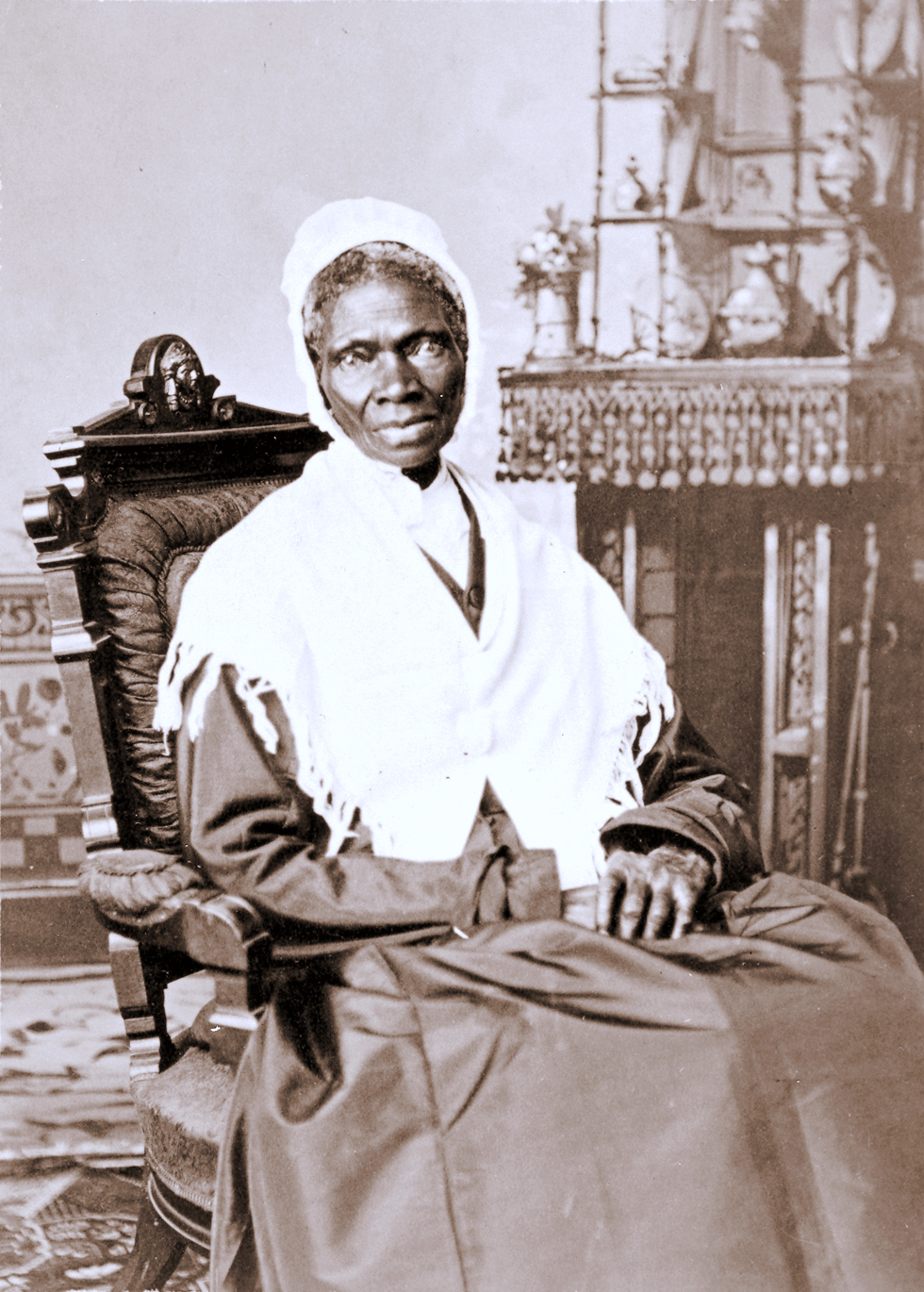
Isabella, the daughter of James and Elizabeth Baumfree, was born a slave in New York state about 1797. No one knows the exact date, because birth records weren’t kept for “property.”

Did her parents know the name means, “consecrated to God?” Even if they chose the name for its meaning, those parents could not have dreamed of the future awaiting their Baby Belle.

Her early years were difficult.  Belle was sold five times, several times to cruel masters.

At age eighteen or so, Belle fell in love with Robert, a young slave from a nearby farm. The couple had a daughter. But Belle’s master, John Dumont, forbade her to see Robert again. According to the law, all children of the union would belong to Robert’s master, not Dumont.

Two years later, Dumont forced Belle to marry an older slave. They had three children: Peter, Elizabeth, and Sophia.

In 1826, Belle escaped the Dumont farm with Baby Sophia. In a vision, God showed her a particular home to go to. That home belonged to a Quaker family, the Wageners, who took in the young woman and her baby. They even paid Belle’s price to Dumont and made her a free woman. Belle became a housekeeper, then a maid.

Shortly after her escape from slavery, Belle learned that her five-year old son, Peter, had been illegally sold in Alabama. She took the matter to court and won her case. Peter was returned to New York. That was the first time a black woman challenged a white man in a U.S. court. It was also the first time of many that Belle’s resolve and courage were put on display.

Several years later Belle was falsely accused of poisoning her former employer. In 1835 she took that case to court and won again.

Someone must have encouraged Belle to tell her story of being a slave and becoming a free woman. But she had never learned to read or write, so a friend wrote as Belle dictated. A Northern Slave was published in 1850.

In her book, Belle explained that several years after she was freed, God revealed himself to her, “with all the suddenness of a flash of lightning, showing her, in the twinkling of an eye, that he was all over, that he pervaded the universe, and that there was no place where God was not.”

The book sold many copies and Belle became well-known. She was asked to speak at a women’s rights convention in Massachusetts. Before long, Belle was traveling with abolitionist, George Thompson, speaking against slavery and for human rights.

In 1851, Belle gave a speech at another women’s conference, this time in Ohio. She spoke convincingly (and extemporaneously) about women being every bit as capable as a man:

“I have plowed and reaped and husked and chopped and mowed, and can any man do more than that?”

And, no doubt with a twinkle in her eye, she added:

“As for intellect, all I can say is, if a woman have a pint, and a man a quart — why can’t she have her little pint full? You need not be afraid to give us our rights for fear we will take too much, for we can’t take more than our pint’ll hold. The poor men seems to be all in confusion, and don’t know what to do. Why children, if you have woman’s rights, give it to her and you will feel better. You will have your own rights, and they won’t be so much trouble.”

She concluded by asking: “And how came Jesus into the world? Through God who created him and the woman who bore him. Man, where was your part?”

It’s not surprising that some were displeased with Belle’s speeches. One time she was told that the building where she was to preach would be burned down if she dared to speak. “Then I will speak to the ashes,” she replied.

Belle was also physically assaulted. One brutal attack caused permanent injury, and she had to walk with a cane for the rest of her life.

In 1863, Harriet Beecher Stowe wrote an article about Belle for the Atlantic Monthly:

“I do not recollect ever to have been conversant with anyone who had more of that silent and subtle power which we call personal presence…She seemed perfectly self-possessed and at her ease. An audience was what she wanted—it mattered not whether high or low, learned or ignorant. She had things to say, and was ready to say them at all times, and to anyone.”

Imagine. A slave woman who never had the opportunity to go to school, never learned to read or write. Yet the power of her spoken word helped bring the end of slavery and pave the way for women to be granted the right to vote.

Belle proved:

“There is no difficulty that cannot be defeated.

There is no victory that cannot be achieved,

if you believe in the power of God!”

— Anonymous

Of course, by the time she achieved notoriety, Belle was known by another name.

You see, Belle had asked God for a new name several decades before the Civil War. Again, it was the result of a vision. She said God chose her new first name based on the fact she would travel. Then Belle asked God for a second name, “’cause everybody has two names.” And the Lord granted her request. Her second name proclaimed what Belle always declared from her podium.

Perhaps you remember Sojourner Truth.


Sojourner_truth_c1870

(Photo from http://www.wikipedia.org.)


Sources:  www.biography.com; http://www.sojournertruth.org; http://www.; http://www.blackpast.org; http://www.americanswhotellthetruth.org; http://www.christianitytoday.com.)

Read Full Post »

article-step-by-step_ds-photo_getty_article_178_67_200377237-001_XS

Back in the 1970s somebody came up with the idea of worry stones—small, smooth pebbles that people could rub between their fingers to release their worries. (What a great money-maker, huh?  Collect some free pebbles, clean ’em up and sell for 100% profit.  Genius.)

According to enthusiasts, the constant rubbing activates the nerves at the base of the thumb, releasing endorphins. As a result, a sense of calmness purportedly settles in the user’s mind.

Even if that’s true, what happens when the person stops rubbing? Since the worry has not been resolved; isn’t it likely to return? I can’t see myself rubbing a stone until I fall asleep at night, can you?

Here’s a better idea.  Instead of going to a small pebble for worry-relief, go to the Rock.

What Rock, you ask?

“There is no one holy like the Lord; there is no one besides you; there is no Rock like our God” (1 Samuel 2:2).

Next question:  Why go to the Rock?

1.  God our Rock is more stable and reliable than Gibraltar.

igibrat001p4

The Rock of Gibraltar has become a symbol for stability, having stood sentry on the southern coast of Spain for centuries. Some say it dates back to the Jurassic Period.

But our God is older still, isn’t he.

“Trust in the Lord forever, for the Lord is the Rock eternal” (Isaiah 26:4).

And he is the same yesterday, today, and forever (Hebrews 13:8).  Now that’s reliable.

2.  God our Rock is more sheltering than a deep cave.

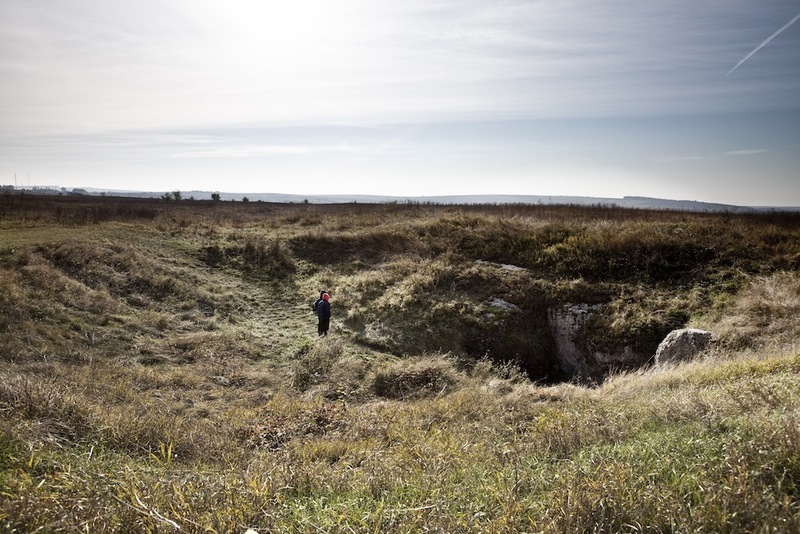
Verteba_Cave

(Verteba Cave, Ukraine)

During World War II, a small group of Ukrainian Jews found a way to escape the Nazis. They lived underground in caves for a year and a half.

At night they foraged for food. They even built showers and latrines deep inside.

But imagine living every day in pitch blackness and in fear of being discovered.

One day it happened. Nazi soldiers stumbled upon their hiding place. A courageous woman spoke for the group, as German guns pointed straight at her.

“What are you afraid of here?” she said. “Is the Furhrer going to lose the war because we live here?” Miraculously the soldiers left without doing anyone harm.

The band of Jewish villagers found relative safety in those caves,  and in April, 1944, the cave dwellers were liberated, able to return to the light.

But God our Rock offers guaranteed eternal safety for our souls. His Son, Jesus “became the source of eternal salvation for all who obey Him” (Hebrews 5:9)

3.  God our Rock is more protective than Masada.

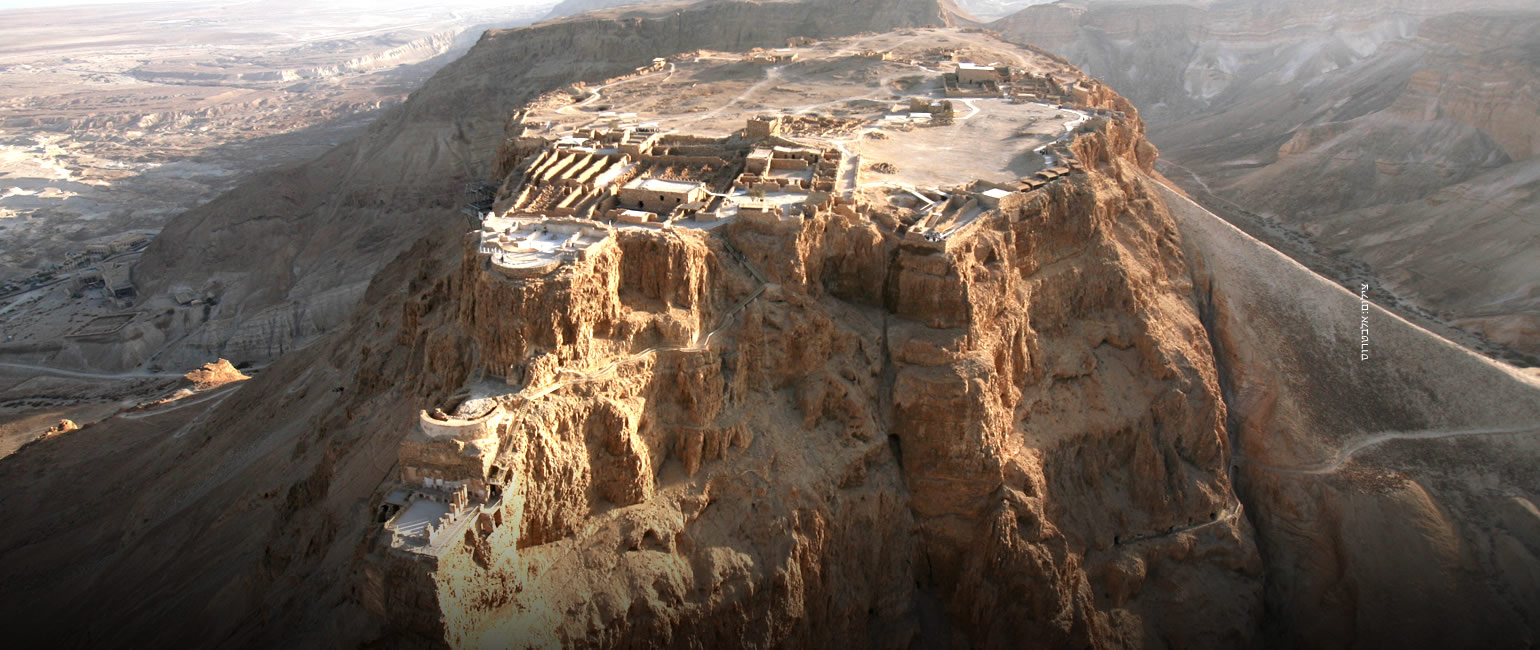
slide-static

Perhaps you’re familiar with the mountaintop fortress, towering 1500 ft. above the Dead Sea.   The refuge was built by Herod the Great, from 37 to 31 B.C., to showcase his power.

Infamous for his brutality, Herod had good cause to be paranoid. He spared no expense to make sure this desert fortress could withstand attack and provide long-term refuge. His plan included protective casement walls, an ingenious water-collection system and cisterns for storage, storehouses, barracks, palaces, an armory and more.

Impregnable? Almost.

When Herod died, Jewish rebels were able to overtake the Roman guard remaining at the fortress. A thousand Jewish zealots lived atop Masada for three years.

Yet nothing or no one on earth can compare to God our Rock.

“Lead me to the Rock that is higher than I,” cried David. “For you have been my refuge, a strong tower against the foe” (Psalm 61:2-3).

And how do we avail ourselves of God’s refuge?  Through gratitude, praise, and prayer.  We can:

  • Thank him for his promises, for the times he has protected and provided in the past.  We must feed our confidence in God rather than our fear.
  • Praise him for his glorious attributes that he is bringing to bear upon our situations–attributes such as power, wisdom, trustworthiness, and love.
  • Affirm our faith. If we occupy our minds with expressions of trust, there won’t be room for thoughts of worry.

“My soul finds rest in God alone;

my salvation comes from him.  

He alone is my rock and my salvation;

he is my fortress, I will never be shaken…

Find rest, O my soul, in God alone;

my hope comes from him”

(Psalm 62:1-2, 5).

(Photo credits:  www.ehow.com; http://www.kids.brittanica.com; http://www.noplaceonearthfilm.com; http://www.masada.org.il.)

Read Full Post »

If I asked you, “What’s the most popular flower?”, you’d probably get the answer right. It’s the rose. En masse on the bush, they provide a striking sight—dozens of large blooms framed by dark green leaves.


Rose-bush


But most of us can’t pass by a rose-bush without leaning in close to view the soft petals, and breathe in the singular scent. To study a blossom up close enhances our appreciation.


3513957969_384a6f45ac


We notice the varying colors, the delicate curl of each petal, the intricate, spiraling pattern. Our sense of wonder increases the more we gaze.

Might the same be true as we study the beauty of our God? That’s what David wanted to do:


1b799f481eab9b6e3bb2af8eab01c1dc

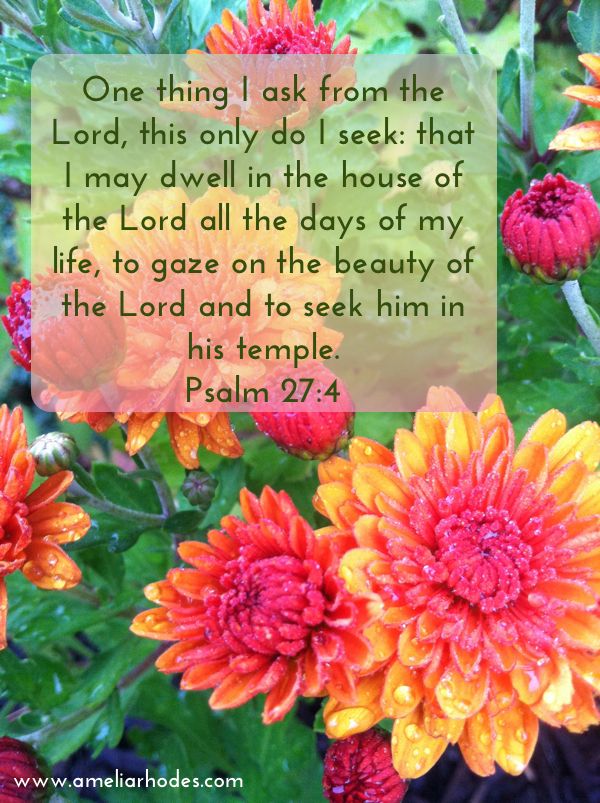
(“One thing I ask of the Lord, this is what I seek: that I may dwell in the house of the Lord all the days of my life to gaze upon the beauty of the Lord and to seek him in his temple” (Psalm 27:4).


But how can we gaze upon an invisible God? By contemplating all his glorious attributes. One commentator described the beauty of the Lord as the harmony of his perfections. I like that.

Just as the petals of a rose create a harmony of color, pattern, symmetry, and form, so the traits of our holy God manifest a harmony of perfect grace, holiness, triunity, and power.

And though we may be acquainted with a number of God’s attributes, appreciation of their beauty expands with a close-up view—through the lenses of scripture and personal experience.  For example:

God’s beautiful grace becomes visible in the story of the prodigal son, as we witness the father actually running to welcome his wayward son home.  He throws his arms around the filthy youth, even kissing him (Luke 15:11-20).

prodigal-son

God’s glorious holiness (purity, righteousness, and separateness from everything else in the universe) is highlighted in Revelation 4:1-11 as John strains for words to describe the Lord of heaven…

… ”Seated on the Throne, suffused in gem hues of amber and flame with a nimbus of emerald…Lightning flash and thunder crash pulsed from the Throne. Seven fire-blazing torches fronted the Throne (these are the Sevenfold Spirit of God)” — vs. 3-5, The Message.  

God’s harmonious triunity (Father, Son, and Holy Spirit) is celebrated in Ephesians 1. Paul reminds us that:

  • God the Father bestows all spiritual blessings upon us (v.3).
  • God the Son provided redemption and forgiveness of our sin (v.7).
  • God the Spirit guarantees our inheritance in heaven and gives us assurance (vs. 13b-14).

And God’s magnificent power is on display throughout scripture and creation, even in our personal lives.  Our Heavenly Father is a God of infinite wisdom, unfailing guidance, strong empowerment, attentive care, competent help,  rich blessings, and more.

We can contemplate each of these attributes as we would the individual petals of a perfect rose.  We can remember occasions when he has demonstrated each trait in our lives.  And perhaps we’ll burst into song as Moses did:


who-is-like-you

(“Who among the god is like you, O Lord?  Who is like you–majestic in holiness, awesome in glory, working wonders?” — Exodus 15:11).

*     *     *     *     *     *     *     *     *     *

My heart fills with wonder and praise, O Lord, because you are a beautiful, holy God.  No one is your equal in power, wisdom, creativity, splendor, or love.  No one else is perfect in all he does.  And you, in all your holy glory are  My.  Heavenly.  Father.   Such statements are too glorious to comprehend!  

But oh, how grateful I am that they are true.

(Photo & art credits:  www.dorsetcereals.com; http://www.flickr.com; http://www.ameliarhodes.com; http://www.luke-15.org; http://www.praisejesustoday.com.)

Read Full Post »

(As most of you know, Steve will soon be retiring from the pastorate, after serving forty years in Florida. Mid-June we move to the Midwest, to be close to our sons and their families. If our daughter and her family would just move east from Washington State, life would be near-perfect!

No doubt you’re also aware that packing and unpacking are time-consuming tasks, so I’m putting the blog on hold for a few weeks. But please continue to visit! I’ll re-blog some previous posts, and hopefully you’ll find them meaningful again, or perhaps for the first time.

The following post was first published 11-7-13.)


tears


Before my friend, Elizabeth, said a word, I knew something was wrong. The slump of her shoulders, the wrinkled brow, the tears welling up in her eyes–they spoke loud and clear.

“You know how Michael and I would like to have a little brother or sister for Ashley,” my friend said, dabbing her eyes with Kleenex. “Well, it’s become more than just a desire for me. I so desperately want another child.” Her voice became tight. “The waiting and uncertainty are becoming unbearable.”

We stood together, in the emptying sanctuary after church, arms entwined. And I prayed for Elizabeth and Michael.

Psalm 113:9, a verse which had ministered to me years before, came to mind. I included the promise in my prayer: “God, you’ve promised ‘to settle the barren woman in her home as a happy mother of children.’ We are claiming that promise today for Michael and Elizabeth. Even now we look forward to the day when they are holding a precious, new baby in their arms.”

Note the verse says children, not child.

The prayer came out of my mouth with certainty and brazen expectation, not in keeping with my cautious personality at all. I have to admit, the thought crossed my mind, What if God intends for Elizabeth and Michael to have just one child? You’ve gone way out on a limb with that prayer!

But I voiced no disclaimers. I let the prayer stand on its foundation of conviction–conviction that didn’t come from my spirit as much as from the Holy Spirit.

For the weeks that followed, I continued to pray that God would bless this couple with another child.

Weeks later, Elizabeth approached me once again. Before she said a word, I knew what she was going to say. Her outspread arms, wide grin, and sparkling eyes spoke loud and clear.

“I’m pregnant!” she cried.

We hugged each other tight and noisily exclaimed our jubilation.

Would I have been as excited had I not been praying for this family? Delighted, yes. But jump-up-and-down ecstatic? Probably not.

My joy was greatly expanded because I had invested myself in the outcome—with the effort of prayer.

Yes, there are many reasons to pray, including these benefits:

Our wills are aligned to God’s will (Psalm 37:4).
Strength of character is developed through the discipline of perseverance (Luke 11:5-8).
We have the opportunity to bring glory to God (John 14:13).
Prayer is a means of fighting against evil (Ephesians 6:10-18, especially verse 18).

But the wonder of prayer, for me, is the privilege God gives us to be part of the process, as he engineers circumstances to accomplish his will.

Every time God moves in situations for which we’ve prayed, he is giving us a precious gift: the gift of participation with him–in a miracle.

Maybe two.

Michael and Elizabeth had twin girls!


il_340x270.446306088_4ipl


*      *      *      *      *      *      *      *      *      *

Heavenly Father, thank you for the splendid privilege of participating with you in the healing, protection, provision, and guidance with which you bless others. May I never get tired of bringing my requests to you, knowing that the joyful conclusion will be worth every moment spent in prayer!

(Photo credit:  www.saveourschoolsnz.files.wordpress.com; http://www.etsy.com.)

Read Full Post »


(As most of you know, Steve will soon be retiring from the pastorate, after serving forty years in Florida. Mid-June we move to the Midwest, to be close to our sons and their families. If our daughter and her family would just move east from Washington State, life would be near-perfect!

No doubt you’re also aware that packing and unpacking are time-consuming tasks, so I’m putting the blog on hold for a few weeks. But please continue to visit! I’ll re-blog some previous posts, and hopefully you’ll find them meaningful again, or perhaps for the first time.

The following post was first published 11-12-12.)


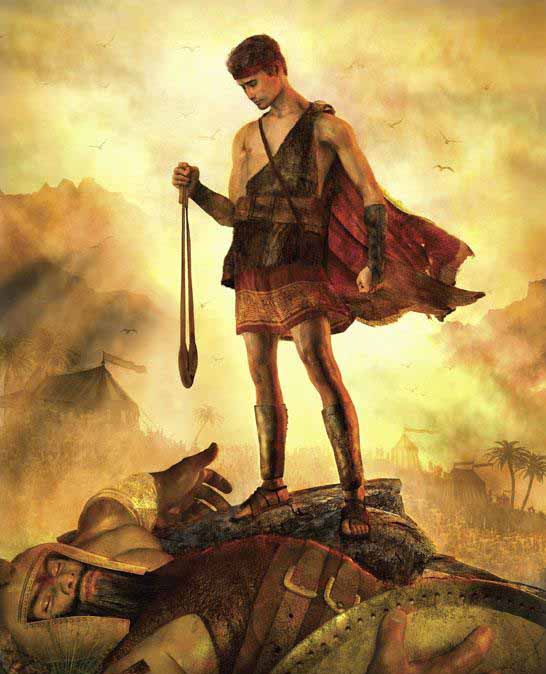
david_goliath_bible_hero_poster


If I asked a church group to name their favorite Bible story, David and Goliath would surely get several votes. The classic plot of underdog-beats-bully appeals to many of us. In addition, David provides a powerful example of faith in the face of fear.

This familiar story was the reading assignment during my Bible study one morning almost thirty years ago. But a new lesson awaited me that day, and has impacted my life ever since.

Following the reading of 1 Samuel 17, the study guide asked: “How did David’s past experiences of the Lord’s deliverance give him confidence to face the present challenge?” The author was referring to the bears and lions David had defeated while caring for his father’s sheep (vs. 34-36). Such experiences had prepared David to face Goliath with faith and courage.

Then came the clincher question: “What practical lessons does this teach us about the value of remembering, and the importance of proving God’s presence and power in ordinary daily living?”

I could easily recall several outstanding experiences when God’s presence and power were definitely at work in my life. But I knew there were many more which had slipped out the back door of my memory and were gone forever.

So I decided to begin writing down instances of God’s presence and power. Then when Goliath-sized problems arose in my life, I could review those entries and build up my faith.

The first incident occurred that very afternoon. I locked myself out of the house as Jeremy, our youngest, and I left to pick up his older brother and sister from school. My pastor-husband, Steve, was attending a meeting forty-five minutes away and wouldn’t be home until late that night. To make matters worse, dinner was simmering on the stove. (Remember, this happened nearly thirty years ago, before cell phones.)

I did have the car keys so we drove to school and started to pray for God to help us. Upon returning, I tried every door and window. Nothing budged. We went to a neighbor’s house. I started to call several leaders from our church, hoping someone would have a parsonage key.

During the second or third call, who should pull up in the driveway but Steve! His meeting had adjourned early. With a few spare minutes on his way to another appointment, Steve thought he’d stop by to see the kids. Our car in the neighbor’s driveway indicated where we were.

Now some folks would call that mere coincidence. Not I. That was a God-incidence, and it became the first entry in my Blessings Journal. I concluded that record with this prayer: “Thank You, Lord, for this little miracle, for proving your power and presence to me the very day I determined to look for it. You are a great and marvelous God, yet you cared for one forgetful mother with one small problem.”

(That Blessings Journal now contains over 900 entries of remarkable gifts and events.)


What indication of God’s presence and power have you experienced recently?  Tell us about it in the comments below!


(art credit: http://www.livingfaithtogether.wordpress.com)

Read Full Post »

Does your to-do list for tomorrow include such items as:

  • Send birthday, get-well, or encouragement cards?
  • Attend a meeting or rehearsal at church?
  • Prepare for teaching a Bible study or Sunday School lesson?
  • Pick up your husband’s prescription?
  • Prepare for dinner guests?

Young woman cooking in her kitchen

Our days are often filled with small deeds. We tend to think they’re insignificant and therefore, so are we.

But that negative evaluation is not from God!

“Who despises the day of small things?” he spoke to Zechariah (4:10).

In fact, evidence indicates that God loves to take small, seemingly insignificant actions, and use them in creative, powerful ways:

  • A piece of wood thrown into bitter water turned it sweet (Exodus 15:25).
  • A cord hung from a window saved a family from destruction (Joshua 2:17-21).
  • An army of 300 defeated a powerful enemy, just by blowing trumpets and breaking clay jars to expose torchlight (Judges 7).
  • A dab of mud applied to a man’s blind eyes restored his sight (John 9).
  • Paul’s handkerchiefs and aprons became healing agents as they were laid upon the sick ((Acts 19:12).

mud

It doesn’t matter that we’re not famous, wealthy, intellectual, or strong, because it is “‘Not by might nor by power, but by my Spirit,'” says the Lord Almighty” (Zechariah 4:6).

Might = strength, resources, and ability.  If that describes you, wonderful!  But those blessings alone will not guarantee significance.

Power = persistence, resolve, and consistency.  Again, if you are able to power through with effort and efficiency to accomplish much, terrific!  But what’s truly important is if the effort is achieving God’s purpose.

Granted, God has given us talents and gifts, opportunities and choices.  We must be prayerful and wise in the ways we use them.

John Wesley advised:

025-All-You-Can-John-Wesley

(“Do all the good you can, by all the means you can, in all the ways you can, in all the places you can, at all the times you can, to all the people you can, as long as ever  you can.”)

Just remember:  apart from the Lord Almighty, we accomplish nothing worthwhile (John 15:5).

On the other hand, little is much–IF God is in it.

He rejoices in what is right, you see, not necessarily in what is big.

So, when you feel like a nobody who’s accomplishing nothing, be mindful of this:

Does the place you’re called to labor

Seem small and little known?

It is great if God is in it

And He’ll not forget His own.

–Kitty Suffield

(Art & photo credits:  www.whattoexpect.com; http://www.auyouth.com; http://www.kokabella.com.)

Read Full Post »

The place:  Spindletop, Texas.

The time:  1892

A group of five investors formed the Gladys City Oil Company.  Sulphur springs in the area gave them great hope that black gold lay beneath the surface, especially since gas seepages in the area would ignite if lit.

Soon the area was dotted with holes–holes that produced nothing.  Two investors pulled out.

A geologist was brought in.  More investors were convinced to take the risk.

Nine long, unproductive years went by, and  still no oil. That’s 3,285 days of discouragement, disappointment, and exhausting labor.  Yet those men would not give up.

Finally, on January 10, 1901, their long-held dreams were realized.  At the depth of 1,139 feet, the company struck oil.  And it wasn’t just a gurgling flow.  The discovery at Spindletop gave new meaning to the term, “gusher.”  The oil shot over one hundred feet into the air, spewing enough to fill 100,000 barrels a day.  It took nine days to get the well under control.  No oil field in the world, up to that time, had been so productive.

I wonder what those men said to each other each morning, over those 3,000-plus days of working, learning, waiting, and wondering?  Surely their conversations included some positive uplift, or they would have quit.  Perhaps they made such comments as:

  • “If we don’t find oil, at least we can say we gave the effort everything we’ve got.  If we quit before all possibilities are tried?   That‘s failure.”
  • “All the signs indicate there is oil.  We cant quit!
  • “Today might be the day!”

*     *     *     *     *     *     *     *     *     *

Just as oil is sometimes discovered by accident, so God’s blessings fall into our laps as glorious surprises. Other times,  God chooses to postpone a blessing while we dig our way through learning, working, waiting, and wondering–like the oil men of Spindletop, Texas.

How do we press on when circumstances look bleak, when common sense tells us to quit?

1.  Pray!  The key to knowing when to persevere and when to change direction is to spend time with God.  Ask him to make clear what the next step is.  Most likely he will not reveal the whole plan at once.  He rarely works that way, because it eliminates the faith factor.  Our moment-by-moment trust in him is too crucial to the abundant living he desires for us.

2.  Believe!  Dozens of promises in scripture probably apply to your situation and mine.  We can recite those promises–not as demands (“God, you said this, so I’m expecting you to do it.”) but as faith-builders.  (“God, you said this, and I know with you all things are possible.”)

3.  Fight!  Fight against discouragement with plenty of encouragement.  God is very creative in the ways he brings hope to our spirits.  Often it’s through Bible reading and other Christian material.  We must keep reading!  Sometimes it’s in a sermon or a song.  We must keep listening!

A friend or even a stranger can speak uplifting words that resonate in our hearts.  Sometimes it’s as if God is speaking directly.  One sign for me, that someone is speaking for God?  Goosebumps!  I can almost feel his light touch on my arm and his voice saying, “Pay attention to this, Nancy.”

Our God is a well of unending supply.  Whatever we need in this life, including wisdom, direction, and perseverance toward a goal, he will provide.  In fact, he will do whatever it takes for his praying, believing, fighting children to discover the oil of gladness, instead of mourning (over failure), a garment of praise instead of a spirit of despair.

That’s one way our loving, supportive Heavenly Father displays his splendor (Isaiah 61:3).

Read Full Post »

I awoke around midnight one evening in December, crept out of bed, and peeked out the loft window facing the street.  All was quiet.  No cars passed, no breeze rustled the trees.  The pavement below glowed faintly under the street lamp.

Again, around two, the same tiptoe trip to the window.  Same view; same stillness.

No, I was not watching for Santa.  I was watching for snow.

The last snowfall this Floridian witnessed was thirty-eight years ago.  So during a rare Christmas visit to Ohio, when snow was forecast during the early hours of one morning, I didn’t want to miss it.

The third time I awoke, around three o’clock, my trip to the window was rewarded.  In the dim light, I could make out large flakes falling fast and straight.

As much as I anticipated its arrival, now I looked forward to the accumulation that had been forecasted: at least several inches.

Sure enough, the pale light of morning revealed a world transformed.  Each tree branch, even every twig, appeared iced in white frosting.

And yet more snow was falling.  Now the flakes were lighter and smaller, drifting gently and softly to the ground.

Donning my coat, I slipped out to the front porch, and extended my arm.  Soon I had a lovely collection of tiny star-shaped flakes on my sleeve.  Delicate displays of lacy symmetry.  Each one a magical wonder.

The next day, under a crystalline blue sky, we rode through a nearby cemetery where the snow created an even more stunning display.  Hillsides, ancient trees, and tangles of bushes were majestically trimmed in sparkling white.  Frozen ponds glistened subtly, like great pearls.  By contrast, the streams twinkled, as if crystals had been laid out on rippling, steel-gray silk.  I oohed and aahed at every turn.

Those of you who experience snow every winter may not be so enthusiastic.  There’s a dark side to the white stuff!  Bundling up in extra clothing for outdoors, then shedding the layers for indoors.  Slow, snarled traffic.  Shoveling.  Scraping off the car.

But, oh, the beauty!  The splendor!

“He spreads the snow like wool and scatters the frost like ashes” (Psalm 147:16)

*     *     *     *     *     *     *     *     *     *

Thank you, O God, for the glorious wonders of your winter creation.  I marvel that you design each tiny snowflake unique from all others.  How mind-boggling to consider the millions of flakes required to cover just one tree, much less a forest or a whole region.  And  I marvel at your artistry with just one color—white!

How great and glorious you are, the almighty Creator and Sustainer of the universe! How  awe-inspiring to know you are also our loving Heavenly Father.  And that same awesome power that paints winter-white landscapes is at work in our lives, creating the beauty of holiness.   Thank you.  Thank you.  Thank you. 

Read Full Post »

Those of us who believe in Jesus are on a faith journey.

Sometimes we fly.

He carries us on eagles’ wings.


One example from scripture is God’s deliverance of the Israelites from Egypt.  He said, “You yourselves have seen what I did to Egypt, and how I carried you on eagles’ wings and brought you to myself” (Exodus 19:4).

The Israelites had done nothing to secure their release from Pharaoh.   God caused the plagues, God opened the Red Sea for the Israelites’ escape, and God destroyed the Egyptian army.

Moses and his sister, Miriam, sang a song to the Lord, to celebrate their deliverance.


“Who among the gods is like you, O Lord?  Who is like you–majestic in holiness, awesome in glory, working wonders?” (Exodus 15:11).

Has your heart soared on the euphoria of an awesome and glorious miracle?

We have.  A number of times.  One day D. called to announce she wanted to buy us a car.  Arrangements were made with a dealership; all we had to do was go and pick one out.

“Oh–and get leather seats,” she insisted.  “They’re so much more comfortable.”

Can you imagine?  What an incredible blessing!  Our hearts soared for weeks on that miracle.   Even now, more than thirteen years later, that car is a constant reminder of God’s supernatural provision.  (Yes, it’s still running smoothly!) Through D., God proved unequivocally his love and power.

Sometimes we soar; sometimes we runon supernatural strength.

We feel the supernatural power of the Spirit coursing through our veins, providing strength and passion for the task at hand.  It is a spontaneous sprint, energized by omnipotent God.

New Christians are often empowered for a running start in their burgeoning faith. Eagerly they soak up Bible knowledge in small groups and personal Bible study.

In other cases, God places a special call on someone’s life to fulfill a need.  And with the call comes supernatural strength to meet the challenge.

That’s what happened to J.B.  God infused him with a passion to upgrade the sound system of our church.  Night after night, he worked at rewiring the sanctuary.  Much of that time was spent climbing about in the rafters.  This after working each day at his business.

When I asked J.B. about exhausting himself, he assured me  he was having fun!  He didn’t feel worn out at all.  God was giving him the strength to complete the project.

Yes, it’s exhilarating to fly on eagles’ wings of miracles and run on supernatural strength.  But…

…most of the time on our faith journey, we walk.

Step by step.  Choice by choice.  Slowly approaching the destination—the day of Christ Jesus (Phil. 1:6).  Sometimes the path is uphill and rocky.  We strain with effort to make progress.  Some days the path is winding, and we cannot see ahead.

Yet in spite of struggle and uncertainty, the walk can still bring much pleasure to the heart.  “Blessed are those…who walk in the light of your presence, O Lord” (Psalm 89:15).  You see, we do not walk alone.  The Company we keep makes all the difference.

Walking in faith involves plenty of ordinary tasks and days without miracles. Children to care for.  Laundry to do.  Meals to cook.  Calls to make.   Students to teach.  Sales to close.

But!  Whatever needs to be accomplished, we can walk through it and not collapse under the repetition and frustration.  How?  By inviting God to walk with us.


Years ago, when our three children were young, my life was a routine of laundry, cleaning, cooking, errands, and child care.  I was not one of those mothers who derived great fulfillment from these tasks.  Instead of walking joyfully through each day,  I often plodded.

Then I came across Colossians 3:23-24.  “Whatever you do, work at it with all your heart, as working for the Lord, not for men, since you know that you will receive an inheritance from the Lord as a reward.  It is the Lord Christ you are serving.”

In the margin of my Bible, next to those verses, I wrote, “including housework!”  I wanted Who I served to be more important than what I was doing.  Plodding didn’t end once and for all, but I learned to walk at a believer’s pace more frequently, as I invited God to cook, clean, and launder with me!

Those verbs–soar, run, and walk–are found in Isaiah 40:31, in that order:


“Those who hope in the Lord will renew their strength.  They will soar on wings like eagles; they will run and not grow weary, they will walk and not be faint.”

Perhaps soaring is first because  the euphoric wonder of flying on eagle’s wings seizes our attention with intensity.

Running is second.  Adrenalin runs high during spurts of divinely inspired growth and service.

And walking is last.  Did God save the most important until the end?  Because it’s in the persevering that we become strong.  It’s in the trusting  that our faith grows deep.  And it’s in practicing his presence that we learn consistency of character.

So revel in occasional soaring.  Rejoice in periodic  running.  But take deep satisfaction in the day-by-day walk on the paths of righteousness (Psalm 23:3).


“Come…let us walk in the light of the Lord” (Isaiah 2:5)!

(photo credits:  www.betterphoto.com; http://www.linksterdiversions.blogspot.com; http://www.BlackburnNews.com; http://www.foxnews.com; http://www.photobucket.som/user/jamiesolome/media.com; http://www.faithgateway.com; http://www.pinterest.com)

Read Full Post »

« Newer Posts - Older Posts »

When the House is Quiet

Impressions Becoming Expressions

Mitch Teemley

The Power of Story

Still Traveling

Impressions Becoming Expressions

Living Our Days

Gaining a heart of wisdom

He Said What?!

I'm Patty, and my husband and I are living with our adult son who has autism and epilepsy. I love sharing lessons learned from life around me, especially life with Aaron.

Meditations of my Heart

Impressions Becoming Expressions

Linda Stoll

Impressions Becoming Expressions

Signora Sheila

Where Faith Meets La Dolce Vita

Heidi Viars

Finding the Image of God