Feeds:
Posts
Comments

Posts Tagged ‘God’s Presence’

Sad Reba

She was a pitiful sight, the pit bull/Labrador/terrier mutt that our son, Jeremy, and his wife, Nancy, adopted from the Humane Society.  Her head hung down, and her tail did not wag.  Even her eyes conveyed great sadness.  She never barked and did not know how to play.

Jeremy and Nancy decided to keep the name given her by the society staff:  Reba.  No use adding confusion to the poor dog’s problems.

When they first brought her home, Reba wouldn’t  eat.  She also suffered from anxiety, shaking uncontrollably when faced with uncertainty.  (She still does, sometimes.)

Reba’s symptoms aren’t much different from those of humans, when we experience extreme stress.  Depression and anxiety can quickly take over.

Jeremy and Nancy adopted Reba the summer of 2010. That December when we saw Reba again, it was as if Jeremy and Nancy had adopted a new dog.  Now her head was up and her tail wagged merrily.  She could run and jump to catch a tossed tennis ball in mid-air.

Happy Reba

If Reba could talk, she would undoubtedly have abhorrent stories to tell of her past.  But I have a feeling she would finish by saying, “My new life with Jeremy and Nancy is completely different.  I love it here!”

Reba has found a sanctuary—a place of refuge and protection where she feels safe.  Her life has been transformed.

We, too, have a sanctuary available to us.  “The Lord is a refuge for the oppressed, a stronghold in times of trouble” (Psalm 9:9).

When David composed that psalm, the tabernacle tent-church was the sanctuary for the Israelites.  God had told Moses centuries before, “Have them make a sanctuary for me, and I will dwell among them” (Exodus 25:8).

For over fifteen hundred years, the tabernacle, and then the temple in Jerusalem, represented God’s presence among his people.

But that was only temporary.  God provided an even better way to be with his people, through his son, Jesus.

Those of us who know him now experience his sanctuary within. 

“Do you not know that your body is a temple of the Holy Spirit, who is in you, whom you have received from God?  You are not your own; you were bought at a price” (1 Corinthians 6:19).

At the cost of his Son’s life, God “bought” us as his dwelling place.

We don’t have to go to Jerusalem.  We don’t even have to be in a church building to experience the sanctuary of our God.  His love, peace, and comfort are available wherever we are, whatever we’re facing.

Now that is life-transforming news.  But I have to avail myself of its truth.

*     *     *     *     *     *     *     *     *     *

Thank you, God, for being a sanctuary within me.  At any moment I can turn to you, and you are attentive to my cry.  As I focus on you—your wisdom, power, and benevolent care, my concerns deflate.  I know you have a plan for my life, for those of my loved ones, for my country and the world. You are in control.  I imagine you taking hold of my hand, giving it a pat or two and reassuring me, “Don’t be afraid.  I will help you”.

 You are incredibly good to me, O God, my refuge.  I reaffirm my trust in you. 

(Psalm 34:15; Jeremiah 29:11; Psalm 9:7-8; Isaiah 41:13; Nahum 1:7; Psalm 91:2.)

Photo credits:  Jeremy Ruegg

Read Full Post »

Those of us who believe in Jesus are on a faith journey.

Sometimes we fly.

He carries us on eagles’ wings.


One example from scripture is God’s deliverance of the Israelites from Egypt.  He said, “You yourselves have seen what I did to Egypt, and how I carried you on eagles’ wings and brought you to myself” (Exodus 19:4).

The Israelites had done nothing to secure their release from Pharaoh.   God caused the plagues, God opened the Red Sea for the Israelites’ escape, and God destroyed the Egyptian army.

Moses and his sister, Miriam, sang a song to the Lord, to celebrate their deliverance.


“Who among the gods is like you, O Lord?  Who is like you–majestic in holiness, awesome in glory, working wonders?” (Exodus 15:11).

Has your heart soared on the euphoria of an awesome and glorious miracle?

We have.  A number of times.  One day D. called to announce she wanted to buy us a car.  Arrangements were made with a dealership; all we had to do was go and pick one out.

“Oh–and get leather seats,” she insisted.  “They’re so much more comfortable.”

Can you imagine?  What an incredible blessing!  Our hearts soared for weeks on that miracle.   Even now, more than thirteen years later, that car is a constant reminder of God’s supernatural provision.  (Yes, it’s still running smoothly!) Through D., God proved unequivocally his love and power.

Sometimes we soar; sometimes we runon supernatural strength.

We feel the supernatural power of the Spirit coursing through our veins, providing strength and passion for the task at hand.  It is a spontaneous sprint, energized by omnipotent God.

New Christians are often empowered for a running start in their burgeoning faith. Eagerly they soak up Bible knowledge in small groups and personal Bible study.

In other cases, God places a special call on someone’s life to fulfill a need.  And with the call comes supernatural strength to meet the challenge.

That’s what happened to J.B.  God infused him with a passion to upgrade the sound system of our church.  Night after night, he worked at rewiring the sanctuary.  Much of that time was spent climbing about in the rafters.  This after working each day at his business.

When I asked J.B. about exhausting himself, he assured me  he was having fun!  He didn’t feel worn out at all.  God was giving him the strength to complete the project.

Yes, it’s exhilarating to fly on eagles’ wings of miracles and run on supernatural strength.  But…

…most of the time on our faith journey, we walk.

Step by step.  Choice by choice.  Slowly approaching the destination—the day of Christ Jesus (Phil. 1:6).  Sometimes the path is uphill and rocky.  We strain with effort to make progress.  Some days the path is winding, and we cannot see ahead.

Yet in spite of struggle and uncertainty, the walk can still bring much pleasure to the heart.  “Blessed are those…who walk in the light of your presence, O Lord” (Psalm 89:15).  You see, we do not walk alone.  The Company we keep makes all the difference.

Walking in faith involves plenty of ordinary tasks and days without miracles. Children to care for.  Laundry to do.  Meals to cook.  Calls to make.   Students to teach.  Sales to close.

But!  Whatever needs to be accomplished, we can walk through it and not collapse under the repetition and frustration.  How?  By inviting God to walk with us.


Years ago, when our three children were young, my life was a routine of laundry, cleaning, cooking, errands, and child care.  I was not one of those mothers who derived great fulfillment from these tasks.  Instead of walking joyfully through each day,  I often plodded.

Then I came across Colossians 3:23-24.  “Whatever you do, work at it with all your heart, as working for the Lord, not for men, since you know that you will receive an inheritance from the Lord as a reward.  It is the Lord Christ you are serving.”

In the margin of my Bible, next to those verses, I wrote, “including housework!”  I wanted Who I served to be more important than what I was doing.  Plodding didn’t end once and for all, but I learned to walk at a believer’s pace more frequently, as I invited God to cook, clean, and launder with me!

Those verbs–soar, run, and walk–are found in Isaiah 40:31, in that order:


“Those who hope in the Lord will renew their strength.  They will soar on wings like eagles; they will run and not grow weary, they will walk and not be faint.”

Perhaps soaring is first because  the euphoric wonder of flying on eagle’s wings seizes our attention with intensity.

Running is second.  Adrenalin runs high during spurts of divinely inspired growth and service.

And walking is last.  Did God save the most important until the end?  Because it’s in the persevering that we become strong.  It’s in the trusting  that our faith grows deep.  And it’s in practicing his presence that we learn consistency of character.

So revel in occasional soaring.  Rejoice in periodic  running.  But take deep satisfaction in the day-by-day walk on the paths of righteousness (Psalm 23:3).


“Come…let us walk in the light of the Lord” (Isaiah 2:5)!

(photo credits:  www.betterphoto.com; http://www.linksterdiversions.blogspot.com; http://www.BlackburnNews.com; http://www.foxnews.com; http://www.photobucket.som/user/jamiesolome/media.com; http://www.faithgateway.com; http://www.pinterest.com)

Read Full Post »

“Mail’s here early today!” called Lorna, as she entered the kitchen.

Oh, that was good news.  Living far from home in Quito, Ecuador made letters a very precious commodity.

“Terrific!” I responded, and dashed upstairs to get my keys.

Lorna and her husband, Elbert, served as missionaries with HCJB.  I was a short-termer, living with them for the four months of my assignment as a preschool and kindergarten teacher.

English: Radio HCJB Deutsch: Radio HCJB

The compound was only a brief walk from the house.  Once there, it was just a matter of unlocking the gate, heading down the main walkway a short distance, up a few steps, and into the post office alcove where all of our mailboxes were located.

I jogged the whole way there and back, excited to read my mail.  But no sooner did I return home than my head started to pound, nausea engulfed me, and all I wanted to do was lie down.  Never mind those coveted letters!

My problem was not a sudden onset of the flu, but mild hypoxia–oxygen deprivation. Quito is located 10,000 feet above sea level in the Andes Mountains.

My experience proves, as well as those of countless others:  we humans require oxygen—lots of it.

Even folks who live near sea level can suffer from lack of oxygen, because they’ve become accustomed to shallow breathing.  Their bodies never receive enough oxygenated air, causing them to feel short of breath and anxious.

On the other hand, research has proven that deep breathing helps us manage stress and anxiety, lower blood pressure and heart rate, and even spark brain growth.  By not taking slow, deep breaths now and again, we deprive ourselves of these benefits.

M-m-m.  Reminds me of Ecclesiastes 2:10-11, where King Solomon lamented the results of shallow living:  chasing after wealth, accomplishments, and pleasure.  In the end, nothing gave him lasting satisfaction and fulfillment.

Shallow living brings on symptoms in the spirit, similar to oxygen deprivation in the mind and body: heartache, fatigue with life, nausea from repetitive, meaningless activity, and shortness of temper.

In contrast to Solomon’s lament in Ecclesiastes is Paul’s praise to God for the power and strength of deep living:

“Oh, the utter extravagance of his work in us who trust him—endless energy, boundless strength” (Ephesians 1:19, The Message)!

Deep living happens when we breathe in God’s strength with a prayer, his wisdom and encouragement with a scripture, his joy with a song.

Deep living happens when we practice his presence as automatically as we breathe.

And how do we do that, “practice his presence?”

It’s just a matter of  pausing frequently throughout each day, to turn our attention to God.

I might say such things as:

  • Thank You, Lord, for this new day.  Work through me to accomplish your purpose.
  • I  love you, Heavenly Father.  Thank you for filling my heart with peace and joy every time I turn my attention to you.
  • Thank you for your power at work in me as I complete this task.
  • The wonders of your creation–graceful tree branches dancing in the breeze, lyrical songs of the mockingbirds, delicious aromas of pine and orange blossoms–They make my heart sing with praise!
  • Oh, Lord, I shouldn’t have spoken to Mary like that.  Forgive me, I pray.  Help me to think before I speak.  And yes, I will apologize to her.

Refreshing.  Energizing. Purifying.  Like a deep breath of oxygen.

Shallow breathing causes a lesser quality of life.  So does shallow living.

Deep breathing fosters strength of mind and body.  Deep living does that and more.

Deep living radically transforms the spirit.

Let’s breathe/live deep!

*     *     *     *     *     *     *     *     *     *

What deep living habits help you practice the presence of God?

(photo credits:  www.wikipedia.com , http://www.picstopin.com , http://www.vineyardcs.org )

Read Full Post »

Back in July we looked at the question, “What does it mean to seek God?”  That phrase, seek God, turns up rather frequently in scripture.   Jeremiah 29:13 is a perfect example:  “ ‘You will seek me and find me when you seek me with all your heart.  I will be found by you,’ declares the Lord.”

In that post, we considered our experiences of searching for people to discover principles that might guide our search for God.

The same strategy can give us insight for another instruction seen often in scripture:  walk with God.  Micah 6:8 is one example:  “What does the Lord require of you?  To act justly and to love mercy and to walk humbly with your God.”

What does that mean exactly, to walk with God?  Again, understanding may be expanded by examining what happens when we walk in the physical realm.

First of all, learning to walk doesn’t happen in a moment.  The late Howard Hendricks, professor at Dallas Theological Seminary, used to make this point with a humorous illustration:

A baby does not sit in his playpen and suddenly say to himself:  “My, oh my!  Observe these family members ambulating on two feet!  What an amazing maneuver for forward locomotion!  I think I shall try it!”

No, a baby cannot simply get up and start to walk.  It is a process that happens over time.  That brings us to…

Principle #1:  Walking with God is a learned behavior that happens over time.

 “Come to me,” Jesus says.  “Walk with me and work with me—watch how I do it.  Learn the unforced rhythms of grace” (Matthew 11:28-29, The Message).

Slowly but surely, as we bring Jesus into our daily routines to be our guide and confidante, we take on his attributes.  A glorious side effect will be:  the fullness of joy that comes when we walk in his presence (Psalm 16:11).  And day by day that fullness grows.

*     *     *     *     *     *     *     *     *     *

Not long ago, my friend, Cindy, invited me to go on a walk in a nearby state park.  It was not an aerobic workout!  Cindy and I chatted away as we leisurely made our way through the woods.  We probably missed some critter sightings because we were more focused on our conversation than the beauty around us.

However, occasionally something would catch our attention, and one would point it out to the other, such as…

“Oh!  Look at those sweet purple flowers!”  Two people saying “ooh” and “aah” is so much more fun than one!

Principle #2:  Walking with God is simply friendship with God.

 God is beside each one of us as we progress through each day.  At any moment we can share our hearts with Him, much as Cindy and I did on that walk.  As his gifts and blessings seize our attention, we can thank and praise him—share our “oohs” and “aahs” with him.

A. W. Tozer suggests we “live in a state of unbroken worship.”  Might that just be like a walk in the woods with a friend?

*     *     *     *     *     *     *     *     *     *

A couple of years ago I accompanied two of our three adult children, their spouses, and one granddaughter to a theme park.  Of course, the young adults wanted to ride at least one roller coaster.   So little Sophie and I went to one of the shows while they waited in line.

Because of the crowd, I held tightly to Sophie’s hand as we made our way to the theater.  But there were patches of thick crowds around some of the attractions.  At those points, I carried her, to make sure we weren’t separated.

I wasn’t about to let anything happen to her.  She is much too precious to me.

Principle #3:  Walking with God provides glorious blessings.  Among them, protection and care.

  • His protective presence.  No doubt you remember this affirmation from David:  “Even though I walk through the valley of the shadow of death, I will fear no evil, for you are with me; your rod and your staff, they comfort me” (Psalm 23:4).
  • And Isaiah presents a beautiful image of God’s loving care.  “He tends his flock like a shepherd; He gathers the lambs in his arms and carries them close to his heart” (Isaiah 40:11).

Heavenly Father, how incredible it is that you—the majestic Lord of the universe–would want to walk with us!  What an amazing privilege that you desire to grace us with your all-wise, all-powerful, supremely loving presence!  What wonderful benefits you bestow as we walk close to your side!

Why would I ever want to walk alone?

(photo and art credits:  www.squiddo.com ; http://www.wallpaperfreehd.com ; sarahhamill.wordpress.com ; http://www.sfgate.com ; tomverenna.wordpress.com )


Read Full Post »

Think of the last time you . . .

. . . gazed in wonder at a blazing sunset,

. . . marveled at the heavenly aroma of lilacs or orange blossoms, or

. . . listened to a melody that brought tears to your eyes.

God has equipped us with amazing physical senses, enabling us to experience and enjoy the display of his creative genius.

But physical manifestations are not his only outlet of expression.  God also revels in displaying his fullness in our hearts.  The question is:  how do we become aware of such revelations in the abstract realm of our spirits?

A.W. Tozer presents a possibility in his classic, The Pursuit of God.  He suggests we use the senses of our hearts.

The Bible gives us glimpses of how these internal senses might work.

1.  TASTE

David urges us to “taste and see that the Lord is good (Psalm 34:8).  That verse reminds me of a father urging his child to try a bite of some new food.  “Try it—you’ll like it!” he says.

As Christians, we can “try” God—offer him a prayer, believe in a promise, trust in his love and care.  He will not ignore such efforts!  When we come near to God, he will come near to us (James 4:7).

2.  SMELL

Although Psalm 45 was written as a wedding song, perhaps for King Solomon, it also has prophetic qualities, looking forward to the day when Christ and his bride, the church, will be united forever.  Verse 8 mentions the groom’s fragrant robes:

“All your robes are fragrant with myrrh and aloes and cassia,” wrote the psalmist.

Think of a favorite candle with a delightful aroma.  Do you light it and then leave it?  No, more than likely you place that candle in close proximity, so you can breathe in deeply the lovely fragrance and relish the pleasure.

We can draw near to God and relish the pleasure of his presence—the fragrance of his peace, joy, and comfort.

3.  HEARING

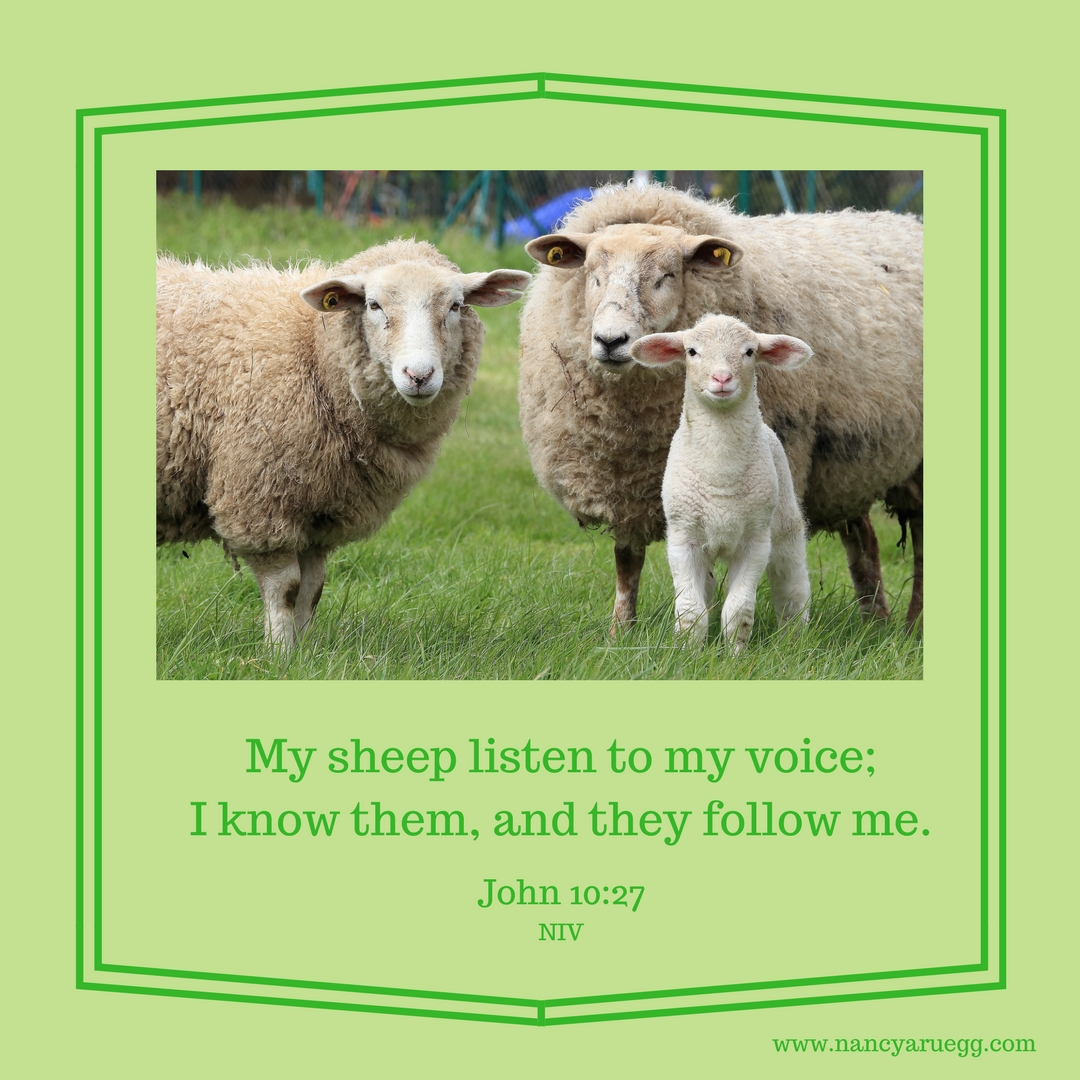
Jesus said, “My sheep listen to my voice; I know them, and they follow me” (John 10:27).

His voice represents wisdom, guidance, encouragement, and security.  Our primary source for those benefits?  The Bible.  But God also speaks to his children in other ways:  through creation, other people, events, even inner impressions.

Times of stillness are necessary.  If every moment is filled with chatter, we will not be able to hear God.

4.  TOUCH

Talk to those who have sought God during a crisis and without exception they will attest to sensing God’s presence with them.  For me, it’s like a holy heart-hug, infusing me with peace of mind and strength of heart.  Not that I am impervious to hurt or discouragement, but the touch of God provides respite and hope.

How?  Through praise and worship, especially as I meditate in the psalms.

5.  SIGHT

“Blessed are the pure in heart, for they will see God” (Matthew 5:8).

The verb tense used here is called “future continuous.”  The verse could read:  “They shall be continually seeing God for themselves.”

I’m reminded of a time Steve and I visited friends at their new home.  We turned off a familiar busy street and were almost immediately surrounded by tall trees.  The homes were set back from the road, barely visible.  The neighborhood was a bit of country set down in the middle of our metropolis.


“Who knew this area even existed?” I said to Steve.  He agreed.

We had both passed that street numerous times, but never saw it.

Isn’t that how it is with God?  We’re so busy, dashing from one task to the next, we never see God at work around us.  We aren’t looking for him so we miss him.

But!  When we are attentive for evidence of God’s presence and power, we will see him!

“When the habit of inwardly gazing Godward 

becomes fixed within us,

we shall be ushered onto

a new level of spiritual life.”

– A.W. Tozer

*     *     *     *     *     *     *     *     *     *

Thank you, loving Father, that you do expand my understanding as I seek to know you more and strive to comprehend more fully the greatness of your glory.  Teach me to use the five senses of my heart to accomplish those goals.  With great anticipation, I look forward to the new levels of spiritual life to which you will guide me!    

(Photo credits:  www.flickr.com (2); www.roshchodeshnewmoon; http://www.canva.com http://www.pixabay.com; www.flickr.com.)

Read Full Post »

Group of sparrows.

Group of sparrows. (Photo credit: Wikipedia)

“Are not two sparrows sold for a penny?  Yet not one of them will fall to the ground apart from the will of your Father…So don’t be afraid; you are worth more than many sparrows” (Matthew 10:29, 31).

Why did Jesus choose sparrows for this illustration?

They’re so small and common.  (Have you ever felt unimportant and ordinary?)

Sparrows were of such little value in Jesus’ day, they were sold two for a penny.  The poor would buy them to eat—a cheap source of protein.

Nobody much cared about sparrows in Bible times; most folks still don’t care today.  They’re just drab little birds we see every day—hardly worth our attention.

But the smallest, drabbest sparrow doesn’t slip by God’s attention.  Not one can fall to the ground without God knowing.  And if he knows and cares about the sparrows, he certainly knows and cares about each of us.  Verse thirty-one makes it clear:  “You are worth more than many sparrows.”

There’s a modicum of comfort in the knowledge that God sees our situations.  To be honest, though, the fact that he just knows isn’t all that helpful.

Better yet is the news that not one sparrow can fall without God’s consent.

Nothing happens to us that hasn’t first received the stamp of approval from God Almighty.

“Wait a minute,” you might say.  “If a sparrow falls, he’s likely to die.  Not much comfort in that either– knowing that God gave his OK!

Here’s what I want to embrace:  we have the mind of Christ (1 Corinthians 2:16b), right?  When it’s my turn to fall off the branch, I want to be able to affirm, “Yes, Lord.  Whatever you think is best is A-OK with me.  I know I can trust you because you love me.  And I rejoice in the promise that whatever happens, you will bring good from it.”   (Remind me of that truth when I start to wobble, will you?)

But here’s the best news:  Notice that Jesus didn’t speak of God as some detached, omnipotent being.

He said, Father.

It is our gracious and kind Heavenly Father who tenderly watches over his little sparrows.

Red Bike

Red Bike (Photo credit: swanksalot)

Think of a loving mother who witnesses her small son falling off his bike.  When he gets up with a scraped knee, she won’t just say, “Oh, I saw that happen, Johnny.  I’m so sorry you’re hurting.”  Small comfort in that.

No, that mother will run to her son, hold him in her arms, talk to him reassuringly, take him to the house, and patch him up.  That’s just what a loving parent does.

When trouble comes, our loving Heavenly Father is right there with us, just like that mother.

He holds us.  Isaiah wrote, “He gathers the lambs in his arms and carries them close to his heart” (40:11).

He talks reassuringly to us, especially through His Word.  With the psalmist, we can pray, “Strengthen me according to your word” (Psalm 119:28b).

God is our refuge and sanctuary; he is our home, our dwelling place. (Psalm 91:1-2).

And God patches us up; he restores our souls (Psalm 23:3).  He renews our energy, purpose, and hope.

So, “Don’t be afraid,” he says. “If I take care of the sparrows, I will most certainly take care of you, because you are worth more than many sparrows.”

See? You’re not small, unimportant, and ordinary–not at all!

*     *     *     *     *     *     *     *     *     *

Thank you, Lord, for not playing favorites.  What glorious news that each of us is precious to you!  Thank you also for being an attentive God who tenderly watches over us.  And especially thank you for being an involved God, always acting on our behalf, and always for our good.  We are in awe of you, our loving, gracious Heavenly Father!    

Read Full Post »

Back in the 1970s I saw Helen Hayes in a made-for-TV movie.  Some of you may recognize her.  She was known as the “First Lady of the American Theater,” beginning her career on Broadway in 1905, when she was only five years old.  In the 1930s, Helen expanded her stardom to films, and finally to television.

The reason she comes to mind now and then is the impression she made upon me, as an energetic, sparkly eyed senior citizen.  I remember thinking, “When I get old, I want to be like that!”

Poof.  Four decades have passed, and I am indeed getting old!  I don’t feel like it, but that doesn’t stop the incessant turning of the calendar pages.

So I was delighted to come across these verses from Psalm 92 that cast aging in a positive light:

“The righteous will flourish like a palm tree, they will grow like a cedar of Lebanon; planted in the house of the Lord, they will flourish in the courts of our God.  They will still bear fruit in old age, they will stay fresh and green, proclaiming, “The Lord is upright; He is my Rock, and there is no wickedness in Him” (vs. 12-15).

Palm trees do indeed flourish, living up to 100 years.  Withstanding heat, drought, and high winds, these trees stand tall and strong; their leaves fresh and green all year long.


What a perfect picture of an energetic, sparkly eyed senior citizen! 

How do we achieve such age-defying qualities? 

First, notice that the righteous will flourish.  When our faith is grounded in God, when we follow his principles for a prosperous life, we flourish.

Like the palm tree that grows straight up toward heaven, the righteous reach for the God of heaven.  That’s how they’re able to stand strong through the winds of change and difficult circumstances.

The psalmist then continues:  “The righteous will…grow like a cedar of Lebanon.”

Majestic cedar trees grow to 120 feet in height and up to 30 feet in circumference.  They provide the perfect picture of a firm, stable person.  Just as the cedar’s roots go deep into the soil, so the righteous person is rooted and grounded in God’s love (Ephesians 3:17).  From those roots comes the nourishment needed to remain strong and spiritually healthy.

Second, notice where these trees are planted:  in the house of the Lord.  They flourish in the courts of our God.

Charles Spurgeon, that eloquent preacher and writer of the 1800s, had this to say about those who dwell in habitual fellowship with God:  “They shall become men [and women] of full growth, rich in grace, happy in experience, mighty in influence, honored and honorable.”  Now that sounds like a very satisfying way to live—so much better than the opposite!

Think of a complaining oldster whose mouth turns down from constant disgruntlement.  His bottom lip protrudes from perpetual pouting, and his brow is permanently lowered into a frown because anger often rules his emotions.  All this negativity has stunted the growth of his maturity.  He’s unhappy much of the time, and is not held in high regard by others.  Do you suppose he ever considers that his way of life is terribly unsatisfying?   

However!  When our lives are centered upon worship of God, as we express gratitude for his blessings, praise for his attributes, contentment for where he’s placed us, and joy in the midst of trials, we become those admirable men and women Dr. Spurgeon described above:  mature, gracious, and happy.

Dr. Spurgeon also added “mighty in influence and honored.  God rewards the righteous aged with “fruit.”  In other words, we may still bring glory to God by our words and actions—well into old age.

We can be:

  • Energetic—with the power of the Holy Spirit
  • sparkly-eyed—with the indwelling of God’s peace
  • grace-filled—with continual demonstrations of God’s love to others
  • joyful—with hearts focused on God’s blessings

These kinds of saints provide a powerful example of God’s faithfulness—through pleasant times and challenges, through plenty and want, year after year.

May we continue to grow deep and stand tall—all the days of our lives.

(photo credits:  www.pachd.com, www.captainkimo.com, www.forestertreeservice.com, www.centrifueleadership.com, www.seniors.ovetoknow.com)

Read Full Post »


Seeking after God.  It’s a concept we come across frequently in scripture.  But God is Spirit; he’s invisible to us.  How do we seek after someone we can’t see?

Perhaps we can answer that question by considering the ways we seek a person, who can be seen.

Example #1:

When my husband, Steve, and I are separated in a crowd, it’s quite amazing how quickly I can spot him.  Beyond height, hair, and eye color, I know the breadth of his shoulders, the way the hair grows on the back of his head, the shape of his ears.  In fact, it’s such nuances as these that draw my attention, even more than the descriptors listed on his driver’s license.

Perhaps our first step in seeking God is to get to know what he looks like, although not his physical Being, since he’s chosen not to reveal himself that way.  But as we read his Word, the Bible, we become familiar with who he is.  Through frequent, thoughtful study—not occasional reading—we learn about his character and his ways.  One guiding question can train us to seek God as we study:  What does this passage teach me about God?

Example #2:

Sometimes I find Steve in a crowd when I hear his voice or the timbre of his laugh.

Step two in seeking God:  We can listen carefully for his voice, although he rarely chooses to speak audibly.  More often he communicates his wisdom and encouragement to us through the Bible, and the voices of wise and mature Christians—spoken and written.

God also speaks directly into our spirits, so we must cultivate the habit of listening carefully for strong but silent impressions.  We can ask God to make clear if those thoughts are indeed from him.  He will affirm.

Example #3:

I know Steve’s signature.  Give me a sheaf of papers with Steve’s name written by different people, and his distinctive style will stand out from the others.

Step three in seeking God:  Look for his distinctive signature of wisdom and power in his people and in God-incidents.

Even in creation, “God’s invisible qualities—his eternal power and divine nature—have been clearly seen, being understood from what has been made” (Romans 1:19).


Take note of the slow loops of a circling hawk, the graceful curve of a flower stem, the straight, tall sentries of a pine forest.  Pay attention to the perfect oval of a ladybug, the teardrop shape of  a milkweed seed, or the mounds of clouds in a summer sky.  You’ll soon find that God loves variety, pattern, organization, beauty, intricacy, and color.  Your heart will begin to respond with wonder and praise for your magnificent, powerful God.

Example #4:

Steve doesn’t even have to be with me, and my thoughts will turn to him.  A song, a phrase, a person who reminds me of someone from our past, and I think, “Oh, Steve would like this,” or, “I’ll bet Steve would agree he looks just like So-and-So.”

Just looking down at my new Mother’s Day watch, and I’m reminded of my thoughtful, generous husband.

Step four in seeking God:  As we get to know God through the Bible, as we learn to hear his voice, as we see his signature everywhere, we find our thoughts turning to him throughout the day.  A song may urge a response of praise.  A phrase might prompt a prayer, a person’s gracious kindness causes us to reflect upon his character shining through that individual.

And every blessing should result in gratitude.

Seeking God is an ongoing, progressional process.  Awareness of his presence grows slowly yet continually.  Perhaps God planned it that way so we always have more delights to discover about our Heavenly Father until we do see him face to face.


Seeking after God can begin with a simple prayer:  God, I want to know you more intimately,  to sense your presence  even though I can’t physically see you.  And I want you to be an integral part of my life and thoughts.  Nothing could be more satisfying than a close relationship with you.  This is what I seek.

That’s my prayer.  Will you seek God with me?  What steps have helped you to seek after God?

(Art & photo credits:  www.experienceproject.com; http://www.luddite1811.blogspot.com; http://www.revelife.com; http://www.finartamerica.com;  www.hullquist.com.)

Read Full Post »

Back in January I wrote a post about meaningful mishaps on the keyboard—typos with significance. Now, four months later, I’ve collected a few more.

Mishap #1:

I meant to type caring, but the screen showed daring. Actually, the two words can be used together in a meaningful way: Sometimes we must be daring in our caring.

My husband, Steve, is a generous tipper. He frequently dares to care with his wallet. Not that we have a lot of money to spare, but we’ve experienced time and again you can’t outgive God. His economy isn’t logical; it’s theological.

Brick Queen Anne

 (Photo credit: TBoard)

A few years ago Steve was traveling out-of-state every few months to visit his elderly parents.  Each time he would stay at a bed and breakfast near the assisted living home. Steve became well-acquainted with the B & B manager and always left her a gracious tip.

In December of 2011, Steve’s dad graduated to heaven. He had served God well and been a mentor to many.  At age ninety-three, he was looking forward to meeting Jesus face to face.

Since we’d be needing several days’ accommodation, Steve called T. to see if she might have a room available for us at the B & B—even though it was very short notice.

“I can accommodate you the first three nights, but that last night, we’re full,” she responded. “However! There is no reason you and Nancy can’t stay with me. My apartment is good-sized, and you’ll have your own suite. In fact, I insist!”

Would T. have made such a generous offer, if Steve had not been so gracious to her? Probably. T is a very giving woman herself. I do know Steve did not give those generous tips in order to receive.

But when we dare to care, God often augments the results.

Mishap #2:

Imagine my surprise to look at the screen and see, not long-standing faith as I’d intended, but song-standing faith.

Turns out, that is quite meaningful. Frequently a song will lift my spirit and affirm my faith. Take Chris Tomlin’s song, Our God. Imagine an energized congregation singing the chorus with passion and volume:

English: Chris Tomlin performing a concert in ...

Chris Tomlin performing a concert in Johnson City, Tennessee, November 2007. (Photo credit: Wikipedia)

And if our God is with us,
Then what can stand against us?
And if our God is for us,
Then who could ever stop us?

Such an experience has a powerful effect. I find myself standing up straighter. The concerns on my mind fade in importance, and my heart fills with confidence. Yes, song-standing faith works wonders! I need to avail myself of the opportunity more often.

Mishap #3:

The word was supposed to be dailyness, referring to the humdrum routine that occupies more of our time than we’d like. Instead, here’s what I typed: dailymess.

32::3 - A messy room

(Photo credit: WarzauWynn)

M-m-m. Another matter that occupies more of our time than we’d like: the messes we have to clean up, the interruptions, the unexpected turns of events. Such moments generate frustration and raise blood pressure. Not good!

So what do we do when the daily-ness of our lives, which is challenging enough, becomes daily-mess?

To begin, song-affirming faith (Mishaps #2) will certainly help. Remember Paul and Silas, missionaries who traveled far and wide to tell others about Jesus? While visiting Philippi, they stumbled into an awful mess, and ended up in prison. For all they knew, they could be killed the next day. And yet at midnight, these two were praying and singing hymns to God (Acts 16:25).

They were accessing song-affirming faith to combat the mess—the unexpected turn of events in their lives.

And why were Paul and Silas in prison in the first place? They had been daring and caring (Mishap #1, above). They had helped a slave girl, enraged the owners, and were arrested. BUT! God intervened in a miraculous way. An earthquake opened the prison doors. Paul, Silas and the other prisoners could have escaped, but didn’t. As a result, the jailer wanted to know about this Jesus they’d been praying to and singing about. He wanted to know how he and his family could have eternal life. The daring and caring of Paul and Silas paid great dividends—more souls for the kingdom of heaven! (See Acts 16 for the whole incredible story.)

Daring and caring. Song-affirming faith. Both combat the daily-mess of life.

* * * * * * * * *

Thank you, Father, for the affirmations you reveal through my keyboard mishaps: 1) You augment daring and caring to produce amazing results, and 2) Song-affirming faith ushers us into your presence where we experience your power and presence, and 3) You provide strength and perseverance to deal with the daily-mess of life.

Hallelujah!  I give thanks to you with everything I’ve got!  Your works are so great, worth a lifetime of study–endless enjoyment!  Splendor and beauty mark your craft; your generosity never gives out, your miracles are your memorial.  You are the God of Grace and the God of Love!  (Taken from Psalm 111:1-4, The Message.)

Read Full Post »

Hardship

Hardship (Photo credit: Wikipedia)

On Monday our starting point was Acts 14:22: “We must go through many hardships to enter the kingdom of God.” Not exactly an encouraging affirmation, is it!

But we discovered that problems can actually be opportunities—opportunities to improve our perspective, foster appreciation, and draw us closer to God.

Another benefit? Problems build character.

And why is that a valuable endeavor? Wise King Solomon answered that question eons ago: “I know, my God, that you test the heart and are pleased with integrity” (1 Chronicles 29:17).  That means,  when I face problems with integrity, I bring pleasure to my Heavenly Father.  Now that’s a goal worth pursuing.

integrity

integrity (Photo credit: glsims99)

Integrity is firm adherence to a code or standard of values. The one and only true standard is God’s standard, laid out in his Word.  Integrity includes righteousness, courage, perseverance, and faith–character traits that don’t develop without pressure.

The key is to live within the spiritual realm with him. Then the physical realm becomes less important. It’s as if we exist in an alternative reality. No wallowing in self-pity. No rehashing the negative aspects of the situation. No time wasted considering the “what-ifs.”

Instead we “count it all joy when we meet various trials” (James 1:2). How?

1. Practice his presence by speaking to him throughout the day.   Keep rehearsing God’s attributes. Remember all his benefits. Think of the blessings he has already provided.

2. Acknowledge those little demons of worry, shame, or inadequacy. Call them by name and present them before God. Notice how they cower as God proclaims his everlasting love (Jeremiah 31:3). Watch them retreat as he affirms his infinite power (Jeremiah 32:27).

3. Anticipate what God might accomplish through these difficult circumstances. Wonderful possibilities exist as he sends us in new directions and uses us to minister to others.

No doubt there are more steps we can take. But these offer a good start. And what will be the result? Difficulties develop perseverance, and perseverance produces maturity—the one positive character trait that covers them all (James 1:2).

Heavenly Father, you know even better than I how easy it is to verbally affirm these truths; it’s another to live by them moment by moment. I still have much to learn about counting it all joy in the midst of trials. But I do aspire to be a mature person, able to say, “It is well with my soul.”   No.   Matter.   What.   Thank you for continuing to work on me, for never giving up.

IT IS WELL

IT IS WELL (Photo credit: Amydeanne)

Read Full Post »

« Newer Posts - Older Posts »

When the House is Quiet

Impressions Becoming Expressions

Mitch Teemley

The Power of Story

Still Traveling

Impressions Becoming Expressions

Living Our Days

Gaining a heart of wisdom

He Said What?!

I'm Patty, and my husband and I are living with our adult son who has autism and epilepsy. I love sharing lessons learned from life around me, especially life with Aaron.

Meditations of my Heart

Impressions Becoming Expressions

Linda Stoll

Impressions Becoming Expressions

Signora Sheila

Notes on Life, Faith & Italy

Heidi Viars

Finding the Image of God