Feeds:
Posts
Comments

Posts Tagged ‘Spiritual Maturity’

Perhaps you too watched the episode of Antiques Roadshow when an appraiser analyzed a Kintsugi bowl.

This ancient Japanese art form involves mending broken pieces of pottery with gold or silver. The glimmering veins resurrect the ruins to create a beautiful work of art.

Such a transformation offers imagery for what happens when we allow the golden work of Christ to mend our brokenness from failures, sins, and shortcomings. As a result, each of us becomes a masterpiece [1].

But what about Jesus’ instruction, “Be perfect as my Heavenly Father perfect”[2] and all the itemized directives for Christian conduct in the New Testament—all 1,500 of them, give or take?

I can’t possibly measure up to such a standard, so what’s a cracked pot like me supposed to do? Is the pure gold of Christ’s work (on my behalf at his crucifixion, and in my life now) enough to make me acceptable to God, considering my faults and failures?

We’d do well to remind ourselves often: just as family members love one another in spite of shortcomings and wrongdoing, our Heavenly Father does the same.

Note the above verse doesn’t say the Lord has compassion only on those nearing perfection.

Then what did Jesus mean when he instructed us to be perfect?

The Amplified Version offers clarity for that key word:

“You, therefore, will be perfect [growing into spiritual maturity both in mind and character, actively integrating godly values into your daily life], as your heavenly Father is perfect.”

Matthew 5:48 AMP

‘You see? Jesus isn’t requiring angelic perfection; he’s directing us toward full spiritual maturity.

Jesus would also direct us away from unrealistic expectations.

Some think that unless we’re . . .

  • spending long hours in Bible study and prayer
  • attending every pertinent service and event at church
  • serving those around us
  • extending hospitality in our homes
  • discipling and mentoring others
  • sharing with everyone in need . . .

. . . we’re not doing enough for God.

So when is enough enough?

I’m reminded of the time I sat in the pediatrician’s office with one of our children when a young mom from our church, Nicole*, walked in with her infant son. Sagging shoulders and dark eye-circles gave evidence to the truth about parenting a newborn: it’s exhausting.

But this Mama was dealing with even more: another son, age three (whom Daddy was babysitting at that moment), and a full-time job. She worked nights as a nurse, and her husband worked days so they could avoid childcare costs.

Somehow Nicole was surviving on naps here and there, and a few hours of sleep before her shift, once her husband got home.

During our conversation, Nicole confessed it had become nearly impossible to spend quiet time with God in Bible study and prayer, and she felt terribly guilty.

In that moment God brought to mind an image of my loving, earthly father. If I were in Nicole’s situation and said to him, “Dad, I’d come see you in a minute, but with things the way they are right now . . .”

I knew what he’d do. Dad would interrupt and say, “Don’t worry–I understand! I know you love me, and you know I love you. When your schedule lightens up, then we’ll get together for an extended visit. For now, I’m delighted in these quick phone calls.”

I told Nicole, I think our heavenly Father would respond in the same way. (Remember Psalm 103:13 above?) Her heart was in the right place; she longed to spend quiet hours with God.

But in her current situation, it was perfectly fine to postpone such a plan until that debilitating season ended. Our God of grace understood; there was no cause for guilt.
Our God of grace would have us let go of perfectionism and unrealistic expectations.

He’d have us delight in the golden work Christ has done and continues to perform in our lives [3].

And though we do press on to live by God’s wise ways, he would have us embrace the beauty of imperfect perfection [4].

Like a Kintsugi masterpiece.  

*Not her real name


[1] 2 Corinthians 3:5; Ephesians 2:10 ISV

[2] Matthew 5:48

[3] 1 Peter 1:3-5; Philippians 1:6

[4] Philippians 3:12-14; Lamentations 3:22-23

Photo credits: http://www.commons.wikimedia.org; http://www.heartlight.org; http://www.pexels.com/Tima Miroshnichenko; www. rawpixel.com; http://www.pexels.com/Alexander Dummer; http://www.pxhere.com/Forrest Cavale; http://www.commons.wikimedia.org./Ruthann Hurwitz.

Read Full Post »


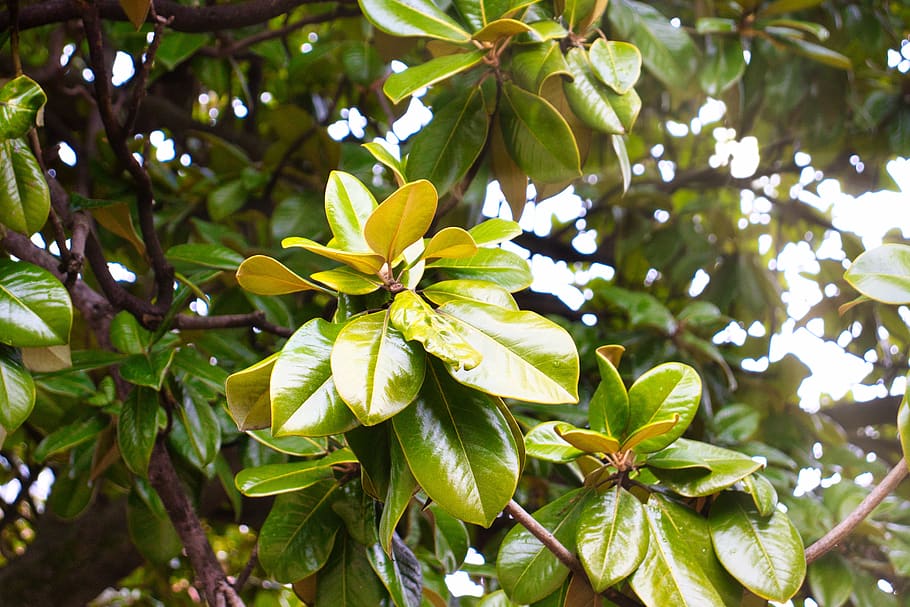
Our older son and his family enjoy a large magnolia tree in their backyard. Every spring it explodes into a breath-taking mass of pink and white blossoms, each one at least six inches across.

Unfortunately the dazzling display doesn’t last long. The petals soon fall to the ground, and thick, dark leaves begin to take their place. But when summertime heat arrives the family is grateful for the cool shade of that dense foliage.


In autumn, as the leaves take their turn to fall, the flower buds for the next spring become more visible. Compared to those on other flowering trees or plants, these are already about two inches tall—even in October. To form them, magnolias take full advantage of the sun’s energy during the summer months (1).


All winter long, those buds proclaim silent promise of the divine flowers to come. And then in March or April, as the days have lengthened and warmed, the furry buds begin to split open, offering a glimpse of their tightly-spiraled petals—a precursor of the stunning transformation just days away.


Were we to celebrate the magnolia tree for those few days she’s dressed in her chiffon-pink finery, we’d miss out on the joy of her shady embrace in summer and those hope-filled buds through fall and winter.

There is beauty in the becoming—whether it’s magnolia trees or people.


If those magnificent buds were capable of emotion, they would no doubt look forward to the glorious reveal in spring. Thankfully, we humans can anticipate our desires being fulfilled. And as God’s children, one of those desires is spiritual maturity–the day when we’ll be wise and self-sacrificing, calm and patient, peaceful and contented–to name a few traits we aspire to.


But if we’re always focused on the future, we’ll miss the wonder of what God is doing now. The question becomes, what can we celebrate as God carries out his beautification process within us? Here are two categories of possibilities to get us started.

1. Celebrate the moments when the fruit of the Spirit are on display.

For example, over the last few days can you think of occasions when you:

  • Spoke kind words or affirmation to others?
  • Shared the gift of smiles and perhaps laughter?
  • Held your tongue when tempted to argue?

Then you brought a bit of love, joy, and peace to others. Hurray for you!


2. Take note of the times when biblical truths guide your actions.

Again, review the last few days for such examples as these:

  • You found your mind wandering into negativity, then made an about-face when you remembered your goal to focus on everything excellent (Philippians 4:8).
  • You apologized for speaking harshly to someone, instead of pretending the offensive tone didn’t matter (Ephesians 4:2).


  • A stunning feature of creation grabbed your attention, and your first thought was to worship God for his incredible handiwork (Psalm 92:4).
  • The moment you recognized God’s protection, provision, or blessing, gratitude welled up in your spirit (Psalm 126:3).


Celebrate the growth of a renewed mind, humility, praise, and gratitude. You’ll be reinforcing the behaviors that contribute to your beautiful becoming.


“Growth, though silent as light

is one of the practical proofs of health.”

–Charles Swindoll (2)


Note Swindoll says growth is a proof of health—not perfection.

And when we honor God as the impetus behind the progress, we enliven our faith for the next steps of beautification he has in mind.


“Little by little

as God’s sanctifying grace works in us,

more territory of our lives becomes his.”

–Herbert Lockyer (3)


Right now we’re enduring the long winter of our development, but spring will come.


“He who began a good work in you

will carry it on to completion

until the day of Christ Jesus.”

–Philippians 1:6 NIV

(emphasis added)


*     *     *     *     *     *     *     *     *     *


I praise You, Almighty God, that as we grow in trust and surrender to you, we will become more like your Son, Jesus Christ. Day by day you are engineering experiences to that end. Thank you also we can enjoy the anticipation of that glorious day, when the beauty of becoming will finally be complete.


Notes:

  1. https://www.chicagotribune.com/lifestyles/home-and-garden/ct-sun-0226-garden-morton-20170221-story.html
  2. The Quest for Character, Multnomah Press,  1987, p. 172.
  3. Seasons of the Lord, Harper & Row, 1990, p. 351.


Photo credits:  http://www.pxfuel.com (2); http://www.pickpik.com; http://www.pikrepo.com; http://www.pixfuel.com; http://www.dailyverses.net; http://www.pixy.org; http://www.heartlight.org; http://www.wikimedia.org; http://www.pikist.com.


Read Full Post »


Unknown

(“Beautiful young people are accidents of nature, but beautiful old people are works of art.” – Eleanor Roosevelt)


Can I get an “Amen?”

For those of us who’ve reached the fifth decade and beyond, Eleanor’s words give us a worthy goal: to become lovely masterpieces as we age.

Obviously she’s not talking about the artistry of a plastic surgeon’s facelifts and tummy tucks. I don’t think such procedures were even being performed in her generation.   Besides, the most successful procedures provide only temporary changes. I’ve never seen a ninety-year old who looks twenty-one, have you?

But if you Google the phrase, “aging gracefully,” you’ll find a long list of articles about stalling the aging process—on the outside.  Eat right, exercise, get seven to eight hours of sleep each night, etc.  Where are the essays about becoming more lovely in heart and spirit as the decades pass?

No doubt Eleanor was referring to those who have achieved this kind of beauty–those gracious elders who listen, encourage, and speak positively.  And I dare say, such folks are most often Christians who have grown in faith and spiritual maturity over the years.

Their eyes twinkle from the Light within. And those radiant lines that fan out from the corners? Son-beams.

In fact, His name is often on their lips, because their thoughts turn to him so consistently. Jesus is an intimate Friend.

In addition, the joy of the Lord is their strength—perhaps not in body, but in soul. It shows in a delightful sense of humor and frequent smiles. Joy is also expressed in continual gratitude and praise.

These dear ones learned self-discipline along the way. Those ugly traits of bitterness, complaining and negativity are nowhere in sight. And never do you have to endure a long soliloquy that begins, “Back when I was young…”, that goes on about how much better or tougher life was decades ago.

Wise elders realize the value of influence, and the power of positive memories for the younger generations. They know that integrity and faith are best taught through example—examples that live on long after the elders graduated to heaven.

And as such saints delight in God and minister to others, they discover contentment—even as aches, pains, and deficiencies overtake their bodies.

They are true masterpieces, according to the definition: outstanding, superlative, ingenious works of art.

Masterpieces don’t just happen; they are the result of: 1) informed skill, 2) extended time, and 3) concentrated effort.

Similarly, beautiful seniors are the result of: 1) living by Biblical principles, 2) trusting in God day after day, and 3) practicing his presence moment by moment.


*     *     *     *     *     *     *     *     *     *


Father, thank you for taking up your paintbrushes and paints to create a pure and beautiful spirit within me (Psalm 51:10). But it’s also true I must be a willing and active participant. May I not lose heart and invite your Spirit to refresh me every day. May I be mindful that “what is seen [like outward beauty] is temporary, but what is unseen [a pure heart] is eternal (2 Corinthians 5:16-18). May I be focused on the latter.

(Photo credit:  www.groups.yahoo.com.)


Read Full Post »

“It is good to wait quietly,” Jeremiah said (Lamentations 3:26a).

At the risk of sounding impudent, “What’s good about it?”

Waiting can make us feel anxious and stressed.  If we’re waiting for a prayer to be answered or a scriptural promise to be fulfilled, we can become doubtful, discouraged, and despondent.  Not good.

Yet the act of waiting seems important to God.  Numerous times in the Bible we see people of faith who had to endure Wait Time:

  • Abraham and Sarah waited 25 years for the birth of Isaac.
  • Jacob waited 14 years to take Rachel as his bride.
  • Joseph waited 13 years, first as a slave, then as a prisoner, before being rescued and elevated by God to second-in-command over Egypt.
  • The Israelites waited through 400 years of slavery in Egypt before God’s miraculous intervention.

  • Caleb waited 45 years to inherit his portion of the Promised Land.
  • David waited at least 15 years to become king of Israel, after his anointing by Samuel.
  • Simeon, Anna, and many other Jews waited for their Messiah.

God’s delays must serve a purpose.  And a diligent search through scripture gives us answers to:  What good can come from waiting?

  • Times of waiting strengthen our trust in God and our resolve (Psalm 27:14).  If every day was problem-free and blissful, surely our faith would remain shallow.
  • We grow in our relationship with God while resting in his sovereignty and reliability (Psalm 62:5-8).  The Almighty of the universe becomes our closest confidant.  Intimacy with him deepens as we turn to him for comfort, encouragement, strength, and more.

  • Spiritual maturity develops (James 1:2-4).  Waiting is a challenge all by itself, but can also be accompanied by worry, pain, and sacrifice.  The test of waiting, however, develops our patience and perseverance and gives us opportunity to grow in character.  None of these benefits would blossom within us if God provided for every whim, and rescued from every trial.
  • We learn to take joy in the blessings we already have.  Paul wrote, “Be joyful always” (1 Thessalonians 5:16) to a church experiencing persecution.  They were undoubtedly praying and waiting for relief.  But Paul knew that focusing on what Christ had already done for the believers, and the benefits they already enjoyed, would help offset their anxiety and frustration.  The same is true for us.
  • Others see our patience and trust while we wait (Psalm 40:1-4).  Then, when God answers our cries, others take note of his provision, and their faith is encouraged.

It seems we’re always waiting for something; it’s only the intensity of emotion attached to the waiting that tends to vary.  When that intensity begins to grow, perhaps it would help to say, “I’m waiting with great anticipation!

There can be sweet delight in anticipation.  For example, as the Christmas holidays approach, I anticipate the glorious homecoming of family members.  I relish the imaginings of long conversations at the candle-lit dinner table, the hugs and laughter, and the gathering around the Christmas tree for family worship and gift-giving.

I need to apply that joy of anticipation to waiting on God.  I can relish the fact that his plan – including the Wait Time — always includes positive aspects.  I can reaffirm that God is always on time – never late, never early.  I can generate excitement in my spirit by musing on God’s promises and looking forward to the creative, miraculous ways he will fulfill those promises.  With an attitude of anticipation, waiting shouldn’t be nearly so uncomfortable.

(You have my permission to remind me of that, should impatience or frustration start to manifest themselves!)

*     *     *     *     *     *     *     *     *     *

Heavenly Father, I don’t think I’ve ever thanked you for the Wait Times in my life.  Thank you for holding me back, so trust, intimacy, gratitude, patience, and spiritual maturity have a chance to grow.  Help me to embrace the Wait Times as opportunities to discover more of who you are, more of the priceless treasures hidden in your Word, and more of who I can be when I am rooted and built up in you (Colossians 2:7)—especially through times of waiting.

(Art & photo credits:  www.bible-stories-library.com , http://www.moseseditor.blogspot.com . http://www.photosbyravi.com , http://www.pinterest.com.

Read Full Post »

Still Traveling

Impressions Becoming Expressions

Living Our Days

Gaining a heart of wisdom

He Said What?!

I'm Patty, and my husband and I are living with our adult son who has autism and epilepsy. I love sharing lessons learned from life around me, especially life with Aaron.

Meditations of my Heart

Impressions Becoming Expressions

Linda Stoll

Impressions Becoming Expressions

Debby Thompson

Impressions Becoming Expressions

Signora Sheila

Notes on Life, Faith & Italy

Colleen Scheid

Writing, Acting, Living in God's Love

Mitch Teemley

The Power of Story

Heidi Viars

Finding the Image of God