Feeds:
Posts
Comments

Archive for the ‘Encouragement’ Category

Years ago my mother worked as secretary to a publishing company vice-president.  One spring she was invited to attend a goal-setting retreat with those in leadership. Her job was to take notes.


During the first session, the facilitator (We’ll call him Jim.) included some clarifying questions about the mission of the company.   Mom didn’t expect to participate, so she was caught off guard when Jim invited her to share. She confessed to feeling out of place and unqualified to contribute. After all, she was only a secretary.

But editor-in-chief, Bernice, exclaimed, “Why, Geri! You shouldn’t feel that way!”

Jim suggested that Bernice tell Mom why her input was important, why she was a valuable part of the team.


(A-Z Quotes)


Perhaps Bernice mentioned a few of the gifts I noticed in Mom: her creative problem-solving ability, astute interpersonal skills, and proficiency at organization.

Whatever Bernice said, the compliments embarrassed Mom but validated her deeply. Bernice had never before shared what she saw in Mom.

Jim explained that citing specific reasons, rather than simply telling someone not to feel a certain way, can more effectively foster a change of mindset.

So in light of that facilitator’s advice, I won’t tell you that God thinks you’re pretty terrific.

Let me show you from his Word what he sees in you.

For example:

God sees you as precious and honored because he loves you.


That love is not just collective for all humankind, but individual and unique—just for you.

God sees and loves you—the one who handles a myriad of details so someone else can be in the spotlight.

He sees and loves you—the one who swipes up messes hither and yon, parades laundry baskets to and fro, and traipses dishes from washer to shelf, day in and day out.

He sees and loves you—making those calls, writing those notes, pausing to listen to sales clerks and restaurant servers.

But on any given day, you may not feel particularly precious or honored—when frustration boils over into unkind words, impatience leads to anger, or unfair treatment curdles into self-pity. How can God see anything precious and honored in that?  Perhaps it’s because he’s focused on his vision for you, his work in you.

Remember,

God sees you as his child.


And like any loving parent, he delights in every step of growth, every benchmark of progress. With pleasure and pride he is cheering you on.

Also,

God sees your heart.


Perhaps that statement evokes guilt, as it did in me for many years. I contemplated the ways I disappointed God, even failed him. But there’s a positive side to that statement. Our Heavenly Father sees our good intentions, our desire to obey him, our attempts to practice his presence with praise and gratitude.

And just as we would never reject a misspelled, wobbly-lettered love note from a child, God never rejects our sincere efforts.

Furthermore,

God sees you as his masterpiece, a stunning, one-of-a-kind design (Ephesians 2:10).


He chose the colors of your personality, the form of your life-chapters, the line of movement from child to maturity, and the spaces both negative and positive that contribute to soul growth.

God also chose a particular place for you in his world-size gallery where you could best display his artistry. And like all beautiful handiwork, you evoke joy in the heart of your Maker.


Indeed, it is holy, precious perfection that God sees in you.


(Photo credits:  http://www.hanscom.af.mil (Todd Maki); http://www.azquotes.com; Nancy Ruegg; http://www.dailyverses.net; http://www.heartlight.org; http://www.flickr.com.)

Read Full Post »

English poet, William Blake (1757-1827) penned those words of the title.

We don’t have to look far to see that he was right:

  • Children pick up mannerisms, inflections, even body language from their parents.
  • Couples who have been married a long time often begin to look alike (1).
  • Transplants to another part of the country frequently pick up the accent of that region.

In addition, modern neurological research has proven Mr. Blake’s statement in ways even he never imagined.

Here’s what scientists have discovered: Thoughts travel along specific pathways to various destinations in our brains. As we consider the same thought frequently, the pathway for that thought becomes more deeply entrenched. The final result? The more often we contemplate something, the more it will affect our thought patterns, how we feel, and how we behave (2).

No wonder God inspired Paul to write:

According to that research mentioned above, to behold (observe and take in) such things as Paul lists will lead us to become honorable, pure, admirable, etc. In fact, we’ll gradually begin to resemble Jesus.

But how do we contemplate the Lord’s glory on a day-to-day basis? How do we train our thoughts to etch worthwhile pathways in our brains, so we’re thinking, feeling, and behaving in Jesus-like ways?

To begin, we might check the stimuli for our thoughts:

  • the book(s), magazines, and websites we read
  • the programs and movies we watch
  • the music and podcasts we listen to
  • the kind of entertainment we choose
  • the conversations we participate in—in person and on social media

Can we describe these activities with the adjectives Paul used in Philippians 4:8? Is our reading material pure? Our entertainment admirable? Our conversations worthy of praise?

O God,

Second, we set aside a quiet time with God each day.

It’s surely one of the loveliest and most excellent activities for beholding him, as we immerse ourselves in truth for life from his Word, revel in his glorious attributes, and talk to him about the concerns on our hearts.

“Look up into his lovely face and as you behold him,

he will transform you into his likeness.

You do the beholding—he does the transforming.”

—Alan Redpath

Third, we infuse the hours of each day with praise.

All those descriptors in Philippians 4:8 apply to Jesus. Day in and day out we can enjoy the uplift of praise, celebrating that he is:

  • the epitome of truth (John 14:6).
  • honorable and worthy of all tribute, because he lived a sinless life and sacrificed himself on the cross for us (Revelation 5:12).
  • right in all he does (Jeremiah 23:5).
  • pure in all he is (1 Peter 2:22).
  • lovely, as the radiance of God’s glory (Hebrews 1:3).
  • admirable, as the only man tempted in every way and yet never sinned (Hebrews 4:15).
  • excellent in all ways, including his servitude, humility, and obedience (Philippians 2:6-8).
  • praiseworthy, as ruler of all things (Matthew 28:18).

In addition, Jesus was a man of peace, joy, wisdom, kindness, courage and more (3).

And God wants us to be the same, to become like his Son (Philippians 1:6).

Can you think of any greater aspiration?

_______________________________________________

Notes:

  1. One theory to explain this phenomenon: We unconsciously mimic the facial expressions of our spouses, as we empathize with their experiences and emotions. Over time, repeated expressions shape our faces in similar ways.
  2. https://www.maxanders.com/we-become-what-we-behold.
  3. John 14:27; John 15:11; Luke 2:40; Matthew 9:36; Philippians 2:8.

Art & photo credits:  http://www.pxhere.com; http://www.heartlight.org; http://www.dailyverses.net; http://www.pxhere.com; http://www.canva.com; http://www.pxhere.com; http://www.canva.com.

Read Full Post »


Some believe that indulging in memories is a waste of time, that past events have no meaning for the present. But nothing could be further from the truth— especially if we acknowledge God’s part in those events.

When we include God in our remembering:

  1. We gain a sense of perspective.

Even difficult times are part of God’s plan. Sometimes, with the gift of hindsight, we catch a glimpse of his purpose later.

For example, how many students have struggled through school, yet in adulthood flourished in careers well matched to their gifts? Most of them are actually thankful for the early challenges, because they learned perseverance and developed strength of character. Those late-bloomers are often compassionate and understanding toward other strugglers, because they remember the difficulties of those formative years.


  1. We acquire wisdom for today.

“Reflective thinking turns experience into insight.”

–John Maxwell

In my younger days I used to be a champion talker. But somewhere along the way I began to notice the listeners—caring folks who often demonstrated the gentle and quiet spirit Peter spoke of (1 Peter 3:3). They reminded me of my sweet grandmother.

I valued that demeanor and began to turn insight into a new experience of focused listening. (Please understand: practice hasn’t achieved perfection yet. But improvement? Yes.)


  1. We build a foundation of stability for today as we remember God’s grace and faithfulness in the past.

But memories easily fade. So some believers keep a book of remembrance or a praise journal, as a way to savor God’s faithfulness.

Just for fun, I randomly opened my loose leaf praise journal in search of an entry to share with you. Here’s what I wrote, December 23, 2003, about our older son, who was in college at the time:


(“Eric got a new job yesterday and it starts today! The owner of the bike shop has not paid Eric for ten days, but a friend offered him a job in their family’s fireplace shop at the same salary.”)

Entry after entry highlight God’s provision, protection, and guidance through the years. And each memory contributes to my foundation of stability.


  1. We foster gratitude in our hearts.

As you can see, the entry recorded above ends with: “Thank you, Lord, for answering our prayers and providing for Eric.”  Joy just naturally overflowed into appreciation.

On the opposing page I wrote, “I am overwhelmed, Lord, by this continuing string of blessings. You are SO good to us, always demonstrating your faithfulness and grace. May your praise continually be on my lips!”

Research has now proven a number of benefits of gratitude.*  But surely one of the best: it nurtures a contented soul.


  1. We can turn remembering into a beautiful act of worship. 

That’s exactly what scripture invites us to do: 

“Rejoice in all the good which the Lord your God has given to you and your house” (Deuteronomy 26:11).

Praise the name of the Lord your God, who has done wondrously with you” (Joel 2:26b).

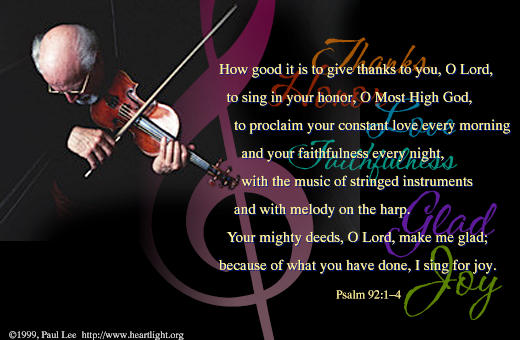
“You make me glad by your deeds, O Lord; I sing for joy at the works of your hands” (Psalm 92:4).


Such glorious cause and effect! Remembering God’s wonderful deeds of the past turns our hearts to worship, which causes a powerful, positive impact on the present.


  1. We can tell our stories of God’s miracles and mercies, to encourage the faith of others and refresh our own.

Scripture invites us to do that too: 

“I will tell of the kindness of the Lord, the deeds for which he is to be praised, according to all he has done for us” (Isaiah 63:7).

.


So let’s begin here! Please share in the comment section below about a kindness, miracle, or mercy of God from your memory. And together we can praise the name of the Lord who has worked wonders for us!


* Another post details some of those benefits, “Happiness.”


Art & photo credits:  http://www.flickr.com; http://www.nellis.af.mil; Nancy Ruegg (3); http://www.heartlight.org.


Read Full Post »


“Oh, what a beautiful tree!” my mother-in-law exclaimed with enthusiasm. Her comment referred to a tall bush, planted near the house and visible outside our kitchen window. “What’s the name of it?” she asked.  Being from Ohio, Mom wasn’t familiar with some of the unique foliage of South Florida.

“That’s a sea grape,” I told her. “It’s actually a shrub, but they can grow quite tall.”

“Well, it’s lovely. Such big leaves!”

Now clearly there’s nothing remarkable about this conversation, until you know that Mom had asked the very same question with the very same enthusiasm every morning of her visit. And each morning I supplied the same answer.  Mom was in her late 80s, and her dementia was becoming more and more noticeable.

Mom’s fresh outlook each morning reminded me of Lamentations 3:22-23:


The faithful love of the LORD never ends!

His mercies never cease.

Great is his faithfulness;

his mercies begin afresh each morning (NLT).



Just as Mom brought new enthusiasm to each morning, so God brings new mercies for each day. Yes, the challenges we faced yesterday required wisdom, strength, and perseverance. But today we’ll need a fresh supply.   Praise God he never runs out of such gifts; he is always able to provide.

In the same way, God’s new mercies for today are not meant to be sufficient for tomorrow. In other words, we shouldn’t expect to feel ready this morning for the potential challenges of the future—much as we’d like to. (Who hasn’t wished to know now exactly how the next day or week will unfold, and how best to respond?)

Instead, our wise and loving Heavenly Father has chosen to lead us one day at a time, to protect us from being overwhelmed, easy prey to depression and paralyzed by fear.

No, our best course of action is to avail ourselves of God’s mercies for this one day. As for tomorrow, we can trust God to supply new mercies, more than sufficient for whatever we might face when the time comes.


I’m remembering Corrie ten Boom. (Maybe this post brought her to your mind, too.)



Corrie and her family suffered cruel hardships in the concentration camps of Nazi Germany, as a result of helping Jews escape the Holocaust.

After the war, people would often say to Corrie, “I wish I had such great faith as yours. I could never live through the experiences you survived.”

Corrie would tell a story to explain.

When she was a child, Corrie happened to see a dead baby. A terrible fear gripped her that one of her family might also die. When Papa ten Boom came to tuck her in that night, she burst into tears.

“I need you!” she sobbed. “You can’t die!”

Her sister, Betsy, explained why Corrie was so afraid.

Papa asked, “When you and I go to Amsterdam, when do I give you your ticket?”

“Just before we get on the train,” she responded.

“Exactly,” Papa replied. “And God knows when you’re going to need things, too. Don’t run out ahead of him, Corrie. When the time comes that some of us have to die, you will look into your heart and find the strength you need—just in time.”

Papa ten Boom was proven right. When Corrie needed supernatural strength, God did provide. We can rest assured that his mercies will be new and fresh each morning for each of us–just in time.


*     *     *     *     *     *     *     *     *     *


I praise you, Lord God, that we can face each day with fresh enthusiasm, because for every trial, you have prepared great mercies of endurance, strength, and wisdom.

I thank you that in the midst of trouble, you also provide blessings: a more acute awareness of your presence, peace that defies explanation, family and friends to come alongside, miraculous provision, and delightful surprises to make us smile.

You are more than a sufficient God; you are an abundantly gracious God!


(Revised and reblogged from 5-28-15.  Photo credits:  http://www.flickr.com; http://www.heartlight.org; http://www.canva.com; http://www.wikimedia.com.)



Read Full Post »

Jesus made it perfectly clear: “Surely I am with you always, to the very end of the age” (Matthew 28:20b, emphasis added).

And in our minds we affirm that truth. Yes, he’s invisible, but we know God is involved in our lives. We look back over our personal histories and see evidence of his work, as he engineered circumstances for our good.

But sometimes our emotions long to feel his bodily presence.   Wouldn’t it be wonderful, we daydream, if he literally took us by the hand, put his arm around our shoulders, or pulled us toward him in a close embrace?

Sometimes our ears long to hear his voice, telling us loud and clear exactly what step to take next, encouraging us we’re headed in the right direction, or offering perfect words of comfort that assuage our pain.

And sometimes our spirits long for assurance of his love in spite of our frailty, that progress in maturity is occurring, and the trials we face today will have meaning tomorrow.

There have been close encounters. Every now and then we’ve come within an angel hair of his touch—he felt that close. We’ve received impressions so strong they’ve almost been audible. And we’ve sensed his affirmation in our spirits that immediately settled our uncertainty for the moment.

But in between those intermittent occasions, our Heavenly Father would have us exercise a bit of faith (1) and take to heart what he’s already told us—truths such as these:

God isn’t even the width of an angel hair away from us. Remember the passage where Jesus declares he is the vine and we are the branches (John 15:5)? Just how far is the branch from the vine?

Exactly.

And because he’s right there, we can face uncertainty. God is no cheerleader, standing on the sidelines and shouting encouragement. He’s promised to be deeply involved, to strengthen, help, and support (Isaiah 41:10).

God hasn’t lost his voice. He most often chooses to communicate with us through his written Word. But sometimes he speaks to us through other Christians—their writings or spoken words. And he still implants impressions into the quietness of our souls—if we sit still long enough to listen.

Writer and theologian, Mike Yaconelli was probably right:  “The problem isn’t that God has stopped speaking; it’s that our lives have become louder.”

God wastes nothing.  Every event, every relationship, every circumstance has potential for meaning and  benefit somewhere down the road—including mistakes, disappointments, our own poor choices and those of others.

They become transformational moments to develop our maturity and prepare us for opportunities to come.

Consider:

  • Moses, once prince of Egypt, reduced to tending sheep for forty years. Yet God chose him to lead his people out of slavery.
  • Young Daniel, taken captive to live faraway in a strange culture. Yet God’s plan included his rise to provincial ruler in that land.
  • The man born blind, in order to one day display the work of God in his life (John 9, especially v. 3).

God doesn’t require hoop-jumping. We don’t have to conjure up articulate prayers to access his presence or follow a prescribed set of steps to avail ourselves of his guidance, comfort, and power.

Even the simple act of speaking Jesus’ name invokes all that he is and all that he can do (John 16:24). How reassuring to know: “When there are no words, when there is no strength, there is always his Name” (2). God intends for us to use it.

Finally, and most encouraging:

God is on our side.  We.  Cannot.  Lose (Romans 8:31-37).

Now the question becomes: Will we move forward on what we know, or stagnate because we cannot see, hear or touch?

Notes:

(1) Faith is a quality God greatly values. “Without faith it is impossible to please God” (Hebrews 11:6). But all it takes is the equivalent of a mustard seed (Matthew 17:20), and our God can move mountains of insurmountable difficulty!

(2) Marilyn Meberg, Boundless Love

Art & photo credits:  http://www.flickr.com (Salvatore Gerace Tuscan); http://www.pixabay.com; http://www.photolib.noaa.gov; http://www.wikimedia.com; http://www.canva.com.

Read Full Post »

See if this biblical statement surprises you as it did me:


“The Lord protects the simplehearted.”  Isn’t that puzzling? I thought scripture warned us against Simple Simon behaviors.

For example, the book of Proverbs speaks repeatedly about the folly of naiveté, foolishness, and recklessness:

  • “A simple man believes anything, but a prudent man gives thought to his steps” (14:15).
  • “The simple inherit folly, but the prudent are crowned with knowledge” (14:18).
  • “A prudent man sees danger and takes refuge, but the simple keep going and suffer for it” (22:3).


God does not generally protect those given to foolishness. More often he allows foolish behaviors to point out our need of him. Clearly simple of heart must mean something else.

I turned to other translations, to see what terms they may have used, and another surprise awaited me. Seven different translations chose seven different descriptors.

The simplehearted are:

  • Unwary (New International Version, 2011)
  • Helpless (Good News Translation)
  • Innocent (New English Translation)
  • Inexperienced (Holman Christian Standard Bible)
  • Ordinary (Contemporary English Version)
  • Defenseless (GOD’S WORD® Translation)
  • Those of childlike faith (New Living Translation)


M-m-m. Those are not particularly desirable qualities in our culture. We tend to value shrewdness and self-reliance, sophistication and exceptionality, strength and power.

But simplehearted is a positive trait in another culture–the kingdom of God–where those with childlike faith are commended (Matthew 19:14).

Further consideration reveals why the simplehearted are in need of protection. At any given time, we are:

  • Unwary of potential danger caused by our enemy, Satan
  • Caught in troubling situations with no means of escape
  • Blameless yet accused (Consider false guilt part of this category)
  • Amateurs in applying God’s Word to the hard choices of life
  • Trapped on the treadmill of humdrum routine
  • Vulnerable to burnout, discouragement, jealousy, anger—you name it


Did you see yourself among those descriptors? I sure do.

But praise God, my frailties do not repulse him. On the contrary, because of his loving and caring nature, he deeply desires to protect us simplehearted folks.

Now there’s another word that can trip us up: protect. We’d like God to keep us completely safe from trouble, pain, and harm. And sometimes he does—even in miraculous ways.

Other times, God protects us through the trouble (2).

Satan, however, wants us to think that God’s promises have failed us if we have to endure hardship.

But one look at the godly people around us who suffer and it becomes clear: God does not create heaven on earth for the subjects of his kingdom.

God’s idea of protection is to keep us out of the hands of the enemy, Satan (2 Thessalonians 3:3)…


…and to guard our hearts and minds with his peace in Christ Jesus (Philippians 4:7)—until he takes us home. Thats when all heartache and pain will cease.

Meantime, “There isn’t a single moment when you’re not tucked next to the heart of God” (3).

Such sweet comfort for those of us with simple hearts, reaching out with childlike faith for our Father’s perfect protection.


*     *     *     *     *     *     *     *     *     *


I praise you, O God, that you protect the simplehearted. Your eye is upon us, your arm is around us, your ear is open to our prayers. Your grace is sufficient, your promises unchangeable. My simple heart is filled with grateful praise!


(2 Chronicles 16:9; Isaiah 40:11; Psalm 34:15; 2 Corinthians 12:9;

Psalm 145:13b, and a John Newton quote)


Notes:

(1) Psalm 116:6a (NIV, 1984, emphasis added)

(2) See Perfect Trouble for more reflection on this topic.

(3) Tony Evans and Chrystal Evans Hurst, Kingdom Woman Devotional


Art & photo credits:  http://www.pixnio.com; http://www.pixabay.com; http://www.maxpixel.net; http://www.flickr.com; http://www.goodfreephotos.


Read Full Post »

Micki and I first met at church, and within moments it became clear: this woman would make a great friend. Not only did she exude warmth and smile easily, she asked questions.   Good questions.  And then she listened intently to my answers.

Fast forward a few years from that initial encounter. God did bring Micki and me together, and we’ve been friends ever since—over ten years now.

To know Micki is to experience loving acceptance from her heart, hear godly wisdom from her spirit, and receive splashes of joy from her effervescent personality.

You would not know that this well-balanced and vibrant person has suffered much pain and loss.

With Micki’s permission I am sharing with you her story:

At one time or another during her youth, Micki lived in the same house with an alcoholic, a drug abuser, and a person suffering from mental illness.

In addition, she is an incest survivor and rape survivor.

“When you are abused by a person who should represent safety and security, and no one comes to rescue you, your entire world shifts,” Micki explains. “All the foundational undergirding and security a healthy child experiences is taken away. The world becomes terribly unsafe, with no one to trust or run to. And even though it is the abuser who is wrong, it is the child who feels dirty and bad.”

Those dreadful circumstances, however, were not the only tragedies to enter Micki’s life. She endured the trauma of teenage pregnancy and a doomed marriage as well.

“My first husband was a good and honorable man, but he was so wounded by his own childhood, he could not express love. For five years I was married to a man to whom I would say, ‘I love you’, and from whom would come silence. A man I hugged who couldn’t hug back. A man who regularly moved away from my touch.

“He never abused me, never fought with me, always provided for me, but his rejection was like a cancer, slowly eating away at my self-esteem. At that time I didn’t know he’d been wounded. I only knew he couldn’t stand to touch me, and the conclusion I drew was he must have discovered the truth—that I was dirty, unlovable and ugly.”

Micki recognized the damage in her life from living with an alcoholic, so she began attending Al-Anon, the sister organization of Alcoholics Anonymous.

Through that program, Micki was drawn to people with this light inside them—people who seemed happy despite their desperate circumstances—people who appeared to have a handle on that “Higher Power” the Al-Anon leaders taught about.

Of course, those people who radiated that Light were Christians, and in due time one of them led her to Jesus. She didn’t know it, but that was Micki’s first step toward wholeness.

Not long after she became a Christian, someone asked her, “Do you know how special you are to God?” She remembers sobbing because, how could ANYONE, much less GOD, think she was special?

Micki was so blinded by her past she could not fully grasp God’s personal love. But gently and tenderly over a number of years, he led her toward emotional and spiritual healing, that moment in time when she could finally accept God’s warm and gracious love.

Micki participated in her healing through enthusiastic Bible study. Where once she found scripture rather meaningless, the new Micki reveled in the instruction, inspiration, and encouragement she found within its pages.

Prayer became a lifeline as she navigated the rough waters of challenging family relationships and a stressful job.

Later, ministries at church became a source of great fulfillment. God has put her on a healing team and the planning team for women’s retreats, given her Bible study groups to lead and young women to mentor, as well as put her at the podium occasionally to speak. She has impacted hundreds of lives throughout the three decades since she said “yes” to Jesus.

As he so often does, God took the great brokenness of Micki’s life and created beautiful wholeness.

Then God took her wholeness, broke it open and poured it out, to multiply the beauty in others.

It’s what our God loves to do.


Micki and me, April 2018


Read Full Post »


Expect to find trouble in this day.

At the same time, trust that [God’s] way is perfect,

even in the midst of such messy imperfection.

—Sarah Young (1)


Wait a minute. Trouble and perfection sound like opposites to me. Trouble is pain; perfection is bliss. How can those two concepts possibly coexist in our experience?

Sarah didn’t answer my question, so I headed to scripture to find out how God’s way could possibly be perfect for us in the midst of trouble.

My first stop occurred in Deuteronomy 32:4. “He is the Rock, his works are perfect, and all his ways are just. A faithful God who does no wrong, upright and just is he.”


And if I virtually click on a few words of that verse, the following truths reveal themselves:

  • God my Rock is utterly reliable and unshakably trustworthy
  • All of his works perfectly execute all of his plans
  • His ways reflect right judgments and highest wisdom
  • God is devoted to his children and faithful to his Word
  • All his actions are founded on absolute justice and supreme equity

But when trouble enters our lives, our Rock foundation can feel unreliable and untrustworthy. We might question the perfection of his plans, the wisdom of his ways, and the trustworthiness of his promises.


Then more than ever we must affirm: “Our inability to discern why bad things sometimes happen to us does not disprove God’s benevolence, it merely exposes our ignorance” (2).

Our finite minds cannot understand the all-wise, far-reaching, untraceable workings of a perfectly blameless and righteous God (3).


So the choice becomes ours. Will we: A) give in to worry, defeatism, and frustration, or B) seek to displace those emotions with scriptural truth and perhaps discover a better way to live?

I prefer Plan B!  I’m guessing you do too.  And a profitable place to begin is in the book of Psalms. We can collect numerous statements of God’s perfections at work on our behalf, even as we navigate through trouble.

For example, our Heavenly Father:


  • Watches over us (1:6). He knows what’s happening.
  • Gives us refuge (2:12)—not from trouble, but in the trouble.
  • Sustains us (3:5) with hope.
  • Hears us when we call to him (4:3), and is already working to bring beauty out of the ashes of adversity.


  • Fills our hearts with great joy (4:7)—despite the circumstances.
  • Encourages us (10:17) with his Word.
  • Turns our darkness into light (18:28), as he brings bright blessings out of dismal situations.
  • Arms us with strength (18:32) to endure.


  • Makes our ways perfect (18:32) as he gives us everything we need.
  • Guides us along right paths (23:3) toward maturity, serenity, and fulfillment.
  • Infuses us with peace (29:11) as we remember all things are possible with God.
  • Shows his wonderful love to us (31:21). And as we celebrate each day the manifestations of that love, our trust and contentment grow (4).


There you have it—a perfect dozen promises for troublesome times, gleaned from the first thirty-one chapters of just one biblical book. Many more are tucked within the pages of our Bibles, waiting to be discovered and embraced.

But worry, confusion, and discouragement don’t easily give up front-and-center attention in our minds. We must continually replace such thoughts with statements of faith, reminding ourselves: “The God who made us can equip us for the road ahead, even if it is an unpleasant road” (5).


After all, he’s in the driver’s seat, he has an impeccable driving record, and he deeply desires to accompany us toward our destination in heaven—to perfectly protect us, counsel us, and guide us safely all the way home–even through trouble.


P.S.  An update on my husband, Steve:  Many of you know he is fighting liver cancer right now.  Next week he will undergo another chemo treatment and radiation.  Our prayer is these procedures will eradicate the last tumor and no more will develop before he receives a transplant, perhaps early winter.  Thank you again for your love, support, encouragement, and prayer.  We are cocooned in God’s peace!


Notes:

(1) Jesus Calling, Thomas Nelson, 2004 p. 160.

(2) Ravi Zacharias and Norman Geisler, Who Made God? and Answers to Over 100 Other Tough Questions of Faith, Zondervan, 2003, p. 46.

(3) Romans 11:33-36.

(4) The following twelve scriptures provide further support: Psalm 139:1-6; 2 Thessalonians 3:16; Romans 15:13; Isaiah 61:3; Psalm 94:19; Psalm 119:50; Romans 8:28; Philippians 4:13; 2 Peter 1:3-4; James 1:2-4; Luke 1:37; Philippians 4:4, 12.

(5) Karol Ladd, Thrive, Don’t Simply Survive, Howard Books, 2009, p. 47.


Photo credits:  http://www.ymi.today; http://www.pexels.com; http://www.dailyverses.net’ http://www.canva.com; http://www.pixabay.com; http://www.flickr (Chris Bartnik); http://www.geograph.org.uk.


Read Full Post »

Late summer abounds with color. Produce bins overflow with jewel-toned peppers, butter yellow corn, curly green lettuce, and deep purple eggplant.


Flowerpots and planters proffer cascades of royal plum petunias, lemon drop begonias, hot coral geraniums, and more.


Even our clothing this time of year can dazzle the eyes with such hues as sunflower yellow, Caribbean blue, and Calypso orange.


We are surrounded by color in the physical realm.

In the spiritual realm, we are also surrounded—by the shades of God’s grace. Every moment, his love for us inclines him to bestow a plethora of benefits, even though we’re completely undeserving.

Those shades of grace include the following:


Red for Jesus’ Blood


In the alchemy of God’s grace, our sin-blackened hearts become as white as snow (1).

And from the day we each invite Jesus to perform that transformation, we become the sons and daughters of the Ruler of the universe, with all the privileges of his kingdom, including his comfort, security, and peace.


Orange for God’s Countless Blessings

Every day begins with the sun’s fiery appearance and ends with its glowing departure. All day long everything on earth benefits from its light.


Similarly, all day long we benefit from God’s countless blessings—especially if we’re attentive and grateful.


“Let the thankful heart sweep through the day and,

as the magnet finds the iron,

so it will find, in every hour,

some heavenly blessings.”

–Henry Ward Beecher


On Monday I worked in our foliage/flower beds and tried to be a magnet, finding heavenly blessings while on my hands and knees in the dirt.

I collected the following gifts:

  • cooler temps and less humidity
  • only a few weeds to dig up
  • a cute little worm doing aerobic wiggles
  • refreshing sips of ice water
  • the undulating, soft strum of cicadas (Is there a more quintessential sound of summer?)
  • a few birds in a serenading mood


Even working in the dirt offers transcendent moments of awe.


Gold for God’s Word


What other book offers such a treasure trove of instruction and inspiration, encouragement and comfort, strength and hope—as well as a place to become acquainted with God himself?


“The Holy Scriptures are our letters from home.”

–Saint Augustine


Green for Growth


 “God loves us just the way we are,

but he refuses to leave us that way.

He wants us to be just like Jesus.”

–Max Lucado (2)


Growth happens slowly, however. We sometimes wonder if progress is happening at all. Perhaps the four stages of spiritual growth described long ago by Bernard of Clairvaux (1090-1153) will provide a useful measuring tool:

  1. Loving ourselves for our own sakes
  2. Loving God for our own sake, for what God does for us
  3. Loving God for God’s sake, unselfishly, and
  4. Loving ourselves for God’s sake, in awareness of God’s great love for us

Phillip Yancey added a fifth state: Loving others for God’s sake (3).


Wherever we find ourselves on the continuum, our God who started this great work in us will “keep at it and bring it to a flourishing finish on the very day Christ Jesus appears” (4).

(And just in that one verse alone, we have an example of the inspiration, encouragement, comfort, and hope we find in scripture!)


Blue for God’s Character and Heaven


The color blue symbolizes loyalty, wisdom, intelligence, truth, and heaven (5).

Interesting that the first four qualities describe God. Out of his grace, he is: loyal to us, wise in his dealings with us, intelligent in his governance over the universe, and the source of absolute truth for us.

As for heaven:


“If heaven were a beautiful place only,

it would not be enough.

But heaven is also a blessed place—

a place that receives the fullness of God’s favor.”

Anne Graham Lotz (6)


Think about that: the fullness of all God is, all the glorious shades of God’s grace, exist in heaven and will one day surround us there—forever.


Notes:

(1) Psalm 51:7; Hebrews 10:22

(2) Just Like Jesus, Thomas Nelson, 2012.

(3) Reaching for the Invisible God, Zondervan, 2001.

(4) Philippians 1:6 MSG, emphasis added

(5) http://www.color-wheel-pro.com/color-meaninig.html

(6) The Vision of His Glory, Word Publishing, 1996.


(Photo credits:  http://www.wikimedia.com (2); http://www.wikipedia.org; http://www.canva.com; http://www.pixnio.com; http://www.flickr.com (Kenneth Konica); http://www.flickr.com (Jim Killock); http://www.wikimedia.com’ http://www.flickr.com (Jose Luis Pelaez);  http://www.pixabay.com.)


Read Full Post »


“Stand with me and sing!” invites the enthusiastic worship leader on the church platform, while guitars begin an upbeat tune and drums rap out a foot-tapping rhythm.

Around me people sway a bit to the music, some raise their hands, others worship with eyes closed.

And though I, too, sway and raise my hands, I have to admit my heart’s not in it. For some reason, lyrics that have brought me to joyful tears on other occasions are not penetrating today.

My spirit seems paralyzed—no feeling whatsoever. Efforts to engage—focusing on the words and imagining my Heavenly Father on his throne, listening with parental pleasure—don’t seem to help.

What’s wrong with me? I wonder.

Perhaps you’ve experienced the same numbness in corporate worship, maybe during personal quiet time or at prayer. And like me, you’ve felt certain that something must be wrong.


Granted, we worship God to honor him. Our end goal is not to rustle up feel-good endorphins for us.

But, according to the Westminster Shorter Catechism, we were created to glorify God and enjoy him forever. How is that even possible when we come down with a case of the spiritual blahs?

Actually, days and even seasons of spiritual dryness are a normal part of our faith-walk, experienced by almost every Christian at one time or another. And there is comfort in that, knowing we’re not alone.

Theologian Sam Storms offers us further encouragement:


“God is glorified by your longing for the joy to be found in him,

even if you are not yet experiencing it” (1).


But are there strategies we can implement to jump-start our hearts into exuberant responsiveness?

As a matter of fact, yes.


We can: 

1. Be honest with God.

King David certainly was. “I spread out my hands to you;” he cried. “My soul thirsts for you like a parched land” (143:6).

Yet in spite of his emotional tailspin, David writes, “I have put my trust in you. Show me the way I should go, for to you I lift up my soul (v. 8).


David provides a worthy example to follow: acknowledge the truth; affirm our trust, and seek God’s guidance.


2. Rehearse what we know about God’s character, his promises. 

Our minds are renewable resources (Romans 12:2). We can turn our thoughts away from the numbness we’re experiencing at the moment, and focus on what is lovely and true, excellent and praiseworthy about our God.

Sometimes such thought processes are all that’s necessary to bring us out of the doldrums (Psalm 92:4).


3. Persevere in spite of our emotions.

Keep showing up in God’s presence whether we feel like it or not.

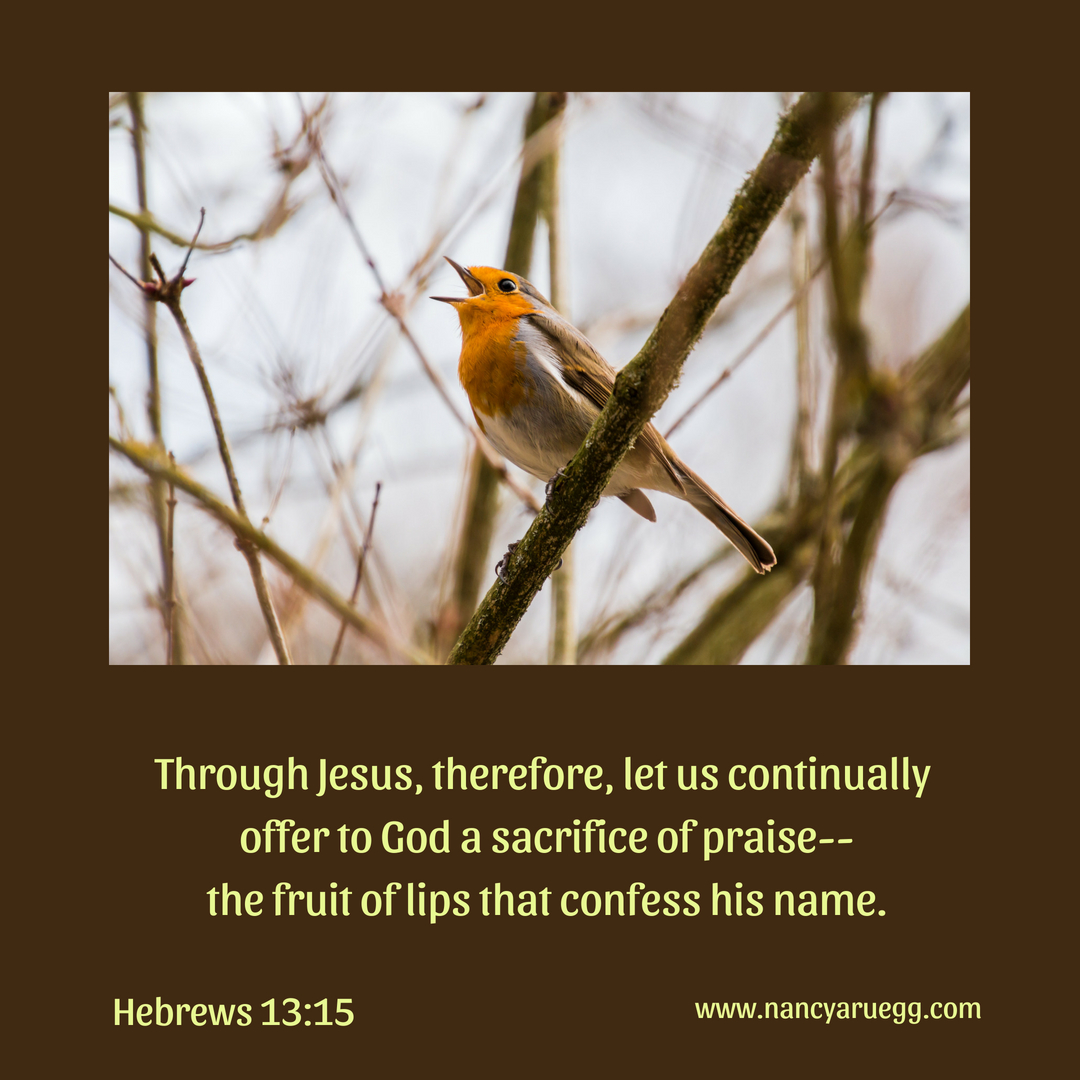
Our emotions must not be allowed to control actions. In fact, God especially appreciates a sacrifice of praise (Hebrews 13:15), which surely includes offering him our worship when the fervency just isn’t there.


4. Anticipate.

Worship with an outlook on the future (Psalm 42:1-2). We can look forward to the day when our hearts will overflow again with ecstatic praise—even to the point of joyful tears.


5. Pray. 

Perhaps something like this: 

“Father in heaven, flood the dry places of my soul with your presence; lift the gray clouds that conceal you. Within my spirit I want to feel the warmth of your radiant Light, be wrapped in your unfailing love, and fly with you on the wings of the dawn!

In trusting expectancy I wait for you, O Lord. I know you will answer.”


(Isaiah 44:3; Psalm 4:6, 32:10, 139:9, 38:15)


What helps you beat the spiritual blahs?  Please share your thoughts in the comment section below!


Note:

(1) https://www.crosswalk.com/church/worship/how-can-i-worship-when-i-feel-nothing.html


Photo credits:  http://www.wikimedia.com; http://www.pixabay.com; http://www.pxhere.com; http://www.dailyverses.net; http://www.heartlight.org; http://www.canva.com (2).


Read Full Post »

« Newer Posts - Older Posts »

When the House is Quiet

Impressions Becoming Expressions

Mitch Teemley

The Power of Story

Still Traveling

Impressions Becoming Expressions

Living Our Days

Gaining a heart of wisdom

He Said What?!

I'm Patty, and my husband and I are living with our adult son who has autism and epilepsy. I love sharing lessons learned from life around me, especially life with Aaron.

Meditations of my Heart

Impressions Becoming Expressions

Linda Stoll

Impressions Becoming Expressions

Signora Sheila

Where faith meets la dolce vita

Heidi Viars

Finding the Image of God