Feeds:
Posts
Comments

Archive for the ‘Encouragement’ Category

Ever try sleeping on a rock pillow? I, for one, can’t imagine actually falling asleep on such a hard surface.

The only person I know who had to try was Jacob of the Bible. (The story of that night is found in Genesis 28:10-22. It was also the subject of a previous post, which you can access here: Surely God Is in This Place.)


jacob


The scene above of Jacob resting on his rock pillow provides a worthwhile image for a Spurgeon quote I encountered recently:


“Use the Lord’s words as your pillows.

Lie down and [rest] in Him.”


Indeed, resting on the rock-solid assurances of God’s Word is wise advice, fostering peace within our spirits.

Just reciting scripture can provide effective comfort.

A good place to start? In the book of Beginnings. This example comes from Jacob himself:


fd3ddff270b84696468cc48b3a806d08


“Let us go up to Bethel where I will build an altar to God,

who answered me in the day of my distress

and who has been with me wherever I have gone.”

–Genesis 35:3 (NIV)


Notice this excerpt is seven chapters and many years past the “rock pillow” event. Jacob is no longer a young man; he’s seventy-seven as he embarks for Bethel. And during those intervening years, Jacob has experienced many days of distress as he:

  • ran away from home (Genesis 27-28),
  • worked for his Uncle Laban who took advantage of him (chapter 29 and 31:7), and then
  • set out on his own through enemy territory to return to Bethel, the home of his father, Isaac (chapters 35).

But in the verse quoted above, Jacob recognizes that through all those challenges, God demonstrated his favor, because with the Lord’s presence comes his guidance, provision, and protection.

I, too, have experienced distressing days. Who hasn’t?

But God has been with me through them all—circumstances such as these:

  • When my husband’s boss caused turmoil for us week after week,
  • When we received the unwelcome news (five times) that we were being moved to another church*, and
  • When pressure from certain administrators and parents caused ongoing stress at school (during my twenty-six years in the elementary classroom).

Yet now, looking back, I see that in each situation God was teaching me patience, perseverance, and reliance upon him. In fact, some distressing experiences were undoubtedly designed specifically to accomplish those benefits.

From the advantage of hindsight, I can see the pathway God prepared, to get us/me through those stressful days, and how he richly blessed on the other side.

As Charles Udall observed:


2b474d3c1facc1c1b3f28bfe6339057d

(“In life you will always be faced with a series of

God-ordained opportunities

brilliantly disguised as problems and challenges.”)


I wish I could say that through all of life’s challenges I’ve rested completely on pillows of promise and statements of faith. That wouldn’t be true. But I know that scripture-promises, prayer, and faith-statements have made a positive difference. And the strength of my faith did grow through each experience.

Notice Mr. Udall says we’ll always face challenges. I can give in to the distress of that fact or choose to rest on the pillow of promise that God is preparing me for what lies ahead as well as preparing the way through it.

*     *     *     *     *     *     *     *     *     * 

I praise you, Father, for being an all-knowing God.  No event catches you by surprise; you know every challenge I may yet face. Like Jacob, I think back upon stressful days of the past and affirm your comforting presence, attentive provision, and wise guidance through it all. May I be mindful to rest on your rock-solid pillows of promise from this day forward.

Art & photo credits:  www.keyway.ca; http://www.pinterest.com (2).


*For those who may not know, my husband was a pastor for forty years.

Read Full Post »

(Based on the story of the Prodigal Son, Luke 15:11-24)


019-prodigal-son300x225


Eliab plodded to the top of a familiar rise.  Just ahead he could see the flat rooftop of his ancestral home. Eliab’s heart began to drum in his ears, his face grew hot with shame, and sweat trickled down his back. Soon Eliab would face his father.

As he watched his feet take one step after another, thoughts circled around one question:

What would his father say?

Perhaps, “Get out of my sight! I no longer have two sons, only one.”

Perhaps, “Alright, Eliab, you may work in the fields and barn to pay back your debt. You may also sleep in the barn and take your meals with the other hired hands. Such flagrant waste of your inheritance must be recompensed.”

Eliab would soon know the response that would determine his fate.  He looked up once again to check his progress.  A man was running toward him down the road. What would cause him to be in such a hurry?

No sooner had the question formed in his mind than he recognized the bearing of the approaching figure. It was his father. Eliab’s knees grew weak, and not just from hunger. He collapsed to the ground in a heap, tears streaming down his face.

Quick steps approached; strong arms lifted Eliab up and grasped him in a tight embrace. He heard his father cry, “Oh, Eliab!” And together they wept.


prodigalson


Moments passed and Eliab steeled himself for the speech he had prepared during his long journey.

“Father,” he choked, “I’ve sinned against God and I’ve sinned before you. I know I can no longer be considered your son, but…”

Eliab’s father wasn’t even listening. He turned to call out to his servants, “Get a clean set of clothes and new sandals. Bring the family signet ring. Then prepare the grain-fed heifer for roasting.   We are going to have the grandest celebration our village has ever seen! My son that was as good as dead to me is alive again!”

And with that, Eliab, caretaker of pigs, was lavishly honored because his father:

  • Forgave him for being so foolish, squandering his inheritance.
  • Restored his position in the family, symbolized by the specific request of shoes. (Family members wore shoes; slaves did not.)
  • Clothed him in fresh, clean robes.
  • Honored him with the signet ring, a symbol of authority.
  • Loved him, pure and simple.


return-of-prodigal-son-celebrated


Now I’ve never been a caretaker of pigs. You probably haven’t been either. But I’ve certainly committed my own foolish acts of selfish rebellion. Maybe you have, too.

And yet, when we throw ourselves on God’s mercy, he

  • Forgives our sins and remembers them no more (Hebrews 8:12).
  • Adopts us into his family, making us his children (John 1:12-13).
  • Clothes us in the righteousness of Jesus (Isaiah 61:10), and God sees us as if we had never sinned (Colossians 1:21-22).
  • Honors us (Psalm 91:15)—with his presence and countless gifts. Someday we’ll receive a crown of glory that will never fade away (1 Peter 5:4).
  • Loves us, pure and simple, for now and always (Jeremiah 31:33).

tumblr_nc8rcivx4e1ttry05o1_500

*     *     *     *     *     *     *     *     *     *

How I thank you, Heavenly Father, for taking pity on me, as the father did in the story of the prodigal son.  You redeemed my life from the pig sty.  You forgive my sins–every one of them.  You have more than satisfied me with your goodness and faithful love.  Never do I want to lose the wonder of your love and grace!

(Psalm 103:1-5, 13)

Eliab means “to whom God is Father.”

(Art & photo credits:  www.childrenschapel.org; http://www.ncregister.som; http://www.susaneball.com; http://www.spiritualinspiration.tumblr.com.)

Read Full Post »

220px-Nicholasflamel

Nicolas Flamel (ca. 1310-1418, pictured above) looks like he could be St. Nicholas, with that full beard and impish face. In fact he lived long after and far away from the well-known saint. Flamel was a French scribe and manuscript seller. He also dabbled in alchemy.

Alchemists were those who, especially during the Middle Ages, experimented with various materials and procedures to turn ordinary metals like lead into gold.

Another dream of theirs was to discover an elixir of life—a potion that would provide eternal life.

Sir William Fettes Douglas The Alchemist 19th cent.

“The Alchemist,” by Sir William Fettes Douglas, 1855

By the seventeenth century, legends had developed around Nicolas Flamel. Some claimed that he had discovered the Philosopher’s Stone, the alchemical substance that would turn lead into gold and produce the elixir of life.

But the only immortality he achieved is in print. Victor Hugo mentioned him in The Hunchback of Notre Dame, and R. K. Rowling in Harry Potter and the Philosopher’s Stone.

Nicolas Flamel is buried in Paris at the Musée de Cluny.

By the 1600s, alchemy was, for the most part, abandoned.

Alchemy simply did not work in the physical realm.

However! In the spiritual realm, with God exercising his supernatural power, the alchemy of grace (1) performs great wonders:

gracechangeseverything4-w855h425

The lost become found (Luke 19:10)

Darkness becomes light (John 8:12)

Death becomes life (Ephesians 2:4-5)

Mourning becomes joy (Jeremiah 31:13)

Ashes become beauty (Isaiah 61:3)

dae3bd5f8c1b4d3b842eb316d9202c90

Hatred becomes love (Acts 9:1-2; Philippians 4:1)

Discouragement becomes hope (Romans 5:1-2)

Fear becomes peace (John 14:27)

Striving becomes resting (Exodus 33:14)

Weakness becomes strength (2 Corinthians 12:9)

2_corinthians_12-9

No doubt we could mention many more magnificent facets of transformation that occur because of God’s alchemy of grace—a transformation even more miraculous than turning lead into gold.

To appreciate just how miraculous, consider what happens when we’re left to our own devices:

Darkness begets depression

Hatred begets ulcers

Fear begets paranoia

Striving begets stress

Discouragement begets self-pity

Would it be disrespectful to say that Jesus is our Philosopher’s Stone? He is the one and only Way to experience the alchemy (and grandeur and wonder!) of God’s grace (2).

3c06d8c8fc3f09557711b1bb7679f3a5

Do you find your heart swelling with gratitude and praise?

“Trace the roots of grace, or charis in the Greek, and you will find a verb that means ‘I rejoice, I am glad” – Phillip Yancey (3).

*     *     *     *     *     *     *     *     *     *

Holy Father, how astounding to consider that we are being transformed into the likeness of your Son with ever-increasing glory. Thank you for the alchemy of your grace that transforms our leaden lives into lustrous, 24-carat gold! 

(2 Corinthians 3:18; Job 23:10)

* The “alchemy of grace” is a phrase borrowed from Charles Spurgeon.

(1) Grace is undeserved love, manifested in unmerited favor.

(2) John 14:6, Acts 4:12, 1 Timothy 2:5-6

(3) Phillip Yancey, What’s So Amazing about Grace?, Zondervan, 1997, p. 13.

(Art & photo credits:  www.wikipedia.org (2), http://www.theodysseyonline.com; http://www.pinterest.com; http://www.biblehub.net; http://www.pinterest.com.)

Read Full Post »

In a list of meaningful but “minor impressions,” beloved columnist/author, Joe Bayly, wrote the following for Saturday, July 28, 1962:

“Rode the merry-go-round tonight with happy David and worried Nathan, while Mary Lou looked on and waved each time we passed. Timmy kept up with us, running, for three times around”(1).


merry-go-round


And then Joe included this familiar scripture:

Every good and perfect gift is from above, coming down from the Father of the heavenly lights” (James 1:17–NIV, emphasis added).

That means everything good in this world comes from God—even a delightful ride on a merry-go-round.

Sometimes, however, the goodness of God’s gifts isn’t immediately recognizable.

Scripture offers a number of examples, such as Paul’s thorn in the flesh. The exact nature of the problem was never revealed, but we do know it was chronic and debilitating. Who would call that a good and perfect gift?

Paul did.

“At first I didn’t think of it as a gift,” he said.

Then God told him, “My grace is enough; it’s all you need.”


5d8bb2a1a82601d325fc995ea54384ca


“Once I heard that,” Paul explained, “I quit focusing on the handicap and began appreciating the gift.” (vs. 7-10, The Message).

I, for one, have never had to deal with a long-term thorn in the flesh. But difficult, shorter-term circumstances have turned into tremendous blessings. For example:

  • A particularly exhausting week of teaching, family responsibilities, and other pressing matters was followed up by a weekend music retreat at church. How could I muster the energy to attend and complete a long must-do-by-Monday list? While visions of PJs and pillows danced in my head, I dragged myself to church. But through the funny and inspiring retreat leader, the uplifting music, and the invigorating camaraderie of music ministry friends, I left Friday evening highly rejuvenated, looking forward to more blessings come Saturday and Sunday.
  • Our son was not accepted into his first choices of graduate schools, and we wondered what God was doing. Was Eric proceeding in the right direction? Those trying days, however, turned into lessons of trust and spiritual maturity for him, which he humbly took to heart. As for the university that did accept him? That’s where Eric met his wife.
  • Into every life a few challenging people must fall, right? And with them often come discouragement, stress, and hurt. Where’s the blessing in all that? For starters, God uses such relationships to train us in turning our thoughts to the positive (Philippians 4:8), so we can experience renewal and peace. We also develop perseverance and maturity (James 1:2-4)—traits that lead to a calm and steady life anchored on Jesus.

God gives only good and perfect gifts. Sometimes they come as small but delightful surprises—like a perfect merry-go-round moment.

Sometimes they come wrapped inside trying circumstances.

But those are some of his best gifts–when negative is transformed into positive.

Because that’s downright miraculous.


*     *     *     *     *     *     *     *     *     *


Have you ever received a good and perfect gift out of difficult circumstances?  Tell us your story in the comments below.


(1) Joe Bayly, Out of My Mind:  The Best of Joe Bayly, Zondervan, 1993, p. 41.


(Photo credit:  www.elcivics.com, http://www.pinterest.com.)


Read Full Post »

The view out our windows has not been inspiring of late.

Swaths of flat gray clouds hover overhead, sometimes dipping low to drape gauze in the treetops.


IMG_0477

Tangles of bare tree branches claw at the sky.

And where flowers swayed in the sunshine last summer, straggly twigs stand forlornly, grieving their former beauty.

But amidst all this gloom and dormancy, God is at work–behind the scenes.

For example:

  1. Many plants require a season of rest.

All summer long perennials labor to create flowers that in turn attract pollinators. They also spend the long, warm days developing seeds, in preparation for the following spring.

Come fall, these plants pour their energy into root growth.

Now, during the quiet winter months of inactivity, they enjoy a much-needed rest.


IMG_0506

(One of our hydrangea bushes at rest!)


  1. Plants benefit from snow.

The soft covering (with its air pockets between the flakes) insulates plants from the harm of frigid temperatures.

Melting snow in spring provides the extra hydration plants need for the accelerated growth process of the season.


IMG_0464


  1. Seeds benefit from snow.

A period of moist, cold weather is essential for some varieties of seeds to germinate in the spring.


Winter is not a mistake, a season God forgot to adorn. Winter has purpose.

It’s just that we can’t see what he’s up to.

But come spring? Then we’ll see the benefits of winter in a magnificent display of glorious splendor!


Springtime-wallpapers-HD-free


Perhaps you are enduring a season of winter in the circumstances of your life.

It’s not a mistake, God has not forgotten (Psalm 9:10).

This season does have a purpose (Psalm 138:8a), it’s just that you might not be able to see what he’s up to.


8b23d6379537248466047273bd62d1cd


Even in the middle of bleak, colorless winter, we are confident that spring will come, aren’t we.

And even in the middle of bleak, colorless circumstances, we can stand confident with the psalmist, because:


“You, [God], will restore my life again;

from the depths of the earth

you will again bring me up.

crocus-in-snow

You will increase my honor

and comfort me once again.

I will praise you with the harp

For your faithfulness.”

–Psalm 71:20b-22a

    *     *     *      *     *


(Information about the value of winter for plants came from “4 Reasons to Celebrate Your Garden in Winter” on http://www.houzz.com.)

Photo credits: Nancy Ruegg (3), http://www.wallpapersmela.com; http://www.pinterest.com; http://www.fairfieldpubliclibrary.org.)


Read Full Post »

1-samuel-12-24-consider-the-lord-landscape_1956134444


Consider what great things [God] has done for you,”

(from the farewell address of Samuel the prophet,

to the people of Israel–1 Samuel 12:24b, italics added).


I wonder if Samuel paused after those words, to give the Israelites a moment of reflection.  God had blessed them in numerous ways by:

  • Miraculously bringing them out of slavery in Egypt.
  • Sustaining them during their wilderness journey to Canaan.
  • Providing laws and commands for them to assure an orderly, pleasant, and productive life.
  • Giving them victory over their enemies.
  • Sending prophets and judges to guide and encourage (vs. 6-15).


31118_000_025_15


And what might have been the Israelites’ response as they remembered those blessings?

Were they whispering prayers of praise, because God had cared for them so attentively?

Did they resolve to reverence him more intentionally and serve him more faithfully, as Samuel suggested (12:24a)?


132658d0c1661c211eb040ed8e8a8308


Surely both responses were called for.

I also wonder if we might similarly be impacted by considering daily the great things God has done for us.

My own pondering made me realize my life includes parallels to those of the Israelites (although in less striking ways). Perhaps you, too, have had similar experiences.

God has:

  • Brought me out of difficult situations. (One small example: When a teaching job opened up nearby, I no longer had to endure  a stressful 50-minute commute.)
  • Sustained me with a heightened sense of his presence through the wilderness of hurt and emotional pain.
  • Provided his Word of wisdom for an orderly, pleasant, and productive life. (Not that I’ve always taken advantage of that wisdom.)
  • Given me the final victory over Satan, through his Son, Jesus. One day I will enjoy life in heaven with my Savior.
  • Sent spiritual teachers, pastors, and mentors to guide and encourage me.


A group of young women bow their heads and pray with bibles.


But perhaps you feel excluded from God’s blessings. Any consideration of your circumstances makes you shake your head in disillusionment. After all, the evidence seems clear. While others are enjoying marriage and family, a satisfying career, good health and/or _______________ (fill in the blank), you’re not.

Perhaps another point of view would provide alternative evidence. Consider your circumstances and the blessings they do provide.

For example:


worldteach-guyana-500


  • Not married? You benefit from greater freedom in your life.
  • No children? You can invest fresh energy and enthusiasm into children-not-your-own, providing the parents a much-needed break.
  • Struggling in a wilderness of emotional upset right now? Draw near to God and he will draw near to you in new, profound ways. Look for him in creation and in his Word. Listen for him in a song or in the encouragement of a mature friend. Be watchful, because he reveals himself in highly creative ways.
  • Is Jesus a part of your everyday life? Then you have a constant Friend who loves you, cares for you, withholds no good thing, and will never leave you.
  • Are there mentors and models in your life, showing you the way to a God-enhanced life? How splendid not to be struggling alone.

The bottom-line consideration is this:

Do I want to wear a shroud of despair or a garment of praise (Isaiah 61:3)?


26054-field-girl-woman-armsout-praise.1200w.tn


Do I want to live selfishly or in grateful obedience to the One who has bestowed so much?

*     *     *     *     *     *     *     *     *     *

Amazing God, words fail to express my gratitude as I consider your countless blessings.  Nor can words sufficiently extol your grace that motivates such loving benevolence.  I long to be continually grateful and consistently obedient, as a love-gift back to you.  May thankfulness energize my obedience! 


(Art & photo credits:  www.wallpaper.knowing-jesus.com; http://www.lds.org; http://www.pinterest.com; http://www.fullsupply.org; http://www.americakeswick.org; http://www.transitionsabroad.com; http://www.crosswalk.com.)

Read Full Post »


dew


Gently, silently,

In quiet faithfulness

The Lord of heaven

Sends refreshing dew

On the mist of morning,

To all things rooted in the ground.

Miraculously,

Withered leaves uncurl,

Shriveled petals unfold,

Drooped stems and grass stand tall, and

Freshly washed hues

Gleam in sparkling splendor.

7ac86eeabe5b5a5fffb78d499e880750


Gently, silently,

In quiet faithfulness

The Lord of heaven

Sends the refreshing dew

Of his grace and blessing

Upon all people rooted in his love.

Miraculously,

Withered souls blossom,

Shriveled hearts unfurl,

Drooped spirits revive, and

Freshly washed attitudes

Gleam with gratitude and praise.


3996f114bc5b807e394ba097efa10a02

“His favor is like the dew on the grass,”

His multi-faceted grace, a sparkling jewel,

Providing manifold blessing:

Enduring hope that renews our strength,

Overflowing joy that isn’t dependent on circumstances,

Deep peace that defies explanation,

A God-enhanced life

That gives rise to satisfaction and fulfillment,

Firm security that God will never fail us, and

The absolute truth of his Word that guides us rightly.

All this and more bestowed upon us like the dew—

Unearned and undeserved.


bf66668287931218d44763d55fa25b69


(Deuteronomy 33:12; Hosea 14:5; Ephesians 3:17; Proverbs 19:12b;

Psalm 62:5; Psalm 16:11; John 14:27; Psalm 128:1-2;

John 10:10; Lamentations 3:22; Psalm 119:137-138, Ephesians 2:4-10)

How has the dew of God’s grace refreshed your life this week?

    *     *     *     *     *

Photo credits:  www.pinterest.com; http://www.metoffice.gov.uk; http://www.pinterest.com (2).

Read Full Post »

His record sounds like a tall tale.

He traveled 250,000 miles (that’s ten times around the globe at the equator) by horseback or on foot. All told, he preached 40,000 sermons. And by the end of his life, his followers included scores of people on both sides of the Atlantic Ocean:

  • 71, 668 British members
  • 294 preachers in Britain
  • 43,265 American members
  • 198 preachers in America
  • 19 missionaries

But that’s not all. This giant of Christianity also wrote dozens of books.

This is no tall tale; it’s the life of John Wesley (1703-1791).


220px-Jwesleysitting

(John Wesley)

Even into old age, John Wesley proclaimed the good news about Jesus and his gift of eternal life.

At age 83, he was still writing books, but very disappointed that after fifteen hours at his desk, his eyes would start to hurt.

At age 86, Wesley could still preach a rousing sermon, but sadly (to him) he only had stamina for two per day, not three as had been his standard for many years.

It also frustrated Wesley that he needed more rest as he aged. No longer did he wake up ready to seize the day at 4:00 a.m. In his latter years he had to sleep until 5:30.

The evidence seems clear: John Wesley lived every day of his life with purpose and passion—even into old age.

And undoubtedly he received great satisfaction and fulfillment from his choice to remain active and useful.

Like some men and women today, Wesley carried on into his golden years what he had been doing for decades. (I recently heard on the news about a one hundred-year old woman who is still teaching school. Like John Wesley though, she’s curtailed her schedule!)

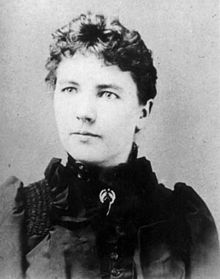
Others of us explore new paths during our retirement years. Laura Ingalls Wilder didn’t begin her best-selling “Little House on the Prairie” series until age 64. The last book, These Happy Golden Years, she completed at age 76.


Laura_Ingalls_Wilder

(Laura Ingalls Wilder)


Wesley’s and Wilder’s examples (and those of countless others) prove:  It is possible to accomplish worthwhile endeavors even as we age.

If you’re young, you can look forward to new possibilities of successful, purposeful living for decades to come.

If you’re older as I am, we still can enjoy successful, purposeful living.

But for all of us, maintaining an attitude of faith and remaining involved with others is most important because:

Our influence on those around us offers opportunity for the most significant contribution.


*     *     *     *     *     *     *     *     *     *


Thank You, Father, that each chapter of my life has included purpose and blessing. Keep me mindful that my purpose includes living a legacy of influence. May love, faith, and integrity be the guiding principles for all my remaining days!      

Read Full Post »

One custom of our church community includes the babies and toddlers. Toward the end of the worship service, many parents collect their little ones and bring them to the sanctuary for the closing praise songs.

When our two-year old granddaughter, Elena, arrives, she starts out in Mommy’s arms, then clambers to Daddy, then over to Papa (my husband, Steve), and finally to Nana—that’s me.

Last Sunday she was particularly affectionate—arms around my neck, head nestled on my shoulder. Every now and then she’d lift her head to give me a kiss on the cheek.   I held her close and kissed her silken hair.

IMG_0172

(Who could resist snuggling with this?!)


Please understand: Elena is a typical toddler. She knows what she wants and when she wants it (usually NOW!). Her expressive cries can be quite vociferous.   But those traits of stubbornness and impatience—seen in most toddlers–don’t diminish my love for her. Not a bit.

I reveled in that moment of tenderness at church, while swaying to the music and singing of our love for God. In my mind’s eye, I saw myself as the child, held in the close embrace of my Father, who lovingly forgives my sins and casts them as far as the east is from the west.

What an astounding privilege he grants us—to participate in close, familial communion with him, the King of the Universe!

Day in and day out our glorious and powerful God draws near to us:


big_thumb_b8e3ad8d855043f095b0024ab5f33ecc


  • Through creation. Just this morning, he draped pink cloud-ribbons across a crystalline sky, turning our minds to him and his infinite genius. Almighty God orchestrates every intricate aspect of life on our planet, yet we can know him as our gracious and compassionate Father.
  • Through his Word. Just this week I had occasion to study the word, abide, found in John 14:6. “And I will pray the Father, and he shall give you another Comforter, that he may abide with you for ever” (KJV). First I looked up the word in the dictionary, and discovered abide means much more than just being with someone. Abide also includes persevering under (!) and tolerating (!), in addition to remaining in one place, to continue or endure.   I had to smile at the tongue-in-cheek humor. And I prayed, “Oh, Lord, thank you for loving me that much!
  • Through people. A young woman at our new church has been enthusiastically friendly.   And though I’ve told her I appreciate her kindness, I doubt she can fully understand how her interest, hugs, and effervescence have ministered to me. God draws near with his joy each time we meet.
  • Through circumstances.  Hugs and kisses from a toddler are just one precious example that makes me mindful of God’s love for me.


*     *     *     *     *     *     *     *     *     *


Oh, Father, I shake my head in wonder to think

You long for us to be your familial friends.

I praise you for your abundant, gracious love,

Motivating you to reveal yourself

Through creation,

People, circumstances,

Your word, and more.

In fact, you are intimately involved

In every moment of our lives.

Thank you for blessing us

With your abiding presence,

Even though it requires of you

Great tolerance and perseverance!

We cling to you, our Source of

Strength, wisdom, and provision.

You are with us and in us,

Always drawing us closer to you.

Thank you for never giving up

And never letting go.


(2 Corinthians 6:16, 18; Psalm 103:8; Psalm 19:1-4;

Matthew 5:14, 16; Psalm 92:4; 2 Timothy 3:16-17;

Psalm 139:1-5; Zephaniah 3:17; James 1:17;

Isaiah 41:10; 1 Corinthians 3:16; James 4:8;

Philippians 1:6; John 10:28.)

(Photo credits:  Nancy Ruegg, and http://www.wallpaperup.com.)

Read Full Post »

Jacob half-walked, half-jogged mile after mile toward Paddan Aram, to escape his furious brother, Esau. (You can read about the circumstances of Esau’s anger in Genesis 27-28.)

Finally, at sunset, Jacob had to stop and rest. In a grassy meadow surrounded by trees, he spotted a low, flat rock, perfect for a pillow. He folded his sash into a smooth bundle, to add a bit of softness under his head, then wrapped himself in his outer robe, and promptly fell asleep.

That may be the impression we’ve acquired from such art work as this:

jacob

The truth is, the area where Jacob rested that first night as a runaway, was far from pleasant. The landscape was scrubby, rocky, and desolate, which surely accentuated how very alone he was.

I doubt that Jacob rested comfortably or fell asleep quickly.   For all he knew, Esau was in hot pursuit. And though Jacob was headed to the ancestral home of his mother, it’s doubtful he’d ever met any of those relatives. What would they be like? How would he be treated? Between the uncomfortable “bed,” and the worrying and wondering, who could rest?

But Jacob had covered many miles that day. Exhaustion finally took over, and he slept—soundly enough to dream.

You know the story.  Jacob was witness to a glorious sight: angels of God, ascending and descending on a stairway that reached all the way to heaven.

At the top of the stairway stood God Almighty himself, proclaiming glorious promises to Jacob:

  • The land on which he lay would one day be his.
  • His descendants would be as numerous as the dust on the earth.
  • All the peoples of the earth would be blessed through Jacob and his offspring.
  • God would be with him to watch over him wherever he went.

Jacob awoke, astonished by his dream. Perhaps he was a bit disoriented by the darkness and desolation, when just a moment before he was surrounded by ethereal light, gazing at angels on a glowing staircase, and listening to the voice of God.

“The Lord is in this place!” he breathed.

Jacob took the stone pillow and stood it up on end as a pillar-reminder of the momentous occasion. And he renamed the location, Bethel, which means house of God (Genesis 28:10-19).

Jacob_set_up_stone_C-175

We may not be runaways like Jacob, forced to sleep in a wilderness. But we’ve all faced rough, rock-strewn places in life when:

  • Marriage is more disappointment than delight
  • The growing pains of our children become our pain too
  • Friends prove unfriendly
  • Circumstances turn our lives upside down
  • The day-to-day routine is unpleasant and boring

Amidst the desolation and darkness we forget:

God.  Is.  With.  Us.

And that is huge.

51RKiHO4XNL

“God’s presence with us is his greatest present to us” (Joanie Yoder).

The problem is, we’re often unaware just as Jacob was.

But we do have numerous assurances of God’s presence with us throughout scripture, and indications of what a sublime treasure that is:

  • Hundreds of promises in the Bible. (Jacob received only five that night at Bethel!)
  • All of God’s incredible attributes at work in and around us: his power, wisdom, loving kindness, and much more
  • His guidance, provision, protection, and empowerment–whether we currently see the evidence or not
  • His blessings, even in the desolate places of life

May we awaken to full awareness and the full meaning of his presence, because:

bestofallgodiswithus-wesley1

(Art credits:  www.keyway.ca; http://www.bibleencyclopedia.com; http://www.amazon.com; http://www.izquotes.com.)

Read Full Post »

« Newer Posts - Older Posts »

When the House is Quiet

Impressions Becoming Expressions

Mitch Teemley

The Power of Story

Still Traveling

Impressions Becoming Expressions

Living Our Days

Gaining a heart of wisdom

He Said What?!

I'm Patty, and my husband and I are living with our adult son who has autism and epilepsy. I love sharing lessons learned from life around me, especially life with Aaron.

Meditations of my Heart

Impressions Becoming Expressions

Linda Stoll

Impressions Becoming Expressions

Signora Sheila

Where faith meets la dolce vita

Heidi Viars

Finding the Image of God