Feeds:
Posts
Comments

Archive for the ‘Excellence’ Category

eaab14ad79f81660b93f3032488a12eddc3a7b6e

Granville Sharp

(b. November 10, 1735)

Never had thirty-year old Granville Sharp seen such injuries: large swellings about the neck and head, gaping wounds, and a face hideously swollen, streaked with trails of dried blood.

The victim: Jonathan Strong, a young slave who’d been pistol-whipped by his master and left to die on the streets of London, 1765. Somehow Jonathan made his way to the house of Granville’s brother, William, a doctor. And there he sat, waiting in line outside William’s office, when Granville stopped by the house.

quote-the-boy-seemed-ready-to-die-he-almost-lost-the-use-of-his-legs-and-feet-and-to-compleat-his-granville-sharp-266227

The encounter would change Granville’s life forever.

His heart went out to the slave; they became acquainted. Jonathan’s story horrified Granville. To make matters worse, when Jonathan recovered, the master demanded he be returned. Granville determined to help Jonathan, even though he’d “never opened a law-book except the Bible in [his] life” (1).

Those defending the slave owner were evidently intimidated by the case Granville put forth. After a two-year legal battle, they never brought Jonathan’s case to trial.

7149324-Granville_Sharp_1769_Liverpool

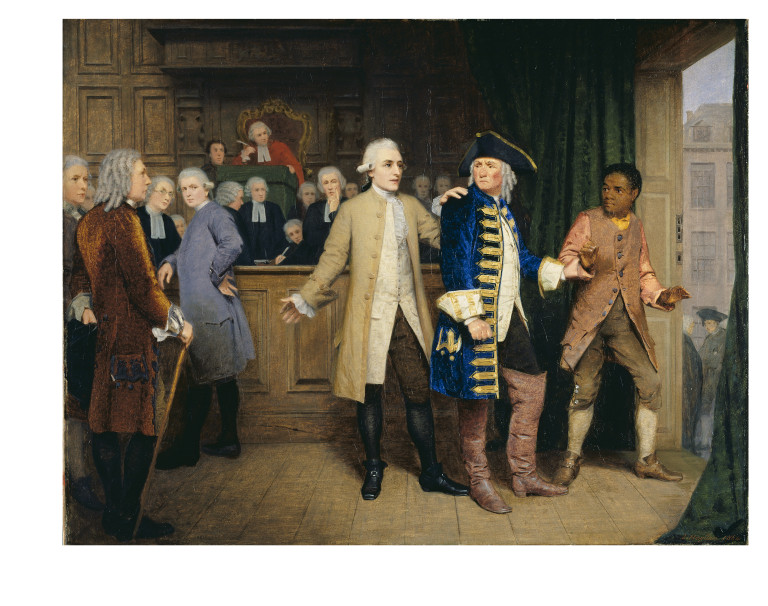
Sharp helped other slaves win their cases against tyrant owners, becoming more and more involved in the abolition of slavery. One case in particular, that of James Somerset, helped to set an important precedent in England.

Somerset had escaped his master, been recaptured, and was about to be shipped to a Jamaican plantation when Granville and others became involved.  They helped the slave win his freedom, arguing that “no master ever was allowed here (in England) to take a slave by force to be sold abroad because he deserted his service…therefore the man must be discharged” (2).

2006BB2012

Granville remained active in the abolition movement his entire life. He wrote frequent letters to many leaders in America and Britain, influencing their thinking about slavery and earning their respect. Among them: Dr. Benjamin Rush (signer of the Declaration), John Jay (first Chief Justice of the U.S. Supreme Court), Benjamin Franklin, and John Adams in America; John Wesley, William Wilberforce, the Archbishop of Canterbury in England; and General Lafayette of France.

But that was only one of his passionate pursuits. Another concern was the illegal treatment of the colonists in America. He published books and pamphlets to help their cause, catching the attention of Ben Franklin during one of his visits to England.

Granville gave Mr. Franklin 250 copies of his pamphlet about people’s natural rights as supported by the British constitution. Franklin sent them to America where several presses reprinted the booklet.

Sharp’s pamphlet influenced Thomas Jefferson as he drafted the Declaration of Independence, evidenced by at least several similarities in both documents.

In 1775, when war broke out in the colonies Granville was employed in the ordnance office (handling all matters concerning weaponry). He wanted nothing to do with the war, so he wrote to his employer: “I cannot return to my ordnance duty whilst a bloody war is carried on, unjustly as I conceive, against my fellow-subjects” (3).

Granville’s brothers agreed to support him, enabling him to pursue his studies, causes, and writing. In fact, beginning with his first book in 1765, Sharp published a new work, sometimes more than one, almost annually for the rest of his life (5).

sharp-title-page-Cropped-543x465

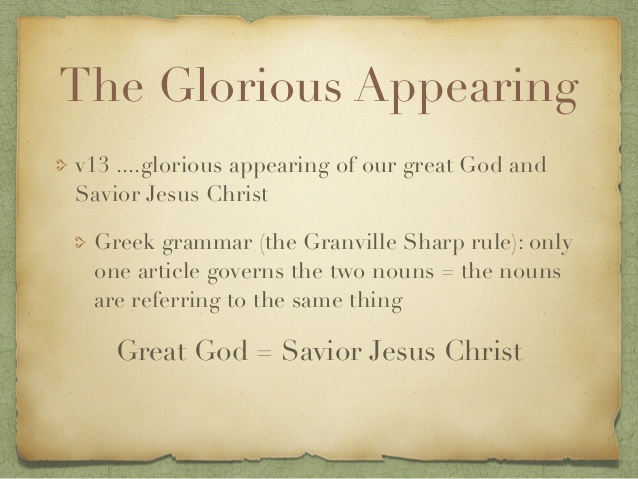
One of those books (with a thirty-six word title!) is now known as “Sharp’s rule” (1777). With his self-taught knowledge of ancient Greek, Granville demonstrated how eight passages of the New Testament had been mistranslated by some Bible scholars, leaving the reader to surmise that God the Father and God the Son were separate Beings. Sharp presented a thorough explanation that God the Father, Son, and Holy Spirit are One, according to the original Greek texts (4).

our-hope-the-appearing-of-jesus-christ-16-638

Yet Granville accomplished still more. In the mid-1780s, Sharp teamed with a Mr. Smeathman to establish a colony for freed English slaves on the west coast of Africa. (Many of them were homeless, subsisting on the streets of London with no hope of improving their lives.) But Smeathman died shortly after he and Granville established their partnership. Sharp continued the work nevertheless.

In April of 1787, the dream for that African colony became a reality with the founding of Sierra Leone. The colonists named the first settlement, Granvilletown.

220px-Province_of_Freedom

Sharp accomplished even more, as he served on a number of boards and societies, in support of mission efforts and philanthropic concerns.

Yet he did not see the fulfillment of his greatest dream—the abolition of slavery. The battle he began with the case of Jonathan Strong in 1765 finally ended in 1833, when slavery was completely abolished in the British Empire.

Sharp died in 1813.

Granville_Sharp's_tomb_inscription

His chief biographer, Prince Hoare, said that as he began to study Sharp he intended to “draw a veil over peculiarities of Mr. Sharp’s character,” out of respect for the dead. But when he finished his careful and comprehensive research, he realized Sharp’s “character to be of that high and dignified nature, to leave no necessity for such a precaution…I see nothing to veil.” (6).

Like many other forgotten heroes, Granville Sharp is among that great cloud of witnesses who fixed their eyes on Jesus and ran the race marked out for them (Hebrews 12:1-2a).

May his example and that of others–their faith, integrity, perseverance, and passion–push us along in the race marked for us.

______________________________

  1. history.ac.uk
  2. national.archives.gov.uk
  3. Dr. Daniel Wallace, www.bible.org
  4. christianity.com
  5. brycchancarey.com
  6. Dr. Daniel Wallace, http://www.bible.org

(Art & photo credits:  www.bbc.co.uk; izquotes.com; http://www.virtualtourist.com; http://www.collections.vam.ac.uk; http://www.wikipedia.org; http://www.liverpoolmuseums.org.uk; http://www.slideshare.net; http://www.en.wikipedia.org; )

Read Full Post »

12-27-11iStock_000018316152

Years ago I read a story that still comes to mind now and then.

As I recall, an older church member–a woman of very high standards which she vocalized frequently–came to visit a young mother of the church unannounced.

The impromptu hostess—we’ll call her Beth—invited Mrs. Perfect into her home, grateful that she’d straightened up a bit after her two older children left for school. The two younger ones were playing quietly with new Legos (How fortunate was that?), allowing the two women to chat.

kitchen-after-counter-1

As they sat at the kitchen table, Beth considered the room from her guest’s perspective: table cleared, dishes done, counters not too cluttered or spotted. Whew.

Then she saw it: an orange peel on the floor—not a fresh strip from breakfast; more likely from last week. How did I miss that? Beth thought. One thing for sure: Mrs. Perfect wouldn’t miss it. It was in plain view from where she sat too.

Suddenly Beth experienced an epiphany. What difference did it make to her if this poor, old woman noticed the orange peel? Mrs. Perfect, however, would leave with a spring in her step because she would never allow such filth to remain undetected on her floor.

And Beth smiled to herself as the other woman prattled on about the upcoming bazaar.   I hope that orange peel makes her day. And Beth truly meant it.

God brings that story to my mind because I have to fight against perfectionism too.

Obsessive man laying on grass, perfection

And the reasons? So others will be pleased with me, appreciate me, and admire my efforts. Notice: me, me, my.

Clearly perfectionism is a close relative of self-centeredness.  Oh, Lord, forgive me.

I pray God steers me away from such counter-productive expectations of myself. Instead I want to strive for excellence.

Yes, there is a difference between perfection and excellence.

Perfectionists have the tendency to:

  • Set unreasonably high standards
  • Experience satisfaction only when those high standards are met
  • Become depressed over failures and disappointments
  • Be controlled by fear of failure and therefore procrastinate
  • Worry about disapproval when mistakes are made

On the other hand, those striving for excellence are likely to:

  • Set standards that are high but reachable
  • Enjoy the process as well as the outcome
  • Recover quickly from failures and disappointments
  • Keep fear under control with positive truth
  • View mistakes as opportunities for growth

c398dcb781f29c5f0c3e1946d50a4422

For the Christian, excellence should be our loving response to God with the desire to please him.

And what might those responses look like, as we strive for excellence?

  • Ask God to reveal his expectations. Then invite him to work toward meeting his standard:  maturity (James 1:4).
  • Take pleasure in signs of spiritual growth, as we manifest the fruit of the Spirit more and more each day (Philippians 1:9-11).
  • Turn to him for encouragement and strength when failures and disappointments come (Psalm 18:25-33).
  • Keep fear under control with appropriate scriptures and uplifting devotionals (Psalm 118:5-8).
  • View mistakes as opportunities to grow in maturity and in our relationship with God (Proverbs 24:16).

6f8af2878da632fd3fcbfe0e23c9a750

By the way, when the Bible tells us to be perfect (as in Matthew 5:48), the words mature and complete are helpful synonyms to interpose. Perfection is not within our abilities to achieve (Romans 3:23). We know it and God knows it.

Here’s what we can do:

“Strive toward holiness, yet relax in grace.”

–Philip Yancey


Isn’t that a wonderfully balanced goal?

Let’s remember: “Christ has set us free to live a free life. So take your stand! Never again let anyone [including ourselves] put a harness of slavery [to perfectionism] on you.” – Galatians 5:1 (MSG)*

*Words in brackets added.

Photo credits:  www.deeprootsathome.com; http://www.femhack.com; http://www.worshipmatters.com; http://www.pinterest.com (2).

What are your thoughts about perfectionism and Christian excellence?  Share your comments below!

Read Full Post »

3571053_orig

(Remember Susan Boyle?)


Makeovers. What a remarkable change-of-appearance can be achieved with a becoming hairstyle (and maybe color-enhancement!), deftly applied make-up, and well-fitted clothing.  Add the benefit of plastic surgery and a person hardly resembles her former self.

But the transformation of someone’s face and body doesn’t begin to compare to the transformation of someone’s spirit.


tumblr_m8s31eBVQU1qbwmglo1_1280


Anyone who belongs to Christ has become a new person.

The old life is gone; a new life has begun!

–2 Corinthians 5:17 (NLT) 


Notice: We’re not just improved and beautified. Jesus remakes each of us into a brand new person.

And what might that newness include? Here’s a partial list:


  • New purpose


357191882884919061_1401068073

(“Whatever you do, do it all for the glory of God.”

–1 Corinthians 10:31b)


Those who follow this directive discover an interesting phenomenon: honoring God brings satisfaction and fulfillment to us. (By the way, God is not on some ego trip, demanding us to give him all the glory. He desires his splendor and benevolence to be evident everywhere, so others might be drawn to him.)


  • New attitude resulting in new character


 e2


(“Put on your new nature and be renewed

As you learn to know your Creator and become like him.”

–Colossians 3:10)


The more we know of God and appreciate all his benefits, the more we want to please him by following his example. That new attitude impacts every aspect of our lives.


  • New perspective


Psalm-23-6

(“Surely goodness and love will follow me all the days of my life.”

–Psalm 23:6)


Just knowing God has our best interest at heart is enough to renew energy and hope.


  • New power to face what comes


d7d8bc8fd004fe850361444ecf5acb49

(“[He] is able to do immeasurably more than all we ask or imagine,

according to his power that is at work within us.”

–Ephesians 3:20)


Think of it: the same power that controls the universe is at work within us. Tell me again why we revert to worrying?!


  • New emotions, such as peace and joy


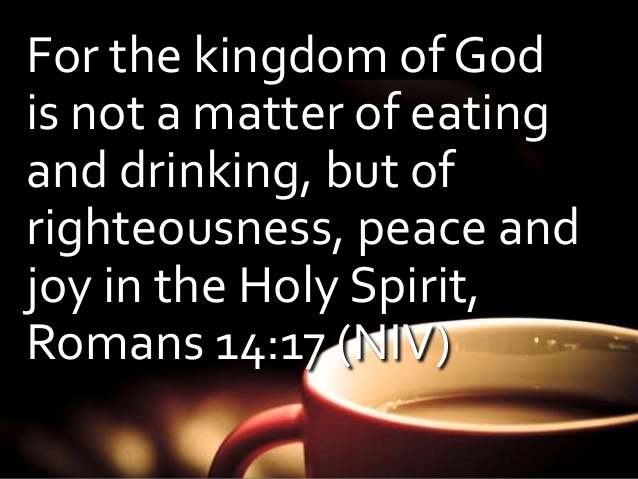
coffee-cupverses7-28-638

(“The kingdom of God is not a matter of eating and drinking,

but of righteousness, peace, and joy in the Holy Spirit.”

–Romans 14:17)


We do not need to live at the mercy of our circumstances. With God as our constant companion, we can experience peace and joy in spite of what happens. The Bible is full of examples of people who lived that way: Joseph, Daniel, Peter, and Paul readily come to mind.


  • New confidence

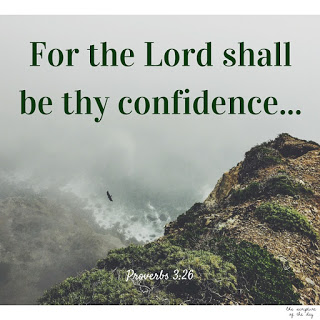
Proverbs 3.26 

(“The Lord will be your confidence.”

–Proverbs 3:26a)


God is not only with us, he is our Protector, Provider, and Guide.  As we become increasingly aware of his faithfulness, our trust grows. Trust = confidence.


  • New opportunities and blessings


ef03f9e29f19624eaa836b41accd6d80

(“The faithful love of the LORD never ends!

His mercies never cease. Great is his faithfulness;

his mercies begin afresh each morning.”

–Lamentations 3:22-23 (NLT)


Experience tells us that when we say “yes” to Jesus, God does not bestow the full measure of all of these wonderful new things instantaneously. God told Isaiah: “Behold I am doing a new thing” (Isaiah 43:19).  That hints at process. We’re made new, but growing into that newness.


843ae42db665b78c33102645c1850579


Think of buying a coat in the fall that’s a little too big for your child. She owns the coat, but it doesn’t quite fit yet.  Within a matter of weeks however, the sleeves hit the wrist not the fingertips, and the shoulder seams sit properly–no sagging down the arms.

Might it be that when we invite Jesus in our lives, our spirits are made new, but we don’t quite fit into them yet? Then, as we cooperate with Holy Spirit and his fruit grows within us (Galatians 5:22-23), we steadily become more Christ-like, day by day.

*     *     *     *     *     *     *     *     *     *

Oh, Father, I don’t want to cling to aspects of the old me—things like worry, perfectionism, selfishness, and pride. I want to embrace everything new that YOU bring to my life, to become my true self—the one you designed me to be.**


**Based on idea from Jesus Calling by Sarah Young, Thomas Nelson, p. 381.

Photo credits:  www.joblogging.weebly.com; http://www.ilovemybible.tumblr.com; http://www.pinterest.com; http://www.dayofgrace.me; http://www.faithgateway.com; http://www.pinterest.com; http://www.slideshare.net; http://www.plus.google.com; pinterest.com (2).

Share your thoughts in the comment section below.  I’d love to hear from you!

Read Full Post »

Evidence confirms: God loves to take ordinary people living ordinary lives and accomplish impossible feats. Examples include:

www-St-Takla-org--Bible-Slides-genesis-240

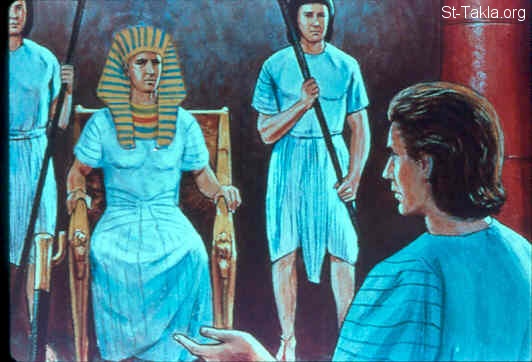
  • An imprisoned slave, elevated to prime minister in a matter of minutes
  • A village shepherd boy who became the greatest king of his nation
  • A widow who took a stranger into her home, and witnessed miraculous events
  • A common girl, chosen as queen in a foreign land and became the savior of her people

No doubt you recognize these persons. We would never consider them ordinary because of how God used them:

  • Joseph
  • David
  • The widow of Zarephath
  • Esther

But if we visited Joseph in prison before Pharaoh sent for him, if we passed by David watching his father’s sheep, if we ran into the widow of Zarephath at the village well, or if we met Esther in her cousin Mordecai’s home, would we have recognized greatness? Would we have known that these people were extraordinary? I doubt it.

We easily forget that what we see from our human perspective is never the whole picture. Only God has an omniscient view of circumstances and events—including past, present, and future.

Only God has the capability of weaving complex events to accomplish his purposes. And his work is always extraordinary. The wonders of creation offer undeniable proof.

nature-mountin-flowers

And since you are part of God’s wondrous creation, you are extraordinary. Yes, YOU!

That means:

Our seemingly ordinary lives, lived out through ordinary days, can have extraordinary significance, because God Almighty is orchestrating them.

That doesn’t mean we just sit on the sidelines and watch God work. Choices must be made:

  • Joseph chose to honor God in Potiphar’s house (Genesis 39:4), and in prison (v.22), long before his miraculous promotion from slave to prime minister.
  • David chose to spare King Saul twice, even though the king pursued David with the intent to kill David chose to wait for God’s timing for his coronation (1 Samuel 24, 26).
  • The widow of Zarephath (a town not in Israel) surely knew nothing of Elijah or his God when she met him at the town gate. There was no reason to take him in; she had nothing to offer him. As it was, the woman and her son were starving. The land was parched dry by famine. But she chose to believe his assurance that God would supply their needs. And miracles resulted (1 Kings 17:7-24).
  • Esther chose to intercede for her people, even though it may have led to her own death. She saved the Jewish captives in Persia from annihilation (Esther, ch. 4, 5).

Esther-and-the-King

We never know when a decision or choice may directly or indirectly cause significant, extraordinary results.

Therefore, our decisions must be based on scripture-based convictions and values. It is God-influenced choices, day by day, even moment by moment, that will lead us to extraordinary living, accomplishing divine purpose.

But be prepared. We may not know the significance of some of our choices until we reach heaven.

Think of Ruth, who chose to follow her mother-in-law, Naomi, from her home in Moab, back to Naomi’s home in Judah. She also decided to follow Naomi’s instructions and glean barley in Boaz’ field. At the end of the beautiful drama it is revealed that Ruth became the great-grandmother of King David and a descendant of Jesus himself, and a book of the Bible is devoted to her story. What an honor for a woman not even from the house of Israel!

ruth

But Ruth never knew.

Extraordinary people live extraordinary lives when they’re led by God–choice by choice, decision by decision. And they leave the results in his capable hands.

(Art & photo credits:  www.St-talkla.org; http://www.1decision1day.com; http://www.ammiministry.org; http://www.joyfulphpist.wordpress.com.)

Read Full Post »

personal-trainer-t-shirt1


Many people these days hire personal trainers to help them achieve their fitness goals. The benefits they site include:

  • Motivation and encouragement
  • A personalized routine, designed to produce maximum benefit for the time and effort invested
  • Injury prevention
  • Up-to-date information on health, nutrition, and fitness

Actually I have a Personal Trainer (you do, too) but for a far more important aspect of life than physical fitness. God is at work to “enlarge my heart.”


Pressing-toward-the-goal 


“I shall run the way of your commandments,

for you will enlarge my heart.”

Psalm 119:32, HCSB


In other words, God is working in me (Philippians 1:6) and with me (Psalm 23:4a) to develop my faith and mold my character into his likeness.

I do need his help to “run the way of [his] commandments,” just as the psalmist wrote eons ago (quoted above). Too often I’m side tracked onto self-chosen paths.

But how does God enlarge my heart to run his way?

First he initiates a change of heart.


8350127978_634d866931_z-2


And one day he will complete the process. We will be like Jesus (1 John 3:2). Can you imagine? One day we’ll finally become the holy and perfect people we’ve always wanted to be!

In between initiation and final transformation, we run:

The Christian life involves effort on our part, much as physical fitness requires effort. Just hiring a personal trainer won’t get us healthy and strong; we must take responsibility to follow the trainer’s instructions.

Similarly, while being responsible to exercise diligence and discipline in order to become spiritually mature, we also depend completely on what God supplies.


“We must work out what God has worked in.”

–John MacArthur


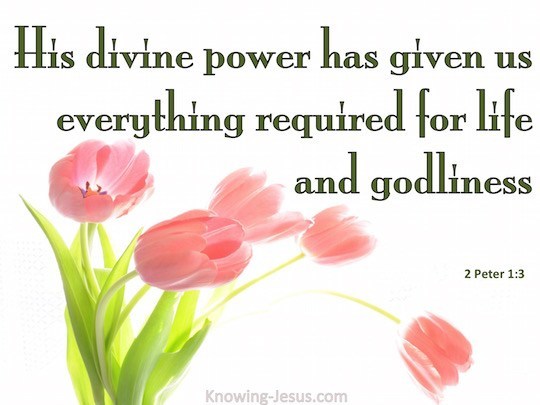
And what has God worked in? Everything we need for life and godliness:


2-Peter-1-3-His-Diving-Power-Has-Given-Us-Everything-green-copy


Yes, even our faith comes from him (Hebrews 12:2).

Now perhaps you’re one of those who have experienced the euphoria of being in “the zone,” during your workout. Once your heart rate is up, the blood is pumping, and your muscles are executing every move with precision, you experience a surge of energy and great pleasure in the activity.

I have never experienced that zone. My daily workouts involve uncomfortable huffing and puffing, aching muscles that beg me to “Stop with the push-ups already!” and downright boredom. (After decades of jumping jacks, they’re getting a bit old.)


img_08811


But it’s the results we’re after, isn’t it, including better heart health.

The function of our spiritual hearts is also improved by the application of exercise in the form of difficulties, hurt, illness, discouragement, and more.

Wait a minute! How does hardship improve spiritual heart health?

God uses such circumstances to produce such results as fully developed maturity.


“When troubles of any kind come your way,

consider it an opportunity for great joy.

For you know that when your faith is tested,

your endurance has a chance to grow.

So let it grow, for when your endurance is fully developed,

you will be perfect and complete, needing nothing.”

James 1:2-4, NLT


9a2544d9327a7da1f434c3cfa2c08232


I may never experience the euphoria of the zone during physical exercise, but James’ assurance here promises a zone of joy as I allow God to enlarge my heart and choose to persevere through the challenges of life his way.

Talk about perfect results!

*     *     *     *     *     *     *     *     *     *

Heavenly Father, I praise you for working into my life everything I need in order to become “perfect, complete, and needing nothing.” With your gracious provision, may I pursue the way of your commandments, and experience your euphoric joy!


(Art & photo credits:  www.tampabayathletics.com; http://www.successandfailure.net; http://www.flickr.com; http://www.knowing-jesus.com; http://www.321delish.com; http://www.pinterest.com.)

Read Full Post »

il_570xN.485491692_idn6

“Mom, what’s that lovely perfume you’re wearing?” I exclaimed while greeting my mother-in-law with a hug.

“It’s called White Linen,” she responded. “I like it because it’s crisp and clean and not too heavy.”

The scent stayed with me, but I didn’t mind. Not only did the perfume have a pleasing aroma, but it belonged to one of the sweetest, most generous women I’ve ever known.

The apostle Paul taught that we should leave a pleasant scent wherever we go. But he wasn’t talking about perfume or cologne. He meant that our very lives ought to emit the fragrance of Christ:

“Through us, [God] brings knowledge of Christ.

Everywhere we go, people breathe in the exquisite fragrance.

Because of Christ, we give off a sweet scent rising to God,

which is recognized by those on the way of salvation—

an aroma redolent with life.”

(2 Corinthians 2:14-15, The Message)

 I’ve been privileged to enjoy the exquisite fragrance of a number of saints over the years:

  • My grandmother, who loved and served Jesus with a passion. She demonstrated kindness and thoughtfulness, and never raised her voice. (At least not that I heard!)
  • My parents, who lovingly guided me, and demonstrated what a Christian marriage should be:  two people committed to the best interest of the other.
  • A youth pastor who showed personal interest in each kid, and whose prayers were so heartfelt, we knew this guy was up-close-and-personal with God.
  • A professor and his wife at the seminary Steve attended, who took us under their wings and lovingly mentored us with great wisdom.
  • A mother of three who led the first women’s Bible study I attended.  She provided strong teaching, but better yet, an example of what it means to be a godly woman of excellence.
  • An older couple who listened, supported, and encouraged us as Steve began his pastoral career.
  • A younger couple who came alongside us in ministry over thirty years ago and are still caring friends to this day.
  • A choir director who taught by example what a calm and gentle spirit (2 Peter 3:4) looks like.
  • Countless friends and acquaintances over the years who have loved on us and prayed for us.

Some of these wonderful people have already departed for heaven. Yet their beautiful fragrance lingers in my life to this day—a memorable blend of selflessness, generosity, and grace.

And I wonder, Where would I be without their enduring examples providing strength and guidance?

To be honest, I would surely have ruined my life with poor choices, spurred by emotional immaturity, and spiritual depravity. But God provided all these saints and more, that I might acquire even a faint aroma of Christ. 

And now I plead with myself, YOU serve Jesus by being a sweet fragrance for others, redolent with the life of Christ. YOU be the listener, encourager, and grace-giver. YOU provide the example of Christian maturity. 

*     *     *     *     *   *     *    *     *     *

Oh, Father, I thank you for the countless people you have brought into my life, whose positive impact provided wisdom, direction, and inspiration. Guide me, I pray, to live just as fragrantly, spreading your love, grace, and joy wherever I go.

Whose exquisite aroma lingers in your life?  Tell us about him/her in the comments below.

(Photo credit:  www.etsy.com.)

Read Full Post »


 Antiques-Roadshow


“Do you have any idea how much your painting is worth?” asks the antiques dealer.

“No, not really,” the owner answers.

“At auction, this portrait would probably bring…(a bit of a pause)…$5,000 or more.

The owner gasps. “And to think I only paid $25.00 at a garage sale!”

Scenes such as this are quite frequent on the popular TV program, Antiques Roadshow.  It’s astonishing how valuable some common-looking items turn out to be.  But I can’t help feeling a bit sad for the previous owners, who had no idea the worth of their possessions.

There are some folks who see little worth in the teachings of Jesus.  To their way of thinking, his world view and expectations seemed upside down and backwards.

For example, in the Sermon on the Mount, Jesus highlighted attributes that the world does not value, yet God considers of great worth.  Meekness would be a prime example.

Part of the problem lies in a common misunderstanding of the attribute. People think a meek person as weak-willed, passive, and too nice for her own good.

Such thinking is far from the truth.

1747489843_2066ef0122

Meekness includes:

  • Surrender to God
  • Trust and confidence in His ways and provision
  • Gentleness and humility with others
  • More concern for the interests of others than one’s own
  • Self-control, self-sacrifice, faith, patience, and forbearance
  • A gentle and soothing disposition

A weak-willed, passive person cannot demonstrate such traits.   Meekness requires strength of character; it is power under control.

 031311wildhorses_x

Imagine wild stallions running free across rolling hills.   Manes and tails undulate and flow in the wind, muscles strain beneath gleaming coats, hooves pound a rapid rhythm. Indeed, stallions in motion are a majestic sight. They exude power. But that power is useless to man unless it is harnessed and trained.

 9dcc98fa20ec776ed6380e492675c065

That’s the picture of meekness–strength under control. Strength to do the right thing at the right time. It’s not a human personality trait; it’s a super-human God trait. And the more we know his Son and abide in him, the more we’ll demonstrate meekness.

What might that look like, day-to-day? First, there would be no:

  • Mean-spirited sarcasm and rudeness
  • Arrogant behavior
  • Concern for prestige
  • Over-sensitivity or defensiveness


b5e664098ee28d482f1e253676a356e8


Instead, the beauty of meekness includes:

  • Quiet trusting in God to supply
  • Adherence to the Golden Rule
  • Love in action—caring, giving, helping
  • Gracious understanding and forgiveness

The world would be a different place if meekness were a more prevalent trait.

Some of you may recall the old tune, “Let There Be Peace on Earth.” Do you remember the next line? “And let it begin with me.”

Surely the same could be said for meekness. We can each be an example. As opportunities arise that require meekness, we can allow the Holy Spirit to fill us with his power, much as we fill our lungs with air. In fact, we can use that physical act of taking a deep breath as a reminder of “the breath of God” within us, providing everything we need for meekness: trust in God, self-control, compassion, kindness, and patience.

Meekness is so important to God, he included specific promises in scripture for those who demonstrate this trait:

c7f50f37de05f692e131e54ac399b328

  • “I hear the desires of the meek. I strengthen their hearts” (Psalm 10:17, RSV).
  • “The meek shall…be satisfied” (Psalm 22:26, ERV).
  • “The meek will he guide in justice; And the meek will he teach his way” (Psalm 25:9, ASV).
  • “The meek will…enjoy great peace” (Psalm 37:11).
  • “The Lord lifts up the meek” (Psalm 147:6a).
  • “The meek shall obtain fresh joy in the Lord (Isaiah 29:19a, RSV).

Strength, satisfaction, guidance, peace, uplift, and fresh joy. Valuable blessings, don’t you think?

Let’s seize the day in meekness. Let’s partake in the adventure of living our lives upside down and backwards, Jesus’ way!

We will NOT be disappointed in the results.

(Art & photo credits:  www.dealtrackersf.com; http://www.flickr.com; http://www.pinterest.com; http://www.kansas.com; http://www.pinterest.com;


Read Full Post »


6a00e54f0d380188340133f2ef50d4970b 

One of the delights of grand-parenting is recapturing the joys of childhood. In the name of entertaining the little ones, we get to return to such fun activities as drawing with crayons, molding Play-Doh, and building with blocks.

Little eyes watch in wonder as we sketch a flower, create a clay nest of eggs, or fashion a tall tower. It doesn’t take much to wow the little tykes.

Just the other day I demonstrated for our toddler granddaughter the first rule of constructing block skyscrapers: A solid, level foundation is a must. Without that strong base, the tower will lean and fall.

For centuries, the success of constructing real buildings depended on one foundation stone in particular: the chief cornerstone. Without the sophisticated tools of today, stone masons had to be certain that first stone was level and its corners squared accurately. The rest of construction conformed to that one stone. If the cornerstone was faulty in any way, the building would lean and fall.

The chief cornerstone also carried the weight of the structure. If laid properly, the weight of the building was evenly distributed and the structure remained sound.

Scripture tells us that Jesus is our cornerstone. God said,

“See, I lay a stone in Zion, a tested stone, a precious cornerstone for a sure foundation; the one who trusts will never be dismayed” (Isaiah 28:16).

Oh, my. So much good news in one short verse!

The “stone in Zion” is Jesus, our Rock (1 Corinthians 10:4), who has been tested for two thousand years. Billions of believers over the centuries have found him to be a trustworthy Savior, Shepherd, Friend, Prince of Peace, Teacher, and more.

Jesus is our precious cornerstone—highly valuable to us who believe in him. Think of the excellency of his character and his perfect, holy life. Think of his position. God exalted him to the highest place and gave him the name that is above every other name in the universe (Philippians 2:9). Think of the myriad ways he blesses, guides, comforts, and strengthens us, his followers.

He is also our sure foundation—strong and reliable. In his divine power he gives us everything we need for life. We can depend on his great and precious promises (1 Peter 1:5).

Those who trust in him will never be dismayed; their lives will not topple and fall into ruin. However, commitment to obedience is crucial. If I’m not following his blueprint for life, as provided in the Bible, I’m not demonstrating trust.  (Still working on that!)

Also important to understand: God’s architectural plan does not end with the placement of the chief cornerstone, his Son, in our individual lives. Each of us who believe in Jesus are like a stone or brick in the building of the Church universal.

The truth is, individual bricks by themselves are practically useless. They must be mortared together to realize their full potential. As Christians, we, too, must come together as the Church to realize our full destiny.

We become more significant, not less, as we gather to pray, encourage one another to lead godly lives, work together, and share with others the good news about Jesus.

We also become stronger, able to withstand storms and hardships because the stress from such forces is distributed over numerous bricks. We carry one another’s burdens.

Even better, we have a strong, sure foundation in Jesus. He is more than sufficient to carry the weight of our cares. On him rests the Spirit of power, which he dispenses on our behalf (Isaiah 11:2; Philippians 4:13).

*     *     *     *     *     *    *     *     *     *

Thank you, Father, for the wonderful, rock-solid saints you have brought into my life over the years, shining examples of living stones, spiritually well-hewn, and set apart for your service. I’m thinking of family members, pastors, Sunday School teachers, youth leaders, Bible study teachers, mentors, authors, friends. Countless saints have helped, encouraged, and challenged me to become a living stone for you also.

And oh, Lord Jesus, how I praise you for the sure foundation you provide in my life. When a storm of worry begins to stir, you offer reassurance of your power and strength. When I’m ready to topple from a multitude of cares, you uphold me. When fear wants to consume me, you soothe me with your Word. Over and over, with calm stability, you have steadied me. You are my foundational Rock.

(1 Peter 1:5; Isaiah 28:16; Matthew 6:25-26; 1 Peter 5:7; Isaiah 26:3; Psalm 18:31)

Photo credit:  www.amberdusik.com.

Read Full Post »


Mayflower_compact


They had been at sea for sixty-six days, enduring overcrowded conditions. Storms had caused damage to their ship and sea sickness plagued them all– passengers and crew alike. Meager provisions and no heat on chilly autumn days caused further discomfort.

So on November 9, 1620, when they finally saw the coastline of North America in the distance, the Pilgrims and others aboard the Mayflower must have cheered enthusiastically. Soon they could abandon the cramped, cold, and fetid ship and begin new lives in a new world.

But. All had not been peaceful and congenial among the passengers during the crossing. And when it became apparent the storms had blown them too far off course to land in the Virginia Colony as planned, relations deteriorated further.

Not all of the travelers were Pilgrims. Also aboard were merchants, craftsmen, skilled workers, and indentured servants. The Pilgrims called them “strangers.”

No sooner had the decision been made to anchor off Cape Cod, than an argument ensued. Several of the “strangers” pointed out that, since they were not going to be under the jurisdiction of the Virginia Company, they would “use their own libertie” and do as they pleased. “None had the power to command them, they said.” (Quoted words are from William Bradford’s records. He served as historian for the Pilgrims.)

To avoid anarchy, five men gathered in the cabin of the ship to create a basis for law and order. The result of their efforts: the Mayflower Compact.

The first words of the document give strong indication of the Pilgrims’ hearts.

In the name of God, Amen.

“Everything they did started with God” (The Founders’ Bible, p. 187).

Next, the Pilgrims stated their purpose for coming to America.

We, whose names are underwritten,…by the grace of God,…having undertaken for the glory of God, and advancement of the Christian faith, and honor of our King and country…

Several phrases indicate the Pilgrims’ desires for their new colony:

  • “For the glory of God” would be a guide for all manner of decisions.
  • “Advancement of the Christian faith” would encourage them to remain strong in Christian faith among themselves and to introduce others to Jesus.
  • “Honor of our King and country” indicates their loyalty to native England and its monarch, in spite of his untoward actions that caused their flight to America in the first place.

…[We] do solemnly and mutually in the presence God and of one another, covenant and combine ourselves together into a civil body politic…

The Mayflower Compact expressed their commitment to live together in a civil manner, in the sight of God.

[We] will enact…such just and equal laws, ordinances, acts, constitutions, and offices, from time to time, as shall be thought most meet and convenient for the general good of the colony, unto which we promise all due submission and obedience.” 

Note:  there is no mention of a leader who would oversee the colony. The Pilgrims created a democratic, representative form of government, in covenant with one another, rather than by a monarchy or dictatorship.

It was the first document of its kind in the history of the world.

But the Mayflower Compact would only be as good as the commitment of Pilgrims and Strangers alike to abide by its guidelines.

Would the mutinous Strangers sign?

John Carver, church deacon and one of the organizers of the voyage, was the first to affix his signature. Other Pilgrims followed.

One book says there was a long pause. Then Captain Myles Standish stepped forward to sign. Standish had been hired by the Pilgrims to be their military captain; he was with them, but not one of them.

Soon other Strangers followed Standish’s example.  In total, forty-one signatures appeared on the document. One freeman, two hired men and seven servants declined.

At long last, Pilgrims, Strangers, and crew were able to disembark. And what did they choose to do first?

Pray.

According to Bradford, they “blessed the God of heaven, who had brought them over the fast and furious ocean..and a sea of troubles before.” Then he quoted scripture:

“Let them therefore praise the Lord, because He is good and His mercies endure forever.” (Psalm 106:1).


*     *     *     *     *     *     *     *     *     *


We, too, praise you, Lord, for your goodness and mercy upon America all these years.  As we celebrate Thanksgiving on Thursday, may we remember the solemn history behind this occasion.  Thank you for the supreme example and sacrifice of our Pilgrim forefathers–strong in faith, commitment, and perseverance.  May we follow their example, not only because you are faithful to the faithful (2 Samuel 22:26), but out of appreciation for what you, our loving God, have already done.


(Sources:  By These Words by Paul M. Angle; The Founders’ Bible; The Intellectual Devotional:  American History by David S. Kidder & Noah D. Oppenheim; The Rebirth of America;  http://www.learningtogive.org; http://www.humanities360.com; http://www.crf-usa.org; http://www.americanhistory.about.com; http://www.tparents.org; http://www.mrkash.com; http://www.mayflowerhistory.com; http://www.plimoth.org.)


Art credit:  www.washingtonmayflower.org.  


Read Full Post »

DSC_7445-X3 (My mom & dad with their great-granddaughter, Sophie, 2011)


“What we leave behind

is not what is engraved in stone monuments,

but what is woven into the lives of others.”

— Pericles (495-429, B.C.  Greek statesman, orator, and general of Athens)

I love that word, woven. It speaks eloquently of the way my mother, Geraldine Claire  (November 5, 1928-October 9, 2014), influenced my life. Woven into the fabric of my being are memories of Mom’s words and example that still have impact to this day.

Many of those memories involve Mom and Dad because they were such an inseparable team. They even wallpapered together.

Now marriage experts will tell you that completing home improvement projects with your spouse can be detrimental to your relationship. But that was not the case for Mom and Dad. Amidst the measuring, pasting, and hanging, my brother, John, and I saw cooperation and patience in action.

Once the wallpaper was hung in the three homes of our growing-up years, Mom was ready to entertain. Hospitality was definitely one of her gifts. In fact, the last dining room table Mother and Dad purchased could seat fourteen people.

Mom became adept at organizing large gatherings by writing lists, doing everything she could ahead of time, even labeling the serving ware so each item on the menu would have an appropriate bowl or plate. Little did I know then how often I’d be following her routine and recipes, as Steve and I began to entertain.

Mom’s legacy included wise advice. One time I was heartsick over a low report card grade in math—my most challenging subject. She quickly gave me perspective for the tragedy, saying, “Just remember: this grade will not matter in ten years.”  And, of course, she was right.

Countless times over the years as disappointments and difficulties have occurred, I’ve heard Mother’s voice reminding me to consider events with a ten-year perspective.

But that doesn’t mean she accepted excuses. Instead, Mom fostered independence and personal responsibility .

I’m remembering the Sunday School Christmas program from second grade. My part was to recite six verses from Luke, chapter two, about the angel visitation to the shepherds. “This is too much to memorize,” I complained.

Mother replied calmly, “Well, just tell Mr. Faircloth that you can’t manage it, and he’ll ask someone else.”

Mom did not take control of the situation; she left it up to me to decide what course of action to take. Wise mother, indeed.

But perhaps the most astounding aspect of her legacy is the way she exhibited all features of the fruit of the Spirit, listed in Galatians 5:22-23.

For example:

LOVE — Mom lavished love on family, friends, and stranger alike. She could strike up a conversation with anyone, and was always ready with a warm hug.

JOY — Mother was a woman of gladness. She laughed easily and often.

PEACE — Mom and Dad created a peaceful, secure home for John and me.

PATIENCE — She exercised great patience, especially when dealing with my fluctuating moods of early adolescence.

KINDNESS — Mother demonstrated kindness in many ways.  I remember one house where the old wallpaper was in process of removal when Mom and Dad took in a missionary who needed a place to stay.  We have home movies of  that missionary, Miss Hunt, standing in front of  the glue-encrusted plaster.  Another time when a different missionary family stayed with us, Mom did all their laundry while they attended to other affairs.

GOODNESS — Mother’s goodness was also expressed in numerous ways.  In my mind’s eye, I can still see Mom at her desk at Scripture Press, where she was executive secretary to the Vice President of Editorial.  (The visualization is easy to conjure; I sat directly across from Mom, most of my seven summers as an editorial assistant.)  Frequently people stopped by her desk to share a need and ask for advice.  We used to tease her about being the psychologist of Scripture Press!   

FAITHFULNESS — Mother’s faithfulnesss to God never wavered for the seventy-five earthly years she knew Jesus as her Savior and Lord.

GENTLENESS — While John and I were growing up, Mom could be plenty firm with us.  Yet, when we were sick, hurt or experiencing trouble, she readily soothed us with comfort and hugs.

SELF-CONTROL — I have to admit:  I provided Mom and Dad with plenty of parenting challenges.  And though Mom did become angry sometimes, she never lost her temper with me.

For these reasons and so many more, John and I “arise and call her blessed” (Proverbs 31:28).  Mother did indeed weave godly integrity, wisdom, and faith into our lives.

Read Full Post »

« Newer Posts - Older Posts »

When the House is Quiet

Impressions Becoming Expressions

Mitch Teemley

The Power of Story

Still Traveling

Impressions Becoming Expressions

Living Our Days

Gaining a heart of wisdom

He Said What?!

I'm Patty, and my husband and I are living with our adult son who has autism and epilepsy. I love sharing lessons learned from life around me, especially life with Aaron.

Meditations of my Heart

Impressions Becoming Expressions

Linda Stoll

Impressions Becoming Expressions

Signora Sheila

Notes on Life, Faith & Italy

Heidi Viars

Finding the Image of God