Feeds:
Posts
Comments

Archive for the ‘Faith’ Category

Where might Jesus have spent his first afternoon after the resurrection? With his disciples or family? That would make sense.

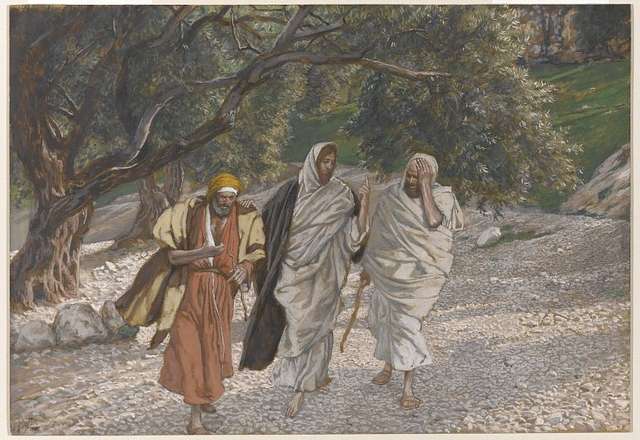
But Jesus chose instead to take a solitary walk–on the road from Jerusalem to Emmaus–and happened upon Cleopas and an unnamed believer.

They didn’t recognize him; God chose to hide his Son’s identity from them. Almost immediately they began to talk about recent events in Jerusalem: Jesus’ death and resurrection.

The companions explained what they knew and expressed their disappointment in the outcome.

“We thought he’d rescue us from Roman rule and establish the kingdom of God he always talked about,” they confessed. “This morning some women and a few disciples went to his tomb and it was empty, but as far as we know, no one has actually seen him.”

Jesus chided them for focusing solely on the prophecies that presented a reigning Messiah who would overtake Israel’s enemies. He started expounding on other scriptures that foretold a suffering Messiah, who’d come to bear the penalty for humanity’s sins.

And as Jesus spoke, their spiritual eyes were opened to see how each prophecy had been fulfilled in Jesus Christ [1].

What scriptures did he share? The Bible doesn’t tell us. But perhaps Jesus included such examples as these:

1.“They conspire against me and plot to take my life” (Psalm 31:13b).

Fulfillment: “Then the Pharisees went out and began to plot with the Herodians how they might kill Jesus” (Mark 3:6).

2. “And the Lord said to me, ‘Throw it to the potter’—the handsome price at which they valued me! So I took the thirty pieces of silver and threw them to the potter at the house of the Lord” (Zechariah 11:13).

Fulfillment: Judas was paid thirty pieces of silver to betray Jesus. When he returned it out of remorse, the chief priests used the money to buy a potter’s field as a burial place for foreigners (Matthew 26:14-16; 27:6-10).

3.  “Dogs surround me, a pack of villains encircle me; they pierce my hands and my feet” (Psalm 22:16).

Fulfillment: Jesus was crucified, his hands and feet nailed to a cross (Matthew 27:35).

4. “They divide my clothes among them and cast lots for my garment” (Psalm 22:18).

Fulfillment: “When the soldiers crucified Jesus, they took his clothes, dividing them into four shares, one for each of them, with the undergarment remaining. This garment was seamless, woven in one piece from top to bottom.

“‘Let’s not tear it,’ they said to one another. ‘Let’s decide by lot who will get it.’” (John 19:23-24).

5. “All who see me mock me; they hurl insults, shaking their heads” (Psalm 22:7).

Fulfillment: Passersby, Romans soldiers, chief priests, teachers of the law, elders, and even those crucified with him all mocked Jesus (Matthew 27:27-31, 39-44).

6. “They . . . gave me vinegar for my thirst” (Psalm 69:21).

Fulfillment: Jesus said, “I am thirsty.” They dipped a sponge in wine vinegar, put the sponge on a stalk, and lifted it to Jesus’ lips (John 19:28-29).

Of course, the hour or two Jesus discussed prophecies with Cleopas and his companion wasn’t nearly enough time to cover them all. The Old Testament contains over 300 passages about him, revealing at least 48 details about his life, death, and resurrection [2].
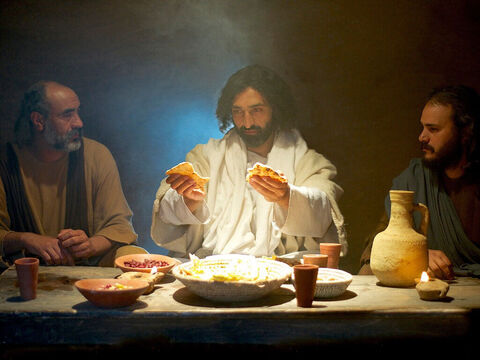
But the evidence the men heard was enough to prompt this passionate response: “Didn’t our hearts burn within us as he talked with us on the road and explained the Scriptures to us” [3]?

Some have called their reaction holy heartburn!

Have you too felt your heart strangely warmed [4]?

As I’ve reviewed just these six prophecies listed above, my heart responded with the warm glow of wonder and worship. Only God could weave together so many precise circumstances into one Life—a Life that has defeated death for all who believe in him!

May such truths create a fire of devotion within us—holy heartburn that will warm and delight forever!


[1] Luke 24:13-32

[2] A recommended resource for more thorough study: The Moody Handbook of Messianic Prophecy, edited by Michael Reidelnik and Edwin Blum.

[3] Luke 24:32 NIV

[4] That was the description evangelist and theologian John Wesley gave of his spiritual encounter with Jesus (https://www.christianity.com/church/church-history/timeline/1701-1800/john-wesleys-heart-strangely-warmed-11630227.html).

Art & photo credits: “The Pilgrims of Emmaus on the Road,” by James Tissot, Brooklyn Museum; http://www.freebibleimages.org (4).

Read Full Post »

“Forgive me, Mr. Ruskin, but I cannot give myself to painting the way you desire and continue to keep God at the center of my life.” Lilias Trotter looked imploringly into her tutor’s eyes.

After three years of instruction from John Ruskin, the well-known artist, author, and art critic, twenty-five-year-old Lilias had prayerfully made the difficult choice. She would forego the opportunity to become “the greatest living painter in England” (as Ruskin predicted she would be) [1], and devote more time to her mission work.

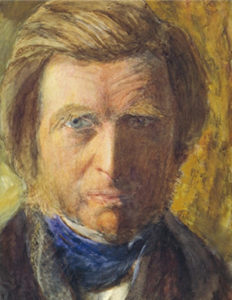
(Self-portrait of John Ruskin)

“Ah, my dear Lilias, he sighed. “I was afraid our efforts would come to this. Goodness knows how many times I’ve complained that you needed to spend more time with your brushes and less time with the women of ill-repute around Victoria Station. However, I do admire your dedication, and regretfully wish you well.”

From this crossroads, a new path began to open before Lilias Trotter.

For a while she continued her work with women at the lowest rung of society, bringing them to the newly-established YWCA for training in various employable skills and introducing them to Jesus.

But in 1887 Lilias found her heart drawn to Algeria, after hearing a plea for more missionaries to the region. She applied to the North African Mission board but was denied because of her frail health.

(Algiers, Algeria circa 1880)

Undeterred, Lilias and two friends chose to go on their own. A generous endowment from her wealthy father (upon his death in 1865) provided the financial support necessary.

The three women settled in the French Quarter of Algiers and immediately began learning the Arabic language and Muslim culture. Because of the male-dominated society, they chose to engage women and children.

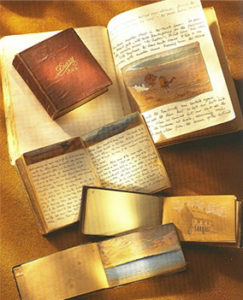
(watercolor sketches from Lilias’ journals)

Lilias put her artistic abilities to work creating leaflets. The charming illustrations drew attention to the spiritual truths she wrote. Her inspiration came from the hours she spent in Bible study, meditation, and prayer.

But inroads into Algerian society didn’t come easily. Nearly everyone was suspicious of them. They were women after all, European and Christian. Opposition came from the French authorities as well as Muslim leaders. Lilias wrote in one of her journals that she and her friends felt like they were knocking their heads against stone walls [2].

In addition, the Muslim women were difficult to reach since they were seldom allowed in public. But after several years one woman accepted Jesus into her life. Sometime later another woman and then another expressed their faith, until they could count their little band of believers on two hands.

Lilias also traveled into Morocco on the west and Tunisia on the west, into the far regions of the Sahara Desert where no European woman had been before. There too she sought out the isolated Arab women as well as the Sufi mystics who resided in the desert.

Lilias shared her pamphlets and booklets that included depictions of Arab life, always praying that her writings and drawings would help these Muslims understand who Jesus is and why he came.

Of course, persecution came to those who chose Jesus. Two of the new Arab Christians were slowly poisoned to death, others were drugged, and still more were punished in additional ways.

After twenty years of struggle, the missionaries still had little to show for their effort. And yet Lilias wrote:

I am full of hope that when God delays in fulfilling our little thoughts, it is to leave Himself room to work out His great ones. And, more and more as time goes on, I feel that the longer He waits the more we can expect, . . . and the greater will be the band of those who will come forth free from their prison walls. When one gets hold of that vision, one can throw back in the devil’s face his taunts over the seemingly wasted years that lie behind us.

Lilias Trotter

Perhaps even more productive than her conversations with people was the impact of her writings. Lilias’ appealing parables, “creatively illustrated in Eastern style” were widely circulated [3].

She felt confident that the Arabs would more seriously consider written material in the privacy of their homes, than in public conversation where opposition was likely. With her knowledge of the culture, language, and arguments of challengers, she was perfectly-suited for the task of producing these materials.

Lilias returned to Europe a number of times because of her health, each time in dire need of rest as well as relief from Africa’s oppressive heat. But Lilias often used these trips to garner interest and support for the organization she founded: the Algerian Mission Band.

A number of people responded, joining Lilias in her work. However she never asked for financial backing. “God’s wealth is boundless,” she said [4].

For forty years Lilias Trotter lived out her passion for the Algerian people. Before her death in 1928, she’d established twelve mission stations. And instead of three workers, a team of thirty had joined them, bringing the joy-filled, abundant life of Christ to the Muslims of Algeria [5].


Notes:

[1] https://ililiastrotter.wordpress.com/about/

[2] https://ishshahsstory.com/2016/08/10/celebrating-lilias-trotter-of-algeria/

[3] https://www.imb.org/2019/06/12/missionaries-you-should-know-lilias-trotter/

[4] https://thiseternalmoment.com/the-life-and-legacy-of-lilias-trotter/

[5] https://pioneers.org/2021/03/15/the-legacy-of-lilias-trotter

Other sources:

https://www.christiantoday.com/article/lilias.trotter.talented.artist.dedicated.missionary/139139.htm

https://liliastrotter.com/about/

Photos of Lilias Trotter and her paintings as well as John Ruskin’s self-portrait, courtesy of Lilias Trotter Legacy at http://www.liliastrotter.com and their Facebook page. Street scene of Algiers: http://www.commons.wikimedia.org.

Read Full Post »

“Living well [the Christian life] is both a discipline and an art,” wrote Sarah Young [1] .

The discipline-part was easy enough to affirm. From experience I know: spiritual practices do enhance the joy of relationship with my Heavenly Father—behaviors like Bible study, prayer, worship, giving, and more.

But what might the art of Christian living look like? For me that was more difficult to qualify.

I turned my thoughts to artists themselves. What actions impel them toward creating art that produces beauty and meaning, and pleases the eye?

(One of our son’s recent paintings)

That question spawned another. What might I learn about producing beauty and meaning in my life that pleases God and my soul?

The following truths presented themselves:

Artists are observant, paying attention to detail. They’re constantly learning; delighting in discovery.

Imagine studying a blade of grass. Take note of the rich green color and subtle striping, its graceful curve downward and sharp, pale-yellow point. Add crystal dew drops and the sight is indeed beautiful and pleasing.

“The moment one gives close attention to anything, even a blade of grass, it becomes a mysterious, awesome, indescribably magnificent world in itself”.

Henry Miller

But how often do we barrel through our days with no attentiveness, no reflection, no listening to God’s voice? In the middle of the bustling, niggling, babbling pother we miss God’s presence and other glorious gifts [2].

Lesson #1: The art of living well includes attentiveness to God’s beauty—in creation, in people, in words and deeds, in everything.

Artists spend time with inspiring people, including other artists.

And who is more inspiring than God?! He invites us to concentrate on staying close to him, the divine Artist [3].

Just think: God wants to spend quality time with us. He looks forward to our time together and misses us when we don’t show up. Quiet time isn’t meant to be a ritual; it’s meant to be a relationship [4].

Lesson #2: The art of living well includes the great privilege and pleasure of keeping company with God.

Artists are deep thinkers and curious about truth.

While the subject matter of the masterpiece, The Girl with a Pearl Earring is obvious enough for a child to understand, it will not yield its astonishing riches except to those who study the painting and reflect on Vermeer’s attention to light, shade, balance, color, and even the brush strokes. (Only two strokes created the pearl.)

The same is true for those of us who seek truth from God’s Word. Its basic message is clear enough for a child to understand [5]. But it will not yield its astonishing riches unless we study and reflect on its teachings (Proverbs 4:20-22).

Lesson #3: Open the treasury of the Bible and delight in its magnificent contents. 

Artists are persistent and patient.

It took Georges Seurat two years to paint A Sunday on Le Grande Jatte—with tiny dots.

Leonardo da Vinci spent about four years to get the Mona Lisa just right.

Michelangelo lay on his back the better part of five years to create the 343 figures on the ceiling of the Sistine Chapel.

Consider: “Even God does not make a glorious sunset in a moment. For several days He gathers the mist with which to build His beautiful palaces in the western sky”[6].

Lesson #4: Take joy in process and progress; stay the course and proceed steadily in the way God reveals (Psalm 119:1 MSG).

Artist, Robert Henri (1865-1929) observed:

“The object isn’t to make art, it’s to be in that wonderful state which makes art inevitable.”

Robert Henri

Such an applicable statement to the art of living well as a Christian! Our object isn’t to perform for God as much as it is to know him, love him, and desire to honor him–which makes a beautiful, God-honoring life inevitable.    


[1] Sarah Young, Jesus Calling, 193.

[2] Leslie William, Night Wrestling, quoted in Refresh My Heart, compiled by Terri Gibbs, 124.

[3] Ibid.

[4] Joanna Weaver, Having a Mary Heart in a Martha World, 73.

[5] Jesus took the punishment we deserved for our wrongful behavior. When we confess our sins, believe in Jesus as our Savior, and accept him into our lives as Lord, he bestows many blessings now, and eternal life in heaven with him to come. Millions of children have responded with simple faith to these wonderful truths. I was one of them.

[6] L. B. Cowman, Streams in the Desert, p. 206.

Art & photo credits: J. Eric Ruegg; http://www.wikimedia.commons.org; http://www.publicdomainpictures.net; http://www.hippopx.com; http://www.wikimedia.commons.org (2); http://www.canva.com.

Read Full Post »

“Can I come watch with you, Papa? There’s no school tomorrow.”

Papa nodded and motioned with his left hand for her to join him on the front porch. His right hand remained on the rifle across his lap. “Come on, Sugar. But you sit light, y’hear? Be ready. ‘Member what I told you?”

“Yessir. I’m to run inside but shut the door easy, and tell everybody to skedaddle to the creek, and run.”

“That’s my girl. No KKK Klan is going to mess with us, right? Now, recite for me Psalm 23 soft and slow. Such beautiful words and promises!”

Six-year-old Rosa settled herself in the rocker next to her grandfather, confident he would keep the family safe through the night. She began to recite the favorite psalm.

Violence never came to the McCauley home in Pine Level, Alabama, but throughout her growing up years there and then in Montgomery, Rosa endured the burden of racial injustice against blacks, including different (and deficient) schools and libraries, separate restaurants and water fountains.

One time a white boy shoved Rosa hard from behind. She was expected to endure such abuse without retaliation, but Rosa shoved back. The boy’s mother witnessed the incident and bellowed, “Who do you think you are?”

Rosa courageously replied, “I won’t be pushed around by your son or anyone else.” Then, in spite of her pounding heart, Rosa calmly turned and walked away. The mother let the matter lie.[1]

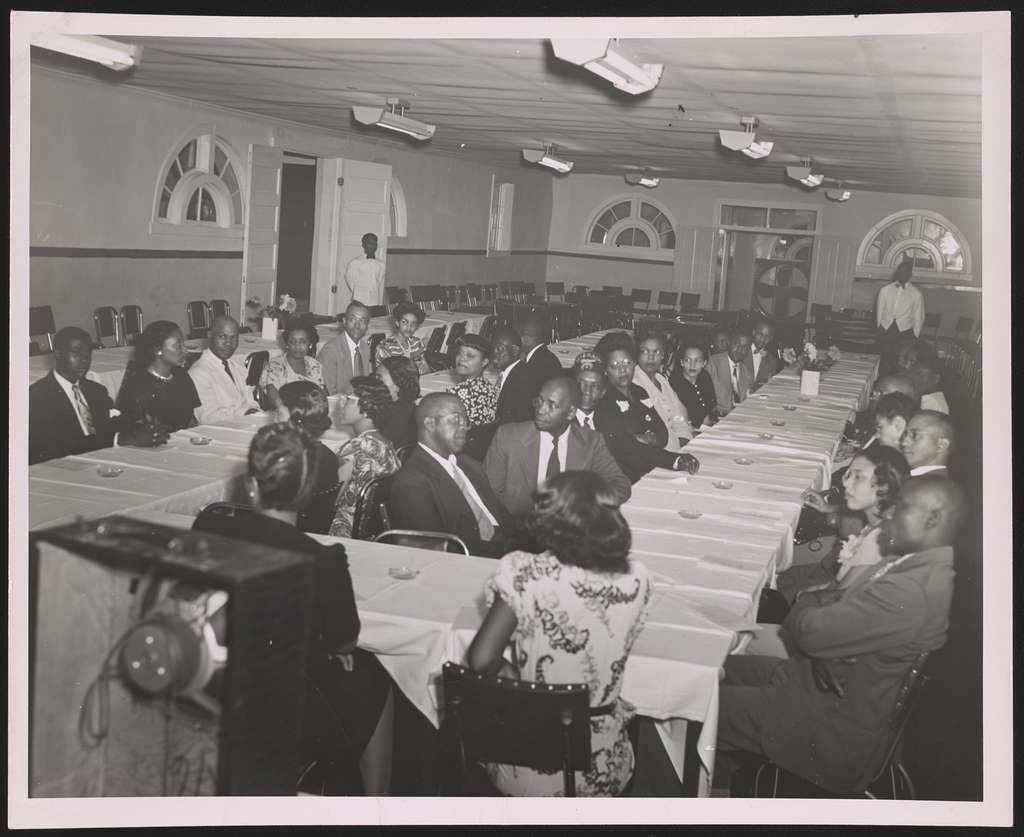
In 1932 at age nineteen, Rosa married Raymond Parks. He was an activist-member of the NAACP, the National Association for the Advancement of Colored People. A decade later, Rosa’s growing frustration with the status quo led her to join also. She eagerly learned about civil disobedience and served as secretary to the local and then state organization.

(NAACP Meeting in Montgomery, about 1947)

Along with many blacks in the South, Rosa suffered daily humiliation on the city bus, as she rode to and from work. Black passengers were required to pay their fare at the front, then get off and re-enter the bus through the back to sit in the rear. If the bus became crowded, black people had to give their seats to whites.

But on December 1, 1955, Rosa refused to relinquish her seat—not because she was physically exhausted, as some have said. No, she was tired of mistreatment because of the color of her skin.

Enough was enough.

“When that white driver waved his hand and ordered us up and out of our seats,” she later recalled, “I felt a determination cover my body like a quilt on a winter night.[2]

“God’s peace flooded my soul, and my fear melted away. All people were equal in the eyes of God, and I was going to live like the free person God created me to be. I refused to move.”[3]

Instantly Rosa felt infused with God’s strength. Police arrested her, put her in jail, and charged a $14 fine, but she remained composed through the ordeal. They released Rosa that evening.

As news of her arrest spread, more people—black and white—began to express indignation over the evil of segregation. Leaders in the NAACP decided to establish a boycott of the Montgomery bus company until the law was changed.

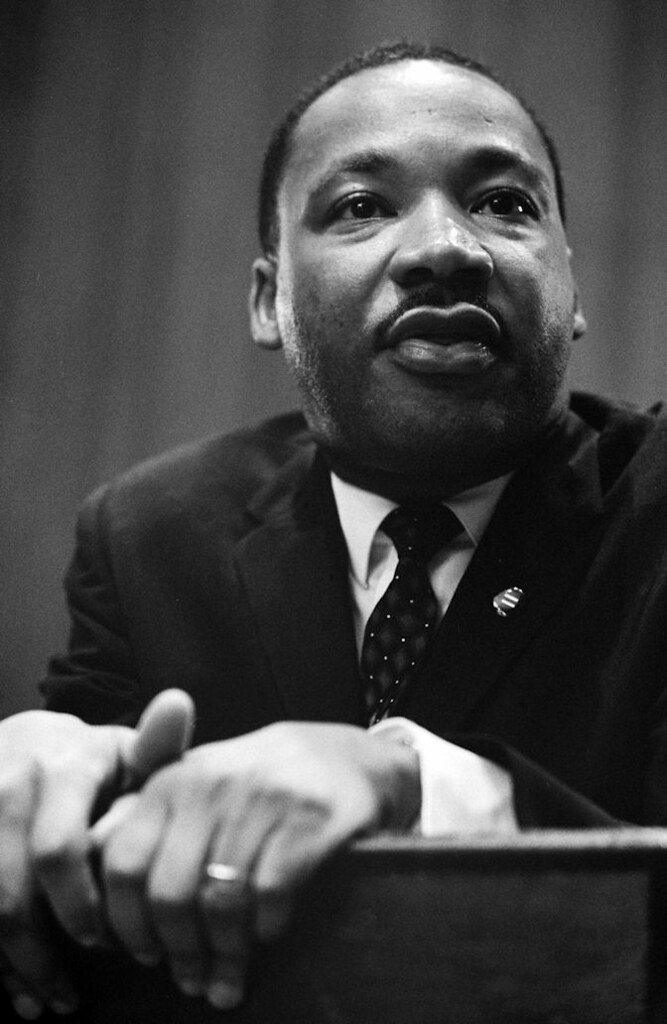
Supporters knew they would need God’s wisdom, strength, and perseverance. A prayer meeting was scheduled, and a young minister addressed the crowd: Martin Luther King, Jr.

“We must protest the law of the land because it violates God’s law,” he said. “But violence is not the answer. It is our duty to protest segregation, but we must do so with dignity and Christian love. Join me in praying that the radiant stars of love and brotherhood will soon shine over our great nation.”[4]

Boycott participants (which included blacks and whites) had to find alternate transportation. Many walked up to several miles to work and then home again. Churches helped to find rides for some. Others were given rides by coworkers—again, black and white.

Of course, opposition came quickly. False arrests, harassment, and even bombings occurred, yet the boycott continued. The bus company was losing thousands of dollars and began supporting integrated seating. City commissioners, however, would not back down.

Meanwhile, Rosa’s attorney, Fred D. Gray, took the case from Montgomery all the way to the Supreme Court. A year later, the regulation demanding black people to give up their bus seats to whites was declared unconstitutional.

That decision created a domino effect. If separation was wrong on buses, it was wrong in schools, restaurants, libraries, and elsewhere. Slowly and painfully, one segregation-law after another was abolished.

That pain would impact Raymond and Rosa. They had to leave Montgomery because of harassment and death threats. Rosa responded by spending long hours in prayer, after which “an intense calm swept over her.”[5]

The couple eventually settled in Detroit. From 1965-1988 Rosa worked for Michigan Congressman John Conyers. She remained active in the civil rights movement for sixty years and wrote several books.

Upon her death in 2005, then-Governor Bob Riley of Alabama said, “Rosa Parks will always be remembered as a courageous woman who quietly confronted injustice, and in so doing, changed a nation.”[6]

No doubt Rosa Parks would agree.


[1] https://www.christianity.com/church/church-history/church-history-for-kids/rosa-parks-and-the-bus-ride-that-changed-america-11635083.html

[2] https://www.journeywithjesus.net/Essays/20130401JJ.shtml

[3] https://canonjjohn.com/2021/10/23/heroes-of-the-faith-rosa-parks/

[4] https://www.christianity.com/church/church-history/church-history-for-kids/rosa-parks-and-the-bus-ride-that-changed-america-11635083.html

[5] https://www.journeywithjesus.net/Essays/20130401JJ.shtml, quoting from Jeanne Theoharis’ biography, The Rebellious Life of Mrs. Rosa Parks

[6] https://www.baptistpress.com/resource-library/news/civil-rights-pioneer-rosa-parks-dead-at-92-found-strength-in-scripture-church/

[7] Sinclair Ferguson quote from Grow in Grace, 33-34.

Other sources:

https://constitutioncenter.org/blog/rosa-parks-journey-as-a-civil-rights-icon

https://billofrightsinstitute.org/essays/rosa-parks-martin-luther-king-jr-and-the-montgomery-bus-boycott

Photo credits: http://www.flickr.com (Pat Henson); http://www.flickr.com; http://www.picryl.com; http://www.flickr.com; wwwflickr.com (Jim Forest); http://www.flickr.com; http://www.picryl.com; rawpixel.com.

Read Full Post »

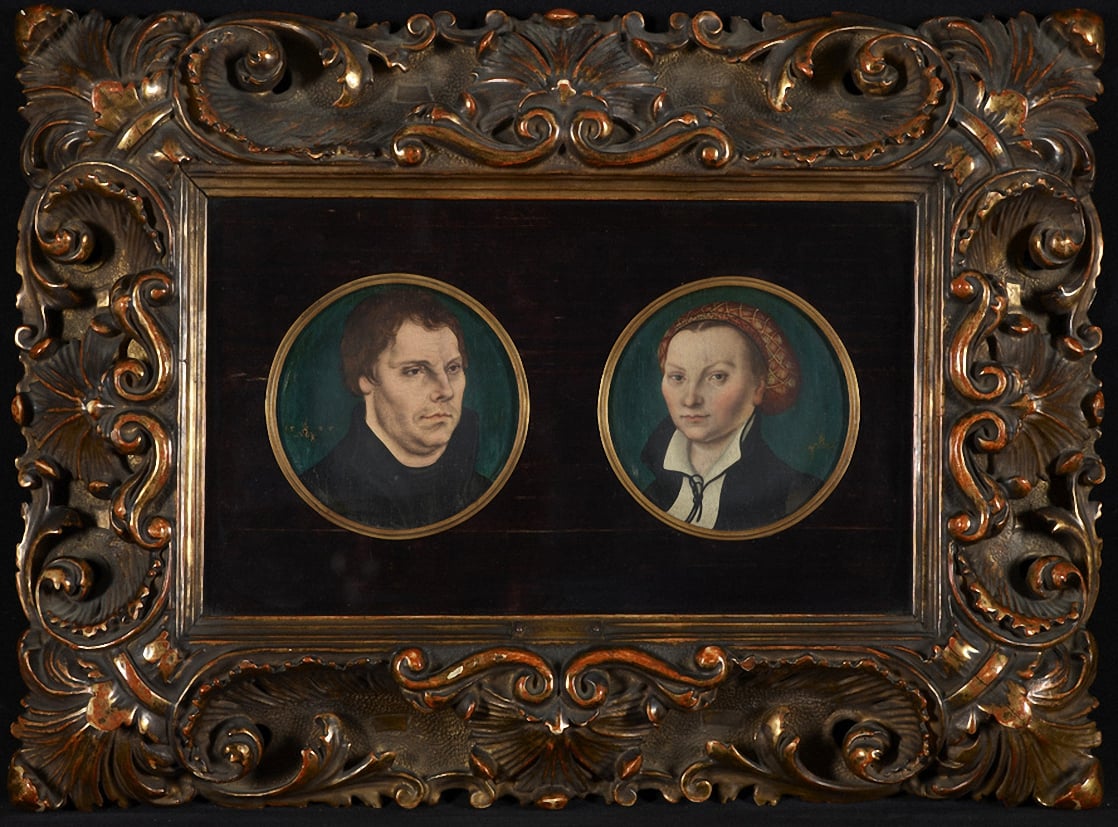
Martin and Katherine Luther

In 1527, the plague approached Wittenberg, Germany, home of Martin and Katherine Luther. Some say it was this looming calamity that prompted Luther to write one of the great hymns of the church: “A Mighty Fortress Is Our God.” [1]

In fact, our congregation sang the ancient lyrics this past Sunday, although we were accompanied by keyboard, guitar, and drum—not organ. I was struck by the second line of the third verse:

“We will not fear, for God hath willed

His truth to triumph thro’ us.”

My mind wandered a bit. I wonder how many scriptural truths promise the result of triumph through us—verses like “My God will meet all your needs.”[2] There must be hundreds!

A bit of research revealed that Luther based his hymn on these scriptural truths from Psalm 46:

  • God is our refuge and strength, an ever-present help in trouble (v. 1)
  • We will not fear though the earth give way (v. 2)
  • The Lord Almighty is with us; God is our fortress (v. 7)

Even though Luther and his family stayed in Wittenberg to care for the sick and dying, he wouldn’t have expected God to spare him or family members from the plague. Luther knew God doesn’t always intervene; he never promised heaven on earth.

But Luther understood: with God as our spiritual refuge, we find the comfort, strength, and support we need through the darkest valleys (Psalm 23).

God will lead us to triumph and provide victory over fear.

Another confidence-building scripture is tucked into the book of Nahum: “The Lord is good, a refuge in times of trouble. He cares for those who trust in him” (1:7).

If we put our minds to it, every one of us can attest to the truth of those statements, because the Lord is good to all. [3]

Consider a few ways God demonstrates goodness to his people, and see if examples from your own life don’t come to mind.

  • He draws us to himself, gifting us with eternal life as we believe in his Son Jesus [4]
  • He provides mentors and experiences that grow our faith as well as blessings that increase our joy [5]
  • He attentively cares for us and spares us from grave errors in judgment as we obey him [6]
  • He bestows comfort and security during difficult times and augments the delight of happy times [7]
  • His Word guides us in perfect wisdom day by day, year after year [8]
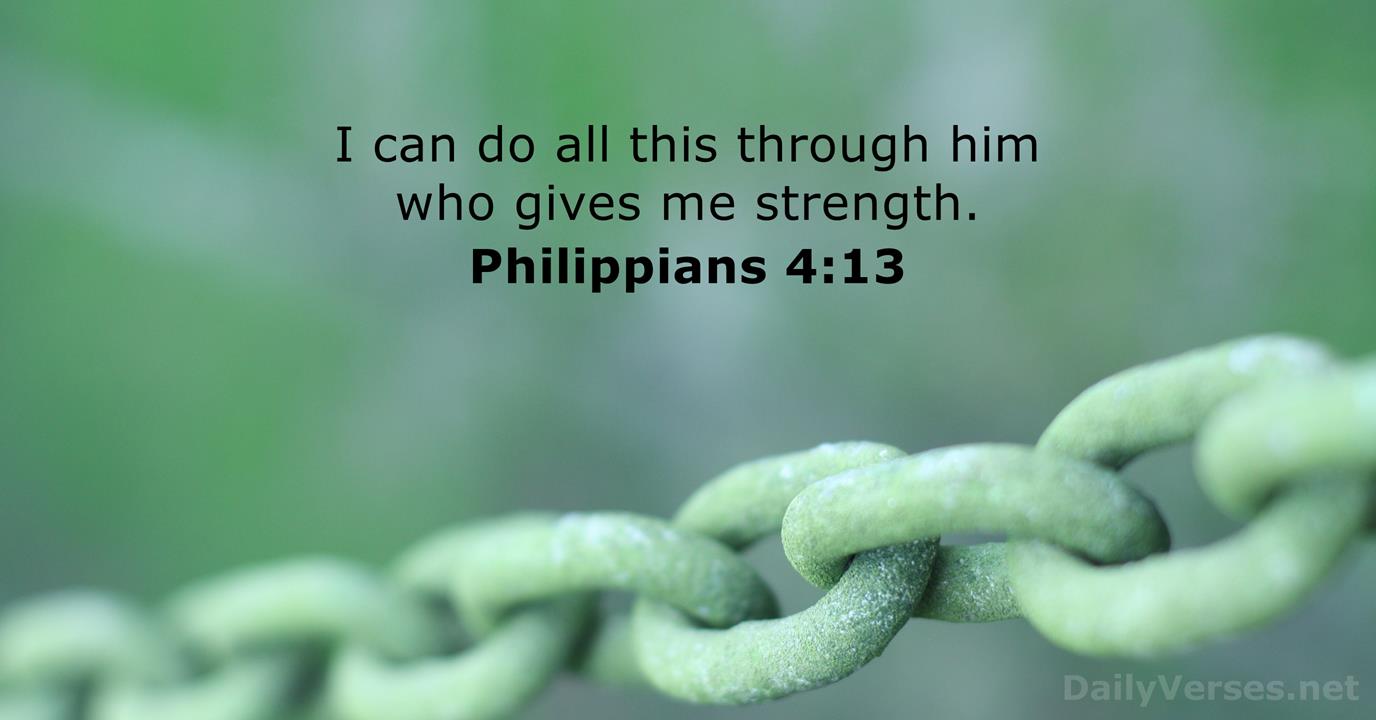
  • He empowers us to accomplish tasks we never could have completed on our own [9]

“It’s important to rehearse the lovely, rich truths and promises that remain when other things change. Keep telling these truths, in all their many-sided glory, and one day, walls already cracked will crumble and fall.”

Jim McGuiggan [10]

Picture your fears cracking, crumbling, and falling in a heap in response to the weight of God’s truths.

That’s a picture of triumph!

“We will not fear, for God hath willed

His truth to triumph thro’ us.”

*     *     *     *     *     *     *     *    *     *

Thank you, Father, for Your gracious invitation to leave our concerns with you and free ourselves of anxiety. As I affirm your truth, you provide fortitude and peace.

One day, the father of lies who provokes all fears WILL be defeated. As Martin Luther wrote, “One little word shall fell him!”[11] We eagerly look forward to that day.

(1 Peter 5:7; Philippians 4:6-7; Romans 16:20; Philippians 3:20)

Addendum: Martin Luther and his family were all spared during the plague of 1527.


[1] No copies of this hymn have been found before this date, but a growing number after, leading various scholars to support this theory (https://www.challies.com/articles/hyms-stories-a-mighty-fortress-is-our-god/).

[2] Philippians 4:19

[3] Psalm 145:9

[4] John 6:44; 3:16

[5] Proverbs 12:15; 18:15; Psalm 4:7

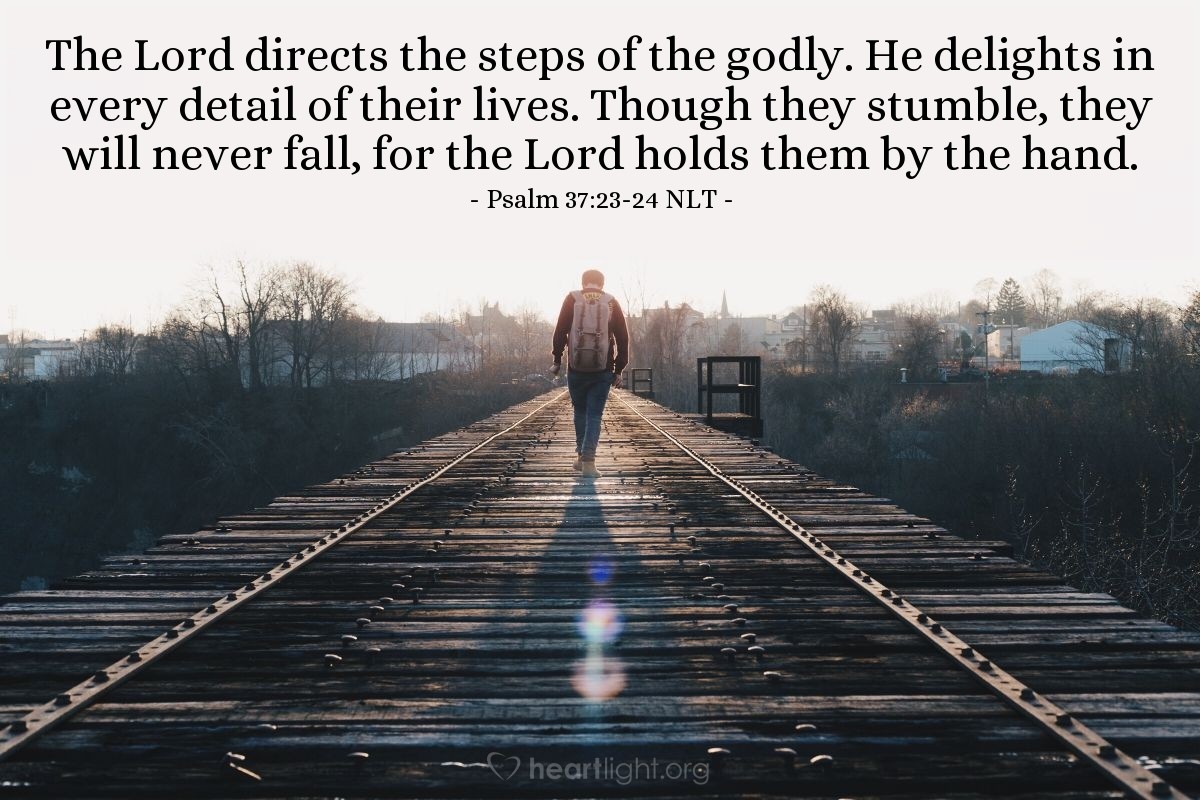
[6] Psalm 27:10 HCSB; 37:23-24

[7] Isaiah 41:10; Psalm 16:11

[8] Psalm 32:8. However, I must confess to not always being receptive.

[9] Philippians 4:13

[10] Quoted by Beth Moore in Praying God’s Word, 138.

[11] From the last line of verse three, “A Mighty Fortress Is Our God”

Art & Photo Credits: http://www.worldhistory.org; http://www.pxhere.com; http://www.dailyverses.net; http://www.heartlight.org; http://www.dailyverses.net; http://www.flickr.com; http://www.canva.com.

Read Full Post »

Whitney sought a foothold and pulled herself up, then changed her hand grips and found another foothold above the previous one. Slowly she inched her way up the 40-foot climbing wall. Though only her first attempt, the four-year-old showed no fear.

Dad recorded the feat, and the video is available on YouTube.

We marvel that such a young child could climb with such confidence. But Whitney knew she was tethered to a rope held secure by the belayer, who also gave wise advice as she climbed. And Dad offered encouragement the whole way up and down.

When she touched ground again, Whitney’s broad smile indicated her delight in conquering the wall.

And the preschooler’s experience proves:

Security, wisdom, and encouragement

contribute to confidence. 

What held true during that preschooler’s rock-climb holds true for us in life. We need a strong Belayer to keep us secure, wise instruction to help us succeed, and inspiring encouragement to help us persevere.

Security

First, our Belayer is God himself. He holds us fast and will never let us go.[1]

And just as Whitney’s security did not depend on her gripping the rope, our security of help, strength, and heaven-to-come doesn’t originate with our grip on God, but his forever grip on us.[2] What we cannot do for ourselves, he has accomplished.[3]

Just as Whitney put her trust in the belayer, we must actively trust God to be our lifeline.

Wisdom

A short distance up the wall, Whitney glanced toward the floor. The belayer wisely advised, “Don’t look down, Whitney! Keep looking up!”

She didn’t look down until the belayer gave her instructions for the descent.

God also offers wise advice through his Word. He wants us to know:

  • True wisdom comes from him.
  • It begins with reverence and humility before God, to be in awe of his holiness, his power over all things–including life and death.
  • He gladly provides this gift to all who ask.
  • Whoever heeds his wisdom will dwell secure.[4]

Encouragement

Last, we have a Father who encourages us, just as Whitney’s dad encouraged her. Again, what we need is found in scripture—passages such as these that inspire hope:

  • “I keep my eyes always on the LORD. With him at my right hand, I shall not be shaken” (Psalm 16:8).
  • “The Lord Almighty is with us; the God of Jacob is our fortress” (Psalm 46:11).
  • “I remain confident of this: I will see the goodness of the Lord in the land of the living. Wait for the Lord; be strong and take heart” (Psalm 27:13-14).

Of course there are hundreds more, assuring us that:

When I allow fearful thoughts to whirl in my mind, I’m really asking, Is God going to see me through this?

How much better to affirm that God will hold me fast until he’s ready to take me home to heaven. He will provide the wisdom and guidance I need for what lies ahead, just as he has in the past. And His Word will continue to offer encouragement, to inspire and strengthen.

Truth leads to confidence.

What contributes to your confidence when facing challenging situations? Please share in the comment section below!


[1] Psalm 37:23-24

[2] https://www.seeyouinheaven.life/secure-forever-in-christ/

[3] Romans 8:3-4

[4] Proverbs 2:7; 1:7, James 1:5; Proverbs 1:33

Photo credits: http://www.youtube.com; http://www.heartlight.org; http://www.flickr.com (Noah Berger); http://www.heartlight.org; http://www.canva.com; http://www.commons.wikimedia.org.

Read Full Post »

If you brought together six people with diverse traits and backgrounds, their answers to the title question would likely include six different types of spaces.

Some of us prefer cozy decor, surrounded with precious keepsakes.

Others prefer sleek, white spaces with lots of light.

Some like a rustic, log cabin aesthetic; others prefer the industrial look.

And more than a few gravitate toward the quirky.

But no matter our style preferences, research has confirmed that certain environmental factors impact our mood:

  • A warm, cozy home creates a sense of well-being for most people
  • Clutter can cause a person to feel overwhelmed and anxious; tidy, organized spaces tend to calm
  • Beauty in the form of pleasing colors, sounds, and smells as well as meaningful objects can elevate a person’s mood
  • A dark room can make a person feel lethargic; light energizes and exhilarates
  • Bringing nature indoors with plants and flowers contributes to serenity

But we can’t always control our physical environments. Home isn’t warm and cozy in the midst of ongoing conflict. Children (and maybe a few spouses or roommates out there!) make messes they’re loathe to clean up. And days on end of gray weather can sap energy and joy. What then?

We can shift our focus from what’s around us to what’s within–the spiritual surroundings of our souls. But how do we impact that invisible space, in order to experience equilibrium and calm?

Let’s begin by imagining the soul like a room, and consider the bullet points above.

First, it is God who creates a warm and cozy environment in the depths of our being—a sense of peace and contentment that no one or nothing else can accomplish. To access His peace we only need to ask. And as the atmosphere of our spirits change, we discover: “The very act of breathing in his presence is balm.”[1]

Second, clutter in the soul includes such unsightly messes as sin, negativity, and worry. God knows we can’t remove the muck on our own. But out of his love and mercy, he gladly helps get rid of the filth as we turn to him for forgiveness, help, and strength.[2]

We can enhance our soul-spaces with beauty—thoughts that center on all things lovely, excellent and praiseworthy. Imagine hanging on the walls of your spirit pictures of God’s faithfulness—remembrances of his provisions, guidance, and blessings. View with delightful awe his magnificent deeds.[3]   

A few well-placed lights of scripture[4] will certainly energize and elevate our mood—passages such as these:

  • “Blessed are those who have learned to acclaim you, who walk in the light of your presence, O Lord. They rejoice in your name all day long, they celebrate your righteousness for you are their glory and strength”.
  • “You will keep in perfect peace those whose minds are steadfast, because they trust in you.”
  • “The Lord is good, a refuge in times of trouble. He cares for those who trust in him.”[5]

Last, at least for this post, we can bring the delight of nature into our spirits, much as we enjoy bringing plants and flowers into our homes.

Have you noticed that when we take the time to marvel at the intricacies of a leaf or petal, our pleasure is expanded further?

Similarly, we can take time to marvel in God’s attributes and abilities gloriously displayed in creation:

  • his inventiveness and engineering—from insects designed to walk on water to whales that communicate underwater.
  • His attention to detail as he created a planet that sustains life.
  • His mind-boggling power to fill the universe with stars, planets, moons, galaxies, nebula, comets, and more—all governed by the scientific laws he established.

And as a result of such contemplations, our pleasure in him is expanded.

When all these elements are combined within our spirits—warmth and coziness with God, cleanliness, beauty and light from God, as well as delight in God, we discover true sanctuary, a place where we can enjoy intimate relationship with him and rest for our souls–a place of refuge and calm.[6]

Isn’t that a place where youd like to live?


[1] Philippians 4:6-7 and Jan Karon, A Common Life, 116.

[2] Psalm 51:7, Psalm 94:18-19, Philippians 4:13

[3] Philippians 4:8; Psalm 105:5a; Habakkuk 3:2b

[4] Psalm 119:105

[5] Psalm 89:15-17a; Isaiah 26:3; Nahum 1:7

[6] Matthew 11:28-29; Psalm 55:6; Isaiah 25:4; Psalm 16:11

Photo credits: http://www.rawpixels.com; http://www.pexels.com; http://www.flickr.com (Nicolas Huk); http://www.commonswikimedia.org; http://www.pexels.com; http://www.rawpixel.com; http://www.canva.com; http://www.piqsels.com; http://www.publickdomainpictures.net; http://www.commons wikimedia.org.

Read Full Post »

Mr. Ribeau studied young Michael’s work, checking for crooked stitches and traces of glue. But after just two years of training, the young book-binding apprentice was already quite proficient.

“You’ve done a fine job, my boy!” Mr. Ribeau praised.

A small smile curled on Michael’s face. “Thank you, sir. This is the last book for today. May I go work on my experiments, please?”

Mr. Ribeau chuckled. “Of course. Off with you!” 

Michael scurried to the back room where his master had given him space to investigate his favorite subject: electricity.

Interest had begun five years before in 1803 when Michael became an errand boy for Mr. Ribeau. Michael would read the books that came into the London shop for binding. Even though he attended school for just two years, Michael read with competence.

The volumes on science especially intrigued him, and he desired to conduct his own experiments. Kind Mr. Ribeau had made it possible. He also provided extra pennies now and then to attend scientific lectures.

Another book captured Michael’s attention: The Improvement of the Mind by the famous hymn-writer, Isaac Watts. Michael determined to follow Watts’ advice including: read worthwhile books, take thoughtful notes, and “ever maintain a virtuous and pious frame of spirit.”

No doubt Michael’s heart was primed for such a book, since he came from a Christian home. And as he grew into manhood, Michael embraced his faith in Jesus with ever-maturing dedication. 

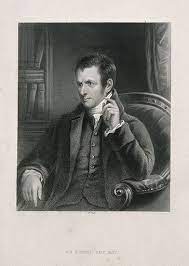
One day Mr. Ribeau presented Michael with four passes to attend presentations by Sir Humphrey Davy, a renowned chemist. At each lecture, Michael took careful notes. Later he bound them into a beautiful book.

Sir Humphrey Davy

In 1811 at age nineteen, Michael completed his apprenticeship, but had no desire to become a bookbinder. Though just a tradesman with little schooling, he sought a position with one of the scientific institutions, including Sir Davy’s prestigious Royal Institution.

With that application, he sent his precious notebook from Davy’s lectures, hoping to convince the great chemist of his passion for the sciences. But no position was available.

In 1813 an invitation arrived for Michael to interview with Davy, and he was hired as a laboratory assistant. Michael quickly proved himself, assisting Sir Davy at his lectures. Six months later, Davy selected Michael to accompany him on a two-year lecture tour through Europe.

When they returned, Michael pursued his scientific studies with passion. He researched steel, hoping to make it stronger. He sought to improve lighthouse lamps, prevent corrosion of ships, clean up the pollution in the Thames, and preserve art works and sculptures.  

Young Michael Faraday

Michael was the first person to liquefy chlorine and discovered a new element, later named benzene, that’s used in dyes, nylon, and plastics. Further discoveries included the process that produced refrigeration and the potential use of ether as an anesthetic.

But he didn’t neglect his first love, electricity. Michael invented the transformer and the dynamo that created electricity without a battery. His discoveries also paved the way for the electric motor. In fact, Michael Faraday has been called “the scientific genius who gave electricity to the world” (1).

Such research propelled Michael into elite circles. He became director of the Royal Institution where he’d begun as an assistant to Sir Davy. Oxford University awarded him a doctorate, and he was invited to become a member—even president–of the prestigious Royal Society. He declined the position.

Michael Faraday lecturing at the Royal Institution: Prince Albert and his sons in the audience. Wood engraving, 1856, after A. Blaikley. Contributors: Alexander Blaikley. Work ID: xt5crqqq.

In spite of great success, Michael Faraday remained a humble man, uninterested in the fortune he could have amassed, manufacturing his inventions.

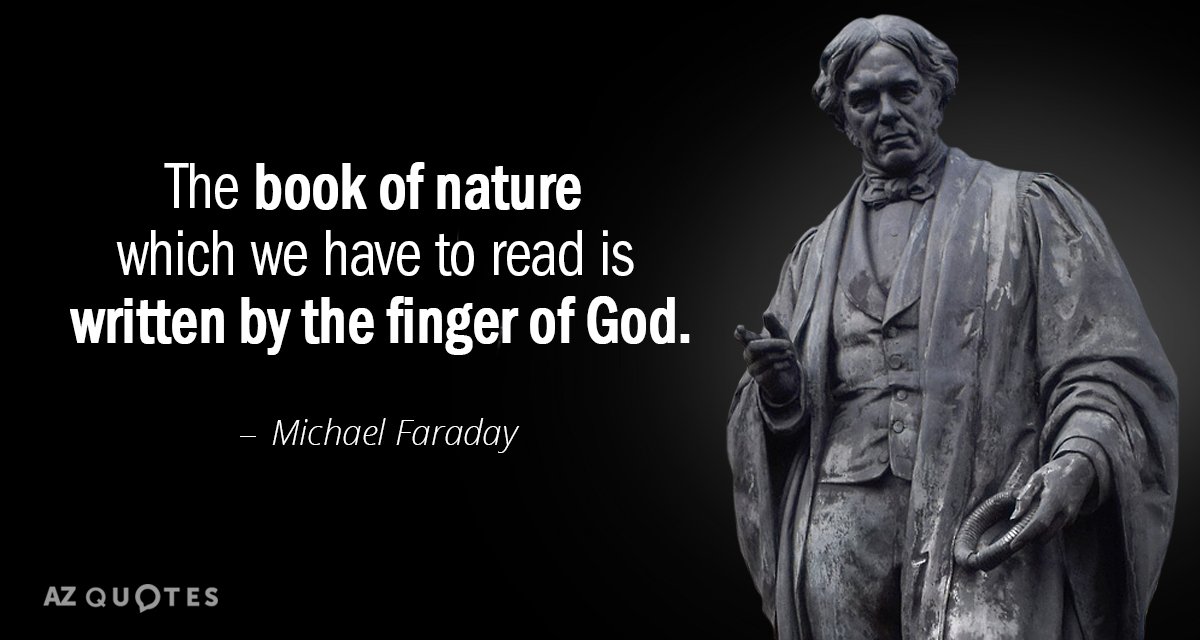
To Michael, the pursuit of scientific studies was a holy calling, and to understand even a fraction of nature’s workings was a gift from God (2) –much more valuable than money.

But not all his waking hours were devoted to science. Faraday was an active church member, serving as elder for more than 20 years, frequently leading in worship and even preaching.

Faraday also demonstrated faith-in-action. For example:

He proved himself a forgiving man on many occasions. One time the elders removed him from their circle—even church membership for awhile–because he accepted an invitation from Queen Victoria for Sunday lunch, which meant he couldn’t be at church. 

But Michael continued to attend services and remained cordial to all, including those who’d hurt him.

Michael demonstrated grace. He and Sir Davy differed in opinion more than several times, but the younger scientist always expressed admiration for his mentor.

Michael’s generosity was also well known. He supported charities and visited the poor. And when his mother became widowed, he also supported her.

Throughout his career Michael expressed gratitude to God that he, a poor, uneducated tradesman should be privileged to explore the beauty and synchronization of God’s physical laws of creation.  

In 1861, the aging Faraday wrote to a friend, “The contemplation of death [is] a comfort—not a fear. Such peace is alone in the gift of God. . . His unspeakable gift in His beloved Son is the ground of no doubtful hope” (3).

Michael Faraday proved himself a man of intelligence and integrity, but also of strong faith in God, and in the end, peace.

Michael Faraday. Photograph by W. Walker & Sons. Work ID: hjz8gkmw.

Isaac Watts, the author that inspired Faraday, would have been pleased, and no doubt so was God (Psalm 147:11).

Notes:

1. https://www.revshirelymurphy.co.uk/post/michael-faraday-and-his-christian-faith-which-influenced-his-science

2. https://crev.info/scientists/michael-faraday/

3. Ibid

Sources:

https://answersingenesis.org/creation-scientists/profiles/michael-faraday-gods-power-and-electric-power/

Heroes of the Faith: Michael Faraday

https://christianhistoryinstitute.org/magazine/article/drinking-from-a-fount-on-sundays

https://christiantoday.com.au/news/michael-faraday-his-christian-faith-influenced-his-science.html

https://creation.com/michael-faradaygods-power-and-electric-power

Michael Faraday

https://www.revshirleymurphy.co.uk/post/michael-faraday-and-his-christian-faith-which-influenced-his-science

Art & photo credits: rawpixel.com (2); http://www.lookandlearn.com; http://www.picryl.com; http://www.lookandlearn.com; http://www.azquotes.com; http://www.lookandlearn.com.

Read Full Post »

Perhaps you’ve also heard these definitions:

  • A pessimist is a person who is seasick during the entire voyage of life.
  • An optimist is a person who goes in a restaurant with no money, and fully expects to pay for his meal with the pearl he finds among the oysters that he plans to order.
  • A realist is a person who does precise guesswork based on unreliable data provided by those of questionable knowledge.

M-m-m. According to those tongue-in-cheek definitions, who would aspire to any of these three attitudes?

Truth be told, pessimists often do identify worst-case scenarios and sometimes think God doesn’t care or he’d intervene. Optimists can believe God will always make good things happen, if we just have enough faith. Realists might not focus on the negative, yet still be cautious about expecting God’s involvement in their circumstances.

But what if he desires that we expect great things–things like strength to endure, help to solve problems, provision for needs, and guidance for decisions? Nineteenth century pastor/author Andrew Murray suggested:

It occurred to me that we Jesus-followers might aim past pessimism, realism, or optimism, toward up-timism. No, you won’t find that word in Webster’s. But according to the Nancy Ruegg Dictionary of Words We Need the up-timist looks up toward God, trusting that out of his love, goodness, and wisdom, he will do what is right.

Up-timists also take to heart the promises of scripture, they remember God’s faithfulness in the past, and affirm who he is in all his glorious attributes.

This doesn’t mean up-timists are perpetually giddy with cheer. But even as tears of pain or grief course down their cheeks, they rest in their Heavenly Father with joy. They’ve learned how to be “sorrowful but always rejoicing” (2 Corinthians 6:10).

Consider these words from the great preacher Charles Spurgeon: “We ought to be glad and rejoice forever in that which God creates. Ours is a heritage of joy and peace. My dear brothers and sisters, if anybody in the world ought to be happy, we are the people. . . How boundless our privileges! How brilliant our hopes!”[1]

These words were penned when Spurgeon was deathly ill. Though he rallied for a time, the great theologian graduated to heaven six months later.

In the letter to his people excerpted above, he included a main characteristic of the up-timist: hope.

Hope is the confident expectation that God will use our painful circumstances for good . . . it’s what allows us to choose to rejoice amid hardships and to say to God, “I will rejoice in You.”[2]

By contrast, pessimists are often characterized by fatalism, realists by over-confidence in their own perceptions, and optimists by wishful thinking.

But up-timists affirm such confident expectations as these:

  • The Lord preserves those who are true to him . . . Be strong and take heart, all you who hope in the Lord (Psalm 31:23-24).
  • Yes, my soul, find rest in God; my hope comes from him. Truly he is my rock and my salvation; he is my fortress, I will not be shaken (Psalm 62:5-6).
  • You are my refuge and my shield; I have put my hope in your word (Psalm 119:114).

Hope isn’t an automatic response in times of hardship, even for up-timists. We have to exercise our determination. One way is to speak truth to ourselves–with conviction. The scriptures listed above offer a good place to start.

Other truths include:

  • I know God has a purpose in this circumstance (Proverbs 19:21).
  • I know God will bring me through (Isaiah 40:29-31).
  • I know God is a good and loving Father, and he’s working toward the eternal perfection of his kingdom, for the benefit of all who love him (1 Corinthians 2:9).

Note how God is at the center of the up-timist’s hope. She expects God to work in her life and in the world, anticipates the fulfillment of his promises, and looks forward to seeing his will unfold.

Note also that “hope doesn’t change what we see, like the lens of optimism or pessimism, hope changes us to withstand the journey this side of heaven with enduring joy, peace, and contentment.”[3]

So–would you describe yourself as an up-timist? How does that point of view impact your life? Please share in the comment section below!


[1] https://www.epm.org/blog/2019/Oct/23/godly-optimism.

[2] Jennifer Rothschild, Lessons I Learned in the Dark, 95.

[3] Kim Striver, https://www.coreradiate.com/blog/optimist

Photo credits: http://www.canva.com; http://www.freebibleimages.org; http://www.canva.com; http://www.heartlight.org; http://www.dailyverses.net; http://www.flickr.com; http://www.canva.com.

Read Full Post »

That title comes from the New Living Translation of Hebrews 12:2:

Isn’t that a strength-infusing image? Picture our Lord Jesus wearing a spotless white robe, sitting tall on a regal white horse, a golden sash encircling his chest.  See his face glowing like the sun, eyes blazing like fire. And in his hands rests a scepter of iron. Everything about him conveys authority, glory, and power.[1]

Statue located in Hendersonville, TN at Trinity Music City. Photo by Brent Moore.

But more important than how he looks, of course, is what he does. And that list is extensive. 

We have a Champion on our side—an all-victorious One—who is ready to help us win this race of life as we stay focused on him.[2]

Scripture reveals remarkable truths about our Champion. The following sixteen statements not only create an acrostic, but offer glorious reasons for praise.  

Our Lord Christ is:

Jesus, the Son of God through whom all things were created and through whom we live.[3]

Everlasting Father, protecting and providing for us now and always.[4]

Sovereign over all, reigning with wisdom, righteousness, and mercy.[5]

Unfailing and unchanging in his personal love for each of us.[6]

Savior to all who believe in him.[7]

Overcomer of our arch enemy, Satan, who’s already been defeated.[8]

Upholder of justice and truth, always acting with integrity, always speaking rightly.[9]

Rescuer from every evil attack, who will take us to heaven when the time is right.[10]

Conqueror of death who brought us the good news of salvation, offering life to us that never ends.[11]  

Hero of impeccable character and omnipotent power, willing to help us every moment.[12]

Alpha and Omega, the all-sufficient One who always was and always will be.[13] 

Mighty Warrior King, coming to earth again to establish his glorious kingdom.[14] 

Perfector of our faith, who will never give up on us.[15]

Intercessor for all believers, continually pleading for us before God.[16]

One and only Word of God—communicating and manifesting the magnificence of God to us.[17]

Name above all names, the result of his absolute perfections and humble sacrifice in our place.[18]

And what will be the result as we focus our contemplations upon Jesus our Champion?

His influence will penetrate to the core of who we are.

The Apostle Paul put it this way:

We’ll begin to act and react like Jesus, talk and even think like Jesus.

And in the process we’ll become champions ourselves—victors and conquerors, able to triumph over whatever comes our way.[19] 

*     *     *     *     *     *     *     *     *     *

I praise You, Lord Jesus, for being my Champion. What a glorious relief to know that you—the all-sufficient One–go before me each day, ready to defend, protect, guide, and provide. May I keep my eyes fixed on you to bolster my faith and grow me more like you. I do want to live in confident victory!

2 Corinthians 2:14a; Deuteronomy 31:8;

Psalm 91:14-15; 2 Peter 3:18; 1 John 5:4

Scriptural support for this post:


[1] Daniel 7:9; Revelation 19:11-15; 1:13-16; Daniel 7:14

[2] Philippians 3:7-12; Hebrews 12:2

[3] 1 Corinthians 8:6 NLT

[4] Revelation 21:4

[5] Ephesians 1:19b-21; Jeremiah 23:5; Isaiah 42:1; James 5:11

[6] John 15:13

[7] John 3:16

[8] John 16:33; 1 John 3:8

[9] Jeremiah 33:15; Revelation 19:11; 1 Peter 2:22

[10] 2 Timothy 4:18; John 14:2-3

[11] 1 Timothy 1:10 CEV

[12] 1 John 2:1; Ephesians 1:19; Philippians 4:13

[13] Revelation 22:13; Colossians 1:13-20

[14] Isaiah 42:13; Psalm 72

[15] Philippians 1:6

[16] Romans 8:34 GNT

[17] John 1:1; Colossians 1:15; 2:9

[18] Philippians 2:6-11

[19] 1 Corinthians 15:57; Romans 8:37

Photo credits: http://www.canva.com; http://www.flickr.com (Brent Moore); http://www.dailyverses.net; http://www.commons.wikimedia.org; http://www.canva.com; http://www.dailyverses.net; http://www.rawpixels.com; http://www.commons.wikimedia.org.

Read Full Post »

« Newer Posts - Older Posts »

When the House is Quiet

Impressions Becoming Expressions

Mitch Teemley

The Power of Story

Still Traveling

Impressions Becoming Expressions

Living Our Days

Gaining a heart of wisdom

He Said What?!

I'm Patty, and my husband and I are living with our adult son who has autism and epilepsy. I love sharing lessons learned from life around me, especially life with Aaron.

Meditations of my Heart

Impressions Becoming Expressions

Linda Stoll

Impressions Becoming Expressions

Signora Sheila

Where Faith Meets La Dolce Vita

Heidi Viars

Finding the Image of God