Feeds:
Posts
Comments

Archive for the ‘God’s Goodness’ Category

Given that everything in the universe has its origin in God [1], it stands to reason music originated with God. 

Granted, he could have bestowed the gift without participating himself, but scripture indicates otherwise.

In Psalm 42:8b we’re comforted with this assurance: “by night his song is with me.”  Our part is to pay attention to the lyrics that proclaim his perfections and good works—lyrics he sings over us straight from his Word. When we memorize verses of God’s Song, they can comfort our hearts even in the darkest of times [2].

In Psalm 32:7 we read of God’s “songs of deliverance” that encourage and inspire.  Where might we hear these songs?

In the calming sounds of nature.  Creation is full of God-Song—beyond the musical offerings of birds.  Think of burbling streams, the wind humming through evergreens, frogs ha-rumphing, crickets chirping, and the soulful underwater cries of humpback whales. 

Indeed, God-Song surrounds us in the air, on land, and in the sea, reminding us we’re enveloped in his love.  And because of that love, he provides deliverance from fear, trouble, distress, and the evil one [3].

Second, we hear songs affirming his goodness, dependability, and compassion in his Word [4].

Third, we hear God’s Song through the uplift of hymns and other Christian music. Men or women may be listed as the composers and lyricists, but surely all would give God the credit for his inspiration and empowering.

In Zephaniah 3:17 the prophet depicts God delighting in his people with song. 

“He rejoices with joy and joys with his singing,

which shows how delighted he is with his people . . .

his own righteousness upon them,

his own grace in them.”

— John Gill

Of course, God wants us to make music also, and not just with our voices and instruments.  God longs to come alongside, and within the sphere of his influence, make sublime music with our lives—much more beautiful and satisfying than anything we could accomplish on our own.

Perhaps you saw the video—based on an actual event (and available on YouTube):

A young father settles into his concert hall seat next to his wife, just as a performance is about to begin.

“Where’s Tommy?” he asks.

“I thought he was with you,” she exclaims, worry lines already criss-crossing her forehead.

At that moment the curtain goes up to reveal a little boy, oblivious to the audience, sitting at a grand piano, legs dangling above the pedals.  Tommy.

 One single note at a time—and rather haltingly at that—he begins to play “Twinkle, Twinkle, Little Star.”

“Go get him!” Mom cries in a stage whisper.

Too late.  A tuxedoed man is already approaching the piano from behind Tommy.

Will he reprimand the boy for touching the concert grand? Will he demand that the parents of the delinquent come to collect him?

No, he quietly leans over the boy and tells him to keep playing.  Then he envelopes Tommy with his arms, and begins to add Mozart’s intricacies to the simple melody.  Together they make sublime music, and both smile with pleasure.  So does the audience.

That’s a picture of how the Virtuoso of the universe delights to make music with us, to raise our paltry human effort into transcendent God-Song.  With his righteousness over us, and his grace in us, we can make beautiful music. 

And those around us will hear and smile with pleasure, including the Maestro himself [5].

If you’d like to watch the video:

Art & photos credits: http://www.heartlight.org; http://www.dailyverses.net; http://www.heartlight.org; http://www.dailyverses.net; http://www.publicdomainpictures.net; http://www.heartlight.org; http://www.flickr.com; http://www.pixabay.com.


[1] Colossians 1:16

[2] Psalm 23:4

[3] Psalm 34:4, 17; 107:6; Matthew 6:13

[4] Psalm 31:19; 145:17; 103:13-14

[5] Ephesians 3:20

Read Full Post »

Eight-year old Jennifer Wiseman tagged along behind her parents down the road in front of their farm, just as she did every evening on their habitual walk.  No matter how many times the family of three and various pets set out under the dark sky, Jennifer always ended up trailing them, her head craned backward to study the stars.

With no city lights within miles, the countryside of her Ozark Mountain home offered a spectacular heavenly view.  Jennifer shuffled along, mesmerized. 

It seemed as if heaven’s glory itself shone through thousands of pinpricks in the black canopy of sky.  Jennifer knew about heaven from her parents and their church community where she saw lived out what was being taught.

Her interest in stars grew as she watched Carl Sagan’s television program, Cosmos.

(Carl Sagan)

 What would it be like to explore space, she wondered, to stand on a far-distant planet amidst its craters and mountains? To make new discoveries about the universe? Maybe one day I can be a part of space exploration.

That interest remained with Jennifer.  But whether to become an astronaut, astronomer, scientist or engineer building space probes—Jennifer didn’t know. So she majored in physics at MIT, since that basic science could be applied in many areas of study.

A few months before graduation in 1987, Jennifer traveled with other students to the Lowell Observatory in Arizona.  On photographic plates taken by astronomer Brian Skiff, she discovered a new comet that became known as the Wiseman/Skiff Comet.

(An unidentified comet)

Jennifer continued her education at Harvard, receiving a Ph. D. in astronomy in 1995.  From Massachusetts she moved to Virginia as a Jansky Fellow at the National Radio Astronomy Observatory to research star formation.  Her childhood dream had finally become reality [1].

(Galaxy Grand star forming, photo from Hubble Space Telescope)

Currently she is the Senior Project Scientist for the Hubble Space Telescope.

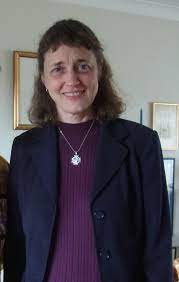
(Dr. Jennifer Wiseman)
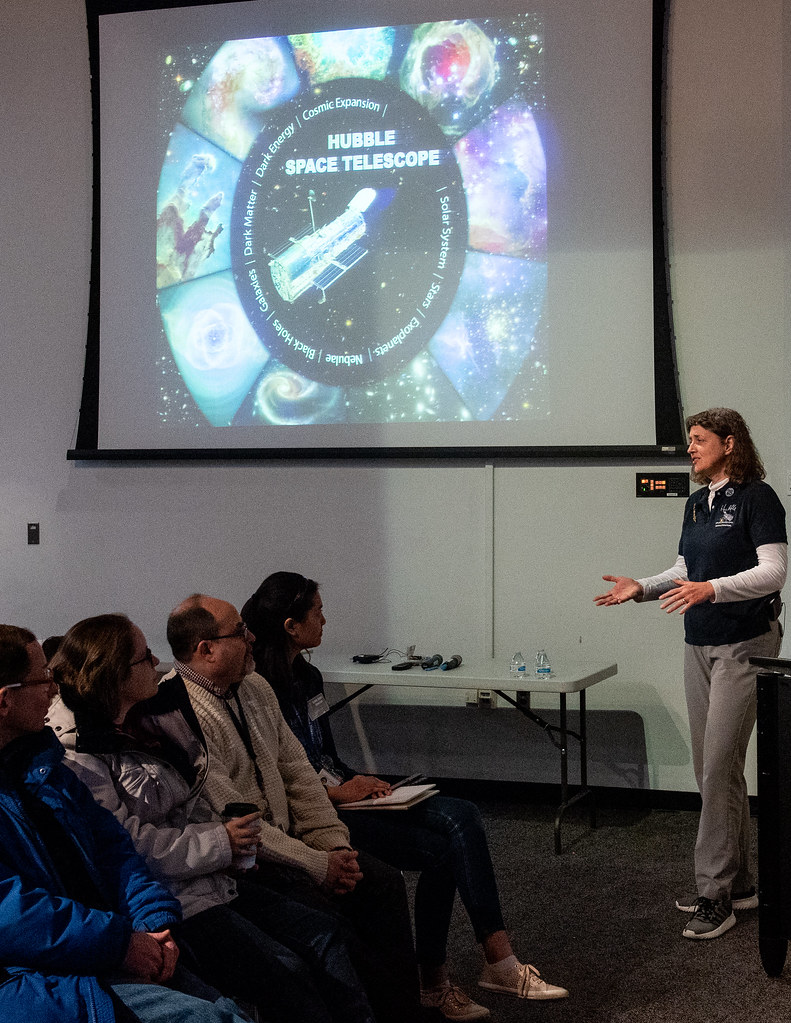
(Jennifer teaching a seminar)

Dr. Wiseman is a sought after speaker because not only is she articulate and passionate about her subject of outer space, but as a believer in Christ she’s a strong defender of exploration as a divinely Christian activity.  She sees no conflict between science and her faith, sharing often a quote from John Calvin [2]:

As Jennifer considers the billions of galaxies, each with billions of stars, she recognizes God is responsible for it all, and has been supporting and sustaining this ever-changing universe over billions of years, long before life existed.

(a star forming, captured by the Hubble Space Telescope)

For some, that realization fosters a feeling of insignificance, but not for her.  Jennifer senses a reverent fear and gratefulness that God engineered the universe to mature over eons of time until at least one planet can support abundant life.

“And I get to be a part of that for just a little while,” she says. “So I’m grateful. It also makes me a little fearful:  am I using my time well [3]?”

Jennifer allows her awe to impact her worship as she contemplates her Savior, the one who sustains the universe (Hebrews 1:3).  “He’s the one responsible for galaxies, black holes, planets, oceans, and porcupines!” she says.

(NASA photo of a dwarf galaxy)

“When we say, ‘Jesus is Lord,’ we must mean that Jesus is Lord of all time and space.  Who was the Lord at the Big Bang when Time began?  Jesus.

“Who was Lord when the first galaxies coalesced and the first stars turned on?  Jesus.

(Colliding galaxies. Photo credit: ESA, Hubble, & NASA)

“Who was Lord as our own solar system came into being?  Jesus.

“Who was Lord during all the epochs of life on Earth—the Cambrian, the Pleistocene, the era of [early humans]?  Jesus.

“And who will be Lord as long as time exists, and forever outside of time as well?  Jesus [4].”

(The Omega Nebula or Swan Nebula)

*     *     *     *     *     *     *     *     *     *

We do praise you, O God, for the wonders of your universe. Thank you for giving us the capability to study and understand its marvels at least in part, providing opportunity to gain insight into your greatness.

(Planetary Nebula)

We also praise you for working at the infinitesimal level—in our individual lives. How glorious we can never come to the end of your attentive loving kindness any more than we can reach the end of your universe.

(Psalm 19:1; Genesis 1:27; 1 Chronicles 29:11;

Matthew 10:29-31; Psalm 57:10)

 Notes


(NASA’s Power Couple, Jennifer Wiseman and Mark Shelhamer)

[1] Meanwhile she married fellow NASA scientist Mark Shelhamer in 1997.  They met at MIT when she was an undergrad and he was pursuing his master’s degree.

[2] https://news.belmont.edu/dr-jennifer-wiseman-speaks

[3] https://blog.emergingscholars.org/2013/07/interview-with-jennifer-wiseman-part-2/

[4] www.letterstocreationists.wordpress.com/2010/11/20/how-science-can-inspire-can-inform-worship-jennifer-wiseman/

Other Sources:

www.technologyreview.com

www.testoffaith.com

https://biologos.org/podcast-episodes/jennifer-wiseman-light-in-space

Photo credits: http://www.flickr.com; http://www.pxhere.com;www.pixabay.com; http://www.stockvault.net; http://www.snappygoat.com; http://www.wikimedia.org; http://www.flickr.com; http://www.azquotes.com; http://www.pxhere.com; http://www.flickr.com; http://www.pixabay.com; http://www.wikimedia.com; http://www.flickr.com; http://www.wikimedia.org; http://www.picryl.com; http://www.flickr.com; http://www.canva.com; http://www.wikimedia.org.

Read Full Post »

I first heard that title-phrase–thin places–from a woman in my writers’ group. (Thank you, Colleen!) It refers to a location or moment in which we’re more aware of God’s presence, where the veil between heaven and earth seems particularly thin, and we experience a taste of how glorious heaven will be.

Someone might say, “But the Bible says so little about our eternal home.  How do we recognize those thin places?”

A few examples may help.  Think of a time when:

  • You encountered a breath-taking panorama of woodland flowers amid greening trees– on a day of sublime spring weather.  Did your heart fill with praise to the Creator for such beauty and perfection?
  • You found your skin tingling and your eyes stinging in response to music.  It may have been a moving classical piece like Rachmaninov’s Piano Concerto No. 2, a rousing hymn such as Great Is Thy Faithfulness, or a soul-touching worship song like Christ Our Hope in Life and Death (Matt Papa/Keith and Kristyn Getty).  And during the moments those lovely notes lingered, were you carried on wings of splendor into the heavenlies?
  • You received an unexpected gift, a note of genuine appreciation, or a sincere affirmation.  Did a wave of bright euphoria sweep through your spirit in response to this delightful love-expression, and did your heart turn to God with overflowing gratitude as the One who inspired it (James 1:17)?
  • A prayer was answered—more perfectly than you imagined—or an over-the-top miracle unexpectedly materialized.  Were you rendered speechless by the glory and wonder of it all?

Just think: 

If we celebrate astonishing beauty in this world . . .

. . . if we’re carried on wings of splendor by events here on earth . . .

. . . and if we experience euphoric moments within imperfect relationships . . .

. . . what pleasures must await in heaven that Christ was willing to die, in order that we might enjoy them with him?

Let the thin places be a reminder:  Though the earth is full of God’s glory (Isaiah 6:3), heaven offers more—much more.

Let that thought lead to praise.

*     *     *     *     *     *     *     *     *     *     *

I praise you, Father, for those times and places I’ve sensed your intimate presence, when my heart felt strangely warmed as if touched by your holy hand.

I praise you for the fullness of joy you provide here and now in spite of my sins and shortcomings.  How precious is your loving kindness, O Lord! 

With happy expectation (a delight of its own), I look forward to the day when you’ll walk me through the veil and I will dwell with you in your glorious realm forever!

(Psalm 23:4; 16:11; 36:7; 23:6)

When or where have you encountered a thin place? Please tell us about it in the comment section below!

Photo credits: http://www.flickr.com; http://www.snappygoat.com; http://www.wikimedia.com; http://www.pixabay.com; http://www.pxhere.com; http://www.pixnio.com; http://www.heartlight.org; http://www.snappygoat.com; http://www.heartlight.org; Nancy Ruegg; http://www.pixabay.com; http://www.wikimedia.com; http://www.heartlight.org; http://www.pxhere.com; http://www.dailyverses.net.

Read Full Post »


O God, numerous concerns vie for my attention: the state of our country, family needs, friends going through difficult circumstances, my own personal struggles.

Redirect my focus, Father, from what I’m yearning for to what you’ve already given, including:

  • your Spirit of wisdom and revelation
  • your enlightenment to experience hope
  • the riches of your glorious inheritance
  • your incomparably great power*

Each of these gifts is a priceless treasure and more than worthy of meditation and praise.  And so . . .


. . . I praise you for your spirit of wisdom to guide my thoughts, to equip me for perceiving reality accurately and applying truth correctly.

Help me to trust your all-wise ways and not play the fool, ignoring the treasure of your wisdom that’s always just a prayer away.


I praise you that year by year, you reveal more and more of yourself to me so our relationship can become increasingly intimate. Never will I tire of learning about you and experiencing you more fully.


I praise you for your gift of enlightenment to experience hope—complete and calm assurance that you will be victorious in the end, and we’ll live with you forever in the paradise of heaven.

That enlightenment also includes perspective for today. As I focus my thoughts on all you’ve done in the past, my confidence and expectation is affirmed for what you will do in the future.


I praise you for the riches of your glorious inheritance that we enjoy as your children: your mercy and grace, love and goodness, power and strength–all these and more provided to those who choose to do life with you.

And then there’s the staggering truth we are your inheritance. You look upon your children—even me—not as a liability but as part of your glorious wealth.


I praise you, O God, that with your incomparably great power, you can take every negative and turn it into a positive. In addition, your dynamic, eternal energy is within me and always available.

No circumstance intimidates you—not the problems of our country, the needs of our family, the difficulties faced by friends, or my own personal struggles. The tougher my day, the stronger your power will flow through me—as long as I stay close by your side.


I pray for the resolve, holy Father, to avail myself of all this you’ve already given, and may I do so with godly wisdom and constant diligence.

In the name of your Son Jesus who makes such wealth accessible, amen.


*from Ephesians 1:17-19a.


Photo credits:  http://www.piqsels.com (2); http://www.heartlight.org; http://www.piqsels.com; http://www.dailyverses.net; http://www.pixabay.com; http://www.heartlight.org; http://www.piqsels.com.
 

Read Full Post »


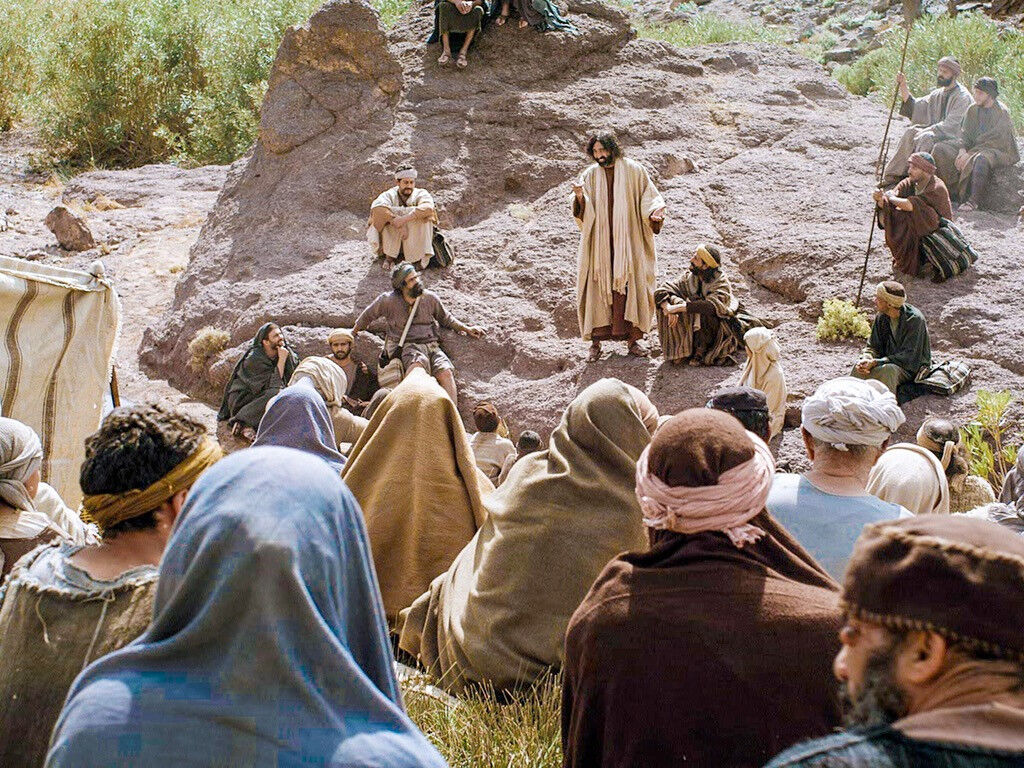
In his Sermon on the Mount, Jesus included eight statements called beatitudes (Matthew 5:3-10). Each one highlighted a virtue that results in the highest kind of happiness: sweet contentment not based on circumstances but on joyful faith in God and his provision for all we need.

In addition to the beatitudes of Matthew 5, the Bible offers dozens of blessing-statements—each one an encouraging slice of truth about God and his ways for us. They just aren’t constructed in typical beatitude style.

For example, consider Psalm 37:4:


Written as a beatitude:


Blessed are those who delight in God

for they shall receive the desires of their hearts.


Of course, the desires of our hearts often reflect child-sized plans, while God may have designed a “hugely dimensional destiny” that will surprise everyone.[1]

Kara’s* story illustrates. She fully expected to attend university and then enter the world of business. But even with a straight-A average, no scholarship materialized, and her parents earned too much money to qualify for sufficient financial aid.

Unless she took out a large student loan, Kara’s only option was community college. Highly disappointed—embarrassed even—she applied. Meanwhile a letter happened to arrive from that local college, describing a new course of study in TV production.


Kara had just completed a high school course in multimedia programming and loved it, so she applied for this new program and was accepted. Better yet, God provided full tuition as she earned that degree. And best of all, he molded Kara’s desire to coincide with the delightful and satisfying plan he’d designed for her.

Now years later, Kara and her husband make their living in the entertainment industry. No doubt the two of them marvel how God brought them together to work in a medium they love.

Kara is a miracle.

Romans 5:3-4 offers another beatitude truth:


As a beatitude it might read like this:


Blessed are those who embrace their challenges,

for they shall be changed for the better.


Anne wanted to support her husband’s dream of a free counseling service in their community and began making pretzels to sell at the local farmer’s market.

Through long effort and a number of failures, Anne was able to grow the business into hundreds of franchises across the country. You’ve probably eaten one of Auntie Anne’s Soft Pretzels at a mall or airport.


Anne’s personal life also included struggles, failures, and even the death of one of her children. Yet she says, “I am now thrilled to live this life, feeling that each day is one to be enjoyed. God’s grace and forgiveness are what got me through it all.”[2]

Anne is a miracle.

Our third new beatitude is based on Mark 10:27b:


Beatitude style?


Blessed are those who care less about their limitations

and care more how limitless God is.


The bio on the backs of Jennifer Rothschild’s books informs the reader she is a wife, mother, and recording artist. Jennifer also travels the country as a speaker, and cofounded WomensMinistry.NET.

What the bio does not reveal is that Jennifer has been blind since age fifteen. In her book, Lessons I Learned in the Dark, she wrote: “God often wraps difficult gifts with His grace—and then uses them to display His glory.”[3] Jennifer’s productive and joyful life perfectly illustrates that statement.

Jennifer is a miracle.

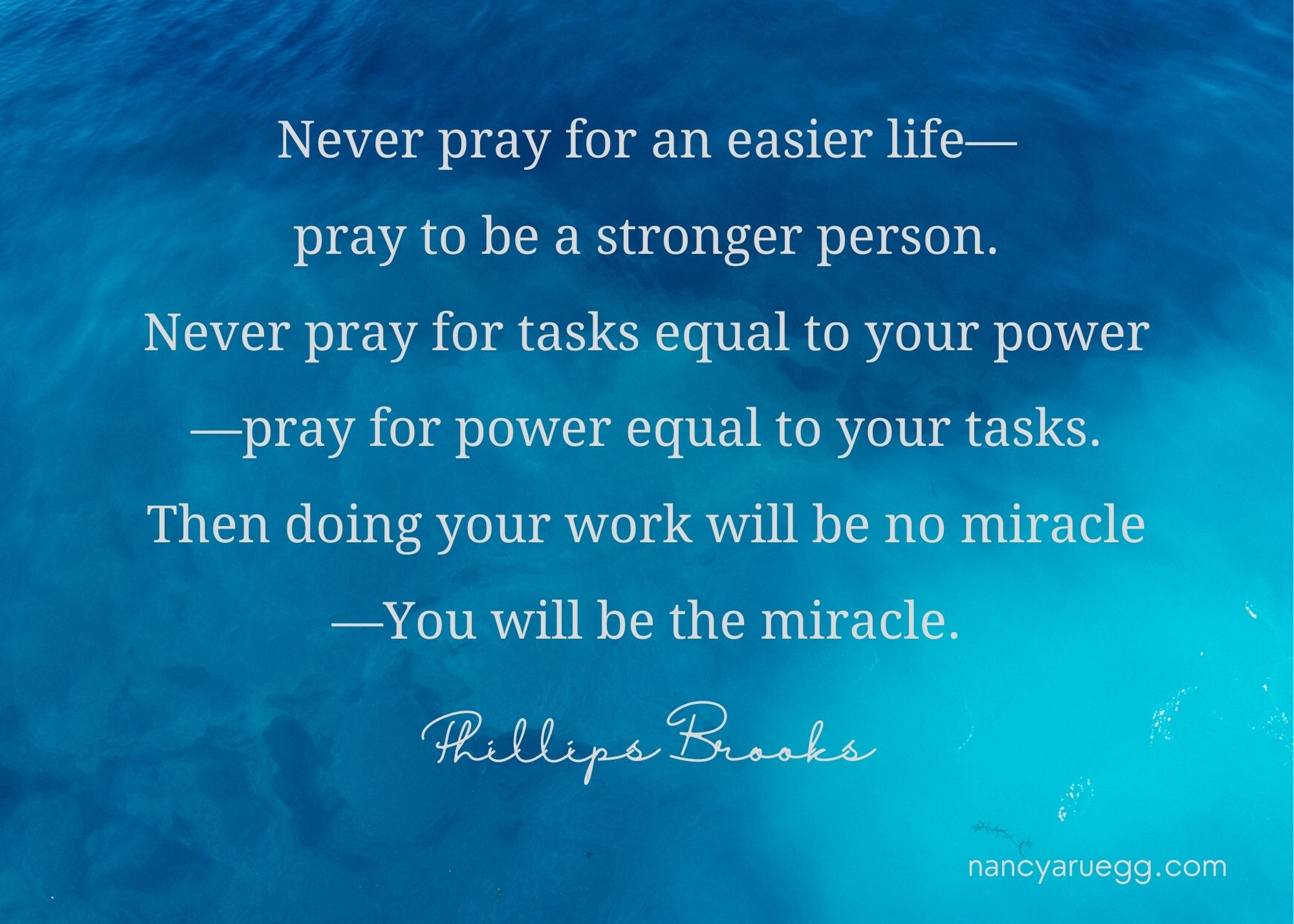
All three women exemplify what Rev. Phillips Brooks (1835-1893) wrote long ago:


Kara, Ann, Jennifer, and countless other believers demonstrate: When we embrace God’s be-attitudes, we not only experience the highest kind of happiness; we become miracles.


*Name changed.


Notes:

[1] Eugene Peterson, Under the Unpredictable Plant, pp. 160-161.

[2] Karol Ladd, Thrive, Don’t Simply Survive, pp. 147-148.

[3]  Jennifer Rothschild, Lessons I Learned in the Dark, p. 84.


Art & photo credits:  http://www.freebibleimages.org; http://www.heartlight.org; http://www.flickr.com; http://www.stocksnap.io; http://www.flickr.com; http://www.canva.com (2).


Read Full Post »

No doubt about it: Christmas is going to look different this year. Some folks (like me) will opt to scale back the decorating. Church and school programs won’t be presented, parades won’t be processing down Main Street, and fewer families will be cozied up at Grandma’s house for gift giving and feasting.

As if mocking the disappointment already rooting in our spirits, Andy Williams comes on the radio singing, “It’s the Most Wonderful Time of the Year”—about friends coming to call, parties for hosting, and caroling out in the snow.

But wait. Perhaps this year could become a different kind of wonderful. Perhaps with less holiday preparation to complete and fewer activities to attend, we’ll have more time to revel in the preparation of our hearts.

How might we do that? According to pastor/author Handel H. Brown:

An attitude of expectancy includes an outlook of hope—hope in God’s provision for the here and now, and hope for what is to come. Even as we celebrate Christ’s first appearance on earth, we look forward to his second coming when he will “take us to heaven, to live with him there” (1).

Too often I’ve counted down the days until the Christmas tree is glowing, or the family is gathered, or the gift-exchange can finally take place. Those are all superb delights, but they quickly fade into wisps of memory.

We Christians can revel with expectant hope in a countdown of more substantive delight and importance. Peter called it a living hope, based as it is on our living Savior (1 Peter 1:3).

This hope is not just a feeling that fades like the euphoria of Christmas—once family members have departed and decorations are boxed and shelved. No, this hope is absolute certainty, placed in our faithful, eternal God . Everything he has promised he will deliver.

So how do we muster expectant hope? By immersing ourselves in God’s Word.

Hope is living constantly, patiently,

expectantly, resiliently, joyously

in the word of God.

–William Stringfellow

Here’s one scripture that fills me with expectant hope. See if these words don’t lift your spirit as well:

“Let us give thanks to the God and Father of our Lord Jesus Christ! Because of his great mercy he gave us new life by raising Jesus Christ from death.

“This fills us with a living hope, and so we look forward to possessing the rich blessings that God keeps for his people. He keeps them for you in heaven, where they cannot decay or spoil or fade away.

“They are for you, who through faith are kept safe by God’s power for the salvation which is ready to be revealed at the end of time”–1 Peter 1:3-5 GNT (2).

Praise God for his mercy!

Praise him for the new and abundant life he provides!

Praise him for all the blessings of past, present, and future!

Praise him for the perfected life yet to come–with him in heaven!

As we prepare our hearts for Christmas by immersing ourselves in such scriptures, expectant hope is bound to well up and produce wonderful results.

In addition:

“Expectancy is the atmosphere for miracles.”

–Unknown

So let’s put the WONDERFUL into Christmas 2020 with renewed, expectant hope in our glorious Father.

Let’s create the atmosphere for miracles!

What scripture fills your spirit with expectant hope?  Please share in the comment section below!

Notes:

  1. The last line from “Away in the Manger,” based on John 14:2-3.
  2. Other scripture passages to explore that foster expectant hope:  a) Isaiah 9:6-7 (See also a previous post, “His Name Shall Be Called.”) b) Isaiah 40:28-31, c) Ephesians 1:3-13, d) 1 Thessalonians 4:14-18.

Photo credits:  http://www.canva.com; http://www.wikimedia.com; http://www.piqsels.com; http://www.pxfuel.com; http://www.canva.com; http://www.piqsels.com; http://www.pixy.org.

Read Full Post »


The Advanced Placement Program launched in the 1950s. Perhaps you took advantage of A. P. classes as a high school student. Though more challenging than standard secondary courses, they provide a substantial payoff–up to a semester’s worth of college credit.

A couple of weeks ago, I thought of A.P. classes upon encountering a Charles Colson quote about gratitude. He presented a whole new level of challenge concerning this quality.

Instead of giving thanks for the goods received, Colson suggested we express appreciation for who God is—his character. Colson said such an act of faith provides evidence the Holy Spirit is working in a person’s life (1).


So, in spite of self-isolation and lockdowns, distress for our country and world, as well as the personal concerns we all carry, let’s aspire to A. P. gratitude on this Thanksgiving Day by reflecting upon:


God’s grace


God is . . . a personal Father who cares,

and not a God who merely wound up the world with a key

and then went away to let it run by itself.

God’s grace is a certainty, even amid the turmoil of today’s world.

–Unknown


God’s faithfulness


No matter what we are going through, no matter how long the wait for answers,

of one thing we may be sure: God is faithful.

He keeps His promises.

What He starts, He finishes . . .including His perfect work in us.

–Gloria Gaither (2)


God’s goodness


Of all the things our minds can think about God,

it is thinking upon his goodness that pleases him most

and brings the most profit to our soul.

–Julian of Norwich


God’s compassion


Do not look forward to what may happen tomorrow;

the same everlasting Father who cares for you today

will take care of you tomorrow and every day.

Either he will shield you from suffering,

or he will give you unfailing strength to bear it.

Be at peace then, put aside all anxious thoughts

and imaginings, and say continually:

‘The Lord is my strength and my shield;

my heart has trusted in him and I am helped.

He is not only with me but in me and I in him.’

–St. Francis de Sales


God’s love


All shall be well, all shall be well . . .

for there is a force of love moving through the universe

that holds us fast and will never let us go.

–Julian of Norwich


With these eternal gifts bestowed upon us—God’s fatherly care, promise-keeping faithfulness, ever-reliable goodness, soul-strengthening compassion, and never failing love, we surely have everything we need.


Notes:

  1.  http://www.crosswalk.com/faith-spiritual-life/inspring-quotes/30-christian-quotes-about-thankfulness.html 
  2. Quoted in Values for Life, Walnut Grove Press, 2004.


Art & Photo Credits:  http://www.wikimedia.org; http://www.canva.com (2); http://www.pixy.org; http://www.pixabay.com; http://www.canva.com; http://www.snappygoat.com; http://www.heartlight.org.

Read Full Post »


Just for fun I Googled “strategies that lead to a satisfying life.” Of course numerous articles popped up, offering a multitude of suggestions. One article listed twenty ways for achieving fulfillment.

But researchers have determined it takes sixty-six days on average to develop a new habit (1). That means twenty new habits would require concentrated effort for nearly four years. Sounds daunting, doesn’t it.

However, as you’ve already noted from the title of this post, it is possible to turn a humdrum life into exceptional with just one strategy: gratitude to God.


But how can one simple act make such a difference?

I’ll explain in a moment. First, let’s identify the key word in that statement above: God. Without someone to thank, gratitude is pointless. And he is responsible for every good gift in our lives. By thanking God for his blessings, we unlock the fullness of life (2).

Here’s how it happens:


Gratitude fosters joy and contentment.

When we aim to thank God for the benefits he bestows, the delightful encounters he provides, and the beauty he’s created, we soon realize our days overflow with his gifts. And each one gives reason to smile.


Gratitude leads to peace.

Remember Isaiah 26:3?  “You keep him in perfect peace whose mind is stayed on you” (ESV). Gratitude to God is a delightful way to stay focused on him and thereby calm our hearts into serenity.


Gratitude contributes to resiliency.

Researchers Tennen and Afflek (2002) found that when people express gratitude even while suffering adversity or trauma, they tend to persevere with greater strength than those who don’t practice thankfulness (3).

John MacArthur beautifully described the phenomenon with this bit of imagery:


“No matter how choppy the seas become, a believer’s heart is buoyed by constant praise and gratefulness to the Lord.”


Gratitude increases our trust in God.

We can begin with grateful remembering of his marvelous deeds in the past, to form a foundation of faith for the present. Also, by expressing thankfulness in difficult circumstances and gratefully acknowledging God’s support and supply, our perspective is transformed.


I trust in your unfailing love; my heart rejoices in your salvation.

I will sing the Lord’s praise, for he has been good to me.

–Psalm 12:5-6


And when all of these results-of-gratitude are present in one person—effervescent joy, sublime contentment, luminous peace, buoyant resiliency, and unshakable trust—we see an exceptional life.


It all begins with gratitude.


When it comes to life, the critical thing is whether

you take things for granted or take them with gratitude.

–G. K. Chesterton


And how do we learn to take things with gratitude?

Researchers have studied that too, and found gratitude journals to be highly effective (4).


They suggest keeping a record of pleasurable observations and positive experiences such as:

  • Happy squeals of neighbor children as Daddy pushes their swings
  • An overcast day made cozy with glowing candles, simmering soup, and rain thrumming on the roof
  • Being taught by a seven-year old granddaughter how to add two-digit numbers in a new and clever way
  • Those places where God has brushed all of autumn’s colors in one swath


Gratitude bestows . . .transcendent moments of awe

that change forever how we experience life and the world.

–Sarah Ban Breathnach


So instead of wishing you a Happy Thanksgiving Day, blog-friends, I pray for you an exceptional life–of gratitude!


____________________________


If you keep a gratitude journal, please share your experience in the comment section below. How has it contributed to an exceptional life for you?


Notes:

  1. https://www.healthline.com/health/how-long-does-it-take-to-form-a-habit#takeaway
  2. James 1:17 and https://melodybeattie.com/gratitude-2/
  3. https://positivepsychology.com/gratitude-happiness-research/
  4. https://www.pointloma.edu/resources/counseling-psychology/what-good-gratitude-role-thanksgiving-personal-development


Photo credits:  http://www.pickpik.com; http://www.pixabay.com; http://www.needpix.com; http://www.pikrepo.com; http://www.canva.com; Nancy Ruegg (3).


Read Full Post »


Up on a knoll toward the edge of her inherited property, Bea Leever sat on the familiar lookout rock, surveying the land they’d named Kerah Farm. The view from this vantage point never grew old.

Off to the west stretched the family’s fields—squat and leafy soybeans; thick, tall corn; and golden-topped wheat rippling in the breeze. Some of the harvest would feed her family and the farmhands, the rest they’d sell.


Close to the house on the south side, a large garden provided more vegetables, and a dozen hens in the chicken coop produced plenty of eggs.

Beyond the garden stood the orchard of apple, pear, and cherry trees—plenty of fruit for everyone on the farm to enjoy and more produce to sell. To the east, beyond the cow pasture, a large grove of oak and maple trees kept them supplied with fuel for the wood stove.


And all around the perimeter of Kerah Farm, stout fences and thick hedges provided security.

Yes, from time to time difficulties like storms, drought, and pests presented challenge. And the crops, garden, and animals certainly required much labor, but nothing offered greater satisfaction than watching seedlings become lush crops, blossoms become plentiful fruit, or garden produce become jewel-toned canning jars lined up on shelves.


Now that Bea Leever had tasted farm life, she would never leave.

Bea remembered the day she first entered the property, and the immediate sense of peace that engulfed her spirit. She’d been so wrapped up in her worries and doubts prior to making the turn at the gate, the complete change of heart surprised Bea. Very soon the farm became her beloved refuge.


From then on, when fear tried to overtake her, Bea would climb to this rock on the hill and survey the beautiful inheritance bestowed upon her. She praised God for the more-than-adequate provisions offered within the farm’s boundaries, the gratifying work it afforded, and the security within its borders.

In no time, that comforting sense of peace would return.

_______________________________


Like Jesus’ parable of the sower in which various types of soil represent various responses to his message, this parable-of-sorts includes various blessings of every believer (“Bea Leever”).

Did you find them, hidden among the imagery?  For example:

Bea inherited the physical blessing of land; we believers inherit the spiritual blessings of God (1).  She enjoyed the provision of crops and animals; we enjoy God’s provision of every need.


Bea found joy and satisfaction in her work; believers find joy in their work for God and the development of the fruit of the Spirit in their lives (2).

She experienced great peace within the security of Kerah Farm; we experience great peace within the shelter of the Almighty (3).

Her life changed forever upon entering the farm gate; believers’ lives are also changed forever upon entering the Gate—Jesus—and into relationship with their Heavenly Father (4).

Just as she often visited the rock on a hill, a place that strengthened her spirit, we also go to our Rock—the Lord Most High–who is perfect and just, faithful and upright.


Bea thanked her Lord for the blessed life of Kerah* Farm; believers thank him for the blessed and abundant spiritual life Jesus provides (5).

And just as Bea Leever prayed, so do we:

Gracious Father, in spite of challenging events that sometimes overtake us, we thank you for your beautiful and bountiful provision.  We also praise you for your gracious goodness, all manifested in your wonderful deeds. Who, oh Lord, can compare with you?!  

(Psalm 40:5; Isaiah 63:7; Psalm 113:5)


*Kerah is the ancient Hebrew word for provision.


What else might you envision on Bea Leever’s farm that coincides with our lives in God? Share your imaginings in the comment section below!


Notes:

  1. Psalm 16:6 NET Bible; Ephesians 1:3-14
  2. Colossians 3:23-24; Galatians 3:23-24
  3. Psalm 4:8; Psalm 91:1
  4. John 10:9
  5. John 10:10


Photo credits:  http://www.pixabay.com (2); http://www.pxfuel.com; http://www.repo.com; http://www.wikimedia.com; http://www.heartlight.org (2); http://www.canva.com.


Read Full Post »

“This is our daughter, Diane,” explained Betty, a church member where my husband had just become pastor. “Diane actually attends another church in town, but sometimes she visits with us.” Betty smiled up at her daughter and wrapped an arm around her waist. “She’s a teacher too.”

That was all Betty needed to say to launch Diane and me into a conversation about all things school. We quickly discovered both of us had taught third grade the previous year.

“Listen,” Diane interjected. “It’s summer; I don’t have anything important going on. Let me help you unpack or wipe down cupboards—whatever you need done.”

And so the following week, Diane and I spent a pleasurable morning emptying boxes, organizing the contents, and getting better acquainted.

“Tell me about where you teach,” I prompted, while we released china from its bubble wrap at the dining room table.

Diane began to describe her private school—just two classes at each grade level with only twenty-two or so children per room, highly involved parents, strong discipline, and just five minutes from our house. The more she talked, the more delightful her situation sounded.

“Now,” she invited, “tell me about your experience.”

I explained that the week before Moving Day, I’d completed my first year back in the classroom after a long hiatus as stay-at-home mom with our three children. It was no exaggeration to say my learning curve had been steeper than the students’.

Diane commiserated with my circumstances. She was well-acquainted with the process ahead of me, having moved from another state herself just a few years before: the prospect of substitute teaching in order to become known in the district, applying for positions, and interviewing.

If a position was offered, the next challenges would include absorbing the way another school system worked and mastering its different curricula—likely at a different grade level. No doubt, another steep learning curve loomed ahead.

But my frustration ran deeper than what I confided in Diane that day. The transition to this new community made no sense. We’d been perfectly happy where we were, and the previous church hadn’t wanted my husband to move either.

Such a change seemed counter-productive to us, but the state-level leadership of our denomination considered it necessary. We grieved and prayed; the kids and I cried.  We also wondered: what was God up to?

Before Diane left that day, she offered to submit my name for the substitute list at her school and gave me the address. Sometime later I checked out the location, heeding her warning that the campus was hidden among trees, the entrance on a one-block street. Who knows how long we would have lived there before discovering this school on our own?

The first call to substitute came one morning just as I began my work out. “Can you be here within the hour?” asked the secretary. In record time I was showered, dressed, out the door and down the road, playing “Farmer in the Dell” with preschoolers.

For lunch I expected to purchase something in the cafeteria. Silly me—still in public school mode. Here the kids and staff brought their lunches from home. When one of the other teachers learned I had no lunch, she scrounged up an instant cup-of-soup, crackers, a box of raisins, and a tea bag.

“I’m sorry that’s all I can offer you,” she apologized. But I was greatly impressed by her effort to take care of a woman she didn’t know. And first impressions count.

The school called often, offering me experience at various grade levels, familiarizing me with their curriculum, and allowing me to become acquainted with the friendly faculty and staff. I began to pray God would open up a position for me at this school. But as the months passed, full-time employment seemed unlikely. No one was close to retirement; no one was leaving.

In April, however, the headmaster offered me a position. One of the fourth grade teachers had just been elected mayor of her community. Trying to fulfill those responsibilities and teach was more than she wanted to tackle. I would start that August, which gave me the summer to prepare. An added bonus: my classroom would be right next door to Diane’s.

When that job opportunity opened up, it was as if God turned a spotlight on His plan. After the fact I could see how he’d miraculously arranged the whole sequence of events—from the moment Betty introduced me to Diane, to the headmaster’s offer of employment.

The disappointment over leaving my previous position had turned into a God-ordained appointment at my new school, a much better situation, and one that lasted twenty-two years.

Have you experienced a spotlight moment?  Tell us about it in the comment section below!

Photo credits:  http://www.asan.af.mil; http://www.flickr.com (2); http://www.pxhere; http://www.flickr; http://www.dailyverses.net; http://www.canva.com.

Read Full Post »

« Newer Posts - Older Posts »

When the House is Quiet

Impressions Becoming Expressions

Mitch Teemley

The Power of Story

Still Traveling

Impressions Becoming Expressions

Living Our Days

Gaining a heart of wisdom

He Said What?!

I'm Patty, and my husband and I are living with our adult son who has autism and epilepsy. I love sharing lessons learned from life around me, especially life with Aaron.

Meditations of my Heart

Impressions Becoming Expressions

Linda Stoll

Impressions Becoming Expressions

Signora Sheila

Where faith meets la dolce vita

Heidi Viars

Finding the Image of God