Feeds:
Posts
Comments

Archive for the ‘God’s Goodness’ Category

Most visitors to an art museum spend fifteen to thirty seconds looking at a painting, but art enthusiasts insist that’s not near long enough to fully enjoy each work.

Take for example da Vinci’s world-famous Mona Lisa. You’ve seen photographs; some of you may have viewed the original at the Louvre. Besides the model’s haunting expression, what makes this painting stand out from others?

First, note da Vinci’s use of shadow to give contour to the face and clothing. As a result, daVinci achieved more realism than other painters of his time.

Second, enlarge the image above and study da Vinci’s masterful attention to detail—the intricate gathers of the bodice, the graceful tendrils of her hair, the next-to-nothing veil.

Third, focus on the background. Mona Lisa appears to be sitting in front of a window with a lovely view of mountains, trees, and a lake. Da Vinci used a technique called foreshortening to condense the wide scene onto his narrow canvas.

Fourth, note the hazy atmosphere, created as da Vinci blurred the edges of his almost undetectable brushstrokes.

Of course, additional features also contribute to Mona Lisa’s magnificence. Yet even this short list makes clear: there’s more to the Mona Lisa than most of us realize.

And to know more makes us appreciate more and enjoy more. But such results require close observation through slow looking.

The same principle applies to God. To know God more will allow us to enjoy and appreciate him more.

But how do we observe closely Someone who’s invisible?

We begin with evidence of the Unseen. One example, his presence and character traits revealed in the events of our lives:

  • Caring protection from harm on numerous occasions
  • Generous provision of countless necessities, gifts, and blessings
  • Perfect wisdom, as certain desires of our hearts haven’t come true, recognized in hindsight
  • Unfailing faithfulness to see us through disappointment, difficulty, and uncertainty
  • Gracious goodness in every joyful moment, every delightful surprise. They all come from him.

Every day provides much evidence of his benevolent presence in the lives of each of his children. The more we look, the more we’ll find. And as each discovery is turned into praise our spirits fill with joy.

Another way to practice slow looking is to spend time in God’s presence, learning more about him through his Word.

It makes sense: “Delight in God cannot occur in an intellectual vacuum” [1].

“But I don’t know where to start!” someone might say.

The internet offers a variety of reading plans, and once a plan is in place, we apply the practice of slow looking as we read.

Writing the answers to such questions as these hones our observation skills:

  • What does this passage say about God and his character?
  • What truths does he teach?
  • What does God promise here that offers hope and encouragement?
  • Is there a prayer that applies to my life? (Write it out, perhaps in your own words, and personalize it.)
  • Has God included an example to follow or not follow [2]?

Slow looking through the act of writing also helps deepen our understanding and appreciation, expanding our capacity to enjoy God.

Another benefit? Taking joy in God and all his excellencies increases our strength to endure.

What moment of slow looking has led you to a recent discovery about God? Please share in the comment section below!


[1] Sam Storms, http://www.gracequotes.org

[2] Denise J. Hughes, Deeper Waters, 76.

Photo credits: http://www.pxhere.com; http://www.wikipedia.org; http://www.rawpixel.com; http://www.pexels.com; http://www.heartlight.org; unknown.

Read Full Post »

More than likely you’ve never seen the item pictured above. At first glance, you might think it’s a noisemaker used in primitive worship ceremonies. Others might say it looks like a musical instrument or the paddle for some game.

In actuality, it’s a model of an ancient Aztec weapon, a macuahuitl (MAC-wah-wick).

Strange-looking, isn’t it?  How could a wooden paddle be deadly enough for warfare? The key lies in those black protrusions on the sides. They were made from obsidian and filed razor sharp, capable of creating gaping slash wounds.

Here’s another strange-looking weapon. They remind me of the jacks some of us played with as children. These are called caltrops, with each spike measuring 2 1/2-to-3 inches.

Caltrops were designed so that, when thrown on the ground, one point would always land facing up.

Spread hundreds of these around your camp at night, and protect your soldiers while they rest. Or hide them in the area before the opposing army approaches, and cause crippling injury to many men and beasts as they charge.

But why all this talk about ancient weapons?

In the spiritual battles of life, we too have at least two strange-but-effective weapons at our disposal.

At first glance, they might appear useless against our adversary Satan. But these weapons have the power to defeat his minions of discouragement, disappointment, envy, frustration, and more.

The first weapon is gratitude. Yes, just uncomplicated gratitude.

For example, consider each of the negative emotions named above and how gratitude might incapacitate them:

  • When discouraged by lack of recognition at work, I can be thankful God sees.
  • When dissatisfied with my paycheck, I can be thankful that God will provide.
  • When disappointed by my child’s behavior, I can be thankful for the life-lessons taught through consequences that will benefit him in the future.
  • When envious over the lovely new house of an acquaintance, I can be thankful for our low mortgage, friendly neighbors, and the memories that have turned our house into a home.
  • When frustrated by a day of one-step-forward-and-two-steps-back, I can thank God for the strength and patience to see me through [1].

And as we wield our weapon of gratitude we’ll discover: “The truly thankful person is a truly peaceful person” [2].

But how do we manufacture deep-down satisfaction when life is full of difficulty and stress?

Luci Swindoll suggests: “Consider who you are and be satisfied with that. Consider what you have and be satisfied with that. Consider what God is doing and be satisfied with that” [3].

One way to employ contentment is to meditate on one of the praise psalms, like Psalm 103 or 145. While reading each verse, consider what it says about who you are, what you have, and what God is doing. Brandish your discoveries in the face of the enemy of your soul.

Even one simple statement can generate a whole journal of responses. For example:

In this moment, consider:

  • What goodness do you see, hear, taste, smell, or feel (externally and internally)? Praise God for these gifts [4]
  • What recent events have brought you joy? Praise God for engineering those events.
  • Who has blessed you lately? Praise God for these people.
  • What are you looking forward to? What hopes do you have for the future? Praise God that, because of his unfailing love and faithfulness, we always have hope (Lamentations 3:21-23).
  • What evidence of God’s thrilling presence have you noted? Praise him for revealing himself in so many different ways [5].

Perhaps a thick fog of trouble makes it difficult to see much goodness. British writer and scholar Alexander Smellie (1857-1923) would have us affirm:

“The Lord knows what is best for me, and my surroundings are determined by Him. Wherever He places me, He does so to strengthen my faith and power, and to draw me into closer communion with Himself. And even if confined to a dungeon, my soul will prosper.”

Those are fighting words of contentment we can take into battle, my friends!


[1] Job 28:24; Philippians 4:19; Hebrews 12:11; Habakkuk 3:17-19; Philippians 4:13

[2] Lysa Terkheurst, Embraced, 256.

[3] Joy Breaks, 79.

[4] A previous post Mindfulness PLUS may prompt your thoughts.

[5] Another post Heart-to-Heart offers examples.

Photo credits: http://www.worldhistoryencyclopedia.org; http://www.picryl.com; http://www.heartlight.org; http://www.canva.org; http://www.pxhere.com.

Read Full Post »

Summer 2021

A happy family is

but an earlier heaven.

–George Bernard Shaw

We’ve been enjoying an earlier heaven this week as our three children, their spouses, and three grandchildren have gathered. (Steve’s sister and brother-in-law joined us for a day also.)

Because such occasions happen only now and then, I totally agree with Kathleen McGowan, who wrote:

The only thing sweeter than union

is reunion.

–Kathleen McGowan

Indeed, we treasure these times of togetherness, just as Wanda Hope Carter advocates:

Family and friends are hidden treasures.

Seek them and enjoy their riches.

–Wanda Hope Carter

A Spanish-American philosopher came close to describing why we find treasure in familial relationships:

The family is one of

nature’s masterpieces.

–George Santayana

I’d amend his statement to: “The family is one of God’s masterpieces.” After all, family is God’s idea, established at the beginning of time (Genesis 1:28).

Author Dillon Burroughs adds this viewpoint:

When we think of our family,

our spouse, parents, or children,

let us see them as a gift from God.

–Dillon Burroughs

Indeed! I am supremely grateful to my Heavenly Father for giving us the gift of a family that loves, supports, and takes joy in one another.

They make my soul blossom.

Let us be grateful to people who make us happy;

They are the charming gardeners who make our souls blossom.

–Marcel Proust

Read Full Post »

Three weeks ago we embarked upon a reflection of one of the most important songs in the history of the Christian faith: “O Come, O Come, Emmanuel.”

The lyrics beautifully weave together the Old and New Testaments, telling the story of our Messiah, “the chosen One”—who would come to deliver his people from the consequences of their sins and establish his kingdom forever [1].

Each verse helps us place our eyes on Jesus’ return by remembering his first coming and then expressing hope and yearning for his second coming [2].

As noted before, the unknown lyricist (from the eighth or ninth century) carefully based each stanza on scripture. You’ll find references for further reflection listed at the end of this post.

One fact not mentioned thus far: the poet constructed the Latin lyrics in the form of a seven-sentence acrostic. When the first letter of the second word of each sentence (the names of Jesus) are put together, they spell SARCORE.

Read that word backwards, and the letters form two words of sublime hope: Ero cras, which means, “I will be present tomorrow.”

Whatever the future may hold, our Emmanuel will see us through. What a faith-stirring surprise the lyricist created for us [3]!

Now let’s turn our attention to the last two verses [4].

VERSE SIX

I praise you, Lord Jesus, that just as the morning star shines brightly against the darkness of night, you are the glorious Light of the world, shining brightly against the darkness of evil [5].

Just as the morning star glows steadily without a flicker, you shine in our lives with unwavering faithfulness and love [6].

Just as the morning star is a promise of coming day, your light provides hope and assurance that you will come again, to usher in The Day of the Lord, when a new heaven and a new earth will be established and righteousness will dwell [7].

Finally, just as the morning star can guide those at sea, your light guides our way through life. “In your light we see light”—the light of wisdom and discernment [8].

Such truths do bring us comfort, dispelling shadowy thoughts and flooding our spirits with the light of your perfection.

I praise you, Lord Jesus, for turning the darkness of sin, anxiety, discouragement, and more, into the light of your forgiveness, peace, hope, and joy [9]!

VERSE SEVEN  

I praise you, Lord Jesus, our King! How comforting to know that Someone all-wise and supremely gracious is the Ruler of all nations, all things [10].

Yet you are also a respecter of persons. You’ve bestowed upon us the gift of choice, the ability to determine our own way. And what have we accomplished? Our world is tainted by selfishness, pride, and contention [11].

How we need you, Lord Jesus! You are our only hope for our selfishness to be transformed into selflessness, pride into humility, and contention into unity.

So we boldly pray that every person on earth would come to faith in you [12].

Is that an unattainable dream? No, because you also are unwilling that anyone should perish. And all things are possible with you, our sovereign God and Savior [13].

After all, you:

  • Created all things everywhere
  • Maintain order in the entire universe
  • Control the course of human history
  • Depose kings and raise up others
  • Exist in all places at the same time [14]

I praise you, Lord Jesus, that nothing can prevent you from accomplishing your purpose [15].

And I praise you, Lord Jesus, that you’ve given us the wherewithal to experience harmony with one another, as we demonstrate love and compassion with humility [16].

May we be examples to the world, whetting their appetite for what we experience: the joy of living in the presence of the King of Peace [17]!


[1] Ace Collins, Stories Behind the Best-Loved Songs of Christmas,127; Isaiah 59:20; John 1:40-49; Romans 6:23; Revelation 11:15.

[2] https://www.danielim.com/2017/12/19/the-hidden-theology-and-history-of-o-come-o-come-emmanuel/

[3] https://www.ligonier.org/learn/articles/o-come-o-come-emmanuel

[4] From www.hymnary.org. (Lyrics vary depending on source.)

[5] Revelation 22:16

[6] Psalm 100:5; John 8:12

[7] 2 Peter 3:12-13

[8] Psalm 36:9b; Ecclesiastes 2:13-14

[9] Psalm 18:28

[10] Revelation 19:16

[11] Proverbs 5:23

[12] 1 Timothy 2:1-4

[13] 2 Peter 3:9; Mark 10:27b

[14] Colossians 1:16-17; Daniel 2:21; Jeremiah 23:23-24 GNT

[15] Psalm 115:3

[16] 1 Peter 3:8

[17] Psalm 16:11

Photo credits: http://www.flickr.com; http://www.heartlight.org; http://www.stockvault.net; http://www.rawpixel.com; http://www.stockvault.net; http://www.canva.com; http://www.pickpik.com.

Read Full Post »

Christian trudged to the church he pastored as rain drummed on his umbrella. His pant cuffs grew increasingly damp from his splashing boots.

Is this really worth the effort, he wondered. Only a handful of people attended the Monday night prayer meetings, which he’d established several years prior at Church of St. Nicholas.

And yet the faithful few who came demonstrated such hope, Christian always felt uplifted by the end of each gathering.

Encouragement of any kind was in short supply. Times were difficult; everyone was suffering except the government elite and their cronies.

In the third year of the weekly prayer sessions, Christian felt compelled to invite fifty people to his church to discuss the oppressive circumstances of their country. More than six hundred came, and subsequently, attendance at the Monday prayer meetings also grew.

Such a large crowd didn’t slip by the attention of authorities. They discouraged religious gatherings, but assumed that prayer meetings were harmless.

Attendees began bringing family and friends. Over the next few years the church started to fill to overflowing. Eventually eight thousand people gathered every Monday night, praying for peace in their land and throughout the world.

Other churches around the country organized their own prayer meetings. Some attendees would walk the streets afterward, carrying candles and praying or singing as they went.

The authorities finally ran out of patience with the demonstrations. They barricaded the streets around the Church of St. Nicholas to discourage attendees. Instead, the congregation grew.

The next step included peaceful protests. Thousands of people participated. And even though hundreds of demonstrators were beaten and arrested, they weren’t deterred.

Numerous threats were made; some lost their jobs. One woman reported that government officials took custody of her children for a while, due to her participation in what they called an extremist group.  

Worse yet, the protesters were threatened with death. And though many admitted to fearing for their lives, they did not back down.

“Our fear was not as big as our faith,” Christian explained later [1].

One night, after an hour-long service at St. Nicholas Church, Christian led the people outside to join a crowd of approximately 70,000, all gathering from various churches. Each one carried a candle and marched through the city chanting “we are the people” and “no violence” [2].

All along the way, long rows of armed police watched their every move.  More soldiers manned tanks, waiting for the order to disperse the crowd with murderous force.

But the order never came. Afterward it was revealed that government officials persuaded their leader to leave the protesters alone.

One of the demonstrators gave a soldier a lighted candle. He put down his weapon and accepted it. Others followed suit. “Soon all the soldiers had lowered their weapons and joined with the protestors” [3].

In the following weeks, the prayerful, candle-carrying crowd grew to 120,000, then 300,000, and finally 700,000.

A crowd such as this must have gathered.

The country’s leader resigned, knowing that without the army to back him, he had become powerless. Soon the whole regime resigned, unable to fight against the power of prayer and Light.

One month after the tide-changing protest, a government spokesperson mistakenly announced in a public broadcast that a monumental change was about to take place. Citizens would be allowed to travel freely, effective immediately [4].

News spread rapidly, reported across the world. Thousands of people soon gathered at the symbol of their thirty-year oppression, a barrier that had divided them into east and west: the Berlin Wall.

Harald Jager, commanding officer of the border guards that night, called his superiors to find out how to deal with the gathering crowd. He received no orders.

“People could have been injured or killed . . . if there had been panic among the thousands gathered at the border crossing,” he declared afterward. “That’s why I gave the order: Open the barrier” [5].

And so, on November 9,1989, thousands flowed through, celebrating and crying. Others climbed over the barrier, chipping away at the wall with hammers and pickaxes. Bulldozers and cranes soon made quick work of dismantling the entire structure [6].

Thirty-four years ago today, that menacing wall became rubble, and a tyrannical regime miraculously toppled with it.

And it all began with Pastor Christian Furher and a handful of praying saints.

Christian Furher (1943-2014)


[1] https://contemporarychurchhistory.org/2014/09/reflection-on-pastor-christian-fuhrer-of-the-nikolai-church-in-leipzig/

[2] https://embracingbrokenness.org/2020/10/prayer-and-the-berlin-wall-by-charles-buttigieg/

[3] http://storage.cloversites.com/worldhistoryinstitute/documents/WHI_03Mar014_Journal_4.pdf

[4] https://www.foxnews.com/lifestyle/this-day-history-nov-9-1989-berlin-wall-falls-cold-war-victory-us-allies

[5] https://www.bbc.com/news/world-europe-50013048

[6] https://www.history.com/topics/cold-war/berlin-wall

Additional Source: http://www.godgossip.org/article/did-a-prayer-meeting-really-bring-down-the-berlin-wall

Photo credits: http://www.commons.wikimedia.org; http://www.pxhere.com; http://www.rawpixel.net; http://www.picryl.com; http://www.commons.wikimedia.org; http://www.pexels.com; http://www.nara.getarchive.net; http://www.picryl.com; http://www.commons.wikimedia.org.

Read Full Post »

Looking ahead at the calendar for 2024, I found more than a few wild-and-crazy celebrations in store for those who care to participate. Just in January alone, we can look forward to:

  • National Cream Puff Day—January 2 (Who thought this was a good idea right after the holidays when so many will be embarking on diets?)
  • World Logic Day—January 14 (If only we could fix in one day the irrational and absurd thinking that seems to be increasing these days.)
  • National Popcorn Day—January 19 (This one I can get behind!)
  • National Blonde Brownie Day—January 22 (If you prefer cream cheese brownies, your day is coming February 10.)
  • National Backwards Day—January 31 (Seems like we’d benefit more from honoring evidence of going forward—toward integrity, responsibility, and maturity.)

Didn’t I tell you they were wild-and-crazy observances?

To be honest, we Christians are encouraged to celebrate some wild-and-crazy things—things that make no sense at first glance, like:

Weakness

Too many of us assume we have to be supremely talented and gifted in order to be used by God. But the opposite is true.

God most often chooses ordinary people who’ve emptied themselves of prideful ambition and self-centered motives. They are the ones whom God can fill with himself, who become the ideal showcases for his greatness and glory [1].

Turns out, when we recognize just how weak we are—with our inadequacies, missteps, and fears—we’re actually in the best position to manifest the power of God.

Now that’s worth celebrating!

Meekness

The Hebrew word for meekness suggests “being molded.” The meek are God-molded; they’ve submitted to him and are patterning their lives after him [2]. The meek delight in leaving everything in God’s capable hands.

That may sound unappealing to some, but little do they know: the meek get the most out of life.

For example:

  • They view life with joyful gratitude, not disgruntled entitlement
  • They appreciate their resources—not for the prestige they offer but for their usefulness
  • They don’t harbor envy or jealousy, but genuinely enter into the joys of others

And note what God promises to the meek in Psalm 37:11 (above): an abundance of peace. Isn’t that a happy reality to celebrate?

Servanthood

Not many of this world are interested in the role of servant. But God’s kingdom works very differently:

Every day is a new opportunity to discover what eternal business might be lurking in the ordinary business of being human [3].

Bruce Wilkerson

Yes, there is eternal business in serving others as we:

  • prepare meal after meal that keeps the family fed, but also nourishes their hearts with comfort and delight
  • perform small deeds of kindness—because they’re woven into the larger expanse of God’s far-reaching grace
  • work for the benefit of others and the glory to God—whether anyone notices or not

There is honor in such serving.

Trouble

Now I’ve gone too far, some will say. Celebrating difficulty seems downright sadistic. But consider:

We can take delight in what God will do through the trial.

First, God delights in transforming the black-carbon pressures of our lives into diamonds of radiant beauty, as he chips away at the rough places of our character and the distractions in our lives, allowing the Light of Christ to shine with greater clarity.  Such an undertaking rarely happens overnight; it’s a process that takes time [4].

Second, think of those you’ve known or learned about who did shine with the radiant Light of Christ. They undoubtedly faced trouble, yet persevered and triumphed in the end. We too can experience fulfillment as the Light of Christ shines through us to impact others.

Third, while we’re in the midst of the trial, God often brings the sweetest discoveries of himself [5].

These realities also warrant celebration.

The question remains, how will we celebrate?  Perhaps with an ancient song:


[1] Nancy Leigh DeMoss Wolgemuth, Biblical Womanhood in the Home, 67.

[2] Ralph Sockman, The Higher Happiness, 65.

[3] A Life God Rewards, 114, emphasis added.

[4] Joanna Weaver, Having a Mary Heart in a Martha World, 199.

[5] L. B. Cowman, Jim Reimann (ed.), Streams in the Desert, 143.

Art & photo credits: http://www.pixexid.com; http://www.dailyverses.net; http://www.pixexid.com; http://www.depositphotos.com; http://www.canva.com; http://www.commons.wikimedia.org.

Read Full Post »

Online dating services have proved: you don’t have to see a person to fall in love. Through heart-to-heart sharing over the internet, couples can become acquainted with the likes and dislikes of one another, their opinions on current issues, and what brings them satisfaction in life.

The format provides the opportunity to learn about who the other person is before finding out what he/she looks like.  (One site requires five contacts back and forth before names are exchanged–much less photos.)

It’s possible that couples in new online relationships grow to know one another better than couples who meet face-to-face, because they communicate more and at a deeper level. (Assuming they’re being honest, of course.)

Similarly, we can grow to know and love God through heart-to-heart sharing, even though we can’t see him.

For example, we might share such whisper-thoughts as these, when:

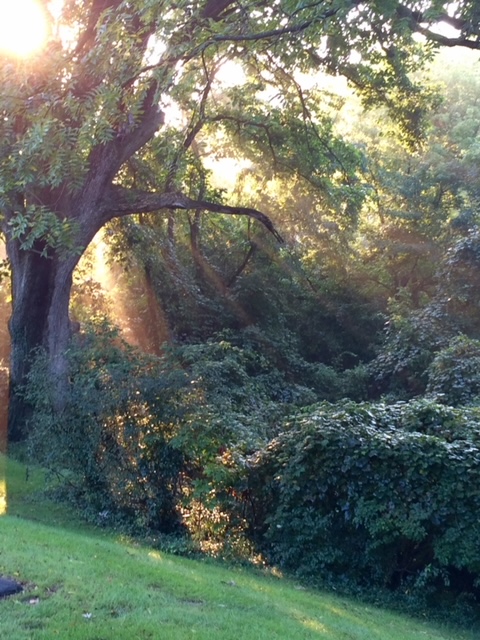
The view from our deck one September morning

  • Our attention is drawn to sunbeams on mist-draped foliage, and we turn the observation into praise for God’s creative handiwork
  • Someone grabs us in an exuberant hug, and we thank God for family and friends who provide encouragement and support
  • An unpleasant task is finished, and we praise him for the fortitude to see it through
  • Humor comes into our lives and we laugh in response, but also in gratitude to the God of all joy
  • We light quiet-time candles, reminding us the Light of the world is with us in our solitude

There is no sweeter manner of living in the world

than continuous communion with God.

Brother Lawrence (1611-1691)

But one-sided communication doesn’t build a relationship. Listening for God’s words and watching for his works are essential. How do we do that? God rarely speaks audibly or shows himself physically. No one has seen his face (1).

However, God does reveal his heart to us in a number of ways through:

The Bible 

No surprise there. Its pages offer a lifetime of new discoveries about who our God is and how he works in our lives. We hear God’s wisdom in his words; we see God’s love in his actions (2).

Other reading 

Although Christian writers often provide personal impressions from God, he sometimes speaks through secular works as well. Such moments often catch me off guard.

Recently I read Natalie Goldberg’s Writing Down the Bones (1986). Among the many worthy morsels I wrote down, she said, “We walk through so many myths of each other and ourselves; we are so thankful when someone sees us for who we are and accepts us.”

O God, I thought, that describes YOU! You see more of my real self than anyone, yet you still accept me. How astounding that you, a perfect God, envelop me in absolute love–in spite of all my flaws.

People  

What a heart-lift when others provide encouraging words, warm smiles, or comforting hugs–especially when we remember such good and perfect gifts come from God himself (3).

Creation

John Calvin once described the world of nature as God’s glorious theater. As we take note of his infinite genius on display, we learn of his ingenuity, attention-to-detail, and ability to bring together disparate parts into harmonious habitats.   Our hearts fill with wonder.

Music  

Sometimes I can almost feel God’s warm touch on my shoulder as he speaks comfort, strength, and joy through the power of song.

Notice: when God communicates with us, there’s a heart-reaction.  We experience a quickening in our spirits as we recognize his truth, sense his loving attention, receive guidance and empowerment, or know without a doubt he’s with us and has everything under control.

So!

Keep your eyes open for God,

watch for his works;

be alert for signs of his presence.

Psalm 105:4 MSG

What a glorious way to live!

Notes:

  1. Exodus 33:20
  2. Hebrews 1:2-3
  3. James 1:17
  4. See “The Power of Song” for more on this subject.

Photo credits: http://www.wallpaperflare.com; Nancy Ruegg; http://www.commons.wikipedia.org; http://www.pxhere.com; http://www.pxnio.com; http://www.pexels.com (Gustavo Fring).

This post revised and reblogged from 9-17-2015 while we enjoy the company of old friends.

Read Full Post »

Want to know three actions guaranteed to bring delight?

These actions are recommended by the One who designed us, God himself, because of the blessings he’s built into them. He would have us:  always rejoicing, always praying, and always giving thanks [1].

You might say, “I’ve experienced the delight of rejoicing in God’s goodness, and gratitude to him does uplift my spirit, but prayer? That seems more discipline than delight. Besides, how can we pray continually and keep up with the responsibilities of life?”

We’ll address the delights of prayer near the end of this post. As for praying always, we can relax. That’s not what God desires.

Continual prayer is more about an abiding attitude rather than an all-consuming pursuit–an attitude that includes:

  • Faith, believing God exists and rewards those who seek him.
  • Humility, as we acknowledge our dependence upon him for everything.
  • Honesty, knowing that God is near to those who call to him with integrity.
  • Expectancy, because he can do all things and is generous with his gifts [2].

Continual prayer is also about an abiding awareness of God’s presence and communicating with him throughout the day. For example, we can offer sentence prayers such as these:

  • Thank you, Lord, for your strength; you will see me through today’s tight schedule.
  • Grant your wisdom for this decision, Father.
  • That woman over there reminds me of Tiffany. Bless Tiff, I pray; fill her with your joy and peace in spite of the challenges she currently faces.
  • Thank you for quieting my nerves during the presentation this afternoon.
  • What beautiful clouds you made today, Lord! I marvel at your artistry.
  • Oh God, forgive me for getting so upset with that rude driver. Calm the anger within me.
  • Such disturbing news heard just now. I pray against the forces of evil that cause such suffering. I pray that your right hand, majestic in power, will shatter the enemy at work in this situation [3]!

We’d do well to remember:

Edge your days with prayer;

they are less likely to unravel.

Unknown

Third, continual prayer is about persistence. When prayers go unanswered, Hannah of the Bible provides an example for us. “She pressed in ever closer, filling the space of her wait with prayer” [4].

I love that: “filling the space of her wait with prayer.” We too can experience delightful, calming confidence in God while persisting in prayer through the wait.

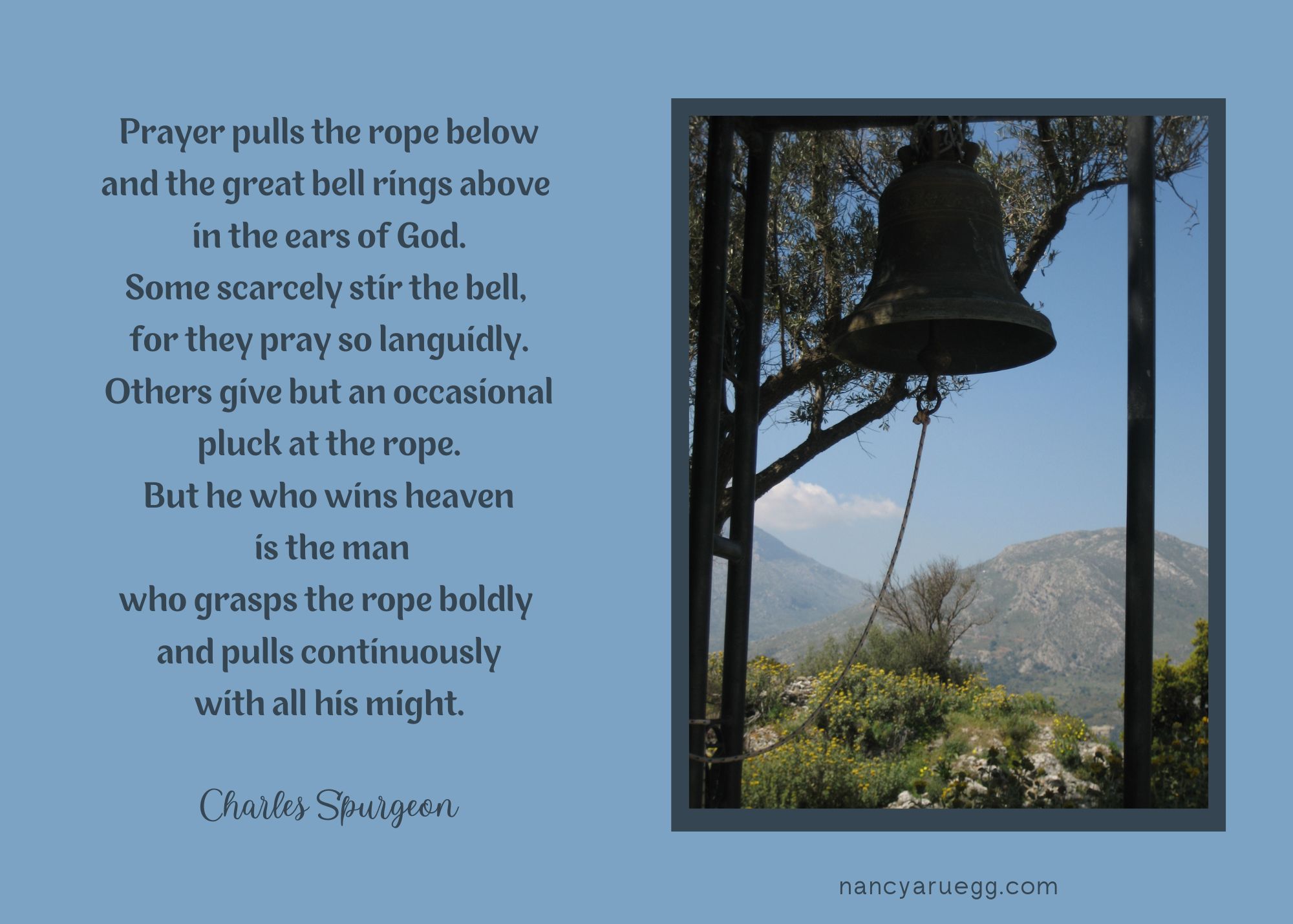
The great preacher, Charles Spurgeon (1834-1892), had this to say about continual prayer:

To pray continually takes effort; it’s easy to let distractions interfere. That in turn leads to such adverse effects as frustration, irritation, a lack of peace, confusion, a short temper, weariness, and discouragement [5].

Oh, but what delights result when we maintain an attitude of prayer —in addition to our prayers answered! What follows is just a short list.

Communicating with God:

  • Helps us focus less on trivial matters and more on glorious realities [6]
  • Fosters peace [7]
  • Increases our trust in God, our reliance upon him [8] 
  • Allows us to participate in what God is doing around the world [9]
  • Helps us build a life-enhancing relationship with God [10]

Unceasing prayer can grow to be something we do

not because of discipline but because of friendship.

Desire. It’s where we’re headed,

if we’ll let Him take us there.

Sara Hagerty, Unseen, 227

Oh, yes Lord, that’s my desire, to experience the constant delight of communion with you, through continual prayer. Keep me mindful to pray my way through every day.


[1] 1 Thessalonians 5:16-18

[2] Hebrews 11:6; John 15:5; Psalm 145:18 HCSB; Matthew 19:26; Psalm 84:11

[3] Lamentations 3:22-23; Isaiah 41:10; James 1:5; Psalm 94:19; Job 5:9; Exodus 15:6

[4] 1 Samuel 1:1-20; Lysa Terkeurst, Embraced, 174.

[5] Ray Pritchard, https://www.preceptaustin.org/1_thessalonians_516_commentary .

[6] Sarah Young, Jesus Calling, 135.

[7] Philippians 4:6-7

[8] Jeremiah 17:7-8

[9] Matthew 6:9-10; Philippians 1:19 offers an example.

[10] Luke 11:9

Photo credits: http://www.dailyverses.net; http://www.heartlight.org; http://www.commons.wikimedia.org (2); http://www.heartlight.org.

Read Full Post »

No matter how many sunrises a person might witness over a lifetime, who could tire of the majestic spectacle, with its mesmerizing shades of lavender, scarlet, apricot, and golden yellow—all aglow with the backlight of the sun, and each dawn different than all those before.

I’m filled with wonder as the morning sky begins to fill with light and “the heavens proclaim the glory of God. The skies display his craftsmanship”[1].  He is the supreme Artist.

My favorite sunrise-displays are those when clouds are positioned just right to create magnificent gleaming rays reaching into infinity.

Perhaps God inspired the prophet Malachi with just such a sunrise as he wrote: “The Sun of Righteousness [our Messiah] will rise with healing in his wings for you people who fear my name”[2].

Wings refers to sunbeams, bringing to mind the unending healing of God’s forgiveness, available to all who put their trust in Jesus. He provides for us the dawning of a new day as we choose to move out of darkness and into his marvelous light [3].

Sunrise is also God’s daily reminder that his faithfulness is great and his mercies begin anew each morning . Perhaps he wanted us to understand that his faithfulness to us is as certain and consistent as the sunrise, yet full of surprise and creativity as well [4].

The dawn brings hope, reminding us that:

  • Just as the sun is bigger than any planet in our solar system, so God is bigger than any challenge we might face.
  • Just as the sun always shines whether in full view or behind clouds, God is always with us whether we sense his presence or not.
  • Just as the sun never fails to rise, so the Son will never fail to rise, bringing the light of his salvation, truth, and wisdom.
  • Yesterday’s disappointments and failures are past; a new day with fresh blessings and possibilities has dawned [5]!

In addition to hope, fresh joy comes with the morning light.

But to see the dawn and experience its pleasure, a person must look at the sunrise. If we’re going to see joy and experience its pleasure, we must look to the Son, the source of joy [6]. Then, each day becomes an opportunity to live in wild, blissful amazement of God.

When you do witness a glorious sunrise doesn’t it make you smile—if not on your face, then in your spirit? We can augment that joy with gratitude—not just for a breath-taking dawn, of course, but for all the beautiful, remarkable, and pleasurable things God generously bestows.

Author Roman Payne wrote in celebration of the sun: “O, Sunlight! The most precious gold to be found on Earth!” And surely we’d agree, a golden sunrise especially proves his point.

But just such a sunrise might better serve as a reminder to celebrate the Son:

O SonLight, more precious than all the gold to be found on Earth!

*     *     *     *     *     *     *     *     *     *

I praise you, God the Father, Son, and Holy Spirit, for your light that is brighter than the brilliance of a sunrise! You are the source of all blessing, the brightness of our days, and our guiding Light to show the way. Without you, life is like twilight with dark night ahead. But with you, it is the dawn of morning with the light and warmth of a full day ahead.

(Psalm 84:11 PTP; James 1:19; 2 Samuel 22:29; Psalm 119:105;

last sentence based on Philip Schaff quote.)


[1] Psalm 19:1 NLT

[2] Malachi 4:2a

[3] 1 Peter 2:9

[4] Lamentations 3:23, and an idea inspired by Eugene Peterson, Run with the Horses, pp. 115-116.

[5] Philippians 4:13; Psalm 23:4; 27:1; 119:105, 130; Ecclesiastes 2:13

[6] John 15:11

Photo credits: http://www.pixabay.com; http://www.peakpix.com; http://www.canva.com (2); http://www.rawpixel.com.; http://www.peakpix.com.
Read Full Post »

Recently I’ve been listening to Christian comedians on YouTube while exercising. They help distract me during this most distasteful half-hour of each day.

The best part of exercise: when it’s over.

So far I can recommend the humor of Tim Hawkins, Jim Davis, Kenn Kington, and Ted Cunningham to keep one entertained.

However, be forewarned: it’s impossible to do crunches while laughing.

Here’s a sample of Kenn Kington. Start the video, start crunching, and you’ll see what I mean.

https://www.youtube.com/watch?v=3YZ8tAbI5fw

No doubt you’ve heard some of the benefits of laughter that researchers have identified, including:

  • Decreased tension
  • Lowered blood pressure
  • Improved immune system
  • Increased feel-good endorphins
  • Renewed energy [1]

Laughter is good medicine, just as God inspired King Solomon to write eons ago (Proverbs 17:22). It also produces healthy servings of joy into our spirits.

But laughter isn’t the only action that produces health benefits and joy. So do gratitude and praise.

According to the Mayo Clinic, gratitude:

  • Decreases depression
  • Lessens worry
  • Improves sleep
  • Enhances immunity
  • Reduces chronic pain [2]

The ability to express gratitude and praise is a gift from God, intended to accomplish much good for mind, body, and spirit.

So what might we give thanks and praise to God for today?

A quick perusal of my gratitude journal provides the following possibilities that anyone can embrace:

  • Watching children on a playground, running, climbing, sliding, and whooping with glee—and finding my own glee expanded
  • Tackling a challenging project and reveling in the moment when it’s finally complete
  • Partaking a delicious meal with family and/or friends, enhanced by caring conversation, shared memories, and of course, laughter!
  • Marveling at the masterpieces of nature: the wings of a butterfly, the camouflage of a deer, the leap-and-grab abilities of a squirrel
  • Delighting in a bargain purchase that God surely provided (James 1:17)

Both of these practices, laughter and gratitude, will take us only so far into health and joy without one all-important element: faith.

When Paul wrote from prison to his dear friends at Philippi, he hoped to be released and visit them soon. His heart’s desire was to contribute further to their spiritual growth and to their joy in the faith (Philippians 1:25), considering its numerous benefits.

Which come first to your mind? See if your thoughts correspond with a few of these blessings:

  • God’s unfailing grace, compassion, and love
  • His inexplicable peace, comforting presence, and absolute strength
  • The wisdom of his Word to guide us through every situation
  • God’s promises that offer hope
  • His help that sometimes manifests itself in a surprising God-incident
  • His encouragement at unexpected moments through unexpected sources
  • The undeserved gift of eternal life yet to come

Researchers have verified that faith in God also provides physical benefits, including:

  • Reduced stress
  • Lowered blood pressure
  • Enhanced mental health
  • Improved emotional health
  • Decreased depression [3]

It stands to reason, the stronger our faith in a God–who provides so much–the greater our contentment.

And when enthusiastic laughter, heartfelt gratitude, and praise-charged faith are part of every day, we’ll find ourselves overflowing with a sense of well-being and joy—an overflow that also impacts others.


[1] https://www.helpguide.org/articles/mental-health/laughter-is-the-best-medicine.htm.

[2] https://www.mayoclinichealthsystem.org/hometown-health/speaking-of-health/can-expressing-gratitude-improve-health#:~:text=Expressing%20gratitude%20is%20associated%20with,pain%20and%20risk%20of%20disease.

[3]https://www.bethesdagardensloveland.com/blog/the-health-benefits-of-faith#:~:text=The%20health%20benefits%20of%20faith%20have%20been%20a%20hot%20topic,reduced%20dependency%20on%20addictive%20substances and https://relevantmagazine.com/life5/surprising-links-between-faith-and-health/ and https://www.christiantoday.com/article/believing.in.god.is.good.for.your.health/27902.htm.

Photo credits: http://www.rawpixels.net; Nancy Ruegg; http://www.canva.com; http://www.heartlight.org; http://www.pexels.com (Sidney Lima); http://www.canva.com.

Read Full Post »

« Newer Posts - Older Posts »

When the House is Quiet

Impressions Becoming Expressions

Mitch Teemley

The Power of Story

Still Traveling

Impressions Becoming Expressions

Living Our Days

Gaining a heart of wisdom

He Said What?!

I'm Patty, and my husband and I are living with our adult son who has autism and epilepsy. I love sharing lessons learned from life around me, especially life with Aaron.

Meditations of my Heart

Impressions Becoming Expressions

Linda Stoll

Impressions Becoming Expressions

Signora Sheila

Where faith meets la dolce vita

Heidi Viars

Finding the Image of God