Feeds:
Posts
Comments

Archive for the ‘God’ Category

One of the psalmists proclaimed, “I will go to the altar of God, to God, my joy and my delight” (Psalm 43:4). The statement raises the question, How do you delight in someone who can’t be seen or touched?

Perhaps we can discover the answer by considering how we delight in the people around us. My father offers a perfect example.

First let me tell you: Dad worked miracles with his numerous tools.  He could fix or build practically anything, as well as paint and wallpaper like a pro.

We were probably among the first to have a built-in sound system.  Dad wired and hooked up a speaker in every room (each with its own on-and-off switch), so anything on the radio or hi-fi could be heard anywhere in the house. 

Dad also built custom-sized furniture:  in the living room–a bookcase (with open shelves above and enclosed shelves below) along with Mom’s music cabinet; in the kitchen—new cupboards and a storage cabinet; in Mom’s and Dad’s bedroom—a large dresser; and for my brother John and me—desks. Each project displayed his careful attention to detail.

But Dad’s admirable qualities weren’t only on display in his home improvement projects.  He demonstrated patience while teaching us how to play Muggins (an old card game), how to use his tools, and how to plant seeds.

He exemplified selflessness by taking us sledding and kite-flying in the park, swimming at the community pool, and biking around town. Dad proved his generosity by volunteering time and effort to help neighbors and fulfill various needs at church.  

When Dad said, “Who wants to pick up some lumber with me?” or “Who wants to go to the hardware store?” John and I were ready to drop whatever we were doing. 

It’s not that these were exciting activities in themselves, it was Dad who made them a special delight–conversing with us as we rode to and from, pointing out items of interest along the way, and holding our small hands in his big ones as we crossed streets.  

Now all this activity and industriousness took place decades ago of course, yet I still take pleasure in remembering his noteworthy undertakings and attributes. In fact, appreciation and admiration for him have only increased over time.  I consider myself privileged to have known Dad and spent time with him.

(Dad and me, mid-1960s)

To know our Heavenly Father we turn to the Bible, of course.  There we learn about his wonderful deeds and miracles. We see God’s glorious character traits on display, including his astounding abilities, his goodness, generosity, and love. We soon find ourselves delighting in all that he is.
We also delight in God as we spend time with him–celebrating what he’s done in our past and praising him for what he’s accomplishing today. We learn important life lessons from him.  And we consider the benefits bestowed by our Heavenly Father, his eternal commitment to us, unfailing love for us, and strength-infusing presence with us.

We find ourselves happily praising God:

This image has an empty alt attribute; its file name is 7335.jpeg

Then we turn all these contemplations into gratitude.

The daily practice of the discipline of gratitude

is the way to daily practice the delight of God.

–Ann Voskamp*

And what will be the result of such a practice?  Pleasurable wonder, resilient faith, and serene contentment—as a start. Doesn’t that sound glorious? Especially during these turbulent times.

In addition, we’ll bring delight to him also (Psalm 147:11). Imagine that!

Perhaps we’d do well to turn Psalm 43:4 into a New Year’s resolution for 2022:

[Daily] I will go to the altar of God,

to God, my joy and my [deep] delight.

____________________

*One Thousand Gifts, 82.

Photo credits: http://www.wikimedia.org (2); http://www.pixnio.com; Henry Mensinger (my grandfather); http://www.heartlight.org (2); http://www.pixabay.com.
Read Full Post »

For most of us, the words Christmas scriptures bring to mind the first two chapters of Matthew and Luke.  We may even remember the prophecies of Isaiah, Jeremiah, and Micah.

Rarely will we think of the psalms as part of the Christmas story, yet at least a dozen passages from the Book of Songs include references related to Christ’s birth. A few qualify as outright prophecies; other statements are less direct, but hindsight allows us to make delightful connections.

So for each passage quoted below, see if an aspect of the Christmas story doesn’t come to mind!  (To keep this post from getting too long, I’ve included just six examples. Answers appear below.)

1. “The Lord said, ‘I have made a covenant with My chosen one, I have sworn to David, My servant, I will establish your offspring forever and build up your throne for all generations” (Psalm 89:3-4 HCSB).

2. “[The Lord] himself will redeem Israel from all their sins” (Psalm 130:8).

3. “Light shines on the righteous and joy on the upright in heart” (Psalm 97:11).

4. “The heavens proclaim his righteousness, and all peoples see his glory” (Psalm 97:6).

5. “Send me a sign of your favor.  Then those who hate me will be put to shame, for you, O Lord, help and comfort me” (Psalm 86:17 NLT).

6. “Praise the LORD and pray in his name! Tell everyone what he has done” (Psalm 105:1).

7. “Because of your temple at Jerusalem, kings will bring you gifts (Psalm 68:29). 

(The second Jewish temple; a model in the Israel Museum)

Answers:

1. Jesus’ lineage and reign described in Matthew and Luke fulfill this prophecy perfectly (Matthew 1:1; Luke 1:32-33).

2. Psalm 130:8 sounds very similar to Matthew 1:21, doesn’t it?

3. The Light of the world began to shine that night in Bethlehem, and the angel of the Lord proclaimed great joy for all people (Luke 2:9-10).

(by Philip James de Loutherbourg, 1740-1812)

4. The psalmist may have thought he was writing about the stars, sun, and moon—all declaring the power and glory of God.  Little did he know his words foreshadowed events on the night Jesus was born, when the heavenly host proclaimed, “Glory to God in the highest heaven” (Luke 2:9) and the shepherds saw the glory of the Lord shining around them (v. 9, 13-14).

5. This verse also brings to mind the lowly shepherds (whom others often despised) as well as the angel’s words, “This shall be a sign unto you . . .” The birth of the Messiah brought great help and comfort to all his people, but perhaps especially the marginalized. For everyone, the long wait for his appearing was over.

6. The shepherds followed this directive as they left Jesus’ birthplace and “spread the word concerning what had been told them about this child” (Luke 2:17).  They glorified and praised God for all the things they’d seen and heard, just as they had been told (v. 20).

7. That’s exactly where the Magi went first—Jerusalem—seeking the one born king of the Jews (Matthew 2:1-2.)  And of course they came bearing gifts–gold, frankincense, and myrrh (Matthew 2:10-11).

Isn’t it amazing–from the Book of Songs written eons ago, come the distant strains of the exquisite, eternal Christmas Song that we celebrate to this day:

All your works declare Your glory;

all creation joins to sing.

Praise resounds as earth rejoices

in the birth of Christ the King (2)!*

*the last four lines of “Joyful, Joyful, We Adore Thee,” stanza 2)

Art & photo credits: Steve Ruegg; http://www.stockvault.net; http://www.pixabay.com; http://www.wikimedia.org (2); http://www.pixabay.com.

Read Full Post »

The first Christmas carol ever composed rarely appears in a collection of Advent songs.  But you will find it in the Bible, Luke chapter one.  It’s Mary’s song, shared with her cousin Elizabeth soon after she arrived at the older woman’s home.

Using much scripture, Mary artfully wove this prayer-song to praise God for his work in her life and in the world-at-large, especially now that the Messiah would soon be born.

Mary’s prayer is often referred to as the Magnificat, because in a number of translations it begins, “My soul magnifies the Lord,” as if Mary is holding up a magnifying glass to God’s attributes while she draws attention to each one.

I too have seen God’s attributes at work, and have experienced countless blessings.  While contemplating Mary’s song recently, I wondered: could I compose a Magnificat? What follows is the result.

My soul proclaims your greatness, O Lord . . . (Luke 1:46 HCSB)

. . . on display in the wonders of creation, events that defy explanation, and in the transformed lives of people—including my own. 

“You are the God who performs miracles; you display your power among the peoples”[1] as needs are met, disasters avoided, and the way forward provided. You alone are omnipotent, with all resources at your disposal.

My spirit rejoices in God my Savior (v. 47 NIV).

I praise you for saving me from the consequences of my sin through the sacrifice of your Son.  Upon my last breath, you will take me to heaven to live with you forever. In that moment I’ll be healed of all ailments and released from all adversity.

Until that day, you gladly save me from worry, fear, discouragement and stress when I trust you and follow your ways. Thank you, dear Father!

You have looked [with loving care] on the humble state of your maidservant (v. 48 AMP).

By the world’s standards I’m a nobody–no wealth, no fame, no power. Little do some know my true status, the daughter of the King of the universe, and the numerous delights I enjoy as a result:

  • glorious moments in your presence
  • generous gifts not even asked for
  • friendships with your other children (augmented by your involvement and influence)
  • your frequent intervention in difficult circumstances, as only a powerful King could arrange

From one generation to another you have demonstrated your mercy (v. 50 GNT).

I think of my grandparents, each of whom you sustained and helped through difficulty.  I think of my parents who also experienced your faithfulness as they were faithful to you.

And now we can testify of your gracious kindness. You have dealt compassionately, especially in times of distress.

Your mighty power has been on display (v. 51 GWT) . . .

 . . . through healings that doctors can’t explain, needs met in miraculous ways, monetary gifts arriving just in time, and moments of desperation turned around in an instant.

“You satisfy the hungry with good things” (v. 53, HCSB). 

The list is lavishly long: your undeserved love, comforting presence, inexplicable peace, fullness of joy, heartening encouragement, fulfilling purpose, undying hope, sure promises, abundant provision, generous blessings, wise counsel, abiding strength—to mention a few! “In your giving we have a sea without a shore.”[2]

My God, the King, I exalt you for your glorious attributes,

and will praise your name forever and ever.

 Your ways are absolutely holy—no one is like you. 

You are the God who performs miracles!

Your power is on display in glorious ways all over the earth,

yet you have chosen to do great things for me and those I love.

My heart is filled with joy!

(Psalm 145:1; 77:13-14; 126:3)


[1] Psalm 77:14

[2] Herbert Lockyer, Seasons of the Lord, 255.

Photo credits: http://www.pixabay.com (twstringer); http://www.pxhere.com (dorothe); http://www.pxhere.com; http://www.pixaby.com (Simon); http://www.wikimedia.com (VinceTraveller); http://www.heartlight.org; http://www.pixabay.com (nastya_gepp); http://www.pix4free.

Read Full Post »

Ask a group of people to name a taste of heaven and likely answers will include a favorite meal, a beloved quiet spot, or a happy get-together with family and friends.

But British minister William Romaine (1714-1795) suggested a different way to experience a taste of heaven that doesn’t involve cooking, traveling, or gathering.  His recommendation:  gratitude to God.

Gratitude to God

makes even a temporal blessing

a taste of heaven.

–William Romaine

Such tastes of heaven are not few and far between either. During every one of the 1,440 minutes of each day, blessings descend, including such privileges as:

  • Just getting out of bed in the morning and being able to move about
  • enjoying the privilege of communicating with others–including with God himself
  • receiving adequate strength to fulfill the day’s responsibilities
  • taking in helpful information and experiencing delight through our five senses
  • encouraging others with kindness and increasing our own joy in the process

Though none of these are rare blessings, they still hold great value.

If you remember the dignity of the Giver,

no gift will seem small or mean,

for nothing can be valueless that is

given by the most high God.

–Thomas á Kempis

Not only do the gifts themselves hold value, they demonstrate the depth and value of God’s gracious love toward us—when we’re grateful for them. 

To be grateful is to recognize

the love of God in everything He has given us—

and He has given us everything.

Every breath we draw is a gift of His love,

every moment of existence is a grace,

for it brings with it immense graces from Him.

–Thomas Merton

Therefore, we’d do well to follow the advice of nineteenth-century Scottish minister and author J. R. MacDuff: 

Little did Reverend MacDuff know what secular researchers would discover about gratitude a century beyond his lifetime. The benefits include more than a sense of well-being.  Grateful people enjoy:

  • Better sleep
  • A stronger immune system
  • Improved mental health
  • Increased optimism
  • Better relationships*

In addition, a few discerning Christ-followers have noted:

1. Gratitude soothes over the irritations of life as attention is directed away from trouble and toward the blessings that remain.

We would worry less if we praised more. 

Thanksgiving is the enemy of discontent and dissatisfaction.

–Harry Ironside (1876-1951),

pastor, author, theologian

In other words, a grateful heart is a contented and satisfied heart.  Doesn’t that sound like a taste of heaven?

2. “Gratitude bestows reverence, allowing us to encounter every day epiphanies, those transcendent moments of awe that change forever how we experience life and the world” (John Milton).

Every day epiphanies?  Transcendent moments of awe? These too sound like glorious tastes of heaven.

3. “Gratitude unlocks the fullness of life” (Melody Beattie) . . . as we begin to see the wealth we already own, the blessings we already enjoy, the prayers God has already answered.

The unthankful heart discovers no mercies;

but let the thankful heart sweep through the day and,

as the magnet finds iron, so it will find in every hour,

some heavenly blessings!”

–Henry Ward Beecher

Imagine naming a blessing for each iron shaving here!

In this week leading up to Thanksgiving 2021, what tastes of heaven are you enjoying? Please share a sample with us in the comment section below!

* https://www.healthline.com/health/benefits-of-gratitude-practice#takeaway

Photo credits: http://www.flickr.com; http://www.pxfuel.com; http://www.maxpixel.net (2); http://www.wikimedia.org.

Read Full Post »

“Father, please try to understand. I cannot go back to medical school. I’m not well-suited to be a doctor.” Francis looked hopefully into his father’s eyes. Perhaps this discussion would finally convince Father to let him follow his heart’s desire:  to become a writer.

“Son, you’ve spent six years in training,” began his father, a physician himself. “It would be foolish to throw away all that time and effort. Besides, think of the security provided by a position in the medical field. If you pursue this notion of becoming a writer, there is no guarantee of success or even a steady income.”

Once again, father and son had reached an impasse. And so, with only a few coins in his pocket, Francis set out on his own.  He traveled more than 220 miles to London, found a job as a bookseller, and wrote in earnest as time permitted. The year was 1885.

Francis’ health began to suffer and he lost one job after another until he ended up selling matches in the Whitechapel slums of London’s East End.

That barely provided food much less rent.  Soon Francis was homeless. To make matters worse, he found himself addicted to the opium he had first taken for relief of neuralgia pain. At one point he attempted suicide.

In 1887 Francis sent some of his poems, “scribbled on sugar paper” [1], to Wilfred Meynell, the editor of a journal, Merrie England. Meynell was highly impressed, in spite of the humble presentation, and agreed to publish them. But the proceeds were meager.

The following year Jack the Ripper stalked the streets of Whitechapel. Francis did what he could to protect the murderer’s would-be victims, the prostitutes of the make-shift brothels. Perhaps it was one of these women who saw Francis collapse in the street one day.  She allowed him to stay with her and even cared for him for a while. (Francis later referred to her as his “savior,” though he never revealed her identity.)

When the publisher Meynell discovered Francis’ dire circumstances, he arranged for the young poet to live at a monastery where he could regain his health and overcome his addiction. The process took five years. As Francis began to heal physically, Meynell and his wife helped Francis renew his faith in God. Sometimes as he walked the peaceful grounds of the monastery, Francis would become overwhelmed by God’s grace to save him, and he’d break out into songs of praise.

(Perhaps scenes such as this caused Francis’ outbursts of praise.)

During this time Francis continued to write—poetry, essays, and short stories—including his most famous work, “The Hound of Heaven.” The autobiographical poem recounts his experience of being lost and God’s persistent pursuit of him.

“Hound of Heaven” begins:

I fled Him down the nights and down the days

I fled Him down the arches of the years

I fled Him down the labyrinthine ways

Of my own mind, and in the midst of tears.

(Such a monastery chapel as this may have inspired line 2 above.)

Later in the poem Francis described God’s pursuit:

From those strong Feet that followed, followed after

But with unhurrying chase and unperturbed pace,

Deliberate speed, majestic instancy,

They beat–and a Voice beat

More instant than the Feet–

‘All things betray thee who betrayest Me.’

Another section provides God’s explanation for removing certain pleasures from the speaker’s life, because they were leading him in the wrong direction. God’s purpose was to guide him toward choosing the right path.

In the end God tells the speaker that “the happiness he sought by running away was following him all the time” (Cummings [2]). And the darkness of deprivation had been but “the shadow of the Divine hand stretched over him in love” (Blamires [3]).

Once Francis had regained his health in 1893, the Meynells invited him to stay with them. That same year Meynell helped Francis publish his first book of poems. “Hound of Heaven” was included.

“It was immediately recognized as a masterpiece” [4]. One critic called it “one of the great odes of which the English language can boast” [5].

Over the ensuing years, “Hound of Heaven” was praised by such respected authors as Oscar Wilde, G. K. Chesterton, Eugene O’Neill, and J. R. R. Tolkien. O’Neill showed his high respect for the poem by memorizing it—all 182 lines. Chesterton said, “it is the most magnificent poem ever written in English,” to which Tolkien responded that Chesterton wasn’t giving the poem the credit it deserved [6].

Francis Thompson subsequently became a well-known, respected poet, essayist, and spiritual writer. But his health suffered due to the hardship of those years in Whitechapel, and he succumbed to tuberculosis in 1907 at the age of 47.

Across the decades since his homegoing to heaven, Francis would surely have us remember these words of the apostle Paul:

Notes:

[1] https://www.christianity.com/church/church-history/timeline/1901-2000/heavens-hound-got-francis-thompson-11630688.html

[2] https://www.cummingsstudyguides.net/Guides3/hound.html

[3] Harry Blamires as quoted in Oxley, The Hound of Heaven: A Modern Adaptation, 81, as quoted by

www.hopechristianchurch.org

[4] http://houndofheaven.com/product/the-hound-of-heaven-the-story-of-francis-thompson/

[5] https://www.patheos.com/catholic/hound-of-heaven-pat-mcnamara-07-10-2012

[6] https://reasonsforhopejesus.com/is-hound-of-heaven-a-name-for-god/

Additional  Sources:

  1. https://www.americamagazine.org/issue/601/faith-focus/poet-return-god
  2. https://www.christiantoday.com/article/opium-addict-and-derelict-the-extraordinary-life-of-francis-thompson-christian-poet/130930.htm
  3. http://www.teleiaphilia.com/a-modern-adaptation-of-thompsons-hound-of-heaven/
  4. https://warwick.ac.uk/fac/arts/english/currentstudents/undergraduate/modules/fulllist/second/en227/texts/thompson-hound.pdf

Art & photo credits: http://www.wikimedia.org; http://www.geograph.org.uk; http://www.pixabay.com (2); http://www.canva.com.

Read Full Post »

The psalmists of old seemed to have a favorite metaphor for God: Rock. You’ll find the imagery used twenty-nine times.  Sometimes the writers included reasons why this was a meaningful comparison for them; sometimes they included synonyms:

  • “The Lord is my rock, my fortress” (18:2)
  • “My God is my rock, in whom I take refuge, my shield . . . my  stronghold” (also 18:2)
  • “Lead me to the rock that is higher than I” (61:2)
  • “God alone is the mighty rock that keeps me safe” (62:2 CEV)
  • “Be to me a rock of habitation to which I may continually come” (71:3 NASB)

David seemed especially fond of this metaphor, perhaps because he spent months hiding from King Saul in the rocky terrain of the Judean wilderness. Psalm 57 was written specifically when he escaped into a cave. It may have been the characteristics of the rock walls surrounding him that brought to mind descriptors of God—solid, strong, protective, and unchanging.

Perhaps a cave such as this hid David and his men.
Might such a formation as this have provided the inspiration behind
“Be the rock that is higher than I” (Psalm 61:2)?

Later when he became king, David composed Psalm 18, probably after the numerous battle victories summarized in 2 Samuel 8.  Four times in that psalm he extolled God as his Rock.

In the New Testament we find Jesus’ parable about a foolish man building his house on sand, and a wise man building his house on rock. The point is clear: God is a reliable foundation-Rock on which to build our lives.  He provides:

  • solid, trustworthy wisdom for decisions 
  • strength and power for life’s challenges
  • protection from our arch enemy, Satan
  • unchanging reliability, faithfulness, and love—to name a few unfailing attributes
“Anyone who listens to my teaching and follows it is wise,
like a person who builds a house on solid rock” Matthew 7:24.
(House in Meteora, Greece.)

One of my favorite examples of Bible imagery is found in Philippians 2:15.  To understand the context though, we have to start reading at verse fourteen:

Do everything without grumbling or arguing,

so that you may become blameless and pure,

children of God without fault in a warped and crooked generation.

Then you will shine among them like stars in the sky

as you hold firmly to the word of life.

–Philippians 2:14-15 NIV

Isn’t that a glorious statement in the fourth line above?  We can shine into the darkness of the world like stars as we allow the Spirit to foster purity within us!

Ngc 3603 Nebula Cluster Of Stars

Now why would letter-writer Paul choose stars to make his point? Perhaps their beauty reminded him: with kindness, patience, joy, and more we can bring beauty to the world around us–a world darkened by selfishness, greed, and hatred.

Paul would also have known about using stars for navigation.  As far back as 3000 B.C. ancient Minoans were using constellations to navigate the Mediterranean Sea (1).  Perhaps Paul connected the starlight to God’s wisdom shining in mature believers, enabling them to provide guidance to those around them.

But now, centuries later, we know more about stars than Paul did and further comparisons can be drawn:

Stars shine by burning hydrogen into helium in their cores.  We shine as the Holy Spirit burns away the dross in our lives—those unbecoming traits like pride, negativity, and ingratitude. That’s when we can become radiant.

One prominent star in the evening sky of Fall and Winter is Deneb in the constellation Cygnus (the Swan), which is 19 quadrillion miles from earth.  The gleam we see left Deneb about 1500 light years ago in 521 A.D (2). The gleam of our lives can also achieve far-reaching effect as one life touches another which touches another, and then another . . . ad infinitum.

Stars not only create beauty but fulfill function.  They manufacture and distribute into the universe such elements as carbon, nitrogen, and oxygen (3). As we shine like stars in our circles of influence, we too fulfill function, manufacturing and distributing such elements as goodness, encouragement, and helpfulness.

From earth and sky come these two insightful examples of biblical imagery:  rock and stars.

Do you see the connection between the two? As you plant yourself on the firm Rock of Almighty God and shine for him like a star . . .

. . . YOU are a Rock star!

Notes:

  1. https://nationalgeographic.org/encyclopedia/navigation/
  2. https://earthsky.org/space/ten-things-you-may-not-know-about-stars/
  3. https://science.nasa.gov/astrophysics/focus-areas/how-do-stars-from-and-evolve

Photo credits: http://www.hippopx.com; http://www.canva.com; http://www.wikimedia.org (2); http://www.pixfuel.com; http://www.maxpixel.net; http://www.heartlight.org; http://www.maxpixel.net.

Read Full Post »

Fixate on current events and become anxious.

Consider the bleak projections for the future and become fearful.

Dwell on your own struggles and become discouraged.

Focus on personal inadequacies and become doubtful.

Mull over regrets and become guilt-ridden.

Contemplate fading dreams and become despondent.

Permit negativity free reign and become depressed.

How easy it is to drift away from the truths that provide prosperity of soul.

We must choose to remember the following.

NO MATTER what we see happening, no matter the fear beginning to build, we can affirm: “For every visible reason for terror, there is an invisible and immensely more powerful reason for trust.” [1]

O Lord, God of our ancestors,

you alone are the God who is in heaven.

You are ruler of all the kingdoms of the earth.

You are powerful and mighty;

no one can stand against you!

–2 Chronicles 20:6 NLT

NO MATTER that we may not know the way forward; we do know the loving, all-powerful, and trustworthy Way Maker who has promised:

NO MATTER that life is a struggle right now, God will use it for good.  “There is coming a day [when] . . . We will have the glorious truth of our difficult ‘now’ laid out before us in a way that makes perfect sense, that will leave us panting a breathless ‘hallelujah’ for the process we’ve walked to get there.” [2]

“You do not realize now what I am doing,

but later you will understand.”

–John 13:7

NO MATTER how inadequate you feel because of failures, shortcomings, and doubts, you must remember:  “Weakness . . . is the very thing that qualifies you. Never mind your feelings of inadequacy; it is God’s work, not yours. 

“Simply make yourself available, and let go of any need to impress others, or prove yourself worthy, or achieve ‘success.’  What matters is that God has chosen you, and that God claims you as His own.” [3]

NO MATTER what you’ve done, “You no longer have to fear the consequences of your past, for your sovereign God promises that he will cause everything in your life to work together for your good and Christlikeness.” [4]

“Blessed are those whose transgressions are forgiven. . .

. . . Blessed is the one whose sin

 the Lord will never count against them.”

–Romans 4:7-8

NO MATTER that your dreams may be fading; “the death of your dream [is] not the death of God’s dreams for [you].” [5]

NO MATTER that circumstances conspire to steal your joy, you can . . . “Begin to rejoice in the Lord and your bones will flourish like an herb, and your cheeks will glow with the bloom of health and freshness. Worry, fear, distrust, care-all are poisonous! Joy is balm and healing, and if you will but rejoice, God will give power.” [6]

“Do not be worried,

for the joy of the Lord

is your strength and your stronghold.”

Nehemiah 8:10 AMP

NO MATTER the uncertainties and challenges of life, we have an all-powerful, wise and caring Companion for the journey, who provides all we need to experience prosperity of soul.

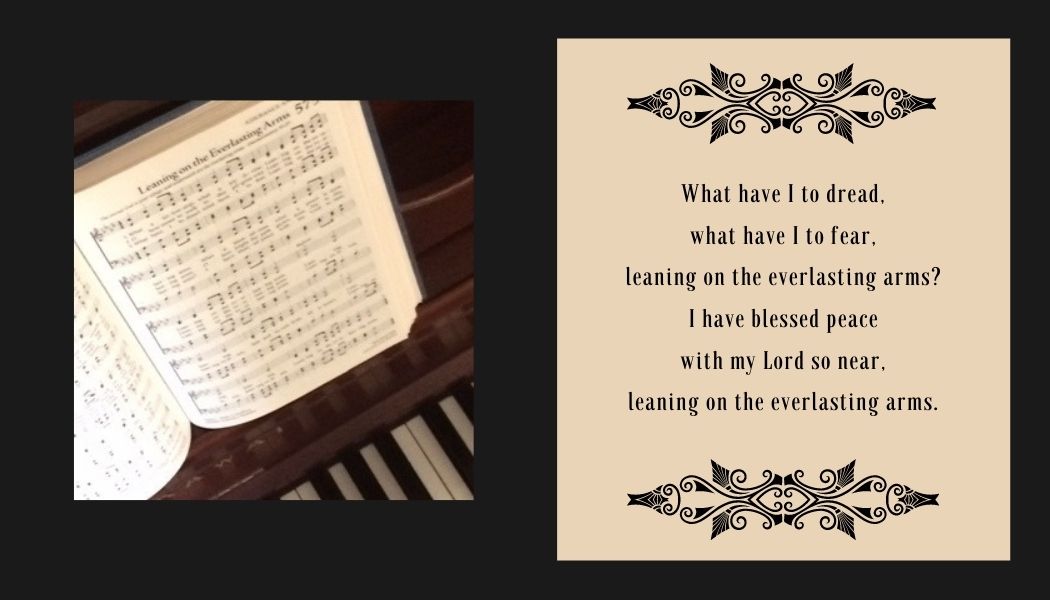
Stanza #3 from “Leaning on the Everlasting Arms” by Elisha A. Hoffman

[1] Elisabeth Elliot, These Bold Ashes, 11.

[2] F. Elaine Olson, Peace for the Journey, 101.

[3] Brother David Vryhof

[4] Kay Arthur, His Imprint, My Expression, 274 and Romans 8:28.

[5] Tasha June, Take Heart, 25.

[6] A. B. Simpson

Photo credits: http://www.pxfuel.com; http://www.piqsels.com; http://www.www.pixfuel.com; http://www.wikimedia.org; http://www.canva.com; http://www.heartlight.org; Nancy Ruegg.

Read Full Post »

Imagine tagging along with the disciples during Christ’s ministry, listening to his teaching, watching his encounters, witnessing his miracles. 

One day your group encounters two blind men along the roadside in Capernaum.  The sightless men cry out, “Have mercy on us, Son of David!” Jesus touches their eyes, and instantly the two men can see (Matthew 9:27-31). After a collective gasp, everyone bursts into cheers and joyful laughter.

On a second occasion outside the town of Bethsaida, some people bring another sightless man to Jesus.  Perhaps he’s heard what happened to the two blind men of Capernaum, because he too begs Jesus to touch him and heal his blindness.  But that’s not what Jesus does.  Instead, he spits on the man’s eyes and then puts his hands on him. 

Even a second touch is added to restore this man to full sight (Mark 8:22-26). Amidst the celebrating for this miracle you wonder, Why did Jesus spit on this man’s eyes when one touch healed the blind man in Capernaum?

On a third occasion as Jesus and your entourage leave Jericho, you encounter yet another blind man, Bartimaeus.  Will Jesus touch him and/or spit on the man’s eyes to heal him?  Neither. Jesus simply speaks to the beggar and his sight is restored (Mark 10:46-52). Your bewilderment grows deeper still.

And then while in Jerusalem, Jesus heals a fifth blind man.  By now you’ve given up trying to predict what the Master might do.  Even so you blink in surprise as Jesus spits on the ground, makes a bit of mud, spreads it on the blind man’s eyes, and instructs him to go wash in the pool of Siloam (John 9:1-9). You catch yourself before throwing your hands up in disbelief as Jesus demonstrates one more way to heal sightless eyes.

You’ve now witnessed five men healed of blindness by four different methods.  The evidence speaks for itself:   

The Son of God is unpredictable.

The Old Testament provides proof that God the Father also acts in unexpected ways.  You may remember when he:

  • Raised up two humble shepherds to positions of leadership[1]
  • Spoke to one of his prophets through a donkey[2]
  • Made the sun stand still[3]
  • Used a blind slave to kill thousands of Israel’s archenemies[4]
  • Allowed another prophet to be swallowed by a big fish[5]

Numerous other examples from scripture could be cited to prove:

Our God is unconventional.

Even today he proves his penchant for the unexpected.

A few weeks ago our daughter H., a school psychologist, relayed to us a story about a student she worked with last year. We’ll call her Emma.  After frequent interactions, H. and Emma developed an easy rapport, the girl was making good progress, and H. grew to care deeply for her.

This image has an empty alt attribute; its file name is images-2.jpeg

But this fall as school resumed, she learned Emma had moved to Florida.  Not wanting the girl to lose momentum, H. called the new school and asked to speak to the psychologist there.  She hoped to offer some helpful background about Emma and set the tone for continued progress.

Imagine her surprise when the gentleman who answered the phone turned out to be Andrew __________, a colleague who’d been part of the same master’s program as H. at Florida State University.  Out of just twelve students in that program, Andrew just happened to be the one to oversee this little girl who’d won our daughter’s heart.  And Andrew assured H. he’d take good care of Emma.

Time and again our God has proven . . .

. . . He is full of surprises.

I for one take great delight in a Heavenly Father who mystifies me by his unpredictability, wows me with his unconventionality, and takes my breath away with his surprises. 

How about you?

Please share in the comment section below an example from your own experience of “a wonder that cannot be fathomed.” Let’s . . .


[1] Moses, Exodus 3; David, 1 Samuel 16

[2] Balaam, Numbers 22

[3] Joshua 10

[4] Samson, Judges 16

[5] Jonah, Jonah 1

Photo credits: http://www.freebibleimages (3); http://www.pxfuel.com; http://www.canva.com; http://www.pxfuel.com; http://www.uihere.com.

Read Full Post »

You’re going to be so glad you stopped by today.  I’ve prepared a pop quiz for you—a little trivia challenge!  But don’t worry–it’s multiple-choice and short.


How many stars do astronomers estimate occupy the universe?

A. 500 trillion

B. 750 quadrillion

C. 1 septillion

What are the objects in the above photograph?

A. Virus microbes

B. Husks

C. Starfish babies

What is the average weight of a cumulous cloud?

A. Over 10,000 pounds

B. Over 100,000 pounds

C. Over 1,000,000 pounds

Number one is a freebie, because an accurate count is impossible.  But there are those astronomers who would agree with Answer C—1 septillion. That’s a one with 24 zeroes after it![1]

For the second question the answer is B—husks.  In a few select areas of the Western Pacific Ocean, live tiny organisms called Foraminifera.  When they die, the tide carries their husks—millions of them–to beaches on the coasts of Japan and Okinawa.[2]  Visit those places and you can walk on the stars.

Look close! Can you see a few stars that are still intact?

The answer for #3 is C. Holding up even the largest of cumulous clouds is the air beneath them, which weighs even more.[3]

I’m guessing you know a few amazing trivia facts too.  Isn’t it astounding that the body of information about the universe continues to grow, even after centuries of study?

See Endnote #4.

The short sampling of creation’s wonders mentioned above gives us a glimpse of God’s glorious capacities at work:  his inventiveness, engineering skill, power and more.  But we also see evidence of his magnificence in:

  • The Bible.  No other book matches its wisdom.  And when put into practice, it transforms a person’s life.
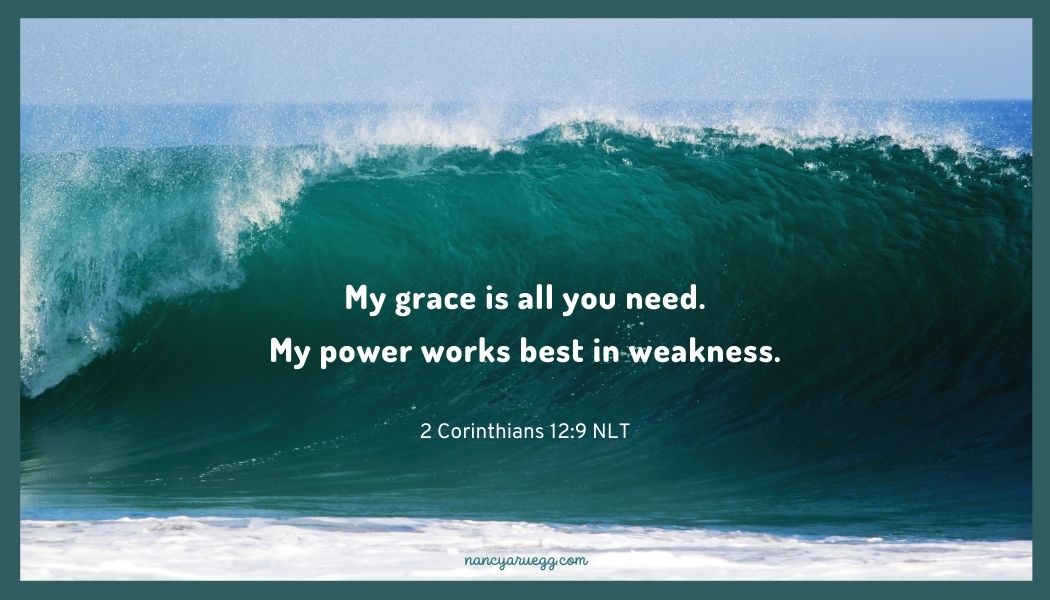
  • God’s attributes at work in the world—his love, grace, faithfulness, and mercy—to mention a few.
  • Miracles—happening around us every day.  The problem is we’re so used to them we call them ordinary.[5]
  • The gracious actions and glowing faces of his saints–miracles in themselves.

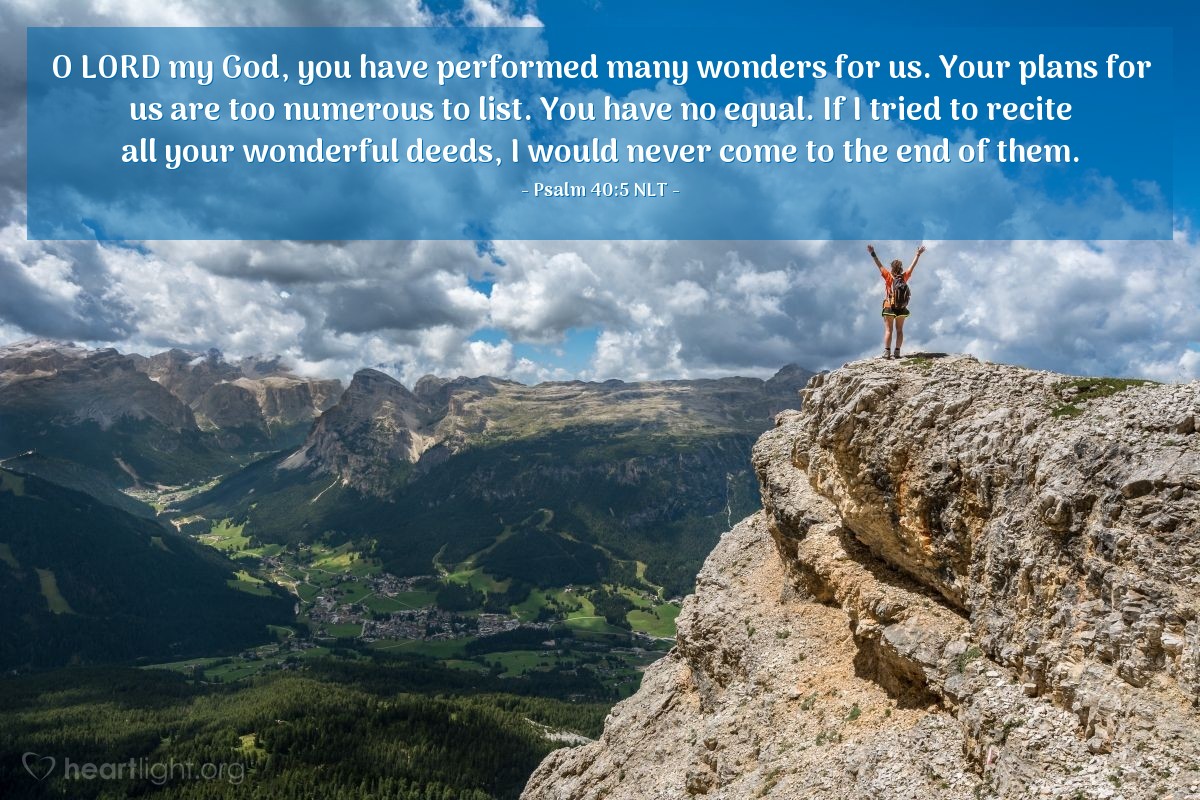
Truly, God reveals his glory TO us every day in countless ways.

But perhaps even more astounding: God—in all his magnificence—chooses to reside IN us when we say yes to his Son, Jesus.

Imagine.  The fullness of God—all his glorious attributes—within us.  And over time, as his Spirit instructs and trains us, we become more and more like Christ—more joyful, hopeful, and contented; less self-centered, dissatisfied, and distressed.  Such a glorious reality![6]

“God is mercifully shaping our lives

into what is useful and beautiful.”

–Eugene Peterson[7]

And then God chooses to make us channels of his glory, working THROUGH us to impact others.

How?

Every time we choose to be generous instead of selfish, patient instead of peevish, mindful instead of thoughtless, or merciful instead of intolerant, we’re demonstrating the attributes of God to others.

And as we make ourselves available for him to work through us, we may very well become the answer to someone else’s prayer.

“To become the answer to someone else’s prayer

is to live a life of rich purpose.”

–Maggie Wallem Rowe[8]

*      *       *      *      *      *

O God, thank you for revealing yourself TO us in numerous ways, producing joy in our spirits as we earnestly seek you.  I praise you for dwelling IN us, providing all we need (and then some!) for the abundant life Jesus promised.  And I thank you for working THROUGH us to positively impact others and give us satisfying  purpose.  There is no one like you!


[1] https://www.space.com/26078-how-many-stars-are-there.html

[2] https://commons.wikimedia.org/wiki/File:2085f_Japon_Hatoma.jpg  

[3]https://www.usgs.gov/special-topic/water-science-school/science/how-much-does-a-cloud-weigh?qt-science_center_objects=0#qt-science_center_objects

[4] The heavens don’t only include the stars, other planets, and moons.  Our planet occupies a tiny corner of the universe, and everything in it also tells of the wonders of God.

[5] Hans Christian Anderson

[6] Ephesians 3:21; 2 Corinthians 3:18

[7] Run with the Horses, 79.

[8] This Life We Share, 242.

Photo credits: http://www.wikimedia.org (2); http://www.pixabay.com; http://www.wikimedia.org; http://www.canva.com; http://www.pxhere.com; http://www.pixnio.com; http://www.piqsels.com; http://www.canva.com.
Read Full Post »

More than 1,000 miles east of the Philippines lies the Mariana Trench, the deepest point of earth’s oceans—so deep it reaches into the earth farther than Mount Everest reaches into the sky.  That’s more than 36,000 feet, or close to seven miles.
Not even today’s sophisticated submarines can submerge to that depth without imploding from the pressure of 15,000 pounds per square inch–the equivalent of a full-grown elephant standing on your big toe.

But in 2014 oceanographers constructed a cube-shaped basket, attached it to cables, and dropped it into the depths of the trench.  The descent took four hours. 

They left the basket in place for twenty-four hours, to gather data by camera and hopefully collect samples of life—if it existed at all in such inhospitable conditions.

At the end of twenty-four hours, they used acoustic signals to release the weights that had caused the basket to fall.   With the help of flotation devices, it then rose to the surface.  Against all odds, here is what the scientists found in the trap:

The new species of fish, about eleven inches long, received the name Mariana Snailfish.

Video revealed their activity in the depths—swimming, tail-swishing, foraging—what you’d expect from healthy fish.  They appeared to be perfectly content, unfazed by the bone-crushing pressure of the water around them.

So how do they survive?

God has especially equipped them.  For example, instead of bones snailfish skeletons are made of cartilage that can withstand pressure. These fish also produce certain fatty acids that help cell membranes stay flexible. Even at the molecular level, the muscles of the Mariana Snailfish contain certain enzymes that help them flourish at the bottom of the ocean.

In addition, scientists believe the following characteristics also contribute to their survival: big stomachs,  transparent skin, thinner muscles, and incompletely closed skulls. 

Just as the Mariana Snailfish can withstand extreme physical pressure, we can endure extreme mental, emotional and spiritual pressure—with God’s special equipping.

First, he’ll gladly help us develop resiliency—the ability to handle significant sources of stress. The snailfish manifests several characteristics in the physical realm that can be applied in the spiritual.

A Big Appetite

The large stomach reminds us that those who have a big appetite for God’s truth in the Bible also tend to be survivors; they’re strengthened to withstand the pressures of life.

Abraham Lincoln was just such a person, enduring great pressure from politicians, the press, and the burden of civil war.  He had this to say about scripture:

Transparency

This quality reminds us to be transparent about our concerns–before God and a few good friends. Just telling someone else about our stresses has been proven by researchers to reduce anxiety—a truth scripture has taught all along.[1]

It’s worth noting that just as the Mariana Snailfish lives completely at peace in the midst of physical pressure, we can live completely at peace in the midst of emotional stress as God frees us from worry and trusted, grace-filled friends support and encourage.[2]

Flexibility

These fish are also examples of flexibility—deep down at the cellular level.  You’ve probably heard the maxim, “Blessed are the flexible for they shall not be bent out of shape.”  The flexible person will look to God for the adjustments needed to handle the pressures of life  and search out his guidance for how to cope.

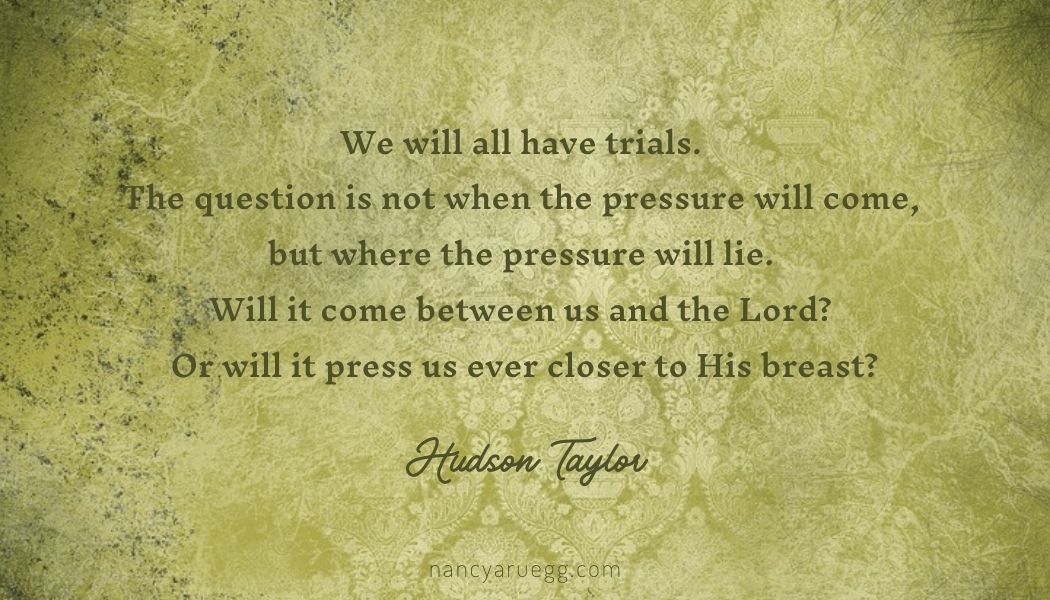
The great missionary to China, Hudson Taylor, would have us remember:

If we allow the stresses of life to accomplish the latter, they will not only be survivable, they will be accompanied by the deep contentment of nearness to God.[3]

Notes:

[1] Ecclesiastes 4:9-10

[2] James 1:2-4; Philippians 4:6-7; Proverbs 12:25

[3] Philippians 4:11-13; Psalm 23:4; Psalm 27:1

Sources:

  1. https://www.washington.edu/news/2017/11/28/theres-a-deeper-fish-in-the-sea/
  2. https://www.nature.com/articles/d41586-019-01158-x
  3. https://theconversation.com/the-deepest-dwelling-fish-in-the-sea-is-small-pink-and-delicate-88991
  4. https://www.natureasia.com/en/research/highlight/12923

Art & photo credits: http://www.wikimedia.com; http://www.flickr.com (3); http://www.rawpixel.com; http://www.pxfuel.com and http://www.maxpixel.com; http://www.piqsels.com; http://www.maxpixel.net.

Read Full Post »

« Newer Posts - Older Posts »

Sylvia Schroeder

Impressions Becoming Expressions

Mitch Teemley

The Power of Story

Still Traveling

Impressions Becoming Expressions

Living Our Days

Gaining a heart of wisdom

He Said What?!

I'm Patty, and my husband and I are living with our adult son who has autism and epilepsy. I love sharing lessons learned from life around me, especially life with Aaron.

Meditations of my Heart

Impressions Becoming Expressions

Linda Stoll

Impressions Becoming Expressions

Signora Sheila

Where faith meets slow living

Heidi Viars

Finding the Image of God