Feeds:
Posts
Comments

Archive for the ‘Godly Character’ Category

borfarb


“Katherine, I’m terribly sorry, but there’s nothing else to do. We have no money to hire a nursemaid for you children, and now that your mother is gone…”  His voice trailed off.

Is that what Hans von Bora told his five-year old daughter?  No record has been left.  We do know that, in 1504, after the death of her mother, Katherine was sent to a convent in Nimbschen, Germany. At age nine, she was transferred to Convent Marienthron, where she took her vows and became a nun. Katherine was just sixteen years old.

Katherine’s duties gave her opportunity to learn management and care of a large estate, since the convent owned much property. Proceeds covered the expenses for the forty-four nuns and forty servants.  They also made a profit.

About this time a tract was secretly passed among the young nuns titled, “The Monastic Life, and the Marriage of Priests, Nuns and Monks.” Monks, nuns, and clergy should be free to marry, it said. Marriage should be kept; it is monasteries that should be given up.

As this message spread it was not just monasteries that began to empty but convents also. Twelve nuns from Marienthron chose to escape on Easter evening, in April of 1523.  Among them was Katherine. Three of the young women were returned to their families, the other nine secretly delivered by wagon under cover of night to a nearby town. It happened to be the home of the monk who wrote the tract, and he took personal responsibility to see that the nine nuns were well taken care of.

Husbands were found for some of the women; others were given positions in households. Katherine was in the latter group. One suitor, a university student, did court Katherine that summer. A deep friendship grew between them, but when he returned to school, Katherine never heard from him again. Perhaps his parents did not approve of a marriage between their son and a former nun.

Was Katherine’s heart broken after this first experience of love?  Did she wonder why God would allow such a painful turn of events?  Again, no record exists.  We can only surmise that Katherine felt great disappointment as would any young woman in such circumstances.

Several other suitors came forward, but Katherine was content to stay and work in the home of the Lucas Cranach family.

Meanwhile, the monk who wrote the tract about marriage had left the monastery. He was considering taking a bride himself. Katherine let it be known that she was interested, as affection for the caring man had developed during the two years she had known him.

On June 15, 1525, the couple announced their engagement before five witnesses.   Immediately following was the wedding!

An abandoned Augustinian cloister was given to the couple for their home. Katherine became mistress of this virtual estate.  (The first floor alone contained forty rooms with cells above.)

Eventually every room was occupied, not just by their own six children, but by widows, students, and orphans that the couple took in. In fact, Katherine and her husband adopted four orphaned children from their relatives.

Can you imagine caring for so many people—without such appliances as stove, refrigerator, washer, or dryer?

But God had prepared Katherine to manage the estate.  Remember her duties at Marienthron Convent?  Katherine  was on the go from daybreak to night, overseeing the multitude of household responsibilities, the animals, a large garden, the brewery, and large parcels of land she purchased in order to grow grain for the animals.

That’s not all. Katherine ministered to the needs in her community, giving care to the sick and counsel to the hurting.

She made it possible for her husband to travel, preach, and teach, knowing that all would be well taken care of at home.

Day after day, for twenty years, Katherine served others in and around her home.   How ironic that one of the few quotes of Katherine von Bora which has survived the centuries should be:

“I’ve read enough [of the Bible]. I’ve heard enough. I know enough. Would to God I lived it.”

According to the historical record, Katherine most certainly lived by the truth of God’s Word. Who can deny her courage, perseverance, love of others, and servant’s heart?  She stands as a worthy example for us to follow.

Katherine’s husband grew to appreciate her greatly and love her deeply. He called her “Kittie, My Rib” and  “The Morning Star of Wittenberg.”

Does the name of their hometown sound familiar? Wittenberg was the home of Martin Luther.

The husband of Katherine von Bora was none other than Martin Luther himself.


(Sources:  www.the-highway.com, http://www.rpmministries.org, http://www.helios.augustana.edu, http://www.lutheranhistory.org, http://www.thegospelcoalition.org, http://www.haventoday.org.  Art credit:  www.lutherin.de.)

Read Full Post »

‘Ever watch one of those television shows that provides a person with a complete makeover? By the end of the hour she (or sometimes he) has acquired a personalized, updated wardrobe, learned how to apply make-up, and received a new hair-do.  The physical transformation is always stunning.

However, there is a transformation even more amazing.  Paul explains it this way:

“If anyone is in Christ, he is a new creation; the old has gone, the new has come” (2 Corinthians 5:17).


new-creation


Those of us in Christ haven’t just been adjusted, primped, polished, or camouflaged.  We have become new people with clean slates, strong purpose, deep joy, and vibrant enthusiasm for life.

And that’s not all.  Each day we’re becoming better than the day before–a bit more perfected–if we remain in Christ.  Sarah Young (Jesus Calling) says we’re becoming more fully our true selves–the ones God designed us to be.  I like that.

Each day in Christ is an opportunity to grow more completely into his glorious image.  These changes have nothing to do with outward appearance.  They take place on the inside, impacting our personalities, emotions, minds, and spirits.

That expression, in Christ (also “in the Lord” and “in him”), occurs 164 times in Paul’s letters.  Such repetition would indicate the importance of the concept.

So how would we define the meaning of being “in Christ?”  Here are a few possibilities.

1.  In Christ means we live within his presence.  Now that’s a rather abstract concept. Perhaps an analogy would increase our understanding.

Picture yourself surrounded by trees in a forest.  The woods fill your senses—the sight of tall, stately trees, the sound of chirping birds, the aroma of pine and earth, the textures of rough bark and velvety moss, the taste of cold, clear water from a stream.


SunShiningThroughDustInWood

Similarly, the presence of Christ completely surrounds us as believers.  Christ fills the senses of our hearts, if we avail ourselves. We see more fully the glory of his creation, hear his truth, breathe in his love like a fine fragrance, feel his strength upholding us, and taste his goodness in the feast of blessings he provides.

Such sensations change who we are.  In Christ, we can become stable, contented, joy-filled people.

2.  In Christ means we are united with him, like a branch fused to the vine (John 15:1-8). He is the Source of everything we need, but we must stay in contact with him. How do we do that with Someone who’s invisible? Possibilities include prayer, praise, gratitude, and worship–throughout the day.

And when we’re united with him, his peace and strength are infused into us.

3.  In Christ means we’re in close relationship with him. Never should there “be day when we give ourselves a chance to forget him” (William Barclay).

And when we live in the presence of Christ, and in union with Christ, the inner transformation he has instituted will most definitely become visible. Jesus’ character will begin to flow through our attitudes and actions, just as sap flows through the vine into the branches. Attitudes like kindness, understanding, and forgiveness will give strong evidence that we’re living in Christ.


Woman praising with arms raised in the air


And what will the people around us see?  Folks who…

  • exude joy and optimism.
  • are gracious to others.
  • exhibit self-control.
  • make wise choices.
  • aim to express love–always.

Such delightful, purposeful living awaits those who center themselves  in Christ.

*     *     *     *     *     *     *     *     *     *

Thank you, Lord Jesus, for the supreme privilege of living in your presence.  You are the King of the universe, yet you want to be united with us in close relationship.  And as we avail ourselves, you infuse us with your attributes, your strength, your peace.  All praise to you, gracious Savior, the Author and Perfecter of our faith, as we abide in you.

(Photo credits:  www.brotherransome.com, http://www.wikipedia.org., and alishagratehouse.com.)


Read Full Post »


Unknown

(“Beautiful young people are accidents of nature, but beautiful old people are works of art.” – Eleanor Roosevelt)


Can I get an “Amen?”

For those of us who’ve reached the fifth decade and beyond, Eleanor’s words give us a worthy goal: to become lovely masterpieces as we age.

Obviously she’s not talking about the artistry of a plastic surgeon’s facelifts and tummy tucks. I don’t think such procedures were even being performed in her generation.   Besides, the most successful procedures provide only temporary changes. I’ve never seen a ninety-year old who looks twenty-one, have you?

But if you Google the phrase, “aging gracefully,” you’ll find a long list of articles about stalling the aging process—on the outside.  Eat right, exercise, get seven to eight hours of sleep each night, etc.  Where are the essays about becoming more lovely in heart and spirit as the decades pass?

No doubt Eleanor was referring to those who have achieved this kind of beauty–those gracious elders who listen, encourage, and speak positively.  And I dare say, such folks are most often Christians who have grown in faith and spiritual maturity over the years.

Their eyes twinkle from the Light within. And those radiant lines that fan out from the corners? Son-beams.

In fact, His name is often on their lips, because their thoughts turn to him so consistently. Jesus is an intimate Friend.

In addition, the joy of the Lord is their strength—perhaps not in body, but in soul. It shows in a delightful sense of humor and frequent smiles. Joy is also expressed in continual gratitude and praise.

These dear ones learned self-discipline along the way. Those ugly traits of bitterness, complaining and negativity are nowhere in sight. And never do you have to endure a long soliloquy that begins, “Back when I was young…”, that goes on about how much better or tougher life was decades ago.

Wise elders realize the value of influence, and the power of positive memories for the younger generations. They know that integrity and faith are best taught through example—examples that live on long after the elders graduated to heaven.

And as such saints delight in God and minister to others, they discover contentment—even as aches, pains, and deficiencies overtake their bodies.

They are true masterpieces, according to the definition: outstanding, superlative, ingenious works of art.

Masterpieces don’t just happen; they are the result of: 1) informed skill, 2) extended time, and 3) concentrated effort.

Similarly, beautiful seniors are the result of: 1) living by Biblical principles, 2) trusting in God day after day, and 3) practicing his presence moment by moment.


*     *     *     *     *     *     *     *     *     *


Father, thank you for taking up your paintbrushes and paints to create a pure and beautiful spirit within me (Psalm 51:10). But it’s also true I must be a willing and active participant. May I not lose heart and invite your Spirit to refresh me every day. May I be mindful that “what is seen [like outward beauty] is temporary, but what is unseen [a pure heart] is eternal (2 Corinthians 5:16-18). May I be focused on the latter.

(Photo credit:  www.groups.yahoo.com.)


Read Full Post »


Psalms_23-1


“The Lord is my Shepherd; I shall not want” (Psalm 23:1, KJV).

Many of us memorized those words as children. And many of us may have thought, “Wow! That means, God will give us whatever we want!”

So we prayed for new bicycles, the latest gadgets, and swimming pools in our backyards—absolutely certain that if God gave us these heart desires, we’d be completely satisfied.

Some of our prayers were answered affirmatively. A new bicycle with sparkling spokes actually materialized under the Christmas tree. Or Aunt Louise heard the pleas for Mattell’s Magical Music Thing, and sent it as a birthday gift.

But the wise and introspective among us may have realized early on that:

1. When one desire is fulfilled, another quickly takes its place.

Years ago I heard that a famous actress had accumulated seven houses, each one decorated differently from the others. Why? Because changing locations eased her boredom.  ( I wonder how long after each home was completed she decided to purchase another?)

2. God isn’t in the business of making wishes come true.

Some desires become reality; some do not. If he did provide our every whim, we’d become spoiled and self-centered.

So how are we to make sense of David’s introductory statement? It sounds like a whopping exaggeration.   “I’m one of God’s flock! I’m gonna live on Easy Street!”

Hardly. David is saying, “God is my loving Care-Giver. What I enjoy in my relationship with him far outweighs anything else this world has to offer. I really don’t want.  Another.  Single.  Solitary. Thing.”

Now there’s an attitude of devotion to cultivate!  How can we become that contented?

One place to begin is with gratitude and praise.

Think of all we enjoy as a result of our relationship with God.  Peace, joy,  and provision, quickly come to mind.

Here are a few more:

  • Companionship with a perfect Friend—every moment of every day–into eternity.  He is always listening, always watchful, always diligent.
  • Hope. No situation is beyond the abilities of our Almighty God.
  • Settledness, because he is in control, and “makes good things even out of hard times” (Erica Hale).
  • Truth. We don’t have to muddle through life like a do-it-yourselfer with no instruction manual. “The unfolding of [God’s] words gives light; it gives understanding to the simple” (Psalm 119:130).

The truth of the matter comes down to this:

No possession or position, no person, and no place will fill our hearts with satisfaction.

Peaceful, joyful contentment is the outcome of one determination: affirming that in God we have all we need.

Perhaps Jesus was teaching us the way to contentment when he said, “Come to me, all you who are weary and burdened, and I will give you rest” (Matthew 11:28).

Are you weary of the dissatisfaction that results from striving for the next desire?  Are you burdened by unfulfilled wishes and dreams?

Come to Jesus.  Count the scores of blessings he has already provided in the past, is currently providing this very moment, and has already prepared in the glory of heaven yet to come!

Rest in contented gratitude and praise–free from want.

*     *     *     *     *     *     *     *     *     *

What helps you rest in contented gratitude?  Please share in the Comments section below!


(Photo credit:  www.kingjamesbible.org.)


Read Full Post »

(As most of you know, Steve is retiring from the pastorate, after serving forty years in Florida. Very shortly we move to the Midwest, to be close to our sons and their families. If our daughter and her family would just move east from Washington State, life would be near-perfect!

No doubt you’re also aware that packing and unpacking are time-consuming tasks, so I’m putting the blog on hold for a few weeks. But please continue to visit! I’ll re-blog some previous posts, and hopefully you’ll find them meaningful again, or perhaps for the first time.

The following post was first published 5-16-13.)
220px-E-W-Wilcox

“With every deed you are sowing a seed, though the harvest you may not see”

(Ella Wheeler Wilcox, author and poet, 1850-1919).

Observation #1:

We never know when a small deed may plant a seed of faith or encouragement. We never know when that seed will reap a bountiful harvest in the life of someone else.

Live attentively to the fact that every deed is a seed. The people around us are watching and listening. Perhaps you’re familiar with the story of a church elder who once led a worship service for two. It happened over 150 years ago in England. A blizzard on Saturday night made it impossible for villagers to get to the church—including the pastor.


Oakwood_Park,_London_N14_-_snow_storm_-_geograph.org.uk_-_1146589


The elder almost sent home the two individuals who had come, an older man and a young boy. But something (Someone?) compelled him to speak. Later he confessed his words came out rather jumbled and brusque.

But. The elder planted a seed that immediately took root. The young boy accepted Jesus as his Savior that day. His name? Charles Spurgeon—preacher and author extraordinaire, whom God used mightily. People are still impacted by his writings to this day. (For an example of Dr. Spurgeon’s God-given genius, see the post, “Not Length But Strength,” from May 9, 1913).


Observation #2:

Our responsibility is the planting of “deed seeds”; the harvest is up to God.

The same principle that works in the physical realm works in the spiritual realm: A farmer may plant, fertilize, and water, but the germination of each seed is a miracle only God can bring about. Don’t become tightly focused on results.

The elder who led Charles to the Lord that snowy, wintry day, had no idea the boy would grow up to have such a profound effect on the world. The gentleman may not have lived long enough to see the results of his deed that morning. But we know, and we marvel.


Observation #3:

The true harvest is not measurable in physical terms, and it’s hidden from view in the spiritual realm.

Only now and then does God give us a glimpse of what our small deeds are accomplishing. Perhaps God planned it that way so pride and self-gratification do not taint the glory of the harvest.

Imagine the joy that elder continues to experience every time a saint comes through the gates of heaven–fourth and fifth generation Christians, who have been influenced by Charles Spurgeon, whose ancestors accepted Jesus because of him. In addition, thousands  have been influenced and encouraged by the preacher’s writings.

And it all began with that faithful elder.

You see, the positive influence of a man or woman of God never dies.


4 T


Such a possibility should translate into enthusiastic motivation for planting seeds wherever we go.


(Art and photo credits:  www.wikimedia.org and http://www.wikipedia.org.)

Read Full Post »

(As most of you know, Steve will soon be retiring from the pastorate, after serving forty years in Florida. Mid-June we move to the Midwest, to be close to our sons and their families. If our daughter and her family would just move east from Washington State, life would be near-perfect!

No doubt you’re also aware that packing and unpacking are time-consuming tasks, so I’m putting the blog on hold for a few weeks. But please continue to visit! I’ll re-blog some previous posts, and hopefully you’ll find them meaningful again, or perhaps for the first time.

The following post was first published 11-29-12.)


Breathe in this truth, long and deep:

God delights in you.

“That’s impossible,” you may say. “I can be downright self-centered, lazy, and prideful. Some days I can’t seem to do anything right. How could God possibly be pleased with me?” (I am quite familiar with this train of thought myself!)

Listen carefully.


cc_psalm147_11


(“The Lord delights in those who fear him, who put their hope in his unfailing love (Psalm 147:11).”

Fear, in this case, does not refer to terror. Fear refers to these attitudes:

  • reverence
  • trust
  • respect
  • awe
  • appreciation

The second half of the verse above makes clear that God rejoices in those who turn to him with faith.

If you fear God, as described here, and wholeheartedly hope in him, then the following statements are true of you:

He smiles upon you as you express appreciation for his blessings.

His eyes glisten with love as you pray for guidance and strength.

He revels in the time you spend immersed in his Word.

His heart fills with joy as you exult in creation.

He beams with pleasure when you help a stranger.

He rejoices when your heart is filled with peace and joy.

Yes, there are going to be moments when we stumble back into selfishness and pride. We’re not perfect—at least I’m not. But hallelujah! God does not leave it up to us to work through the perfecting-process alone.

Consider this good news the writer of Hebrews shared:

“May the God of peace…equip you with everything good for doing his will, and may he work in us what is pleasing to him, through Jesus Christ (Hebrews 13:20-21).

Wow. God not only makes clear what pleases him, he works in our hearts and minds to mold us into those kind of people.

Meanwhile, I think he takes great pleasure in progress, just like human parents do.


a0166-000122


You know how it is. Mom and Dad practically shiver with excitement when their tyke takes his first step and speaks his first word.

But did they expect their little one to learn these skills on his own? Hardly. With loving attention they held the little guy upright so he could practice taking steps. They repeated words countless times until their toddler could form them on his own.

Now relate this situation to our Heavenly Father. Isn’t it probable he experiences the same joy as we rely upon him to take faltering steps toward spiritual maturity?

*     *     *     *     *     *     *     *     *     *

Thank you, Lord, for being a gracious God who actually delights in his children. Thank you for loving us in spite of our failings and for smiling upon our efforts, meager as they may be. Our hearts are filled with awe and gratitude to realize you, the ultimate, all-powerful King of the universe, not only care about each step of progress we make, you are right beside us, enabling. You are magnificent—I can never praise you enough!


(Photo credits:  www.crosscards.com; http://www.gettyimages.com.)


Read Full Post »

$T2eC16Z,!ykE9s7t)22nBQ0lKpDuG!~~60_35

(Success is not final, failure is not fatal; it is the courage to continue that counts.” — Winston Churchill)


The annals of history are filled with failures.  Consider:

Example #1: A.’s parents may have felt like failures when their son did not speak until age four and did not read until he was seven. Later they faced the embarrassment of his expulsion from school.

But surely his parents must have breathed a sigh of relief when A. was finally admitted to a university–only to be discouraged again when a professor called him a lazy dog! Who was this disappointing failure of a son? Albert Einstein.

Example #2: As a young man, W. worked for a newspaper, but not for long. His editor told him he lacked imagination and had no good ideas. In the coming years he started a number of short-lived enterprises that ended in bankruptcy. The name of this business failure? Walt Disney.

Example#3: M. was set up for failure. Jealous competitors convinced an employer to assign him a difficult, time-consuming project, outside M.’s area of expertise. It was a sure-fire plan to keep him busy, ruin his reputation, and be rid of him.

The employer? Pope Junius II. The person set up for failure? Michelangelo. The project was the ceiling of the Sistine Chapel.

Michelangelo had no experience with fresco painting. In addition to tackling a new medium, he had to paint upside down on a curved surface. It took him four years to complete the project.

But. Giorgio Vasari (1511-1574), painter, writer, and historian said, “The whole world came running when the vault was revealed, and the sight of it was enough to reduce them to stunned silence.”  I’ll bet his competitors were among them!

As I seek to put myself in the place of each of these individuals, I sense their disappointment, embarrassment, and frustration. Failure is painful! It damages our dignity and destroys our morale.

Simply put, failure feels bad…

…but that’s good!

Defeats push us to refocus and redirect. And with God’s help, those two steps can bring us to peace in spite of failure, and hope for a future of contentment.  Our relationship with God is deepened; our character is strengthened.

Care to join me in a closer look at those two verbs, refocus and redirect?

Refocus by turning our attention upward—not backward. Dwelling on the disappointments of the past is counterproductive.

As soon as we realize negativity has moved in, we must refocus our thoughts on gratitude for God’s gifts and praise for his attributes. (If my past experience is any indication, we may have to do this frequently. The enemy does not give up easily!)

But when we fill our hearts and minds with faith-statements, peace, encouragement and hope have a chance to flourish.

Redirect  our energy. God gives us our marching orders in Psalm 37. Again, note the verbs.

Trust in the Lord and do goodDelight yourself in the Lord…Commit your way to the Lord…Be still before the Lord and wait patiently for him…Do not fret—it leads only to evil (Psalm 37:3-8).

And all the while we can remind ourselves, God specializes in providing…

  • Strength for the weary and power for the weak
  • Light in place of darkness
  • New ways out of a wasteland
  • Comfort for the afflicted
  • Gladness and joy after sorrow and sighing
  • Beauty out of ashes

(Isaiah 40:28-29; 42:16; 43:19; 49:13; 51:11; 61:3)


Thank God he also provides what Winston Churchill (at the beginning of the post) says counts the most:   the courage to continue.


(Photo and quote credit:  www.ebay.co.uk.com.)


Read Full Post »


7391174590_2875a49ea4


Every time…

…I drive down a street canopied by interlaced trees, I think of the elms standing sentry over the town of my childhood.

Every time…

…I hear Trumpet Voluntary by Henry Purcell, I’m transported back to my wedding day.

Every time…

…I stroke soft velvet, I remember the turquoise velvet dress my mother wore—over fifty years ago.

Every time…

…I eat raspberries, my grandmother comes to mind. She made the best jam with fresh berries from her own bushes in the backyard.

Every time…

…I smell a wood fire, visions of family-reunion picnics float in my memory.

stock-footage-johnstown-new-york-a-large-extended-family-enjoys-a-big-summer-picnic-get-together-reunion

Our senses are powerful catalysts for memories and emotional response.  But out of the five, researchers say the most powerful is the sense of smell.

So when the ancients read this scripture verse, what images came to their minds?

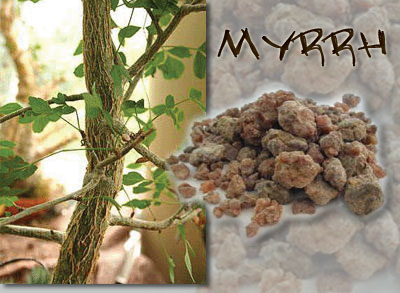
“All your robes are fragrant with myrrh and aloes and cassia; from palaces adorned with ivory the music of the strings makes you glad” (Psalm 45:8).

myrrh


First, a bit of background might be helpful:

Psalm 45 was composed for a royal wedding. Verse eight, about the groom’s robes, might refer to a long-held custom in the Middle East of perfuming one’s clothing, especially for special occasions.

But the imagery of the psalm also speaks prophetically of another “wedding”–between Christ and his bride, the church.

Many of the descriptors for the Groom fit Jesus perfectly:

 “You are the most excellent of men and your lips have been anointed with grace, since God has blessed you forever…In your majesty ride forth victoriously in behalf of truth, humility and righteousness; let your right hand display awesome deeds” (vs. 2-4).

But if the psalm is a word-picture for the relationship of Christ to his church, what is the significance of verse 8? Why the description of his robes, fragrant with myrrh, aloes, and cassia?

Perhaps the pleasing, aromatic scents represent all the pleasing virtues Jesus embodied: his love, wisdom, and grace.

Perhaps they are also an allusion to his burial.  In ancient times, spices were also used in the embalming process.

After the crucifixion, you’ll remember that Joseph of Arimathea asked Pilate for the body of Jesus. He was accompanied by Nicodemus, who brought seventy-five pounds of myrrh and aloes to wrap within the linen burial strips (John 19:38-40).

Why would the same spices be used at Jesus’ death and at the great Wedding Supper yet to come?


marriage_supper


Bible teacher, Ray Stedman, explains: The resplendent wedding described in Psalm 45 is made possible by a death—the death of the Groom himself.  Only out of his death could come this glorious celebration. And now, the fragrance of his beauty is everywhere!

Have you ever hugged someone and then carried away with you the scent of that person’s cologne?

The aroma of Christ should cling to us just like that.

“Everywhere we go people breathe in the exquisite fragrance. Because of Christ, we give off a sweet scent rising to God, which is recognized by those on the way of salvation—an aroma redolent with life” (2 Corinthians 2:14-16, The Message).

*     *     *     *     *     *     *     *     *     *

Oh, Lord Jesus, I delight in the sweet fragrance of all your glorious attributes.  May my words and actions diffuse your exquisite fragrance of life, love and grace to everyone around me.


(Photo and art credits: http://www.saveourelms.com; http://www.footage.shuttershock.com; http://www.dwellingintheowrd.wordpress.com; http://www.divinerevelations.info.)


Read Full Post »

“I even wash aluminum foil so I can use it again–if it’s not too messy,” joked a friend.  “My son makes fun of me, but that’s what my mother did, and I just picked up the habit.  Seems so wasteful to throw away a perfectly good piece of foil, just because it has a bit of goop on it.”

We were discussing the frugal habits passed down to us from our parents. They were children during the Great Depression, and learned to conserve, reuse, and make do.  Now, eighty years later, the effects of that difficult time are still impacting many of us today.

Might the same effect occur in the spiritual realm?  Might our spiritual habits not only impact those around us, but even generations to come?

Legacy-Postcard

An anonymous psalmist alluded to our long-reaching influence:  “Blessed is the man who fears the Lord, who finds great delight in his commands.  His children will be mighty in the land; the generation of the upright will be blessed…his righteousness endures forever” (Psalm 112:1-3).

James Moffatt (1870-1944), theologian and professor, also spoke poetically of our ongoing influence:  “Death is never the last word in the life of a…man. When a man leaves this world, be he righteous or unrighteous, he leaves something in the world. He may leave something that will grow and spread like a cancer or a poison, or he may leave something like the fragrance of perfume or a blossom of beauty that permeates the atmosphere with blessing.”

42-21217958

Who has left “something like the fragrance of perfume or a blossom of beauty” in your life?  I am surrounded by the examples of:

  • my grandparents’ perseverance
  • my father’s wisdom
  • my mother’s resiliency
  • a favorite teacher’s sense of humor
  • a choir director’s positive attitude

To name a few.

When I was a small child, our family’s pastor called each of us girls “Little Miss Sunshine.”  I found myself trying to live up to the name.  Now, decades later, I still feel the influence of his affirmation.

As a teenager I benefited greatly from the examples of various youth sponsors.  One married couple in particular took me under their wings and mentored me.  Their example of integrity, service, and caring, lived out in a loving home, remain with me to this day.

And so many more!  We really are composites of the countless influences we’ve absorbed.

Now, it’s our turn to pass on a worthwhile legacy.  We mustn’t give in to the notion that Generations X and Y will always find us irrelevant.  One day they’ll realize older persons have the benefit of experience, and experience gives rise to wisdom.  And whether we are present on that day or not, our example will be.

Most of what they absorb will not be the words we have spoken.  They will remember our actions.  Kids watch and learn–sometimes intentionally, but most of the time not.

learning-by-observing

We are the ones who need to be intentional, living out a legacy of character and faith, to be a perfume of blessing.  If we do, the fragrance of our Christian maturity will permeate the atmosphere for years to come.

We can also be encouragers.  Others will remember positive affirmations.  At least one Little Miss Sunshine can attest to that.

*     *     *     *     *     *     *     *     *     *

Please leave a comment below.  I’d love to hear from you!

(Photo credits:  www.jeaninemurk.com ; http://www.telegraph.co.uk ; http://www.inspiredwednesdays.blogspot.)


Read Full Post »

Portrait_of_George_Washington

Many of our founding fathers were men of Christian faith.  The record of their background, correspondence, and character attests to that fact.  Consider:

  • Twenty-four of the fifty-six men who signed the Declaration of Independence attended seminary or Bible school.
  • Hundreds of letters of these men speak of God and their faith in Him.
  • Honor and integrity were important attributes which characterized their lives.  Most of them sacrificed much for the cause of American liberty.  “With firm reliance on the protection of the divine Providence*, we mutually pledge to each other our Lives, our Fortunes, and our Sacred Honor,” they declared.

George Washington was no exception. With great integrity,  courage, faith, wisdom, and humility, he was instrumental in bringing America through perilous times.  We should know his legacy well, and follow his example.  Can you imagine an America where men and women would display…

 …The Integrity of George Washington

Washington was the only president unanimously chosen by the electoral college, an indication of the trust the American people invested in the general.  Frequently throughout his life, he demonstrated strong reliance on God.  Remember the portrait of him, kneeling in prayer at Valley Forge?    And decades after his death, pastors were still preaching sermons that honored his exemplary life.

…The Courage of George Washington

Washington’s accomplishments can be rivaled by few.  At age 23 he was commissioned colonel at the outset of the French and Indian War (1754).  His courage was legendary.  In one battle he directed the troops while riding up and down the front lines on his horse, seemingly not to care he was an easy target.  After that battle (which the British and American forces won), George wrote home that his safety was the result of “the miraculous care of Providence*.”

…The Faith of George Washington

Washington recognized that God had been strongly involved in the colonies’ battle for liberty.

“The hand of Providence* has been so conspicuous in all this that he must be worse than an infidel that lacks faith and more than wicked, that has not gratitude enough to acknowledge his obligations.”

His first act upon being sworn in as President?  He prayed, reminding his listeners at the inauguration that it is Almighty God who presides over the universe.  Washington also closed his inaugural address with prayer.

As he signed official government documents, he often concluded with the closing, “In the year of our Lord Christ.”

…The Wisdom of George Washington

In an address given in 1796, George wisely stated:  “Of all the dispositions and habits which lead to political prosperity, religion and morality are indispensable supports.”

(Might the economic and political decline now happening in America be the result of those supports–religion and morality–being slowly but surely removed?)

…The Humility of George Washington

In spite of a long list of outstanding accomplishments over a lifetime of sacrificial service to his country, Washington said:  “I have only been an instrument in the hands of Providence*.”

What chance did the weak, floundering colonies have to become a strong, prosperous nation?  Small, indeed.  But God used men of Christian character such as Washington to achieve the impossible.

What chance does our nation have today, to recapture our strength and prosperity?  Small, indeed.  But, God can use men and women of Christian character, just as he did George Washington–those willing to follow God’s lead and live sacrificially, to achieve the impossible. Because “nothing is impossible with God (Luke 1:37) .”

*     *     *     *     *     *     *     *     *     *

*Providence was a word used frequently in early America, to indicate God’s active care and protection.  Noah Webster, in his first dictionary (1828), noted that Divine providence is often understood as God Himself.  The word appeared over 100 times in the Geneva Bible, the translation of choice among many early Americans.  Now the word is translated with synonyms for care, such as “tender mercies,” “loving kindness,” and “protection.”

Because the word, providence, no longer appears in our Bibles, some have concluded that those forefathers who used the term were Deists who believed in an impersonal God.  But many outspoken Christians of the day used the term, including Rev. Dr. John Witherspoon (minister and signer of the Declaration), John Quincy Adams (officer of the American Bible Society, active patriot, and sixth president of the United States), John Jay (president of the American Bible Society and first chief justice of the Supreme Court), and Dr. Benjamin Rush (founder of the Sunday School in America and signer of the Declaration).  All of these men and others, whose allegiance to Christ is verifiable in their writings, also  included many references to Providence in their works.

(Sources:  The Founders’ Bible, http://www.wallbuilders.com, http://www.ochristian.com)

(Art Credit:  www.en.widipedia.org)

Read Full Post »

« Newer Posts - Older Posts »

When the House is Quiet

Impressions Becoming Expressions

Mitch Teemley

The Power of Story

Still Traveling

Impressions Becoming Expressions

Living Our Days

Gaining a heart of wisdom

He Said What?!

I'm Patty, and my husband and I are living with our adult son who has autism and epilepsy. I love sharing lessons learned from life around me, especially life with Aaron.

Meditations of my Heart

Impressions Becoming Expressions

Linda Stoll

Impressions Becoming Expressions

Signora Sheila

Notes on Life, Faith & Italy

Heidi Viars

Finding the Image of God