Feeds:
Posts
Comments

Archive for the ‘Obedience’ Category

The Annunciation by Philippe de Champaigne, 1644

‘Remember what the angel Gabriel said to Mary when he first appeared to her?

“Greetings, you who are highly favored! The Lord is with you. Do not be afraid, you have found favor with God” [1].

He then made an incredible announcement. Mary would give birth to the Messiah [2].

Did her mind jump to Isaiah’s prophecy about a young woman who would conceive and give birth to Immanuel?

Surely many Jewish girls knew the passage. And each must have wondered, Might I grow up to be the mother of the King of all?

God favored Mary with the singular role of mother to the Righteous One. Perhaps his choice was based on Mary’s virtue, but scripture gives no indication of that.

Luke did mention that Zacharias and Elizabeth, the parents of John the Baptist, “were righteous in the sight of God, observing all the Lord’s commands and decrees blamelessly” [3].

But no such commendation is given for Mary. It may be God wanted us to understand: he can use anyone. His empowerment doesn’t depend on social standing, intelligence, accomplishments, or even moral superiority.

Our part is willingness and faith, which Mary did demonstrate when she professed: ‘’I am the Lord’s servant. May your word to me be fulfilled” [4]. Mary acquiesced to God’s plan, his choice for her.  

If you’re like me, you’ve wondered about the favor bestowed upon Mary. To us the word conjures up kindness and generosity.

But Mary faced:

  • rejection and cruelty as a pregnant and unmarried, young teen [5]
  • the probable annulment of her engagement to Joseph
  • a grueling trip to Bethlehem, nine months pregnant
  • delivering her first child in a stable-cave
  • another difficult journey to Egypt to protect Jesus from Herod’s slaughter
  • the hurtful disapproval of many for her firstborn, including his own half-siblings
  • watching her son die in agony [6]

How could Gabriel call Mary favored?

We’re looking in the wrong direction. God’s favor, his best for us, does not guarantee an easy path through life and an abundance of material blessings. That kind of favor would only spoil us.

God would have us look in the direction of more satisfying favor: his spiritual blessings [7].

That’s what Mary did, evidenced by her Magnificat, a prayer preserved for us in Luke 1:46-55, where she praised God for his mindfulness of her, his might that had accomplished great things for her, his mercy extended to those who fear God, and more.

In the NIV Study Bible, nineteen cross-references from this passage cite verses from seven books of the Old Testament. Mary knew scripture.

It’s unlikely she thought God’s favor would bring fame and fortune. Mary would have known that God’s best more often includes:

  • empowerment to carry out his assignments
  • instruction in the ways we should choose
  • help in times of trouble
  • strength to endure hardship and grief
  • compassion and comfort to quell distress
  • satisfaction in taking part in God’s wonderful plans [8]

And as God’s wonderful plan of redemption for all people began to unfold, his favor began to flow upon Mary.

He dispelled her fears, gave her courage to tell Joseph the unsettling news, inspired Mary to visit her wise cousin Elizabeth for encouragement, filled her with endurance for the journey to Bethlehem, and strength for the birth of her first child in less-than-ideal circumstances.

Of course, Mary isn’t the only one who’s experienced the favor of the Lord. God’s best is available to everyone who allows God to choose what’s best.

God would have us know:

By his favor he forms our characters and fits us for satisfying service. He charts our course, imparts strength to accomplish his plan, supplies all that is necessary, and ultimately crowns our efforts [9].

Just as he did for Mary.


[1] Luke 1:26-30 NIV, emphasis added

[2] Luke 1:31-33

[3] Luke 1:6

[4] Luke 1:38

[5] This was surely Mary’s experience, given the social norms of the day.

[6] Matthew 1:18-19; Luke 2:1-5; 6-7; Matthew 2:13-15; Mark 3:20; John 19:26-27

[7] Ephesians 1:3

[8] Psalm 138:8 ESV; 25:12; 46:1; 73:26; 86:15; Isaiah 66:13a; Psalm 128:1

[9] Based on Herbert Lockyer quote, Seasons of the Lord, 202.

Image credits: http://www.picryl.com; http://www.canva.com; http://www.freebibleimages.org (4); http://www.stockvault.net.

Processing…
Success! You're on the list.

Read Full Post »

In 1937, the Imperial State Crown of England was created for the coronation of King George VI. It is inarguably one of the most beautiful in the world.

The number of jewels staggers the imagination. Among them: eleven emeralds, seventeen sapphires, 269 pearls, and 2868 diamonds [1].

Front and center, just above the ermine band, sits the largest diamond—the “Star of Africa II, weighing 317.4 carats. (“Star of Africa I,” which is even larger, sits atop the British royal scepter.)

Puritan preacher and author, Thomas Watson (1620-1686), named one of God’s attributes as the most sparkling jewel of God’s crown. But before I reveal his answer, which of God’s quality traits would you consider his “attribute of attributes?”

  1. Love
  2. Holiness
  3. Power
  4. Infinitude

Watson chose B, perhaps because of the word’s meaning: separate and set apart. God is completely removed from every other creature, given his omnipotence, omniscience, and omnipresence. In addition, he is perfect in purity, goodness, faithfulness, and so much more.

In heaven the seraphim (fiery angels!) continually celebrate God’s holiness. The prophet Isaiah heard them saying:

The Apostle John, during his vision of heaven, heard a similar chant [2].

We can’t help but notice the repetition of holy three times, and if you’re like me, that makes us curious. Why three times?

First, “holy” in triplicate may seek to honor each Person of the Trinity: Father, Son, and Spirit.

Second, repetition indicates emphasis.

The ancient Hebrew language included no punctuation, no bold print, no way to indicate greater importance. When writers wanted to highlight something, they’d repeat it.

Other examples would include:

  • In Genesis chapter one “God saw that it was good” is repeated six times.
  • 1 Kings 9:26-10:29 includes the word gold fifteen times to emphasize King Solomon’s wealth.
  • Psalm 130:6 offers heartfelt longing: “I wait for the Lord more than the watchmen wait for the morning, more than watchmen wait for the morning.”
  • Psalm 136 includes “His love endures forever” twenty-six times.
  • In Ezekiel 21:27, the prophet related God’s soon-coming judgment on Jerusalem—“A ruin! A ruin! I will make it a ruin!”

But nowhere in scripture do we see a triple-repetition of an attribute for anyone but God and only for this one attribute [3]. God’s holiness is superlative; he is infinitely holy. And that holiness impacts everything else about him.

His love is holy love. His power is holy power. His justice is holy justice. All his attributes are characterized by purity and splendor beyond those of anyone else.

Gaze upon the crowning jewel of God’s holiness and be overcome with awe and reverence, as well as “a sense of our incredible, desperate need for a fresh infusion of who He is”—because he’s instructed us to be holy too [4].

“Oh, I can’t do that,” someone will say. “Even at my age I still do and say things I shouldn’t, and then leave undone the things I should do. Being holy is impossible!”

Here’s what that person doesn’t understand:

“What God’s truth demands; His grace will provide.” “Faithful is he that calls, who also will do it” [5].

The more we expand our awareness of God’s holiness, the more honor and respect we’ll long to give him through obedience—obedience that he rewards with blessing.

Just how do we expand that awareness? Through Bible study that instructs, prayer that empowers, worship that inspires, and practicing his presence that encourages.

*     *     *     *     *     *     *     *     *     *

Holy God, who is like you? You are majestic in holiness beyond my comprehension; you are awesome in glory that takes my breath away. Every moment you are continually working wonders. There is no one holy like you! There is no one besides you!

I praise you, Father, for working your holiness into my spirit, enabling me to reflect your holy love, your holy goodness, your holy compassion to those around me. Empower me this day, I pray. AMEN.

(Exodus 15:11; 1 Samuel 2:2; Philippians 2:13)


[1] https://www.rct.uk/collection/31701/the-imperial-state-crown

[2] Revelation 4:8

[3] James MacArthur, Gripped by the Greatness of God, 28.

[4] MacArthur, 31.

[5] Francis Frangipane, Holiness, Truth, and the Presence of God, 23; 1 Thessalonians 5:24

Images: http://www.picryl.com; http://www.flickr.com; http://www.canva.com; http://www.rawpixel.com; http://www.heartlight.org; http://www.dailyverses.net; http://www.canva.com.

Processing…
Success! You're on the list.

Read Full Post »

In ancient times, someone noticed that candles held up high extended the light further and made the room brighter. That observation led to an invention.

He (or she!) crisscrossed two small boards, fastened them together, hammered a spike through each of the four ends, and fixed a candle on each spike. Last he suspended the contraption from the rafters [1].

Perhaps something similar to this!

Voilà! The first chandelier was born.

Fast forward to the 1600s. Artisans began producing the first crystal chandeliers that reflected and refracted the light, creating more ambient light than candles alone, not to mention stunning beauty.

1600s rock crystal chandelier, from the Nethercutt Collection, Sylmar, CA

Some designers incorporated mirrors, increasing the luminosity even further.

Louis XIV of France famously ordered numerous chandeliers—forty-three of them—for the Hall of Mirrors at Versailles. Thousands of crystals maximized the light of approximately twenty thousand candles, which was also reflected in the 357 pieces of mirrored glass [2] 

A chandelier offers us a radiant picture of the kingdom of God with the crystals and mirrors representing us. Just as a chandelier glorifies a room with its resplendent light, so we’re called to glorify GOD by reflecting his resplendent light to those around us [3].

But how do we do that? Consider these possibilities:

We Glorify God by Trusting Him (Psalm 147:11)

It must warm God’s heart when his saints keep returning to him for strength and comfort during a difficult season. Such people, calmed by the profound and inexplicable peace of God, stand in beautiful contrast to the angry or anxious around them.

We Glorify God by Enjoying Him (Psalm 96:6-8)

That enjoyment will surely create a noticeable glow of contentment on our faces, as we delight in his mercy, goodness, compassion, and more.

We Glorify God by Letting Him Love Us (Romans 8:35-39)

We may know God loves us, but how often do we rest in his warmth, contemplating his love-gifts throughout the day, like:

  • a multi-hued sunrise
  • the cheery song of a cardinal
  • a friendly wave from a neighbor
  • an uplifting word of encouragement
  • the long-awaited rain pattering on the roof
  • a sweet memory that suddenly comes to mind and makes you smile

This is just a short-list of possibilities. God continually expresses his love. Receive it—no, better yet, revel in it and glorify him for his lavish demonstrations and the grace behind each one.

We Glorify God by Living His Ways (Matthew 5:16)

Years ago a church member told me she’d recently been driving along the main street of our neighborhood and caught up with a car going the speed limit.

“Who goes the speed limit these days?” She laughed and then continued. “But to be honest, I began to get frustrated, because I was in a hurry to get home! And then the car turned down your street and I could see who was driving–your son!

“Imagine: a teenager going the speed limit! I just had to tell you: he’s a good driver, even when he thinks no one’s paying attention.”

E. honored us, his parents, that day, by choosing character over convenience. But better yet he honored God. Without even knowing, he reflected the light of Christ and His character to that church member.

Now imagine the dazzling light-display we can create corporately to glorify God–as we all trust him, enjoy him, let him love us, and live by his ways.

Surely we can even outshine those chandeliers in the Hall of Mirrors!


[1] https://chandelierrental.com/the-history-of-a-chandelier/

[3] James 1:17; Matthew 5:16; 2 Corinthians 3:18

Image credits: http://www.flickr.com (2); http://www.pexels.com; http://www.canva.com (2); http://www.pxhere.com; http://www.publicdomainpictures.net; http://www.pickpik.com; http://www.stockcake.com.

Processing…
Success! You're on the list.

Read Full Post »

Brady Miller, a young and single first-year employee at Reed Investments, smiled as he read the email from his boss Justin. The memo reminded him of the personal day he hadn’t used yet.

Stipulations required he not add the day to vacation time or a weekend, but otherwise, any mid-week day was allowed, pending approval from Justin.

Brady immediately began planning for his Perfect Day the next Thursday: wearing sweats all day, binge-watching The Mandalorian, eating toaster-waffles for breakfast, broccoli cheddar soup and a ham on rye for lunch, nachos for snacking, and a pepperoni pizza for dinner—oh, and a big bowl of mint chocolate chip ice cream for dessert.

He’d also enjoy the solitude—no one to play host for, no one talking during the episodes, and no one to clean up after. Absolute bliss.

But late the next Thursday evening, Brady noticed he felt rather blah, maybe even a bit depressed and de-energized. Wasn’t his Perfect Day supposed to make him happy and content? What happened?

Brady wasn’t aware that researchers have actually studied what contributes to a good day. And all the indulgences he’d allowed himself did not make the list.

Here’s what did:

  • Eat nourishing food
  • Exercise 150 minutes per week
  • Include meaningful activity that also brings pleasure
  • Spend time with family and/or friends
  • Practice mindfulness
  • Limit recreational screen time
  • Show kindness toward others
  • Encourage others
  • Express gratitude

Brady incorporated none of these activities into his day off. No wonder satisfaction alluded him.

Perhaps you also noticed: all these elements contributing to a good day are included in biblical instruction. God wants us to enjoy good days!

For example, scripture directs us to:

Take proper care of our bodies which are temples of the Holy Spirit (1 Corinthians 6:19-20).

Get a good night’s sleep (Psalm 127:2).

Choose meaningful activities, especially those that benefit others. Blessing for the giver is built in (Acts 20:35c).

Spend time with family and/or friends, providing uplift, encouragement, and support (Ecclesiastes 4:9-12).

For me, “the greatest by far is the possession” of family who double as friends.

Practice mindfulness, taking note of what is excellent and praiseworthy, protecting against discouragement and anxiety (Philippians 4:8).

What better way to occupy the mind than to look for evidence of God around us?

Be compassionate, kind, and encouraging (Colossians 3:12; Ephesians 4:29).

And, I would add, that touch includes the one demonstrating kindness.

Express gratitude (1 Thessalonians 5:16-18).

It makes me smile to see secular research backing up what scripture has taught all along.

However, one important activity for a good day is not mentioned in the research:  quiet time with God— studying his Word and conversing with him in prayer (Psalm 119:15-16).

Then again, to do so does incorporate four of the elements researchers identified: meaningful activity that also brings pleasure, time with a Friend, mindfulness, and gratitude.

Is it possible to accomplish all of these activities every day? YES! Some might take only a moment: a kind deed or a word of gratitude. Some can be combined, as illustrated above.

You can start small and choose just one activity to start reducing the blahs and increasing the good. Go ahead—choose one.

Now, let’s get out there and MAKE IT A GOOD DAY!

Sources:

Image credits: http://www.frreerangestock.com (Matt Moloney); http://www.stockcake.com; http://www.freerangestock.com (FOCA Stock); http://www.canva.com (4); http://www.flickr.com.

Processing…
Success! You're on the list.

Read Full Post »

Some of you may remember singing this song in Sunday School:

As a child, I knew God loved me. He proved it by sending his Son to take the punishment for my sins, provide the way for me to live in heaven one day, and know him in the present.  

But I also knew my little eyes, hands, and mouth were not as careful they should have been. Surely God was disappointed in me much of the time.

The truth that I could enjoy God never entered my mind. My false impression of his disapproval stood in the way for many years.

Somehow I’d missed the message of such scriptures as:

  • The joy you have in the LORD is your strength (Nehemiah 8:10 GWT).
  • Take delight in the Lord (Psalm 37:4a NIV).
  • I will go to the altar of God, . . . my joy and my delight (Psalm 43:4 NIV).

I read such passages as directives for prayer and worship rather than invitations to take pleasure in relationship with God.

Psalm 100 provides Exhibit A for enjoying him by praising him. “Shout for joy,” the psalmist begins. “Worship the Lord with gladness; come before him with joyful songs” (vs. 1-2, emphasis added).

Then he gives one example why: God has made us his own—in spite of our frailty—and cares for us like a compassionate, attentive shepherd (v. 3).

Parable of the Lost Sheep (Luke 15:3-7)

That’s certainly cause for thanksgiving and praise (v. 4), which in turn fosters our delight in God. Then the psalmist concludes with three more reasons to enjoy him: he is good, loving, and faithful (v. 5).

This psalm hints at another important truth. Dare I use a sport analogy?

My first attempts at playing tennis sent balls whizzing every which way. However, various drills and hitting the ball thousands of times against a wall built up my skills until I could actually play the game.

That’s when I began to enjoy the sport. The better I knew how to play tennis, the more pleasure I took in the game.

‘See the parallel in the spiritual realm? The more we know God, the more we’ll enjoy him.

But that’s not all.

The more we delight in God, the easier it becomes to obey him and live by his ways.

And as we see those ways contributing satisfaction, contentment, and purpose to our lives, we enjoy him all the more.

So how do we foster our pleasure in God? Here are three ways to get us started:

LEARN ALL YOU CAN ABOUT GOD—his character and his ways.

In January we explored the exercise of slowly reading through the psalms and writing down every mention of God’s character and deeds. As the list grows so does our delight in his multi-faceted splendor [1].

LEARN ALL YOU CAN ABOUT JESUS—his life, sacrificial death, provision of eternal life for us and all its implications.

For example, while reading the gospels, note his responses to people, his choices, and his behavior. What character traits can you identify?

While reading the letters written by the Apostles Paul, Peter, and others, consider all that Christ’s sacrifice has purchased for us.

The more we learn about Jesus, the more our love for him grows. The more our love grows, the more we find our hearts filled with joy in him.

REVEL IN GOD’S BEAUTY—his magnificence, the glory of his creation, and the beautiful blessings he bestows.

“His love notes are stashed everywhere,” says Sara Hagerty [2].

And as we discover them, we’ll find ourselves smiling and even laughing in pleasure with God, in the awesome works he performs [3].

Oh—and one more thing to celebrate. There will always be more to enjoy, and we can always acquire more ability to enjoy our God because . . .

quote from Morning by Morning, 268.

How do you enjoy God? Please share in the comment section below!


[1] https://nancyaruegg.com/2025/01/16/celebrating-god-through-the-psalms/

[2] Unseen, 206.

[3] https://nancyaruegg.com/2019/06/06/love-notes/

Image credits: http://www.youtube.com; http://www.dailyverses.net; http://www.freebibleimages.org; Nancy Ruegg; http://www.canva.com; http://www.pixahive.com (Vijay Richhiya).

Processing…
Success! You're on the list.

Read Full Post »

Lott Carey ran his hands over the polished wood of his new desk. He shook his head in wonder while contemplating the most recent turn-of-events in his life.

Lord, I can scarce believe where you’ve brought me, he prayed.

Surely no one but a prophet could have predicted this day for Lott, a former slave from Virginia, born about 1780. 

Thank you, Father, for placing me in a God-fearing family, and for our kind master who kept us together—my grandmother, parents, and me. Thank you for their faithfulness to raise me up knowing you.

Lott rested his elbows on the desk and covered his eyes at the next memory, when his master sent him to work in a tobacco warehouse in Richmond.

He was twenty-four, joined with a group of carousing men, and began drinking heavily.

Months later, he returned to church and reestablished his faith in Christ.

Thank you, Lord, for never giving up on me, even when I turned my back on you.

Lott smiled to think how God engineered the ensuing events. First came the desire to read, and Lott signed up for night school at First Baptist Church. He also studied writing, math, the Bible, and other subjects.

Then God provided a promotion to supervisor at the tobacco warehouse, providing a better salary. Lott saved every extra penny and purchased his freedom [1].

Looking back, God, I can see how you’ve cared for me all along the way. You’ve gone before me, you’ve been with me, and have never forsaken me [2].

Next came the realization that God had given him a gift for preaching, and his church licensed him to do so. Lott ministered to a small black congregation for a time, and under his leadership, it grew to over eight hundred members. Lott began receiving invitations to preach all over Virginia.

That turned out to be a short stretch of road, didn’t it Father! You used my teacher, Mr. Crane, and others to turn my heart toward Africa, which I found exciting but also overwhelming.

The fact that my church family provided strong affirmation encouraged me that this was your plan.

For six years the idea of becoming a missionary in Africa had grown increasingly urgent in Lott’s heart. Finally, in 1821, the dream became a reality when he, his second wife, three children and two more co-workers with their families set sail for Sierra Leone.

They were the first black Americans to serve as missionaries in Africa.

West Africa

Lott shook his head. Never would I have expected my life journery to take me across the ocean!” he mused.

Not long after disembarking, the group discovered that the American Colonization Society, responsible for purchasing land for them, had not done so. The team had to work as laborers for nearly a year until support arrived from the States.

An even more grievous event that year: Lott’s wife became ill and died.

Such agonizing setbacks might have done me in, Lord, but you upheld me. Thank you for your sustaining presence.

One uplifting circumstance: God used Lott to establish a mission among the nearby Mandingo tribe.

In 1822 the neighboring state of Liberia was founded by the America Colonization Society as a place for freed slaves to resettle and govern themselves.

Lott became Liberia’s health officer and government inspector in the capital city of Monrovia, while also serving as pastor for several churches.

These have been exciting times, Lord. You’ve also helped me found the Monrovia Mission Society, to help us spread the good news of Christ all over Africa.

He suddenly chuckled. AND you made me physician of the colony!

Lott marveled how much he’d learned just through observation and experience while ministering to the sick. He’d also absorbed knowledge from scientific practitioners who visited the colony [3].

But most surprising of all, Lord, is where I currently sit, at this desk—the GOVERNOR’S desk!

Who would ever guess that an illiterate, former slave like me would be chosen provisional governor of Liberia while the elected governor returns home because of illness?

Lott surveyed the desktop with its books and papers–his domain now.

God, you’ve taken me on an extraordinary journey. As I assume these responsibilities, thank you in advance for your continued enablement to do what you require. May I serve you well, AMEN.

Little did Lott know that he’d shortly be organizing a defense force against hostile tribes, that he and seven co-workers would die in a gun powder explosion while preparing to rescue negotiators from the enemy. He was just forty-nine years old.

And yet during his short life, Lott set for us a stellar example of hard work, strong faith, and prayerful compliance with whatever God set before him to do.

His legacy lives on in the Lott Carey Global Christian Missional Community, established in 1897 and “dedicated to broadening the reach of the Christian faith across the globe” [4].


[1] He also purchased freedom for his first wife who later died, and their two children. The cost: $850. (https://landmarkevents.org/lott-carey-sails-for-africa-1821/; https://docsouth.unc.edu/neh/taylor/taylor.html).

[2] Deuteronomy 31:18 NIV

[3] https://docsouth.unc.edu/neh/taylor/taylor.html , 44.

Additional Sources:

http://www.imb.org, “Missionaries You Should Know: Lott Carey.”

https://www.thetravelingteam.org/articles/lott-carey

Image credits: http://www.stockcake.com; http://www.picryl.com; http://www.canva.com; http://www.flickr.com (Juan Freire); http://www.heartlight.org; http://www.canva.com.

Processing…
Success! You're on the list.

Read Full Post »

Twenty-one-year-old James Gribble, a streetcar conductor, scanned the avenue ahead, but his mind swirled with visions of the future. Life was treating him well in Philadelphia with its many amenities in 1904, compared to his hometown of Mechanicsburg, PA. What opportunities might lie ahead?

Then it happened. A woman stepped off the still-moving trolley, caught her skirt under a wheel, and was pulled under. She died at the scene.

James agonized over the terrible accident. “Oh God, deliver me, and I’ll serve you!” he wrote in his journal.

That Sunday James attended church and accepted Jesus into his life. That evening he was baptized.

On Monday while reading his Bible, James came to Matthew 28:19a:

He told his pastor, “I think God wants me to become a missionary.”

For several years James received mentoring and instruction, then joined the African Inland Mission. To his delight, the team included a pretty young doctor, Florence Newberry. In 1908 they established a mission station in West Central Africa and started ministering to the nearby tribes.

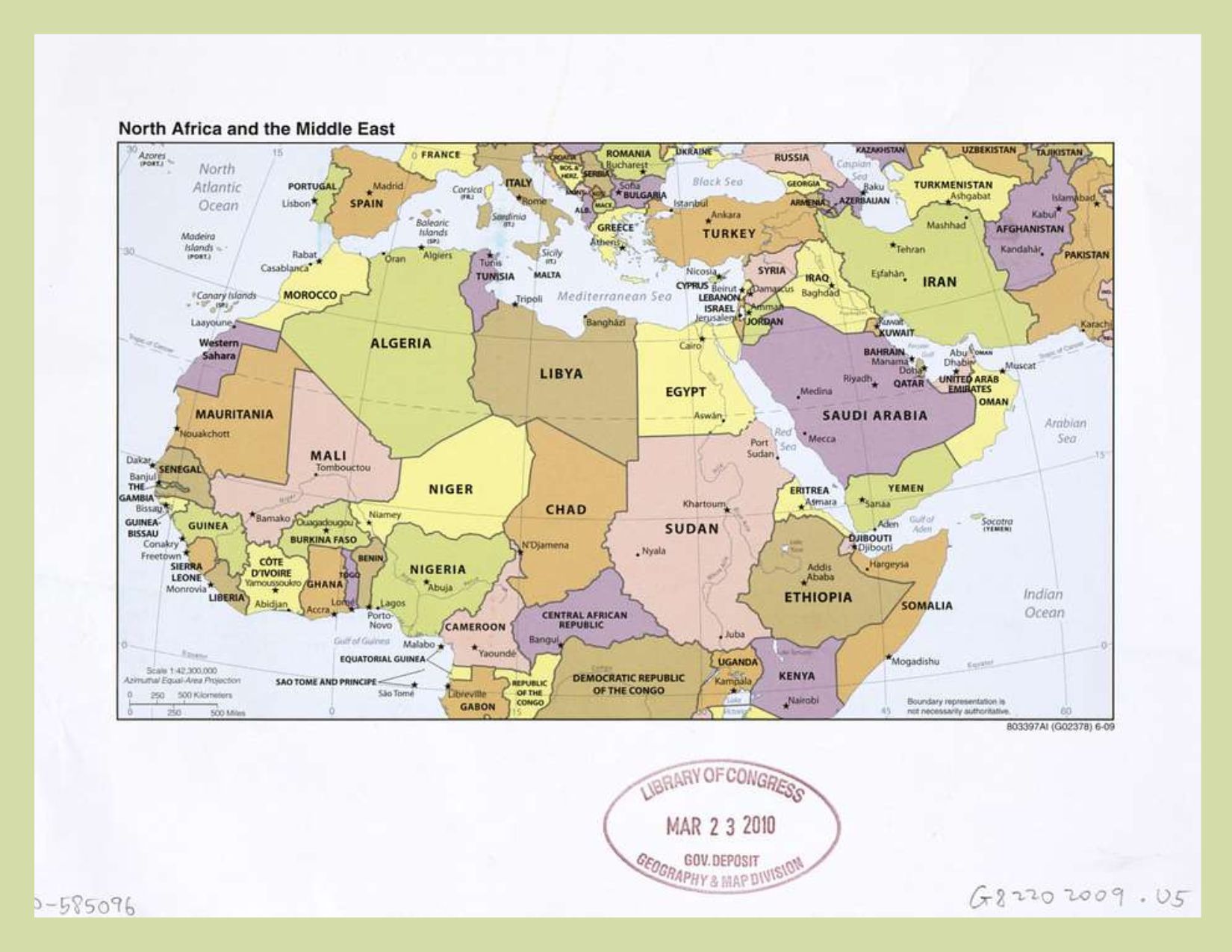
The station was located in what is now the Central African Republic, south of Chad.

James wanted to become better-acquainted with Florence, but patients kept her busy from morning till night. Suddenly genius struck. James could pretend he was sick!

During the appointment he suggested courtship. Florence preferred they remain friends, still devastated over a previous beau uninterested in foreign mission work.

Twice more over the next four years James would approach her about courtship; twice more she declined.

James and another missionary traveled inland to establish a new station.

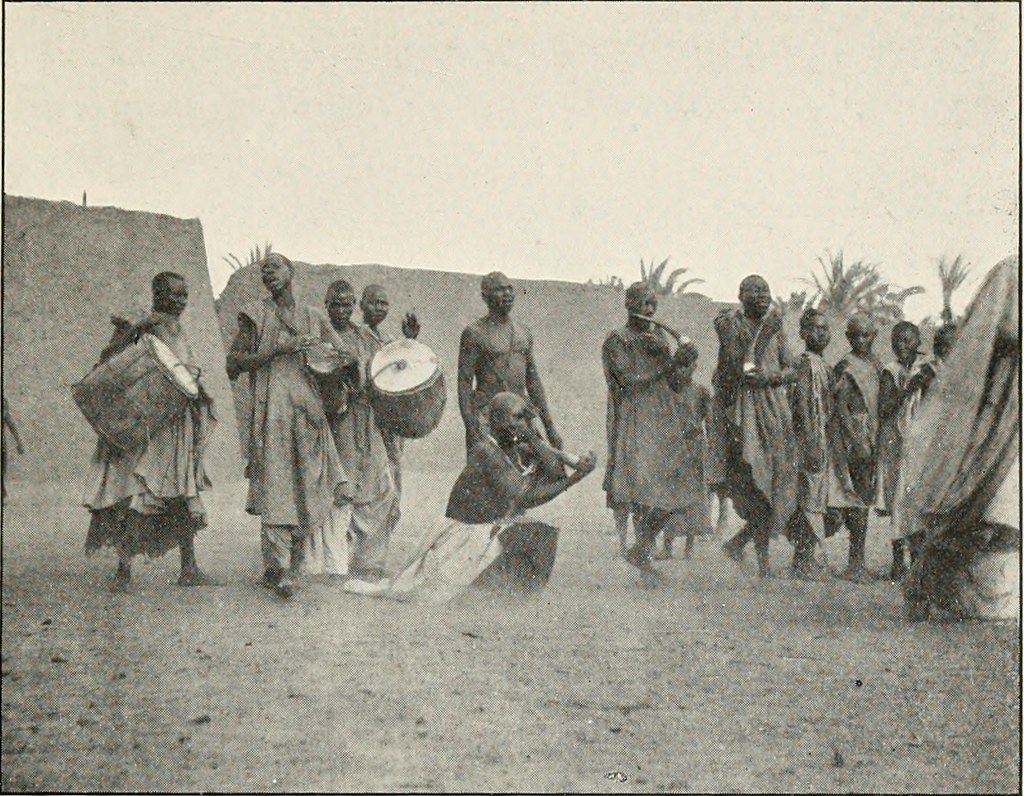
West African tribesmen, 1912

Soon his partner became ill and had to return to base camp, then James succumbed to black water fever. He expected to die.

Afterward James wrote about the vision God gave him on his sickbed—a panoramic view of the tribes of West Central Africa. God said, “Thou shalt be instrumental in carrying the gospel to these.” James knew then he’d survive.

During a prayer vigil in 1912, Florence’s thoughts turned to James. Her heart had warmed toward the trustworthy and kind missionary, so passionate about sharing Christ with the African people. Florence sensed the Spirit whispering to her, “Why not?”  

The two were married within a few months.

Sometime later Florence developed appendicitis and required hospitalization. For thirty days they traveled the three hundred miles to the nearest hospital.

As she slowly recovered, the doctor told James, “You must take her back to America. She cannot live in the tropics.”

Florence did return home and six months later James followed. They lived in Chicago for several years while Florence regained strength. Their only child Marguerite was born there in 1915.

Daily James would pray over a map of Africa. He found his attention drawn to a town named Bozoum, in Ubangi-Shari (now the Central African Republic). He wondered why.

Bozoum is located in the northwestern province of Ouham-Pende.

The couple shared their hope with area churches: to establish base camps across central Africa as a barrier against encroaching Islam. When they returned in 1918, two nurses and another family joined them.

The group desired to enter a French-controlled area, but it took eighteen months to receive permission. They named their base, Camp-Wait-Some-More.

Finally able to move on, they arrived in Carnot. While waiting there another eighteen months, they spent their time learning the language and praying.

A new official arrived, and James made an appointment with him.

He asked James, “Where do you intend to set up camp, now that you’ve received permission?”

Permission?! James was stunned. “Where would you recommend?”

Then came Surprise #2. “I think Bozoum would be a good place.”

Now James knew why God had inspired him to pray particularly for this town.

In 1921, Florence and James became ill again. She had to return to the States, taking their daughter with her. Eighteen months later Florence traveled back to Africa, but without Marguerite. Though an anguishing decision, the couple determined she should remain in America to attend school.

In 1923 a young recruit was due to arrive, but he died within miles of reaching their mission station, causing more heartache.

James wrote:

Not long after, James succumbed to black water fever again; this time the forty-year-old did not survive.

He’d previously written to Florence, “I shall be content with the lowest seat in heaven if only there I may sit and see the redeemed of the Lord come in from those fields where I have a been a pioneer missionary.”

Except James had not witnessed one person becoming a Christ-follower during his years in Africa.

Some might say those years of pain and hardship had accomplished nothing. And what about God’s promise: ““Thou shalt be instrumental in carrying the gospel to these?”

James had been instrumental, by bringing others to join in their work. Even his own daughter returned to Africa, ministering with her husband for thirty-one years.

James had served as a foundation builder—constructing base camps, encouraging others, and giving himself to prayer. He followed in the footsteps of the Apostle Paul:

Today, 70% of the population of the Central African Republic are Christians.

In my mind’s eye I see James in heaven, greeting saint after saint from West Central Africa, just as he imagined. But instead of sitting, I think James is standing and celebrating with all his heart.

Sources:

Photo credits: http://www.flickr.com; http://www.rawpixel.com; http://www.picryl.com; http://www.flickr.com; http://www.commons.wikimedia.org; http://www.nara.getarchive.net; http://www.commons.wikimedia.org.

Processing…
Success! You're on the list.

Read Full Post »

Joy is a word seen frequently during the Christmas season–on cards, ornaments and even fence gates.

But holiday-pleasure based on Santa, gifting, and parties, quickly disappears with the decorations and Christmas cookies.

Where do we find January-Joy that will carry us through the new year and even beyond?

First, we have to understand: true joy is more than feel-good endorphins.

To some that sounds ridiculous. Acquiescence sounds like distasteful servitude. And what possible delight can a person find in Someone we can’t see or hear?

Little do they know the depth of joy Jesus offers us (John 15:11).

Little do many people understand:

This deep sea of joy is made available to us as we obey God–another reality that makes some bristle. They don’t realize when Christ tells us to follow God’s ways, he’s not trying to make our lives miserable. He’s showing us the way to enjoy abundance of life (John 15:9-11; John 10:10)!

Scripture presents a number of principles that contribute to our fullness of joy, including:

POSITIVITY (Philippians 4:4)

GRATITUDE (Psalm 126:3)

MINDFULNESS (Psalm 89:15-16)

(How else might we make space for joy? That’s a question worth contemplating!)

GENEROSITY OF JOY (Acts 20:35)

Also worth remembering:

Empathy (Romans 12:15a)

And what happens to those who focus on all things beautiful, good, and true—no matter how small—and thank God for them?

What happens to those who discover the joys of the here and now—no matter their circumstances–and praise God for them?

“They are the change agents who bring fullest Light [and JOY] to all the world.”*

JOY to the world! For January–beyond.

Now there’s an objective to embrace for 2025.


* Ann Voskamp, One Thousand Gifts, 58.

Art & photo credits: http://www.pickpik.com; http://www.freerangestock.com; http://www.negativespace.co; http://www.pickpik.com; http://www.pixabay.com; http://www.canva.com.

Processing…
Success! You're on the list.

Read Full Post »

https://www.azquotes.com/author/28916-Charles_Carroll_of_Carrollton

Except for the formal language, the above quote sounds like something preached from an American pulpit last Sunday. But as you can guess from his portrait, Charles Carroll lived long ago; he was a signer of the Declaration of Independence.

He’s certainly not been alone in warning of trouble, should our citizens ignore God and his wise instruction for conduct. Throughout the decades since the founding of America, there have been patriots proclaiming a similar message.

For example:

John Adams

“Our Constitution was made only for a moral and religious people. It is wholly inadequate to the government of any other” [1].

—John Adams, second U.S. president

“All the . . . evils from which men suffer from vice, crime, ambition, injustice, oppression, slavery, and war, proceed from their despising or neglecting the precepts contained in the Bible [2].”

—Noah Webster, author of Webster’s Dictionary and numerous textbooks.

Noah Webster

“If the power of the Gospel is not felt throughout the length and breadth of the land – anarchy and misrule, degradation and misery, corruption and darkness, will reign without mitigation or end [3].”

—Daniel Webster, Secretary of State under Harrison, Tyler, and Fillmore. 

“Without God there is no virtue because there is no prompting of the conscience . . . without God there is a coarsening of the society; without God democracy will not and cannot long endure. . . . If we ever forget that we are One Nation Under God, then we will be a Nation gone under [4].”

— Ronald Reagan, fortieth president of the United States.

Ronald Reagan

 And here we are in 2024, witnessing the results when such warnings against misrule, corruption, and vice are ignored.

  • “The rise in violent crime has become a national trend in the past few years as cities reach homicide rates not seen in decades [5].”
  • “The United States has done little to improve its battle against public-sector corruption in recent years, according to Transparency International, which measures experts’ perception of corruption around the world. In 2023, for the second year in a row, the U.S. ranks 24th out of 180 countries and territories” (tying with Barbados, and just ahead of Bhutan) [6].
  • Over 1 in 6 Americans, adults and teens alike, suffered a substance use disorder in 2022. . . . About 30 million had an alcohol use disorder, while 27 million had a drug use disorder — including about 6 million with an opioid use disorder [7].”

Spice addicts passed out on the pavement

And how is America to rectify such circumstances? Our sixteenth president, Abraham Lincoln shared wisdom still relevant for today:

“Intelligence, patriotism, Christianity, and a firm reliance on Him, who has never yet forsaken this favored land, are still competent to adjust in the best way, all our present difficulty [8].”

–Abraham Lincoln

Imagine if:

  •  The intelligence of best-practices was implemented against crime, drugs, homelessness and more—on a grand scale
  • Patriotic (instead of self-serving) leaders enacted the best policies to benefit the most people
  • Christian principles, proven to achieve the most profitable results (Psalm 18:30), were embraced and followed by a large majority
  • Our nation relied firmly upon God for guidance

Such outcomes are within our grasp if we take to heart the advice of these discerning leaders: 

“It is necessary for the welfare of the nation that men’s lives be based on the principles of the Bible. No man, educated or uneducated, can afford to be ignorant of the Bible [9].”

Theodore Roosevelt, twenty-sixth U.S. president

“All must admit that the reception of the teachings of Christ results in the purest patriotism, in the most scrupulous fidelity to public trust, and in the best type of citizenship [10].”

—Grover Cleveland, twenty-second and twenty-fourth U.S. president

“The only means of establishing and perpetuating our republican form of government is the universal education of our youth in the principles of Christianity by means of the Bible [11].”

— Benjamin Rush, signer of the Declaration of Independence

*     *     *     *     *     *    *     *     *     *

I pray, Heavenly Father, we might experience a fifth Great Awakening in America! Pour out your refreshing, purifying Spirit, bringing the hope of Jesus to the millions who don’t know you and are living unaware of your loving care, peace, joy, help, and more.

For those of us who do know you, I pray we may become the purest patriots of YOUR kingdom, eager to serve you in a hurting world.


[1] https://www.azquotes.com/quote/1936?ref=christian-patriotic

[2] https://christianheritagefellowship.com/christian-quotes-from-the-founding-fathers-2/

[3] https://gracequotes.org/author-quote/daniel-webster/

[4]  https://lajuett.com/patriotic-religious-quotes.html#:~:text=%22I%20tremble%20for%20my%20country,His%20justice%20cannot%20sleep%20forever.%22&text=%22I%20have%20sworn%20upon%20the,over%20the%20mind%20of%20man.%22

[5] https://www.heritage.org/crime-and-justice/commentary/8-cities-help-explain-national-crime-wave

[6] https://thefulcrum.us/corruption/corruption-perception-index-2023-2667125422

[7]  https://www.usnews.com/news/health-news/articles/2023-11-14/more-than-1-in-6-u-s-adults-teens-have-substance-use-disorder

[8]  https://lajuett.com/patriotic-religious-quotes.html#:~:text=%22I%20tremble%20for%20my%20country,His%20justice%20cannot%20sleep%20forever.%22&text=%22I%20have%20sworn%20upon%20the,over%20the%20mind%20of%20man.%22

[9] Ibid.

[10] Ibid.

[11] Ibid.

Art & photo credits: http://www.azquotes.com; http://www.commons.wikimedia.org; http://www.picryl.com; http://www.flickr.com (2), photo of drug addicts by Tim Dennell; http://www.pxhere.com; http://www.flickr.com; http://www.rawpixel.com.

Read Full Post »

What if you opened your mailbox one day to see a thick, cream-colored envelope among the ads and bills. Your name and address have been hand-calligraphed in gold ink, and an intricate seal is embossed upon the flap.

Inside you find an elegant invitation, announcing a grand celebration at the palace of a highly-respected and beloved king.

“Come!” proclaims his request. “Come and enjoy an unlimited feast with me; come drink the finest wine. There is no cost to you.”

Would you attend? Surely you’d quickly return your R.S.V.P. with “YES” clearly marked!

Such a scenario is fiction, of course, except for one fact: God Almighty, the King of the universe, is a monarch to be highly-respected and beloved–above all others.

And he has issued an invitation to everyone–not just to a single banquet–but to a continual feast in his divine, spiritual kingdom. He bids us to come and enjoy a new, God-enhanced life.

Come, everyone who is thirsty, come to the waters;

and you without money, come, buy, and eat!

Come, buy wine and milk without money and without cost!

–Isaiah 55:1 HCSB

This invitation, proclaimed by the prophet Isaiah on behalf of our King, does include some puzzling statements. For example, why would he invite us “to the waters?” And what will we find there?

Just as water brings life and abundance in the realm of plants and trees, Christ’s living water provides soul-satisfying life and joyful abundance for us—the abundance of innumerable blessings [1].

And what about the wine that God says we can “buy without money?” Does it represent more than a celebratory drink? Oh yes! Wine is a metaphor here for spiritual joy, “a joy unspeakable and full of glory”[2] as we taste the goodness of God’s love.

And what about milk?

God would have us understand: his invitation to kingdom-living includes those entities that sustain our spirits, including encouragement, strength, instruction, and help. We find all that and more in the nourishment of His Word, the Bible [3].

Puritan author and preacher, Thomas Brooks (1608-1680) wrote:

The Word of the Lord is a light to guide you, a counselor to counsel you, a comforter to comfort you, a staff to support you, a sword to defend you, and a physician to cure you. The Word is a mine to enrich you, a robe to clothe you, and a crown to crown you.–Thomas Brooks

Countless Jesus-followers who read the Bible, study it, and meditate on its truths can affirm that Brooks is right; they’ve experienced time and again the life-changing power of God’s Word. That includes many of you reading this post.

In addition to his perpetual-banquet invitation, God includes these instructions:

Listen carefully to Me, and eat what is good.

Let your soul delight in abundance.

Incline your ear [to listen] and come to Me;

hear, so that your soul may live.

–Isaiah 55:2b-3a AMP

To listen carefully includes the action of follow-through. And what would God have us do? “Eat what is good”—that is, experience the fullness of his goodness as we follow his ways, and take delight in the abundance of his blessings.  

Then our souls can really live in the security and satisfaction he desires for us, in every moment of the present–and into eternity. And in the final analysis, isn’t that what we desire also?

All we need do is come.

*     *     *     *     *     *     *     *     *     *

I praise you, my King, for your open invitation to come and feast upon all the good things you offer. You prepare a table before me of forgiveness, salvation, peace, joy, strength, comfort, contentment, purpose, and more.

No amount of money on earth could purchase such priceless, heavenly gifts that you so freely give to those who simply COME. I will praise your name for ever and ever!

(Luke 13:29; Psalm 107:9; Psalm 23:5; Ephesians 3:20; Psalm 145:1b)

Have you accepted God’s invitation? If not, will you do so today [4]?

If you have, what goodness and delights have you tasted at his table? Please share in the Comments section below!


[1] David Gusik, https://enduringword.com/bible-commentary/isaiah-55/. See a starter-list of twenty-six examples: God’s Goodness from A to Z.

[2] Selwyn Hughes, Seasons of the Lord, 42.

[3] 1 Peter 2:2.

[4] See https://billygraham.org/answer/how-do-you-become-a-real-christian/ for a simple explanation and a prayer to guide you. Do it today—you’ll be so glad you did!

Photo credits: http://www.rawpixel.com; http://www.picryl.com; http://www.heartlight.org; http://www.canva.com.

Read Full Post »

Older Posts »

Still Traveling

Impressions Becoming Expressions

Living Our Days

Gaining a heart of wisdom

He Said What?!

I'm Patty, and my husband and I are living with our adult son who has autism and epilepsy. I love sharing lessons learned from life around me, especially life with Aaron.

Meditations of my Heart

Impressions Becoming Expressions

Linda Stoll

Impressions Becoming Expressions

Debby Thompson

Impressions Becoming Expressions

Signora Sheila

Notes on Life, Faith & Italy

Colleen Scheid

Writing, Acting, Living in God's Love

Mitch Teemley

The Power of Story

Heidi Viars

Finding the Image of God