Feeds:
Posts
Comments

Archive for the ‘Suffering’ Category

Elohim [1], Lord of heaven, summoned the angel Gabriel to his craft studio. The latter winged his way down the hallways of paradise and soon entered the Master’s presence.

He found Elohim hunched over his work table, pouring over design sheets, but he looked up as the grand angel entered.

“Gabriel!” boomed Elohim. “Thank you for coming so quickly. I need to discuss with you my plans for the human race before creating Adam and Eve.

“It’s important you know these plans since you’ll play an important role in the coming world.”

Gabriel stood erect and folded his wings in precise pleats. “I am your servant, Lord, ready to do your bidding [2].”

Elohim smiled. “Thank you, Gabriel. Now—here’s what I’m thinking. First, you’ll remember we’ve already decided to give humans the freedom of choice, since puppet-children would be pointless.

“I can’t enjoy the blessing of relationship with puppets! No, my children must have free will [3].”

Elohim began to pace around his mammoth work table. “Second, much as I’d love to lavish each of my future children with perpetual happiness, I know such circumstances in their human state would only spoil them.

“There must be a balancing of the scales between blessing and challenge in order to do them good—to demonstrate my love and grace, yet bring them to a place of maturity and strength [4].”

“Yes, my Lord. I can see the wisdom of such a plan. How will you execute it?”

Elohim swished his flowing train around a corner of the table and continued to pace. “I’ll have to allow bitter along with the sweet, since too much pleasure will intoxicate them and too much sorrow will crush them.

“Too much success will lead to conceit, and too much failure will cause debilitation. Too much praise will contribute to pride, and too much criticism will bring on despair [5].”

Gabriel nodded thoughtfully. “I see what you mean, Elohim.”

“Even so, I want humans to grow in their understanding that happiness will not only be within them, nor will it solely be without. Happiness will be most dependent on their relationship with me.”

“Well said, my Lord!”

Elohim stopped pacing, a twinkle dancing in his eyes. “Thank you, Gabriel. Eons from now I’ll inspire one of my children, Blaise Pascal, to write similar words.”

With his star-studded pen Elohim pointed to a shelf holding one large scroll and tied with a scarlet cord.

That is my plan for initiating relationship with humans: faith in my Son, Jesus—either looking forward to his coming, or trusting in him for eternal life after his death and resurrection [6].”

Elohim then indicated the design sheets strewn on his work table. “Currently in the planning stages, these individually-designed blessings to lift the spirits of my children when faced with difficulty.

“For example, I’ll bring a loving friend alongside a person who’s grieving, or paint a glowing sunrise to remind them of My presence, or lead them to a scripture that perfectly addresses their need—that sort of thing.”

With a flourish of his white-robed arm, Elohim pointed to countless rolls of such design sheets tucked into cubby-holes along the wall. “As you can see, I’ve planned out a number of good things already [7]!”

Now it was Gabriel’s turn to smile. “And no doubt you’ve enjoyed all the creating and designing.”

Elohim affirmed Gabriel’s assumption with a satisfied grin. “I shall have blessings ready for every circumstance my dear children face, though they will have to keep watch so they don’t miss them!”

Elohim paused. In softer tones, yet with passion and resolve he declared, “Gabriel, even before this epic of humanity begins, I already love them.

“Yes, they’ll choose to behave foolishly, but I will still bestow kindness with generosity, mercy with understanding, and goodness with wisdom [8].

“My greatest desire is that all humankind turn to me. And for those who do, a multitude of tender mercies await [9].” Elohim indicated the overflowing cubbies on the wall.

Gabriel bowed in reverence. “May all the peoples-of-the-earth-to-come stand in awe of your gracious provisions [10]!”


[1] The name “Elohim” indicates God is the Creator and ruler in the circumstances of humankind

[2] Psalm 103:20

[3] Galatians 5:13

[4] Psalm 86:15; James 1:4

[5] Based on a Don Fortner quote, www.gracequotes.org

[6] John 3:16; 1 John 4:9-10; John 6:29

[7] Psalm 31:19

[8] Jeremiah 31:3; Isaiah 53:6; Psalm 69:16 AMP; Lamentations 3:22-23; Psalm 145:9

[9] 1 Timothy 2:4; Psalm 69:16

[10] Psalm 33:8

Photo credits: http://www.pexels.com; http://www.canva.com (2); http://www.heartlight.org (2); http://www.pickpik.com.

Processing…
Success! You're on the list.

Read Full Post »

She was very popular at the University of British Columbia: effervescent, attractive, and intelligent. Yet Isobel (Belle) Miller found herself standing at the medicine cabinet in her parents’ home, ready to swallow poison.

Life had become meaningless, her spirit restless. To make matters worse, her fiancé was seeing another girl. Belle didn’t turn to God, having brushed aside her Christian upbringing when a professor insisted Christianity was for the superstitious.

She heard her father’s snuffling snore from the next room.  If he found her dead, Belle knew it would break his heart. She returned to her room.

Suddenly, a line from Dante came to mind: “In His will is our peace.”

Belle prayed, “God, if you prove to me that you are, and if you will give me peace, I will give you my whole life[1].  She began a passionate search for God, truth, and purpose.

Following graduation in 1922, Belle taught school. During this time she heard J. O. Fraser speak about his ministry in China and the need for more missionaries. Belle wondered, Is this what you want me to do, God?

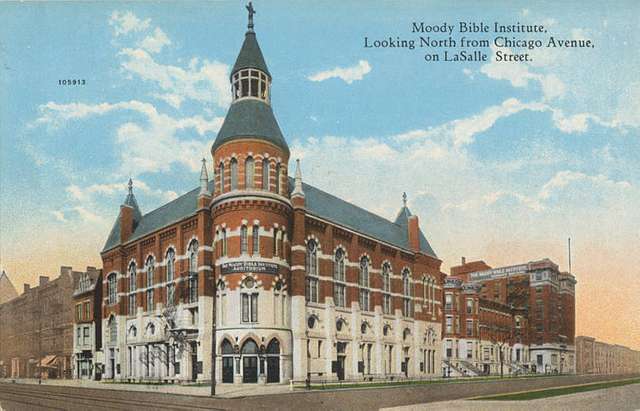
Fraser was staying with Belle’s family. She asked questions about missionary life and the China Inland Mission he represented. Belle learned they required two years of Bible school and Fraser recommended Moody Bible Institute. With funds from a friend, she enrolled.

While at Moody, Belle met John Kuhn who also felt called to serve in China. Friendship developed into romance, but Belle wasn’t sure God wanted her to marry him. John sailed for China in 1926.

After graduation, Belle attended the China Inland Mission training school in Toronto. She and John corresponded frequently. In one of his letters he proposed and Belle said yes. They prayed to be assigned in the Yunnan province, hoping to work under Fraser. God answered their prayer affirmatively.

After Belle completed a year of language study, she and John finally married in 1929. Belle moved to Cheng Chiang where he lived.

Yunnan Province in southwest corner

The first time she hosted a few women in their home, a baby soiled the Kuhn’s new rug. Worse yet, Belle found more “guests” after the humans left: bed bugs, fleas, and lice.

“Lord, make these souls more important to me than anything else,” she prayed. And soon genuine love superseded concerns about vermin or stains.

Over the next twenty years, the Kuhns served in five locations. For the most part, John preached in the villages and Belle taught women’s Bible classes. Their first child Kathryn arrived in 1931.

A terrible flood occurred in 1933, during Belle’s second pregnancy. John was away preaching, so she dragged belongings upstairs, some very heavy. Belle miscarried the baby.

There was little time to grieve as a new directive arrived from Fraser the next day: You’re needed in the Salween Valley to work with the Lisu people.

In 1936 Communist soldiers threatened the valley and missionaries were instructed to evacuate. For eight days they trekked northward, but so did the enemy.

“It seemed as if the Communists were after us,” she wrote, “but in real fact, our pursuers were those faithful watch dogs of Jehovah . . . ‘Goodness and Mercy followed us all our days ‘”[2].

In 1937, as the war with Japan escalated, they were told Kathryn needed to attend a far-distant CIM school out of harm’s way, causing a heartbreaking separation.

Belle fought her distress with a new form of ministry to train church leaders: Rainy Season Bible School, taking advantage of the free time inclement weather provided. Many men attended.

In 1938 their dear friend Fraser died. John’s ministry broadened to include travel throughout Lisu territory. At home, Belle continued to teach, but she also found time to write, completing four books during those twenty years of ministry.

Several times the Kuhns had to escape the Communists and then the Japanese. Each time the Kuhns returned when the danger had passed.

Yangtze River, Yunnan Province

Daniel Kuhn was born in 1942. When he was six, Belle and her son had to evacuate again. This time they traveled to America where Kathryn was attending college. John followed a short time later. They were never allowed to return to China.

Did the Kuhns wonder if the Lisu Christians would lose heart and give up their faith?

Author Wright Doyle wrote: “Of the 18,000 Lisu who lived in Fugong, Yunnan in 1950, 3,400 professed faith in Christ. As of 2007, it is estimated that 80-90% of the 70,000 population make the same profession. In Yunnan, it is estimated that there are between 100,00-200,000 Lisu Christians”[3].

A church in Fugong today

For three years the Kuhns worked in Thailand, but then Belle was diagnosed with cancer. She died in 1957 at age fifty-five. Yet even while battling disease, Belle completed five more books.

To this day, the legacy of Isobel Miller Kuhn lives on, among her beloved Lisu people and through her writing.


[1] https://bdcconline.net/en/stories/kuhn-isobel-miller

[2] https://fromthevault.wheaton.edu/2021/03/01/letters-from-lisuland-the-ministry-of-isobel-kuhn/

[3] https://g1.fieldpartner.org/isobelkuhn/

Other sources:  

https://www.evangelical-times.org/isobel-kuhn

https://www.thetravelingteam.org/articles/isobel-kuhn

Photo credits: http://www.dailyverses.net; http://www.picryl.com; http://www.flickr.com; http://www.dailyverses.net; http://www.flickr.com; http://www.enwikipedia.org.

Read Full Post »

Many of those who haven’t asked Christ into their lives yet will still admit: historical evidence proves Jesus once lived on earth. They’ll agree he was a good man who taught wise principles to live by.

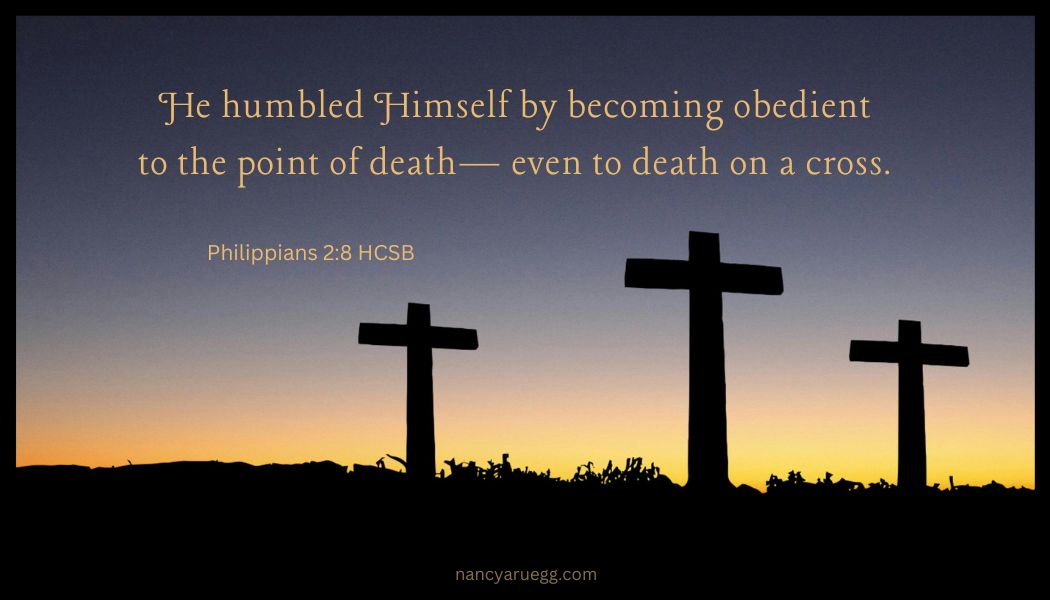
But even they might wonder: Why would God allow his Son to suffer such a cruel death at the hands of hateful men?

Welsh pastor and author Selwyn Hughes provided this insightful answer: what seemed to be the worst thing that could happen to Jesus—crucifixion—turned out to be the best thing for him [1].

That sounds ludicrous at first reading until we consider what Christ has enjoyed since returning to heaven, and what he’s looking forward to in the future–all because he fulfilled his mission at the cross.

As he suffered for us, Jesus kept in mind the joys set before him (Hebrews 12:2):

  • Sitting in the ultimate place of honor in the universe, at the right hand of the Majesty on high (Hebrews 1:3b).
  • Angels acclaiming him, saying, “Worthy is the Lamb who was slain, to receive power and wealth, wisdom and strength, honor, glory and praise” (Revelation 5:12).
  • God appointing him to be head over everything for the good of the church (Ephesians 1:22 GNT).
  • Being given authority and sovereign power that will last into eternity (Daniel 7:14).
  • All kings bowing before him one day, and all nations serving him (Psalm 72:11 NLT).
  • All nations and people of every language worshiping him (Daniel 7:14).
  • Being given the name above every name (Philippians 2:9).

And why is that last fact significant?  Jesus is the One and only Son of God, the only Redeemer and Savior, the only Christ and Anointed One of God. “His rank, his titles, his dignity, are above all others” [2].

Perhaps no one has explained the significance of Jesus’ name(s) more eloquently than theologian Charles Spurgeon:

Jesus’ name is “the sum total of all delights. It is the music with which the bells of heaven ring; a song in a word; an ocean for comprehension; although a drop for brevity, a matchless oratorio in two syllables; a gathering up of the hallelujahs of eternity in five letters” [3].

Charles Spurgeon

But Jesus doesn’t want to enjoy these accolades and privileges alone. Max Lucado wrote:

Jesus desires for us to be one with him, continually availing ourselves of all he has to offer.

Even more astonishing? Because of what Christ accomplished on the cross, we who’ve accepted Jesus into our lives get to share in his power and wealth, wisdom and strength, honor and glory!

For example:

  • The immeasurable and surpassing greatness of God’s spiritual POWER is in us who believe (Ephesians 1:19 AMP).
  • He supplies spiritual RICHES and blessings that cannot be fully understood or measured (Ephesians 3:8-9).
  • Christ’s word with all its WISDOM lives within us so we can experience his joy (Colossians 3:16; John 15:10-11).
  • We’re equipped for anything and equal to anything, through Christ who infuses us with inner STRENGTH (Philippians 4:13 AMP).
  • As beloved children adopted into God’s family through Christ, we are precious in his sight (Isaiah 43:4). He’s crowned us with HONOR and GLORY (Psalm 8:5; Romans 2:10), including the honor of representing Jesus in this world, and the glory of his character at work within us [4].

On this eve of Good Friday, we’d do well to remember:

We can pick up our own cross, inspired by Jesus’ example, empowered by God’s Spirit within us, and encouraged by the glorious outcome yet to be [5].

The worst circumstances we might face will become God’s best in our lives too.


[1] Every Day Light, 285.

[2] Barnes’ Notes on the Bible at www.biblehub.org

[3] Morning by Morning, 41.

[4] See also 2 Corinthians 5:17, 20

[5] To “pick up our cross” means trusting in God even when suffering comes our way, putting aside our self-will and embracing God’s will instead.

Photo credits: http://www.freebibleimages.com; http://www.canva.com (2); http://www.quotefancy.com; http://www.canva.com; http://www.pexels.com.

Read Full Post »

Christian trudged to the church he pastored as rain drummed on his umbrella. His pant cuffs grew increasingly damp from his splashing boots.

Is this really worth the effort, he wondered. Only a handful of people attended the Monday night prayer meetings, which he’d established several years prior at Church of St. Nicholas.

And yet the faithful few who came demonstrated such hope, Christian always felt uplifted by the end of each gathering.

Encouragement of any kind was in short supply. Times were difficult; everyone was suffering except the government elite and their cronies.

In the third year of the weekly prayer sessions, Christian felt compelled to invite fifty people to his church to discuss the oppressive circumstances of their country. More than six hundred came, and subsequently, attendance at the Monday prayer meetings also grew.

Such a large crowd didn’t slip by the attention of authorities. They discouraged religious gatherings, but assumed that prayer meetings were harmless.

Attendees began bringing family and friends. Over the next few years the church started to fill to overflowing. Eventually eight thousand people gathered every Monday night, praying for peace in their land and throughout the world.

Other churches around the country organized their own prayer meetings. Some attendees would walk the streets afterward, carrying candles and praying or singing as they went.

The authorities finally ran out of patience with the demonstrations. They barricaded the streets around the Church of St. Nicholas to discourage attendees. Instead, the congregation grew.

The next step included peaceful protests. Thousands of people participated. And even though hundreds of demonstrators were beaten and arrested, they weren’t deterred.

Numerous threats were made; some lost their jobs. One woman reported that government officials took custody of her children for a while, due to her participation in what they called an extremist group.  

Worse yet, the protesters were threatened with death. And though many admitted to fearing for their lives, they did not back down.

“Our fear was not as big as our faith,” Christian explained later [1].

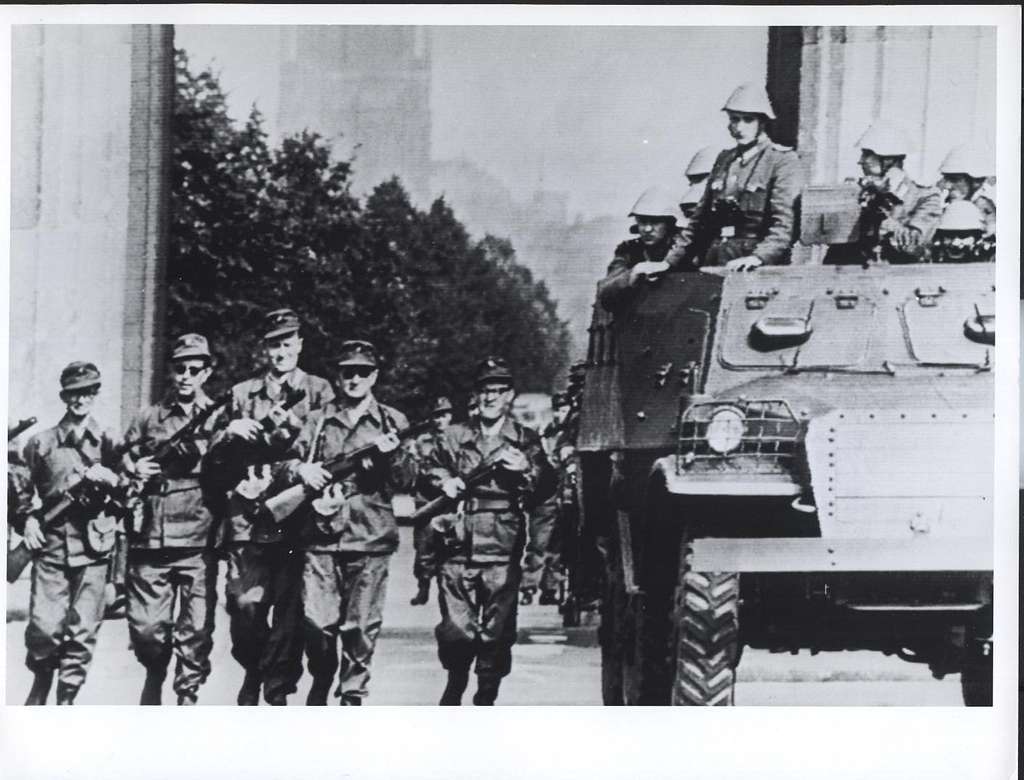
One night, after an hour-long service at St. Nicholas Church, Christian led the people outside to join a crowd of approximately 70,000, all gathering from various churches. Each one carried a candle and marched through the city chanting “we are the people” and “no violence” [2].

All along the way, long rows of armed police watched their every move.  More soldiers manned tanks, waiting for the order to disperse the crowd with murderous force.

But the order never came. Afterward it was revealed that government officials persuaded their leader to leave the protesters alone.

One of the demonstrators gave a soldier a lighted candle. He put down his weapon and accepted it. Others followed suit. “Soon all the soldiers had lowered their weapons and joined with the protestors” [3].

In the following weeks, the prayerful, candle-carrying crowd grew to 120,000, then 300,000, and finally 700,000.

A crowd such as this must have gathered.

The country’s leader resigned, knowing that without the army to back him, he had become powerless. Soon the whole regime resigned, unable to fight against the power of prayer and Light.

One month after the tide-changing protest, a government spokesperson mistakenly announced in a public broadcast that a monumental change was about to take place. Citizens would be allowed to travel freely, effective immediately [4].

News spread rapidly, reported across the world. Thousands of people soon gathered at the symbol of their thirty-year oppression, a barrier that had divided them into east and west: the Berlin Wall.

Harald Jager, commanding officer of the border guards that night, called his superiors to find out how to deal with the gathering crowd. He received no orders.

“People could have been injured or killed . . . if there had been panic among the thousands gathered at the border crossing,” he declared afterward. “That’s why I gave the order: Open the barrier” [5].

And so, on November 9,1989, thousands flowed through, celebrating and crying. Others climbed over the barrier, chipping away at the wall with hammers and pickaxes. Bulldozers and cranes soon made quick work of dismantling the entire structure [6].

Thirty-four years ago today, that menacing wall became rubble, and a tyrannical regime miraculously toppled with it.

And it all began with Pastor Christian Furher and a handful of praying saints.

Christian Furher (1943-2014)


[1] https://contemporarychurchhistory.org/2014/09/reflection-on-pastor-christian-fuhrer-of-the-nikolai-church-in-leipzig/

[2] https://embracingbrokenness.org/2020/10/prayer-and-the-berlin-wall-by-charles-buttigieg/

[3] http://storage.cloversites.com/worldhistoryinstitute/documents/WHI_03Mar014_Journal_4.pdf

[4] https://www.foxnews.com/lifestyle/this-day-history-nov-9-1989-berlin-wall-falls-cold-war-victory-us-allies

[5] https://www.bbc.com/news/world-europe-50013048

[6] https://www.history.com/topics/cold-war/berlin-wall

Additional Source: http://www.godgossip.org/article/did-a-prayer-meeting-really-bring-down-the-berlin-wall

Photo credits: http://www.commons.wikimedia.org; http://www.pxhere.com; http://www.rawpixel.net; http://www.picryl.com; http://www.commons.wikimedia.org; http://www.pexels.com; http://www.nara.getarchive.net; http://www.picryl.com; http://www.commons.wikimedia.org.

Read Full Post »

Once again we find ourselves grieving for families, friends, and community of victims gunned down in another school shooting. Why does this madness continue? What makes a person choose to kill children?

And then there’s the war that drags on in Ukraine, causing death, devastation, and hardship. Why do we humans resort to such horror?

Across our nation, crime, homelessness, and drug addiction plague many of our cities. How has such deterioration been allowed to escalate and why haven’t proven solutions been implemented that help correct these plights?

Also producing distress and fear are the continual reports of terrorism, riots, fraud, lawlessness, disasters, and other disturbing events.

In addition, some of you are dealing with your own overwhelming problems caused by other people and not your fault.

When God chooses not to immediately intervene, what’s a person to do? An unidentified psalmist gave us the answer.But before we consider his plan-of-action, note how current his observations sound as he described evildoers. They:

  • Seem to be triumphing
  • Boast a great deal
  • Crush God’s people
  • Band together against the righteous
  • Bring misery to others with their decrees
  • Condemn the innocent to death [1]

Then just before slipping into depression, this poet wrote:

He would want us to know: God provides joy-filled comfort—not just reassuring consolation. The psalmist surely had in mind solace, help, support, cheer, and restoration of a sense of well-being—all facets of comfort.

Our part is to avail ourselves. How? By walking through the G. A. T. E:

1. G = Glory in biblical truth.

Find refuge in God and His infallible Word.

Read until His peace mounts a guard

around your mind and heart and soul.

Kay Arthur [2]

Among the many comforting truths found in scripture, here are a few of my favorites:

  • 1 Chronicles 29:11-13—God is great and all-powerful, the ruler of all things.
  • Psalm 23:4—Our caring Shepherd never leaves us to fend for ourselves.
  • Psalm 46:1—He provides refuge, strength, and help.
  • Isaiah 25:1—We can count on His faithfulness because he’s been completely faithful in the past.
  • Romans 11:33-36—He is continually directing, sustaining, and upholding all things in his perfect wisdom–even in the face of tragedy.

2. A = Affirm God’s promises.

As you glory in biblical truth, keep alert for the promises. Ask yourself, “Has God already done this in my life?” Take comfort in the evidence of promises already fulfilled. For example, when has he:

  • Brought good out of difficult circumstances?
  • Guided you in the way you should go?
  • Delivered you out of trouble—physically, emotionally, and/or spiritually?
  • Granted peace in the midst of turmoil?
  • Provided beyond your expectations? [3]

And as you affirm the evidence of the past, be expectant for the future. What God promises, he will do [4].

3. T = Take joy in who God is.

He is a way-making, promise-keeping,

battle-winning, water-walking, storm-stilling,

Faithful Friend and Savior.

Kaitlyn Bouchillion [5]

Isn’t that delightful description? Let’s use it as a model for creating more uplifting characterization. I’ll get us started with:

He is a sin-forgiving, death-defying, hand-holding, strength-infusing, gift-giving Gracious Father.   

 Do you feel your heart filling with the comfort of gratitude, praise, and joy? Me too.

4. E = Enter into his presence with prayer.

Prayer crowns God with the honor and glory due His name,

and God crowns prayer with assurance and comfort.

The most praying souls are the most assured souls.

Thomas Brooks

Take comfort in knowing that:

  • God is not only here, he is near.
  • As we call out to him, he’s already answering.
  • God’s presence quiets the soul, calms the mind, and warms the heart [6].

Decades ago, researchers recorded the heartbeats of mothers and played the tapes in a hospital nursery. They discovered that the infants cried less, slept better, and even gained weight at a better rate.

Those recordings evidently brought comfort, allowing the babies to rest and even thrive.

As we walk through the G.A.T.E. God has provided, and Glory in biblical truth, Affirm his promises, Take joy in who he is, and Enter his presence with prayer, we will hear the comforting heartbeat of God’s love, even through the darkest night.  


[1] Psalm 94:2, 4, 5, 20-21.

[2] His Imprint, My Expression, 289.

[3] Genesis 50:20; Psalm 32:8; 34:18; Isaiah 26:3; Ephesians 3:20.

[4] Numbers 23:19.

[5] Take Heart, edited by Grace P. Cho and Anna E. Rendell, 210.

[6] Psalm 145:18; Isaiah 65:24; Psalm 91:1-2.

Photo credits: http://www.flickr.com; http://www.commons.wikipedia.org; http://www.heartlight.org; http://www.dailyverses.net; http://www.flickr.com; http://www.heartlight.org; http://www.commons.wikimedia.org (Bonnie Gruenberg).

Read Full Post »

“This is your last chance!” shouted the leader of Columbian guerillas. “Join us, convince the Motilone to join us, and you will live. Otherwise, you are a dead man.”

The surrounding group of rebels aimed their guns at American missionary Bruce Olson. He fully expected to see Jesus in the next moment.

Of course, this was not the first time Bruce faced death during his twenty-seven years with the fierce Motilone tribe.

No sooner had he arrived in 1961, than Bruce was surrounded by tribal warriors who shot him in the leg with an arrow and took him captive. The guides who had led him to their village fled.

Bruce was just nineteen years old and had received no backing from any mission organization, because of his age and lack of training. But he’d seen a picture of the remote Columbian tribe and felt drawn to share with them about Jesus.

His own life had been wonderfully transformed by Christ, and Bruce desired that for others—especially for this people-group who knew nothing about Jesus.

(The Motilone live in northeastern Colombia and western Venezuela.)

Some would say, “Bruce must have misunderstood God’s plan. Otherwise, why would he experience calamity the minute he arrived?”

But look what God did.

First, the Motilone chief forbade the warriors to kill Bruce. Later he and his men would admit there was no reason to spare him; they just did.

The next day the chief’s son, Bobarishora, brought worms for Bruce to eat, which thankfully tasted like liquified bacon and eggs. In spite of the language barrier, Bruce and Bobarishora began to build a friendship.

The leg wound became infected. Bruce escaped and returned to civilization for treatment. But upon regaining strength, the young missionary went back to the tribe—only to contract dysentery and have to seek medical help again. He almost died in the effort.

For his third attempt to settle with the Motilone, Bruce brought medical supplies. The witch doctor took great interest in their healing powers and learned from Bruce how to use them. With Bobarishora and the witch doctor as allies, Bruce began to achieve acceptance in the tribe.

Over the next four years he learned the Motilone language and set about translating the New Testament into their language, putting to use his knowledge of Hebrew, Greek, and Latin.

Bobarishora, or “Bobby,” became the first to accept Jesus into his life. At a festival not long after, Bobby sang about the jungle trail of life, a metaphor familiar to the Motilone. Bobby explained he’d seen the footprints of God.

“There are many trails in the jungles,” he said. “But there is one trail that goes to the horizon.” (Bobby was referring to heaven.)  “Christ came to walk that trail so we can walk in his footsteps.”[1]

It wasn’t long before many tribespeople had become Jesus-followers. They began sending their own missionaries to neighboring tribes to tell them about Christ.

The Motilone wanted to learn how to read and write, so Bruce started a school. He also set up a medical clinic, and led the effort to grow cacao, to help support the tribe.

(Cutting a cacao pod from the tree.)

Over time the proceeds helped finance 48 schools, more than 20 health clinics, 12 farming cooperatives, and numerous scholarships for Motilone students to attend high school and university.[2]

Then came the day in 1988 when 15 Communist guerillas kidnapped Bruce with the plan of forcing his cooperation, and convincing the Motilone to do so also. Bruce spent several months chained to a palm tree and became very ill. Somehow he survived.

One of the leaders asked Bruce to teach them how to read and write. They brought a book to Bruce, not knowing it was a New Testament. Bruce used it to teach the men to read, and many became Jesus followers.

Bruce’s health continued to deteriorate. The guerillas decided to give him a blood transfusion.

“I will give him some of my blood,” one rebel announced.

The next day he told Bruce that when he was a young child, the Motilone had given food to his widowed mother for three years, never asking for anything in return. “You saved my life,” he said, “Now, I save your life.”[3]

Months passed. No amount of mistreatment had convinced Bruce to help their cause.

One day a group stood him against a tree, announced his execution, and aimed their guns at him. But when they fired, Bruce remained unharmed. They’d shot blanks at him, expecting this final test to break him.

Sometime later one of the leaders told Bruce that capturing him had been a mistake. He hoped that Bruce could forgive them.

He promised the rebels would leave the Motilone alone, and Bruce could continue his work. After nine months of captivity, they released him.

As a result of Bruce’s long devotion to the tribe, more than 400 Motilone have graduated from high school, and over 30 from university, trained as physicians, accountants, translators, forest rangers, agriculturalists, and more. Still others have received technical training.

All have returned to their jungle communities to share their expertise within the tribe.

As of 2018, more than 70% of the Motilone tribe are following in Christ’s footsteps to the horizon.[4]

As for Bruce Olson, now 80, you’ll find him still working with the people of 18 different tribes and languages of the jungles.[5]


 Notes:

[1] https://missionexus.org/an-interview-with-bruce-olson/

[2] https://www.tms-global.org/story-details/bruchko

[3] Ibid

[4] Ibid

[5] https://www.godreports.com/2021/02/legendary-american-missionary-ate-maggots-wore-a-flea-collar-to-survive/ 

Additional Sources:

https://www.bruceolson.com/en/index.html

https://www.theopedia.com/bruce-olson

Photo credits: http://www.picryl.com; http://www.pxhere.com; http://www.flickr.com; http://www.commons.wikipedia.org (2).

Read Full Post »

Perhaps you’ve also heard these definitions:

  • A pessimist is a person who is seasick during the entire voyage of life.
  • An optimist is a person who goes in a restaurant with no money, and fully expects to pay for his meal with the pearl he finds among the oysters that he plans to order.
  • A realist is a person who does precise guesswork based on unreliable data provided by those of questionable knowledge.

M-m-m. According to those tongue-in-cheek definitions, who would aspire to any of these three attitudes?

Truth be told, pessimists often do identify worst-case scenarios and sometimes think God doesn’t care or he’d intervene. Optimists can believe God will always make good things happen, if we just have enough faith. Realists might not focus on the negative, yet still be cautious about expecting God’s involvement in their circumstances.

But what if he desires that we expect great things–things like strength to endure, help to solve problems, provision for needs, and guidance for decisions? Nineteenth century pastor/author Andrew Murray suggested:

It occurred to me that we Jesus-followers might aim past pessimism, realism, or optimism, toward up-timism. No, you won’t find that word in Webster’s. But according to the Nancy Ruegg Dictionary of Words We Need the up-timist looks up toward God, trusting that out of his love, goodness, and wisdom, he will do what is right.

Up-timists also take to heart the promises of scripture, they remember God’s faithfulness in the past, and affirm who he is in all his glorious attributes.

This doesn’t mean up-timists are perpetually giddy with cheer. But even as tears of pain or grief course down their cheeks, they rest in their Heavenly Father with joy. They’ve learned how to be “sorrowful but always rejoicing” (2 Corinthians 6:10).

Consider these words from the great preacher Charles Spurgeon: “We ought to be glad and rejoice forever in that which God creates. Ours is a heritage of joy and peace. My dear brothers and sisters, if anybody in the world ought to be happy, we are the people. . . How boundless our privileges! How brilliant our hopes!”[1]

These words were penned when Spurgeon was deathly ill. Though he rallied for a time, the great theologian graduated to heaven six months later.

In the letter to his people excerpted above, he included a main characteristic of the up-timist: hope.

Hope is the confident expectation that God will use our painful circumstances for good . . . it’s what allows us to choose to rejoice amid hardships and to say to God, “I will rejoice in You.”[2]

By contrast, pessimists are often characterized by fatalism, realists by over-confidence in their own perceptions, and optimists by wishful thinking.

But up-timists affirm such confident expectations as these:

  • The Lord preserves those who are true to him . . . Be strong and take heart, all you who hope in the Lord (Psalm 31:23-24).
  • Yes, my soul, find rest in God; my hope comes from him. Truly he is my rock and my salvation; he is my fortress, I will not be shaken (Psalm 62:5-6).
  • You are my refuge and my shield; I have put my hope in your word (Psalm 119:114).

Hope isn’t an automatic response in times of hardship, even for up-timists. We have to exercise our determination. One way is to speak truth to ourselves–with conviction. The scriptures listed above offer a good place to start.

Other truths include:

  • I know God has a purpose in this circumstance (Proverbs 19:21).
  • I know God will bring me through (Isaiah 40:29-31).
  • I know God is a good and loving Father, and he’s working toward the eternal perfection of his kingdom, for the benefit of all who love him (1 Corinthians 2:9).

Note how God is at the center of the up-timist’s hope. She expects God to work in her life and in the world, anticipates the fulfillment of his promises, and looks forward to seeing his will unfold.

Note also that “hope doesn’t change what we see, like the lens of optimism or pessimism, hope changes us to withstand the journey this side of heaven with enduring joy, peace, and contentment.”[3]

So–would you describe yourself as an up-timist? How does that point of view impact your life? Please share in the comment section below!


[1] https://www.epm.org/blog/2019/Oct/23/godly-optimism.

[2] Jennifer Rothschild, Lessons I Learned in the Dark, 95.

[3] Kim Striver, https://www.coreradiate.com/blog/optimist

Photo credits: http://www.canva.com; http://www.freebibleimages.org; http://www.canva.com; http://www.heartlight.org; http://www.dailyverses.net; http://www.flickr.com; http://www.canva.com.

Read Full Post »

Remember Christmas morning as a child—the first glimpse of the enticing packages tucked under the tree?  Did you hop and clap with delight?

Or how about that winning touchdown for your team—in the last few moments of the game with your school’s arch rival? Did you jump up and shout in celebration?

Perhaps a family member or dear friend recently announced glorious news—a baby on the way, better employment obtained, or a clean bill of health finally received.  Did you find yourself dancing for joy?

Over-the-top pleasure and exciting events will do that to us. And although the body may no longer respond with hops, jumps, or dance, our spirits certainly soar in the moment.

The prophet Habakkuk of Old Testament times wrote about just such a response.  I love the way Eugene Peterson paraphrased the verse: “I’m turning cartwheels of joy to my Savior God” (Habakkuk 3:18 MSG). Sounds like the prophet received the answer to a heartfelt prayer or perhaps a miracle had occurred.

Truth is, Habakkuk’s home city of Jerusalem faced imminent invasion by the brutal Babylonians.  Recent conquests of other kingdoms left no question about the city’s fate.

God had made clear why disaster loomed.  The people of Jerusalem had continually ignored his wise ways and reveled in wickedness. Multiple warnings had been proclaimed and disregarded.

In response God was about to provide a means of saving his people—not from the ruin of their city—but from the ruin of their souls.  He would allow the invasion and a period of captivity in a foreign culture 900 miles away (Isaiah 39:5-8; Jeremiah 25:1-11).

(Isaiah foretold this scene in the latter half of the eighth century BC,
Jeremiah in 605 BC. The invasion took place in 586 BC.)

Habakkuk questioned God’s decision, wondering why he would allow the Babylonians, a people more wicked than the inhabitants of Jerusalem, to “swallow those who are more righteous than they are (Habakkuk 1:13)?”

By the end of his book, however, the prophet’s doubts had turned to faith and he declared—in the face of calamity–“Yet I will celebrate the Lord. I will rejoice in the God of my salvation” (3:18 NIV).

The word rejoice in this verse is ‘alaz’ in the original Hebrew, and means to “spin around for joy.”* Can you imagine? Disaster loomed. All Habakkuk had ever known would be destroyed.  If not killed, he would be forced into captivity in a hostile country.

Yet Habakkuk determined to dance for joy in his spirit—spin cartwheels even.

How does a person acquire such joy? Not by setting her sights on things that make her momentarily happy.  Deep-down dancing joy grows in proportion to our trust in God, and our trust grows in proportion to our knowledge of God—knowledge gained as we spend time in His Word.

We’d also do well to remember the close relationship between joy and gratitude.

As 2022 unfolds, a number of crises threaten—in our cities and states, our country, and around the world.  With Habakkuk of old we have a choice: to sink into despair over the real possibility of disaster, or to rejoice in our God who will enable us to endure whatever we may face (James 1:2-4).

It is our turn to spin for joy–in the God of our salvation!

*Linda Dillow, Satisfy My Thirsty Soul, 202.

Art & photo credits: http://www.flickr.com; http://www.hippopx.com; http://www.maxpixelnet; http://www.wikimedia.org; http://www.pxhere.com; http://www.pixabay.com.

Read Full Post »

More than 1,000 miles east of the Philippines lies the Mariana Trench, the deepest point of earth’s oceans—so deep it reaches into the earth farther than Mount Everest reaches into the sky.  That’s more than 36,000 feet, or close to seven miles.

Not even today’s sophisticated submarines can submerge to that depth without imploding from the pressure of 15,000 pounds per square inch–the equivalent of a full-grown elephant standing on your big toe.

But in 2014 oceanographers constructed a cube-shaped basket, attached it to cables, and dropped it into the depths of the trench.  The descent took four hours. 

They left the basket in place for twenty-four hours, to gather data by camera and hopefully collect samples of life—if it existed at all in such inhospitable conditions.

At the end of twenty-four hours, they used acoustic signals to release the weights that had caused the basket to fall.   With the help of flotation devices, it then rose to the surface.  Against all odds, here is what the scientists found in the trap:

The new species of fish, about eleven inches long, received the name Mariana Snailfish.

Video revealed their activity in the depths—swimming, tail-swishing, foraging—what you’d expect from healthy fish.  They appeared to be perfectly content, unfazed by the bone-crushing pressure of the water around them.

So how do they survive?

God has especially equipped them.  For example, instead of bones snailfish skeletons are made of cartilage that can withstand pressure. These fish also produce certain fatty acids that help cell membranes stay flexible. Even at the molecular level, the muscles of the Mariana Snailfish contain certain enzymes that help them flourish at the bottom of the ocean.

In addition, scientists believe the following characteristics also contribute to their survival: big stomachs,  transparent skin, thinner muscles, and incompletely closed skulls. 

Just as the Mariana Snailfish can withstand extreme physical pressure, we can endure extreme mental, emotional and spiritual pressure—with God’s special equipping.

First, he’ll gladly help us develop resiliency—the ability to handle significant sources of stress. The snailfish manifests several characteristics in the physical realm that can be applied in the spiritual.

A Big Appetite

The large stomach reminds us that those who have a big appetite for God’s truth in the Bible also tend to be survivors; they’re strengthened to withstand the pressures of life.

Abraham Lincoln was just such a person, enduring great pressure from politicians, the press, and the burden of civil war.  He had this to say about scripture:

Transparency

This quality reminds us to be transparent about our concerns–before God and a few good friends. Just telling someone else about our stresses has been proven by researchers to reduce anxiety—a truth scripture has taught all along.[1]

It’s worth noting that just as the Mariana Snailfish lives completely at peace in the midst of physical pressure, we can live completely at peace in the midst of emotional stress as God frees us from worry and trusted, grace-filled friends support and encourage.[2]

Flexibility

These fish are also examples of flexibility—deep down at the cellular level.  You’ve probably heard the maxim, “Blessed are the flexible for they shall not be bent out of shape.”  The flexible person will look to God for the adjustments needed to handle the pressures of life  and search out his guidance for how to cope.

The great missionary to China, Hudson Taylor, would have us remember:

If we allow the stresses of life to accomplish the latter, they will not only be survivable, they will be accompanied by the deep contentment of nearness to God.[3]

Notes:

[1] Ecclesiastes 4:9-10

[2] James 1:2-4; Philippians 4:6-7; Proverbs 12:25

[3] Philippians 4:11-13; Psalm 23:4; Psalm 27:1

Sources:

  1. https://www.washington.edu/news/2017/11/28/theres-a-deeper-fish-in-the-sea/
  2. https://www.nature.com/articles/d41586-019-01158-x
  3. https://theconversation.com/the-deepest-dwelling-fish-in-the-sea-is-small-pink-and-delicate-88991
  4. https://www.natureasia.com/en/research/highlight/12923

Art & photo credits: http://www.wikimedia.com; http://www.flickr.com (3); http://www.rawpixel.com; http://www.pxfuel.com and http://www.maxpixel.com; http://www.piqsels.com; http://www.maxpixel.net.

Read Full Post »

Most of us have asked at one time or another, “Why does God allow so much suffering?  Why doesn’t he intervene?” 

Surprisingly, people of the Third World where suffering is common don’t ask these questions.  They accept the fact that no one leaves this life without enduring times of trial and distress [1].

Even God’s own Son endured suffering. Unimaginable suffering.  And it didn’t begin with the physical torture inflicted by Roman soldiers or the horrific crucifixion sanctioned by Pilate.

It began the night before, in the garden of Gethsemane, as he experienced overwhelming desperation and sorrow, and his sweat fell like drops of blood [2].

BUT!  God Almighty takes the worst deeds of man that cause the greatest pain and turns them into glorious victory with eternal benefits.

As we wait for that day, God uses our suffering to fulfill higher purpose beyond our comfort and prosperity—purposes such as these:

God doesn’t intervene so we can learn to surrender and obey.

Even Jesus “learned obedience from what he suffered” [3]—poverty, hunger, temptation, pain, exhaustion, derision, and stress.  Anything we face, he faced.

God knows if we don’t learn to surrender to his ways and purposes, we end up living to please ourselves—and not liking the selves we’ve pleased.

On the other hand, obedience does lead to confidence in God, prosperity of soul, and the ability to face life with resilience and poise.

God doesn’t intervene so we can develop character.

Suffering works for the believer, not against, producing perseverance which leads to character; and character to hope [ 4].

So we strive to act wisely and in the process learn self-control.  We withstand discomfort and learn fortitude.  We endure self-sacrifice and learn how to love.

God doesn’t pour the rains of affliction upon our souls for nothing.  “Springing up beneath the pounding rain are spiritual flowers.  And they are more beautiful and fragrant than those that ever grew before in your stormless and suffering-free life” [5].

God doesn’t intervene so we can inspire others.

Some of you may know the name Bill Sweeney, a popular blogger diagnosed with Lou Gehrig’s disease in 1996.  He graduated to heaven just after Christmas 2021. 

Bill outlived many others with the same diagnosis, but he suffered much.  For years his entire body was immobile.  Eventually Bill was composing his posts on a computer that tracked eye movements—posts that reflected deep faith, great strength of spirit, and delightful humor.

Commenters affirmed again and again Bill’s impact in their lives as he provided stellar encouragement and inspiration, all the more impactful because of his deteriorated health.

God doesn’t intervene so we can exhibit faith.

Bill Sweeney exhibited great faith even though he was incapable of anything beyond typing with eye movements.  But it wasn’t the suffering itself that produced spiritual strength.  It was his response.  Without self-pity he lived his life and shared his heart—humbly and honestly. And thousands of people found hope.

It’s important to understand: Christ did not suffer to exclude us from suffering; he suffered to exclude us from the consequences of our sins.  However, we can be confident of this:

That means Bill Sweeney’s sacrifice of suffering counts for all eternity.

And God will make your sacrifices of suffering count for all eternity too [6].


[1] Philip Yancey, Grace Notes, p. 69.

[2] Luke 22:44; Mark 14:34-36

[3] Hebrews 5:8

[4] Romans 5:3-4

[5] L. B. Cowman, Jim Reimann, ed., Streams in the Desert, June 15.

[6] F. Elaine Olsen, Beyond the Scars, p. 163.

Photo credits: http://www.wikimedia.com; http://www.hippopx.com; http://www.canva.com; http://www.heartlight.org; http://www.flickr.com; http://www.canva.com; http://www.dailyverses.net.

Read Full Post »

« Newer Posts - Older Posts »

Still Traveling

Impressions Becoming Expressions

Living Our Days

Gaining a heart of wisdom

He Said What?!

I'm Patty, and my husband and I are living with our adult son who has autism and epilepsy. I love sharing lessons learned from life around me, especially life with Aaron.

Meditations of my Heart

Impressions Becoming Expressions

Linda Stoll

Impressions Becoming Expressions

Debby Thompson

Impressions Becoming Expressions

Signora Sheila

Notes on Life, Faith & Italy

Colleen Scheid

Writing, Acting, Living in God's Love

Mitch Teemley

The Power of Story

Heidi Viars

Finding the Image of God