
Steve and I are enjoying the presence of our happy family this week. May you also be creating glorious memories to enjoy for years to come.
I’ll be back with a new post on Monday, January 5!
(Art credit: pinterest.com)
Posted in Christmas, Uncategorized, tagged Christmas on December 28, 2014| 9 Comments »
Steve and I are enjoying the presence of our happy family this week. May you also be creating glorious memories to enjoy for years to come.
I’ll be back with a new post on Monday, January 5!
(Art credit: pinterest.com)
Posted in Christmas, Uncategorized, tagged Christmas on December 25, 2014| 9 Comments »
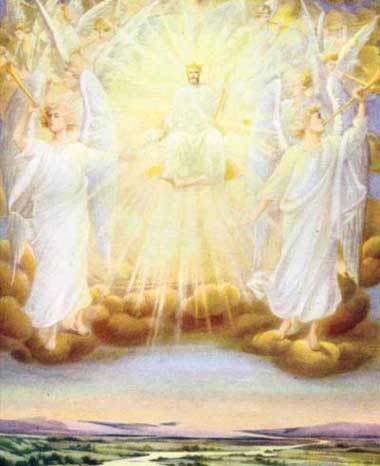
Praise God, our Savior has come. The King of kings and Lord of lords left the glories of heaven for us.
The Son of God became a man
to enable men to become the sons of God.
-C.S.Lewis
(Mere Christianity)
Incredible, isn’t it?
(Art credit: www.coolchaser.com.)
Posted in Christmas, Uncategorized, tagged Christmas, Christmas Carols on December 22, 2014| 9 Comments »

Bethlehem. One word that immediately conjures images from the Christmas story: an inn with no room for a travel-worn couple, a stable or cave that became the birthplace of a King, angel choirs announcing his birth, and exuberant shepherds worshiping the newborn Messiah.
But just five miles from Bethlehem lies Jerusalem. In fact, from some locations within the little village, you can gaze northward and glimpse the rooftops of the capital city.
Perhaps, as Christmas approaches, we would do well to shift our gaze for a few moments, from the manger in Bethlehem toward Jerusalem: the place where our Savior gave up his life on a cross.
Most of our thoughts this time of year focus on the village where the little Lord Jesus laid down his sweet head, where angels came from the realms of glory and shepherds quaked at the sight. Each year we sing carols that highlight nearly every aspect of the story.
But there is one carol that reminds us of the bitter realities of Calvary, even while celebrating the sweet story of Jesus’ birth: “The Holly and the Ivy.”
Historians tell us that long before Christ was born, Europeans were bringing holly into their homes during winter, as part of several pagan celebrations. Later, Christians continued the tradition, but adapted the symbolism associated with the plant.
To these believers of long ago, holly represented Jesus. The sharp points on the leaves reminded them of the crown of thorns pressed down on Jesus’ head prior to his crucifixion. The bright red berries represented the blood he shed. Holly also produces white flowers, symbolic of Christ’s purity.
And what of the ivy? One source suggested that ivy requires a support system as it grows. Small tendrils find places to cling. (Ivy seems especially fond of brick walls, doesn’t it?) Perhaps the lyricist of this carol was thinking of us when he included the ivy. We need to cling to God for support in our lives.
Note the last line of the first verse: “The holly bears the crown.” Indeed. He is the King of kings and Lord of lords!
The holly and the ivy, when they are both full-grown,
Of all the trees that are in wood,
The holly bears the crown.
The holly bears a blossom as white as lily flower,
And Mary bore sweet Jesus Christ
To be our sweet savior.
The holly bears a berry, as red as any blood,
And Mary bore sweet Jesus Christ
To do poor sinners good.
The holly bears a prickle, as sharp as any thorn
And Mary bore sweet Jesus Christ
On Christmas day in morn.
The holly bears a bark
As bitter as any gall,
And Mary bore sweet Jesus Christ
For to redeem us all.
The Bethlehem Christmas story includes so many elements to celebrate: God’s love manifested in the birth of a Savior; Mary’s and Joseph’s faithfulness to fulfill God’s plan, the angel’s message of peace on earth, and the shepherds’ joy.
But may our celebration also include appreciation for God’s love that prompted him to give up his only Son to death, that those who believe on him might have eternal life. May we celebrate the faithfulness of our Savior to fulfill God’s plan in spite of the agony and sorrow.
And, yes, may we celebrate the deep-down, long-lasting peace and joy that only Jesus can provide (John 14:27; 15:11).
(Sources: Christmas, by Charles Allen and Charles Wallis (Revell, 1977); http://www.hymnsandcarolsofthefaith.com; http://www.landscaping.about.com; http://www.mymerrychristmas.com.)
Art credit: www.lamblion.com.
Posted in Blessings, Christmas, Faith, God's Provision, Jesus, Salvation, Uncategorized, tagged Blessings, Christ, Christ Mass, Christmas, God's Provision, Life with Christ, Life without Christ, Salvation on December 18, 2014| 6 Comments »

Christmas. The first syllable surely needs no explanation of origin. It speaks of the One we celebrate.
But what about the second syllable, -mas?
Christmas is a term that has been around for nearly a thousand years, coming to us from Old English. Cristes Maesse meant “Mass of Christ.” It was established by church leaders to disconnect the church celebration of Jesus’ birth from pagan holidays and customs—holidays such as Winter Solstice. (Even before the birth of Christ, Romans were celebrating the shortest day of the year, in anticipation of the sun’s gradual return.)
As a matter of fact, as early as the fourth century, Christians were creating their own wintertime celebration. One theologian pointed out in 320 A.D.: “We hold this day holy, not like the pagans because of the birth of the sun, but because of Him who made it.”
Yet there are those who wish to keep the customs of Christmas without including the One being celebrated. Seems they’d like to take away the first syllable, Christ. But then all that’s left is –mas.
Sounds like mess.
Indeed. I am confident that without Christ, my life would be a mess.
A mess of fears.
A mess of brokenness.
A mess of worry.
A mess of guilt.
A mess of dissatisfaction.
It’s possible that for a long while I’d be able to hide the mess under glittery packages of stuff, noise and distraction, busy-ness.
But eventually, a body must stop and rest. That’s when my mind would kick into high gear and the mess would wreak havoc in my soul. Chances are I’d develop sleep problems, depression, or perhaps even physical manifestations like ulcers. Stress can do that to a person.
Shouldn’t I at least consider the alternative? What if I do allow Christ in my life?
Oh, my. The list of precious gifts He bestows is astounding and practically endless. To begin, he provides:
“Do not let your hearts be troubled. Trust in God; trust also in me” (John 14:1), Jesus said.
“Anyone united with the Messiah gets a fresh start, is created new. The old life is gone; a new life burgeons” (2 Corinthians 5:17, The Message)!
“Steep your life in God-reality, God-initiative, God-provisions. Don’t worry about missing out. You’ll find all your everyday human concerns will be met…God will help you deal with whatever hard things come up when the time comes” (Matthew 6:33-34, The Message).
“Everyone who believes in [Jesus] receives forgiveness of sins through his name” (Acts 10:43).
“Godliness with contentment is great gain” (1 Timothy 6:6).
And among his many other gifts to us, Jesus grants us the incredible privilege of eternal life (John 3:16)—with him in heaven.
But how will I be able to enjoy all these gifts if I don’t give Christ a chance?
I really have nothing of value to lose. Just the mess.
“Thanks be to God for his indescribable gift” (2 Corinthians 9:15)–the Christ of Christmas!
(Art credit: www.emblibrary.com .)
Posted in Christmas, Faith, Godly Character, Uncategorized, tagged birth of Jesus, Christmas, Faith, Godly Character, Luke 2, Mary Mother of Jesus, The Christmas Story on December 15, 2014| 8 Comments »

No Christmas season would be complete without the reading of the second chapter of Luke—the account of Mary and Joseph traveling to Bethlehem, presiding over the birth of Jesus in a stable or cave, and receiving shepherd-guests.
Toward the end of the account, as those shepherds were spreading the word of Jesus’ birth, Luke wrote, “Mary treasured up all these things and pondered them in her heart” (v. 19).
Indeed. She had much to process:
I find myself pondering, too—pondering Mary herself–this dear, young girl who carried a tremendous burden for a long time.
Dear means beloved and valued. Mary is certainly that for numerous reasons.
Mary was young—perhaps between thirteen and fifteen years of age. That was the typical age for a girl to be married in Bible times.
Yet, young as Mary was, Gabriel praised her for being “endued with grace” (v. 28, AMP). In addition, Mary demonstrated stamina, maturity, and gentleness beyond her years, in dire circumstances. No doubt God graced her with these traits. But I have to believe Mary also had freedom of choice, as we all do, to embrace God’s way for her.
But what I ponder most about Mary is the fact she carried a tremendous burden, given to her by an elderly man, Simeon, eight days after Jesus was born.
You undoubtedly remember the story. Joseph and Mary took Jesus to the temple at Jerusalem to be circumcised. There they met the righteous and devout Simeon who had been waiting decades for the Messiah. The Holy Spirit had revealed to him he would not die until he had seen the Lord Christ.
Immediately upon seeing the child, Simeon knew this was the One. He praised God for keeping his promise, blessed Mary and Joseph, and then spoke particularly to Mary, saying Jesus would cause some to rise and some to fall, and the thoughts of many hearts would be revealed.
Simeon’s last words must have caused Mary’s eyes to grow wide and her heart to skip a beat: “And a sword will pierce your own soul too” (Luke 2:21-35).
What?! Wasn’t the worst behind her? Surely Mary wanted to ask Simeon, “What do you mean?” Scripture gives us no indication that she did so. Perhaps Simeon walked away, leaving the stunned couple to stand speechless there in the temple court.
For thirty-three years those last words of Simeon must have echoed in Mary’s mind again and again. How does a person live with such long-term foreboding? Perhaps her mind turned back to the night of Gabriel’s visitation. Perhaps, for thirty-three years, Mary repeated what she had told the archangel: “I am the Lord’s servant. May it be to me as you have said” (1:38).
Mary may very well have developed the calm assurance that even when God’s ways are baffling, we can rest assured he is orchestrating events to accomplish far more than we could ever imagine (Ephesians 3:20). She had been witness to such orchestration in Bethlehem.
Mary knew that even our personal hardships can fulfill purposes that extend far beyond ourselves.
That’s a lesson for all of us to embrace with calm assurance.
(Art credit: www.seekerville.blogspot.com.)
Posted in Christmas, Hope, Jesus, Joy, Salvation, Uncategorized, tagged Christmas, Christmas traditions, Never tiring of Christmas traditions on December 11, 2014| 11 Comments »

I love all things Christmas–with a few exceptions for the silly (Dancing Santas I can do without.), the gaudy and over-glittered (unless my children made it), and the highly repetitious (“The Little Drummer Boy,” with its twenty-one pa-rum-pa-pum-pums is one example).
But I do look forward to:
You get the idea.
I’m now getting to the age when all these things are very familiar. I’ve enjoyed them again and again over the decades. Yet they never lose their appeal. Every year, as Christmas approaches, I eagerly anticipate the repetition of each experience.
Why? Why hasn’t boredom set in? It’s not an easy question to answer. But these reasons occur to me as possibilities:
But that’s not all! Jesus is coming again and all the perfections of heaven await those who believe in him. Did you know that for every single prophecy in scripture that foretold Jesus’ birth, there are eight which look forward to his return? Also consider: every prophecy about Jesus’ birth came true; therefore, we can be confident every prophecy about his second coming will also come true. Christmas is a celebration that not only looks back with great joy, but forward with great hope.
Wonderful Counselor (Isaiah 9:6), guiding our way.
Emmanuel (Matthew 1:23), gracing us with his presence.
Shepherd (Hebrews 13:20), tenderly caring for us.
Rock (1 Corinthians 10:4), providing stability and refuge.
Advocate (Romans 8:34), interceding for us when Satan tries to condemn.
And so much more. Who can help but celebrate our loving Savior?
May all things Christmas turn our hearts and minds to him–his miraculous birth, his perfect life and sacrifice, his glory.
Posted in Christmas, Uncategorized, tagged Christmas, O Little Town of Bethlehem, Phillips Brooks on December 8, 2014| 10 Comments »
Jesus Christ,
the condescension of divinity,
and the exaltation of humanity.
–Phillips Brooks

Are you familiar with Phillips Brooks (1835-1893)? If you had lived in the mid-to-late 1800s, it’s likely you would have known the name. By age thirty, he was considered one of the premier preachers in America.
Brooks began his ministry at a small church in Philadelphia, Pennsylvania where he served two years. In 1859, another church in Philadelphia, Holy Trinity Church, invited him to be their minister, and Brooks accepted.
Less than two years later, America was engulfed in the Civil War. Young Brooks led his congregation through those dark and painful times.
But finally, on April 9, 1865, General Lee surrendered to General Grant, and Americans dared hope for reconciliation between North and South. Then, just one week later, President Abraham Lincoln was shot and killed. Phillips Brooks was asked to preach at the funeral of the fallen president. Brooks was just thirty years old.
The war years had taken their toll on the young preacher. In December of 1865, he took a sabbatical in the Middle East. On Christmas Eve Day, Brooks was in Jerusalem. He decided to borrow a horse and ride to Bethlehem, about five miles away.
Approaching the village, Phillips noted that little had changed since Bible times. Sheep still dotted the hillsides and shepherds in long robes still kept watch over their flocks.

At dusk, Brooks rode into Bethlehem itself—just a small, clay-colored village crisscrossed with dirt paths. Phillips thought, How stunning to consider that our heavenly King was born into such modest surroundings.
And then his thoughts drifted back to that momentous night when the Son of God also became the Son of Man. His heart overflowed with fresh wonder and unspeakable joy. The heartaches of the past four years began to diminish.
Later he would tell family and friends the experience would forever be “singing in my soul.” But Phillips found it impossible to fully describe that evening. This was one time the famous orator was at a loss for words.
Three years later in 1868, Brooks found his thoughts returning to that mystical Christmas Eve in Bethlehem. He started jotting down words and phrases that occurred to him, and it wasn’t long before he had the makings of a poem.
This might lend itself to music, he thought, and gave the poem to the organist of Holy Trinity Church, Lewis Redner.

But try as Redner might, a tune worthy of Brooks’ lovely poem would not come to him.
Lewis went to bed on Christmas Eve feeling like a failure.
Later, Lewis explained what happened next: “I was roused from sleep late in the night hearing an angel-strain whispering in my ear, and seizing a piece of music paper I jotted down the treble of the tune as we now have it, and on Sunday morning before going to church I filled in the harmony. Neither Mr. Brooks nor I ever thought the carol or the music to it would live beyond that Christmas of 1868.”
But it has. Nearly one hundred fifty years later, we’re still singing O Little Town of Bethlehem. It is one of the most beloved carols in the world.
O little town of Bethlehem
How still we see thee lie
Above thy deep and dreamless
Sleep the silent stars go by.
Yet in thy dark streets shineth
The everlasting light.
The hopes and fears of all the years
Are met in thee tonight.
Phillips beautifully highlighted two contrasts between: 1) the still, dark night and the everlasting Light that burst upon Bethlehem, 2) the sleepy little village and the momentous birth which occurred in its midst. The tune Redner heard and recorded also created contrast by moving between major and minor keys.
Brooks concluded his first verse with one more set of opposites : All of our hopes are met (fulfilled) in Jesus, and all our fears are met (dealt with) by Jesus (1 Timothy 1:1; 1 John 4:18). Glad tidings of great joy, to be sure.
I have to wonder also if the quote at the beginning of this post—another study of contrasts–didn’t result from that Christmas Eve in Bethlehem:
Jesus Christ,
the condescension of divinity,
and the exaltation of humanity.
Sources: Stories Behind the Best-Loved Songs of Christmas by Ace Collins; www.hymnsandcarolsofchristmas.com; www.crosswalk.com; http://www.joy-bringer-ministries.org.
Photo credits: www.openlettersmonthly.com; http://www.heavens-gates.com; http://www.globible.com
–
Posted in Christmas, Uncategorized, tagged Blessings, Christmas, Isaiah 4:2, Jesus, John 8:12, Joy, Martin Luther on December 4, 2014| 5 Comments »

Martin wrapped his muffler tightly against his neck, then pulled his hat firmly down over his ears. The night was bitter cold. As his feet trudged through the snow, his thoughts warmed him. Soon he’d be sitting by the fire surrounded by his loving family, and together they would celebrate Christmas Eve.
Thank You, dear Lord, for this blessed night, he prayed. Thank you for the precious gift of your Son, the King of Glory become Savior of those who believe.
Martin’s eyes lifted heavenward in worship. It was then he noticed the ethereal display above him: evergreen branches lit by hundreds of tiny lights. Of course, it was the stars. But on that night, for Martin, they appeared to be sprinkled among the treetops.
Oh, I wish the family were with me to witness this, he thought. And then he had an idea.
When Martin finally crossed the threshold of his home, his wife and children were surprised to see him carrying a small evergreen tree.
“Children!” he cried. “I just enjoyed a most amazing sight as I walked home this evening. And we’re going to recreate it, at least partially so, right here in the living room!”
Whatever could this be, they thought, as Papa sent them to gather a small pot and candles.
Together, Martin and his six children set up the tree and fastened candles to the branches. Then the room was darkened as the tree-candles were lit. And while the little tree glowed brightly in the corner, Martin told his family about the exquisite beauty he had witnessed—sparkling stars shining through the evergreens on a crisp and clear Christmas Eve.
“It looked something like this!” he proclaimed and gestured toward the tree. The children stared in wonder at the glorious sight.

This, according to legend, is how Martin Luther introduced the tradition of the Christmas tree, nearly five hundred years ago. (I did add a bit of imaginative embellishment!)
Of course, no one can verify the truth of the legend. But I like to think that one of our most devout fathers of the faith brought to us this most delightful custom.
Not only is the custom embraced by nearly everyone who celebrates Christmas, it embodies much symbolism.
The tree of choice in most homes is the evergreen. Green represents life—the eternal life Jesus offers.
The lights also remind us of Jesus, the Light of the world (John 8:12).
Finally, the decorations offer reminders of God’s blessing:

And when the tree is fully decorated, we can exult:
O Christmas tree, O Christmas tree!
Thou hast a wondrous message.
Thou dost proclaim the Savior’s birth,
Good will to men and peace on earth.
* * * * * * * * * *
I praise you, O God, for your goodness. Your blessing does indeed bring me much wealth (Proverbs 10:22), including: life eternal in your presence, Light to guide my way, precious family and friends with whom to enjoy the journey and with whom to celebrate this rapturous season of Advent.
And then, would it be too trivial to thank you for Christmas trees? Their splendor graces our homes like no other adornment. May I enjoy the decorated tree, not as something bright and pretty in itself, but as a reminder of the Branch of the Lord. HE is the beautiful and glorious One (Isaiah 4:2).
(Photo credits: http://www.i.istocking.com; www.jpeg.pinterest.com; http://www.madiganmade.com
Posted in Book Reviews, Christmas, Meditation, Uncategorized, Worship, tagged Advent, Christmas, Meditation, Preparation for Advent, Worship on December 1, 2014| 12 Comments »

“Advent:
the time to listen for footsteps –
you can’t hear footsteps
when you’re running yourself.”
Bill McKibben
Are you caught up in the Holiday Hurry yet? I’m talking about the decorating–baking– card-writing—shopping—wrapping—parties—rehearsals—event-participation and attendance. No doubt I omitted a few items on your list.
Perhaps you’re craving a bit of quiet this Christmas. Time to enjoy the presence of your Savior. Time to reflect on Bethlehem blessings—those gifts we enjoy as a result of Christ’s advent into the world.
But how can we stop running long enough to hear our Savior’s footsteps? How can we avail ourselves of his peace and strength when our days are doubly-busy?
May I recommend the devotional book, Let Every Heart Prepare Him Room (Barbour Publishing, 2014), by my good blogger-friend, Jean Wise?
First, the soft, leather-like cover is a pleasure to hold. The thick, gilded pages are a delight to turn. And the subtle, star-studded border on each page adds beauty to the text.
Jean has provided four weeks of quieting devotionals, offering a perfect start for each day. Each week has its own theme: 1) Preparation, 2) Pause, 3) Ponder, and 4) Promise.
Each reading includes a brief devotional, appropriate scriptures, well-chosen quotes, suggestions for a more meaningful Advent season, and a closing prayer.
I’ve just begun reading and internalizing this book myself. But already my spirit has been calmed by Jean’s soothing words. For example:
“We drink in His presence and linger in His light for warmth and nourishment. We quench our thirst at His well” (p. 27).
Doesn’t that sound refreshing and rejuvenating? So “take a deep breath and enjoy the journey,” Jean recommends. Embrace moments of stillness, thank God for the gift of His Son, express gratitude, and rest.
Jean also provides gentle challenge. She well knows the tyranny of the to-do list at this time of year. A pointed question steers our focus in the right direction:
“What are we clinging to so tightly we can’t reach out to God” (p. 16)?
And then there are those readings where God’s wisdom flows through Jean’s words.
In the devotional entitled, “Advent Assignments,” she reminds us that our role in the Christmas season is not to be the perfect hostess or flawless decorator, and not to portray the ideal family.
“Preparing our hearts for the Lord implies knowing our boundaries and acknowledging our limitations…Focus on the manger in the center of the stage of our hearts (p. 32).”
Each day Jean encourages me to “reduce the clutter.” Her words bring me to the center of the stage of my heart, to “spend less time on busy work and more time with God” (p. 12).
Time to reflect. Time to listen. Time to savor the presence of my Savior.
Won’t you join me?
(You may order the book on http://www.barnesandnoble.com or purchase at a Family Christian bookstore and at Christian Book Distributors.)
Posted in Appreciation, Courage, Excellence, Faith, Godly Character, Heroes of the Faith, Perseverance, Thanksgiving, Uncategorized, tagged Appreciation, Faith, God's Strength, Godly Character, Gratitude, Mayflower Compact, Miles Standish, Perseverance, Pilgrims, Psalm 106:1, Thanksgiving, William Bradford on November 24, 2014| 10 Comments »
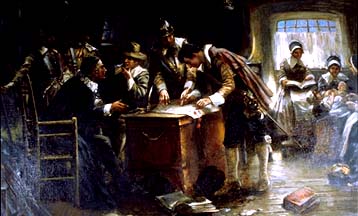
They had been at sea for sixty-six days, enduring overcrowded conditions. Storms had caused damage to their ship and sea sickness plagued them all– passengers and crew alike. Meager provisions and no heat on chilly autumn days caused further discomfort.
So on November 9, 1620, when they finally saw the coastline of North America in the distance, the Pilgrims and others aboard the Mayflower must have cheered enthusiastically. Soon they could abandon the cramped, cold, and fetid ship and begin new lives in a new world.
But. All had not been peaceful and congenial among the passengers during the crossing. And when it became apparent the storms had blown them too far off course to land in the Virginia Colony as planned, relations deteriorated further.
Not all of the travelers were Pilgrims. Also aboard were merchants, craftsmen, skilled workers, and indentured servants. The Pilgrims called them “strangers.”
No sooner had the decision been made to anchor off Cape Cod, than an argument ensued. Several of the “strangers” pointed out that, since they were not going to be under the jurisdiction of the Virginia Company, they would “use their own libertie” and do as they pleased. “None had the power to command them, they said.” (Quoted words are from William Bradford’s records. He served as historian for the Pilgrims.)
To avoid anarchy, five men gathered in the cabin of the ship to create a basis for law and order. The result of their efforts: the Mayflower Compact.
The first words of the document give strong indication of the Pilgrims’ hearts.
In the name of God, Amen.
“Everything they did started with God” (The Founders’ Bible, p. 187).
Next, the Pilgrims stated their purpose for coming to America.
We, whose names are underwritten,…by the grace of God,…having undertaken for the glory of God, and advancement of the Christian faith, and honor of our King and country…
Several phrases indicate the Pilgrims’ desires for their new colony:
…[We] do solemnly and mutually in the presence God and of one another, covenant and combine ourselves together into a civil body politic…
The Mayflower Compact expressed their commitment to live together in a civil manner, in the sight of God.
…[We] will enact…such just and equal laws, ordinances, acts, constitutions, and offices, from time to time, as shall be thought most meet and convenient for the general good of the colony, unto which we promise all due submission and obedience.”
Note: there is no mention of a leader who would oversee the colony. The Pilgrims created a democratic, representative form of government, in covenant with one another, rather than by a monarchy or dictatorship.
It was the first document of its kind in the history of the world.
But the Mayflower Compact would only be as good as the commitment of Pilgrims and Strangers alike to abide by its guidelines.
Would the mutinous Strangers sign?
John Carver, church deacon and one of the organizers of the voyage, was the first to affix his signature. Other Pilgrims followed.
One book says there was a long pause. Then Captain Myles Standish stepped forward to sign. Standish had been hired by the Pilgrims to be their military captain; he was with them, but not one of them.
Soon other Strangers followed Standish’s example. In total, forty-one signatures appeared on the document. One freeman, two hired men and seven servants declined.
At long last, Pilgrims, Strangers, and crew were able to disembark. And what did they choose to do first?
Pray.
According to Bradford, they “blessed the God of heaven, who had brought them over the fast and furious ocean..and a sea of troubles before.” Then he quoted scripture:
“Let them therefore praise the Lord, because He is good and His mercies endure forever.” (Psalm 106:1).
* * * * * * * * * *
We, too, praise you, Lord, for your goodness and mercy upon America all these years. As we celebrate Thanksgiving on Thursday, may we remember the solemn history behind this occasion. Thank you for the supreme example and sacrifice of our Pilgrim forefathers–strong in faith, commitment, and perseverance. May we follow their example, not only because you are faithful to the faithful (2 Samuel 22:26), but out of appreciation for what you, our loving God, have already done.
(Sources: By These Words by Paul M. Angle; The Founders’ Bible; The Intellectual Devotional: American History by David S. Kidder & Noah D. Oppenheim; The Rebirth of America; http://www.learningtogive.org; http://www.humanities360.com; http://www.crf-usa.org; http://www.americanhistory.about.com; http://www.tparents.org; http://www.mrkash.com; http://www.mayflowerhistory.com; http://www.plimoth.org.)
Art credit: www.washingtonmayflower.org.
Impressions Becoming Expressions
The Power of Story
Impressions Becoming Expressions
Gaining a heart of wisdom
I'm Patty, and my husband and I are living with our adult son who has autism and epilepsy. I love sharing lessons learned from life around me, especially life with Aaron.
Impressions Becoming Expressions
Impressions Becoming Expressions
Where faith meets la dolce vita
Finding the Image of God

 From the Inside Out