Feeds:
Posts
Comments

Archive for the ‘Worship’ Category

I don’t listen to my car radio anymore.  The fuzzy sound coming from the twelve-year old speakers is annoying.

But the silence has turned into a gift, a time for prayer and worship.

As I leave our neighborhood and pass the ponds and large live oak trees draped with Spanish moss, I praise God for the beauty of creation, within steps of our home:

  • The glassy surface of the ponds, reflecting blue sky and mounds of clouds
  • The stately trees, with branches spread wide, as if to praise God with me
  • The family of sandhill cranes, stretching their graceful necks to the ground in search of  breakfast
  • The rich green grass, arrayed in dew-diamonds

And with the psalmist I want to add my enthusiastic voice.

“Praise the Lord, O my soul.  O Lord my God, you are very great;  You are clothed with splendor and majesty…How many are your works, O Lord!  In wisdom you made them all, the earth is full of your creatures.  I will sing praise…as I rejoice in the Lord (Psalm 104:1, 24, 33-34).

Oh, yes!

On the way to my hair appointment the other day, that’s exactly what I was doing:  praising God for the beauty around me.

And then, boom.  My mind veered off to a troubling event that happened years ago.  Before I even realized what was happening, my thoughts were swirling around in a cesspool of negativity.

When I caught myself, I said out loud in a firm but frustrated voice:  “LET. IT. GO!”

And just as suddenly as that cesspool opened up, I found myself singing an old chorus from my childhood, but with new words.  Do you remember:

“Hallelu, Hallelu, Hallelu, Hallelujah!  Praise ye the Lord?”

My altered rendition went like this:

Let it go, let it go, let it go, let it go now!

Praise ye the Lord!  (Repeat.)

Praise ye the Lord!  Let it go, now!  (Repeat three times.)

PRAISE YE THE LORD!

Did you figure out the tune?  Do you remember this song?

Well, no sooner did I start singing that silly song, than I was smiling to myself.  My spirit was downright laughing!

And the cesspool drained away.

I don’t know how ugly matters can flood into my mind, even as I’m praising God.  I don’t know how to keep the mess out once and for all.

What I am learning is this:

As soon as I recognize that the floodgates of negativity have opened, my best offensive move to close them up again is praise and gratitude.

And why does it work?

“Satan so hates genuine praise that his fiery darts of discouragement are not effective against us when we respond in praise” – Bill Thrasher  (A Journey to Victorious Praying, Moody, 2003, p. 206).

Evidently, Satan hasn’t given up on me yet; he’s still firing darts of discouragement to render me ineffective.  You know–reduce me to one of those people who revels in self-pity and the pity of others.

I do not want him to score a single point, much less win the victory!

My aim is to adopt David’s attitude:

“My heart is steadfast, O God,  my heart is steadfast: I will sing and give praise” (Psalm 57:7).

Note that David wrote this psalm when he had to flee for his life from murderous King Saul (1 Samuel 22-24).

M-m-m.  Surely David had to avoid a few cesspools of negativity under such circumstances.  Those words, “My heart is steadfast,” may have been spoken through gritted teeth.

But even when praise is more of a forced discipline than a natural delight, God is undoubtedly pleased.  Perhaps even more so.  Like a parent especially appreciative when the teenager loads the dishwasher.   Even when he doesn’t want to.

*     *     *     *     *     *     *     *     *    *

So, here I am, Lord –my toes a bit soiled from getting too close to that cesspool again.  But thanks to you, thanks to the power you’ve given me through praise, it’s only my toes!  Thank you for pulling me away from the brink.  Thank you for turning me around and refocusing me on your glorious wonders.  May “my mouth be filled with your praise, declaring your splendor all day long” (Psalm 71:8)!  Amen. 

(Photo credits:  www.rajschoolofmotoring.co.uk ; http://www.laradunning.wordpress.com ; http://www.istockphoto.com ; http://www.ourhealingmoments.com )

Read Full Post »

Mr. Chump thinks he’s pretty smart.

He doesn’t need experts; he already knows what’s best.

He doesn’t need repairmen; he fixes things himself.  Of course, many items turn out to be very poorly made, so parts don’t go back together the way they’re supposed to.  Frequently he’s forced to replace such items.  It never dawns on him how often that scenario occurs.

Mr. Chump also thinks he knows better than God.

“So many things in this world just don’t make sense,” he loudly complains to his neighbor.  “For example, why did God create mosquitoes?  And what’s up with the rain?  Sometimes we get too much, and sometimes not enough.  What would be wrong with a little balance?  And why does winter have to be so cold?

“And look at this tall, strong oak tree here, with all of its tiny acorns,” Mr. Chump continues.  “And then over there, on that puny, limp vine lying on the ground, huge, heavy pumpkins grow.  It makes no sense.

“People talk about an all-wise God in control of the universe, but there are just too many inane situations in nature for me to believe in Intelligent Design, much less God.”

And then an acorn falls on his head.  And his neighbor quietly remarks:

“What if that had been a pumpkin?”

Poor Mr. Chump.  Little does he realize that:

“God is exalted in his power.   Who is a teacher like him?  Who has prescribed his ways for him,  Or said to him, ‘You have done wrong?’  (Job 36:22-23).

Or…

“What a wonderful God we have!  How great are his wisdom and knowledge and riches!  How impossible it is for us to understand his decisions and his methods!  For who among us can know the mind of the Lord?  Who knows enough to be his counselor and guide?…For everything comes from God alone.  Everything lives by his power, and everything is for his glory.  To him be glory evermore (Romans 11:33-36 TLB).

I begin to shake my head in pity for Mr. Chump, who doesn’t understand that God most certainly knows what he is doing.

Then I realize:  there are times when I am no different from Mr. Chump.  Oh, I may not complain that acorns should grow on vines and pumpkins on trees.  But I allow negative thoughts to swirl around in my mind that sound an awful lot like complaining.  Thoughts like…

…This situation is unbearable, Lord.  When will you intervene?

…I don’t know why I keep hoping for such-and-such to happen.  It would appear I’ve been working and waiting for nothing.  Am I wasting my time, God?

…I’m frightened, Lord.  What is going on?  Where are you?

So what can I do to avoid behaving like Mr. Chump?

Paul’s idea in the Romans passage above is a great place to start.  Paul confesses he’s at a loss, that the depths of God are beyond his reach.  So he humbly sits down at the brink, and adores the depth.*

Worship.  That’s the answer.

Move over Mr. Chump.  Make room for adoration, gratitude, and trust.

Amend that.  Move out, Mr. Chump.  Your foolishness is not welcome here.


*paraphrased from Matthew Henry’s Commentary


(photo credits:  www.alexandriavaappliancerepair.com ; http://www.onlineathens.com ; http://www.flickr.com ; http://www.godmeandacupofcoffee.blogspot.com )


Read Full Post »

Think of the last time you . . .

. . . gazed in wonder at a blazing sunset,

. . . marveled at the heavenly aroma of lilacs or orange blossoms, or

. . . listened to a melody that brought tears to your eyes.

God has equipped us with amazing physical senses, enabling us to experience and enjoy the display of his creative genius.

But physical manifestations are not his only outlet of expression.  God also revels in displaying his fullness in our hearts.  The question is:  how do we become aware of such revelations in the abstract realm of our spirits?

A.W. Tozer presents a possibility in his classic, The Pursuit of God.  He suggests we use the senses of our hearts.

The Bible gives us glimpses of how these internal senses might work.

1.  TASTE

David urges us to “taste and see that the Lord is good (Psalm 34:8).  That verse reminds me of a father urging his child to try a bite of some new food.  “Try it—you’ll like it!” he says.

As Christians, we can “try” God—offer him a prayer, believe in a promise, trust in his love and care.  He will not ignore such efforts!  When we come near to God, he will come near to us (James 4:7).

2.  SMELL

Although Psalm 45 was written as a wedding song, perhaps for King Solomon, it also has prophetic qualities, looking forward to the day when Christ and his bride, the church, will be united forever.  Verse 8 mentions the groom’s fragrant robes:

“All your robes are fragrant with myrrh and aloes and cassia,” wrote the psalmist.

Think of a favorite candle with a delightful aroma.  Do you light it and then leave it?  No, more than likely you place that candle in close proximity, so you can breathe in deeply the lovely fragrance and relish the pleasure.

We can draw near to God and relish the pleasure of his presence—the fragrance of his peace, joy, and comfort.

3.  HEARING

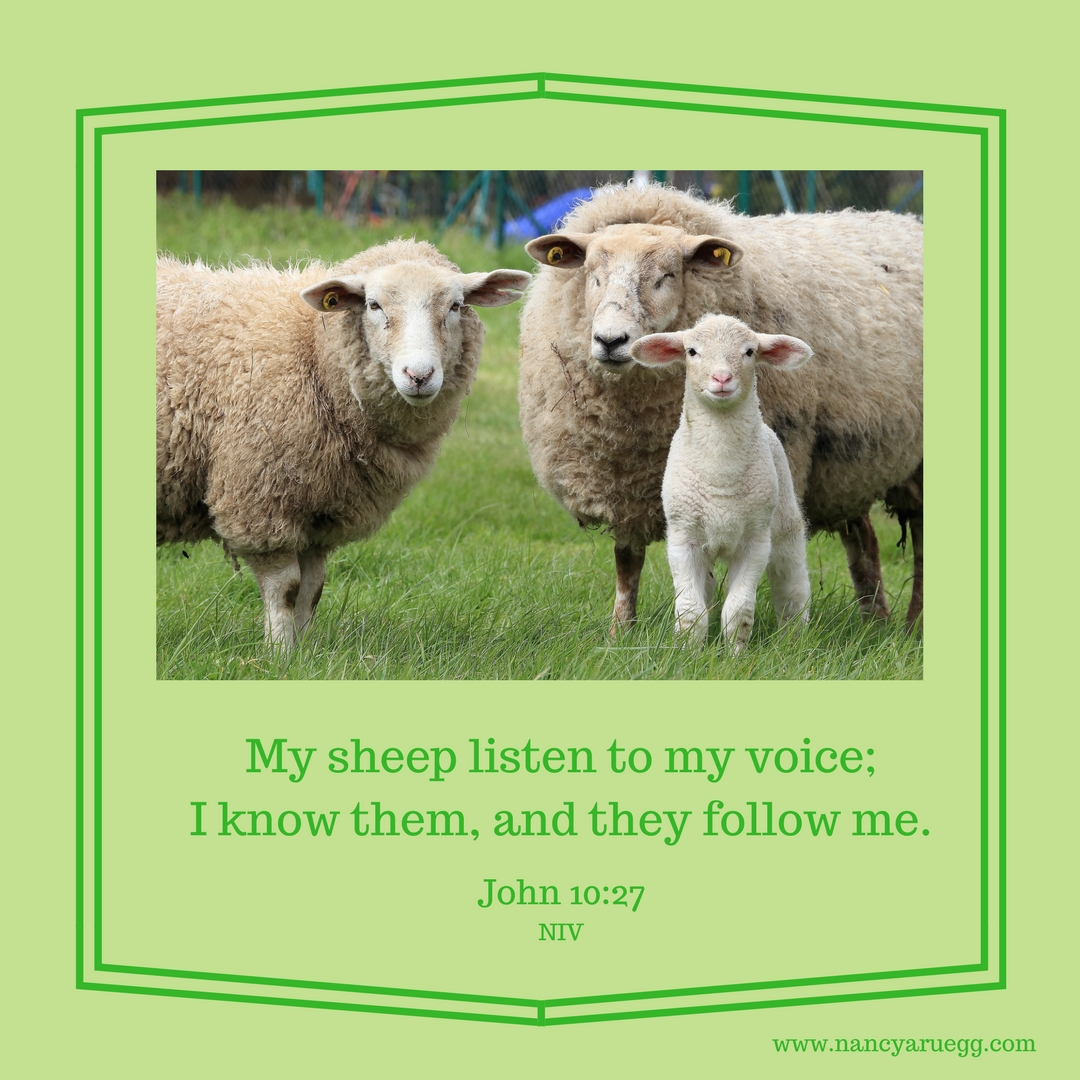
Jesus said, “My sheep listen to my voice; I know them, and they follow me” (John 10:27).

His voice represents wisdom, guidance, encouragement, and security.  Our primary source for those benefits?  The Bible.  But God also speaks to his children in other ways:  through creation, other people, events, even inner impressions.

Times of stillness are necessary.  If every moment is filled with chatter, we will not be able to hear God.

4.  TOUCH

Talk to those who have sought God during a crisis and without exception they will attest to sensing God’s presence with them.  For me, it’s like a holy heart-hug, infusing me with peace of mind and strength of heart.  Not that I am impervious to hurt or discouragement, but the touch of God provides respite and hope.

How?  Through praise and worship, especially as I meditate in the psalms.

5.  SIGHT

“Blessed are the pure in heart, for they will see God” (Matthew 5:8).

The verb tense used here is called “future continuous.”  The verse could read:  “They shall be continually seeing God for themselves.”

I’m reminded of a time Steve and I visited friends at their new home.  We turned off a familiar busy street and were almost immediately surrounded by tall trees.  The homes were set back from the road, barely visible.  The neighborhood was a bit of country set down in the middle of our metropolis.


“Who knew this area even existed?” I said to Steve.  He agreed.

We had both passed that street numerous times, but never saw it.

Isn’t that how it is with God?  We’re so busy, dashing from one task to the next, we never see God at work around us.  We aren’t looking for him so we miss him.

But!  When we are attentive for evidence of God’s presence and power, we will see him!

“When the habit of inwardly gazing Godward 

becomes fixed within us,

we shall be ushered onto

a new level of spiritual life.”

– A.W. Tozer

*     *     *     *     *     *     *     *     *     *

Thank you, loving Father, that you do expand my understanding as I seek to know you more and strive to comprehend more fully the greatness of your glory.  Teach me to use the five senses of my heart to accomplish those goals.  With great anticipation, I look forward to the new levels of spiritual life to which you will guide me!    

(Photo credits:  www.flickr.com (2); www.roshchodeshnewmoon; http://www.canva.com http://www.pixabay.com; www.flickr.com.)

Read Full Post »

Why is it we’re never satisfied?

As kids, we could hardly wait to grow up—to stay up late, drive a car, and never have to go to school.

As adults, we sometimes wish we were kids again—to play all day, take a nap, and never have to go to work.

As kids, time seemed to move slowly—especially when looking forward to a special event.  Remember how L-O-O-O-N-G it took for Christmas to come?

As adults, time seems to move extremely fast—especially as Christmas approaches and the cards haven’t been sent, the gifts haven’t all been purchased yet, and the tree still sits in a bucket of water on the back porch.

We might go shopping and come home with a new bedspread and pillows.  For a while we’re delighted over the difference those items make to the decor.

In no time, though, our focus shifts from those lovely things to other needs we identify around the house.

Reminds me of what oil tycoon, John D. Rockefeller (1837-1939) said.  He was asked, “How much is enough?” And he answered, “A little bit more.”

Español: John D. ...

John D. Rockefeller, ca 1875

This from a man with an estimated fortune of $1.4 billion.  In fact, Rockefeller was one of the wealthiest persons of all history.  Not even Bill Gates or Sam Walton come close.

But before we dismiss Mr. Rockefeller as selfish and greedy, it’s important to know he was generous with his fortune.  His financial records indicate that $550 million were donated to schools, health organizations, scientific research, and the arts.

But his comment (perhaps spoken with a twinkle of humor in his eye) speaks to the attitude of many.  We believe that with just a little more, we’d be content.

That’s a lie.

So what is the truth of the matter?  What’s the real reason we’re never satisfied?

The answer might be that contentment is the result of our focus.  Our attitude is impacted by what occupies our thoughts.  Therefore, we would be wise to:

 1.  Stay focused on who we are right now, and where we are right now.  Every age and stage has its advantages and disadvantages.

2.  Stay focused on what God is providing, what we have currently. 

3.  Stay focused on God’s attributes and blessings.  “The fear of the Lord leads to life:  then one rests content, untouched by trouble” (Proverbs 19:23).

To fear the Lord means to have reverence and awe for him.  Such an attitude leads to many benefits in life, including:

  • peace of mind, because our powerful and loving God is in control
  • joy of heart, because of the pleasure in his bountiful blessings,
  • contentment of spirit, because we’ve already received so much.

That’s how I want to live—totally satisfied, in complete serenity, as a worshipful tribute to my gracious God.

*     *     *     *     *     *     *     *     *     *

Thank you, Heavenly Father, for the gifts of serenity and satisfaction, when I focus on you.  May my days be filled with your praise!

Photo credits: http://www.flickr.com; http://www.rawpixel.com; http://www.commons.wikipedia.org; http://www.wallpaperflare.com (2).

Read Full Post »

Back in the 1970s I saw Helen Hayes in a made-for-TV movie.  Some of you may recognize her.  She was known as the “First Lady of the American Theater,” beginning her career on Broadway in 1905, when she was only five years old.  In the 1930s, Helen expanded her stardom to films, and finally to television.

The reason she comes to mind now and then is the impression she made upon me, as an energetic, sparkly eyed senior citizen.  I remember thinking, “When I get old, I want to be like that!”

Poof.  Four decades have passed, and I am indeed getting old!  I don’t feel like it, but that doesn’t stop the incessant turning of the calendar pages.

So I was delighted to come across these verses from Psalm 92 that cast aging in a positive light:

“The righteous will flourish like a palm tree, they will grow like a cedar of Lebanon; planted in the house of the Lord, they will flourish in the courts of our God.  They will still bear fruit in old age, they will stay fresh and green, proclaiming, “The Lord is upright; He is my Rock, and there is no wickedness in Him” (vs. 12-15).

Palm trees do indeed flourish, living up to 100 years.  Withstanding heat, drought, and high winds, these trees stand tall and strong; their leaves fresh and green all year long.


What a perfect picture of an energetic, sparkly eyed senior citizen! 

How do we achieve such age-defying qualities? 

First, notice that the righteous will flourish.  When our faith is grounded in God, when we follow his principles for a prosperous life, we flourish.

Like the palm tree that grows straight up toward heaven, the righteous reach for the God of heaven.  That’s how they’re able to stand strong through the winds of change and difficult circumstances.

The psalmist then continues:  “The righteous will…grow like a cedar of Lebanon.”

Majestic cedar trees grow to 120 feet in height and up to 30 feet in circumference.  They provide the perfect picture of a firm, stable person.  Just as the cedar’s roots go deep into the soil, so the righteous person is rooted and grounded in God’s love (Ephesians 3:17).  From those roots comes the nourishment needed to remain strong and spiritually healthy.

Second, notice where these trees are planted:  in the house of the Lord.  They flourish in the courts of our God.

Charles Spurgeon, that eloquent preacher and writer of the 1800s, had this to say about those who dwell in habitual fellowship with God:  “They shall become men [and women] of full growth, rich in grace, happy in experience, mighty in influence, honored and honorable.”  Now that sounds like a very satisfying way to live—so much better than the opposite!

Think of a complaining oldster whose mouth turns down from constant disgruntlement.  His bottom lip protrudes from perpetual pouting, and his brow is permanently lowered into a frown because anger often rules his emotions.  All this negativity has stunted the growth of his maturity.  He’s unhappy much of the time, and is not held in high regard by others.  Do you suppose he ever considers that his way of life is terribly unsatisfying?   

However!  When our lives are centered upon worship of God, as we express gratitude for his blessings, praise for his attributes, contentment for where he’s placed us, and joy in the midst of trials, we become those admirable men and women Dr. Spurgeon described above:  mature, gracious, and happy.

Dr. Spurgeon also added “mighty in influence and honored.  God rewards the righteous aged with “fruit.”  In other words, we may still bring glory to God by our words and actions—well into old age.

We can be:

  • Energetic—with the power of the Holy Spirit
  • sparkly-eyed—with the indwelling of God’s peace
  • grace-filled—with continual demonstrations of God’s love to others
  • joyful—with hearts focused on God’s blessings

These kinds of saints provide a powerful example of God’s faithfulness—through pleasant times and challenges, through plenty and want, year after year.

May we continue to grow deep and stand tall—all the days of our lives.

(photo credits:  www.pachd.com, www.captainkimo.com, www.forestertreeservice.com, www.centrifueleadership.com, www.seniors.ovetoknow.com)

Read Full Post »

“Worship the Lord your God and his blessing will be on your food and water” (Exodus 23:25a).

Food and water.  Common, everyday things.  But this verse promises God’s blessing on them.  In other words, even the mundane things of life can put smiles on our faces.

Mundane things like:

  • The graceful dance of tree limbs in a soft breeze
  • The tapping of rain on the roof, while cozied up in bed
  • The spontaneous hug of a child

Such delightful gifts are embarrassingly easy to overlook.  Most of us are much too busy and moving too fast.

So how do we take hold of these subtle blessings and treasure them?  The first five words of the verse give the answer.  It happens when we worship the Lord our God.

I’m not talking about the hour or two we may spend in church sometime on Saturday or Sunday.

Worship means expressing to God his worth—his worth-ship.  And it’s something we can enjoy all day, every day.

Yes, I said “enjoy,” because worship should be celebratory.

One means of celebrating our God is to express appreciation. “Always give thanks to God the Father for everything,” Paul recommended (1 Thessalonians 5:18).

As we begin to notice and appreciate all the delights God has bestowed, we experience a contentment and steadiness of spirit that defies explanation.  And to be contented and steady is a very blessed way to live!

Another means of celebrating our God is to express praise.  Gratitude expresses appreciation for what he’s done in the past, what he’s doing in the present, and what he will do in the future. Praise expresses admiration for who he is and honors him for his glorious attributes.

Attributes like:

  • Creativity, inspiring him to design tree branches that dance and sway in the breeze
  • Loving kindness, expressed with pleasurable gifts like raindrops rapping on the rooftop
  • Comfort, offered through the spontaneous hug of a child

As we begin to praise God for his attributes, we experience a change of perspective.  Our attention moves from personal circumstances to God Almighty.  He is:

  • Glorious in the splendor of his majesty
  • Capable of awesome works
  • Abundant in his goodness and compassionate on all he has made
  • Faithful to all his promises and righteous in all his ways

Interested in more descriptors?  See Psalm 145!

Bottom line:  When worship is an integral part of our lives, joy abounds, because God’s blessing rests upon us in all things!

“Worship the Lord your God and his blessing will be on your food and water” (Exodus 23:25a).

Such a simple exercise to implement;  yet such astounding results.

*     *     *     *     *     *     *     *     *     *

(Art & photo credits: http://www.lawlessgallery.com  ; http://www.godwordistruth.wordpress.com ; http://www.lessonsinashell.blogspot.com )

Read Full Post »

Conventional wisdom teaches that we are in control of our own destinies, that hard work and perseverance will assure achievement of goals.  To a point that’s true.  Laziness and a lack of follow-through do not lead to success.

But.  Those truisms fail when disaster strikes.

Ask Job; he’ll tell you.  He was an extremely wealthy man.  In fact, he was the greatest man among all the people of the East.

Job also enjoyed a large, loving family.  His children liked each other so much they partied together.

Job was also a blameless and upright man—totally undeserving of what happened to him (Job 1:1-4).

He was stripped of everything.  All of his wealth.  All of his wonderful children.

Recent tornado victims know the magnitude of such horror. Home and all its contents, gone.  Family members, gone.  I can only imagine their emotional pain and heartache.

And what was Job’s reaction?

If you had asked me that question a couple of years ago, I would have answered that Job was incredibly accepting, that he did not blame God.  And those statements are true.

But there’s more:

“Job got up and tore his robe and shaved his head” (1:20a).  OK, that makes sense.  Those were customs of the day for expressing grief.

And then do you know what Job did?

“He fell to the ground in worship” (v. 20b).

What?!  How can a person possibly worship at a time like that, when your whole world comes collapsing down around you?

All Job had left was his foundation—a foundation of faith in God.

Worship was his expression of that faith, declaring God’s worth to him—in spite of horrific calamity.  For Job, God was enough.

From Job we learn that true worship is not reliant upon circumstances.  We don’t have to be on top of the world to worship.  In fact, a sacrifice of praise (Hebrews 13:15) is surely very precious in God’s view.

Second, true worship is not reliant upon emotions.  We don’t have to be filled with joy in order to worship.  We can worship God with our tears, expressing our trust in spite of the pain.

Job couldn’t rely on answers that would give meaning for his suffering.  God gave him none.  What Job did rely upon was God’s character:

  • “His wisdom is profound, his power is vast” (9:4a).
  • “He performs wonders that cannot be fathomed, miracles that cannot be counted” (9:10).
  • “If it is a matter of strength, he is mighty!  And if it is a matter of justice who will summon him?”  (9:19).
  • “You gave me life and showed me kindness, and in your providence watched over my spirit” (10:12).
  • “To God belong wisdom and power; counsel and understanding are his (12:13).
  • “Can anyone teaching knowledge to God, since he judges even the highest?” (21:22).

In the end, knowing God is more important than knowing answers.

*     *     *     *     *     *     *     *     *     *

Heavenly Father, I shake my head in wonder as people of faith such as Job neither blame you nor give up on you in the face of calamity.  Instead, they rely upon you all the more tenaciously.  They worship, affirming that you are still their sovereign, loving God.  They testify of your strength and peace.  Thank you for being a God who comes alongside us with your wisdom and grace, especially when we’re hurting.  Thank you for powerful examples to follow, such as Job.

Read Full Post »

Back in January I wrote a post about meaningful mishaps on the keyboard—typos with significance. Now, four months later, I’ve collected a few more.

Mishap #1:

I meant to type caring, but the screen showed daring. Actually, the two words can be used together in a meaningful way: Sometimes we must be daring in our caring.

My husband, Steve, is a generous tipper. He frequently dares to care with his wallet. Not that we have a lot of money to spare, but we’ve experienced time and again you can’t outgive God. His economy isn’t logical; it’s theological.

Brick Queen Anne

 (Photo credit: TBoard)

A few years ago Steve was traveling out-of-state every few months to visit his elderly parents.  Each time he would stay at a bed and breakfast near the assisted living home. Steve became well-acquainted with the B & B manager and always left her a gracious tip.

In December of 2011, Steve’s dad graduated to heaven. He had served God well and been a mentor to many.  At age ninety-three, he was looking forward to meeting Jesus face to face.

Since we’d be needing several days’ accommodation, Steve called T. to see if she might have a room available for us at the B & B—even though it was very short notice.

“I can accommodate you the first three nights, but that last night, we’re full,” she responded. “However! There is no reason you and Nancy can’t stay with me. My apartment is good-sized, and you’ll have your own suite. In fact, I insist!”

Would T. have made such a generous offer, if Steve had not been so gracious to her? Probably. T is a very giving woman herself. I do know Steve did not give those generous tips in order to receive.

But when we dare to care, God often augments the results.

Mishap #2:

Imagine my surprise to look at the screen and see, not long-standing faith as I’d intended, but song-standing faith.

Turns out, that is quite meaningful. Frequently a song will lift my spirit and affirm my faith. Take Chris Tomlin’s song, Our God. Imagine an energized congregation singing the chorus with passion and volume:

English: Chris Tomlin performing a concert in ...

Chris Tomlin performing a concert in Johnson City, Tennessee, November 2007. (Photo credit: Wikipedia)

And if our God is with us,
Then what can stand against us?
And if our God is for us,
Then who could ever stop us?

Such an experience has a powerful effect. I find myself standing up straighter. The concerns on my mind fade in importance, and my heart fills with confidence. Yes, song-standing faith works wonders! I need to avail myself of the opportunity more often.

Mishap #3:

The word was supposed to be dailyness, referring to the humdrum routine that occupies more of our time than we’d like. Instead, here’s what I typed: dailymess.

32::3 - A messy room

(Photo credit: WarzauWynn)

M-m-m. Another matter that occupies more of our time than we’d like: the messes we have to clean up, the interruptions, the unexpected turns of events. Such moments generate frustration and raise blood pressure. Not good!

So what do we do when the daily-ness of our lives, which is challenging enough, becomes daily-mess?

To begin, song-affirming faith (Mishaps #2) will certainly help. Remember Paul and Silas, missionaries who traveled far and wide to tell others about Jesus? While visiting Philippi, they stumbled into an awful mess, and ended up in prison. For all they knew, they could be killed the next day. And yet at midnight, these two were praying and singing hymns to God (Acts 16:25).

They were accessing song-affirming faith to combat the mess—the unexpected turn of events in their lives.

And why were Paul and Silas in prison in the first place? They had been daring and caring (Mishap #1, above). They had helped a slave girl, enraged the owners, and were arrested. BUT! God intervened in a miraculous way. An earthquake opened the prison doors. Paul, Silas and the other prisoners could have escaped, but didn’t. As a result, the jailer wanted to know about this Jesus they’d been praying to and singing about. He wanted to know how he and his family could have eternal life. The daring and caring of Paul and Silas paid great dividends—more souls for the kingdom of heaven! (See Acts 16 for the whole incredible story.)

Daring and caring. Song-affirming faith. Both combat the daily-mess of life.

* * * * * * * * *

Thank you, Father, for the affirmations you reveal through my keyboard mishaps: 1) You augment daring and caring to produce amazing results, and 2) Song-affirming faith ushers us into your presence where we experience your power and presence, and 3) You provide strength and perseverance to deal with the daily-mess of life.

Hallelujah!  I give thanks to you with everything I’ve got!  Your works are so great, worth a lifetime of study–endless enjoyment!  Splendor and beauty mark your craft; your generosity never gives out, your miracles are your memorial.  You are the God of Grace and the God of Love!  (Taken from Psalm 111:1-4, The Message.)

Read Full Post »

Long ago, David wrote a prayer of praise, marveling at God’s omnipresence, omnipotence, and omniscience—Psalm 139. David celebrated that God is present everywhere at the same time, he is all-powerful, and he knows all.  It’s one of my favorite psalms.

In the middle of this prayer, David says, “You created my inmost being; you knit me together in my mother’s womb. I praise you because I am fearfully and wonderfully made; your works are wonderful, I know that full well” (vs. 13-14).

Even back in 1000 B.C., David recognized that the human body is an amazing work of engineering and art. But centuries of scientific discoveries only increase our wonder as we begin to understand the intricacies of how the human body works.

One of the most amazing finds occurred in the middle of the twentieth century: the discovery of DNA, researched by Francis Crick, James Watson, Rosalind Franklin, and Maurice Wilkins.


Maclyn McCarty (June 9, 1911, to January 2, 20...

(Maclyn McCarty with Francis Crick and James D. Watson.

Photo credit:  Wikipedia)


You may recall from biology class that all living cells contain a chromosome, a single molecule of DNA bonded to various proteins. These chromosomes contain the genes that determine inherited traits. In all eukaryotic cells (those that contain complex structures enclosed within membranes), the chromosomes are thread-like strands, located in the nucleus.

75 pxThese thread-like strands form a spiraled ladder, called a double helix. One side goes up, the other goes down. “Base pairs” interlock in the middle, keeping the distance constant between the two helixes.

(If you remembered all that, you either studied biology recently or have an incredible memory! And if I have misread the research and reported the facts wrong, please set me straight in the Comments section.)

Scientists now know just how many bits of information are coded onto each chromosome: twenty billion! That amount of information would take three billion letters to record.

If the average word contains six letters, the information on one human chromosome equals about 500 million words.

If there are 300 words on a printed page, the information would require two million pages to record.

If these pages were bound into 500-page books, the resulting library would contain 4,000 books.

The human chromosome carries 4,000 large books of information!

Chromosome segregation during mitosis

Chromosome segregation during mitosis (Photo credit: TheJCB)

Part of that information is to instruct each cell about its job. There are more than 200 different cell-types in the human body. DNA instructs each one how to function—as bone, muscle, organ, brain, hair, fingernails, blood vessels, etc. DNA programs all 100 trillion of each body’s cells. And every hour one billion of those cells are being replaced.

Suddenly, David’s words, “We are fearfully and wonderfully made” take on fresh meaning. We shake our heads in amazement. And we’ve only considered one tiny miracle out of thousands that occur every day within our own bodies, much less everything else happening on our planet, in the galaxy, and in the universe.

Almighty God, our hearts fill with awe and praise as we consider your infinite genius, manifested in the wonders you have made. You are the all-wise Designer of everything, a perfect God whose work is perfect.

“You are worthy, our Lord and God, to receive glory and honor and power; for you created all things, and by your will they were created and have their being” (Revelation 4:11).

We proclaim your glory and honor and power!

*      *      *      *      *      *      *      *      *      *

What wonder of God’s creation fills you with awe? Share with us a fact or two that has caused you to marvel.

Read Full Post »

Water and Worship

It is colorless, odorless, and tasteless, made up of two abundant elements, hydrogen and oxygen.

Simple and ordinary, yet absolutely indispensable for life. Water.

Did you know that water performs multiple functions in our bodies? I certainly didn’t.

1. Water helps regulate body temperature. It absorbs heat and releases excess heat as perspiration.

2. Water lubricates joints. It cuts down on friction that can cause injury.

3. Water protects our organs. It delivers the necessary nutrients and oxygen.

4. Water helps regulate blood pressure. As it moves through the blood vessels, water carries away other fluids. Vessels are not “pressured” with too much fluid so they can relax, and blood pressure is reduced.

5. Water detoxifies. It carries waste products away from cells.

6. Water even improves our moods. When all of the above is accomplished, we feel better. When we feel better, our moods are elevated.

And those are just a few examples of why our physical bodies need water every day.

Similarly, we also need worship every day—expressions of praise, adoration, and gratitude to our God. Water hydrates our bodies; worship hydrates our souls.

Did you know that worship performs multiple functions in our spirits? I certainly didn’t.

1. Worship regulates our spiritual temperature. For example: Are you hot under the collar with frustration? Are you sweating bullets of worry? Are you getting the cold shoulder from someone, and now you’re feeling chilly toward him or her? Worship helps to regulate our spirits while dealing with emotional ups and downs. A heavenly perspective calms the frustration and worry.

2. Worship lubricates our spiritual joints. Time spent in God’s presence, focused on his attributes, gives us the strength to press on, with greater ease.

3. Worship offers protection for our spirits. It’s like a fortress, a place of security and safety, where hope and strength are restored (Psalm 62:5-8).

4. Worship regulates the day-to-day pressures of too much to do and not enough time, of people pulling us in different directions, of a shrinking paycheck and mounting bills. As we worship our almighty, all-wise, loving God, the pressures of life subside.

5. Worship detoxifies our spirits. Spend a few moments in worship and feel the negativity and worry drain away. Into the resulting void God infuses perfect peace, as we keep our minds steadfast upon him (Isaiah 26:3). I have to admit: for me this is an ongoing process. Toxins can invade my spirit at least several times a day. But I am learning to acclaim my God more frequently, to walk in his presence more consistently, and praise-away the toxins (Psalm 89:15-17)!

6. Worship improves our moods. Solomon expressed the concept well: “The fear of the Lord leads to life: Then one rests content, untouched by trouble” (Proverbs 19:23). Surely contentment is the greatest ingredient of a good mood. Expressing my reverence and appreciation for God will help me develop that state of mind and spirit.

How can we incorporate the habit of daily worship into our busy routines? Perhaps it can begin with water. As we hydrate our bodies throughout the day, we can hydrate our spirits with worship at the same time.

DRINK     UP    AND    LOOK      UP!

*      *      *      *      *      *      *      *      *      *

How has worship impacted your life? Please share your story in the Comments!


Read Full Post »

« Newer Posts - Older Posts »

When the House is Quiet

Impressions Becoming Expressions

Mitch Teemley

The Power of Story

Still Traveling

Impressions Becoming Expressions

Living Our Days

Gaining a heart of wisdom

He Said What?!

I'm Patty, and my husband and I are living with our adult son who has autism and epilepsy. I love sharing lessons learned from life around me, especially life with Aaron.

Meditations of my Heart

Impressions Becoming Expressions

Linda Stoll

Impressions Becoming Expressions

Signora Sheila

Where Faith Meets La Dolce Vita

Heidi Viars

Finding the Image of God