Feeds:
Posts
Comments

Living the Season Well

A lot of people in our area woke up with great anticipation yesterday morning.  A local Christian radio station began playing Christmas music. Every year they jumpstart the season with carols and holiday songs, drawing attention to Jesus’ momentous birth.



Actually, 93.3 FM Cincinnati is not the only entity to begin the celebration in November. Have you seen the first Christmas commercial yet? The first store decorations? The eggnog in the grocery dairy section?

Even as Thanksgiving barely comes into view we welcome this season of well-loved customs, heightened joy, and delightful anticipation. But many of us will also experience exhaustion and frustration. We overextend ourselves in order to provide…what? A Norman Rockwell Christmas presented by Martha Stewart?  (I’ve certainly been guilty of striving for that.)



Author and friend, Jody Collins, has a better idea.

In her book, Living the Season Well, she suggests: simplify and savor.


Simplify the to-do list; savor the wonder.

And then she offers creative, common sense ideas for doing just that.

Her book is not a prescription, as in, “Here’s what you need to do in order to celebrate Christmas in a meaningful way.” Instead, Jody presents a buffet of possibilities and recommends we start small, start now with those ideas that stir our interest and seem doable.

For example, call a family meeting to discuss setting limits this year.  You might decide to:

  • Hang fewer lights–maybe even no lights–on the front of the house.
  • Purchase a pre-cut Christmas tree nearby instead of at the U-Cut lot miles out-of-town.
  • Brainstorm ways the children can help, such as stuffing and stamping the Christmas cards.


Such changes will make more room for “Finding the Heart of Christmas” (the title of Jody’s introduction).

Possibilities include:

  • Adjust our views (and the views of our children) about giving and receiving presents.  After all, she reminds us, “it’s not the presents but his presence that matters (p. 109).”
  • Turn off the screens—phones, tablets, televisions, and computers–for an hour each day in December. Savor the quiet; cuddle up with a good Christmas book to enjoy as a family. Jody lists worthy titles to choose from.
  • Mark the weeks before Christmas with an Advent wreath. Jody gives basic instructions, but also includes a list of resources, especially helpful if this custom is not part of your tradition.



Another of Jody’s recommendations: Slow down the celebration. Instead of the huge climax of December 25, followed by an equally huge let-down the next day, ease through the descent by observing Twelvetide—from December 25 to January 5. Jody offers delightful ideas for “savoring the moments” as the Christmas season wanes.

In just over one hundred pages, Jody takes us from Thanksgiving to Epiphany, showing us how to “tune our hearts to look for Jesus throughout the Christmas season, as we intentionally hold a space for him to come” (pp. 29-30).

Her suggestions lead the way to a Christmas of more joy and less busyness, more delight and less stress.

Sounds awfully good to me.


(Living the Season Well is available at www.amazon.com and www.barnesandnoble.com.  Check out Jody’s blog, too, at www.jodyleecollins.com for more of her faith/life discoveries. You won’t be disappointed!)


Art & photo credits:  http://www.pexels.com; http://www.flickr.com;  http://www.amazon.com; http://www.flickr.com; http://www.geograph.org.uk.


Worry vs. Concern

Ever had a sleepless night due to a relentless whirl of what-ifs, a churning jumble of distress and anxiety, a racing heart?

Worry will do that. No wonder we’ve been told worry is bad for us.  In fact, according to Charles Mayo (co-founder of the Mayo Clinic), worry causes adverse affects on the circulatory system, heart, glands, and nervous system.*

But what about concern? Is that different from worry? Is it OK to be concerned?

The answer is yes. Scripture gives much evidence that even our perfect Heavenly Father exhibits concern. He demonstrates:

  • Compassion on all he has made (Psalm 145:9).
  • Care for each of us (1 Peter 5:7).
  • Mindful attention (Hebrews 2:6).
  • Watchful protection (Jeremiah 31:10).
  • Careful planning for us (Psalm 40:5).

As God exemplifies, concern prompts beneficial action; worry, on the other hand, accomplishes nothing but harm.

Worry creates a thick fog of fear; concern invites God into our experience with all his wisdom, power, and comforting presence. He is, after all, the only One who can dispel fog, whether it’s water vapor in nature or worry on our minds.

Just the reminder our loving Father is right in the midst of the mess with us will do much to sweep away worry.  And “there is heaven in the depth of that word—Father!” (Charles Spurgeon, emphasis added).

Indeed. If we dig into the heavenly depths of our Father’s love we’ll see:

  • The support of his powerful right hand (Psalm 65:8).
  • The protection of his everlasting arms (Deuteronomy 33:27).
  • The comfort of being carried close to his heart (Isaiah 40:10).

And that’s just for starters.

If we dig into what we know about him, we can affirm:

  • “Nothing happens in any particular unless God’s will is behind it; therefore [we] can rest in perfect confidence in him” (Oswald Chambers).
  • The God who made us will equip us for whatever lies ahead—even if it’s unpleasant (Habakkuk 3:19).
  • Difficulties most often set the scene for his glory to be displayed (Romans 11:36).

Sometimes, though, the fog of worry shrouds even the strongest mental images and the most affirming truths. We’re forced to admit: trustful concern is not easy.

For most of us, it is a learned discipline that grows over time. Slowly we’re able to embrace the truth that all will be well because all is in God’s perfect and capable hands. Slowly we develop the habit of affirming God’s character and power, to develop a nearly worry-less state of contentment.

And we learn the value of gratitude amidst turmoil—as illogical as that may sound. The very act of thanking God releases our minds from negative focus. When we turn our attention to him, problems fade in significance and the fog is dispersed. That’s why Paul recommended, “Pray with thanksgiving” (Philippians 4:6).

And that’s how we turn worthless worry into productive concern.

*     *     *     *     *     *     *     *     *     *

I thank you, Father, that NO situation is hopeless because you are the God of eternal hope. I can count on you because you are the God of universal sovereignty, complete sufficiency, and abundant goodness.

I thank you for your comforting presence, for your power at work (even though I can’t see it right now), and for your glorious promise that you always bring good from every situation. I praise you that, while we may sow in tears, there will come the day we reap with songs of joy. Hallelujah!

2 Thessalonians 2:16-17; Romans 11:36; 2 Corinthians 3:5; Psalm 145:7;

Matthew 28:20; John 5:17; Romans 8:28; Psalm 126:5

*www.todayinsci.com.

(Art & photo credits:  http://www.flicker.com; http://www.wallpaper4god.com; http://www.youtube.com; http://www.dailyverses.net; http://www.heartlight.org.)

Tollbooth Encounter

Tuesday evening I returned from an out-of-state visit with family. Steve picked me up at the airport.

“Where would you like to go for dinner?” he asked as we walked toward the luggage carousel.

“How about the Korean restaurant?”

Just thinking about their savory dishes made me even hungrier than I already was.

Minutes later my suitcase was stowed in the trunk.  We drove out of the parking garage and approached the exit tollbooth.
Steve rolled down his window. “Good evening!” he called to the female attendant.

“Hello,” the woman responded dully, without even a hint of smile.

“Hard day?” Steve asked.

She reached out to take the ticket from his hand.  “I’m just frustrated,” she responded.

A quick glance out the rear window assured me no other vehicles were in sight. I felt compelled to engage with the hurting woman; Korean kimchi could wait.

“Nobody’s coming,” I said to the woman. “Would you like to tell us about it?”

After a slight pause she began to share.

“I am a college graduate, but since I’ve become disabled, this is the only job I could find. It’s just three days a week, too, and people are so RUDE!”

We nodded our heads in agreement.

“What’s your name?” Steve asked.

“Ginny*,” she replied, and indicated her nameplate on the booth.

Oops. Steve and I had both missed it.

“Well, Ginny,” Steve continued, “we are people of faith and have seen God answer many prayers and provide many blessings. We’re going to be praying for you.”

Her first blessing was instantaneous. Steve handed Ginny a generous tip, and she smiled.

“You don’t need to do that.” She tried to give the money back.

“No, no. You keep it,” Steve persuaded her. “Maybe it’ll make up a little for the rudeness you’ve dealt with today.”

“Well, thank you SO much! And may God bless you, too!”

“Oh, he does!” I assured her.

Steve pulled away from the booth before other cars approached. And I offered my first prayer for Ginny.

Thank you, Father,  for the opportunity to provide encouragement. What a delight to see Ginny smile. I pray she experiences strengthened hope in you and saving faith in your Son, Jesus.

Yesterday morning, I happened upon Proverbs 13:2a and was reminded of our tollbooth encounter the night before: 

Oh yes, Lord. We did enjoy good things last night with Ginny.

In our effort to lift her spirit, we too were uplifted. What a privilege to draw Ginny’s attention to you, relieve her stress a bit, and boost her morale. There’s also the joy of anticipation, knowing you will honor our prayers for her (1 John 5:14-15).

Then my imagination kicked in. I pictured us driving up to Ginny’s tollbooth sometime in the future. We’ll tell her how we’ve prayed for her.

Steve will ask, “How’s it going?”

And an effervescent Ginny will share that God has blessed her life in jaw-dropping ways.

In reality, however, it’s likely we’ll never see Ginny again. Part of God’s plan may be to graduate her from that booth into more fulfilling employment, long before we have opportunity for another encounter.

Oh, but wait. Perhaps we will get to hear Ginny’s story one day. And we won’t have to watch for cars approaching from the rear.

I’m picturing a picnic—Ginny, Steve, and me—seated by the crystal sea in heaven (Revelation 15:2).  We’ll chatter away like old friends, celebrating God’s glorious blessings and miraculous ways.

Photo by Bob Meadows. Original public domain image from Flickr

Now that will be a very good thing to enjoy.

*Name changed.

*     *      *      *      *      *      *      *      *      *

What good things have you enjoyed lately from the fruit of your lips? Please share your story in the comments below!

(Art & photo credits:  http://www.commons.wikimedia.com; http://www.rawpixel.com; http://www.commons.wikimedia.org; http://www.flickr.com; http://www.scripture-images.com; http://www.rawpixel.com.)

When Tragedy Strikes

Conventional wisdom teaches that success comes to those who work hard to achieve their goals.  And to a point that’s true.

But.  Success can quickly crumble when tragedy strikes.

Ask Job; he’ll tell you.  He was an extremely wealthy man and the greatest among all the people of the East.

He enjoyed a large, loving family.  His children liked each other so much they partied together.

Job was blameless and upright—totally undeserving of what happened to him (Job 1:1-4).

Stripped of everything.  All his wealth.  All his wonderful children.

Some of the recent hurricane victims know the magnitude of such horror. Home and all contents, gone.  Family members, gone.  I can’t even imagine their emotional pain and heartache.

And what was Job’s reaction to his tragedy?

If you had asked me that question a couple of years ago, I would have answered:  Job was incredibly accepting; he didn’t even blame God (1:22).

But there’s more:

“He fell to the ground in worship” (v. 20b).

WHAT?!

How can a person possibly worship at a time like that, when his whole world has collapsed around him?

All Job had left was his foundation—a foundation of faith in God.

And worship was his expression of that faith, declaring God’s worth to him—in spite of horrific calamity.  For Job, God was enough.

From Job we learn that true worship is not reliant upon circumstances.  In fact, a sacrifice of praise (Hebrews 13:15) is surely very precious in God’s view.

Second, true worship is not reliant upon emotions.  We don’t have to be filled with joy in order to worship.  We can worship God with our tears, expressing our trust in spite of the pain.

Job couldn’t rely on answers that would give meaning for his suffering.  God gave him none.  What Job did rely upon was God’s character:

  • “His wisdom is profound, his power is vast” (9:4a).
  • “He performs wonders that cannot be fathomed, miracles that cannot be counted” (9:10).
  • “If it is a matter of strength, he is mighty!  And if it is a matter of justice who will summon him?”  (9:19).
  • “You gave me life and showed me kindness, and in your providence watched over my spirit” (10:12).
  • “To God belong wisdom and power; counsel and understanding are his (12:13).
  • “Can anyone teach knowledge to God, since he judges even the highest” (21:22)?

In the end, knowing God was more important to Job than knowing answers.

*     *     *     *     *     *     *     *     *     *

Heavenly Father, I shake my head in wonder as people of faith such as Job neither blame you nor give up on you in the face of calamity.  Instead, they rely upon you all the more tenaciously.  They worship, affirming that you are still their sovereign, loving God; they testify of your strength and peace. 

Thank you for being a God who comes alongside us with your wisdom and grace, especially when we’re hurting.  Thank you for powerful examples to follow such as Job.

(Art & photo credits:  http://www.flickr.com; http://www.wikimedia.org; http://www.pinterest.com (2); http://www.flickr.com.)

Revised and reblogged from June 17, 2013.

Changing Leaves

If you’re looking for spectacular views of fall foliage this year, do not come to southwest Ohio where we live. It would appear the wetter-than-normal weather of 2017 has contributed to early, lackluster color and quickly dropping leaves.

By contrast, last year offered an autumn extravaganza:


(Spring Grove Cemetery & Arboretum,

Cincinnati, Ohio)


Just what causes the rich jewel tones of color in the fall?  I recently relearned the answer from one of my granddaughter’s picture books (!).

In early fall, due to fewer hours of sunlight, cooling temperatures, and less rain (usually), the leaves no longer receive sufficient light and water. They start to separate from the tree, the chlorophyll fades, and the green color begins to disappear.

Now the yellows and oranges, present in the leaves all along, become visible. Some leaves make new pigments from the extra sugar stored inside. These leaves turn red, rust, pink, and purple.


The variety of hues represents some of the most vibrant shades on the color wheel.

And each hue, you may recall, has been assigned a meaning.

Red symbolizes power and strength;

Yellow, energy and intellect.

Orange represents joy and happiness;

Green, stability and safety.

Purple signifies royalty and power;

Pink, love and friendship (1).

M-m-m. Every one of those attributes describes our God.

As we ooh and aah over the wonder of autumn (even if only in small patches!), what if we allow each color to inspire worship?

For example, the brilliant red of the sugar maples can be a reminder he is tireless, never even needing a nap (Psalm 121:4).


He can accomplish anything–like create human beings and a complex, life-sustaining planet for them–because he is the one and only Lord, strong and mighty (Psalm 147:5).

Creation also demonstrates his superior intellectual abilities (Romans 11:33-36) since mysteries still abound in the universe–even after centuries of human inquiry. Gaze at the luminous golden ginkgo trees and affirm: our God knows all and never makes an unwise decision.


A fiery orange serviceberry tree is sure to make you smile with delight. Turn that smile toward your Heavenly Father, the source of all joy (Romans 14:17).


Evergreens provide a continual reminder of our ever-present refuge in him (Psalm 46:1) and his enduring faithfulness to us (Psalm 100:5).


Sweet gum trees don robes of purple in autumn. This color of royalty since ancient times can remind us of our Ancient of Days, the King of all the earth (Psalm 47:7).


Last, the pink leaves of the burning bush can signify the loving friendship he offers (John 15:15), “practical and down-to-earth, yet saturated with heavenly glory” (2).


Whether or not we live in an area where these splendorous colors are on display, we can remember: God’s glory surrounds us just as autumn blaze can envelope a region.


After all, the whole earth is full of his glory” (Isaiah 6:3, emphasis added).


*     *     *     *     *     *     *     *     *     *

Thank you, Lord God, that every facet of your character is on display in your creation, giving us opportunity to “see” you. Even the changing leaves of fall call attention to your magnificent attributes. But even more wonderful—you manifest these qualities in our circumstances and in our hearts. Who is like you—majestic in holiness, awesome in glory, and always working wonders?  We praise you, O Lord, now and forever!

Romans 1:20; Exodus 15:11; Psalm 145:1  


Notes:

  1. colorwheelpro.com
  2. Sarah Young, Jesus Calling, Thomas Nelson, 2004, p. 260.


Photo credits:  http://www.flickr.com; http://www.publicdomainpictures.net; http://www.flickr.com; http://www.pixabay.com; http://www.maxpixel.freegreatpicture.com; http://www.publicdomainpictures.net; http://www.pixabay.com (2); http://www.flickr.com.


The Security of Home

In spite of sunny, spring weather that day, I sat in misery on the bedroom floor. Around me lay bubble wrap, packing-tape, and a bunch of stuff to be cocooned, before stashing it all into Moving Box #78,493. (Does extreme exaggeration make clear my frustration and exhaustion with the whole process?)

Some weeks before, the district superintendent of our church denomination had informed us my pastor-husband was being assigned elsewhere. After five years of living and working with the current loving congregation, our time together would soon end.

I wasn’t ready to move.  We’d become as close as family to many in that church, as we met in small groups, sang in the choir, served one another and the community, and got together just for the fun of it.

I felt homesick before I’d even left.

While wrapping and packing, I listened to song writer/vocalist/pianist, Ken Medema, on our tape player. His song about Moses talking with God at the burning bush was a favorite, and as it began, I listened more closely.  (Click below to enjoy this distinctive song.)

What’s that in your hand, Moses?” 

“It’s just a rod.” 

“Throw it down, Moses.”

 “Lord, don’t take my rod away from me. 

Don’t you know it’s my only security?”


Suddenly God was speaking those words to me, with slight variation:

What’s that in your hand, Nancy?” 

“It’s just a church.” 

“Throw it down, Nancy.”

“Lord, don’t take my church away from me. 

Don’t you know it’s my only security?”

Tears filled my eyes as I realized, our church home had become my dwelling place of security. I was certain we’d never again find such a caring, supportive faith-family.

Now, decades removed from that morning I know: places—not even wonderful churches (and we served in four more)–can provide perfect security forever.

There is only One who can offer eternal refuge. God alone.

Home is a Person.

He is our dwelling place (Psalm 90:1). And just as a home requires a foundation, roof, and walls, so God provides these elements for us in the spiritual realm.

As our foundation, God offers:

  • STRENGTH–Nothing I face will stymie or overpower him (Psalm 147:5).
  • RELIABILITY–I’ve lived a long time. So far God’s track record for getting me through tough times has been 100%*. That’s reliable.
  • PROMISES–I can trust him to keep his word based on the perfection of his character (Psalm 145:13).
  • POWER–All the universe is under God’s control, yet he tends the small matters too (Psalm 8:3-4)–like mending the broken heart of a young pastor’s wife.

As our roof, God offers shelter and protection (Psalm 5:11).

Not that we’re immune to danger, difficulty, or pain, but by God’s strength we’re able to bear it (Philippians 4:13).

As the walls around us, God provides a barrier of love (Psalm 32:10) and a guard of grace**.

“All shall be well,” wrote Julian of Norwich. “There is a force of love moving through the universe that holds us fast and will never let us go.”

Praise God for such expansive love (Psalm 103:11).

That morning long ago, amidst the bubble wrap and boxes, I surrendered as best I could my tight hold on that church. Instead of trying to fight my fears alone, I asked God to strengthen my trust in him.

And that’s the kind of prayer God always answers “YES.”

*     *     *     *     *     *     *     *     *     *

I praise you, Heavenly Father,

for watching over me all the days of my life.

Thank you for your loving guidance,

training me to live by faith in your wise sovereignty

and rely on your strength to endure.

Help me hold fast to the truth

that you have my best interest at heart—

now and forever.

(Psalm 23:6; Psalm 25:5; Psalm 103:19; Psalm 46:1-2; Romans 8:28)

* A similar sentiment found on Pinterest, no author name provided.

** “Guard of grace,” a Charles Spurgeon phrase.

(Art & photo credits:  http://www.flickr.com (Jason Toney), http://www.youtube.com; http://www.heartlight.org (2); http://www.canva.com; http://www.dailyverse.net.)

Expect Great Things!

Each time before you intercede,

be quiet first and worship God in his glory.

Think of what he can do

And how he delights to hear the prayers

of his redeemed people.

Think of your place and privilege in Christ

and expect great things!

Andrew Murray

We can EXPECT great things?  That news gets my heart beating a little faster. How about you?

I also find Reverend Murray’s affirmations raising important questions–questions like:

How do I quiet myself?

My thoughts can jump from one thing to another until they’re on another continent from the subject of my prayer. What’s a scatterbrain like me to do?

I researched solutions for that problem a couple of years ago, and six suggestions became a blog post, “The Drift into Distractions.”

Since then I’ve encountered two more ways to still my mind:

1. One, shut the door.

Sounds a bit silly, I know. But that simple action can alter my mindset, reminding me that unimportant concerns and the ever-present to-do list can wait until later—outside the door.

2.  Two, breathe a breath prayer.

With a slow, deep inhale I might whisper, “My hope is in You, God.” On the exhale I can conclude with, “I am trusting you.”

A few repetitions help focus my mind on the Almighty One to whom I pray and the anticipation of serious, life-changing intercession.

How do I “worship God in his glory?”

First I need to understand that God’s glory includes all his splendorous attributes: his creativity and power, goodness and mercy, wisdom and love and more.   Taking a moment to remember who my God is, prepares my heart to pray with confidence.

One such prayer might be:

O Lord, the magnificence of your Personhood renders me speechless with wonder. You are all-knowing, all-wise, and all-powerful.

You perfectly attend to the immense totality of your creation, and with compassionate love you care for your children.

“Your splendor is above the earth and heavens” (Psalm 148:13b)!

Why is it beneficial to think about what God can do?

Reviewing God’s miracles and wonderful works of the past is like a warm-up before working out. It prepares our faith muscles to pray with conviction and endurance.

Does God really delight to hear our prayers?

Oh, yes!

“The Lord…delights in the prayers of his people” (Proverbs 15:8b NLT). Can’t get much clearer than that.

Why should I consider “my place and privilege in Christ” before praying?

First, I am in Christ because I accepted his offer to pay for all my wrong thoughts, attitudes and actions—a supreme, sacrificial payment he made on the cross. God the Father made that exchange possible so I might have the gift of eternal life with him in heaven.

Second, Jesus’ painful sacrifice also provided a place and privilege in God’s family, with access to his presence anytime, anywhere. (Ephesians 3:12).

Prayer is a precious privilege; I’d be foolish to ignore it.

*     *     *     *     *     *     *     *     *     *

Thank you, Lord Jesus my Advocate. Because of you I can approach our Father, the King of the universe, and receive his mercy and grace to help in my time of need and that of others.

I praise you for all your scripture promises assuring us that high expectations in you are not misplaced.

Help me to wait in patient confidence upon you, the only One who can accomplish great things—even above our expectations.  

 (Hebrews 4:16; I John 5:14-15; Ephesians 3:20)

(Art & photo credits: http://www.rawpixel.com; http://www.pxhere.com; http://www.heartlight.org; http://www.scripture-images.com; http://www.dailyverses.net.)

What helps you expect great things as you pray?  Please share your thoughts in the comment section below!

Fantasy in the Fast Lane

Florida's Turnpike North - Exit 75 - FL808 | formulanone | Flickr

A number of years ago and for the span of a decade, I commuted a half hour each way to and from the school where I taught.

Needless to say I saw all kinds of drivers: the speed demons and poke-alongs, the weavers and squeezers, the distracted and multi-taskers—each one an accident waiting to happen, each one confident that he or she was not.

One day a young man on a motorcycle whizzed by, darting between vehicles left and right in search of the fastest lane. This was not in near standstill traffic; it was on a stretch of Florida Turnpike where the speed limit is seventy.

Oh, Lord, I thought. Talk about an accident waiting to happen. That boy has no idea the danger he’s creating for himself and everyone else in his path.

A few minutes later I reached my exit and gasped aloud. Lying in the grass in the middle of the cloverleaf turn-off was that young motorcyclist, far separated from his twisted bike.

A few people were already hunched over him, perhaps from the nearby tollbooth area. I breathed a sigh of relief when I saw his leg move.

Every now and then that scene comes to mind. I imagine that young man as he straddled his cycle that morning, anxious to be on his way for another exhilarating trip of engine revving, speed, and clever maneuvering.

No doubt a trip to the hospital never even crossed his mind.

The young often do live in a fantasy world of invincibility. And those of us with a bit more life-experience shake our heads at their carelessness.

But fast-lane living isn’t the singular domain of speeders and teenage boys on motorcycles.

Even a retired schoolteacher like me can forget: life is fragile.

Not that I drive recklessly or take foolish chances.

But I am very capable of rushing through a to-do list and missing an opportunity to provide joy in someone else’s life. I can breeze right past the blessings-of-the-moment because I’m focused on something down the road.

I can even forget the values I hold dear, including attentiveness to God and loving compassion for others.

It is downright foolish of me to live in a fantasy of invincibility, as if there will always be plenty of tomorrows for attentiveness and compassion, while cruising along in the fast lane of frenzied activity.

Instead, I’d rather cup my hands around each day and:

  • Find the wonder in the common. “The moment one gives close attention to anything, even a blade of grass, it becomes a mysterious, awesome, indescribable, magnificent world in itself” (Henry Miller).
  • Take note of the everyday miracles. “Looking is the beginning of seeing” (Sister Corita Kent).
  • Hug often. “Hugs are one of the reasons God gave us arms. So stretch out your arms to someone today…It will warm the heart of the giver and give light to the soul of the recipient” (Unknown).
  • Laugh easily. “Laughter is the closest thing to the grace of God” (Karl Barth).

  • Value every person. “The way we treat others is more about who we are, not who they are” (Unknown, emphasis added).
  • Forgive quickly. “Forgiveness isn’t about letting the other person off the hook. It’s about keeping the hooks of bitterness from getting into you” (Gabrielle Bernstein).
  • Avoid negativity. “Beautiful things happen when you distance yourself from negativity” (Unknown).
  • Choose joy. “True contentment is the power of getting out of any situation all that there is in it” (G. K. Chesterton).

*     *     *     *     *     *     *     *     *     *

Lord God, I have so much to be thankful for, including this cloudy, cozy day and the welcome chill in the air. I thank you for this moment, complete with winking candle, hazelnut coffee, and soft music to keep me company as I write.

Thank you also for the designated purpose you ordain for each person.   Because I am still alive, you still have plans to fulfill through me, especially to bless others. And for that I am grateful as well.

Keep me mindful, I pray, that fast lane living is not only foolish, it is dangerous to my soul.

(1 Thessalonians 5:18; Psalm 37:23; Proverbs 19:21; Ephesians 2:10)

What will you cup your hands around today?  Tell us about it in the comment section below!

(Art & photo credits:  www.flickr.com; http://www.commons.wikimedia.org (3); http://www.flickr.com; Nancy Ruegg.)

Attention to Detail

I had no idea; maybe you didn’t either.

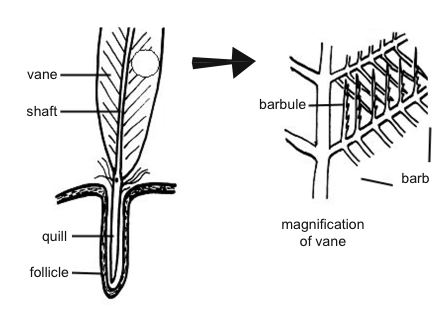
One of the reasons birds can fly has to do with the tiny barbs on each feather—hundreds, even thousands of them per feather, depending on the size. The barbs zipper-lock together, providing an airtight seal on the bird’s wings. Without that seal, birds would not be able to achieve lift (1).


The Almighty Engineer of the universe was mindful of every detail necessary so his avian creations could fly. And that’s just one small example out of millions in nature, proving:


God pays attention to detail.


But creation is not the only theater where his attentiveness is on display.

Our detail-oriented God has been active throughout recorded history. Out of countless illustrations, consider these three from the American Revolution:


Bunker Hill, Boston, Massachusetts, June 17, 1775.  “Don’t shoot till you see the whites of their eyes” was the pre-battle cry that day and quickly became famous.


  • The British brought the wrong-size cannonballs to the Battle of Bunker Hill. Though officially the Americans lost this conflict (they ran out of ammunition), the British casualties more than doubled those of the patriots (2).
  • Perfect weather in March, 1776 assisted the Americans in their move to free the citizens of Boston from British occupation. Frozen ground made it relatively easy to move 350 ox carts of heavy wooden obstacles (in one night!) so they could fortify their position above Boston at Dorchester Heights. In addition, ground fog in the valley hid the patriots from view and a strong wind in the heights helped carry away the sound of their movements (3).
  • On Christmas Eve of 1776, Hessian Colonel, Johann von Rall was playing cards in Trenton, New Jersey when he received a dispatch: Washington’s army was nearing the city. But Rall stuffed the message in his pocket, unread, and by evening’s end, forgot it was even there. Washington’s attack on the 26th was a complete surprise and a victory for the patriots (4).


(Washington inspecting the captured colors

after the Battle of Trenton,

by Edward Percy Moran, 1914.)


General Washington wrote to William Gordon in March, 1781: “We have…abundant reasons to thank Providence for its many favorable interpositions on our behalf. It has at times been my only dependence, for all other resources seemed to have failed us” (5).

Our own lives give similar proof of God’s attention to details, when we’ve received just what we needed at the precise time we needed it.

Years ago we needed a new refrigerator. The budget was tight, and such a large expense would normally have required a withdrawal from our paltry savings account.

But! We “happened” to receive an unexpected state income tax return—from a couple of years previous. It was sufficient to purchase the refrigerator with a few dollars to spare.

Yes, there are those who would see such events as coincidences. But when circumstances of protection, provision, and guidance occur again and again, the explanation of simple happenstance proves insufficient.


George Washington was right: we have abundant reasons to thank God for his many favorable interventions.

Think of all the scriptures that assure us of his wise administration of all things and his loving care of all creatures. I find great comfort in the knowledge that:

  • I am always sheltered under his wings (Psalm 61:4).
  • “[He] works out everything in conformity with the purpose of his will” (Ephesians 1:11).
  • “From him and through him and to him are all things” (Romans 11:36).


Do I always rest peacefully in these truths? No. When troubles assault, it can take some time for my emotional state to catch up to my statements of faith.

However! Even though I may quake at the uncertainties in front of me, I can still choose to trust my attentive Father who will see me through—down to the last detail.

*     *     *     *     *     *     *     *     *     *

I praise you, Jehovah-sabaoth, the Lord of hosts. All power and authority belong to you, all things are under your control—even the seemingly insignificant details of my life. How thankful I am to be one of your sheep, under your care, my great, attentive Shepherd.

I pray that you, Jehovah-sabaoth, bring all power and authority to bear upon Hurricane Irma, tearing toward Florida as I type.  Yet even in the face of uncertainty, your people are grateful.  You are in control and every person is in your attentive care, O Great Shepherd. Thank you for watching over them as only you can.


Notes:

  1. Anne Graham Lotz, Refresh My Heart, Word Publishing, 1998, p. 77.
  2. www.wnd.com, “Generals Marvel at God’s Intervention in American History,” Bill Federer.
  3. https://fsu.digital.fivc.org
  4. www.warfarehistorynetwork.com
  5. www.wnd.com, “Generals Marvel at God’s Intervention in American History”, Bill Federer.


(Art & photo credits:  www.wikipedia.com; http://www.flickr.com; http://www.wikipedia.com (2); http://www.wikimedia.com; http://www.dailyverses.net.)


The Present

“Yesterday is history, tomorrow is a mystery.

Today is a gift which is why we call it the present.”

–Bill Keane

(creator of the comic, Family Circus)

During my years as a fourth grade teacher, I used this Bill Keane quote to review with the kids the basic three tenses of the English language. The humor added a bit of fun; the truth of Keane’s statement added a bit of wisdom.

Even nine- and ten-year olds can benefit from the realization that:

Yesterday is past. We’re better off if we choose not to hold on to the hurts and disappointments of days gone by.

Tomorrow is a mystery; ‘best not to dwell on worrisome possibilities that most likely won’t happen.

Today is a gift from the ultimate Gift-Giver, God himself, and there is much to savor and appreciate.

The problem is, I forget. Those moments when I’ve marveled, laughed, or sighed in contentment are lost by day’s end in the blur of busy-ness.

So over the last few months I’ve been recording small blessings worthy of celebration—at least one per day, sometimes more.

For example:

  • While I was exercising, a bustling little wren nodded and bobbed from her log-perch outside the window. She cheered me on.
  • A glowing pink sunrise in the east greeted a crescent pearl moon to the west–beauty shouting praise into the silence of dawn.

  • Our four-year old granddaughter, Elena, found an instant friend at the playground. The two girls gleefully ran back and forth several times across a field, holding hands. They perfectly illustrated Celeste Palermo’s observation, “Children are high-energy guides from Heavenly Tours, Inc.” (1).

  • A woodpecker extravaganza occurred in the backyard when three different species congregated at the same time—a flicker, a red-bellied, and a hairy.

(Hard to tell this guy is a red-bellied woodpecker.)

  • I spent a quiet hour reading on the deck one evening, reveling in heavenly weather and a bowl of sublime strawberries. All senses were happily engaged—mind and spirit, too.

You’ll notice there’s nothing particularly exciting on this list. No exotic locations, no momentous adventures.

Just affirmations that right now is good and quiet moments afford their own distinctive treasures.

It’s been great fun collecting these small snippets of surprise, exhilaration, and solace each day. I’m learning to carve the extraordinary out of ordinary and find the holy among the humdrum.

The Gift-Giver himself resides among his gifts. And as I savor selected moments of my days, I taste and see that he is good (Psalm 34:8).

*     *     *     *     *     *     *     *     *     *

Thank you, Father, for this moment, right here, right now, that includes happy trees outside my window, clapping their hands in praise to you. I thank you for the soft cloak of quiet around me, and the nest of memories surrounding my desk, woven from things old, bestowed, and beloved. “The earth is full of your loving kindness, O God”—even in my little office.

(Isaiah 55:12, Psalm 33:5b)

What moment from today will you savor?  Tell us about it in the comment section below!

Note 

  1. Celeste Palermo, The Coffee Mom’s Devotional: A Rich Blend of 30 Brief and Inspiring Devotions, (Revell, 2009), 154.

(Art & photo credits:  www.wikipedia.org; http://www.wikimedia.com; http://www.maxpixel.freegreatpicture.com; http://www.wikimedia.com; http://www.pxhere.com; http://www.wikimedia.com; http://www.pixabay.com; http://www.heartlight.org.)

When the House is Quiet

Impressions Becoming Expressions

Mitch Teemley

The Power of Story

Still Traveling

Impressions Becoming Expressions

Living Our Days

Gaining a heart of wisdom

He Said What?!

I'm Patty, and my husband and I are living with our adult son who has autism and epilepsy. I love sharing lessons learned from life around me, especially life with Aaron.

Meditations of my Heart

Impressions Becoming Expressions

Linda Stoll

Impressions Becoming Expressions

Signora Sheila

Notes on Life, Faith & Italy

Heidi Viars

Finding the Image of God