Feeds:
Posts
Comments

Posts Tagged ‘Christianity’

“Hey James–I like your hat,” declared Henry Clifford as he sauntered up to the smaller boy on the playground.

James’ heart began to pound.

I need a hat,” Henry continued, and the bully reached for it.

James dodged and began to run. Unfortunately, the direction away from Henry took him toward the street. James didn’t see the bread truck coming; parked cars blocked his vision. Neither did the driver see the boy.

James crashed into the vehicle with his head, denting his forehead like an eggshell hit with a spoon.

The surgeon warned James’ parents before attempting to remove bone fragments. “Prepare yourselves; there’s a strong possibility of brain damage.”  

But the boy surprised everyone, sustaining no loss of function.

James endured three weeks in the hospital, followed by six months of recuperation at home.

He was fitted with an aluminum plate to wear over the wound, held in place with an elastic band. The doctor told him his head would remain dented, and he’d need to wear the protective head-gear for the rest of his life.

Of course, sports were out of the question, and as James grew up in the village of Twyning, England, he became increasingly withdrawn. He spent his leisure hours reading and writing stories.

James had always loved books; his mother taught him how to read before he started school. He especially enjoyed Agatha Christie. The year of the accident, 1933, James read all nine mysteries she’d written thus far. He was seven years old.

At age eleven, James balked at his parents’ continued protectiveness. Granted, he couldn’t play sports, but couldn’t he at least ride a bicycle? All the other boys his age had them. And why wear the protective plate (which generated plenty of teasing) if he couldn’t do anything anyway?

James was sure his arguments would win his parents over. The morning of his birthday he expected to come downstairs to shiny chrome spokes and gleaming Whizzer Maroon fenders.

Instead, sitting atop the dining room table was a second-hand typewriter. James’ mother stood in the kitchen doorway, a pained expression on her face.

“Please understand, son. If you injured yourself again, it could be  even more serious. We just can’t take that chance.”

James’ father helped him heft the machine to his room where curiosity soon got the better of him. He began to type one of his stories[1]. And . . .

“It proved to be his best present and the most treasured possession of his boyhood”[2].

At age fifteen James refused to wear the protective head-gear any longer. If he was injured again, so be it.

James excelled in school and won a scholarship to Oxford University.

One evening he attended a church service nearby. Though James had read C. S. Lewis’ Mere Christianity and The Screwtape Letters, James realized he didn’t know Jesus. At the speaker’s invitation, he went forward to ask Christ into his life.

After graduation James taught at a college in London, but after two years, felt the need of further education and returned to Oxford.

James earned his master’s degree and was ordained deacon in the Church of England. He also wrote his first published article for the Evangelical Quarterly.

In 1954 James earned his doctorate from Oxford and married Kit Mullett, a nurse he’d met two years before. They would subsequently adopt three children.

Over the next twenty-five years James served in academic positions at three colleges, including Oxford, and as superintendent of an evangelical research center.

Always he was writing–publishing essays, articles, pamphlets, and dozens of books.

In the 1960s an editor asked James to write articles for Evangelical Magazine. He wrote 720 of them over the next five years. Some of those articles became his most popular book, published in 1973, with more than a million and half copies sold.

James and Kit relocated to Vancouver, Canada in 1979, for James to teach at Regent College. The next year James became senior editor of the magazine, Christianity Today while still maintaining his position at Regent.

Regent College today. Photo by Ken McAllister

Regent College today. Photo by Ken McAllister.

In 1997, Crossway Books invited James to serve as general editor of The English Standard Bible, published in 2001. He felt this was the most important work of his life.

Upon James’ death in 2020, “readers of Christianity Today identified him as second only to C. S. Lewis among the most influential theological writers of the twentieth century”[3]. No doubt many of them had read that best seller, Knowing God.

And the influence they spoke of surely began to take root with that typewriter James hadn’t wanted.

But look what God did for J. I. (James Innell) Packer. Look what God did through him.

https://www.azquotes.com/author/17128-J_I_Packer


[1] This story based on fact. Our pastor shared a brief version last Sunday; curiosity led me to learn more. See https://www.thegospelcoalition.org/blogs/justin-taylor/j-i-packers-11th-birthday-the-tale-of-the-bicycle-and-the-typewriter/

[2] Alister McGrath, J. I. Packer: A Biography, 6.

[3] https://www.samstorms.org/enjoying-god-blog/post/the-life-of-j-i-packer–1926-2020-

Additional source: https://www.thegospelcoalition.org/blogs/justin-taylor/j-i-packer-1926-2020/

Image credits: http://www.wallpaperflare.com; http://www.flickr.com (3); http://www.wallpaper.com; http://www.commons.wikimedia.org; http://www.azquotes.com.

Processing…
Success! You're on the list.

Read Full Post »

Since Charlie Kirk’s tragic death last week, perhaps you’ve heard people ask, “Why didn’t God stop Tyler Robinson?” Or, ”Why is so much violence occurring in our country? Why does God allow such suffering [1]?”

Perhaps you’ve been wondering yourself.

But even if we knew the answers to all of our why questions, we’d still want to ask God: Couldn’t you have accomplished your purpose some other way?

Better than seeking answers (that likely won’t satisfy), we’d settle our spirits more effectively if we sought perspective, built our hope and faith with God’s promises, and encouraged our hearts with praise.  

See Job’s example, Job 1:20

Perspective

I appreciate this wisdom from Eugene Peterson:

Evil must be faced, he says, raising the question, how? The Bible tells us: with prayer, with goodness, and with soft (not incensed or arrogant) responses to anger [3].

Peterson also asserts God uses evil for good. What possible good could God accomplish from Charlie Kirk’s assassination?

Just since last Wednesday, there are more than one million new subscribers to Charlie’s organization, Turning Point USA, and more than 54,000 new requests for Turning Point chapters at high schools, colleges, and universities across the country.

I pray that as participants hear about Charlie’s faith, his passion for the institutions of marriage and family, as well as his irrefutable logic in support of biblical values, they too will accept Christ into their lives, to experience the God-enhanced life he offers [4].

Promise

Charles Spurgeon would have us understand:

What might those stars of promise include?

  • Psalm 9:9-10 “The Lord is a refuge for the oppressed, a stronghold in times of trouble. Those who know your name trust in you, for you, Lord, have never forsaken those who seek you.”
  • Romans 8:31 “If God is for us, who can be against us?”
  • Romans 16:20 “The God of peace will soon crush Satan under your feet.”

We can also be encouraged by such scripture-based affirmations as:

  • “Underneath are the everlasting arms, full of sustaining comfort and strength” [5].
  • “I know nothing which can so comfort the soul, so calm the swelling billows of grief and sorrow, so speak peace to the winds of trial, as a devout musing upon the subject of the Godhead” [6].
  • “The devil may land a punch or two. He may even win a few rounds, but he never wins the fight” [7].

Praise

Even though it’s counterintuitive to praise God when we’re distressed, it’s a powerful way to lift our spirits [8].

Perhaps we could begin . . .

I praise you, Lord, for drawing especially near to those who are hurting. You DO make your presence known in palpable ways. And to sense your presence is to experience inexplicable peace and comfort. I pray this for Charlie Kirk’s family and friends.

I praise you also for your Word that ministers consolation and strength. May we all avail ourselves with renewed appetite for your truth.

Psalm 34:18; 139:7-10; John 16:33;

Lamentations 3:32-33; Psalm 119:49-50;

Proverbs 15:14

P.S. Continue your praise, guided by the free resource offered below, as part of our newsletter.


[1] Two worthwhile books that consider such questions: The Problem of Pain by C. S. Lewis and Os Guinness’ book, Last Call for Liberty.

[2] Excerpts from pp. 55-57 of Run with the Horses.

[3] Luke 6:27-28; Proverbs 15:1

[4] John 10:10

[5] Oswald Chambers, My Utmost for His Highest, 145; Deuteronomy 33:27

[6] Charles Spurgeon, from a sermon, “The Immutability of God”; Isaiah 26:3

[7] Max Lucado, Grace for the Moment, 91; 1 John 3:8

[8] Isaiah 61:1-3

Image credits: http://www.picryl.com; http://www.canva.com; http://www.heartlight.org; http://www.canva.com (2); http://www.pexels.com.

Processing…
Success! You're on the list.

Read Full Post »

She stands before the judge, tears filling her eyes, as one misdeed after another plays out on a Jumbotron for all to see.

He waves his arm toward the mammoth screen. “The evidence is clear,” he thunders. “You’ve committed numerous indiscretions. What do you have to say for yourself?”

Her response is barely audible. “I am guilty as charged, your Honor.”

“Highly disappointing,” he asserts.  “However, my Book of Life does indicate you accepted the gift of eternal life made possible by my Son, so you will be allowed to enter heaven, but of course, your place will be far to the rear.

“You can also expect far fewer blessings in my celestial kingdom, compared to those who have lived truly saintly lives. You understand, of course.”

She nods and bows her head in shameful misery.  

Such a scene is imaginary, of course, but reflects the fear and foreboding I used to feel toward the Judgment Day to come, when it’s my turn to face the Judge of all the earth.

After all, he is holy and I am a wretched sinner—even as a Jesus-follower. And though God has provided the way for me to escape hell when I die, he’ll have every right to reprimand me, even banish me to some far corner of heaven.

Perhaps you’ve been plagued by such thoughts as well. If so, have I got good news for YOU!

First, consider this passage from a praise-psalm of King David:

A rather surprising reason to rejoice, agreed?

David goes on to explain: “He will judge the world in righteousness and the peoples in his faithfulness” (v. 13).

Could God judge any other way? No. He is holy and perfect in all that he does and says.

That means all his righteous and faithful perfections will come into play as he fulfills this role: his compassion and grace, wisdom and discernment, goodness, patience, and more.

We can rest assured: on Judgment Day God will not divorce himself from these attributes and become a stern, vindictive, and unforgiving judge.

He is for us, not against us [1].

In addition we mustn’t forget that God is rich in mercy [2]–mercy “so great that you may sooner drain the sea of its water, or deprive the sun of its light, or make space too narrow, than diminish the great mercy of God”–Charles Spurgeon [3].

Another factor to keep in mind: the affirming promise the Apostle Paul included in his letter to the Romans. For clarity’s sake, here’s the Amplified Version:

“There is now no condemnation [no guilty verdict, no punishment] for those who are in Christ Jesus [who believe in Him as personal Lord and Savior]” [4].

Elsewhere Paul makes clear: the charge of our legal indebtedness has been cancelled.

I repeat, cancelled.

In fact, our sins are removed as far as the east is from the west [5].

So how might that opening scenario proceed differently for that Christ-following woman, standing before the Judge of all the earth?

He may open his Book of Life, find her name, and announce, “Ah! Here you are! Your debt has been fully paid by my Son.”

Then perhaps he’d lean forward on his forearms and smile warmly upon her. “Proceed through those doors to your right, my child, and enjoy forever my complete peace, joy, and blessing!”

 *     *     *     *     *     *     *     *     *     *

I praise you, O God, for your gift of salvation, not granted grudgingly because you feel sorry for us wretched creatures, but because you love us. That love is manifested by your kindness and compassion in spite of our sinful tendencies.

And now we can stand in a place of confidence and peace as we anticipate our homegoing to heaven—with no fear of retribution. Thank you, Lord God, our Father!

(Romans 5:8; Psalm 103:8-14; John 5:24)

P.S. Though all those who believe in Christ will receive all the benefits of eternal life in heaven, the rewards we receive for godly behavior will differ [6].

What might those rewards include and how do we earn them? Topics for another day!


[1] Romans 8:31b

[2] Ephesians 2:4-5

[3] Charles Spurgeon (1834-1892), British preacher and author

[4] Romans 8:1 AMP

[5] Psalm 103:12

[6] John 3:16; 1 Corinthians 2:9; 3:8

Image credits: http://www.itoldya420.getarchive.net; http://www.stockvault.net; http://www.canva.com (3); http://www.stockcake.com.

Processing…
Success! You're on the list.

Read Full Post »

A view from Signal Hill

Frank Laubach trudged up Signal Hill again, despair shrouding his heart. After patient waiting and great effort he’d reached an impasse, with no path forward toward success.

Frank had spent seven years earning college and seminary degrees, married Effa Seely in 1912, and together they’d sought to follow God’s plan and become missionaries.

In 1915 the couple traveled to the Philippines, eager to work with the Muslim Moro people on Mindanao.

Mindanao is the large island to the south among the Philippines.

But just a few weeks after their arrival, the U.S. Army post commander stationed there required them to leave, insisting the area was too dangerous for Christians.

First they moved to north Mindanao, and ministered among the people there. In 1922, Frank and Effa moved their growing family to Manila where Frank became dean of Union College and established churches.

Surely he could take satisfaction in these accomplishments. But his heart’s desire was still set on working among the Moros.

Nearly eight years later, the trouble in southern Mindanao finally subsided. Frank left his family in Manila and returned, only to be rejected wherever he went. No one would listen to Frank, and after a month he had to admit defeat.

Moro people of Mindanao

One evening atop Signal Hill, Frank poured out his heart to God again and asked, “Why have my efforts failed?”

And this time God answered, identifying the problem. Frank saw the Moro people only as potential converts to Christianity, not as people to love.

“You feel superior to them because you are white,” God said. “If you can forget you are an American and think only how I love them, they will respond.”

The truth compelled Frank to pray, “Drive me out of myself, Lord. Come and take possession of me and think your thoughts in my mind.”

God then revealed his course of action for Frank. “If you want the Moros to be fair to your faith, be fair to theirs. Study the Koran with them.”*

The next day Frank told the Moro priests he wanted to study the Koran. Eagerly they talked with him, and Frank began to build relationships with these men, sharing the good news about the great prophet they already knew: Jesus.

Most of the Moro people couldn’t read. Frank knew that literacy would be important for teaching about Christ, so he worked to provide a dictionary of their language, Maranaw, and established a school. The Moros expressed enthusiastic gratitude.

Frank procured a printing press and devised an adult literacy program that proved highly successful. But as the Great Depression reached the Philippines, the program seemed destined to collapse. How would they pay for materials?

Frank’s solution: “Each One Teach One.” Everyone who learned to read was urged to teach someone else, using the materials they had. And as Frank taught, he shared about Christ.

Over the ensuing years, Frank wrote books about his teaching methods which were adopted around the world. An estimated sixty million people have learned to read, thanks to Frank’s techniques.

But more important are the thousands of people he brought into a rich experience with God——through his other writings.

For Frank, that night on Signal Hill was the beginning of growing intimacy with God, revealed in his subsequent journal entries, articles, and books.

One habit in particular transformed his life. Like Brother Lawrence three centuries before, Frank sought to live moment by moment in relationship with God.

Frank’s Letters by a Modern Mystic trace the beginning of this journey toward intimacy.

“I resolved that I would succeed better this year with my experiment of filling every minute full of the thought of God than I succeeded last year” (1-3-1930).

“This year I have started out trying to live all my waking moments in conscious listening to the inner voice, asking without ceasing, ​’What, Father, do you desire said? What, Father, do you desire done this minute’” (1-20-1930)?

“It is exactly that ​‘moment by moment,’ every waking moment, surrender, responsiveness, obedience, sensitiveness, pliability, ​’lost in His love,’ that I now have the mind-bent to explore with all my might” (1-26-1930).

So began his life-long practice of constant, blessed connection with his heavenly Father, which he eagerly desired for others.

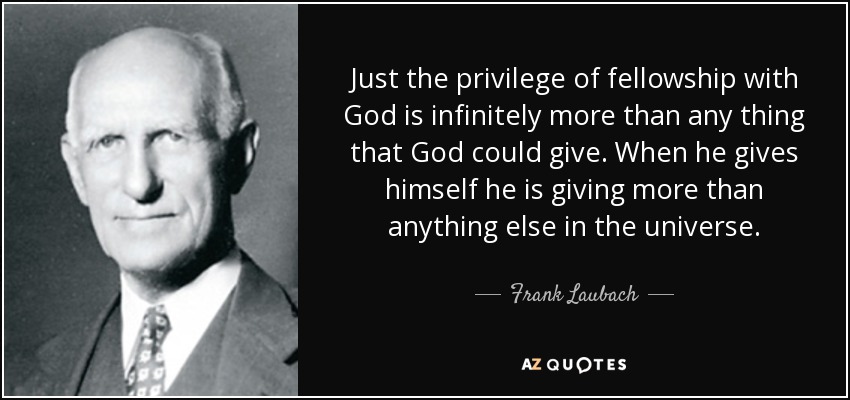
https://www.azquotes.com/quote/803882

“Why do I harp on this inner experience? Because I feel convinced that for me and for you who read there lie ahead undiscovered continents of spiritual living compared with which we are infants in arms” (Frank Laubach, 1884-1970).

And what will result from such a pursuit? No doubt we’ll experience a level of shalom in the presence of God that for now we can only imagine.

Let’s explore! Next week we’ll consider Frank’s suggestions that will take us to those “continents of spiritual living!”


*https://www.ananda.org/blog/laubach-christian-literacy-god/

Additional Sources:

https://www.jcsvillage.org/blog/2017/3/23/frank-laubachs-great-experiment

https://renovare.org/articles/living-each-moment-with-a-sense-of-gods-presence-frank-laubach

Image credits: http://www.flickr.com; http://www.picryl.com; http://www.flickr.com; http://www.azquotes.com.

Processing…
Success! You're on the list.

Read Full Post »

Twenty-one-year-old James Gribble, a streetcar conductor, scanned the avenue ahead, but his mind swirled with visions of the future. Life was treating him well in Philadelphia with its many amenities in 1904, compared to his hometown of Mechanicsburg, PA. What opportunities might lie ahead?

Then it happened. A woman stepped off the still-moving trolley, caught her skirt under a wheel, and was pulled under. She died at the scene.

James agonized over the terrible accident. “Oh God, deliver me, and I’ll serve you!” he wrote in his journal.

That Sunday James attended church and accepted Jesus into his life. That evening he was baptized.

On Monday while reading his Bible, James came to Matthew 28:19a:

He told his pastor, “I think God wants me to become a missionary.”

For several years James received mentoring and instruction, then joined the African Inland Mission. To his delight, the team included a pretty young doctor, Florence Newberry. In 1908 they established a mission station in West Central Africa and started ministering to the nearby tribes.

The station was located in what is now the Central African Republic, south of Chad.

James wanted to become better-acquainted with Florence, but patients kept her busy from morning till night. Suddenly genius struck. James could pretend he was sick!

During the appointment he suggested courtship. Florence preferred they remain friends, still devastated over a previous beau uninterested in foreign mission work.

Twice more over the next four years James would approach her about courtship; twice more she declined.

James and another missionary traveled inland to establish a new station.

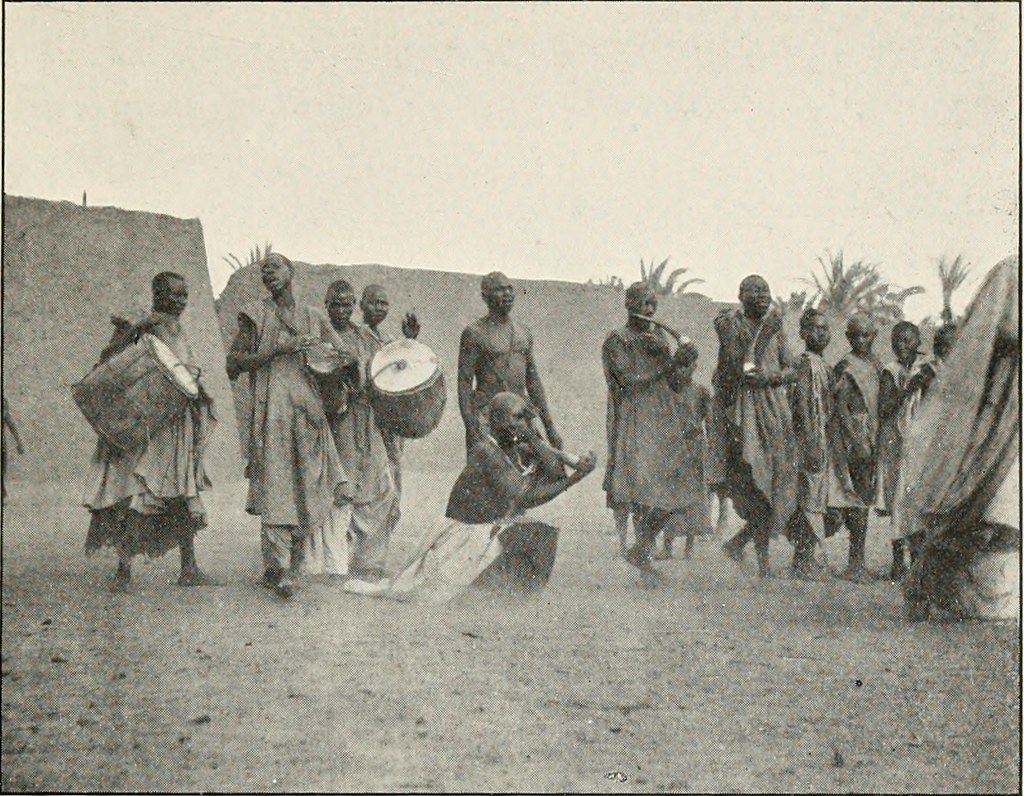
West African tribesmen, 1912

Soon his partner became ill and had to return to base camp, then James succumbed to black water fever. He expected to die.

Afterward James wrote about the vision God gave him on his sickbed—a panoramic view of the tribes of West Central Africa. God said, “Thou shalt be instrumental in carrying the gospel to these.” James knew then he’d survive.

During a prayer vigil in 1912, Florence’s thoughts turned to James. Her heart had warmed toward the trustworthy and kind missionary, so passionate about sharing Christ with the African people. Florence sensed the Spirit whispering to her, “Why not?”  

The two were married within a few months.

Sometime later Florence developed appendicitis and required hospitalization. For thirty days they traveled the three hundred miles to the nearest hospital.

As she slowly recovered, the doctor told James, “You must take her back to America. She cannot live in the tropics.”

Florence did return home and six months later James followed. They lived in Chicago for several years while Florence regained strength. Their only child Marguerite was born there in 1915.

Daily James would pray over a map of Africa. He found his attention drawn to a town named Bozoum, in Ubangi-Shari (now the Central African Republic). He wondered why.

Bozoum is located in the northwestern province of Ouham-Pende.

The couple shared their hope with area churches: to establish base camps across central Africa as a barrier against encroaching Islam. When they returned in 1918, two nurses and another family joined them.

The group desired to enter a French-controlled area, but it took eighteen months to receive permission. They named their base, Camp-Wait-Some-More.

Finally able to move on, they arrived in Carnot. While waiting there another eighteen months, they spent their time learning the language and praying.

A new official arrived, and James made an appointment with him.

He asked James, “Where do you intend to set up camp, now that you’ve received permission?”

Permission?! James was stunned. “Where would you recommend?”

Then came Surprise #2. “I think Bozoum would be a good place.”

Now James knew why God had inspired him to pray particularly for this town.

In 1921, Florence and James became ill again. She had to return to the States, taking their daughter with her. Eighteen months later Florence traveled back to Africa, but without Marguerite. Though an anguishing decision, the couple determined she should remain in America to attend school.

In 1923 a young recruit was due to arrive, but he died within miles of reaching their mission station, causing more heartache.

James wrote:

Not long after, James succumbed to black water fever again; this time the forty-year-old did not survive.

He’d previously written to Florence, “I shall be content with the lowest seat in heaven if only there I may sit and see the redeemed of the Lord come in from those fields where I have a been a pioneer missionary.”

Except James had not witnessed one person becoming a Christ-follower during his years in Africa.

Some might say those years of pain and hardship had accomplished nothing. And what about God’s promise: ““Thou shalt be instrumental in carrying the gospel to these?”

James had been instrumental, by bringing others to join in their work. Even his own daughter returned to Africa, ministering with her husband for thirty-one years.

James had served as a foundation builder—constructing base camps, encouraging others, and giving himself to prayer. He followed in the footsteps of the Apostle Paul:

Today, 70% of the population of the Central African Republic are Christians.

In my mind’s eye I see James in heaven, greeting saint after saint from West Central Africa, just as he imagined. But instead of sitting, I think James is standing and celebrating with all his heart.

Sources:

Photo credits: http://www.flickr.com; http://www.rawpixel.com; http://www.picryl.com; http://www.flickr.com; http://www.commons.wikimedia.org; http://www.nara.getarchive.net; http://www.commons.wikimedia.org.

Processing…
Success! You're on the list.

Read Full Post »

After the cold starkness of winter, spring gleefully reawakens our senses with her: 

  • Effusion of colorful flowers
  • Scents of hyacinth, lilacs, and freshly-mowed grass
  • Symphony of bird song
  • Flavors of tender asparagus, luscious strawberries, and tart rhubarb
  • Textures of furry pussy willows, fuzzy moss, and silken magnolia petals

Praise God for our abilities to see, smell, hear, taste, and touch, allowing us to enjoy Spring in so many ways!

Even better, those abilities allow us to meet God in at least five ways.

Our five senses help us understand God more clearly.

Consider how the far-flung stars and planets speak of his power; the clever camouflage of lizard, fawn, and frog display his wisdom; the endless variety of colors, shapes, and textures prove his creativity; the instinctive parenting skills of adult animals demonstrate his goodness.

Our five senses help us experience God’s glory more profoundly.

  • We can see his power at work in the transformation of lives [1].
  • We can hear his wisdom in godly men and women, such as Thomas á Kempis or Corrie ten Boom (just two among millions!):
  • We can feel God’s loving touch through a hug that conveys compassion, a worship song that quickens the heart, or a landscape vista that gives us glory-goosebumps.
  • We can taste his goodness in all the variety of blessings we enjoy (Psalm 34:8).
  • We can smell the fragrance of his sweet presence (Psalm 45:6-8)—if we pay attention.

Our five senses help us connect with God more intimately in solitude.

Many people call it Quiet Time—moments they spend with God in scripture reading/study, prayer, perhaps journaling, and/or listening to peaceful worship music.

It’s in the quiet we begin to see important realities of the spiritual realm, hear God’s voice within our spirits providing wisdom and encouragement, feel his presence more palpably as we touch our knees to the floor in prayer, and again, smell the fragrance of his sweet presence as he meets us in our place of solitude.

   Our five senses help us worship God more intently in community.

Jerry Kerns [2]

Kerns would have us fully engaged–first to bless God’s heart and then to elevate the experience for us also.

How?

  • See the majesty and splendor of God on his throne–in your imagination. This is who you are worshiping [3]!
  • Hear the music and join in with grateful, enthusiastic praise [4].
  • Feel the presence of God as you pray. Try placing your hands on your lap, palms up—open and empty, symbolic of humility and receptivity [5].
  • Taste the bread and wine/juice with prayerful gratitude. Jesus is our Bread of Life who satisfies our spiritual hunger, who shed his blood for us so we might one day enjoy heaven with him. May we never become desensitized to the magnitude of his sacrifice.
  • Smell the fragrance of God’s saints as they leave the perfume of kindness, uplift, and joy in their wake.

Our five senses help us live out our faith more joyfully.

When our heart’s desire is to serve God by serving others, we’ll aspire to live so people:

  • See the Light of Jesus in our choices, behavior, and attitudes (Matthew 5:14-15)
  • Hear us speak truth, wisdom, and encouragement (Proverbs 10:20-21)
  • Feel the love of God in our interactions with them (John 13:35)
  • Taste the flavorful salt of God’s divine grace within us (Matthew 5:13)
  • Smell the fragrance of Christ in our lives (2 Corinthians 2:15-16)

 And as we engage all five senses in these five ways, what will happen?

We’ll bring more glory to God and enjoy more fully the satisfying, abundant life his Son provides.

That sounds mighty good to me. You too?


[1] Stunning examples include Jake DeShazer (https://nancyaruegg.com/2016/08/18/a-miracle-of-forgiveness/), Johnny Hart (https://nancyaruegg.com/2018/08/09/johnny-and-jesus/), and Isobel Kuhn (https://nancyaruegg.com/2024/04/11/goodness-and-mercy-followed/).

[2] https://www.experiencingworship.com/articles/general/2001-7-great-quotes-on-worship.html

[3] See: https://nancyaruegg.com/2023/07/06/in-awe-of-gods-magnificence/

[4] See: https://nancyaruegg.com/2015/09/07/when-worship-loses-the-wonder/

[5] See: https://nancyaruegg.com/2015/03/23/the-ultimate-delight/

Art & photo credits: http://www.pixabay.com; http://www.pexels.com; http://www.goodfon.com; http://www.stockvault.net; http://www.canva.com; http://www.pickpik.com (2); http://www.heartlight.org.

Read Full Post »

Many of those who haven’t asked Christ into their lives yet will still admit: historical evidence proves Jesus once lived on earth. They’ll agree he was a good man who taught wise principles to live by.

But even they might wonder: Why would God allow his Son to suffer such a cruel death at the hands of hateful men?

Welsh pastor and author Selwyn Hughes provided this insightful answer: what seemed to be the worst thing that could happen to Jesus—crucifixion—turned out to be the best thing for him [1].

That sounds ludicrous at first reading until we consider what Christ has enjoyed since returning to heaven, and what he’s looking forward to in the future–all because he fulfilled his mission at the cross.

As he suffered for us, Jesus kept in mind the joys set before him (Hebrews 12:2):

  • Sitting in the ultimate place of honor in the universe, at the right hand of the Majesty on high (Hebrews 1:3b).
  • Angels acclaiming him, saying, “Worthy is the Lamb who was slain, to receive power and wealth, wisdom and strength, honor, glory and praise” (Revelation 5:12).
  • God appointing him to be head over everything for the good of the church (Ephesians 1:22 GNT).
  • Being given authority and sovereign power that will last into eternity (Daniel 7:14).
  • All kings bowing before him one day, and all nations serving him (Psalm 72:11 NLT).
  • All nations and people of every language worshiping him (Daniel 7:14).
  • Being given the name above every name (Philippians 2:9).

And why is that last fact significant?  Jesus is the One and only Son of God, the only Redeemer and Savior, the only Christ and Anointed One of God. “His rank, his titles, his dignity, are above all others” [2].

Perhaps no one has explained the significance of Jesus’ name(s) more eloquently than theologian Charles Spurgeon:

Jesus’ name is “the sum total of all delights. It is the music with which the bells of heaven ring; a song in a word; an ocean for comprehension; although a drop for brevity, a matchless oratorio in two syllables; a gathering up of the hallelujahs of eternity in five letters” [3].

Charles Spurgeon

But Jesus doesn’t want to enjoy these accolades and privileges alone. Max Lucado wrote:

Jesus desires for us to be one with him, continually availing ourselves of all he has to offer.

Even more astonishing? Because of what Christ accomplished on the cross, we who’ve accepted Jesus into our lives get to share in his power and wealth, wisdom and strength, honor and glory!

For example:

  • The immeasurable and surpassing greatness of God’s spiritual POWER is in us who believe (Ephesians 1:19 AMP).
  • He supplies spiritual RICHES and blessings that cannot be fully understood or measured (Ephesians 3:8-9).
  • Christ’s word with all its WISDOM lives within us so we can experience his joy (Colossians 3:16; John 15:10-11).
  • We’re equipped for anything and equal to anything, through Christ who infuses us with inner STRENGTH (Philippians 4:13 AMP).
  • As beloved children adopted into God’s family through Christ, we are precious in his sight (Isaiah 43:4). He’s crowned us with HONOR and GLORY (Psalm 8:5; Romans 2:10), including the honor of representing Jesus in this world, and the glory of his character at work within us [4].

On this eve of Good Friday, we’d do well to remember:

We can pick up our own cross, inspired by Jesus’ example, empowered by God’s Spirit within us, and encouraged by the glorious outcome yet to be [5].

The worst circumstances we might face will become God’s best in our lives too.


[1] Every Day Light, 285.

[2] Barnes’ Notes on the Bible at www.biblehub.org

[3] Morning by Morning, 41.

[4] See also 2 Corinthians 5:17, 20

[5] To “pick up our cross” means trusting in God even when suffering comes our way, putting aside our self-will and embracing God’s will instead.

Photo credits: http://www.freebibleimages.com; http://www.canva.com (2); http://www.quotefancy.com; http://www.canva.com; http://www.pexels.com.

Read Full Post »

Years ago I served as a short-term missionary in Ecuador. One of my first meals there included a fruit I’d eaten many times back home in Illinois, although more often from a can than the produce section.

But that day the golden wedges provided an uber-delightful surprise: more flavor, more sweetness, and less acidity than any I’d enjoyed in the States. It was as if I was eating a different fruit.

That’s because Ecuador grows some of the world’s best pineapple. Their location on the equator and the volcanic soil of the Andes Mountains provides perfect growing conditions. I gained new appreciation for what pineapple could be.

There’s another kind of fruit that many of us are familiar with, but it’s not the kind we eat. It’s the fruit of the Spirit, listed in Galatians 5:22-23. Many of you can probably recite its nine aspects:

What follows are brief thoughts on each. I pray we gain new appreciation for what this fruit can be—perhaps even uncover a surprise or two.

LOVE

If you were asked, what’s a powerful, practical way to express love for others, what would you say? Theologian John Calvin suggested intercession [1]. To pray for a person is to love that person.

Who might you love with a prayer today?

JOY

Scripture tells us to “rejoice always” [2], but that’s hard to do when problems and pain come our way.

Selwyn Hughes offers this perspective: Even though our difficulties may have begun with the devil, by the time they get to us and through us, they will have a divine purpose running through them [3].

Now that we can joyfully celebrate.

PEACE

“The truly thankful person is a truly peaceful person,” asserts Lysa TerKuerst [4]. And Isaiah 26:3 suggests why:

What better way to fix our thoughts than with thanksgiving? And as we affirm God’s blessings, peace will warm our hearts.

PATIENCE

Patience blossoms best in the soil of God’s promises, as we wait for him to intervene. His promises cover every circumstance; our part is to know them and believe, then patiently anticipate their fulfillment.

Are you clinging to a scripture-promise today? Turn it into a prayer of faith, hope, and patience [5].

KINDNESS

We can grow this attribute with one action: meditate on God’s kindness to us [6]. Meditation fosters appreciation; appreciation fosters emulation, and soon we find God’s kindness becoming more a part of who we are.

GOODNESS

This trait often seems out of reach. But instead of trying harder to be good, author Philip Yancey recommends: simply love God. “A person who truly loves God will be inclined to please God” [7].

Also worth remembering, the inclination to always please self results in dissatisfaction and restlessness [8].

FAITHFULNESS

Every year thousands gather to see Old Faithful, even though it’s not the tallest geyser in the world. Why is it so popular? Dependability. You can count on Old Faithful.

What might dependability look like for you today?

GENTLENESS

A list of traits of successful people rarely includes gentleness. Yet this attribute contributes much to prosperity in life. That’s because: “[Gentleness] creates in us a capacity for the closest possible intimacy with God” [9].

It’s the gentle-spirited souls who lean in toward God with yielding hearts to rest in his sovereignty. And then, think of it: God, with all his glorious attributes, comes close (James 4:8).

SELF-CONTROL

“A person without self-control is like a city with broken-down walls”[10]–vulnerable to all sorts of problems.

Better to take the wise course, prayerfully availing ourselves of the Holy Spirit’s help, to develop those habits we know will bring benefit and usefulness.

*     *     *     *     *     *     *     *     *     *

And now, our fruit bowl is full! Did you find any surprises?

I pray this week, you enjoy one or more aspects of this familiar fruit–with fresh appreciation!


[1] https://gracequotes.org/topic/love-others_for/

[2] 1 Thessalonians 5:16

[3] Every Day Light, 124.

[4] Embraced, 256.

[5] A few favorite scripture-promises include: Psalm 32:8; Isaiah 41:10, 31; Romans 8:28; James 1:5.  

[6] From a sermon our pastor preached last spring.

[7] Grace Notes, 325.

[8] Ecclesiastes 2:10-26

[9] Albert M. Wells, Jr., Inspiring Quotations Contemporary & Classical, 91.

[10] Proverbs 25:28 NLT

Art & photo credits: http://www.needpix.com; http://www.heartlight.org; http://www.pickpic.com; http://www.flickr.com; http://www.negativespace.com; http://www.deviantart.com (vulcanknight).

Read Full Post »


No doubt many moviegoers looked forward to last Friday when the film A Wrinkle in Time premiered.

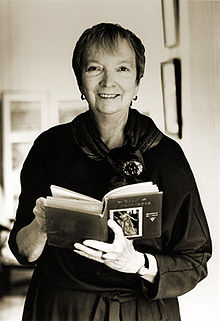
Perhaps like me they had read the book of the same title and relished every page of the Newbery Award winner (1963), written by Madeleine L’Engle. Fans of the novel surely hoped the film would offer the same intriguing juxtaposition of science and fantasy, as well as the thought-provoking allegory of the divine versus demonic.

Some Wrinkle-in-Time fans may not know that L’Engle was a Christian, and wrote the book as a way to express her reflections about God.

“If I’ve ever written a book that says what I feel about God and the universe, this is it,” L’Engle journaled. “This is my psalm of praise to life, my stand for life against death” (1).


L’Engle grew up with a church background, but in her 30s wrestled with such essential questions as: Does God exist? Why are we here? Do we exist after death? Her strong faith in God developed over time, her granddaughter has explained, a slow “acceptance of what she had always known to be true” (2).

As L’Engle’s faith grew, she established the daily habits of Bible reading and prayer. Her writings began to reflect her devotion to God and deep love of scripture.  A Wrinkle in Time is no exception. Several characters frequently quote from the Bible.

L’Engle discovered: “Faith is what makes life bearable, with all its tragedies and ambiguities and sudden, startling joys” (3).

L’Engle’s faith did indeed carry her through several tragedies. Her father died when she was eighteen, the result of lung damage during World War I.   Close friends died, survived by their young daughter, Maria. L’Engle and her husband Hugh adopted the child, only to struggle through Maria’s emotional turmoil as time passed. Then, after forty years of marriage, her beloved Hugh died of cancer.

L’Engle eventually wrote: “We trust as [Medieval mystic] Lady Julian of Norwich trusted, knowing that despite all the pain and horror of the world, ultimately God’s loving purpose will be fulfilled and ‘all things shall be well…and all manner of things shall be well.’ And this all-wellness…does not come to us because we are clever or virtuous but comes as a gift of grace” (4).


(www.quotefancy.com)


She saw Christianity as a paradox. On the one hand is the infinite, unfathomable God beyond comprehension, but who was at the same time a finite human being–Jesus–who died for us on a cross.

“To believe the universe was created by a purposeful being is one thing,” she wrote. “To believe this Creator took on human vesture, accepted death and mortality, was tempted, betrayed, broken, and all for love of us, defies reason” (5).


L’Engle often wove Christian themes into her stories. Sadly, filmmakers chose to downplay the faith elements of A Wrinkle in Time, and focus on the fantasy and special effects. What’s left is a confusing storyline and muddled message. Many critics admit to disappointment and confusion (6).

In an interview the film’s screenwriter explained the decision for removing all traces of Christian reference:

“I think there are a lot of elements of what [L’Engle] wrote that we have progressed on as a society, and we can move on to the other elements” (7).

Oh? We can move on from the element of truth?

Like Madeleine L’Engle, we must wrestle with the essential matters of truth and faith; we must be certain of the reasons and evidence for our beliefs, because…


Notes:

(1) https://www.washingtonpost.com/new/acts.of.faith/wp/2018/03/08/the-deep-faith-of-a-wrinkle-in-time

(2) Same source as above.

(3) From Walking on Water (Crosswicks, 2001), by Madeleine L’Engle

(4) Same source as above.

(5) From Penguins and Calves (Shaw Books, 2003), by Madeleine L’Engle

(6) http://www.businessinsider.com/wrinkle-in-time-movie-changes-book-religion-christianity-ending-2018-3

(7) https://uproxx.com/movies/jennifer-lee-wrinkle-in-time-frozen-2/2/


Additional sources:

  1. www.christianitytoday.com/ct/2018/march-web-only/hollywood-spiritual-themes-wrinkle-time-madeleine-lengle.html
  2. http://exhumator.com/00-139-00_esoteric-religious-spiritual-engle-madeleine.html
  3. https://www.franciscanmedia.org/madeleine-lengle-an-epic-in-time/


Photo credits:  http://www.flickr.com (2); http://www.quotefancy.com; http://www.wikipedia.org; http://www.canva.com.


Read Full Post »

A spoon containing breakfast cereal flakes, pa...

(Photo credit: Wikipedia)


Have you seen this cereal commercial?

Several women decry the frustration of nutrition and diet research which contradicts itself. Examples:

  • Carbohydrates are good; carbohydrates are bad.
  • Eliminate as much fat from your diet as possible; a little bit of fat is good for you.
  • To lose weight, eat no more than 1500 calories a day. To lose weight, eat no more than 1200 calories a day.

And then the ladies say something like, “You know what? I’m not listening to expert advice anymore. I’m going to listen to me. I know better nutrition when I see it.”

I want to ask them: “And how do you know what’s good? How did you find out? What makes you wiser than the experts? Sure, they make mistakes. But haven’t you made a few yourselves?”

I’ve seen the same attitude in discussions of spiritual matters.

“Well, I believe…”

“In my opinion…”

“I just know that…”

 Oh? Sometimes we forget that there is a standard for truth—the Bible. In the long run, it doesn’t really matter what we believe or think. What matters is what God’s Word says. If our thoughts and beliefs do not coincide with the Bible, we’re on the wrong track.

Bible Study 1

Bible Study 1 (Photo credit: DrGBB)


 “The Lord gives wisdom, and from his mouth come knowledge and understanding” (Proverbs 2:6). In other words, God is the only source of true wisdom. We humans cannot manufacture it on our own.

 God pointedly warns us about thinking of ourselves as experts of wisdom. “Do not be wise in your own eyes,” he says (3:7a). “The way of a fool seems right to him, but a wise man listens to advice” (12:15).

EXPERT

EXPERT (Photo credit: Pete Prodoehl)

I, for one, would not set myself up as an expert, like the women in the commercial. I don’t always know what’s good for me. I’m not that smart!

Instead, my measuring tool is God’s Word.  That’s where I turn to verify if my line of thinking is straight. There is only one Mastermind, the One who created me. And unlike human experts, he is completely trustworthy.*

It would behoove me to know what he thinks before I spout off my own opinions.


English: Eric H. Cline excavating at Megiddo

English: Eric H. Cline excavating at Megiddo (Photo credit: Wikipedia)

* The Bible is also trustworthy, proven time and again to be accurate, by the ancient manuscripts, archaeology, prophecy, and other proofs. You may wish to read Biblical Archaeology: A Very Short Introduction by Eric H. Cline and The Evidence of Prophecy edited by Robert C. Newman for a deeper study of these fascinating topics.

Read Full Post »

Still Traveling

Impressions Becoming Expressions

Living Our Days

Gaining a heart of wisdom

He Said What?!

I'm Patty, and my husband and I are living with our adult son who has autism and epilepsy. I love sharing lessons learned from life around me, especially life with Aaron.

Meditations of my Heart

Impressions Becoming Expressions

Linda Stoll

Impressions Becoming Expressions

Debby Thompson

Impressions Becoming Expressions

Signora Sheila

Notes on Life, Faith & Italy

Colleen Scheid

Writing, Acting, Living in God's Love

Mitch Teemley

The Power of Story

Heidi Viars

Finding the Image of God