No doubt you’ve seen a movie or two with at least one desert scene, in which the protagonists must withstand brutal heat and scarcity of water. (Did Lawrence of Arabia, Flight of the Phoenix, or The Way Back come to mind?)
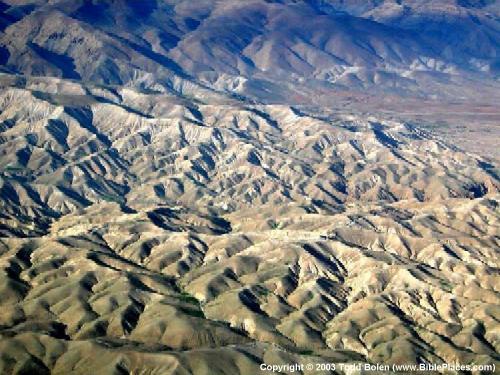
Some of us have even visited a desert—perhaps the Great Basin or the Mojave here in America, the Sahara in Africa, or the Negev in Israel:

Note the limestone and chalk landforms of the Negev—barren rocky cliffs and ravines, desolate summits and valleys, and of course, sand.
As is true of all deserts, the Negev is arid and stark—most of the year. But then come the months of February and March—the rainy season—and oh, what a transformation takes place.

The bleakness turns to an exuberance of vibrant flowers, including:

Arabian Primrose

Desert Tulip
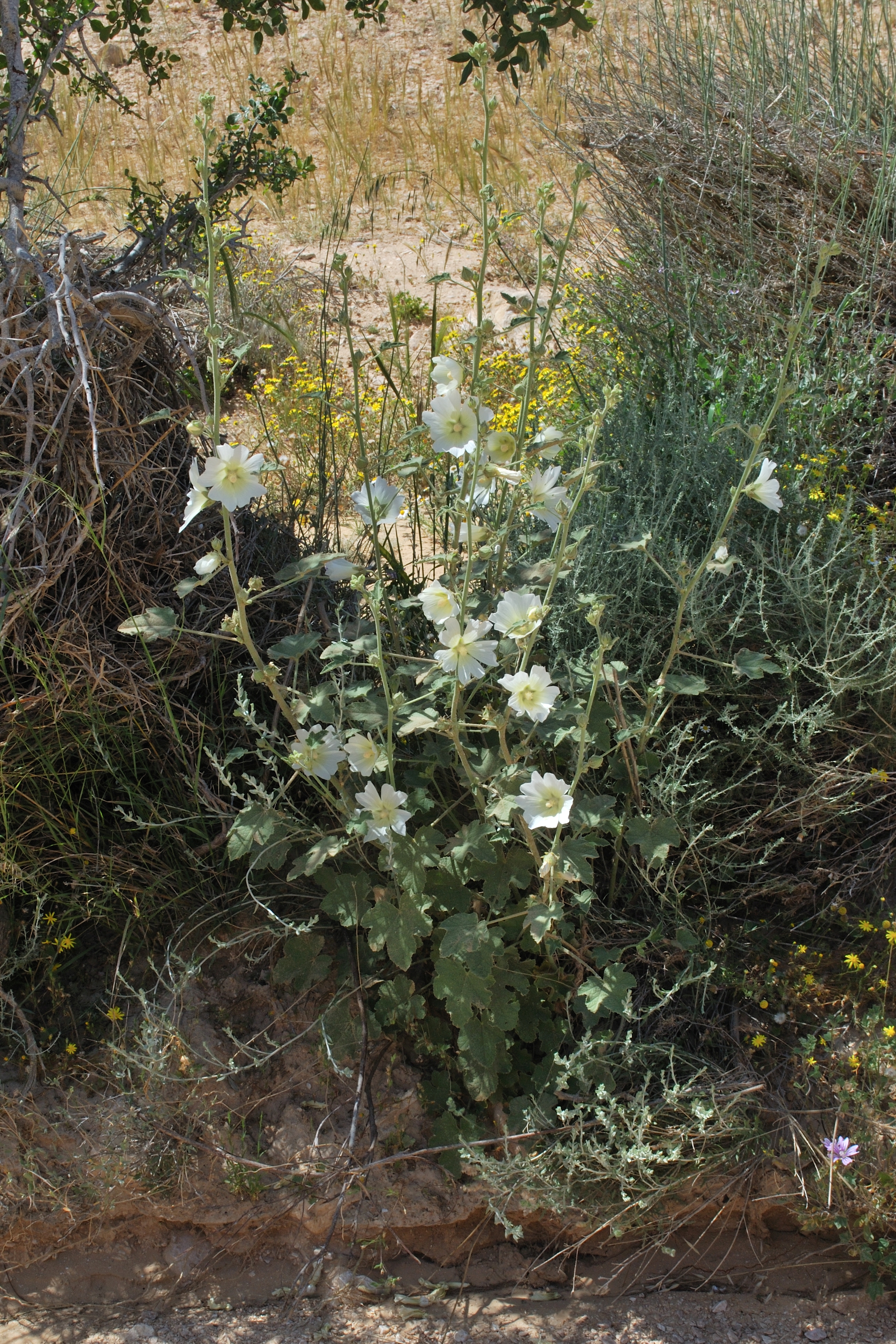
Desert Hollyhock
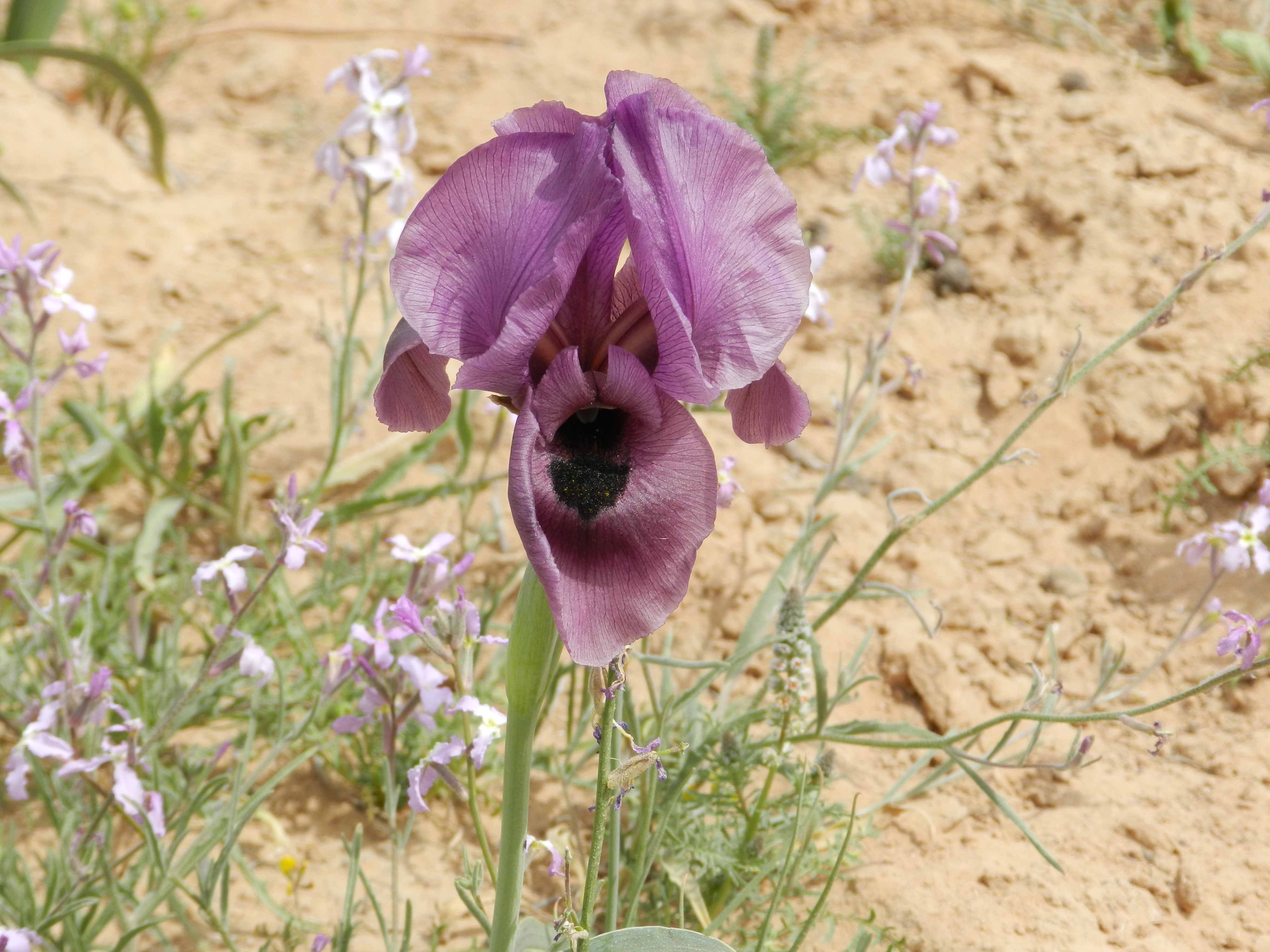
Negev Iris
Water bestows the miracle of life, facilitating photosynthesis and transporting nutrients from the soil.
And as water brings life to the desert, so God’s grace brings the miracle of life to our hearts.
His lavish grace falls like rain [1]; and oh, what a transformation takes place!
Consider the following aspects of renewal:
1. God’s grace cleanses the dusty grime of sin from our souls (Psalm 51:2).

God knows what we are made of, remembering that we are dust. But out of his grace-filled forgiveness he washes away all wrongdoing, and lovingly works to make us more than we are [2].
2. God’s grace like rain provides the miracle of eternal life (Revelation 21:6).
Jesus makes it possible for us to move from living death to deathless life [3].
3. God’s grace nourishes and invigorates our spirits (John 7:38).

He uses many means to soak his truth into the depths of our hearts, providing refreshment, renewal, and encouragement. One primary example: the Bible.
When we disregard God’s Word, we expose ourselves to aridness of spirit.
4. God’s grace brings fruitful productivity to our lives (Isaiah 58:11).
A number of plants in the Negev provide food, including the seeds of the canarian aizoon, the stems and leaves of the carrechtera, the roots of the desert broomrape, and the flowers of the coarse rocket.
Similarly, the Spirit of God nurtures fruit within us–pleasing attributes like love, kindness, goodness, and more (Galatians 5:22-23). As we grow in our relationship with him, so do these attractive fruit.
5. God’s grace-like-rain showers us with blessing (Isaiah 41:17-18).
Flowers of joy, peace, hope, and more can flourish in the most desolate of places, when we allow God to infuse us with his all-sufficient presence.

6. God’s grace gives us refreshment and pleasure (Jeremiah 31:25; Isaiah 44:3).
He will do us good, real good, lasting good,
only good, every good.
With this promise in our hearts,
we need not fear.
–Charles Spurgeon [4]
7. God’s grace creates radiant beauty in a life that was once a wasteland (Psalm 34:5).
That radiant beauty is characterized by smiles of joy, an attitude of contentment, a voice of wisdom and encouragement, an outlook of faith, and a heart of love.
Praise God, his love flows freely to the unlovely [5], developing such beauty!
His grace-like-rain washes over us, bestowing all these aspects of the abundant life to those who are thirsty.
Will you come?

[1] Charles Spurgeon, Morning by Morning, 259.
[2] Psalm 103:14; Ruth Graham, Blessings for a Mother’s Day, 101.
[3] Jack Odell, from Quote/Unquote, compiled by Lloyd Cory, 284.
[4] Charles Spurgeon, Faith’s Checkbook, May 28.
[5] A. W. Tozer
Art & photo credits: www.commons.wikipedia.org; http://www.imaggeo.egu.eu; http://www.identify.plantnet.org; http://www.commons.wikipedia.org (3); http://www.stocksnap.io; http://www.commonswikipedia.org; http://www.pxhere.com; http://www.rawpixel.com.








 From the Inside Out