
(Over-the-Rhine, Cincinnati, Ohio)
One benefit of living in an older city is the interesting architecture to enjoy. Our hometown for two years now, Cincinnati, includes an impressive collection of historic buildings, in a large variety of styles. Below are six examples.
- Federal:
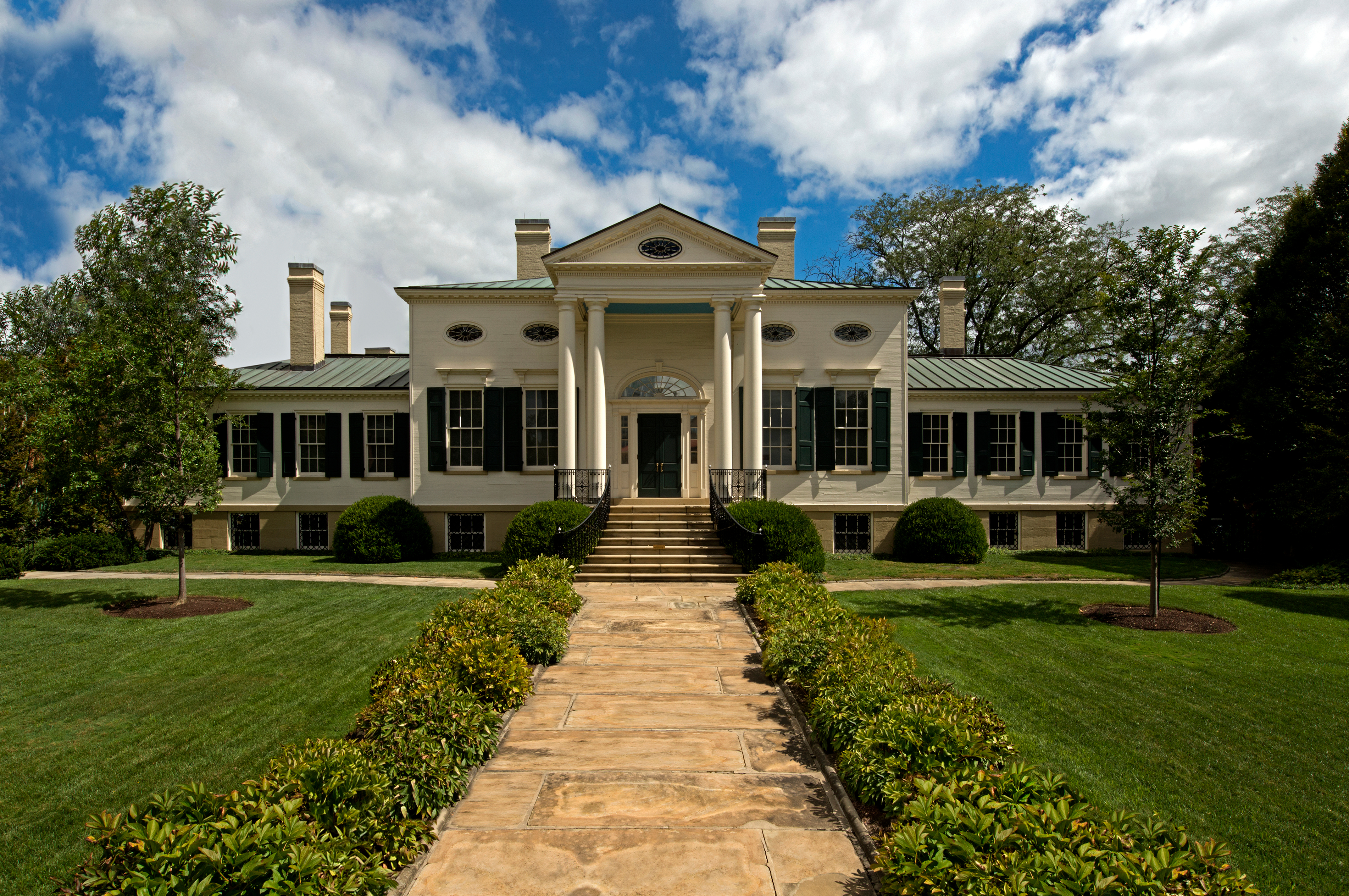
(Taft Museum of Art, built 1820)
- Greek Revival:
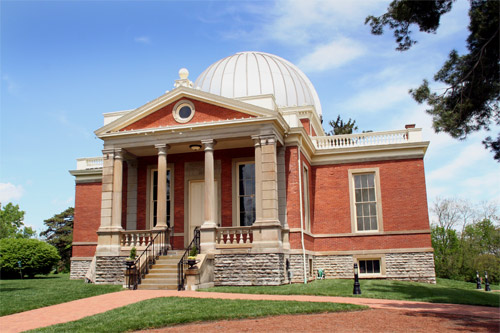
(Cincinnati Observatory Center, built 1873)
- Venetian Gothic:
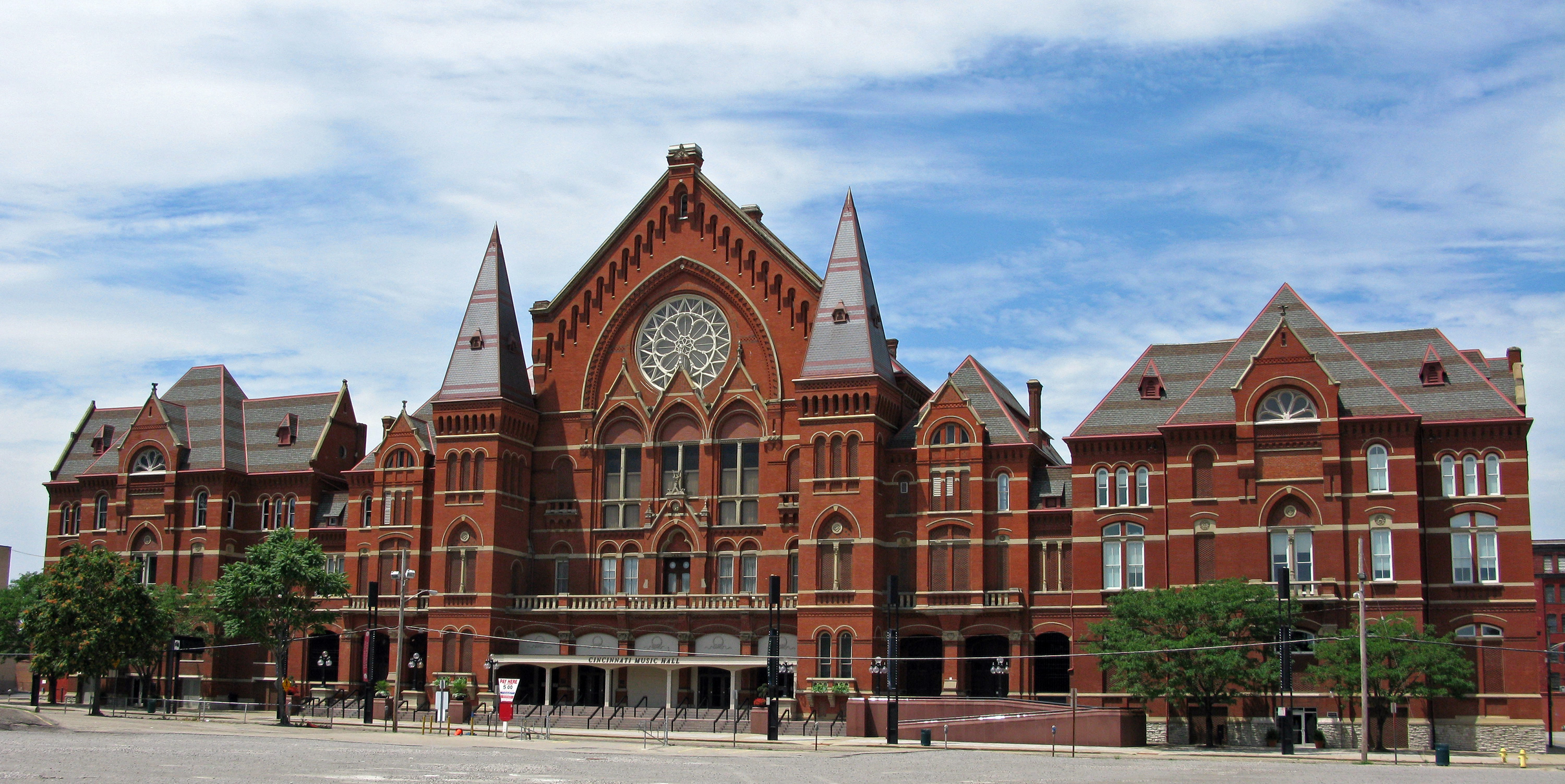
(Cincinnati Music Hall, built 1878)
- Romanesque:
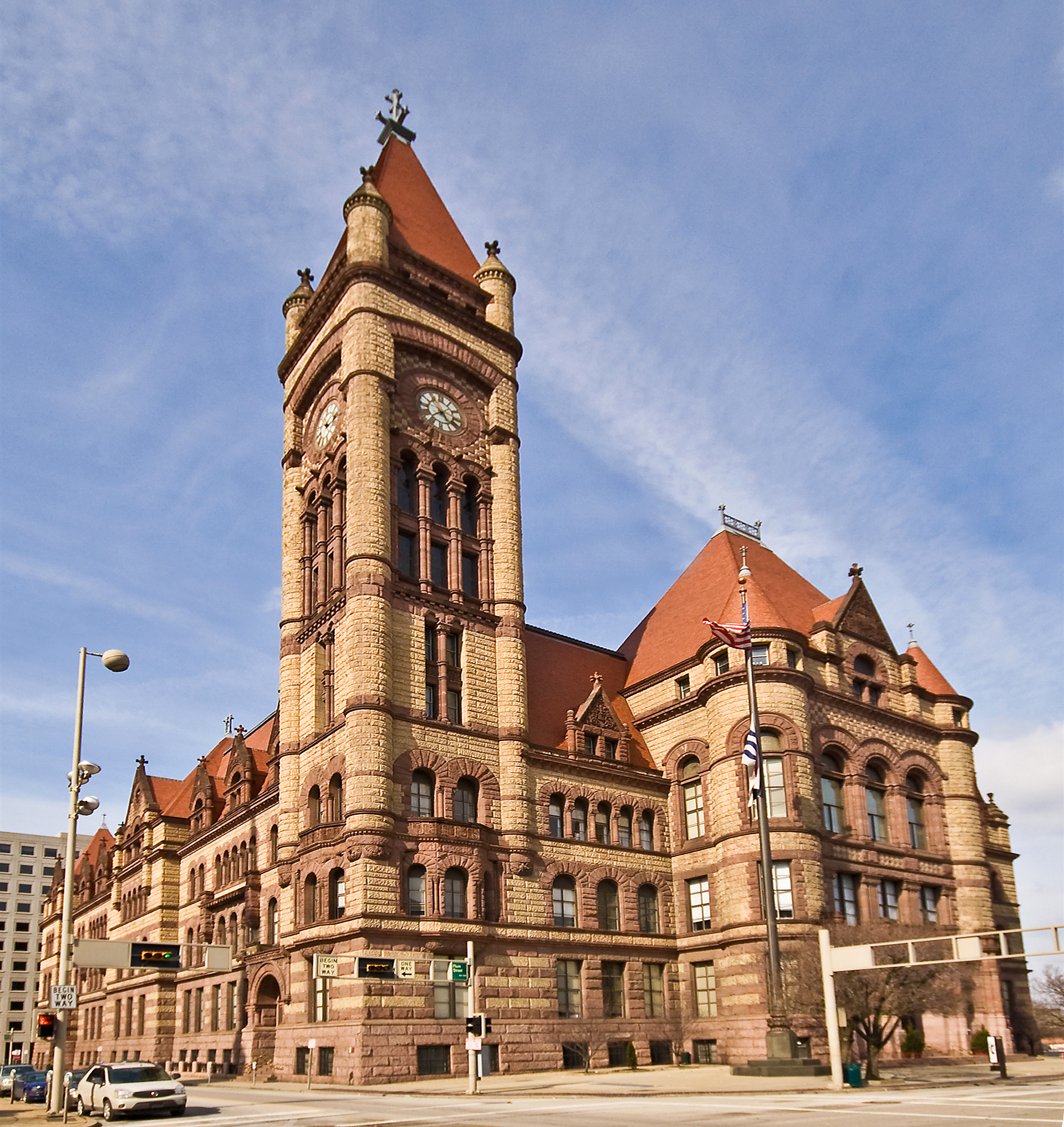
(City Hall, built 1893)
- Beaux Arts Classical:

(Lincoln National Bank Building, built 1903)
- Art Deco:
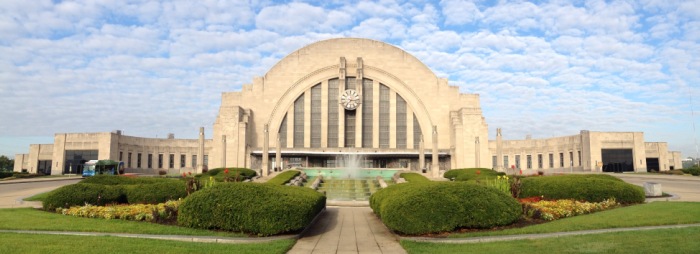
(Union Terminal, now Cincinnati Museum Center, built 1933)
I, for one, am grateful to enjoy such artistic workmanship and beauty, created by architects and craftsmen long ago.
That’s one of the tenets author and artist, John Ruskin (1819-1900), promoted in his work The Seven Lamps of Architecture (1):
Buildings should be beautiful.
Ruskin’s seven “lamps,” intended as guidelines for architects, included:
- Sacrifice. Buildings should reflect careful thought and strong effort. No doubt he would agree: “Whatever is worth doing at all, is worth doing well” (2).
- Truth. Ruskin disapproved of faux finishes and trompe l’oiel. Worse yet was shoddy workmanship hidden behind fancy facades. “A building should be honest,” he said.

(Ruskin probably wouldn’t approve of this trompe l’oeil
on a flat building in Cincinnati, at Central Parkway and Vine.)
- Power. Public buildings should exude strength and permanence. One surprising element to manifest strength: shadow— achieved with towering walls and deep recesses. Smooth surfaces bathed in light do not achieve the same effect.
- Beauty. Ornamentation was important to Ruskin, distinguishing architecture from a simple building. No “voiceless buildings” devoid of expressiveness, he wrote.
- Life. Ruskin also said, “The life of the builder must be in the building.” He was “against mass production and any innovation that decreased the skill content” (3).
- Memory. Buildings ought to reflect the culture, its history and heritage. They should be built to last. As an architect sets about his work, he must take into consideration not only its current use but its use by future descendants.
- Obedience. Ruskin believed each nation should have a distinct style. And in much of the historical architecture of Europe, that’s exactly what we see. English Gothic, French Provincial, and Italianate are examples.

(Italianate, above, as well as other European styles also seen in Cincinnati.
This is the John Hauck House built 1870).
Perhaps you’re noticing that the categories of Ruskin’s lamps illumine more than architecture. They enlighten our Christian experience as well. I wonder if you made similar connections to mine as you read about these seven components:
- Sacrifice. “Whatever you do, work heartily, as for the Lord and not for men” (Colossians 3:23). Such sacrifice is a joy, though, as we “serve the Lord with gladness” out of gratitude for all he has done for us.
- Truth. Just as Ruskin believed in honest buildings, so we desire to be people of integrity that reflect Jesus.
- Power. We also have available to us God’s strength, especially important in the valley of the shadow of death.

- Beauty. Ruskin thought buildings should reflect creation, because the most beautiful shapes came from nature. For example, columns resemble plant stems; pointed arches resemble leaves. Our inner “beauty” of spirit should reflect our Creator.
- Life. “The life of the builder must be in the building,” Ruskin asserted. Doesn’t that perfectly mirror Paul’s words, “I no longer live, but Christ lives in me” (Galatians 2:20)?
- Memory. Buildings should be constructed to last, useful now and for future generations. Likewise, we should strive to leave a worthy legacy to our descendants.
- Obedience. Just as Ruskin wanted each nationality to have its own set of architectural guidelines, we Christians have a set of guidelines from our Heavenly Father—to avail ourselves of a strong foundation (his powerful, attentive presence), and strong walls of scriptural truth for keeping out the elements–like fear, depression, and stress.
Praise the Architect of Heaven!
* * * * * * * * * *
Thank you, Architect of Heaven, for exercising your creative and miraculous genius in my life. Sometimes, though, I resemble a big box store or factory—not reflecting your beauty at all. I do not rely fully on you–my Builder, nor follow your guidelines. But, oh how I praise you for never giving up on me! Day by day you are building me into a better version of myself, and you will bring your artistry to a flourishing finish when Jesus returns (Philippians 1:6, MSG). Glory!

- Written in 1849. Another author, Ralph W. Sockman, mentioned this work in his book, The Higher Happiness (Abingdon Press, 1950), which I read recently. My curiosity sent me to the internet to learn about these seven lamps!
- Philip Stanhope, British statesman, b. 1694, d. 1773.
- Joffre Essley @ house-design-coffee.com
- However, here in America, with so many nationalities and climate zones , such strict adherence doesn’t seem as important. The wonderful variety in Cincinnati is a case in point.
(Art & photo credits: www.wikipedia.org; http://www.taftmuseum.org; http://www.observatoriesofohio.org; http://www.wikipedia.org (2); http://www.wikimapia.org; http://www.cincymuseum.org; http://www.pinterest.com (3); http://www.youtube.com.)













 From the Inside Out
The Mind of Christ
Posted in Bible Study, Blessings, Encouragement, Godly Character, Maturity, Meditation, Uncategorized, tagged 1 Corinthians 2:16, 1 Corinthians 2:16 commentary, Bible Study, Galatians 2:20, Galatians 5:22-23, God's Creative Genius, Philippians 1:6, Romans 8:6, The mind of Christ on November 3, 2014| 10 Comments »
“Who has known the mind of the Lord?” Paul asked (1 Corinthians 2:16).
That’s an easy question to answer: Nobody! His intellect and wisdom are far beyond our human ability to comprehend.
After all…
God has worked out the complexities of every living cell–with perfect precision.
(X-ray microscopy combine to picture interior of living cell)
He has engineered a staggering number of specialized plants and creatures, carefully interrelated in a web of reliance upon one another.
He has created the unfathomable reaches of the universe filled with countless heavenly bodies of immeasurable proportions.
(Spiral Galaxy M74)
Such intellect and wisdom to accomplish these feats is incredible.
Yet, at the end of that same verse above, Paul makes a statement even more astounding. In fact, at first glance it seems ludicrous.
“We have the mind of Christ.”
What? How is that possible? His knowledge and wisdom are infinite; ours is markedly limited.
But Paul makes clear: we have the mind of Christ because he lives within us (Galatians 2:20).
Not that we can know everything and respond with pure wisdom in all situations. Our perfection is a process that won’t be completed until Jesus returns (Philippians 1:6).
But my heart beats a little bit faster to realize that, each day and for all my tomorrows, I might think more like Jesus, understand more like Jesus, and react more like Jesus.
One particular action will encourage progress: spending time with him, especially in his Word.
Here’s an analogy, though far from perfect. Steve and I have been married a very long time—forty-four years. At this point, we can finish each other’s sentences, supply missing information or words in a conversation, and sometimes even know what the other is thinking.
It’s as if we’ve acquired a bit of the other person’s mind. And it’s happened bit by bit, over time.
So I repeat: We will have the mind of Christ as we spend time with him day by day– especially in his Word.
And how will we know that his way of thinking is becoming our way of thinking? After all, there’s no measuring stick for spiritual growth.
Oswald Chambers, in My Utmost for His Highest, posed an excellent question that can help us determine our progress:
“Are other people beginning to see God in my life more and more (p. 78)?” Because a person with the mind of Christ will demonstrate Christ-like behavior.
Perhaps we could take an occasional inventory, based on the fruit of the Spirit (Galatians 5:22-23). The attributes listed in these two verses characterize a person with the mind of Christ–someone who is loving, joyful, peace-filled, patient, kind, good, and so on. We could ask ourselves, how have I demonstrated these attributes this week?
And what will be the result of cultivating the mind of Christ? “The mind controlled by the Spirit is life and peace” (Romans 8:6).
Life that is characterized by vitality and purpose.
Peace that includes inner-contentment, freedom from guilt, and security for eternity.
That sounds awfully good to me.
* * * * * * * * * *
Heavenly Father, we praise you for taking us into the high places of blessing in Jesus. That includes this gift: the mind of Christ. And day by day you are transforming us into his likeness, with ever-increasing glory. May I seize this day and its opportunities to think like you, understand like you, and react like you.
(Ephesians 1:3; 2 Corinthians 3:18)
Art and photo credits: www.lbl.gov; http://www.chesapeakebay.net; http://www.hubblesite.org; http://www.crosspointenwa.com; http://www.pinterest.com; http://www.changingthefaceof christianity.com; http://www.footsoldier4christ.com; http://www.motivationalquotes.com.
Read Full Post »