Feeds:
Posts
Comments

Posts Tagged ‘Prayer’

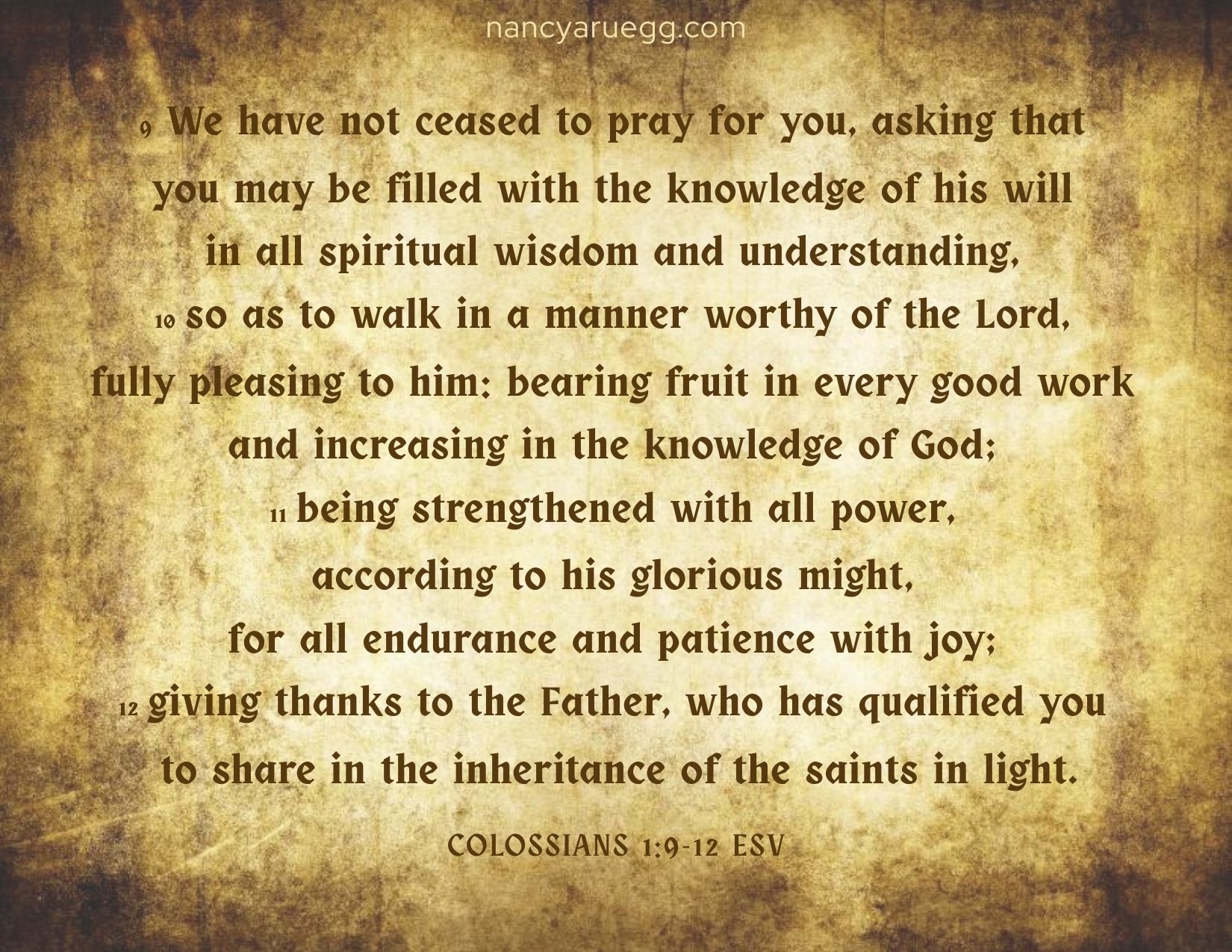
The decision had been narrowed down to two schools for our granddaughter Emma*, a rising seventh-grader. Which would be the best choice for next year–Willow Hills or Sheridan? She’d taken the tests and been accepted by both; each offered its own set of benefits.

Our son Derek and daughter-in-law Heidi received input from others, but their comments only added to the list of pros and cons. No definitive answer came to light.

Emma spent a school day shadowing another student at Sheridan. “It was OK,” she reported afterward. “The teachers were nice.” But nothing she’d seen or experienced had convinced her, “This is the place I want to be!”

All through this process Derek, Heidi and Emma (as well as little sister Madison) had been praying God would make clear the best choice.  The deadline was nearing and the uncertainty felt like a heavy weight upon their minds and hearts.

No doubt you’ve faced similar decisions. It’s not a comfortable place to be.

So why does God allow such distress? Why don’t the answers to our prayers become evident immediately?

There are a number of reasons. Among them:

Uncertainty reveals the frailty of self-reliance.

We can’t see the big picture, and to be honest, very little in our lives is under our full control. Times of uncertainty press us into a place of trusting God [1].

We do well to affirm he’s our devoted heavenly Father. We can trust that what he’s lovingly planned is exactly what we’d choose for ourselves if we could see the entire storyline [2].

So our son and his family (Nana and Papa too!) waited and prayed. All we could do was trust our faithful God to reveal his good and wise plan in his good time.

Uncertainty provides a platform for God to display his grace, wisdom, and power.

These attributes and more become apparent as the answer unfolds and we see his lovingkindness in the plan he’s designed, the wisdom behind it, and the power he’s wielded to make events play out just so.

In the meantime, we must realize the uncertainty we face is only apparent uncertainty. Our future and our provision are certain to God. We’d also do well to remember that “uncertain seasons are often some of the most powerful moments we experience with God” [3]

Uncertainty allows us to experience God in fresh ways as we:

  • Sense his presence more profoundly during difficulty. Pat Chen calls it liquid love [4] — perfect imagery for the warm and comforting presence of our Heavenly Father.
  • See his unfailing love on display, even as we struggle—through the kindness of others, the beauty of creation, an encouraging scripture, and more.
  • Recognize his lavish goodness in the eventual, right-on-time provision.

The Sunday after the two acceptance letters arrived for Emma, our family just happened to sit in church in front of a couple with a son who attends Willow Hills.

Both the parents and he shared enthusiastically about the school. They also knew students at Sheridan and expressed concerns that our son and daughter-in-law hadn’t heard before.

The young man, several years older than Emma, spoke directly to her, giving her reasons why he’s loved Willow Hills.

Several days after that encounter, Emma and her dad visited Willow Hills for a tour. “Impressive!” he declared. “I like it!” she affirmed.

And so, just as we’d all prayed, God made the decision clear, and the weight lifted.

When have you faced a season of uncertainty? What helped you to triumph over the doubts and questions? Please share in the comment section below!

*All names changed, including the schools.


[1] https://serenityinsuffering.com/4-ways-to-trust-god-in-uncertainty/

[2] Katilyn Bouchillon, contributor to Take Heart, 210.

[3] Jon Bloom, Not by Sight, 57.

[4] Intimacy with the Beloved, 81-82.

Image credits: http://www.pexels.com; http://www.dailyverses.net; http://www.heartlight.org; http://www.canva.com (3).

Processing…
Success! You're on the list.

Read Full Post »

“It isn’t necessary that we stay in church in order to remain in God’s presence,” wrote Brother Lawrence. “We can make our hearts personal chapels where we can enter anytime to talk to God privately” [1].

Isn’t that a glorious realization?

After all, “God could have . . . made his sanctuary in the farthest galaxies, in the majestic mountains, in the deep oceans, or in the vast Grand Canyon. But he chose to live in you and me” [2].

Being a visual learner causes me to wonder, What might an imaginary, personal chapel look like?

I see intricately-carved marble bathed in golden light, stained glass windows creating rainbows on the walls, and a soaring ceiling that fosters awe and wonder.

I also see a long, winding staircase within the castle of my heart. It leads upward to this turret-chapel, far away from the concerns and distractions of the day.

Along that staircase, images line the walls—reminders of God’s attentive care through the years. By the time I reach the chapel-door, my spirit is filled with gratitude and praise.

But the door is closed.

And the only action that will open it is repentance.

Sin is no small matter; it is cosmic treason—it is overthrowing the rule of the One to whom I owe everything [3].

But what do I say? King David’s prayer of repentance (Psalm 51) gives me words:

Lord God, I feel dirty with self-centeredness and pride as I approach your presence. I ask you to wash me, cleanse me, and purge me. Blot out my iniquities, I pray.

I praise you for your mercy and steadfast love that prompt you to abound with forgiveness. “Create in me a clean heart, O God, and renew a right spirit within me. Amen.” [4].

And the door swings open.

There my Heavenly Father sits in an ornate chair, befitting the Almighty King. He beckons me to join him and perch on his footstool [5].

“I’m so glad you’ve come . Just sit and rest awhile. Allow my calming presence to envelop you.” And his arm gently rests on my shoulders.

“Now, what brings you here today?” he asks, while leaning back comfortably in his chair.

“Feelings of frustration,” I blurt. “Circumstances are not unfolding as I expected.”

“I know Child. Remember, I am over all and through all and in all [6]—even in these circumstances. Refresh your spirit with such affirmations of trust as:

“I also feel overwhelmed, Lord. The to-do list is long and time is short.” I turn my body to face him more squarely.  “Please help me prioritize and use my time wisely.”

“Of course!” he responds, with a pat on my back. “When you need wisdom, just ask. I am always ready to oblige” [7].

“Thank you, Father, for your reassurance to see me through [8]!

“And then, one more thing. I ask that you help me honor you in the tasks and encounters of this day.”

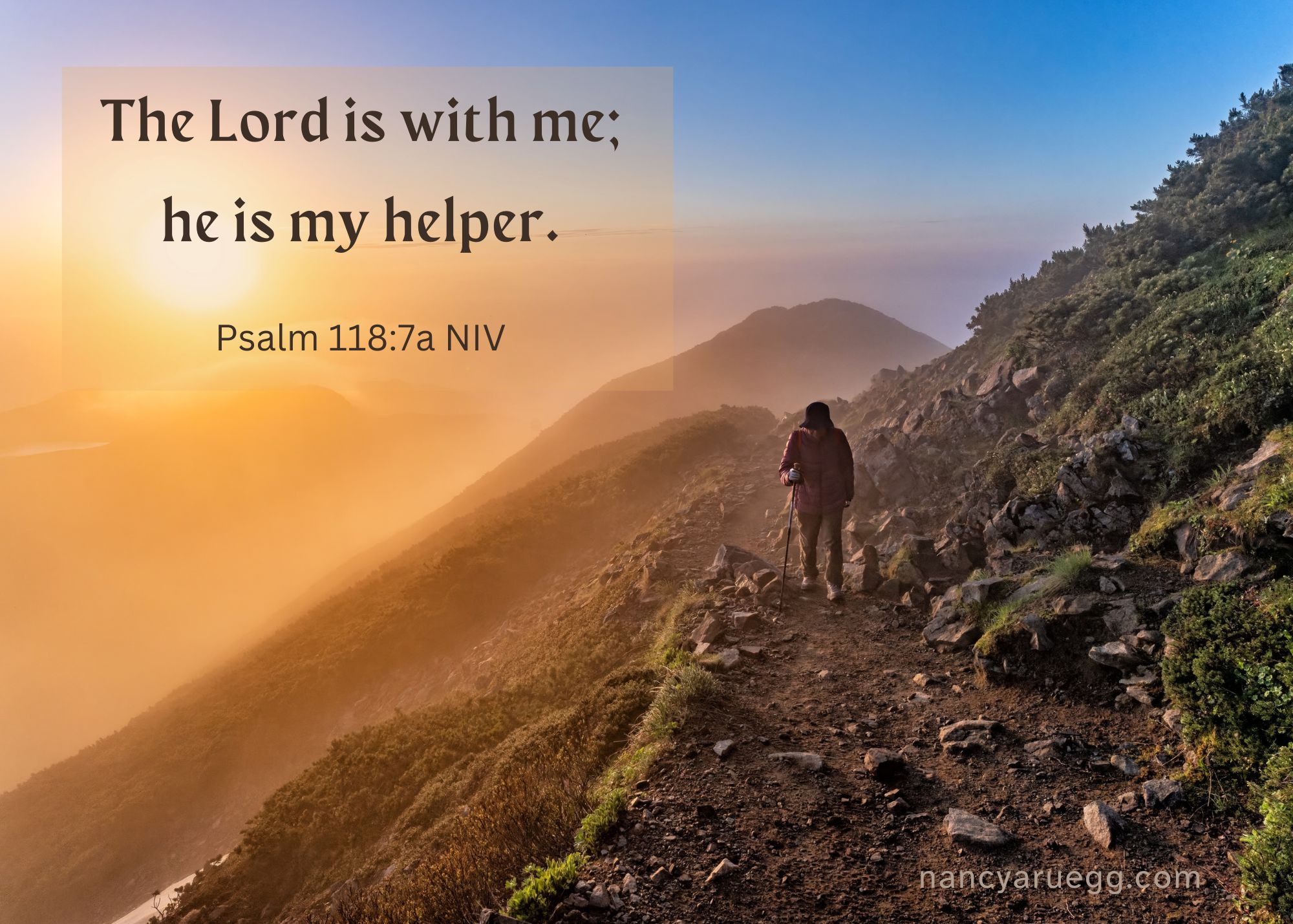
He smiles. “Now that is the kind of prayer I love to answer. Never forget that I am always with you; I am your reliable and perfect helper” [9].

I bask in his presence as God provides encouragement from his Word. The golden light that emanates from his presence, permeates my being [10].

I receive the inflowing of the Holy Spirit; he strengthens my will, thinking, and perceptions [11]. He grants me shalom—wholeness, contentment, and peace.

Now I’m ready to face the day, but very glad that anytime I can swoop up that staircase to my personal chapel and be ministered to by the Lord himself.

Praise God for his open invitation to come and his gracious benefits when we do!


[1] The Practice of the Presence of God, “Fourth Letter,” edited by Whitaker House, 1982.

[2] Beth Moore, A Woman’s Heart: God’s Dwelling Place, 215.

[3] Timothy Keller with Kathy Keller, The Songs of Jesus, 108.

[4] Based on Psalm 51:1-3, 7, 9-10, and a devotional by Dane C. Ortlund, In the Lord I Take Refuge, 144.

[5] Psalm 99:5

[6] Ephesians 4:6

[7] Based on James 1:5 NLT

[8] Proverbs 3:5-6

[9] Psalm 118:7a

[10] 2 Corinthians 4:6

[11] Based on The Spiritual Life by Andrew Murray, Whitaker House, 1996, pp. 148, 155.

Image credits: http://www.picryl.com; http://www.flickr.com (Chris Smith); http://www.canva.com; http://www.dailyverses.net; http://www.pickpik.com; http://www.canva.com.

Processing…
Success! You're on the list.

Read Full Post »

One way to get better acquainted with God is to read through the psalms, watch for statements pertaining to him, and write them down.

That last step is important, as research has proven: writing (not typing) helps us learn and retain what we’ve written [1]. In this case it will also increase our appreciation of God’s glorious attributes and gracious acts on our behalf.

I chose to participate in this exercise during Advent, and became astonished by the number of statements about God, totaling over three hundred by the time I reached Psalm 150. I even skipped over those that I remembered listing previously.

Some psalms offer a number of statements about God, one after another. Psalm 23 includes nine, Psalm 103, sixteen, and Psalm 145, twenty.

Perhaps that explains why these psalms are among the favorites of many people. Subconsciously we crave reassurance of God’s power, wisdom, and goodness working on our behalf.

A lesser-known psalm perhaps, #71, offers seven encouraging descriptors of God:

He is our sovereign Lord (v. 5) over all things, even our blunders and regrets.

No matter my poor choices, God can redeem them. “Our mistakes can never thwart the sovereign will of God” [2].

How thankful I am for that!

He is the One who’s been my hope and confidence since my youth (v. 5).

I’ve been a Jesus-follower since age four. Never have I toyed with the idea of abandoning my faith in him, because I learned early on from the saints around me:

  • God is a good and loving Father
  • There is purpose in everything God does
  • He will bring me through whatever I might face
  • He is accomplishing a good and eternal work in my life [3]

I’d be foolish to turn my back on Someone so invested in my welfare.

God is splendorous (v. 8).

We could surely add more attributes to Brooks’ list. God provides so many wonderful, spiritual blessings in Christ (Ephesians 1:3)!

He is the One who performs marvelous, mighty, and righteous deeds (vs. 16-18).

In truth, “The whole world is a series of miracles, but we’re so used to them we call them ordinary things” [4].

May we rediscover the wonder of God’s deeds in evidence all around us, and respond with gratitude and praise.

He is the One who’s taught me since my youth (v. 17).

Over time I’ve come to cherish God’ Word. And even though I’ve spent many happy hours in study, its inspiration never grows old.

That is very good news.

God is the One whose righteousness reaches up to the heavens (v. 19).

That’s good news too, because “there is no perfect life, no perfect job, no perfect childhood, no perfect marriage, and no set of people who always do what we expect them to do.

“What we do have is a perfect God who is able to lead us through this imperfect life with unfailing strength, infallible wisdom, and infinite love”—Unknown.

Praise God for his attentive participation in our lives!

He is the One who’s done great things. Who is like You, God (v. 19)?

All of these descriptors, among the dozens of others proclaimed in the psalms, do make clear:

P.S. My list of God-descriptors has become the basis for personal worship. Each morning I slowly read and pray back to him one page of the collected statements. The practice renews wonder and gratitude for my marvelous Heavenly Father.

Perhaps you’d like to try it too?


[1] Denise Hughes, Deeper Waters, 89.

[2] Bev Rihtarchik, contributor to A Moment to Breathe, 151.

[3] Dr. Charles Stanley, Advancing through Adversity, 101.

[4] Hans Christian Andersen

Photo credits: http://www.pxhere.com; Nancy Ruegg; http://www.flickr.com; http://www.pickpik.com; http://www.canva.com (2).

Processing…
Success! You're on the list.

Read Full Post »

Some time ago I mentioned my quiet time notebook in response to one of Linda Stoll’s thoughtful essays on Substack.

(DO visit her at https://lindastoll.substack.com!)

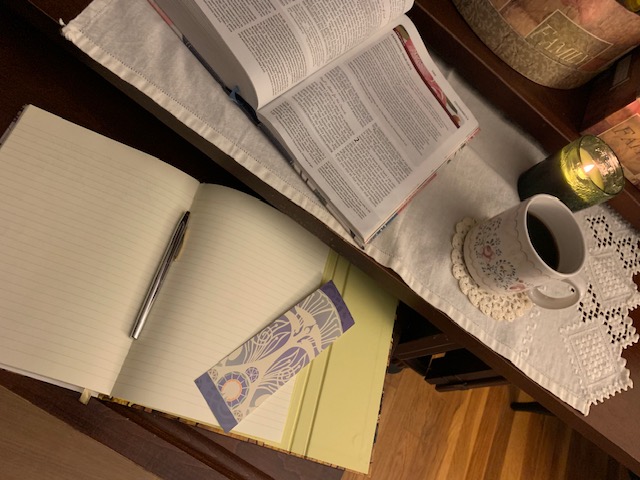
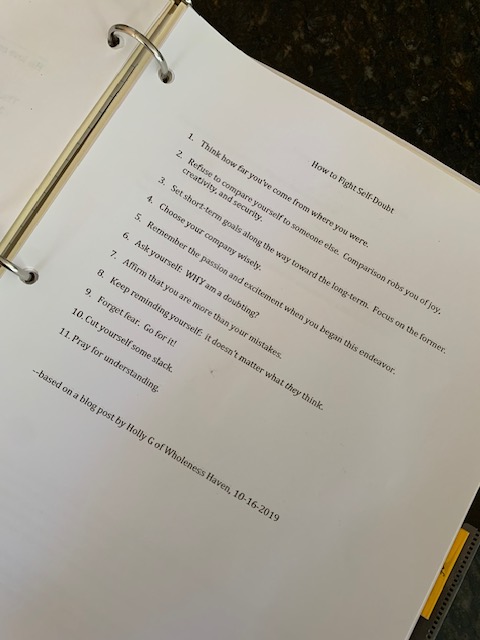
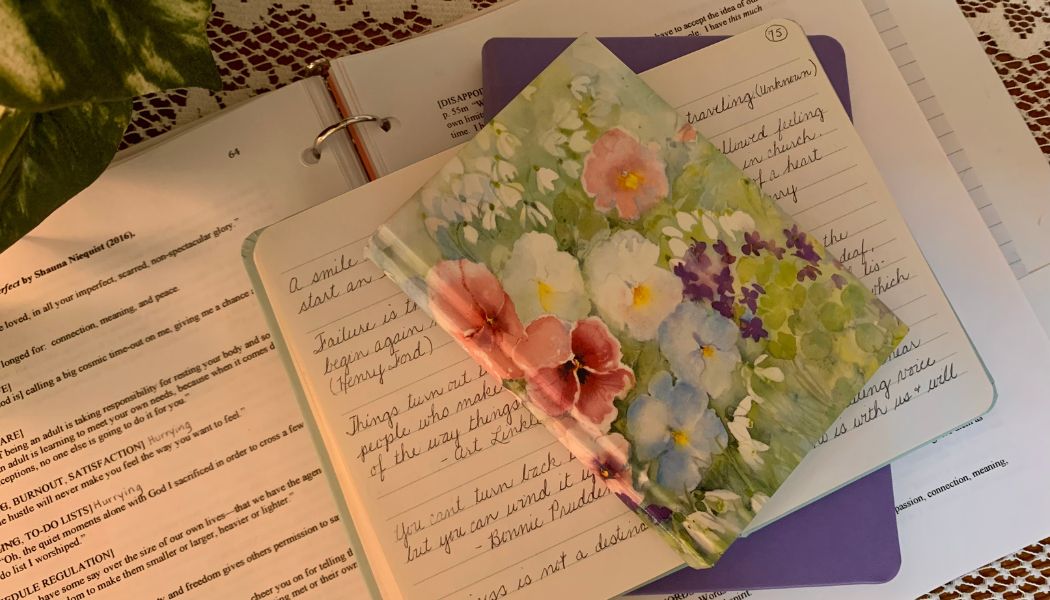
This notebook provides a place to keep Bible study notes, scripture memory work, prayer-starters, and more. Then when I sit down each morning to spend time with God, I have what I need in one place.

Linda replied to my comment, “One of these days you’ll have to tell us more about that notebook!”

Well, today is the day! Here’s a brief explanation of its contents.

First, I’ve chosen looseleaf over spiral, allowing me the freedom to move things around, even remove pages and file them to make room for newer material.

The set-up of various sections allows me to organize by category, making it easier to find what I need.

Below you’ll find more details for each section, plus suggestions for others.

THE COVER

Here’s a chance to be creative! It might be as simple as a scripture coloring page (Many free ones are available online.), a favorite Bible verse or quote written with colorful markers, or an inspiring photograph. Make your notebook a pleasure to pull off the shelf.

PROMPTS FOR PRAISE

Many of us follow the pattern-for-prayer based on the acronym, A.C.T.S. A = Adoration, C = Confession, T = Thanksgiving, and S = Supplication.

To add freshness to my praise, I decided to focus on just one of God’s attributes each day, to avoid a repetitious list-prayer.

For each trait I’ve collected scriptures and quotes that help me express adoration for who our God is. That collection is the first section in my notebook.

CURRENT BIBLE STUDY

If I’m not using a workbook—a study by the likes of Jen Wilkin or Priscilla Shirer—I keep my notes together in this section.

When I finish journaling or verse-mapping through a book of the Bible (for example), I file these pages so, if needed, I can find them again.

However! Purging has been necessary now and then. Had I kept every study throughout the decades of my life, I’d probably need two or three file cabinets!

Also in this section: ideas for scripture meditation, to add variety to the ways I study. These too are available online. (One example: https://biblicalspirituality.org/wp-content/uploads/2015/03/Meditation-Methods-Summary-17.pdf).

MEMORY WORK

I keep a typed copy of each chapter I’ve memorized, the many shorter passages, and individual verses. Reviewing a page or two each day helps to keep the passages fresh in my mind.

PRAYERS

Some people keep a prayer list in this section. But years ago I transitioned to a prayer box of 3 x 5s. The cards provide more room to write, as some requests go through stages toward fulfillment. It’s encouraging to see God at work through the process, as well as in the final outcome.

So this section of my notebook isn’t for requests, it’s for model prayers that have especially touched my heart. I can turn to these when the words won’t come.

An index helps me find an appropriate one. For example, when I need discernment I turn to a prayer of Thomas Merton, for hope, John D. Rayner, and for peace, Teresa of Avila.

FROM THE INTERNET

Occasionally I come across articles and blog posts worth keeping close at hand: how to’s, poetry, inspiration, information, and more. (I need to create an index for this section too!)

WORD OF THE YEAR

Sometimes I participate in this practice of prayerfully choosing a word to focus on for a year. That focus can include searching out related scriptures, writing them out, journaling meditative thoughts, and then praying through them.

The goal is to allow such focus to form our character and enhance our relationship with God.

OTHER POSSIBILITIES

There are those who include a reflection journal, gratitude journal, written out prayers, and/or other personalized pursuits. I prefer actual journals or separate notebooks for certain endeavors.

One example: my God Is Faithful journal, mentioned here now and then.

The first pages are starting to show their age!

Dozens of pages offer a record of God’s faithfulness to our family since 1983. At first this journal did reside in my quiet time notebook. But it soon grew and required a notebook of its own.

And now, gracious readers, I’d love to hear how you organize your quiet time materials. Please share in the comment section below!

All photos: Nancy Ruegg

Processing…
Success! You're on the list.

Read Full Post »

How would you fill in the blank of this statement?

_______________ is the key to everything we need to do and be in life.

Many of us might choose faith, obedience to God, or perseverance.

But according to Pastor/author Timothy Keller, the answer is prayer [1].

He would have us understand that “there is nothing more important . . . or richer, or more life-altering as prayer. There is absolutely nothing so great as prayer” [2].

However, Keller readily admits that prayer is hard. It’s a discipline to stay focused on Someone invisible. Not only do distractions cause interference, but doubts produce discouragement, and disappointments over prayers not answered (as we’d hoped) can breed demoralization.

It’s easy to put this key aside and “let God be God” without our participation.

Oh, what we miss.

Puritan preacher and writer John Bunyan would have us understand:

That is, through prayer, every cranny of our lives is impacted by his uplifting influence—our personalities, thoughts, choices, circumstances, and more. Through prayer he fills us with the totality of his excellencies and his empowering presence. 

Could anything be more sublime?

In addition, we can enjoy these blessings:

Prayer makes a sour heart sweet, a sad heart merry, a poor heart rich, a foolish heart wise, a timid heart courageous, a sick heart well, a blind heart full of vision, a cold heart ardent. For it draws down the great God into the little heart; it drives the hungry soul up to the plentitude of God; it brings together those two lovers, God and the soul.

— Mechthild of Madgeburg, a 13th century German woman, a mystic

Could anything be more satisfying?

To be honest though, there are days when my prayer time is more discipline than delight. I need an attitude-adjustment through review of such benefits as listed above, reminders of what prayer is supposed to be in the first place, and the positive outcomes of prayer.

What Prayer Is Supposed to Be

First, let’s address what prayer is not.

Prayer is meant to be an intimate, personal encounter with God himself, the King of the universe. We so easily forget what a precious gift this is, a privilege beyond comprehension.

In addition, prayer is meant to be a “link between his will and its accomplishment on earth. Amazing things happen, and we are given the privilege of being the channels of the Holy Spirit’s prayer” (Elisabeth Elliot).

Could anything provide greater honor?

Contemplation of such realities will surely renew our pleasure in prayer and produce joyful anticipation for what’s to come: amazement in our answered prayers.

The Impact of Prayer

Regardless of what the answers might be, prayer: 

  • fortifies human weakness with divine strength
  • transforms human irrationality into godly wisdom
  • gives to troubled minds the peace of God
  • unlocks the deepest joy
  • develops our friendship with God
  • augments our ability to discern the mind of God [3]

Those are life-transforming outcomes! And no doubt we could list more.

No wonder Timothy Keller named prayer as the key to everything.

*     *     *     *     *     *     *     *     *     *

Thank You, Father, for allowing us the privilege of prayer. What additional proof do we need of your marvelous loving kindness? Help us to use this gift wisely throughout this day [4].


[1] Prayer: Experiencing Awe and Intimacy with God, 18.

[2] Ibid, 32.

[3] The first three results from Charles Spurgeon, Morning by Morning, 287; points #4 & #5 from Sara Hagerty, Unseen, 201, 207; Point #6 from Oswald Chambers.

[4] Based on a prayer of Charles Spurgeon, Morning by Morning, 287.

Art & photo credits: http://www.freerangestock.com; http://www.picryl.com; http://www.snl.no/Oswald_Chambers; http://www.commons.wikimedia.org.

Read Full Post »

How would you finish this statement?

Nothing we do is more powerful or life-changing than _____________.

Some would suggest taking better care of ourselves, or setting goals that include a plan for completion, or training our minds to focus on the positive. And the argument could be made that all of these actions create beneficial influence in our lives.

But according to author Stormie Omartian, “nothing we do is more powerful or life-changing than praise[1]. Others would likely agree with her, having cited numerous benefits themselves:

  • Prayers of adoration calm any fear, lift the spirit, and fill us with indescribable joy [2].
  • Praising God reduces our cares, levels our anxieties, and multiplies our blessings [3].
  • Continual praise is what changes the emotions, lifts the darkness, offers hope, frees the mood, and blesses God so that evil is driven out. It changes everything [4].
  • When we choose to practice adoration anyway in the midst of whatever we are feeling, our words lift us over that barrier and into a deeper connectedness with God [5].

But how could simple words produce such life-changing results? Psalm 69:30 offers a clue:

To magnify God is to make larger our view of him and his attributes, which lessens our view of the problems we face. The more often we focus on God, the more our faith thrives, and that in turn leads to less worry and fretting.

For example, see if these statements don’t boost your confidence in God for what you’re facing right now:

  • Praise God he is all-sufficient, all-knowing, and all-powerful. He has everything under control (Isaiah 55:11; Romans 11:33-36; 1 John 3:20b).
  • Praise God he is forever faithful, always working out his overall plan, always fulfilling his purpose (Lamentations 3:22-23; Job 42:2). 
  • Praise God he is continually gracious and good, full of love and compassion (Psalm 145:8-9).

The longer we gaze at him, arrayed in such glorious attributes, the less insurmountable our problems become.

And with an unknown Puritan of old we too can affirm:

“When I think upon and converse with Thee, ten thousand delightful thoughts spring up, ten thousand sources of pleasure are unsealed, and ten thousand refreshing joys spread over my heart, crowding every moment with happiness” [6].

That is the power of praise.

But the enemy of our souls is well aware of this power. He’ll do everything he can to keep us from developing the habit of praise. What might help?

Habit-stacking. Have you heard of it? The practice involves adding a new habit to some action that’s already a fixed routine.

For example, we might add more praise to our days while making the bed in the morning, completing some household chores, commuting to and from work, walking from place to place, waiting for the microwave, chopping fruit or veggies.

What routines are established in your life? Which ones lend themselves to spending a few minutes praising God for who he is and what he’s done?

Another possibility for adding praise to our lives comes from C. S. Lewis: “Make every pleasure into a channel of adoration.” He suggested several ideas to get us started: a beautiful mountain valley, delicious food, a great book, or a piece of music [7].

And you know what happens as we praise God for these blessings?

One’s mind runs back up the sunbeam to the sun [8].

Isn’t that lovely imagery?  

And is there any better place for our mind to be?


[1] Values for Life, 160.

[2] Kristine Brown (https://www.ibelieve.com/christian-living/prayers-of-adoration-to-fill-your-heart-wonder.html).

[3] Suzanne Dale Ezell, Values for Life, 160.

[4] Arnold Prater, Bonding with God, 78.

[5] Sara Hagerty, Unseen, 151.

[6] From The Valley of Vision, Puritan prayers and devotions compiled by Arthur Bennett, 1975.

[7] Quoted by Timothy Keller in Prayer: Experiencing Awe and Intimacy with God, 197.

[8] C. S. Lewis, Letters to Malcolm: Chiefly on Prayer, 89-90.

Art & photo credits: http://www.pickpik.com (2); http://www.canva.com; http://www.freeimageslive.co.uk; www,pxhere.com; http://www.canva.com.

Read Full Post »

Several years ago I read these words written by a pastor: “When hard times come, say to yourself, ‘Now is the time to use my faith in a new way.’”

I had to wonder, What might that new way include? He didn’t say.

But while considering my own hard times I remembered a few new-to-me strategies God brought to my attention that did indeed strengthen my faith. 

First, he led me to a new way to read scripture, recording any thoughts, insights, or prayers in a notebook. Writing helps slow my thinking so I can absorb more of what God would have me understand.

A few questions, prayerfully considered, might help our pens begin to write. For example:

  • God, what do you want me to understand and embrace from this passage/verse?
  • How would you desire this insight to impact my attitudes, beliefs, and/or actions going forward?
  • What does this passage teach me about you, as God the Father, Son, and/or Holy Spirit? How might this knowledge impact my current frame of mind?

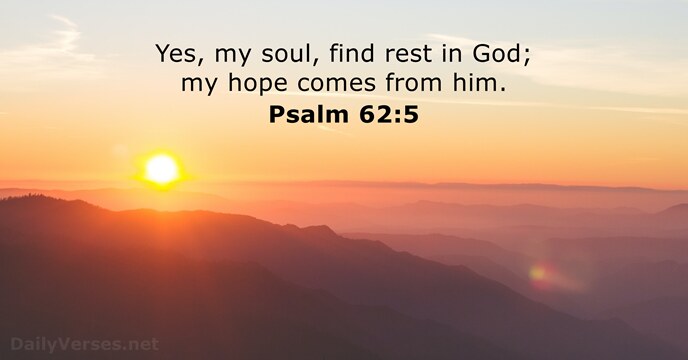
During one time of upheaval I wrote the following, based on Psalm 62:5.

You are my hope, O God. Your plan is to prosper me, to help me grow in faith and Christian maturity. My eternal hope in you can help keep this present difficulty in perspective. After all, when compared to eternity, any hardship here on earth is brief. Someday I’ll live forever with you and the problems I’ve faced will seem insignificant in the light of heaven!

God also introduced me to a new way to pray: spend less time rehashing the problem, and more time rejoicing with gratitude. It’s the kind of praying Paul encouraged (Philippians 4:6-7):

We can thank God for each of his attributes at work on our behalf: his wisdom, power, goodness and more. We can also thank him for graciously upholding us, surrounding us with encouraging family and friends, and allowing us to sense his presence more palpably.

Consider also the positive impact on mind and spirit if we pray with anticipation, affirming God will act to fulfill his highest purpose. If we thank God that it will be so before it is so—that’s faith!*

Such a prayer might be:

I praise you, O God, for your power that can fulfill grand purpose even through (name the situation.) I praise you for being a creative God who solves problems in amazing, miraculous ways.

I thank you for being an involved God who takes an active, loving role in the lives of his children. I thank you that you are faithful and trustworthy, that when we commit our way to you and trust in you, you will act (Psalm 37:5)!

God also led me to a new way to embrace the promises, by acquiescing to his plan for fulfilling them.

For example, when a beloved fellow believer is diagnosed with cancer, our prayer is for a complete restoration, of course. We might site the promise of Psalm 41:3:

And sometimes God’s answer is yes. Even the doctors are surprised how quickly the patient recovers. Sometimes God’s answer is wait, as the patient endures radiation, surgery, and chemotherapy. And sometimes the answer is no.

But isn’t that complete healing as well as the patient is taken home to heaven where no sickness exists?

Life-experience and a growing relationship with God teach us:

It is then we turn to promises like these—promises we can count on no matter what:

  • He will guide us along the right paths (Proverbs 3:5-6)
  • He will provide peace of heart (John 16:33)
  • He will bring good out of every situation (Romans 8:28)
  • His grace will see us through (2 Corinthians 12:9)
  • He will provide everything we need (Philippians 4:19) 

These are among the promises to hold especially close.

And as we exercise such ways of faith presented above, they lead us to know God more, trust God more, and experience more of the spiritual blessings he longs to bestow.

And now, what new way of faith have you discovered that strengthens you during hard times? Please share in the Comments section below!

*Arnold Prater, Bonding with God, 81.

Art & photo credits: http://www.picryl.com; http://www.rawpixel.com; http://www.dailyverses.net; http://www.commons.wikimedia.org; http://www.canva.com; http://www.picryl.com; http://www.canva.com; http://www.pexels.com.

Read Full Post »

Prayers of the Heart

For the last few weeks, we’ve seen hearts nearly everywhere we look–on TV, social media, billboards, and in stores. Merchandizers made sure: none of us lived unaware that yesterday was Valentine’s Day.

But there’s another, more obscure place, where you’ll see numerous hearts all year ‘roundmore than 500 of them. It’s the word “heartin scripture.

And God wants to be sure none of us live unaware: his heart brims with love for us, not because of who we are, but because of who he is [1].

Such statements assuring us of God’s love appear nearly 300 times in the Bible.

And many of us find our hearts responding in love for him, the One who provides abundant life now and eternal life with him in heaven yet to come [2].

But how do we demonstrate love to an invisible Being? A good place to begin is spending time with him, in his Word and in prayer.

Scripture includes a number of prayer-prompts related to our hearts—that is, our innermost being that includes the intellect, will, and emotions.

For example:

STRENGTHEN my heart, O God, to face whatever this day may bring. Keep me mindful that “your power reaches its peak at the lowest point of adversity” [3].

ATTUNE my heart to yours so that my desires match yours. Remind me: as I spend time delighting myself in you, the love-bond between us grows stronger, as well as my delight in your ways [4].

TRANFORM my heart by changing the way I think. May your truth clear away my confusion, doubts, and fears, to be replaced with your assurance, clarity, and peace [5].

INCLINE my heart toward the righteous and trustworthy instruction of your Word, so my decisions and choices flow out of your heart’s desire for me [6].

SEARCH my heart, O God, and reveal those sins that lurk in the corners—improper thoughts, negative attitudes, faulty motives—so that I might confess, repent and be right with you [7].

FILL my heart with your joy and peace. Then there’ll be no room for worry, discontentment, or frustration. Instead, I can overflow with hope because you, my sovereign Lord, are in control of all things [8].

IMPACT my heart, O God. Take away my stubborn heart and give me a new heart that desires above all to be faithful to you. Then I’ll find your favor surrounding me like a shield [9].

ENLIGHTEN my heart with understanding of who you are, with all your glorious attributes. May such understanding form a firm foundation of contentment, so no matter my circumstances I can rest in your goodness [10].

DIRECT my heart to heed your guidance each day [11]. Help me to see the people around me with your eyes of compassion, to listen with your ears of discernment, speak your words of wisdom, and work with your hands of mercy.

In the powerful name of Jesus, I pray all these things.  AMEN.

And what will be the result of such a prayer?

I ncline,

S earch, and

F ill our hearts

I mpact,

E nlighten, and

D irect our hearts.

Praise God, he satisfies the longing soul and fills the hungry soul with good [12]!


[1] 1 John 4:10, 19

[2] John 10:10; 3:16

[3] Psalm 73:26; 2 Corinthians 12:10; Charles Stanley, Advancing through Adversity, 76.

[4] Psalm 37:4-5; 119:24

[5] Romans 12:2 CEV

[6] Psalm 119:35-36, 138 ESV

[7] Psalm 139:23-24; Psalm 51:10

[8] Romans 15:13; Psalm 115:3

[9] Ezekiel 36:26 CEV; Psalm 5:12 HCSB

[10] Ephesians 1:18; Psalm 23

[11] Proverbs 23:19

[12] Psalm 107:9 NHEB

Photo credits: www.pickpik.com; http://www.heartlight.org; http://www.dailyverses.net; http://www.canva.com; http://www.heartlight.org; http://www.pickpik.com; http://www.pixnio.com.

Read Full Post »

According to American theologian R. C. Sproul (1939-2017): “Prayer does change things, all kinds of things. But the most important thing it changes is __________ [1].”

What would you put it the blank? A few possibilities include:

  1. The lives of those we pray for
  2. The way events unfold
  3. The attitudes and perspective of those prayed for
  4. Us—the people doing the praying

Sproul wrote, the most important thing prayer changes is us.

Author and Bible teacher Kay Arthur (1939- ) wrote similarly: “You cannot spend time in prayer, even intercessory prayer [for others], and not have it impact you personally [2].”

Such statements as these beg the question how. How could our prayers for others affect us?

One possibility comes readily to mind. Praying for others and watching miraculous answers unfold strengthens our faith, which contributes to peace of mind and heart.

On the other hand, in those situations when God chooses to postpone his response and yet we continue to pray, the waiting teaches us patience and persistence.

But might there be more ways intercessory prayer impacts us? A bit of research turned up the following. You may be surprised as I was by how many there are.

Intercessory prayer fosters unity in our hearts with those we pray for. We can even find ourselves growing in compassion and affinity for them.

I’ve prayed for Kiana for a number of years now. We’ve never met; I know very little about this young woman in India and yet love for her has bloomed in my heart just the same. I’m looking forward to meeting Kiana in heaven and hearing her story [3].

Intercessory prayer teaches us selflessness as our thoughts are directed away from ourselves and toward others.

Intercessory prayer changes our perspective as we see our desires for a person or situation shift to what God wants to do. We remember: his expansive plan always includes more benefit than we can perceive [4].

We also acknowledge that even times of pain and trouble produce worthwhile results.

Esther Ahn Kim was a Korean Christian who spent six years in a Japanese prison during Word World II as a result of her faith. No doubt many prayed for her release, and yet freedom wasn’t granted. However, at least two guards and many of Esther’s fellow prisoners became believers in Jesus—because of her [5].

Intercessory prayer shifts our attitudes from fear and anger to peace and calm as we affirm the truth of scripture, including:  

  • Whatever transpires has been allowed by God
  • We will never understand all the workings of God this side of heaven
  • Even suffering achieves purpose [6]

Intercessory prayer develops humility as we acknowledge our limited ability to impact people or circumstances and affirm only God can affect any change he chooses.

Intercessory prayer augments our usefulness and causes spiritual growth.

When Pastor Hendricks learned that Matt T. had been asked to teach the Sunday School class for junior high boys, his eyebrows went up. Matt was just out of college and still had some growing up to do himself.

But before long, Pastor Hendricks began hearing reports of the once-rowdy boys eagerly participating in the class. He invited Matt to lunch and asked about his secret of success.

Matt showed him a little black book with one page for each boy. On each page were comments like, “Having trouble in math,” “comes to church against his parents’ wishes,” and “wants to be a missionary but doesn’t feel capable.” Matt was praying over the pages every day.

Pastor Hendricks observed: When we pray for others, we become more like Jesus. And as we grow, God shows us more, and uses us more [7].

Isn’t that just like our Heavenly Father? Even as we seek to bless others with our prayers, God is also blessing us.

P.S. Please join me in prayer for the suffering people of Israel and the innocents of Gaza. Let’s pray that the perpetrators of evil are thwarted at every turn [8].


[1] The Prayer of the Lord

[2] His Imprint, My Expression, 157.

[3] You can read how I learned about Kiana at https://nancyaruegg.com/2019/12/12/advent-ure/  

[4] Ephesians 2:20

[5] https://www.thegospelcoalition.org/article/esther-ahn-kim-steadfast-in-persecution/

[6] Romans 11:33-36; James 1:2-4

[7] https://www.lifeway.com/en/articles/sermon-prayer-life-of-a-christian-colossians-4

[8] Psalm 125:4-5

Photo credits: http://www.freerange.com; http://www.canva.com; http://www.pickpik.com; http://www.dailyverses.net; http://www.canva.com.

Read Full Post »

Over the years I’ve prayed for a number of people who didn’t even know I was praying—people like:

  • The family of a toddler with a brain tumor
  • a tollbooth worker struggling to make ends meet*
  • the young wife anxious to become a mother

No doubt you’ve also prayed in secret for strangers, unbeknownst to them.

Rarely do we receive updates concerning these people. But one day in heaven, we just may hear their miracle-stories. And won’t it be thrilling to know we played a part through the privilege of prayer?

Secret Prayers

Sara Hagerty in her book Unseen wrote about secret prayers, but has taken the practice to a whole new level—a level I aspire to. Sara silently prays for strangers she happens to see while going about her day:

  • the man in a wheelchair, that he might experience God’s strength
  • the woman with vacant eyes, that God would fill her needful heart
  • the man running to his gate at the airport, that he would run with God

The anonymity of such petitions gives Sara warm satisfaction, and no doubt puts a smile on her face.

Might God smile also? I think so.

It’s occurred to me that we experience other kinds of secrets with our Heavenly Father, and they too make us smile together with him.

Consider:

Secret Deeds

  • M. often wipes down the sink area in public restrooms and then washes her hands. It’s M.’s secret delight to provide this small blessing for the next person.
  • For years Norma frequently walked for exercise along a busy street, picking up refuse with a trash-grabber, then stuffing it into a grocery sack. After covering about a mile on each side, Norma would smile with satisfaction at the pristine street before turning the corner toward home.
  • My husband will often strike up a conversation with restaurant waiters or waitresses. If they’re not too busy he’ll share a bit about the difference God has made in our lives, how he’s provided for us in amazing ways. Then, before we leave, Steve puts a generous tip on the table. It makes us smile to imagine their looks of happy surprise at first glimpse of those bills. And we pray they see the goodness of God behind the gift and seek him for themselves.

Surely God smiles as well. 

Secret Moments

One category would be those times when one of his wild creatures approaches in holy proximity:

  • The hummingbirds who hover close enough to touch as if to say, “Thank you for the flower buffet in the deck planter!”
  • The doe that stood at the bottom of the deck stairs one morning when I exited the kitchen door. I froze; she froze. We stared at one another for long moments before she gracefully sauntered into the trees.
  • The red admiral butterfly that rested on my knee one afternoon, allowing me to marvel at his colorations, the wingtip scallops and tiny stripes on his antennae.

I can’t help but smile in delight at God’s creativity, artistry, and workmanship—especially when observed up close and personal. And while reveling in such exceptional moments, I like to think he smiles too.

Secret Blessings

  • Our youngest granddaughter recently climbed into my lap and nestled for a minute or so—unusual for a child always on the go. You grandparents out there know the special pleasure of each snuggle!
  • Frequently over the years God has used song-lyrics to encourage me. On occasion I’m overcome by happy tears while experiencing his tender care through music.
  • My husband and I basked together under a dazzling full moon the night of my birthday. While gazing at its soft glow, I sensed afresh the soft glow of God’s love, joy, and peace in my spirit.

Moments like these cause smiles of gratitude as our Heavenly Father expresses his personalized goodness. And I’m convinced God smiles with us.

Finally, there’s one more pleasure not to be missed: Sharing secrets and smiles with our Lord fosters intimacy and draws us closer to him. Our challenge is not to miss them.

What secret and smile have you enjoyed recently with your Heavenly Father? Please share in the comment section below!

*You can read the full story at: https://nancyaruegg.com/2017/10/19/tollbooth-encounter/.

Photo credits: http://www.rawpixels.com; http://www.pxhere.com; http://www.commons.wikimedia.org; http://www.canva.com; http://www.commons.wikipedia.org.

Read Full Post »

Older Posts »

Still Traveling

Impressions Becoming Expressions

Living Our Days

Gaining a heart of wisdom

He Said What?!

I'm Patty, and my husband and I are living with our adult son who has autism and epilepsy. I love sharing lessons learned from life around me, especially life with Aaron.

Meditations of my Heart

Impressions Becoming Expressions

Linda Stoll

Impressions Becoming Expressions

Debby Thompson

Impressions Becoming Expressions

Signora Sheila

Notes on Life, Faith & Italy

Colleen Scheid

Writing, Acting, Living in God's Love

Mitch Teemley

The Power of Story

Heidi Viars

Finding the Image of God