
More than likely you’ve never seen the item pictured above. At first glance, you might think it’s a noisemaker used in primitive worship ceremonies. Others might say it looks like a musical instrument or the paddle for some game.
In actuality, it’s a model of an ancient Aztec weapon, a macuahuitl (MAC-wah-wick).
Strange-looking, isn’t it? How could a wooden paddle be deadly enough for warfare? The key lies in those black protrusions on the sides. They were made from obsidian and filed razor sharp, capable of creating gaping slash wounds.
Here’s another strange-looking weapon. They remind me of the jacks some of us played with as children. These are called caltrops, with each spike measuring 2 1/2-to-3 inches.
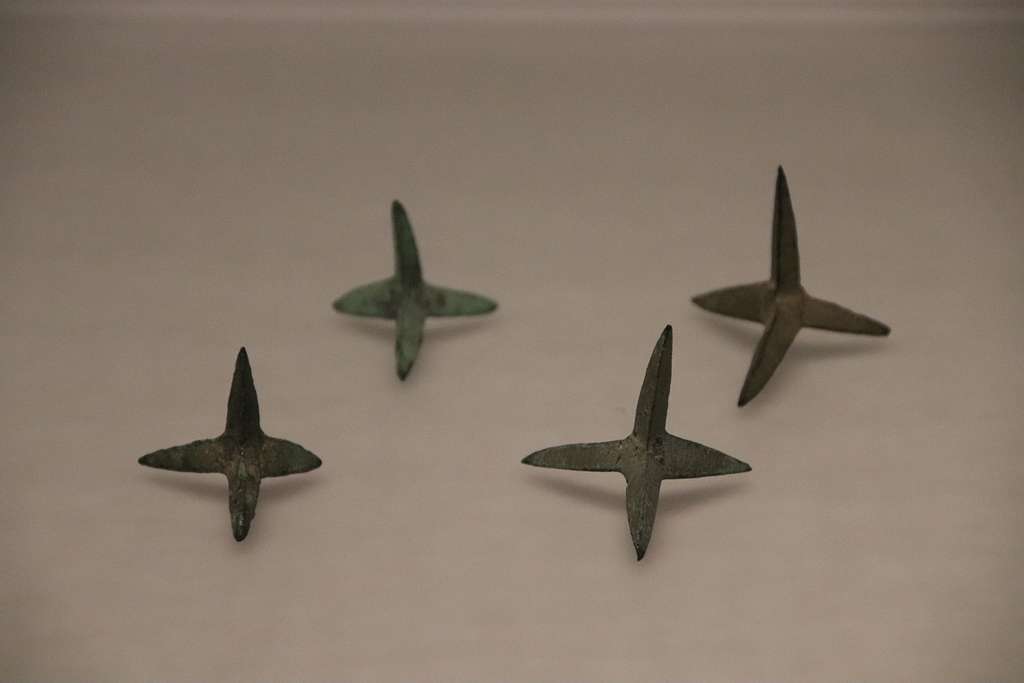
Caltrops were designed so that, when thrown on the ground, one point would always land facing up.
Spread hundreds of these around your camp at night, and protect your soldiers while they rest. Or hide them in the area before the opposing army approaches, and cause crippling injury to many men and beasts as they charge.
But why all this talk about ancient weapons?
In the spiritual battles of life, we too have at least two strange-but-effective weapons at our disposal.
At first glance, they might appear useless against our adversary Satan. But these weapons have the power to defeat his minions of discouragement, disappointment, envy, frustration, and more.
The first weapon is gratitude. Yes, just uncomplicated gratitude.

For example, consider each of the negative emotions named above and how gratitude might incapacitate them:
- When discouraged by lack of recognition at work, I can be thankful God sees.
- When dissatisfied with my paycheck, I can be thankful that God will provide.
- When disappointed by my child’s behavior, I can be thankful for the life-lessons taught through consequences that will benefit him in the future.
- When envious over the lovely new house of an acquaintance, I can be thankful for our low mortgage, friendly neighbors, and the memories that have turned our house into a home.
- When frustrated by a day of one-step-forward-and-two-steps-back, I can thank God for the strength and patience to see me through [1].
And as we wield our weapon of gratitude we’ll discover: “The truly thankful person is a truly peaceful person” [2].
The second strange-looking weapon against negativity is contentment.
But how do we manufacture deep-down satisfaction when life is full of difficulty and stress?
Luci Swindoll suggests: “Consider who you are and be satisfied with that. Consider what you have and be satisfied with that. Consider what God is doing and be satisfied with that” [3].
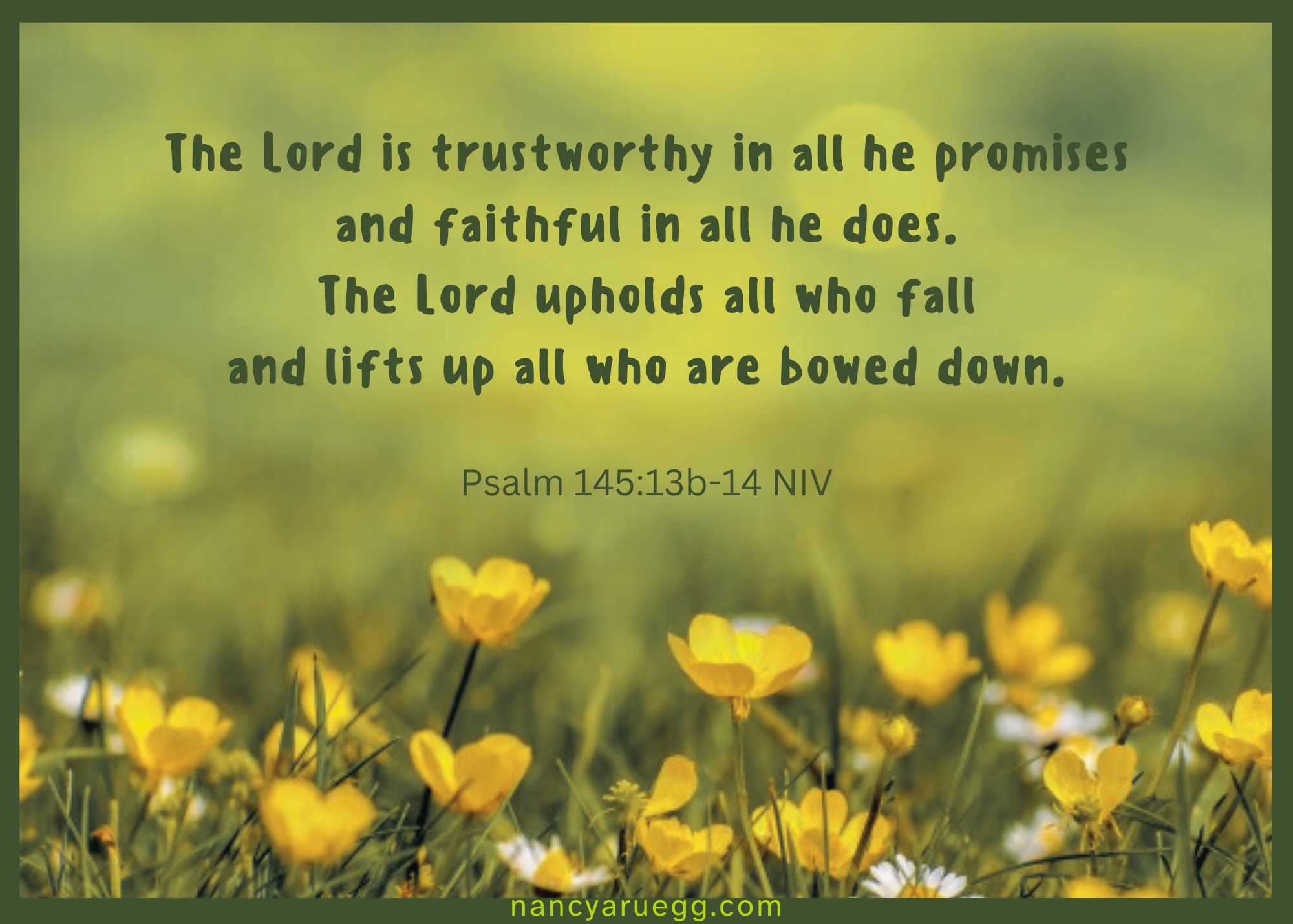
One way to employ contentment is to meditate on one of the praise psalms, like Psalm 103 or 145. While reading each verse, consider what it says about who you are, what you have, and what God is doing. Brandish your discoveries in the face of the enemy of your soul.
Even one simple statement can generate a whole journal of responses. For example:
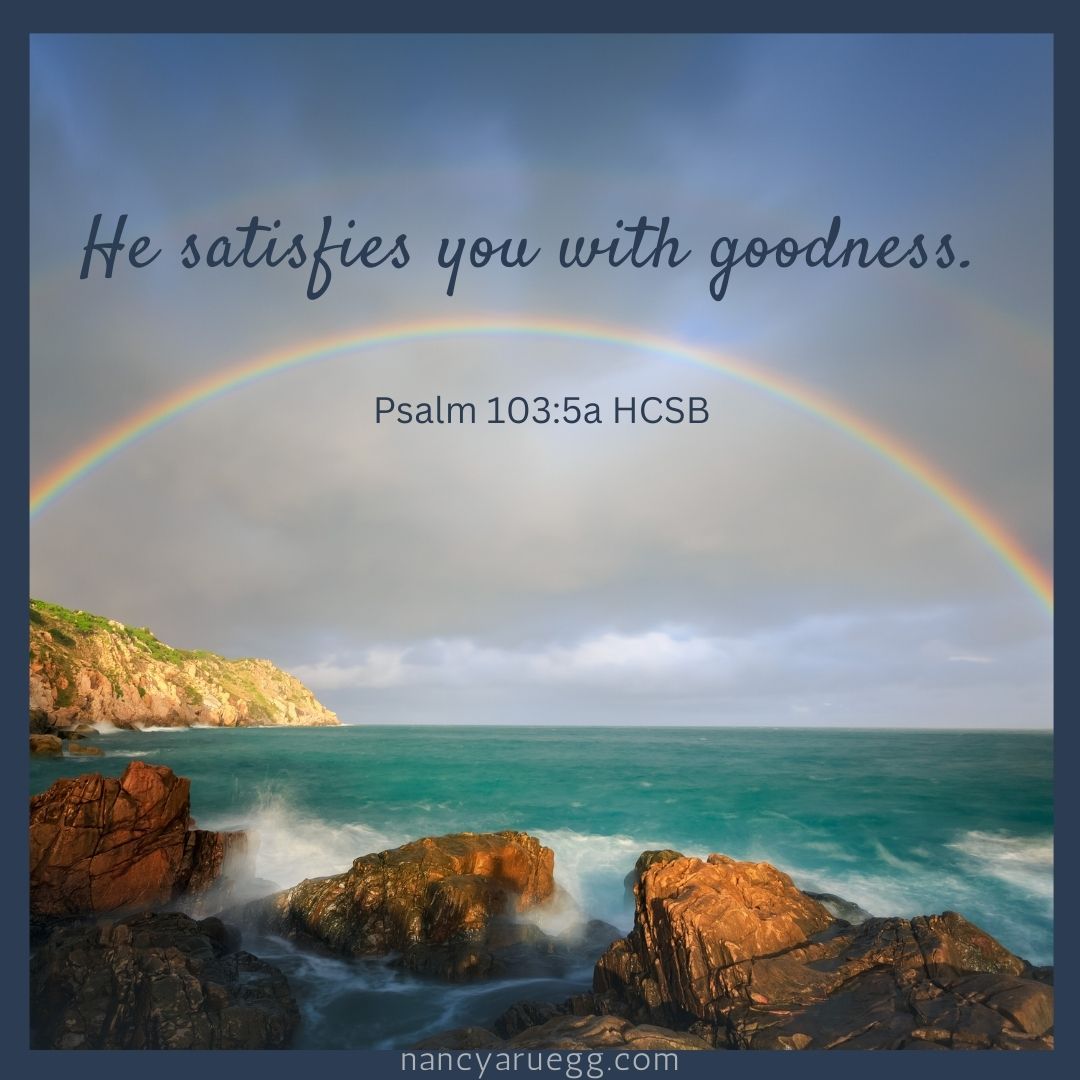
In this moment, consider:
- What goodness do you see, hear, taste, smell, or feel (externally and internally)? Praise God for these gifts [4].
- What recent events have brought you joy? Praise God for engineering those events.
- Who has blessed you lately? Praise God for these people.
- What are you looking forward to? What hopes do you have for the future? Praise God that, because of his unfailing love and faithfulness, we always have hope (Lamentations 3:21-23).
- What evidence of God’s thrilling presence have you noted? Praise him for revealing himself in so many different ways [5].

Perhaps a thick fog of trouble makes it difficult to see much goodness. British writer and scholar Alexander Smellie (1857-1923) would have us affirm:
“The Lord knows what is best for me, and my surroundings are determined by Him. Wherever He places me, He does so to strengthen my faith and power, and to draw me into closer communion with Himself. And even if confined to a dungeon, my soul will prosper.”
Those are fighting words of contentment we can take into battle, my friends!
[1] Job 28:24; Philippians 4:19; Hebrews 12:11; Habakkuk 3:17-19; Philippians 4:13
[2] Lysa Terkheurst, Embraced, 256.
[3] Joy Breaks, 79.
[4] A previous post Mindfulness PLUS may prompt your thoughts.
[5] Another post Heart-to-Heart offers examples.
Photo credits: http://www.worldhistoryencyclopedia.org; http://www.picryl.com; http://www.heartlight.org; http://www.canva.org; http://www.pxhere.com.


















 From the Inside Out