Feeds:
Posts
Comments

Archive for March, 2025

“God preserved me so I might tell the story of my life and of God’s goodness to me,” wrote Jeanette Li in her autobiography. And readers might expect her to share stories indicating a life of continual blessing.

They would be wrong.

Jeanette Li (known first as Li Mao Ya, or “Jasmine Bud”), was born in 1899 and grew up in Southeast China with a large extended family of forty-plus people. They lived in hardship and poverty along with most everyone else in the village.

At age six, Jeanette suffered her first trauma—her beloved father died.

Many more ordeals followed, including:

At age 9: Jeanette contracted malaria and received treatment at a mission hospital. One blessing: while there, she and her mother, Taai-So, became Christians.

Perhaps a mission such as this one in central China

When Jeanette was released, they returned home, only to be turned away by their Buddhist family because they’d become Christians.  Taai-So and Jeanette returned to the mission and lived there.

Age 10: The mission was closed due to political strife; all their missionary-friends had to leave.

Age 16: Against Jeanette’s will, Taai-So arranged a marriage for Jeanette, in order to provide for her daughter’s future. Jeanette went to live with her husband’s family under the thumb of a domineering mother-in-law.

Age 20: Jeanette bore a son. But her husband was rarely home, first because he was in school, and then because he was hired as a teacher some distance away. Eventually he married someone else.

Age 32: Jeanette left all she knew to live and serve in bitter-cold Manchuria, requiring her to learn a new language and culture. For thirteen years she traveled by cart on unpaved roads, telling people about Jesus.

Age 38: War broke out between China and Japan in 1937, lasting eight years. Millions died in combat or the result of starvation or disease.

Age 47: The Communists warred against the Nationalists in a three-year civil war, resulting in more suffering and the death of another million-plus people.

Jeanette returned to South China, to the mission where she and her mother had lived. Jeanette was questioned many times by Communist Army officials.

Age 50: All foreign missionaries were constrained to leave China as the Communist Party took power. Jeanette assumed responsibility for the mission-orphanage.

Age 51: She suffered imprisonment for seventeen months, accused of being a counter-revolutionary. Jeanette had to sleep on the floor “in a damp cell infested by mosquitoes, with hardly any food”[1].

They forced her to perform hard labor, and interrogated her day and night. she became ill with fever and developed hemorrhaging dysentery. Her captors offered no medical treatment [2].

Some would ask, “Where was God in all this? The poor woman endured such hardship, pain, and unfair treatment!”

Jeanette would have us know that God graciously involved himself throughout her life, blessing her, and bringing her joy:

He was there during the siege of malaria that took Jeanette and her mother to the regional mission. God spared Jeanette’s life and introduced them to Jesus.

When they returned home, God used the family upheaval to lead the two back to the mission. Taai-So obtained employment and they grew in their Christian faith.

God brought good out of the abandonment of Jeanette’s husband, providing the opportunity for her to obtain a teaching certificate. She was able to support her son as a teacher and then as school administrator.

God fulfilled Jeanette’s desire to tell others about Jesus and made it possible for her to serve in Manchuria, teaching in village after village.

God led her to return to South China where he used her to assume leadership of the mission-orphanage, putting to use her skills as educator and administrator.

God sustained Jeanette during her imprisonment as she suffered acute misery with grace, courage, and stamina—a witness to all in the prison of God’s power at work in her life.

God also spared her life as illness and weakness nearly overcame her.

After her release, God provided for her recovery and subsequent missionary-work in Canton.

God bestowed a miraculous escape from Communist China, first to Hong Kong where she ministered to children and refugees, and finally, in 1962, to Los Angeles, California where her son already lived.
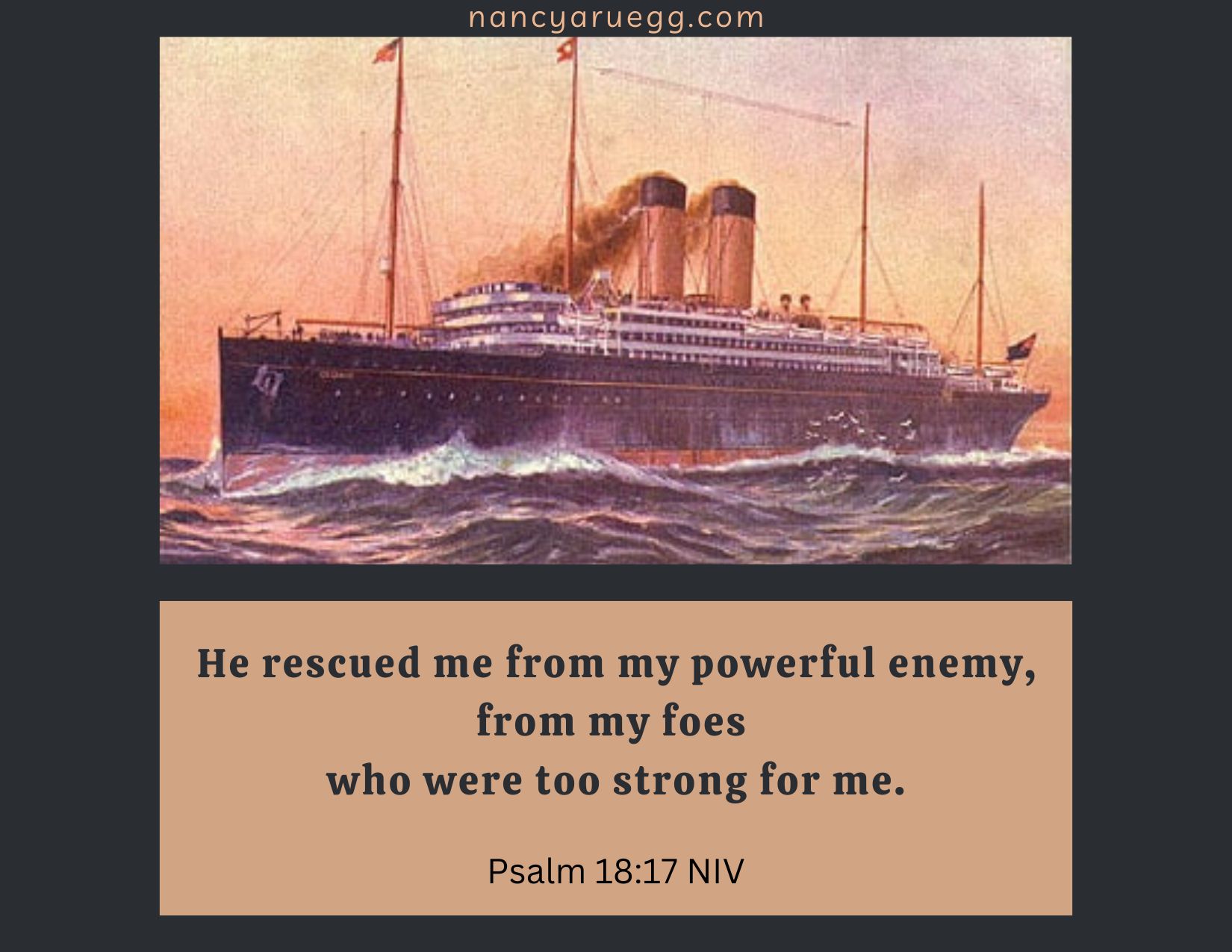
Throughout her life, Jeanette was one of those “true saints who [could] wear the mismatched pairing of suffering and joy” [3]. And as a result,  she drew attention to Christ.

May we do the same.

Addendum: For six years prior to a fatal stroke, Jeanette ministered in the Chinese community of Los Angeles, told her story at every opportunity, and wrote her autobiography.


[1] https://www.placefortruth.org/blog/jeanette-li-and-her-faith-in-gods-promises

[2] Ibid.

[3] https://jenniferdukeslee.com/on-suffering-and-joy-a-lesson-from-the-garden-tomato/ 

Other Sources:

https://www.bdcconline.net

https://rpwitness.org

Image credits: http://www.commons.wikimedia.org; http://www.getarchive.net (2); http://www.canva.com (2); http://www.freebibleimages.org; http://www.getarchives.net.

Processing…
Success! You're on the list.

Read Full Post »

“It isn’t necessary that we stay in church in order to remain in God’s presence,” wrote Brother Lawrence. “We can make our hearts personal chapels where we can enter anytime to talk to God privately” [1].

Isn’t that a glorious realization?

After all, “God could have . . . made his sanctuary in the farthest galaxies, in the majestic mountains, in the deep oceans, or in the vast Grand Canyon. But he chose to live in you and me” [2].

Being a visual learner causes me to wonder, What might an imaginary, personal chapel look like?

I see intricately-carved marble bathed in golden light, stained glass windows creating rainbows on the walls, and a soaring ceiling that fosters awe and wonder.

I also see a long, winding staircase within the castle of my heart. It leads upward to this turret-chapel, far away from the concerns and distractions of the day.

Along that staircase, images line the walls—reminders of God’s attentive care through the years. By the time I reach the chapel-door, my spirit is filled with gratitude and praise.

But the door is closed.

And the only action that will open it is repentance.

Sin is no small matter; it is cosmic treason—it is overthrowing the rule of the One to whom I owe everything [3].

But what do I say? King David’s prayer of repentance (Psalm 51) gives me words:

Lord God, I feel dirty with self-centeredness and pride as I approach your presence. I ask you to wash me, cleanse me, and purge me. Blot out my iniquities, I pray.

I praise you for your mercy and steadfast love that prompt you to abound with forgiveness. “Create in me a clean heart, O God, and renew a right spirit within me. Amen.” [4].

And the door swings open.

There my Heavenly Father sits in an ornate chair, befitting the Almighty King. He beckons me to join him and perch on his footstool [5].

“I’m so glad you’ve come . Just sit and rest awhile. Allow my calming presence to envelop you.” And his arm gently rests on my shoulders.

“Now, what brings you here today?” he asks, while leaning back comfortably in his chair.

“Feelings of frustration,” I blurt. “Circumstances are not unfolding as I expected.”

“I know Child. Remember, I am over all and through all and in all [6]—even in these circumstances. Refresh your spirit with such affirmations of trust as:

“I also feel overwhelmed, Lord. The to-do list is long and time is short.” I turn my body to face him more squarely.  “Please help me prioritize and use my time wisely.”

“Of course!” he responds, with a pat on my back. “When you need wisdom, just ask. I am always ready to oblige” [7].

“Thank you, Father, for your reassurance to see me through [8]!

“And then, one more thing. I ask that you help me honor you in the tasks and encounters of this day.”

He smiles. “Now that is the kind of prayer I love to answer. Never forget that I am always with you; I am your reliable and perfect helper” [9].

I bask in his presence as God provides encouragement from his Word. The golden light that emanates from his presence, permeates my being [10].

I receive the inflowing of the Holy Spirit; he strengthens my will, thinking, and perceptions [11]. He grants me shalom—wholeness, contentment, and peace.

Now I’m ready to face the day, but very glad that anytime I can swoop up that staircase to my personal chapel and be ministered to by the Lord himself.

Praise God for his open invitation to come and his gracious benefits when we do!


[1] The Practice of the Presence of God, “Fourth Letter,” edited by Whitaker House, 1982.

[2] Beth Moore, A Woman’s Heart: God’s Dwelling Place, 215.

[3] Timothy Keller with Kathy Keller, The Songs of Jesus, 108.

[4] Based on Psalm 51:1-3, 7, 9-10, and a devotional by Dane C. Ortlund, In the Lord I Take Refuge, 144.

[5] Psalm 99:5

[6] Ephesians 4:6

[7] Based on James 1:5 NLT

[8] Proverbs 3:5-6

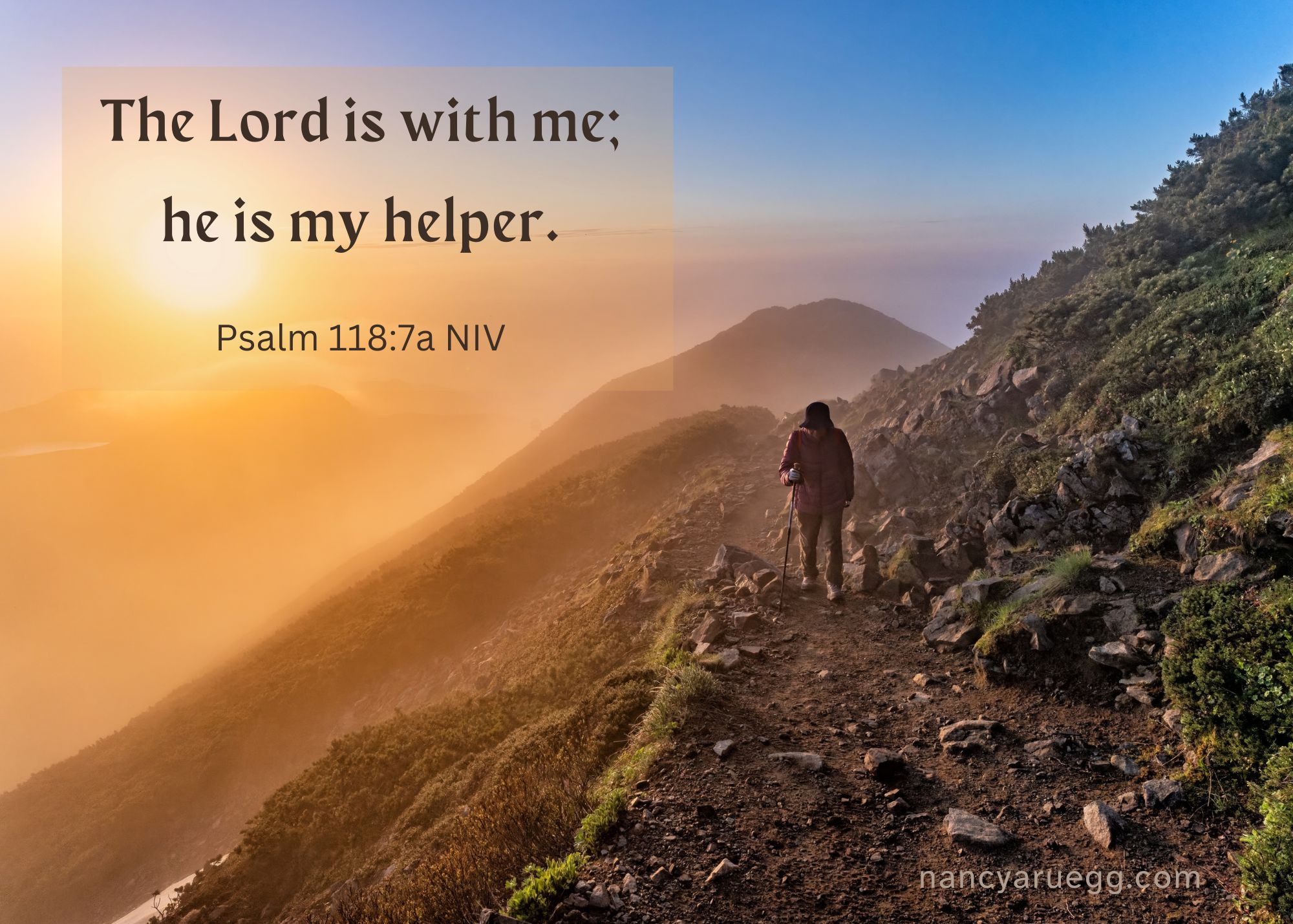
[9] Psalm 118:7a

[10] 2 Corinthians 4:6

[11] Based on The Spiritual Life by Andrew Murray, Whitaker House, 1996, pp. 148, 155.

Image credits: http://www.picryl.com; http://www.flickr.com (Chris Smith); http://www.canva.com; http://www.dailyverses.net; http://www.pickpik.com; http://www.canva.com.

Processing…
Success! You're on the list.

Read Full Post »

“Look what I did!” declares the proud preschooler, pointing to a plate of chocolate chip cookies. Except she didn’t make them—not without a lot of help.

Nana read the recipe; she couldn’t read yet.

Nana gathered most of the ingredients; the child couldn’t reach up into the cabinets.

Nana picked the eggshell-pieces out of the bowl after exuberant egg-tapping on the rim.

Nana helped to accurately measure ingredients and thoroughly scrape the bowl.

Nana adjusted the dollops of dough on the cookie sheet, making them similar-sized for even baking.

Nana put the cookies in the oven and later retrieved them, then set them on cooling racks so little hands didn’t get burned.

And yet the preschooler thinks she made the cookies.

We might chuckle at her unrealistic view of the circumstances, until the realization dawns: we’ve exhibited our own unrealistic view of our circumstances with God.

Perhaps, like me, you’ve run ahead of God, assuming you can handle the challenge ahead. I’ve also been guilty of taking credit when, in reality, my efforts would be worthless without him.

Truth be told, not a moment goes by that God is not helping us in one way or another.

Sometimes his help is demonstrated in monumental ways, as he attends to situations outside our range of capability or influence. I’ve written about such experiences in our family.*

Sometimes God comes alongside in ways that are more easily overlooked. For example:

  • One of those times when I was plagued by writer’s block, I sensed God telling me, “Wait till morning. Rest.” Immediately upon waking, an idea occurred.
  • God settled a bout of sciatica, and I was able to accomplish everything necessary before house guests arrived.
  • Joy-filled, supportive friendships have spanned the years of our lives.
  • Sometimes God brings to mind a bit of his wisdom or an anecdote to share, and the listener expresses sincere appreciation.
  • Those close calls on the roadways offer perfect examples of his intervention.
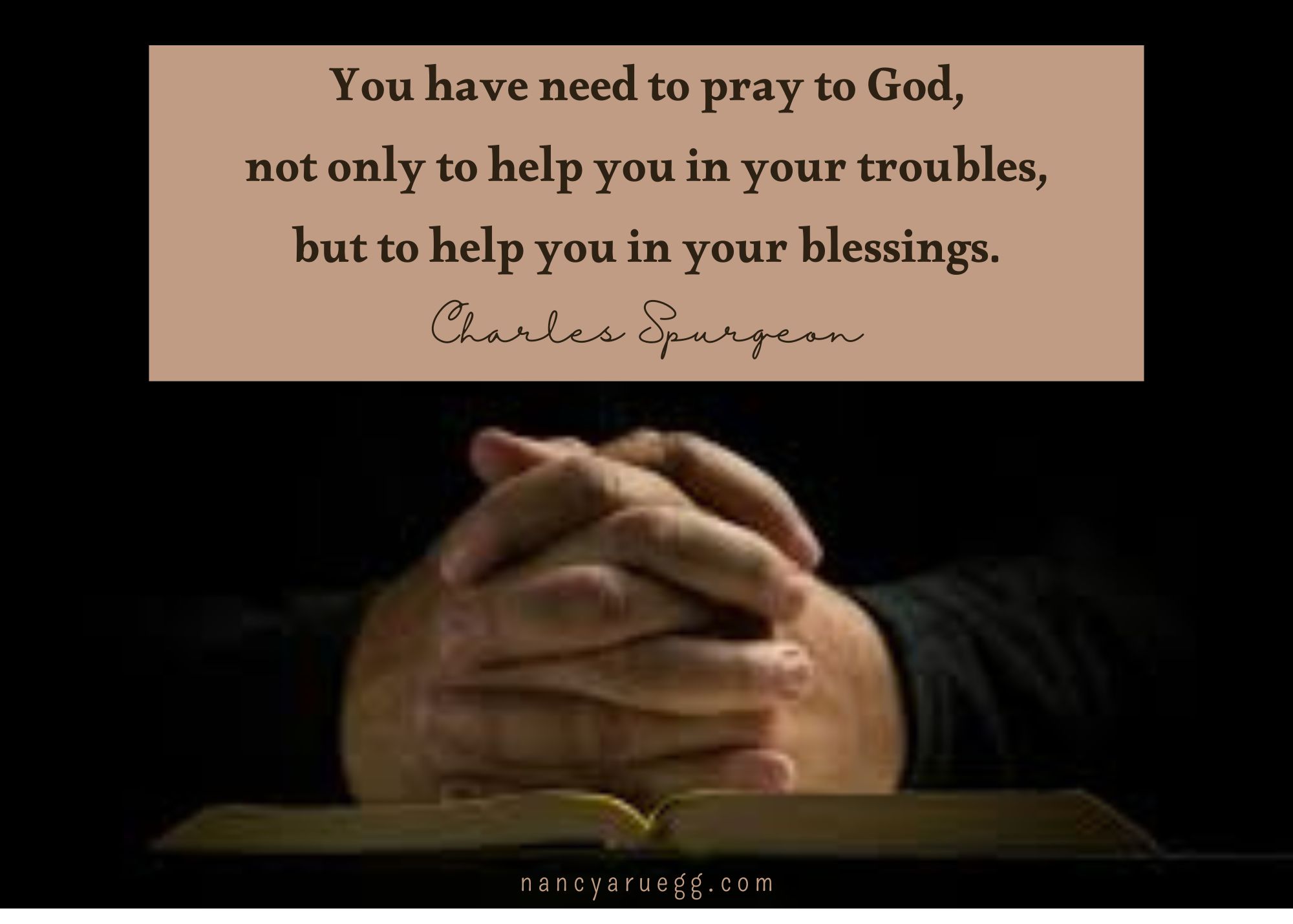
  • On occasion, sacred insight comes in the form of a quote:

Oh yes, I need God’s help not to become proud (“Look how God has blessed ME!”), greedy (“Thanks for your all blessings, Lord, but I need this too!”), or take for granted God’s benevolence and never thank him at all.

In addition, God would have us understand:

His help often comes gradually.  Think of:

  • Joseph, languishing in prison until Pharoah calls for him to interpret his dream (Exodus 39:19-41:43)
  • David, living as a fugitive until God fulfills his promise to make him king (1 Samuel 16-31; 2 Samuel 1-2)
  • The Israelite captives, waiting in Babylon for God to raise up a leader (Nehemiah 1-2)

Remember:

He often helps when we least expect it.

Think of:

  • The widow of Zarephath, expecting to die during famine—until the prophet Elijah arrives (1 Kings 17:7-16)
  • Daniel, expecting to die in the lions’ den–until God shut their mouths (Daniel 6)
  • Jonah, expecting to die within the great fish—until his release on dry ground (Jonah 2)

In addition:

God’s help always comes to those with faith.

The psalmists offer a starter-list of affirmations:

  • “Commit everything you do to the LORD. Trust him, and he will help you” (Psalm 37:5 NLT).
  • “God is our refuge and strength, an ever-present help in trouble” (Psalm 46:1 NIV).
  • “My help comes from the Lord, the Maker of heaven and earth” (Psalm 121:2).

May we live by such truths, and when help materializes, may we be quick to proclaim, “Look with GOD did!”

How has God helped you? Please share in the comments below!


* Examples include: Come and See What God Has Done, After the Fact, and God of the Unexpected (see the illustration at the end for this last one).

Photo credits: http://www.flickr.com; http://www.dailyverses.net; http://www.pexels.com; http://www.canva.com; http://www.heartlight.org.

Processing…
Success! You're on the list.

Read Full Post »

Some of you may remember singing this song in Sunday School:

As a child, I knew God loved me. He proved it by sending his Son to take the punishment for my sins, provide the way for me to live in heaven one day, and know him in the present.  

But I also knew my little eyes, hands, and mouth were not as careful they should have been. Surely God was disappointed in me much of the time.

The truth that I could enjoy God never entered my mind. My false impression of his disapproval stood in the way for many years.

Somehow I’d missed the message of such scriptures as:

  • The joy you have in the LORD is your strength (Nehemiah 8:10 GWT).
  • Take delight in the Lord (Psalm 37:4a NIV).
  • I will go to the altar of God, . . . my joy and my delight (Psalm 43:4 NIV).

I read such passages as directives for prayer and worship rather than invitations to take pleasure in relationship with God.

Psalm 100 provides Exhibit A for enjoying him by praising him. “Shout for joy,” the psalmist begins. “Worship the Lord with gladness; come before him with joyful songs” (vs. 1-2, emphasis added).

Then he gives one example why: God has made us his own—in spite of our frailty—and cares for us like a compassionate, attentive shepherd (v. 3).

Parable of the Lost Sheep (Luke 15:3-7)

That’s certainly cause for thanksgiving and praise (v. 4), which in turn fosters our delight in God. Then the psalmist concludes with three more reasons to enjoy him: he is good, loving, and faithful (v. 5).

This psalm hints at another important truth. Dare I use a sport analogy?

My first attempts at playing tennis sent balls whizzing every which way. However, various drills and hitting the ball thousands of times against a wall built up my skills until I could actually play the game.

That’s when I began to enjoy the sport. The better I knew how to play tennis, the more pleasure I took in the game.

‘See the parallel in the spiritual realm? The more we know God, the more we’ll enjoy him.

But that’s not all.

The more we delight in God, the easier it becomes to obey him and live by his ways.

And as we see those ways contributing satisfaction, contentment, and purpose to our lives, we enjoy him all the more.

So how do we foster our pleasure in God? Here are three ways to get us started:

LEARN ALL YOU CAN ABOUT GOD—his character and his ways.

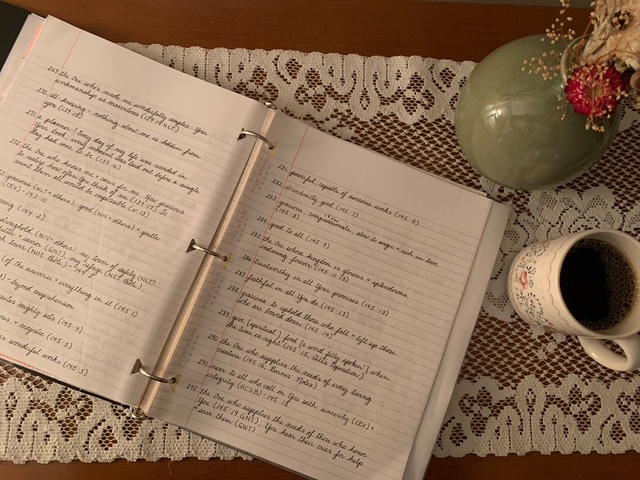
In January we explored the exercise of slowly reading through the psalms and writing down every mention of God’s character and deeds. As the list grows so does our delight in his multi-faceted splendor [1].

LEARN ALL YOU CAN ABOUT JESUS—his life, sacrificial death, provision of eternal life for us and all its implications.

For example, while reading the gospels, note his responses to people, his choices, and his behavior. What character traits can you identify?

While reading the letters written by the Apostles Paul, Peter, and others, consider all that Christ’s sacrifice has purchased for us.

The more we learn about Jesus, the more our love for him grows. The more our love grows, the more we find our hearts filled with joy in him.

REVEL IN GOD’S BEAUTY—his magnificence, the glory of his creation, and the beautiful blessings he bestows.

“His love notes are stashed everywhere,” says Sara Hagerty [2].

And as we discover them, we’ll find ourselves smiling and even laughing in pleasure with God, in the awesome works he performs [3].

Oh—and one more thing to celebrate. There will always be more to enjoy, and we can always acquire more ability to enjoy our God because . . .

quote from Morning by Morning, 268.

How do you enjoy God? Please share in the comment section below!


[1] https://nancyaruegg.com/2025/01/16/celebrating-god-through-the-psalms/

[2] Unseen, 206.

[3] https://nancyaruegg.com/2019/06/06/love-notes/

Image credits: http://www.youtube.com; http://www.dailyverses.net; http://www.freebibleimages.org; Nancy Ruegg; http://www.canva.com; http://www.pixahive.com (Vijay Richhiya).

Processing…
Success! You're on the list.

Read Full Post »

Still Traveling

Impressions Becoming Expressions

Living Our Days

Gaining a heart of wisdom

He Said What?!

I'm Patty, and my husband and I are living with our adult son who has autism and epilepsy. I love sharing lessons learned from life around me, especially life with Aaron.

Meditations of my Heart

Impressions Becoming Expressions

Linda Stoll

Impressions Becoming Expressions

Debby Thompson

Impressions Becoming Expressions

Signora Sheila

Notes on Life, Faith & Italy

Colleen Scheid

Writing, Acting, Living in God's Love

Mitch Teemley

The Power of Story

Heidi Viars

Finding the Image of God