Feeds:
Posts
Comments

Archive for the ‘Blessings’ Category

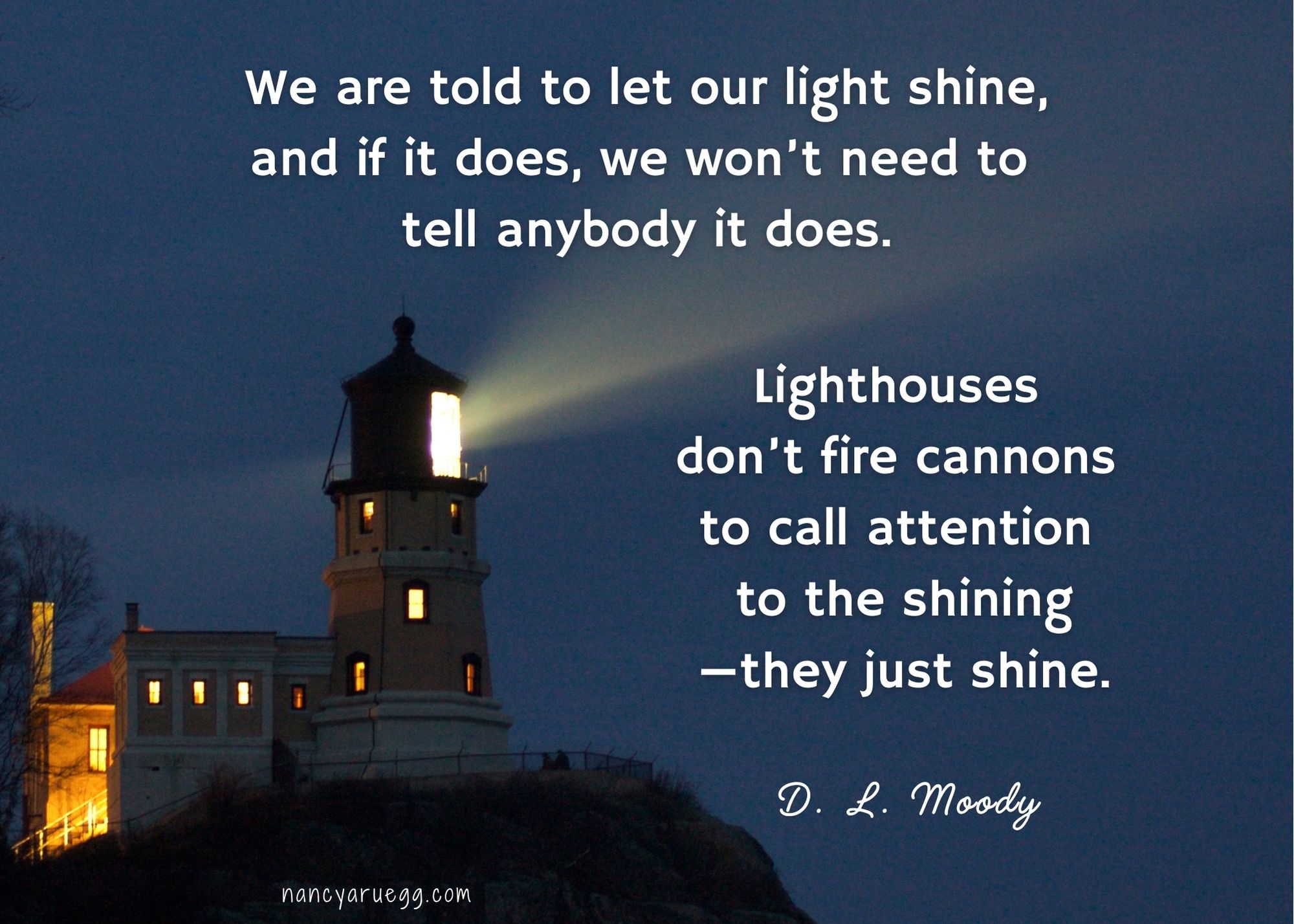
More than likely you’ve never seen the item pictured above. At first glance, you might think it’s a noisemaker used in primitive worship ceremonies. Others might say it looks like a musical instrument or the paddle for some game.

In actuality, it’s a model of an ancient Aztec weapon, a macuahuitl (MAC-wah-wick).

Strange-looking, isn’t it?  How could a wooden paddle be deadly enough for warfare? The key lies in those black protrusions on the sides. They were made from obsidian and filed razor sharp, capable of creating gaping slash wounds.

Here’s another strange-looking weapon. They remind me of the jacks some of us played with as children. These are called caltrops, with each spike measuring 2 1/2-to-3 inches.

Caltrops were designed so that, when thrown on the ground, one point would always land facing up.

Spread hundreds of these around your camp at night, and protect your soldiers while they rest. Or hide them in the area before the opposing army approaches, and cause crippling injury to many men and beasts as they charge.

But why all this talk about ancient weapons?

In the spiritual battles of life, we too have at least two strange-but-effective weapons at our disposal.

At first glance, they might appear useless against our adversary Satan. But these weapons have the power to defeat his minions of discouragement, disappointment, envy, frustration, and more.

The first weapon is gratitude. Yes, just uncomplicated gratitude.

For example, consider each of the negative emotions named above and how gratitude might incapacitate them:

  • When discouraged by lack of recognition at work, I can be thankful God sees.
  • When dissatisfied with my paycheck, I can be thankful that God will provide.
  • When disappointed by my child’s behavior, I can be thankful for the life-lessons taught through consequences that will benefit him in the future.
  • When envious over the lovely new house of an acquaintance, I can be thankful for our low mortgage, friendly neighbors, and the memories that have turned our house into a home.
  • When frustrated by a day of one-step-forward-and-two-steps-back, I can thank God for the strength and patience to see me through [1].

And as we wield our weapon of gratitude we’ll discover: “The truly thankful person is a truly peaceful person” [2].

But how do we manufacture deep-down satisfaction when life is full of difficulty and stress?

Luci Swindoll suggests: “Consider who you are and be satisfied with that. Consider what you have and be satisfied with that. Consider what God is doing and be satisfied with that” [3].

One way to employ contentment is to meditate on one of the praise psalms, like Psalm 103 or 145. While reading each verse, consider what it says about who you are, what you have, and what God is doing. Brandish your discoveries in the face of the enemy of your soul.

Even one simple statement can generate a whole journal of responses. For example:

In this moment, consider:

  • What goodness do you see, hear, taste, smell, or feel (externally and internally)? Praise God for these gifts [4]
  • What recent events have brought you joy? Praise God for engineering those events.
  • Who has blessed you lately? Praise God for these people.
  • What are you looking forward to? What hopes do you have for the future? Praise God that, because of his unfailing love and faithfulness, we always have hope (Lamentations 3:21-23).
  • What evidence of God’s thrilling presence have you noted? Praise him for revealing himself in so many different ways [5].

Perhaps a thick fog of trouble makes it difficult to see much goodness. British writer and scholar Alexander Smellie (1857-1923) would have us affirm:

“The Lord knows what is best for me, and my surroundings are determined by Him. Wherever He places me, He does so to strengthen my faith and power, and to draw me into closer communion with Himself. And even if confined to a dungeon, my soul will prosper.”

Those are fighting words of contentment we can take into battle, my friends!


[1] Job 28:24; Philippians 4:19; Hebrews 12:11; Habakkuk 3:17-19; Philippians 4:13

[2] Lysa Terkheurst, Embraced, 256.

[3] Joy Breaks, 79.

[4] A previous post Mindfulness PLUS may prompt your thoughts.

[5] Another post Heart-to-Heart offers examples.

Photo credits: http://www.worldhistoryencyclopedia.org; http://www.picryl.com; http://www.heartlight.org; http://www.canva.org; http://www.pxhere.com.

Read Full Post »

Summer 2021

A happy family is

but an earlier heaven.

–George Bernard Shaw

We’ve been enjoying an earlier heaven this week as our three children, their spouses, and three grandchildren have gathered. (Steve’s sister and brother-in-law joined us for a day also.)

Because such occasions happen only now and then, I totally agree with Kathleen McGowan, who wrote:

The only thing sweeter than union

is reunion.

–Kathleen McGowan

Indeed, we treasure these times of togetherness, just as Wanda Hope Carter advocates:

Family and friends are hidden treasures.

Seek them and enjoy their riches.

–Wanda Hope Carter

A Spanish-American philosopher came close to describing why we find treasure in familial relationships:

The family is one of

nature’s masterpieces.

–George Santayana

I’d amend his statement to: “The family is one of God’s masterpieces.” After all, family is God’s idea, established at the beginning of time (Genesis 1:28).

Author Dillon Burroughs adds this viewpoint:

When we think of our family,

our spouse, parents, or children,

let us see them as a gift from God.

–Dillon Burroughs

Indeed! I am supremely grateful to my Heavenly Father for giving us the gift of a family that loves, supports, and takes joy in one another.

They make my soul blossom.

Let us be grateful to people who make us happy;

They are the charming gardeners who make our souls blossom.

–Marcel Proust

Read Full Post »

Three weeks ago we embarked upon a reflection of one of the most important songs in the history of the Christian faith: “O Come, O Come, Emmanuel.”

The lyrics beautifully weave together the Old and New Testaments, telling the story of our Messiah, “the chosen One”—who would come to deliver his people from the consequences of their sins and establish his kingdom forever [1].

Each verse helps us place our eyes on Jesus’ return by remembering his first coming and then expressing hope and yearning for his second coming [2].

As noted before, the unknown lyricist (from the eighth or ninth century) carefully based each stanza on scripture. You’ll find references for further reflection listed at the end of this post.

One fact not mentioned thus far: the poet constructed the Latin lyrics in the form of a seven-sentence acrostic. When the first letter of the second word of each sentence (the names of Jesus) are put together, they spell SARCORE.

Read that word backwards, and the letters form two words of sublime hope: Ero cras, which means, “I will be present tomorrow.”

Whatever the future may hold, our Emmanuel will see us through. What a faith-stirring surprise the lyricist created for us [3]!

Now let’s turn our attention to the last two verses [4].

VERSE SIX

I praise you, Lord Jesus, that just as the morning star shines brightly against the darkness of night, you are the glorious Light of the world, shining brightly against the darkness of evil [5].

Just as the morning star glows steadily without a flicker, you shine in our lives with unwavering faithfulness and love [6].

Just as the morning star is a promise of coming day, your light provides hope and assurance that you will come again, to usher in The Day of the Lord, when a new heaven and a new earth will be established and righteousness will dwell [7].

Finally, just as the morning star can guide those at sea, your light guides our way through life. “In your light we see light”—the light of wisdom and discernment [8].

Such truths do bring us comfort, dispelling shadowy thoughts and flooding our spirits with the light of your perfection.

I praise you, Lord Jesus, for turning the darkness of sin, anxiety, discouragement, and more, into the light of your forgiveness, peace, hope, and joy [9]!

VERSE SEVEN  

I praise you, Lord Jesus, our King! How comforting to know that Someone all-wise and supremely gracious is the Ruler of all nations, all things [10].

Yet you are also a respecter of persons. You’ve bestowed upon us the gift of choice, the ability to determine our own way. And what have we accomplished? Our world is tainted by selfishness, pride, and contention [11].

How we need you, Lord Jesus! You are our only hope for our selfishness to be transformed into selflessness, pride into humility, and contention into unity.

So we boldly pray that every person on earth would come to faith in you [12].

Is that an unattainable dream? No, because you also are unwilling that anyone should perish. And all things are possible with you, our sovereign God and Savior [13].

After all, you:

  • Created all things everywhere
  • Maintain order in the entire universe
  • Control the course of human history
  • Depose kings and raise up others
  • Exist in all places at the same time [14]

I praise you, Lord Jesus, that nothing can prevent you from accomplishing your purpose [15].

And I praise you, Lord Jesus, that you’ve given us the wherewithal to experience harmony with one another, as we demonstrate love and compassion with humility [16].

May we be examples to the world, whetting their appetite for what we experience: the joy of living in the presence of the King of Peace [17]!


[1] Ace Collins, Stories Behind the Best-Loved Songs of Christmas,127; Isaiah 59:20; John 1:40-49; Romans 6:23; Revelation 11:15.

[2] https://www.danielim.com/2017/12/19/the-hidden-theology-and-history-of-o-come-o-come-emmanuel/

[3] https://www.ligonier.org/learn/articles/o-come-o-come-emmanuel

[4] From www.hymnary.org. (Lyrics vary depending on source.)

[5] Revelation 22:16

[6] Psalm 100:5; John 8:12

[7] 2 Peter 3:12-13

[8] Psalm 36:9b; Ecclesiastes 2:13-14

[9] Psalm 18:28

[10] Revelation 19:16

[11] Proverbs 5:23

[12] 1 Timothy 2:1-4

[13] 2 Peter 3:9; Mark 10:27b

[14] Colossians 1:16-17; Daniel 2:21; Jeremiah 23:23-24 GNT

[15] Psalm 115:3

[16] 1 Peter 3:8

[17] Psalm 16:11

Photo credits: http://www.flickr.com; http://www.heartlight.org; http://www.stockvault.net; http://www.rawpixel.com; http://www.stockvault.net; http://www.canva.com; http://www.pickpik.com.

Read Full Post »

Have you noticed that Bible verses about God’s love often include one particular adjective? In the New International Version, translators chose the word unfailing, as in:

 Just in the psalms alone of that version you’ll find the phrase unfailing love used at least twenty-seven times.

Even more interesting, look up those same verses in other translations and you’ll find no less than eight different expressions in place of unfailing love, including:

  • Gracious love (International Standard Version)
  • Devoted love (Berean Standard Bible)
  • Steadfast love (English Standard Version)
  • Constant love (Good News Translation)
  • Merciful love (New American Standard Bible)
  • Lovingkindness (Amplified Bible)
  • Faithful love (Holman Christian Standard Bible)
  • Loyal love (New English Bible) [1]

Each one adds to the wonder of an all-powerful King of the universe who delights in you, who treasures you.

Yes, he does.

So for the next few moments, let God love on you. Deliciate in the lavish love of your Heavenly Father. [2]

He would have you know:

My love for you, precious child, is gracious

I do not just put up with you!

My grace to you is affirmation of my acceptance

and pleasure in you. [3]

My love for you is devoted

caring, affectionate, and attentive.

Remember, I am always thinking about you;

I am always supplying your needs. [4]

My love for you is steadfast.

“No matter what you might do,

you don’t have to worry about letting Me down,

because you were never holding Me up.” [5]

My love for you is constant.

I already loved you before time began.

Regardless of your performance,

My love for you will never diminish. [6]

My love for you, dear one, is merciful—

forgiving, sympathetic, and ungrudging.

I’ve given you a dazzling crown of mercy and compassion;

will you not wear it? [7]

My love for you is full of kindness.

Through My Son I made it possible

for you to enjoy a rich and satisfying life.

I continually bless you with good things. [8]

My love for you is faithful.

Time and again I have “accomplished wonders,

plans formed long ago—with perfect faithfulness”—

To bless you, provide for you, grow you. [9]

My love for you is loyal

Unchanging, unwavering, and unfailing.

The more you depend on Me,

The more dependable you will find me to be. [10]

*     *     *     *     *     *     *     *     *     *

I can scarcely believe that you, the God of the universe, with all your perfections and glory, would love me—with all my imperfections and shame. Yet you eagerly bestow your gracious favor in wondrous ways. Help me to continually rest in your unfailing love, free from anxiety and fear. Amen.  

How is God loving on you today? Please share in the comment section below!

Art & photo credits: http://www.pickpik.com (2); http://www.heartlight.org; http://www.canva.com; http://www.picryl.com (artist: Richard Jakopic); http://www.pickpik.com (2).


[1] In many Old Testament scriptures, it’s the multi-dimensional Hebrew word hesed (used nearly 250 times) that translators are trying to express.

[2] Based on a statement of Margaret Feinberg, Wonderstruck, 25.

[3] John 1:12; Psalm 147:11

[4] Psalm 139:17-18; Philippians 4:19

[5] Lysa Terkeurst, Embraced, 130.

[6] Jeremiah 31:3; 1 John 4:8; Romans 8:38-39

[7] Psalm 103:2-4

[8] John 10:10 NLT; Psalm 107:9 GNT

[9] Isaiah 25:1; Matthew 7:11; Psalm 23:1; Philippians 1:6

[10] James 1:17; Psalm 145:13b; Cliff Richard, https://www.searchquotes.com/search/Dependable_God/

Read Full Post »

Looking ahead at the calendar for 2024, I found more than a few wild-and-crazy celebrations in store for those who care to participate. Just in January alone, we can look forward to:

  • National Cream Puff Day—January 2 (Who thought this was a good idea right after the holidays when so many will be embarking on diets?)
  • World Logic Day—January 14 (If only we could fix in one day the irrational and absurd thinking that seems to be increasing these days.)
  • National Popcorn Day—January 19 (This one I can get behind!)
  • National Blonde Brownie Day—January 22 (If you prefer cream cheese brownies, your day is coming February 10.)
  • National Backwards Day—January 31 (Seems like we’d benefit more from honoring evidence of going forward—toward integrity, responsibility, and maturity.)

Didn’t I tell you they were wild-and-crazy observances?

To be honest, we Christians are encouraged to celebrate some wild-and-crazy things—things that make no sense at first glance, like:

Weakness

Too many of us assume we have to be supremely talented and gifted in order to be used by God. But the opposite is true.

God most often chooses ordinary people who’ve emptied themselves of prideful ambition and self-centered motives. They are the ones whom God can fill with himself, who become the ideal showcases for his greatness and glory [1].

Turns out, when we recognize just how weak we are—with our inadequacies, missteps, and fears—we’re actually in the best position to manifest the power of God.

Now that’s worth celebrating!

Meekness

The Hebrew word for meekness suggests “being molded.” The meek are God-molded; they’ve submitted to him and are patterning their lives after him [2]. The meek delight in leaving everything in God’s capable hands.

That may sound unappealing to some, but little do they know: the meek get the most out of life.

For example:

  • They view life with joyful gratitude, not disgruntled entitlement
  • They appreciate their resources—not for the prestige they offer but for their usefulness
  • They don’t harbor envy or jealousy, but genuinely enter into the joys of others

And note what God promises to the meek in Psalm 37:11 (above): an abundance of peace. Isn’t that a happy reality to celebrate?

Servanthood

Not many of this world are interested in the role of servant. But God’s kingdom works very differently:

Every day is a new opportunity to discover what eternal business might be lurking in the ordinary business of being human [3].

Bruce Wilkerson

Yes, there is eternal business in serving others as we:

  • prepare meal after meal that keeps the family fed, but also nourishes their hearts with comfort and delight
  • perform small deeds of kindness—because they’re woven into the larger expanse of God’s far-reaching grace
  • work for the benefit of others and the glory to God—whether anyone notices or not

There is honor in such serving.

Trouble

Now I’ve gone too far, some will say. Celebrating difficulty seems downright sadistic. But consider:

We can take delight in what God will do through the trial.

First, God delights in transforming the black-carbon pressures of our lives into diamonds of radiant beauty, as he chips away at the rough places of our character and the distractions in our lives, allowing the Light of Christ to shine with greater clarity.  Such an undertaking rarely happens overnight; it’s a process that takes time [4].

Second, think of those you’ve known or learned about who did shine with the radiant Light of Christ. They undoubtedly faced trouble, yet persevered and triumphed in the end. We too can experience fulfillment as the Light of Christ shines through us to impact others.

Third, while we’re in the midst of the trial, God often brings the sweetest discoveries of himself [5].

These realities also warrant celebration.

The question remains, how will we celebrate?  Perhaps with an ancient song:


[1] Nancy Leigh DeMoss Wolgemuth, Biblical Womanhood in the Home, 67.

[2] Ralph Sockman, The Higher Happiness, 65.

[3] A Life God Rewards, 114, emphasis added.

[4] Joanna Weaver, Having a Mary Heart in a Martha World, 199.

[5] L. B. Cowman, Jim Reimann (ed.), Streams in the Desert, 143.

Art & photo credits: http://www.pixexid.com; http://www.dailyverses.net; http://www.pixexid.com; http://www.depositphotos.com; http://www.canva.com; http://www.commons.wikimedia.org.

Read Full Post »

According to American theologian R. C. Sproul (1939-2017): “Prayer does change things, all kinds of things. But the most important thing it changes is __________ [1].”

What would you put it the blank? A few possibilities include:

  1. The lives of those we pray for
  2. The way events unfold
  3. The attitudes and perspective of those prayed for
  4. Us—the people doing the praying

Sproul wrote, the most important thing prayer changes is us.

Author and Bible teacher Kay Arthur (1939- ) wrote similarly: “You cannot spend time in prayer, even intercessory prayer [for others], and not have it impact you personally [2].”

Such statements as these beg the question how. How could our prayers for others affect us?

One possibility comes readily to mind. Praying for others and watching miraculous answers unfold strengthens our faith, which contributes to peace of mind and heart.

On the other hand, in those situations when God chooses to postpone his response and yet we continue to pray, the waiting teaches us patience and persistence.

But might there be more ways intercessory prayer impacts us? A bit of research turned up the following. You may be surprised as I was by how many there are.

Intercessory prayer fosters unity in our hearts with those we pray for. We can even find ourselves growing in compassion and affinity for them.

I’ve prayed for Kiana for a number of years now. We’ve never met; I know very little about this young woman in India and yet love for her has bloomed in my heart just the same. I’m looking forward to meeting Kiana in heaven and hearing her story [3].

Intercessory prayer teaches us selflessness as our thoughts are directed away from ourselves and toward others.

Intercessory prayer changes our perspective as we see our desires for a person or situation shift to what God wants to do. We remember: his expansive plan always includes more benefit than we can perceive [4].

We also acknowledge that even times of pain and trouble produce worthwhile results.

Esther Ahn Kim was a Korean Christian who spent six years in a Japanese prison during Word World II as a result of her faith. No doubt many prayed for her release, and yet freedom wasn’t granted. However, at least two guards and many of Esther’s fellow prisoners became believers in Jesus—because of her [5].

Intercessory prayer shifts our attitudes from fear and anger to peace and calm as we affirm the truth of scripture, including:  

  • Whatever transpires has been allowed by God
  • We will never understand all the workings of God this side of heaven
  • Even suffering achieves purpose [6]

Intercessory prayer develops humility as we acknowledge our limited ability to impact people or circumstances and affirm only God can affect any change he chooses.

Intercessory prayer augments our usefulness and causes spiritual growth.

When Pastor Hendricks learned that Matt T. had been asked to teach the Sunday School class for junior high boys, his eyebrows went up. Matt was just out of college and still had some growing up to do himself.

But before long, Pastor Hendricks began hearing reports of the once-rowdy boys eagerly participating in the class. He invited Matt to lunch and asked about his secret of success.

Matt showed him a little black book with one page for each boy. On each page were comments like, “Having trouble in math,” “comes to church against his parents’ wishes,” and “wants to be a missionary but doesn’t feel capable.” Matt was praying over the pages every day.

Pastor Hendricks observed: When we pray for others, we become more like Jesus. And as we grow, God shows us more, and uses us more [7].

Isn’t that just like our Heavenly Father? Even as we seek to bless others with our prayers, God is also blessing us.

P.S. Please join me in prayer for the suffering people of Israel and the innocents of Gaza. Let’s pray that the perpetrators of evil are thwarted at every turn [8].


[1] The Prayer of the Lord

[2] His Imprint, My Expression, 157.

[3] You can read how I learned about Kiana at https://nancyaruegg.com/2019/12/12/advent-ure/  

[4] Ephesians 2:20

[5] https://www.thegospelcoalition.org/article/esther-ahn-kim-steadfast-in-persecution/

[6] Romans 11:33-36; James 1:2-4

[7] https://www.lifeway.com/en/articles/sermon-prayer-life-of-a-christian-colossians-4

[8] Psalm 125:4-5

Photo credits: http://www.freerange.com; http://www.canva.com; http://www.pickpik.com; http://www.dailyverses.net; http://www.canva.com.

Read Full Post »

On careful scrutiny, we find

that God’s grace-filled fingerprints

are all over our lives.

—Patsy Clairmont [1]

“Amen!” we say, when life is good.

“I’m not so sure,” we may falter, when life is hard.

But our loving Heavenly Father would have us know several truths, before we presume he’s withholding his grace (his favor, generosity, and loving kindness).

First, we need to remember: not one of us deserves his grace.

All of us have compiled a “long and sorry record as sinners”[2] that should result in punishment. 

 And yet he offers grace upon grace [3].

Second, God proved his over-arching favor with one incomprehensible act.

He sent his Son Jesus to die in our place, to pay the debt for our sins, and provide a way to heaven for us.

Our Savior kneels down and gazes upon the darkest acts of our lives. But rather than recoil in horror, he reaches out in kindness and grace and says, “I can clean that if you want.” And from the basin of his grace he scoops a palm full of mercy and washes away our sin.” [4]

Max Lucado

That alone provides a supreme, grace-filled fingerprint upon our lives. But there is more.

Out of his grace, God supplies an abundance.

Of course, a Kempis wasn’t referring to a problem-free life with every desire fulfilled. That’s not what God has promised.

Those of us who’ve known God for a while can attest to the supreme value of such blessings as God’s strengthening presence, inexplicable peace, effervescent joy, unfailing provision, and more.

Our challenge is to see the evidence of God’s grace. The more we look, the more we’ll find.

Fourth, God’s grace works within us to provide great benefit.

He’s graciously shaping us into what is useful and beautiful to him, what is satisfying and fulfilling to us. Not that the process is always agreeable and pleasant.

We’d do well to keep in mind:

Fifth, even when the severest trouble comes, God’s grace will see us through.

The grace of God, which is sufficient, will enable us to make of our troubles the pearls they can become. It is no mere figure of speech. It is something more than a simile to say that one enters heaven through pearly gates. [6]

Peter Marshall

Consider these men who entered heaven through the pearly gates of calamity:

  • Stephen was the first martyr of the Christian faith. There’s no record that he cried out in terror as men threw rocks at him. Instead, scripture tells us he was praying, “Lord Jesus, receive my spirit.”[7]
  • Polycarp became a disciple of the Apostle John. As he faced martyrdom, Polycarp declared: “Eighty and six years have I served Christ, nor has He ever done me any harm. How, then, could I blaspheme my King who saved me? . . . I bless Thee for deigning me worthy of this day and this hour that I may be among Thy martyrs and drink the cup of my Lord Jesus Christ.” Polycarp was burned alive.
  • Matthew Ayairga wasn’t a Christian when he plus twenty believers were captured by ISIS in 2015. These twenty men of strong faith greatly influenced Matthew’s life. When the executioners asked him if he believed in Jesus Christ, Matthew said, “Their God is my God.” The young man was beheaded that day along with the others, but found life with Christ for all eternity [8].

Each of these martyrs discovered:

*     *     *     *     *     *     *     *     *     *

O Sovereign God! We praise you for the grace of your sustaining power. May we recognize more readily your fingerprints of grace, and in the process become more gracious ourselves–more loving, grateful, and obedient to you.

May that growing awareness prepare us to praise you, serve you, and prosper in our spirits—even unto death.


[1] The Best Devotions of Patsy Clairmont

[2] Romans 3:23 MSG

[3] John 1:16

[4] Grace for the Moment, 352.

[5] Keeping the Heart

[6] The Best of Peter Marshall, 89.

[7] Acts 7:59-60

[8] Matthew 10:39

Art & photo credits: http://www.pickpik.com; http://www.canva.com; http://www.pikist.com; http://www.canva.com; http://www.pexels.com.

Read Full Post »

Online dating services have proved: you don’t have to see a person to fall in love. Through heart-to-heart sharing over the internet, couples can become acquainted with the likes and dislikes of one another, their opinions on current issues, and what brings them satisfaction in life.

The format provides the opportunity to learn about who the other person is before finding out what he/she looks like.  (One site requires five contacts back and forth before names are exchanged–much less photos.)

It’s possible that couples in new online relationships grow to know one another better than couples who meet face-to-face, because they communicate more and at a deeper level. (Assuming they’re being honest, of course.)

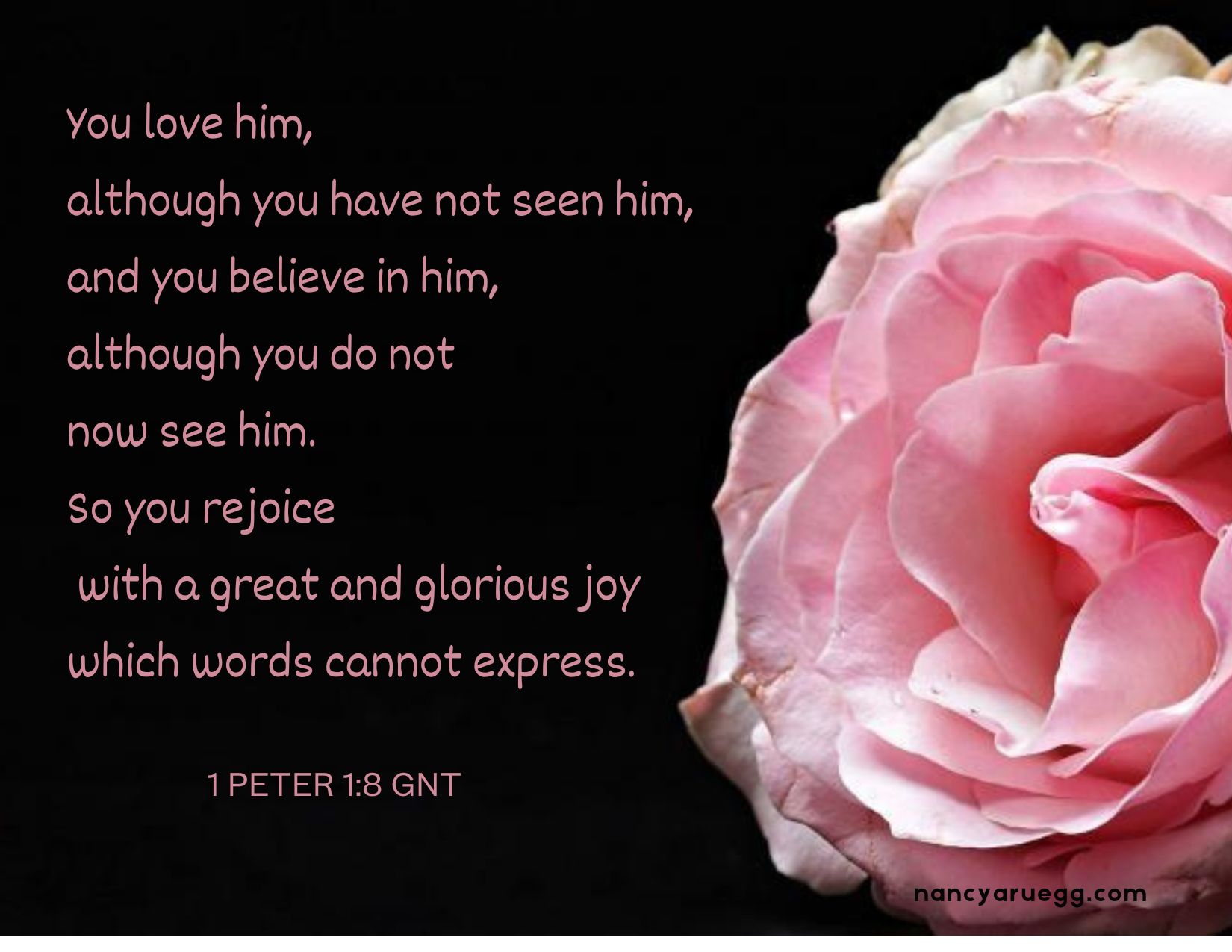
Similarly, we can grow to know and love God through heart-to-heart sharing, even though we can’t see him.

For example, we might share such whisper-thoughts as these, when:

The view from our deck one September morning

  • Our attention is drawn to sunbeams on mist-draped foliage, and we turn the observation into praise for God’s creative handiwork
  • Someone grabs us in an exuberant hug, and we thank God for family and friends who provide encouragement and support
  • An unpleasant task is finished, and we praise him for the fortitude to see it through
  • Humor comes into our lives and we laugh in response, but also in gratitude to the God of all joy
  • We light quiet-time candles, reminding us the Light of the world is with us in our solitude

There is no sweeter manner of living in the world

than continuous communion with God.
Brother Lawrence (1611-1691)

But one-sided communication doesn’t build a relationship. Listening for God’s words and watching for his works are essential. How do we do that? God rarely speaks audibly or shows himself physically. No one has seen his face (1).

However, God does reveal his heart to us in a number of ways through:

The Bible 

No surprise there. Its pages offer a lifetime of new discoveries about who our God is and how he works in our lives. We hear God’s wisdom in his words; we see God’s love in his actions (2).

Other reading 

Although Christian writers often provide personal impressions from God, he sometimes speaks through secular works as well. Such moments often catch me off guard.

Recently I read Natalie Goldberg’s Writing Down the Bones (1986). Among the many worthy morsels I wrote down, she said, “We walk through so many myths of each other and ourselves; we are so thankful when someone sees us for who we are and accepts us.”

O God, I thought, that describes YOU! You see more of my real self than anyone, yet you still accept me. How astounding that you, a perfect God, envelop me in absolute love–in spite of all my flaws.

People  

What a heart-lift when others provide encouraging words, warm smiles, or comforting hugs–especially when we remember such good and perfect gifts come from God himself (3).

Creation

John Calvin once described the world of nature as God’s glorious theater. As we take note of his infinite genius on display, we learn of his ingenuity, attention-to-detail, and ability to bring together disparate parts into harmonious habitats.   Our hearts fill with wonder.

Music  

Sometimes I can almost feel God’s warm touch on my shoulder as he speaks comfort, strength, and joy through the power of song.

Notice: when God communicates with us, there’s a heart-reaction.  We experience a quickening in our spirits as we recognize his truth, sense his loving attention, receive guidance and empowerment, or know without a doubt he’s with us and has everything under control.

So!

Keep your eyes open for God,

watch for his works;

be alert for signs of his presence.

Psalm 105:4 MSG

What a glorious way to live!

Notes:

  1. Exodus 33:20
  2. Hebrews 1:2-3
  3. James 1:17
  4. See “The Power of Song” for more on this subject.

Photo credits: http://www.wallpaperflare.com; Nancy Ruegg; http://www.commons.wikipedia.org; http://www.pxhere.com; http://www.pxnio.com; http://www.pexels.com (Gustavo Fring).

This post revised and reblogged from 9-17-2015 while we enjoy the company of old friends.

Read Full Post »

Some of you may know of the long-running PBS program with the same title as this post. Begun in 1987, it continues to provide seniors and those with physical limitations a way to exercise while seated in a chair.

Research has proven that participants experience better heart and vascular health, core and back strength, joint health, flexibility, posture, and balance. They also benefit from boosted energy, thinking skills, memory, and overall mental health [1].

Surprising, isn’t it, the number of benefits from chair exercises?

There’s another list of benefits we can enjoy–if we choose to sit in God’s presence.

A psalmist offers this lovely invitation:

Can you picture yourself seated at God’s feet, much as Mary sat at Jesus’ feet in Bethany [2]?

Imagine the love in his eyes as he gazes at each of us, the tenderness in his voice as he speaks, the gentle pressure of his hand on our shoulders as he expresses his affection.

And as we sit, he’d undoubtedly encourage us to participate in exercises for our spirits that will make us fit—trained and equipped to thrive [3].

What might such exercises include? These four offer a good place to start:

Bible Study and Meditation to Foster Strength

Soul strength doesn’t develop overnight any more than physical strength. Time spent in God’s Word is essential.

[Scripture] will not yield its astonishing riches except through diligence and sustained reflection [4].

Timothy Keller

But given our busy schedules, how do we pause long enough for sustained reflection? It may mean going to bed earlier and getting up earlier, reducing screen-time or limiting time spent reading for pleasure, but the results are supremely worth the small sacrifice.

We soon experience the soul strength to be gained from sitting with God and contemplating his Word–soul strength that equips us to better handle the everyday strains of life.

Worship (with Gratitude and Praise) for Improved Spiritual Health

Developing our gratitude-muscles fortifies our faith, refreshes our spirits, and adds vitality to life as we become attuned to God’s blessings all around us.

Praising God for who he is and what he’s done lifts our spirits and improves our mood. We soon find this exercise fostering encouragement, peace, and even pleasure within our hearts as we focus on him. (Praise music can be especially uplifting.)

Scripture Memorization to Enhance Endurance

The Bible creates endurance. Its promises lift the heart and its panoramic insights strengthen the will [5].

Timothy Keller

That endurance-factor increases when we commit meaningful passages to memory.

We can begin with just a phrase or single statement such as: “With God all things are possible” [6].

Speak it aloud in the shower or as you pull out of the driveway for work. While in the carpool line or running errands, quiet the noise around you with the sound of your voice saying His Word [7].

Sara Hagerty

Engaging the Imagination to Increase Heart Health

For example, imagine God as:

  • Your all-powerful King seated on his glorious throne, yet ready and willing to help you at any moment
  • Your constant Companion, accompanying you throughout the day
  • Your loving Shepherd, caring for your every need
  • Your heavenly Father, holding your right hand, protecting and guiding you [8]

Such visualizations will surely help us keep our balance as the day unfolds—even with its stresses, interruptions, and difficulties.

*     *     *     *     *     *     *     *     *     *

You don’t need me to tell you: if a person chooses not to exercise, he can’t expect to be physically fit.

The same is true in the spiritual realm. If we forego such exercises as suggested above, we can’t expect to be spiritually fit.

On the other hand, great benefits await those who do choose to sit in God’s presence.

They will become strong.

And that’s a promise:

What exercise helps you sit and be fit in the spiritual realm? Please share in the comment section below!


[1] https://sunshinecentres.com/7-benefits-of-daily-seated-exercise/

[2] Luke 10:38-42

[3] Psalm 92:12-15 HCSB

[4] Timothy Keller and Cathy Keller, The Songs of Jesus, 320.

[5] Keller, The Songs of Jesus, 310.

[6] Matthew 19:26b

[7] Sara Hagerty, Unseen, 149.

[8] Revelation 4:1-11; Psalm 46:1-3; Psalm 145:18; Isaiah 40:11, 41:13.

Photo credits: http://www.pexels.com; http://www.canva.com; http://www.pxhere.com; http://www.pixexid.com (Ralph, AI Artist); http://www.canva.com; http://www.rawpixel.com; http://www.dir.es.

Read Full Post »

Want to know three actions guaranteed to bring delight?

These actions are recommended by the One who designed us, God himself, because of the blessings he’s built into them. He would have us:  always rejoicing, always praying, and always giving thanks [1].

You might say, “I’ve experienced the delight of rejoicing in God’s goodness, and gratitude to him does uplift my spirit, but prayer? That seems more discipline than delight. Besides, how can we pray continually and keep up with the responsibilities of life?”

We’ll address the delights of prayer near the end of this post. As for praying always, we can relax. That’s not what God desires.

Continual prayer is more about an abiding attitude rather than an all-consuming pursuit–an attitude that includes:

  • Faith, believing God exists and rewards those who seek him.
  • Humility, as we acknowledge our dependence upon him for everything.
  • Honesty, knowing that God is near to those who call to him with integrity.
  • Expectancy, because he can do all things and is generous with his gifts [2].

Continual prayer is also about an abiding awareness of God’s presence and communicating with him throughout the day. For example, we can offer sentence prayers such as these:

  • Thank you, Lord, for your strength; you will see me through today’s tight schedule.
  • Grant your wisdom for this decision, Father.
  • That woman over there reminds me of Tiffany. Bless Tiff, I pray; fill her with your joy and peace in spite of the challenges she currently faces.
  • Thank you for quieting my nerves during the presentation this afternoon.
  • What beautiful clouds you made today, Lord! I marvel at your artistry.
  • Oh God, forgive me for getting so upset with that rude driver. Calm the anger within me.
  • Such disturbing news heard just now. I pray against the forces of evil that cause such suffering. I pray that your right hand, majestic in power, will shatter the enemy at work in this situation [3]!

We’d do well to remember:

Edge your days with prayer;

they are less likely to unravel.

Unknown

Third, continual prayer is about persistence. When prayers go unanswered, Hannah of the Bible provides an example for us. “She pressed in ever closer, filling the space of her wait with prayer” [4].

I love that: “filling the space of her wait with prayer.” We too can experience delightful, calming confidence in God while persisting in prayer through the wait.

The great preacher, Charles Spurgeon (1834-1892), had this to say about continual prayer:

To pray continually takes effort; it’s easy to let distractions interfere. That in turn leads to such adverse effects as frustration, irritation, a lack of peace, confusion, a short temper, weariness, and discouragement [5].

Oh, but what delights result when we maintain an attitude of prayer —in addition to our prayers answered! What follows is just a short list.

Communicating with God:

  • Helps us focus less on trivial matters and more on glorious realities [6]
  • Fosters peace [7]
  • Increases our trust in God, our reliance upon him [8] 
  • Allows us to participate in what God is doing around the world [9]
  • Helps us build a life-enhancing relationship with God [10]

Unceasing prayer can grow to be something we do

not because of discipline but because of friendship.

Desire. It’s where we’re headed,

if we’ll let Him take us there.

Sara Hagerty, Unseen, 227

Oh, yes Lord, that’s my desire, to experience the constant delight of communion with you, through continual prayer. Keep me mindful to pray my way through every day.


[1] 1 Thessalonians 5:16-18

[2] Hebrews 11:6; John 15:5; Psalm 145:18 HCSB; Matthew 19:26; Psalm 84:11

[3] Lamentations 3:22-23; Isaiah 41:10; James 1:5; Psalm 94:19; Job 5:9; Exodus 15:6

[4] 1 Samuel 1:1-20; Lysa Terkeurst, Embraced, 174.

[5] Ray Pritchard, https://www.preceptaustin.org/1_thessalonians_516_commentary .

[6] Sarah Young, Jesus Calling, 135.

[7] Philippians 4:6-7

[8] Jeremiah 17:7-8

[9] Matthew 6:9-10; Philippians 1:19 offers an example.

[10] Luke 11:9

Photo credits: http://www.dailyverses.net; http://www.heartlight.org; http://www.commons.wikimedia.org (2); http://www.heartlight.org.

Read Full Post »

« Newer Posts - Older Posts »

When the House is Quiet

Impressions Becoming Expressions

Mitch Teemley

The Power of Story

Still Traveling

Impressions Becoming Expressions

Living Our Days

Gaining a heart of wisdom

He Said What?!

I'm Patty, and my husband and I are living with our adult son who has autism and epilepsy. I love sharing lessons learned from life around me, especially life with Aaron.

Meditations of my Heart

Impressions Becoming Expressions

Linda Stoll

Impressions Becoming Expressions

Signora Sheila

Where faith meets la dolce vita

Heidi Viars

Finding the Image of God