Feeds:
Posts
Comments

Archive for the ‘Encouragement’ Category

Did you catch last week’s post, “There’s No Such Thing as a Christian Genius?”

That title came from a blog-responder some years ago who didn’t realize evidence refuted his opinion. Intelligence is to be found among believers in Jesus—in the sciences (as we discovered last week), and in the humanities, as presented below:

ART 

Albrecht Durer (1471-1528)—considered by many as the greatest Renaissance artist of northern Europe. His career began at the dawn of the Reformation under Martin Luther, whom Durer supported.

One of his prayers penned five hundred years ago is just as applicable today. Included here are excerpts:

O God in heaven, have mercy on us!

Preserve in us the true genuine Christian faith,

Help us recognize your voice,

Help us not to be allured by the madness of the world,

So that we may never fall away from you,

O Lord Jesus Christ (1).

Self-portrait of Durer

Casper David Friedrich (1774-1840) produced more than 500 works. He is best known for his landscapes, all of which possessed a spiritual quality and meaning.

Friedrich expressed his convictions in poetry as well:

Through the gloomy clouds break

Blue sky, sunshine,

On the heights and in the valley

Sing the lark and the nightingale.

God, I thank you that I live

Not forever in this world

Strengthen me that my soul rise

Upward toward your firmament (2).

Two Men Contemplating the Moon by Friedrich, ca. 1824

Thomas Cole (1801-1848) was one of several who led the Hudson River School, a group of painters known for their realistic landscapes.

They desired to portray the presence of God in his creation. One technique was to include small human figures surrounded by mammoth trees and vast meadows.

Cole saw “the mission of the artist as a spiritual one, to spread the Word of God through art devoted to nature” (3). To that end, Cole prayed before he painted.

Dream of Arcadia by Cole, ca. 1838

MUSIC

George Frideric Handel produced numerous works in at least seven genres. His most remarkable effort is perhaps his most famous composition, Messiah, which he accomplished in just twenty-four days.

In 1759, while receiving an ovation after his last performance, Handel cried out: “Not from me…but from Heaven…comes all” (4).

He hoped to die on Easter, hoping to “meet his good God, his sweet Lord and Savior, on the day of his Resurrection” (5). Handel arrived in heaven the day before, in 1759.

George Frideric Handel

Johann Sebastian Bach, another prolific composer, is considered one of the greatest Western composers of all time.

While serving as a church organist and teacher, he set an impossible goal: write a different cantata for every Sunday, for three years. Not only did Bach create the music, but made sure his singers and instrumentalists had copies, and time to rehearse with him before each Sunday’s service.

Even on his secular works, Bach often wrote “I.N.J.” for “in the name of Jesus.” Finished manuscripts were frequently initialed, “S.D.G.”—Soli Deo Gloria (to God alone, the glory) (6).

“Soli Deo Gloria” in Bach’s own hand, bottom right

Felix Mendelssohn excelled in numerous fields: philosophy, linguistics, watercolor painting, poetry, gymnastics, and of course, music. During his brief life of only thirty-eight years, Mendelssohn produced approximately 750 musical works in nearly every genre.

He gained great popularity and prestige as a musician, yet maintained a humble and devout faith in Christ.  In one of his letters, Mendelssohn wrote: “Pray to God that He may create in us a clean heart and renew a right spirit within us” (7).

LITERATURE 

Elizabeth Barrett Browning (1806-1861) had no equal in the literary history of any country, according to the Edinburg Review (8). Her literary works reflected keen intelligence and deep faith. As a teenager, she taught herself Hebrew so she could read the Old Testament with greater understanding.

Browning’s writings often explored Christian themes:

“Earth is crammed with heaven,

and every common bush is afire with God.

And only those who see take off their shoes;

the rest sit around and pluck blackberries” (9).

–from Aurora Leigh

And from the poem, “Comfort”:

“SPEAK low to me, my Saviour, low and sweet
From out the hallelujahs, sweet and low
Lest I should fear and fall, and miss Thee so
Who art not missed by any that entreat” (10).

Elizabeth Barrett Browning

G. K. Chesterton (1874-1936) distinguished himself as an essayist, columnist, humorist, poet, and novelist. About him, one evangelical scholar wrote : “There has not been a more articulate champion of classic Christianity, virtue, and decency.”

Articulate indeed:

“Just going to church doesn’t make you a Christian any more than standing in your garage makes you a car”—original source unknown (11).

“These are the days when the Christian is expected to praise every creed except his own.”—from the Illustrated News, 8-11-1928 (12).

G. K. Chesterton

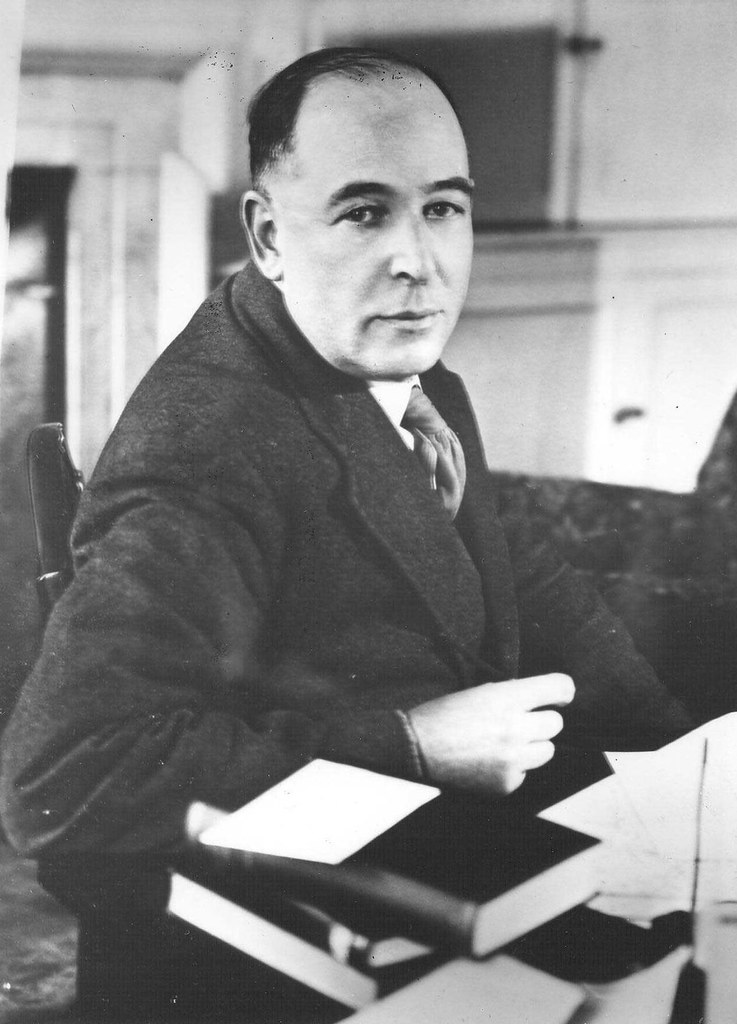
Clive Staples Lewis (1898–1963), professor at Oxford and then Cambridge, is considered one of the intellectual giants of the twentieth century. He authored more than thirty books; many are popular to this day.

Lewis came to Christian faith out of atheism, through the reading of such authors as George MacDonald, G. K. Chesterton, and others. Also influential, other intellectuals of faith associated with Oxford, including J. R. R. Tolkien.

C. S. Lewis came to understand:

“Look for yourself and you will find in the long run only hatred, loneliness despair, rage, ruin, and decay. But look for Christ and you find Him, and with Him, everything else thrown in”from Mere Christianity (13).

C. S. Lewis, ca. 1940

______________________________

As noted last week, it is a fact many acclaimed geniuses have chosen not to become Christians.

But it cannot be said there is no such thing as a Christian genius.

Again, who would you add to the list?  Please share in the comment section below!

Notes:

  1. historyofpainters.com/durer/
  2. As quoted and translated by Linda Siegel in Caspar David Friedrich and the Age of German Romanticism, 1978, p. 48.
  3. https://www.equip.org/article/what-has-art-to-do-with-evangelism/
  4. christianheritageedinburgh.uk
  5. https://www.christianitytoday.com/history/people/musiciansartistsandwriters/george-frideric-handel.html
  6. christianheritageedinburgh.uk
  7. thirdmill.org/paul/impact_mendelssohn.asp
  8. poetryfoundation.org/poets/elizabeth-barrett-browning
  9. https://www.bartleby.com/236/86.html
  10. https://www.poemhunter.com/poem/comfort/
  11. http://famousquotefrom.com/g-k-chesterton/
  12. https://www.chesterton.org/quotations-of-g-k-chesterton/
  13. http://www.cslewisinstitute.org/cslewisonauthenticdiscipleshippage4

Photo credits:  http://www.flickr.com; http://www.picryl.com; http://www.wikimedia.org; http://www.wikipedia.org; http://www.wikimedia.org; http://www.wikipedia.org; http://www.wikimedia.org (2); http://www.flickr.com.

Read Full Post »


Cinematographer Conrad Hall won three Academy Awards during his fifty-year career. His genius produced such classic films as Butch Cassidy and the Sundance Kid, and more recently, The Road to Perdition.

When Hall died of cancer in 2003, his colleagues declared him “one of the great cinematographers and a master of light.”  Yet toward the end of his career, Hall stated, “You are always a student, never a master. You have to keep moving forward.”

Another cinematographer, John Bailey, affirmed the same truth: “A lifetime commitment to learning and studying…is real important.  It’s a constant process…you’re a student for your whole career.”

I wonder…

Might the dynamic of continual learning be important for us as believers in Jesus?


He seemed to think so.

During one of his last teaching sessions with the disciples (recorded in John 14-16), Jesus inferred they would always be students—even though these men had been under his tutelage for three years (the time it takes to earn a degree in ministry today).  Consider also, their Master was the Son of God.

But even they required more –a Helper to guide them into all the truth (16:13).

And so do we.

Now some might be discouraged by the reality we can never attain full understanding about God or achieve perfection of character this side of heaven.  Even the great Apostle Paul asserted he had not arrived:


But there is a positive side…

I can imagine that cinematographers Conrad Hall and John Bailey (mentioned above) enjoyed ever-increasing satisfaction in their work, as their knowledge expanded and their competence developed.

We too can enjoy ever-increasing satisfaction in working out our salvation (1), as we expand our knowledge of God and his Word, and develop the competence of a mature believer.

It’s a process that continues as long as we live on earth. The better acquainted we become with God, the more we want to live by his wisdom. The more we live by his wisdom, the sweeter and more satisfying life becomes.


Just as cinematographers cooperate with their directors to bring characters to life, we cooperate with the Holy Spirit, and he brings to life the character within each of us, developing a mature person–complete and not lacking anything (James 1:4).

His Word becomes the joy of our hearts, obedience becomes a delight, and peace rules in our minds (2).


So…

“Don’t lose a minute in building on what you’ve been given, complementing your basic faith with good character, spiritual understanding, alert discipline, passionate patience, reverent wonder, warm friendliness, and generous love, each dimension fitting into and developing the others.

“With these qualities active and growing in your lives…no day will pass without its reward as you mature in your experience of our Master Jesus (3).”

You know who wrote that? The Apostle Peter—one of the disciples at that last Passover meal with Jesus. And for several decades after that memorable dinner, Peter did allow the Helper to guide him through the maturing process. He knew the rewards.

Now it’s our turn to learn, study, and cooperate.

Together let’s keep moving forward–and revel in the process as we do.


This post is based on a mini-devotional written by our son, Pastor Jeremy Ruegg.


Notes:

  1. The clause, “working out our salvation” comes from Philippians 2:13: “Work hard to show the results of your salvation (NLT).” By no means can we earn a place in heaven by working hard (Ephesians 2:8-9).  We could never work hard enough to deserve its magnificent riches.
  2. Psalm 119:111, 35, 165
  3. 2 Peter 3:5-8 (MSG)


Photo credits:  http://www.wikipedia.org; http://www.thebluediamondgallery.com; http://www.canva.com; http://www.pixabay.com; http://www.heartlight.org; http://www.pexels.com


Read Full Post »

For some of us, seasonal weather changes produce dramatic contrast—from arctic blasts in January to tropical heat in July. For others, the seasonal shift is more subtle, marked by the dry season giving way to rain every day.

Our lives are characterized by seasons too. Sometimes we enjoy periods of joyful calm —when the household is running smoothly, the new job is a perfect fit and friendly coworkers help us learn the systems, the kids are settled in school and enjoying their friends and activities.

Other seasons provide uncomfortable challenge—when differences between family members or friends cause upheaval, a new boss makes too many uninformed changes, or a once-cooperative child becomes a surly teenager.

Such stresses can push us toward those irritating if-onlys and what-ifs. We may work overtime to try and fix the situation–try to fix ourselves too. If I just try harder, we think.

But when others are struggling through challenging seasons, we’re likely to offer them encouragement, hope, and grace. Why do we hesitate offering the same to ourselves?

The following graces offer a good place for us to start.

Gracious Waiting

Waiting for difficult circumstances to resolve is never easy. But we can relieve the discomfort by reminding ourselves:

  • “The stops of a good man are ordered by the Lord as well as his steps” (George Mueller). So let’s wait with expectation. Perhaps God is orchestrating change in preparation for a new work in our lives.
  • Embrace the positive aspects of this season—the growth of faith, the heightened awareness of God’s presence, the assurance that God’s plan will far exceed anything we could devise.
  • “To wait is not to sit with folded hands, but to learn to do what we are told” (Oswald Chambers). Perhaps our best course of action during a difficult season is just to do the next right thing in front of us, and leave the future in God’s capable hands.


Gracious Rest

Jesus provides the perfect example. Surely he felt the pressure of too much to do and not enough time to do it. There were always people clamoring for his attention—to heal an infirmity, solve a problem, or answer a question.

But Jesus took time to rest. He allowed himself the luxury of a nap on a boat, dinner with friends, and quiet hours in the Garden of Gethsemane. Once refreshed, he was able to minister all the more fervently.

Why should it be any different for us?

Gracious Affirmation

We can remind ourselves that: 1) God has brought us through tough times before; he will do it again, 2) no situation is without hope; no situation is without purpose, and 3) we are never left alone to fend for ourselves, because you and I are precious to him. Yes, we are.

Does that sound prideful? Consider this perspective:

Not long ago on Antiques Roadshow an appraiser analyzed a beautiful painting with all the characteristics of a famous master’s work. However, it turned out to be a near-perfect copy. Instead of being worth several million, it was only worth several thousand.

Paintings by the masters are highly valuable because of who created them. Similarly, each of us is a highly valuable, original masterpiece because of who made each of us (Ephesians 2:10 NLT, Galatians 5:26 MSG).

Let’s affirm his power and our worth every day—especially during seasons of challenge.

Gracious Contenting

That heading includes a new derivative of content for me, maybe for you too. It means to make content or satisfied. And what’s the best way to do that? By affirming our faith in God who “does all things well and makes all things work together for our ultimate good” (A. W. Pink).

Let’s content ourselves this moment that our Heavenly Father:

  • uses difficult situations to make us into better versions of ourselves (James 1:2-4)
  • takes us along the best and straightest paths (Proverbs 3:6)
  • carries us in his arms, close to his heart (Isaiah 40:11)
  • cares about the details of our lives (Matthew 10:29-31)
  • weaves blessing into every day—even the difficult ones (2 Corinthians 9:8)

Such statements usher in God’s graces of confidence, peace of mind, and joy of spirit.

The question now becomes: When seasons of challenge overtake us, will we invite God (with all his wisdom, compassion, understanding and more) to come alongside and make it a season of grace as well?

Photo credits:  http://www.publicdomainpictures.net; http://www.pxhere.com; http://www.pixabay.com’ http://www.wikimedia.org; http://www.dailyverses.net; http://www.canva.com.

Read Full Post »


“I made soup,” she says.

I peer into the pot to see a chicken leg, a whole apple, a cluster of green beans and an ice cream cone.

“Eat some!” she coaxes.

I spoon a bite and assure her, “Oh, this is delicious.”

She smiles broadly. “I make dessert.” And two-year old Maarit (Mah-rit), our granddaughter, trots back to her child-size kitchen to bake a plastic cake or pie.


It’s such fun to watch little ones enjoy their vivid imaginations, and it comes so naturally to them. No one has to teach toddlers how to pretend; they just do. But as we grow and leave childish things behind, most of us abandon our imaginings.

Oh, what we’re missing.

In a post a couple of years ago (Oh, Say Can You See), we looked at three ways an active imagination can positively impact our faith, helping us to better understand God, add insight to Bible reading, and see more in this incredible world he’s created.

Today let’s consider three more ways. 

  1. With an active imagination, we are more likely to see people and situations the way God sees them. 

In his Word he calls us to see people for what they could be and will be as they avail themselves of his transforming power. We’re also called to see situations with forward-looking faith in God’s ability to do far more than we can imagine (1).

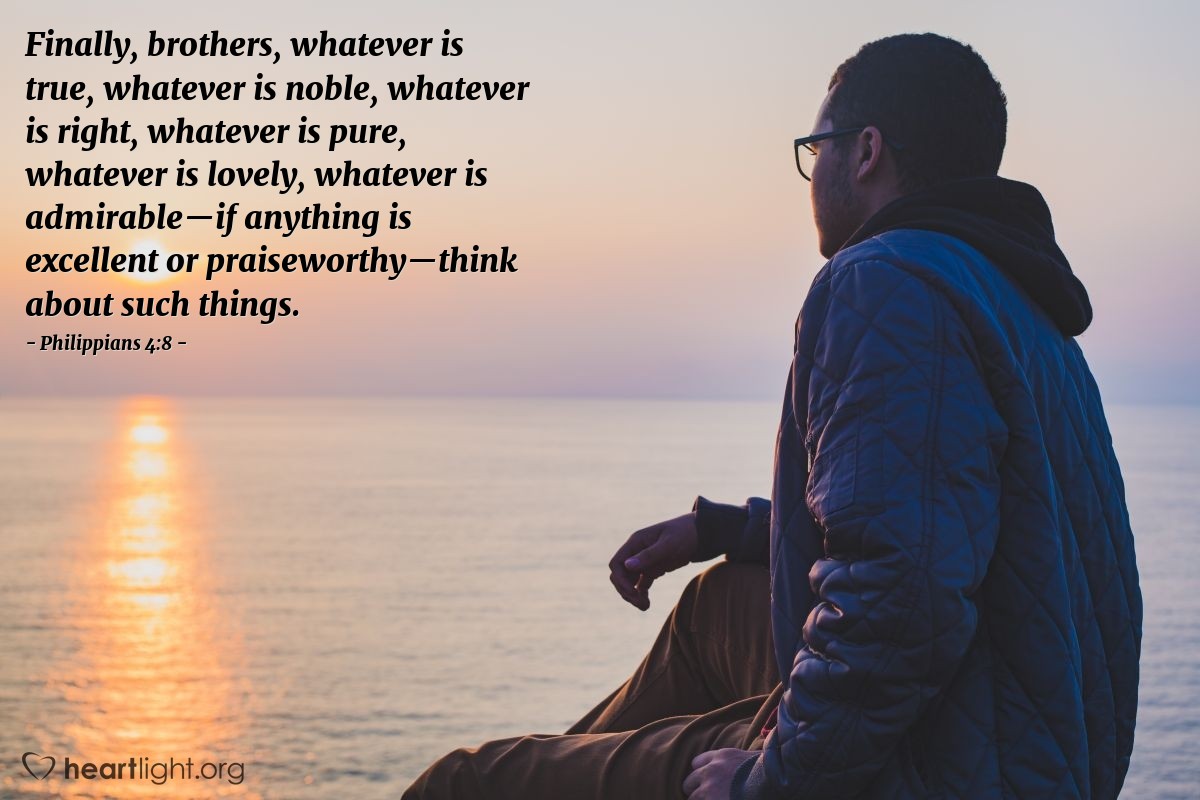
By contrast, our thoughts too often veer to the negative. We forget what the Apostle Paul told us in Philippians 4:8—to think on excellent and praiseworthy things.


C. S. Lewis helped a woman do just that in a letter he wrote as she lay in a hospital contemplating the possibility of death:

“Think of yourself,” he said, “just as a seed patiently waiting in the earth: waiting to come up a flower in the Gardener’s good time, up into the real world, the real waking. I suppose that our whole present life, looked back on from there, will seem only a drowsy half-waking. We are here in the land of dreams. But the cock-crow is coming” (2).

Surely Lewis’s words stirred fresh hope in her heart as he awakened her imagination to a new perspective. In your mind’s eye, can you see excellent, praiseworthy events unfolding in the situation that most concerns you? Allow such imaginings to provide fresh hope for your heart.

  1. With an active imagination we can envision the kingdom of God that exists here and now, even though hidden from view. 

The very nature of faith requires imagination, because the kingdom of God cannot be perceived by the senses. It exists invisibly among and within those who invite King Jesus to rule in their lives (3). But our imaginations can help us access the invisible through the visible as we contemplate:


  • The glory of God in the splendor of creation
  • The rule of God in the organization of the universe
  • The goodness of God in our numerous blessings
  • The wisdom of God in his precepts that usher in abundant life
  • The power of God, as he transforms misery to joy, trouble to triumph, and even bitterness to forgiveness
  1. With an active imagination we can experience God more fully. 

For example, what if we:


  • Imagine God sitting with us as we pray, our hands pressed between his, his head leaning in close to hear our every word. Would it be easier to sense his presence, stay focused, and pray with more intensity?
  • Imagine God at our right hand as we work through our days (Psalm 121:5). He is our ever-present Protector, Guide, and Help. Might such visualization reduce stress? Could mindless tasks become sublime opportunities to enjoy his presence and access his strength?
  • Imagine God on his throne as we worship, with his dazzling radiance signifying splendor, and his voluminous robe representing power (4). Might the joy and passion of our worship-experience be enhanced as we contemplate his magnificence?


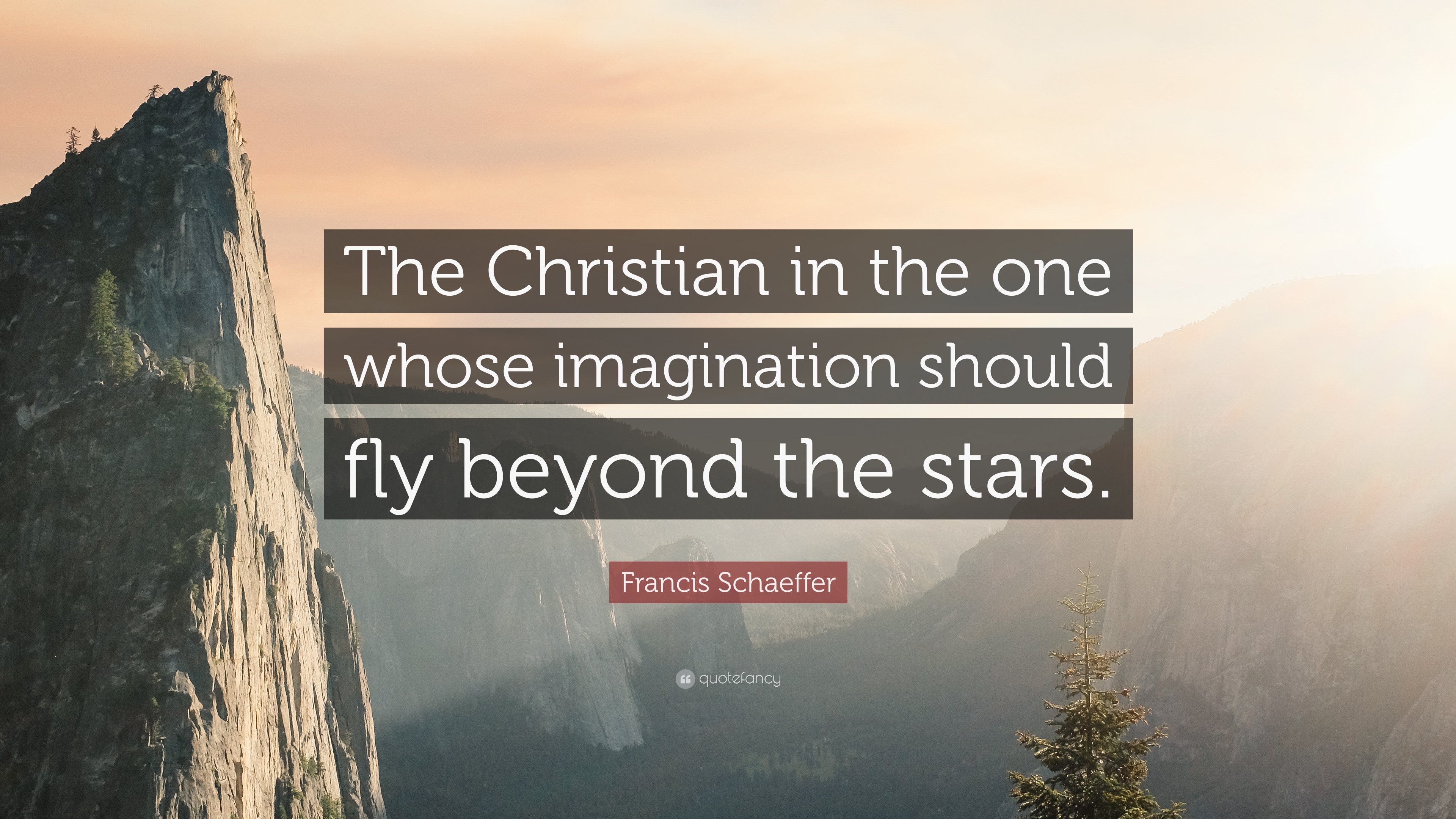
You might remember that Jesus held children in great regard. He suggested that adults become like little children to enter the kingdom of God (Matthew 18:1-5). Granted, his emphasis was upon trust, loyalty and humility. But responding to him with the imagination of a child as well will help us fly beyond the stars.


I don’t want to miss that. I’m guessing you don’t either.    


Notes:

  1. Philippians 1:6; Ephesians 3:20
  2. The Collected Letters of C. S. Lewis, vol. 3: Narnia, Cambridge, and Joy, 1950-1963, [2007]
  3. Hebrews 11:1; Luke 17:21
  4. Ezekiel 1:27; Isaiah 6:1-2


Photo credits:  http://www.pxhere.com; http://www.edwards.af.mil; http://www.heartlight.org; http://www.goodfreephotos.com; http://www.pixabay.com; http://www.flickr.com.; http://www.quotefancy.com.


Read Full Post »


The summers of my childhood included a blend of games and activities with neighborhood friends, afternoons at the community pool, bike rides to the library, and a few weeks spent with Grandma Clara and Grandpa Henry who lived four hours away in Iowa.

No doubt some would describe our summer experiences as mundane, not realizing the joy hidden among the ordinary:

  • The delight of lazy Monopoly marathons
  • The wonder of fireflies in a jar
  • The satisfaction of a big bowl of buttery popcorn–after biking to the park and spending several hours of nonstop cavorting in the pool, then biking home again
  • The pleasure of tucking ourselves under the willow tree to read
  • The fun of an evening bike ride with Dad


It’s the small, happy moments—not the grand events—that contribute to satisfying days and a joy-filled life.


The joy of small…makes life large.

–Ann Voskamp (1)


However, I have to admit: my childhood-self took those lovely moments for granted. I lived unaware of God’s glory pervading my everyday experiences: his creative genius on display—even in the backyard, his love, peace, and security within a family grounded on Christian values, and his goodness to provide joy-filled moments that shimmer in my memory with holy perfection.

Now, as the decades have passed, I’m learning to identify more of the transcendent moments God provides, including:


  • A cardinal filling the silence of the woods with his hope-inspiring “Cheer! Cheer! Cheer!”
  • A toddler wrapping her arms around my neck and crying, “I love you!”
  • A devotional that speaks exactly what I need to hear
  • An opportunity to encourage a waitress and see her concern turn to hope
  • A small gathering of family and friends quickly ballooning to twelve—with much laughter, camaraderie, and delightful conversation


God’s glory is on display right “in the middle of our minutes” (2).


So each night before falling asleep, let’s measure the moments of our days:

  • Taking note of God’s blessings and the delights of his creation; singing our praise for his breath-taking handiwork (Psalm 92:4; Job 5:9).
  • Thanking God for the camaraderie and conversation, hugs and support among family members and friends who keep us strong (Ecclesiastes 4:9-10).
  • Counting the riches that result from abiding in God, beginning with peace (Isaiah 26:3), stability (Psalm 16:8), and contentment (1 Timothy 6:6).
  • Celebrating the honor of ministering to others in Jesus’ name (Matthew 25:40), giving us purpose and cultivating fulfillment in our spirits.
  • Delighting in the opportunities to smile, laugh, and find moments of joy—even in the midst of trouble or frustration (Proverbs 17:22).


“Laughter is to life what shock absorbers are to automobiles.

It won’t take the potholes out of the road,

but it sure makes the ride smoother.”

–Barbara Johnson


And just as inches are measured into feet, so we can measure meaningful moments into satisfying days and a joy-filled life–because God is in them.


What meaningful moments are at the top of your list for today?  Please share in the comments section below!


Notes:

  1. One Thousand Gifts, Zondervan, 2010, p. 167.
  2. Sara Hagerty, Unseen, Zondervan, 2017, p. 109.


(Photo credits:  http://www.geauxguard.la.gov; http://www.pixnio.com; http://www.flickr.com; http://www.pxhere.com; http://www.flickr.com; http://www.pexels.com.)


Read Full Post »

It happened again. I was reading a familiar Bible passage when a new question presented itself.

Here’s the scripture:


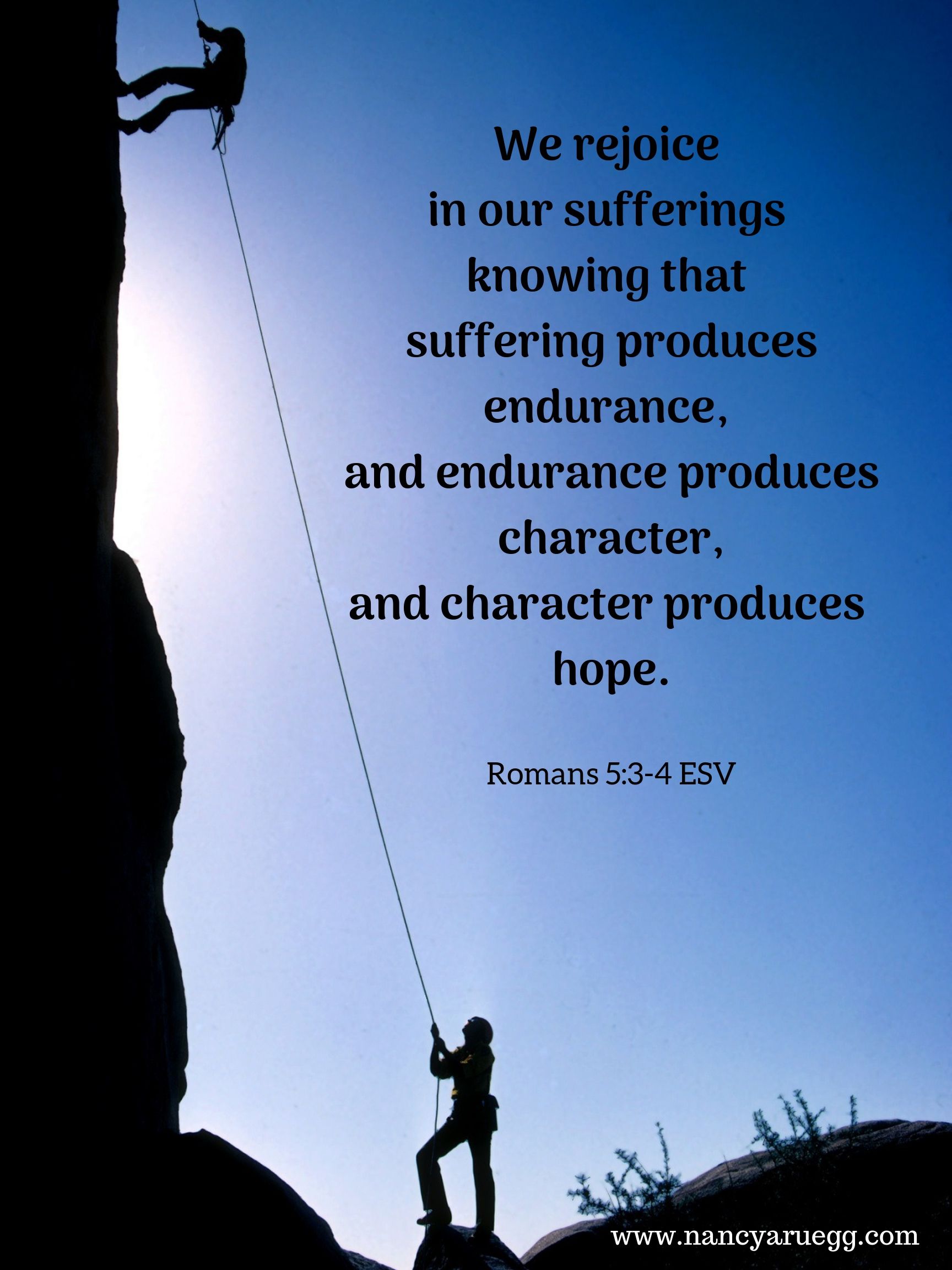
The first two reasons made perfect sense. Pushing through difficulty does produce endurance, and endurance results in the formation of character–traits like responsibility, self-discipline, and patience.

If Paul had concluded by saying character produced maturity, I’d have heartily agreed and read on. But he says character fosters hope, which led to my question: Why hope?

To begin, we need a clear understanding of what hope means. Which of these definitions do you find most insightful?

Hope is: a) looking forward with confidence and expectation (Beth Moore), b) the reality that is being constructed but is not yet visible (Eugene Peterson), or c) happy certainty (J. B. Phillips).


Actually, instead of choosing, let’s weave them together: Hope is the attitude of looking forward with confidence, expectation, and happy certainty to the reality being constructed though not yet visible.

Author Katherine Paterson would also have us understand: “Hope… is not a feeling. Hope is something we do”–such as:

  • Affirming God’s omnipotent power—power that can accomplish anything (Matthew 19:26).


When we are facing the impossible,

we can count upon the God of the impossible.

–Amy Carmichael


  • Remembering God’s promises of the Bible—promises that never fail (Psalm 145:13b).


Quit studying the problems

and start studying the promises.

–Ruth Graham


  • Practicing God’s presence—presence that instills comfort, encouragement, and strength (Psalm 94:19; Isaiah 41:10; Joshua 1:9).


Few delights can equal the mere presence

of one whom we trust utterly.

–George MacDonald


In the 1980s, retired millionaire Eugene Lang was asked to speak to the graduating six graders of his East Harlem alma mater. He planned to share his story and encourage them that effort and perseverance do produce success.

But when he took the podium, Lang changed his mind.

“Stay in school,” he charged them. “In fact, it is so important, I’m going to make you a promise. You stay in school, and I’ll help pay the college tuition for every one of you.”


No doubt some of the students thought, “Yeah, right.”

Most of these kids had already experienced a lifetime-worth of disappointment. Why should they believe this old guy?

Yet even the most cynical among them had to admit: Mr. Lang did have the financial power to keep such a promise—a promise announced in front of numerous witnesses.

Soon Mr. Lang founded the I Have a Dream Foundation and convinced others to add their support. He exercised his own financial power to hire a project coordinator, finance field trips, and provide mentors and tutors for each student.


Mr. Lang made his presence known by taking students to restaurants and museums. He personally counseled them through crises, and intervened with school officials on their behalf.

The kids responded. They began to work toward the goal of a college education, learning self-discipline, perseverance, and responsibility along the way. As those character traits and more developed within them, their hope grew that Mr. Lang’s promise would manifest itself in reality.

Six years after that impromptu offer, nearly ninety percent of the students graduated from high school, and close to half were enrolled for college in the fall. Character did indeed lead to hope—hope that looked forward with confidence, expectation, and happy certainty to a reality under construction.*


Mr. Lang typified what God does for us, developing our character so we might grow in hope—a hope for every tomorrow based on his power, promises, and presence, and a hope that can see heaven through the thickest clouds (Thomas Brooks).


Addendum: As of 2017, approximately two hundred I Have a Dream programs were in operation in the United States and in New Zealand, assisting more than 16,000 students.*


* https://www.nytimes.com/2017/04/08/nyregion/eugene-lang-dead-harlem-college.html


Photo credits:  http://www.canva.com; http://www.jbsa.mil; http://www.pixabay.com; Nancy Ruegg; http://www.heartlight.org; http://www.flickr.com; http://www.nps.gov; http://www.vaguard.dodlive.mil.


Read Full Post »


How would you fill in the blanks of this quote?


“Nothing is so strong as _______________,

Nothing so _______________ as real strength.”

–St. Frances de Sales (1567-1622)


Possibilities include:

  1. Discipline / disciplined
  2. Gentleness / gentle
  3. Steadfastness / steadfast

According to de Sales, the answer is 2.

Yet gentleness is not a trait that readily comes to mind when we hear the word strength. We’re more likely to describe the strong person as self-confident, self-reliant, and assertive.


But consider which of the following actions requires more fortitude:

  • Defending one’s own rights or deferring to another’s?
  • Airing one’s views or actively listening to understand someone else’s?
  • Tackling the personal to-do list or taking time to help another person with theirs?

Gentleness includes consideration, kindness, and grace. It is genial, not demanding its own way, and it refuses to manipulate people or circumstances. Neither is it easily threatened, offended, or angered. Gentleness requires humility, maturity, and self-control.


Most of us do not gravitate toward such habits on our own. It takes strength to become gentle—strength that begins with God, as we learn to relax in his sovereignty over all things (Psalm 145:13), and count on him to work in his way (Proverbs 16:4a), in his time (Acts 1:7).

Gentleness begins to grow in our spirits as we:

  • Become acquainted with the One who personifies gentleness–Jesus (Matthew 11:29)
  • Choose to be thankful (1 Thessalonians 5:18), which improves our perspective and calms our spirits
  • Refuse to complain or grumble (Philippians 2:14)
  • Desire to be molded by God and patterned after his purpose (Ephesians 2:10)
  • Affirm trust in his reliability and endless resources (Psalm 62:5-8)
  • Practice his presence (Exodus 33:14) through continual, prayerful connection

And the result? “Blessed are the gentle, for they shall inherit the earth” (Matthew 5:5 NASB, emphasis added).

Or, as Max Lucado interprets the verse, “Blessed are those who acknowledge that there is only one God and have quit applying for his position.” *


That inheritance Jesus promised includes joyful contentment in God’s provision and pleasure in the simple things of life, the delight of blessing others and celebrating their successes.

My grandmother was just such a person.

Before she turned forty, Grandma lost a young sister, a toddler son, and her husband. During the depression she kept the mortgage paid and her family clothed and fed by baking all night, then catching a bit of sleep while the three children were at school. Yet Grandma’s strong faith in God never wavered. (You can read more about this amazing woman in another post, The God of Rachel, Henry, and Clara, Part 1).


I never heard Grandma raise her voice or speak unkindly. What I do remember is hearing her humming along with the hymns on the radio as she worked in the kitchen.

She spent much of her time serving others, beginning with family. When Grandma stayed with us, she mended and hemmed our clothes, helped turn the apples from our tree into applesauce for the freezer, and braided old woolens into small rugs to place in front of our doors.

Grandma was gracious with praise and gratitude. One time I noticed tiny aphids on her prized African violets. You’d think I’d saved the neighborhood from a locust invasion. “Well aren’t you my Little Bunny Bright-Eyes!” Grandma cried, and hugged me tight. “I hate to think what would have happened if you hadn’t been here. Thank you!


Later in life she developed neuralgia in her right cheek. The slightest breeze could cause an agonizing bout of pain. Grandma would grimace and gasp as her hand flew to her face. But she did not complain.

In these ways and many more Grandma Rachel proved that the strong of faith are also gentle of spirit.


*     *     *     *     *     *     *     *     *     *


O God, I know the quality of gentleness is precious to you, and I want to cultivate a life that brings you honor and pleasure. Keep me mindful of your empowering presence so that your gentle spirit of grace, kindness, and goodness will flow through me to others.


(1 Peter 3:4; Psalm 147:11; Isaiah 40:11; Galatians 5:22-23)


Who provided an example of gentle strength in your life?  Tell us about them in the comment section below!


* Grace for the Moment, Thomas Nelson, 2000, p. 277.


Photo credits:  http://www.needpix.com (2); http://www.heartlight.org (3); dailyverses.net (2).


Read Full Post »


Emily* and I met at a meeting, and afterward the subject of the Bible came into the conversation—a conversation that went something like this:

“The Bible is just fairy tales,” she declared.

“That is a popular viewpoint,” I replied. “How did you come to that conclusion?”

“Well, it’s full of crazy, unbelievable stories,” Emily asserted passionately. “Noah and the ark, David and Goliath, not to mention Jesus and his supposed miracles. Who in their right mind would believe such stuff?”


I began to pray silently as our conversation continued. Lord, help me speak your words.  May Emily reconsider her position and seek truth.

“I agree such events seem incredible,” I offered. “But I’ve come to believe the Biblical record is truth, backed up by decades of archaeological research, hundreds of ancient manuscripts—including the Dead Sea Scrolls, and dozens of scientific and medical corroborations. Also, numerous prophecies have been fulfilled with amazing accuracy. I can recommend some books written by experts if you’d like to know more.”

But Emily became defensive, insisting such proofs were either coincidental or made up by misled people determined to keep the fairy tales alive.

 

(The Ark Encounter at the Creation Museum, Petersburg, KY)


The conversation did not end well. Emily only became more vehement so I let her have the last word and bowed out as gracefully as I could. It felt like failure. Somehow in spite of my prayer, I must not have spoken God’s words for her.

Since that encounter, however, I’ve come to realize:

We can trust God with our words if we’re seeking his wisdom (James 1:5) and speaking in love (1 Corinthians 13:4).

Remember what God told Moses, upon commissioning the wilderness shepherd to be his voice to Pharaoh?


It would stand to reason that with God teaching him exactly what to say, Moses would eloquently convince Pharaoh to release the Israelites on the first encounter.

Instead, Moses had to confront Pharaoh numerous times. Even a constant barrage of plagues didn’t deter Pharaoh from refusing Moses’ request—until every firstborn son died in every Egyptian household, including Pharaoh’s. The hard-hearted ruler was brought low by grief, and finally let the Israelites go.

Does such a record indicate that God’s words through Moses failed repeatedly? NO. God had his reason for the delay:


Then the Lord said to Moses,

“Go to Pharaoh, for I have hardened his heart…

so that I may perform these signs of mine among them

that you may tell your children and grandchildren

how I dealt harshly with the Egyptians

and how I performed my signs among them,

and that you may know that I am the Lord.”

–Exodus 10:1-2 NIV


These verses offer me great comfort for my conversation with Emily and others. I can trust God with the words I prayerfully spoke to her that day. They may have caused one more chink in her wall of defense against Christianity, so that she will one day know “that [he] is the Lord” and accept Jesus as Savior.

Such prayers are the kind God especially loves to answer.


What could be closer to God’s heart than the eternal destiny of one of his children?

Perhaps Emily will contact me one day and say, “I remembered what you said about the Bible and it got me to thinking…”

So I continue to pray.

*     *     *     *     *     *     *     *     *     *

As I submit myself to you, O God, may my words be characterized by your wisdom that gently persuades and winsome grace that draws people to you–all from a heart motivated by love.  Then may your words echo in the minds of those who hear until doubt is transformed into faith.     


*Name changed.


Photo credits:  http://www.flickr.com; http://www.wikimedia.com; http://www.pixabay.com; http://www.canva.com; http://www.pixabay.com; http://www.dailyverses.net(2).


Read Full Post »


Several years ago our daughter dashed off two love notes and hid them in our house just before she and her family returned to their home, more than 2,300 miles away. You can imagine those little notes provided delightful, heartwarming surprise upon discovery. And I’ve kept them, to enjoy again and again.

God also leaves love notes tucked here and there into every day.

Love notes like:


  • A butterfly casually flitting above the traffic in a busy intersection—a dash of delicate beauty amidst concrete and steel


  • The welcome aroma of coffee wafting from the kitchen while golden sunbeams stream in the windows


  • Enthusiastic greetings and hugs whenever we see the granddaughters


  • The first fireflies of the season, drifting upward out of the grass and underbrush to float among the trees—soft, flickering lights, waltzing to silent music


  • A hummingbird lighting upon a flower at one end of the deck planter, even as I’m trimming sprigs at the other. A Close-Encounter-of-the-God-Kind if ever there was one.


  • Lost keys, found. I had dropped them at the grocery store somehow; ‘didn’t even know they were missing for more than twenty-four hours. But God kept them safe for me, and inspired some kind person to turn them in–an unmistakable love note of his compassionate care.


Some of God’s love notes actually include words—but not always from the Word.


Recently at the hairdresser’s I happened to pick up a secular magazine to pass the time. In her introductory letter, the editor wrote about her grandmothers and their important influence in her life. She reaffirmed that investing in our grandchildren is highly worthwhile, and they do remember love expressed, attention bestowed, and examples set.

Her words suddenly became God’s words, and tears came to my eyes. There is significance in the repetition of Goodnight Moon, “The Itsy Bitsy Spider” and pony rides. There is power in appreciation for primitive artwork, impromptu dances, and weed bouquets. There is influence in affirming strong effort, perseverance, and the courage to try new things.


Granddaughter #2,

building a stool for her doll with wood scraps–

with a little help from Dad


Also recently, I encountered a restaurant worker cleaning the drink station as I approached to pump my herbal tea. We exchanged the typical “hellos-and-how-are-yous.   Her greeting was especially positive and cheerful.

“Are you really that fine?” I asked, leaning forward in order to make eye contact.

“Yes, ma’am,” she exclaimed with enthusiasm. “God is so good, I can’t complain!”

“I feel the same!” I answered. “God has been incredibly good to us too.”

The woman finished her task and turned to leave, with more praise on her lips. I wish I could remember her exact words. Nonetheless, I do know those several moments with her provided another love note of affirmation from God, stirring up gratitude and joy in my spirit.


*     *     *     *     *     *     *     *     *     *


Lord, open my eyes to find all your love notes, prepared for me each precious day of life. Then nudge me to turn every note into praise, and joyfully celebrate you.


 (from http://www.quotefancy.com)


Oh, yes. Let me one of those who takes off her shoes.


What love note have you received from God recently?  Tell us about it in the comment section below!


(Photo credits:  Nancy Ruegg; http://www.geograph.ie; http://www.pxhere.com; http://www.wikimedia.org; http://www.wikipedia.org; http://www.pxhere.com; Eric Ruegg; http://www.dailyverses.net; http://www.quotefacy.com.)


Read Full Post »

(The view from my deck chair)


As spring approaches I look forward to spending my morning quiet time on our deck—taking in the new foliage-finery of the trees, the happy chatter of birds, the whispering breezes, and the sweet aroma of alyssum from the deck planter.

There’s something about sitting with God in his Living Room* that opens our eyes to his glory and draws our spirits closer to his heart.

Saturday was just such a day. And as I sat in His presence, God seemed to say:

I’m so glad you’re here, Nancy! I’ve planned several discoveries for you this morning.


From the Trees


First, lift your eyes to the trees. Rejoice in the reminders of:

  • My strength (Psalm 93:1)–in the stalwart trunks
  • My refuge (Psalm 25:4)–in their far-reaching limbs, offering shelter from the heat
  • My provision (Philippians 4:19)–as they produce oxygen, give shelter to birds and animals, even provide food

Note the evidence of competence in their design–for purpose, beauty, and sustainability.   I am your God of Competence as well, and have designed you to fulfill an individualized purpose, provide the beauty of Christlikeness to those around you, and spend eternity with Me. 


From the Birds


(white-breasted nuthatch)


You can also revel in the birds—symbols of reliance on Me, and again, My provision (Matthew 6:26). Note the variety of color, pattern, song, and habit. Let the joy you experience watching birds remind you how I value your uniqueness.

Choose to celebrate who you are: the colors of your personality, the pattern of your life, the song of gifts and talents I’ve given you to share with the world, the habits of goodness I continue to form in you so you can impact others.


From the Squirrels


Together we can enjoy the antics of the squirrels! They too provide reminders for the life of faith:


  • Even when they walk upside down on a branch, they do not fall. Similarly, I make firm your steps and keep you from falling (Psalm 37:24).


  • With great confidence squirrels jump from limb to limb. You can live in great confidence also, because I’ve equipped you for what I ask you to do. (Ephesians 4:12; Hebrews 13:20-21).


  • Every time they return to their nesting tree, they follow the same pathway through the branches. They remember well which branches offer the best proximity to the next tree.

I have provided a sure pathway for you to navigate through life. You can run in the path of my wise commands; my ways will bring you home safely (Psalm 119:32a; 139:24b).


  • Squirrels can sit quite contentedly, even take a nap, on the very end of a branch—never concerning themselves they might fall or the branch might give way. They provide an example of perfect trust (Isaiah 26:3).

I am your security (Psalm 112:8). Out of My love and faithfulness, I will always protect you (Psalm 40:11)—even as I bring you home to heaven one day.

So when you find yourself at the end of a branch, and fear starts to creep in, send it scurrying away with My Word—verses like Psalm 27:1:


(Another view from our deck)


The Lord is my Light—

[My Joy, Peace, and Guide]

The Lord is my Salvation—

[My Protection, Provision, and Security]

Whom shall I fear?

The Lord is my Stronghold—

[The Treasury of all good things]

Of whom shall I be afraid?


*      *      *


*a creative expression originated by Michael Hyatt, former CEO of Thomas Nelson Publishing


Photo credits:  Nancy Ruegg; http://www.pxhere.com; Nancy Ruegg; http://www.maxpixel.net; Nancy Ruegg


Read Full Post »

« Newer Posts - Older Posts »

When the House is Quiet

Impressions Becoming Expressions

Mitch Teemley

The Power of Story

Still Traveling

Impressions Becoming Expressions

Living Our Days

Gaining a heart of wisdom

He Said What?!

I'm Patty, and my husband and I are living with our adult son who has autism and epilepsy. I love sharing lessons learned from life around me, especially life with Aaron.

Meditations of my Heart

Impressions Becoming Expressions

Linda Stoll

Impressions Becoming Expressions

Signora Sheila

Notes on Life, Faith & Italy

Heidi Viars

Finding the Image of God