Feeds:
Posts
Comments

Archive for the ‘Faith’ Category


Uncertain times.

That phrase appears everywhere these days. Between the pandemic, political upheaval, social unrest, and concerns for the future, we can find ourselves desperate to find security—freedom from danger, fear, and anxiety.

But there is only one reliable source of security: God.


Out of his faithfulness to us, God always supplies what we need. And as it happens, the word FAITHFUL provides a tidy acrostic for eight blessings we enjoy–no matter what.

God is our:

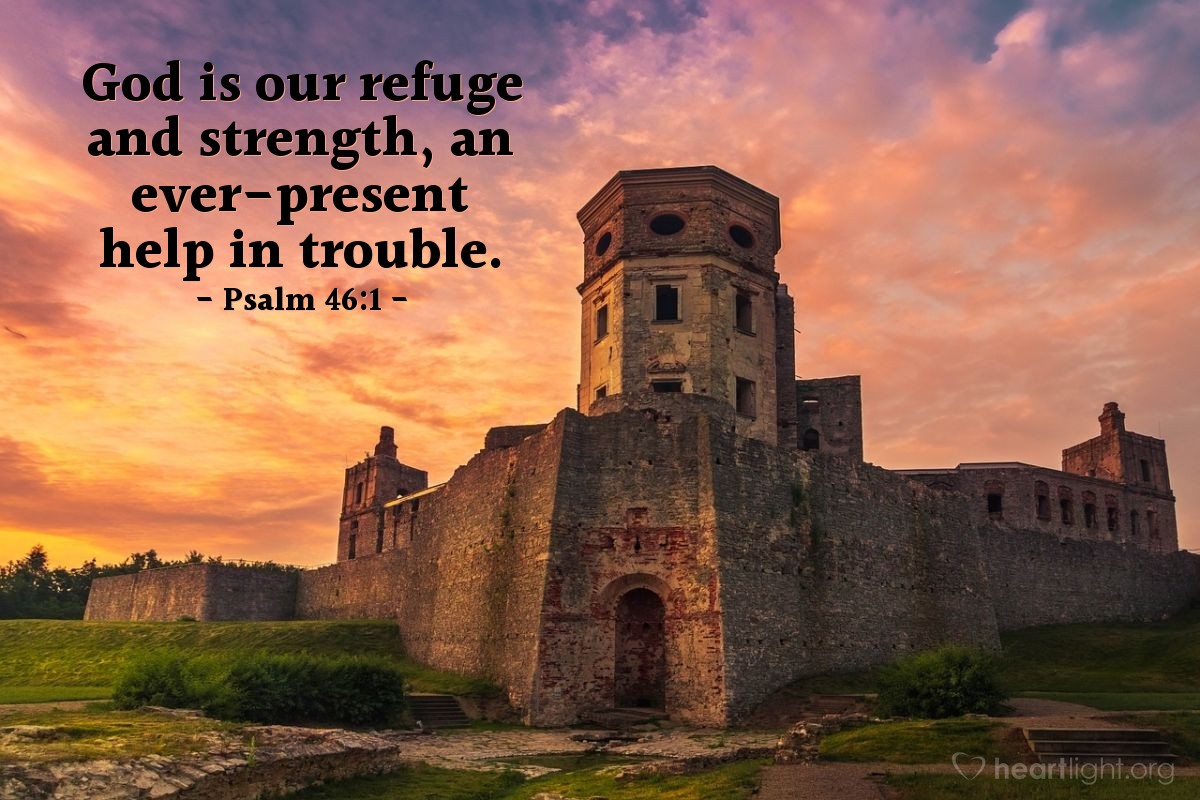
Faithful promise-keeper. He is already ahead of us in the uncertainty of 2021, just as he went ahead of Joshua and the Israelites into Canaan. He has promised not to fail us or abandon us[1]—even when we cross dark valleys of troubling circumstances.


Attentive Father. Before we put our needs into words, God is on his way to meet it.[2]

Immutable (unchanging) Rock. He “does not change like shifting shadows.”[3] In a world where situations and relationships can change unexpectedly, God remains his rock-solid, reliable, perfect self.

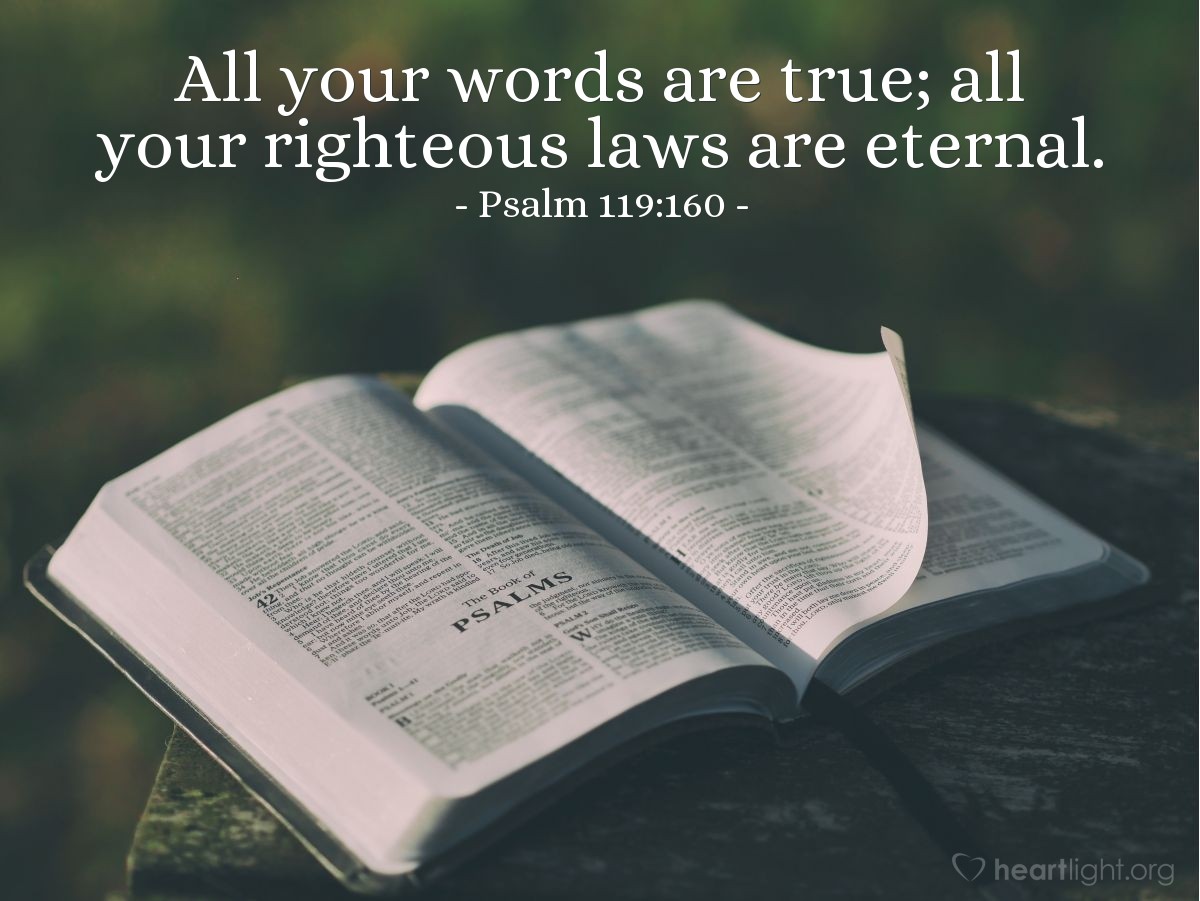
Truth-Revealer.   The truth of God’s Word has been proven through numerous disciplines and in the lives of millions. Within its pages we find the wisdom and support we need.[4]


“The remedy for discouragement is the Word of God.

When you feed your heart and mind with its truth,

You regain your perspective and find renewed strength.”

–Warren Wiersbe


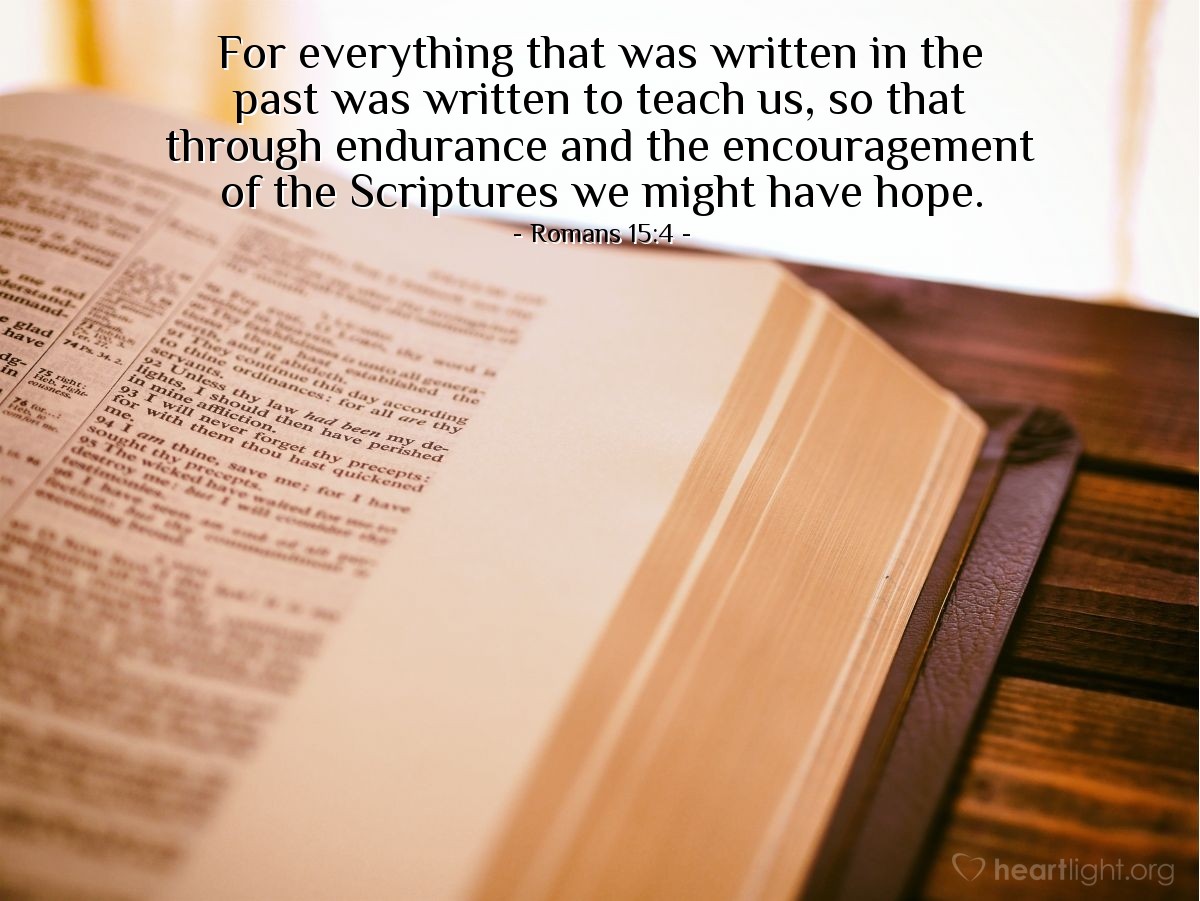
Hope. Our God of hope fills us with all joy and peace as we trust him. Hope allows us to see his blessings even amid hardship, and know with certainty he will use even our painful circumstances to accomplish good.[5]

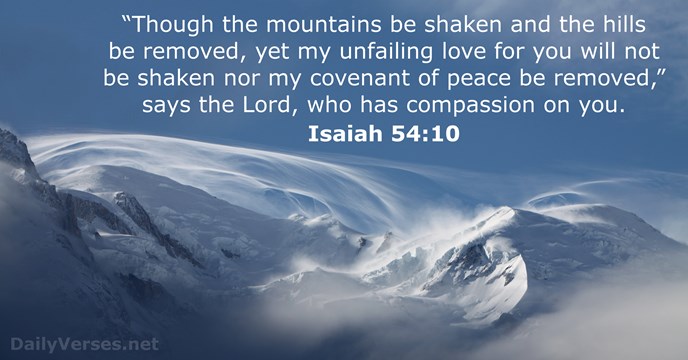
Foundation. God’s ways provide a strong foundation for life, especially when storms of sorrow come. He upholds us with his love and compassion, peace and comfort that transcend our ability to explain.[6]


Unerring and righteous Judge. “Your kingdom is founded on righteousness and justice,” wrote the psalmist, “love and faithfulness are shown in all you do.” And because he is righteous and just, everything will work toward the best outcome in the end.[7]

Light, even in dark times.[8] Too often we focus on the swirling blackness of circumstances around us. But “God’s lights in our dark nights are as numerous as the stars, if only we’ll look for them.”[9]


Throughout my years as a blogger, I’ve shared many experiences illustrating how God has been faithful to our family. One in particular comes to mind that encompassed all of the above blessings.

Leadership of our church denomination assigned my pastor-husband to another church across state.   We were not ready to move. God ministered to me during those dark days of transition as I journaled through the psalms, affirming his love and compassion, peace and comfort. And as a result, hope began to blossom.


I grew in spiritual strength, compelled to rely on him through the grief of leaving beloved friends and the uncertainty of what lay ahead. He miraculously provided a teaching position for me not far from our new home. And in the end everything did work for good as that struggling church became a thriving community. (You can read a fuller account at After the Fact.)

In a book of liturgy, St. Teresa of Avila (1515-1582) kept a bookmark with the following affirmation:


“Let nothing disturb you; let nothing dismay you;

all things pass: God never changes.

Patience attains all it strives for.

He who has God finds he lacks nothing.

God only suffices.”


God only—in all the numerous demonstrations of his faithfulness–is our certain security.


_______________________________________


Should you wish to read more examples of God’s faithfulness, you can click on the following links:


Notes:

[1] Deuteronomy 31:6

[2] Matthew 6:8

[3] James 1:17c CSB

[4] Psalm 119:24, 140, 160

[5] Romans 15:13; 8:28

[6] Isaiah 54:10; Philippians 4:6-7

[7] Psalm 89:14 GNT; Genesis 50:20

[8] Psalm 27:1

[9] Max Lucado, Grace for the Moment (J. Countryman, 2000) p. 195


Art & photo credits:  http://www.wikimedia.org; http://www.canva.com; http://www.pxhere.com; http://www.heartlight.org; http://www.dailyverses.net; http://www.pixy.org; http://www.heartlight.org.


Read Full Post »

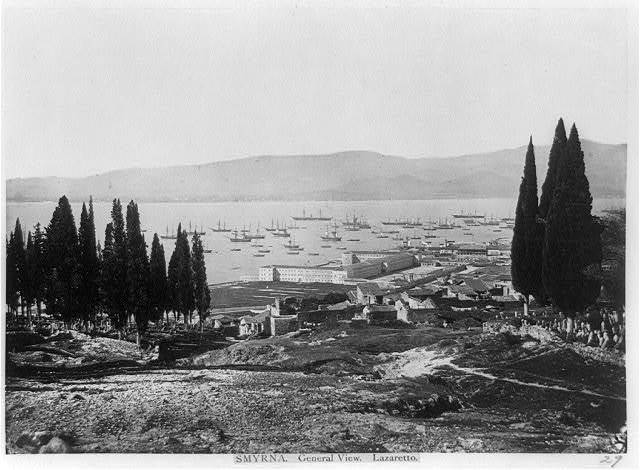
Young William Ramsay, along with his bride of just one year, leaned against the rail of their ship. Eagerly they scanned the horizon in order to catch the first possible glimpse of their destination, Smyrna, Turkey, with its whitewashed structures nestled into green hillsides.


(Smyrna, 1900)


William’s archaeological adventure, funded by a scholarship, was about to begin.

While the ship creaked around him, William daydreamed of the renown he would garner even as a young Oxford professor, when he proved at least one book of the Bible–Acts–was mostly fiction.

Granted, no one could say unequivocally that Peter and Paul had not performed miracles in Jesus’ name. But he could prove that Luke’s record of the apostles’ work was full of errors in the categories of geography and history, thus casting great doubt on the whole.

The inspiration for such an endeavor began with William’s exposure to the Tubingen School of thought. They asserted that only four of the epistles were actually authored by Paul, and the rest of the New Testament was written much later—perhaps two hundred years later.


(The School of Theology at Tubingen University today)


In an effort to lionize the heroes of the early church, these Tubingen scholars decided Luke had exaggerated the stories and didn’t concern himself with accurate details. But no one had proven these theories until William set out to do so in 1880.

Soon after arrival in Turkey, the Ramsays met Sir Charles Wilson, an experienced explorer. He invited William to accompany him on two lengthy investigations that included Phrygia, Lycaonia, Cappadocia, and Galatia (1).


(Ancient limestone cave houses of Cappadocia,

deteriorated into cone-shaped structures due to erosion)


Beginning with these excursions and continuing over the next thirty-four years, Ramsay saturated himself with the geography and history of the Graeco-Roman world. He began to uncover facts that refuted the Tubingen theories–information that only a first-century eyewitness like Luke could have known.

For example:

In Acts 14:1-7 Luke reports the escape of Paul and Silas from Iconium, before they were stoned to death. They fled to the Lycaonian cities of Lystra and Derbe.

However, later Roman writers including Cicero asserted that fleeing to Lystra and Derbe wouldn’t have saved the men because all three cities were in the same district.


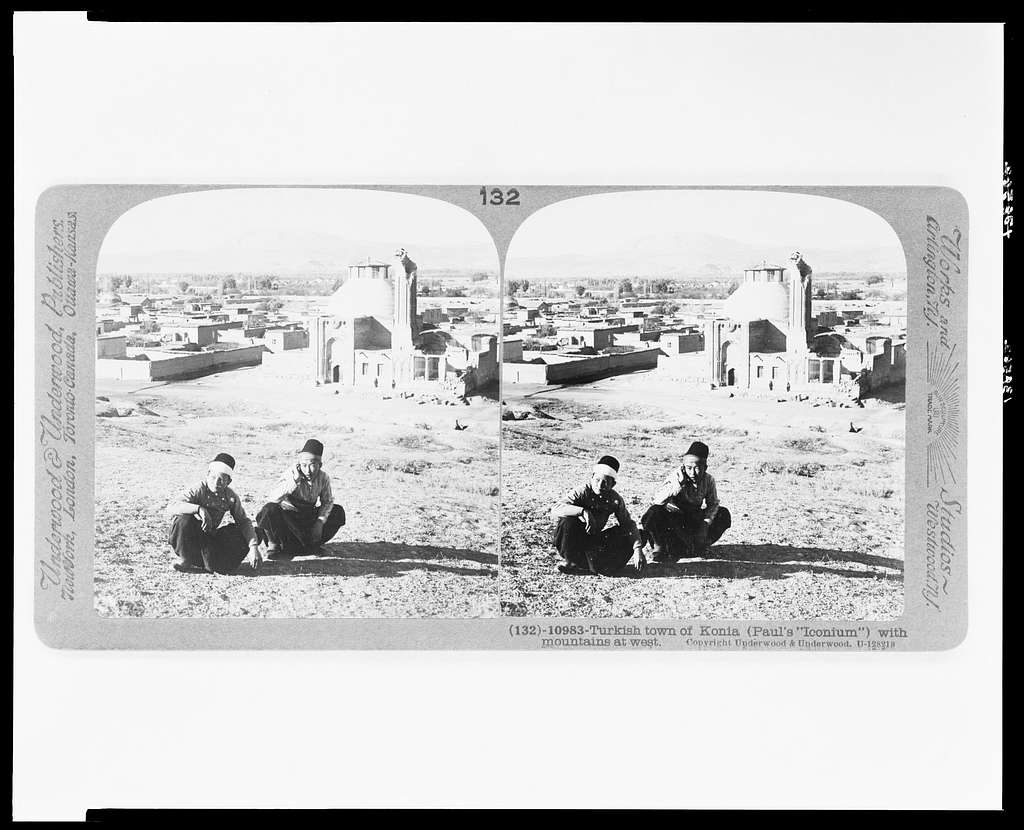
(Turkish town of Konia, Paul’s Iconium–1911)


But in 1910 Ramsay discovered a telling inscription. In the first century A.D., Iconium was not under the authority of Lycaonia but of Phrygia, from A.D. 37-72—the exact time period when Paul and his companions would have visited the area (2).

Acts 17:1-9 relates the experience of Paul and his companions in Thessalonica. Luke uses the term politarch (translated “city officials” in NIV) in verse 6, a word not found in any other Greek literature. But Ramsay found five inscriptions in Thessalonica that used the title (3).

In Acts 18:12-17 Paul was brought before Gallio, the proconsul of Achaia. At Delphi, Ramsay and his team discovered an inscription of a letter to the proconsul from Emperior Claudius: “Lucius Junios Gallio, my friend and proconsul of Achaia.”


(The ruins at Delphi, Greece)


Historians date the inscription to 52 A.D., which corresponds to the time Paul and Silas would have visited the area (4).

In all, Ramsay was able to verify ninety-five geographical details included in the book of Acts, as well as historical facts and the names of people who existed at the time. He found no evidence of errors (5).


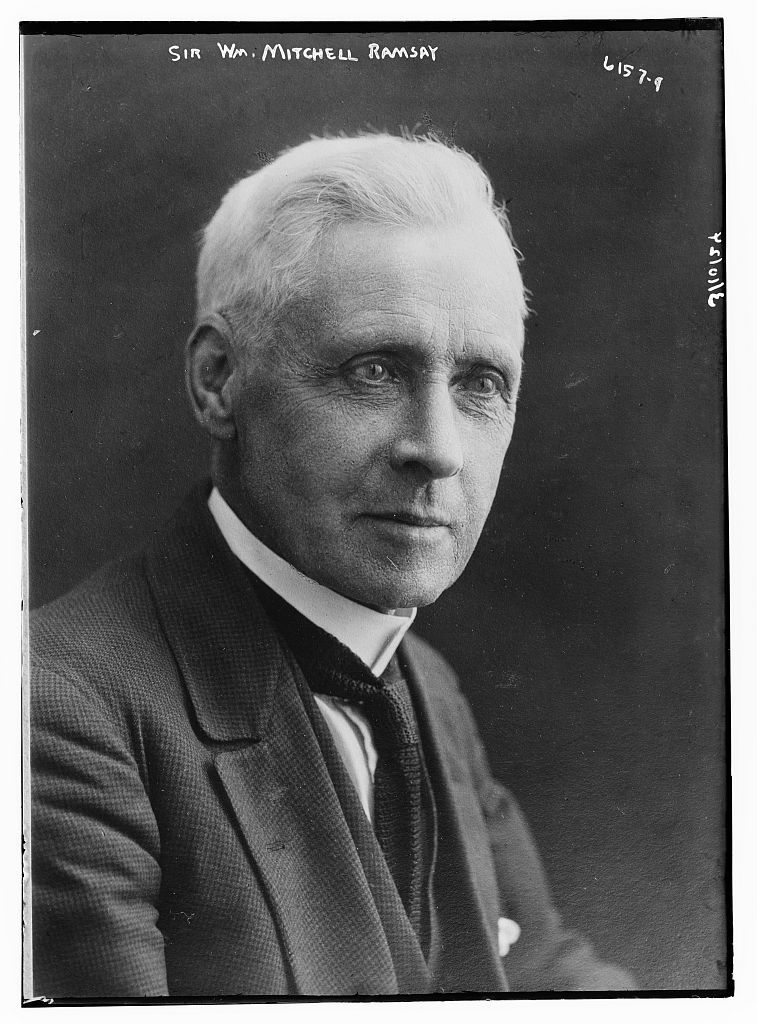
(Sir William Mitchell Ramsay, 1924)


Ramsay authored numerous books that give record of his findings. In one he wrote:

“I began with a mind unfavorable to it, for the ingenuity and apparent completeness of the Tubingen theory had at one time quite convinced me . . .but more recently I found myself brought into contact with the Book of Acts as an authority for the topography, antiquities, and society of Asia Minor. It was gradually borne upon me that in various details the narrative showed marvelous truth . . .

“. . . Luke is a historian of the first rank not merely are his statements of fact trustworthy . . . this author should be placed along with the very greatest historians” (6).

Some say Ramsay’s search for truth brought him to faith in Christ; others argue that he did not embrace Christianity.

But I can’t imagine dedicating decades of my life toward a cause in which I held no personal belief.

What I can imagine is God leading Ramsay from proof to proof while simultaneously working in his heart, bringing him to the point of belief in the Bible and finally in his Son as Savior.


Notes:

  1. See Acts 18:23, 14:6, and 2:9 for mention of these provinces.
  2. https://www.blueletterbible.org/Comm/stewart_don/faq/historical-accuracy-of-the-bible/question13-is-acts-historically-accurate.cfm
  3. https://highergrounds.live/2017/12/05/sir-william-ramsay-and-the-book-of-acts/
  4. https://christiantrumpetsounding.com/Archaeology/Archaeology%20Bklt/Archaeology%20Verifies%20Bible%20Ch2.htm
  5. http://taoandtawheed.com/TaoTawheed/TabId/108/ArtMID/550/ArticleID/61/Luke-Got-His-Facts-Straight.aspx
  6. William M. Ramsay, The Bearing of Recent Discovery on the Trustworthiness of the New Testament, 1915, 222.


Other sources:

  1. https://www.5minutesinchrchhistory.com/sir-william-ramsay/
  2. https://bibleevidences.com/archaeological-evidence
  3. https://biblicalstudies.org.uk/pdf/ramsay/ramsay_gasque.pdf


Photo credits:  http://www.picryl.com; http://www.wikimedia.org; http://www.pixabay.com; http://www.picryl.com; http://www.wikimedia.com; http://www.loc.getarchive.net; http://www.pxhere.co


Read Full Post »


Years ago my husband Steve and I lived in a small town outside Lexington, Kentucky. All through the area old stone walls stitch together fields and pastures into a landscape quilt. We often marveled at the workmanship as well as the time and effort required.

According to historians, the rocks were gathered out of the fields by Scot-Irish immigrants of the 1700s, who settled the area and needed to clear the land for farms. They used the same dry masonry skills of their ancestors back in the British Isles.

As decades passed new immigrants built more walls as did the slaves who followed.


(Similar walls in Ireland)


Those stone walls came to mind as I read again a story of Samuel, recorded in 1 Samuel 7:1-12. He set up a memorial stone in celebration of an Israelite victory over the Philistines. Samuel called it Ebenezer (which means Stone of Help), explaining that “thus far the Lord has helped us.”

Thus far in our lives the Lord has helped you and me also. And if we collected a rock to represent each time God has helped us, we’d surely accumulate enough to construct many walls, stitching together our experiences into a kingdom quilt—in the kingdom of God, that is.

And what a memorial it would be to God’s faithfulness!

As many of you know, I began a journal in 1983 of God’s faithfulness to our family—a record of his provision, protection, guidance, and blessing. To date there are nearly 1400 entries.


(Note how yellowed these early pages have become!)


If I gathered a Stone of Help for every event noted, I could build a wall ten stones high and nearly 140 feet long. No doubt a record of your life would produce a similar-sized wall, perhaps longer.

Imagine an aerial view of thousands of such walls criss-crossing the landscape—a visual reminder of God’s faithfulness to all of us. Our eyes would pop in wonder.

During this challenging year of 2020, God has demonstrated his faithfulness in numerous ways.


I am particularly thankful for:

  • Sightings of wildlife that turn window glances into marvel fests
  • Family and friends within easy reach through various forms of technology
  • Livestreamed church services that allow Sunday worship with our congregation
  • No hospitalizations for Steve in 2020 (Last year he was admitted four times for various problems related to his liver transplant and a subdural hematoma.)
  • Emotional and spiritual health in spite of isolation

And all of us have benefited from God’s unending supply of strength. We’d do well to remember:


I’m guessing you can remember a situation or two when you thought it impossible to press on. But you did—because of God’s enablement.

Other times responsibilities piled up to impossible heights, and the emotional crush was nearly unbearable. But then—miraculously—cancellations and postponements occurred, assistance materialized, and the pile decreased to manageable size–because of God’s intervention.

And why is all this looking back at the past significant? Because:


Where others might say, “So far, so good!” and hope for the best, we say, “So far, so God!” and rely on him whose help is certain. He never fails to do what he has spoken (Psalm 145:13b).

The millions of virtual Ebenezers among us provide reliable evidence we can count on–for 2021 and beyond.


A blessed and confident New Year to all!


Art & photo credits:  http://www.pxhere.com; http://www.needpix.com; Nancy Ruegg; http://www.heartlight.org; http://www.canva.com; http://www.pxhere.com; http://www.pixabay.com.


Read Full Post »


If you happen to visit the Cincinnati Zoo tiger exhibit at just the right time, you’ll get to watch the enormous cats walk right past the observation glass. Then you’ll realize how massive they are, with heads the size of beach balls and paws the size of saucers. Our zoo’s Malayan species aren’t even the largest.


The Siberian tiger wins that distinction, growing to eleven feet from head to tail, and weighing as much as 660 pounds. Their canine teeth are longer than any other predator—up to three inches in length.


Experts say if a Siberian tiger and grizzly bear ever battled one another, the tiger would win. They are stronger, more muscular and agile, more active and aggressive than any other mammal. Tigers epitomize fierceness, intensity, strength, and power.

You may be wondering, why all the tiger talk? Because they can teach us a thing or two about getting ferocious ourselves. And what do we need to get ferocious about? Our fears. These days we have plenty to worry about:

  • The COVID death rate, perhaps to rise again during the winter months
  • The financial future of family and friends who’ve lost jobs or businesses
  • The future of those American cities plagued by violence
  • The upcoming election—likely contested—and its serious implications for the future of our nation
  • Troubling situations on the world scene

But how do we get ferocious against such fears? Here’s a strategy that might not readily come to mind: GRATITUDE.


To some that might seem silly. Gratitude sounds like a pretty weak strategy against fear. And who would choose the adjective ferocious to describe gratitude?

But Ann Voskamp firmly states from her own experience:  “It is impossible to give thanks and simultaneously feel fear” (1). Why? Because thanksgiving teaches us to trust.

So how do we get ferocious with our gratitude? By fierce attentiveness throughout the day, pouncing enthusiastically on every small blessing that presents itself:

  • Sunbeams turning floorboards into burnished gold
  • Raindrops-become-rubies on a backyard bush


  • A close encounter with one of God’s creatures—a soul-delight if ever there was one
  • Discovering family members among the contacts of the day—members of the family of God, that is—and sharing a word of blessing

Those are examples of what we could call grizzly-bear-gratitude—fiercely seeking out moments of joy even in the midst of trouble or pain. I suppose we could compare such a search to a bear’s quest for honey, even amidst bee stings!


And then there’s ferocious-as-a-tiger gratitude—the toughest, most intense kind of gratitude there is, but the most impactful over fear. Are you ready to get really ferocious? Thank God for those troubling and painful situations.


“When we thank God for sorrowful intruders,

frustrating circumstances, or maddening relationships,

we are indicating to God that we trust him

to work out in our lives that which is best for us.”

–Valerie Bell (2)


When we exercise that kind of fierceness, fear will slink away.


*     *     *     *     *     *     *     *     *     *


Thank you, O God, for giving us the wherewithal to battle fear. May we become ferocious fighters knowing that, even while traversing the darkest valley, you are working out your perfect purpose through it, and the other side is radiant with your glory.

(Isaiah 41:10; Psalm 23:4; Romans 8:28; L. B. Cowman (3)


Notes:

  1. One Thousand Gifts, Zondervan, 2010, p. 203.
  2. A Well-Tended Soul, Zondervan, 1996, p. 105.
  3. Streams in the Desert, edited by Jim Reiman, Zondervan, 1997, March 14.


Photo credits:  http://www.wikimedia.com (Paul Everett); http://www.wikimedia.org (Greg Hume); http://www.wikimedia.com (Rolph Dietrich Brecher);  Nancy Ruegg; http://www.pxhere; http://www.wikimedia.org; http://www.pixaby.com.


Read Full Post »


(A journal dialogue between God and me)


ME:

I love temperate mornings like this, Father, when I can spend moments on the deck with you, reveling in your creation. Thank you for this little island of quiet amidst urban commotion.

Dark clouds of yesterday have given way to those that artists love to paint: cotton puffs of white, some breeze-pulled into wisps.

The black walnut tree already wears many golden leaves. Occasional leaf showers create a dazzling parade of drifting sunflakes. Summer has acquiesced to fall.


Our squirrel friends have picked up another game of tag. They dash at alarming speed from tree to tree, and sometimes spiral up and down the trunks. Familiarity may contribute to their surefootedness, but such dare-devil antics still amaze.

At least several hummingbirds have visited the feeder since I settled in my chair. No doubt they’re fueling up for migration.

Some hover as they drink, wings and tails a blur of motion. Others rest briefly on the bar, take a quick sip, then fly up and back to warily scan their surroundings. A few partake from one opening and then another. Perhaps they’re hoping for different flavors?


Still others rest on the bar and take long gulps. When this latter group pauses, they remain still. Their glances about appear relaxed, as if they’re simply enjoying the view.


GOD:

Let the habits of the hummingbirds inform yours.

You are one of my little hummingbirds—small and practically defenseless. But you can fly! In your spirit you can fly at hummer-speed to me, your Provider and Protector.

In me you find all you need, just as the nectar in flowers or feeders provides for the hummingbirds all that they need.


Let the hummers who rest be a reminder to you. There is no reason to be in constant flight, hovering over this task and then on to the next in a flurry of hurry.

Take note of the birds who rest on the bar and enjoy their surroundings between sips. How can you do the same?

The occasional worship-pause at the kitchen window is a good start.


And your daily gratitude journal offers more moments of reverent respite.


ME:

You just gave me another idea, Father (1).

As you lead me to scriptures or quotes that inspire praise, I can copy them to tuck here and there as reminders.


GOD:

And when you come across one of those cards, quietly rest a moment in its truth. Look around and within for reasons to thank and praise me, as prompted by that scripture or quote.

And what will be the result? Refreshing restoration.  Renewed energy.  Augmented joy.  Deeper peace (2)—in spite of the troubling political and social climate and concerns surrounding Covid.


Fly with confidence into the days ahead, little bird—strengthened and refreshed in me.


Notes:

  1. James 1:17. All good gifts come from God—even good ideas.
  2. Psalm 23:1-2; Psalm 19:7-8; Psalm 119:111; Psalm 119:165.


Photo credits:  Nancy Ruegg; http://www.wikimedia.com; http://www.flickr.com; http://www.wikimedia.com; http://www.dailyverses.net; Nancy Ruegg (3); http://www.needpix.com.


Read Full Post »


I read the poster, then checked my watch—again. It was time to notify.

“Excuse me, but my appointment with Dr. D. was at 10:30 and it is now 11:15.” I spoke in even tones that belied my frustration.

The receptionist referred to the schedule on her computer. “Thank you,” she responded pleasantly. “I’ll check to see what the problem is.”

Returning to my seat, I expected to be called shortly, but it still took ten to fifteen minutes. Another annoyance: no one ever explained the delay or apologized.


No doubt you’ve endured similar experiences. Waiting nearly always creates nuisance no matter how many magazines they provide. Who hasn’t been stuck in the waiting areas of car repair shops, office buildings, and airports—when we’ve places to go and things to do?

But those aren’t the only forced pauses we face. At one time or another all of us spend time in the waiting room of life—as we anticipate achieving a long-term goal, receiving that long-awaited email or phone call, or seeing an ongoing prayer finally answered.

How are we supposed to handle the interminable pauses in life?

The following truths promise to ease our frustration and offer hope.


In God’s view, to wait is not to waste.

There is always purpose in God’s delays. King David wrote, “A person’s steps are directed by the Lord” (Psalm 37:23 GNT). Next to this verse in the margin of his Bible, George Mueller wrote: “And the stops too” (1).

Just what might God be doing during the stops? He often uses wait time to work on our character, transforming pride into humility, doubt into faith, weakness into strength, and impatience into serenity.


A time of waiting provides a time for discovery.

As we turn attentive hearts toward gratitude for what is, praise for who God is, and satisfaction in serving him now wherever he has placed us, we’ll discover contentement.  With Paul we’ll be able to say:


“The heart is rich when it is content, and it is content when its desires are set upon God,” wrote Miguel of Ecuador (2).

On the other hand, a heart cannot be content if set primarily upon an attainment in the future.


Waiting is part of the wonder to come.

It’s a basic principle of investment: the longer we wait, the greater our return. Delay enhances delight.

And one day we’ll finally receive the explanation for the pauses in our lives. No doubt our eyes will widen in wonder to see all that God accomplished when in our view, progress stood still.


*     *     *     *     *     *     *     *     *     *


I thank you, Heavenly Father, that we can trust you during wait times.

You know the perfect sequence and timetable for events to unfold; we do not. You see the whole picture—the lives of others who will be impacted during this wait time; we cannot.

So may we rest on what we do know: You are a God of goodness, faithfulness, and wisdom. The one who trusts in you, whose confidence is in you, is blessed.


(Psalm 130:5; Psalm 139:16; 1 Thessalonians 5:24;

Psalm 100:5; Romans 11:33; Jeremiah 17:7)


Notes:

  1. George Müller (1805-1898) founded schools and orphanages in Bristol, England, in the early 1800s, providing care for thousands of children.  His testimony of great faith included numerous miracles of provision for the orphans under his care.
  2. Miguel of Ecuador (1854-1910)–teacher and author


Photo credits:  http://www.pxhere.com; http://www.canva.com (3).


Read Full Post »

“Want to take a ride?” a friend asked from astride his motorcycle.

Nineteen-year old me was hoping he’d ask. So off we went—but not before L. shared an important instruction: “When we come to corners and curves, just lean into them. Follow my lead.”

The physics of a two-wheel bike require such a response. Otherwise riders will end up at the curb or in a ditch.  But leaning into the curve feels counter-intuitive to many first-time riders.

The journey of life also presents curves to navigate: physical setbacks, emotional trauma, and problematic circumstances. At such times, some of us default to responses that do more harm than good—reactions such as self-pity, anger, despair, and fear. If not corrected, these emotions will throw us into a ditch of distress.

But just as motorcyclists learn to navigate curves in a road, we can learn to navigate curves in life.

How?

1. Stay aligned 

 Wheels out of alignment cause instability—especially dangerous on a tight curve.

On the road of life, we travel best when our spirits are aligned—with regular times of Bible study and prayer. To the uninitiated, that may sound boring. But as the habit is established, participants begin to crave that quiet time when God speaks encouragement and instruction, and we share gratitude and concerns.

To start, you might choose an earlier bedtime and rising time. But it’s worth it. Awaiting you are wonderful things (1)!*

2. Lean in with positivity

Leaning into the curves with his body weight allows a cyclist to maintain balance. Leaning into the curves of life with faith and optimism keeps our spirits balanced, and out of the ditch of worry and complaint.

David of Old Testament times certainly earned the right to grumble and fret. Throughout his life he faced obstacles, enemies, and even death. But he learned to lean into such curves—with God.

One time after David was seized by his enemies, the Philistines, he wrote the following: “When I am afraid, I put my trust in you. In God, whose word I praise…What can mere mortals do to me”(2)?

How could David be so confident in the Lord? He knew God well, as protective, righteous, loyal, loving, and good (3)—among other attributes. David focused on his gracious God, not his troubling circumstances.

A steadfast, positive attitude begins with faith in God.

3. Remember the curves of the past

Once a novice cyclist has maneuvered a tight curve, the next one is a bit easier, and the next easier yet. Soon she sails around those bends with confidence, based on her experience.

The psalmists allowed experience to provide confidence on the twisting road of life. They remembered the Lord’s wonderful deeds and miracles, his acts of power and surpassing greatness (4).

And though God certainly deserves every breath of praise we offer, there is benefit for us in the remembering also. Meditation on all his kind deeds of the past sets a tone of confidence for the curves ahead—confidence in God (5).

____________________________________

Every day we travel the road of life into the unknown. But with our spirits aligned with God’s Spirit, a positive attitude grounded on faith, and confidence in God based on his flawless record, the unknown does not have to be a source of fear.

It can be an open road of sublime adventure.

*However! If you are parenting a newborn and/or little folks, caring for an elderly family member, etc.—if exhaustion is your constant companion and time to just breathe is in short supply—be kind to yourself. Listen to a Bible-centered podcast while folding laundry; pray while loading the dishwasher. God will smile with pleasure at any effort to connect with him. And in-depth Bible study can become a priority for the next stage of life.

Notes:

  1. Psalm 119:18
  2. 1 Samuel 21:10-15; Psalm 56:3-4
  3. Psalm 5:11; 7:17; 9:10; 12:5; 25:8
  4. Psalm 9:1; 105:5a; 150:2
  5. Isaiah 63:7; Psalm 103:2 BSB

Photo credits:  http://www.wallpaperflare.com; http://www.wikimedia.org; http://www.canva.com; http://www.dailyverses.net; http://www.uihere.com; http://www.wallpaperflare.com.


Read Full Post »


In the midst of a pandemic and political turmoil, such a scripture as quoted above offers much needed hope. God’s lavish blessings do extend from A to Z for those who put their trust in him. And if we focus our attention on counting those blessings, we’ll have little time to count anything else (1).

So which of the following are you enjoying currently? Count them on your fingers while scrolling through the list.

  • Assurance of purpose (Ephesians 2:10)
  • Beauty for ashes (Isaiah 61:3)—including peace, joy, and comfort in the midst of pain and sorrow
  • Contentment (1 Timothy 6:6-8)
  • Direction (Psalm 23:3b)
  • Empowerment (Isaiah 40:29-31)
  • Favor (Psalm 5:12)


  • God’s Goodness (Psalm 145:9)
  • Help (Psalm 46:1)
  • Inheritance (1 Peter 1:3-4)
  • Joy (Nehemiah 8:10)—in God and his attributes
  • Knowledge for a satisfying life (Proverbs 2:6)
  • Love (Jeremiah 31:3)


  • Mercy (Ephesians 2:4-5)
  • Needs Met (Philippians 4:19)
  • Optimism (Romans 8:28)
  • Presence of God (Psalm 145:18)
  • Quietness of soul (Zephaniah 3:17)
  • Refreshment of spirit (Psalm 23:3)
  • Spiritual Strength (Isaiah 41:10)


  • Treasure of Scripture (Psalm 119:159-162)
  • Usefulness—even into old age (Psalm 92:12-15)
  • Value in God’s sight (Ephesians 2:4-7)
  • Wisdom (Proverbs 3:13)


  • X-pectation (Mark 9:23)
  • Yes, because “all of God’s promises have been fulfilled in Christ with a resounding ‘Yes’” (1 Corinthians 1:20 NLT)
  • Zion—the eternal city of new Jerusalem waiting for us (Hebrews 12:22-24, Revelation 21 and 22)


I’m guessing you tallied twenty or more, because many blessings are ongoing no matter our circumstances. Sometimes we just need to avail ourselves of the joys God has already provided.

Of course, this is not an exhaustive list. We could undoubtedly name many more blessings as a result of trusting in God.

Take “P” for example. God offers such additional pleasures as: peace that defies explanation (Philippians 4:6-7), pardon from guilt and shame (Isaiah 55:7b), participation with God in his work (Philippians 2:13), and pleasures at God’s right hand (Psalm 16:11).


So there you have it, a mere sampling of the joys continually provided by God as we trust in him. Just how many might there be in total? DailyVerses.net lists eighty scriptures that speak of blessing.

Our joys that extend from A to Z do outweigh our sorrows.


*     *     *     *     *     *     *     *     *     *


We praise you, O God, for your abundant love, kindness, faithfulness, and compassion, expressed every day by your overflowing generosity. How great is the goodness you have stored up for those who trust in you. We will sing your praise for as long as we live!


Psalm 86:15; 116:5; 31:19; 146:2


Now it’s your turn to make an alphabet of joy. (“Z” might be a challenge; you can borrow the word “Zion” from this list!) I promise, you’ll find the exercise a delightful blessing.

Meanwhile, which joy is especially meaningful to you in this moment? Please share in the comment section below!


 Notes:

  1. Woodrow Kroll
  2. https://dailyverses.net/blessing/esv


Photo credits:  http://www.canva.com; http://www.wallpaperflare.com; http://www.canva.com; Unknown; http://www.pixfuel.com.


Read Full Post »


We hear it again and again, especially this time of year: few of our founding fathers were Christians, many were Deists. That is, they believed God created the universe and set everything in motion, but he does not participate in the affairs of humanity.

Those who perpetuate such statements are ignoring a great deal of evidence to the contrary.

Last Independence Day we noted thirteen signers of the Declaration of Independence who clearly put their faith in Jesus. Their quotes from documents, letters, and last testaments offer the proof. You can access that post at Faith in a Participatory God.

This post provides proof-of-faith for ten more men who signed the Declaration.

Some of the quotes are lengthy; feel free to skim read!


Josiah Bartlett, while serving as governor of New Hampshire, issued a Proclamation for a Day of Fasting and Prayer, March 17, 1792, calling for the people to:

“confess before God their aggravated transgressions and to implore His pardon and forgiveness through the merits and mediation of Jesus Christ . . . [t]hat the knowledge of the Gospel of Jesus Christ may be made known to all nations, pure and undefiled religion universally prevail, and the earth be fill with the glory of the Lord” (1).


Samuel Chase, while serving as a circuit court judge in Pennsylvania, spoke to the defendant, John Fries, during his trial for treason, 1799-1800:

“I expect that you are a Christian; and as such I address you. Be assured my guilty and unhappy fellow-citizen, that without serious repentance of all your sins, you cannot expect happiness in the world to come; and to your repentance you must add faith and hope in the merits and mediation of Jesus Christ. These are the only terms on which pardon and forgiveness are promised” (2).


Samuel Huntington, while serving as governor of Connecticut, issued a Proclamation for a Day of Fasting, Prayer and Humiliation, March 9, 1791, including these remarks:

It becomes a people publicly to acknowledge the over-ruling hand of Divine Providence and their dependence upon the Supreme Being as their Creator and Merciful Preserver . . . and with becoming humility and sincere repentance to supplicate the pardon that we may obtain forgiveness through the merits and mediation of our Lord and Savior Jesus Christ” (3).


Richard Henry Lee, while serving as a delegate to the First Continental Congress in 1774, joined Samuel Adams and Daniel Roberdeau to recommend:

“Thursday, the 18th of December next, for solemn thanksgiving and praise, that with one heart and one voice the good people may express the grateful feelings of their hearts, and consecrate themselves to the service of their Divine Benefactor; and that, together with their sincere acknowledgments and offerings, they may join the penitent confession of their manifold sins, whereby they had forfeited every favor, and their humble and earnest supplication that it may please God, through the merits of Jesus Christ, mercifully to forgive and blot them out of remembrance” (4).


Philip Livingston, in his last will and testament, wrote:

“First, I do resign my soul to the great most mighty and most merciful God Who gave it, in hopes, through mercy alone by the merits of Jesus Christ, to have a joyful resurrection to life eternal, and my body I commit to the earth to be buried decently and without ostentation” (5). (Dated May 18, 1778, and on file at the Family History Center in Texas.)


Thomas McKean, while serving as a judge, presented the following in a public address given to the defendant who had just been sentenced to death:

“It behooves you most seriously to reflect upon your past conduct; to repent of your evil deeds [Acts 8:22]; to be incessant in prayers to the great and merciful God to forgive your manifold transgressions and sins [1 Kings 8:50]; to teach you to rely upon the merit and passion of a dear Redeemer and thereby to avoid those regions of sorrow—those doleful shades where peace and rest can never dwell, where even hope cannot enter [Ephesians 2:12]” (6).


George Read, known as “the Father of Delaware,” wrote “the first edition of her laws,” and the Constitution of the State. The requirements, stated in the Delaware Constitution, for holding office include:

“DELAWARE 1776. Article XXII. Every person who shall be chosen a member of either house, or appointed to any office or place of trust…shall…make and subscribe the following declaration, to wit: “I, ________, do profess faith in God the Father, and in Jesus Christ His only Son, and in the Holy Ghost, one God, blessed for evermore; and I do acknowledge the holy scriptures of the Old and New Testament to be given by divine inspiration” (7).


Richard Stockton, from his last will and testament:

“I think it proper here not only to subscribe to the entire belief of the great and leading doctrines of the Christian religion, such as the Being of God, the universal defection and depravity of human nature, the divinity of the Person and the completeness of the redemption purchased by the blessed Savior, the necessity of the operations of the Divine Spirit, of Divine Faith, accompanied with an habitual virtuous life, and the universality of the divine Providence, but also . . . that the fear of God is the beginning of wisdom; that the way of life held up in the Christian system is calculated for the most complete happiness that can be enjoyed in this mortal state; that all occasions of vice and immorality is injurious either immediately or consequentially, even in this life; that as Almighty God hath not been pleased in the Holy Scriptures to prescribe any precise mode in which He is to be publicly worshiped, all contention about it generally arises from want of knowledge or want of virtue” (8).


John Witherspoon, the only clergy among the signers, spoke the following in a sermon, “The Absolute Necessity of Salvation through Christ, January 2, 1758:

“It is very evident that both the prophets in the Old Testament and the apostles in the New are at great pains to give us a view of the glory and dignity of the person of Christ. With what magnificent titles is he adorned! What glorious attributes are ascribed to him! All these conspire to teach us that he is truly and properly God – God over all, blessed forever” (9)!


Oliver Wolcott, in a letter to his daughter, Laura, April 10, 1776:

“Through various scenes of life, God has sustained me. May He ever be my unfailing friend; may His love cherish my soul; may my heart with gratitude acknowledge His goodness; and may my desires be to Him and to the remembrance of His name….May we then turn our eyes to the bright objects above, and may God give us strength to travel the upward road. May the Divine Redeemer conduct us to that seat of bliss which He himself has prepared for His friends; at the approach of which every sorrow shall vanish from the human heart and endless scenes of glory open upon the enraptured eye” (10).


Of course, not all founding fathers drafted and signed the Declaration of Independence.

The website, www.biography.com, lists eighteen men among the most influential of our founders (11):

  • John Hancock**
  • James Madison
  • John Adams*
  • Ben Franklin
  • George Washington**
  • Patrick Henry**
  • Thomas Jefferson
  • Alexander Hamilton*
  • Thomas Paine
  • Samuel Adams**
  • Richard Henry Lee*
  • John Dickenson*
  • James Monroe
  • Roger Sherman*
  • Benjamin Rush*
  • George Mason*
  • John Marshall
  • John Jay*


The asterisks indicates those who included statements of faith in Jesus Christ in their writings. Two asterisks by a name indicates other posts on this blog that share their stories.

Count up the names with no asterisks: six.  Six who may have been Deists rather than Christians. That does not constitute “many.”

And why does it matter whether our founders were Christian and strived to live by Christian principles?

Perhaps Alexis de Tocqueville explained it best in his book, Democracy in America (1835):


(Alexis de Tocqueville)


Not until I went into the churches of America

and heard her pulpits aflame with righteousness

did I understand the secret of her genius and power.

America is great because she is good,

and if America ever ceases to be good,

she will cease to be great.”


Therefore, we must beware of those who distort the facts of our Christian heritage and downplay the importance of Christian values.

We must be informed voices of Truth.


Notes:

  1. https://wallbuilders.com/founding-fathers-jesus-christianity-bible/
  2. https://quod.lib.umich.edu/e/evans/N27848.0001.001/1:7?rgn=div1;view=fulltext , p. 203.
  3. https://wallbuilders.com/founding-fathers-jesus-christianity-bible/
  4. http://reclaimamericaforchrist.org/2010/11/24/faith-of-our-founding-fathers/
  5. Brad Cummings and Lance Wubbels, ed., The Founders’ Bible, Shiloh Road Publishers, 2012, p. 1612.
  6. William B. Reed, Life and Correspondence of Joseph Reed (Philadelphia: Lindsay and Blakiston, 1847), Vol. II, p. 53. Quoted in The Founders’ Bible, 1733.
  7. http://reclaimamericaforchrist.org/2010/11/24/faith-of-our-founding-fathers/
  8. http://www.wallbuilders.com/LIBissuesArticles.asp?id=78
  9. https://quotepark.com/authors/john-witherspoon/
  10. (from Letters of Delegates to Congress: January 1, 1776-May 15, 1776, Paul H. Smith, editor (Washington DC: Library of Congress, 1978), Vol. 3, pp. 502-503. https://wallbuilders.com/founding-fathers-jesus-christianity-bible/
  11. https://www.biography.com/people/groups/founding-fathers


Art credits:  http://www.en.wikipedia.org; http://www.wikimedia.org; http://www.wikimedia.com; http://www.nyplgetarchive.net (2); http://www.wikimedia.org; http://www.picryl.com; http://www.nyplgetarchive.net (2); http://www.wikimedia.org; http://www.nypl.getarchive.net.; http://www.wikimedia.org.

 

Read Full Post »


Mention “Fiji” and our imaginations conjure up aquamarine waters, sugar sand beaches, and lush foliage.  Add to the delightful surroundings a slow-paced lifestyle and some of the happiest people on earth (1); it’s easy to understand why many describe the islands as paradise.

But that’s not what John and Hannah Hunt experienced when they traveled to Fiji.  They encountered villagers who cut off the fingers of those caught stealing.  The sick and infirm were strangled to death, and victors of village wars ate their enemies.

The young newlyweds arrived on the island of Rewa in 1839, sent as missionaries by the Methodist mission board of England.  In spite of the obvious danger of living among cannibals, John wrote in his journal, “I feel myself saved from almost all fear though surrounded with men who have scarcely any regard for human life” (2).

Fijian Warriors (1915)


Though still in his twenties, John had been a well-respected preacher in England.  He was able to continue the same kind of work on several Fiji islands. 

The young missionary was quick to learn the language.  Soon he was preaching three sermons on Sunday and teaching throughout the week.  John also established a small medical clinic.  And during spare moments, he continued to study the Fijian language.

After six years of preaching, teaching, and building relationships, John felt led by God to hold a special prayer meeting.  The villagers came. 

He invited them to be set free from the fear and darkness of their violent practices and enjoy a new way of life with Jesus, as well as accept his gift of eternal life.  More than one hundred Fijians accepted that invitation, including the queen of their island.

Not long after, an enemy tribe attacked their village, intent upon killing them all.  But the war party inexplicably fled in fear.  Later these men admitted their plan failed because they suddenly knew the missionaries’ God was stronger than they were.

Not far away lay the island of Mbau, the highest seat of Fiji power.  The ruler, King Thakombau, was called “the butcher of his people.” 

But over time, the king’s respect for John Hunt grew.  When Thakombau’s general of war asked Jesus into his life, the king tried to dissuade him, but did not resort to violence.


King Thakombau


Excitement about Jesus spread from island to island, and brutal cannibals became transformed into peaceful, devout Christians.

One evening, as Fijian villagers worshiped, a band of thirty chiefs surrounded their church and threatened to kill everyone inside.  The congregants said and did nothing. 

Finally one of the chiefs entered the door, brandishing his club, but immediately fell to the floor in a swoon.  Other warriors entered, and they too collapsed until all thirty lay helpless.  By morning, every young man of that murderous mob had received Jesus.  

John soon turned his attention to translating the New Testament into the Fijian language.  With the help of others, he strived to express scripture with idioms and terms from Fijian culture.  The volume was published in 1847.

Old Fiji (1860)


John also trained villagers to teach the Bible.  The lectures were compiled into a manual of theology and used for decades.

On December 1, 1847 John wrote to friends in England:  “We can now report upwards of three thousand who attend our ministry and that of our teachers every Lord’s Day.”

During these ten years of ministry in Fiji, five children were born to John and Hannah.  Three are buried there, all before their second birthdays.

At age thirty-six, John succumbed to dysentery.  But according to historian, Rev. Joseph, Nettleton, John had “crowded the work of a lifetime into ten short years” (3).

A page from Christian Herald and Signs of Our Times (1886), honoring the work of John Hunt (top left) and colleague, James Calvert (top right).


The next day, King Thakombau came to pay his respects to the missionary.  He was given a letter, written by John not long before his death, expressing love and including a prayer for the monarch.  Thakombau was deeply moved and later he too came to faith in Jesus.

At the king’s baptism, a most unlikely crowd gathered:  widows of husbands he had killed, relatives of men he had eaten, and adult children who had formerly vowed revenge against Thakombau for the deaths of their fathers. 

God had rescued all of them from the dark power of Satan, had forgiven their sins, and set them all free (Colossians 1:13-14).


In 2012, two hundred years after John Hunt’s birth, Fijians held a grand celebration in honor of the man who had brought happiness to their islands—happiness in Jesus (4).  To this day, most indigenous Fijians are Christian (5).

Notes:

  1. https://www.straitstimes.com/lifestyle/travel/6-reasons-fiji-is-one-of-the-happiest-places-on-earth
  2. https://lights4god.wordpress.com/2012/06/13/john-hunt/
  3. John Hunt, Missionary and Saint by Rev. Joseph Nettleton, p. 114.
  4. https://www.methodist.org.uk/downloads/wcr-julia-edwards-newsletter-junejuly2012.pdf
  5. https://www.worldatlas.com/articles/religion-in-fiji-important-facts-andfigures.html#:~:text=Christianity%20in%20Fiji,Europeans%20than%20Fiji’s%20indigenous%20population.

Additional Sources:

  1. The Life of John Hunt, Missionary to the Cannibals in Fiji by George Stringer Row, 1874. https://quod.lib.umich.edu/m/moa/AQY9133.0001.001?rgn=main;view=fulltext
  2. “A Missionary Evangelist,” Frank Leslie’s Sunday Magazine, 1877, pp. 266-270. https://books.google.com/booksid=T29MAAAAMAAJ&pg=PA266&dq=Frank=Leslie%27s+pCdUQ6AEwAXoECAkQAQ#v=onepage&q=Frank%Leslie’s%20Sunday%20Ma

Art & photo credits: http://www.pxfuel.com; http://www.wikipedia.org; http://www.commons.wikimedia.org (3); http://www.heartlight.org

Read Full Post »

« Newer Posts - Older Posts »

When the House is Quiet

Impressions Becoming Expressions

Mitch Teemley

The Power of Story

Still Traveling

Impressions Becoming Expressions

Living Our Days

Gaining a heart of wisdom

He Said What?!

I'm Patty, and my husband and I are living with our adult son who has autism and epilepsy. I love sharing lessons learned from life around me, especially life with Aaron.

Meditations of my Heart

Impressions Becoming Expressions

Linda Stoll

Impressions Becoming Expressions

Signora Sheila

Where Faith Meets La Dolce Vita

Heidi Viars

Finding the Image of God