Feeds:
Posts
Comments

Archive for the ‘Faith’ Category

“Father, please try to understand. I cannot go back to medical school. I’m not well-suited to be a doctor.” Francis looked hopefully into his father’s eyes. Perhaps this discussion would finally convince Father to let him follow his heart’s desire:  to become a writer.

“Son, you’ve spent six years in training,” began his father, a physician himself. “It would be foolish to throw away all that time and effort. Besides, think of the security provided by a position in the medical field. If you pursue this notion of becoming a writer, there is no guarantee of success or even a steady income.”

Once again, father and son had reached an impasse. And so, with only a few coins in his pocket, Francis set out on his own.  He traveled more than 220 miles to London, found a job as a bookseller, and wrote in earnest as time permitted. The year was 1885.

Francis’ health began to suffer and he lost one job after another until he ended up selling matches in the Whitechapel slums of London’s East End.

That barely provided food much less rent.  Soon Francis was homeless. To make matters worse, he found himself addicted to the opium he had first taken for relief of neuralgia pain. At one point he attempted suicide.

In 1887 Francis sent some of his poems, “scribbled on sugar paper” [1], to Wilfred Meynell, the editor of a journal, Merrie England. Meynell was highly impressed, in spite of the humble presentation, and agreed to publish them. But the proceeds were meager.

The following year Jack the Ripper stalked the streets of Whitechapel. Francis did what he could to protect the murderer’s would-be victims, the prostitutes of the make-shift brothels. Perhaps it was one of these women who saw Francis collapse in the street one day.  She allowed him to stay with her and even cared for him for a while. (Francis later referred to her as his “savior,” though he never revealed her identity.)

When the publisher Meynell discovered Francis’ dire circumstances, he arranged for the young poet to live at a monastery where he could regain his health and overcome his addiction. The process took five years. As Francis began to heal physically, Meynell and his wife helped Francis renew his faith in God. Sometimes as he walked the peaceful grounds of the monastery, Francis would become overwhelmed by God’s grace to save him, and he’d break out into songs of praise.

(Perhaps scenes such as this caused Francis’ outbursts of praise.)
During this time Francis continued to write—poetry, essays, and short stories—including his most famous work, “The Hound of Heaven.” The autobiographical poem recounts his experience of being lost and God’s persistent pursuit of him.

“Hound of Heaven” begins:

I fled Him down the nights and down the days

I fled Him down the arches of the years

I fled Him down the labyrinthine ways

Of my own mind, and in the midst of tears.

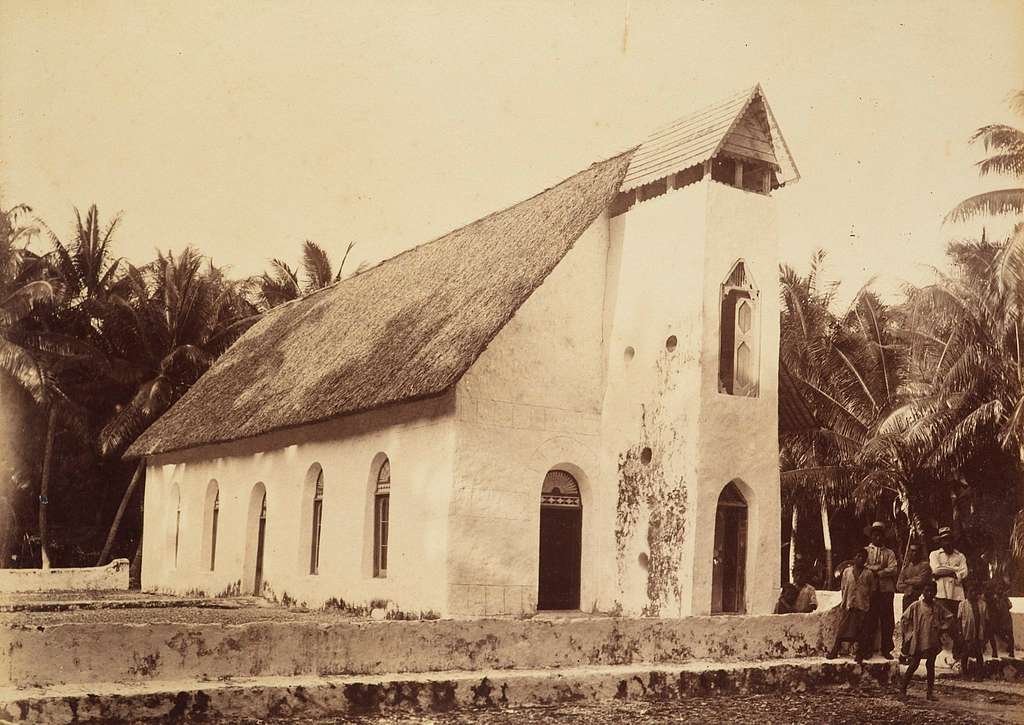
(Such a monastery chapel as this may have inspired line 2 above.)

Later in the poem Francis described God’s pursuit:

From those strong Feet that followed, followed after

But with unhurrying chase and unperturbed pace,

Deliberate speed, majestic instancy,

They beat–and a Voice beat

More instant than the Feet–

‘All things betray thee who betrayest Me.’

Another section provides God’s explanation for removing certain pleasures from the speaker’s life, because they were leading him in the wrong direction. God’s purpose was to guide him toward choosing the right path.

In the end God tells the speaker that “the happiness he sought by running away was following him all the time” (Cummings [2]). And the darkness of deprivation had been but “the shadow of the Divine hand stretched over him in love” (Blamires [3]).

Once Francis had regained his health in 1893, the Meynells invited him to stay with them. That same year Meynell helped Francis publish his first book of poems. “Hound of Heaven” was included.

“It was immediately recognized as a masterpiece” [4]. One critic called it “one of the great odes of which the English language can boast” [5].

Over the ensuing years, “Hound of Heaven” was praised by such respected authors as Oscar Wilde, G. K. Chesterton, Eugene O’Neill, and J. R. R. Tolkien. O’Neill showed his high respect for the poem by memorizing it—all 182 lines. Chesterton said, “it is the most magnificent poem ever written in English,” to which Tolkien responded that Chesterton wasn’t giving the poem the credit it deserved [6].

Francis Thompson subsequently became a well-known, respected poet, essayist, and spiritual writer. But his health suffered due to the hardship of those years in Whitechapel, and he succumbed to tuberculosis in 1907 at the age of 47.

Across the decades since his homegoing to heaven, Francis would surely have us remember these words of the apostle Paul:

Notes:

[1] https://www.christianity.com/church/church-history/timeline/1901-2000/heavens-hound-got-francis-thompson-11630688.html

[2] https://www.cummingsstudyguides.net/Guides3/hound.html

[3] Harry Blamires as quoted in Oxley, The Hound of Heaven: A Modern Adaptation, 81, as quoted by

www.hopechristianchurch.org

[4] http://houndofheaven.com/product/the-hound-of-heaven-the-story-of-francis-thompson/

[5] https://www.patheos.com/catholic/hound-of-heaven-pat-mcnamara-07-10-2012

[6] https://reasonsforhopejesus.com/is-hound-of-heaven-a-name-for-god/

Additional  Sources:

  1. https://www.americamagazine.org/issue/601/faith-focus/poet-return-god
  2. https://www.christiantoday.com/article/opium-addict-and-derelict-the-extraordinary-life-of-francis-thompson-christian-poet/130930.htm
  3. http://www.teleiaphilia.com/a-modern-adaptation-of-thompsons-hound-of-heaven/
  4. https://warwick.ac.uk/fac/arts/english/currentstudents/undergraduate/modules/fulllist/second/en227/texts/thompson-hound.pdf

Art & photo credits: http://www.wikimedia.org; http://www.geograph.org.uk; http://www.pixabay.com (2); http://www.canva.com.

Read Full Post »

Fixate on current events and become anxious.

Consider the bleak projections for the future and become fearful.

Dwell on your own struggles and become discouraged.

Focus on personal inadequacies and become doubtful.

Mull over regrets and become guilt-ridden.

Contemplate fading dreams and become despondent.

Permit negativity free reign and become depressed.

How easy it is to drift away from the truths that provide prosperity of soul.

We must choose to remember the following.

NO MATTER what we see happening, no matter the fear beginning to build, we can affirm: “For every visible reason for terror, there is an invisible and immensely more powerful reason for trust.” [1]

O Lord, God of our ancestors,

you alone are the God who is in heaven.

You are ruler of all the kingdoms of the earth.

You are powerful and mighty;

no one can stand against you!

–2 Chronicles 20:6 NLT

NO MATTER that we may not know the way forward; we do know the loving, all-powerful, and trustworthy Way Maker who has promised:

NO MATTER that life is a struggle right now, God will use it for good.  “There is coming a day [when] . . . We will have the glorious truth of our difficult ‘now’ laid out before us in a way that makes perfect sense, that will leave us panting a breathless ‘hallelujah’ for the process we’ve walked to get there.” [2]

“You do not realize now what I am doing,

but later you will understand.”

–John 13:7

NO MATTER how inadequate you feel because of failures, shortcomings, and doubts, you must remember:  “Weakness . . . is the very thing that qualifies you. Never mind your feelings of inadequacy; it is God’s work, not yours. 

“Simply make yourself available, and let go of any need to impress others, or prove yourself worthy, or achieve ‘success.’  What matters is that God has chosen you, and that God claims you as His own.” [3]

NO MATTER what you’ve done, “You no longer have to fear the consequences of your past, for your sovereign God promises that he will cause everything in your life to work together for your good and Christlikeness.” [4]

“Blessed are those whose transgressions are forgiven. . .

. . . Blessed is the one whose sin

 the Lord will never count against them.”

–Romans 4:7-8

NO MATTER that your dreams may be fading; “the death of your dream [is] not the death of God’s dreams for [you].” [5]

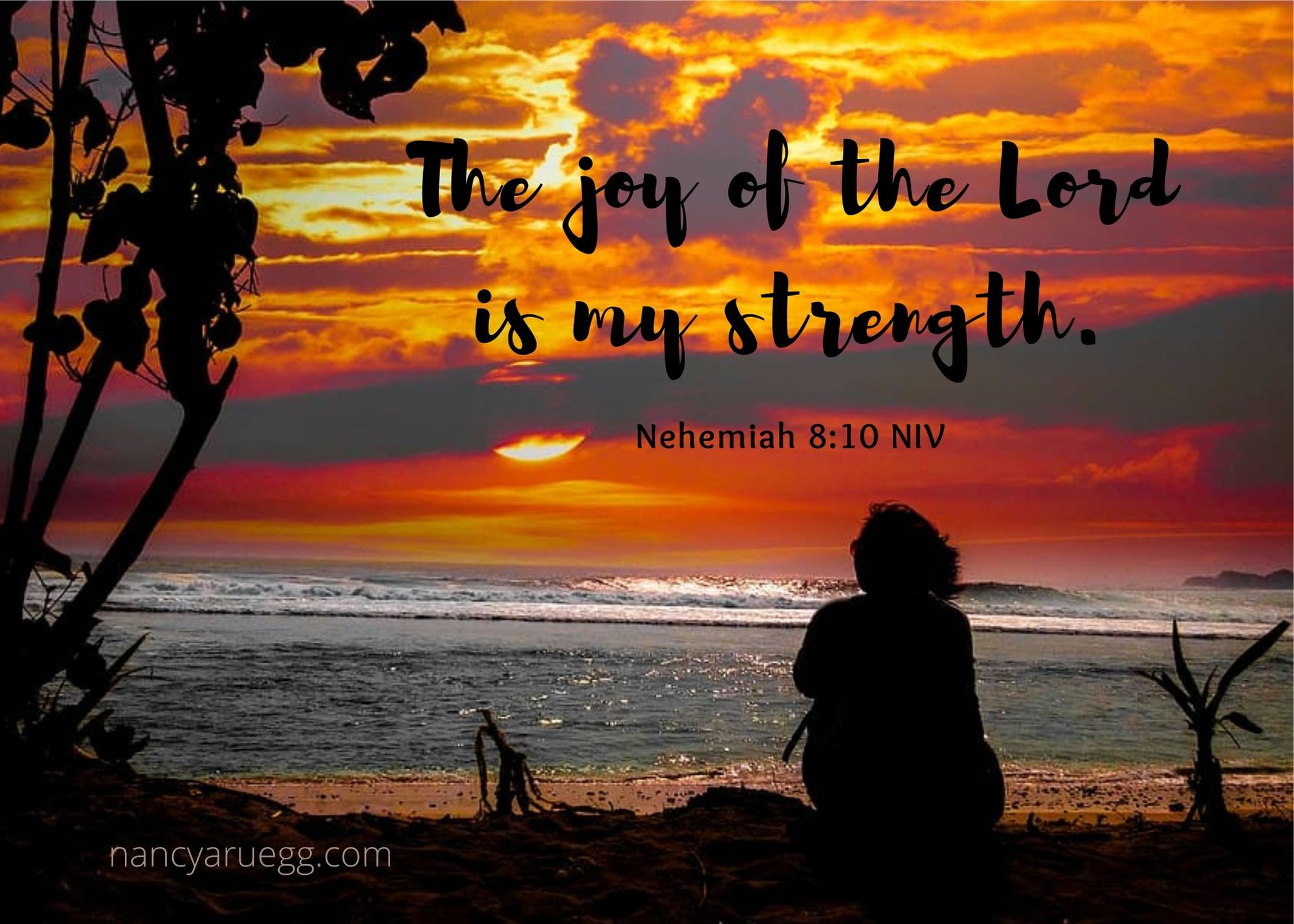
NO MATTER that circumstances conspire to steal your joy, you can . . . “Begin to rejoice in the Lord and your bones will flourish like an herb, and your cheeks will glow with the bloom of health and freshness. Worry, fear, distrust, care-all are poisonous! Joy is balm and healing, and if you will but rejoice, God will give power.” [6]

“Do not be worried,

for the joy of the Lord

is your strength and your stronghold.”

Nehemiah 8:10 AMP

NO MATTER the uncertainties and challenges of life, we have an all-powerful, wise and caring Companion for the journey, who provides all we need to experience prosperity of soul.

Stanza #3 from “Leaning on the Everlasting Arms” by Elisha A. Hoffman

[1] Elisabeth Elliot, These Bold Ashes, 11.

[2] F. Elaine Olson, Peace for the Journey, 101.

[3] Brother David Vryhof

[4] Kay Arthur, His Imprint, My Expression, 274 and Romans 8:28.

[5] Tasha June, Take Heart, 25.

[6] A. B. Simpson

Photo credits: http://www.pxfuel.com; http://www.piqsels.com; http://www.www.pixfuel.com; http://www.wikimedia.org; http://www.canva.com; http://www.heartlight.org; Nancy Ruegg.

Read Full Post »

You, O Spirit of God, have made me. Your breath has indeed given me life—physically and spiritually. Just as a deep breath of fresh air refreshes the body, so a deep breath of your Spirit and all your benefits rejuvenates my soul:

I can breathe in your BLESSINGS.

“Every day is a treasure box of gifts from you, waiting to be opened”—gifts like wisdom to choose what’s best, grace to forgive all wrongs, and peace that transcends understanding.[1]

I can breathe in your RESTORATION. 

“You are the divine Gardener, perfect at the task of transforming withered trees”—trees withered by discouragement, trouble, and pain. 

You renew me day by day, refreshing my weary soul with your Word and your presence.[2]

I can breathe in the truth of your EXCELLENCIES. 

Attentive living provides the opportunity to discover the golden threads of your perfections woven into common, everyday experience. 

I see your love expressed in a rainbow, your grace in a stranger’s smile, your wisdom on a page, your joy in a butterfly’s dance, your peace in a sunset. [3]

I can breathe in the comfort of your AUTHORITY. 

“[You are] the stage manager in control of all players on the stage.”  You are ordering events to the conclusion you ordained before time began—by your power over all things, your wisdom in all matters, and out of love for all people.[4]

I can breathe in your TRUTH. 

“The Bible is an armory of heavenly weapons, a laboratory of infallible medicines, a mine of exhaustless wealth.  It is a guidebook for every road, a chart for every sea, a medicine for every malady, a balm for every wound.”

These statements only begin to name the benefits of your Word.  The more time I spend absorbing its truths, the more time I want to spend.  “I rejoice at Your word, as one who finds great treasure.”[5]

I can breathe in your ETERNAL PERSPECTIVE. 

All the difficulties of life I can view as slight, temporary distresses that are producing a transcendent Glory never to cease.

“The joys of heaven will surely compensate for the sorrows of earth.  This world is but a narrow span, and we will soon have passed it.  Time, how short—eternity, how long!  Death, how brief—immortality, how endless!” [6]

As tensions increase around us and around the world,

may I continually BREATHE in the realities of your . . .

B lessing

R estoration

E xcellencies

A uthority

T ruth

H ealing and

E ternal perspective . . .

. . . so that I’m refreshed and strengthened to be for the praise of your glory (Ephesians 1:11-12).


[1] Psalm 68:19; quote from Joan Clayton

[2] Isaiah 40:29-31; quote from Henry Drummond; 2 Corinthians 4:16; Jeremiah 31:25

[3] Deuteronomy 32:4

[4] Psalm 22:27-28; quote from Alice Mathews in A Woman God Can Use, p. 77; Proverbs 16:4; 1 Chronicles 29:11; Romans 11:33; John 3:16

[5] Psalm 119:160; quote from Thomas Guthrie; Psalm 119:162 AMP

[6] 1 Peter 5:10; 2 Corinthians 4:17 AMP; quote from Charles Spurgeon

Photo credits: http://www.piqsels.com; http://www.heartlight.org; http://www.pixabay.com’ http://www.publicdomainpictures.net; http://www.canva.com

Read Full Post »

A few weeks before the big trip

Years ago when our oldest son Eric had just turned three and our daughter Heather was four months old, we planned a long car trip from Columbus, Ohio to our home in St. Petersburg, Florida.

I had flown north with the children ahead of time to visit family in the Chicago suburbs. Meanwhile, a week or so later, my husband Steve drove to Columbus, and the kids and I flew in from the Windy City to meet at his parents. Steve intended to drive home straight through again, so I tried to explain to Eric what was to come.

“It’s going to take us a long time to get home—much longer than our trip on the jet.  We’ll ride in the car all morning, and then we’ll stop for lunch.  After we eat we’ll get back in the car and ride all afternoon.  Then we’ll stop again for dinner.  After we eat, we’ll get back in the car and keep riding until after the sky is dark.  You’ll probably fall asleep.  And a long time after it’s dark we’ll finally be home.”

You can guess where this is going.  We’d been on the road perhaps twenty minutes and were just entering the southern outskirts of Columbus when Eric chirped, “Are we there yet?” 

Obviously no amount of explanation could prepare him for such a long journey.

And we smile at a toddler’s lack of understanding and impatience. Yet I have to admit, I’m just a toddler in God’s family. On the occasions when the time between Point A and Point B has been protracted beyond understanding, my patience has often worn thin.

What’s a child of God to do?

First, our Heavenly Father would have us remember:

  • He may be silent for a time but he is never still; he’s always working on our behalf.
  • Even as we’re waiting on God we’re waiting with God, whose mere presence can bring peace, joy, and strength[1]–when we avail ourselves.  
  • There’s always purpose in wait-time, including the opportunity for our prayer lives to be intensified.  We also tend to cling more firmly to God’s promises during a season of waiting, and find our character refined.
  • Even delays are part of his goodness as God accomplishes his plan—a plan that may very well include others, not just ourselves.
  • “If God waits longer than you would wish, it is only to make the blessing doubly precious”—Andrew Murray.

Such affirmations provide expectation and hope for me; I pray they provide the same for you.

Second, our Heavenly Father would have us purposefully occupied as we wait.

  • Delight in him.  Contemplate his character traits and his glorious activity in the past. Grow in awareness of his presence.[2]
  • “Harvest the holy in the hollow desert times.”[3] We can use a season of waiting for growing our character, developing such traits as perseverance and spiritual strength, the ability to live above our circumstances, and more.
  • Trust God’s timing. He is never too late, and he never makes mistakes.  What happens while we’re waiting may be more important than what we’re waiting for.    
  • We can live in a receptive mode, enjoying the good he’s providing today while waiting for his perfect plan to unfold for tomorrow.[4]

With my mind and spirit renewed in these ways, I’ll be able to sit back with more contentment, less impatience, and enjoy the ride through life—even as I wait for God’s plan to unfold.  How much more pleasant than repeating, “Are we there yet?”

No doubt he’ll be delighted too, as I demonstrate my faith.

What keeps you purposefully occupied as you wait for God’s timing? Please share your thoughts in the comment section below!

Notes:     


[1] Isaiah 26:3, Psalm 16:11, Philippians 4:13

[2] To grow in awareness of God’s presence we contemplate his Word, the Bible.  We turn our thoughts to him, conversing with him, offering praise, gratitude, and worship—all day long.

[3] Jean Wise blogs at www.healthyspirituality.com , but this particular quote comes from one of her thought-provoking books, Christmas Crossroads, p. 41.

[4] Lamentations 3:25

Photo credits: Nancy Ruegg; http://www.flickr.com; http://www.pxhere.com; http://www.heartlight.org; http://www.canva.com (2); http://www.heartlight.org.

Read Full Post »

One of my favorite passages of scripture wraps up chapter eleven of Romans.  The last four verses remind me (with authoritative yet beautiful language) that my wise and powerful God is in control of all things. 

Paul concludes with this statement of praise:

The following affirmations provide an opportunity to offer God our Father, Savior, and Holy Spirit the praise he deserves. You may wish to pause briefly after each one for a moment of meditation.

With our incredible triune God, we find:

Every need addressed

Every blessing bestowed

Every promise fulfilled

Every prayer answered

Every sin forgiven

Every shame erased

Every step ordered

Every decision guided

Every circumstance controlled

Every distress redeemed

Every worry calmed

Every fear assuaged

Every pain comforted

Every delight enhanced

Every God-given task empowered

Every necessary truth revealed

Every enemy vanquished

Every injustice made right

Every purpose realized

Every spiritual hunger satisfied

Every moment inhabited by his presence

Every weakness overcome by his strength

Every trouble defeated by His power

Every judgment executed by His wisdom

No doubt the list could continue.

To meditate on God’s glorious realities one after the other increases the wonder for me.  Do you feel it too?

We’re wise to review now and then all that God lavishly provides.

No doubt we’ll find our spirits lifted and our faith increased.

And then let’s not keep the delicious wonder to ourselves but tell others about his marvelous deeds. 

With whom will you share today about the glorious realities of God?


Scripture references:

Section #1—Philippians 4:19; Psalm 84:11-12; Psalm 145:13b; John 15:7 (Every prayer is answered with yes, no, or not yet.)

Section #2—1 John 1:9; Isaiah 43:25; Psalm 37:23; Psalm 23:3b

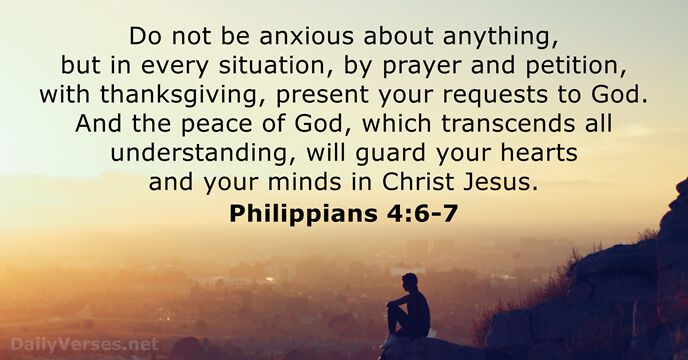
Section #3—Psalm 103:19; Psalm 25:22; Philippians 4:6-7; John 14:27

Section #4—2 Peter 1:3; John 16:13; Psalm 147:3; John 10:10

Section #5—Matthew 5:6; Romans 8:31; Colossians 3:25; Job 42:1;

Section #6—Isaiah 41:10; 2 Corinthians 12:9; Ephesians 3:20-21; Deuteronomy 32:4

Photo credits: http://www.dailyverses.net; http://www.canva.com; http://www.pixabay.com; http://www.bibleverseimages.com; http://www.canva.com (2); http://www.heartlight.org; http://www.canva.com; http://www.heartlight.org; http://www.dailyverses.net.

Read Full Post »

In the cool of morning two weeks ago, I sat on our deck before the sun had cleared the distant trees–much less those close by.   Below, the creek bed of lush foliage loomed dark and still, but above me birds chattered happily while one lone cardinal out-sang them all.  Thankfully the cicadas hadn’t started their ruckus yet.

a bit later in the morning

From several blocks away, commuter traffic already rumbled, and high in the sky the occasional jet roared northward.  Yet the serenity of my immediate surroundings superseded the extraneous noise.

And I sensed God saying to me:

Breathe in the stillness, in spite of traffic din and aircraft drone. 

I’m referring to the serenity you feel in your spirit because of what you see around you:  quiet trees unmoved by breeze, the tranquil creek bed, and the peaceful yard to the east where golden light silently presses against deep shadow—portraits of stillness in spite of the noise.

Be mindful that, as the sun faithfully turns darkness into day, my face shines faithfully upon you with the golden light of peace (1).  I push back the shadows of worry and fear while the noise in the world clamors around you—political factions arguing against one another, loud voices contending for self-serving agendas, terrorists, criminals, and thugs wreaking havoc, and more (Philippians 4:6-7).


Learn from the birds and woodland creatures who find refuge in the thick foliage of bush and tree. You too can find refuge—in me.  In fact, peace grows in direct proportion to time spent with me (2).

Picture yourself surrounded by my protective, calming presence and affirm:

  • I will never stop caring for you or supplying your every need (3)
  • I will never leave you to struggle alone (4)
  • I will never fail you, no matter how the future unfolds (5)

Focus the eyes of your spirit on such promises. Feel their truths calm your heart (6).

Even as the noise of this world grows louder because the end of time draws near, breathe in such peace-generating realities often.  Let them usher you into my Presence, surround you with comfort, and encourage your soul (7).

I long for you to live within the tranquility and protection of my Presence.

*     *     *     *     *     *     *     *     *    

Thank you, Father, for even wanting to be my shelter. Thank you for your loving care expressed in countless ways over the decades.

I know you are trustworthy. I praise you for your unfailing love that will see me through whatever the future holds. In addition, you will provide quiet refuge within my spirit where I can rest in you.

Help me keep focused on you, to live in the shelter of your love no matter the noise of the world.

(1 Peter 5:7; Psalm 9:10; Psalm 32:10;

Isaiah 26:3; Psalm 119:114)

Notes:

  1. Numbers 6:24-26
  2. Isaiah 26:3
  3. Philippians 4:19
  4. Isaiah 41:10
  5. Hebrews 13:5c
  6. Psalm 119:50b
  7. Psalm 119:165

Photo credits: Nancy Ruegg (2), http://www.flickr.com; http://www.canva.org; http://www.dailyverses.net; www. heartlight.org.

Read Full Post »

Eight-year old Jennifer Wiseman tagged along behind her parents down the road in front of their farm, just as she did every evening on their habitual walk.  No matter how many times the family of three and various pets set out under the dark sky, Jennifer always ended up trailing them, her head craned backward to study the stars.

With no city lights within miles, the countryside of her Ozark Mountain home offered a spectacular heavenly view.  Jennifer shuffled along, mesmerized. 

It seemed as if heaven’s glory itself shone through thousands of pinpricks in the black canopy of sky.  Jennifer knew about heaven from her parents and their church community where she saw lived out what was being taught.

Her interest in stars grew as she watched Carl Sagan’s television program, Cosmos.

(Carl Sagan)

 What would it be like to explore space, she wondered, to stand on a far-distant planet amidst its craters and mountains? To make new discoveries about the universe? Maybe one day I can be a part of space exploration.

That interest remained with Jennifer.  But whether to become an astronaut, astronomer, scientist or engineer building space probes—Jennifer didn’t know. So she majored in physics at MIT, since that basic science could be applied in many areas of study.

A few months before graduation in 1987, Jennifer traveled with other students to the Lowell Observatory in Arizona.  On photographic plates taken by astronomer Brian Skiff, she discovered a new comet that became known as the Wiseman/Skiff Comet.

(An unidentified comet)

Jennifer continued her education at Harvard, receiving a Ph. D. in astronomy in 1995.  From Massachusetts she moved to Virginia as a Jansky Fellow at the National Radio Astronomy Observatory to research star formation.  Her childhood dream had finally become reality [1].

(Galaxy Grand star forming, photo from Hubble Space Telescope)

Currently she is the Senior Project Scientist for the Hubble Space Telescope.

(Dr. Jennifer Wiseman)
(Jennifer teaching a seminar)

Dr. Wiseman is a sought after speaker because not only is she articulate and passionate about her subject of outer space, but as a believer in Christ she’s a strong defender of exploration as a divinely Christian activity.  She sees no conflict between science and her faith, sharing often a quote from John Calvin [2]:

As Jennifer considers the billions of galaxies, each with billions of stars, she recognizes God is responsible for it all, and has been supporting and sustaining this ever-changing universe over billions of years, long before life existed.

(a star forming, captured by the Hubble Space Telescope)

For some, that realization fosters a feeling of insignificance, but not for her.  Jennifer senses a reverent fear and gratefulness that God engineered the universe to mature over eons of time until at least one planet can support abundant life.

“And I get to be a part of that for just a little while,” she says. “So I’m grateful. It also makes me a little fearful:  am I using my time well [3]?”

Jennifer allows her awe to impact her worship as she contemplates her Savior, the one who sustains the universe (Hebrews 1:3).  “He’s the one responsible for galaxies, black holes, planets, oceans, and porcupines!” she says.

(NASA photo of a dwarf galaxy)

“When we say, ‘Jesus is Lord,’ we must mean that Jesus is Lord of all time and space.  Who was the Lord at the Big Bang when Time began?  Jesus.

“Who was Lord when the first galaxies coalesced and the first stars turned on?  Jesus.

(Colliding galaxies. Photo credit: ESA, Hubble, & NASA)

“Who was Lord as our own solar system came into being?  Jesus.

“Who was Lord during all the epochs of life on Earth—the Cambrian, the Pleistocene, the era of [early humans]?  Jesus.

“And who will be Lord as long as time exists, and forever outside of time as well?  Jesus [4].”

(The Omega Nebula or Swan Nebula)

*     *     *     *     *     *     *     *     *     *

We do praise you, O God, for the wonders of your universe. Thank you for giving us the capability to study and understand its marvels at least in part, providing opportunity to gain insight into your greatness.

(Planetary Nebula)

We also praise you for working at the infinitesimal level—in our individual lives. How glorious we can never come to the end of your attentive loving kindness any more than we can reach the end of your universe.

(Psalm 19:1; Genesis 1:27; 1 Chronicles 29:11;

Matthew 10:29-31; Psalm 57:10)

 Notes


(NASA’s Power Couple, Jennifer Wiseman and Mark Shelhamer)

[1] Meanwhile she married fellow NASA scientist Mark Shelhamer in 1997.  They met at MIT when she was an undergrad and he was pursuing his master’s degree.

[2] https://news.belmont.edu/dr-jennifer-wiseman-speaks

[3] https://blog.emergingscholars.org/2013/07/interview-with-jennifer-wiseman-part-2/

[4] www.letterstocreationists.wordpress.com/2010/11/20/how-science-can-inspire-can-inform-worship-jennifer-wiseman/

Other Sources:

www.technologyreview.com

www.testoffaith.com

https://biologos.org/podcast-episodes/jennifer-wiseman-light-in-space

Photo credits: http://www.flickr.com; http://www.pxhere.com;www.pixabay.com; http://www.stockvault.net; http://www.snappygoat.com; http://www.wikimedia.org; http://www.flickr.com; http://www.azquotes.com; http://www.pxhere.com; http://www.flickr.com; http://www.pixabay.com; http://www.wikimedia.com; http://www.flickr.com; http://www.wikimedia.org; http://www.picryl.com; http://www.flickr.com; http://www.canva.com; http://www.wikimedia.org.

Read Full Post »

On January 25, 1905, diamond mine superintendent Frederick Wells inspected the walls of the Premier Diamond Mine in South Africa—as usual.  Suddenly his practiced eye caught a telltale glimmer in the rock.  

Workmen cut free the luminous stone that very day, then took it to be weighed in the office of mine owner Thomas Cullinan.

The miners knew the fist-sized gem was a stellar find, but no one expected what the scale revealed.  Before them lay the largest diamond ever found—3,106 carats worth, and a perfectly clear specimen except for one black spot in the middle.

Frederick Wells with the Cullinan Diamond

Named for the mine owner, the Cullinan Diamond was sold to the Transvaal provincial government and eventually presented as a birthday present to England’s King Edward VII in 1907. 

King Edward hired master-lapidary I. J. Asscher of Amsterdam to divide the stone.  Asscher studied the Cullinan for six months before making the first cut, and subsequently created nine major stones along with ninety-six smaller ones.

Opened in 1854; still in business.

The largest diamond is called the “Star of Africa I” or “Cullinan I” and sits atop the British royal scepter; Star of Africa II is part of the Imperial State Crown.[1]

Star of Africa I is the pear-shaped embellishment atop the scepter.
Star of Africa II, front and center of the crown, just above the band of ermine.

Why did God create diamonds?  For the same reason he created everything in the universe:  to display his glory.[2]

Diamonds offer a magnificent example of God’s creative power, as he applied heat and pressure to simple black carbon and created mesmerizing stones.

Of course, it takes tremendous pressure (50,000 times more than that at the earth’s surface) and severe heat (2000 degrees Farenheit) for the transformation to take place.  Such extreme conditions only occur deep in the ground—at least 90 miles below the surface.

Humans have only been able to drill a little over seven miles into the earth.  So how were diamonds even discovered?  Because of another spectacular display of God’s power:  volcanoes, which spew them up to the surface.

And though raw diamonds do glimmer, their full magnificence is not released until the lapidary cuts the stones on all sides, to maximize the refraction and reflection of light. Today’s popular brilliant cut requires 58 facets. The process takes up to two weeks.

The ancient Greeks believed that a diamond was a chip of star that had fallen to earth.  We smile at their naiveté until we learn astronomers discovered a star in 2009 that has cooled and compressed into a massive diamond—10 billion trillion trillion carats worth!

Imagine the smile on God’s face as the scientists proved lyricist Jane Taylor closer to truth than she knew: “Twinkle, twinkle, little star . . . like a diamond in the sky” (1806).

With Job, we can affirm:

In addition to displaying God’s glory, diamonds also provide valuable lessons—much as he’s used trees, sheep, and ants to teach us.[3]  At least two lessons have been encapsulated in memorable quotes. 

Lesson #1: 

You know what else makes God smile?  Transforming black-carbon lives into radiant diamond-people.  Think of those like Kirk Cameron, George W. Bush, and Franklin Graham, all of whom once lived in dark rebellion and now reflect the light of Christ.

Such transformations require a lengthy process, and most often the heat and pressure of difficult circumstances, but the results are quite spectacular.[4]

Lesson #2:


A lapidary reminds us of our Heavenly Father.  He chips away at our self-centeredness and pride until we’re Stars of Heaven, fit for his crown and radiating his glory in brilliant perfection.[5]

So, my fellow stars-in-process, “let faith and patience have their perfect work, for in the day when the crown will be set on the head of the King Eternal, Immortal, Invisible, one ray of glory will stream from you”—Charles Spurgeon.


Notes

[1] https://www.history.com/this-day-in-history/worlds-largest-diamond-found# and https://www.capetowndiamondmuseum.org/blog/2017/01/worlds-largest-diamond-the-cullinan/

[2] Psalm 19:1

[3] Jeremiah 17:7-8; Psalm 23; Proverbs 6:6-8

[4] Hebrews 12:5-11

[5] Zechariah 9:16; 2 Corinthians 3:18

Photo images: http://www.wikimedia.org; http://www.flickr.com (2); http://www.wikipedia.org; http://www.canva.com (2); http://www.wikimedia.org.

Read Full Post »

Most of us have asked at one time or another, “Why does God allow so much suffering?  Why doesn’t he intervene?” 

Surprisingly, people of the Third World where suffering is common don’t ask these questions.  They accept the fact that no one leaves this life without enduring times of trial and distress [1].

Even God’s own Son endured suffering. Unimaginable suffering.  And it didn’t begin with the physical torture inflicted by Roman soldiers or the horrific crucifixion sanctioned by Pilate.

It began the night before, in the garden of Gethsemane, as he experienced overwhelming desperation and sorrow, and his sweat fell like drops of blood [2].

BUT!  God Almighty takes the worst deeds of man that cause the greatest pain and turns them into glorious victory with eternal benefits.

As we wait for that day, God uses our suffering to fulfill higher purpose beyond our comfort and prosperity—purposes such as these:

God doesn’t intervene so we can learn to surrender and obey.

Even Jesus “learned obedience from what he suffered” [3]—poverty, hunger, temptation, pain, exhaustion, derision, and stress.  Anything we face, he faced.

God knows if we don’t learn to surrender to his ways and purposes, we end up living to please ourselves—and not liking the selves we’ve pleased.

On the other hand, obedience does lead to confidence in God, prosperity of soul, and the ability to face life with resilience and poise.

God doesn’t intervene so we can develop character.

Suffering works for the believer, not against, producing perseverance which leads to character; and character to hope [ 4].

So we strive to act wisely and in the process learn self-control.  We withstand discomfort and learn fortitude.  We endure self-sacrifice and learn how to love.

God doesn’t pour the rains of affliction upon our souls for nothing.  “Springing up beneath the pounding rain are spiritual flowers.  And they are more beautiful and fragrant than those that ever grew before in your stormless and suffering-free life” [5].

God doesn’t intervene so we can inspire others.

Some of you may know the name Bill Sweeney, a popular blogger diagnosed with Lou Gehrig’s disease in 1996.  He graduated to heaven just after Christmas 2021. 

Bill outlived many others with the same diagnosis, but he suffered much.  For years his entire body was immobile.  Eventually Bill was composing his posts on a computer that tracked eye movements—posts that reflected deep faith, great strength of spirit, and delightful humor.

Commenters affirmed again and again Bill’s impact in their lives as he provided stellar encouragement and inspiration, all the more impactful because of his deteriorated health.

God doesn’t intervene so we can exhibit faith.

Bill Sweeney exhibited great faith even though he was incapable of anything beyond typing with eye movements.  But it wasn’t the suffering itself that produced spiritual strength.  It was his response.  Without self-pity he lived his life and shared his heart—humbly and honestly. And thousands of people found hope.

It’s important to understand: Christ did not suffer to exclude us from suffering; he suffered to exclude us from the consequences of our sins.  However, we can be confident of this:

That means Bill Sweeney’s sacrifice of suffering counts for all eternity.

And God will make your sacrifices of suffering count for all eternity too [6].


[1] Philip Yancey, Grace Notes, p. 69.

[2] Luke 22:44; Mark 14:34-36

[3] Hebrews 5:8

[4] Romans 5:3-4

[5] L. B. Cowman, Jim Reimann, ed., Streams in the Desert, June 15.

[6] F. Elaine Olsen, Beyond the Scars, p. 163.

Photo credits: http://www.wikimedia.com; http://www.hippopx.com; http://www.canva.com; http://www.heartlight.org; http://www.flickr.com; http://www.canva.com; http://www.dailyverses.net.

Read Full Post »


My nephew is training for an Iron Man competition taking place in April.

Every day Preston follows a carefully prescribed regimen of exercise, riding his bike, running, and/or swimming. He eats a specified diet, and strives for proper rest. Recently he purchased a new bike based on current research for achieving top speed.

Much of this is according to his trainer’s recommendations, from his acquired knowledge and experience as a competitor. The trainer knows what it takes to finish the race.

Over the last forty-plus years of Iron Man Triathlons, participants have learned strategies for success. For example, they use their arms almost exclusively for the swim portion, saving leg strength for the bike ride and run.


Months ago Preston had to choose: should he embark on this test of endurance or opt for an easier goal? And if he did tackle an Iron Man race, would he seek guidance or train on his own? You already know his choices.

Now Preston is within weeks of the race. He’s in the best shape of his life and pushing his body to accomplish far more than ever before. But any current contentment will be multiplied many times over when he crosses that finish line and celebrates the completion of this extreme challenge.

What Preston is experiencing in the physical realm, God would have us understand in a spiritual sense, as laid out in Jeremiah 6:16:


Like Preston, we face a choice, but of much greater consequence than a competition.  Will we follow the ancient paths of God’s good ways or not? And like Preston, we can experience contentment now—not just when the race is complete. God offers us peaceful rest within our spirits (Philippians 4:6-7).

Meanwhile, many around us suffer from discontent and restlessness–the result of sin and following one’s own path. Jeremiah proposes a better plan: follow the good ways of God and contentment of soul will result.

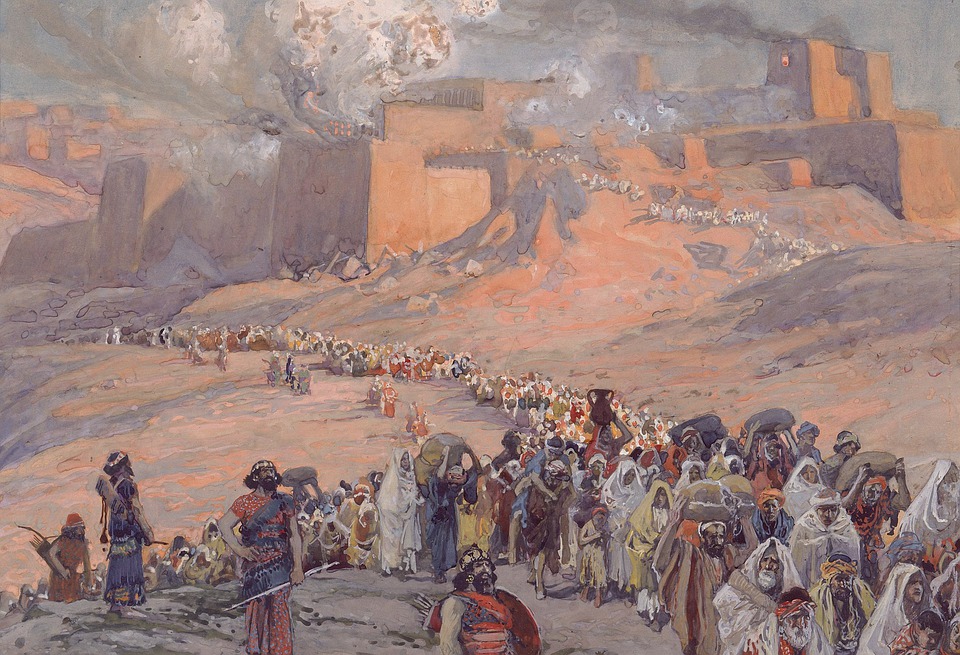
But there’s a broader meaning to this verse. Jeremiah was addressing the entire nation of Judah. As he spoke the words quoted above, a national calamity loomed. Within a few years the people of Judah would be taken captive to Babylon, because the people had not listened to God’s words and they rejected God’s law (Jeremiah 6:19).


Our nation also stands at a crossroads, but few Americans seem to be looking to God for how to proceed. Instead they’re engrossed in self-interests. They don’t ask for the ancient paths that led us to security, prosperity, and blessing in the past.[1] They reject biblical values as out-of-date and stifling.

As a result, many Americans experience dissatisfaction in life, relying on drugs or alcohol to numb the emptiness and soul-strife.[2]

And what of us who believe in Christ and do seek the ancient paths? We stand at the crossroads of these choices:


  • Will we defend our faith even though ridiculed?
  • Will we remain on the ancient path of righteousness, or bend to blend in?
  • Will we stand for absolute truth or succumb to the relative truth of the culture that says it all depends on perspective?


Uncomfortable repercussions may result when we stand for our faith and absolute truth. But our souls will rest in the peace and contentment of a clear conscience.

When Preston finishes his race, family and friends will be ready to congratulate him.


When we finish our life race, God will be ready to congratulate us with, “Well done, good and faithful servant!”

IF we remain steadfast.


“Blessed is the man who remains steadfast under trial,

for when he has stood the test

he will receive the crown of life,

which God has promised to those who love him.”

James 1:12 (ESV)


*     *     *     *     *     *     *     *     *     *

Help us all, O God, to be on guard against the lies of the enemy, to stand firm in our faith, to remain courageous and strong in all circumstances. Our heart’s desire above all is to honor you—by finishing strong. 

(1 Corinthians 16:13)


Notes

[1] The security of settled minds (Psalm 112:7-8), the prosperity as God’s people (Jeremiah 29:11), and the blessing of his provision (2 Corinthians 9:8).

[2]   a. In 2017, 12.7% of Americans were taking antidepressants, up 64% since 2014 (https://www.apa.org/monitor/2017/11/numbers).

b. About 38% of adults in 2017 battled an illicit drug use disorder (https://americanaddictioncenters.org/rehab-guide/addiction-statistics ).

c. 14.5 million people, or 5.3% of the population had AUD, alcohol use disorder, in 2019 (https://www.niaaa.nih.gov/publications/brochures-and-fact-sheets/alcohol-facts-and-statistics).

Read Full Post »

« Newer Posts - Older Posts »

When the House is Quiet

Impressions Becoming Expressions

Mitch Teemley

The Power of Story

Still Traveling

Impressions Becoming Expressions

Living Our Days

Gaining a heart of wisdom

He Said What?!

I'm Patty, and my husband and I are living with our adult son who has autism and epilepsy. I love sharing lessons learned from life around me, especially life with Aaron.

Meditations of my Heart

Impressions Becoming Expressions

Linda Stoll

Impressions Becoming Expressions

Signora Sheila

Where faith meets la dolce vita

Heidi Viars

Finding the Image of God