Feeds:
Posts
Comments

Archive for the ‘God’s Faithfulness’ Category

When our daughter Heather was a child, she would sometimes entertain herself and her little brother Jeremy with stories she’d create.

These weren’t ordinary stories, however. Each part of the story was to be followed by a response, such as HOORAY or OH DEAR. Jeremy would supply those. Heather told her story so the responses alternated.

For example:

One day Mrs. Brown said to her children, “Let’s go on a picnic!” (HOORAY!)

But while they were getting ready it started to rain. (OH DEAR!)

Mrs. Brown said, “Don’t worry, we’ll have a picnic in the family room!” (HOORAY!)

Billy Brown counted out apples for everyone. “Uh-oh!” he said. “We don’t have enough apples!” (OH DEAR!)

You get the idea.

Some of us have read Bible promises with the same HOORAY/OH DEAR responses. (Although we’d probably exchange HOORAY for HALLELUJAH!)

Take Deuteronomy 7:9, for example. We read, “Know therefore that the Lord your God is God; he is the faithful God, keeping his covenant of love to a thousand generations . . .” And our response might be HALLELUJAH!

Then we read the second part: “. . . of those who love him and keep his commandments” (emphasis added). (OH DEAR.)

Here are two more examples:

“You will eat the good things of the land . . .” (HALLELUJAH!) “. . . if you are willing and obedient”–Isaiah 1:19. (OH DEAR.)

Or this assurance from Jesus: “You are my friends . . . ,” (HALLELUJAH!) “. . . if you do what I command”–John 15:14. (OH DEAR).

I can’t speak for you but often I’m glad to claim God’s promises, then struggle to comply with the prerequisite: God’s directives—even though I know that sinful, self-centered behaviors can get me into trouble and won’t produce long-term contentment.     

I so easily forget:

What blessing might Jesus have had in mind when he made that promise? Actually, the Bible lists a number of blessings tied to obedience. Here’s a starter-list of ten:

1. God’s watchful care. “The eyes of the Lord are on those who fear him” (Psalm 33:18).

2. Prosperity of soul. “Whoever gives heed to instruction prospers, and blessed is the one who trusts in the Lord” (Proverbs 16:20).

3. Joy of heart. “The precepts of the Lord are right, giving joy to the heart” (Psalm 19:8).

4. Freedom from shame. “Oh, that my ways were steadfast in obeying your decrees! Then I would not be put to shame when I consider all your commands” (Psalm 119:5-6).

5. Freedom from fear. “Surely the righteous will never be shaken . . . They will have no fear of bad news; their hearts are steadfast, trusting in the Lord” (Psalm 112:6a, 8a).

6. Peace of mind. “Great peace have those who love your law, and nothing can make them stumble” (Psalm 119:165).

7. Blessing upon our grandchildren. “The Lord’s love is with those who fear him, and his righteousness with their children’s children—with those who keep his covenant and remember to obey his precepts” (Psalm 103:17-18).

8. Wisdom. “The statutes of the Lord are trustworthy, making wise the simple” (Psalm 19:7b).

 9. Joy of knowing Jesus intimately. “The one who has My commands and keeps them is the one who loves Me. . . I also will love him and will reveal Myself to him” (John 14:21 HCSB).

10. Everything we need and then some. “Those who obey him have all they need . . . Those who obey the Lord lack nothing good” (Psalm 34:9 GNT).

We know it’s true: disobedience can lead to disaster. (OH DEAR!)

But even the short list of blessings listed above proves:

Obedience leads to abundance.

(HALLELUJAH–and thank you, Lord!)

*     *     *     *     *     *     *     *     *     *

O God, I praise you for your promises that assure me: when I follow your ways, all will be well. Give me understanding so I may keep your law and obey it with all my heart–moment by moment. May I wholeheartedly follow your decrees, so I won’t be put to shame!

Jeremiah 7:23; Psalm 119:34, 80

Photo credits: Steve Ruegg; http://www.pxhere.com; http://www.freerangestock.com (Chad Madden); http://www.canva.com (2).

Read Full Post »

Most visitors to an art museum spend fifteen to thirty seconds looking at a painting, but art enthusiasts insist that’s not near long enough to fully enjoy each work.

Take for example da Vinci’s world-famous Mona Lisa. You’ve seen photographs; some of you may have viewed the original at the Louvre. Besides the model’s haunting expression, what makes this painting stand out from others?

First, note da Vinci’s use of shadow to give contour to the face and clothing. As a result, daVinci achieved more realism than other painters of his time.

Second, enlarge the image above and study da Vinci’s masterful attention to detail—the intricate gathers of the bodice, the graceful tendrils of her hair, the next-to-nothing veil.

Third, focus on the background. Mona Lisa appears to be sitting in front of a window with a lovely view of mountains, trees, and a lake. Da Vinci used a technique called foreshortening to condense the wide scene onto his narrow canvas.

Fourth, note the hazy atmosphere, created as da Vinci blurred the edges of his almost undetectable brushstrokes.

Of course, additional features also contribute to Mona Lisa’s magnificence. Yet even this short list makes clear: there’s more to the Mona Lisa than most of us realize.

And to know more makes us appreciate more and enjoy more. But such results require close observation through slow looking.

The same principle applies to God. To know God more will allow us to enjoy and appreciate him more.

But how do we observe closely Someone who’s invisible?

We begin with evidence of the Unseen. One example, his presence and character traits revealed in the events of our lives:

  • Caring protection from harm on numerous occasions
  • Generous provision of countless necessities, gifts, and blessings
  • Perfect wisdom, as certain desires of our hearts haven’t come true, recognized in hindsight
  • Unfailing faithfulness to see us through disappointment, difficulty, and uncertainty
  • Gracious goodness in every joyful moment, every delightful surprise. They all come from him.

Every day provides much evidence of his benevolent presence in the lives of each of his children. The more we look, the more we’ll find. And as each discovery is turned into praise our spirits fill with joy.

Another way to practice slow looking is to spend time in God’s presence, learning more about him through his Word.

It makes sense: “Delight in God cannot occur in an intellectual vacuum” [1].

“But I don’t know where to start!” someone might say.

The internet offers a variety of reading plans, and once a plan is in place, we apply the practice of slow looking as we read.

Writing the answers to such questions as these hones our observation skills:

  • What does this passage say about God and his character?
  • What truths does he teach?
  • What does God promise here that offers hope and encouragement?
  • Is there a prayer that applies to my life? (Write it out, perhaps in your own words, and personalize it.)
  • Has God included an example to follow or not follow [2]?

Slow looking through the act of writing also helps deepen our understanding and appreciation, expanding our capacity to enjoy God.

Another benefit? Taking joy in God and all his excellencies increases our strength to endure.

What moment of slow looking has led you to a recent discovery about God? Please share in the comment section below!


[1] Sam Storms, http://www.gracequotes.org

[2] Denise J. Hughes, Deeper Waters, 76.

Photo credits: http://www.pxhere.com; http://www.wikipedia.org; http://www.rawpixel.com; http://www.pexels.com; http://www.heartlight.org; unknown.

Read Full Post »

More than likely you’ve never seen the item pictured above. At first glance, you might think it’s a noisemaker used in primitive worship ceremonies. Others might say it looks like a musical instrument or the paddle for some game.

In actuality, it’s a model of an ancient Aztec weapon, a macuahuitl (MAC-wah-wick).

Strange-looking, isn’t it?  How could a wooden paddle be deadly enough for warfare? The key lies in those black protrusions on the sides. They were made from obsidian and filed razor sharp, capable of creating gaping slash wounds.

Here’s another strange-looking weapon. They remind me of the jacks some of us played with as children. These are called caltrops, with each spike measuring 2 1/2-to-3 inches.

Caltrops were designed so that, when thrown on the ground, one point would always land facing up.

Spread hundreds of these around your camp at night, and protect your soldiers while they rest. Or hide them in the area before the opposing army approaches, and cause crippling injury to many men and beasts as they charge.

But why all this talk about ancient weapons?

In the spiritual battles of life, we too have at least two strange-but-effective weapons at our disposal.

At first glance, they might appear useless against our adversary Satan. But these weapons have the power to defeat his minions of discouragement, disappointment, envy, frustration, and more.

The first weapon is gratitude. Yes, just uncomplicated gratitude.

For example, consider each of the negative emotions named above and how gratitude might incapacitate them:

  • When discouraged by lack of recognition at work, I can be thankful God sees.
  • When dissatisfied with my paycheck, I can be thankful that God will provide.
  • When disappointed by my child’s behavior, I can be thankful for the life-lessons taught through consequences that will benefit him in the future.
  • When envious over the lovely new house of an acquaintance, I can be thankful for our low mortgage, friendly neighbors, and the memories that have turned our house into a home.
  • When frustrated by a day of one-step-forward-and-two-steps-back, I can thank God for the strength and patience to see me through [1].

And as we wield our weapon of gratitude we’ll discover: “The truly thankful person is a truly peaceful person” [2].

But how do we manufacture deep-down satisfaction when life is full of difficulty and stress?

Luci Swindoll suggests: “Consider who you are and be satisfied with that. Consider what you have and be satisfied with that. Consider what God is doing and be satisfied with that” [3].

One way to employ contentment is to meditate on one of the praise psalms, like Psalm 103 or 145. While reading each verse, consider what it says about who you are, what you have, and what God is doing. Brandish your discoveries in the face of the enemy of your soul.

Even one simple statement can generate a whole journal of responses. For example:

In this moment, consider:

  • What goodness do you see, hear, taste, smell, or feel (externally and internally)? Praise God for these gifts [4]
  • What recent events have brought you joy? Praise God for engineering those events.
  • Who has blessed you lately? Praise God for these people.
  • What are you looking forward to? What hopes do you have for the future? Praise God that, because of his unfailing love and faithfulness, we always have hope (Lamentations 3:21-23).
  • What evidence of God’s thrilling presence have you noted? Praise him for revealing himself in so many different ways [5].

Perhaps a thick fog of trouble makes it difficult to see much goodness. British writer and scholar Alexander Smellie (1857-1923) would have us affirm:

“The Lord knows what is best for me, and my surroundings are determined by Him. Wherever He places me, He does so to strengthen my faith and power, and to draw me into closer communion with Himself. And even if confined to a dungeon, my soul will prosper.”

Those are fighting words of contentment we can take into battle, my friends!


[1] Job 28:24; Philippians 4:19; Hebrews 12:11; Habakkuk 3:17-19; Philippians 4:13

[2] Lysa Terkheurst, Embraced, 256.

[3] Joy Breaks, 79.

[4] A previous post Mindfulness PLUS may prompt your thoughts.

[5] Another post Heart-to-Heart offers examples.

Photo credits: http://www.worldhistoryencyclopedia.org; http://www.picryl.com; http://www.heartlight.org; http://www.canva.org; http://www.pxhere.com.

Read Full Post »

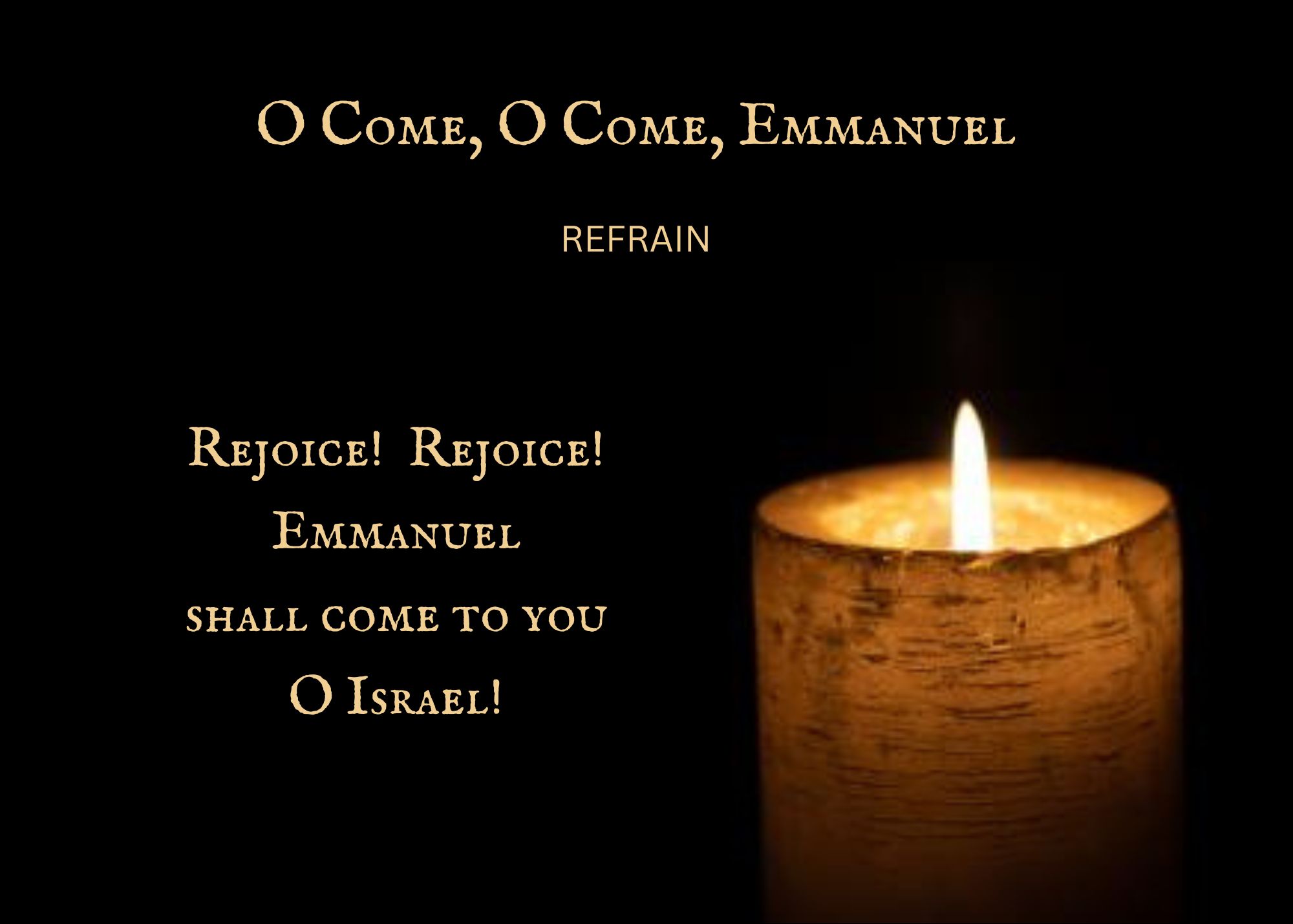
Two weeks ago we embarked upon a reflection of one of the most important songs in the history of the Christian faith: “O Come, O Come, Emmanuel.”

The lyrics beautifully weave together the Old and New Testaments, telling the story of our Messiah, “the chosen One”—who would come to deliver his people from the consequences of their sins and establish his kingdom forever [1].

As noted before, the unknown lyricist carefully based each stanza on scripture. You’ll find references for further reflection listed at the end of this post.

Today we turn our attention to verses four and five [2]:

VERSE 4

I praise you, Lord Jesus, for fulfilling all the Messianic prophecies in the Old Testament—at least 300 of them (!), proclaimed long before your birth. The one referenced here offers such glorious hope, as I’m reminded that:

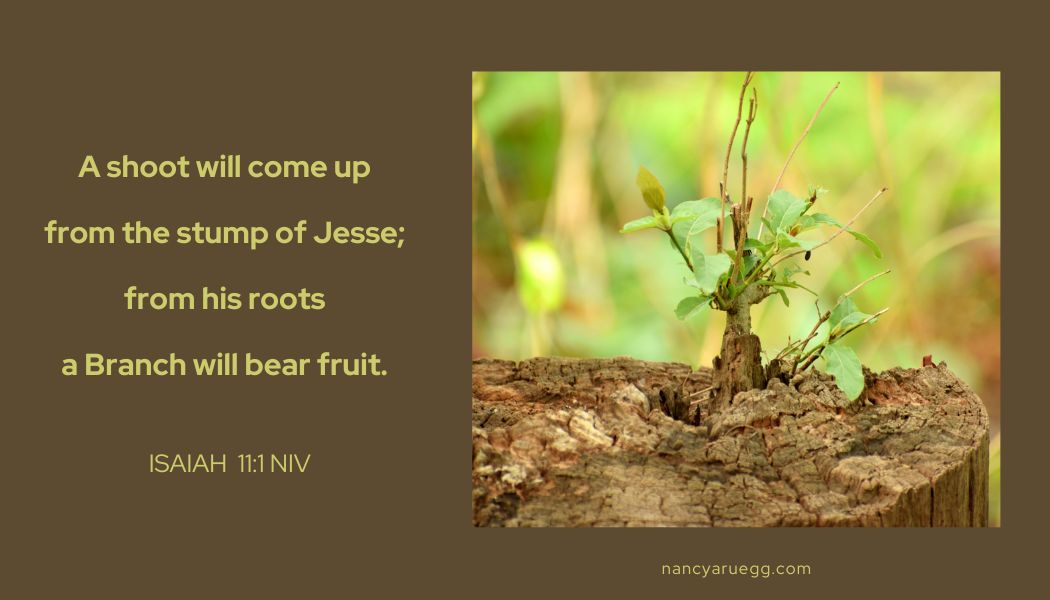
Jesse was the father of King David, and the prophet Jeremiah foretold you’d be a descendant of this king, a man loyal to the Lord. But as the centuries passed, the nation of Judah turned their backs on God. Again and again he urged them to return to him [3].

Isaiah (another prophet) painted a word picture of the events that would occur. He compared the kingdom of Judah and the throne of David’s descendants to a tree that would be cut down. All that would remain would be a stump–a remnant of the people [4].

Eleven years later, events unfolded just as Isaiah and four others prophets had foretold. Jehoiachin, the last legitimate king of Judah, was removed from his throne by the Babylonian king, Nebuchadnezzar.

Thousands of Judeans were taken captive so they’d see the error of their ways, seek forgiveness, and follow God once again [5].

But I praise you, Lord Jesus, that Isaiah’s word picture didn’t end there. He proclaimed that out of that hopeless, rotting stump would come a strong sapling.

Six centuries later, you came to earth, the only Righteous One of God, fulfilling that prophecy [6].

Not only were you from the lineage of David on your earthly father Joseph’s side, but also on your mother Mary’s side. This fulfilled the prophecies proclaiming you are the descendant of David that the Jewish people longed for: their Messiah [7].

I praise you, Lord Jesus, for coming to save your people–Jews and Gentiles alike. Because of your great mercy, you rescued me from the specter of hell, taking the punishment I deserved.

And now, the grave has no power over anyone who acknowledges you as their Rescuer [8]!

VERSE 5  

I praise you, Lord Jesus, for possessing the Key of David. That’s significant because a key indicates authority over a domain.  

King David was given authority to rule over all Israel; you rule over all mankind. In fact, God has seated you at his right hand in the heavenly realms, far above all rule and authority, all power and dominion [9].

Out of your magnificence and perfection, you’ve prepared heaven for your people—a place of utter tranquility, blissful and continual joy, eternal and lavish love—beyond what we can imagine.

I praise you, Lord Jesus! You’ve opened wide the gates of heaven; you hold open the door of opportunity for all to enter [10].

As you’ve promised, one day you’ll return and take your children home along “the heavenward road.” Then you will shut the door upon death once and for all [11].

REFRAIN

In all of this and more I REJOICE! You are my Rescuer, saving me from the greatest enemy of all: death.

I praise You, Lord Jesus, for graciously providing the way heavenward. I REJOICE in you, my Savior, my Lord, my King!


[1] Ace Collins, Stories Behind the Best-Loved Songs of Christmas,127; Isaiah 59:20; John 1:40-49; Romans 6:23; Revelation 11:15.

[2] From www.hymnary.org. (Lyrics vary depending on the source.)

[3] Jeremiah 23:5; 1 Samuel 13:14; Isaiah 3:8-9; 55:7

[4] Isaiah 11:1, 10

[5] 2 Kings 24:8-17; 25:21; Isaiah 55:7; Joel 2:12-13

[6] Acts 22:14; 3:18

[7] Matthew 1; Luke 3; Jeremiah 23:5-6

[8] Psalm 86:13 GW; 56:13; Ephesians 1:17; Romans 8:11

[9] Revelation 3:17; Matthew 28:18; Ephesians 1:20—22

[10] Isaiah 22:22; Revelation 3:7

[11] John 14:1-3; Hebrews 2:14; Revelation 21:4

Art and photo credits: http://www.pixexid.com; http://www.stockvault.net; http://www.pexels.com; http://www.pixahive.com; http://www.stockvault.net; http://www.pixexid.com; http://www.stockvault.net.

Read Full Post »

Have you noticed that Bible verses about God’s love often include one particular adjective? In the New International Version, translators chose the word unfailing, as in:

 Just in the psalms alone of that version you’ll find the phrase unfailing love used at least twenty-seven times.

Even more interesting, look up those same verses in other translations and you’ll find no less than eight different expressions in place of unfailing love, including:

  • Gracious love (International Standard Version)
  • Devoted love (Berean Standard Bible)
  • Steadfast love (English Standard Version)
  • Constant love (Good News Translation)
  • Merciful love (New American Standard Bible)
  • Lovingkindness (Amplified Bible)
  • Faithful love (Holman Christian Standard Bible)
  • Loyal love (New English Bible) [1]

Each one adds to the wonder of an all-powerful King of the universe who delights in you, who treasures you.

Yes, he does.

So for the next few moments, let God love on you. Deliciate in the lavish love of your Heavenly Father. [2]

He would have you know:

My love for you, precious child, is gracious

I do not just put up with you!

My grace to you is affirmation of my acceptance

and pleasure in you. [3]

My love for you is devoted

caring, affectionate, and attentive.

Remember, I am always thinking about you;

I am always supplying your needs. [4]

My love for you is steadfast.

“No matter what you might do,

you don’t have to worry about letting Me down,

because you were never holding Me up.” [5]

My love for you is constant.

I already loved you before time began.

Regardless of your performance,

My love for you will never diminish. [6]

My love for you, dear one, is merciful—

forgiving, sympathetic, and ungrudging.

I’ve given you a dazzling crown of mercy and compassion;

will you not wear it? [7]

My love for you is full of kindness.
Through My Son I made it possible

for you to enjoy a rich and satisfying life.

I continually bless you with good things. [8]

My love for you is faithful.

Time and again I have “accomplished wonders,

plans formed long ago—with perfect faithfulness”—

To bless you, provide for you, grow you. [9]

My love for you is loyal

Unchanging, unwavering, and unfailing.

The more you depend on Me,

The more dependable you will find me to be. [10]

*     *     *     *     *     *     *     *     *     *

I can scarcely believe that you, the God of the universe, with all your perfections and glory, would love me—with all my imperfections and shame. Yet you eagerly bestow your gracious favor in wondrous ways. Help me to continually rest in your unfailing love, free from anxiety and fear. Amen.  

How is God loving on you today? Please share in the comment section below!

Art & photo credits: http://www.pickpik.com (2); http://www.heartlight.org; http://www.canva.com; http://www.picryl.com (artist: Richard Jakopic); http://www.pickpik.com (2).


[1] In many Old Testament scriptures, it’s the multi-dimensional Hebrew word hesed (used nearly 250 times) that translators are trying to express.

[2] Based on a statement of Margaret Feinberg, Wonderstruck, 25.

[3] John 1:12; Psalm 147:11

[4] Psalm 139:17-18; Philippians 4:19

[5] Lysa Terkeurst, Embraced, 130.

[6] Jeremiah 31:3; 1 John 4:8; Romans 8:38-39

[7] Psalm 103:2-4

[8] John 10:10 NLT; Psalm 107:9 GNT

[9] Isaiah 25:1; Matthew 7:11; Psalm 23:1; Philippians 1:6

[10] James 1:17; Psalm 145:13b; Cliff Richard, https://www.searchquotes.com/search/Dependable_God/

Read Full Post »

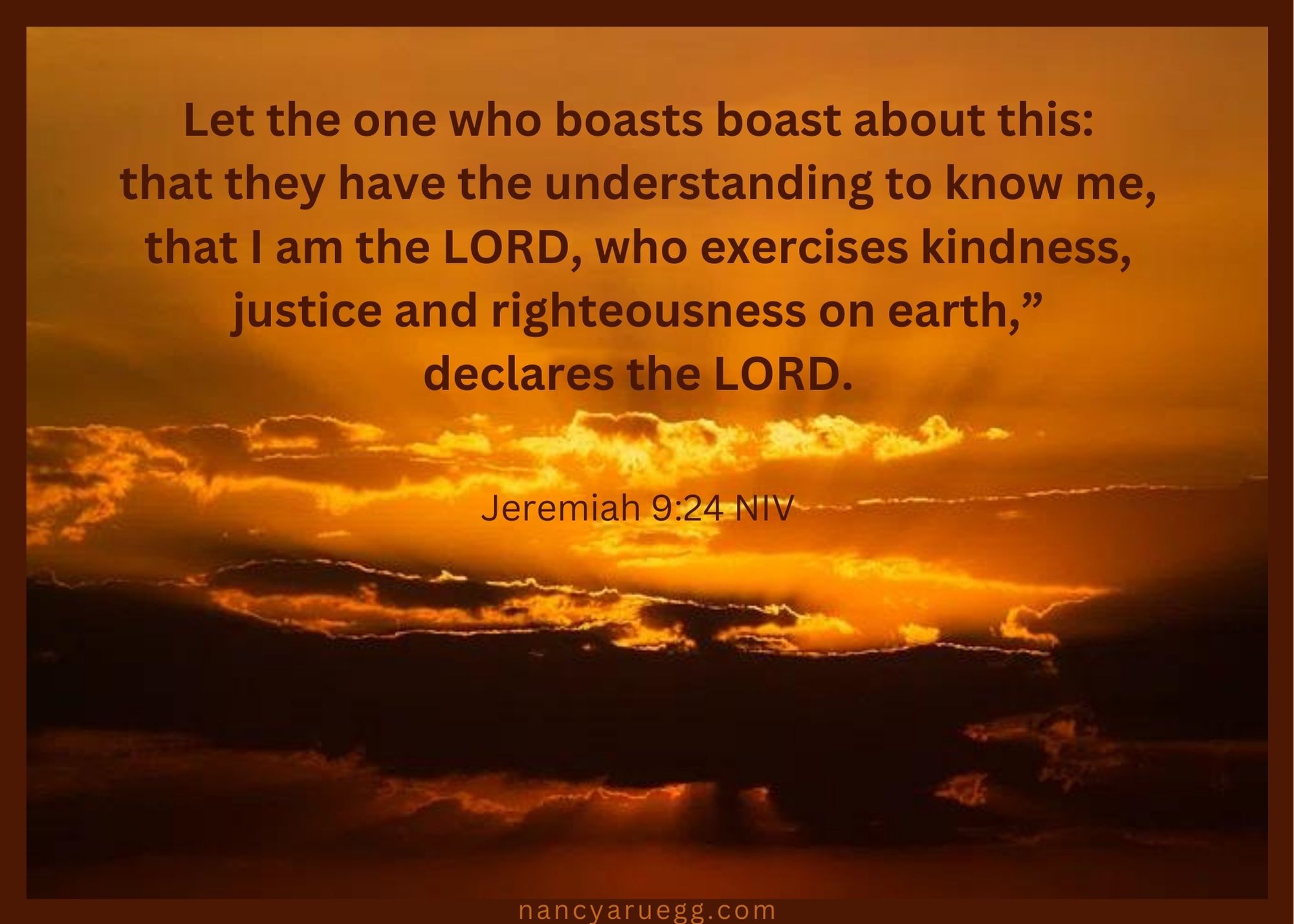
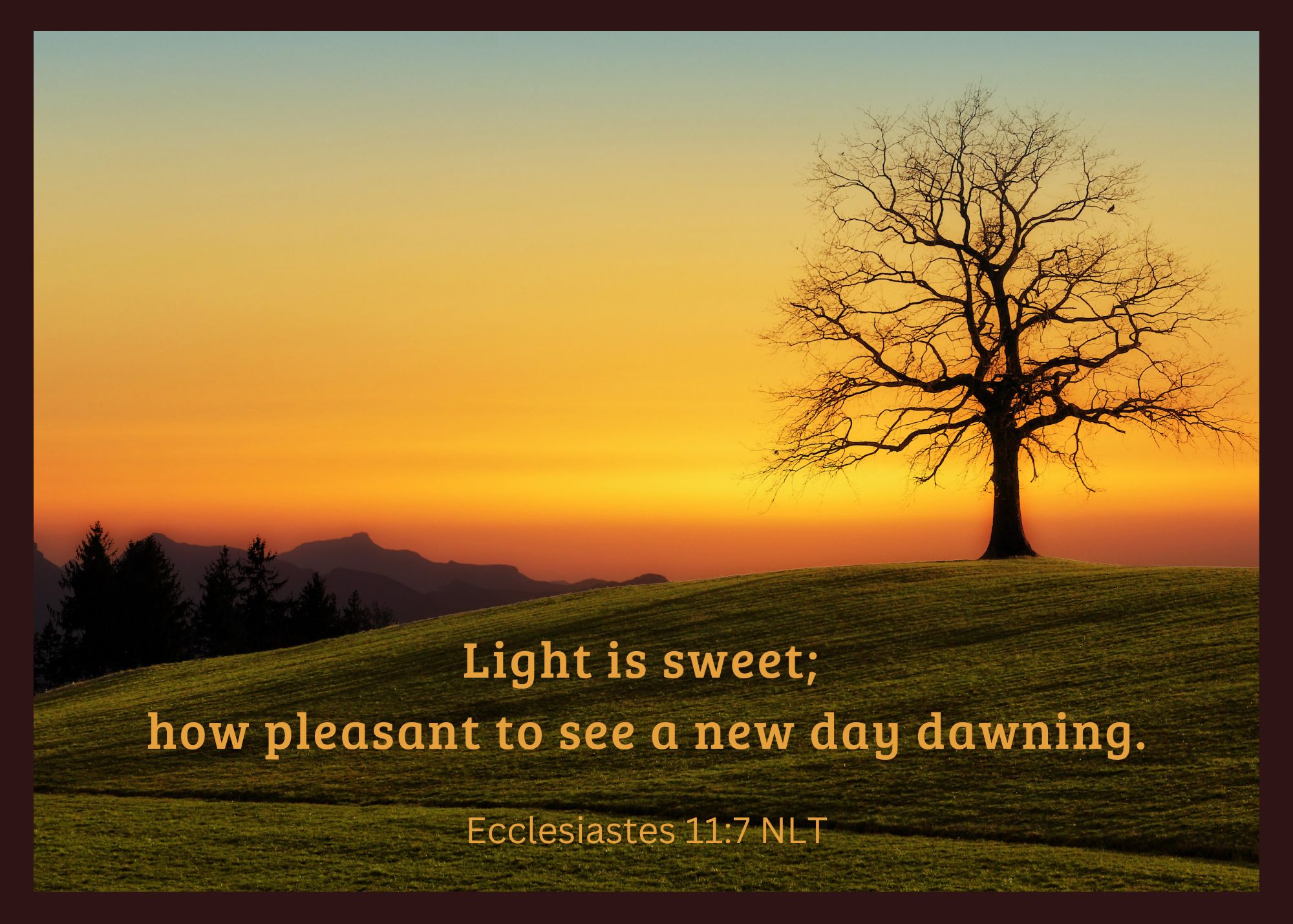
No matter how many sunrises a person might witness over a lifetime, who could tire of the majestic spectacle, with its mesmerizing shades of lavender, scarlet, apricot, and golden yellow—all aglow with the backlight of the sun, and each dawn different than all those before.

I’m filled with wonder as the morning sky begins to fill with light and “the heavens proclaim the glory of God. The skies display his craftsmanship”[1].  He is the supreme Artist.

My favorite sunrise-displays are those when clouds are positioned just right to create magnificent gleaming rays reaching into infinity.

Perhaps God inspired the prophet Malachi with just such a sunrise as he wrote: “The Sun of Righteousness [our Messiah] will rise with healing in his wings for you people who fear my name”[2].

Wings refers to sunbeams, bringing to mind the unending healing of God’s forgiveness, available to all who put their trust in Jesus. He provides for us the dawning of a new day as we choose to move out of darkness and into his marvelous light [3].

Sunrise is also God’s daily reminder that his faithfulness is great and his mercies begin anew each morning . Perhaps he wanted us to understand that his faithfulness to us is as certain and consistent as the sunrise, yet full of surprise and creativity as well [4].

The dawn brings hope, reminding us that:

  • Just as the sun is bigger than any planet in our solar system, so God is bigger than any challenge we might face.
  • Just as the sun always shines whether in full view or behind clouds, God is always with us whether we sense his presence or not.
  • Just as the sun never fails to rise, so the Son will never fail to rise, bringing the light of his salvation, truth, and wisdom.
  • Yesterday’s disappointments and failures are past; a new day with fresh blessings and possibilities has dawned [5]!

In addition to hope, fresh joy comes with the morning light.

But to see the dawn and experience its pleasure, a person must look at the sunrise. If we’re going to see joy and experience its pleasure, we must look to the Son, the source of joy [6]. Then, each day becomes an opportunity to live in wild, blissful amazement of God.

When you do witness a glorious sunrise doesn’t it make you smile—if not on your face, then in your spirit? We can augment that joy with gratitude—not just for a breath-taking dawn, of course, but for all the beautiful, remarkable, and pleasurable things God generously bestows.

Author Roman Payne wrote in celebration of the sun: “O, Sunlight! The most precious gold to be found on Earth!” And surely we’d agree, a golden sunrise especially proves his point.

But just such a sunrise might better serve as a reminder to celebrate the Son:

O SonLight, more precious than all the gold to be found on Earth!

*     *     *     *     *     *     *     *     *     *

I praise you, God the Father, Son, and Holy Spirit, for your light that is brighter than the brilliance of a sunrise! You are the source of all blessing, the brightness of our days, and our guiding Light to show the way. Without you, life is like twilight with dark night ahead. But with you, it is the dawn of morning with the light and warmth of a full day ahead.

(Psalm 84:11 PTP; James 1:19; 2 Samuel 22:29; Psalm 119:105;

last sentence based on Philip Schaff quote.)


[1] Psalm 19:1 NLT

[2] Malachi 4:2a

[3] 1 Peter 2:9

[4] Lamentations 3:23, and an idea inspired by Eugene Peterson, Run with the Horses, pp. 115-116.

[5] Philippians 4:13; Psalm 23:4; 27:1; 119:105, 130; Ecclesiastes 2:13

[6] John 15:11

Photo credits: http://www.pixabay.com; http://www.peakpix.com; http://www.canva.com (2); http://www.rawpixel.com.; http://www.peakpix.com.

Read Full Post »

The Ruegg crew–1980

Years ago when my husband Steve was two-and-a-half years into his first pastorate and our three children were ages five and under, I found myself over-committed.

Sundays, of course, included Sunday School, church, and an evening service. Mondays we hosted a small group in our home that grew to about 30 (which, in my mind, required a clean house plus fresh iced tea and coffee). Thursday evening was choir practice.

From a handful of members to a loft-full; I’m 5th from the left

Every other week, I facilitated a Moms’ support group/Bible study. Also on the to-do list: leading Children’s Church each Sunday for a year, and participating in numerous other activities that happened on a less frequent schedule.

Do you see any issues here?! I didn’t.

All this activity felt important for the growth and community-building of our church that had been dying before we arrived. As a result, I was always on the go between the responsibilities there and at home. Sometimes I resented it (which can be one of the symptoms of striving too hard).  

But the bustle felt gratifying too. In seeking to please the people around me, I was feeding my own neediness for validation. Pride and self-satisfaction lurked in the corners of my soul—wrong reasons for the striving. In addition, I was discovering those attitudes are never satiated.

What’s a Type-A person–who wants to do what’s right–supposed to do?

The following questions can help us evaluate our choices of activity, how many we choose, as well as analyze the motivations behind them:  

Am I propelled most days by determination or devotion?

The determined person rarely reads her Bible or prays except on the run. Her calendar is impressively full of good-deed commitments for others, but contentment is illusive.

This woman may know that a quiet time spent with God refreshes and transforms the spirit, but she can’t seem to make it happen.

Do I find myself pressing on (to the point of exhaustion), while rarely pressing in to be strengthened?

Pressing in includes connecting with God throughout the day, especially in the thick of stress, frustration, or anxiety.  One means is to recite scripture verses that bring our focus back to our all-powerful, all-wise God. [1]

Such verses include:

  • “God is our refuge and strength, a very present help in trouble” (Psalm 46:1).
  • “Call on me in the day of trouble; I will deliver you, and you will honor me” (Psalm 50:15).
  • “The Lord is good to those whose hope is in him, to the one who seeks him” (Lamentations 3:25).

God is ever-ready to help—with the choices before us, when to say yes and when to say no, as well as the right motivations behind those choices.

Does people-pleasing supersede God-pleasing in my life?

Author Shauna Niequist speaks for some of us when she asks: “Why am I doing this? What is it in me that keeps things moving so breakneck fast, . . . that sacrifices my own health and happiness so that people who aren’t me will think I’m doing a good job, in some vague, moving-target kind of way?”[2]

I too find my service for others frequently tinged with people-pleasing. Does that mean I should forego such activity until I can purify my intentions?

No, wrote author and pastor, Tim Keller: “If you wait until your motives are pure and unselfish before you do something, you will wait forever.”[3]

BUT! Our heavenly Father offers this glorious hope:

Because we are covered by Jesus’ righteousness, even our imperfect efforts to please God are acceptable. And as we grow in dependence upon Christ, he’ll purify our hearts more and more.[4]

*     *     *     *     *     *     *     *     *     *

Father, I know it’s downright foolish of me to strive so hard, especially for all the wrong reasons. I want to be free from people-pleasing, self-gratification of the ego, and pride. Forgive me for giving room to such attitudes in my mind.

Help me to be an eager and compliant participant as you work within me to create a pure heart and make my attitudes new.

In the powerful name of Jesus, AMEN.

(Proverbs 4:23; Psalm 51:10; Romans 12:2)


[1] Psalm 72:12 ESV

[2] Present over Perfect, 58.

[3] The Reason for God: Belief in an Age of Skepticism

[4] Isaiah 61:10; Titus 2:11-14

Photo credits: Nancy Ruegg (2); http://www.dailyverses.net; http://www.pixabay.com (TheDigitalArtist); http://www.heartlight.org; http://www.dailyverses.net.

Read Full Post »

Sovereign Lord of Creation, who

Drapes morning mist across the hillsides,

Paints the dawn with ever-changing hues, and

Scatters sparkling crystals of dew on grass and flower,

I worship you with incredulous wonder.

Sovereign Lord of Salvation, who

Gave your precious Son, the King of kings,

To die a cruel, criminal’s death for my sin, and

Provide the way of eternal life,

I worship you with overflowing gratitude.

Sovereign Lord, who

Now considers me righteous,

Making possible an intimate relationship with you, and

Granting perfect peace and effervescent joy,

I worship you with a humbled spirit.

(Detail from The Return of the Prodigal Son

by Rembrandt)

Sovereign Lord of Affection, who

Mercifully withholds the punishment I deserve,

Graciously bestows blessings I have not earned, and

Carries me close to your heart,

I worship you with overwhelming love.

Sovereign Lord of Revelation, who

Gave us your timeless, trustworthy Word, that

Offers infallible wisdom, inspired instruction, and

Encouraging promises to lead us and lift us,

I want to worship you with my obedience.

Sovereign Lord of Transformation, who

Actively pursues my best interest,

To mold me into the image of Jesus

With ever-increasing splendor,

I want to worship you with my submission.

Sovereign Lord of Distinction,

There is no one like you.

Your greatness is beyond human comprehension.

I stand in awe of your splendor and majesty, and

I worship you with all that is within me.

(Revelation 17:14; Philippians 2:8; Romans 5:17; 2 Corinthians 5:21; Revelation 3:20; Romans 14:17; Micah 7:18; John 1:16; Isaiah 40:11; Psalm 119:160, 130, 50; Romans 8:26-29; 2 Corinthians 3:18; Psalm 145:1-5.)

Photo and art credits: http://www.pixabay.com; http://www.pxfuel.com; http://www.wikimedia.org; http://www.creazilla.com; http://www.flickr.com; http://www.pxfuel.com; http://www.wallpaperflare.com.  

(Reblogged from June 18, 2015 while we enjoy another visit from our younger son and daughter-in-love.)

Read Full Post »

Erin has prayed for years that her estranged son would come home.

Tricia can’t seem to shake a gray cloud of despondency, ever since her fiancé broke off their engagement.

Jack worked many extra hours to qualify for a prized promotion, but the boss’s unpleasant nephew was awarded the position instead.

Stacie has faced the loss of one job and a stressful transition to another.

Kate goes through the motions at church and even continues with her quiet time. But God seems to have distanced himself. She hasn’t sensed his presence for weeks.

Such circumstances can cause a downward spiral in our spirits, as debilitating emotions like frustration, anger, worry, and depression threaten to move in and take over. If we feed these emotions with negative thoughts, our faith in God begins to falter, and the devil’s lies begin to sound like truth:

  • So much time has passed; God is never going to answer your prayer.
  • Since bad things keep happening, it’s obvious God has abandoned you.
  • God doesn’t care about your life. Otherwise, why would he allow you to fail?
  • They say God offers love, peace, and joy, but none of it’s coming your way.
  • It looks like God’s forsaken you and to make matters worse, you don’t even know why.

Is it possible to fight against such feelings and fortify our faith? Oh, yes!

Our fight begins with truth—straight from God’s Word. We have to choose facts over feelings—just like a pilot does, as he flies through miles of thick clouds. In order to stay on course, he can’t trust what he feels is proper speed, direction, and altitude; he has to rely on the facts presented by his instruments.

So what scriptural truths might help us maintain our spiritual equilibrium? There are dozens, perhaps hundreds of passages that address our various needs with pinpoint perfection.

Other scriptures provide broad-sweeping truths that cover almost any situation. One example:

If we read the Bible with the intent of finding applicable truth for our circumstances, we won’t be disappointed.

“Such things were written in the Scriptures long ago to teach us.  And the Scriptures give us hope and encouragement as we wait patiently for God’s promises to be fulfilled.”

Romans 15:4 NLT

Now the question becomes: Will we take God at his word and act upon it?

Hebrews 11 gives us a lineup of faith-stars who did just that–based their actions on faith, not feelings.

By faith Noah built an ark (v. 7).   He didn’t allow feelings of inadequacy to stop him.

By faith Abraham left home with no notion of where he was going (v. 8). He didn’t allow fear of the unknown to deter him from following God’s direction.

By faith, the parents of Baby Moses hid him from Pharaoh. They didn’t allow fear of punishment to stop them. “They were not afraid of the king’s edict” (v. 23).

By faith the people of Israel marched around Jericho, even though it must have seemed a strange tactic (v. 30).

Bottom line: Faith is the exercise of our minds, based on the stable truth of God’s Word, in spite of what we might feel. Emotions are just the unreliable, fluctuating condition of our minds. [1]

On the other hand, God doesn’t ask us to ignore our feelings. Job, David, and the prophets honestly expressed frustration, fear, disappointment, and discouragement. But! They didn’t allow their emotions to cripple them. [2]

Also worth noting:  None of these faithful people were perfect, yet God honored their faith.  He doesn’t need perfect people to accomplish his purpose, just willing and faithful ones.

*     *     *     *     *     *     *     *     *     *

Forgive me, Lord, for allowing feelings to impact my faith. Help me to fit every thought. emotion, and impulse into the structure of a Christ-shaped life.  

Thank you for listening and offering encouragement as I confess my feelings.  You even supply strength, peace, and hope.  

And finally, I praise you that you preserve the faithful. I am secure in you.  In fact, you, my all-powerful God, are security itself.

2 Corinthians 10:5, MSG; Psalm 10:17; Psalm 29:11; Psalm 31:23; Proverbs 18:10

Notes:

[1]  J. Clarke, http://www.writtentreasures.org

[2] See Psalm 13 for a worthy example.

Art & photo credits: http://www.pexels.com (Liza Summer); http://www.pexels.com (Karolina Grabowska); http://www.pxfuel.com; http://www.publicdomainpictures.net (George Hodan); http://www.publicdomainpictures.net (2); http://www.wikimedia.org; http://www.dailyverses.net.

(Revised and reblogged from February 9, 2015 while we enjoy a visit from our younger son.)

Read Full Post »

Once again we find ourselves grieving for families, friends, and community of victims gunned down in another school shooting. Why does this madness continue? What makes a person choose to kill children?

And then there’s the war that drags on in Ukraine, causing death, devastation, and hardship. Why do we humans resort to such horror?

Across our nation, crime, homelessness, and drug addiction plague many of our cities. How has such deterioration been allowed to escalate and why haven’t proven solutions been implemented that help correct these plights?

Also producing distress and fear are the continual reports of terrorism, riots, fraud, lawlessness, disasters, and other disturbing events.

In addition, some of you are dealing with your own overwhelming problems caused by other people and not your fault.

When God chooses not to immediately intervene, what’s a person to do? An unidentified psalmist gave us the answer.But before we consider his plan-of-action, note how current his observations sound as he described evildoers. They:

  • Seem to be triumphing
  • Boast a great deal
  • Crush God’s people
  • Band together against the righteous
  • Bring misery to others with their decrees
  • Condemn the innocent to death [1]

Then just before slipping into depression, this poet wrote:

He would want us to know: God provides joy-filled comfort—not just reassuring consolation. The psalmist surely had in mind solace, help, support, cheer, and restoration of a sense of well-being—all facets of comfort.

Our part is to avail ourselves. How? By walking through the G. A. T. E:

1. G = Glory in biblical truth.

Find refuge in God and His infallible Word.

Read until His peace mounts a guard

around your mind and heart and soul.

Kay Arthur [2]

Among the many comforting truths found in scripture, here are a few of my favorites:

  • 1 Chronicles 29:11-13—God is great and all-powerful, the ruler of all things.
  • Psalm 23:4—Our caring Shepherd never leaves us to fend for ourselves.
  • Psalm 46:1—He provides refuge, strength, and help.
  • Isaiah 25:1—We can count on His faithfulness because he’s been completely faithful in the past.
  • Romans 11:33-36—He is continually directing, sustaining, and upholding all things in his perfect wisdom–even in the face of tragedy.

2. A = Affirm God’s promises.

As you glory in biblical truth, keep alert for the promises. Ask yourself, “Has God already done this in my life?” Take comfort in the evidence of promises already fulfilled. For example, when has he:

  • Brought good out of difficult circumstances?
  • Guided you in the way you should go?
  • Delivered you out of trouble—physically, emotionally, and/or spiritually?
  • Granted peace in the midst of turmoil?
  • Provided beyond your expectations? [3]

And as you affirm the evidence of the past, be expectant for the future. What God promises, he will do [4].

3. T = Take joy in who God is.

He is a way-making, promise-keeping,

battle-winning, water-walking, storm-stilling,

Faithful Friend and Savior.

Kaitlyn Bouchillion [5]

Isn’t that delightful description? Let’s use it as a model for creating more uplifting characterization. I’ll get us started with:

He is a sin-forgiving, death-defying, hand-holding, strength-infusing, gift-giving Gracious Father.   

 Do you feel your heart filling with the comfort of gratitude, praise, and joy? Me too.

4. E = Enter into his presence with prayer.

Prayer crowns God with the honor and glory due His name,

and God crowns prayer with assurance and comfort.

The most praying souls are the most assured souls.

Thomas Brooks

Take comfort in knowing that:

  • God is not only here, he is near.
  • As we call out to him, he’s already answering.
  • God’s presence quiets the soul, calms the mind, and warms the heart [6].

Decades ago, researchers recorded the heartbeats of mothers and played the tapes in a hospital nursery. They discovered that the infants cried less, slept better, and even gained weight at a better rate.

Those recordings evidently brought comfort, allowing the babies to rest and even thrive.

As we walk through the G.A.T.E. God has provided, and Glory in biblical truth, Affirm his promises, Take joy in who he is, and Enter his presence with prayer, we will hear the comforting heartbeat of God’s love, even through the darkest night.  


[1] Psalm 94:2, 4, 5, 20-21.

[2] His Imprint, My Expression, 289.

[3] Genesis 50:20; Psalm 32:8; 34:18; Isaiah 26:3; Ephesians 3:20.

[4] Numbers 23:19.

[5] Take Heart, edited by Grace P. Cho and Anna E. Rendell, 210.

[6] Psalm 145:18; Isaiah 65:24; Psalm 91:1-2.

Photo credits: http://www.flickr.com; http://www.commons.wikipedia.org; http://www.heartlight.org; http://www.dailyverses.net; http://www.flickr.com; http://www.heartlight.org; http://www.commons.wikimedia.org (Bonnie Gruenberg).

Read Full Post »

« Newer Posts - Older Posts »

When the House is Quiet

Impressions Becoming Expressions

Mitch Teemley

The Power of Story

Still Traveling

Impressions Becoming Expressions

Living Our Days

Gaining a heart of wisdom

He Said What?!

I'm Patty, and my husband and I are living with our adult son who has autism and epilepsy. I love sharing lessons learned from life around me, especially life with Aaron.

Meditations of my Heart

Impressions Becoming Expressions

Linda Stoll

Impressions Becoming Expressions

Signora Sheila

Where Faith Meets La Dolce Vita

Heidi Viars

Finding the Image of God