Feeds:
Posts
Comments

Archive for the ‘God’s Goodness’ Category

A Date Night, 1976

One of the delights of a long-term relationship are the shared memories. My husband Steve and I find ourselves saying quite often, “Oh that reminds of . . .” and we’re each transported to a time and place of our mutual past:

  • Any songs from the Carpenters’ album, Close to You, take us back to a vacation house shared one week with two other couples—before kids. All we had for music was a tape of that one album!
  • Certain dishes remind us of favorite restaurants from our forty years in Florida: Bananas Foster–the Don Cesar Hotel on St. Pete Beach; blackened fish–Fast Eddie’s on Anna Maria Island; the shrimp pot–Captain Charlie’s on Juno Beach; and garlic knots–Mama Mia’s in Lake Worth.
  • Trigger-words immediately conjure up experiences: camper—four adults and four children in a pop-up—nice and cozy; muffins—Mrs. Bisso’s burnt offerings, humorously memorable [1]; and reggae music—a mini-vacation of snorkeling in the Keys with our three children.

No doubt you’ve experienced the same phenomenon. Sights, sounds, aromas—even a single word can elicit a memory.

And have you also noticed . . .

–C. S. Lewis, Out of the Silent Planet

God would have us know the same is true in the spiritual realm. The pleasure of our relationship with him grows more fully as we remember all the great things he’s done:

We also find that recalling God’s goodness in the past restores our faith for what he can do in the present and the future.

For example:

Has God miraculously supplied a need?

I’m remembering a time when Steve gave money to a struggling family, even though we were hardly making ends meet ourselves. Not long after, a speaking engagement (for which Steve didn’t expect to be paid) and a surprise monetary gift from a family member provided double what Steve had given.

Has God blessed beyond what you’d asked for, or perhaps with something you didn’t ask for at all?

One spring we were surprised by the gift of a new car, provided for us by a member of the church Steve was pastoring at the time.

Has God answered your prayers in marvelous ways?

In my God Is Faithful journal I came upon this entry:

“We’ve seen so many miracles at church recently—Barbara’s and Shirley’s healings, John’s clean bill of health from his doctor, special care of Joyce’s niece, and more! Thank you, Father, for blessing our fellowship in so many ways.”

Has God worked out impossible circumstances with astonishing ease?

During those years of ministry, children-raising, and teaching (for me), the Christmas season always meant extra-tight time-constraints. One morning I prayed God would somehow get me through the long, hectic day ahead.

And sure enough: 1) a teacher-colleague and I polished off essays that needed grading—I didn’t have to take any of them home, and 2) after school, a list of errands was expedited by little traffic (six days before Christmas no less!), a quick hunt for the items on my list, and short lines in the stores [2]!

When we’re feeling anxious or overwhelmed, taking time to remember God’s faithfulness, lovingkindness, and help in the past, does indeed help us trust him in the present.

Finally, remembering results in rejuvenating praise:

“Many, LORD my God, are the wonders you have done, the things you planned for us. None can compare with you; were I to speak and tell of your deeds, they would be too many to declare. . .

. . . You make me glad by your deeds, LORD; I sing for joy at what your hands have done.”

Psalm 40:5; 92:4 NIV


[1] https://nancyaruegg.com/2014/07/07/imperfectly-right/

[2] I’m so thankful for my “blessings” notebook-journal, kept since November 1983, so hundreds of examples such as these have not been lost over time.

Charles Spurgeon quote from Morning by Morning, 27.

Art & photo credits: Nancy Ruegg; http://www.stockvault.net; http://www.canva.com (2); http://www.commons.wikimedia.com.

Read Full Post »

What if you opened your mailbox one day to see a thick, cream-colored envelope among the ads and bills. Your name and address have been hand-calligraphed in gold ink, and an intricate seal is embossed upon the flap.

Inside you find an elegant invitation, announcing a grand celebration at the palace of a highly-respected and beloved king.

“Come!” proclaims his request. “Come and enjoy an unlimited feast with me; come drink the finest wine. There is no cost to you.”

Would you attend? Surely you’d quickly return your R.S.V.P. with “YES” clearly marked!

Such a scenario is fiction, of course, except for one fact: God Almighty, the King of the universe, is a monarch to be highly-respected and beloved–above all others.

And he has issued an invitation to everyone–not just to a single banquet–but to a continual feast in his divine, spiritual kingdom. He bids us to come and enjoy a new, God-enhanced life.

Come, everyone who is thirsty, come to the waters;

and you without money, come, buy, and eat!

Come, buy wine and milk without money and without cost!

–Isaiah 55:1 HCSB

This invitation, proclaimed by the prophet Isaiah on behalf of our King, does include some puzzling statements. For example, why would he invite us “to the waters?” And what will we find there?

Just as water brings life and abundance in the realm of plants and trees, Christ’s living water provides soul-satisfying life and joyful abundance for us—the abundance of innumerable blessings [1].

And what about the wine that God says we can “buy without money?” Does it represent more than a celebratory drink? Oh yes! Wine is a metaphor here for spiritual joy, “a joy unspeakable and full of glory”[2] as we taste the goodness of God’s love.

And what about milk?

God would have us understand: his invitation to kingdom-living includes those entities that sustain our spirits, including encouragement, strength, instruction, and help. We find all that and more in the nourishment of His Word, the Bible [3].

Puritan author and preacher, Thomas Brooks (1608-1680) wrote:

The Word of the Lord is a light to guide you, a counselor to counsel you, a comforter to comfort you, a staff to support you, a sword to defend you, and a physician to cure you. The Word is a mine to enrich you, a robe to clothe you, and a crown to crown you.–Thomas Brooks

Countless Jesus-followers who read the Bible, study it, and meditate on its truths can affirm that Brooks is right; they’ve experienced time and again the life-changing power of God’s Word. That includes many of you reading this post.

In addition to his perpetual-banquet invitation, God includes these instructions:

Listen carefully to Me, and eat what is good.

Let your soul delight in abundance.

Incline your ear [to listen] and come to Me;

hear, so that your soul may live.

–Isaiah 55:2b-3a AMP

To listen carefully includes the action of follow-through. And what would God have us do? “Eat what is good”—that is, experience the fullness of his goodness as we follow his ways, and take delight in the abundance of his blessings.  

Then our souls can really live in the security and satisfaction he desires for us, in every moment of the present–and into eternity. And in the final analysis, isn’t that what we desire also?

All we need do is come.

*     *     *     *     *     *     *     *     *     *

I praise you, my King, for your open invitation to come and feast upon all the good things you offer. You prepare a table before me of forgiveness, salvation, peace, joy, strength, comfort, contentment, purpose, and more.

No amount of money on earth could purchase such priceless, heavenly gifts that you so freely give to those who simply COME. I will praise your name for ever and ever!

(Luke 13:29; Psalm 107:9; Psalm 23:5; Ephesians 3:20; Psalm 145:1b)

Have you accepted God’s invitation? If not, will you do so today [4]?

If you have, what goodness and delights have you tasted at his table? Please share in the Comments section below!


[1] David Gusik, https://enduringword.com/bible-commentary/isaiah-55/. See a starter-list of twenty-six examples: God’s Goodness from A to Z.

[2] Selwyn Hughes, Seasons of the Lord, 42.

[3] 1 Peter 2:2.

[4] See https://billygraham.org/answer/how-do-you-become-a-real-christian/ for a simple explanation and a prayer to guide you. Do it today—you’ll be so glad you did!

Photo credits: http://www.rawpixel.com; http://www.picryl.com; http://www.heartlight.org; http://www.canva.com.

Read Full Post »

Have you seen those grace-filled fingerprints? Perhaps at home in the joy of good-natured laughter around the family table, or one child helping another with his homework—unprompted, or unified celebration of all—for the success of one.

Perhaps you’ve seen God’s fingerprints outdoors in a landscape of incredible beauty and grandeur, or an up-close encounter with one of God’s creatures, or the expanse of a sunrise, sunset, or brilliant rainbow.

And especially at church, we see God’s fingerprints when an impassioned congregation sings their praise to him, a saint of God offers a heart-touching prayer, someone shares a personal story of divine, miraculous provision, or a scripture-reading fits perfectly our current circumstances.

No doubt, God’s grace is on display everywhere and always. It never wanes; it’s new every morning. And, as illustrated above, when we intentionally look, we see his fingerprints in the GRACE of place.

But God’s grace is not only evident around us. God has provided a place of GRACE within us as well.

  • Our God of grace hears—even before we speak (Isaiah 55:24).
  • Our God of grace leads—along the best and straightest path to himself (Psalm 16:11a) [1].
  • Our God of grace drives (propels)—gently but persistently—so we’re resilient, not fragile; strong, not weak; useful, not ineffectual (Ephesians 3:20).
  • Our God of grace lovingly and relentlessly draws us unto himself (Jeremiah 31:3).
  • Our God of grace changes us, progressively transforming us into his likeness with ever-increasing glory (2 Corinthians 3:18).
  • Our God of grace works in us so he can work through us—all to his and our mutual delight (Philippians 2:13).

He is a passionately dedicated, perfectly-intentioned, and supremely benevolent Heavenly Father!

Yet there is more. 

Our God enriches, enlightens, enables, and enraptures by:

  • blessing us—not with everything that pleases us—but with everything good for us [2]
  • bestowing the privilege of his presence—“so wonderful, quieting, soothing, calming, and warming” [3]
  • guiding us with supernatural wisdom as we avail ourselves with childlike trust
  • shaping our lives into what is useful and beautiful [4]
  • providing a haven within of comfort (Psalm 34:18) and strength (Psalm 59:16), refreshment (Acts 3:19) and joy (Psalm 4:7)

All good things are a result of God’s grace (Psalm 84:11)—in the GRACE of place all around us and in the place of GRACE within.

Where are you seeing God’s grace-filled fingerprints this day? Tell us about it in the comment section below!


[1] Dietrich Bonhoeffer

[2] King David mentions at least ten gifts in Psalm 103 alone.

[3] J. Danson Smith, quoted in Streams in the Desert, Jim Reimann, ed., 340.

[4] Eugene Peterson, Run with the Horses, 79.

Art & photo credits: http://www.openclipart.org & canva.com; http://www.pickpik.com; http://www.canva.com (2); http://www.creazilla.com (painting by Pieter Claesz).

Read Full Post »

‘Tis Poetry Month once again, a time to celebrate this art form that can stretch, inspire, and amaze us in ways unique from prose. Award-winning poet Pattiann Rogers identified at least one element of that uniqueness: the music of poetic language.

But is the composing of such music reserved only for experts? That question brings to mind another quote:

Such encouragement for us amateur-poets to give it a try and be stretched, inspired, and amazed when we create our own music of poetic language—unsophisticated as it may be.

This year I’ve experimented with three forms: Shadorma, diamante, and quadrille.

The Shadorma is of Spanish origin. It contains six lines, each with a specific syllable count that follows this pattern: 3/5/3/3/7/5.

Early morning on our deck offered inspiration for this Shadorma:

Dawn Rising

Sunbeams climb

Dusky shadows fade

Breezes kiss

Robins trill

Nasturtiums spangle with dew

Morning masterpiece

The diamante (diamond) form derives its name from its shape. It was created by American poet Iris McClellan Tiedt in 1969.

The pattern for diamante is more complex than Shadorma. The first half of the poem relates to the one word of the first line; the second half to the one word of the last line. These two lines often present opposites. The middle line provides a bridge between the two. 

Each of the seven lines requires a certain number of words of a certain part of speech:

  • Line 1: 1 word (subject/noun)
  • Line 2: 2 adjectives that describe line 1
  • Line 3: 3 -ing words that relate to line 1
  • Line 4: 4 nouns (first 2 relate to line 1, last 2 relate to line 7–if you’re writing about opposite topics)
  • Line 5: 3 -ing words that relate to line 7
  • Line 6: 2 adjectives that describe line 7
  • Line 7: 1 word (subject/noun)

This diamante began to take shape as I considered the transformation Christ can make in a person’s life. A list of R-words began to grow—repentance, redeemed, restored, so I pursued the pattern.

A Transformed Life

Ruin

Repugnant, reprehensible

Rebelling, ravaging, retaliating

Rashness, recalcitrance, remorse, repentance

Returning, Releasing, Receiving

Redeemed, restored

Renewal

The Quadrille form first appeared at www.dversepoets.com in 2016. The only requirement is to include 44 words (excluding the title). They believe that “limitation can happily breed extreme creativity.” Each Monday they provide a word-prompt, and participants must use that word in their poems.*

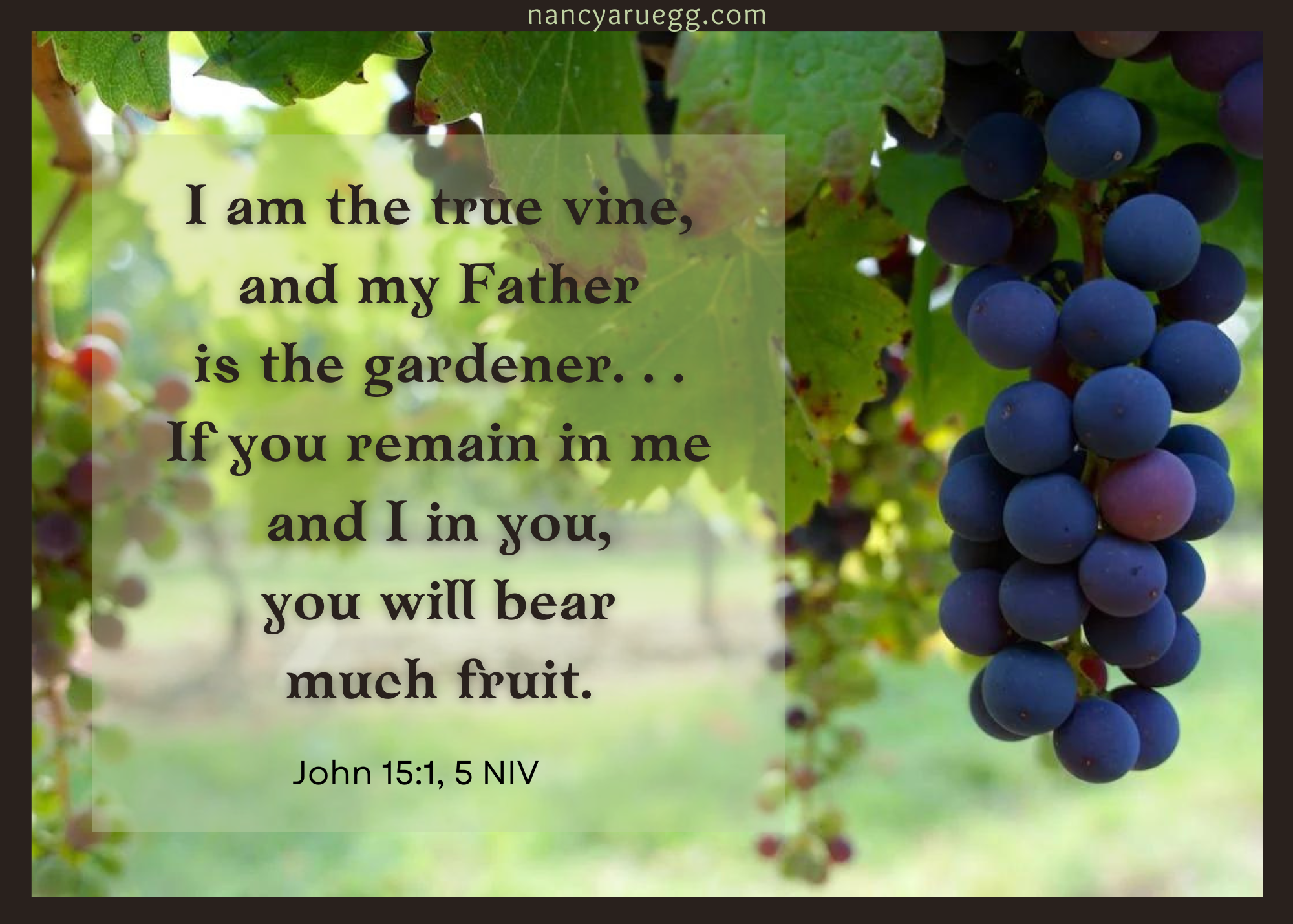
I chose my own word from John 15:1, 5—vine. And while I played with possibilities, my poem began to fit a pattern. Every line contains seven words except the last, which contains nine.

First, the scripture, as a point of reference:

And now, the poem.

Bonded to the Vine

Praise to the Gardener of our souls!

Once we’re grafted to his Vine, he

Prunes away withered branches of worthless folly,

Waters us with his life-giving, spirit-strengthening Word,

And produces pleasing fruit with boundless sufficiency.

Such beauty results when we’re bonded to the Vine!

Remember the quote of Christopher Fry at the beginning of this post–“Poetry is the language in which man explores his own amazement?”

I wonder if he knew that the pleasure in exploring our amazement—whether as poets or not—is greatly enhanced when we include the Genius behind all things amazing.


* https://dversepoets.com/2017/09/11/quadrille-40/

Photo credits: http://www.canva.com; http://www.pxhere.com; http://www.pickpik.com; http://www.pexels.com (3); http://www.commons.wikimedia.org.

Read Full Post »

After the cold starkness of winter, spring gleefully reawakens our senses with her: 

  • Effusion of colorful flowers
  • Scents of hyacinth, lilacs, and freshly-mowed grass
  • Symphony of bird song
  • Flavors of tender asparagus, luscious strawberries, and tart rhubarb
  • Textures of furry pussy willows, fuzzy moss, and silken magnolia petals

Praise God for our abilities to see, smell, hear, taste, and touch, allowing us to enjoy Spring in so many ways!

Even better, those abilities allow us to meet God in at least five ways.

Our five senses help us understand God more clearly.

Consider how the far-flung stars and planets speak of his power; the clever camouflage of lizard, fawn, and frog display his wisdom; the endless variety of colors, shapes, and textures prove his creativity; the instinctive parenting skills of adult animals demonstrate his goodness.

Our five senses help us experience God’s glory more profoundly.

  • We can see his power at work in the transformation of lives [1].
  • We can hear his wisdom in godly men and women, such as Thomas á Kempis or Corrie ten Boom (just two among millions!):
  • We can feel God’s loving touch through a hug that conveys compassion, a worship song that quickens the heart, or a landscape vista that gives us glory-goosebumps.
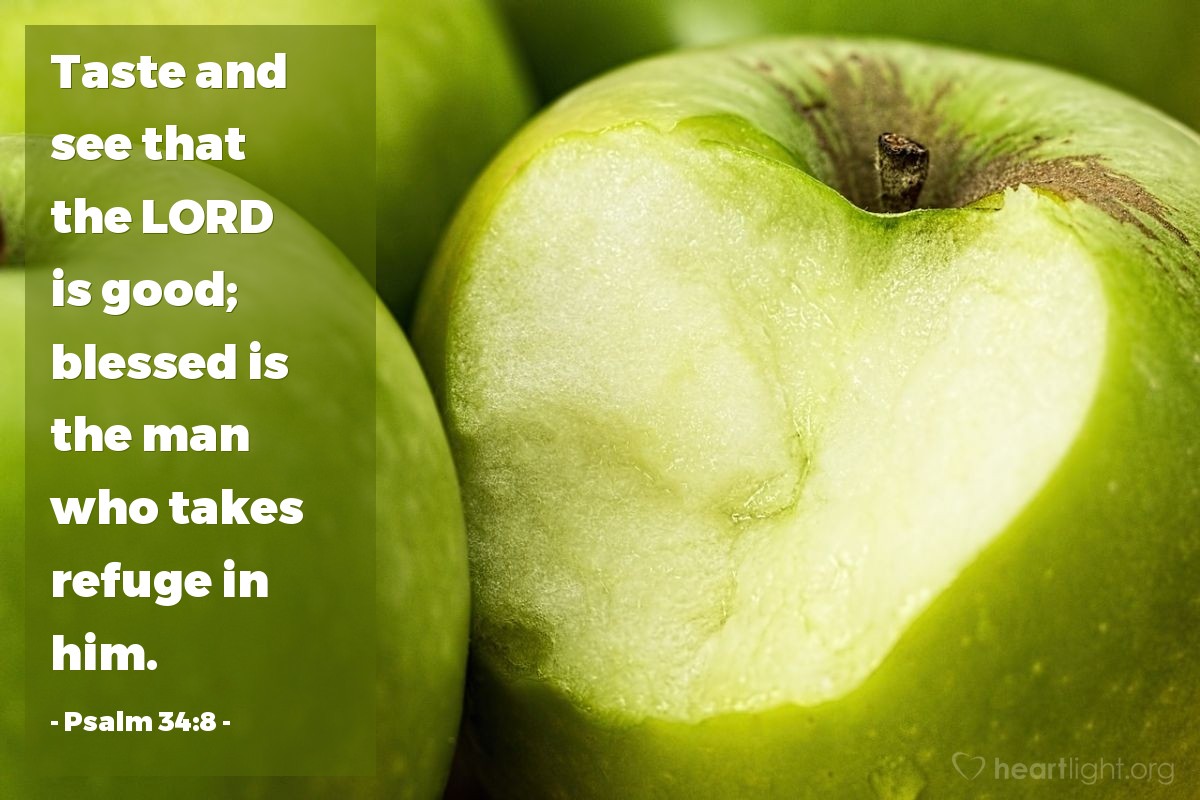
  • We can taste his goodness in all the variety of blessings we enjoy (Psalm 34:8).
  • We can smell the fragrance of his sweet presence (Psalm 45:6-8)—if we pay attention.

Our five senses help us connect with God more intimately in solitude.

Many people call it Quiet Time—moments they spend with God in scripture reading/study, prayer, perhaps journaling, and/or listening to peaceful worship music.

It’s in the quiet we begin to see important realities of the spiritual realm, hear God’s voice within our spirits providing wisdom and encouragement, feel his presence more palpably as we touch our knees to the floor in prayer, and again, smell the fragrance of his sweet presence as he meets us in our place of solitude.

   Our five senses help us worship God more intently in community.

Jerry Kerns [2]

Kerns would have us fully engaged–first to bless God’s heart and then to elevate the experience for us also.

How?

  • See the majesty and splendor of God on his throne–in your imagination. This is who you are worshiping [3]!
  • Hear the music and join in with grateful, enthusiastic praise [4].
  • Feel the presence of God as you pray. Try placing your hands on your lap, palms up—open and empty, symbolic of humility and receptivity [5].
  • Taste the bread and wine/juice with prayerful gratitude. Jesus is our Bread of Life who satisfies our spiritual hunger, who shed his blood for us so we might one day enjoy heaven with him. May we never become desensitized to the magnitude of his sacrifice.
  • Smell the fragrance of God’s saints as they leave the perfume of kindness, uplift, and joy in their wake.

Our five senses help us live out our faith more joyfully.

When our heart’s desire is to serve God by serving others, we’ll aspire to live so people:

  • See the Light of Jesus in our choices, behavior, and attitudes (Matthew 5:14-15)
  • Hear us speak truth, wisdom, and encouragement (Proverbs 10:20-21)
  • Feel the love of God in our interactions with them (John 13:35)
  • Taste the flavorful salt of God’s divine grace within us (Matthew 5:13)
  • Smell the fragrance of Christ in our lives (2 Corinthians 2:15-16)

 And as we engage all five senses in these five ways, what will happen?

We’ll bring more glory to God and enjoy more fully the satisfying, abundant life his Son provides.

That sounds mighty good to me. You too?


[1] Stunning examples include Jake DeShazer (https://nancyaruegg.com/2016/08/18/a-miracle-of-forgiveness/), Johnny Hart (https://nancyaruegg.com/2018/08/09/johnny-and-jesus/), and Isobel Kuhn (https://nancyaruegg.com/2024/04/11/goodness-and-mercy-followed/).

[2] https://www.experiencingworship.com/articles/general/2001-7-great-quotes-on-worship.html

[3] See: https://nancyaruegg.com/2023/07/06/in-awe-of-gods-magnificence/

[4] See: https://nancyaruegg.com/2015/09/07/when-worship-loses-the-wonder/

[5] See: https://nancyaruegg.com/2015/03/23/the-ultimate-delight/

Art & photo credits: http://www.pixabay.com; http://www.pexels.com; http://www.goodfon.com; http://www.stockvault.net; http://www.canva.com; http://www.pickpik.com (2); http://www.heartlight.org.

Read Full Post »

Addison Ant and other members of his colony twittered with worry. They hadn’t been able to collect enough food for winter due to a summer drought. How could they possibly survive?

“I have an idea,” Addison announced to the ant council. “Let’s ask Farmer Ezra to help! He harvested his winter wheat before the drought began. Perhaps he’ll donate a bit to us .”

Addison instinctively brushed his right antennae with a foreleg and looked expectantly at the group. Some were shaking their heads.

“He doesn’t care about us,” countered one.

“Sure he does,” replied Addison. “Farmer Ezra could have destroyed us by now if he’d wanted, but he hasn’t.” Addison paused. “So who will go with me?”

No one answered.

“Then I’ll go by myself,” he declared.

Late that afternoon, Addison marched up the hill toward the farmhouse, about an hour away. He arrived just as Farmer Ezra returned from milking his cows. Taking a deep breath, Addison shouted as loudly as he could. “Kind sir! Kind sir!”

Farmer Ezra looked about for the source of the small voice. His eyes finally rested on an ant whose whole body was a-quiver. He’d never witnessed such behavior. Farmer Ezra bent down to investigate.

And now that Addison had the farmer’s attention, he began to deliver the speech he’d prepared while walking.

“Please, sir. I’ve come from the ant colony in the southeast corner of the pasture. You may have noticed we never approach your house or cause mischief as other ants do.

“But I have come today because we’ve been unable to gather enough seeds during the drought to carry us through the winter. If you could spare us a few handfuls of wheat grains, then we can survive until spring. I beg you, sir!”

Farmer Ezra heard the desperation in the little ant’s voice. His eyes drifted to the fields where weeks earlier acres and acres of wheat had flourished.

Even after a semi had taken 20,000 tons of wheat to the train, his personal supply of wheatberries was plentiful. He wouldn’t even miss a few handfuls.

Farmer Ezra smiled down upon the ant. “All right. I will help you,” he replied. “Tomorrow morning when I take the cows to pasture, I’ll bring a small sack of wheat for your colony. Then you and your friends can transport the berries down into your tunnels.”

“Oh, kind sir!” Addison Ant’s antennae danced with glee. “I cannot thank you enough. Never will we forget your compassion!”

*     *     *    

No doubt you can guess that Addison typifies us— minute (compared to God), needy, and often helpless.

Farmer Ezra[1] represents our Heavenly Father: all-sufficient, capable, and compassionate.

Note in the verse above the psalmist did not say God will immediately deliver. Though his help frequently comes in the moment, as it did for Addison Ant, sometimes we have to wait [2].

Ah! But even then God provides help–building our confidence, strengthening our faith, and granting peace–as we:

Hope in his promises.

Promises such as Isaiah 41:13:

Other promises worthy of contemplation include: Psalm 46:1, Isaiah 41:10, and Hebrews 4:16.

Embrace God’s truth.

Like Addison and his fellow ants, we are insufficient in ourselves. But with King David we can affirm:

When King David wrote that verse, he was a hunted man. Yet he didn’t question God’s help, he affirmed and embraced it. We’d do well to do the same.

Lean on God’s record of faithfulness.

Consider how God has proven himself throughout our lives—in his provision, protection, and direction.

Review his help in the past and experience joy.

We can pray as King Asa did:

And so, even while we wait for help, God provides help as we:

  • H ope in his promises
  • E mbrace his truth
  • L ean on his record of faithfulness
  • P ray with confidence in his all-sufficiency

Addison Ant would also have us remember: whatever our trouble, it is minuscule compared to God’s power and resources!


Notes: 

[1] Ezra in Hebrew means help, support, assistance, aid, either human or divine

[2] A previous post explores the topic of waiting on God: https://nancyaruegg.com/2021/07/22/are-we-there-yet/

Sources:

Charles Spurgeon, Morning by Morning, 18.

https://dtermination.com/what-do-ants-do-in-the-winter

Photo credits: http://www.rawpixel.com; http://www.freerangestock.com (falkenpost); http://www.flickr.com (Jason and Kris Carter); http://www.canva.com; http://www.pxhere.com; http://www.pexels.com (Valentin Antonucci); http://www.pexels.com (Simon Berger).

Read Full Post »

Sometime during my teens, workers constructed a new house down the street and around the corner—a white Colonial with pillars—something like this:

I dreamed of living there in its spacious rooms, decorated in classic style, similar to the homes in House Beautiful magazine:

Of course, my dreams included a pool . . .

. . . and my favorite car parked out front, just for me to drive—a baby blue Mustang convertible:

Then I’d be deliriously happy.

And according to Psalm 84:11, those good things should have been mine, right?

After all, I was a pretty good kid—never got in serious trouble.

But now, all these decades later, I know: 1) Any sin at all is enough to separate me from all-righteous God (Isaiah 59:2). And 2) . . .

Chuck Swindoll

Now I realize there’s nothing more I could wish for in this world than what God desires to give me*–gifts that are the result of his ever-perfect goodness, never-ending grace, and breath-taking glory, gifts that are good for me.

Just for fun I challenged myself to list such gifts from A to Z, to celebrate the breadth of his generosity to his children.

I pray you’ll be celebrating too as you peruse the following.

Out of his abundant love, God has graced us with:

Access into his presence any time (Ephesians 2:18)

Bible truth that teaches, guides, and inspires (Psalm 119:24)

Comfort in pain and sorrow (Matthew 5:4)

Delights and blessings (Psalm 103:5)

Enablement to endure life’s downturns (Philippians 4:13), remembering that:

His Forgetfulness of our confessed sins (Hebrews 8:12)

His Grace to redeem us from death (Ephesians 1:7-8)

(The pleasure of) Humor, because the cheerful heart has a continual feast (Proverbs 15:15b)

Immortality with God in heaven (2 Timothy 1:10)

Amos Traver

(His) Jealousy that compels him to preserve his relationship with his people (Exodus 20:5)

Kingdom-living and all its benefits (Luke 12:32)

Loving-kindness, lavished upon us (1 John 3:1; Psalm 36:7-9)

Miracles too numerous to count (Job 5:9)

Nature that brims with beauty and wonder (Psalm 104)

Overflow of his benevolence in our lives (Psalm 119:65 NLT)

Promises that never fail (Psalm 145:13b)

Quietness of spirit that offers peace and contentment (Psalm 23:1-2)

Relationships characterized by unity, support, and love (Ephesians 2:17-22)

(The gift of) Song, enlivening our hearts with strength, joy, and encouragement (Psalm 98:4-6)

Berthold Auerbach

Truth found in Jesus, setting us free from the impossible burden of earning our way to heaven (John 14:6; 8:32)

Uplift to those who are discouraged, guilt-ridden, and/or grieving (Psalm 145:3-13)

Victory over death, given to us through Jesus Christ (1 Corinthians 15:57)

Wonders that showcase his power, wisdom, goodness, and more (Psalm 145:3-13)

(The) X-cellence of his character, compelling him to always do the right thing at the right time (Psalm 96:1-6)

(The) Yoke of Jesus, symbolic of his help as we follow his lead (Matthew 11:28-30)

Zion, the eternal city of perfection prepared for his redeemed (Isaiah 35:10)

And now I can affirm more strongly than ever:

Elizabeth Barrett Browning

Including the best dreams of foolish teenage girls.

*     *     *     *     *     *     *     *     *     *     *     *

Thank you, Heavenly Father, for showcasing in our lives your marvelous attributes and showering us with so many wondrous gifts! May the eyes of my heart turn away from the baubles of this world and revel instead in the beauty of your character and kingdom—a kingdom where you preside in all your perfections and provide for us all good things. Hallelujah!

*based on a statement by Joni Eareckson Tada, A Quiet Place in a Crazy World, 127

Photo credits: http://www.flickr.com (2); http://www.pexels.com (Dylan Leagh); http://www.pickpik.com; http://www.flickr.com (Kerry Ann Dame); http://www.rawpixel.com; http://www.pexels.com; http://www.publicdomainpictures.net (Sheila Brown); http://www.pxhere.com.
Read Full Post »

Most visitors to an art museum spend fifteen to thirty seconds looking at a painting, but art enthusiasts insist that’s not near long enough to fully enjoy each work.

Take for example da Vinci’s world-famous Mona Lisa. You’ve seen photographs; some of you may have viewed the original at the Louvre. Besides the model’s haunting expression, what makes this painting stand out from others?

First, note da Vinci’s use of shadow to give contour to the face and clothing. As a result, daVinci achieved more realism than other painters of his time.

Second, enlarge the image above and study da Vinci’s masterful attention to detail—the intricate gathers of the bodice, the graceful tendrils of her hair, the next-to-nothing veil.

Third, focus on the background. Mona Lisa appears to be sitting in front of a window with a lovely view of mountains, trees, and a lake. Da Vinci used a technique called foreshortening to condense the wide scene onto his narrow canvas.

Fourth, note the hazy atmosphere, created as da Vinci blurred the edges of his almost undetectable brushstrokes.

Of course, additional features also contribute to Mona Lisa’s magnificence. Yet even this short list makes clear: there’s more to the Mona Lisa than most of us realize.

And to know more makes us appreciate more and enjoy more. But such results require close observation through slow looking.

The same principle applies to God. To know God more will allow us to enjoy and appreciate him more.

But how do we observe closely Someone who’s invisible?

We begin with evidence of the Unseen. One example, his presence and character traits revealed in the events of our lives:

  • Caring protection from harm on numerous occasions
  • Generous provision of countless necessities, gifts, and blessings
  • Perfect wisdom, as certain desires of our hearts haven’t come true, recognized in hindsight
  • Unfailing faithfulness to see us through disappointment, difficulty, and uncertainty
  • Gracious goodness in every joyful moment, every delightful surprise. They all come from him.

Every day provides much evidence of his benevolent presence in the lives of each of his children. The more we look, the more we’ll find. And as each discovery is turned into praise our spirits fill with joy.

Another way to practice slow looking is to spend time in God’s presence, learning more about him through his Word.

It makes sense: “Delight in God cannot occur in an intellectual vacuum” [1].

“But I don’t know where to start!” someone might say.

The internet offers a variety of reading plans, and once a plan is in place, we apply the practice of slow looking as we read.

Writing the answers to such questions as these hones our observation skills:

  • What does this passage say about God and his character?
  • What truths does he teach?
  • What does God promise here that offers hope and encouragement?
  • Is there a prayer that applies to my life? (Write it out, perhaps in your own words, and personalize it.)
  • Has God included an example to follow or not follow [2]?

Slow looking through the act of writing also helps deepen our understanding and appreciation, expanding our capacity to enjoy God.

Another benefit? Taking joy in God and all his excellencies increases our strength to endure.

What moment of slow looking has led you to a recent discovery about God? Please share in the comment section below!


[1] Sam Storms, http://www.gracequotes.org

[2] Denise J. Hughes, Deeper Waters, 76.

Photo credits: http://www.pxhere.com; http://www.wikipedia.org; http://www.rawpixel.com; http://www.pexels.com; http://www.heartlight.org; unknown.

Read Full Post »

More than likely you’ve never seen the item pictured above. At first glance, you might think it’s a noisemaker used in primitive worship ceremonies. Others might say it looks like a musical instrument or the paddle for some game.

In actuality, it’s a model of an ancient Aztec weapon, a macuahuitl (MAC-wah-wick).

Strange-looking, isn’t it?  How could a wooden paddle be deadly enough for warfare? The key lies in those black protrusions on the sides. They were made from obsidian and filed razor sharp, capable of creating gaping slash wounds.

Here’s another strange-looking weapon. They remind me of the jacks some of us played with as children. These are called caltrops, with each spike measuring 2 1/2-to-3 inches.

Caltrops were designed so that, when thrown on the ground, one point would always land facing up.

Spread hundreds of these around your camp at night, and protect your soldiers while they rest. Or hide them in the area before the opposing army approaches, and cause crippling injury to many men and beasts as they charge.

But why all this talk about ancient weapons?

In the spiritual battles of life, we too have at least two strange-but-effective weapons at our disposal.

At first glance, they might appear useless against our adversary Satan. But these weapons have the power to defeat his minions of discouragement, disappointment, envy, frustration, and more.

The first weapon is gratitude. Yes, just uncomplicated gratitude.

For example, consider each of the negative emotions named above and how gratitude might incapacitate them:

  • When discouraged by lack of recognition at work, I can be thankful God sees.
  • When dissatisfied with my paycheck, I can be thankful that God will provide.
  • When disappointed by my child’s behavior, I can be thankful for the life-lessons taught through consequences that will benefit him in the future.
  • When envious over the lovely new house of an acquaintance, I can be thankful for our low mortgage, friendly neighbors, and the memories that have turned our house into a home.
  • When frustrated by a day of one-step-forward-and-two-steps-back, I can thank God for the strength and patience to see me through [1].

And as we wield our weapon of gratitude we’ll discover: “The truly thankful person is a truly peaceful person” [2].

But how do we manufacture deep-down satisfaction when life is full of difficulty and stress?

Luci Swindoll suggests: “Consider who you are and be satisfied with that. Consider what you have and be satisfied with that. Consider what God is doing and be satisfied with that” [3].

One way to employ contentment is to meditate on one of the praise psalms, like Psalm 103 or 145. While reading each verse, consider what it says about who you are, what you have, and what God is doing. Brandish your discoveries in the face of the enemy of your soul.

Even one simple statement can generate a whole journal of responses. For example:

In this moment, consider:

  • What goodness do you see, hear, taste, smell, or feel (externally and internally)? Praise God for these gifts [4]
  • What recent events have brought you joy? Praise God for engineering those events.
  • Who has blessed you lately? Praise God for these people.
  • What are you looking forward to? What hopes do you have for the future? Praise God that, because of his unfailing love and faithfulness, we always have hope (Lamentations 3:21-23).
  • What evidence of God’s thrilling presence have you noted? Praise him for revealing himself in so many different ways [5].

Perhaps a thick fog of trouble makes it difficult to see much goodness. British writer and scholar Alexander Smellie (1857-1923) would have us affirm:

“The Lord knows what is best for me, and my surroundings are determined by Him. Wherever He places me, He does so to strengthen my faith and power, and to draw me into closer communion with Himself. And even if confined to a dungeon, my soul will prosper.”

Those are fighting words of contentment we can take into battle, my friends!


[1] Job 28:24; Philippians 4:19; Hebrews 12:11; Habakkuk 3:17-19; Philippians 4:13

[2] Lysa Terkheurst, Embraced, 256.

[3] Joy Breaks, 79.

[4] A previous post Mindfulness PLUS may prompt your thoughts.

[5] Another post Heart-to-Heart offers examples.

Photo credits: http://www.worldhistoryencyclopedia.org; http://www.picryl.com; http://www.heartlight.org; http://www.canva.org; http://www.pxhere.com.

Read Full Post »

Summer 2021

A happy family is

but an earlier heaven.

–George Bernard Shaw

We’ve been enjoying an earlier heaven this week as our three children, their spouses, and three grandchildren have gathered. (Steve’s sister and brother-in-law joined us for a day also.)

Because such occasions happen only now and then, I totally agree with Kathleen McGowan, who wrote:

The only thing sweeter than union

is reunion.

–Kathleen McGowan

Indeed, we treasure these times of togetherness, just as Wanda Hope Carter advocates:

Family and friends are hidden treasures.

Seek them and enjoy their riches.

–Wanda Hope Carter

A Spanish-American philosopher came close to describing why we find treasure in familial relationships:

The family is one of

nature’s masterpieces.

–George Santayana

I’d amend his statement to: “The family is one of God’s masterpieces.” After all, family is God’s idea, established at the beginning of time (Genesis 1:28).

Author Dillon Burroughs adds this viewpoint:

When we think of our family,

our spouse, parents, or children,

let us see them as a gift from God.

–Dillon Burroughs

Indeed! I am supremely grateful to my Heavenly Father for giving us the gift of a family that loves, supports, and takes joy in one another.

They make my soul blossom.

Let us be grateful to people who make us happy;

They are the charming gardeners who make our souls blossom.

–Marcel Proust

Read Full Post »

« Newer Posts - Older Posts »

When the House is Quiet

Impressions Becoming Expressions

Mitch Teemley

The Power of Story

Still Traveling

Impressions Becoming Expressions

Living Our Days

Gaining a heart of wisdom

He Said What?!

I'm Patty, and my husband and I are living with our adult son who has autism and epilepsy. I love sharing lessons learned from life around me, especially life with Aaron.

Meditations of my Heart

Impressions Becoming Expressions

Linda Stoll

Impressions Becoming Expressions

Signora Sheila

Where Faith Meets La Dolce Vita

Heidi Viars

Finding the Image of God