Feeds:
Posts
Comments

Archive for the ‘God’s Love’ Category

“You have given me the shield of your salvation,

and your right hand supported me,

and your __________ made me great.”

–Psalm 18:35 (EST)


What word would you put in that blank?

  • Power?
  • Grace?
  • Mercy?


The word chosen most often by translators* may surprise you. It certainly surprised me.

“Your GENTLENESS made me great.”

In addition to being surprised, I was puzzled. How can God’s attribute of gentleness make a person great?

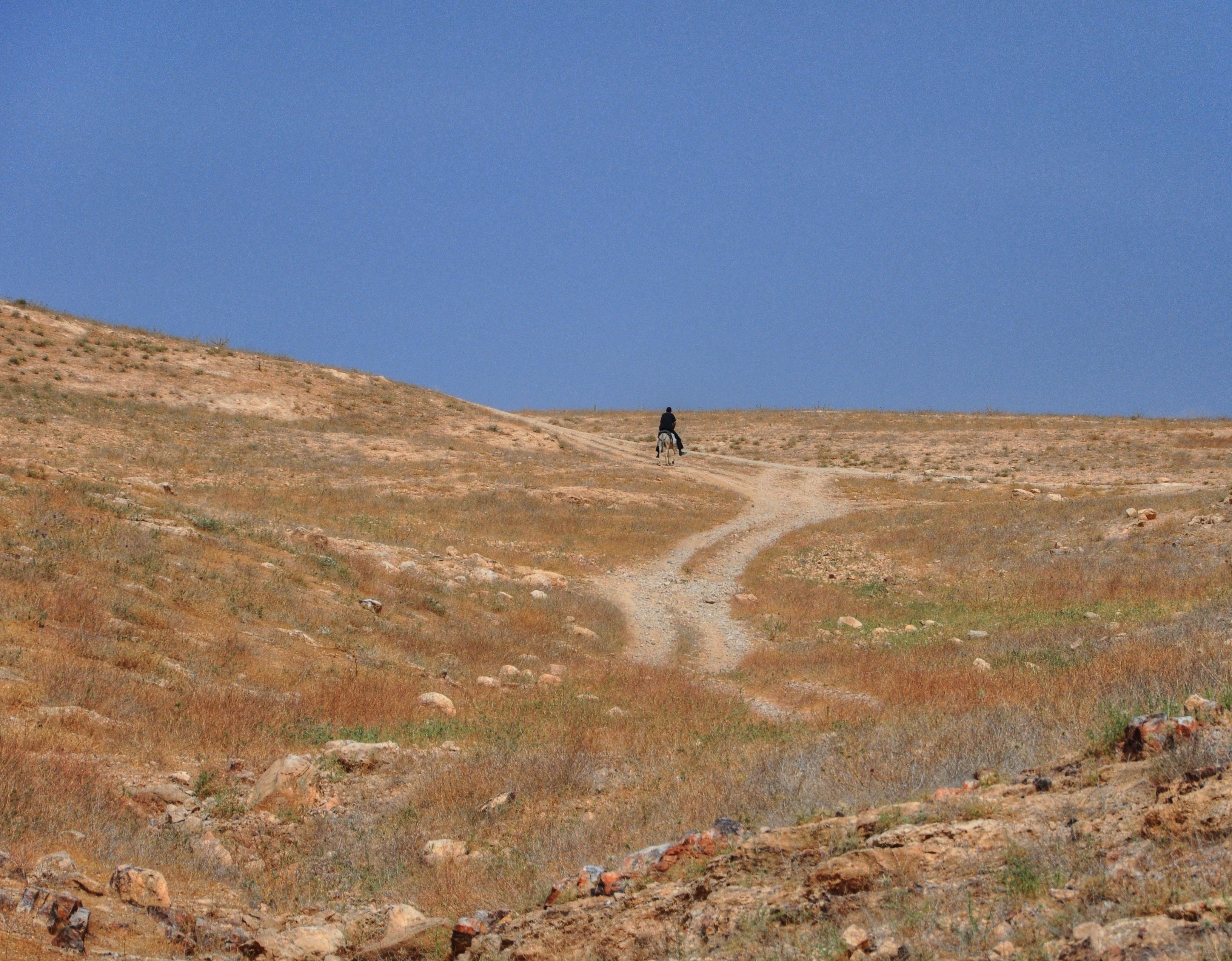
A good place to begin our search for understanding is the background of this psalm.  It was written by King David, perhaps during his later years. He may have been pondering the incredible progression of his life from lowly shepherd boy to exalted king.


89446669


Surely young David never even daydreamed of becoming the most powerful man in Israel, as he sat on the hillsides of Bethlehem watching over his father’s sheep.

Neither could he have known at least fifteen years would pass between his anointing as king (a ceremony indicating a setting apart) and his actual coronation.

And contrary to human logic, those intervening years would not be spent as a student in preparation, but as a fugitive and outlaw, running for his life.  Seems like such a waste of time, doesn’t it? As David hid from King Saul in the Cave of Adullam, did he wonder, Lord God, what ARE you doing?

In hindsight we can see that God was gently teaching and preparing David his way, with practical, hands-on lessons such as:

 

d61f0ae266f6e653dd1702ccdb3a4b40


  • The Lord hears the prayers of the afflicted and encourages them (Psalm 10:17).
  • The Lord’s unfailing love can be trusted (Psalm 13:5).
  • The Lord gives wise counsel (Psalm 16:7).
  • The Lord is like a rock. His people can take refuge in him (Psalm 18:2).
  • There is no need to fear evil, because the Lord is always present with his own (Psalm 23:4).

One definition of gentle is “considerate or kindly.” God certainly demonstrated gentleness of this nature by endowing David with certain character traits–traits that would serve him well as monarch over Israel:


david-goliath-carousel


  • Courage—most obvious, perhaps, when teenaged David took on nine-foot-plus Goliath (1 Samuel 17)
  • Perseverance—when he spent those years waiting for God’s plan to be fulfilled, all the while fleeing from Saul’s vengeful rage (1 Samuel 19-2 Samuel 1)
  • Cleverness—on display when David pretended madness in order to avoid death at the hands of the Philistines (21:10-15)
  • Restraint—when he twice resisted the opportunity to kill Saul before the king killed him (chapters 24 and 26)
  • Respectability—During his years as a fugitive, six hundred men gathered in support of David and fought with him (27:3-4).


Another definition of gentle is “tender hearted.” No doubt it was with a tender heart that God:

DAVIDHARP


  • Bestowed upon David  the gifts of poetry and music (1 Samuel 16:18)
  • Demonstrated his wonderful love (Psalm 31:21)
  • Forgave David (32:1-2)
  • Remained faithful to him (57:3)
  • Protected David in the shadow of his wings (61:4)


But here’s even better news about God’s gentleness: It wasn’t reserved just for David or other Bible heroes. God displays his gentle nature to all of his children, every day.

In hindsight, we, too, can often see God’s gentle teaching and preparation for what he has called us to do. (If you’re in the middle of that process, rest assured those tough life-lessons you’re enduring now will not be for nothing!)

Second, with kind and gentle consideration, God has bestowed upon each of us specific character traits that qualify us to accomplish his plans. (And that plan isn’t complete until we hear the angels sing!)

Third, God has surely demonstrated his gentle, tender-hearted love for us, beginning with the death of his Son on a cross and ending with…

…well, there is no end to his faithfulness, grace, mercy, attentive care, peace, joy, and more.  How glorious is that?

And though it’s very doubtful you or I will ever be great monarchs like David, we can aspire to greatness in God’s eternal kingdom.

How? By serving him wherever we are with the specific gifts and traits he has given us.

Jesus spoke that truth very clearly:


deb571b6619a70af4ad01348af4191b3

(“The greatest among you will be your servant.” –Matthew 23:11)


*     *     *     *     *     *     *     *     *     *

I praise you, God, for your gentleness that tenderly prepares us for our purpose, kindly endows us with attributes for that calling, and graciously showers us with the benefits of your character, all throughout life.

Help me, I pray, to be compliant under your tender hand, ready and willing to follow your gentle lead, and generous to bestow upon others the graces of your character which I have enjoyed.  Amen.


(Photo and art credits:  www.panoramio.com; http://www.pinterest.com; http://www.donnarios.com; http://www.plusii.blogspot.co.uk; http://www.pinterest.com.)


* www.biblehub.com provides easy access to twenty translations of the Bible. Fifteen out of twenty include the word “gentleness” at the end of Psalm 18:35, or a synonym: humility, lowliness, or meekness.
Read Full Post »

Munttar17

In a desert land he found him,

in a barren and howling waste.

He shielded him and cared for him;

he guarded him as the apple of his eye

(Deuteronomy 32:10, italics added).

Notice the verbs: found, shielded, cared for, and guarded. Just as God watched over the Hebrew nation in the wilderness, God is surely watchful over each of us. See if these stories trigger memories of your own–when God found, shielded, cared for, and guarded you.

FOUND:

Growing up in a Christian home, I learned about Jesus before taking my first steps. At age four, after hearing the crucifixion story, I asked Jesus to be my Savior and constant Companion. Even as a preschooler, I understood my need for Someone to take the punishment I deserved for my naughtiness, so I could receive God’s gift of eternal life. If Jesus was willing to suffer and die in my place, how could I say, “no?”

81dcb5dcf618c976c041e845ebb0dd25

Praise God he seeks after lost sheep—even the little ones (Luke 15:4)!

Where did God find you?

 SHIELDED:

Numerous times over the years I have felt shielded from harm, including serious car accidents.

One time while approaching a stoplight, I hit a rain-slicked patch of city street, with cars in front of me and a bus to the right. My car began to slide and swerve; I started pumping the brakes. But there was no way to stop soon enough and avoid collision with the slowing line of vehicles ahead.

I took a chance and turned a bit to the right, hoping beyond hope there would be enough room for me to squeeze ahead of the bus, where the lane was open. Surely God intervened and created the needed space. (I think he also alerted the bus driver to apply his brakes and leave room for me!) My car did come to a safe stop, with room to spare.

God has shielded me in other important ways, too. He’s protected me from life-choices that would have led me down treacherous paths. He’s saved me from unhealthy relationships.

Psalms_28-7

Praise God he is our shield! We can trust in him, and receive the help we need (Psalm 28:7).

How has God shielded you?

CARED FOR:

I couldn’t find the dental insurance form I needed to drop off at Dr. H.’s office. Jeremy (our younger son and a middle schooler at the time) assisted me in a thorough search.  No form. While out on my walk, it suddenly occurred to me the form may have been gathered up with the newspaper. Sure enough, that’s where it was. Being Wednesday, those papers—and the dental form—should have been long gone in the recycling truck, but Jeremy was saving newsprint for his art teacher. God not only revealed to me the location of that form, but kept it safe, saving me the hassle of getting a new one and filling it all out again.

a6b7d3947c75be26393ae18a51f35ccc

Praise God for his loving attention, even in small matters like dental forms (1 Peter 5:7)!

How has God cared for you?

GUARDED:

One spring day in 1985, an elderly gentleman hit the gas pedal instead of the brake, at the stop sign on our corner. He drove his station wagon right through the garage wall. Several feet more to the right and he would have plowed into our daughter’s room, and she was playing there at the time. The driver was protected, too, sustaining only minor injuries.

god-of-the-bible-gcsrw-25-638

Praise God he guards us like an eagle, hovering over its young (Deuteronomy 32:11).

How has God guarded you?

THE APPLE OF HIS EYE:

The last phrase of Deuteronomy 32:10 explains why God is so attentive to his people. We are the apple of his eye. Some translations replace apple with pupil. God protects us as the pupil of his eye.

Just as our eyesight is precious to us, so we are precious to God.

As we’re careful to provide protective care for our eyes, shielding them from danger, for example, so God provides loving, protective care of us.

May we continually praise our God for all he is to us. First, he found us, and then became our attentive Shield, Provider, and Guard.

bbd550f7373b204033320b16c5638e3c

(“You make me glad by your deeds, O Lord; I sing for joy at the works of your hands” — Psalm 92:4.)

 In the Comments below, please share your personal stories of how God found you, or how he has proved himself as your Shield, Provider, and Guard. Let’s celebrate together God’s powerful deeds on our behalf!

(Art and photo credits:  www.biblewalks.com; http://www.pinterest.com; http://www.kingjamesbibleonline.com; http://www.imagefriend.com; http://www.slideshare.net; http://www.pinterest.com.)


Read Full Post »

Morning-mist

O God of Creation, who

Drapes morning mist across the hillsides,

Paints the dawn with ever-changing hues, and

Scatters sparkling crystals of dew on grass and flower,

I worship you with incredulous wonder.

JesusOnCross_013

O God of Salvation, who

Gave your precious Son, the King of kings,

To die a cruel, criminal’s death for my sin, and

Provide the way of eternal life,

I worship you with overflowing gratitude.

5248

O God of Restoration, who

Now considers me righteous,

Making possible an intimate relationship with you, and

Granting perfect peace and effervescent joy,

I worship you with a humbled spirit.

prodigalSonReturns

O God of Affection, who

Mercifully withholds the punishment I deserve,

Graciously bestows blessings I have not earned, and

Carries me close to your heart,

I worship you with overwhelming love.

godbreathed


O God of Revelation, who

Gave us your timeless, trustworthy Word, that

Offers infallible wisdom, inspired instruction, and

Encouraging promises to lead us and lift us,

I want to worship you with my obedience.

9a43220b3ec83b9281fbe735d4b7139a

O God of Transformation, who

Actively pursues my best interest,

To mold me into the image of Jesus

With ever-increasing splendor,

I want to worship you with my submission.

This VLT image of the Thor’s Helmet Nebula was taken on the occasion of ESO’s 50th Anniversary, 5 October 2012, with the help of Brigitte Bailleul — winner of the Tweet Your Way to the VLT! competition. The observations were broadcast live over the internet from the Paranal Observatory in Chile. This object, also known as NGC 2359, lies in the constellation of Canis Major (The Great Dog). The helmet-shaped nebula is around 15 000 light-years away from Earth and is over 30 light-years across. The helmet is a cosmic bubble, blown as the wind from the bright, massive star near the bubble's centre sweeps through the surrounding molecular cloud.

O God of Distinction,

There is no one like you.

Your greatness is beyond human comprehension.

I stand in awe of your splendor and majesty, and

I worship you with all that is within me.

(Revelation 17:14; Philippians 2:8; Romans 5:17; 2 Corinthians 5:21; Revelation 3:20; Romans 14:17; Micah 7:18; John 1:16; Isaiah 40:11; Psalm 119:160, 130, 50; Romans 8:26-29; 2 Corinthians 3:18; Psalm 145:1-5.)

Photo and art credits:  www.macgardens.org; http://www.renewaldynamics.com; http://www.crossmap.com; http://www.waysoflife.info; http://www.stokethefire.org; http://www.pinterest.com; http://www.stream.org.

Read Full Post »

 Zwald-62


One of the “Letters to the Editor” in the most recent issue of Country Magazine caught my attention. The writer, James, related an event from his boyhood days on a farm in the 1940s.

Seems he had injured his hand quite severely one day while tightening a chain. But work on a farm doesn’t wait, especially during hay-baling season when the hay is ripe for harvesting. So in spite of his injury, James had to wear rough work gloves as he operated the wire baler. Every day for a week when he removed the gloves, the scab on his hand would come off and the wound would bleed profusely again.

On Sunday afternoon he plopped down on the living carpet to take a nap. His dog, Shadow, came to lie down beside him. But instead of settling in for a snooze himself, Shadow began to lick James’ wound. It actually felt good, James explains, so he let the dog continue.

The next morning James was astonished to see that his wound was completely healed. “It was as if the injury had never happened.”

Not until much later did James find out that a dog’s saliva contains healing properties. That’s why, when injured, they will lick their own wounds over and over.

I found James’ story particularly interesting because of a question that had been niggling in my mind this Easter season: Why did Jesus bear the scars of the crucifixion—in his hands, feet, and side–after the resurrection? It was certainly within God’s power to return Christ’s physical body to perfect wholeness, “as if the injuries had never happened.”

Come to find out, I’m not the first one to consider this question. As far back as the seventh century, Saint Bede of England (672-735, A.D.) wrote about the possibilities. Many others throughout the ages of the church have contemplated the reasons, including the following:

  1. The scars were proof to the disciples that he was the same person after resurrection as before. Had Jesus been completely restored, his followers may have assumed that their first inclination was correct: that what they saw was an apparition of Christ. After all, he appeared to them out of nowhere—an impossibility for a physical body.

But they not only saw him, Jesus invited them to touch him, so there could be no doubt (Luke 24:36-42).

  1. The scars were part of the proof of the prophecy that Jesus spoke of himself, that he would suffer, be killed, and rise again on the third day (Matthew 16:21). “This is what I told you,” Jesus reminded them (Luke 24:44).
  1. The scars provided evidence of Jesus’ physical body. Early in church history there were those who taught that Jesus didn’t really suffer on the cross. He was not truly human, therefore he only appeared to suffer.

They could not fathom the sinless Son of God submitting himself to such humiliation and horrific pain.   But dismissing the agony of Christ on the cross as well as the scars is incomprehensible.

Those three answers do quiet our curiosity, but what relevance might Jesus’ scars provide for us today?

  1. The scars prove that Jesus knows what it means to suffer. Crucifixion is the most cruel of death penalties, the worst that man can deliver. No one can say, “Jesus doesn’t know what I’m going through.” No, he is well-acquainted with grief. He knows what it’s like to bear scars of suffering.
  1. The scars prove God’s love and compassion. As the Son of God, he didn’t have to suffer on our behalf. Surely he could have devised a less abhorrent way. Instead, he identified himself with humanity by becoming human himself. He took our physical, emotional, and spiritual pain upon himself.   And he will wear the scars of suffering for eternity (Revelation 5:6).
  1. The scars remind us of what is to come. On Good Friday, Jesus body was beaten, bruised, and pierced. On Easter Sunday, those wounds became scars. A miraculous healing of gruesome wounds had occurred in a matter of hours.

One day a miraculous healing of our gruesome wounds will take place. Pain, suffering, loss, illness, and physical challenges will cease. Every negative aspect of life will melt away.

*     *     *     *     *     *     *     *     *     *

Oh, Lord Jesus, thank you, THANK YOU for carrying our pains, our disfigurements, all the things wrong with us.  Thank you for taking the punishment we deserve and making us whole.  You are the one and only source of eternal salvation.  And only through your eternal bruises are we healed.  Out of overwhelming gratitude, we give ourselves to you.  We want to follow your example and please you.  Make us into what gives you pleasure.  

All glory to you, Jesus, forever and always!”  

 (Isaiah 53:4-6; Hebrews 5:9, 13:21, MSG)

Photo credits:  www.motherearthnews.com

Read Full Post »

Jesus-Praying-Last-Supper-570x377


Whether I heard it or read it, I don’t remember. But the words caught me by surprise, and I jotted them down:

“What was uppermost in Jesus’ mind as Good Friday approached?

“Joy.”

Do you find that surprising, too?

Yet at least three times on the eve of his crucifixion Jesus spoke about joy (John 15:11; 16:22, 24; 17:13)–a most unusual topic and completely unnatural.  Who thinks about joy when they know that catastrophe is about to strike?

Jesus, that’s who.

Within the next twenty-four hours he would face excruciating pain, total abandonment by his Father, and the most horrific death ever devised.

But his concern was for his disciples, not himself.  Jesus wanted them to remember the important principles of love, obedience, and joy–an empowering joy that no one could take away from them.

Perhaps you remember the scene. Jesus and his disciples had just finished their last Passover supper together. After the meal, he taught his final lesson.

The first mention of joy came near the end of his teaching about the vine and the branches:

“I have told you this

so that my joy may be in you

and that your joy may be complete”

(John 15:11).

The word, “this,” refers to the ways Jesus had just mentioned that will contribute to joy:

1.  Live close to him and produce much good in and through your life (vs.4-8).

2.  Live in obedience to Jesus and experience the warmth, peace, and care of His love (vs. 9-10).

 Note that Jesus wanted his joy to be in the hearts of his disciples. What characterized his joy, compared to that of others?

  1. Strong awareness of the Father’s love for him, and his own love for the Father (vs. 9-10).
  1. Absolute surrender and self-sacrifice of himself to his Father, and the joy of doing what his father had sent him to do. Even during his great travail in the Garden of Gethsemane, his one desire was to do his Father’s will (Luke 22:42).

Jesus’ joy coexisted with the profound sorrow of his impending suffering, because he was already well-acquainted with the satisfaction and fulfillment of obedience.

  1. The understanding that joy deferred to the future is anticipatory joy in the present. “For the joy set before him he endured the cross” (Hebrews 12:2).

And finally, Jesus told his disciples that he desired complete joy for them. What does complete joy look like? It is:

  • Not so much an emotion as it is a conviction (Keith Krell, “Moment by Moment,” http://www.bible.org).
  • Inner contentment, resulting from continually cultivating an intimate relationship with Jesus.
  • Constant, not dependent on circumstances.
  • Enduring, day after day. Indestructible.
  • Perfect—the perfect, joy-filled fulfillment of the destiny for which God created you, even when a portion of that destiny is suffering.

I’m thinking of the martyrs–Stephen, Polycarp, Ignatius of Antioch, William Tyndale, John Wycliffe and countless others who demonstrated complete joy even as they died in anguish.

Polycarp, disciple of the Apostle John and Bishop of Smyrna for many years, refused to revile Jesus. For that he was burned at the stake.

But before the flames rose up, Polycarp prayed:

“O Lord God Almighty, Father of thy blessed and beloved Son, Jesus Christ, through whom we have been given knowledge of thyself…I bless thee for granting me this day and hour, that I may be numbered amongst the martyrs, to share the cup of thine Anointed and to rise again unto life everlasting…”

Such devotion, courage, and supernatural strength are impossible to fathom apart from the enablement of the Holy Spirit.

Can you hear the grace in Polycarp’s voice as he blessed God for the privilege of dying a martyr?

That is complete joy, only experienced by those who trust in Jesus implicitly.

Complete joy that Jesus purchased for us at Calvary.

*     *     *     *     *     *     *     *     *

We marvel, Heavenly Father, in the extreme paradox that is the cross. Out of the evil unleashed upon your Son comes your holy, righteous goodness–upon us. Out of the horror of the crucifixion that Jesus endured comes inexpressible and glorious joy, to those who put their faith in him–not a temporary feeling of elation, but deep, abiding, abundant joy. 

All praise to you, our loving, gracious God!       

(Acts 3:13-16, 1 Peter 1:8, John 6:47, John 10:10)


(Photo credit:  www.rejesus.co.uk.)


Read Full Post »

prd_007161


His kayak paddle provided more steering than propulsion, as the tourist enjoyed a quiet excursion past tall conifers and wide-armed hardwoods. Slowly he meandered southward, confident that returning to his launching point would not be a challenge.  The man at the kayak-rental shack had assured him: surface water flowed at just over one mile per hour. And should he fall out of his craft, no real danger would threaten. The water was only three feet deep, and the shore not more than ten feet to either side.

It’s hard to imagine, the kayaker thought,  that this narrow, shallow stream actually becomes a mammoth river. He’d been told the stream was fed by underground springs, and flowed another 2,300 miles from where he paddled. Along the way, more rivers would flow into it. And when the fresh water finally met salt, the river would be over a mile wide.

Mississippi-River

Have you guessed the name of this waterway? It’s the grand and powerful Mississippi. Yet its headwaters is a tame little stream, fed by a few underground springs or fountains.

Such a river offers an illuminating picture of our relationship with God. We are the rivers, and…

…“[God] is the fountain of life,” (Psalm 36:9).

Anglican bishop John James Stewart Perowne (1823-1904) said: “These are some of the most wonderful words in the Old Testament. Their fullness of meaning no commentary can ever exhaust.”

But if we don’t at least try to grasp the wealth of truth in these six words, we stand to lose much profit.

So let’s consider that, as our fountain of life:

  • God the Son is the source of all life, and all life is sustained by him (Hebrews 1:3). Without him, all life would cease.
  • In him we live, and move, and have our being (Acts 17:28).
  • He is like a spring of water welling up to eternal life in our spirits (John 4:14).

Those are wonderful concepts, which Dr. Perowne surely had in mind as he contemplated Psalm 36:9. Yet our triune God is like a fountain of spring water in more ways.

First, a bit of digression. No doubt you’re aware that bottled spring water is a big business these days, supposedly offering water that is much superior to what comes out of the tap. Critics have their doubts.

But our God is 100% perfect! No doubt about it.

 psalm8-how-excellent-your-name0

“He is the Rock, his works are perfect, and all his ways are just. A faithful God who does no wrong, upright and just is he” (Deuteronomy 32:4).

Consider as well the following scriptures, which itemize his excellent perfections. And keep in mind they come to us in unending supply:

  • Presence.  “I am with you always” (Matt. 28:20).
  • Reliability.  “The plans of the Lord stand firm forever; the purposes of his heart through all generations” (Psalm 33:11).
  • Right-Doing. “His righteousness endures forever” (Psalm 111:3).
  • Faithfulness.  “The faithfulness of the Lord endures forever” (Psalm 117:2).
  • Sovereignty.  “He rules forever by his power, is eyes watch the nations” (Psalm 6:7).
  • Love.  “His love endures forever” (Psalm 100:5).
  • Compassion.  “[The Lord’s] compassions never fail” (Lam. 3:22).
  • Protection.  “Save your people and bless your inheritance; be their shepherd and carry them forever” (Psalm 28:9).
  • Stability.  “The Lord is the Rock eternal” (Isaiah 26:4).
  • Joy.  “With joy you will draw water from the wells of salvation” (Isaiah 12:3).
  • Blessing.  “Surely you have granted him eternal blessings and made him glad with the joy of your presence” (Psalm 21:6).
  • Grace.  “God is able to make all grace abound to you, so that in all things at all times, having all that you need, you will abound in every good work” (2 Cor. 9:8).

That’s an even dozen attributes. But since our God is infinite, his attributes are also infinite. We’ve barely begun to explore his perfections. In addition, he will forever expend those attributes for our good (Romans 8:28)—not only outwardly, as he engineers circumstances, but inwardly as we allow his attributes to flow in us.

In addition, God is flowing through us, so we can provide life-giving grace to those around us—grace that expresses itself in love, compassion, and blessing.

And that brings me to another metaphor–for those tributaries that pour into the Mississippi. They remind us of the influence of others in our lives–faithful and mature family members, friends, pastors, and teachers, who come alongside us by example and with wisdom, providing strength and growth.

Mississippi_watershed_map_1

Chances are, those tributaries of the Mississippi are also fed by springs. For every believer, our triune God is the pure, ever-flowing, life-giving source of all that is excellent, and everything we need for a fulfilling life.

Is your heart overflowing with praise?

*     *     *     *     *     *     *     *     *     *

We do give you praise, oh God! You are the fountain of our abundant and excellent spiritual life. You are the only spring that quenches our thirst for fulfillment, joy, peace, and satisfaction.  Thank you for flowing in us, so these desires and more are fully met. And thank you for flowing through us, so we might have the privilege of sharing your living water with others.


(Information about the headwaters of the Mississippi from the Mississippi Headwater Board and wikipedia.org.  Photo & art credits:  www.nature.org; http://www.1mississippi.org; http://www.fbcphil.org; http://www.agodman.com; http://www.wikipedia.org.)


Read Full Post »

slide_064_Wirtz_classroom

“Please write your name, home city and state, and your major on the index card in front of you,” requested Dr. R.

It was the first day of American History, my junior year of college.

We all complied, and Dr. R. collected the 3 x 5s. He took a few moments to study each face and card, commenting or asking a clarifying question. Then he proceeded to name every person in the class of thirty or so students—without the cards. Quite impressive.

Each day that first week of class, as we entered the room, we’d see Dr. R., leaning against the front of his desk, reviewing those 3 x 5s. He always used our names when addressing us.

On one occasion I ran into Dr. R. in the hall of one of the classroom buildings. “Hello, Nancy,” he called without hesitation. Now that might not seem very remarkable except I had graduated ten years before. Steve and I were on campus for homecoming.

Not only did Dr. R. remember my name that day, he asked if I still lived in Wheaton, and if I was teaching. I wasn’t simply “a” Nancy who had been in one of his classes. I was “the” Nancy from Wheaton, who majored in elementary education.  Who can remember such detail for so long?! And even if that moment was only the result of his incredible recall ability, I felt valued.

Few people have such a gift as Dr. R. But I know Someone with an even greater capability to remember names and details. Too many, in fact, to quantify.

Jesus calls us by name (John 10:3).

5f0a69a406cc999a2cec2b5c02dc118d

Our names are more than labels to him, identifying one person from another. He knows our character and personalities, as well as intimate details—our likes and dislikes, concerns, feelings, and thoughts. He knows one Nancy from another, one Steve from another, one __________ (put your name here) from another.

However, calling us by name indicates not only profound knowledge about us but keen interest in us. He deeply cares about each individual (1 Peter 5:7).

fb6ee7a03664a8589ba2f3541c37745e

Now sympathy and compassion are comforting qualities, and Jesus demonstrates both. But true caring involves more. Care suggests action. And that’s exactly what he does. Jesus takes action when one of his own is in trouble (Luke 15:3-7).

In fact, every detail of our lives is under his capable, loving control.

  • His eye is ever watchful (Psalm 121:3).
  • His ear is always attentive (Psalm 34:15).
  • His heart beats with everlasting love (Jeremiah 31:3).
  • His powerful hand brings help when the time is right (Psalm 138:7-8).

Many of you are familiar with Sarah Young’s Jesus Calling (Thomas Nelson, 2004). Among the impressions from God she has recorded, is the following encouraging note. Our Heavenly Father wants us to know:

“If you could see how close I am to you and how constantly I work on your behalf, you would never again doubt that I am wonderfully caring for you” (December 12).

ex3-he-knows-your-name

God knows each and every one of our names.

How validating he is.

When God calls, “Nancy” or “Steve,” “John” or “Jennifer,” he’s remembering who we are—our unique personalities, backgrounds, needs, and deepest thoughts.

How compassionate our God is.

Best of all, is the love in his voice as he speaks. And the benevolent action he sets into motion—specifically tailored to our needs.

How astounding our God is.

*     *     *     *     *     *     *     *     *     *

Heavenly Father, I thank you for taking personal interest in each of your children. To think that you know me by name—out of the billions of people throughout the centuries–what a precious reality.   At those times I feel insignificant and small, may I hear your gentle voice calling my name.

(Photo & art credits:  www.cobniu.edu; pinterest.com; http://www.dwellingintheword.wordpress.com.)

Read Full Post »


Title

Have you ever heard statements like these?

  • “Oh, yes.  God wants me to be happy. He’s promised to give me the desires of my heart.”
  • “If you have enough faith, anything you ask of God can be yours.”
  • “God will take care of me. I don’t need to budget or plan ahead.”
  • “I can’t help it if I’m moody; that’s the way God made me. He understands.”

Any person who holds such beliefs can point to a verse or two in scripture, proving their points.

The problem is, the Bible was not written in brief, stand-alone statements. Bible truths are based on the context of the whole. Historical and literary understanding are also important.

Another problem? We wish for God to conduct himself in a certain way.  We even find scriptures that seem to back up our desires. But the truth is, we must know God as he is.

If we don’t, we’re living in confusion.

“The sooner we accept God as he is, and do not imagine him as we would like him to be, the sooner we will move from the path of confusion to confidence” (Selwyn Hughes, 1928-2006, Welsh pastor and author).

However, so much of God is beyond our understanding.


ecclesiastes11_5


“Just as [we’ll] never understand

the mystery of life forming in a pregnant woman,

so [we’ll] never understand

the mystery at work in all that God does.”

Ecclesiastes 11:5, The Message.

Our finite brains cannot fully comprehend our infinite God. But that shouldn’t stop us from learning and experiencing all we can.

Learning comes from the Bible. In its pages we find a glorious treasure trove of wisdom, encouragement, and guidance.

Experience comes through exercising our faith.

“If we begin to worship and come to God again and again by meditating, by reading, by prayer, and by obedience, little by little God becomes known to us through experience” (Saint Bernard of Clairvaux, twelfth century monk).

It is impossible to fully explain this life of faith, just as you can’t fully explain what it’s like falling in love, getting married, or becoming a parent. Words fail to describe such beautiful and strong emotions.

We had to trust those who told us:

  • “You’ll know you’re in love when it happens to you.”
  • “Your wedding day will be the best day of your life to that point.”
  • “Perhaps the only ‘high’ better than falling in love or getting married is holding your newborn baby in your arms for the first time.”


slide_353491_3844254_free


Similarly, we have to trust what God tells us through his spokesmen in the Bible. For example:

“He is the Rock, his works are perfect,

and all his ways are just.

A faithful God who does no wrong,

upright and just is he.”

Deuteronomy 32:4

You might want to read that third line again. Our God is faithful—reliable, loyal, and completely trustworthy. HE. DOES. NO. WRONG.  Now that’s Someone in whom we can place our confidence!

Here is another example of scripture-truth about him:


ddc66ab5b08721b26a4ea53ab1bba3b7

 “Righteousness and justice

are the foundation of [God’s] throne;

love and faithfulness go before [him].”

Psalm 89:14

Those four characteristics—right-doing, justice, love, and faithfulness—are the bedrock of who our God is. Everything he does flows from those attributes, including difficult circumstances and painful events that make no sense to us.

“Our inability to discern why bad things sometimes happen to us does not disprove God’s benevolence; it merely exposes our ignorance” (Ravi Zacharias and Norman Geisler, Who Made God? And Answers to Over 100 Other Tough Questions of Faith, p. 46).

Someday we will understand why such events occur. For now we must trust.

But our trust is not blind. We can be confident in our God because:

“True faith rests in the character of God” (A.W. Tozer).


(Art & photo credits:  www.whatmykidsread.com; http://www.photobucket.com; http://www.huffingtonpost.com, http://www.pinterest.com.)

Read Full Post »

Fantasyland_Full_17089

Visit a theme park and you soon learn that part of the adventure is waiting in line–even if you pay extra for fast passes.

Such was our experience at Disney World two years ago. The castle of Beauty and the Beast required wait time—well over an hour. But friends of our daughter had told her, “Don’t miss it,” so we joined the long, looping line.

You may also know that, while you wait, the folks around you can become like friends. Topics such as home state, kids’ ages, and other experiences in the park, get the conversation going. Commiserating over the long line adds to the camaraderie.

Finally we approached the entrance to the castle. Only fifty or so guests were allowed past the gilded rope. This was our first surprise, since most theater-attractions seat hundreds of people. (No doubt there are at least several theaters within the castle, to accommodate the crowds. But each group enters separately, totally unaware that there must be identical venues down alternate hallways.)

First, we were ushered into an outer room, hosted by a footman, I believe. He assigned roles to many of the guests. Among them, the father from Michigan with the four kids became a butler, the little ballerina (who had performed intermittently as we waited in line) became a teacup, our son-in-law, a knight, and our granddaughter, a salt shaker. Each participant was given a colorful placard to identify his or her part. The footman explained what they would need to do, once we entered the library to meet Belle.


Enchanted-Tales-with-Belle1


One particular role seemed completely inappropriate. For the Beast, the footman chose a little girl with an obvious limp.  It seemed cruel to choose such a child for the Beast, of all characters.  As he draped a red cape over her shoulders, I thought, He probably didn’t notice her difficulty walking. But those of us who had become acquainted outside the castle knew full well: this was going to be awkward.

Soon we were ready to enter the library and meet Belle. Our small gathering of almost-friends filed into the dimly lit, cozy room.  Most of us sat close together on benches.

Beautiful Belle, in her yellow satin gown, directed the teacups, salt shakers, and other dancers in a delightful little polka, while the knights stood guard. Such an elegant and charming princess, that Belle.

Then she said it was time for her dance with the Beast.

Our new little friend slowly and carefully approached Belle without any sign of self-consciousness. Her eyes locked with Belle’s, glistening with pleasure and adoration. Gently, they nearly waltzed, Belle being mindful to accommodate Beast’s handicap. And for a few precious moments, that little girl’s physical challenges were forgotten in the inexpressible delight of dancing with Belle.

Suddenly, my eyes filled with tears. That little girl had been the perfect choice for Beast. Her ecstatic joy was obvious in the non-stop smile and luminous eyes. She was the center of attention of a princess—someone whom she dearly loved and greatly admired. Even more poignant, the sweet look of love returned by Belle, her gracious intentness focused entirely upon the child.

Love soon encompassed the entire room. Surely every guest felt it, not just me. We loved the child for her precious innocence. We loved Belle for her warmth and kindness. We even loved each other, as almost-friends, sharing in this  miracle—a once-in-a-lifetime experience, never to be repeated.

But wait.  In actuality such euphoria and reverence is available to us–every day.

We can keep company with Jesus, our Prince of Peace —not just for a few miraculous moments, but  All.  The.  Time.  In fact, like the father of the prodigal son, he waits in eager anticipation for us to come “home” to him and linger there.

We can be transformed, just like that little girl.   For the length of that magical dance, she was blissfully unaware of her handicap. Why? Her attention was riveted on Belle.  Paul challenges us to do the same in the spiritual realm:   “Fix your attention on God,” he said.  “You’ll be changed from the inside out” (Romans 12:2, The Message).

We can experience love beyond imagination. Belle portrayed perfect love for one shining moment; God is perfect love (1 John 4:8). And the love of his Son, Jesus, is wider than any experience we encounter, longer than our lives last here on earth, and higher, purer, and deeper than any other love (Ephesians 3:18).

And then, one glorious gift that even the lovely Belle could not bestow.  We can be healed of our handicap, the handicap of sin.  Jesus paid the price for our sin when he died on the cross.  He sacrificed himself so that we could be healed of the ravages of sin and enjoy a God-enhanced life (1 Peter 2:24; John 10:10).

With ecstatic joy we can revel in all the privileges of one-on-one relationship with our Prince, who loves each of us as if there was only one of us (St. Augustine).

*     *    *     *     *     *     *     *     *     *

Oh, Prince of Peace, what an astounding privilege you grant us, to bask in your perfect love each day.  Thank you for the assurance of your love throughout scripture, reminding us that we are precious and beloved to you.  May our status as your precious ones free us to live unencumbered by self-consciousness, fear, and worry.  And may we never fail to express your gracious love to those around us.


(Photo credits:  www.wdwmagic.com; http://www.galleryhip.com)

Read Full Post »

Ec3.11

“Everything is beautiful in its time,” Solomon wrote (Ecclesiastes 3:11).

That means today is beautiful—in spite of the long to-do-list, the stress, the mess, the frustrations, the disappointments, the uncertainty, the pain.

How can that be?

Because the negative aspects of our lives do not need to supersede the positive.

God’s glory—his splendor, his creative genius, his love—is being expressed all around us, every day, as…

…pinpoints of sunshine glimmer on a fresh dusting of snow.

…cups of hot tea warm the hands and spicy citrus flavors warm the spirit.

…the baby squeals with delight while chasing bubbles in the kitchen.

…the mail includes a handwritten note.

…a song on the radio speaks encouragement, perfectly suited to a current situation.

…the fire crackles merrily, enticing one to sit and rest in its glow.

The question is, am I aware of the God-infused beauty around me? Am I pausing from my work every now and then to look for it?

Sometimes my vision is clouded by the past. Guilt over poor choices and hurt over unfair treatment can interfere with the enjoyment of now. Even past blessings can be a distraction, if my attitude is, “Oh, if only I could go back to __________. Those were the best years of my life.”

Not that the past doesn’t serve us in the present. Experience is an important teacher. But when I keep looking back with longing, I miss the present.

On the other hand, a preoccupation with the future (the way I would like life to be next month or next year) can also interfere with my full participation in the present. Wishful thinking can easily slip into covetousness.

“Watch out!” Jesus said. “Be on your guard against all kinds of greed; a man’s life does not consist in the abundance of his possessions” (Luke 12:15). Would I be stretching the truth of his statement to say: A beautiful life does not consist of the perfect spouse, perfect children, a perfect house, and a perfect job—even if such perfection existed.

A joy-filled life comes from embracing the gifts of each day. “We should make the most of what God gives, both the bounty and the capacity to enjoy it, accepting what’s given and delighting in the work. It’s God’s gift! God deals out joy in the present, the now (Ecclesiastes 5:19-20a, MSG).

I need to train myself to stay in the present, to enjoy the beautiful moments God is granting me now—to the fullest.

If the to-do list is long, I want to invite God to set the priorities and help me accomplish what is needful for that day. Those items that must be held over to another day may be postponed guilt free, because “there is a time for everything” (Ecclesiastes 3:1). A simpler, slower-paced life will certainly be a more beautiful life.

If uncertainty plagues my thoughts, I want to embrace the truth that God is in control, including the timing of events. He will keep me in perfect peace when I keep my mind steadfastly on him and trust in him (Isaiah 26:3). Trust is at the heart of a beautiful life.

If Plan A (that I was counting on) suddenly becomes Plan B (a debilitating disappointment), I want to accept and even appreciate the change of plan as an opportunity to grow. After all, Plan B did not catch God by surprise. There will be beauty in Plan B, too.

*     *     *     *     *     *     *     *     *     *

Dear God, I thank you that you have made everything beautiful in its time. May I rest in the knowledge that this season of my life, with its particular challenges, was appointed by you. On this day may I:

  • embrace the blessings of NOW,
  • celebrate the completed tasks you gave me to do,
  • handle the challenges with grace and trust in you,
  • grow to be a little more like your beautiful Son, and
  • behold your beautiful glory, on display all around me.  

(Art credit:  www.biblia.com.)

Read Full Post »

« Newer Posts - Older Posts »

Sylvia Schroeder

Impressions Becoming Expressions

Mitch Teemley

The Power of Story

Still Traveling

Impressions Becoming Expressions

Living Our Days

Gaining a heart of wisdom

He Said What?!

I'm Patty, and my husband and I are living with our adult son who has autism and epilepsy. I love sharing lessons learned from life around me, especially life with Aaron.

Meditations of my Heart

Impressions Becoming Expressions

Linda Stoll

Impressions Becoming Expressions

Signora Sheila

Where faith meets la dolce vita

Heidi Viars

Finding the Image of God