Missionary John Flynn removed his hat to wipe his forehead with a kerchief, then leaned back in his camel’s saddle to drink deeply from his canteen. Neither strategy offered much relief from the heat of the Outback in South Australia, but John scarcely minded.
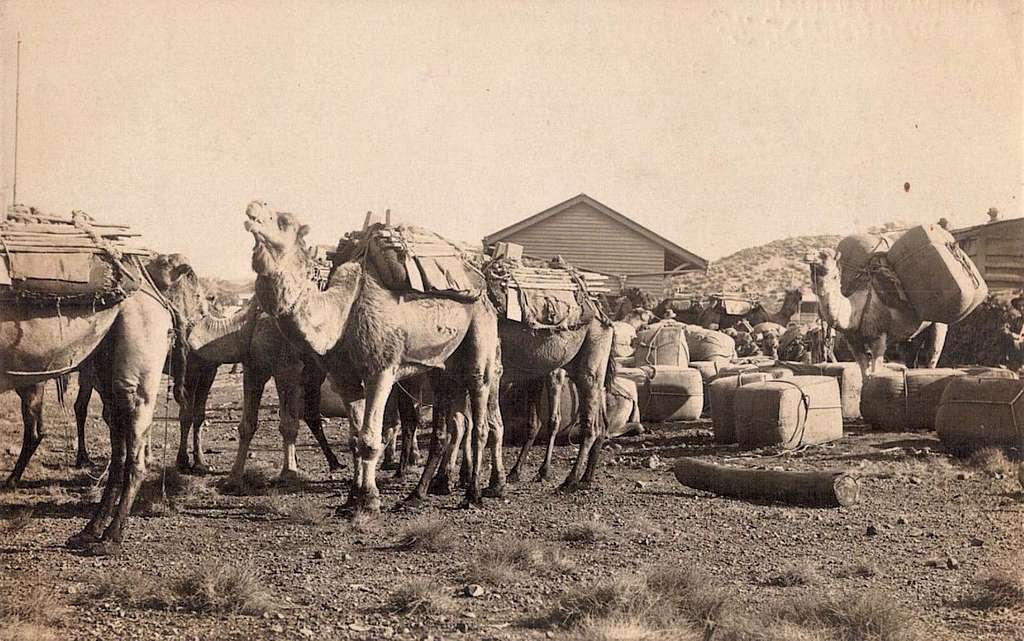
Camels of the Outback ready to transport wool and other goods.
As a recent 1910 graduate from Melbourne University (with a theology degree), he was living his dream, planted within his heart by God himself—a dream so out-sized, so impossible, some people would find it laughable:
“Your assignment, should you accept it, is to provide for the spiritual, social, and medical needs of people in the Outback.”
That assignment came through the Presbyterian Church General Assembly, to serve in Beltana, a small settlement of less than 200 people–with the surrounding region, about the size of the British Isles.
He’d come to love the Outback in spite of multiple challenges: no communication between far-spread sheep ranchers and miners, no radio service, no medical help for hundreds of miles, and the arid climate with sweltering summers.
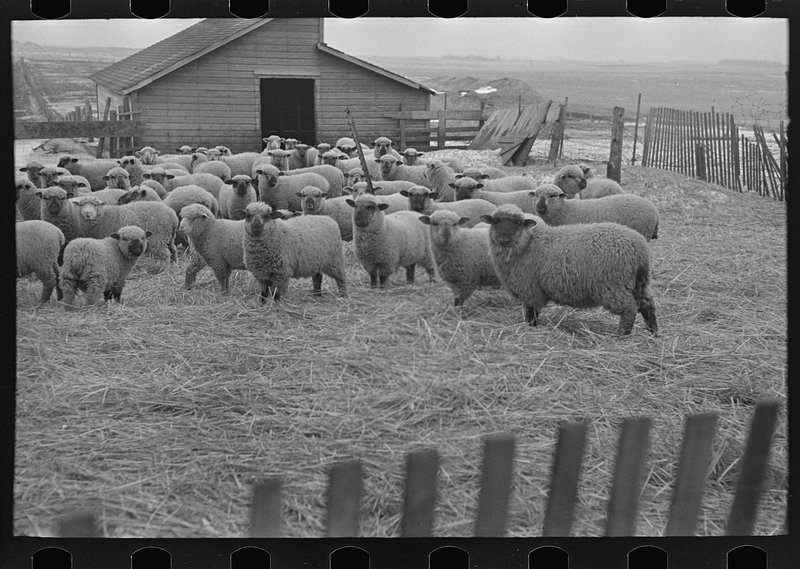
Undaunted by these factors, John had set about fulfilling his assignment. In 1912 he presented his report to the Assembly. They then formed the Australian Inland Mission and delegated John as “the first superintendent, responsible for the northern half of the continent” [1].
Mission impossible indeed!
His staff included one nurse who managed the single nursing station, and one traveling “patrol padre” who ministered as he could—from conducting worship services, weddings and funerals, to offering medical aid, and assisting ranchers with their work [2].
John’s team also received five camels for transportation and as beasts of burden.
Within a year, John had overseen the construction of the first Outback hospital, paid for by a generous friend. Always, he was traveling, helping in any way he could, and sharing about the wonderful life-change Jesus offers.
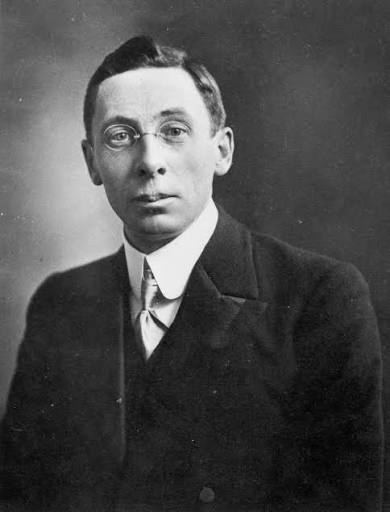
Young John Flynn
He considered his impossible mission an honor:
“If Jesus of Nazareth is indeed the Son of Almighty God; if He was in reality ‘God with us,’ showing us the Father; if it is a fact that we only sojourn on this earth for a while, and then appear before the Creator of the universe . . . what more honourable [sic] calling can a man follow than getting his fellows to realise [sic] this fact and act upon it” [3]?
In 1917, John received a letter from Clifford Peel, a lieutenant in the Australia Air Corps. He’d left medical school to help Britain fight against Germany.
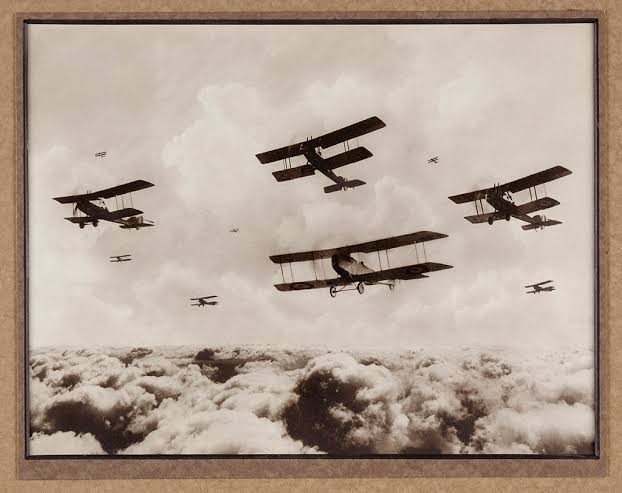
Australian bombers, World War 1
Clifford explained he’d read about John’s work and suggested aeroplanes might be useful in providing medical care to remote areas. John too became enthused about the idea.
Had Clifford survived the war, he undoubtedly would have sought to join John in his work. But weeks before Germany’s surrender, his plane disappeared over France.
It was up to John to bring Clifford’s idea to life—a challenge that would take ten years. First was the cost—hundreds of dollars for just one plane, not to mention pilots, fuel, mechanics, landing strips and more.
Another impossible mission.
But for John that word impossible just fueled his determination. He launched The Inlander Magazine that highlighted Outback conditions and needs, suggesting ways that life could be improved. Thousands of people donated to the cause [4].
In 1928, the Flying Doctor Service (FDS) became a reality with a rented plane from a new airline, Qantas. Within the first year, Doctor St. Vincent Welch visited 255 patients [5].
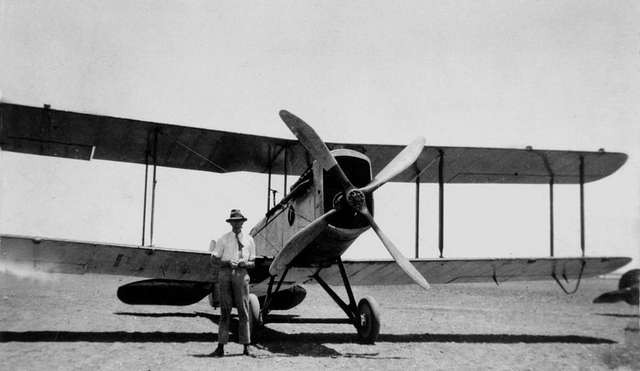
One of first Qantas airplanes
Of course, such visits would have been impossible without a way for people to contact the FDS. John had inspired inventor Alfred Traeger to solve that problem. He designed a pedal-operated generator to power radio receivers [6].
During World War II, FDS provided medical care to troops and civilians in Australia and other areas of the Pacific region. It soon became apparent the ministry greatly strengthened Australia’s position against the Japanese [7].
Medical care wasn’t John’s only dream. His vision included support for the children being homeschooled in isolated areas, who rarely had contact with other children or teachers.

School of the Air was established in 1951, using the FDS radio network. Children could interact with others, ask questions of their teacher, and supplement their correspondence lessons [8].
John Flynn died of cancer that same year. Imagine his pleasure to know the Royal Flying Doctor Service (renamed in 1955) still functions today.
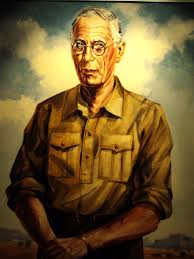
In fact, his impossible mission has grown to impossible size. More than 900 patients receive care each day in one of the 22,000+ RFDS clinics, or by aeromedical transport in one of eighty-three planes, based in twenty-three locations, as well as many by telehealth consults [9]. In addition, School of the Air still ministers to Outback families.
Perhaps even John Flynn would marvel at the outcome of his impossible mission. Then again, he’d probably just smile and softly quote Matthew 19:26:

[1] https://sahistoryhub.history.sa.gov.au/people/john-flynn-obe/
[2] Ibid.
[3] https://dailydeclaration.org.au/2021/10/13/the-royal-flying-doctor-service-and-the-rev-john-flynn/
[4] https://vision.org.au/read/articles/episode-247-john-flynn/
[5] Ibid.
[6] https://www.flyingdoctor.org.au/news/how-alfred-traeger-gave-outback-its-voice/
[7] https://medrecruit.medworld.com/articles/the-history-of-the-royal-flying-doctor-service;
https://vision.org.au/read/articles/episode-247-john-flynn
[8] https://www.flyingdoctor.org.au/about-the-rfds/history/john-flynn-bio/
[9] Ibid.
Other Sources:
https://www.chr.org.au/schools-content/2.-John-Flynn
https://didyouknow.org.au/johnflynn/
Image credits: http://www.picryl,com; http://www.rawpixel.com; http://www.flickr.com; http://www.picryl.com (3); http://www.flickr.com; http://www.needpix.com.
TAKE NOTE–AN UPLIFTING RESOURCE FOR YOU! Do sign up below for the monthly newsletter that includes a collection of quotes and scriptures focused on HOPE, to encourage you and share with others.
Scroll to the end of the newsletter to access this resource!