Feeds:
Posts
Comments

Archive for November, 2026

(A personal psalm)

O Lord, when I meditate on your splendorous majesty, my heart is overwhelmed. In you I find “all that is great, sublime, and wonderful—all concentrated in one Being” [1].

No one is like you!

Words are insufficient to describe your multi-faceted glory, and yet your Word and our wonder-filled hearts compel us to try (Psalm 96:9; 71:8).

Your wisdom is infallible; your knowledge, complete.

Your power, unlimited; your love, unfailing.

Your grace, expansive; your compassion, boundless.

Your patience, inexhaustible; your goodness, generous.

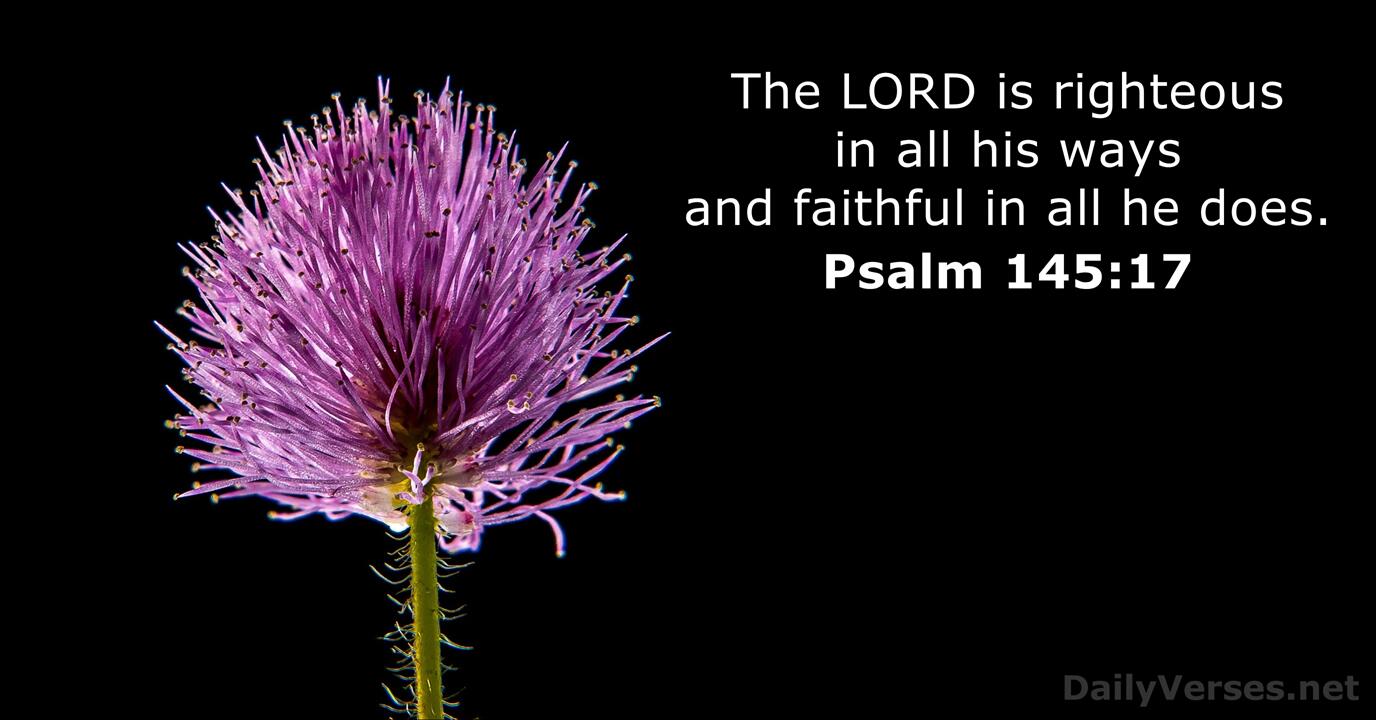
Your faithfulness, steadfast; your righteousness, perfect.
And then, O Lord, you continually perform mighty works and miracles!

Your awe-inspiring works of creation include

an infinite universe with trillions of enormous stars,

but also microscopic, one-celled organisms—

tens of thousands of different species!

Paramecium

Your works of providence include

all events of all time because you are sovereign over all things.

You control the course of world events;

You remove rulers and set up others [2].

Your works of provision include

everything we need for body, mind, soul and spirit.

You provide a shelter of safety and security with you,

as well as a place of belonging in your family [3].
Your works of rescue include

salvation from sin’s grasp, for all those who believe.

With that liberation come peace and joy,

knowing our final destiny is secure [4].

Your works of compassion include

comforting the hurting and guiding the lost,

shepherding the helpless and assuring the anxious,

sustaining the weary and calming the fearful [5].
You are indeed a God of great goodness!

Who could not praise a God of such perfections, who performs such marvelous deeds?! Even more wondrous, you do not reserve all these benefits for those of importance in your kingdom. You graciously offer all that you are to all that come to you in faith [6].

Case in point: you have been so good to our family over the years, giving us wisdom for decisions, discernment in some challenging situations, miracles for circumstances beyond our ability to rectify, and rescues from danger—to name a few of your interventions. 

Sometimes you’ve displayed your gracious kindness and mighty power in astounding ways [7], and sometimes in small, quiet ways, but the latter bear your signature just the same.

For example:

Just last Saturday at the women’s mini-retreat at church, you surely prompted me to ask at my table if anyone could use an artificial Christmas tree, short-needle fir, 7 1/2 feet tall, no lights. It’s still in good shape, but we’d decided to purchase a pre-lit variety.

L. quickly responded, “We could!”

She’d been looking at artificial trees on Facebook Marketplace, hoping to find a nice one at a bargain price. She and her husband didn’t want a pre-lit variety either; they actually prefer to put their own lights on.

The more L. and I talked, the more animated she became. You weren’t providing a bargain tree for her; she was getting one for FREE. I was excited to find a good home for our old tree and get a large item out of our basement!

Of course, none of us expect all of life’s circumstances to fall into place so neatly.

But when trouble does overwhelm, our cries from the midst of it open the way for you to deliver us through the heartache. You begin to wash away the harmful debris of fear, grief, and anger so it won’t fester in our minds and spirits [8].

I praise You, O God–You are never blind to our tears, never deaf to our prayers, never silent to our pain. You see, you hear, and you will liberate us—when the time is right.

You are a majestic and mighty, gracious and compassionate God, beyond what anyone could hope for!


[1] Psalm 145:5, Barnes’ Notes on the Bible.

[2] Ephesians 1:11; Daniel 2:21.

[3] Psalm 91:2; Ephesians 2:19.

[4] Galatians 1:4; 1 Peter 1:8-9.

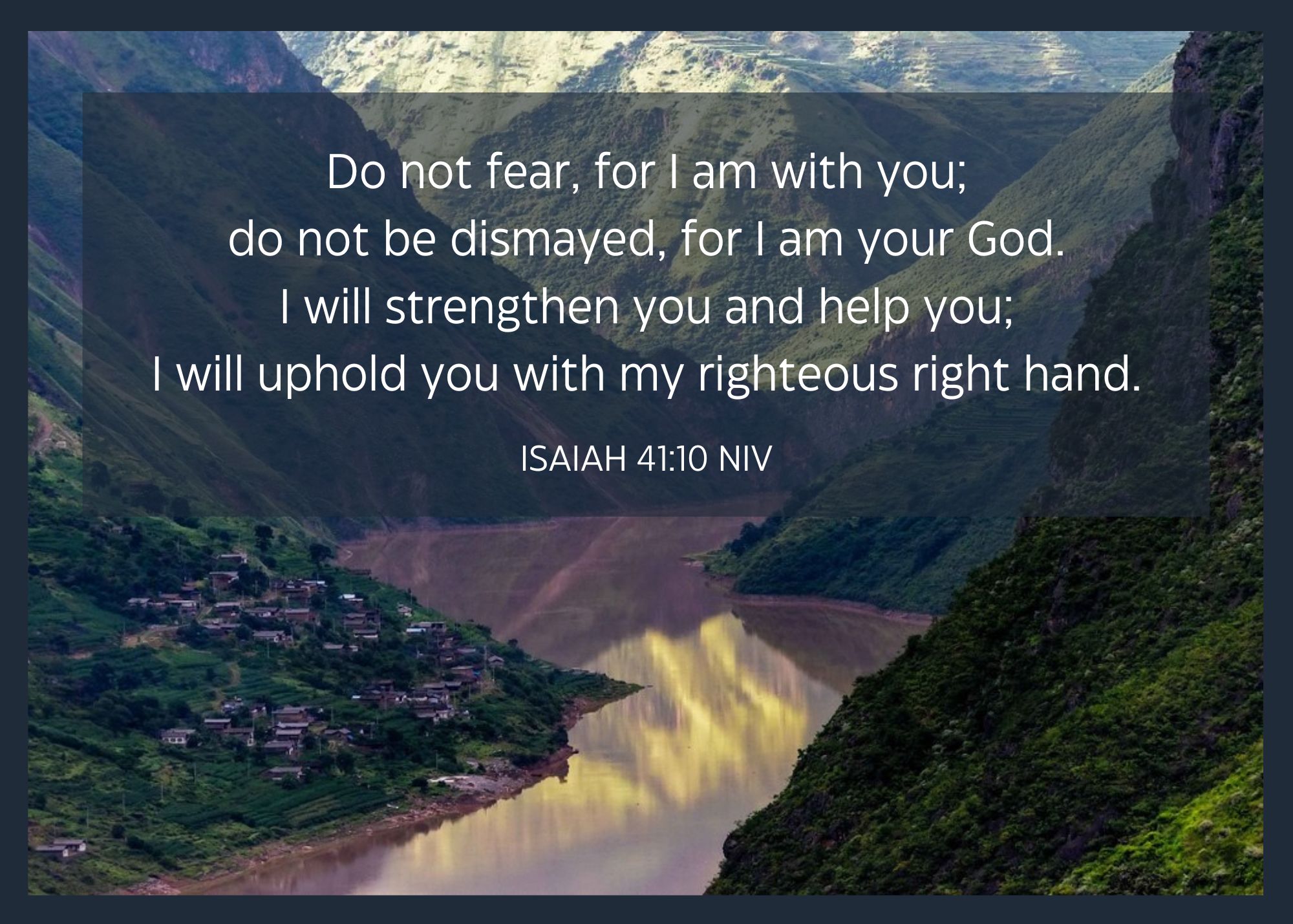
[5] Psalm 34:18; 32:8; 23:1; Isaiah 41:11; Philippians 4:6-7; Isaiah 40:28-31; 41:10.

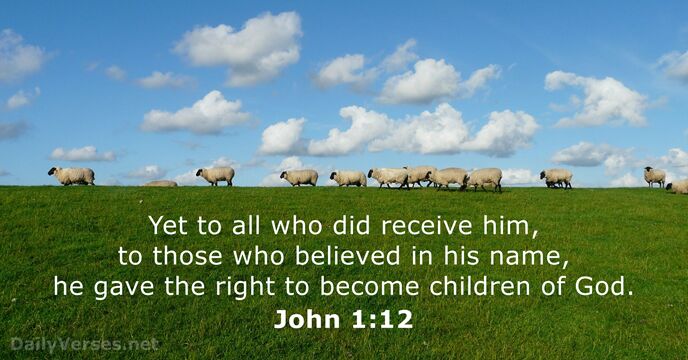
[6] John 1:12.

[7] For examples, see the previous post, Sacred Hands Behind the Scenes.

[8] Jennifer Rothschild, Lessons I Learned in the Dark, 191.

Image credits: http://www.heartlight.org; http://www.dailyverses.net; commons.wikimedia.org; http://www.dailyverses.net; http://www.flickr.com; Nancy Ruegg; http://www.canva.com.

Processing…
Success! You're on the list.

Read Full Post »

How would you complete the following statement?

The three attributes that high-virtue Christians share in common include:

God-centeredness, joyful living, and __________.

A.  Love toward others

B.  Gratitude

C.  Prayerfulness

D. Spiritual maturity

The argument could be made that all of these attributes might be logical choices. But given the time of year, you can probably guess the answer–according to author/researcher Michael Zigarelli: gratitude [1].

We all know the value of gratitude. It’s been the topic of a number of posts here at From the Inside Out.

We’ve considered the research proving its benefits (A Taste of Heaven), we’ve affirmed that even in the midst of difficulty, we can find reasons to be grateful (Overflowing), and we’ve turned our thanksgiving into A Thanksgiving Prayer).

But Zigarelli introduces another outcome for our gratitude: character development. He maintains that God-centered, joyful, grateful Christians “are far more likely to reap maximum Christian character—to see manifestations of the fruit of the Spirit in their lives”[2].

I wondered, how might gratitude contribute to such impact? A bit of research turned up ten character traits manifested in grateful people. Some you’d expect; some may surprise.

To keep this post reasonable length, here are six of those traits:

Dr. Robert Emmons at the University of California, Davis, found that people who kept weekly gratitude journals reported up to twenty-five per cent higher happiness that those who didn’t. The change occurred quickly also. Within weeks participants felt happier [3].

To think about mistakes of the past, troubling situations in the present, and disturbing “what-ifs” for the future, only make us tense and anxious.

Gratitude to God, on the other hand, helps us focus on his gracious provision in the past, his dependable help for today’s challenges, and hope-filled promises for the future [4].

Everywhere we turn we see things others have but we don’t: a new car, a bigger and better house, an up-to-date wardrobe, a more fulfilling job, a close-knit family, and more. Our thoughts spiral downward into envy and craving—unless we change our trajectory with gratitude.

Gratitude focuses our attention on what we do have, what God has already provided.

A study conducted in 1998 revealed that those who practiced gratitude experienced a 23% decrease in cortisol (related to stress) and a 100% increase in DHEA (a hormone related to resilience and emotional well-being) [5].

Gratitude can’t erase pain, of course, but it does help focus the mind toward what is true, good, and encouraging, to fortify our strength. And as we thank God for his sustaining presence, eternal faithfulness, absolute wisdom, and sovereignty over all, our resilience grows [6].

To sincerely thank God and other people is to acknowledge we are not self-sufficient on our own. They’ve provided something we needed, wanted, or will benefit from.

Such gratitude gives humility a chance to rise within us. “We are honoring the one who has given to us, and therefore are putting ourselves in a second position” [7].

Research conducted by David DeSteno and his team determined cause-and-effect between gratitude and self-control.

“In some experiments,” they reported, “we nudged participants to appraise [frustrating] situations in ways that gave them something to be thankful for. And in each case, greater self-control was the result” [8].

Why would that be? Writer Amy Tyson has observed: “Noticing good gifts remind us of God’s character. It feeds gratitude and exposes sin’s emptiness” [9].

It stands to reason the sin of indiscipline is not the only sin that gratitude might affect, but all sin. To be thankful for all that is right and good restrains us from clambering for what is ill-advised and harmful.

No wonder the Bible speaks of gratitude approximately 157 times, and thanksgiving approximately 72 times—depending on the translation.

Gratitude requires little effort, but the dividends are monumental.


[1] Cultivating Christian Character, 24, quoted by Peter Amsterdam at https://directors.tfionline.com/post/more-jesus-gratitude-part-1/.

[2] Cultivating Christian Character, 24.

[3] https://cct.biola.edu/gratitude-works/.

[4] Psalm 77:11-14; Psalm 46:1; Psalm 9:10.

[5] https://valleychristian.co/the-science-behind-gratitude/.

[6] Psalm 55:22; Psalm 100:5; Daniel 2:20; Psalm 103:19.

[7] Michael Kelley, https://thinke.org/blog/4-reasons-why-gratitude-i-good-for-your-soul.

[8] https://www.psychologytoday.com/us/blog/beyond-words/202003/resilience-and-the-practice-of-gratitude.

[9] https://harvestusa.org/the-power-of-gratitude-in-fighting-sin/.

Image credits: http://www.publicdomainpictures.net; http://www.canva.com (7); http://www.snappygoat.com.

Processing…
Success! You're on the list.

Read Full Post »

“I can’t even write a postcard,” my grandfather used to lament. “As soon as I pick up a pen, the words stop!”

Had Gramps met American author Isaac Asimov, and the conversation turned to Gramps’ perceived inability to write, Asimov would surely have asked, “Do you ever have thoughts?”

Gramps would chuckle. “Of course!”

Then with a twinkle in his eye, Asimov would share one of his famous quotes:

Perhaps you too avoid writing. The process is challenging—finding the words to express your thoughts, combining them into cohesive sentences, and putting those sentences in a sensible order.

And if you have no desire to start a Substack page or produce a book, what’s the point?

Allow me to suggest: the act of writing doesn’t have to lead to publication to be valuable. 


Even personal writing . . .

. . .  helps us focus

. . .  brings clarity to our thoughts

. . .  prompts deeper thinking which often leads to worthwhile discovery

. . . provides a place to capture insights and consider their implications

. . . can lead to a proper perspective of a matter, while considering all sides

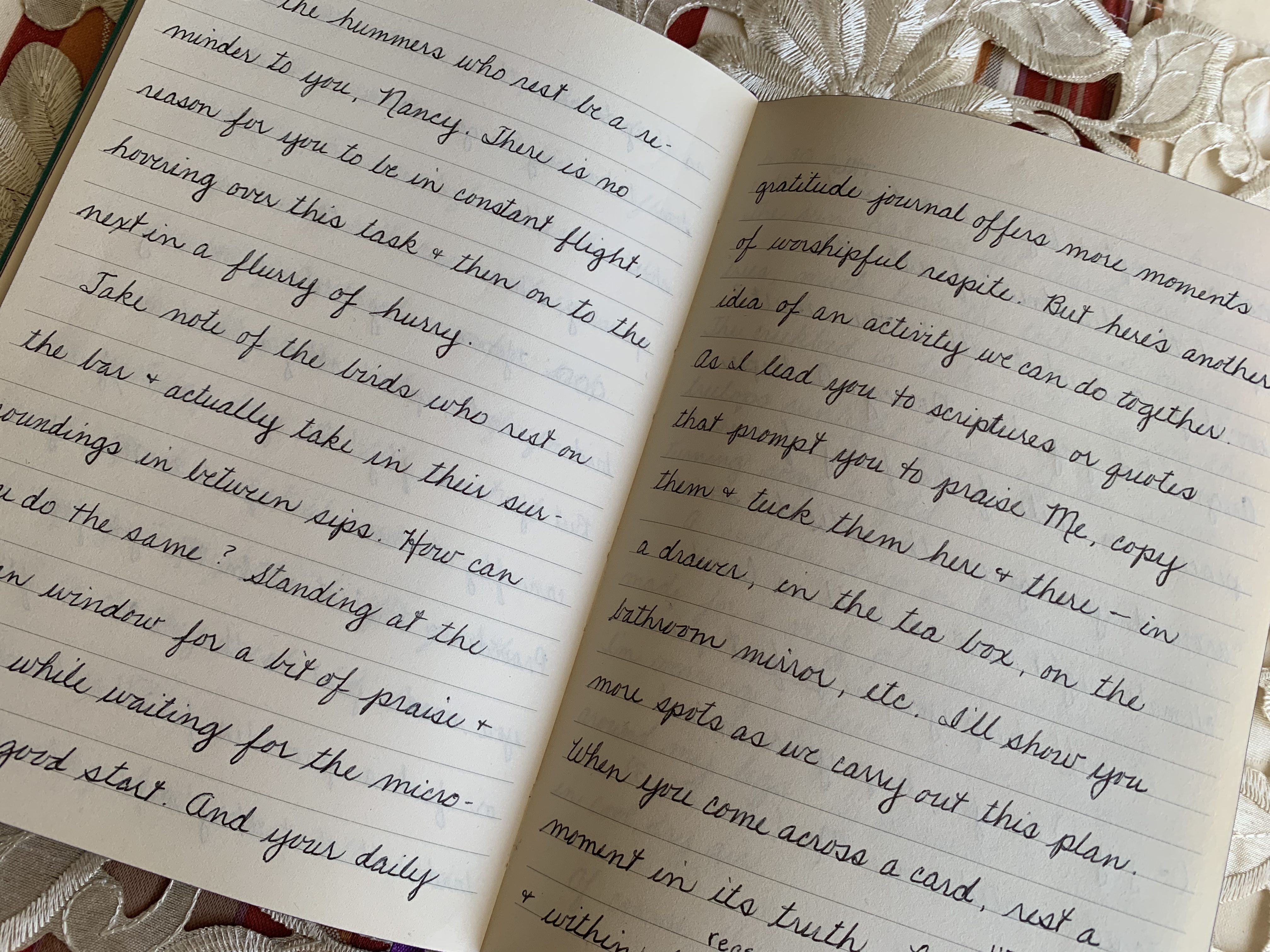
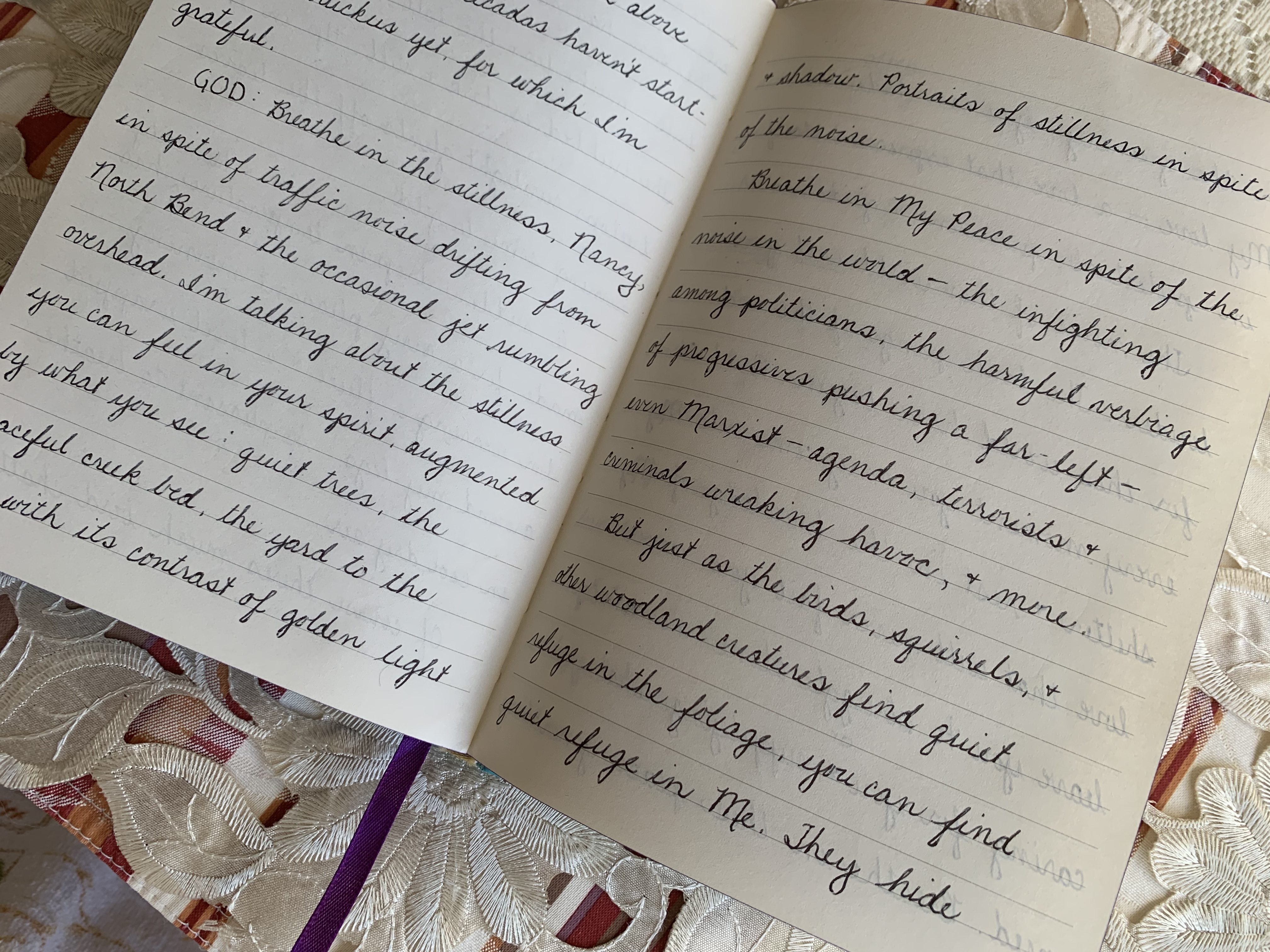
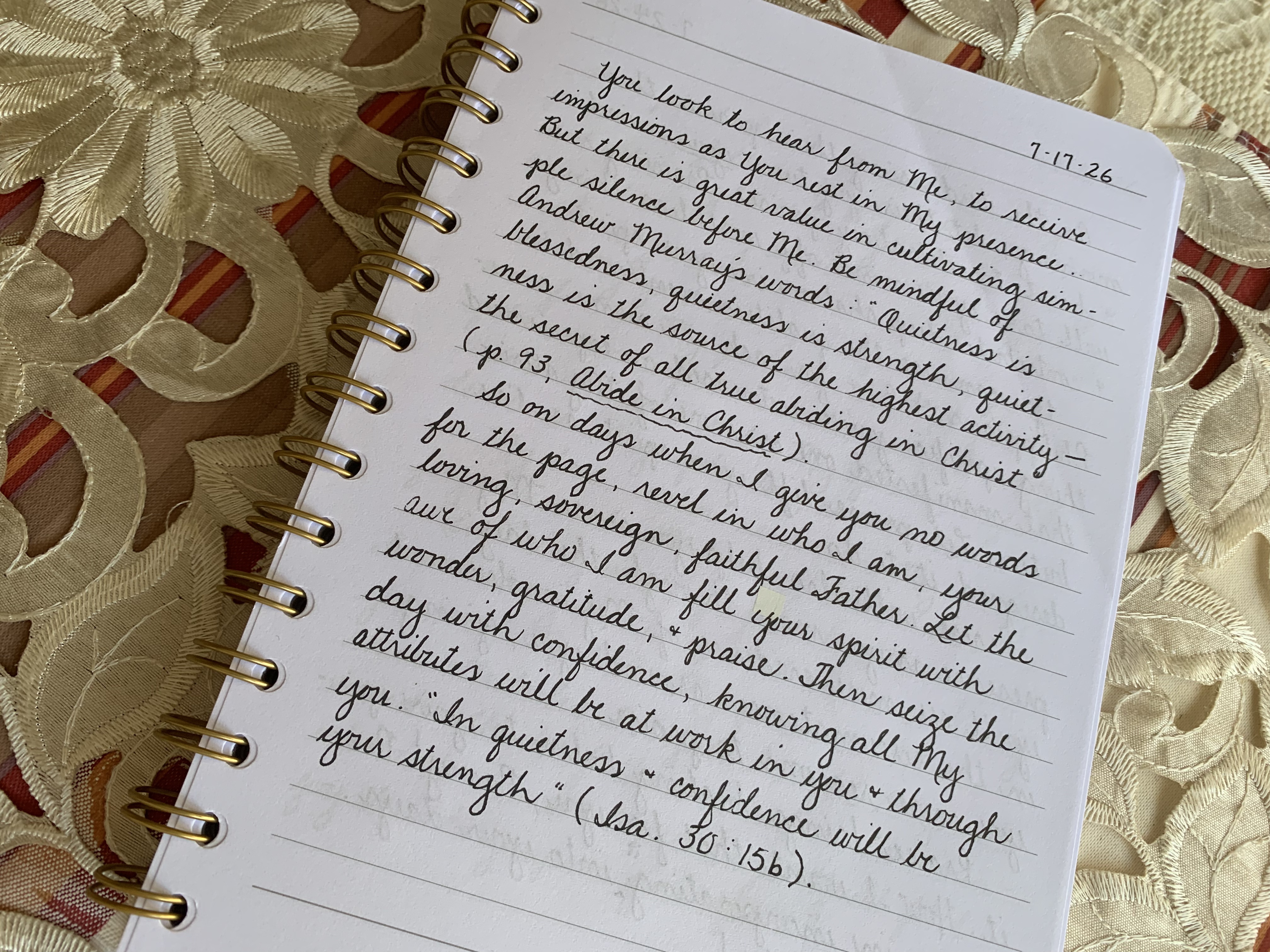
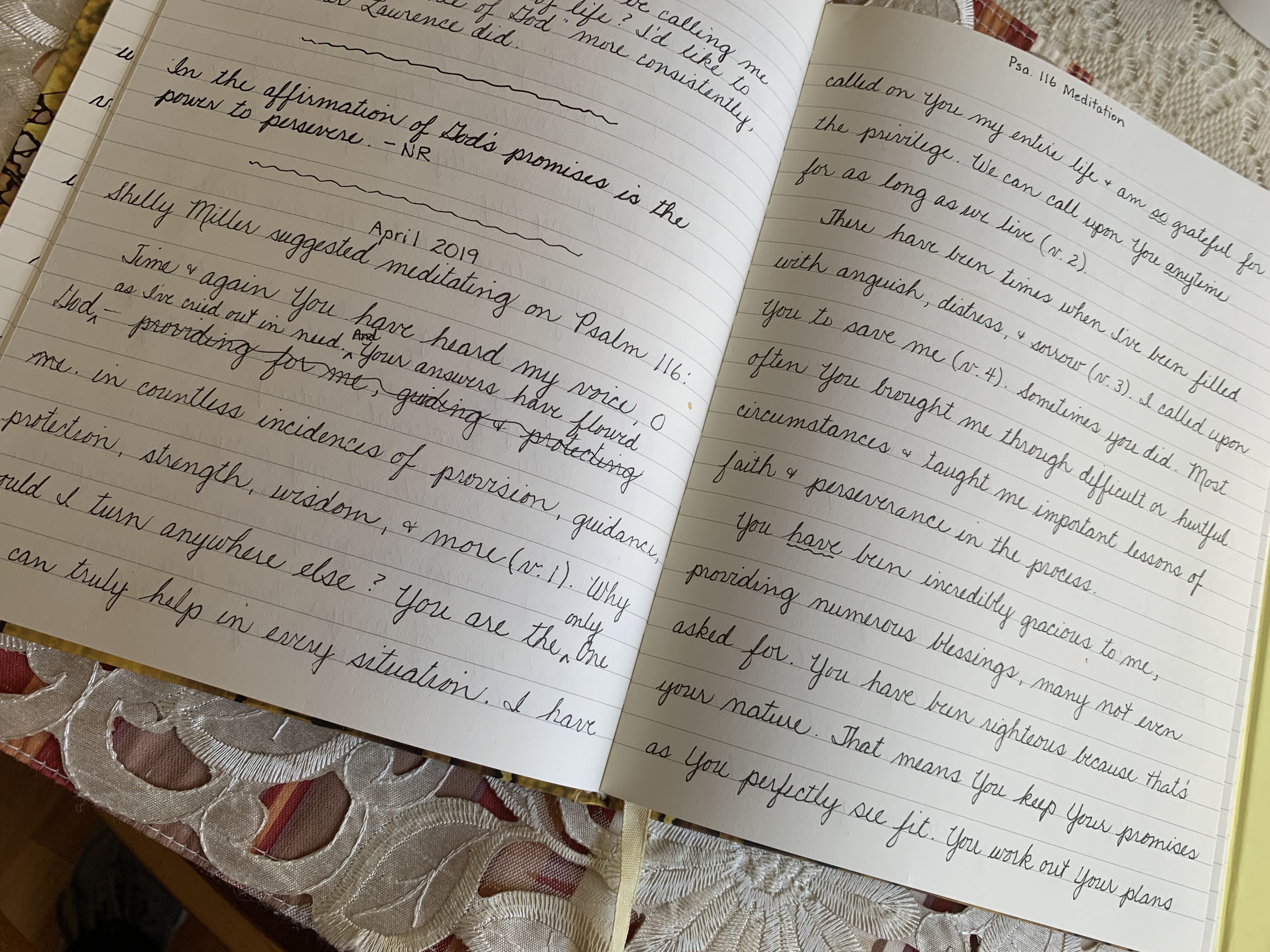
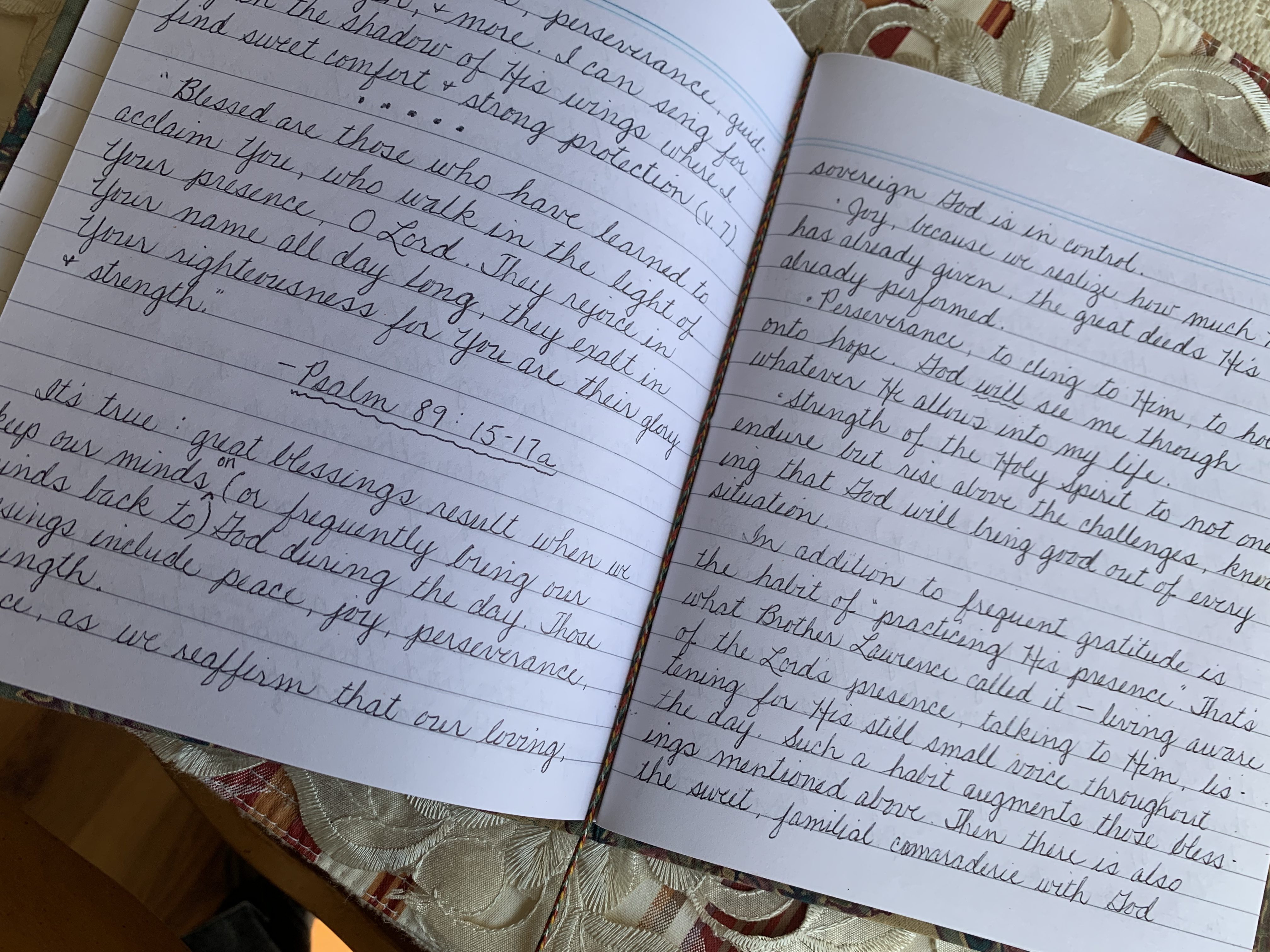
For the Christian, personal writing includes even more benefits, as we write-to-meditate on such matters as: scripture, a theological concept, or a quote from a Christian author we want to explore further. Some of the posts here at From the Inside Out began as such explorations.

For the Christian, writing . . .

. . . encourages thoughtful reflection, which leads to meaningful application.

This entry became Quiet Restoration

. . . slows our thinking, allowing room for God to speak within our spirits.

This entry inspired Peace Amidst the Noise

. . . deepens our intimacy with God.

This entry grew into Quietness Is . . .

. . . can be an act of worship

This entry prompted Sweetness and Power

When writing for personal purpose, who cares if the verbs include a mix of past and present tense? So what if a dangling modifier sneaks in? The writing is for you and perhaps for your heavenly Father who revels in sincere, honest effort—mistakes aside.

So how might someone like Gramps—totally averse to writing—get words on the page?

With:

Scripture Writing

“Yep, just write it. Writing the Word helps us slow down and prevents us from skimming too quickly over the text. It’s the most straightforward way we can saturate our hearts and minds with the truth of God’s Word”—Denise Hughes, Deeper Waters, 77.

Then. care to challenge yourself? Write the answers to a few questions such as:

1) What stands out to me in this passage?

2) What does the text say about God, his attributes and actions, and how might that knowledge relate to my life?

3) What does this passage point out that I need to apply to my life? What might that application look like?

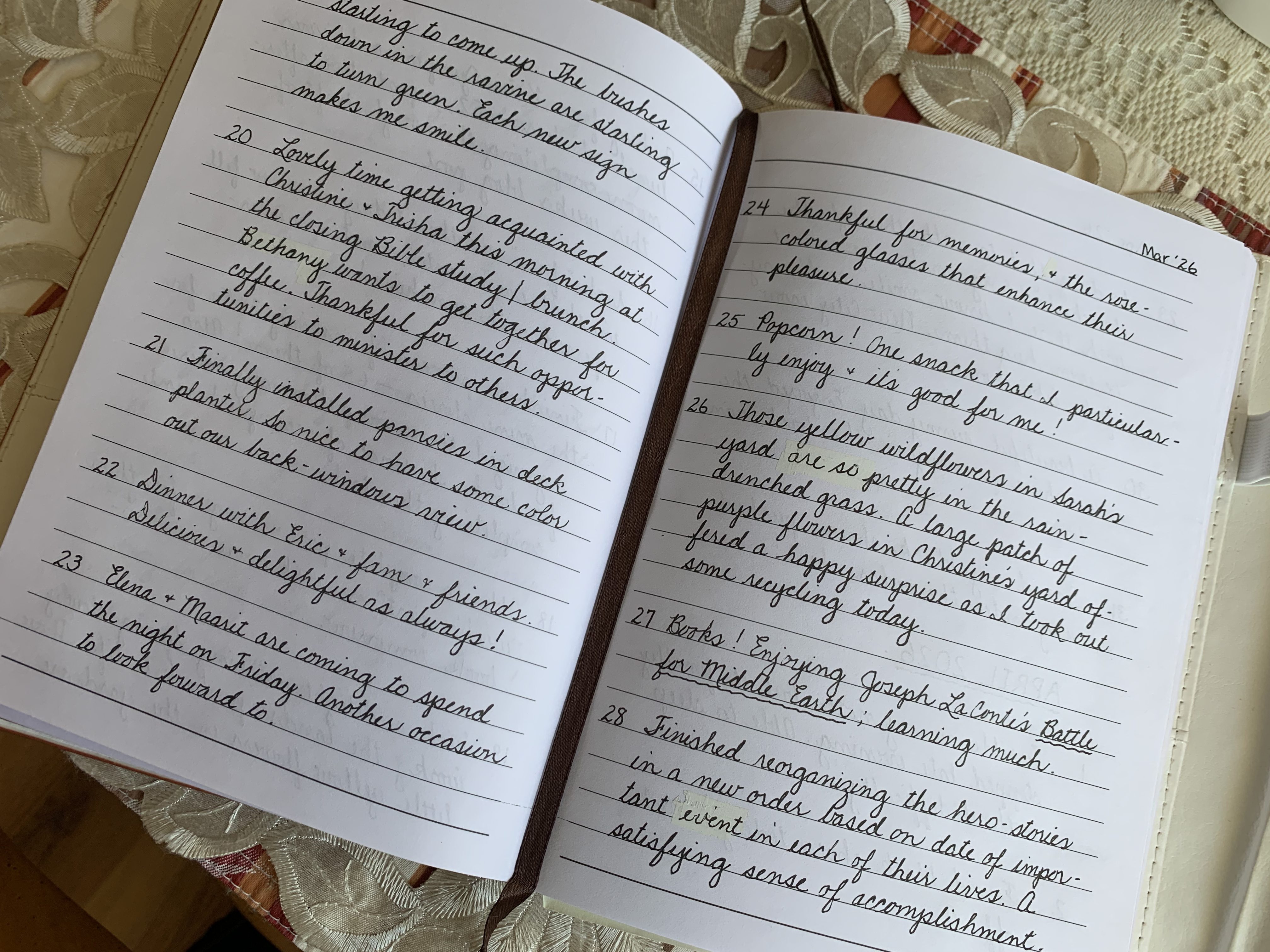
A Gratitude Journal

Even secular research has affirmed the value of keeping a gratitude journal. Entries don’t have to be extensive—just a blessing or two each day is sufficient to build up faith, hope, and joy.

‘Can’t think what to write? This website offers 100 prompts, drawing attention to a wide range of God’s blessings: https://proverbs31mentor.com/gratitude-journal-prompts/.

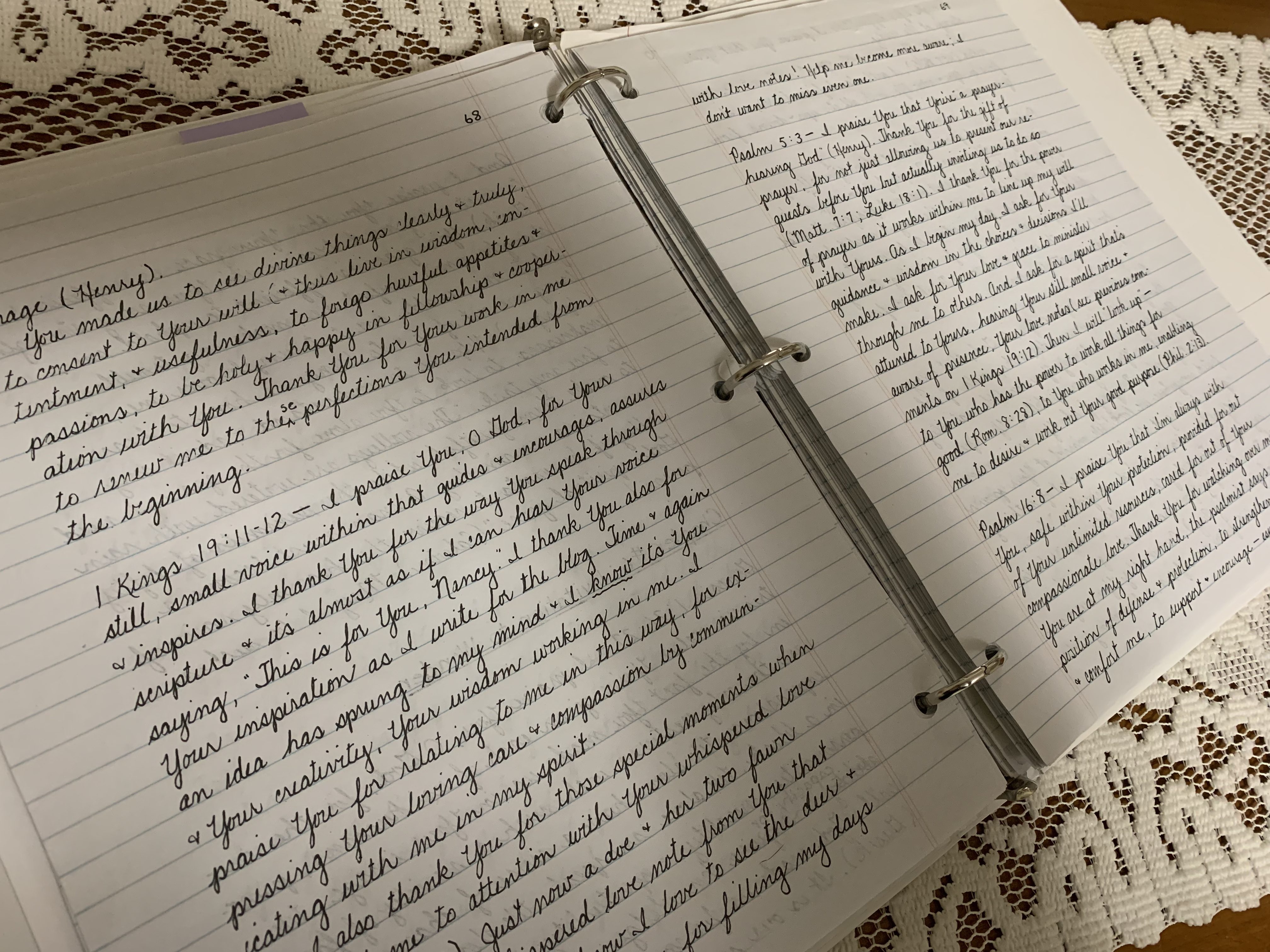
Written Prayers and Praises

In addition to thinking through your fingers, we can also pray or praise through our fingers by simply writing to God what’s on our hearts.

It may be as short as one sentence, but often another thought will surface while writing, and before you know it, a paragraph will appear on the page.

Whatever you choose to write as part of your devotion to God, it need not be elaborate or long.

Just:

And begin to experience the blessings and benefits of the writerly life.

P.S. If you journal already, please share in the comment section below the reasons why you write and what types of entries you write. Your thoughts may spark the interest of others!

Image credits: http://www.canva.com; http://www.easy-peasy.ai; Nancy Ruegg (7); http://www.rawpixel.com.

Processing…
Success! You're on the list.

Read Full Post »

From the Inside Out

Impressions Becoming Expressions

Sylvia Schroeder

Impressions Becoming Expressions

Mitch Teemley

The Power of Story

Still Traveling

Impressions Becoming Expressions

Living Our Days

Gaining a heart of wisdom

He Said What?!

I'm Patty, and my husband and I are living with our adult son who has autism and epilepsy. I love sharing lessons learned from life around me, especially life with Aaron.

Meditations of my Heart

Impressions Becoming Expressions

Linda Stoll

Impressions Becoming Expressions

Signora Sheila

Where faith meets slow living