Feeds:
Posts
Comments

Archive for July, 2026

New York Museum of Natural History

New York’s Museum of Natural History

Sometime in the 1940s New York’s Museum of Natural History created a living room space–from the perspective of a small dog. Table legs rose like tall pillars, chair seats hovered overhead, and the mantel of the fireplace loomed higher still.

Now any human museum-goer would instantly know this was an unrealistic representation from our point of view. But if we were all Shih Tzus, we’d bark to one another how accurately the decorator had appointed the room.

Which view of the museum display is correct—that of people or Shi Tzus? Our instinctive response is: the way it appears to us as humans is the accurate view.

And we think, The poor little pups—living their whole lives with the illusion that furniture is almost always gigantic.

No doubt that museum space provided plenty of entertainment. But perhaps an important lesson was hiding among the over-sized furniture and features.

What if we compared Planet Earth to that room? Then we are the small creatures gazing upwards—at towering mountains, high plateaus, and tall waterfalls.

Angel Falls in Venezuela, 3,212 feet tall

Oh, but our view must be expanded further—far beyond Mount Everest even.

We must consider what Planet Earth looks like to God, who made the numerous planets, spinning in billions of galaxies. On a map of the stars, our tiny planet isn’t even represented.

Yet it’s so easy to lose sight of this reality.  Our sphere of contacts–family, friends, and coworkers –becomes our entire world.  

The pursuit of happiness within this microcosm becomes our whole focus, fed by the illusion that living life “my way” is the ticket to happiness and satisfaction.  

Then there’s God’s point of view, as taught by Jesus:

Which view of reality is accurate–our view or that of our sovereign Maker (who sees, understands and controls everything)?

Logic supports the latter. The real world-view is God’s view.

And if we’re ready to accept that reality, then we must also agree it makes sense to follow his instruction manual, the Bible, for living in the world he created.

My self-serving, egocentric side says, Wait a minute. I have my own ideas of what’s best for me. I oughtta know what’ll make me happy. Doesn’t my viewpoint count for anything?

Such thinking exposes my lack of understanding, putting me on the level of a little dog in that museum living room! My world view is flawed.

No, I’d be much wiser to embrace God’s point of view as revealed in his Word, and learn about reality—the reality of his invisible, spiritual kingdom and its benefits:

His foundation of security:

His way to happiness:

His treasure of truth:

His gift of peace:

*     *     *     *     *     *     *     *     *     *

Thank you, Father, for these benefits and more, lovingly bestowed as we seek to live within the spiritual reality of your kingdom. Yes, it’s invisible to our human eyes, but no less real than the wind.

And as we follow you and obey your Word, the more real your transcendent world becomes, the more wonders we experience. Help me outgrow the immaturity of illusions and embrace the truths of your reality!

(Information about New York’s Museum of Natural History room-display from Ralph Sockman’s The Higher Happiness, Abingdon Press, 1950, 14.)

Image credits: http://www.commons.wikimedia.org (2); http://www.dailyverses.net (2); http://www.universe.roboflow.com (sahal); http://www.publicdomainpictures.com; http://www.pickpik.com.

(Revised and reblogged from July 21, 2016 while we prepared for and enjoyed the 3-day visit of old friends.)

Processing…
Success! You're on the list.

Read Full Post »

“Please come—a young mother is dying!” cried the young man at the door.

Twenty-three-year-old missionary, Lillian Trasher, grabbed her medical kit and followed him to a dirty hovel. The poverty and stench that greeted her didn’t surprise Lillian. After three months in Assiut, Egypt, she was growing accustomed to the deprivation.

Lillian had no means to save the young woman. Her sickly, scrawny infant mewled with hunger.

“You must keep the baby,” family members insisted. “There is no one here who can care for her.”

So Lillian took the infant back to the mission house. A few days later the director insisted Lillian return the child, explaining, “Her incessant crying keeps everyone awake at night.”

“I can’t take her back,” Lillian protested.

Her only alternative: spend the few rupees she had to rent a little house and purchase a bit of furniture.

But living on her own meant no further support from the mission station. Lillian prayed for God to supply, and begged from her neighbors. Day by day God provided.

Before long, other orphans were brought to Lillian and the Assiut Orphanage came into existence. The year: 1911. Lillian must have smiled to trace the events God had orchestrated, leading to this outcome.

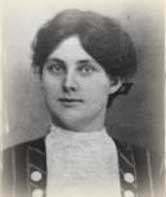
Lillian Trasher

Four years earlier she’d traveled from home in Brunswick, Georgia to Atlanta, to interview for a newspaper job as a sketch artist. On the way she just happened to meet Mattie Perry, an orphanage director from North Carolina.

Mattie described the work and “how they lived by faith, believing each day that God would supply all their needs”[1]. Mattie invited the would-be sketch artist to come work with her. Lillian declined.

But it just so happened the sketch-artist position went to someone else by mistake, after Lillian had supposedly been hired. She decided to work at the orphanage after all.

For five years she handled all sorts of tasks and learned the many facets of orphanage administration. She also attended Bible School, pastored a church for a short time, and even traveled as an evangelist.

In 1910 Lillian became engaged. But, as it happened, ten days before the wedding, she heard a missionary from India speak passionately about his work. Lillian felt strongly God was calling her to mission work–in Africa. Her fiancé, however, felt no such call, and Lillian broke off the engagement.

Next, Lillian just happened to attend a Christian conference where she met a missionary working in Assiut. He invited her to join their team; Lillian accepted.

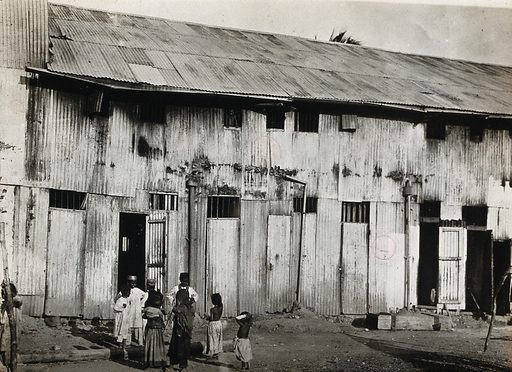
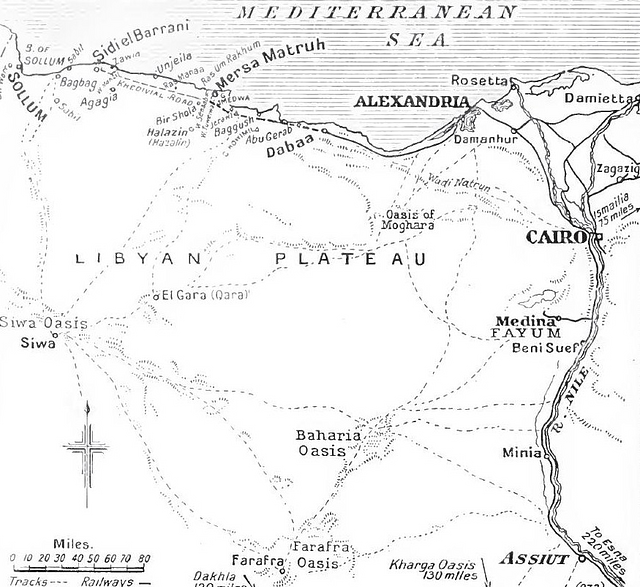
Assiut, bottom right corner

Her family expressed concern, but older sister Jennie volunteered to go along, just until she was settled. Jennie never left.

By 1915, the two women were caring for fifty orphans and needed more space. Miraculously, a large property was supplied across the river in Abnub for just $250. She and the older children made a kiln and baked their own bricks to construct the needed buildings.

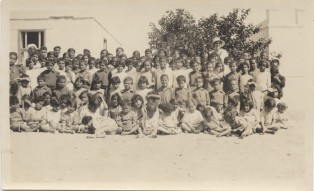
Lillian and her children, 1920

1919 brought political unrest and British authorities required everyone at the orphanage to evacuate. The boys were sent to a Presbyterian school in Assiut, the girls to a hospital.  

Lillian and Jennie returned to America and spent the year raising funds for the work. When they returned in 1920, Lillian began taking in anyone in need, including widows and the blind. They helped with the work of the orphanage, and by 1923, 300 lived on the compound.

God continued to meet their needs, sometimes in spectacular ways. One time an anonymous donor sent a truckload of foodstuffs. And when Lord Maclay of Scotland visited the orphanage, he gave Lillian $5,000 for her work. Later he sent another $25,000 [2].

As World War II began, the Assiut Orphanage housed seven hundred people. Once again, food and supplies became scarce.

In April of 1941, the American ambassador shared incredible news. A Red Cross ship had been enroute to Greece when that nation fell to the Nazis.

The captain had received orders to dump the supplies and return home. But a soldier on board knew of Lillian and persuaded the captain to unload at Alexandria.

“Believe it or not,” announced the ambassador, “you have a warehouse full of clothing, blankets, and towels, hundreds of kegs of powdered milk, many sacks of rice, and more! It’s all waiting for you”[3]!

By the 1950s, the orphanage included sixteen buildings: dormitories, a hospital wing, chapel, school, nurseries, bakery, sewing rooms, carpentry workshop, gardens, and more. Over a thousand children resided on the grounds [4].

Of course, throughout the years, Lillian and Jennie made sure their charges knew about Jesus. Thousands committed their lives to him [5].

Now, 125 years since its founding, the legacy of Lillian Trasher (and Jennie) lives on in the still-functioning facility. However, in 1961, shortly after Lillian’s death, the name became the Lillian Trasher Orphanage.  


[1] https://oercommons.org/courseware/lesson/60957/student/?section=19

[2] https://christiansforsocialaction.org/resource/heroes-of-the-faith-lillian-trasher/

[3] https://oercommons.org/

[4] https://www.cbeinternational.org/resource/story-lillian-trasher/

[5] https://oercommons.org/

Other Sources:

https://www.gc.cuny.edu/sites/default/files/2021-12/Beth-Baron%2C-22Nile-Mother-Lillian-Trasher-and-the-Orphans-of-Egypt-22.pdf

Image credits: http://www.look and learn.com; http://www.commons.wikipedia.org; http://www.itoldya420.getarchive.net; http://www.digitalgallery.bgsu.edu; http://www.canva.com.

Processing…
Success! You're on the list.

Read Full Post »

Ask a number of people what we celebrate on July 4th, and many will surely mention FREEDOM or LIBERTY.

Rightly so.

They’ll likely agree with Rev. Robert J. McCracken (1904-1973) who wrote:

But, we need to remember, with FREEDOM comes responsibility.

And former chaplain for the U. S. Senate, Peter Marshall, (1902-1949) would have us understand:

Even though Christianity is not as prevalent in our society as it once was, most Americans have a sense of what’s right, naming these qualities as important to them: respect, trustworthiness, kindness, integrity, and fairness [1].

Would some be surprised to know all of those qualities are set forth in the New Testament? In fact, since the founding of our nation in 1776, FAITH in God and respect for his commandments has provided a strong foundation for our nation’s ideals.

Imagine a country where most people couldn’t be trusted, kindness was rare, and hardly anyone treated others with integrity and fairness. Such circumstances would severely limit “the pursuit of happiness,” and the opportunity for prosperity.

Volunteers help with clean-up after a tornado

In America, most of us pay our taxes, because it’s the right thing to do. And in America, most jury-members seek fair decisions in the cases they hear.

Yes, America has its flaws and problems, but she’s still a great place to live. Just ask the enthusiastic Europeans visiting here for the World Cup!

America is worthy of our PATRITOSIM.

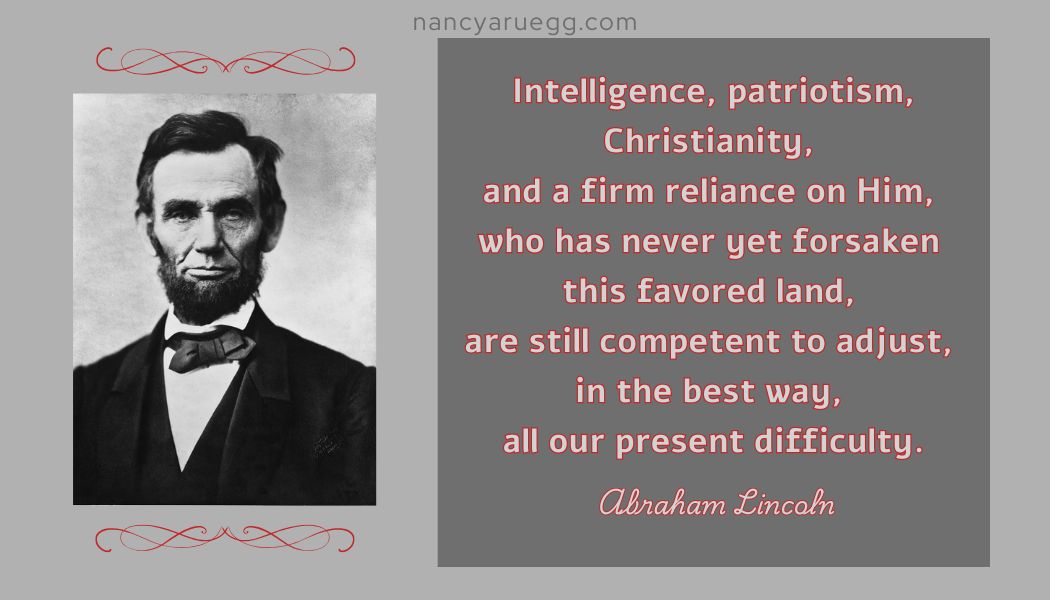
As for the flaws and problems, it’s been asserted that Christianity is part of the solution to our difficulties—by a man well-known for his wisdom and discernment:

As Lincoln walked the streets of Richmond (the capital of the Confederacy) shortly after it was captured by Union troops, a slave ran to meet him and fell to his knees before the president.

“Don’t kneel to me,” Lincoln responded. “Kneel to God only, and thank Him for the liberty you will enjoy hereafter” [3].

We’d do well to do the same, and to pray for God’s holy protection of our nation.


[1]  https://news.gallup.com/poll/691964/family-top-value-americans.aspx_, April 2025.

[3] https://www.deseret.com/2015/5/4/20563998/lincoln-saved-a-nation-but-deflected-credit-to-a-greater-power/

Image credits: http://www.printerval.com (Letitia Grasshopper); http://www.commons.wikimedia.org; http://www.picryl.com (George Armstrong); http://www.pickpik.com.

Processing…
Success! You're on the list.

Read Full Post »

Sylvia Schroeder

Impressions Becoming Expressions

Mitch Teemley

The Power of Story

Still Traveling

Impressions Becoming Expressions

Living Our Days

Gaining a heart of wisdom

He Said What?!

I'm Patty, and my husband and I are living with our adult son who has autism and epilepsy. I love sharing lessons learned from life around me, especially life with Aaron.

Meditations of my Heart

Impressions Becoming Expressions

Linda Stoll

Impressions Becoming Expressions

Signora Sheila

Where faith meets la dolce vita

Heidi Viars

Finding the Image of God