“Please come—a young mother is dying!” cried the young man at the door.
Twenty-three-year-old missionary, Lillian Trasher, grabbed her medical kit and followed him to a dirty hovel. The poverty and stench that greeted her didn’t surprise Lillian. After three months in Assiut, Egypt, she was growing accustomed to the deprivation.
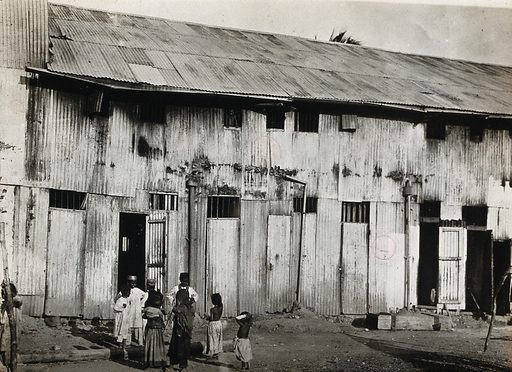
Lillian had no means to save the young woman. Her sickly, scrawny infant mewled with hunger.
“You must keep the baby,” family members insisted. “There is no one here who can care for her.”
So Lillian took the infant back to the mission house. A few days later the director insisted Lillian return the child, explaining, “Her incessant crying keeps everyone awake at night.”
“I can’t take her back,” Lillian protested.
Her only alternative: spend the few rupees she had to rent a little house and purchase a bit of furniture.
But living on her own meant no further support from the mission station. Lillian prayed for God to supply, and begged from her neighbors. Day by day God provided.
Before long, other orphans were brought to Lillian and the Assiut Orphanage came into existence. The year: 1911. Lillian must have smiled to trace the events God had orchestrated, leading to this outcome.
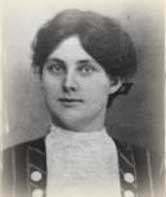
Lillian Trasher
Four years earlier she’d traveled from home in Brunswick, Georgia to Atlanta, to interview for a newspaper job as a sketch artist. On the way she just happened to meet Mattie Perry, an orphanage director from North Carolina.
Mattie described the work and “how they lived by faith, believing each day that God would supply all their needs”[1]. Mattie invited the would-be sketch artist to come work with her. Lillian declined.
But it just so happened the sketch-artist position went to someone else by mistake, after Lillian had supposedly been hired. She decided to work at the orphanage after all.
For five years she handled all sorts of tasks and learned the many facets of orphanage administration. She also attended Bible School, pastored a church for a short time, and even traveled as an evangelist.
In 1910 Lillian became engaged. But, as it happened, ten days before the wedding, she heard a missionary from India speak passionately about his work. Lillian felt strongly God was calling her to mission work–in Africa. Her fiancé, however, felt no such call, and Lillian broke off the engagement.
Next, Lillian just happened to attend a Christian conference where she met a missionary working in Assiut. He invited her to join their team; Lillian accepted.
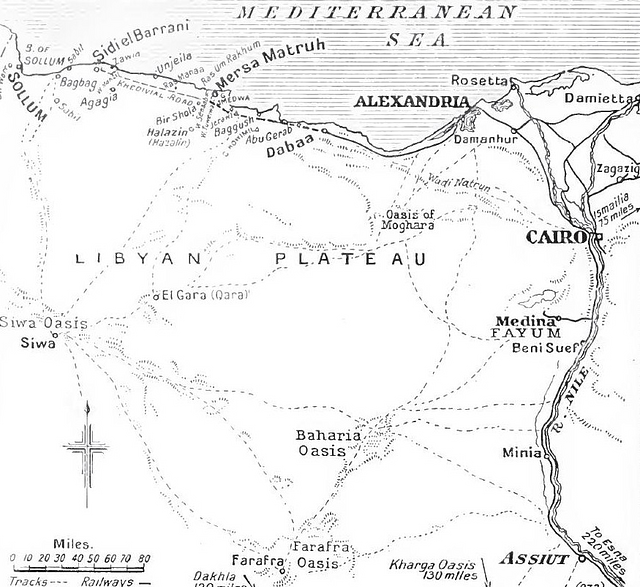
Assiut, bottom right corner
Her family expressed concern, but older sister Jennie volunteered to go along, just until she was settled. Jennie never left.
By 1915, the two women were caring for fifty orphans and needed more space. Miraculously, a large property was supplied across the river in Abnub for just $250. She and the older children made a kiln and baked their own bricks to construct the needed buildings.
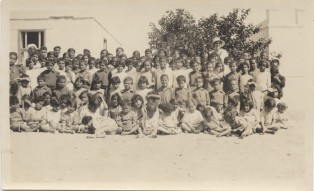
Lillian and her children, 1920
1919 brought political unrest and British authorities required everyone at the orphanage to evacuate. The boys were sent to a Presbyterian school in Assiut, the girls to a hospital.
Lillian and Jennie returned to America and spent the year raising funds for the work. When they returned in 1920, Lillian began taking in anyone in need, including widows and the blind. They helped with the work of the orphanage, and by 1923, 300 lived on the compound.
God continued to meet their needs, sometimes in spectacular ways. One time an anonymous donor sent a truckload of foodstuffs. And when Lord Maclay of Scotland visited the orphanage, he gave Lillian $5,000 for her work. Later he sent another $25,000 [2].

As World War II began, the Assiut Orphanage housed seven hundred people. Once again, food and supplies became scarce.
In April of 1941, the American ambassador shared incredible news. A Red Cross ship had been enroute to Greece when that nation fell to the Nazis.
The captain had received orders to dump the supplies and return home. But a soldier on board knew of Lillian and persuaded the captain to unload at Alexandria.
“Believe it or not,” announced the ambassador, “you have a warehouse full of clothing, blankets, towels, hundreds of kegs of powdered milk, many sacks of rice–and that’s not all! It’s just waiting for you to pick it up”[3]!
By the 1950s, the orphanage included sixteen buildings: dormitories, a hospital wing, chapel, school, nurseries, bakery, sewing rooms, carpentry workshop, and more. Over a thousand children resided on the grounds [4].
Of course, throughout the years, Lillian and Jennie made sure their charges knew about Jesus. Thousands committed their lives to him [5].
Now, 125 years since its founding, the legacy of Lillian Trasher (and Jennie) lives on in the still-functioning facility. However, in 1961, shortly after Lillian’s death, the name became the Lillian Trasher Orphanage.
[1] https://oercommons.org/courseware/lesson/60957/student/?section=19
[2] https://christiansforsocialaction.org/resource/heroes-of-the-faith-lillian-trasher/
[4] https://www.cbeinternational.org/resource/story-lillian-trasher/
Other Sources:
Image credits: http://www.look and learn.com; http://www.commons.wikipedia.org; http://www.itoldya420.getarchive.net; http://www.digitalgallery.bgsu.edu; http://www.canva.com.
TAKE NOTE! A NEW RESOURCE FOR YOU! Do sign up below for the monthly newsletter that includes a collection of quotes and scriptures focused on HOPE, to encourage you and share with others.
Scroll to the end of the newsletter to access this resource!

 From the Inside Out