Feeds:
Posts
Comments

Archive for the ‘God’s Love’ Category

Years ago in my hometown, when the community pool was built, Dad often took my brother and me swimming.  I marveled at the way my father could slice the water with a smooth dive, roll over on his back, and float.  Without even moving his arms and legs, he could remain on top of the water.  Amazing!

When I tried it, I sank–immediately.

“Daddy!  Show me how to float!” I cried.

First, he helped me to lie flat-out on top of the water.  His hand gently supported the middle of my back.  And then Dad said the strangest thing.

“Now, relax.”

What?!  Every fiber of my being was tense.  I just knew that if I relaxed, my nose would instantly fill up with heavily chlorinated water.

But I trusted Dad.  He wouldn’t trick me into a catastrophe.  So I tried to relax.

Easier said than done.  Try as I might, my body would not relax.  My focus was more on the possibility of sinking than it was on the one thing that would keep me afloat.

“That’s OK,” Dad probably said.  “This is just your first try.  Keep practicing, and all of a sudden you’ll get the feel of it.  That’s how it happened for me.”

This experience came to mind as I read Charles Spurgeon’s comment on an excerpt from Isaiah 30:15.

First, the scripture-excerpt:  “In quietness and confidence shall be your strength.”

And now, the Spurgeon quote:  “We are sinking by our struggles when we might float by faith.”

But learning to relax in the spiritual realm is just as difficult as it was to relax on my back in that swimming pool.  It is so much easier said than done–at least for me.

Why is fretting and worrying my default mode?  It’s so pointless.  Resting in God is the only way to hope and peace (Psalm 62:5).

The big question is how.  How can I relax into quiet confidence that will be my strength, and keep me afloat?

Perhaps the answer is in that word practice.  As I reaffirm over and over God’s glorious attributes, as I review His wonderful promises, my focus will change and my spirit will learn how to rest.

What attributes might be wise to focus on?  King David included a number of them in his glorious psalm of thanksgiving, found in 1 Chronicles 16:8-36:

  • Power (vs. 9, 12, 14) – He is able to work wonders.
  • Integrity (v. 15) – He is totally trustworthy.
  • Holiness (v. 29) – He is absolutely pure and righteous, totally set apart from anyone else in the universe.
  • Goodness (v. 34) – His blessings to us are bountiful and frequently displayed.
  • Love (v. 34) – Not based on our paltry deeds, but on his kind and gracious nature.

And what promises would build my confidence?  Here are three for a good start:

  • “As for God, his way is perfect; the word of the Lord is flawless.  He is a shield for all who take refuge in him” (Psalm 18:30).
  • “My God will meet all your needs according to his glorious riches in Christ Jesus” (Philippians 4:19).
  • “I will lead the blind by ways they have not known, along unfamiliar paths I will guide them; I will turn the darkness into light before them and make the rough places smooth.  These are the things I will do; I will not forsake them” (Isaiah 42:16).

Notice:  He promises protection, provision, and guidance.  Everything we might face is covered.

Thinking back to those summer days at the community pool, I’m reminded of two things that happen when we float:  1) Our eyes are focused upward.  2) Our ears cannot hear very well, situated as they are beneath the surface.  Noise is silenced.

Those two things need to happen in the spiritual realm if we’re to float by faith.  Our eyes need to be focused upward on our powerful, loving, promise-keeping God, and our ears need to be stopped to the voices of worry.

The former will undoubtedly take care of the latter.

(Photo credits:  www.sciforums.com ; www.dailyencouragement.net ; www.flickr.com ; www.confessionsofasmowflake.com )

Read Full Post »

Group of sparrows.

Group of sparrows. (Photo credit: Wikipedia)

“Are not two sparrows sold for a penny?  Yet not one of them will fall to the ground apart from the will of your Father…So don’t be afraid; you are worth more than many sparrows” (Matthew 10:29, 31).

Why did Jesus choose sparrows for this illustration?

They’re so small and common.  (Have you ever felt unimportant and ordinary?)

Sparrows were of such little value in Jesus’ day, they were sold two for a penny.  The poor would buy them to eat—a cheap source of protein.

Nobody much cared about sparrows in Bible times; most folks still don’t care today.  They’re just drab little birds we see every day—hardly worth our attention.

But the smallest, drabbest sparrow doesn’t slip by God’s attention.  Not one can fall to the ground without God knowing.  And if he knows and cares about the sparrows, he certainly knows and cares about each of us.  Verse thirty-one makes it clear:  “You are worth more than many sparrows.”

There’s a modicum of comfort in the knowledge that God sees our situations.  To be honest, though, the fact that he just knows isn’t all that helpful.

Better yet is the news that not one sparrow can fall without God’s consent.

Nothing happens to us that hasn’t first received the stamp of approval from God Almighty.

“Wait a minute,” you might say.  “If a sparrow falls, he’s likely to die.  Not much comfort in that either– knowing that God gave his OK!

Here’s what I want to embrace:  we have the mind of Christ (1 Corinthians 2:16b), right?  When it’s my turn to fall off the branch, I want to be able to affirm, “Yes, Lord.  Whatever you think is best is A-OK with me.  I know I can trust you because you love me.  And I rejoice in the promise that whatever happens, you will bring good from it.”   (Remind me of that truth when I start to wobble, will you?)

But here’s the best news:  Notice that Jesus didn’t speak of God as some detached, omnipotent being.

He said, Father.

It is our gracious and kind Heavenly Father who tenderly watches over his little sparrows.

Red Bike

Red Bike (Photo credit: swanksalot)

Think of a loving mother who witnesses her small son falling off his bike.  When he gets up with a scraped knee, she won’t just say, “Oh, I saw that happen, Johnny.  I’m so sorry you’re hurting.”  Small comfort in that.

No, that mother will run to her son, hold him in her arms, talk to him reassuringly, take him to the house, and patch him up.  That’s just what a loving parent does.

When trouble comes, our loving Heavenly Father is right there with us, just like that mother.

He holds us.  Isaiah wrote, “He gathers the lambs in his arms and carries them close to his heart” (40:11).

He talks reassuringly to us, especially through His Word.  With the psalmist, we can pray, “Strengthen me according to your word” (Psalm 119:28b).

God is our refuge and sanctuary; he is our home, our dwelling place. (Psalm 91:1-2).

And God patches us up; he restores our souls (Psalm 23:3).  He renews our energy, purpose, and hope.

So, “Don’t be afraid,” he says. “If I take care of the sparrows, I will most certainly take care of you, because you are worth more than many sparrows.”

See? You’re not small, unimportant, and ordinary–not at all!

*     *     *     *     *     *     *     *     *     *

Thank you, Lord, for not playing favorites.  What glorious news that each of us is precious to you!  Thank you also for being an attentive God who tenderly watches over us.  And especially thank you for being an involved God, always acting on our behalf, and always for our good.  We are in awe of you, our loving, gracious Heavenly Father!    

Read Full Post »

Back in the 1970s I saw Helen Hayes in a made-for-TV movie.  Some of you may recognize her.  She was known as the “First Lady of the American Theater,” beginning her career on Broadway in 1905, when she was only five years old.  In the 1930s, Helen expanded her stardom to films, and finally to television.

The reason she comes to mind now and then is the impression she made upon me, as an energetic, sparkly eyed senior citizen.  I remember thinking, “When I get old, I want to be like that!”

Poof.  Four decades have passed, and I am indeed getting old!  I don’t feel like it, but that doesn’t stop the incessant turning of the calendar pages.

So I was delighted to come across these verses from Psalm 92 that cast aging in a positive light:

“The righteous will flourish like a palm tree, they will grow like a cedar of Lebanon; planted in the house of the Lord, they will flourish in the courts of our God.  They will still bear fruit in old age, they will stay fresh and green, proclaiming, “The Lord is upright; He is my Rock, and there is no wickedness in Him” (vs. 12-15).

Palm trees do indeed flourish, living up to 100 years.  Withstanding heat, drought, and high winds, these trees stand tall and strong; their leaves fresh and green all year long.


What a perfect picture of an energetic, sparkly eyed senior citizen! 

How do we achieve such age-defying qualities? 

First, notice that the righteous will flourish.  When our faith is grounded in God, when we follow his principles for a prosperous life, we flourish.

Like the palm tree that grows straight up toward heaven, the righteous reach for the God of heaven.  That’s how they’re able to stand strong through the winds of change and difficult circumstances.

The psalmist then continues:  “The righteous will…grow like a cedar of Lebanon.”

Majestic cedar trees grow to 120 feet in height and up to 30 feet in circumference.  They provide the perfect picture of a firm, stable person.  Just as the cedar’s roots go deep into the soil, so the righteous person is rooted and grounded in God’s love (Ephesians 3:17).  From those roots comes the nourishment needed to remain strong and spiritually healthy.

Second, notice where these trees are planted:  in the house of the Lord.  They flourish in the courts of our God.

Charles Spurgeon, that eloquent preacher and writer of the 1800s, had this to say about those who dwell in habitual fellowship with God:  “They shall become men [and women] of full growth, rich in grace, happy in experience, mighty in influence, honored and honorable.”  Now that sounds like a very satisfying way to live—so much better than the opposite!

Think of a complaining oldster whose mouth turns down from constant disgruntlement.  His bottom lip protrudes from perpetual pouting, and his brow is permanently lowered into a frown because anger often rules his emotions.  All this negativity has stunted the growth of his maturity.  He’s unhappy much of the time, and is not held in high regard by others.  Do you suppose he ever considers that his way of life is terribly unsatisfying?   

However!  When our lives are centered upon worship of God, as we express gratitude for his blessings, praise for his attributes, contentment for where he’s placed us, and joy in the midst of trials, we become those admirable men and women Dr. Spurgeon described above:  mature, gracious, and happy.

Dr. Spurgeon also added “mighty in influence and honored.  God rewards the righteous aged with “fruit.”  In other words, we may still bring glory to God by our words and actions—well into old age.

We can be:

  • Energetic—with the power of the Holy Spirit
  • sparkly-eyed—with the indwelling of God’s peace
  • grace-filled—with continual demonstrations of God’s love to others
  • joyful—with hearts focused on God’s blessings

These kinds of saints provide a powerful example of God’s faithfulness—through pleasant times and challenges, through plenty and want, year after year.

May we continue to grow deep and stand tall—all the days of our lives.

(photo credits:  www.pachd.com, www.captainkimo.com, www.forestertreeservice.com, www.centrifueleadership.com, www.seniors.ovetoknow.com)

Read Full Post »

“Come on, Mommy!  Let’s catch fireflies!”

Each evening, while visiting her uncle’s home in the Midwest, our granddaughter, Sophie, wanted to capture those glowing insects.  Where she lives in the Pacific Northwest, the little creatures do not abound.

I, too, was visiting Sophie’s uncle (my son) and delighted in those fireflies as much as she did.  That’s because Steve and I have lived in Florida for over thirty years, and although a habitat map for fireflies includes our state, I’ve never seen one here.

During our visit, we’d all sit on the front porch in the evening.  Sophie and I, in particular, would watch for the magical moment when the soft, silent glimmering would begin.

The fireflies drifted up from the grass and lilies of the valley in front of the house.  Just a few at first.  But soon there were too many to count.

I became curious about whether they blink at even intervals or not.  Since they move slowly, it was quite easy to choose one, follow its course, and count the seconds between blinks.  I can confidently report that this particular variety (There are over 2000 world-wide!) chooses to blink at random, although within a range of 4-6 seconds.

As soon as the first firefly was spotted, Sophie was off the porch and into the yard with her jar.  She took great joy in the catching, but kindly released them when it was time for bed.

We’d say good-bye as each one took flight from the edge of the jar.  I gave them names.

“Good-bye, Floyd!”

“Sleep well, Beulah!”

“See you again tomorrow night, Fred!”

*     *     *     *     *     *     *     *     *     *

These images came to mind as I read, “Love in the Dark,” by Danielle Ayers Jones–a meaningful post for the (in)courage blog, July 9.  She wrote about experiencing God’s love, even in the midst of dark, hard, confusing, even seemingly hopeless circumstances.  Joseph was her example.

As I read, I thought of those fireflies in the dark we had witnessed just the week before.  The soft glimmer, blinking here and there, reminded me: the steadfast love and favor of God glimmers here and there in all circumstances—including the hard, confusing times. Sometimes it’s an encouraging word from a friend, a Bible verse that speaks directly to our situation, or an unexpected God-incident that ministers to our hearts.

That word unexpected highlights how our God works.  He likes to surprise us sometimes.  His glowing love gifts often come randomly, not at precise intervals.

We have to keep alert or we might miss the blessings.

But the more alert we become, the more we’ll see—until we can no longer keep count.

 What fireflies have glowed in the night for you?  In other words, how has God’s love penetrated the darkness in your life? Please share your experience in the comment section below.

(Art & photo credits:  www.headofleslie.com; addins.wwa.com; http://www.charlottesfancy.com)

Read Full Post »


G.R.A.C.E. = God’s Riches at Christ’s Expense.

Many of us are familiar with that definition of God’s grace, based on Ephesians 1:7-8.

I like Matthew Henry’s definition, too:

Grace is the free, undeserved goodness and favor of God to mankind.

But I’m left wondering:  What are those riches?  What does God’s goodness  look like?

The first undeserved favors we might think of include forgiveness, salvation, his peace and presence, guidance and joy.  But surely there are more.  How many more?  I began to keep a list.  It currently includes forty-seven aspects of grace.

Perhaps you’ll be awed and inspired as I was, contemplating the overwhelming riches that God supplies.  All because of the price Jesus paid for us at the cross.  Each one deserves careful thought, because each is a precious treasure.   I’ll share twenty-three of them today, and the rest on Thursday.  You’ll notice they’re organized in alphabetical order.  A hierarchy would have been impossible.

GOD’S GRACE INCLUDES:

1.  Unconditional ACCEPTANCE no matter what we’ve done (Luke 15:11-24).

2.  Confident ACCESS to God, to talk to him any time, day or night (Hebrews 4:16).

3.  Loving ADOPTION into his forever family (Ephesians 1:5).

4.  Faithful ATTENTION to our prayers (Psalm 6:9).

5.  Rich BLESSINGS to all who call upon him (Romans 10:12).

6. Attentive CARE through life’s ups and downs (1 Peter 5:7).

7.  Compassionate COMFORT when we’re afflicted (Isaiah 49:13).

8.  Trustworthy COUNSEL, offering guidance for the best way to live (Psalm 73:24).

9.  Promised DELIVERANCE on which to set our hope (2 Corinthians 1:10).

10. Strong EMPOWERMENT to do what he asks , which is always in our best interest (Acts 1:8).

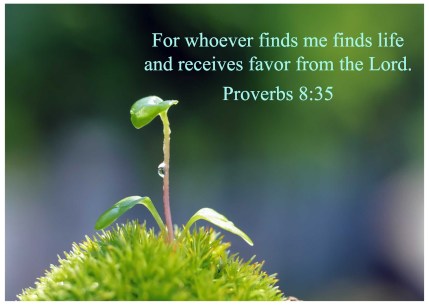
11. Continual FAVOR as a child of the King (Proverbs 8:35).

12.  Augmented FELLOWSHIP with other Christians (1 John 1:7).

13. Complete FORGIVENESS for our sins (Hebrews 8:12).

14. Liberating FREEDOM from sin, death, worry, and fear (Romans 8:1-2).

15.  Satisfying FRUITFULNESS for a productive life (Philippians 1:10-11).

16. Special GIFTS of the Spirit, not for just a few stellar believers, but for everyone (1 Corinthians 12:1-11).

17. Glorious HEAVEN to look forward to, with a place for each of us (John 14:2-3).

18. Competent HELP that is always near (Psalm 115:11).

19. The powerful HOLY SPIRIT, who is constantly working for us and in us (John 16:13, Romans 8:26-27).

20. Enduring HOPE which renews our strength (Psalm 62:5; Isaiah 40:31).

21. Reliable INSIGHT into God’s Word and how we can apply it to everyday living (2 Timothy 1:7).

22.Overflowing JOY, independent of circumstances (Psalm 16:11).

23. Unfailing JUSTIFICATION, because the God of the universe has declared us “not guilty” (Romans 3:23-24).

THINK OF IT:

THINK OF IT:

At the moment each person invites Jesus into his or her life, all of these riches become instantly available.  Yet there are more.  I hope you’ll be looking forward to Thursday’s list.

(Art and Photo credits:  biblicallyshapedblogspot.com , wonders.wallpaperdave.com, gracefreak.dan.wordpress.com, barnabasonline.net, mintools.com/gifts-list.)

Read Full Post »

Years ago, Mom taught me a neat trick for those times when I can’t remember the name of someone or something.

“Go through the alphabet,” she suggested. “Usually a letter will stand out, and it will jog your memory.”

No doubt many of you have discovered the same strategy.

Now that I’m getting older, it has occurred to me: Is it my imagination, or am I using the alphabet to jog my memory more than I used to?

That question brought a silly visualization to my mind. Who is the oldest Person we know? God–he has always existed, even before time itself, right?

What if he experienced memory challenges? I can see him with his elbow propped on the throne, stroking the thick, white wool of his beard, the other hand tapping absent-mindedly against the folds of his glowing robe. He’s talking out loud to himself (another habit of the elderly).

“Oh, what is her name? I can see her face…She’s one of our brown-eyed, brown-haired children. I just love deep, dark eyes…Isn’t she the one We blessed with a raise, even though she didn’t ask for it? Oh, what is her name?”

I told you it was silly. God doesn’t have memory problems! He is all-powerful and all-knowing. Actually, considering his magnificent splendor, it’s really quite amazing he cares about us at all.

David wrote, “What is man that you are mindful of him, the son of man that you care for him” (Psalm 8:4)?

Mindful. I like that. God’s mind is full of us. He not only knows our names, he knows the number of hairs on each of our heads (Matthew 10:30). It stands to reason God knows our favorite colors, and what each of us was doing ten years ago today.

And when we consider he has planets, moons, and stars to orchestrate, it is no small wonder he concerns himself with such little specks as us.

Another psalmist wrote, “The Lord remembers us and will bless us” (Psalm 115:12a).

Not only does he remember who we are, he remembers our needs and blesses us accordingly.

Meditate on that concept for a moment. God supplies our every need.

James Janeway, a Puritan minister and author of the seventeenth century, said that such contemplations are enough to launch us forth into an ocean of goodness, where you can see no shore, nor feel the bottom. I like that, too.

Here’s another concept worthy of careful thought: God’s mindfulness did not begin when each of us was born. “All the days ordained for me were written in your book before one of them came to be” (Psalm 139:16). Could our days have been recorded without God’s knowledge? No. That means we have been on his mind since before each of our birth dates.

And last, God’s mindfulness will never end. He will continue to be mindful of us in the future, into infinity. “I will never stop doing good to them” (Jeremiah 32:40), He said. And “I will never forget you” (Isaiah 49:15b).

Oh, Father, thank you for your constant, caring attention. Thank you for your ocean of goodness from which you bless us. In return, may I be mindful of you, remembering the wonders you have done, your miracles (Psalm 105:5a). I want to praise you continually, and forget not one of all your benefits (103:2).

Read Full Post »

English: monument in front of the Grace Fellow...

(Photo credit: Wikipedia)

Remember Commandment #2?

“You shall not make for yourself an idol in the form of anything in heaven above or on the earth beneath or in the waters below. You shall not bow down to them or worship them; for I, the Lord your God am a jealous God” (Exodus 20:4-5a, emphasis added).

God reaffirmed this trait of his several chapters later: “Do not worship any other god, for the Lord, whose name is Jealous, is a jealous God” (34:14, again, emphasis added).

Doesn’t that seem…odd? Jealousy seems such a petty, immature emotion. By contrast, God is holy and perfect, so how can he be jealous?

First, we can’t compare God’s jealousy to that of people. Human jealousy often grows out of discontent and selfish desires. It can cause reactions of bitterness, unkindness, and anger.

(Photo credit: Wikipedia)

By contrast, God’s jealousy is “holiness reacting to evil in a way that is morally right and glorious” (J.I. Packer, Knowing God, p. 169). His jealousy grows out of a desire to preserve his relationship with his people. After all, he made us. Every human being belongs to him, whether he/she acknowledges that fact or not.

God’s jealousy is an aspect of his love that motivates him to action. He knows that loyalty to himself and his ways is what’s best for us. So he provided the way for mankind to experience full, abundant life with him.  Through his Son, Jesus, he bought us with his own blood.

The Death of Jesus

The Death of Jesus (Photo credit: Wikipedia)

And what does that full, abundant life include?

Close companionship with the King of the universe. His love, joy, peace, strength, and more overflowing in a continuous supply.

And then, when our time on earth is complete, a perfect life with him in a perfect place—forever.

Therefore, God cannot bear that we would choose other gods—people, activities, or things that seize all our attention. He’s been known to take strong action when his children disregard him.

Think of the Israelites taken captive by the Babylonians.

Think of Jonah in the belly of the great fish.

Jonah

Jonah (Photo credit: Wikipedia)

And then consider the situation from God’s point of view. “If God has to choose between your eternal safety and your earthly comfort, which do you hope he chooses” (Max Lucado, Grace for the Moment, p. 226)?

God’s jealousy is simply a case of eagerness to protect what belongs to him, what is precious to him—you.

Thank you, Heavenly Father,  for being a jealous God, for being passionate about your children. How I want to be zealous in return, seeking to please you, to reflect your glorious moral attributes into a hurting world. Keep me mindful of my desire so that I can make moment-by-moment choices for what is good, right, and loving. Help me to be strong for you.

Read Full Post »

Henry James, by John Singer Sargent (died 1925...

Henry James, by John Singer Sargent (died 1925). See source website for additional information. (Photo credit: Wikipedia)


“A writer should strive to be a person on whom nothing is lost.” – Henry James.

Some of you may recognize that name from literature class. Does Portrait of a Lady or The Turn of the Screw sound familiar?

Henry James became known for well-developed characters and for stories with an undercurrent of commentary on politics, the social classes, feminism, and morality.

With many works to his credit, his advice for writers–to “live aware”–is advice worth taking.

So we writers become observers–of people, situations, and creation.

We try to see more – the swirling rainbow on a bubble; the slight arch of the eyebrow indicating doubt.

We try to hear more – the squirrel’s staccato tapping as he scampers up a tree; the brief pause of uncertainty.

We try to smell more – the promise of harvest in the freshly turned soil of spring; the aroma of love in a Thanksgiving feast.

We try to taste more – the flavor of winter in a snowflake; the delectable sweetness of moments spent with family or old friends.

We try to feel more – the downy softness of silk on a milkweed seed; the comforting warmth of traditions.

As a result, we’re better equipped to convey meaning to our readers—with clarity and specificity, we hope.

And it occurred to me, Christians should also strive to be persons on whom nothing is lost.

We Christians need to live aware, so as not to miss what God reveals.

We must try to see more – in His Word, His people, and creation.

We must try to hear more – of his still, small voice.

We must try to smell more – in the fragrance of His presence.

We must try to taste more of God’s goodness in our everyday circumstances.

We must try to feel more of the wonder.

And what will be the result?

Out of the glorious riches of all these things, “we may be filled to the measure of all the fullness of God” (Ephesians 3:19). God wants to fill us with His attributes:

His love—everlasting, mindful of our needs, caring.

His wisdom—truthful, trustworthy, impartial.

His holiness—pure, separate from all else, beautiful.

His righteousness—promise-keeping, miracle-working, faithful.

His power—creative, sovereign, protective.

Think of it. The King of the universe wants us to fully enjoy all that He is, all that He has to offer.

Oh, how I want to be a person on which nothing of the King is lost.

Read Full Post »

Crucifixion IV

Crucifixion IV (Photo credit: Remara Photography)

Seems like a cruel oxymoron, doesn’t it—to put the words glory and cross together. Glory carries positive connotations of splendor, radiance, and goodness. The cross is a symbol of horrific pain and suffering.

But the cross is also “an exhibition of the nature of God” (Oswald Chambers). You see, God’s glory is the fullness of who God is, his nature, and includes all his attributes and characters traits. Many of those attributes were at work when God provided the way of salvation for us. The glory of the cross includes:

1. Love

God demonstrated his own love for us in this: While we were still sinners, Christ died for us” (Romans 5:8).

Such love is incomprehensible. How could he possibly desire to be in relationship with us? How could he delight in us, frail and self-centered as we are? It makes no sense.

Yet, he sent his Son, Jesus, to take the punishment we deserved and to offer us eternal life. When we invite Jesus into our lives, God takes us from the gutter of depravity and elevates us to the status of beloved children. We are adopted into the family of God (Ephesians 1:5). Incredible!

2. Grace

“In him we have redemption through his blood, the forgiveness of sins, in accordance with the riches of God’s grace” (Ephesians 1:7).

What is grace? All the facets of God’s love—his forgiveness, benevolence, presence, peace, provision, and more—made available to us, who don’t deserve it. Grace prompted God to provide a way for us to experience his love—through the sacrifice of his only Son.

Did you notice? God is the one who provided the way to him; we do not have to figure it out for ourselves, and then hope for the best. By God’s grace, he has made salvation (rescue from death) a sure thing. We can know our place in heaven is secure!

God’s grace, put on display at Calvary, sets Christianity apart from any other belief system in the world.

3. Power

I pray that…you may know…his incomparably great power for us who believe…, which he exerted in Christ when he raised him from the dead” (Ephesians 1:18-21).

No one can raise someone from the dead except God. When Jesus was resurrected, he demonstrated his power over death, and proved the validity of eternal life, not only for himself, but for all those who believe in him.

But Jesus’ resurrection was not the end of his mission. Read the next couple of verses (22-23) to discover that, after Jesus rose from the dead and ascended back to heaven, God seated His Son at his right hand (the seat of honor). Now Jesus’ power and authority is above all other rule and authority in the universe.

And someday, Jesus will share that power with us. Those of us who have accepted Jesus into our lives will reign with him in heaven (2 Timothy 2:12). My heart is filled with wonder and awe at such a privilege.

4. Faithfulness

God, who has called you into fellowship with his Son Jesus Christ our Lord is faithful” (1 Corinthians 1:7).

Faithful to forgive. Faithful to see us through the journey of this life. Faithful to win the battle over evil in the end. Faithful to keep his promise of eternal life, because of the sacrifice of his Son on the cross.

Our faithful God made salvation so simple for us, but it cost him so much.

5. Justice

“All have sinned and fall short of the glory of God, and are justified freely by his grace through the redemption that came by Christ Jesus…He did this to demonstrate his justice” (Romans 3:23-26).

We all deserve punishment, and our guilty consciences confirm that truth. But God made it possible for us to be forgiven and ushered into relationship with him. He declared us “not guilty” because Jesus paid the penalty..

I love the way Eugene Peterson explains it in his paraphrase, The Message: “Out of sheer generosity he put us in right standing with himself. A pure gift. He got us out of the mess we’re in and restored us to where he always wanted us to be. And he did it by means of Jesus Christ” (Romans 3:23-24).

A pure, precious gift; paid for at Calvary. The glory of the cross.

For you. For me.

Read Full Post »

« Newer Posts

Still Traveling

Impressions Becoming Expressions

Living Our Days

Gaining a heart of wisdom

He Said What?!

I'm Patty, and my husband and I are living with our adult son who has autism and epilepsy. I love sharing lessons learned from life around me, especially life with Aaron.

Meditations of my Heart

Impressions Becoming Expressions

Linda Stoll

Impressions Becoming Expressions

Debby Thompson

Impressions Becoming Expressions

Signora Sheila

Notes on Life, Faith & Italy

Colleen Scheid

Writing, Acting, Living in God's Love

Mitch Teemley

The Power of Story

Heidi Viars

Finding the Image of God