Feeds:
Posts
Comments

Archive for the ‘Intimacy with God’ Category

‘Ever watch one of those television shows that provides a person with a complete makeover? By the end of the hour she (or sometimes he) has acquired a personalized, updated wardrobe, learned how to apply make-up, and received a new hair-do.  The physical transformation is always stunning.

However, there is a transformation even more amazing.  Paul explains it this way:

“If anyone is in Christ, he is a new creation; the old has gone, the new has come” (2 Corinthians 5:17).


new-creation


Those of us in Christ haven’t just been adjusted, primped, polished, or camouflaged.  We have become new people with clean slates, strong purpose, deep joy, and vibrant enthusiasm for life.

And that’s not all.  Each day we’re becoming better than the day before–a bit more perfected–if we remain in Christ.  Sarah Young (Jesus Calling) says we’re becoming more fully our true selves–the ones God designed us to be.  I like that.

Each day in Christ is an opportunity to grow more completely into his glorious image.  These changes have nothing to do with outward appearance.  They take place on the inside, impacting our personalities, emotions, minds, and spirits.

That expression, in Christ (also “in the Lord” and “in him”), occurs 164 times in Paul’s letters.  Such repetition would indicate the importance of the concept.

So how would we define the meaning of being “in Christ?”  Here are a few possibilities.

1.  In Christ means we live within his presence.  Now that’s a rather abstract concept. Perhaps an analogy would increase our understanding.

Picture yourself surrounded by trees in a forest.  The woods fill your senses—the sight of tall, stately trees, the sound of chirping birds, the aroma of pine and earth, the textures of rough bark and velvety moss, the taste of cold, clear water from a stream.


SunShiningThroughDustInWood

Similarly, the presence of Christ completely surrounds us as believers.  Christ fills the senses of our hearts, if we avail ourselves. We see more fully the glory of his creation, hear his truth, breathe in his love like a fine fragrance, feel his strength upholding us, and taste his goodness in the feast of blessings he provides.

Such sensations change who we are.  In Christ, we can become stable, contented, joy-filled people.

2.  In Christ means we are united with him, like a branch fused to the vine (John 15:1-8). He is the Source of everything we need, but we must stay in contact with him. How do we do that with Someone who’s invisible? Possibilities include prayer, praise, gratitude, and worship–throughout the day.

And when we’re united with him, his peace and strength are infused into us.

3.  In Christ means we’re in close relationship with him. Never should there “be day when we give ourselves a chance to forget him” (William Barclay).

And when we live in the presence of Christ, and in union with Christ, the inner transformation he has instituted will most definitely become visible. Jesus’ character will begin to flow through our attitudes and actions, just as sap flows through the vine into the branches. Attitudes like kindness, understanding, and forgiveness will give strong evidence that we’re living in Christ.


Woman praising with arms raised in the air


And what will the people around us see?  Folks who…

  • exude joy and optimism.
  • are gracious to others.
  • exhibit self-control.
  • make wise choices.
  • aim to express love–always.

Such delightful, purposeful living awaits those who center themselves  in Christ.

*     *     *     *     *     *     *     *     *     *

Thank you, Lord Jesus, for the supreme privilege of living in your presence.  You are the King of the universe, yet you want to be united with us in close relationship.  And as we avail ourselves, you infuse us with your attributes, your strength, your peace.  All praise to you, gracious Savior, the Author and Perfecter of our faith, as we abide in you.

(Photo credits:  www.brotherransome.com, http://www.wikipedia.org., and alishagratehouse.com.)


Read Full Post »

Behind our new home stand many large trees that border a small creek. As the sun goes down, fireflies rise from the grass and slowly soar higher and higher until the trees appear decorated for Christmas. Hundreds of glimmering lights sparkle against the deep dark of night.


cjn1029-lfireflies-n6963


God’s creative handiwork, right in our own backyard.  

*     *     *     *     *

On the Fourth of July our family attended the local Independence Day parade. While waiting for the festivities to begin, a young boy seated next to us chatted with me every now and then.

One time he commented, “Wow! There’s not even one cloud in the sk___ …Wait a minute. There’s a little one over there.”

We both studied the wisp of vapor for a moment. “It’s disappearing already,” he added.

Together we witnessed the last visible curl evaporate away.   My attention returned to people-watching.

But the boy suddenly cried out, “There it is again!”

Sure enough, the water droplets had regathered themselves.

It was then I noticed a phenomenon that I’d missed before. In the area of that little cloud was a faint veil of fog, barely visible. Millions, perhaps billions of water droplets were suspended there all along.

The boy and I only noticed them when they drew together in a dense gathering.

Watching the cloud reform, the boy exclaimed, “Cool!”  Cool indeed.


pullquote_sky_mind_500_375


God’s ingenious engineering of the elements, right above the street.

*     *   *     *     *

After dinner recently Steve said, “I’ll do the dishes.”

Now lots of husbands probably do the dishes now and then. But do they also do the cooking? My Steve does! He actually enjoys it, and almost always takes care of the cleanup, too. (Sorry, he’s not for sale.)


th


God’s love expressed to me through my loving husband, right there in our kitchen.  

*     *     *     *     *

Our toddler granddaughter loves the swings at the park. “Weeee!” she squeals with each push.  For her it’s a new, exciting delight.

Actually, Elena’s days are filled with new discoveries: the ping-sound of a metal post when struck with a stick, the mystery of bubbles that disappear with a touch, the slow, spiral dance of a dropped feather.

Her eyes sparkle; her smiles and laughter indicate intense pleasure.


IMG_8196_picnik


God’s gift of joy on display right in our own family.  

*     *     *     *     *  

And paying attention to all of these manifestations makes me more aware of his presence.

And awareness of his presence changes my heart.

Stress gives way to peace, tedium gives way to joy, striving gives way to contentment, fear gives way to consolation.

And surely God must smile when we live aware and celebrate his gracious provision.

*     *     *     *     *

I praise you, Father, for reminding me of your active, loving presence throughout each day, everywhere I go — even at a parade.  Thank you for ministering to my needs, assuaging my fears, comforting my hurts, and giving me joy.  What a gracious God you are!


(Photo credits:  www.billemory.com; http://www.spacious-passion.org; http://www.generationnext.com; www. projectnursery.com.)


Read Full Post »

Tonight, the Thursday before Easter, we remember the Last Supper and the heart-wrenching scene in the Garden of Gethsemane.  It was there Jesus prayed, “Father, if you are willing, take this cup from me; yet not my will, but yours be done” (Luke 22:42).

In a matter of hours from that moment, Jesus would face unimaginable pain and suffering. Yet his prayers were not only for himself that night. He prayed for his disciples, and he even prayed for us—those who would believe in him in the future. (I marvel at such selflessness in a time of supreme crisis.) His desire was that God’s love and his presence would be in us (John 17:26).

As a result of his death on the cross and resurrection from the grave, Jesus made possible the fulfillment of that prayer. Our crucified, resurrected, and ascended Christ indwells every believer (Colossians 1:27).

Think of it! The all-powerful, all-wise Lord of the universe lives within us! Such an overwhelming, puzzling concept. What could that mean in practical terms?

I like Sarah Young’s explanation: We are intertwined with him in an intimacy involving every fiber of our beings (Jesus Calling, p. 332).

It means that God makes available to us everything we need:

  • Power to handle life’s challenges (2 Corinthians 12:9).
  • Wisdom to determine right actions from wrong (James 1:5).
  • Access to talk to him at any time (Hebrews 4:16).
  • Personalized purpose, to fulfill a God-ordained plan (Jeremiah 29:11).
  • Hope that can never be disappointed (Isaiah 40:31).
  • Resources that can never be exhausted (Philippians 4:19).

It means that in Christ we have:

  • Complete forgiveness (Hebrews 8:12).
  • Everlasting life (John 3:16).
  • Overflowing joy (Psalm 16:11).
  • Deep peace (John 14:27).
  • Attentive care (1 Peter 5:7).

Sometimes I act like the Israelites on their trek to the Promised Land. Remember the manna God provided so they wouldn’t go hungry? It tasted like wafers made with honey (Exodus 16:31). That sounds like baklava!! Yet they became so accustomed to the provision, they began to complain. Manna wasn’t good enough after a while.  “Yes, Lord,” they may have said.  “You have been very gracious to provide manna.  But we need meat!”

These blessings of “Christ-in-us” listed above are more precious even than miraculous manna. How could I take such astounding blessings for granted? Add to that the incredible price Jesus paid so I could enjoy those blessings. How dare I think, Yes, Lord, you have been very gracious, but I need more.

*     *     *     *     *     *     *   *     *     *

Dearest Jesus, as I contemplate your deep distress in the Garden, your suffering at the hands of Roman soldiers, and the unfathomable pain you endured on the cross, my petty wants become inconsequential.

Oh, God, forgive me for allowing familiarity to dull the senses—the senses of awe and gratitude for the sacrifice you made.  Willingly.  Lovingly.  

“Love so amazing, so divine, demands my soul, my life, my all” (from “When I Survey the Wondrous Cross”).  

So be it.

(Art credit:  www.ldschurchnews.com.)

Read Full Post »

“Mail’s here early today!” called Lorna, as she entered the kitchen.

Oh, that was good news.  Living far from home in Quito, Ecuador made letters a very precious commodity.

“Terrific!” I responded, and dashed upstairs to get my keys.

Lorna and her husband, Elbert, served as missionaries with HCJB.  I was a short-termer, living with them for the four months of my assignment as a preschool and kindergarten teacher.

English: Radio HCJB Deutsch: Radio HCJB

The compound was only a brief walk from the house.  Once there, it was just a matter of unlocking the gate, heading down the main walkway a short distance, up a few steps, and into the post office alcove where all of our mailboxes were located.

I jogged the whole way there and back, excited to read my mail.  But no sooner did I return home than my head started to pound, nausea engulfed me, and all I wanted to do was lie down.  Never mind those coveted letters!

My problem was not a sudden onset of the flu, but mild hypoxia–oxygen deprivation. Quito is located 10,000 feet above sea level in the Andes Mountains.

My experience proves, as well as those of countless others:  we humans require oxygen—lots of it.

Even folks who live near sea level can suffer from lack of oxygen, because they’ve become accustomed to shallow breathing.  Their bodies never receive enough oxygenated air, causing them to feel short of breath and anxious.

On the other hand, research has proven that deep breathing helps us manage stress and anxiety, lower blood pressure and heart rate, and even spark brain growth.  By not taking slow, deep breaths now and again, we deprive ourselves of these benefits.

M-m-m.  Reminds me of Ecclesiastes 2:10-11, where King Solomon lamented the results of shallow living:  chasing after wealth, accomplishments, and pleasure.  In the end, nothing gave him lasting satisfaction and fulfillment.

Shallow living brings on symptoms in the spirit, similar to oxygen deprivation in the mind and body: heartache, fatigue with life, nausea from repetitive, meaningless activity, and shortness of temper.

In contrast to Solomon’s lament in Ecclesiastes is Paul’s praise to God for the power and strength of deep living:

“Oh, the utter extravagance of his work in us who trust him—endless energy, boundless strength” (Ephesians 1:19, The Message)!

Deep living happens when we breathe in God’s strength with a prayer, his wisdom and encouragement with a scripture, his joy with a song.

Deep living happens when we practice his presence as automatically as we breathe.

And how do we do that, “practice his presence?”

It’s just a matter of  pausing frequently throughout each day, to turn our attention to God.

I might say such things as:

  • Thank You, Lord, for this new day.  Work through me to accomplish your purpose.
  • I  love you, Heavenly Father.  Thank you for filling my heart with peace and joy every time I turn my attention to you.
  • Thank you for your power at work in me as I complete this task.
  • The wonders of your creation–graceful tree branches dancing in the breeze, lyrical songs of the mockingbirds, delicious aromas of pine and orange blossoms–They make my heart sing with praise!
  • Oh, Lord, I shouldn’t have spoken to Mary like that.  Forgive me, I pray.  Help me to think before I speak.  And yes, I will apologize to her.

Refreshing.  Energizing. Purifying.  Like a deep breath of oxygen.

Shallow breathing causes a lesser quality of life.  So does shallow living.

Deep breathing fosters strength of mind and body.  Deep living does that and more.

Deep living radically transforms the spirit.

Let’s breathe/live deep!

*     *     *     *     *     *     *     *     *     *

What deep living habits help you practice the presence of God?

(photo credits:  www.wikipedia.com , http://www.picstopin.com , http://www.vineyardcs.org )

Read Full Post »

“It is good to wait quietly,” Jeremiah said (Lamentations 3:26a).

At the risk of sounding impudent, “What’s good about it?”

Waiting can make us feel anxious and stressed.  If we’re waiting for a prayer to be answered or a scriptural promise to be fulfilled, we can become doubtful, discouraged, and despondent.  Not good.

Yet the act of waiting seems important to God.  Numerous times in the Bible we see people of faith who had to endure Wait Time:

  • Abraham and Sarah waited 25 years for the birth of Isaac.
  • Jacob waited 14 years to take Rachel as his bride.
  • Joseph waited 13 years, first as a slave, then as a prisoner, before being rescued and elevated by God to second-in-command over Egypt.
  • The Israelites waited through 400 years of slavery in Egypt before God’s miraculous intervention.

  • Caleb waited 45 years to inherit his portion of the Promised Land.
  • David waited at least 15 years to become king of Israel, after his anointing by Samuel.
  • Simeon, Anna, and many other Jews waited for their Messiah.

God’s delays must serve a purpose.  And a diligent search through scripture gives us answers to:  What good can come from waiting?

  • Times of waiting strengthen our trust in God and our resolve (Psalm 27:14).  If every day was problem-free and blissful, surely our faith would remain shallow.
  • We grow in our relationship with God while resting in his sovereignty and reliability (Psalm 62:5-8).  The Almighty of the universe becomes our closest confidant.  Intimacy with him deepens as we turn to him for comfort, encouragement, strength, and more.

  • Spiritual maturity develops (James 1:2-4).  Waiting is a challenge all by itself, but can also be accompanied by worry, pain, and sacrifice.  The test of waiting, however, develops our patience and perseverance and gives us opportunity to grow in character.  None of these benefits would blossom within us if God provided for every whim, and rescued from every trial.
  • We learn to take joy in the blessings we already have.  Paul wrote, “Be joyful always” (1 Thessalonians 5:16) to a church experiencing persecution.  They were undoubtedly praying and waiting for relief.  But Paul knew that focusing on what Christ had already done for the believers, and the benefits they already enjoyed, would help offset their anxiety and frustration.  The same is true for us.
  • Others see our patience and trust while we wait (Psalm 40:1-4).  Then, when God answers our cries, others take note of his provision, and their faith is encouraged.

It seems we’re always waiting for something; it’s only the intensity of emotion attached to the waiting that tends to vary.  When that intensity begins to grow, perhaps it would help to say, “I’m waiting with great anticipation!

There can be sweet delight in anticipation.  For example, as the Christmas holidays approach, I anticipate the glorious homecoming of family members.  I relish the imaginings of long conversations at the candle-lit dinner table, the hugs and laughter, and the gathering around the Christmas tree for family worship and gift-giving.

I need to apply that joy of anticipation to waiting on God.  I can relish the fact that his plan – including the Wait Time — always includes positive aspects.  I can reaffirm that God is always on time – never late, never early.  I can generate excitement in my spirit by musing on God’s promises and looking forward to the creative, miraculous ways he will fulfill those promises.  With an attitude of anticipation, waiting shouldn’t be nearly so uncomfortable.

(You have my permission to remind me of that, should impatience or frustration start to manifest themselves!)

*     *     *     *     *     *     *     *     *     *

Heavenly Father, I don’t think I’ve ever thanked you for the Wait Times in my life.  Thank you for holding me back, so trust, intimacy, gratitude, patience, and spiritual maturity have a chance to grow.  Help me to embrace the Wait Times as opportunities to discover more of who you are, more of the priceless treasures hidden in your Word, and more of who I can be when I am rooted and built up in you (Colossians 2:7)—especially through times of waiting.

(Art & photo credits:  www.bible-stories-library.com , http://www.moseseditor.blogspot.com . http://www.photosbyravi.com , http://www.pinterest.com.

Read Full Post »

Back in July we looked at the question, “What does it mean to seek God?”  That phrase, seek God, turns up rather frequently in scripture.   Jeremiah 29:13 is a perfect example:  “ ‘You will seek me and find me when you seek me with all your heart.  I will be found by you,’ declares the Lord.”

In that post, we considered our experiences of searching for people to discover principles that might guide our search for God.

The same strategy can give us insight for another instruction seen often in scripture:  walk with God.  Micah 6:8 is one example:  “What does the Lord require of you?  To act justly and to love mercy and to walk humbly with your God.”

What does that mean exactly, to walk with God?  Again, understanding may be expanded by examining what happens when we walk in the physical realm.

First of all, learning to walk doesn’t happen in a moment.  The late Howard Hendricks, professor at Dallas Theological Seminary, used to make this point with a humorous illustration:

A baby does not sit in his playpen and suddenly say to himself:  “My, oh my!  Observe these family members ambulating on two feet!  What an amazing maneuver for forward locomotion!  I think I shall try it!”

No, a baby cannot simply get up and start to walk.  It is a process that happens over time.  That brings us to…

Principle #1:  Walking with God is a learned behavior that happens over time.

 “Come to me,” Jesus says.  “Walk with me and work with me—watch how I do it.  Learn the unforced rhythms of grace” (Matthew 11:28-29, The Message).

Slowly but surely, as we bring Jesus into our daily routines to be our guide and confidante, we take on his attributes.  A glorious side effect will be:  the fullness of joy that comes when we walk in his presence (Psalm 16:11).  And day by day that fullness grows.

*     *     *     *     *     *     *     *     *     *

Not long ago, my friend, Cindy, invited me to go on a walk in a nearby state park.  It was not an aerobic workout!  Cindy and I chatted away as we leisurely made our way through the woods.  We probably missed some critter sightings because we were more focused on our conversation than the beauty around us.

However, occasionally something would catch our attention, and one would point it out to the other, such as…

“Oh!  Look at those sweet purple flowers!”  Two people saying “ooh” and “aah” is so much more fun than one!

Principle #2:  Walking with God is simply friendship with God.

 God is beside each one of us as we progress through each day.  At any moment we can share our hearts with Him, much as Cindy and I did on that walk.  As his gifts and blessings seize our attention, we can thank and praise him—share our “oohs” and “aahs” with him.

A. W. Tozer suggests we “live in a state of unbroken worship.”  Might that just be like a walk in the woods with a friend?

*     *     *     *     *     *     *     *     *     *

A couple of years ago I accompanied two of our three adult children, their spouses, and one granddaughter to a theme park.  Of course, the young adults wanted to ride at least one roller coaster.   So little Sophie and I went to one of the shows while they waited in line.

Because of the crowd, I held tightly to Sophie’s hand as we made our way to the theater.  But there were patches of thick crowds around some of the attractions.  At those points, I carried her, to make sure we weren’t separated.

I wasn’t about to let anything happen to her.  She is much too precious to me.

Principle #3:  Walking with God provides glorious blessings.  Among them, protection and care.

  • His protective presence.  No doubt you remember this affirmation from David:  “Even though I walk through the valley of the shadow of death, I will fear no evil, for you are with me; your rod and your staff, they comfort me” (Psalm 23:4).
  • And Isaiah presents a beautiful image of God’s loving care.  “He tends his flock like a shepherd; He gathers the lambs in his arms and carries them close to his heart” (Isaiah 40:11).

Heavenly Father, how incredible it is that you—the majestic Lord of the universe–would want to walk with us!  What an amazing privilege that you desire to grace us with your all-wise, all-powerful, supremely loving presence!  What wonderful benefits you bestow as we walk close to your side!

Why would I ever want to walk alone?

(photo and art credits:  www.squiddo.com ; http://www.wallpaperfreehd.com ; sarahhamill.wordpress.com ; http://www.sfgate.com ; tomverenna.wordpress.com )


Read Full Post »

Think of the last time you . . .

. . . gazed in wonder at a blazing sunset,

. . . marveled at the heavenly aroma of lilacs or orange blossoms, or

. . . listened to a melody that brought tears to your eyes.

God has equipped us with amazing physical senses, enabling us to experience and enjoy the display of his creative genius.

But physical manifestations are not his only outlet of expression.  God also revels in displaying his fullness in our hearts.  The question is:  how do we become aware of such revelations in the abstract realm of our spirits?

A.W. Tozer presents a possibility in his classic, The Pursuit of God.  He suggests we use the senses of our hearts.

The Bible gives us glimpses of how these internal senses might work.

1.  TASTE

David urges us to “taste and see that the Lord is good (Psalm 34:8).  That verse reminds me of a father urging his child to try a bite of some new food.  “Try it—you’ll like it!” he says.

As Christians, we can “try” God—offer him a prayer, believe in a promise, trust in his love and care.  He will not ignore such efforts!  When we come near to God, he will come near to us (James 4:7).

2.  SMELL

Although Psalm 45 was written as a wedding song, perhaps for King Solomon, it also has prophetic qualities, looking forward to the day when Christ and his bride, the church, will be united forever.  Verse 8 mentions the groom’s fragrant robes:

“All your robes are fragrant with myrrh and aloes and cassia,” wrote the psalmist.

Think of a favorite candle with a delightful aroma.  Do you light it and then leave it?  No, more than likely you place that candle in close proximity, so you can breathe in deeply the lovely fragrance and relish the pleasure.

We can draw near to God and relish the pleasure of his presence—the fragrance of his peace, joy, and comfort.

3.  HEARING

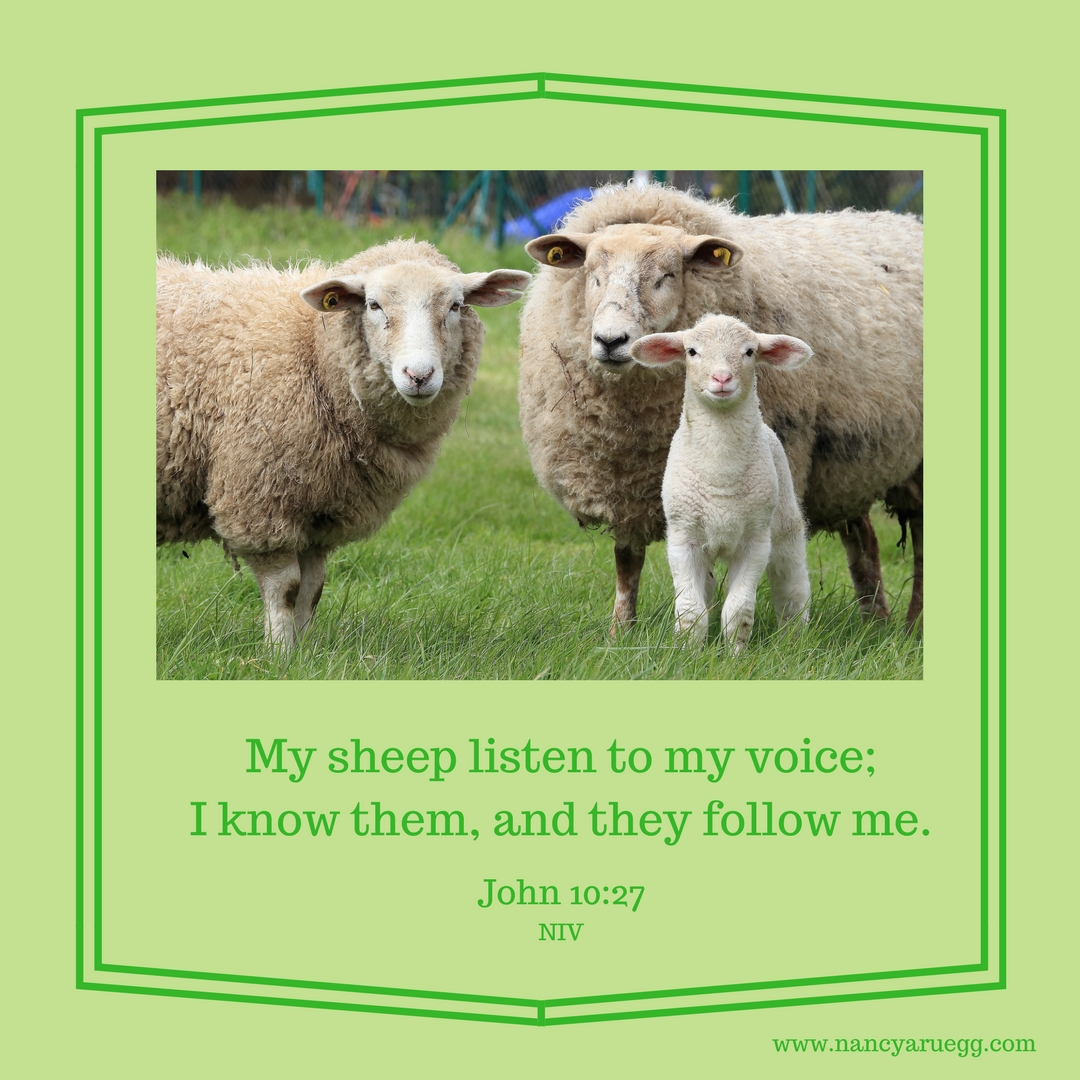
Jesus said, “My sheep listen to my voice; I know them, and they follow me” (John 10:27).

His voice represents wisdom, guidance, encouragement, and security.  Our primary source for those benefits?  The Bible.  But God also speaks to his children in other ways:  through creation, other people, events, even inner impressions.

Times of stillness are necessary.  If every moment is filled with chatter, we will not be able to hear God.

4.  TOUCH

Talk to those who have sought God during a crisis and without exception they will attest to sensing God’s presence with them.  For me, it’s like a holy heart-hug, infusing me with peace of mind and strength of heart.  Not that I am impervious to hurt or discouragement, but the touch of God provides respite and hope.

How?  Through praise and worship, especially as I meditate in the psalms.

5.  SIGHT

“Blessed are the pure in heart, for they will see God” (Matthew 5:8).

The verb tense used here is called “future continuous.”  The verse could read:  “They shall be continually seeing God for themselves.”

I’m reminded of a time Steve and I visited friends at their new home.  We turned off a familiar busy street and were almost immediately surrounded by tall trees.  The homes were set back from the road, barely visible.  The neighborhood was a bit of country set down in the middle of our metropolis.


“Who knew this area even existed?” I said to Steve.  He agreed.

We had both passed that street numerous times, but never saw it.

Isn’t that how it is with God?  We’re so busy, dashing from one task to the next, we never see God at work around us.  We aren’t looking for him so we miss him.

But!  When we are attentive for evidence of God’s presence and power, we will see him!

“When the habit of inwardly gazing Godward 

becomes fixed within us,

we shall be ushered onto

a new level of spiritual life.”

– A.W. Tozer

*     *     *     *     *     *     *     *     *     *

Thank you, loving Father, that you do expand my understanding as I seek to know you more and strive to comprehend more fully the greatness of your glory.  Teach me to use the five senses of my heart to accomplish those goals.  With great anticipation, I look forward to the new levels of spiritual life to which you will guide me!    

(Photo credits:  www.flickr.com (2); www.roshchodeshnewmoon; http://www.canva.com http://www.pixabay.com; www.flickr.com.)

Read Full Post »


Seeking after God.  It’s a concept we come across frequently in scripture.  But God is Spirit; he’s invisible to us.  How do we seek after someone we can’t see?

Perhaps we can answer that question by considering the ways we seek a person, who can be seen.

Example #1:

When my husband, Steve, and I are separated in a crowd, it’s quite amazing how quickly I can spot him.  Beyond height, hair, and eye color, I know the breadth of his shoulders, the way the hair grows on the back of his head, the shape of his ears.  In fact, it’s such nuances as these that draw my attention, even more than the descriptors listed on his driver’s license.

Perhaps our first step in seeking God is to get to know what he looks like, although not his physical Being, since he’s chosen not to reveal himself that way.  But as we read his Word, the Bible, we become familiar with who he is.  Through frequent, thoughtful study—not occasional reading—we learn about his character and his ways.  One guiding question can train us to seek God as we study:  What does this passage teach me about God?

Example #2:

Sometimes I find Steve in a crowd when I hear his voice or the timbre of his laugh.

Step two in seeking God:  We can listen carefully for his voice, although he rarely chooses to speak audibly.  More often he communicates his wisdom and encouragement to us through the Bible, and the voices of wise and mature Christians—spoken and written.

God also speaks directly into our spirits, so we must cultivate the habit of listening carefully for strong but silent impressions.  We can ask God to make clear if those thoughts are indeed from him.  He will affirm.

Example #3:

I know Steve’s signature.  Give me a sheaf of papers with Steve’s name written by different people, and his distinctive style will stand out from the others.

Step three in seeking God:  Look for his distinctive signature of wisdom and power in his people and in God-incidents.

Even in creation, “God’s invisible qualities—his eternal power and divine nature—have been clearly seen, being understood from what has been made” (Romans 1:19).


Take note of the slow loops of a circling hawk, the graceful curve of a flower stem, the straight, tall sentries of a pine forest.  Pay attention to the perfect oval of a ladybug, the teardrop shape of  a milkweed seed, or the mounds of clouds in a summer sky.  You’ll soon find that God loves variety, pattern, organization, beauty, intricacy, and color.  Your heart will begin to respond with wonder and praise for your magnificent, powerful God.

Example #4:

Steve doesn’t even have to be with me, and my thoughts will turn to him.  A song, a phrase, a person who reminds me of someone from our past, and I think, “Oh, Steve would like this,” or, “I’ll bet Steve would agree he looks just like So-and-So.”

Just looking down at my new Mother’s Day watch, and I’m reminded of my thoughtful, generous husband.

Step four in seeking God:  As we get to know God through the Bible, as we learn to hear his voice, as we see his signature everywhere, we find our thoughts turning to him throughout the day.  A song may urge a response of praise.  A phrase might prompt a prayer, a person’s gracious kindness causes us to reflect upon his character shining through that individual.

And every blessing should result in gratitude.

Seeking God is an ongoing, progressional process.  Awareness of his presence grows slowly yet continually.  Perhaps God planned it that way so we always have more delights to discover about our Heavenly Father until we do see him face to face.


Seeking after God can begin with a simple prayer:  God, I want to know you more intimately,  to sense your presence  even though I can’t physically see you.  And I want you to be an integral part of my life and thoughts.  Nothing could be more satisfying than a close relationship with you.  This is what I seek.

That’s my prayer.  Will you seek God with me?  What steps have helped you to seek after God?

(Art & photo credits:  www.experienceproject.com; http://www.luddite1811.blogspot.com; http://www.revelife.com; http://www.finartamerica.com;  www.hullquist.com.)

Read Full Post »

松林夕景 pine forest at sunset

pine forest at sunset (Photo credit: uBookworm)

I placed my Diet Coke on a nearby table and settled into one of the front porch rockers. The book I had brought with me remained closed on my lap. Instead of reading, I gazed at tall pines, listened to birds chirping good-night to each other, and breathed in cool mountain air.

What a stark contrast to home, I thought. My husband, two sons, and I had escaped the oppressive summer heat of our Florida home, and were vacationing in a North Carolina rental cabin.

Not long after settling, I noticed an enormous Luna moth perched on the porch railing. He appeared to be sleeping soundly. His shapely sea foam wings stretched out primly, in a perfect display of shimmering symmetry. Not even an antenna moved.

English: Luna moth (Actias luna), Florida.

Luna moth (Actias luna) (Photo credit: Wikipedia)

In the sweet idleness of that moment, I had time to wonder.

When do you suppose moths wake up? Is it at dusk, or does it have to be completely dark? And what will be the first part to move? Will his wings flutter a bit in warm-up? Or will those long antennae flicker, checking his surroundings before he ventures into the night?

My knowledge of Luna moths was sorely lacking.

I made strong attempts to read my book, but kept distracting myself for updates on that moth–especially as the sun dipped lower in the sky and shadows deepened.

Eric, our older son, came out on the porch. He stood with hands in pockets, watching the sunset. “What’s up, Mom?”

“This is going to sound silly,” I began, “but see that moth over there? I’ve gotten curious about when they wake up. Is it at dusk or only when it’s completely dark? And as if that isn’t enough, I’m wondering what part of him will wake up first. Do you suppose it will be his antennae that move first, or maybe his wings?”

Eric chuckled slightly—not sarcastically, but in good humor that once again his mother’s curiosity was taking an interesting turn. I thought he’d turn and go back inside the cabin. To my delightful surprise, he chose to sit in the rocker next to me.

Twin Lakes Cabin 6 screened porch and rockers

(Photo credit: vastateparksstaff)

Together we kept vigil over that moth as the sunlight diminished to an apricot glow on the horizon, and the landscape turned dark gray. Still that moth did not move. And soon we were all enveloped by the night.

Suddenly, with barely a testing of his wings, the majestic moth was off the railing and fluttering away. Eric and I barely had time to say, “Oh! There he goes!” before the moth disappeared into the darkness.

We sat quietly for a few moments longer, listening to the crickets chirping cheerfully. With a contented sigh I reveled in the moment: the cool, peaceful surroundings and my satisfied curiosity. Most of all I savored that Eric had chosen to share with me this rather inconsequential moment.

Fire lit Forest

(Photo credit: `James Wheeler)

Just a few years earlier, if I had asked Eric to sit with me and watch a moth, he would have said, “BOR-ING!” and loped off to other pursuits. But that year he was twenty-four. We were starting to relate to one another differently, share more common interests, and communicate on a similar level. Eric was still my son, but he was also becoming a friend.

Reminds me a bit of what our Heavenly Father offers.  As we mature in him, our relationship grows into a loving, familial friendship, characterized by common interests and heart-to-heart communication. But such a relationship develops only as we spend time with him and his word.

Those who say, “Time with God is BOR-ING!” and lope off to other pursuits are missing out.

On what, you ask?

• The joy of His presence (Psalm 16:11)
• The goodness he bestows (Psalm 31:19)
• His strength (Psalm 138:2-3)
• Rest, in the shadow of the Almighty (Psalm 91:1)
• Perfect peace (Isaiah 26:3)

Such precious gifts, Father: joy, goodness, strength, rest, and peace. I praise you with all my heart for being a God who pursues a warm, loving relationship with his children. May I seek your face in return. Always.

Read Full Post »

Not long ago I came across these words in Acts 14:22: “We must go through many hardships to enter the kingdom of God.”

I don’t like the sound of that! Especially the word must. And considering the recent converts Paul was speaking to that day, it seems awfully harsh. Shouldn’t Paul have softened his message a bit by saying, “We might go through hardships?”

Raphael, St Paul Preaching in Athens

(Photo credit: Wikipedia)

Yet Paul was saying nothing that Jesus hadn’t warned his disciples about: “In this world you will have trouble.” (John 16:33, emphasis added).

The reality begs the question why. Why is hardship inevitable? God Almighty is sovereign over all. It’s well within his power to protect us from difficulty. So why doesn’t he?

Here are some possibilities:

1. “Our light and momentary troubles are achieving for us an eternal glory that far outweighs them all” (2 Corinthians 4:17). Paul could have said his troubles were heavy and ongoing rather than light and momentary. He had been falsely accused, beaten, stoned, imprisoned, and more. But Paul’s focus wasn’t on his earthly life. He was already focused on his future life in heaven. Every time he endured suffering, it meant the glory yet to come would be all the more splendorous by comparison. Paul understood:  Problems focus our perspective.

English: Saint paul arrested

English: Saint Paul arrested (Photo credit: Wikipedia)

2. Hardships remind us of what Jesus endured for us. Anything we might suffer cannot begin to compare to what he suffered on the cross—the extreme pain, the loathsome humiliation, and the unbearable separation from his Heavenly Father. Problems foster appreciation for our precious Savior.

3. “Faith must be tested because it can be turned into a personal possession only through conflict” (Oswald Chambers, My Utmost for His Highest). Faith does not grow without testing. Trials provide the best opportunity to become intimate with God. And what could be more valuable than an intimate relationship with our loving, wise Heavenly Father? Therefore, we need to remember: Problems draw us closer to God.

Heavenly Father, thank you for caring so deeply about me that you discipline me. I want to reach that level of maturity where I rejoice in problems because of the growth opportunities they provide and the intimacy with you that will result. Continue to chip away at the hesitancy and obstinacy in my spirit that stands in the way.

Read Full Post »

« Newer Posts

When the House is Quiet

Impressions Becoming Expressions

Mitch Teemley

The Power of Story

Still Traveling

Impressions Becoming Expressions

Living Our Days

Gaining a heart of wisdom

He Said What?!

I'm Patty, and my husband and I are living with our adult son who has autism and epilepsy. I love sharing lessons learned from life around me, especially life with Aaron.

Meditations of my Heart

Impressions Becoming Expressions

Linda Stoll

Impressions Becoming Expressions

Signora Sheila

Where faith meets la dolce vita

Heidi Viars

Finding the Image of God