Feeds:
Posts
Comments

Archive for the ‘Jesus’ Category


7391174590_2875a49ea4


Every time…

…I drive down a street canopied by interlaced trees, I think of the elms standing sentry over the town of my childhood.

Every time…

…I hear Trumpet Voluntary by Henry Purcell, I’m transported back to my wedding day.

Every time…

…I stroke soft velvet, I remember the turquoise velvet dress my mother wore—over fifty years ago.

Every time…

…I eat raspberries, my grandmother comes to mind. She made the best jam with fresh berries from her own bushes in the backyard.

Every time…

…I smell a wood fire, visions of family-reunion picnics float in my memory.

stock-footage-johnstown-new-york-a-large-extended-family-enjoys-a-big-summer-picnic-get-together-reunion

Our senses are powerful catalysts for memories and emotional response.  But out of the five, researchers say the most powerful is the sense of smell.

So when the ancients read this scripture verse, what images came to their minds?

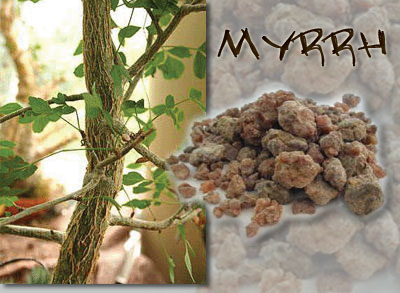
“All your robes are fragrant with myrrh and aloes and cassia; from palaces adorned with ivory the music of the strings makes you glad” (Psalm 45:8).
myrrh


First, a bit of background might be helpful:

Psalm 45 was composed for a royal wedding. Verse eight, about the groom’s robes, might refer to a long-held custom in the Middle East of perfuming one’s clothing, especially for special occasions.

But the imagery of the psalm also speaks prophetically of another “wedding”–between Christ and his bride, the church.

Many of the descriptors for the Groom fit Jesus perfectly:

 “You are the most excellent of men and your lips have been anointed with grace, since God has blessed you forever…In your majesty ride forth victoriously in behalf of truth, humility and righteousness; let your right hand display awesome deeds” (vs. 2-4).

But if the psalm is a word-picture for the relationship of Christ to his church, what is the significance of verse 8? Why the description of his robes, fragrant with myrrh, aloes, and cassia?

Perhaps the pleasing, aromatic scents represent all the pleasing virtues Jesus embodied: his love, wisdom, and grace.

Perhaps they are also an allusion to his burial.  In ancient times, spices were also used in the embalming process.

After the crucifixion, you’ll remember that Joseph of Arimathea asked Pilate for the body of Jesus. He was accompanied by Nicodemus, who brought seventy-five pounds of myrrh and aloes to wrap within the linen burial strips (John 19:38-40).

Why would the same spices be used at Jesus’ death and at the great Wedding Supper yet to come?


marriage_supper


Bible teacher, Ray Stedman, explains: The resplendent wedding described in Psalm 45 is made possible by a death—the death of the Groom himself.  Only out of his death could come this glorious celebration. And now, the fragrance of his beauty is everywhere!

Have you ever hugged someone and then carried away with you the scent of that person’s cologne?

The aroma of Christ should cling to us just like that.

“Everywhere we go people breathe in the exquisite fragrance. Because of Christ, we give off a sweet scent rising to God, which is recognized by those on the way of salvation—an aroma redolent with life” (2 Corinthians 2:14-16, The Message).

*     *     *     *     *     *     *     *     *     *

Oh, Lord Jesus, I delight in the sweet fragrance of all your glorious attributes.  May my words and actions diffuse your exquisite fragrance of life, love and grace to everyone around me.


(Photo and art credits: http://www.saveourelms.com; http://www.footage.shuttershock.com; http://www.dwellingintheowrd.wordpress.com; http://www.divinerevelations.info.)



Read Full Post »

Tonight, the Thursday before Easter, we remember the Last Supper and the heart-wrenching scene in the Garden of Gethsemane.  It was there Jesus prayed, “Father, if you are willing, take this cup from me; yet not my will, but yours be done” (Luke 22:42).

In a matter of hours from that moment, Jesus would face unimaginable pain and suffering. Yet his prayers were not only for himself that night. He prayed for his disciples, and he even prayed for us—those who would believe in him in the future. (I marvel at such selflessness in a time of supreme crisis.) His desire was that God’s love and his presence would be in us (John 17:26).

As a result of his death on the cross and resurrection from the grave, Jesus made possible the fulfillment of that prayer. Our crucified, resurrected, and ascended Christ indwells every believer (Colossians 1:27).

Think of it! The all-powerful, all-wise Lord of the universe lives within us! Such an overwhelming, puzzling concept. What could that mean in practical terms?

I like Sarah Young’s explanation: We are intertwined with him in an intimacy involving every fiber of our beings (Jesus Calling, p. 332).

It means that God makes available to us everything we need:

  • Power to handle life’s challenges (2 Corinthians 12:9).
  • Wisdom to determine right actions from wrong (James 1:5).
  • Access to talk to him at any time (Hebrews 4:16).
  • Personalized purpose, to fulfill a God-ordained plan (Jeremiah 29:11).
  • Hope that can never be disappointed (Isaiah 40:31).
  • Resources that can never be exhausted (Philippians 4:19).

It means that in Christ we have:

  • Complete forgiveness (Hebrews 8:12).
  • Everlasting life (John 3:16).
  • Overflowing joy (Psalm 16:11).
  • Deep peace (John 14:27).
  • Attentive care (1 Peter 5:7).

Sometimes I act like the Israelites on their trek to the Promised Land. Remember the manna God provided so they wouldn’t go hungry? It tasted like wafers made with honey (Exodus 16:31). That sounds like baklava!! Yet they became so accustomed to the provision, they began to complain. Manna wasn’t good enough after a while.  “Yes, Lord,” they may have said.  “You have been very gracious to provide manna.  But we need meat!”

These blessings of “Christ-in-us” listed above are more precious even than miraculous manna. How could I take such astounding blessings for granted? Add to that the incredible price Jesus paid so I could enjoy those blessings. How dare I think, Yes, Lord, you have been very gracious, but I need more.

*     *     *     *     *     *     *   *     *     *

Dearest Jesus, as I contemplate your deep distress in the Garden, your suffering at the hands of Roman soldiers, and the unfathomable pain you endured on the cross, my petty wants become inconsequential.

Oh, God, forgive me for allowing familiarity to dull the senses—the senses of awe and gratitude for the sacrifice you made.  Willingly.  Lovingly.  

“Love so amazing, so divine, demands my soul, my life, my all” (from “When I Survey the Wondrous Cross”).  

So be it.

(Art credit:  www.ldschurchnews.com.)

Read Full Post »

Wise Man - Foolish Man House

You probably remember the story.

A foolish man built his house on sand; a wise man built his home on rock.  When a storm came, the house built on sand fell with a great crash.  But the wise man’s house stood firm (Matthew 7:24-27).

With this parable Jesus offers visual imagery for choosing man’s way to live or God’s way:

1) You can choose to build your life on getting ahead and having a good time, but in the end you will have nothing.

Or,

2) You can choose to build your life on faith in Jesus, and in the end you will receive great gain–a Rock of stability to depend on now, and perfect bliss in heaven for eternity.

Jesus is:

  • Reliable.  “He is the Rock, his works are perfect, and all his ways are just.  A faithful God who does no wrong, upright and just is he” (Deuteronomy 32:4).
  • Unchanging.  “Jesus is the same yesterday and today and forever” (Hebrews 13:8).
  • Protective.  “In the day of trouble he will keep me safe in his dwelling..and set me high upon a rock” (Psalm 27:5).

But I’m thinking the story about houses built on sand and rock could be applied to our thought lives, too.

For example, if we allow our minds to focus on the shifting sands of circumstance,  we sink into negativity, worry, and fear.

If we focus on a firm foundation of scriptural absolutes, a sense of tranquility and strength pervades our spirits.

What are those absolutes?  The Bible teaches many, including the following:

God loves us — so much that he sent his only Son to die in our place.  Jesus took the punishment for our sins that we deserve (John 3:16).  Now, I’ve heard that statement thousands of times.  Perhaps you have, too.  But we mustn’t allow familiarity to reduce this truth to banality. His love for us is everlasting.   Deep.   Caring.   Forgiving.   Full of grace.  Let’s bask in the wonder of his love!

God has a plan for each of our lives, and it’s a good plan (Jeremiah 29:11).  Notice God doesn’t promise a pleasurable plan.  God loves us too much to allow addiction to fun.  With his goodness comes discipline, so that we become mature. In the final analysis, immature people are not the most content anyway.  They are self-centered and tend to whine and complain.  I don’t want to be that kind of person, and I’ll bet you don’t either.  So let’s accept the absolute goodness of God’s plan.

God will equip and empower us for his plan (Isaiah 41:10).  He’s the one who formed mountains, engineered ecosystems, and filled infinite space with countless stars.  This same God lives within us and works through us, fostering resolve, strength, and perseverance.  Let’s turn to him moment by moment to avail ourselves of his power.

And as we affirm such truths, we are reinforcing our foundation upon the Rock. Stone upon stone.  Solid, firm, and strong.  When the storms come– economic setbacks, health problems, emotional hurts–we will not collapse into a heap.

With David we will be able to exult in God’s provision:

“I waited patiently for the Lord; he turned to me and heard my cry.  He lifted me out of the slimy pit, out of the mud and mire; he set my feet on a rock and gave me a firm place to stand…Blessed is the man who makes the Lord his trust” (Psalm 40:1-2, 4b).

*     *     *     *     *     *     *     *     *     *

What scriptural absolutes are part of your foundation?  Please share your thoughts in the comment section below!

( art credit:  www.intheleafytreetopsthebirssing.blogspot.com)


Read Full Post »


Ever attend an elaborate breakfast buffet that was a feast for the eyes as well as the appetite?  Perhaps a kaleidoscope of sparkling fruit grabbed your attention first.  Then you noticed the fresh breads of all shapes and sizes overflowing from broad baskets.  And last, large chafing dishes displayed scrambled eggs, sausage, and French toast.

Just imagining the scene makes me want to be there!  But that’s not enough. Someone who only observes such a display receives no benefit from the bounty.  She has to partake in order to be fully satisfied.

Paul tells us in Colossians 2:10, “You have been given fullness in Christ.”

But there’s no benefit from his bountiful goodness if we don’t partake.

Just how do we do that–partake of the fullness in Christ?   It’s one thing to talk about the concrete experience of participating in a buffet.  You fill up a plate, sit down at a table, and eat.  Simple!

It’s another matter to understand an abstract concept like “partaking of the fullness of Christ.”  Here’s one view:

The fullness of Christ includes the fullness of his character, the fullness of his blessings, and the fullness of his promises.

Are you feeling empty, weak, or deficient?  Come to Christ, to “the fullness of him who fills everything in every way” (Ephesians 1:23).  Nothing is missing; nothing is left out.  He is everything we need–everything that has to do with value and meaning in life, everything that has to do with joy, peace, and fulfillment.

I’m picturing a buffet, laid out for us by Jesus.  But instead of fruit, bread, and egg dishes, I see attributes, blessings, and promises.  Just as we fill our plates with delectable things at a buffet, we can fill our minds with everything exquisite about our Savior.

Here’s a sampler platter of…

…Christ’s attributes:

  • His constant presence (Matthew 28:20).
  • His tender compassion (Matthew 9:36).
  • His kindness and attentiveness as our Good Shepherd (John 10:14).

…Christ’s blessings:

  • The precious gift of eternal life (Romans 6:23).
  • Provision of everything we need (Matthew 6:31-33).
  • Peaceful rest from fear and worry (Matthew 11:28-30).

…Christ’s promises of:

  • Endless possibilities , because everything is possible with God (Mark 9:23).
  • Wisdom and guidance through the Holy Spirit (John 14:16-17, 26).
  • Companionship with the King of the universe (John 14:23).

Chances are these are not astonishing new revelations to you, any more than berries, cinnamon buns, or sausage are never-tried foods.  But if you are enjoying a delicious meal with someone, invariably you will talk about the delectable flavors, even though the dishes are familiar fare. Sharing augments the pleasure.

So talk about the fullness of Christ–his character, blessings, and promises. Even if you have to talk to yourself!  Revel in his fullness–the bounty he provides.

*     *     *     *     *     *     *     *     *     *

What aspect of the fullness of Christ is most precious to you and why?  Join the conversation below!

(Photo credit:  http://www.pixnio.com)

Read Full Post »

Cover of "The Guernsey Literary and Potat...

Cover via Amazon

The title grabbed my attention:  The Guernsey Literary and Potato Peel Pie Society (by Mary Ann Shaffer and Annie Barrows).   And it turned out to be an excellent read, especially since I particularly enjoy historical fiction.

But this post is not a book review.  It’s about a statement one of the characters makes.

First, a bit of background.  A group of folk who lived on the island of Guernsey, in the late 1940s, were greatly anticipating the arrival of a writer.  This writer  was going to tell their story of what happened during the German occupation of World War II.

Upon her arrival, one of the village residents, Juliet, says, “How beautiful of you to come” (p. 26).

Note she did not say, “How wonderful of you to come.”  She said, beautiful.

I love the use of an unexpected word that catches me by surprise and makes me think.

As I read Juliet’s statement, I thought it made a perfect gratitude prayer to Jesus, especially at Christmastime.

How beautiful of you to come—how lovely, graceful, goodly, splendorous, and magnificent.

Oh, yes, Lord Jesus.

 How beautiful of you to come, leaving the resplendent perfection of heaven behind, and:

  • Making yourself nothing,
  • Taking the very nature of a servant,
  • Becoming obedient to death (Philippians 2:7-8).

How beautiful of you to come, with glorious qualities that delight our hearts—qualities such as:

  • Love, expressed with forgiveness, patience, and benevolence (1 Corinthians 13:4-5).
  • Perfect sinlessness, giving us a worthy example to follow (Hebrews 4:15).
  • Truth, in which we can trust (John 14:6).
  • Peace that defies explanation (Philippians 4:6-7).

How beautiful of you to come, to:

  • Turn my darkness into light (2 Samuel 22:29b).
  • Be the source of my salvation (Hebrews 5:9).
  • Be with me always (Matthew 28:20).
  • Provide blessing after blessing (John 1:16).

How beautiful of you to come. 

And as we welcome you into our hearts, Lord Jesus, you make us new (2 Corinthians 5:17).

You make us beautiful!  We can:

  • Shine like stars (Philippians 2:15).
  • Be the aroma of Christ to others (2 Corinthians 2:14-15).
  • Reflect your image (Romans 8:29) of holiness, moral purity, and love.

Oh, how beautiful of you to come!

Read Full Post »

No doubt we would all agree:  Christmas is much more than carols, cookies, and cards.  The heart of this holiday goes even deeper than the love we express with presents.  It is a celebration of God’s inexpressible gift (2 Corinthians 9:15).

And those of us who accept God’s gift of eternal life through faith in Jesus, ought to live our lives with overflowing gratitude.  The motivation behind our words and deeds should be the same sacrificial love which motivated Jesus.

Henry van Dyke (1852-1933)

Henry van Dyke (1852-1933, photo credit: Wikipedia)

What might that look like in everyday life?  Henry van Dyke* made several suggestions through these thought-provoking questions:

“Are you willing to forget what you have done for other people, and to remember what other people have done for you;

To ignore what the world owes you, and to think what you owe the world;

To put your rights in the background, and your duties in the foreground;

To own that probably the only good reason for your existence is not what you are going to get out of life, but what you are going to give to life;

To close your book of complaints against the management of the universe, and look around you for a place where you can sow a few seeds of happiness—

Are you willing to do these things even for a day?

Then you can keep Christmas.”

Ouch.  If God made these stipulations into law, and only law-abiders were allowed to celebrate Christmas, I’d be left out.  My thoughts and motivations are not always pure.  I do not consistently put others’ needs before my own.  My focus is not always on what I can give.

But Rev. van Dyke’s essay does not end on that hopeless note.  He adds one more glorious line.

“But you can never keep it alone.”

Of course not!  “We are utterly incapable of living the glorious lives God wills for us” (Romans 3:23, The Message).

However.  God does not expect instantaneous perfection, the minute we invite Jesus into our lives.  “God who began the good work within [us] will keep right on helping [us] grow in his grace until his task within [us] is finally finished on that day when Jesus Christ returns” (Philippians 1:6, The Living Bible).

Hallelujah!

(Photo credit:  www.worshipkids.com)

Joyful, joyful, we adore Thee,

God of glory, Lord of love;

Hearts unfold like flowers before Thee,

Opening to the sun above.

Melt the clouds of sin and sadness,

Drive the dark of doubt away;

Giver of immortal gladness,

Fill us with the light of day.

(also by Henry van Dyke)

*     *     *     *     *     *     *     *     *     *

*Henry van Dyke (1852-1933) was an author, educator, and clergyman.  His lengthy list of accomplishments included professor of English literature at Princeton, minister to the Netherlands and Luxembourg (by appointment of President Wilson), and author of many poems, stories, and essays. “The Other Wise Man” and “The First Christmas Tree.” are among his most popular works.  He also wrote the lyrics for a number of hymns, including “Joyful, Joyful, We Adore Thee.”  The first verse is quoted above.


Read Full Post »

Like most expectant parents, Steve and I considered dozens of names before each of our three children were born.

First of all, the name had to have a pleasing ring with our unusual last name, Ruegg (pronounced “rug”).  We passed by Douglas.  Doug Ruegg rings too loudly.

We wanted a name that would not attract teasing or silly nicknames.  We passed by Dustin.  Dusty Ruegg would be too tempting.

And we wanted a name that meant something worthwhile, so we passed by Darnell.  “A-Type-of-Grass” Ruegg would not be very inspiring.

No doubt many of you who are parents experienced the same struggle to find appropriate names for your children.

Mary and Joseph, however, had no such struggle with their firstborn.  The angel who visited Joseph in a dream to tell him about Mary’s child, also informed him of the name.  “You are to give him the name Jesus,” he said (Matthew 1:21a).

And when an angel brought good news of great joy to the shepherds, he said, “A Savior has been born to you; he is Christ the Lord (Luke 2:11).

These two scriptures give us the three names we probably use most often when referring to God’s Son:  Jesus, Christ, and Lord.

And each name carries significant meaning.

Jesus, or Yeshua in Hebrew, means “Yahweh (the Lord) is Salvation.”  Could a more perfect name be chosen for the One who would “save his people from their sins?” (Matthew 1:21b).  Yeshua becomes “Joshua” when translated into English.  And in Greek (the language in which the New Testament was written), Yeshua becomes Iesous, or Jesus in English.

Jesus, our Savior.  The only perfect God-Man able to save us from the consequences of our sins.  He is our supreme Christmas gift, given by God, because he loves us.  Deeply.

Christ is English for Christos (Greek), which means “anointed.”  In Hebrew the word would be moshiach, or “Messiah.”

Anointing was a God-ordained custom, to dedicate someone for a special task.  You might remember the prophet, Samuel, anointed David to be king over Israel (1 Samuel 16).  That is, Samuel took oil (probably olive oil) and poured it over David’s head, signifying divine equipping for his royal position.

Again, what could more appropriate than our Savior to be symbolically anointed by God? Jesus was divinely equipped for the special task of saving his people from their sins.

Lord is also a name bestowed on God’s Son.  It is the name that is above every name.  And the glorious day is coming when every tongue will confess that Jesus Christ is Lord (Philippians 2:9-11).  Imagine that.  Millions of voices proclaiming his majesty!

Lord is a familiar term, come down to us from feudal times in England, when kings and nobles were addressed as “lord.”  It denoted power and influence.

The history of the word, though, reveals a fascinating connection to Jesus.

Lord is derived from a compound of two very early Old English words:  hlaf (pronounced with a long “a”)  and weardHlaf means “bread,” and weard means “ward” or “guardian.”  Lord literally means “guardian of the bread.”  In feudal times, such a position would be highly important to the household.  And so lord came to mean “a man of authority and rank” (Webster’s New College Dictionary).

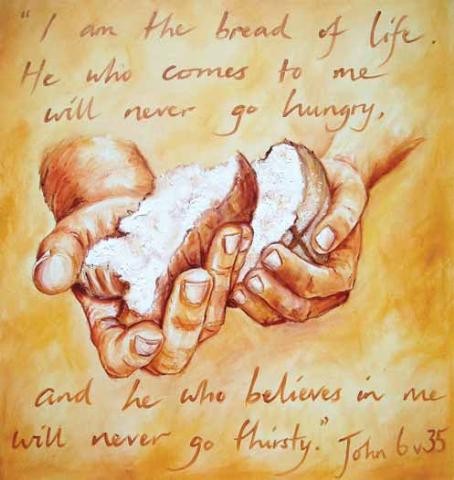
 Such background gives new meaning to Jesus’ words, “The bread of God is he who comes down from heaven and gives life to the world…I am the bread of life” (John 6:33, 35a).  In other words, he is the Sustainer of life.  Whoever comes to him can experience deep satisfaction of spirit (v. 35).

Jesus stands as the guardian of our abundant life now and eternal life in heaven yet to come.  He is also the guardian over of our minds and hearts, supplying peace, joy, comfort, and more.

Paul celebrated the magnificence of the Lord Jesus Christ at the close of Romans 8:

“I am convinced that neither death nor life, neither angels nor demons, neither the present nor the future, nor any powers, neither height nor depth, nor anything else in all creation, will be able to separate us from the love of God that is in Christ Jesus our Lord (vs. 38-39).

And now, what do these names signify to me?  Am I deeply grateful to my Lord Jesus Christ?  Are my thoughts, attitudes, and actions pure and holy gifts I can give back him– my Savior, anointed Deliverer, and Guardian of my life?

*     *     *     *     *     *     *     *     *     *

Lord Jesus, your very names proclaim astounding truths:  you are the Savior of the world!  In fact, you are the only Deliverer who can proclaim us “not guilty” before Almighty God.  And you are our Guardian, caring for our every need, when we depend upon you.  I praise and thank you for your love and grace, demonstrated supremely when you died in our stead.  Oh how I want my life to be a delightful Christmas present for you!

(photo & art credits:  www.babble.com, http://www.thefamily.com, http://www.ortzion.org, http://www.everydaywithmy savior.blogspot.com.)


Read Full Post »

 christmas-greetings-messages


When some folks say, “Merry Christmas” they mean, “I hope you have a fun and festive holiday.”

That would be in keeping with the definition of merry:  full of high-spirited gaiety, delightful, entertaining, joyful, and mirthful.

But centuries ago the word merry denoted peacefulness and blessedness.  “Merry Christmas” meant, “May you have a peaceful Christmas” and “May Christmas bring the blessing of God to you” (Christmas by Charles L. Allen and Charles L. Wallis, Fleming Revell Co., 1977).

An old carol highlighted this idea:

“God rest ye merry, gentlemen;

Let nothing you dismay.

Remember Christ our Savior

Was born on Christmas Day,

To save us all from Satan’s pow’r

When we were gone astray.”

Did you pause after the comma in the first line?  Without it, the meaning changes.  The anonymous poet was wishing peaceful, contented, joyful rest to others, as they remembered Christ their Savior.

“Merry Christmas,” then, can be a prayer within a greeting.  Something like:

Oh, Lord, may your spirit of peace rest upon the life of this person.  May he/she experience the blessing of your presence and your joy.”

There are many people around us who need a divine touch, especially during the Christmas season.  The merriment around these folks seems a mockery of their despair.  Perhaps that includes you.  May the prayers below speak a Merry Christmas blessing to you, especially if you are:

Lonely.  Oh, God, wrap a loving embrace of your comfort around those who do not have family or friends with them this Christmas.  I thank you for the promise that you are our refuge and strength, always ready to help when we need you (Psalm 46:1).  Be a warm solace, I pray, to the one who feels alone.

Enduring hardship.  Oh, God, may the blessing of Christmas include grace and mercy for your children who are suffering through difficulty.  Out of your compassionate mercy, ease their burden, and out of your unfailing grace, grant them strength and favor (Hebrews 4:16).

Struggling with painful memories of Christmases past.  Oh, God, shower your tender, loving care upon those with hurts from the past, hurts that cast a shadow over the joys of the present.  Grant them liberating freedom from emotional distress.  May your peace cover those memories, so they no longer cause anguish (John 14:27).

For all of us, Heavenly Father, may the blessing of Christmas include renewed wonder for the indescribable gift of your Son.  Thank you for providing through him the way to eternal life.  Such peace and blessing are ours in that single assurance! 

(art credit:  www.christmasgreetingsmessages.com.)

Read Full Post »

I love decorating our Christmas tree, even though it takes at least two days.

Two days?” you ask.  “Why so long?”

There are several very logical reasons – if you are me.

One:  It takes time to arrange the branches.  We have an artificial tree, you see.  (Cut evergreens don’t last long in Florida because of the heat, and Steve and I like to decorate right after Thanksgiving.)  That means, before decorating can begin, the tree has to be assembled and the branches spread out.

Two:  It takes time to string the lights.  Although pre-lit trees are convenient, they often include too few lights.  The rule of thumb is 100 lights per foot.  We put 1,000 lights on our eight-footer.  Some are tucked in, some arranged on the tips of branches.  This creates a tree that truly glows.

Three:  It takes time to hang the decorations — the ultimate 3-D jigsaw puzzle of Santas, angels, and miniature manger scenes, animals, toys, and traditional ball ornaments.  Dozens and dozens of them.  (And nearly all given to us by family, friends, members of the churches we’ve served, and students from my classes.)

Long ago I worked for a creative designer.  One aspect of her business included decorating Christmas trees for banks and businesses.  She taught me several tricks for creating a stunning display.  I’ve already shared the first rule:  Use lots of lights.

Two:  Consider the size, theme, and material of each ornament.  Try not to hang several Santas, or a group of red decorations, all together.

Three:  Just as lights are tucked in or perched on branch-tips, it’s important to do the same with ornaments.

Four:  Use the tree lights as spotlights for the ornaments, as often as possible.

A beautiful, glowing Christmas tree is in the carefully executed details.

tree 2012

(Photo taken before the last step:  settling the treetop angel in place.)

*     *     *     *     *     *     *     *     *     *

Something else that’s found in the details?  Wonder.

Yes, that statement could be applied to decorations.  There is a sense of wonder when studying a breath-taking display.

But more significant?  The glorious wonder to be found in the carefully executed details of the Christmas story, the events surrounding the birth of Jesus.

Beyond the familiar events of angel visitations, a trip to Bethlehem, Baby Jesus laid in a manger, and a shepherds’ hurried trek to see the newborn Messiah, there is much to appreciate in the details.

For example:

One:  Little did Caesar Augustus know he was being used by God to fulfill an ancient Messianic prophecy, when he decreed the census that sent Mary and Joseph to Bethlehem.  “But you, Bethlehem Ephrathah,…out of you will come for me one who will be ruler over Israel, whose origins are from of old, from ancient times” (Micah 5:2).  God is sovereign — even over those who do not know him.

Two:  Observe whom God chose to notify first about this pivotal event in history–the birth of his Son.  Shepherds!  Members of the lowest class in Jewish society!  Perhaps God wanted us to know that wealth, position, and even the respect of others is of little consequence in his eyes.  What does matter?  Faith.  “Without faith it is impossible to please God” (Hebrews 11:6).

The shepherds did believe – in the old Messianic prophecies and in the angel’s message:  “Today!  Right now!  In the little town of David, your Savior, the Messiah, has been born” (Luke 2:10-11)!  Those sheep herders scurried off to Bethlehem as fast as they could go.  And their faith was highly rewarded.  They were first to see the long-awaited King of kings, the Messiah.  Their lowly position in society didn’t matter.

Three:  Most wondrous of all?  The Son of God, who was with God and was God from the very beginning, became human (John 1:1-2).  The One who created all things (Colossians 1:15-16), chose to become a helpless baby, and embrace every aspect of the human experience through thirty-some years of earth-dwelling.

I like the way Eugene Peterson says it:  “God became one of us and moved into the neighborhood” (John 1:14, The Message)!

And how do we respond to such wondrous details?  We follow the example of those shepherds.  We praise and glorify our God for all the things we have heard and seen, which prove what we’ve been told (Luke 2:20).

*     *     *     *     *     *     *     *     *     *

I DO praise you, Heavenly Father, that early in life I heard about your Son and your gift of eternal life.  I invited you into my life, and have experienced your love, joy, and peace, just as you promised.  In fact, I have seen many of your promises fulfilled in my life and in the lives of others.  You have proven to me over and over that what we’ve been told in scripture is indeed 100% truth.  With Mary, I exult:  “My soul glorifies the Lord and my spirit rejoices in God my Savior” (Luke 1:46-47a)!

Read Full Post »

Christmas is a season of lights.

Candles glow and twinkling lights glimmer from houses, buildings, and trees.

People love all the flickering and shimmering!  Some spend weeks decorating their yards and rooftops in spectacles of light.  If you asked them why, they might be hard-pressed to express more than, “They’re beautiful, that’s all.”


But perhaps it’s more than just aesthetics.  Perhaps it’s a heart-response.

Light is symbolic for:

  • Beauty.  Light grabs our attention, whether it’s  soft and luminous, or sparkling and dazzling. It can also be refracted into a glorious spectrum of colors.
  • Safety.  Where there is light, we can see our surroundings.
  • Comfort.  A nightlight offers just that for many a child who is afraid of the dark.
  • Hope.  Light gleams triumphantly over the darkness, at the end of a tunnel.
  • Guidance.  Light illuminates the way.

Might it be that people are drawn to the lights of Christmas because the human spirit is drawn to the Light?

Jesus said, “I am the Light of the world (John 8:12).  He is Light because God the Father is Light (1 John 1:5).

And the Light of God the Father and God the Son is not merely symbolic.

God the Son is safety, because he offers eternal life.  “My sheep listen to my voice; I know them and they follow me.  I give them eternal life, and they shall never perish; no one can snatch them out of my hand.” (John 10:28-29).

God the Father is comfort, because he is loving and compassionate.  “Praise be to the God and Father of our Lord Jesus Christ, the Father of compassion and the God of all comfort, who comforts us in all our troubles” (2 Corinthians 1:3-4a).

God the Son is hope, because of his resurrectionHe was raised from the dead, and we will be also.  “In his great mercy [God] has given us new birth into a living hope through the resurrection of Jesus Christ from the dead, and into an inheritance that can never perish, spoil or fade—kept in heaven for you” (1 Peter 1:3b-4).

God the Father is beauty, because of all his glorious attributes.  “I’m asking God for one thing…To live with him in his house my whole life long.  I’ll contemplate his beauty; I’ll study at his feet” (Psalm 27:4, The Message).

God the Father is guidance.  “He will guide you always” (Isaiah 58:11a).

Christmas lights cast a soft glow; spotlights illuminate large areas.  But Jesus said, “I am the Light of the World.”   To every person in every corner, he offers his Light.

Let’s make time to linger in his dazzling Light this season!

“Blessed are those…who walk in the light of your presence, O Lord” (Psalm 89:15)!

(photo and art credits:  www.onebestwall.com, http://www.moyerlawncare.com, http://www.8thfire.net, http://www.naturewatcher.wordpress.com)

Read Full Post »

« Newer Posts - Older Posts »

When the House is Quiet

Impressions Becoming Expressions

Mitch Teemley

The Power of Story

Still Traveling

Impressions Becoming Expressions

Living Our Days

Gaining a heart of wisdom

He Said What?!

I'm Patty, and my husband and I are living with our adult son who has autism and epilepsy. I love sharing lessons learned from life around me, especially life with Aaron.

Meditations of my Heart

Impressions Becoming Expressions

Linda Stoll

Impressions Becoming Expressions

Signora Sheila

Notes on Life, Faith & Italy

Heidi Viars

Finding the Image of God