Feeds:
Posts
Comments

Archive for the ‘Salvation’ Category


Years ago Steve’s Aunt Louise gave us a little ceramic church music box.  With its drab gray walls, greenish-gray roof, and standard steeple, the church did not grab attention. But the arched windows on each side were filled with tiny chips of colored glass, and when lit from within the little church sparkled with glorious light.

Sometime when our three children were young, the church was broken by “Not Me.” Fortunately, the pieces were large and Steve was able to glue them back together.   When the light was turned on, the cracks didn’t even show.

But as the years passed, the glue began to discolor and turn dark. The poor little music box became a sad sight, and I was about to throw it away when our youngest son–probably in high school by this time–said, “Oh, Mom! You can’t get rid of the church! That’s been my favorite Christmas decoration since I was a little kid!”

So Jeremy saved the music box from destruction.


He finished college, married a sweet girl from our church, and moved twice more while attending seminary. Somewhere along the way the music box disappeared.

Each year as he and his wife Nancy decorated for Christmas, he’d remember fondly that little ceramic church and wonder what happened to it.

Seminary graduation came and went, four years at his first church appointment also passed. While settling into their second parsonage, Jeremy finally unpacked a carton labeled “Memorabilia” that had been sealed up since he left our home.

Buried at the bottom was a sealed shoebox. Jeremy sliced through the tape with his pocketknife, lifted the lid, and brought into the light a lumpy, tissue-wrapped object.


Within moments Jeremy held in his hands that precious, long-missing ceramic church. And joyful tears stung his eyes.

He quickly found a new bulb and plugged the cord into a nearby socket. The windows instantly filled with glorious rainbow light. Jeremy didn’t even notice the fissures or dark, crusty glue.

Isn’t it amazing to consider that, just as Jeremy loves that damaged music box, God loves us—scarred, and imperfect as we are? We too were just as lost as that little church—sealed up in a box of our own prideful independence.
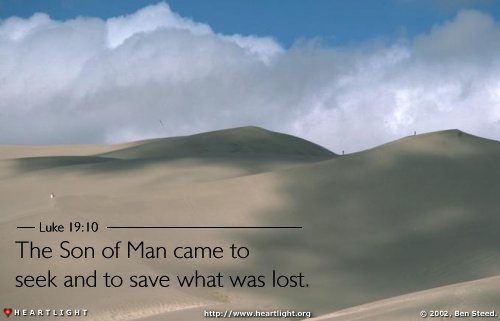


But Jesus came looking for us. He brought us into his glorious Light, and filled us with the Light of his inviting, benevolent grace.*

Now, we have the privilege to shine with gleaming Light just like that little church—in spite of our scars.


*     *     *     *     *     *     *     *     *     *


God of all grace, I thank you for rescuing me from mere existence in my self-made box, and bringing me into a rich, full life with you. Even though cracks and blemishes remain in my being, what you see is not what I have been but what I am becoming—holy and blameless and filled with Light—for that day when I see you as you are!


(John 10:10; Ephesians 1:4; John 8:12; 1 John 3:2)


*Often defined by using an acronym: God’s Riches At Christ’s Expense


Scripture references: Luke 15:8-10; John 8:12; Colossians 1:27; 2 Corinthians 9:8; 2 Corinthians 3:18; Romans 3:24; Matthew 5:14.


(Photo credits:  Jeremy Ruegg (2); http://www.flickr.com; http://www.heartlight.org (Ben Steed); http://www.verseaday.com.)

 

Read Full Post »


Johnny reached for the highball near his workspace, even though it was only 10:00 in the morning. It was a necessity, he told himself, to help release his creativity and wit. How else was he supposed to come up with new ideas day after day?

He had thought a new home in the country would provide inspiration, renewed energy for his work, and the tranquility he longed for. But once he and his wife Bobby settled on their 150-acre estate, with a huge, wood-paneled studio overlooking a 25-acre lake, Johnny found himself just as unhappy and uninspired as before the move.


(Not Johnny’s and Bobby’s lake, but perhaps similar)


The success he’d achieved, the fortune he had acquired, the entertainment he pursued did not provide the satisfaction he’d expected.

Not long after settling into their new home, Johnny and Bobby decided to address its one drawback: there was no television reception. They purchased a satellite system.

The company sent a father/son team to install it—a process that became more complicated and time-consuming than anyone expected. The father and son stayed in the large studio for the days it took to complete the task.

As work progressed to hook up the several TVs in the house and one in the studio, the two men tuned in to a Christian station. Johnny found himself drawn to the screens, listening to the likes of D. James Kennedy, a well-respected preacher and author at the time.  Johnny had been a believer in Jesus when he was young, but had drifted away in adulthood.

The more he listened, the more he remembered what he’d learned years before in Sunday School: God made us humans and loves us. But we are sinful, and sin separates us from him. So God sent his perfect Son, Jesus, to die in our place. And those who believe in him receive the incredible gift of eternal life with him in heaven when we die (John 3:16).


Johnny began reading the Bible and felt his doubts, dissatisfaction and fears melting away. In their place he noticed a deep sense of peace and purpose.

Part of that purpose was to allow his rekindled faith to impact his work as a cartoonist. He began to include Christian references in his highly successful comic strip, “B.C.”

You might remember it. Simple drawings of cavemen, dinosaurs, ants, and other animals inhabited a very stark habitat. The genius wasn’t in the drawings; it was in the puns, irony, wordplay, and dry humor that Johnny Hart produced for fifty years, from 1957-2007.

For example, in one strip, a caveman says, “God, if you’re up there, give me a sign.” In the next frame, a huge neon sign sits crookedly and slightly buried in the sand in front of the caveman. It has obviously just fallen from the sky, and it reads—in big capital letters—“I’M UP HERE.”

Of course, Johnny was criticized for those strips that affirmed Christian beliefs. His response to such reproach was to ask a question:

“What purpose would I serve if I had the answer to the mystery of life only I did not tell it for the sake of what other people believe (1)?”

One of Johnny Hart’s strips about the mystery of life moved me to tears.

It appeared on Good Friday, 1996.

There were simply four empty panels with no artwork and no conversation bubbles. The first panel was gray, the second a shade darker, the third darker still, and the last frame was completely black. That final panel carried the simple caption: Good Friday.

Such a simple presentation, but overflowing with meaning. For me, the progression toward black was symbolic of Jesus’ experiences that day—from betrayal in the Garden of Gethsemane to an unlawful trial, a flogging, a crown of thorns, a heavy cross to carry, and the worst torture man has ever devised: crucifixion. The land was shrouded in darkness that day for three hours (Mark 15:33).

But oh, it is Good Friday, because that darkest deed of history became our bright victory (1 Corinthians 15:54-57).


And because of Jesus’ profound sacrifice, we do have hope, peace, purpose, and more.

Johnny Hart would want us to know.


Note:

(1) https://www.washingtonpost.com/archive/lifestyle/1999/04/04/god-thats-funny/38fc77f9-dee5-4a18-b8c5-e5283c3e0964/?utm_term=.ff75a4558709


Sources:

1) https://www.charismamag.com/site-archives/572-newsletters/the-buzz/4671-johnny-hart-i-did-it-his-way

2)http://jeffjenkinsocala.blogspot.com/2008/07/bc-comics-censored.html

3) https://www.washingtonpost.com/archive/lifestyle/1999/04/04/god-thats-funny/38fc77f9-dee5-4a18-b8c5-e5283c3e0964/?utm_term=.ff75a4558709


Photo credits:  http://www.flicr.com; http://www.publicdomainpictures.net; http://www.dailyverses.net (2).


Read Full Post »

(A personal psalm in honor of our Lord Jesus)


We praise you, Author and Perfecter of our Faith.

BY your death on the cross we are saved from eternal separation from you and all that is good.  Your sacrifice made possible our adoption as children of the God of the universe. Your forgiveness covers every failure, and as your character permeates our own, your grace transforms us into works of art.


We praise you, Righteous One.

IN you there is no condemnation hanging over us like a black cloud. No longer must each of us wear the label sinner; we become saints when clothed in your righteousness.   Who dares point the finger and cry “Guilty?” Because of you, Lord Jesus, God has already forgiven us and granted right standing with himself.


We praise you, Emmanuel (God with us).

WITH you we may live a new life of confidence that Someone stronger and wiser is in charge, Someone available day or night for whatever we need, Someone perfectly capable to take on our troubles, Someone dedicated to increasing our joy, and Someone to infuse our lives with purpose and fulfillment.


We praise you, Ruler of Creation.

TO you all things are brought into existence. Everything in creation is for your glory—from the innumerable stars spilling across the sky to the diverse creatures inhabiting every corner of our planet.   As for humanity, we too are diverse—each endowed with unique gifts and talents to live for the praise of your glory.


We praise you, Great Shepherd.

FROM you we receive grace, mercy, and peace. Because of your grace, you listen to the broken heart, the guilt-ridden soul, the desperate plea. Lovingly you reply, “Come, and I will give you rest.” Out of your mercy you keep no record of wrongs. Your peace accompanies us through every storm of life.


We praise you, Lord of All.

THROUGH you we can do all things. Your perfect strength equips us for all life’s challenges, as we avail ourselves through continual, affirmative prayer. How reassuring to know “your power flows most freely into those who acknowledge their need for you” (Unknown).


We praise you, Christ Jesus our Hope.

LIKE you we will be raised from death to eternal life. That’s not just wishful thinking; it’s reliable truth. A whole body of proof corroborates the scripture record of your resurrection.* And because you came back to life, we can know beyond a shadow of doubt that eternity in heaven is guaranteed to us who put our trust in you.


Such astounding truths—too glorious for full comprehension.

But may I never cease to try.

_________________________


*The Case for Christ by Lee Strobel (Zondervan, updated 2016) offers proof after proof of the resurrection from scholars in the fields of science, history, and philosophy.  The book became the basis for a movie by the same title in 2017.


Scriptures used for this post:

Author and Protector–Hebrews 12:2; Acts 4:12; Romans 8:14-15; 1 John 1:9; Ephesians 2:10.

Righteous One–1 John 2:1; Romans 8:1 MSG; Hebrews 10:14-18; Romans 8:33-34.

Emmanuel–Matthew 1:23; Romans 6:4; Daniel 2:20; Psalm 46:1; Matthew 19:26; John 15:11; Philippians 2:13.

Ruler of Creation–Colossians 1:15; Romans 11:36; Colossians 1:16; Ephesians 1:12.

Great Shepherd–Hebrews 13:2; 2 John 3; Matthew 11:28-30; 1 Corinthians 13:5; John 4:27.

Lord of All–Acts 10:36; Philippians 4:13; 2 Corinthians:9.

Christ Jesus Our Hope–1 Peter 1:3; John 5:24; 1 John 5:12.


Art & photo credits: Ephesians 2:10–www.dailyverses.net; John 14:27–dailyverses.net; 2 Corinthians 12:9–www.heartlight.org.   


Read Full Post »

Cookie Ingredients Bake Cookies Christmas Time Bake


Lena was baking Christmas cookies when she realized her wedding ring was missing.

The family searched everywhere. No ring. Lena, of course, was heartsick. She had designed the ring herself—a band of white gold with seven small diamonds.

Years later when they renovated the kitchen and took up the old floor tile, the family again searched carefully. Still no ring.

One morning Lena was harvesting carrots from her garden when she pulled up a surprise. The carrot in her hand wore her wedding ring.

Lena surmised the ring had fallen into a pile of vegetable peelings in the kitchen sink and become part of their compost heap—sixteen years previously.


carrot-3-600x377


_________________________


Petunia, an American Staffordshire terrier, somehow escaped her family’s Virginia farm in 2003. In spite of a vigilant search, they were not able to find their pet.

Imagine the family’s surprise, eight years later, to receive a phone call that their dog had been located. The woman who found Petunia took her to a vet who scanned her microchip and discovered the address of Petunia’s family. However, getting her home was a bit complicated. Petunia had wandered 3,000 miles—all the way to California.


petunia

(Petunia)


_________________________


fseprd510283

(A scenic spot in Mark Twain National Forest)


In early May of 2009, three-year old Joshua Childers decided to take a hike in Mark Twain National Forest, not far from his home in southeastern Missouri. He was wearing sneakers, a T-shirt, and a pull-up diaper. It wasn’t long before Joshua was lost.

Joshua’s family notified authorities and for 52 heart-in-the-throat hours dozens of searchers combed through the underbrush, worried every moment the toddler would succumb to exposure in the wet and chilly weather, fall over a cliff or into a creek, or be attacked by mountain lion, bear, or snake. There were so many dangers to which a three-year old would be susceptible. And, of course, he had no food or water.


195px-agkistrodon_contortrix_contortrix_cdc-a

(Southern Copperhead, one of five poisonous species in Missouri.)


After two days, searchers were beginning to lose hope of finding the boy alive. Finally one of the volunteers spotted Joshua huddled in a hollow near a creek bed. He wasn’t moving. The volunteer feared the worst but called out to the boy. Joshua sat up and grinned.


_________________________


Such stories receive much attention on social media, some even make it to the national news. Everybody loves a lost-and-found story. We find them satisfying, uplifting, and even resonating deep within our souls.

Why is that?

First, the impact of such stories is magnified by the importance of the lost items. If Lena’s ring had been costume jewelry, if Petunia had been a plastic toy dog or Joshua had been a doll, we would hardly react.

Second, we marvel at the odds. A ring found on a carrot? A dog found 3,000 miles away from home? A toddler found unharmed in a damp and chilly forest after 52 hours? The feel-good endorphins kick in when we hear such news.

Jesus told his own lost-and-found stories: the lost sheep, the lost coin, and the lost son.


charles-joseph_lecointe_-_lenfant_prodigue_gardant_les_pourceaux

(The Prodigal Son by Charles Joseph Lecointe)


The sheep was lost because he foolishly left the watchful care of the shepherd and went his own way. The coin was lost through no fault of its own. And the prodigal son willfully lost his way in life through self-centered pursuits.

Each story illustrates: It doesn’t matter to God how we got lost; every one of us is important to him. He longs to restore us to the place where we belong: in his care and keeping.

And that brings us to the third reason we like lost-and-found stories.

We were programmed to be found, and to experience a happy ending—at home in heaven—where we’ll find secure safety, joy beyond imagination, and everlasting peace.


c72411b781944f7feaca5f0c36f3e331

(“Our hearts were made for you, O Lord,

and they are restless until they rest in you”

–St. Augustine.)


That’s why Jesus came—to find each of us and restore us to our Heavenly Father, because we were lost (Luke 19:10). And just like Lena who polished her soil-encrusted wedding band until it shone, Jesus makes us new, shining like stars (Philippians 2:15).


*     *     *     *     *     *     *     *     *     *


I praise you, O God, that my soul has found rest in you. You are my rock of stability and fortress of protection; You are my salvation from all that would destroy me (Psalm 62:1-2).

“And should I wander off like a lost sheep—seek me! I’ll recognize the sound of your voice” (Psalm 119:176, MSG).


(Art & photo credits:  www.maxpixel.freegreatpicture.com; http://www.littlethings.com; http://www.motleydogs.com; http://www.fs.usda.gov; http://www.wikipedia.org; http://www.wikimediacommons.org; http://www.pinterest.com.


Read Full Post »

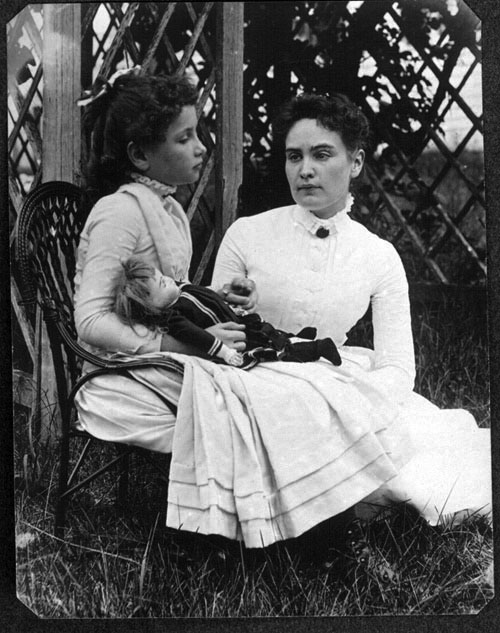
She was more animal than human – grabbing food and stuffing her mouth, communicating with grunts, and reacting wildly to anything that did not suit her.

A teacher was hired to train the totally undisciplined six-year old, and make her into a mannerly, well-behaved child. To complicate matters, the child could neither hear nor see, the result of a high fever when she was a toddler. You’ve no doubt guessed her identity–Helen Keller, and the teacher’s–Anne Sullivan.


helen_keller_with_anne_sullivan_in_july_1888


You’ll remember that little Helen was not only wild but willful, too. She balked ferociously at the changes Miss Sullivan tried to initiate, attacking with fists and feet, tearing at clothing, and biting. No one would have blamed Anne if she had given up.

But the young teacher was even more determined than Helen. She would reach beyond the barriers of deafness and blindness. So the two of them moved into a nearby cottage where Anne offered constant support and instruction. With patience and tremendous perseverance, she tended to Helen.

You know the outcome. Helen was transformed into a cultured intellectual, who graduated from Radcliffe College in 1904 at age 24, and went on to become an author, an advocate for the handicapped, and even a lecturer. In addition, Helen and Anne became lifelong friends and constant companions.


5873921cf301d5d5621f6dc6ee767644


Their inspiring story illustrates several ways in which our lifelong Friend and constant Companion, Jesus, transforms our lives:

1. Just as Helen discovered life was a much more positive experience when she submitted to the mores of civilization, we too experience a more positive life when we accept God’s ways and purposes rather than insist on our own (John 10:10).

2. Anne took up residence with Helen, ready and willing to transform the girl into a glorious new version of herself. Jesus has taken up residence in our spirits (John 15:5). He, too, is ready and willing to transform us–“into his likeness with ever-increasing glory” (2 Corinthians 3:18).


a37ed353e52bfa4b4bdfb0fa1c00bf4b


3. Helen balked at change, unwilling to give up her way of life—unsatisfactory as it was. Little did she know what Anne had to offer. I, too, am slow to learn that “when God empties our lives of a treasured love, it is to fill them more completely with the greater treasure of himself” – Herbert Lockyer (1).

4. The relationship between student and teacher developed into a deep friendship as Helen grew up. She said of her beloved teacher, the day Anne Sullivan arrived at her home was “the most important day I remember in all my life.” Those of us who know Jesus as Friend would say the same of the day he came to live within our spirits (2 Corinthians 5:17).

5. As a result of Anne Sullivan’s instruction, support, and perseverance, Helen exchanged:

  • Constant uncertainty for confidence
  • Helplessness for achievement
  • Ignorance for knowledge

Jesus does the same and more. Because he dwells within us, we can exchange:

  • Our uncertainty for his wisdom—James 1:5
  • Our frailties for his strength—2 Corinthians 12:9-10
  • Our puny efforts for his ability to accomplish the impossible—Luke 18:27
  • ALL our inadequacies for ALL the fullness of God—Ephesians 3:19 (2)


57f2b64f7705c125acd3977b1467d3b8


*     *     *     *     *     *     *    *     *     *


I praise you, Lord Jesus, that the moment I invited you into my life, you began your transforming work—teaching, guiding, supporting, and encouraging. You have granted me newness of life! I am not a condemned sinner; I am a saint! I am no longer bound to the sinful nature; I am a brand new creature in you! I am not a reject; I am a beloved child of the King of the universe! Thank you, oh God, for these glorious realities.  “Such knowledge is too wonderful for me, too lofty for me to attain!”  But I am greatly relieved and overjoyed that it’s all true.

(Romans 6:6; 6:4, 8:1; Ephesians 2:18-20; Romans 8:8-9; 2 Corinthians 5:17; Galatians 3:26; Psalm 139:6)


Notes:

(1) Seasons of the Lord, Harper & Row, 1990, p. 15.

(2) Henry Blackaby, http://www.preceptaustin.org, Experiencing God Day by Day, “An Exchanged Life.”


Photos and art credits:  www.wikipedia.org; http://www.pinterest.com (3).


Read Full Post »

“Matt* and Loren* are coming to visit the weekend after next. Would you be able to join us for dinner that Saturday night?” I asked, Dave*, the worship leader of our church.

I had just arrived at ensemble practice.  Dave was already there organizing music.

“Yeah, I’ll come. It’ll be great to catch up with them.” Matt and Loren were mutual friends who had moved away.

“We’ll probably eat around six, but come early—say five? That’ll give us more time to chat,” I added.

Dave whipped a pen off the piano and wrote a note to himself—on his hand.

I had to smile. Dave was/is one of the most creative, musically talented young men I’ve ever met. Not only is he a concert-trained pianist, he’s a composer with a gift for turning artful melodies into worship.

But in those days, he would have been the first to tell you that keeping track of details or appointments was a challenge; thus the notes-on-the-hand habit. If the commitment was right there in front of him, he’d most likely remember to put it on his calendar later. The message wouldn’t be forgotten amidst all the ideas and musical themes racing through his head.

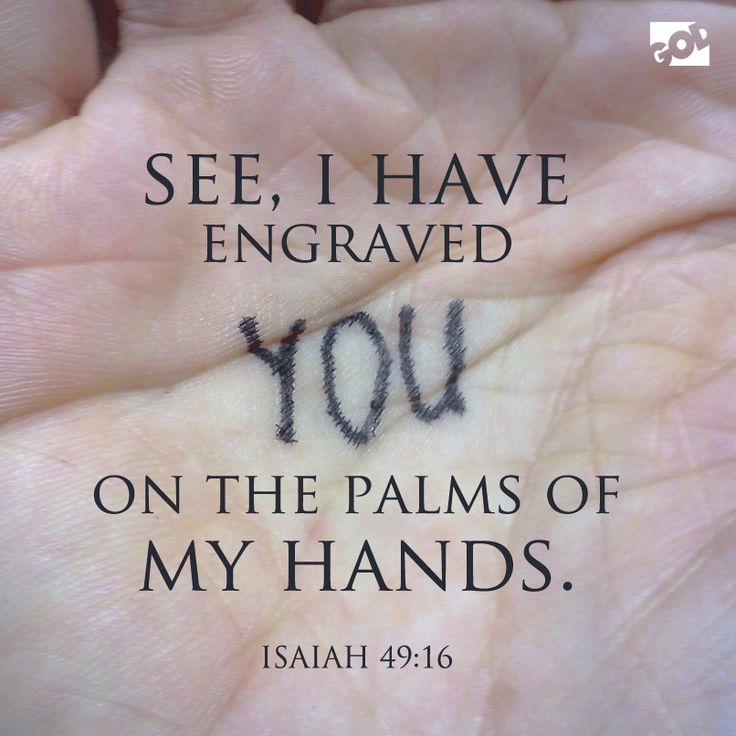
I know someone else who writes information on the palm of his hand. The information is your name and mine. The someone? Our Heavenly Father.


1660084f44a0e4b7a47d6c0c97fbbb65


(“See, I have engraved you on the palms of my hands.”

–Isaiah 49:16 NIV)

Of course, this assurance was addressed to the people of Israel, but it’s applicable to each of us, because: 1) those of us who believe in Jesus have been adopted into Abraham’s family (Galatians 3:6-9), and 2) God does not lose sight of the individual within the multitude (Luke 3:3-7).

“God loves each of us as if there was only one of us.”

–St. Augustine

But don’t think of God’s love as perfunctory or pity-driven.

You are a treasure to your Heavenly Father—the delight of his heart (Deuteronomy 7:6; Psalm 149:4).


28c54369c8dcb691a13ff44f54e136bf


You and I are constantly in his thoughts (Psalm 139 17-18).

And the imagery of our names engraved (cut, carved, or etched) on his palms brings to mind several important truths:

  1. God cannot and will not forget us or abandon us.
  1. His omniscient knowledge doesn’t just include our names, but also who we are—our personalities, dreams, circumstances, strengths and weaknesses—everything about us—is on his mind.
  1. Our images engraved on God’s palms represent an incredible role reversal. In ancient times, slaves bore the brand mark of their masters. But our Master has sacrificially submitted himself to inscribe our names on his palms.
  1. The image represents who we are becoming in God’s view, which is undoubtedly different from ours. “Reality is not what we see; reality is what God sees” (Biblical Illustrator). And that reality is perfection.


67bc5cb27ae7404c8049303ad1857bf5


(“By one sacrifice he has made perfect forever

those who are being made holy.”

–Hebrews 10:14 NIV)


Of course, that one sacrifice was Jesus, who bled and died on a cross so we might be made right with God and receive the gift of eternal life.

As a result, Isaiah 49:16 (about our names written on God’s palms)  has taken on new meaning:


“See, I have engraved you—in blood—on the palms of my hands.”


*     *     *     *     *     *     *   *     *     *

I praise you, Heavenly Father, that it is totally impossible for you to forget your own.  How humbling to realize I am engraved on your hands—hands that withstood the nails for me. But gratitude alone is terribly insufficient.

I want your name, Lord, engraved on my palms, so I might become that perfected reality you already see.


*Names have been changed.

Art & photo credits:  www.pinterest.com (3)


Read Full Post »

(Based on the story of the Prodigal Son, Luke 15:11-24)


019-prodigal-son300x225


Eliab plodded to the top of a familiar rise.  Just ahead he could see the flat rooftop of his ancestral home. Eliab’s heart began to drum in his ears, his face grew hot with shame, and sweat trickled down his back. Soon Eliab would face his father.

As he watched his feet take one step after another, thoughts circled around one question:

What would his father say?

Perhaps, “Get out of my sight! I no longer have two sons, only one.”

Perhaps, “Alright, Eliab, you may work in the fields and barn to pay back your debt. You may also sleep in the barn and take your meals with the other hired hands. Such flagrant waste of your inheritance must be recompensed.”

Eliab would soon know the response that would determine his fate.  He looked up once again to check his progress.  A man was running toward him down the road. What would cause him to be in such a hurry?

No sooner had the question formed in his mind than he recognized the bearing of the approaching figure. It was his father. Eliab’s knees grew weak, and not just from hunger. He collapsed to the ground in a heap, tears streaming down his face.

Quick steps approached; strong arms lifted Eliab up and grasped him in a tight embrace. He heard his father cry, “Oh, Eliab!” And together they wept.


prodigalson


Moments passed and Eliab steeled himself for the speech he had prepared during his long journey.

“Father,” he choked, “I’ve sinned against God and I’ve sinned before you. I know I can no longer be considered your son, but…”

Eliab’s father wasn’t even listening. He turned to call out to his servants, “Get a clean set of clothes and new sandals. Bring the family signet ring. Then prepare the grain-fed heifer for roasting.   We are going to have the grandest celebration our village has ever seen! My son that was as good as dead to me is alive again!”

And with that, Eliab, caretaker of pigs, was lavishly honored because his father:

  • Forgave him for being so foolish, squandering his inheritance.
  • Restored his position in the family, symbolized by the specific request of shoes. (Family members wore shoes; slaves did not.)
  • Clothed him in fresh, clean robes.
  • Honored him with the signet ring, a symbol of authority.
  • Loved him, pure and simple.


return-of-prodigal-son-celebrated


Now I’ve never been a caretaker of pigs. You probably haven’t been either. But I’ve certainly committed my own foolish acts of selfish rebellion. Maybe you have, too.

And yet, when we throw ourselves on God’s mercy, he

  • Forgives our sins and remembers them no more (Hebrews 8:12).
  • Adopts us into his family, making us his children (John 1:12-13).
  • Clothes us in the righteousness of Jesus (Isaiah 61:10), and God sees us as if we had never sinned (Colossians 1:21-22).
  • Honors us (Psalm 91:15)—with his presence and countless gifts. Someday we’ll receive a crown of glory that will never fade away (1 Peter 5:4).
  • Loves us, pure and simple, for now and always (Jeremiah 31:33).

tumblr_nc8rcivx4e1ttry05o1_500

*     *     *     *     *     *     *     *     *     *

How I thank you, Heavenly Father, for taking pity on me, as the father did in the story of the prodigal son.  You redeemed my life from the pig sty.  You forgive my sins–every one of them.  You have more than satisfied me with your goodness and faithful love.  Never do I want to lose the wonder of your love and grace!

(Psalm 103:1-5, 13)

Eliab means “to whom God is Father.”

(Art & photo credits:  www.childrenschapel.org; http://www.ncregister.som; http://www.susaneball.com; http://www.spiritualinspiration.tumblr.com.)

Read Full Post »


persuasive-landing-pages-words-have-power


Companies spend much time and money analyzing factors that grab our attention to their advertisements. They’ve discovered that certain colors, shapes, and layouts create impact upon buyers.

In fact, researchers have even determined the most powerful, persuasive words. They recommend  advertisers use these top ten:

  • You – you matter; you deserve the product
  • Free – after all, everyone likes a deal
  • Because – people need reasons why they should buy
  • Instantly – we care about immediate results
  • New – everyone appreciates an improved product
  • Save – people like a bargain
  • Proven – we appreciate research that backs up an advertiser’s claim
  • Love – taps into what’s important to us, like family, safety, and security
  • Discover – hints of a promise that we’ll be satisfied
  • Guarantee – removes the feeling of risk

As I read through this list it occurred to me all these words are part of the glorious message of Christmas:

IC1445820_l

On that quiet night in sleepy Bethlehem, God sent his only Son into the world to be our Savior. Why? Because he loves us. Whoever believes on him will be saved from death and will receive the free gift of eternal life (John 3:16). That includes you!

 Oh, but there’s more. When we fuse ourselves to Jesus, we become brand new people (2 Corinthians 5:17).   Our outlook on life is revitalized; our values and motivations change. We instantly experience the peace of God and his joy (John 14:27 and 10:10). Each day is an opportunity to discover more of what it means to live a God-enhanced life.

And how do we know those statements are true? God’s Word is our guarantee that these blessings become ours through Jesus. The truth presented within its pages has been proven. 

  • Over 150 years of archaeological studies back up the accuracy of numerous facts in scripture. Not one discovery has uncovered an inaccuracy.
  • Dozens of Old Testament prophecies about the Messiah were fulfilled by Jesus. The mathematical laws of chance refute the possibility of coincidence.
  • Scientific and medical information in the Bible has been verified centuries later.*
  • Thousands of ancient manuscript fragments and letters (which include Bible quotes) corroborate the scriptures – many more than any other ancient text.
  • The influence of the Bible has been evident in the lives of individuals and upon the culture and history of the Western world. No other book has produced such impact.

There you have it. Ten words that researchers have found to be powerful and persuasive for selling products, or ten words that persuasively express the significance of Christmas and why it makes sense to embrace it.

The apostle John summarized the central truth of Christmas with these ten words:

nativityscene

(“The Word became flesh and made his dwelling among us.” John 1:14)

That is glorious, incredible news worth celebrating.

But Christmas isn’t just a happy one-day celebration, it’s meant to be a joyous, whole new way of living with Jesus — all year, every year.

Better yet?  A day is coming when the joy of Christmas will be purified, intensified and extended for all eternity–on the day when he comes again!


*For one small example, see “Pathfinder of the Seas” about Matthew Maury and his discoveries.


(Art & photo credits:  www.wordstream.com; http://www.beyondwaiting.com; http://www.outreach.com.)

Read Full Post »

Munttar17

In a desert land he found him,

in a barren and howling waste.

He shielded him and cared for him;

he guarded him as the apple of his eye

(Deuteronomy 32:10, italics added).

Notice the verbs: found, shielded, cared for, and guarded. Just as God watched over the Hebrew nation in the wilderness, God is surely watchful over each of us. See if these stories trigger memories of your own–when God found, shielded, cared for, and guarded you.

FOUND:

Growing up in a Christian home, I learned about Jesus before taking my first steps. At age four, after hearing the crucifixion story, I asked Jesus to be my Savior and constant Companion. Even as a preschooler, I understood my need for Someone to take the punishment I deserved for my naughtiness, so I could receive God’s gift of eternal life. If Jesus was willing to suffer and die in my place, how could I say, “no?”

81dcb5dcf618c976c041e845ebb0dd25

Praise God he seeks after lost sheep—even the little ones (Luke 15:4)!

Where did God find you?

 SHIELDED:

Numerous times over the years I have felt shielded from harm, including serious car accidents.

One time while approaching a stoplight, I hit a rain-slicked patch of city street, with cars in front of me and a bus to the right. My car began to slide and swerve; I started pumping the brakes. But there was no way to stop soon enough and avoid collision with the slowing line of vehicles ahead.

I took a chance and turned a bit to the right, hoping beyond hope there would be enough room for me to squeeze ahead of the bus, where the lane was open. Surely God intervened and created the needed space. (I think he also alerted the bus driver to apply his brakes and leave room for me!) My car did come to a safe stop, with room to spare.

God has shielded me in other important ways, too. He’s protected me from life-choices that would have led me down treacherous paths. He’s saved me from unhealthy relationships.

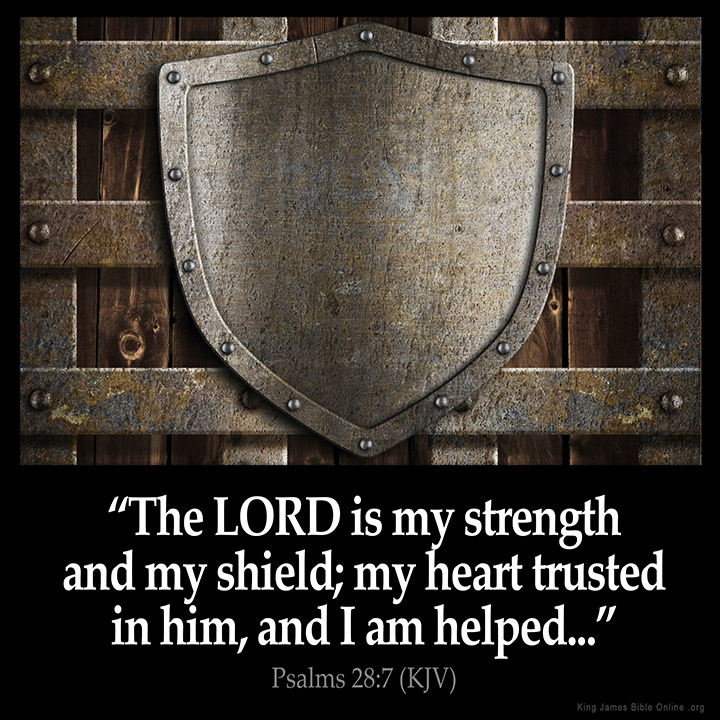
Psalms_28-7

Praise God he is our shield! We can trust in him, and receive the help we need (Psalm 28:7).

How has God shielded you?

CARED FOR:

I couldn’t find the dental insurance form I needed to drop off at Dr. H.’s office. Jeremy (our younger son and a middle schooler at the time) assisted me in a thorough search.  No form. While out on my walk, it suddenly occurred to me the form may have been gathered up with the newspaper. Sure enough, that’s where it was. Being Wednesday, those papers—and the dental form—should have been long gone in the recycling truck, but Jeremy was saving newsprint for his art teacher. God not only revealed to me the location of that form, but kept it safe, saving me the hassle of getting a new one and filling it all out again.

a6b7d3947c75be26393ae18a51f35ccc

Praise God for his loving attention, even in small matters like dental forms (1 Peter 5:7)!

How has God cared for you?

GUARDED:

One spring day in 1985, an elderly gentleman hit the gas pedal instead of the brake, at the stop sign on our corner. He drove his station wagon right through the garage wall. Several feet more to the right and he would have plowed into our daughter’s room, and she was playing there at the time. The driver was protected, too, sustaining only minor injuries.

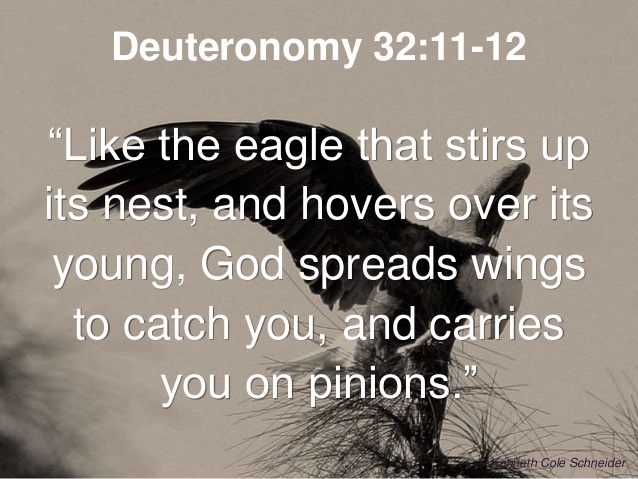
god-of-the-bible-gcsrw-25-638

Praise God he guards us like an eagle, hovering over its young (Deuteronomy 32:11).

How has God guarded you?

THE APPLE OF HIS EYE:

The last phrase of Deuteronomy 32:10 explains why God is so attentive to his people. We are the apple of his eye. Some translations replace apple with pupil. God protects us as the pupil of his eye.

Just as our eyesight is precious to us, so we are precious to God.

As we’re careful to provide protective care for our eyes, shielding them from danger, for example, so God provides loving, protective care of us.

May we continually praise our God for all he is to us. First, he found us, and then became our attentive Shield, Provider, and Guard.

bbd550f7373b204033320b16c5638e3c

(“You make me glad by your deeds, O Lord; I sing for joy at the works of your hands” — Psalm 92:4.)

 In the Comments below, please share your personal stories of how God found you, or how he has proved himself as your Shield, Provider, and Guard. Let’s celebrate together God’s powerful deeds on our behalf!

(Art and photo credits:  www.biblewalks.com; http://www.pinterest.com; http://www.kingjamesbibleonline.com; http://www.imagefriend.com; http://www.slideshare.net; http://www.pinterest.com.)
 

Read Full Post »

 Zwald-62


One of the “Letters to the Editor” in the most recent issue of Country Magazine caught my attention. The writer, James, related an event from his boyhood days on a farm in the 1940s.

Seems he had injured his hand quite severely one day while tightening a chain. But work on a farm doesn’t wait, especially during hay-baling season when the hay is ripe for harvesting. So in spite of his injury, James had to wear rough work gloves as he operated the wire baler. Every day for a week when he removed the gloves, the scab on his hand would come off and the wound would bleed profusely again.

On Sunday afternoon he plopped down on the living carpet to take a nap. His dog, Shadow, came to lie down beside him. But instead of settling in for a snooze himself, Shadow began to lick James’ wound. It actually felt good, James explains, so he let the dog continue.

The next morning James was astonished to see that his wound was completely healed. “It was as if the injury had never happened.”

Not until much later did James find out that a dog’s saliva contains healing properties. That’s why, when injured, they will lick their own wounds over and over.

I found James’ story particularly interesting because of a question that had been niggling in my mind this Easter season: Why did Jesus bear the scars of the crucifixion—in his hands, feet, and side–after the resurrection? It was certainly within God’s power to return Christ’s physical body to perfect wholeness, “as if the injuries had never happened.”

Come to find out, I’m not the first one to consider this question. As far back as the seventh century, Saint Bede of England (672-735, A.D.) wrote about the possibilities. Many others throughout the ages of the church have contemplated the reasons, including the following:
  1. The scars were proof to the disciples that he was the same person after resurrection as before. Had Jesus been completely restored, his followers may have assumed that their first inclination was correct: that what they saw was an apparition of Christ. After all, he appeared to them out of nowhere—an impossibility for a physical body.

But they not only saw him, Jesus invited them to touch him, so there could be no doubt (Luke 24:36-42).

  1. The scars were part of the proof of the prophecy that Jesus spoke of himself, that he would suffer, be killed, and rise again on the third day (Matthew 16:21). “This is what I told you,” Jesus reminded them (Luke 24:44).
  1. The scars provided evidence of Jesus’ physical body. Early in church history there were those who taught that Jesus didn’t really suffer on the cross. He was not truly human, therefore he only appeared to suffer.

They could not fathom the sinless Son of God submitting himself to such humiliation and horrific pain.   But dismissing the agony of Christ on the cross as well as the scars is incomprehensible.

Those three answers do quiet our curiosity, but what relevance might Jesus’ scars provide for us today?

  1. The scars prove that Jesus knows what it means to suffer. Crucifixion is the most cruel of death penalties, the worst that man can deliver. No one can say, “Jesus doesn’t know what I’m going through.” No, he is well-acquainted with grief. He knows what it’s like to bear scars of suffering.
  1. The scars prove God’s love and compassion. As the Son of God, he didn’t have to suffer on our behalf. Surely he could have devised a less abhorrent way. Instead, he identified himself with humanity by becoming human himself. He took our physical, emotional, and spiritual pain upon himself.   And he will wear the scars of suffering for eternity (Revelation 5:6).
  1. The scars remind us of what is to come. On Good Friday, Jesus body was beaten, bruised, and pierced. On Easter Sunday, those wounds became scars. A miraculous healing of gruesome wounds had occurred in a matter of hours.

One day a miraculous healing of our gruesome wounds will take place. Pain, suffering, loss, illness, and physical challenges will cease. Every negative aspect of life will melt away.

*     *     *     *     *     *     *     *     *     *

Oh, Lord Jesus, thank you, THANK YOU for carrying our pains, our disfigurements, all the things wrong with us.  Thank you for taking the punishment we deserve and making us whole.  You are the one and only source of eternal salvation.  And only through your eternal bruises are we healed.  Out of overwhelming gratitude, we give ourselves to you.  We want to follow your example and please you.  Make us into what gives you pleasure.  

All glory to you, Jesus, forever and always!”  

 (Isaiah 53:4-6; Hebrews 5:9, 13:21, MSG)

Photo credits:  www.motherearthnews.com

Read Full Post »

« Newer Posts - Older Posts »

When the House is Quiet

Impressions Becoming Expressions

Mitch Teemley

The Power of Story

Still Traveling

Impressions Becoming Expressions

Living Our Days

Gaining a heart of wisdom

He Said What?!

I'm Patty, and my husband and I are living with our adult son who has autism and epilepsy. I love sharing lessons learned from life around me, especially life with Aaron.

Meditations of my Heart

Impressions Becoming Expressions

Linda Stoll

Impressions Becoming Expressions

Signora Sheila

Notes on Life, Faith & Italy

Heidi Viars

Finding the Image of God