Feeds:
Posts
Comments

Archive for the ‘Thanksgiving’ Category

Surely you’ve met them—those glowing saints whose eyes always twinkle, smiles always dazzle, and whose faith and attitude always inspire.  We’re left wondering, how did they grow that glow?

No doubt it begins with strong trust in Christ, cultivated by scripture-study and prayer. They apply what they’ve learned about:

  • Giving all their concerns to God, knowing he truly cares
  • Focusing on the positive, the joyful, the beautiful
  • The pleasure of giving such gifts as time, encouragement, and a listening ear
  • Practicing God’s presence to experience his peace, strength, and more [1]
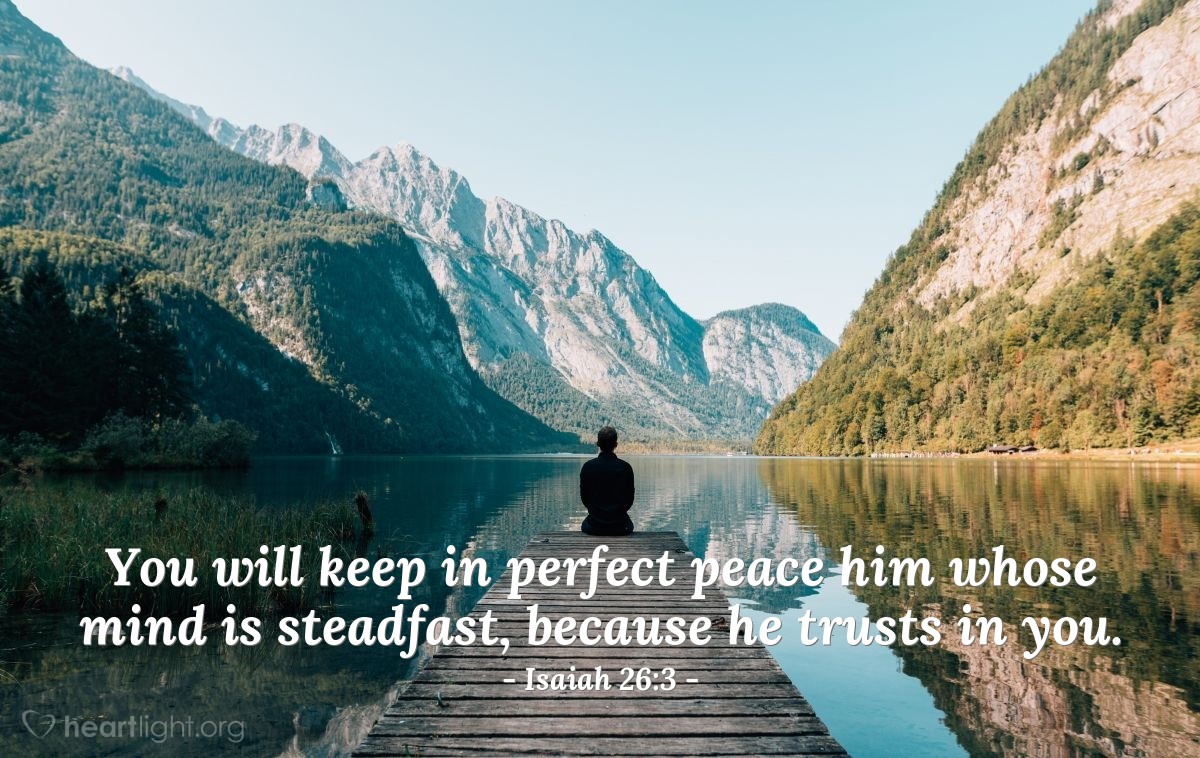
But researcher Michael Zigarelli discovered another reason why godly saints radiate joy: gratitude. He found that expressing continual gratitude to God actually energizes the practice of other spiritual disciplines, and altogether they contribute to growing that saintly glow [2].

Insightful author, Ann Voskamp concurs:

“The brave who focus on all things good and all things beautiful and all things true, even in the small, who give thanks for it and discover joy even in the here and now, they are the change agents who bring fullest Light to all the world” [3].

In addition, author and theologian Warren Wiersbe would have us know:

“That’s all fine and good,” someone might say. “But right now I see very little to be thankful for. We’ve had one financial setback after another, my job is more stressful than ever, our son is having a hard time in school, and my brother and sister-in-law just announced they’re separating. ‘See what I mean?”

Yes, we do. Some seasons of life include multiple troubles all at once.

But take note of this good news: simply expressing thankfulness (even if we don’t feel grateful) has been proven to create positive change in our brain chemistry [4].

And we find: continual gratitude contributes to a sense of WELL-BEING.

Another surprise?

Continual gratitude provides HEALING for the wounds of distress [5] —especially appreciation for who our Savior God is and what he has done.

Think of it: He created all things! He sustains all things! He has supremacy over all things! He is our Emmanuel (God with us), our Good Shepherd, our Wonderful Counselor, and so much more [6]!
God hears us as we pray, loves us with an everlasting love, empowers us through the Holy Spirit, fills us with hope, and anchors us through the storms of life [7]

And as we cultivate continual gratitude for such realities, we find PEACE.

The truly thankful person

is a truly peaceful person.

—Lysa TerKeurst [8].

It makes sense. The more we thank God for all the benefits he bestows, the firmer our faith-stance in his competence to sustain us.

Third, continual gratitude cultivates JOY.

Turn [your] eyes toward Jesus and everything shines—

even the tough spots morph into excitement. . .

How is he going to solve my problem this time? . . .

When I am consciously aware of him,

life fills with wonder and wonder brings joy [9].

What better way to remain aware of God and expand joy-inducing wonder than with gratitude?

Last, continual gratitude “lays out planks of TRUST” [10].

Think of all the moments he’s been faithful, when:

  • an impossible situation worked out amazingly well
  • a potentially difficult conversation turned out to be restorative and beneficial
  • an inspired idea came to mind that cleverly solved a problem
  • a surprising bargain materialized, supplying a current need
  • a string of just-so-happened circumstances provided the answer to a prayer

Yes, some will call these coincidences. Around here we call them God-incidences, because “whatever is good and perfect is a gift coming down to us from God our Father” [11].

And every time we acknowledge such gifts of provision, protection, and guidance, we lay another plank of trust, constructing a strong bridge of faith from yesterday into tomorrow [12].

Now we know. Each of us can grow a glow as we embrace the power of gratitude.

And isn’t November—with Thanksgiving just a few weeks away—the perfect month to grow that glow a little bit brighter?


[1] 1 Peter 5:7; Philippians 4:8; Acts 20:35; Isaiah 26:3 NLT

[2] https://godsmissionarychurch.org/2018/10/26/growing-through-thankfulness/

[3] One Thousand Gifts, 58.

[4] https://www.focustsoul.com/blog/signs-of-maturity-in-christ-part-1-gratitude-and-joy

[5] https://cct.biola.edu/spirituality-suffering-gratitude/, emphasis added

[6] Colossians 1:15-20; Matthew 1:23; John 10:14; Isaiah 9:6

[7]  1 Peter 3:12; Jeremiah 31:3; 2 Timothy 1:7; Romans 15:13; Hebrews 6:19

[8] Embraced, 256.

[9] Deanna Chadwell, Soul Bare, 82-84.

[10] Ann Voskamp, One Thousand Gifts, 151.

[11] James 1:17 NLT

[12] Voskamp, 152.

Art & photo credits: http://www.commons.wikimedia.org; http://www.heartlight.org; http://www.pexels.com; http://www.pickpik.com; http://www.flickr.com; http://www.shutterstock.com.


Processing…
Success! You're on the list.

Read Full Post »

Several years ago I read these words written by a pastor: “When hard times come, say to yourself, ‘Now is the time to use my faith in a new way.’”

I had to wonder, What might that new way include? He didn’t say.

But while considering my own hard times I remembered a few new-to-me strategies God brought to my attention that did indeed strengthen my faith. 

First, he led me to a new way to read scripture, recording any thoughts, insights, or prayers in a notebook. Writing helps slow my thinking so I can absorb more of what God would have me understand.

A few questions, prayerfully considered, might help our pens begin to write. For example:

  • God, what do you want me to understand and embrace from this passage/verse?
  • How would you desire this insight to impact my attitudes, beliefs, and/or actions going forward?
  • What does this passage teach me about you, as God the Father, Son, and/or Holy Spirit? How might this knowledge impact my current frame of mind?

During one time of upheaval I wrote the following, based on Psalm 62:5.

You are my hope, O God. Your plan is to prosper me, to help me grow in faith and Christian maturity. My eternal hope in you can help keep this present difficulty in perspective. After all, when compared to eternity, any hardship here on earth is brief. Someday I’ll live forever with you and the problems I’ve faced will seem insignificant in the light of heaven!

God also introduced me to a new way to pray: spend less time rehashing the problem, and more time rejoicing with gratitude. It’s the kind of praying Paul encouraged (Philippians 4:6-7):

We can thank God for each of his attributes at work on our behalf: his wisdom, power, goodness and more. We can also thank him for graciously upholding us, surrounding us with encouraging family and friends, and allowing us to sense his presence more palpably.

Consider also the positive impact on mind and spirit if we pray with anticipation, affirming God will act to fulfill his highest purpose. If we thank God that it will be so before it is so—that’s faith!*

Such a prayer might be:

I praise you, O God, for your power that can fulfill grand purpose even through (name the situation.) I praise you for being a creative God who solves problems in amazing, miraculous ways.

I thank you for being an involved God who takes an active, loving role in the lives of his children. I thank you that you are faithful and trustworthy, that when we commit our way to you and trust in you, you will act (Psalm 37:5)!

God also led me to a new way to embrace the promises, by acquiescing to his plan for fulfilling them.

For example, when a beloved fellow believer is diagnosed with cancer, our prayer is for a complete restoration, of course. We might site the promise of Psalm 41:3:

And sometimes God’s answer is yes. Even the doctors are surprised how quickly the patient recovers. Sometimes God’s answer is wait, as the patient endures radiation, surgery, and chemotherapy. And sometimes the answer is no.

But isn’t that complete healing as well as the patient is taken home to heaven where no sickness exists?

Life-experience and a growing relationship with God teach us:

It is then we turn to promises like these—promises we can count on no matter what:

  • He will guide us along the right paths (Proverbs 3:5-6)
  • He will provide peace of heart (John 16:33)
  • He will bring good out of every situation (Romans 8:28)
  • His grace will see us through (2 Corinthians 12:9)
  • He will provide everything we need (Philippians 4:19) 

These are among the promises to hold especially close.

And as we exercise such ways of faith presented above, they lead us to know God more, trust God more, and experience more of the spiritual blessings he longs to bestow.

And now, what new way of faith have you discovered that strengthens you during hard times? Please share in the Comments section below!

*Arnold Prater, Bonding with God, 81.

Art & photo credits: http://www.picryl.com; http://www.rawpixel.com; http://www.dailyverses.net; http://www.commons.wikimedia.org; http://www.canva.com; http://www.picryl.com; http://www.canva.com; http://www.pexels.com.

Read Full Post »

Most visitors to an art museum spend fifteen to thirty seconds looking at a painting, but art enthusiasts insist that’s not near long enough to fully enjoy each work.

Take for example da Vinci’s world-famous Mona Lisa. You’ve seen photographs; some of you may have viewed the original at the Louvre. Besides the model’s haunting expression, what makes this painting stand out from others?

First, note da Vinci’s use of shadow to give contour to the face and clothing. As a result, daVinci achieved more realism than other painters of his time.

Second, enlarge the image above and study da Vinci’s masterful attention to detail—the intricate gathers of the bodice, the graceful tendrils of her hair, the next-to-nothing veil.

Third, focus on the background. Mona Lisa appears to be sitting in front of a window with a lovely view of mountains, trees, and a lake. Da Vinci used a technique called foreshortening to condense the wide scene onto his narrow canvas.

Fourth, note the hazy atmosphere, created as da Vinci blurred the edges of his almost undetectable brushstrokes.

Of course, additional features also contribute to Mona Lisa’s magnificence. Yet even this short list makes clear: there’s more to the Mona Lisa than most of us realize.

And to know more makes us appreciate more and enjoy more. But such results require close observation through slow looking.

The same principle applies to God. To know God more will allow us to enjoy and appreciate him more.

But how do we observe closely Someone who’s invisible?

We begin with evidence of the Unseen. One example, his presence and character traits revealed in the events of our lives:

  • Caring protection from harm on numerous occasions
  • Generous provision of countless necessities, gifts, and blessings
  • Perfect wisdom, as certain desires of our hearts haven’t come true, recognized in hindsight
  • Unfailing faithfulness to see us through disappointment, difficulty, and uncertainty
  • Gracious goodness in every joyful moment, every delightful surprise. They all come from him.

Every day provides much evidence of his benevolent presence in the lives of each of his children. The more we look, the more we’ll find. And as each discovery is turned into praise our spirits fill with joy.

Another way to practice slow looking is to spend time in God’s presence, learning more about him through his Word.

It makes sense: “Delight in God cannot occur in an intellectual vacuum” [1].

“But I don’t know where to start!” someone might say.

The internet offers a variety of reading plans, and once a plan is in place, we apply the practice of slow looking as we read.

Writing the answers to such questions as these hones our observation skills:

  • What does this passage say about God and his character?
  • What truths does he teach?
  • What does God promise here that offers hope and encouragement?
  • Is there a prayer that applies to my life? (Write it out, perhaps in your own words, and personalize it.)
  • Has God included an example to follow or not follow [2]?

Slow looking through the act of writing also helps deepen our understanding and appreciation, expanding our capacity to enjoy God.

Another benefit? Taking joy in God and all his excellencies increases our strength to endure.

What moment of slow looking has led you to a recent discovery about God? Please share in the comment section below!


[1] Sam Storms, http://www.gracequotes.org

[2] Denise J. Hughes, Deeper Waters, 76.

Photo credits: http://www.pxhere.com; http://www.wikipedia.org; http://www.rawpixel.com; http://www.pexels.com; http://www.heartlight.org; unknown.

Read Full Post »

http://www.quotefancy.com

Happy Thanksgiving, my dear readers!

In honor of this joyful holiday centered on gratitude I’ve collected some favorite quotes on the subject. Perhaps you’ll find one or two to your liking also.

Why is gratitude an important?

If gratitude is due from children to their earthly parent, how much more is the gratitude of the great family of men due to our Father in heaven?—Hosea Baliou

A spirit of thankfulness is one of the most distinctive marks of a Christian whose heart is attuned to the Lord—Billy Graham.

The best way to take off the tendency to complain is to put on thankfulness. Each day we must actively choose to see what God has provided—Melissa B. Krueger, The Envy of Eve, 134.

What happens as a result of gratitude?

It’s not the happy person who is thankful but the thankful person who is happy—Anonymous.

We would worry less if we praised more. Thanksgiving is the enemy of discontent and dissatisfaction—Harry Ironside.

The truly thankful person is a truly peaceful person—Lysa TerKeurst, Embraced, 256.

How do we cultivate gratitude?

The key to thankfulness is not to view God through the lens of our circumstances, but to view our circumstances through the lens of God’s love and sovereign purpose—Anne Graham Lotz.

Thank people who bless you in even the smallest ways. It will complete your enjoyment of the blessing, and it will increase your capacity to thank God—Alexander Whyte.

Habits of a grateful person: Notice, Pause, Choose. Notice something for which to be thankful no matter your circumstance. Pause to acknowledge this something as a reminder of God’s presence. Choose to focus on God’s presence until His powerful peace is unleashed—Lysa TerKeurst, Embraced, 256-257.

What might a life of gratitude look like?

You say grace before meals. All right. But I say grace before the concert and the opera, and grace before the play and pantomime, and grace before I open a book, and grace before sketching, painting, swimming, fencing, boxing, walking, playing, dancing and grace before I dip the pen in the ink—G. K. Chesterton.

That sounds like a marvelous way to live, doesn’t it?

Photo credits: http://www.quotefancy.com; http://www.picryl.com.
Read Full Post »

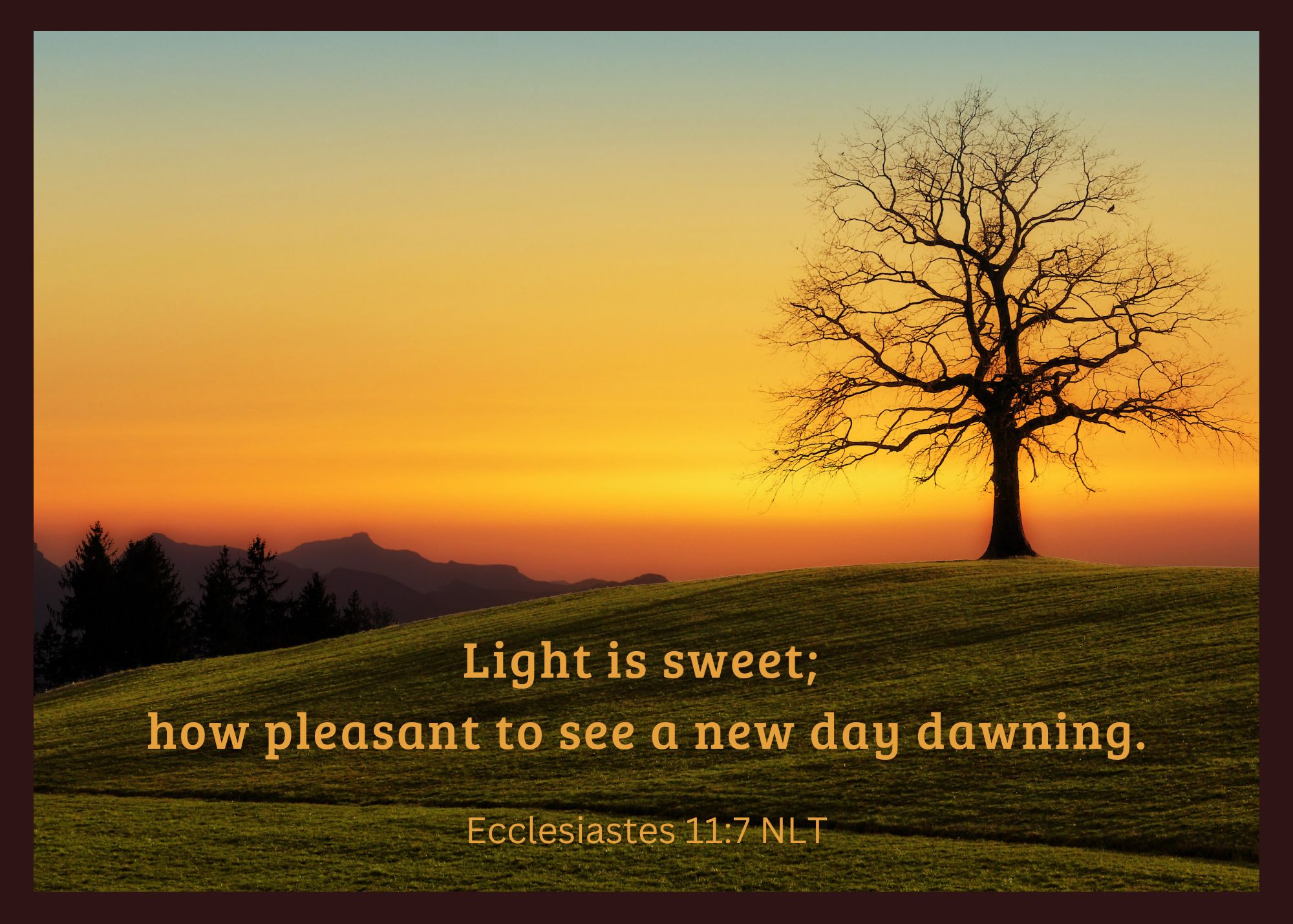
No matter how many sunrises a person might witness over a lifetime, who could tire of the majestic spectacle, with its mesmerizing shades of lavender, scarlet, apricot, and golden yellow—all aglow with the backlight of the sun, and each dawn different than all those before.

I’m filled with wonder as the morning sky begins to fill with light and “the heavens proclaim the glory of God. The skies display his craftsmanship”[1].  He is the supreme Artist.

My favorite sunrise-displays are those when clouds are positioned just right to create magnificent gleaming rays reaching into infinity.

Perhaps God inspired the prophet Malachi with just such a sunrise as he wrote: “The Sun of Righteousness [our Messiah] will rise with healing in his wings for you people who fear my name”[2].

Wings refers to sunbeams, bringing to mind the unending healing of God’s forgiveness, available to all who put their trust in Jesus. He provides for us the dawning of a new day as we choose to move out of darkness and into his marvelous light [3].

Sunrise is also God’s daily reminder that his faithfulness is great and his mercies begin anew each morning . Perhaps he wanted us to understand that his faithfulness to us is as certain and consistent as the sunrise, yet full of surprise and creativity as well [4].

The dawn brings hope, reminding us that:

  • Just as the sun is bigger than any planet in our solar system, so God is bigger than any challenge we might face.
  • Just as the sun always shines whether in full view or behind clouds, God is always with us whether we sense his presence or not.
  • Just as the sun never fails to rise, so the Son will never fail to rise, bringing the light of his salvation, truth, and wisdom.
  • Yesterday’s disappointments and failures are past; a new day with fresh blessings and possibilities has dawned [5]!

In addition to hope, fresh joy comes with the morning light.

But to see the dawn and experience its pleasure, a person must look at the sunrise. If we’re going to see joy and experience its pleasure, we must look to the Son, the source of joy [6]. Then, each day becomes an opportunity to live in wild, blissful amazement of God.

When you do witness a glorious sunrise doesn’t it make you smile—if not on your face, then in your spirit? We can augment that joy with gratitude—not just for a breath-taking dawn, of course, but for all the beautiful, remarkable, and pleasurable things God generously bestows.

Author Roman Payne wrote in celebration of the sun: “O, Sunlight! The most precious gold to be found on Earth!” And surely we’d agree, a golden sunrise especially proves his point.

But just such a sunrise might better serve as a reminder to celebrate the Son:

O SonLight, more precious than all the gold to be found on Earth!

*     *     *     *     *     *     *     *     *     *

I praise you, God the Father, Son, and Holy Spirit, for your light that is brighter than the brilliance of a sunrise! You are the source of all blessing, the brightness of our days, and our guiding Light to show the way. Without you, life is like twilight with dark night ahead. But with you, it is the dawn of morning with the light and warmth of a full day ahead.

(Psalm 84:11 PTP; James 1:19; 2 Samuel 22:29; Psalm 119:105;

last sentence based on Philip Schaff quote.)


[1] Psalm 19:1 NLT

[2] Malachi 4:2a

[3] 1 Peter 2:9

[4] Lamentations 3:23, and an idea inspired by Eugene Peterson, Run with the Horses, pp. 115-116.

[5] Philippians 4:13; Psalm 23:4; 27:1; 119:105, 130; Ecclesiastes 2:13

[6] John 15:11

Photo credits: http://www.pixabay.com; http://www.peakpix.com; http://www.canva.com (2); http://www.rawpixel.com.; http://www.peakpix.com.

Read Full Post »

“As followers of Jesus we have the opportunity

to live each day in wild amazement of God.”

–Margaret Feinberg[1]

Doesn’t that sound like a glorious way to live? Amazement can be a doorway to joy.
Even secular research has discovered positive effects for those who report feeling awe on a regular basis:

  • Lower markers of inflammation
  • Refreshed energy
  • Less anxiety
  • Enhanced sense of well being[2]

Now we know why God inspired King David to write: “Remember the wonders he has done, his miracles” (Psalm 105:5a). God doesn’t need our adulation; we need the recalibration that wild amazement provides.

What follows are categories of wonder and personal examples for each month of 2023. Perhaps this list will trigger memories of your own moments of wild amazement.

January—the wonder of nature

We woke up to a light snowfall that continued all day. At sundown Steve and I stood at the back window to enjoy one last time the white landscape and frosted trees when a fox trotted by, his plush tail extended gracefully behind him. Dark motion against pale stillness.

February—the wonder of friendship

Old friends since college visited for three heavenly days. The reminiscing, heart-to-heart conversation and much laughter strengthened the long-held connection between us.

March—the wonder of kindness

My cousin sent a package of family heirlooms she discovered while spring cleaning, items she thought I’d like to have. Imagine my delight to receive several handkerchiefs with tatted trim, created by our grandmother, and a needle case stitched by our great-grandmother. Such precious things to pass on to my granddaughters.

(I should have ironed them before snapping a pic!)

April—the wonder of family

When all thirteen of us gather, the house is filled with multiple, simultaneous conversations and much laughter. Beautiful noise!

May—the wonder of participation

What a happy privilege to speak hope and encouragement into the lives of others—sometimes to a group in a formal setting, sometimes to individuals over coffee-shop lattës, sometimes to a stranger.

June—the wonder of life

The daughter-in-law of dear friends posted the ultrasound image of their son, due in December. “He’s perfect,” the doctor assured them. Such glorious news after they’ve endured three miscarriages. I can only imagine their pain and sorrow, yet their faith has remained strong. (Perfect little Cam was born December first.)

July—the wonder of giving

My husband frequently blesses delivery people, wait staff, etc. with generous tips. One waitress puddled up with gratitude. After heart surgery she was behind on her bills; we had the joyful privilege of assisting her.

August—the wonder of imagination

Our five-year old granddaughter drew a picture of herself getting scratched on the leg while hiking a trail with her parents. However, the illustration didn’t depict a bush causing injury; it was an ogre.

September—the wonder of rest

Quiet time on our deck provides supreme restoration, especially when a light breeze keeps me cool and cheerful cardinals add a soundtrack. Beginning this time of year, our black walnut tree provides flashing, golden leaf showers. Mesmerizing.

(These are maple leaves, but they reflect the same golden glow as our black walnut.)

October—the wonder of miracles

Our pastor-son and his wife have served their current church for four and a half years. When they arrived, the church faced financial difficulty. But God began his good work among the people, giving increased, and they even established a savings account. Recently a dire need developed and $85,000 was required. Guess how much was in that account?!

November—the wonder of gratitude

Just this month alone, I celebrated God’s goodness for tasks completed in spite of little time, prayers answered, blessings not asked for, numerous moments of delight, laughter (especially that of our grandchildren), thoughtfulness of others, and memories of years past. “Joy doesn’t cause us to be grateful,” wrote Brother David Steindl-Rast, “joy is born out of our gratitude.”

December—the wonder of Jesus

He is our Savior and King, our Wonderful Counselor and Mighty God, Everlasting Father and Prince of Peace. These titles only begin to express his identity and attributes.

God is infinite, his marvelous works are infinite. What moments of wonder have come to your mind? Or perhaps you’ve thought of a whole new category. Please share in the comment section below.

Let’s begin this new year by celebrating our wild amazement of God!      


 Notes:

[1] Wonderstruck, Worthy Publishing Group, 2012, 173.

[2] https://guideposts.org/angels-and-miracles/miracles/gods-grace/why-a-sense-of-wonder-is-important/ and https://hbr.org/2021/08/why-you-need-to-protect-your-sense-of-wonder-especially-now

Photo credits: http://www.pxhere; http://www.commons.wikimedia.org; Nancy Ruegg; http://www.commons wikimedia.org; http://www.pxhere; http://www.canva.com.

Read Full Post »

Happy Thanksgiving, my dear readers!

Read Full Post »

Take a walk over wooded hills and chances are you’ll encounter a spring-fed, babbling brook, tumbling over rocks and ever-flowing to its mouth.

Just the sound of it refreshes the soul.

Perhaps in his travels, the Apostle Paul encountered spring-fed brooks, and God brought them to his mind as inspiration for this instruction:

Let your living spill over into thanksgiving.

–Colossians 2:7c MSG

Such a lovely image of refreshing, ever-flowing gratitude.

Paul urged his readers to be thankful seven times in the four chapters of Colossians, and forty more times in his other epistles.

Now why would God inspire Paul to encourage gratitude so often?

Surely God wanted us to discover that when we seek to be thankful, we find our trust growing. Look at all these wonderful ways God is blessing and investing in my life, we begin to realize. He IS a good and loving Father; I CAN depend on him!

Perhaps Paul himself had learned: the more we thank, the more we see to be thankful for.

“The grumbler undoubtedly sees few blessings;

The grateful person finds blessings everywhere.

In fact, blessings seem to find her.

J. E. Yoder (1)

I also like Warren Wiersbe’s reason for cultivating gratitude: “When a believer is abounding in thanksgiving, he is really making progress!”

Surely this was one of Paul’s strong desires—that all Jesus-followers make progress toward becoming all that God intends them to be.

But gratitude doesn’t always come easy. Sometimes we’re more likely to be overwhelmed by our worries than overflowing with thankfulness. Or we’d rather talk about our woes in order to gain sympathy than share our blessings in order to encourage.

So how do we open the channels of our hearts to let gratitude flow?

We might begin with a daily (perhaps hourly ) habit of giving thanks for the benefits we enjoy—no matter what our circumstances—even if the family is in turmoil, or friends have proved unfriendly, or trouble has dropped in our laps.

As noted, ever-flowing gratitude refreshes the soul.  

Perhaps we could begin with these five blessings:

  • The indescribable gift of Christ and all he offers
  • Rescue from the powers of darkness
  • God’s glorious attributes at work in our lives—his goodness, grace, compassion, and more
  • The precious, life-changing truths of scripture
  • God’s constant presence with us (2)

Of course there are many more. We’d do well to keep a written list of such ever-present blessings, ready to refer to when the flow of our gratitude is blocked by disappointment or discouragement.

And at the top of the list we might copy this wonderful reassurance:

There is always good because there is always God . . .

Even when nothing else around us is good,

his presence in the midst of our deepest pain

is a good gift indeed.

Aliza Latta (3)

Picture a glass of water so full it will not hold another drop. Now what if you bump against it? The water is bound to spill over. Similarly, when trouble bumps against us, what’s inside will overflow.

Out of an angry person will come anger, out of a fearful person will come fear, out of a self-centered person will come self-pity. (I have been all three of these people at one time or other!)

But a grateful person? He/she overflows with gratitude, cheering and soothing the soul like a babbling brook. In addition, their trust in God grows and greater maturity develops. Best of all, their thankfulness delights God.

As the Lord loveth a cheerful giver,

So likewise a cheerful thanksgiver.

John Boys (4)

*     *     *     *     *     *     *     *     *     *

O Father, keep me mindful that no matter what I face, there are ALWAYS reasons to rejoice. I don’t want to give in to anger, fear, or self-pity. I want my living to spill over into thanksgiving—a superior way to spend my days and bring you glory as well.

Notes:

  1. Our Daily Bread
  2. 2 Corinthians 9:15; Colossians 1:13; Psalm 145:7-8ff; Psalm 119:72, 93, 103; Psalm 23:4
  3. Take Heart, 16
  4. Dean of Canterbury from 1619-1625, quoted in A Puritan Golden Treasury

Photo credits: http://www.youtube.com; http://www.pxhere.com; http://www.canva.com; http://www.pxhere.com; http://www.canva.com.

Read Full Post »

Long ago in Sunday School, our teachers taught us proper respect for God.  The rules of reverence included:

  • Be quiet and solemn in worship
  • Bow your head, close your eyes, and fold your hands to pray
  • Always treat God’s house with utmost respect

The first rule proved the most difficult to keep. I failed many a Sunday. My legs wanted to swing, my hands wished for crayons and paper, my eyes longed for a book. Would the sermon ever end?!

Years later I came across the Westminster Shorter Catechism, a collection of 107 questions and answers explaining the Christian faith. The list began with, “What is the chief end of man?” The answer shocked me.

The first part made perfect sense. Paul made it clear: “Whatever you do, do it all for the glory of God” (1 Corinthians 10:31).  But the second part caught me off guard.

Enjoy God?

His blessings and benefits certainly brought me joy. But God himself? How could I enjoy Someone who’s invisible?

Over time I’ve discovered that, although God deserves the utmost reverence and respect, we need not always be solemn. We can laugh and sing for joy in his presence (Psalm 68:3 MSG).

In fact, enthusiastic praise of God, especially in the company of others, is an invigorating way to enjoy him–reveling in who he is—our God of goodness, grace, and love.

We can also celebrate what he’s done—supplying our needs, guiding the way, and surprising us with gifts we didn’t even ask for.

While we’re worshiping, we can lift our hands toward God (Psalm 63:4), augmenting our connection to him. Even hands placed palms up on the lap can add to our enjoyment.

Steve and I learned this posture from one of his seminary professors. After a teaching session on prayer, Dr. Stanger instructed us to place our hands in our laps, palms up.

We sat in silence for a few moments, and suddenly I felt a tingling in my hands! Was the Spirit of God actually holding my hands as we prepared to pray?!

Dr. Stanger explained: the pressure on the backs of our hands caused the phenomenon.   But wasn’t it wonderful to imagine God gracing each of us with his personal touch in this way?

Yes, supremely delightful!

We can also take the celebration outside and enjoy God as Creator and King of the universe. For example, look to the sky and contemplate the galaxies of stars. Smile at him in wonder because of their incomprehensible magnitude and indescribable beauty. Consider too, they’re all under his control.

Another way to enjoy God is to delight in his scripture. We can proclaim appreciation to him for the strength, comfort, and peace his Word provides, as well as those passages that bring joy to our hearts (Psalm 119:111).

Those of us who like to write find great pleasure in composing journal entries, poetry, personal psalms, and more, addressed to God, as a way of expressing our delight in him.

Sarah Young, author of Jesus Calling, has inspired some of us to follow her example and go a step further: record thoughts or impressions we receive from God as we wait and listen in his presence (Psalm 25:5; 85:8).

In these ways and more God has made it possible for us to continually enjoy him.

*     *     *     *     *     *     *     *     *     *

Dare I say it?  Is it too irreverent? You are FUN, God! I love spending time with you, rejoicing in you, celebrating your works, reveling in your presence, taking delight in our mutual communication.

What a glorious privilege you’ve granted us, Father, to nestle close to you and experience fullness of joy forevermore!

(Psalm 100:1-2; John 10:27; Psalm 65:2; Isaiah 40:11; Psalm 16:11)

(Revised and reblogged from March 15, 2015, while I recover from Covid. My husband tested positive last Wednesday; I succumbed on Saturday. Symptoms have been uncomfortable but tolerable for both of us; we’re on the mend! ‘Will try to write a fresh post for next week.)

Photo credits: http://www.pxhere.com; http://www.canva.com; http://www.pxhere.com; http://www.wikimediacommons.org; http://www.pxhere.com; http://www.canva.com.

Read Full Post »

One of the psalmists proclaimed, “I will go to the altar of God, to God, my joy and my delight” (Psalm 43:4). The statement raises the question, How do you delight in someone who can’t be seen or touched?

Perhaps we can discover the answer by considering how we delight in the people around us. My father offers a perfect example.

First let me tell you: Dad worked miracles with his numerous tools.  He could fix or build practically anything, as well as paint and wallpaper like a pro.

We were probably among the first to have a built-in sound system.  Dad wired and hooked up a speaker in every room (each with its own on-and-off switch), so anything on the radio or hi-fi could be heard anywhere in the house. 

Dad also built custom-sized furniture:  in the living room–a bookcase (with open shelves above and enclosed shelves below) along with Mom’s music cabinet; in the kitchen—new cupboards and a storage cabinet; in Mom’s and Dad’s bedroom—a large dresser; and for my brother John and me—desks. Each project displayed his careful attention to detail.

But Dad’s admirable qualities weren’t only on display in his home improvement projects.  He demonstrated patience while teaching us how to play Muggins (an old card game), how to use his tools, and how to plant seeds.

He exemplified selflessness by taking us sledding and kite-flying in the park, swimming at the community pool, and biking around town. Dad proved his generosity by volunteering time and effort to help neighbors and fulfill various needs at church.  

When Dad said, “Who wants to pick up some lumber with me?” or “Who wants to go to the hardware store?” John and I were ready to drop whatever we were doing. 

It’s not that these were exciting activities in themselves, it was Dad who made them a special delight–conversing with us as we rode to and from, pointing out items of interest along the way, and holding our small hands in his big ones as we crossed streets.  

Now all this activity and industriousness took place decades ago of course, yet I still take pleasure in remembering his noteworthy undertakings and attributes. In fact, appreciation and admiration for him have only increased over time.  I consider myself privileged to have known Dad and spent time with him.

(Dad and me, mid-1960s)

To know our Heavenly Father we turn to the Bible, of course.  There we learn about his wonderful deeds and miracles. We see God’s glorious character traits on display, including his astounding abilities, his goodness, generosity, and love. We soon find ourselves delighting in all that he is.

We also delight in God as we spend time with him–celebrating what he’s done in our past and praising him for what he’s accomplishing today. We learn important life lessons from him.  And we consider the benefits bestowed by our Heavenly Father, his eternal commitment to us, unfailing love for us, and strength-infusing presence with us.

We find ourselves happily praising God:

This image has an empty alt attribute; its file name is 7335.jpeg

Then we turn all these contemplations into gratitude.

The daily practice of the discipline of gratitude

is the way to daily practice the delight of God.

–Ann Voskamp*

And what will be the result of such a practice?  Pleasurable wonder, resilient faith, and serene contentment—as a start. Doesn’t that sound glorious? Especially during these turbulent times.

In addition, we’ll bring delight to him also (Psalm 147:11). Imagine that!

Perhaps we’d do well to turn Psalm 43:4 into a New Year’s resolution for 2022:

[Daily] I will go to the altar of God,

to God, my joy and my [deep] delight.

____________________

*One Thousand Gifts, 82.

Photo credits: http://www.wikimedia.org (2); http://www.pixnio.com; Henry Mensinger (my grandfather); http://www.heartlight.org (2); http://www.pixabay.com.

Read Full Post »

« Newer Posts - Older Posts »

When the House is Quiet

Impressions Becoming Expressions

Mitch Teemley

The Power of Story

Still Traveling

Impressions Becoming Expressions

Living Our Days

Gaining a heart of wisdom

He Said What?!

I'm Patty, and my husband and I are living with our adult son who has autism and epilepsy. I love sharing lessons learned from life around me, especially life with Aaron.

Meditations of my Heart

Impressions Becoming Expressions

Linda Stoll

Impressions Becoming Expressions

Signora Sheila

Notes on Life, Faith & Italy

Heidi Viars

Finding the Image of God